Timothy, orchard grass, alfalfa, fescue, clover—so many hay types! What’s the right type of hay to choose in your particular climate, and for your particular horse? It can feel like a complicated question, especially if you’re new to horse ownership.
Of course you want to do the right thing for your horse and provide him with the best possible nutrition, but you may know more about riding or grooming than you do about the nuances of hay. Don’t feel overwhelmed—the topic is less confusing than you might think. We reached out to Rachel Mottet, Ph.D., the owner of Legacy Equine Nutrition consulting business, for help in navigating this sea of dried grass.
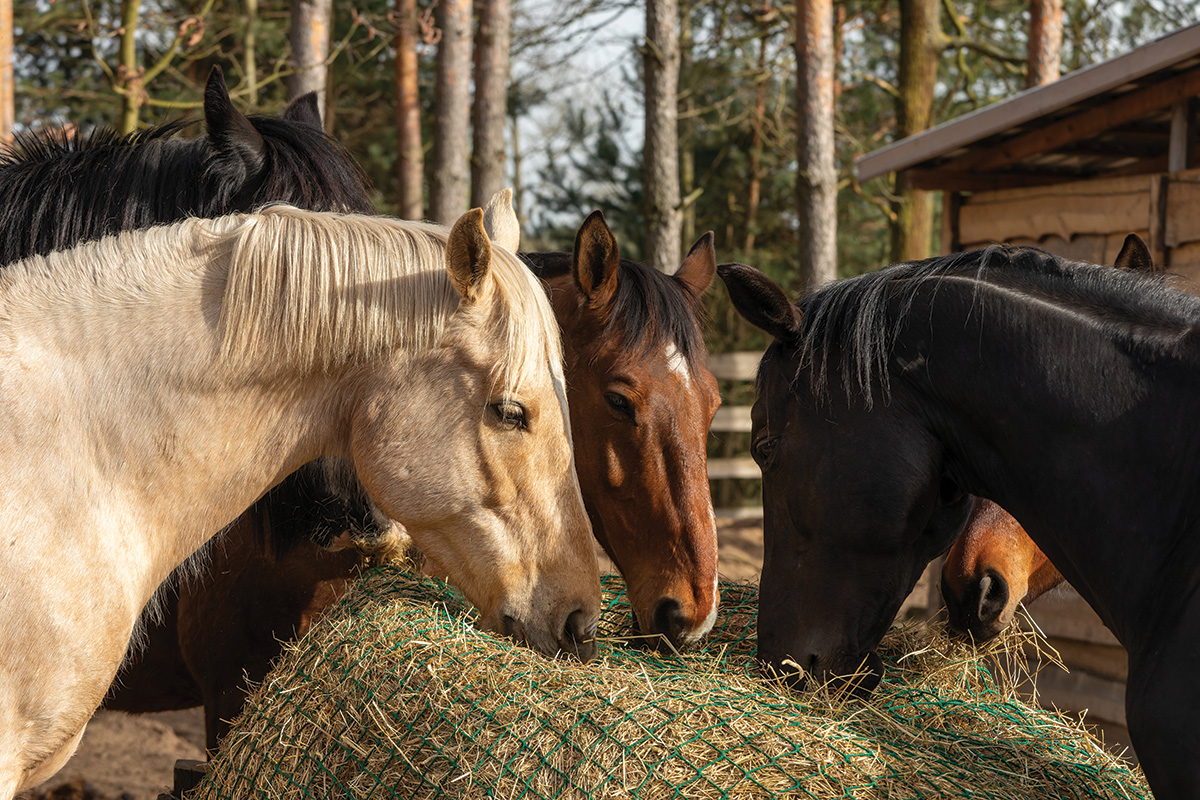
Photo by Fotema/Adobe Stock
Grass or Legume Hay?
Horse hay is generally divided into two main categories: grasses and legumes. Grasses often have long, slender stalks and perhaps a seed head on top; legumes are leafier, don’t grow as tall, and the stems are crunchier.
“The most common legumes fed to horses in the U.S. are alfalfa and clover,” says Mottet. “The most common U.S. grass hays are timothy, orchard, fescue, brome, and Bermuda.”
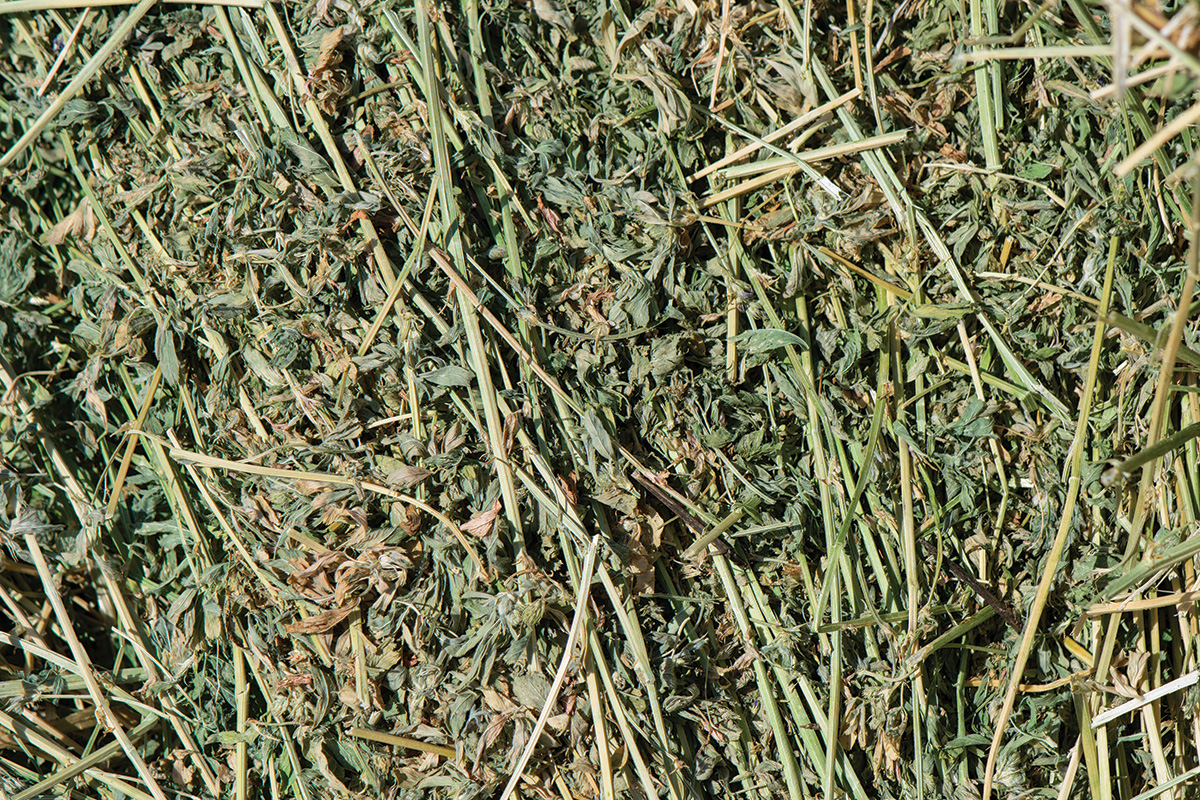
Legumes such as alfalfa, shown here, are leafier and have crunchier stems than grass hay. Photo by Diane N. Ennis/Adobe Stock
Mottet notes that grasses are then subdivided as cool-season or warm-season grasses, with cool-season grasses tending to be more palatable to horses than warm-season grasses.
“All are, however, acceptable choices for horses,” she says. “The main difference between grasses and legumes is that legumes tend to be higher in protein, energy, and several other micronutrients.”
So if legumes offer more energy, should you choose them over grasses? Not necessarily.
“Horses can do great on many types of forages,” says Mottet. “A good-quality grass hay can be the foundational piece of the diet for really any horse. A legume can be helpful for high-performance horses, those who are considered ‘hard keepers,’ and for mares that are gestating or lactating.”
Many horse owners use a grass hay, but may supplement with alfalfa (or an alfalfa mix) if the extra calories are needed.
“Alfalfa is usually [richer] in protein, energy, and micronutrient density, and is often not ideal as the sole source of forage in the diet,” says Mottet. “There are some situations where a large inclusion of alfalfa is a good choice, but in general, it shouldn’t be the only forage your horse is receiving if you have grass hay also available.”
Ponies, in particular, can be overly sensitive to the calorie content of alfalfa hay.
Choosing a Hay
You’ll find further options within the grass and legume categories. But you probably don’t need to worry too much about the exact hay species, since that is going to vary somewhat by your region. For example, don’t get too focused on whether to feed a cool-season timothy hay over a cool-season orchard grass mix.
“Finding what’s available in your region is a good place to start,” says Mottet. “Start by finding a quality horse hay vendor in your area that you can get a consistent source from. Check in with other local horse farms to see who grows horse hay in the area.”
She also suggests connecting with a local extension agent as a guide.
“Keep in mind that hay that’s appropriate for cattle and other livestock may not be the best match for your horses, so try to find a vendor growing hay specifically for horses,” Mottet advises.
Another major factor—probably more important than the specific type of hay you buy—is the age at which the hay was harvested. As grasses and legumes mature and the stalks become thicker, the nutritional value of the hay begins to diminish.
“There isn’t a certain species I typically avoid, as maturity when cut is the biggest influencer of nutritional quality in any hay,” says Mottet. “You can have good or bad quality in nearly any variety! However, there are a few situations that warrant specificity. In a number of horses, a low non-structural carbohydrate (NSC) hay is most appropriate [for horses with sugar and starch sensitivities or obesity]. The hay most appropriate for these horses is one that is more mature (stemmy), or a variety with known low NSC content.”
She also notes that pregnant mares can be sensitive to the endophyte fungus found in tall fescue grass, so fescue might not be the wisest choice on breeding farms.
Look for Quality
There are some basics you should look for no matter what type of hay you ultimately use. Mottet recommends finding hay that is free of debris, has minimal dust, and does not have discolored areas indicative of mold. She also advises that green hay is not necessarily the truest indicator of quality and nutrient composition.
“Sometimes you can have the most beautiful bright green hay, but your horse prefers the more brown/green option,” she says. “It’s hard to always explain why, but the point is to not get completely lost in finding the greenest hay available thinking this is the determinant of quality.”
Watch Their Weight
Mottet recommends regularly appraising your horse’s body condition, as you can gain clues about the quality of your hay and whether your horse getting too much, too little, or the correct amount.
“I suggest using the Henneke Body Condition Scoring (BCS) system to ensure your horse is getting adequate hay intake,” she says. “A good guide is to make sure your horse is receiving at least 1.5 percent of his body weight in hay per day, all the way up to free choice [about 2.5 percent of body weight in hay intake per day]. You can use your horse’s BCS to determine where to land within that range of hay intake.”
Once you have determined the hay that works best for your horse and have found a reliable supplier in your region, you should have an easier time next year, when you simply need to restock. Then your only question will be how to find enough helpers to unload the hay!
Further Reading
◆ How to Grow Your Own Hay
◆ Hay Buyer’s Guide
◆ Hay Accessories to Make Feeding Your Horse Easier
◆ Soil and Hay Tests for Horse Owners
This article about choosing the right hay type appeared in the January/February 2025 issue of Horse Illustrated magazine. Click here to subscribe!