A variety of ranch horse classes continue to gain popularity in American Quarter Horse Association shows. One of these is ranch trail, where horse and rider maneuver through six to nine obstacles simulating everyday riding on a ranch. Riding over logs, through a gate, and over a bridge are some examples. The logs or poles must be natural-looking, mimicking what horses may see around the ranch. Course designers often include brush and tree limbs that may distract your horse. Judges want to see that your horse will willingly cross anything you point him to.
When you practice at home with distracting obstacle additions, you’ll help prepare your horse for anything he may see in a judged event.
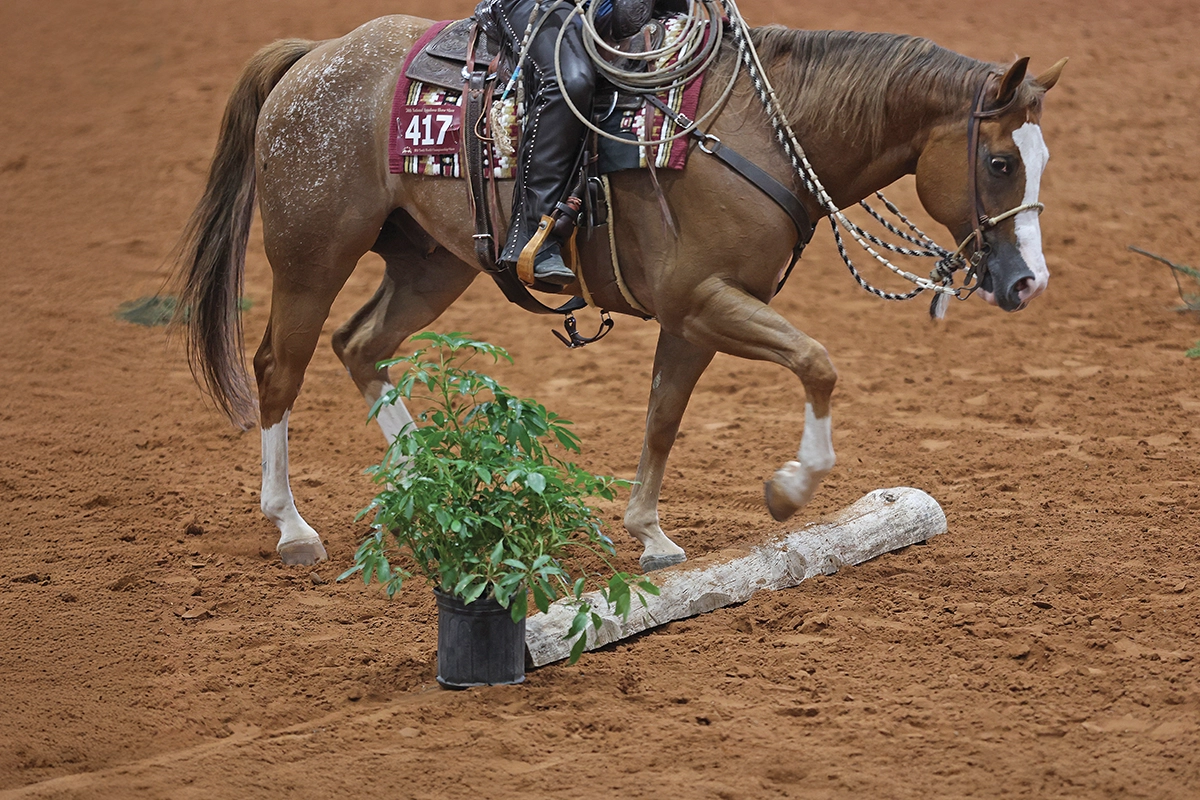
Photo by Becky Ruehle/Ruehle Photographix
What to Expect
Trainer Nancy Nemmers keeps her trail course changing so that her horses see new additions and distractions during each ride. When it comes to the poles, she practices at home with tree trimmings lining the path and even places a tarp under the poles—all to help her mount be aware of his hoof placement and stay willing to move forward, even with distraction.
“A lot of poles in competition have cut-off stumps and brush; they may [also] have a real tree placed around the logs,” she says. “That’s something horses will look at and may be leery about approaching. There also isn’t a set distance between the poles. So, as you’re riding, you have to focus and tell your horse where to place his feet. These are all different from typical show-trail classes.”
Nemmers says it’s important to practice with different pole setups and to practice your horsemanship at home. When you know that your horse will pick up his feet and cross any obstacle, you’ll feel confident when being judged.
“Your horse won’t always have a chance to look at the obstacles before a competition,” Nemmers says. “It’s important to work your horse with different obstacles and create that trust that you can cross anything together.”
Pole Presentation
Nemmers has a full trail course at her training facility in Longmont, Colo. She says she moves the course obstacles around at least every two weeks—presenting new scenes and placements so the horses don’t get used to the course. If the family trims a tree or does yard work, she drags the big branches and brush to decorate her pole placements. After the holidays, old Christmas trees line the poles or serve as a pole to drag.
“You can use anything you have,” says Nemmers. “If your horse doesn’t have shoes on, you can put a tarp under the poles. That tarp makes a sound and gives your horse something different to look at around the poles. The horse may flutter when they hear that sound. You must keep encouraging him to look forward and make him move forward.”
The distance of the poles is at the discretion of the show committee. Practice at home with the logs spaced differently, and not always measured precisely as you may do for other types of practice.
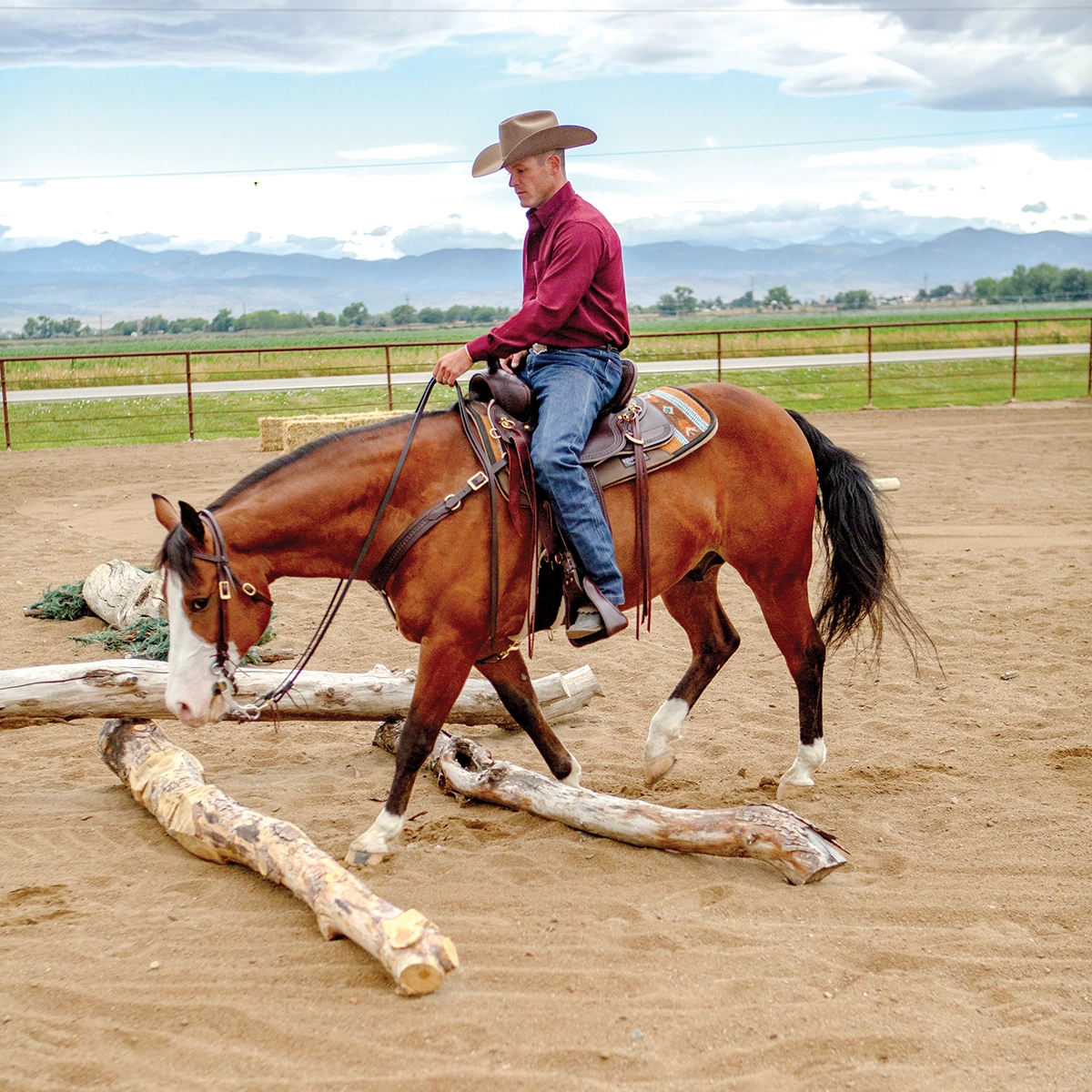
The distance of the poles is at the discretion of the show committee. Practice at home with the logs spaced differently. Photo by Heidi Melocco
The Forward Position
“Once your horse places that first foot on the tarp or over the poles, you’re going to encourage him to move on and take the next step,” Nemmers says. “If you let up and give him a chance to notice more and resist, he may take the ‘out.’”
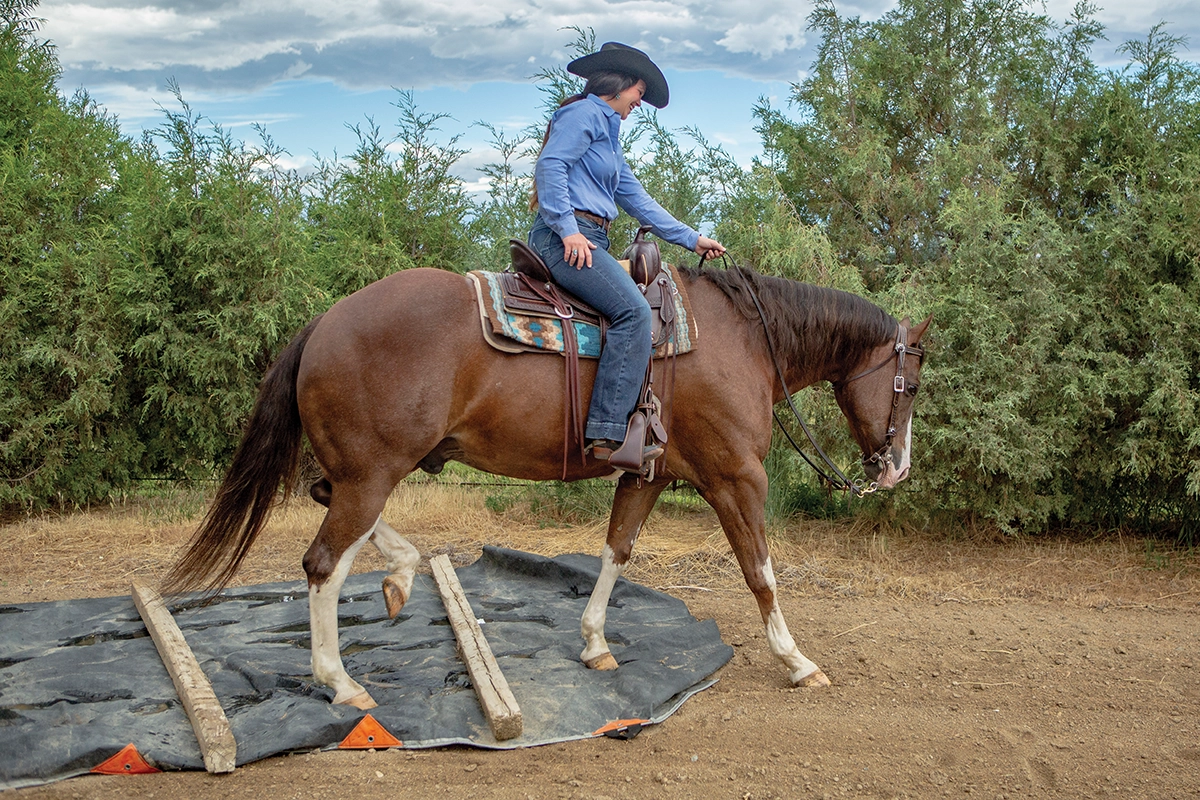
Placing a tarp under the poles gives the horse something different to look at. Keep your reining hand forward and look where you want your horse to go. Photo by Heidi Melocco
To encourage your horse to move forward, Nemmers says to move your upper body slightly forward and keep your legs gently pressed on the horse’s ribcage to keep him balanced and engaged. Nemmers says she pulses her legs and feet on the horse’s sides as she looks forward. Your body position and leg cues combined will encourage your horse forward.
Nemmers recommends that you look ahead and know where you want your horse to go next. As you approach the poles, you may be able to ride straight forward or may need to pick a path through a serpentine or other obstacle that forces you to approach the poles at an angle. Keep your reining hand forward and your horse well-balanced between your legs so that you can guide his path.
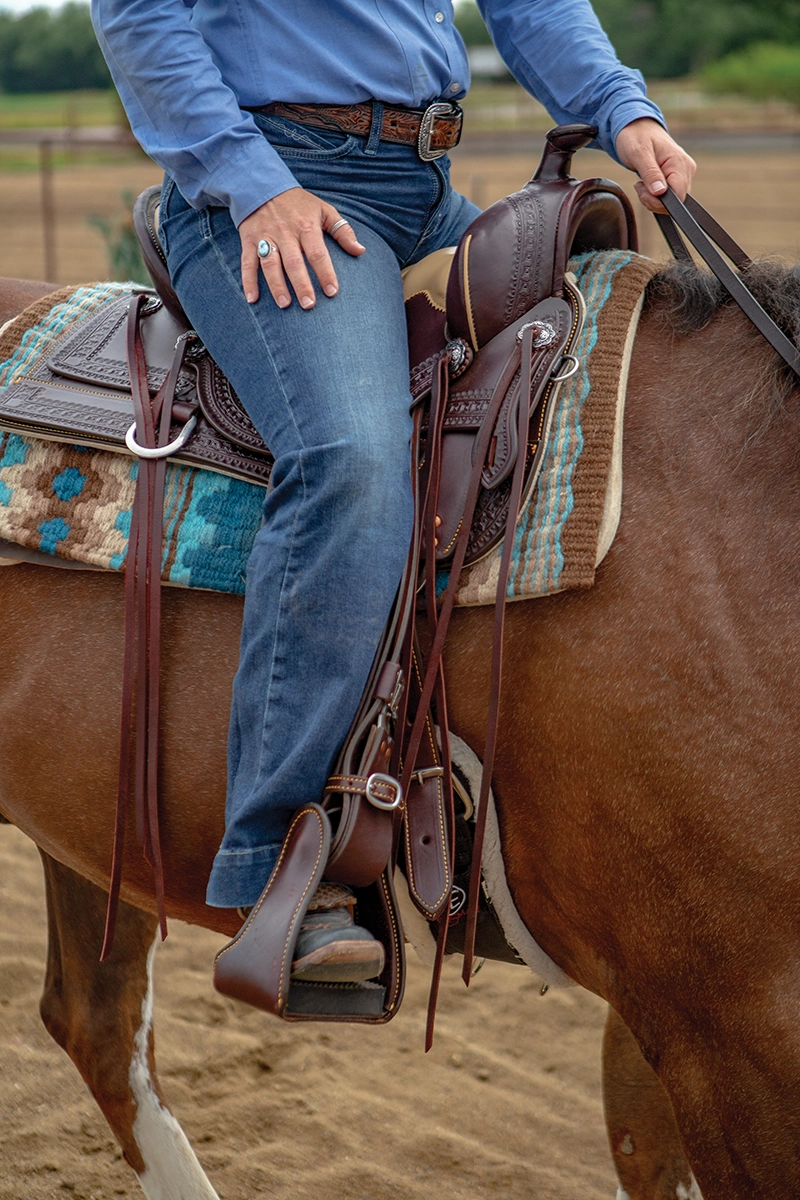
Keep your legs gently pressed with your horse balanced between them to encourage forward movement toward a scary obstacle. Photo by Heidi Melocco
With a bigger log, make sure the horse’s leg moves up and over the top without brushing. Keep your hand forward and encourage the horse with your legs.
“It’s difficult for your horse because he’s trying to judge how high he needs to move to get his hind leg over. Once the horse’s first leg is over, encourage and use your cues to move the horse forward. If you stall, it’s hard to get that impulsion back.”
If the horse resists or moves sideways, Nemmers says to pick up your reining hand to get him focused on your leg cues again. If he gets a little bit sideways, think about moving forward and getting back on the tarp or back in the middle of the poles that you need to cross.
If you practice with many course configurations, keep your horse moving forward, and look where you want to go, the horse will continue to move forward over any pole obstacle you’ll see.
This article about pole work in ranch classes appeared in the March/April 2025 issue of Horse Illustrated magazine. Click here to subscribe!