Horses with bold white spots and splashes have long been admired—even revered—by humans. Native Americans saw some markings as having powers, like the medicine hat or war bonnet (a colored marking over the ears and top of head), said to protect the rider or even warn them of danger. Or the shield, a bold marking over the horse’s chest, which was also said to protect during battle. Decades later, two registries celebrate these bold-colored horses: the Pinto Horse Association of America (PtHA) and the American Paint Horse Association (APHA).
Many people use these words interchangeably, but there are some differences. Let’s start with the one basic fact: all Paints can be Pintos, but not all Pintos can be Paints.
Pinto Horse Registry
The PtHA was formed in 1956 to register horses of any breed background that had splashy white markings. In 2005, a solid registry was formed to allow solid-bred horses from PtHA stock to be registered.
“The PtHA realized that a lot of solid horses were related to horses with color, and we wanted solid horses to be able to come show with us,” explains Jenna Henson, director of marketing and communications for PtHA.
Any equine—including mules and donkeys—can be registered as a Pinto. The registry has different divisions for registration. Horses have types: stock (Paint and Quarter Horses); pleasure (Arabians and Morgans); hunter (Thoroughbreds and warmbloods); and saddle type (Saddlebred).
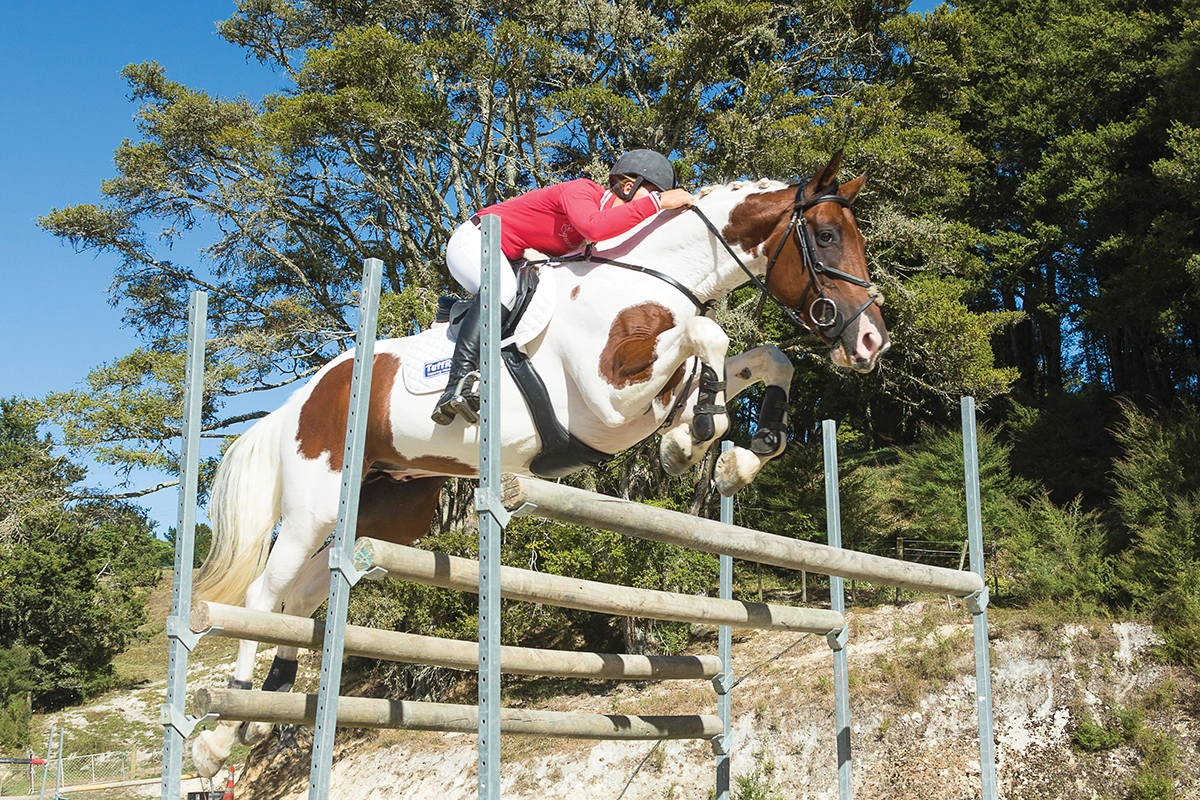
Pintos can be found across all equestrian sports. Photo by Christiane Slawik
Ponies (measuring 39 to 59 inches) can be pleasure, hunter, saddle or stock type. Minis are divided by size: An “A” Mini is 35 inches or less and a “B” Mini is 35 to 39 inches. “Long Ears” are the donkeys and mules. Utility horses come in two types: Gypsy and Drum. Drums have to have a percentage of Gypsy breeding crossed with other draft breeds, usually Shire or Clydesdale.
At shows, the solid-bred and colored Long Ears show together. For the others, they have separate colored and solid classes.
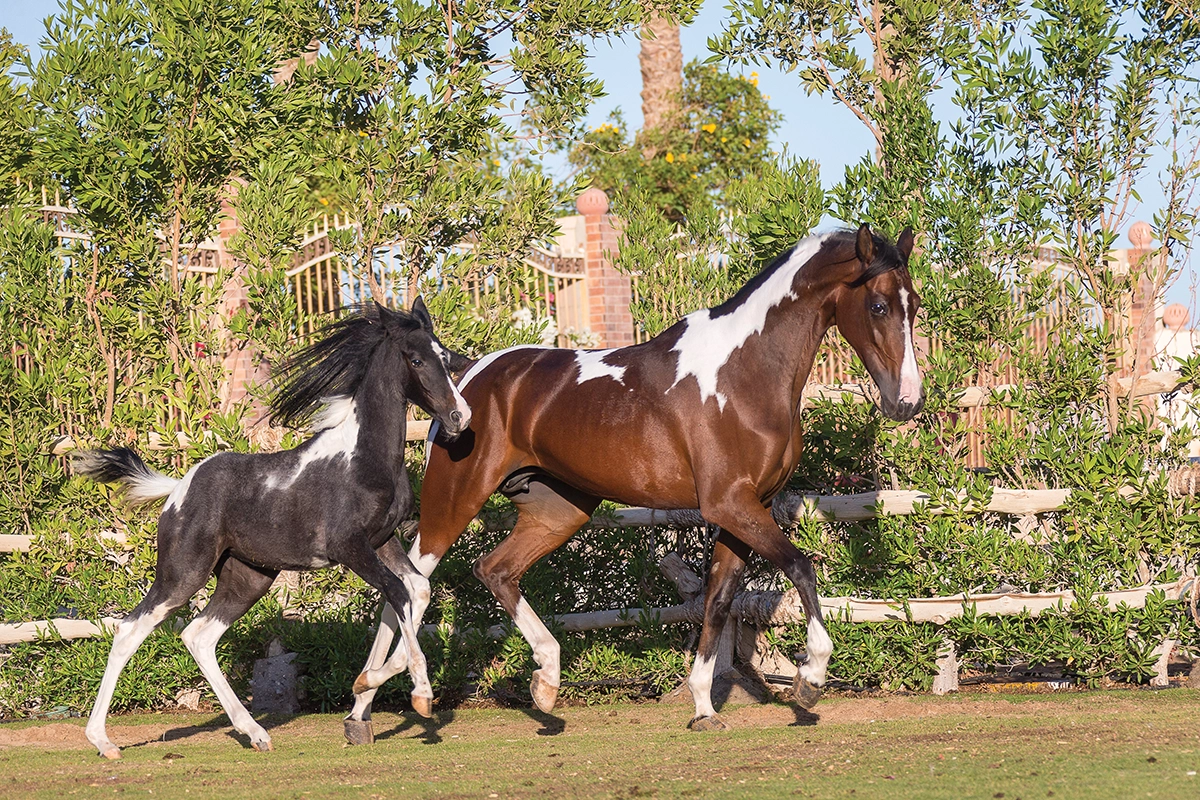
Pintos can come in any body type and breed background. Photo by Christiane Slawik
Paint Horse Registry
In 1962, Rebecca Tyler Lockhart founded the American Paint Stock Horse Association at the same time the American Paint Quarter Horse Association was formed. In 1965, the two associations merged to form the APHA.
“It was established to promote and preserve colorful, stock-type Paint Horses,” says Jessica Hein, senior director of communications for the APHA.
Unlike PtHA, the APHA is “limited to stock-type horses descending from Paints, Quarter Horses and Thoroughbreds,” she adds.
To be registered with APHA, both of a horse’s parents must be known and registered with APHA, AQHA or the Jockey Club. Also, Quarter Horses and Thoroughbreds that meet the minimum white requirement—at least 2 inches of solid white hair with some unpigmented skin in the qualifying area—can be dual-registered with APHA.
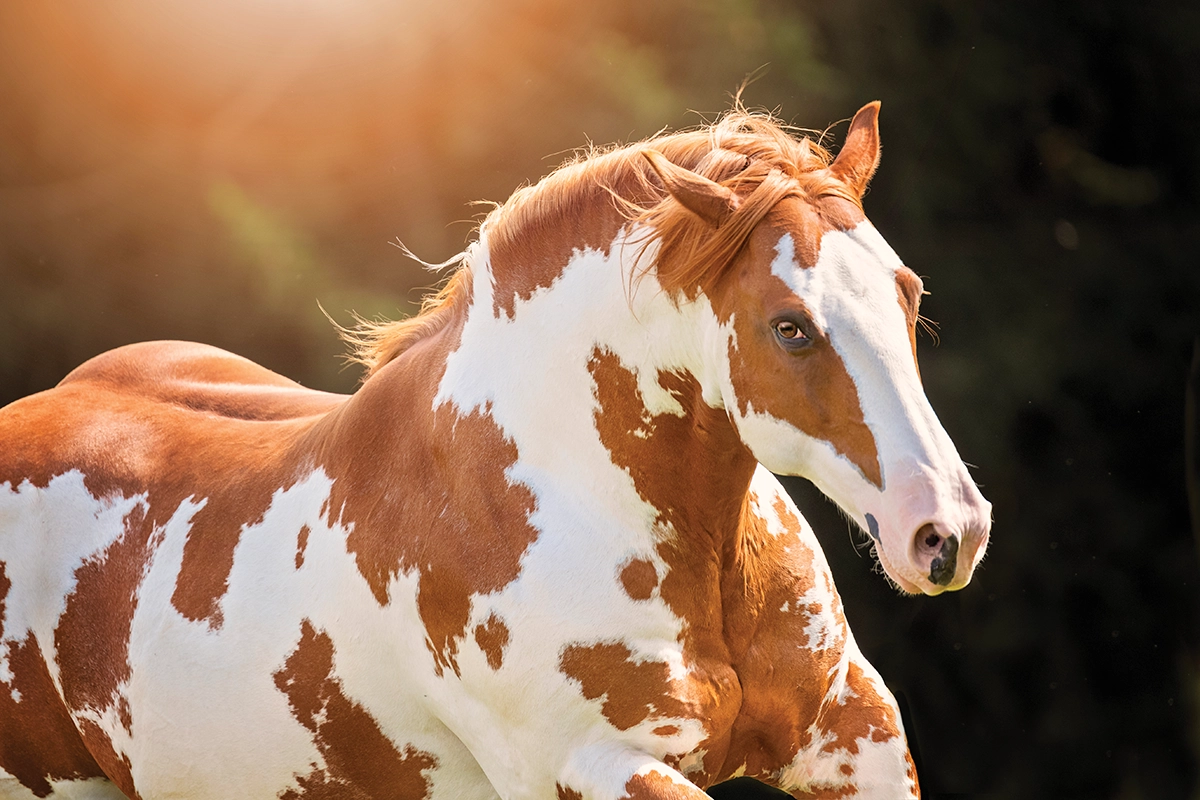
The APHA registry is restricted to stock-type horses descending from Paints, Quarter Horses, or Thoroughbreds. Photo by Christiane Slawik
If at least one of those parents is APHA-registered, the foal is eligible for APHA registration regardless of qualifying white markings. However, if both parents are AQHA or Jockey Club registered, the foal must meet those minimum qualifying requirements based on white markings to be eligible for APHA registration.
The APHA, like the PtHA, also has a solid registry. Formerly called Breeding Stock, Solid-Paint Breds can still be shown and used for breeding.
So, all Paint horses can be registered as a Pinto as well, but only Pintos that have Quarter Horse or Thoroughbred breeding, or at least one registered APHA parent, can be registered with the APHA.
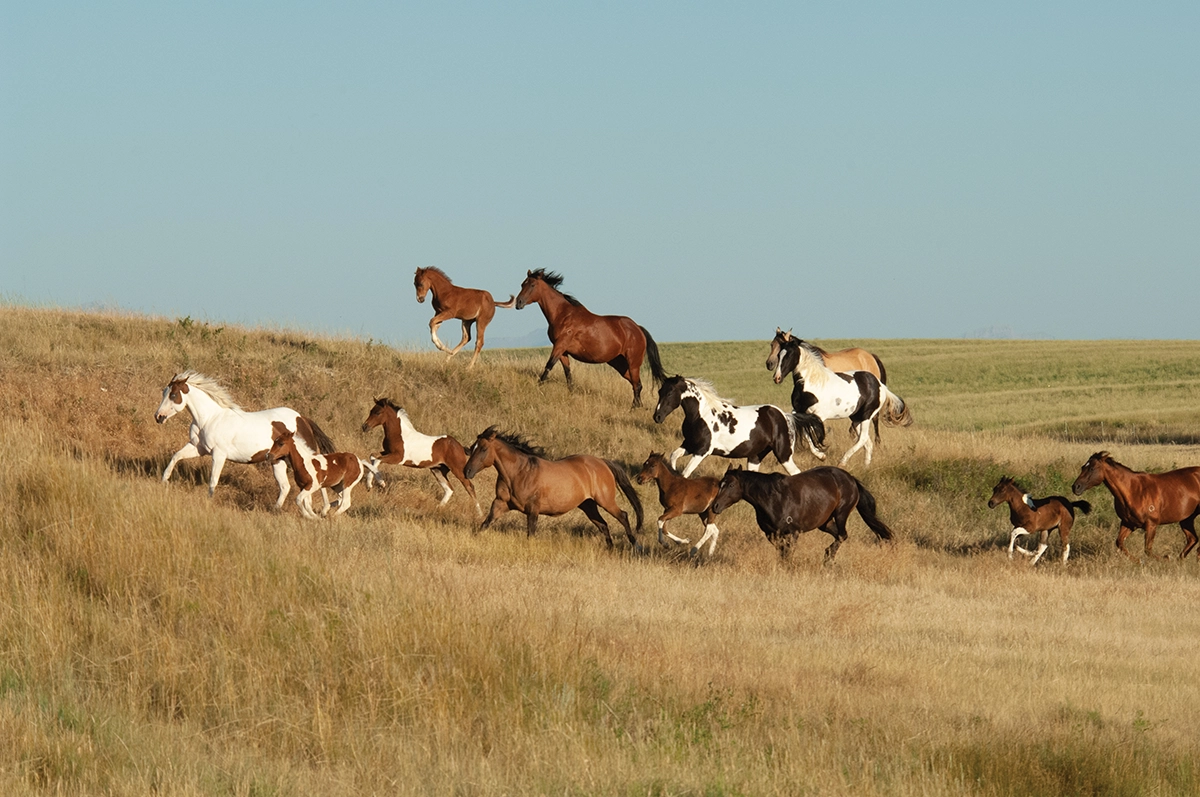
Solid-Bred Paints can still be used for breeding and showing. Photo courtesy APHA
Splashing the Competition
It should be no surprise that Pintos can do anything—after all, any breed of equine is eligible for registration.
“Pintos are a good all-around horse; they are very versatile with a willing attitude,” says Henson. “We have had a lot of national champions go on to claim world or national titles in other associations.”
The Pinto World Championship Show is one of the largest shows in the United States. In 2024, it featured over 700 classes. About 500 breed shows are held each year all over the U.S.
Not to be outdone, the Paint Horse is also known for its versatility.
“Paints are highly versatile and can excel in almost any event,” says Hein. “We have Paint Horses that have bested horses of all breeds in the sports of reining, cutting, reined cow horse, racing and more. We have Paints that excel in hunter/jumper competitions, dressage, premier rodeo events and more. As a stock-type breed, you’ll most often find Paint Horses excelling in western performance events, where their athleticism and disposition combine to help produce winning performances. The extra chrome on their coats, in many cases, helps them stand out from the crowd even more.”
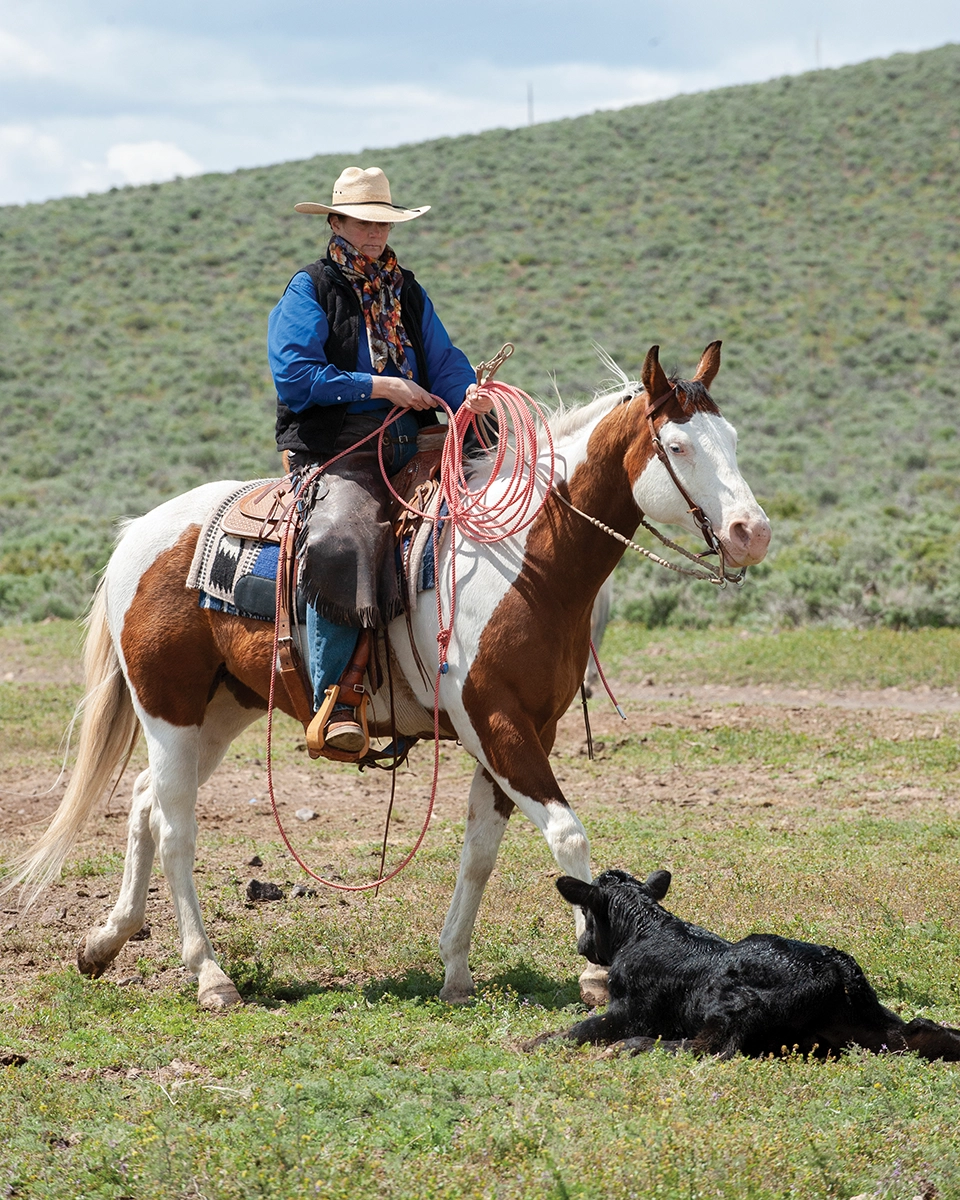
The same cow sense and stock-horse build that makes the American Quarter Horse so popular is also on display in the American Paint Horse. Photo courtesy APHA
There were around 731 APHA breed shows in 2023 worldwide. The 2024 APHA World Championship Show had 1,469 horses competing, with the APHA/WCHA Halter Million—which includes their World Champion Halter Competitions—drawing in an additional 466 horses, according to Hein.
While regular registry and solid Paints previously competed in separate classes, all Paints show together beginning Jan. 1, 2025.
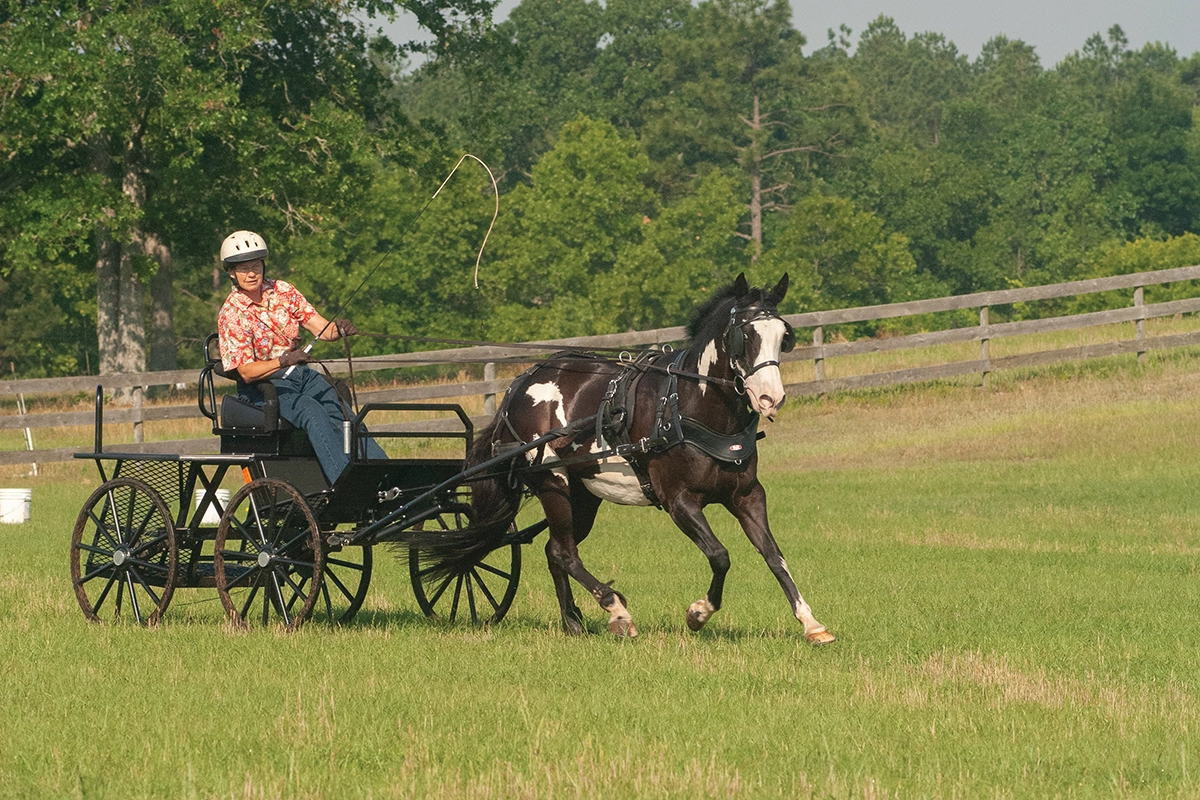
Although a stock-type breed, the Paint can be found doing just about any sport. Photo courtesy APHA
If you are looking for an all-around horse with a splash of color, consider a Pinto or Paint. Visit pinto.org or apha.com to learn more.
This article about Paints and Pintos appeared in the March/April 2025 issue of Horse Illustrated magazine. Click here to subscribe!