If you’re considering building, improving or fixing a riding arena, it’s easy to become confused by all of the natural and man-made options. The first step, however, is to learn what makes good arena footing versus poor arena footing in order to prevent injuries to your horse. These are not only costly in terms of vet bills, but also require rehabilitation time that keeps you out of the saddle and the show ring.
The Basics of Good Arena Footing
The ideal footing needs to:
- Have traction
- Have no dust
- Have cushioning
- Deter injuries
- Boost performance
- Provide stability
- Provide rebound energy (the responsiveness and resiliency of the footing surface to return it its original form by returning energy back to the horse)
Factors that make footing poor quality include:
- Too deep
- Too hard
- Too uneven
- Too loose
- Too dusty
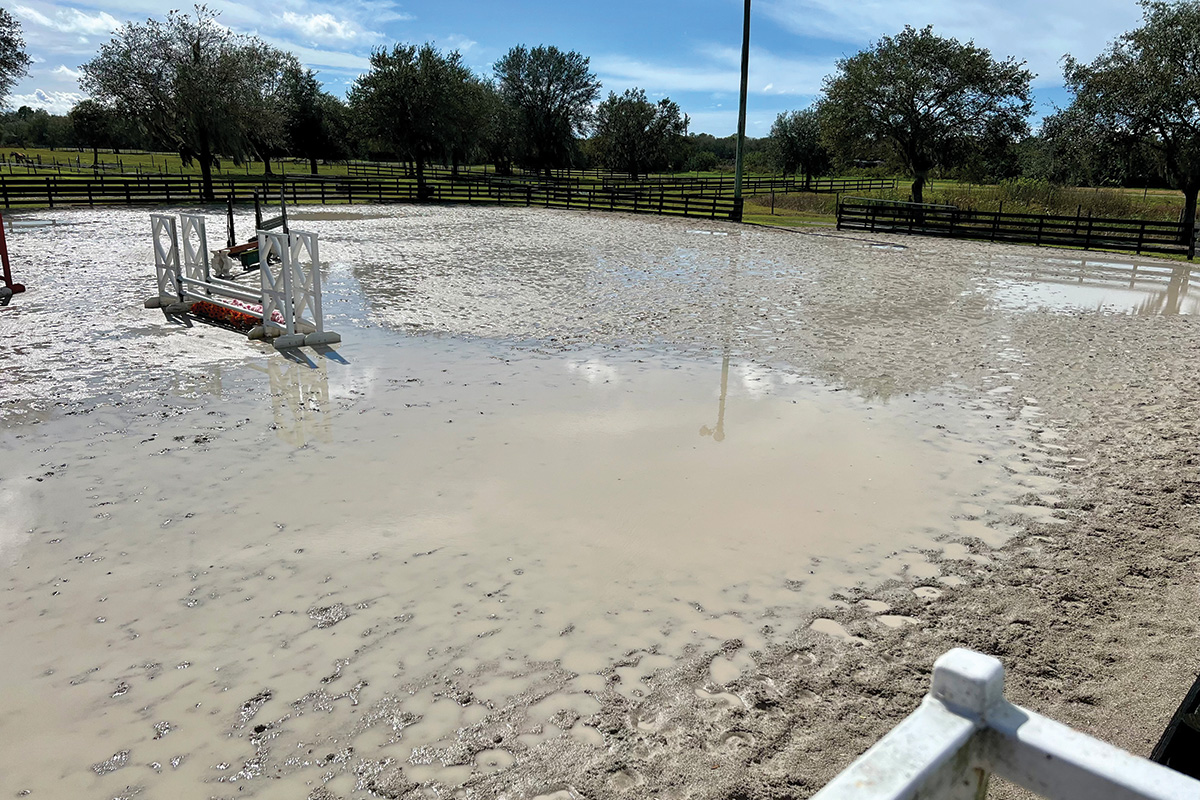
- Non-draining
- Slippery
There are three primary layers to arenas: the top footing, the sub-surface, and the base.
Sand is the most popular surface used across the world, both with and without synthetic fibers added. Others include wood chips/sawdust, rubber chips, grass, and dirt. The sub-surface has many options: a drainage layer, grid-mats, compacted stone, sand, or another manufactured material. Most bases are made out of clay, stone dust, and the natural native soil of the property.
What the arena is made of, how much traffic goes through it, precipitation and temperature all play a part in keeping an arena safe.
Different arenas have different requirements to keep them in peak performance, but most require the following:
- Watering regularly
- Regular dragging and grooming
- Removal of manure, urine and other organic material
- Adding new sand
- Raking upkeep
- Picking out weeds, rocks and other debris
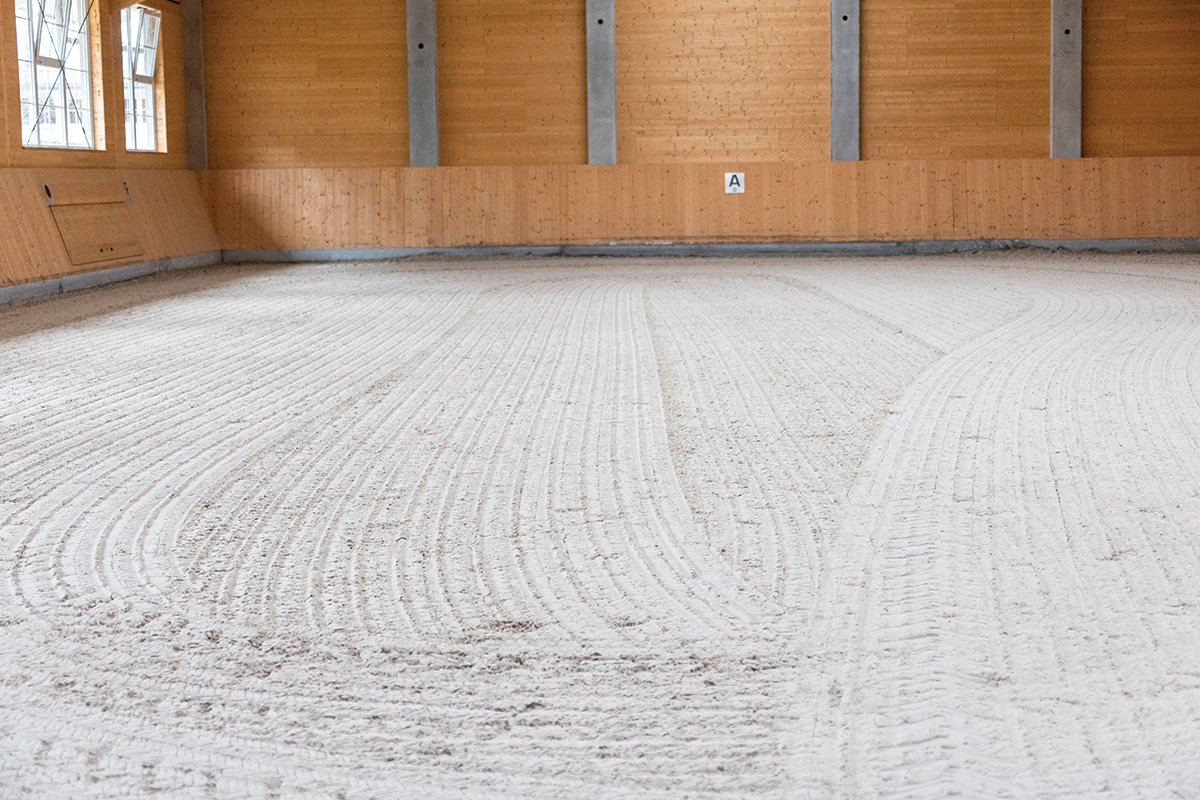
Sand and Fiber Footing
Cynthia Brewster Keating is the national director of sales and marketing director for GGT-Footing. For more than 25 years, Polysols, the parent company of GGT-Footing, has been producing innovative equestrian footing products for riding arenas.
“The arena footing products are repurposed remnant virgin material that’s used to make various fibers and textile blends,” says Keating. “The focus is on developing the best combination of synthetic chopped non-woven material and combining it with the highest-quality sands from quarries across the county.
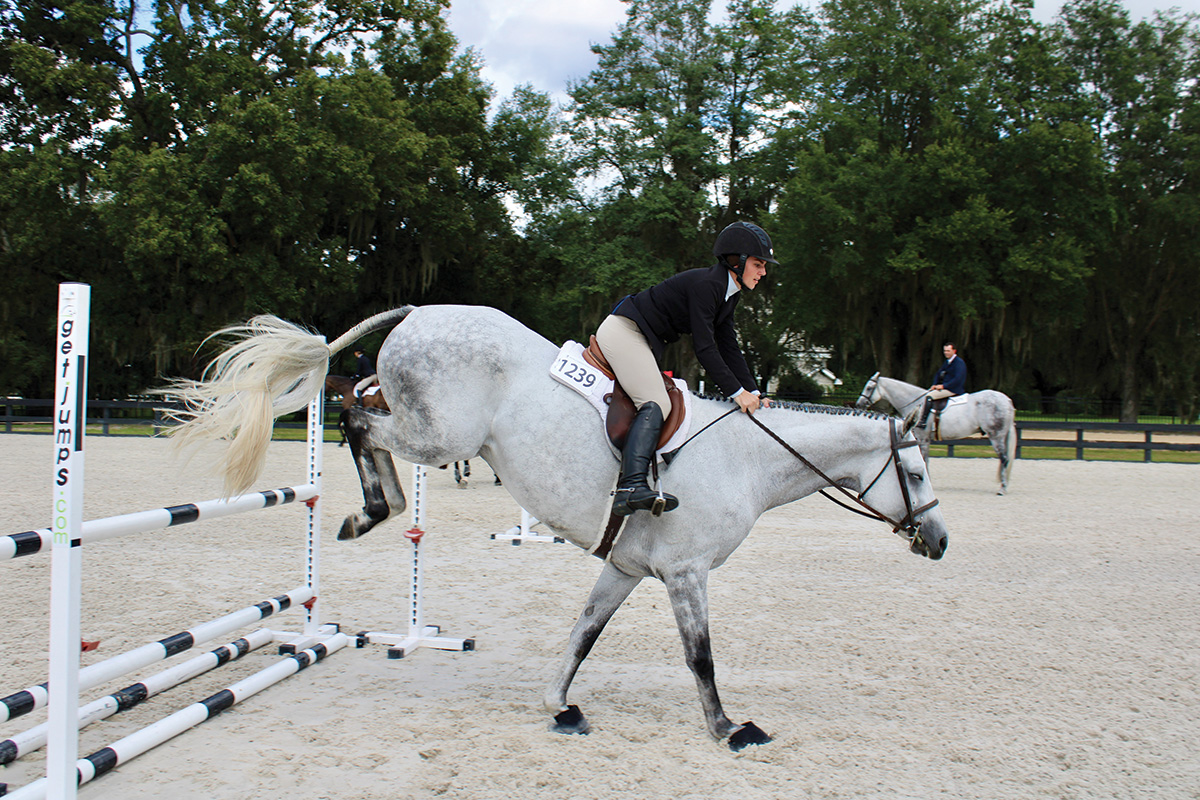
“The different disciplines require a different amount of tightness in the sand,” she adds. “The pleasure blend has minimal fiber and is designed to keep the sand fluffy. The dressage blend has 15 percent fiber and is designed to provide variations according to how it is groomed and maintained. The jumper blend has 30 percent fiber, designed to offer concussion, relief, and stability as well as rebound energy.”
Keating has found that the quality of the sand is not as good as it used to be in the United States due to amount of fracking and the oil industry.
“Because of this, we have found that it’s important to use more fiber, regardless of what your discipline is,” says Keating. “Ninety percent of our sales are blend. We use our competition blend at high-end horse shows, which is 50 percent geotextile and 50 percent fiber. [These shows] require the most support and concussion relief, especially in the Grand Prix dressage and jumper arenas.
“Nowadays, it’s recommended that you hire a consultant that can test the sand that you are thinking of using,” she adds. “Many professional arena builders are now using mixtures of variable grades of sand to achieve the best results.”
Keating says anyone building arenas should assess the level of riding and how many horses go through their arena each day.
“Across the country, there are a varying products available for base, so it’s best to work with a contractor who is familiar with your specific property and ground,” she says.
A Vet’s View
Poor footing can be a big contributor to lameness, according to Rob van Wessum, DVM, M.S., who practices at Equine All-Sports Medicine Center in Mason, Mich. He’s also a Grand Prix dressage rider who holds a diplomate from the American College of Equine Veterinary Sports Medicine and Rehabilitation (ACVSMR).
He says that close to 50 percent of his case load of lame horses is due to improper footing and improper training techniques in inadequate footing. He mostly sees tendon or ligament injuries related to both these factors.
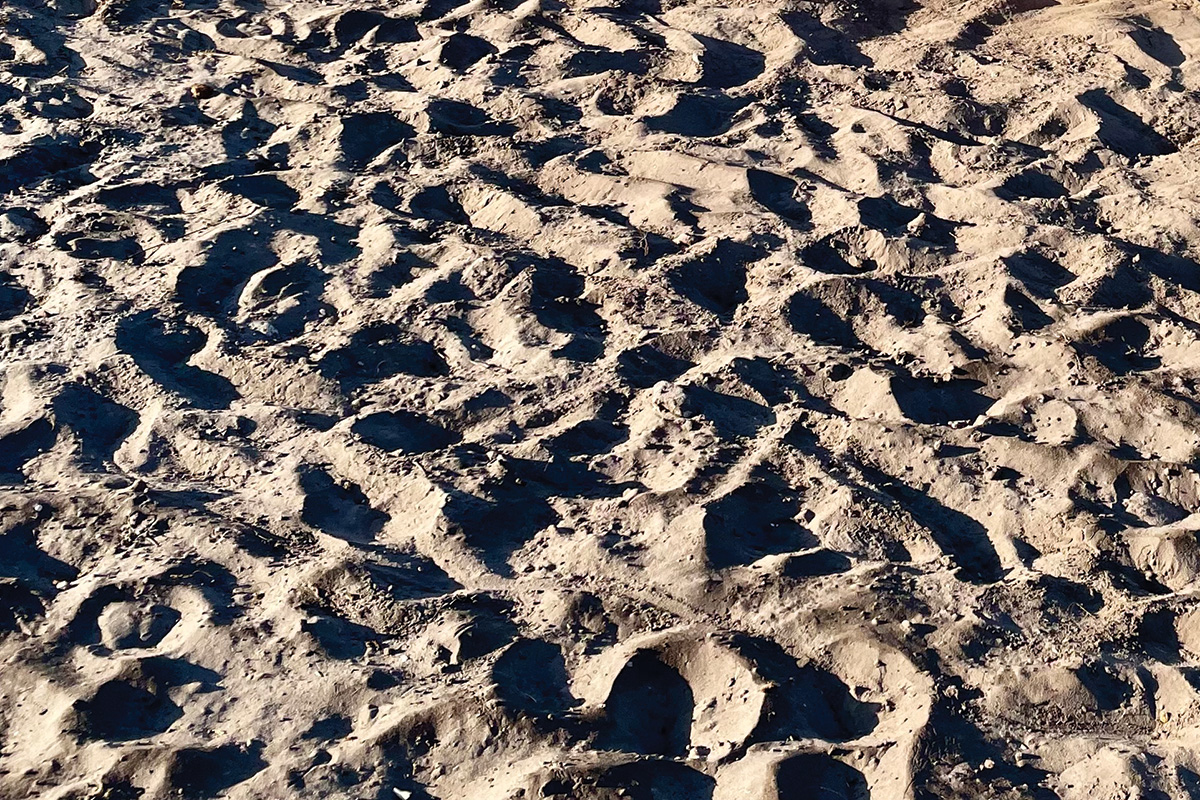
“In deep footing with lack of stability, the horse moves the footing material too much, which means less rebound of ground-reaction forces into the horse, causing tendon injuries, especially suspensory ligament injuries,” says van Wessum. “The horse loses energy with every stride, moving footing instead of himself. That puts a lot of strain on muscles to deliver more energy. A horse is built for rebound energy stored in tendons, so a lot of kinetic energy is stored as elastic energy during the air phase and then used in the next stance phase. With deep footing, there is far less rebound energy.
“When muscles get fatigued due to excess work in deep footing for too long in the same kind of work, a horse can’t stabilize his core anymore, which will cause damage to the connective tissue as result,” he continues. “Connective tissue is often ligament, fascia or tendon. You can find it in the limbs but also in the back, neck, and pelvis region. Damage to all those regions is diagnosed daily in our practice.”
Consequences of Poor Arena Footing
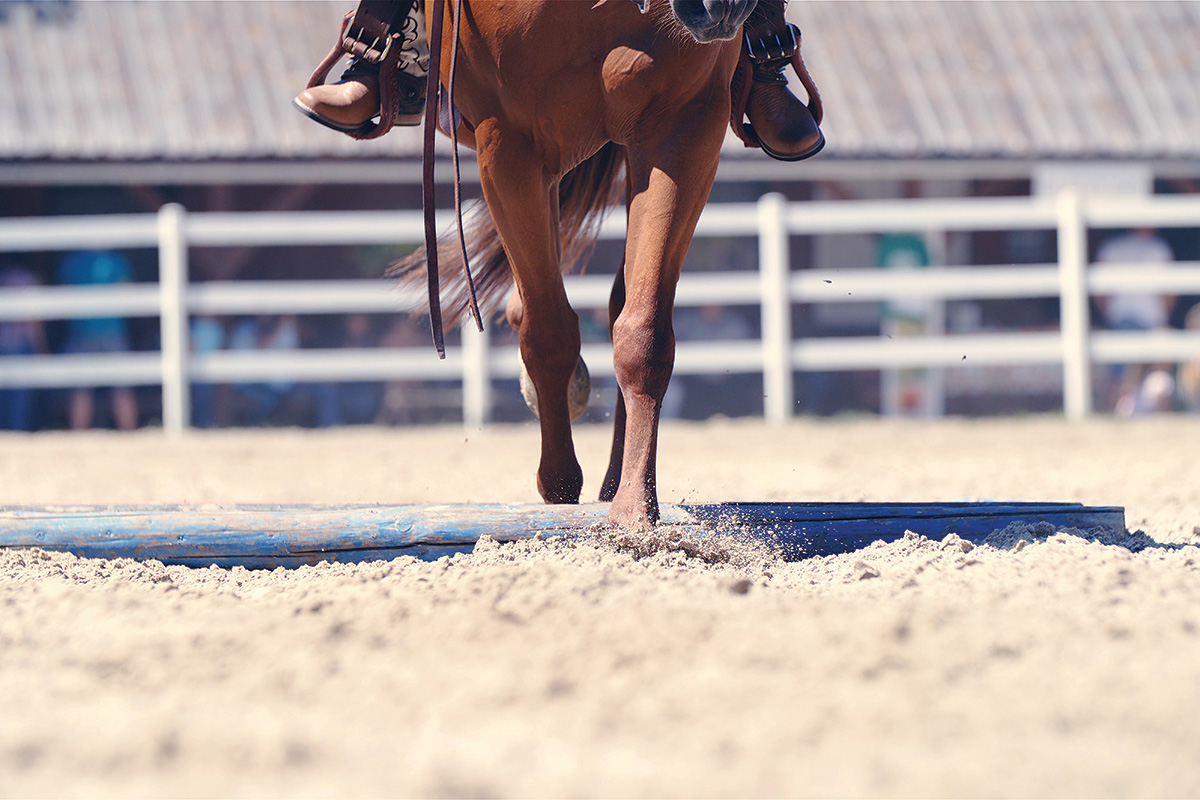
Footing that is so deep the coronary band disappears is one of the most common kinds of bad footing.
“The opposite of too deep is too hard, which can damage to the bone structures due to concussive forces,” says van Wessum.
He explains that footing that has too much grip, like when too much fiber is added, can cause damage to the collateral ligaments of the coffin, pastern, and fetlock joint. This is due to rotational forces when riding in small circles, lateral gaits, or landing and turning after jumps—any time the foot gets stuck on the footing while the upper part of the limb turns. He also sees this with too-deep footing when it is muddy or clay-like and sucks the hooves in.
“Footing that is too slippery due to rain or over-watering causes many injuries, such as ligament and tendon injuries in the lower limb, but also spinal ligament injuries in the neck, back and pelvis,” says van Wessum.
One of the worst kinds of footings van Wessum sees is when the same arena has different areas within it, like harder, softer and then deeper areas.
“When the quality of the footing suddenly changes, a misstep and strain or distortion of joint or ligament is the result,” he says.
Van Wessum stresses that there is no general rule for quality footing materials.
“It depends on what the arena is used for, where it’s located geographically, the traffic through the arena (one or two horses a day versus 60), and the quality of the maintenance,” he explains.
The Best Prevention
What are the best steps a rider can take to protect their horse? Incorporate proper training and exercise to adapt to the quality of footing, according to van Wessum.
“When the footing is deeper, shorter bouts of more intense work, alternating with walking, helps the horse recover and avoid fatigue,” he says. “Proper shoeing and timely reshoeing so the angles don’t change too much is extremely important.”
Van Wessum does not see any advantage to boots or leg protection when it comes to preventing injury due to bad footing.
His client horses receive regular soundness exams (approximately every six months) to monitor any small changes in performance and sensitivity of tendons and ligaments before they become a bigger issue.
“We saw horses from the same facility showing tenderness in the suspensory ligament,” says van Wessum. “After looking at the footing, we could see that it was getting too deep because of less watering in dry times.”
It’s smart to take a walk in any new footing with your horse before riding, exercising or competing. Pay attention to the depth, consistency and condition of the arena.
What’s under your horse’s feet will affect his overall soundness, confidence and performance. Knowing how horses react to different surfaces will help you determine the best type of footing to ride in.
With patience and proper training, you can help your horse travel on many surfaces safely and without injury.
This article about arena footing appeared in the September 2024 issue of Horse Illustrated magazine. Click here to subscribe!