An original American breed, the Sugarbush Harlequin Draft is a composite breed hailing from both the Appaloosa and the Percheron.
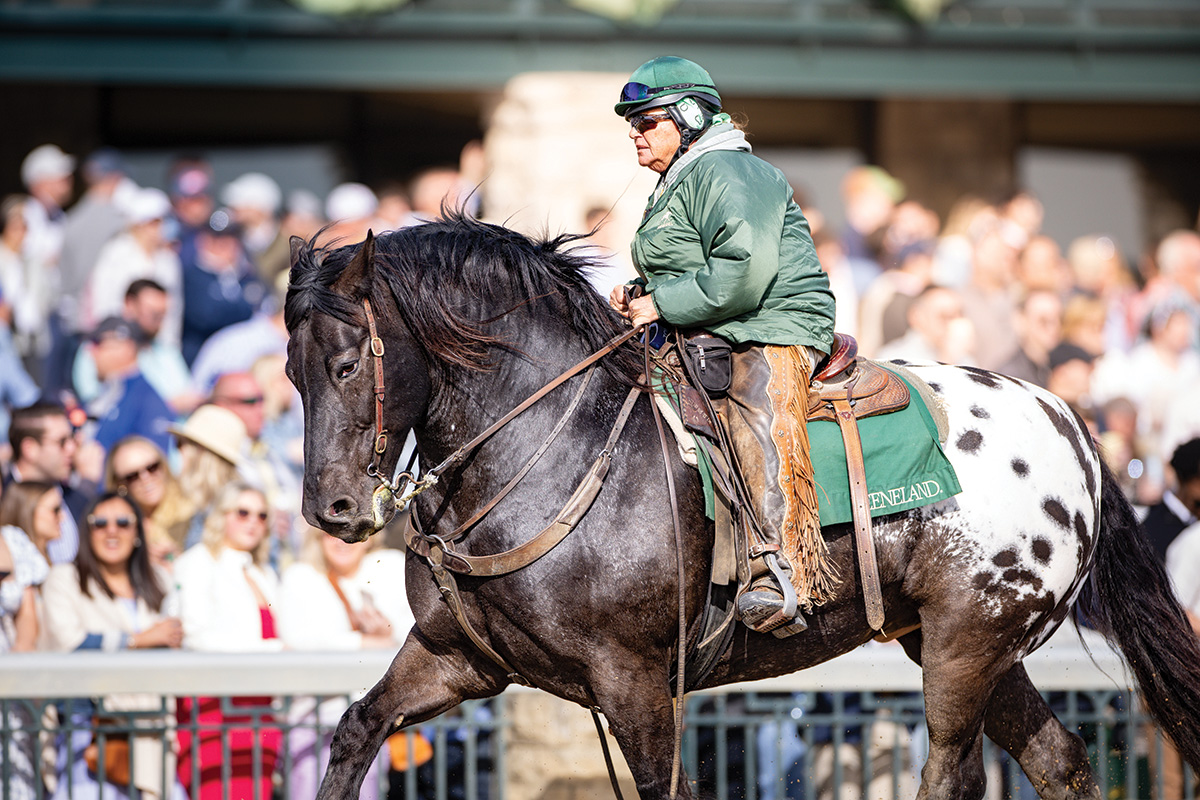
The opposite of “random” breeding, the American Sugarbush Harlequin Draft was the well thought-out brainchild of Everett Smith, who sought to create a versatile horse that was well-built, smart, easily trainable, good- moving, kind and agile.
The Beginning of a Breed
Born at the end of the Great Depression, Smith witnessed the country’s transition from draft horsepower to mechanized horsepower as World War II ended. Though the jobs of many draft horses became obsolete, some draft horse fans transitioned them from corn field to carriage in an attempt to keep them relevant.
In love with the original mode of horsepower, Smith owned The Sugarbush Hitch Company in Willow Wood, Ohio, where he used purebred Percherons to pull his carriages and wagons. Dedicated to breeding the best Percherons he could, it wasn’t until he met Mike Muir that Smith began to reconsider his breeding strategy.
Muir was selectively breeding for a heavy warmblood Appaloosa sport horse he called the Stonewall Sport Horse, and Smith was intrigued with the idea that flashier horses might bring in more business.
In 1998, Smith used artificial insemination to breed a Percheron mare, Sugarbush Felina del Noche, to Muir’s Stonewall Rascal, who was 3/4 Percheron. The next year, the first Sugarbush Harlequin Draft horse was born and named Sugarbush Harley Quinne.
The 7/8 Percheron colt boasted a loud, leopard-spotted coat and embodied everything Smith had sought: he was patient, kind, athletic, beautifully conformed and had an incredible coat pattern.
Smith then bred Felina to another of Muir’s stallions, Stonewall Domino, and produced Sugarbush O Rosamunde. The beginning of an incredible breed was born, with Felina del Noche as matriarch.
Smith continued to carefully choose breeding stock to retain the loud coat patterns and quality draft horse conformation, and soon people began requesting his company—and his horses—by name. The Sugarbush breed was born.
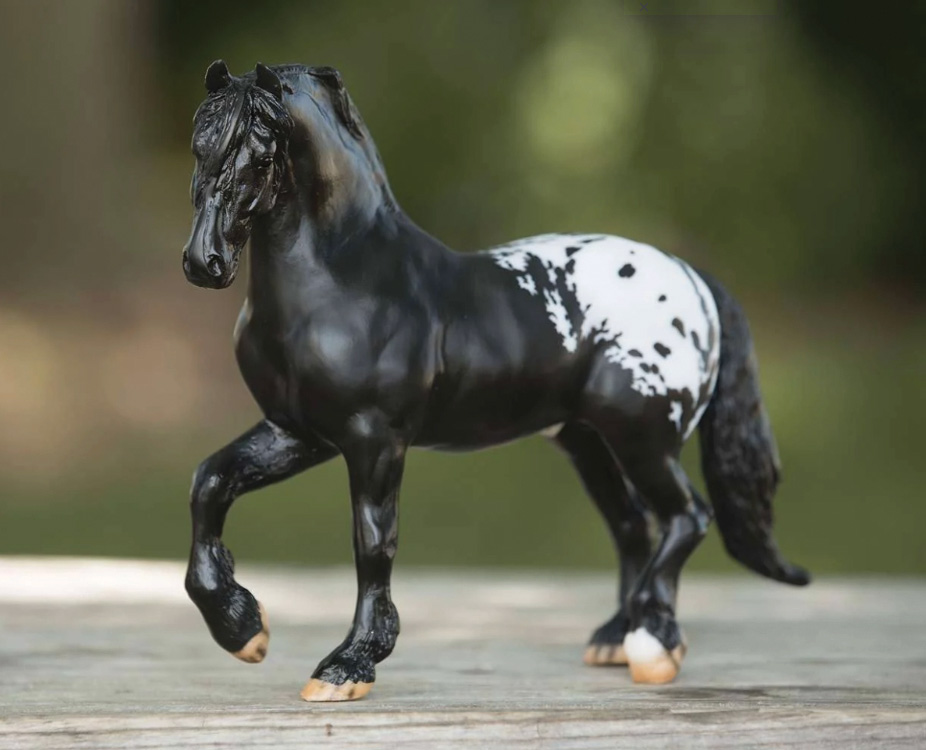
The American Sugarbush Harlequin Draft Association
As the breed began to grow in popularity, it became apparent that the American Sugarbush Harlequin Draft needed an association that would oversee the purity of breed’s lineage.
In 2013, a group of passionate Sugarbush Harlequin breeders and enthusiasts gathered to create the American Sugarbush Harlequin Draft Association (ASHDA). Governed by a Board of Directors, the ASHDA is dedicated to diversifying the breed’s gene pool to limit the risk of genetic defects while maintaining the qualities and characteristics that have made the breed so beloved.
The Board ensures that each horse accepted into the Association meets a breed standard and adheres to strict genetic and conformational requirements.
A Versatile Horse
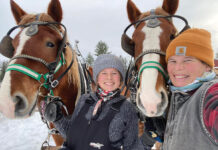
Though Smith’s personal passion was driving, the breed he created excels in any arena. Sugarbush Harlequin drafts are fantastic riding and driving horses. They compete in eventing, dressage, foxhunting and myriad other events, and are incredible lesson mounts and therapy horses.
The breed is gentle enough to give courage to the most timid rider and sturdy enough for the stoutest of riders to feel safe.
American Sugarbush Harlequin Draft Fast Facts
As the American Sugarbush Harlequin Draft is a new breed, the ASHDA Board of Directors is quite specific in what genetics they want to see.
To be registered with the ASHDA, all horses must be approved by the ASHDA Board of Directors. To ensure that a healthy, conformationally correct and quality animal is promoted and reproduces, the ASHDA has taken a proactive stance on genetic defects, requiring testing for all breeding stock animals in addition to the pedigree assessment and conformation analysis.
◆ Height: Typically 15.2 to 16 hands
◆ Color: Any base, with leopard pattern preferred. Solid-colored horses are acceptable. Unacceptable colors include pinto-type, excessive white markings, frame overo, tobiano, splash, and dominant white.
◆ Conformation: The chest should be wide and deep; hips should be wide with a rounded croup. The tail should be attached high, and the horse should have short, heavily muscled gaskins. Feathering is apparent but is not as long or thick as in other draft breeds.
◆ Movement: American Sugarbush Harlequin Drafts should have suspension and extension, with no pacing or gaited movement.
This article about the American Sugarbush Harlequin Draft appeared in the July 2024 issue of Horse Illustrated magazine. Click here to subscribe!