7 ITEMS
 
    • the horse illustrated march/april 2025 issue cover
    • Horse Illustrated – March/April Special Issue 2025

    • $9.99
    • the horse illustrated march/april 2025 digital issue cover
    • Horse Illustrated – March/April Special Issue 2025 Digital

    • $6.99
    • young rider may/june 2023 digital
    • Young Rider May/June 2023 Digital

    • $3.99
    • the horse illustrated november/december 2023 digital cover
    • Horse Illustrated – November/December 2023 Digital

    • $3.99
    • young rider march/april 2023 digital
    • Young Rider March/April 2023 Digital

    • $3.99
    • horse illustrated – june 2023 digital
    • Horse Illustrated – June 2023 Digital

    • $3.99
    • young rider march/april 2025
    • Young Rider March/April 2025 Digital

    • $3.99
  • My Account
  • Holiday Gift Guide
  • Podcast
  • Webinar
Subscribe Combo
Enable cache13
Home Horse Care Page 170

Horse Care

 Horse care is the most important aspect of ownership. The topics that Horse Illustrated has covered include: behavior, deworming, grooming, farriery, dentistry, adoption, welfare, charities within the industry, overall health (such as diseases and conditions), injuries, wound care, lameness, mare and foal care, nutrition, pest control, safety, seasonal management, senior care, vaccinations, and much more.To help your horse be healthy, you will want to work with an equine veterinarian, farrier, and equine dentist. In addition, there are alternative practitioners, such as equine chiropractors, physiotherapists, massage therapists, etc. Always review the qualifications of someone before you let them help you with your equine best friend.

hoof care

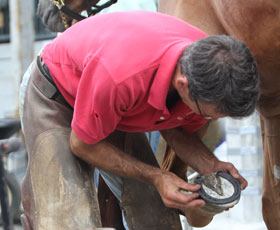
Your horse needs regular hoof care and farrier visits for his health and soundness. Read on for all of our resources on diagnosing and treating common hoof ailments, recognizing lameness, and developing a plan with your veterinarian and farrier...
nutrition

What’s in your horse’s feed bucket? Good nutrition is the key to a healthy horse. Learn all about feeding a horse and meeting his nutritional needs.

chestnut horse in a field

Spooky Stuff

Since coming to live in a world designed by people, horses have had to learn how to accept the sights and sounds of strange things. Plastic bags, rattling metal roofs and blowing paper can be cause for alarm. The...
Traditional horse and rider parade outfits, such as you might see in the famous Rose Parade, or of the type Roy Rogers and his mount Trigger wore, are awe inspiring with their incredible ornamentation. There's silver everywhere—conchos and shiny...

Stay Clean at Shows

When it comes to grooming for a show, most of an equestrian’s energy ends up focused on the horse; but a rider’s turnout needs to be neat and tidy, too. Here are some strategies to help you stay as spotless as...

Proof Is In The Pasture

Pasture-kept horses have the ability to interact socially and are exposed to a rich environment, but have less contact with humans than their stall-kept counterparts. A 1997 study* has found that in spite of decreased human intervention, young pasture...

Healthy Pastures

I have two horses on an acre of pasture grass. I supplement them with hay, but I’m wondering if you can give me some pointers on pasture management? A healthy, active pleasure horse can obtain 100 percent of his nutritional...
Learn to identify poisonous plants in your horse’s pasture by visiting these university websites. Plant photos, toxicity ratings, signs of poisoning in horses, first aid and prevention are just part of what you will find at:• Cornell University—www.ansci.cornell.edu/plants • Purdue University—www.extension.purdue.edu/extmedia/WS/WS_37_ToxicPlants08.pdfRead more...
0FansLike
0SubscribersSubscribe
We use cookies to help personalize content, tailor and measure ads, and provide a safer experience. By navigating the site, you agree to the use of cookies to collect information. Read our Cookie Policy.
OK