0 ITEMS
  • My Account
  • Holiday Gift Guide
  • Podcast
  • Webinar
Subscribe Combo
Enable cache13

Horse Care

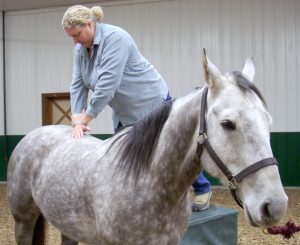
 Horse care is the most important aspect of ownership. The topics that Horse Illustrated has covered include: behavior, deworming, grooming, farriery, dentistry, adoption, welfare, charities within the industry, overall health (such as diseases and conditions), injuries, wound care, lameness, mare and foal care, nutrition, pest control, safety, seasonal management, senior care, vaccinations, and much more.To help your horse be healthy, you will want to work with an equine veterinarian, farrier, and equine dentist. In addition, there are alternative practitioners, such as equine chiropractors, physiotherapists, massage therapists, etc. Always review the qualifications of someone before you let them help you with your equine best friend.
When is pasture safer for the insulin resistant (IR) horse – late afternoon or early morning? Google this question, ask your vet, or talk to a friend and you will get both answers! How frustrating! It’s time we cleared...
In our Ask the Vet column, Dr. Lydia Gray answers your horse-health questions at horseillustrated.com/AskTheVet. Q: I have an Appaloosa/Paint mix, and my farrier once mentioned to me to be careful about moon blindness. What is it, what breeds does...
In our Ask the Vet column, Dr. Lydia Gray answers your horse-health questions at horseillustrated.com/AskTheVet. Q: I have a horse that was diagnosed with anhidrosis. Aside from medication, is there anything I can do to help him? I once saw...
In our Ask the Vet column, Dr. Lydia Gray answers your horse-health questions at horseillustrated.com/AskTheVet. Q: How can you tell if your farrier is doing a good job?A: This question was answered by SmartPak’s Hoof Health Consultant Danvers Child, CJF...
Q: With show season coming up, is it truly harmful to shave/trim a horse’s facial whiskers since they are "connected" to their brain cells?A: You’ve asked a fascinating question, as there’s much more to whiskers than meets the...
Horse owners have the opportunity to vaccinate their horses against a whole variety of infectious diseases. Unfortunately, they’re also confronted with a whole variety of advice from a whole variety of sources—and most of them sound at least somewhat...
Some horse owners choose to get vaccines from catalogs or feed stores, and vaccinate their horses themselves. Others may choose not to vaccinate at all. Is that OK? Assuming that the product is good, has been properly stored, and properly...
  Eastern Equine Encephalitis/Western Equine Encephalitis (EEE and WEE) Largely safe, minimal risk, pretty effective at preventing very serious diseases that kill horses. Depending on where you are, your veterinarian might even advocate vaccinating more than once a year (and that...
Pony by Geoffrey Gallaway on flickr.com/CC BY-SA 2.0Most of us harbor a dream of our horse out in a lush field of emerald-green grass, eating away the days to his heart’s content. But this picturesque vision can...
 Knowing how a horse’s senses work—and how they’re different from human senses—will help you understand how the horse perceives his reality. A horse’s senses are keener than a human’s. They take in every bit of information possible from their...
0FansLike
0SubscribersSubscribe
We use cookies to help personalize content, tailor and measure ads, and provide a safer experience. By navigating the site, you agree to the use of cookies to collect information. Read our Cookie Policy.
OK