Enter our 12 Days of Christmas Giveaways here!
0 ITEMS
  • My Account
  • Holiday Gift Guide
  • Podcast
  • Webinar
Subscribe Combo
Enable cache13
Home Horse Riding and Training Groundwork Exercises

Groundwork Exercises

Groundwork involves working with the horse from the ground using a halter and lead rope, a longe line, a cavesson and neck rope, long reins, etc. There are many lessons that are helpful to teach from the ground. Working on ground lessons with your horse can improve communication, teach a horse a new skill, work on problem areas, allow you to assert your leadership skills with the horse, work on a complicated skill before trying it mounted, and gives your horse physical and mental challenges. It's a great way to mix up your horse's training and keep things fresh. Groundwork is also helpful if you can't ride that day due to weather or footing issues or if your horse is healing from an injury and can't be ridden. It's also a great way to first teach a horse about obstacles and how not to be fearful of certain objects, like a tarp, water, a bicycle, etc.
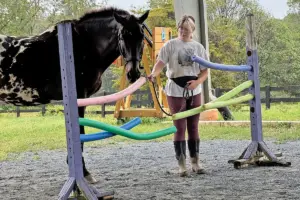
Every horse is different. Some prefer moving fast, and some favor a slow stroll. Some enjoy crunching carrots, and others delight in gobbling grain. Some love crossing creeks, while some prefer to brave bridges. It’s safe to say no...
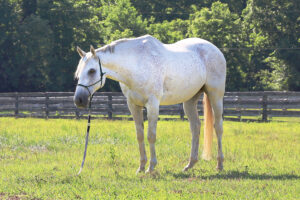
A gray gelding.

Master the Ground Tie

Some exercises we teach our horses require the horse and handler to learn a series of complex steps that require intense focus and impeccable timing. The ground tie isn’t one of those exercises. Although simple, trainer Clay Cavinder explains that...
Feeding time always seems like a rush. Hurry up and feed so you can continue with your barn time or head off to your kid’s ball game. But if you’re in too much of a rush, you may not...
Obstacles for horses to cross appear on the trail, in the show ring and even in between the pasture and barn. (Hello, newly fallen tree branch that wasn’t there yesterday!) Teaching a horse to confidently approach these obstacles from...
When it comes to liberty training, we start with teaching the horse to come on command, which was discussed in Part 1 of this series. After the horse is coming willingly, we start calling him to us while he...
Working a horse at liberty is one of the most fun and rewarding ways to train them. When a horse is free to do whatever he wants, but he chooses to stick with you, it gives a certain thrill...
Animal behaviorist and equine welfare expert Emily Weiss, Ph.D., reveals the key to solving any equine behavior challenge: positive reinforcement. If you’ve ever wondered why your horse behaves a certain way, or why you’re having trouble solving an equine behavior...
Training a horse to show in hand can be time well spent. The most obvious reason is that it helps the horse show at his best in breed classes or inspections. But beyond that, it helps the horse and...
If you’ve been around horses long enough, you’ve likely come across at least one who actively tries to evade being bridled. Perhaps this horse tries backing away, raising his head far out of reach to avoid the bridle, or clamps...
Injury. Behavior. Age. Fear. Each of these factors can be a reason why equestrians put away their saddle for a long or short period. But even if saddle time is on pause, strengthening a partnership doesn’t have to be....
0FansLike
0SubscribersSubscribe
We use cookies to help personalize content, tailor and measure ads, and provide a safer experience. By navigating the site, you agree to the use of cookies to collect information. Read our Cookie Policy.
OK