The panic sets in as soon as you see it: Your horse is hopping around, dead lame. You breathe a sigh of relief when your vet gets out the hoof testers and tells you it’s “just” an abscess. But what treatment can you use to get a hoof abscess to heal as quickly as possible?
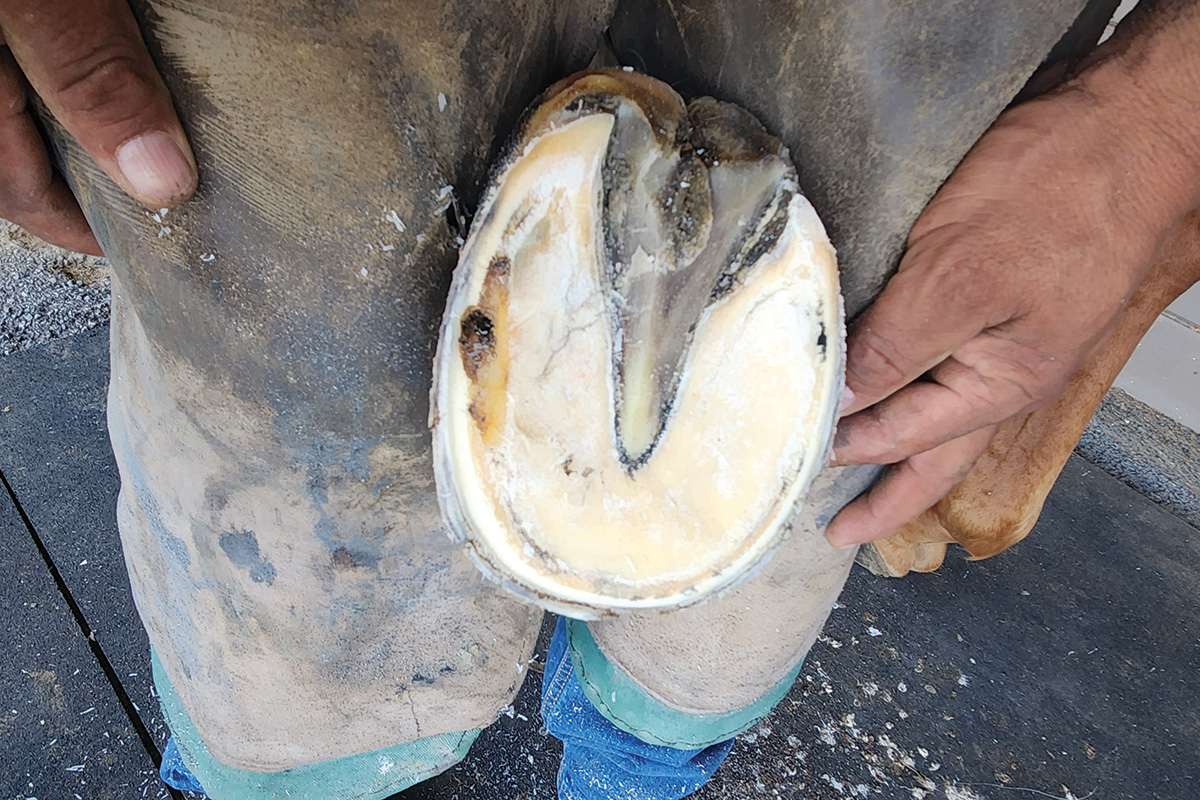
Hoof abscesses are caused by bacteria entering the hoof through a sole bruise/puncture or a diseased white line. White blood cells build up to combat the bacteria, creating painful pressure around a pocket of fluid.
Treatment involves encouraging the abscess to pop, then keeping the area clean while the abscess’s track through the hoof heals.
If you’ve ever dealt with an abscess, you may still have nightmares about toting hot water to the barn in winter and asking your fidgety horse to please stand in a bucket for just a few minutes longer. But you can banish abscess apprehension using tools you may already own.
To Soak Or Not To Soak
Soaking a horse’s foot is one of the oldest remedies to draw out an abscess; many people swear that soaking the hoof in water will soften the hoof, offering a path of least resistance to the pocket of pus looking for a way out of the hoof capsule. However, getting a horse to stand—quietly—in a 5-gallon bucket of warm water for up to 30 minutes can be nearly an act of Congress.
If the abscess is trending toward the sole of the hoof, standing the horse in a shallow rubber feed pan may work—and make him less fidgety, since he has more room to place his foot on the bottom of the pan. If the abscess needs to work its way out through the coronary band, however, a shallow pan won’t be an option, as it will be impossible to get the water up high enough to cover the area.
Supplement the Soak
While water alone will soften the hoof to encourage an abscess to burst, there are additives that can be used to offer even more drawing power. These can include:
◆ Epsom salts: Easily purchased at the local grocery store, Epsom salts (magnesium sulfate) offer both inflammation relief and antimicrobial benefits. Adding a cup to the soaking water will help draw out the infection in the horse’s hoof.
◆ Bleach: You’d be hard pressed to find a household without at least one gallon of bleach, and there are plenty of equine- and farm-related applications for it. Best for abscesses is the 5.25 percent household bleach, which destroys bacteria, viruses and mold.
◆ Apple cider vinegar: Adding a ¼ cup of vinegar to 1 gallon of warm water will allow the acidity in the apple cider vinegar to draw out infection.
◆ Baking soda: Adding 1 to 2 tablespoons of baking soda (sodium bicarbonate) per quart/liter of warm water has also been known to draw out an abscess. With disinfectant, antibacterial and antifungal properties, baking soda can be used in conjunction with Epsom salts in soaking water.
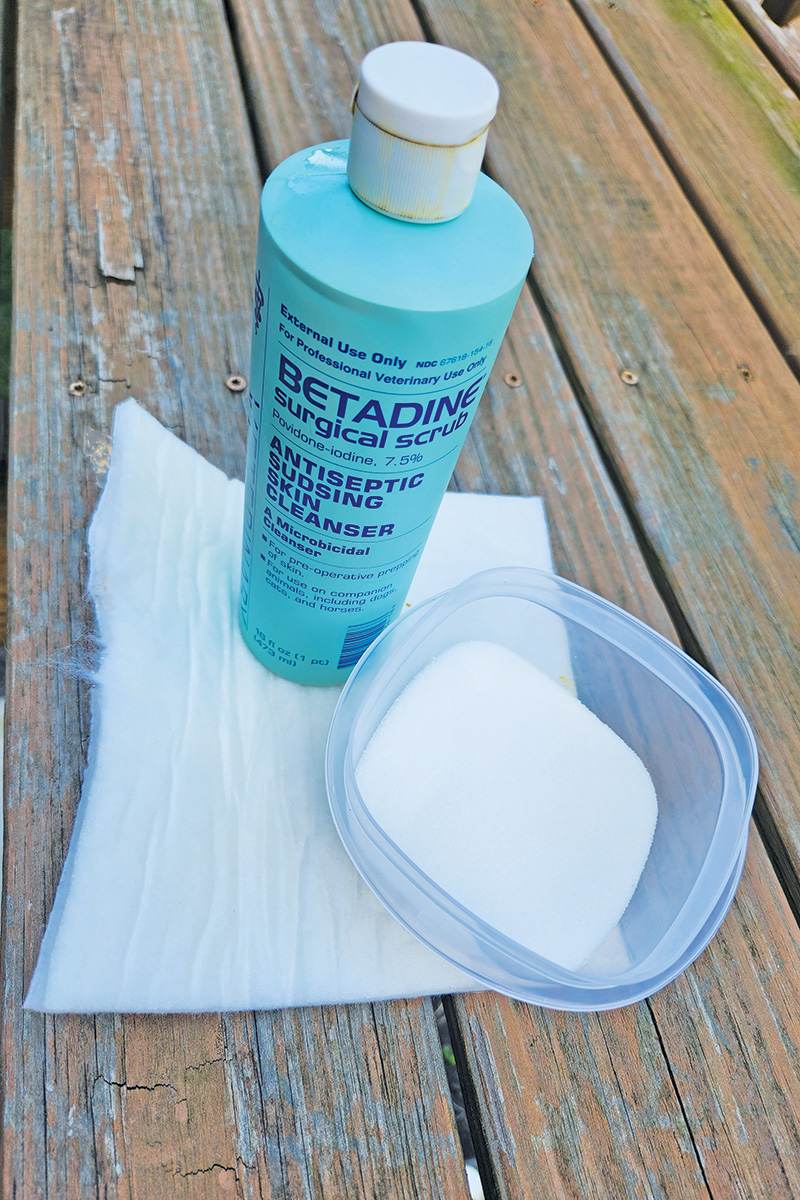
◆ Povidone-iodine (Betadine): Adding 2 ounces of povidone-iodine, possibly in conjunction with 1 cup of Epsom salts, to water that reaches just over the horse’s coronary band can help draw out an abscess.
Non-Bucket Options
If you can’t seem to get your horse to stand in a 5-gallon bucket, but would still like to soak his hoof, there are other options.
◆ Muck tubs: Some horses are more likely to stand with both their feet in a larger bucket, like a muck tub.
◆ Hoof soaking boots: Made of nylon, hoof soaking boots go on over your horse’s hoof like a sock and contain an interior bag you can change out to keep everything hygenic. A foam pad at the bottom offers support and protects the bag from being worn through by the horse’s hoof. Fill the bag with water and any additive you choose, place the horse’s leg in the boot, and close it with the straps provided.
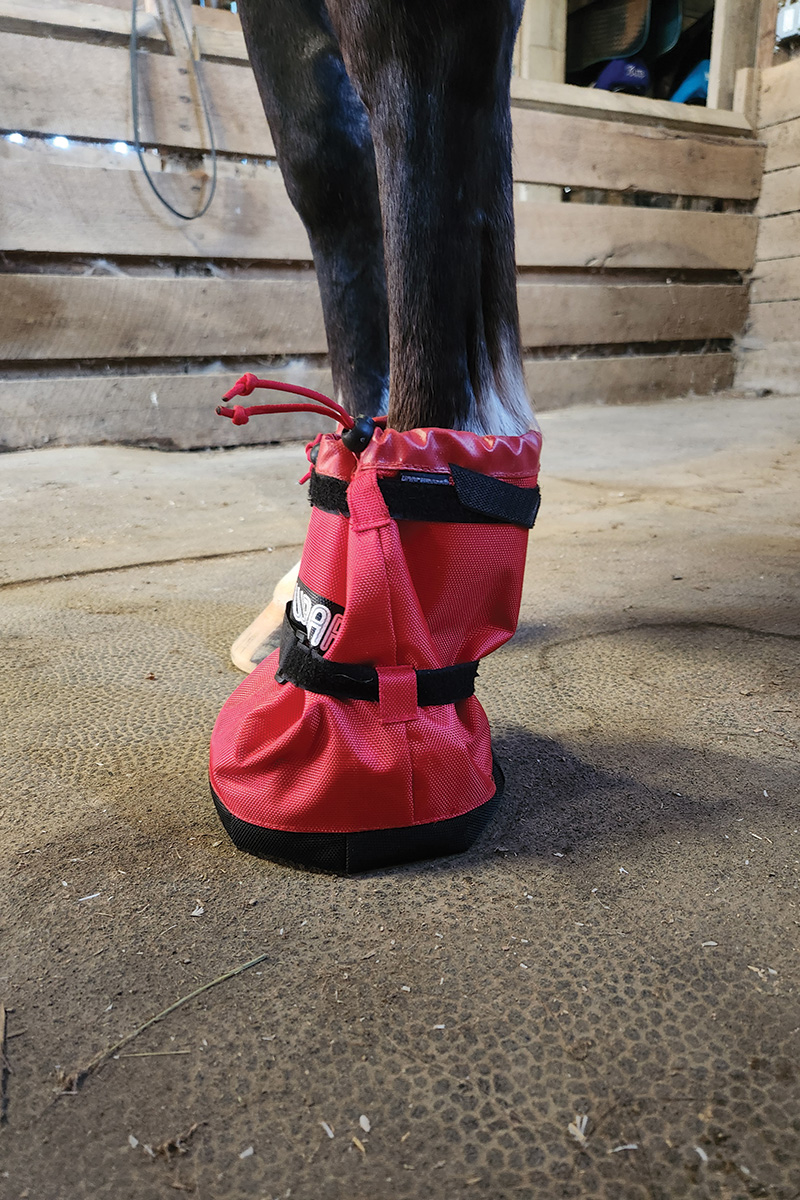
◆ Ice boots: Often used after strenuous exercise, these tall, up-to-the-knee boots can also be used to soak abscesses.
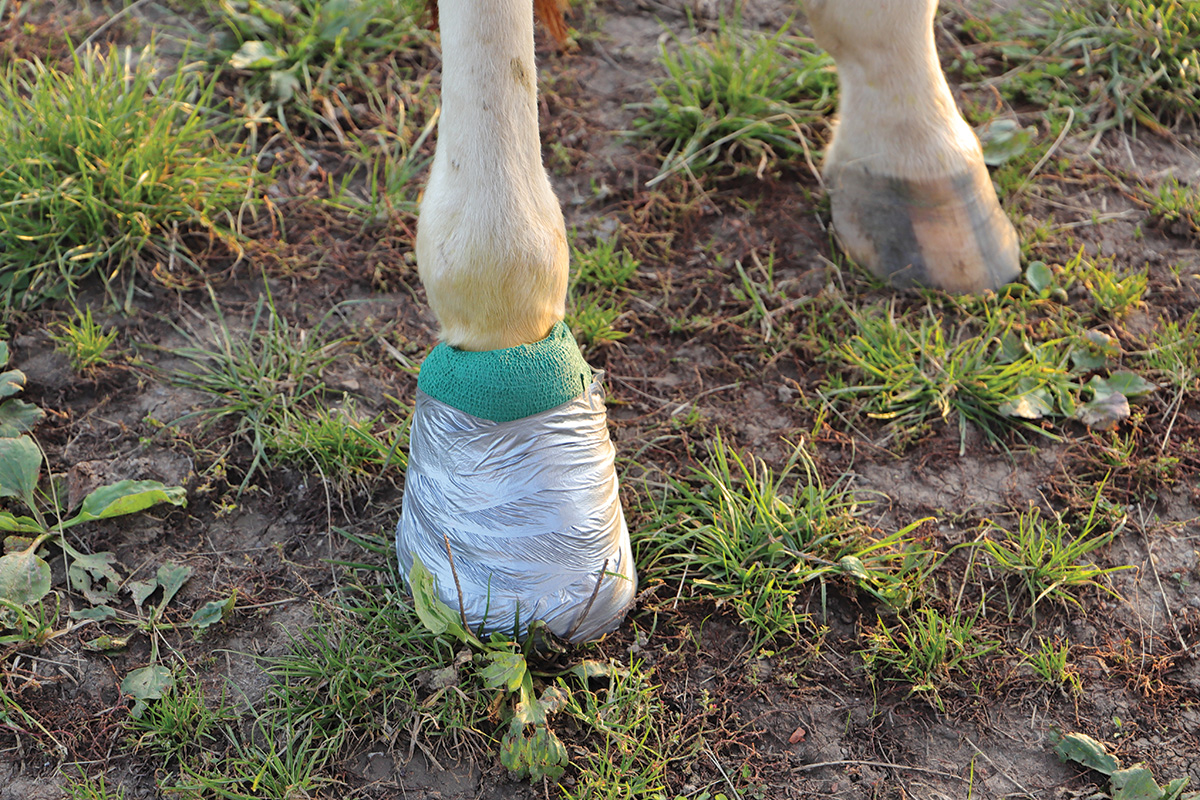
◆ Plastic bags: If you’d rather repurpose something you already have on hand, try using a heavy plastic bag (like the kind some supplements come in) or some IV bags (ask your vet to save a few for you if you have none on hand). Applying a soaking bag to the horse’s foot allows him to move around instead of having to stand still while soaking. Duct tape on top of the bag around the ankle will keep it secure, and you can cut the whole thing off with bandage scissors when done.
A word of caution: If you’re strapping anything around your horse’s leg, it’s worthwhile to get him used to having something on his foot before adding water.
Poultice Power
Whether you choose to soak or not, all horses with abscesses benefit from a pack or poultice applied to the affected hoof to act as a longer-term drawing agent.
Commercial pads that already contain drawing agents can be a timesaver. One of the most popular is Animalintex, a cotton wool pad that contains tragacanth gum and boric acid; it’s available in both sheets and hoof-shaped pads. You can wet it with hot or cold water, apply to the hoof, and wrap the whole thing with Vetrap followed by duct tape.
Poultice Alternatives
You can also use cotton 4×4 pads, cotton wool, gauze or diapers to pack the hoof if no poultice pads are handy. The following are often added to the packing material and placed against the sole of the hoof to act as drawing agents before securing on the hoof.
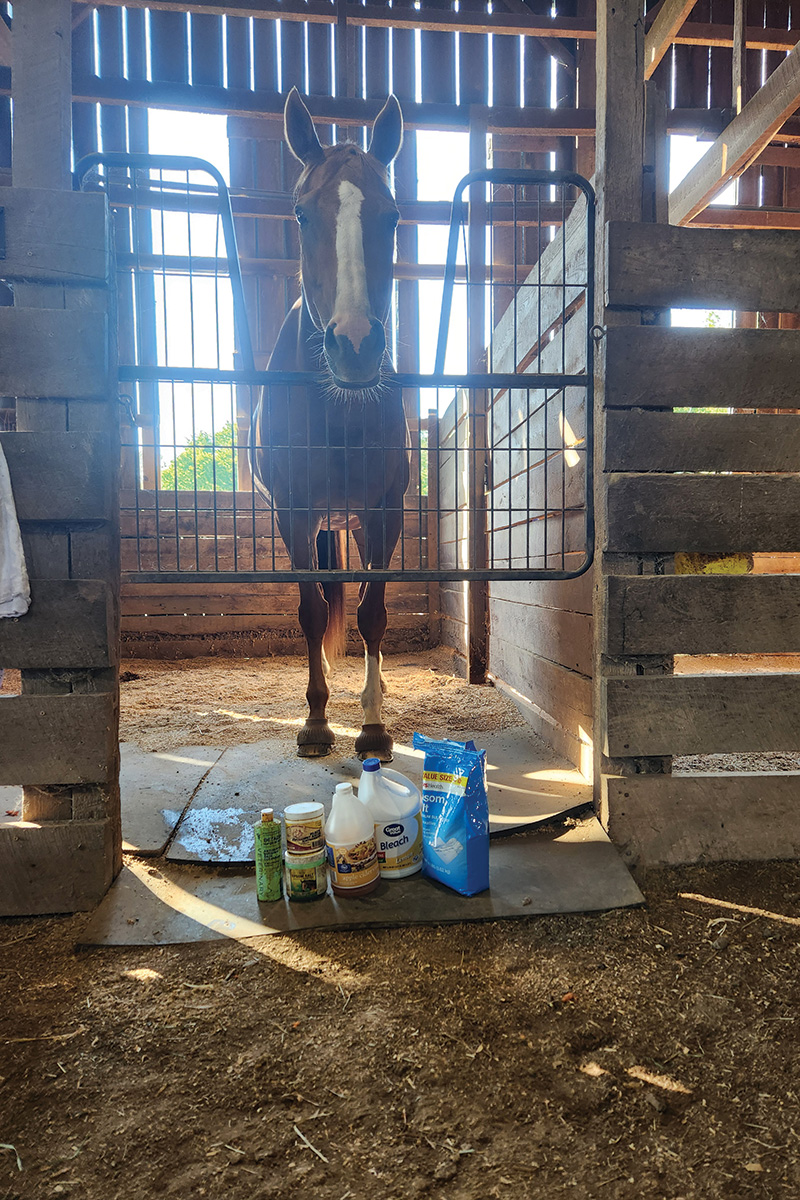
◆ Baking soda: Add water to baking soda to make a paste and slather the sole of the hoof with the mixture; some people choose to add Epsom salts to the mixture as well.
◆ Linseed: Damp, warm cooked linseeds that are boiled and made into a mash can be packed into the hoof and wrapped.
◆ Epsom salts and Vaseline: Combine both ingredients to make a gel that sticks to the bottom of the hoof.
◆ Manuka honey: the antibacterial properties of honey are well documented; it draws out toxins, as well as cleans and prevents infection and encourages healing once the abscess track is open.
◆ Sugardine: Combine ¼ cup sugar with 3 tablespoons of povidone-iodine solution until it makes a thick, granular paste to slather on the bottom of the hoof. Sugar absorbs the moisture in which bacteria thrives; the povidone-iodine helps kill any bacteria that is present.
◆ Ichthammol: Stinky and incredibly sticky, this old-school remedy for drawing an abscess is still one of the best.
◆ Cabbage leaves: Cabbage leaves boiled in Epsom salt water to make them pliable is a lesser-used home remedy that draws out infection and eases pain. The leaves can also be chopped, boiled and packed into the hoof sole.
◆ Sauerkraut: No time to boil your own cabbage leaves? Packing the hoof with sauerkraut has also been said to work; the sauerkraut’s acidity makes it hard for bacteria to survive.
Wrapping
Once you’ve picked your drawing agent and slathered it on, you can create your own wrapping using heavy-duty plastic bags (like the ones some supplements come in), Vetrap, and duct tape, or you can purchase a pre-made boot to hold the dressing in place.
These boots offer a variety of fasteners depending on the brand; they may have zippers or Velcro straps. The best boot for your horse will be one that is easy to get on and stays on—some horses are Houdinis about removing things.
Key Takeaway
Abscesses can be painful for the horse and frustrating for his owner, but with perseverance and a bit of ingenuity, they will (hopefully) resolve rapidly. If at any time you’re concerned that the abscess is not resolving or that your horse’s pain is unmanageable, reach out to your vet for guidance.
This article about hoof abscess treatment options appeared in the September 2024 issue of Horse Illustrated magazine. Click here to subscribe!