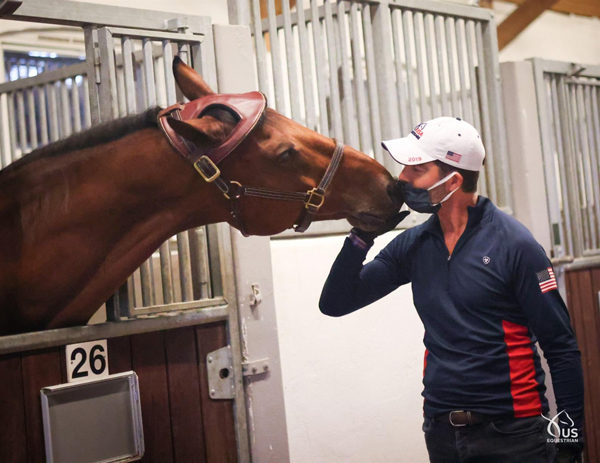
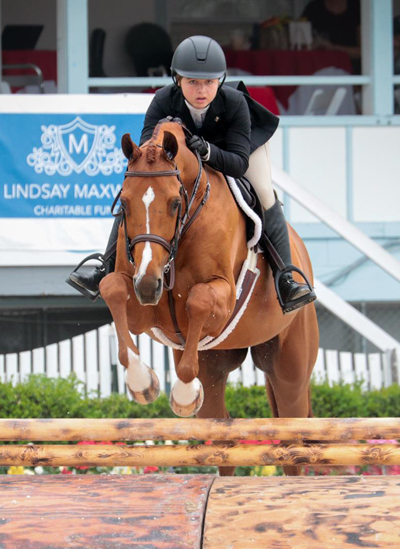
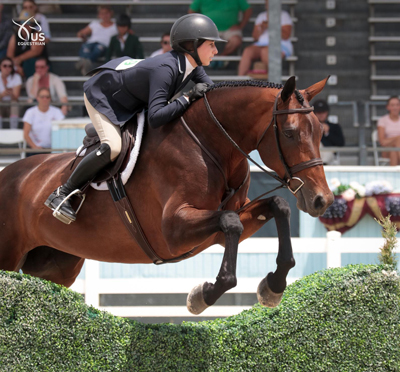
Nick Wagman and Don John (aka, DJ). Photo Courtesy United States Equestrian Federation
After arriving safely at the venue in Tokyo, Don John, who was named to the team with Nick Wagman as the traveling reserve, sustained a minor injury. He has continued to show improvement, but after further evaluation with the team veterinarian, the decision was made to withdraw him before the start of competition out of extraordinary precaution, and though it is believed he would have passed the horse inspection if presented, the team felt that he should not be considered to compete to ensure he has the proper time to fully heal. The team will present the three selected team combinations of Adrienne Lyle and Salvino, Steffen Peters and Suppenkasper, and Sabine Schut-Kery and Sanceo.
Stay up to date with USA Dressage in Tokyo, follow the team on Facebook and Instagram and US Equestrian on Facebook, Instagram, TikTok, and Twitter. Use #USADressage. Also, visit our Tokyo 2020 Hub for Olympic-specific content and information.
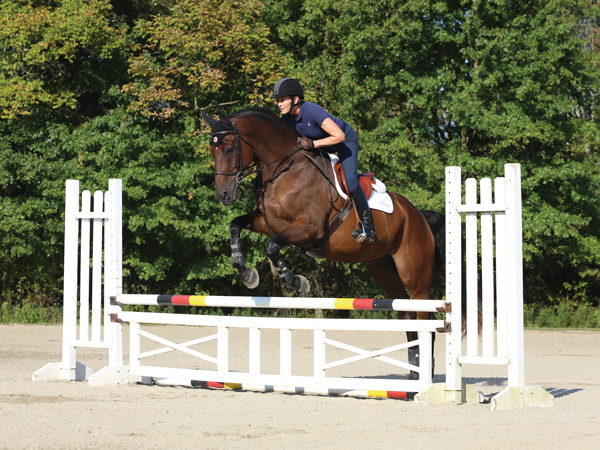
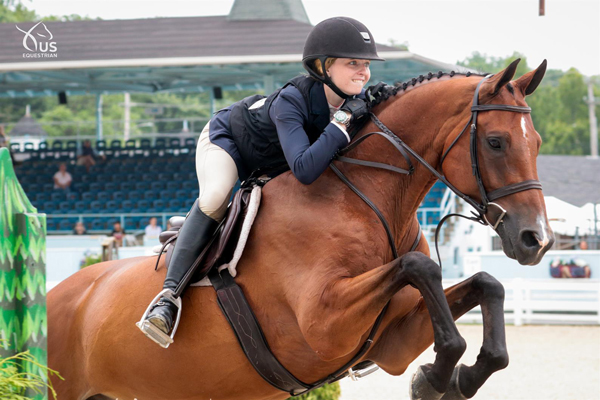
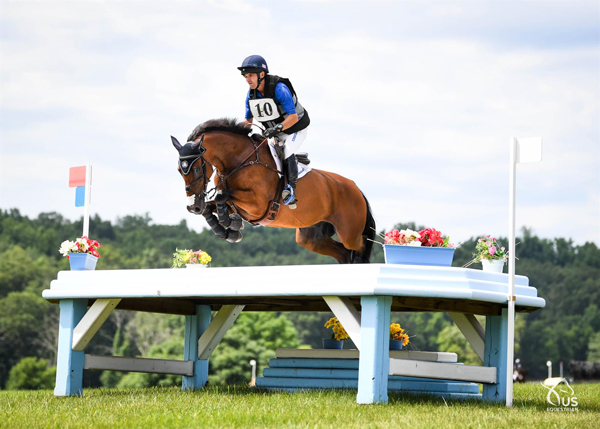
If you show over jumps, your preparation at horse makes all the difference. Photo by Amber Heintzberger
Your horse isn’t going to need a great deal of additional work over fences before you go to a show. In fact, whether you’ll be competing your horse in the hunter, the equitation, or the jumper division, it’s entirely too easy to school too much and overdo your preparation over jumps. Remember, he knows how to jump. While he does depend on you to establish pace and direction, what he needs you to do most is stay out of his way and let him do his job.
I’ll give you a jumping school that you can do once at home a day or two before you leave for the show. With a couple of minor adjustments, which I’ll mention, it should do an adequate job of preparing your horse for any of the three divisions. It consists of simple single fences and lines. They aren’t challenging, but they should remind your horse of the job you’ll be expecting him to do for you.
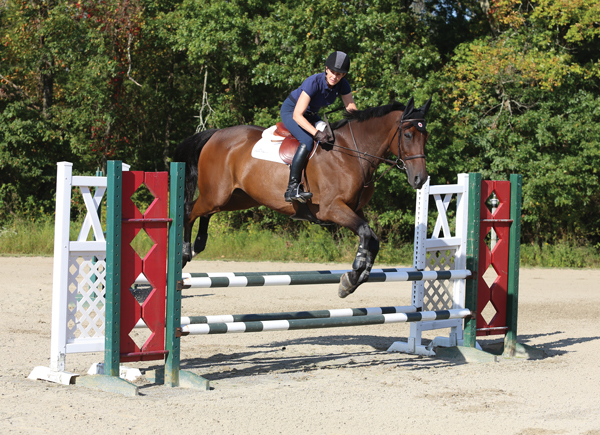
In the show ring, he probably won’t just meet “plain vanilla” fences, so make the obstacles you take him over now a little interesting: use some color, drag in a flower box or two, include a liverpool if you’re on a jumper. The more varied the elements he meets now, the better off he’ll be when you show him.
The Right Warm Up
If you’ve been doing your flatwork consistently and correctly, warming your horse up for this jumping school is really just a matter of making sure he’s relaxed and loose and on the aids—it’s suppling, not training, like the preliminary stretching a runner or swimmer does before getting down to work.
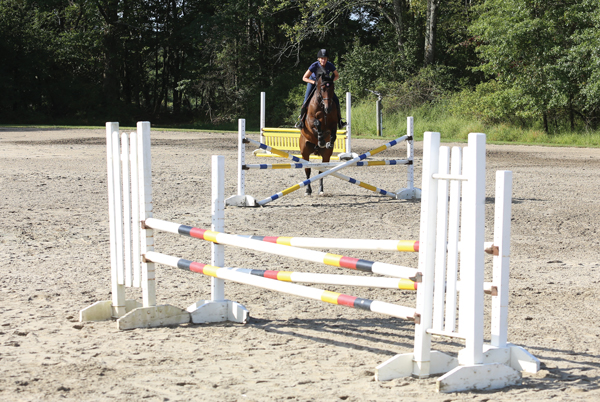
If you compete in jumpers, get comfortable with a square oxer at home. Photo by Amber Heintzberger
It’s also your opportunity to set the tone for the day, which should be, “Today we’re going out to jump; it’s going to be fun!” No dressage, no drilling. If you were working through a difficult problem yesterday and didn’t quite get it solved, let it alone for today.
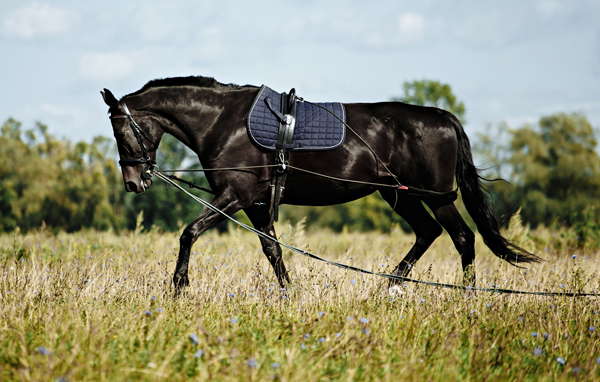
If your horse is the hot, excitable type, though, be sure he gets turned out or give him 10 minutes or so on the longe to get the bucks out and relax him before you start the school. If he’s excited, you’ll get excited—something I see all the time with riders who come to my clinics—and neither of you will pay enough attention to the school to benefit from it.
Ten or 12 minutes is probably enough for your warm-up (although you can certainly do a couple of minutes more if you’re still feeling stiffness). Start with a couple of minutes at the walk. Then go on to the trot and do some lengthening, some shortening, a little lateral work—just enough to review basic skills, check responses, and loosen up any stiff spots; you’re not asking for his best dressage—that can wait for your next flat session. (But if your horse tends to be stiff on the right, for example, do a little right shoulder-in.) Follow with a couple of minutes in the canter—just enough to get the edge off. Before you start jumping, you should feel him being round, light, “in your hand,” “on the aids”—which won’t take long now because of all the days you’ve put in on the flat.
Starting Off
This jumping school is for you as well as your horse, of course. From the warm-up to the end, keep thinking, “Eyes up, heels down,” and work on keeping your position correct, supple, and relaxed. Don’t let yourself get excited about the jumps—your horse knows how to do them, remember?—but focus on position, pace, and rhythm.
If you’re on a quick, hot horse, think, “Slow, slow, slow”; your body language will carry the message to him. If your horse is the lazy, dead type, think of a quicker, more active rhythm. Be sure you stay calm and relaxed.
Begin the actual school by trotting a few very low obstacles—a pole on the ground, a brush box, a little cavalletti—focusing on keeping your horse straight and forward. Then make sure your turning aids are working: go over one or two of them again, this time turning to the left over the obstacle; then once more turning to the right. Be conscious of how you’re using your eyes.
Now trot a couple of fences with a little more height (at least 2′)—a cross-rail, a low wall, or a low vertical—to make sure your horse is relaxed and smooth and maintaining an even rhythm. He should trot all the way to the bottom of the jump and stay very, very straight.
Canter those same low jumps now, concentrating on keeping a steady rhythm. Meet them straight first, then on a little angle; stay very relaxed—and maybe even relax your contact at the takeoff if your horse is confident enough.
Stop once or twice on a line after the fence; then to encourage suppleness if you’re on either a hunter or a jumper, make a couple of turns following the landing, left and right—and try not to make a big issue out of it.
From single fences, go on to a few lines that pose questions, as the lines in my jumping exercises have done. Depending on the division in which you’ll be competing (see the variations that follow for more specifics), ask the horse to lengthen, or shorten, or both (in a three-element line); use verticals and oxers, straight lines and bending lines; add strides, leave strides out; make an oxer-to-vertical into a vertical-to-oxer by circling around and riding the line in reverse.
Make the fences just a little more challenging by raising the rails a couple of holes or widening the oxers a few inches—limited equipment doesn’t have to mean lack of variety. You don’t have to do much; you’re just reminding the horse of what he knows how to do.
Basically, you should remember from the earlier work you’ve done what your strong and weak areas are. Work on your weaknesses—if it’s your eyes and turns, do more circles; if it’s that generally you go too slow to your first fence, practice pace and soft hands. Know your horse and yourself so that you go to the warm-up with a plan of what you need to do to produce your best effort in the ring.
Add or take away strides in a three-element line to increase your horse’s responsiveness. Photo by Amber Heintzberger
Variations For Your Discipline
For Hunter Classes: Set up lines similar to those you’re likely to find at the show. Raise a few of the fences to the height he’ll be meeting, with distances between on a normal 12-foot stride, especially if you’re competing in junior or amateur classes. On an older horse, or one being prepared for regular working classes, you may want to keep him sharp by lengthening a few distances a foot or two. Practice the lines over and over—not pulling up after each one, but just as you’d ride them at a show, continuing and maintaining a good rhythm.
For Equitation: Your horse will be meeting more challenges than the hunter will, so do more with adding and leaving out strides, riding different options to the same fence, approaching on turns, and landing and turning. Run down your list of skills—eyes, hands, seat, lengthening, shortening, jumping off turns.
For Jumper Classes: While I would make the jumps a bit bigger and tougher if I were preparing a horse for a big, important competition, for regular jumper classes I keep the school simple and relaxed and the fences not too big. I might include a liverpool, a square oxer, a distance or two as much as 6 feet off normal, and some fairly gymnastic combinations, but I’d he careful not to overtrain or overface the horse.
No matter what the discipline or the level, the overall feel of your jumping school should be very relaxed. Certainly the more advanced you and your horse are, the more challenging your practice can be. But be smart. You want to remind your horse of how to do what he knows how to do correctly, not challenge him or yourself to do something new or different.
Generally, any time you’re going to a competition, a positive feeling is very important.
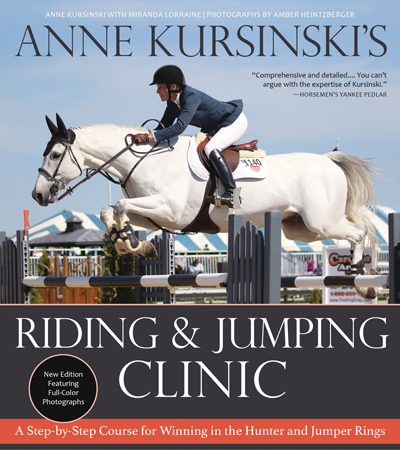
This excerpt from the new edition of Anne Kursinski’s Riding & Jumping Clinic by Anne Kursinski with Miranda Lorraine is reprinted with permission from Trafalgar Square Books.
This article on prepping your jumping horse and how not to school too much appeared in the June 2020 issue of Horse Illustrated magazine. Click here to subscribe!
Lack of riding time is a common complaint among adult amateur equestrians. Between professional careers, family commitments, and an often-overwhelming number of other responsibilities, riding for a short time, even a few days a week can be tough to fit in. But, even if you only have a short time to devote to working with your horse, there’s a lot that can be accomplished in less than an hour with some longeing and riding exercises.
Based outside of Franklin, Tenn., Raffi Kechejian is a hunter/jumper trainer who gives lessons to children and adult amateurs at his Parallel Farm and also at Heatherfield Horse Park near Chattanooga, Tenn. The 35-year-old trainer has been riding since the age of nine. Having come up through the ranks as an amateur, he’s well versed in the unique challenges and needs of amateur riders.
Longeing Exercises
Keeping horses fit can be a challenge for the adult amateur equestrian who doesn’t have a lot of time to ride. Luckily, there are a variety of longe line strategies to help you meet a variety of goals even if you’re short on time.
Kechejian says that it’s important to always have a plan and to keep it simple and fun for the horse.
For the series of exercises Kechejian recommends below, he suggests setting your horse up in side reins, or even better, a Pessoa Lunging System, which consists of a training surcingle with ropes, clips and pulleys attached to it and a breaching strap that goes around the horses hindquarters. However, he does advocate for correct use of the rig and cautions against getting the horse behind the vertical.
Once your horse is appropriately outfitted, they are ready for the following longing exercises:
1. Transitions
Make the horse trot two circles and then walk for a circle. By use your voice for the transitions while longing, it reinforces the idea of transitions to the horse. And it helps when you ride them, because longeing works through voice command, says Kechejian.
2. Poles
The purpose of poles is to improve your horse’s balance and keep him thinking during his time on the longe line, says Kechejian. Set up one or more poles and ask the horse to trot over them. You can even add in transitions. If using multiple poles, they should be set about five feet apart.
Kechejian likes to see the horse’s front end freed up and emphasizes that the biggest goal with these exercises is not to have the horse just run around in circles. “Depending on your horse’s fitness level, include more trotting than cantering,” he adds.
For longeing, Kechejian suggests a maximum of 30 minutes with 15 minutes max spent in each direction.
Riding Exercises
If you have a bit more time to ride, Kechejian suggests additional exercises after warming up with a good working walk.
“I think the biggest thing we don’t focus on is the walk,” he says. “When you get on your horse, you should focus on a working walk for the first five to seven minutes of your ride. This way, by the time you start asking for a trot, they are going to be engaged and listening to your leg.”
Once your horse is warmed up, you can try one or more of the following exercises:
3. Poles
Just as on the longe line, poles can be an invaluable training tool and can improve the horse’s balance.
Kechejian sets them five feet apart. Depending on how much the horse knows, he suggests starting with two to three poles, and then adds more—up to five or six—as the horse advances.
“And, as your skill level increases, you can also intersperse the trot poles with elevated ones,” he adds. “It’s a good walk-trot exercise.”
4. Serpentines and 20-meter circles
Serpentines and circles also work to improve the horse’s balance by keeping him upright and coming from behind. They also work to keep the horse moving off the rider’s inside leg. When executing this exercise, Kechejian urges riders to watch how much they use their hands and to focus more on using their leg to create the bend for the turn.
“Have a purpose when you ride and don’t focus on being stuck on the rail,” says Kechejian. “Incorporate serpentines and circles. Add in some trot poles and canter poles. Keep them busy and focus on a goal.”
5. Shortening and lengthening of strides
Shortening and lengthening the stride improves your horse’s rideability and balance. Kechejian suggests lengthening your horse’s canter stride down the long sides of the arena, then going back to a collected canter on a twenty-meter circle.
“As you flat them, make sure that you use all those gears to collect and lengthen the canter,” he says. “Go to a half seat and make them gallop and then bring them back. The ability to shorten and lengthen your horse comes into play when you want to jump them or do dressage.”
6. Spiral in and spiral out
This exercise is designed to improve your horse’s lateral movement in each direction, and it helps them to open up their shoulders and sit up. Start with a big circle, and then ride additional circles that get smaller and smaller. You can ride up to nine or 10 circles until you finally hit the smallest part of the circle. Then, start spiraling back out.
Kechejian reminds riders not to rush the exercise. “As you spiral in, it’s all off of your outside aids, but your horse isn’t over-bent to the outside. It’s just slowly moving the shoulder in a circle following the track you want, then open it back up and slowly ask him to move off of your inside aids.”
7. Transitions
This exercise gets the horse rocking back on his hind end and helps him become lighter in your hands. Kechejian suggests riders ask their horses for six canter steps and then six trot steps. Then add in six walk steps then go back to a canter. And then just change it up.
After about 25 minutes of these types of longeing and riding exercises, horses can be cooled down at the walk for five minutes.
Even with a short amount of time, by practicing these exercises on your own, you’ll be keeping your horse fit, solidifying his skills, and improving your own riding until you have more time to work with your horse or until your next lesson.
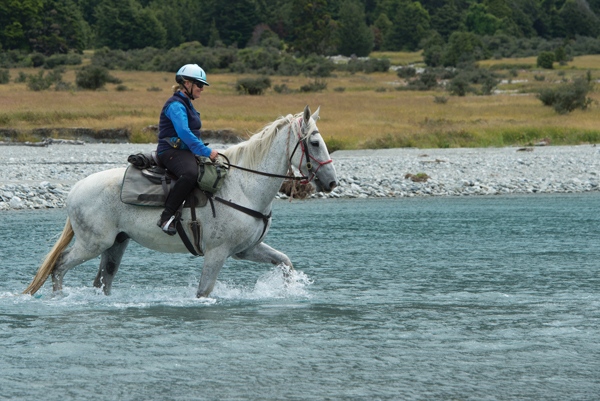
My New Zealand equestrian vacation all seems like a dream now. Today, as I write this, marks day 32 of my self isolation due to COVID-19, and I would give anything to be back in the saddle on Hannah, the Shire-cross mare that John Wall, owner of the New Zealand trekking company, gave me for the duration of my riding vacation in the destination of New Zealand.
It’s funny how being without a cell phone and internet seemed like a luxurious break from reality back in January, but now it’s my lifeline to the outside world, where a simple trip to the feed store seems like an adventurous outing.
If I were to pick a place to be transported to after this craziness is over, I would most definitely choose to be on Hannah, riding among the clouds on the South Island of New Zealand. It would be a welcome treat to revisit the five-day trek around the spectacular Lake Hawea, with a day of wine tasting in Wanaka followed by four days of climbing mountains on our steeds in the picturesque Ahuriri National Park.
If only I could go back to Hunter Valley Station where it all began, watching the horses graze in the paddock by the turquoise waters of Lake Hawea. Or to Boundary Hut, singing familiar songs with Angie Leckey, John’s wife and business partner, as she plays her ukulele around the open fire.
Just thinking about the camaraderie with the other women, the daily laughter, and the scenes from the saddle during my riding vacation in the destination of New Zealand puts a smile on my face.
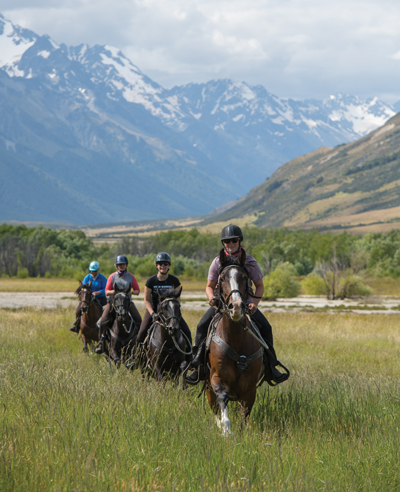
The final portion of the trip winds through Ahuiri National Park. Photo by Shawn Hamilton
Saddling Up for Adventure
Adventure Horse Trekking N.Z., Ltd., has been in business for seven years now, and hosts approximately 25 rides per year with their team of 76 horses. Many of the horses, including Hannah, are sired by Supreme, their Shire stallion.
Their draft-cross breeding program produces what John calls “a traditional Kiwi farm horse,” equally suitable for plowing or riding. Wall and Leckey are a welcoming couple, and I was honored to be a part of their first ride partnering with Wild Women Expeditions, a company that empowers all women through adventure travel of all kinds.
The Land of the Long White Cloud Ride begins at Hunter Valley Station, a working
farm and sheep ranch that sits on the banks of glacial-fed Lake Hawea, known as one of the most beautiful areas in New Zealand.
Our trek around the lake takes in jaw-dropping views from trails bordered with blooming manuka bushes, wild foxglove and purple lupins. For two nights in Boundary Hut, we live as the herdsmen do, without electricity or indoor plumbing.
Trekkers rode Shire crosses from John’s breeding program. Photo by Shawn Hamilton
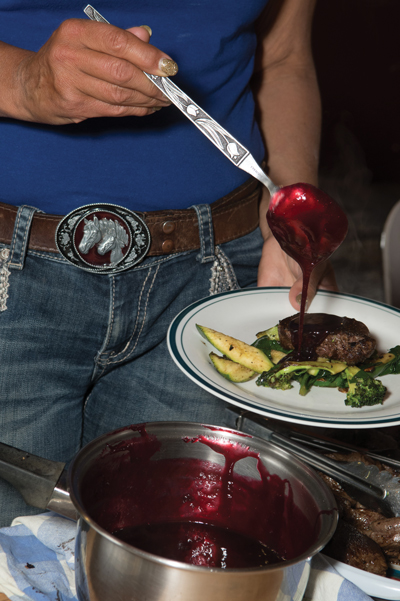
Megan Kelly, one of the wranglers and a professional chef, treats us to a home-cooked Kiwi-style Christmas dinner, which includes a shrimp and smoked salmon cocktail starter and a beef tenderloin with berry sauce main course. We know we are in good hands as we finish off this memorable meal with a Pavlova for dessert—a traditional New Zealand cake made of meringue, whipped cream and fruit.
Dinner is cooked in an outdoor kitchen and eaten at a large outdoor dining table underneath the mountains. As the sun sets and the full moon rises over the hills, we gather around the fireplace, singing familiar songs in unison to Leckey and her ukulele.
Riding Around the Lake
Beef tenderloin with berry sauce was part of the traditional Christmass dinner that Megan served to the group. Photo by Shawn Hamilton
The ride to Dingleburn Station on the other side of the lake includes water crossings and lunching on a beach, where some are brave enough to swim. Swans float in the water and Merino sheep dot the countryside.
At Dingleburn Station, we welcome the indoor plumbing, hot showers, and company
of Nicky Mead and her family, who run the 17,000-acre farm of Merino sheep and Angus cattle. Dingleburn Station was only accessible by boat, horse or air until the early 1960s, when the road was blasted out.
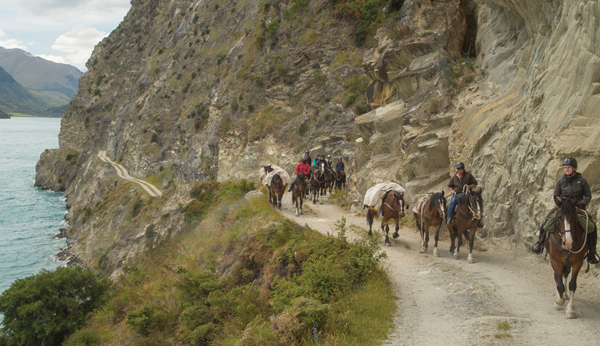
Leaving Dingleburn Station, Nicky gives us a demonstration of one of her Huntaway dogs at work gathering a large flock of sheep. We pass a waterfall, which provides power for the station, and climb to the top of a hill to take in the glorious views. The road out hangs over a cliff wall with the shores of the lake below.
Winding Up the Trip
Our only day out of the saddle features wine tasting at local wineries near Wanaka. We visit Maude Wines, which recently won an award for their Riesling. I purchase a bottle of Basket Case at Nanny Goat Vineyard, made from handpicked bunches of whole grapes, including the stems.
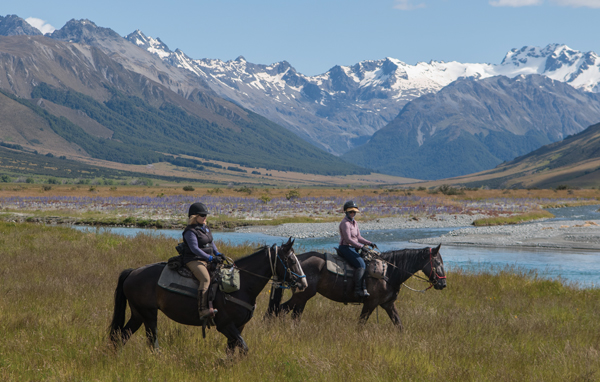
The final portion of the ride transports us to the picturesque Ahuriri National Park and Birchwood Station. There, we ride up switchback trails for mountainous views, gallop through lupin-filled meadows, and cross large bodies of water.
Dingleburn Station was only accessible by boat, horse or air until this road was blasted out in the 1960s. Photo by Shawn Hamilton
Lunches take place beside babbling brooks, on top of mountain peaks or beside a lake reflecting the surroundings.
It was a sad day when we said goodbye to the horses, hugged each other and went our separate ways, either beginning our journey home or continuing to see more spectacular sights of the island.
For me, it was a blessing to be able to take part in this wonderful journey, but now more than ever, I’m thankful for the opportunity. The Land of The Long White Cloud Ride is now most definitely on my list of must-do rides.
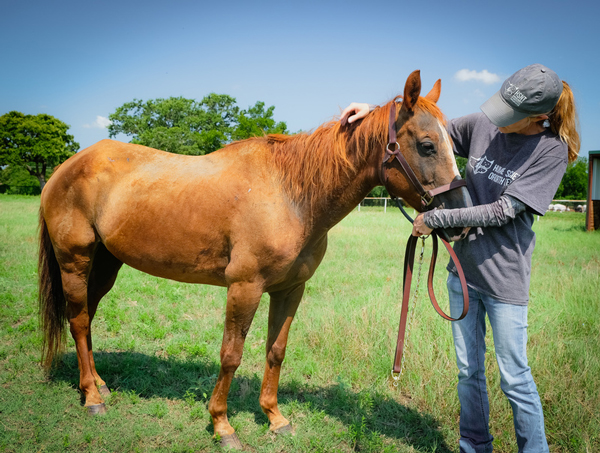
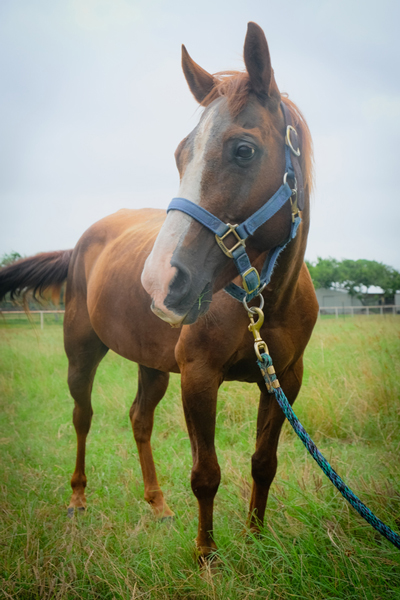
Photo Courtesy North Texas Humane Society of North Texas
Welcome to Horse Illustrated’s weekly installment of the My Right Horse Adoptable Horse of the Week, offered in partnership with The Right Horse. Cinnamon is this week’s adoptable horse/pony. Check back weekly for a new featured horse so you can find your #righthorse.
Photo Courtesy North Texas Humane Society of North Texas
Cinnamon is all sweet and no spice. This little girl had the odds stacked against her, and while she is still battling to gain weight and will need continued refeeding care, her vet has cleared her for take-off to a new home. Cinnamon’s ground manners are perfection, and she will do exactly as you ask. We don’t anticipate her being a riding horse anymore, and after her difficult past, a retirement home seems just right. She is so low-key, she would do best in a home with other very calm equines who knows she will move at her own slow rhythm. This little girl stands about 13 hands. Cinnamon stands great for the vet and is up to date on all vaccinations, Coggins, dental care, farriery, and is microchipped. Adoption fee subject to change as her skills improve. Please fill out an interest in adoption form on the Humane Society of North Texas website to learn more and schedule an appointment.
My Right Horse is the online adoption platform of The Right Horse Initiative, a collection of equine industry and welfare professionals and advocates working together to improve the lives of horses in transition. A program of the ASPCA, their goal is to massively increase horse adoption in the United States. To find more adoptable horses and foster horses, visit www.myrighthorse.org. To learn more about The Right Horse, a program of the ASPCA, visit www.therighthorse.org.
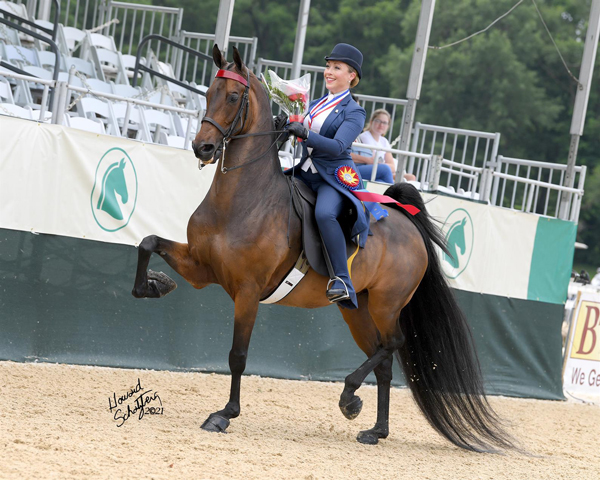
Kendra Wise on Partner. Photo by Howard Schatzberg/Courtesy U.S. Equestrian
Kendra Wise, of Tipp City, Ohio, has been crowned the 2021 USEF Saddle Seat Adult Amateur Medal Final champion at the 85th Annual Lexington Junior League Charity Horse Show. In the last class of the morning session on Wednesday, July 14, eight competitors demonstrated their skill during group railwork, and then executed an intricate individual pattern designed by judges Anne Judd, of Lutz, Fla.; Paul Boone, of Concord, N.C.; and Kristen Cater, of Dunbarton, N.H.
In the 21th anniversary of the Final, Wise rode Callaway’s Silent Partner, her 2008 American Saddlebred gelding, to the gold medal. Wise returned to the show ring with “Partner” in 2020 under the guidance of trainer Shelley Fisher after a 7-year hiatus from riding and competition.
“[Callaway’s Silent Partner] was such a good boy today,” said Wise. “He was very focused and on his game. I felt like we both tried to step up for each other and be there for each other. It’s been a long road coming to get this put together for this year, which has been so much fun. He’s come so far, and I feel like I’ve come so far. It’s so fun to get to come back.”
Wise started working with Partner, an experienced show horse competing in the youth, adult, and equitation divisions, last summer after returning to riding and competing as an adult. “The last time I competed like this was maybe seven years ago, but it’s been even longer since I’ve done equitation,” said Wise. “I think my last equitation class before this year was back in 2003!”
Isabella Privitera, of Mission Hills, Kan., was named reserve champion and silver medalist in the Final aboard Walterway’s Dignitary, Carl and Mary Privitera’s 2010 American Saddlebred gelding. Privitera is coached by Julianne Rafferty. At just 19 years old, this was Privitera’s first competition year as an adult amateur. At the end of her youth career, Privitera competed in the USEF Saddle Seat Medal Final and earned a top-five placing.
Relive the excitement of the 2021 USEF Saddle Seat Adult Amateur Medal Final on demand with USEF Network.
Stay up to date with U.S. saddle seat year-round by following USA Saddle Seat on Facebook and U.S. Equestrian on Twitter, Instagram, and TikTok. Use #USASaddleSeat.
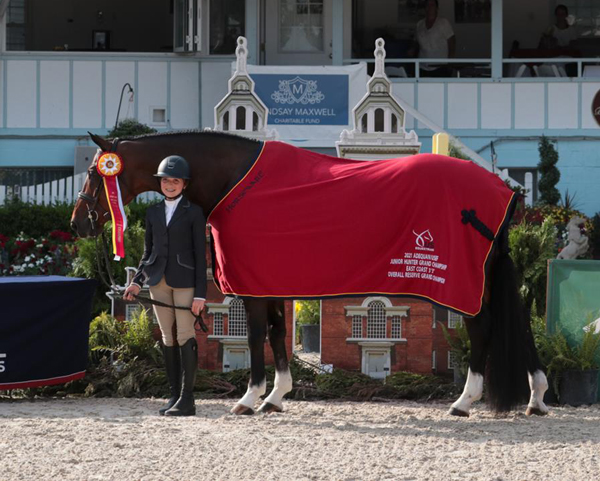
Kat Fuqua and Grand Remo, 2021 USEF Junior Hunter 3’6” Overall Grand Champion. Photo by Leslie Potter/Courtesy U.S. Equestrian
Winning at the Adequan/United States Equestrian Federation (USEF) Junior Hunter National Championship in the East requires near perfection, and Kat Fuqua, of Atlanta, Ga., and her gelding Grand Remo delivered this week at Pennsylvania’s historic Devon Fairgrounds on their way to winning the 3’6” Large Junior Hunter 15 & Under National Championship and the 3’6” Overall Grand Championship. Then the 2021 edition of the championship closed out with a bang on Wednesday with 213 entries from the 3’3” sections completing their Handy Hunter rounds in Devon’s Dixon Oval with Clara Propp and Arabesque coming out on Top
Adequan/USEF Junior Hunter National Championship – East Coast 3’6” Section
Kat Fuqua and Grand Remo were among the 324 total junior hunter entries competing in the East Coast final this week, marking a record number for the event, which returned to Devon for 2021 after a year away due to COVID restrictions.
Tuesday’s competition day started off with thick fog and occasional light drizzle, providing some relief from July temperatures, while the 3’6” entries completed their Under Saddle and Handy Hunter rounds in the Dixon Oval. The 3’3” sections started with their Classic Rounds in the Wheeler Ring, followed by Under Saddle in the Dixon.
As the 3’6” overall grand champion, Fuqua was awarded the Monarch International Perpetual Trophy.
Fuqua and Remo were well positioned heading into the Large Junior Hunter 15 & Under Handy Round on Tuesday afternoon after turning in a polished Classic Round on Monday and a standout performance in the Under Saddle on Tuesday morning.
Alexa Lignelli and High Society, USEF Junior Hunter 3’6” Overall Reserve Grand Champion. Photo by Leslie Potter/Courtesy U.S. Equestrian
Fuqua is no stranger to competing at the National Championship level, but she admitted she did have some nerves before the final phase of competition in Devon.
“I was actually very nervous going into the handy, because I had won the hack and the classic, so it was a lot of pressure; I wanted to be champion,” she said. “I always mess up the trot jump or chip the trot jump, so that was our main thing we were focusing on, and Remo was perfect!”
Grand Remo is a 2011 Dutch Warmblood gelding that Fuqua has owned and showed since 2019. “He has been so amazing,” she said. “He is just the best mover and I’ve had so much fun riding him. He’s really sweet and has been very successful in the 3’6” in 2020 and 2021.”
Fuqua’s trainer, Jimmy Torano, had similar high praise for Remo and for Fuqua, who also competed this week in the Small Junior Hunter 15 & Under section with her Westphalian gelding, Consent.
“We had a plan going into this,” said Torano. “The horses came here last week to really gear up for this championship. You can only call on these horses a certain number of times, so this was really our goal. Both horses stepped right up…these horses continue to go out and try to win every time.
“Kat is a real talent,” Torano added. “This didn’t happen by accident. She is a real talent with great horses and her parents back her. I think we have a good group behind us with the grooms, and I know these horses like the back of my hand. I think it is a whole team event that came to a head today.”
Fuqua and Grand Remo managed to hold on to the lead in the Large Junior Hunter 15 & Under section champion standing across all three rounds, but they had tight competition on their heels from Alexa Lignelli and High Society, the Dutch Warmblood gelding owned by The Lignelli Family. The pair performed nearly flawlessly in the Handy Hunter round on Tuesday afternoon, earning 90s from all three judges. Those scores gave them first place in the Handy and were good enough to put them in reserve for the section, as well as winning them the 3’6” overall reserve grand championship.
“He is such a special horse,” Lignelli said of High Society. “I’ve only had him since August of last year. He is an amazing horse, and we clicked immediately. He is also special, because of his jump and his style around the ring. He can really feel the atmosphere and thrives off of it. So today, with the crowd and the beautiful atmosphere, he really shined.
“It means so much to me [to be reserve national champion.] The whole team works so hard,” said Lignelli. “The occasion is so fun, and my horse was amazing. He deserves all the credit.”
Adequan/USEF Junior Hunter National Championship – East Coast 3’3” Section
Clara Propp and Arabesque, 2021 USEF Junior Hunter 3’3” Overall Grand Champion. Photo by Leslie Potter/Courtesy U.S. Equestrian
Clara Propp, of New York, N.Y., and Arabesque had the winning Handy Round in the Large Junior Hunter 15 & Under section on July 14, giving them the score they needed to place at the top of both the section and the 3’3” Overall Grand Championship. The pair performed like seasoned professionals throughout the finals, despite the fact that it was a first trip to the Junior Hunter National Championship for both of them.
“She’s only eight. She’s a baby,” Propp said of Arabesque. “She’s never been here before, let alone in this ring, so I’m really proud of her. I took a less handy turn to the first jump, because she’s a little less experienced, and I didn’t want to scare her going into the ring for the first time ever. But then, as I felt that she was comfortable, I could do all the rest of the inside turns and she was perfect.
“I’ve never been to Junior Hunter Finals before, so it’s a really special first time here,” Propp added. “I plan to have Arabesque for literally as long as I’m a junior. Forever. She’s so great, so I know I’m going to get to do big things with her and eventually move up to the 3’6”.”
“It’s so special [to have trained the champion] especially for her first time doing this on the horses, on a horse that’s never been here before,” said Krista Goossens, Propp’s trainer. “They both really stepped up to the plate. It’s exciting. We’ve been showing all summer, but we’ve kind of backed off the last couple of weeks and just focused on training a little bit to get ready and make sure everyone was feeling their best. Arabesque is one of those horses that really rises to the occasion, so she makes our job easy.”
Campbell Brown and Fleetwood, USEF Junior Hunter 3’3” Overall Reserve Grand Champion. Photo by Leslie Potter/Courtesy U.S. Equestrian
As the 3’3” Overall Grand Champion, Arabesque wins the Montserrat Perpetual Trophy donated by Sonoma Horse Park.
The Overall Reserve Grand Champion title went to the winners of the Small Junior Hunter 15 & Under section, Campbell Brown, of Fayetteville, Ark., and MMK Equestrian LLC’s Fleetwood. Brown had nothing but praise for her horse after her successful showing in Devon.
“He is the sweetest animal in the barn,” said Brown. “He likes cuddles, and my favorite part is the way he moves his lip. He always moves his bottom lip and makes this silly face and shows his teeth, and it’s adorable.”
Brown and Fleetwood won the Classic Round on Tuesday, meaning they were last in the order of go for the Handy Round. It was a little bit nerve-wracking, Brown said, but the handy was a chance to really shine.
“My favorite is to handy on him. He loves to turn,” said Brown. “[Winning Overall Reserve Grand Champion] was better than I could have imagined. Fleetwood is perfect. Hopefully we just keep continuing to have fun and success will follow.”
Keep up with the competition by following USEF Junior Hunter National Championship on Facebook. Follow US Equestrian on Facebook, Twitter, Instagram, and TikTok.
Photos by Taylor Pence, Leslie Potter, and Libby Law/Courtesy U.S. Equestrian
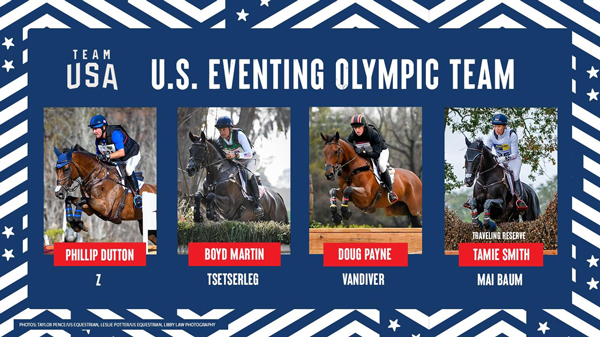
U.S. Equestrian has announced a substitution to the United States Eventing Team ahead of the Olympic Games Tokyo 2020. Deniro Z, a 13-year-old KPWN gelding ridden by Elisabeth Halliday-Sharp, of Lexington, Ky., and owned by Ocala Horse Properties, has been withdrawn from the team and will be replaced by Doug Payne of Aiken, S.C., and Vandiver, a 17-year-old Trakehner gelding owned by Debi Crowley, Doug Payne, and Jessica Payne.
Following pre-travel horse evaluations, veterinary concerns prompted additional diagnostic testing of Deniro Z prior to the team’s departure to Europe for pre-export quarantine. Following a thorough review of the testing results, it was determined it is in the best interest of the horse to be withdrawn from the team after confirming he has sustained an injury. He is expected to make a full recovery.
Tamra Smith, of Murrieta, Calif., and Mai Baum, a 15-year-old German Sport Horse gelding owned by Alexandra Ahearn, Ellen Ahearn, and Eric Markell will be moved into the traveling reserve position.
Will Faudree, of Southern Pines, N.C., and Mama’s Magic Way, a 10-year-old Hanoverian gelding owned by Jennifer Mosing and Sterling Silver Stables will become the first alternates, and Will Coleman, of Gordonsville, Va., and Off The Record, a 12-year-old Irish Sport Horse gelding owned by the Off The Record Syndicate, will now travel to pre-export quarantine in Aachen, Germany as the second alternate combination.
Further information regarding the United States Eventing Olympic Team selection process and how substitution works can be found on www.usef.org. All nominations to the 2020 U.S. Olympic Team are subject to approval by the United States Olympic and Paralympic Committee.
Photos by Leslie Potter and Lindsay Y. McCall/Courtesy U.S. Equestrian
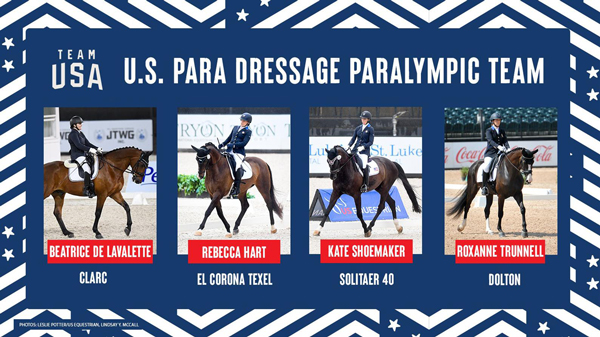
U.S. Equestrian has announced the four athlete-and-horse combinations that have been selected to the U.S. Para Dressage Team for the Paralympic Games Tokyo 2020 alongside one direct reserve and two team alternates. Chef d’Equipe Michel Assouline and Team Leader Laureen Johnson will lead the team in Tokyo. Paralympic equestrian competition is set to begin on August 28 and continue through August 30, 2021, at the Equestrian Park venue in Tokyo, Japan.
“Selectors had a difficult task to choose four athletes to represent the U.S. at the Paralympic Games Tokyo 2020, as we had a lot of talented athletes all gathering score averages over 70% for the past six months,” said Assouline. “I really believe they have chosen a good squad, and I very much look forward to the journey to Tokyo. We will be facing fierce competition as several top European teams have done extremely well recently at international competitions, but we have done, too. We have a strong, competitive group, and I look forward to our tactical preparations leading up to Tokyo.”
The following athletes and horses have been selected to the 2020 U.S. Para Dressage Paralympic Team and are listed in alphabetical order:
◆ Beatrice de Lavalette, of Loxahatchee, Fla., and Clarc, a 2007 KWPN gelding owned by Elizabeth and Nicolas de Lavalette
◆ Rebecca Hart, of Loxahatchee, Fla., and El Corona Texel, a 2009 Dutch Warmblood gelding owned by Rowan O’Riley
Direct Reserve: Fortune 500, a 2010 Oldenburg gelding owned by Rowan O’Riley
◆ Kate Shoemaker, of Wellington, Fla., and Solitaer 40, a 2007 Hanoverian stallion owned by Kate, Craig, and Deena Shoemaker
◆ Roxanne Trunnell, of Royal Palm Beach, Fla., and Dolton, a 2012 Hanoverian gelding owned by Flintwoode Farms, LLC and Karin Flint
The following combinations have been named as team alternates and are listed in selected order:
◆ Sydney Collier, of Ann Arbor, Mich., and All In One, a 2009 Hanoverian gelding owned by Georgina Bloomberg
◆ Charlotte Merle-Smith, of Ocala, Fla., and Guata, her own 2011 Dutch Warmblood mare
The three combinations who will represent the U.S. in team competition will be determined after the completion of the Individual Tests on Friday, August 27. All nominations to the U.S. Paralympic Team are subject to approval by the United States Olympic and Paralympic Committee.
Follow News of the U.S. Para Dressage Team at the Olympic Games
Phillip Dutton and Z at the U.S. Eventing Mandatory Outing. Photo Courtesy U.S. Equestrian
The U.S. Eventing Team concluded their final outing on Friday, July 2, before their departure to Europe in preparation for the Olympic Games Tokyo 2020 with a morning of show jumping at Great Meadow International in The Plains, Va. Athletes and horses contested the Chris Barnard-designed course which featured a technical and well-built track.
Six combinations finished with double-clear efforts around the solid 1.30 meter track and showcased finessed skill following two days of dressage and cross-country finetuning. Chef d’Equipe Erik Duvander was pleased with the team’s performance and felt strongly that the outing provided an opportunity to work through details with each combination and help better prepare for the next few weeks ahead.
“To have an event like this for our horses is amazing, and it’s been at the highest level, and this is more than we expected. It’s incredible to have an event like this for just 12 horses. With the atmosphere we have here actually created more pressure,” said Duvander. “Coming here, it wasn’t just an easy go. There was a step up for cross-country yesterday, so thank you to everyone for their efforts. With the team, there’s a very simple recipe, and it’s to surround yourself with a great group of people.”
Phillip Dutton, of West Grove, Pa., is heading to his seventh Olympic Games this summer and commented on the preparation and the importance of the outing for the team’s overall readiness to head overseas before the Games and the opportunity to represent the United States at a championship of this caliber once again.
“It’s been a great couple of days here at Great Meadow,” he said. “It’s been humbling watching all the riders here. Unfortunately, only three get to ride and represent the country, but any one of these riders you’d be proud to be on a team with,” said Dutton. “We feel very lucky to be part of this and the trip and what’s ahead of us. I don’t think any of us are taking for granted the enormity of what’s ahead in Tokyo, and the competition’s going to be very stiff with the new format of three on a team.”
Peter Wylde, the U.S. Eventing Team Show Jumping Advisor, has been instrumental in the progress of team combinations over the past several weeks and has been working with the program since the beginning of the year. His influence and individualized approach with each combination has paid off in their performances in the ring.
“I do think the great thing that Peter brings to the table is that he has a broad base of experience with a variety of different horses,” commented Doug Payne, of Aiken, S.C., the team’s traveling reserve. “Each preparation he brings to the different horses is completely separate and individual. I think he’s got a great feel for it, and it’s been a huge help.”
Boyd Martin, of Cochranville, Pa., who is heading to his third Olympic Games representing the U.S. Eventing Team, echoed Payne’s comments and commended the efforts and dedication of Wylde. “It’s hard to get the highest caliber people devoted to you, and I think Peter Wylde is one of the best riders and trainers in the world, and for him to help out this team is a huge sacrifice for him,” said Martin. “I feel like he’s enjoyed himself. I had him out cross-country schooling the other day. I was a bit nervous when I first met him because I looked up to him and idolized him when I was a younger rider. I was a bit intimidated, but when you get to know him, he’s actually a really nice guy, too.”
Liz Halliday-Sharp, of Lexington, Ky., who is heading to Tokyo for her first Olympic appearance also attested to Wylde’s ability to bring the best out of each combination, specifically tailoring his training to the needs of each individual horse.
“I think he has such a quiet way and a nice way with the horses, and it’s given me a lot of confidence,” she said. “I relax more into my own riding riding with someone who has that much knowledge. He’s really put effort into each horse and finding the best out of each horse.”
The four team combinations and two traveling alternates headed to Aachen, Germany the following week for their pre-export quarantine, before heading to Tokyo in late July for the Olympic Games, where the U.S. Eventing Team will begin competition on July 30.
U.S. Equestrian extends its sincerest gratitude to the sponsors of the U.S. Eventing Team Mandatory Outing, including Attwood Arena Footing, who readied and serviced the main arena at Great Meadow International for the event, Ocala Horse Properties, who provided athlete and groom meals throughout the week, as well as Taylor Harris Insurance for their support of the Welcome Reception, and GumBits, Land Rover, Platinum Performance, and Pulse Vet Shock Wave for their ongoing support.
Stay up to date on United States Equestrian Federation (USEF) Eventing by following USA Eventing on Facebook and Instagram. Follow U.S. Equestrian on Facebook, Instagram, TikTok, and Twitter. Use #USAEventing.
The USEF International High Performance Programs are generously supported by the USET Foundation, USOPC, and USEF sponsors and members.
We use cookies to help personalize content, tailor and measure ads, and provide a safer experience. By navigating the site, you agree to the use of cookies to collect information. Read our Cookie Policy.