0 ITEMS
  • My Account
  • Holiday Gift Guide
  • Podcast
  • Webinar
Subscribe Combo
Enable cache13
Home Blog Page 638

Bad Trainer

3

There’s a movie out right now called “Bad Teacher.” A few years ago there was one called “Bad Santa.” As of yet, I haven’t seen either one, but nonetheless I think another title to add to the mix might be “Bad Trainer.” While I consider myself fortunate to have ridden with some wonderful horse trainers who were great mentors and teachers, I’ve also encountered quite a few who were nothing more than con artists with a pair of boots and a hat.

Yes, like many of you, even I have been ripped off by a horse trainer. More than one, I might add.

In retrospect, I realize that most of these characters didn’t really love horses. At least that’s my impression. Instead, they inhabited the horse world because that’s the only place that would have them. They could operate in our little corner of society, away from almost any type of regulation or oversight, and master the arts of manipulation and creative financing.

Two things amaze me about bad horse trainers. One is that they stay in business. You may need a map and a box of push-pins to keep track of their whereabouts, they skip town so frequently, but they seem to continually attract a fresh crop of naïve clients. The other is that no matter how emphatically you tell someone to steer clear of a specific trainer—to the point of even including detailed examples to illustrate your warnings—they still hitch up their trailer, load up their horse, and deposit it in Bad Trainer’s barn for a minimum of 90 days, which they will invariably live to regret.

Sadly, these scoundrels sully the profession for all the truly ethical, humane good trainers. And there are plenty of good trainers. It’s just hard to find them sometimes because they tend to be less pompous, less self-serving and therefore less visible than their evil counterparts.

So how can you tell the bad trainers from the good ones? I’m certainly not an expert, but based on my life with horses, here are a few tips that you might be in the presence of a Bad Trainer (now referred to as “BT”):

  1. BT assures every client that their young, green horse is destined to be a fabulous champion and/or worth $50,000, whichever comes first. Either way, BT utilizes these proclamations to seduce the client into investing in more training.
  2. When parents express reticence about paying for even more riding lessons, BT promises them that their money is well spent because their child is naturally talented and headed for Olympic success.
  3. Never one to turn down a potential client, BT advertises the ability to train every type of horse in every type of discipline. Dressage? Western pleasure? Barrel racing? Hunters? Roping? Arabian Native Costume? Yup, BT can do it all.
  4. BT carefully chooses which horses to ride. Anything that’s uncomfortable, evasive, temperamental or just plain unattractive is secretly ridden by the teenaged assistant.
  5. There’s no room for sentimentality in BT’s barn. Clients who seem to pamper their horses are treated with disdain or outright ridicule. In fact, BT never gets misty-eyed or nostalgic when discussing long ago horses from childhood. If you didn’t know better, you’d think BT never loved a horse.

Believe me, I have plenty more Bad Trainer traits. I’m sure you can add to the list, too. As we learn to recognize BTs more quickly, we can keep our horses out of their barns. Maybe then they’ll take up some other line of work.

<< Previous Entry

Back to Life with Horses

FEI World Equestrian Games to be sponsored by Alltech again in 2014

3
WEG Opening Ceremonies
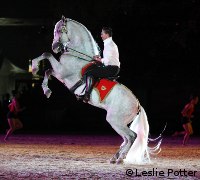
A horse and rider perform during the opening ceremonies of the 2010 Alltech FEI World Equestrian Games. Photo: Leslie Potter

On Friday, July 8, Alltech founder Dr. Pearse Lyons and Normandy 2014 chairman Laurent Beauvais officially announced that Alltech would be the title sponsor of the 2014 FEI World Equestrian Games. The 2014 WEG will be held in Normandy, France.

The announcement comes just after the release of a study that showed the economic impact of the 2010 Alltech FEI World Equestrian Games at $201 million, much higher than expected.

“Alltech is proud to continue our partnership with the World Equestrian Games,” said Dr. Lyons. “These world championships of equestrian sport epitomize the values that we applaud; passion, excellence and performance…France and Normandy in particular, with its worldwide reputation of excellence in horse breeding, is a strategic location for our company. Alltech has a long-standing history of serving the agricultural community in France and we are thrilled to support the event in Normandy and to share in the pride of this spectacular event.”

The 2010 games were the first to be held outside of Europe and the first to have a title sponsor.

“This is the best business decision he ever made because the branding and business recognition have been phenomenal,” Dr. Lyons said after the 2010 games.

Alltech has gone from a behind-the-scenes producer of animal feed supplements to a household name in equestrian circles. The company introduced its consumer equine nutritional supplement, LifeForce, around the same time as the 2010 WEG.

As of July 8, 2011, the countdown to Alltech FEI World Equestrian Games Normandy 2014 opening ceremony, scheduled for August 17, 2014, was 1,136 days. The organizers are projecting a count of 900 human athletes and 850 equine athletes from 60 countries to compete in the 2014 games.

Watch the Appaloosa Horse National Show live online

4

The 64th annual National Appaloosa Horse Show and World Championship Appaloosa Youth Show kicked off on July 4 and continues through Saturday, July 16. The show draws Appaloosa exhibitors from across North America to Tulsa, Oklahoma.

Appaloosa versatility is on display as exhibitors compete in hunter/jumper, showmanship, English, western and saddle seat pleasure, speed events, reining and more. To see the full competition schedule, click here.

Appaloosa fans who are unable to attend the show in Oklahoma can watch live online. Watch the main arena happenings below. If you can not see the video below, click here to watch on Ustream.com


Live video by Ustream

To view classes in ring two or for help troubleshooting the live stream, click here.

Celebrities, horses and hypocrisy

2
Sheryl Crow and her horse, Lady
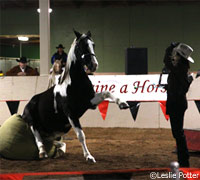
Singer Sheryl Crow donated her Tennessee Walking Horse, Lady C, to the anti-soring group Friends of Sound Horses. Lady C is shown above performing a demonstration with trainer Suzanne De Laurentis at the 2010 Sound Horse Conference. Photo: Leslie Potter

Singer Sheryl Crow recently announced that she would be donating part of the proceeds from an upcoming concert to The Cloud Foundation. Crow has long been a supporter of the Mustang advocacy group and she’s putting her money where her mouth is to help the cause of blocking a large-scale BLM roundup in Nevada. So why are other animal welfare advocates angry with her?

The tour stop from which Crow will be donating a portion of her ticket sales is the Cheyenne Frontier Days Rodeo in Wyoming. A few years ago, members of SHowing Animals Respect and Kindness (SHARK) publicized video footage of horses being shocked with 5000 volts to the neck with a device known as a “Hot Shot.” Such devices aren’t banned by the Professional Rodeo Cowboys Association, but they are only to be used on the hindquarters or shoulders if a horse or bull stalls. Crow’s pledge to donate proceeds to The Cloud Foundation came about as an attempt to placate fans who were angered by her playing at this venue.

This situation raises two questions. First, how much responsibility and how much clout do celebrities have when it comes to these issues? Willie Nelson has also spoken out against wild horse roundups and horse slaughter in general. Lea Michele (a.k.a. that chick from Glee) participated in a campaign against the use of carriage horses in New York City. Michael Douglas thinks that you should nominate someone for the FEI Awards (I still can’t figure that one out.) Do we care? Should we care? Everyone has opinions, and I suppose when you become uber-famous you realize that a whole lot of people are listening to what you have to say, so why not be vocal about what you believe in, even if you’re no more an expert on the topic than any schmo on the street?

In Crow’s case, she isn’t all talk. She’s long been a wild horse advocate and is (was?) a horse owner herself. She even donated her Tennessee Walking Horse mare, Lady C, to the anti-soring group Friends of Sound Horses. However, by taking that public stand on horse welfare issues, I think she’s more accountable for her decision in this case. Look at it this way: She’s touring with Kid Rock (no accounting for taste, but that’s not the issue here.) I’ve never heard Kid Rock take a stand on animal welfare issues, so when I find out he’s performing at a rodeo where horses have been zapped in the neck, I just shake my head and move on with life. When I hear that a supposed horse welfare advocate is doing the same, it seems much worse. It seems hypocritical.

The second issue is this odd disconnect I’ve noticed in the world of wild horse welfare. For whatever reason, there seem to be a lot of people who are deeply concerned with the land rights of Mustangs and actively opposed to any BLM interference with their wildness, and yet those same people don’t seem to take a whole lot of interest in the welfare of domestic horses. In my mind, we humans are more responsible for the animals we breed and raise on farms than the wild animals living on the rangelands out west. It’s not that I don’t think people should be concerned with wild horse welfare, I just think that we owe a lot more to the animals that we create. (Then again, why is my opinion any more valid than any random Hollywood celebrity?)

Is Sheryl Crow’s passion for wild horse welfare and apparent indifference to rodeo horse welfare a case of confused priorities? Like I said, she has owned horses and supports FOSH, so I don’t think that’s the case. Perhaps it’s just the she’s contractually obligated to do the scheduled tour dates. Maybe she’s just doing her job.

How much stock do you put in a celebrity’s opinions of horse welfare issues? What do you think of wild horse welfare vs. domestic horse welfare? Share your thoughts by clicking “Submit a Comment” below.

<< Previous Entry

Back to The Near Side

Horse Transportation Safety Act of 2011 aims to ban horses in double-decker trailers

5
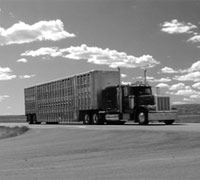
Double decker livestock trailer
Double-decker trailers are intended for smaller livestock such as cattle and pigs and aren’t considered safe or humane for equines.

Following the Government Accountability Office report on equine welfare and horse slaughter, members of Congress have taken a step toward improving conditions for horses in transport.

On June 27, 2011 Senator Mark Kirk, R-Ill., and Senator Frank Lautenberg, D-N.J., introduced S. 1281, the Horse Transportation Safety Act of 2011. If passed, the bill would prohibit interstate transport of horses in double-decker trailers for any reason. Those trailers are designed for shorter livestock such as cattle and pigs. The bill has been referred to the Committee on Commerce, Science, and Transportation.

The bill states, in part:

No person may transport, or cause to be transported, a horse from a place in a State, the District of Columbia, or a territory or possession of the United States through or to a place in another State, the District of Columbia, or a territory or possession of the United States in a motor vehicle containing 2 or more levels stacked on top of each other.

This is not the first time that legislation to outlaw horse transport in double-decker trailers has been proposed. In 2009, Senator Kirk, then a Representative, sponsored H.R. 305, the Horse Transportation Safety Act of 2009. However, that bill was never put to a vote of the full House of Representatives.

“It is time that we put an end to the inhumane practice of using double-decker trailers to transport horses,” said Sen. Kirk. “Stacking these animals one atop the other in a moving vehicle is simply an accident waiting to happen. It is not only a cruel way to transport horses, but it also puts human lives at risk.”

The full text of the bill is available at Thomas.gov

International Equine Colic Research Symposium scheduled for July 26-28

3

Horse vet

The American Association of Equine Practitioners (AAEP) Foundation will host the 10th International Equine Colic Research Symposium, July 26-28, 2011, in Indianapolis, Ind., at the Indianapolis Downtown Marriott.

The symposium, held every three years, alternating between Europe and North America, is designed to bring together leading researchers, practitioners, residents and graduate students to share knowledge about equine colic, the leading cause of premature death in horses. The two-day symposium will take place at the same location immediately following the AAEP Focus on Colic and Business Education: Practices in Transitions, Transitions in Practice meetings, which will be held at the same location.

As with previous symposiums, the presentations this year will accelerate the exchange of new information about colic among investigators while stimulating new collaborations and research projects. This year’s symposium has attracted top researchers from around the world to present the newest information on a variety of colic-related topics. More than 40 oral presentations and more than 75 poster presentations will be presented during the symposium.

“Equine practitioners and researchers remain committed in to solving the puzzle of equine colic,” said Nat White, DVM, MS, Diplomate ACVS, Symposium Chairman. “We look forward to sharing the knowledge that we’ve gathered over the past three years and applying new solutions to this deadly problem.”

The meeting format will be similar to previous Colic Research Symposia. Fifteen-minute oral presentations will be followed by a five-minute period for questions and discussion will take place in sessions throughout the symposium.

Attendees will have the opportunity to view research posters each evening during receptions. Poster sessions on the 26th and 27th will expand beyond the oral presentations, giving attendees the opportunity to review and discuss the posters with the various presenters.

A limited number of travel scholarships are available to assist graduate students, residents or researchers wishing to attend the Colic Research Symposium. Five travel awards of $650 (£400) will be made to help cover the cost of travel and lodging. The scholarships are intended to help graduate students, residents and scientists who would be unable to attend the meeting without financial assistance.

The complete program, registration, lodging, travel scholarship information and sponsor information is available online at www.aaepfoundation.org.

Further Reading
Colic Prevention Tips
Colic Surgery Guide


2012 Olympic equestrian test event is underway in London

4
Piggy French at London Olympics test event
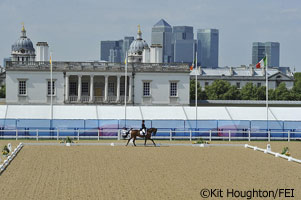
Piggy French of Great Britain rides DHI Topper W at the Olympic equestrian venue in Greenwich Park. Photo: Kit Houghton/FEI

There was a huge buzz of anticipation and excitement as the first horse inspection for the Greenwich Park Eventing Invitational (CIC **) got underway in London on Sunday, July 3 at the first London Organizing Committee for the Olympic Games (LOCOG) test event in the build-up to London 2012.

From July 3-6, the LOCOG will test key aspects of the Greenwich logistics and operations in preparation for the 2012 Olympic and Paralympic Games, including the field of play, timing and scoring technology, venue installation and workforce.

A total of 40 riders from 23 countries are competing in the Greenwich Park Eventing Invitational, which offers the normal grading points for an international CIC**, and which will includes Dressage on Monday, July 4, Cross-Country on Tuesday and two rounds of Jumping on Wednesday in order to reflect the Olympic format.

There will also be demonstrations of the other Olympic equestrian disciplines of Dressage and Jumping, along with Para-Dressage to further test the facilities.

The Venue
Greenwich Park, which dates back to 1433, offers spectacular views across London and is the British capital’s oldest enclosed Royal Park. The World Heritage Site is home to many historic buildings including the Royal Observatory, the Royal Naval College and the National Maritime Museum. London 2012 chairman, Sebastian Coe, has promised to treat the Park with “respect and care” in the build-up to next year’s Olympic Games. LOCOG is working hard to ensure that the Park is restored to its original state and that disruption to the local community is kept to a minimum.

The use of Greenwich Park is also in keeping with Lord Coe’s 2005 pledge that Britain would put sport and the athletes back at the heart of the Olympic Games. Now the equestrian venue is right back in the Olympic hub, ready for equestrian sport to celebrate its 100-year anniversary as part of the Olympic movement in 2012.

The Cross-Country course for this week’s event will follow some of the route planned for the Olympic track, but the west side of the Park will remain open to the public. Of particular interest to the athletes and officials is the main arena which has been built on a custom-designed platform to achieve a flat surface. This is the first time this system has been used in an equestrian context.

The Athletes
Many of the leading riders from the sport of eventing are in the line-up this week, including British super-star William Fox-Pitt who should be feeling right at home as London was the city of his birth back in 1969. He will be joined by compatriots Piggy French, who finished second at the Mitsubishi Motors Badminton Horse Trials this year, and former Rolex Grand Slam champion and double Olympic silver medalist, Pippa Funnell.

Germany sends Michael Jung, individual gold medalist at last year’s Alltech FEI World Equestrian Games in Kentucky, while Sam Griffiths and Clayton Fredericks will represent Australia and Alex Hua Tian will line out for China. But the man who so many people will want to see is 2011 Badminton champion Mark Todd from New Zealand who was voted “Event Rider of the 20th Century” by the FEI and who has made a sensational comeback to the sport over the last three years. His win at Badminton this spring was a vintage performance from the man who took back-to-back individual gold at the Olympic Games in 1984 and 1988. He will be joined by fellow-Kiwi Andrew Nicholson.

London Prepares
The Greenwich Park Eventing Invitational is the first large-scale fixture in the London Prepares series and promises to provide an intriguing preview of what is to come while also providing important information and feedback for both organizers and athletes.

Further Reading
First 2012 Olympic qualifications announced following WEG
Greenwich Park officially named site of 2012 Olympic equestrian events
The Olympics: Do you still watch?

Jumping with Style

7

Okay, show of hands. How many of you admit that you’ve taught at least one dog to jump like a horse? My sister and I certainly did. On many a lazy summer afternoon we’d come home from the barn and concoct a backyard course. We’d use improvised elements—upturned wheelbarrow, a sideways wagon, leaf rakes hung across terracotta pots—and then sweet talk our family dogs into becoming surrogate hunters and jumpers. In retrospect it was sort of like a modern day dog agility course.

Back then, I used to marvel at the odd similarities between the mechanics of a dog’s jumping style and that of a horse. Just like horses, some dogs put real panache into their jumping efforts; they soared through the air like acrobats. Then there were the dogs (and horses) that simply got from one side of the obstacle to the other as expediently as possible.

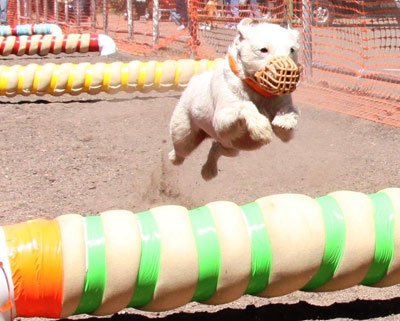
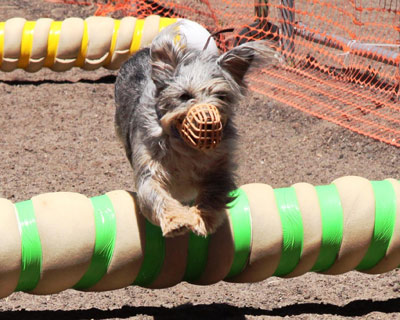
So I had to laugh when my sister emailed me photos of her dogs competing in a hurdle race.

She hauls her dogs to terrier meets almost every month, and the hurdle race is one of the most riotous events. That’s probably because most of the competitors are Jack Russell terriers, who are famous for putting a clown car spin on any kind of organized activity.

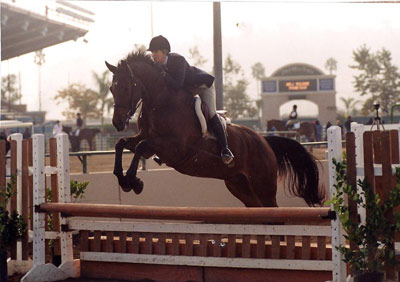
Here are the photos. See what you think. For comparison’s sake, I’ve also included a couple of photos of me aboard horses that seemed to jump with the same sort of style.

Life with Horses - Jumping with Style
Much like a 17-hand warmblood, Snowden often dwarfs the other Jack Russell terriers in his class. He also jumps with the style of many warmbloods: his knees are pulled up to his chin and he’s flying inches above the hurdle. Because he jumps with such exuberance, his paws are flipped out, eager to find earth and bound toward the next hurdle. In horses, we call this form “stylistic reaching.”

Life with Horses - Jumping with Style
My sweet gelding Hammie was a Trakehner-Dutch warmblood cross. Like Snowden, he jumped with a lot of flair. He was always had quite an arc to his jump, too. And yes, he was a bit of a “reacher” too.

Life with Horses - Jumping with Style
Sailor is… some kind of terrier mixed with some other kind of… dog. Though he lacks a fancy pedigree and a fancy style of jumping, he has a loyal heart and a darling temperament. You can always trust him to get over the hurdles. He’s just not going to do it with any pizzazz.

Life with Horses - Jumping with Style
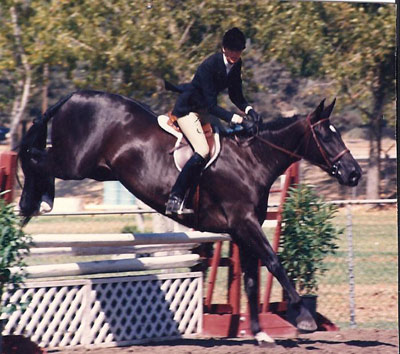
My black mare Syracuse had a mysterious background. She was some kind of warmblood. Allegedly. She was a very dependable jumper, but a lazy one. Here she is, just skimming over the back rail of this jump. As far as she was concerned, that was good enough.

See how a dog’s jumping style can mirror that of a horse? Or have I judged too many hunter and jumper classes? Although thinking about horse shows makes me wonder if requiring muzzles might be a good idea. At least for some of the humans.

<< Previous Entry 

Back to Life with Horses

The Junkyard Horse

2

If you’re plugged into equestrian social media, you may have heard about Sugar, a 33- or 34-year-old (reports vary) horse in the town of Mattawan, Michigan. She is known to locals and her facebook fans as The Mattawan Junkyard Horse because, well, she lives in a junkyard.

She’s in the news because of a largely Internet-based uproar about her condition. The sheriff’s office receives a half-dozen phone calls about her every week. Take a look at the photos in this article on mlive.com, especially the second one. She’s not just average-old-horse skinny. You could teach a pretty thorough anatomy lesson on this mare. And the giant swelling on her cheek? Probably an abscessed tooth. In the article, the horse’s owner says he’s going to have the vet out to look at it. Photos posted to Sugar’s facebook fan page show the abscess was there (and huge) as far back as May 30.

With all the complaints, what is local law enforcement doing about it? Nothing, really, according to the mlive.com article.

“On a visit earlier this month, (Sgt. David) Walker said the horse was well-taken care of and had shelter in the back of the salvage yard, a trough full of water and plenty of food.

‘It was eating like crazy,’ Walker said.”

I’ve no doubt she was eating like crazy. Wouldn’t you if you were starving? But what is she eating, and why is it not putting any meat on her bones? Maybe she’s got parasites. Maybe it looks like she’s eating, but she’s dropping more than she’s consuming. Maybe whatever the “food” is isn’t actually nourishing to horses.

I’m sure this horse’s owner, who is 80 years old and has owned the mare for nearly twenty years, truly does care about her. I don’t think he set out to mistreat her. But here’s a skeletal equine, living behind a strand of barbed wire in an area full of old farm equipment and other junk, with an enormous abscess on her face that has been there for more than a month without being checked by a vet. You don’t have to be an expert on horses to know that this is not okay.

The aged equine and her aged owner have their supporters, though. Here is part of a comment left on a previous mlive.com article about Sugar.

“So many things have drastically changed in the small town of Mattawan. I am not impressed with all the changes including urban sprawl…Sugar standing in that junk yard brings peace to so many of us who have lived here for decades. We moved out here for peace and quite [sic]. It was wonderful in the beginning being such a small town, with one horse. Thank God and her care takers for keeping her alive for so long. Some of us older folks really need to see her there standing out front so we can remember the good ole days before all the people, traffic, ordinances.”

I don’t know about anybody else, but seeing a skinny horse in a junk yard doesn’t bring me peace. Quite the opposite, in fact.

What do you think? Is this a clear case of neglect, or is the fact that Sugar has lived to age 34 proof that she is being cared for well enough?

<< Previous Entry

Back to The Near Side

0
0FansLike
0SubscribersSubscribe
We use cookies to help personalize content, tailor and measure ads, and provide a safer experience. By navigating the site, you agree to the use of cookies to collect information. Read our Cookie Policy.
OK