There is no shortage of great horses, from Kentucky Derby winners to Olympic mounts and western wonder horses. Some of them came from relatively meager beginnings; others were royally bred, full of promise from the start. Here is the Horse Illustrated staff’s list of the top 30 horses from 1976-2006, in alphabetical order. Stay tuned later this year for our updated list with 20 more horses from 2006-2026 to round out the top 50 for our golden anniversary, or check it out in our July/August 2026 issue.
1. AFFIRMED: Although small at birth, Affirmed soon proved he was a great racehorse, growing into a handsome chestnut-coated force that won Thoroughbred racing’s 1978 Triple Crown. What made him even more awesome was his heart. He bested his undeniably more royally bred rival, Alydar, in each of the three classic races.
2. AHLERICH: Already a revered dressage master, Reiner Klimke found his equine soulmate at a Westphalian auction in Germany. The hot-blooded Ahlerich and Klimke soon soared to great heights in international dressage competition, including claiming the 1982 World Championship title. In both 1984 Los Angeles and 1988 Seoul Olympics, Klimke rode his stunning bay partner to individual and team gold medals for Germany.
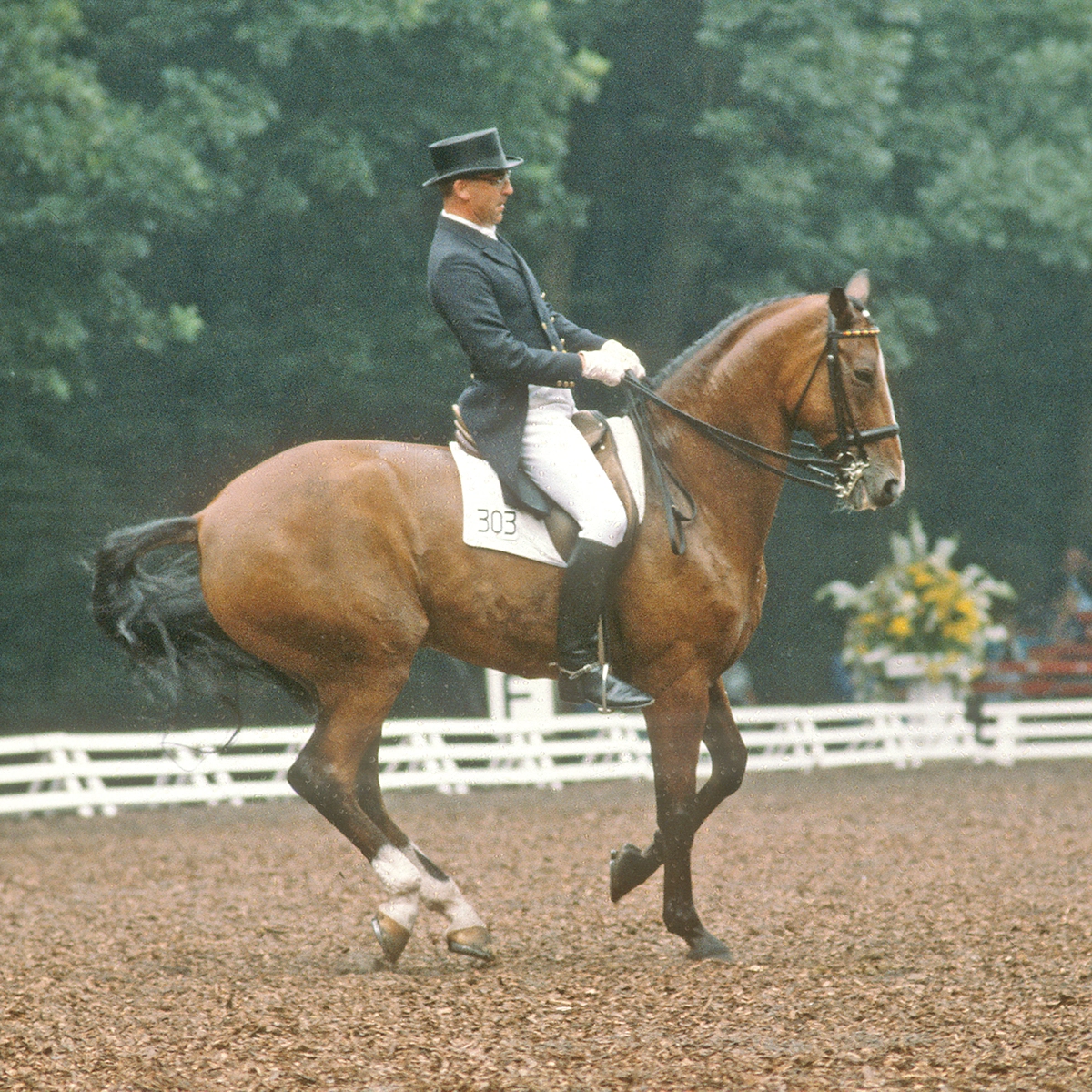
Ahlerich and Reiner Klimke in 1980. Photo by Bob Langrish
3. BALLY COR: Legendary three-day eventing rider Tad Coffin recalls that the lanky bay Thoroughbred mare Bally Cor “was not thought to be supremely talented.” On top of that, Coffin was a young rider whose résumé lacked international experience. But under the tutelage of U.S. Equestrian Team eventing coach Jack Le Goff, both Coffin and Bally Cor earned worldwide respect. At the 1976 Olympic Games in Montreal, the determined pair won team and individual gold medals.
4. BALOUBET DU ROUET: Bred from proven sporthorse lines, this tough Selle Français stallion was not the sort of horse everyone could ride. But Brazilian Rodrigo Pessoa’s quiet touch got the best out of the firey chestnut. For three consecutive years (1998-2000), the dauntless duo won the World Cup Finals in show jumping. But the big red horse’s incredible career also includes an Olympic team bronze medal (2000) and individual gold in Athens (2004).
5. BIG BEN: reportedly too big and ugly to make it as a show hunter, the rangy red horse from Canada eventually earned more than $1.5 million as an international show jumper. His regular pilot, owner Ian Millar, learned to put up with the horse’s quirks: he was notoriously spooky, headstrong, and accident-prone. Nonetheless, Big Ben and Millar won the World Cup Finals in 1988 and 1989 and represented Canada in three Olympic Games over a career that spanned 11 years.
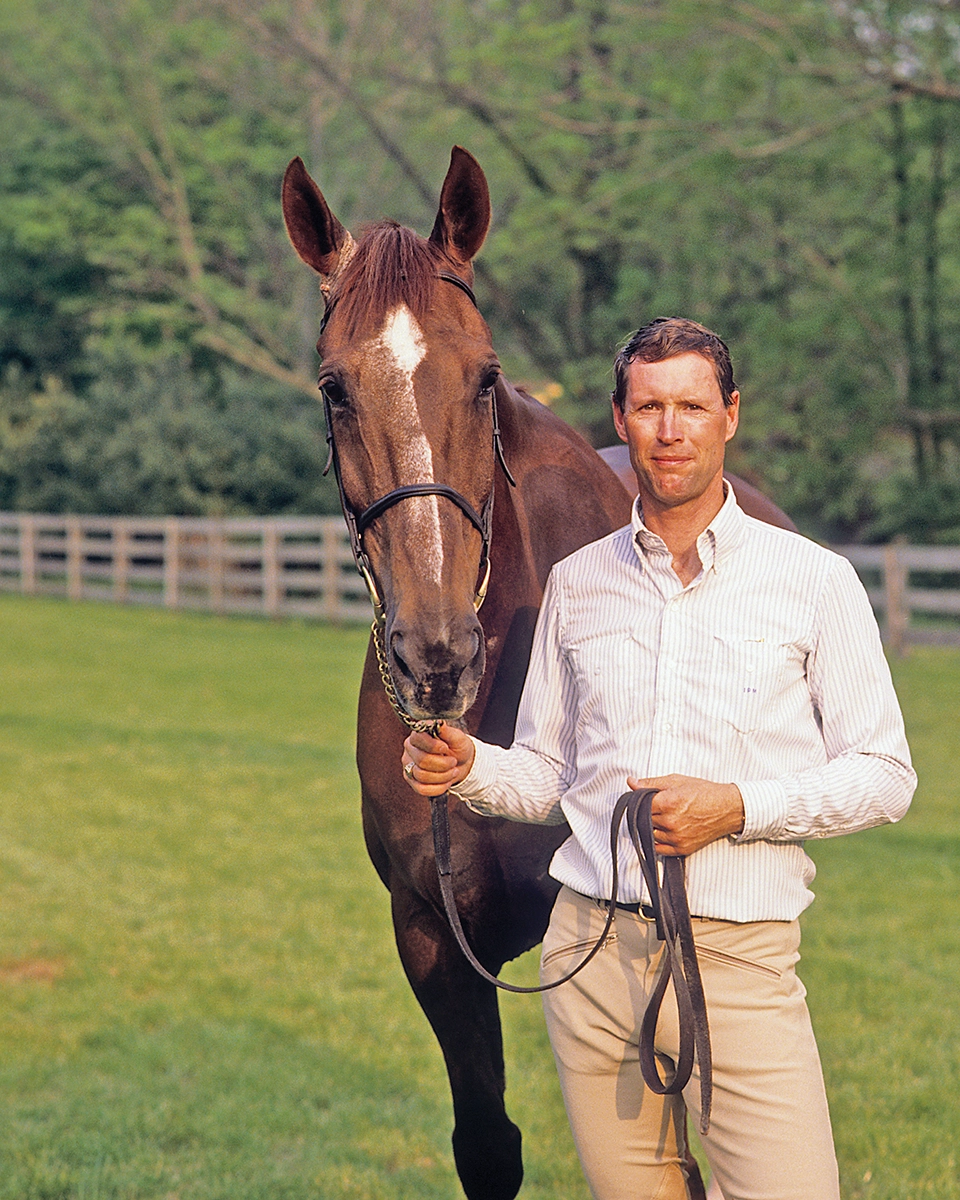
Big Ben and Ian Millar formed a legendary partnership. Photo by Bob Langrish
6. BRENTINA: The lovely Hanoverian mare Brentina is one of the few dressage horses to capture the hearts of American riders from all disciplines. She was purchased as a 3-year-old in Germany after displaying fabulous gaits and an unflappable temperament. The mare and rider Debbie McDonald’s major wins include the Grand Prix and Grand Prix Special at the 2003 World Cup and a team bronze at the 2004 Athens Olympics. In 2005, Brentina was chosen as the U.S. Equestrian Federation’s Horse of the Year.
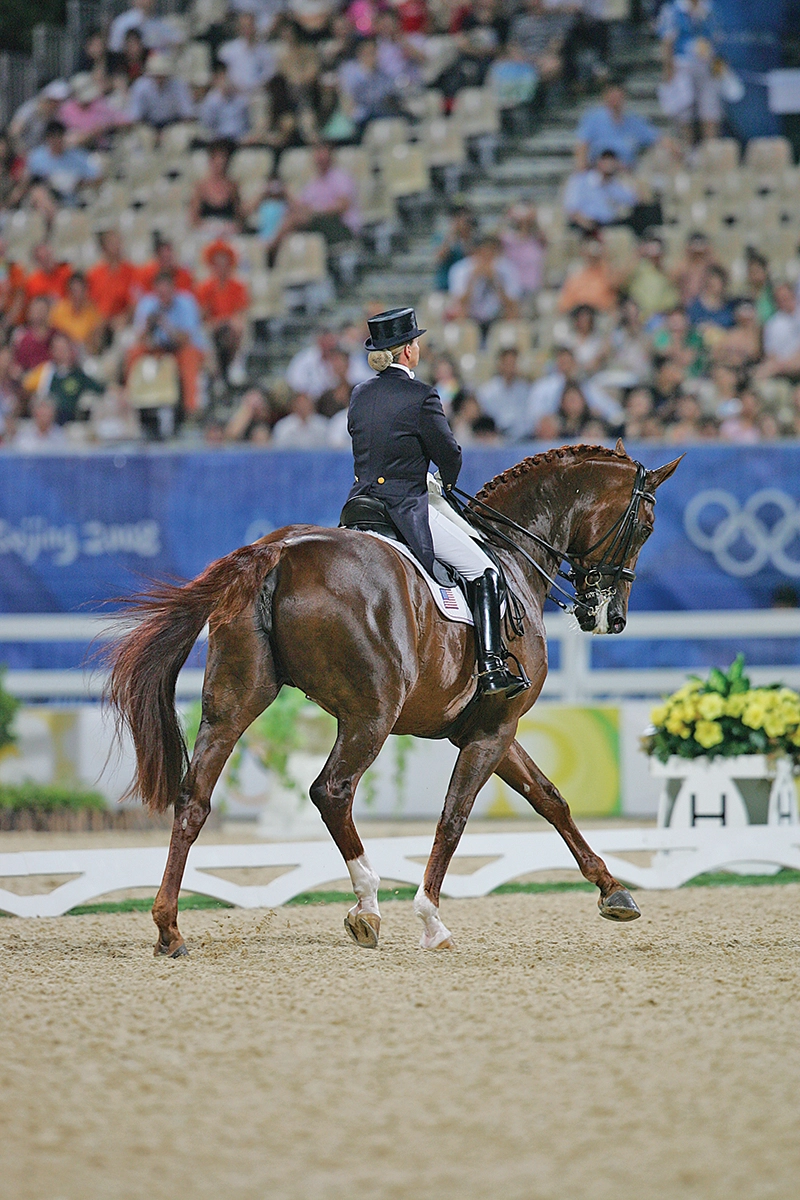
Brentina and Debbie McDonald at the 2008 Beijing Olympics. Photo by Bob Langrish
7. CHARISMA: Small, muddy, hairy, and scraggly were the words that 6’2″ New Zealander Mark Todd supposedly used to describe the 15.2-hand Thoroughbred cross (1/16th Percheron) the first time he saw him. Yet the gelding’s expressive dressage performances and courageous jumping efforts made him an unbeatable force in three-day eventing. Charisma and Mark Todd won back-to-back individual gold medals at the 1984 Los Angeles and 1988 Seoul Olympic Games.
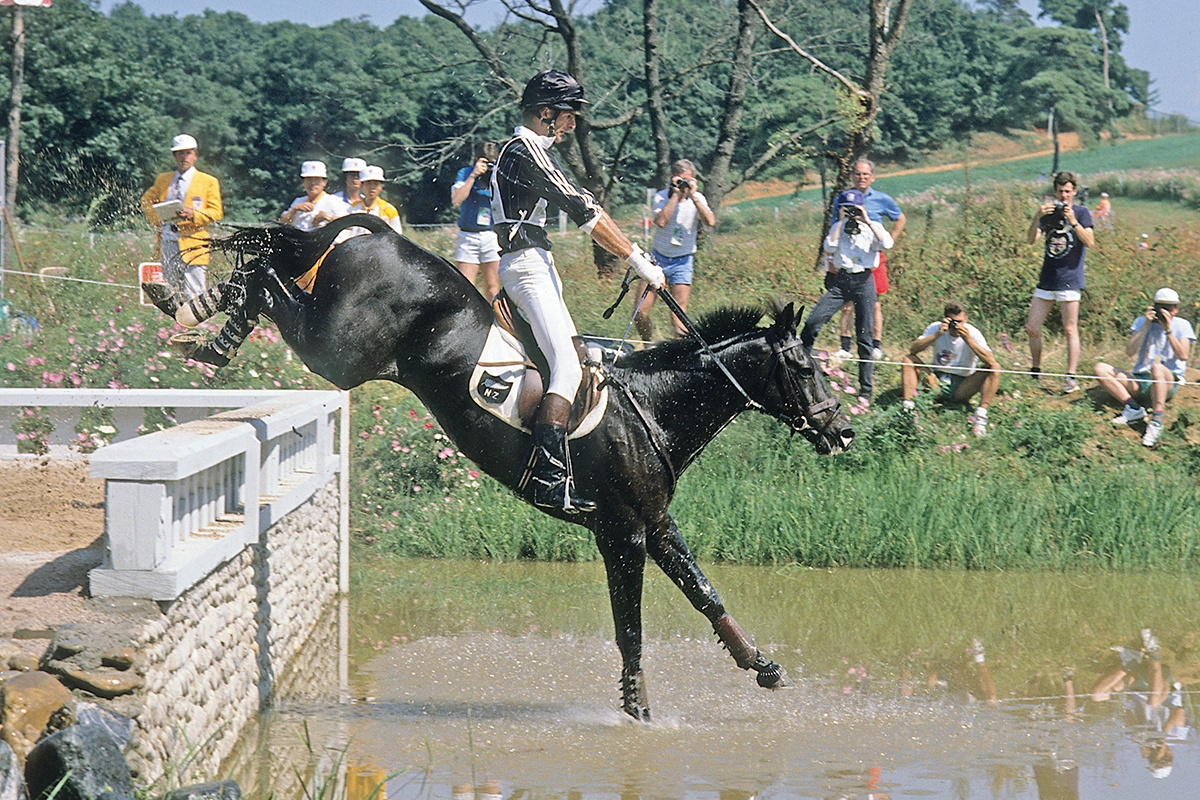
Charisma and Mark Todd at the 1988 Seoul Olympics. Photo by Bob Langrish
8. CUSTOM MADE: Dressage scores often determine the placings in three-day eventing, and at the 2000 Sydney Olympics, this 17.2-hand Irish Thoroughbred had a near-flawless test, giving Custom Made and American David O’Connor the score needed to win the individual gold medal—albeit after a memorable panic for spectators when O’Connor appeared to momentarily forget the course during the show jumping phase. (As of this update in 2026, it was the last Olympic eventing gold medal, either team or individual, won by the USA.)
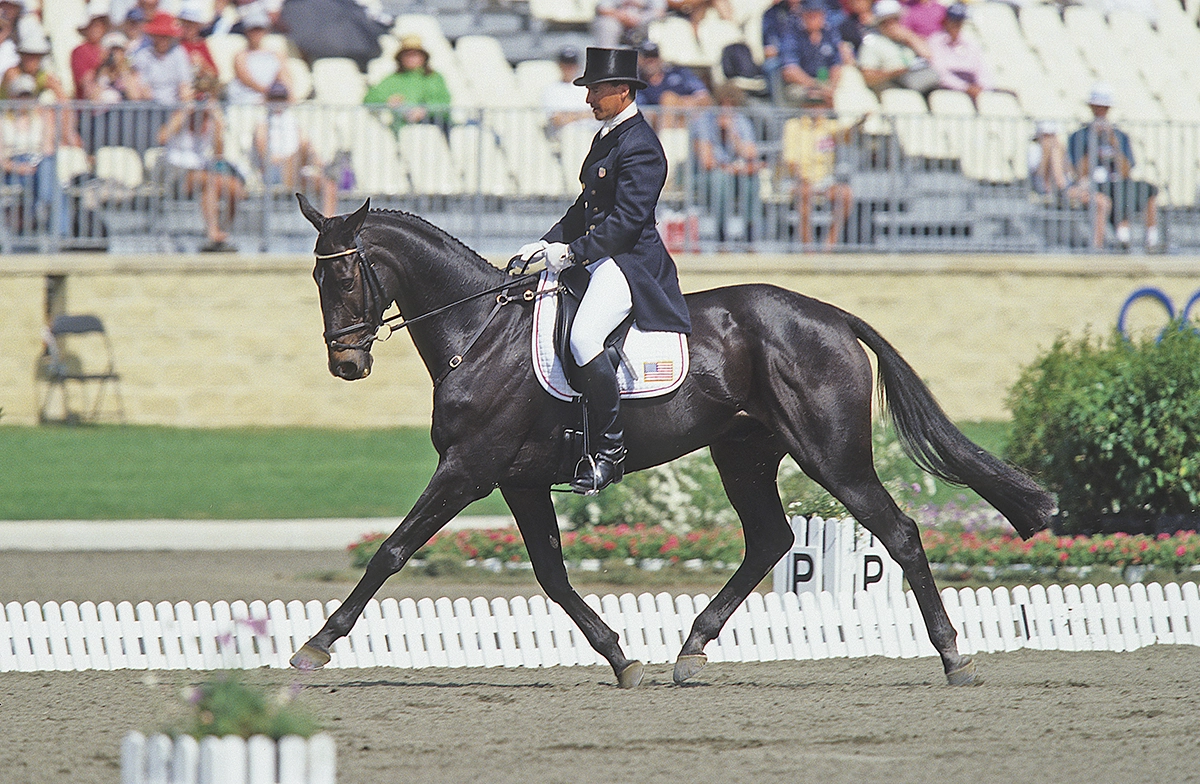
Custom Made and David O’Connor at the 2000 Sydney Olympics. Photo by Bob Langrish
9. FRENCH FLASH HAWK: Considered skittish and spooky as a baby, the flashy bay American Quarter Horse nicknamed “Bozo” was sold to Kristie Peterson for a mere $400. That turned out to be a bargain, as Bozo and Peterson earned more than $1 million in professional barrel racing, including three National Finals Rodeo championships. Ultimately Bozo had the last laugh, winning the 1995 American Quarter Horse Association (AQHA) award for Rodeo Horse of the Year.
10. GEM TWIST: An elegant gray Thoroughbred, Gem Twist was bred and trained by Olympian Frank Chapot. After demonstrating jumping talent at an early age, Gem Twist was paired with rider Greg Best. The two won individual and team silver medals in show jumping at the 1984 Olympics. Even more noteworthy, the stylish jumper is still the only horse to win a trio of American Grand Prix Association Championships (1987, 1993, and 1995), and he did it with three different riders in the saddle.
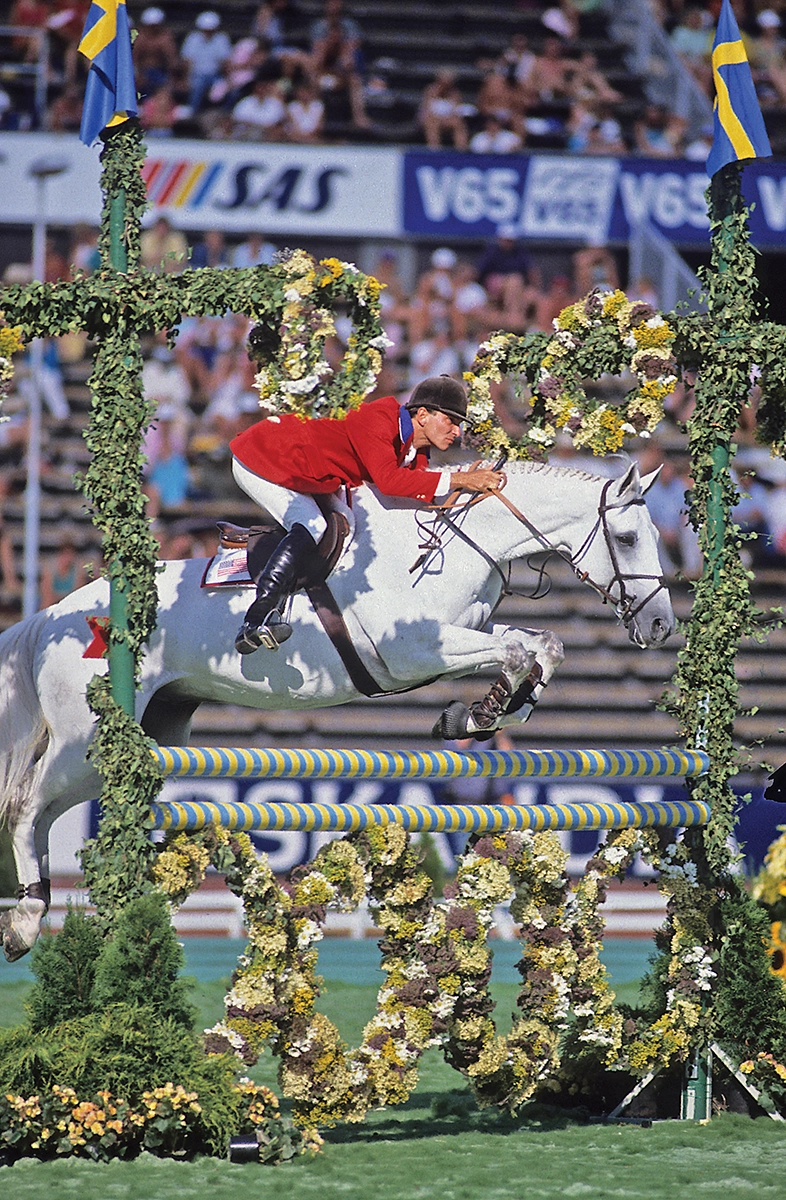
Gem Twist and Greg Best at the Stockholm WEG in 1990. Photo by Bob Langrish
11. GIFTED: Undeniably, Gifted was a handful to train as a young dressage horse. Once the flashy bay started his own dressage career with rider Carol Lavell, he proved he truly was gifted. He was named U.S. Dressage Federation Horse of the Year at five different levels (1985-1991). On the world’s biggest stage, the Olympic Games, Gifted and Lavell helped the U.S. Dressage Team win a bronze medal in Barcelona (1992).
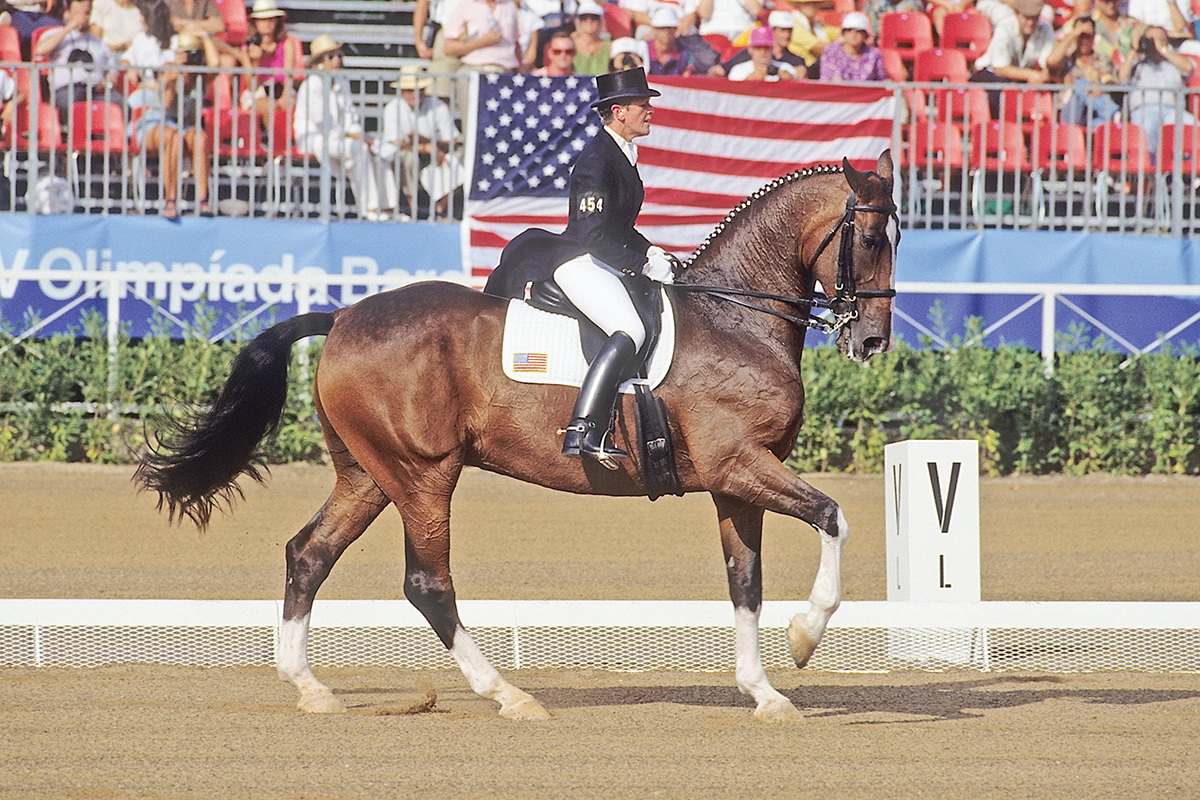
Gifted and Carol Lavell at the 1992 Barcelona Olympics. Photo by Bob Langrish
12. GILTEDGE: Seventeen-hand Irish Sport Horse Giltedge and rider David O’Connor amassed an impressive list of accomplishments. There was team silver at the 1996 Atlanta Olympics and team bronze at the 2000 Sydney Olympics, and a win at the 2001 Rolex Kentucky CCI****. Plus the courageous clear round—one of only two—in the show jumping phase of the 2002 World Equestrian Games in Jerez to secure the U.S. team gold.
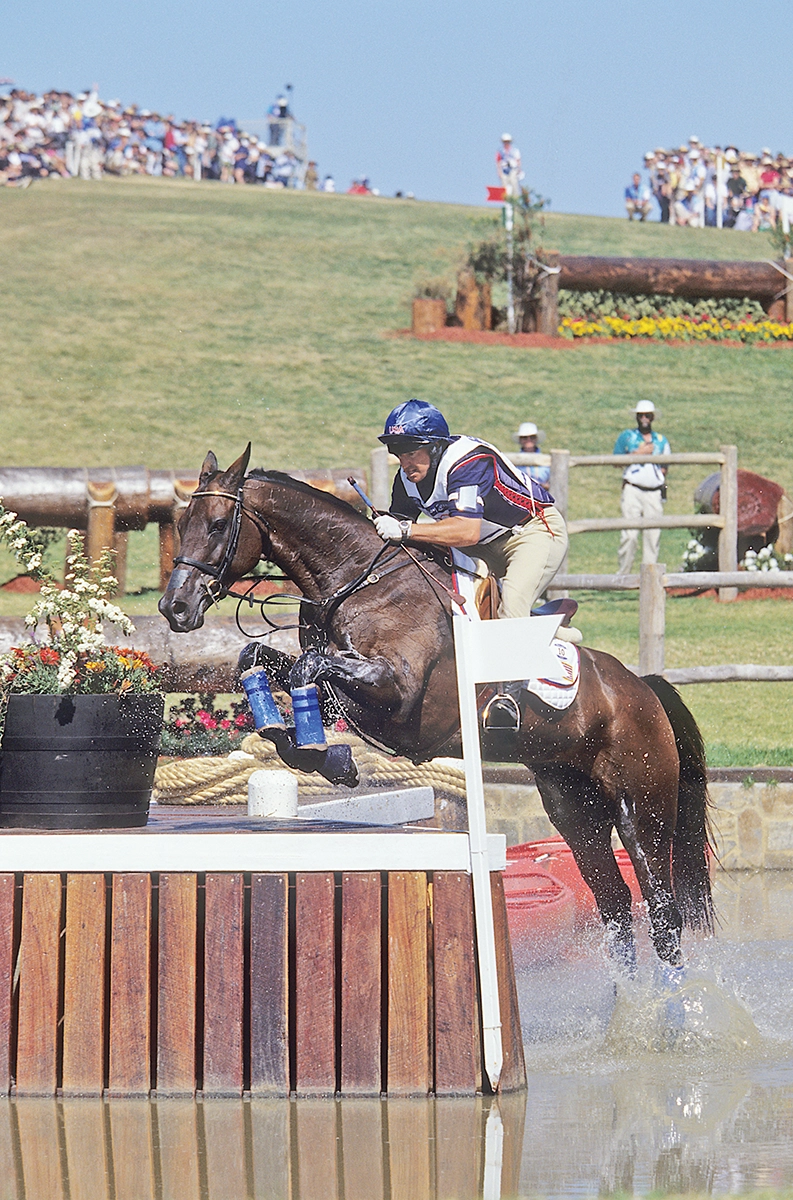
Giltedge and David O’Connor at the 2000 Sydney Olympics. Photo by Bob Langrish
13. HOLLYWOOD DUN IT: The tawny stallion possessed near-perfect American Quarter Horse conformation, a large expressive eye, and a gentle disposition. Moreover, Hollywood Dun It, who descended from proven working cow horse royalty, demonstrated athleticism and trainability under saddle. When he died in 2005, he left behind a legacy as the all-time leading sire of reining horses, with offspring earning more than $4 million in winnings.
14. KEEN: When asked to recall her partner for the Olympic bronze medal dressage win at the 1976 Games in Montreal, Hilda Gurney remarked, “Keen wasn’t an expensive horse. He was an off-the-track Thoroughbred, trained at home.” While expensive warmbloods now completely dominate the dressage ranks, Keen will always have a spot in the hearts of dressage enthusiasts. The flashy, firey chestnut, tall as a redwood, was America’s first four-legged ambassador for the sport.
15. KHEMOSABI: This legendary Arabian show horse and sire almost wasn’t registered. According to his breeder and owner, Ruth Husband, when she observed the newborn colt’s abundant white markings, “I wasn’t thrilled.” Fortunately, her husband was more diplomatic and horse-savvy, and Khemosabi went on to not only be registered, but to become a Legion of Excellence Champion and Legion of Masters Champion. He also sired over 1,300 foals, making him the most popular Arabian stallion of all time.
16. MILTON: This huge, milky white gelding had his own fan club in Great Britain. He was beloved for his show jumping prowess and his celebratory leaps into the air after a glorious round. Although he never made it to Olympic competition, Milton—whose name bore the prefixes Henderson, Everest, and Next, depending on his sponsor—won two World Cup show jumping championships (1990, 1991) and numerous grand prix events with his rider, John Whitaker.
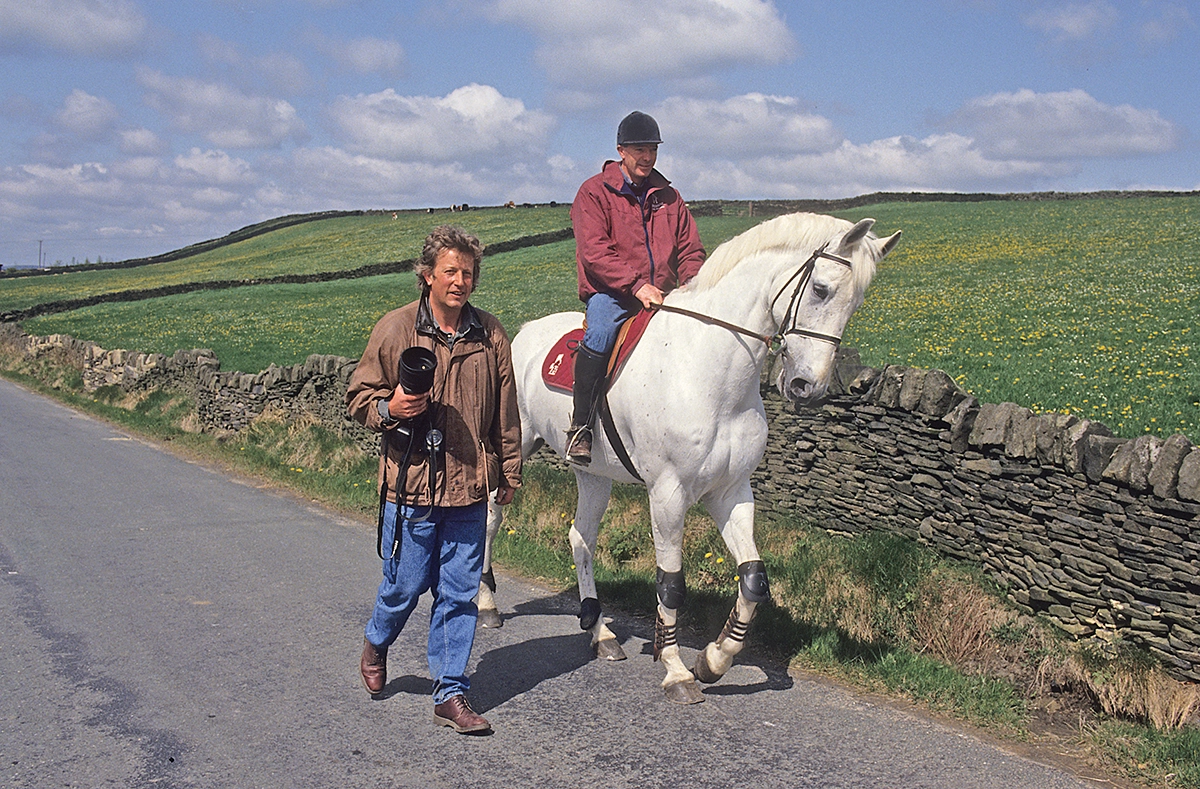
Milton and John Whitaker take a walk with this article’s photographer, Bob Langrish. Photo by Bob Langrish
17. MURPHY HIMSELF: When petite European three-day eventing champion Ginny Leng purchased this gray Irish Sport Horse, she ended up with more horse than she wanted. Although she won England’s famed Burghley Horse Trials on the powerful gelding, she struggled to control him. Fellow eventer Ian Stark took over the ride, which turned out to be a better match, as Stark and Murphy won individual and team silver medals for Great Britain at the 1990 World Equestrian Games.
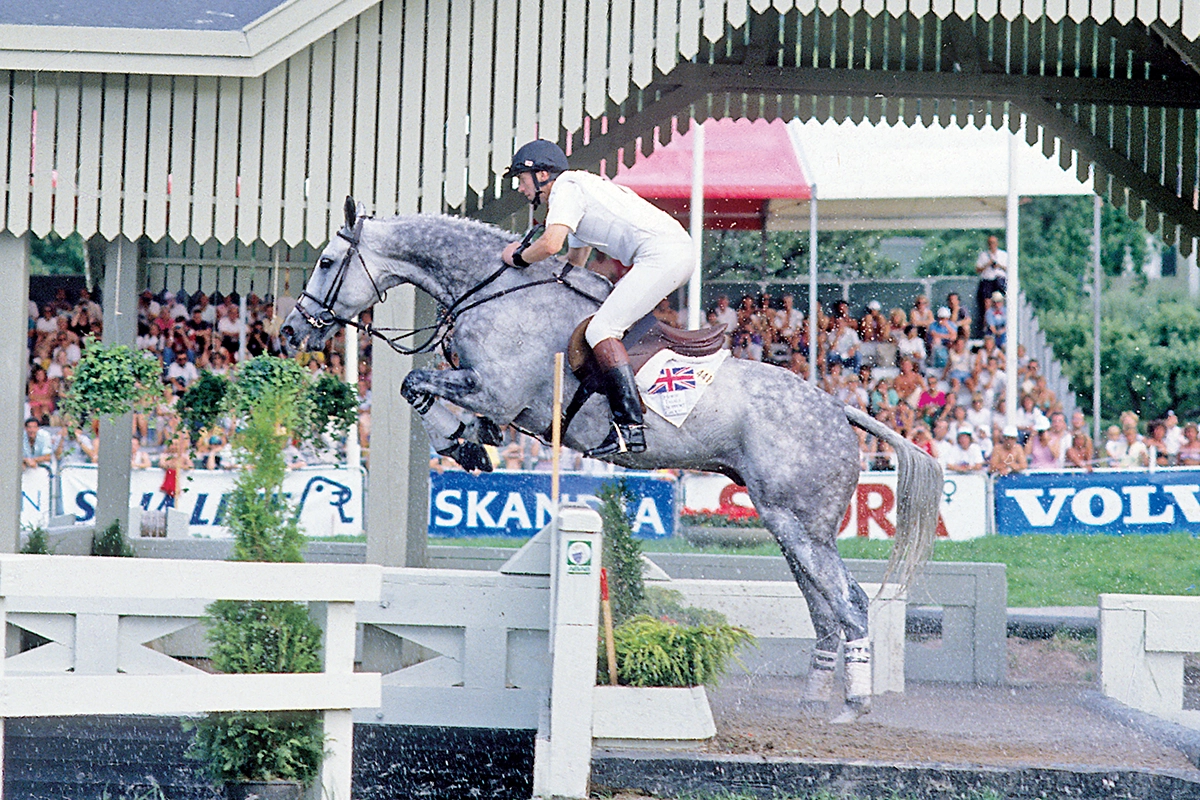
Murphy Himself and Ian Stark at the Stockholm WEG in 1990. Photo by Bob Langrish
18. PIEARAZ: Called “Cash” because he cost the whopping sum of $500, the little gray Arabian went on to prove he was worth his weight in gold by winning successive World Championships in endurance. He did this with owner/rider Valerie Kanavy in 1994, then again in 1996 with Valerie’s daughter, Danielle. Although a gelding, Pieraz has reproduced: he was the second horse in the world to be successfully cloned.
19. R.O. GRAND SULTAN: Another American superstar in the sport of endurance, “Rio” won three consecutive world championships (1988, 1990, 1992) with his rider Becky Hart. By using Centered Riding techniques and natural horsemanship methods, Hart developed a bond with the independent-minded Arabian.
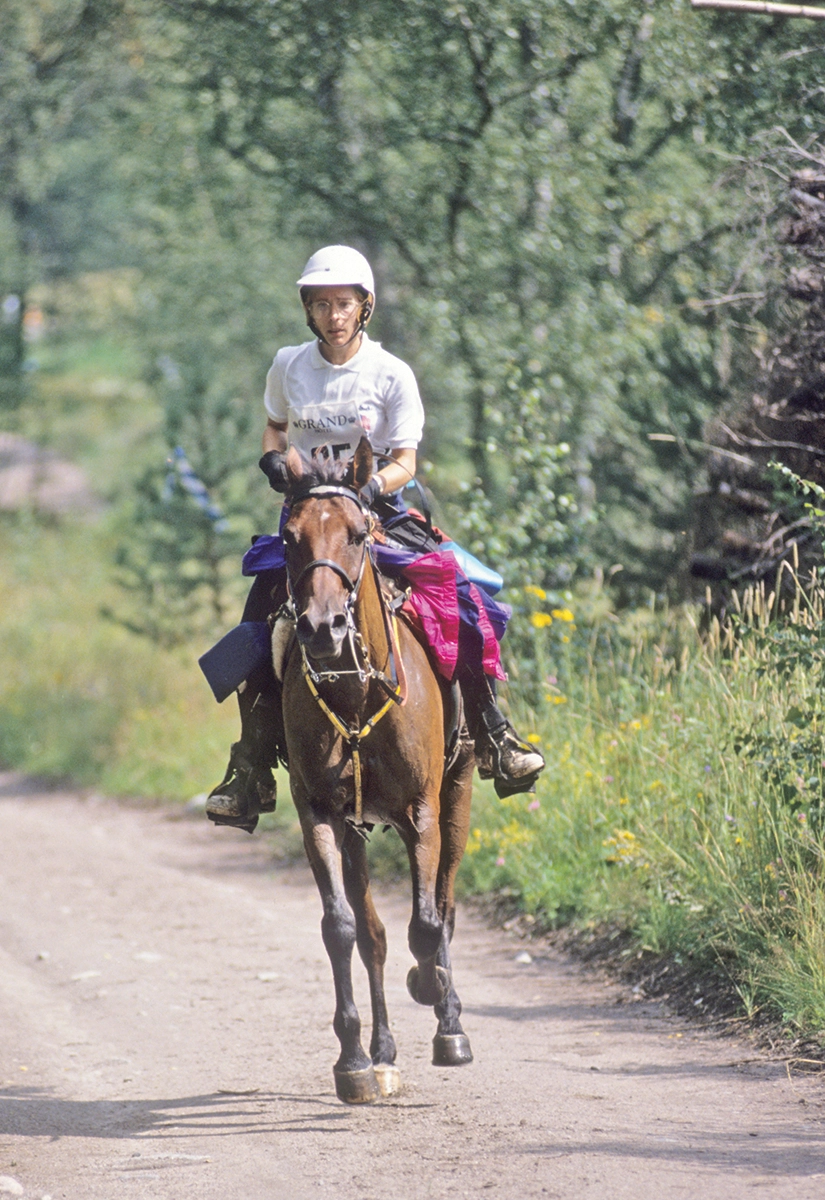
R.O. Grand Sultan and Becky Hart at the Stockholm WEG in 1990. Photo by Bob Langrish
20. REMBRANDT: Rembrandt was purchased as a green 3-year-old for Germany’s Nicole Uphoff to ride. At just 21, Uphoff zoomed to dressage stardom aboard the bay Westphalian, winning back-to-back Olympic gold medals in 1988 (Seoul) and 1992 (Barcelona), plus two world dressage championships. Although she was offered outrageous sums of money to sell the horse, she could never part with him, and he spent his retirement years on her family’s farm.
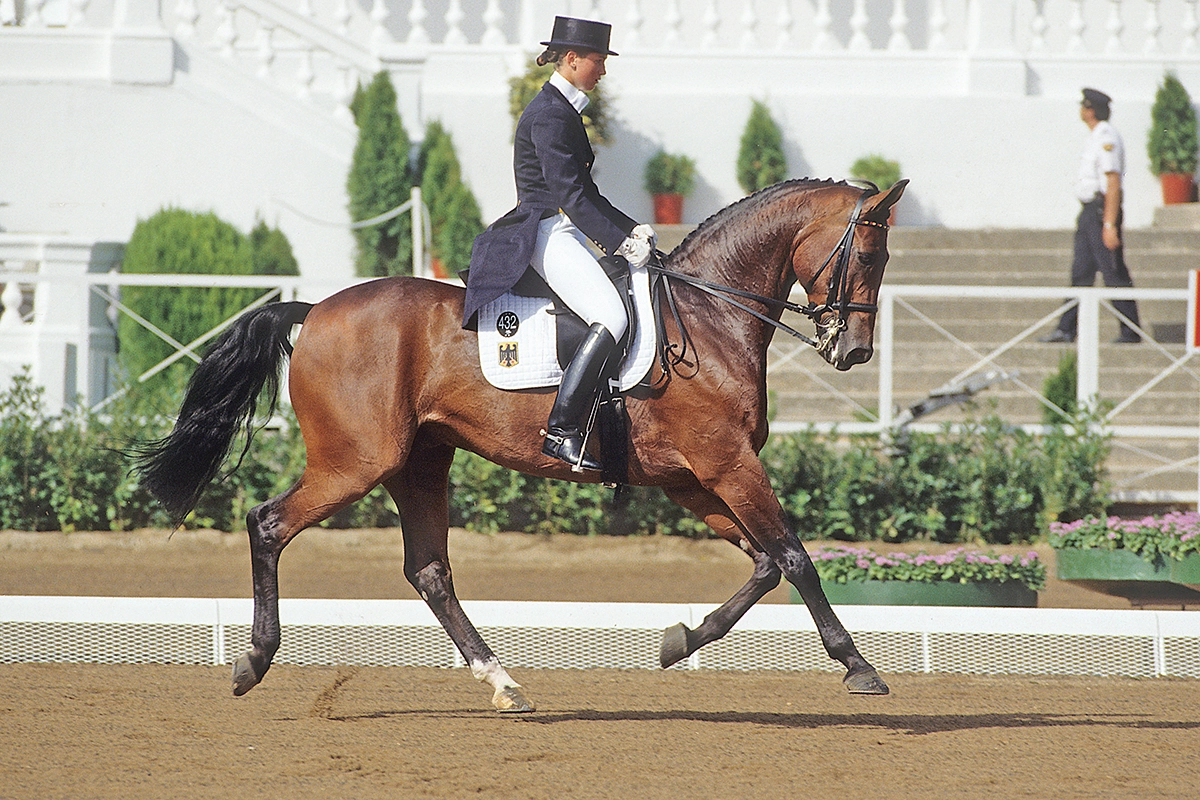
Rembrandt and Nicole Uphoff at the 1992 Barcelona Olympics. Photo by Bob Langrish
21: ROX DENE: One name that still elicits respect in the hunter world is Rox Dene, a gray Dutch Warmblood/Thoroughbred mare who ruled the 1990s with a string of championships in both working and conformation hunter divisions. That earned her the title of Hunter Horse of the Century. Co-owner Chanda Boylen said, “Rox Dene had the entire package: the conformation, the movement and the jump. I think that’s what set her apart.”
22. ROYAL KALIBER: Imported from the Netherlands, the Dutch Warmblood stallion Royal Kaliber was described as having the personality of a teddy bear. After a string of major wins in American grand prix events, “Roy” and Chris Kapler won team silver and individual bronze medals at the 2004 Athens Olympics. Unfortunately, the 12-year-old horse was injured there, suffered a severe bout of colic, and was humanely euthanized before he could return home.
23. RUGGED LARK: The winner of the AQHA Superhorse title in 1985 and 1987, this handsome bay stallion demonstrated his versatility in a variety of performance events, most notably dressage. He also proved he was potent, siring both the 1991 and 1999 Superhorse winners. But Rugged Lark was also known for the tour he and his trainer, Lynn Palm, took around the country, performing bridleless at major events. The sweet-tempered American Quarter Horse embodied the larger-than-life qualities cherished in an all-around riding horse.
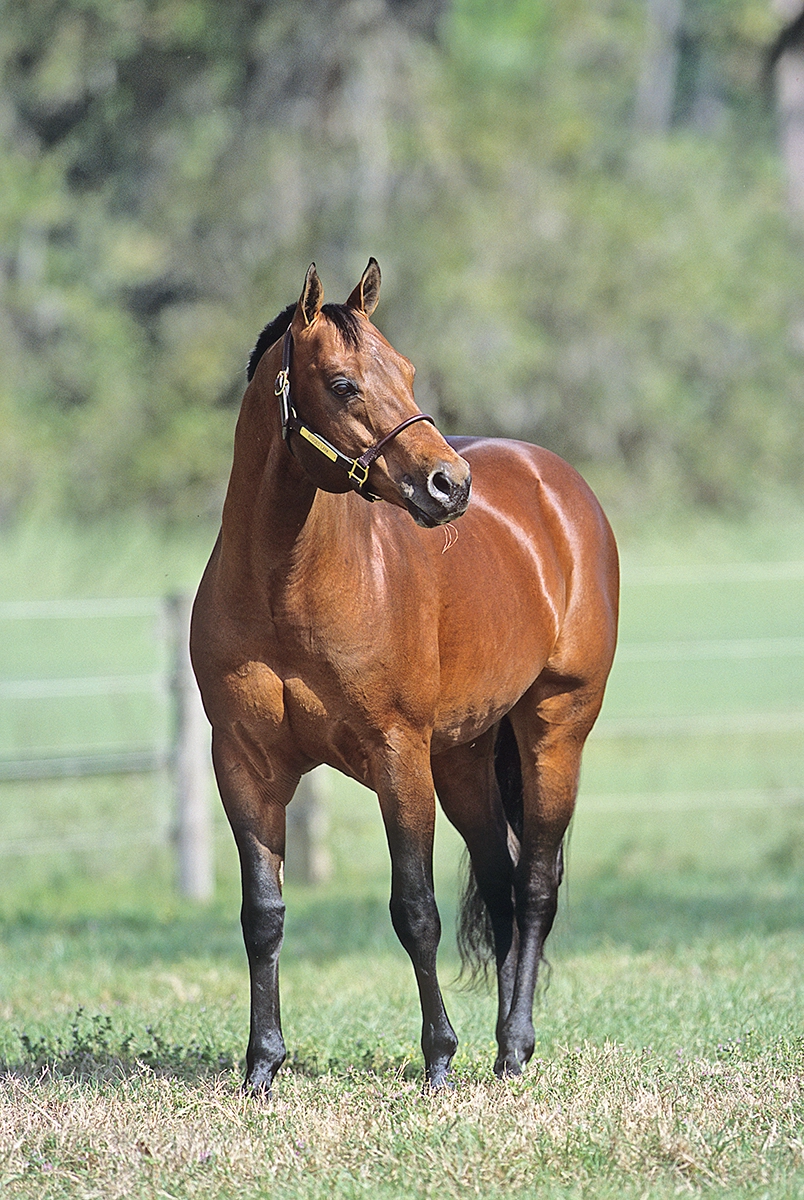
Rugged Lark was an outstanding performer and sire, known in his later years for bridleless demonstrations with Lynn Palm. Photo by Bob Langrish
24. SCAMPER: This little bay American Quarter Horse came to owner Charmayne James after being booted from work at a cattle feedlot, where he had a reputation as a rank rogue. But when James was just 14, she was able to begin training Scamper into the world’s most successful barrel racer. Together they won an unequaled 10 straight barrel racing world championships, and Scamper became the first barrel horse ever inducted into the Pro Rodeo Hall of Fame.
25. SEATTLE SLEW: One of the greatest bargains in horse racing history, Seattle Slew was purchased as a yearling for a mere $17,500. His right front leg turned out, accounting for the relatively low price tag. He traveled so awkwardly down the track as a youngster that his trainer nicknamed him Baby Huey after a clumsy cartoon character. Yet he grew into one of Thoroughbred racing’s most unforgettable champions, winning the 1977 Triple Crown.
26. SMART LITTLE LENA: No bigger than a German Shepherd when foaled, Smart Little Lena grew to be one of the world’s greatest cutting horses. The Texas-bred cow horse won over $740,000 in just eight cutting contests, including the famed “triple crown” of cutting: the National Cutting horse Association Futurity, the Derby, and the Sweepstakes. He has also established a dynasty in the realm of cutting and working cowhorses, siring 17 AQHA World Champions and countless “cowy” sons and daughters.
27. SUPREME SULTAN: The American Saddlebred stallion Supreme Sultan won numerous championships, but even more impressively became the only American Saddlebred to sire World Grand Champions in every show division that the breed association offers.
28. TOUCH OF CLASS: She was small but mighty. After a brief flirtation with a racing career, Touch of Class carried the hopes of the United States into the 1984 Olympics before a home crowd in Los Angeles. There, the fancy bay Thoroughbred and Joe Fargis made the tough show jumping course look like a hunter round. The mare earned the United States a team gold medal and then survived a grueling two-round jump-off to also capture individual gold.
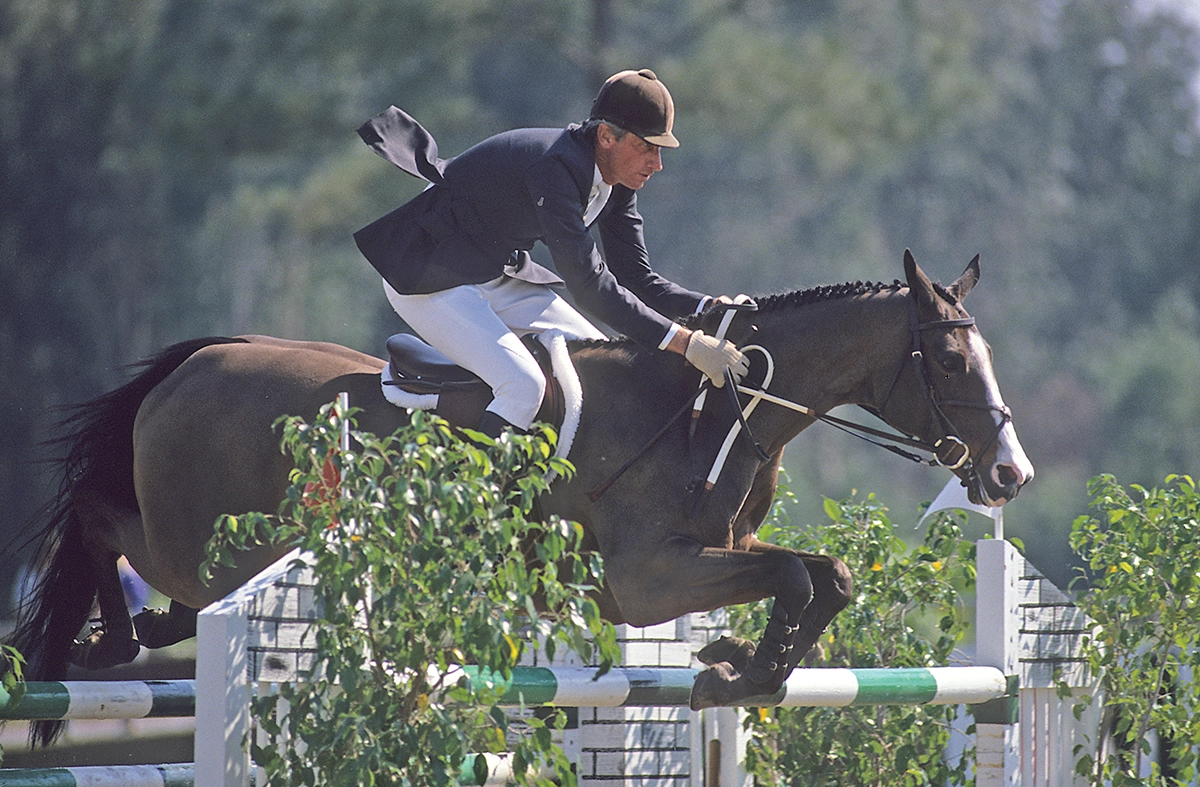
Touch of Class, a diminutive Thoroughbred mare, dominated the show jumping world with Joe Fargis. Photo by Bob Langrish
29. WINSOME ADANTE: As a young horse in Great Britain, “Dan” jumped out of his paddock for a bucket of treats. Sold to America for Kim Severson to ride, the Thoroughbred/Arabian/Irish cross went on to become one of the most successful three-day eventing horses in history, winning team bronze and individual silver at the 2004 Athens Olympics and, perhaps more notably, the Rolex Kentucky CCI**** three times (2002, 2004, 2005).
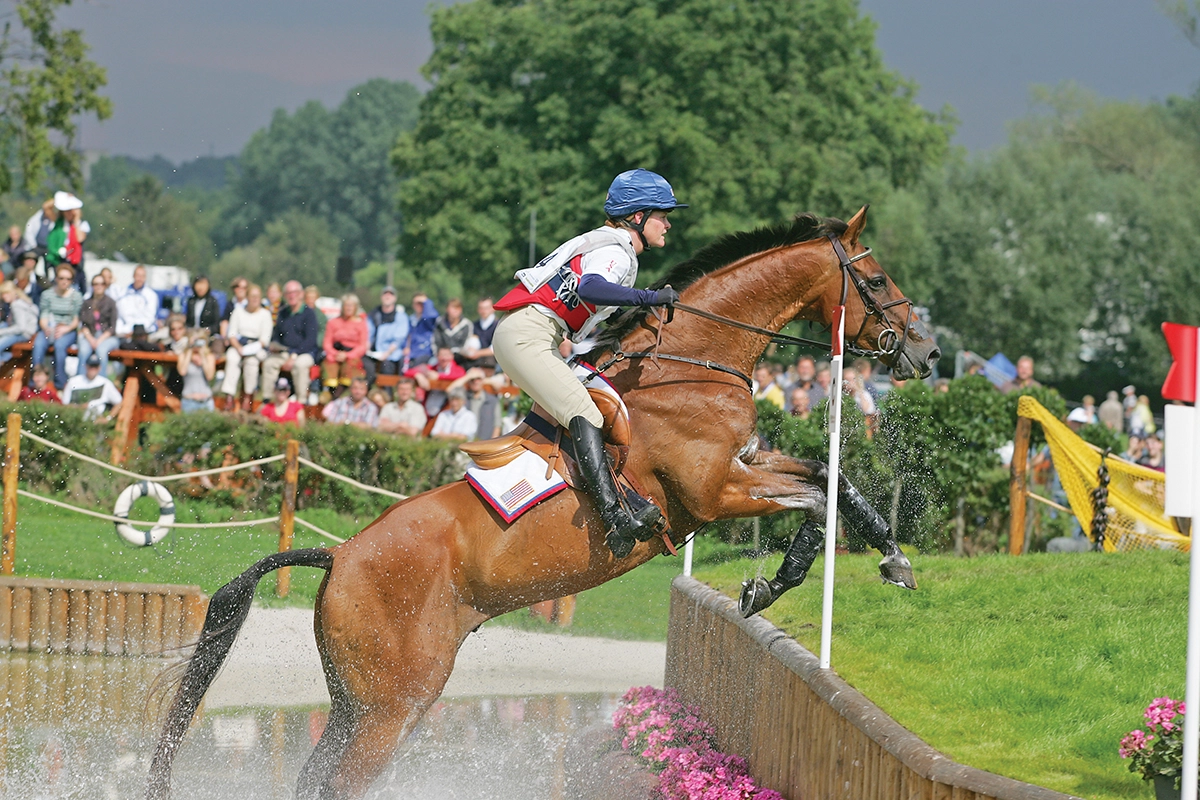
Winsome Adante and Kim Severson at the Aachen WEG in 2006. Photo by Bob Langrish
30. ZIPPO PINE BAR: Rancher Norman Reynolds was looking for a working cow horse, so he bought Zippo as a weanling for just $1,000 in 1970. But when the colt won in the show pen, Reynolds realized he had more than a cow pony. Zippo Pine Bar spent more than a decade as the AQHA Leading Sire of Performance Horses, and his foals won more than $2 million in western pleasure prize money. His bloodlines continue to be an influence in Quarter Horses, Paints and Appaloosas.
As you can see, great horses come from all sorts of beginnings. Maybe you have a future unforgettable horse standing in your stall right now!
This article was originally published as part of Horse Illustrated’s 30th anniversary in 2006, and was reprinted in our 50th anniversary special issue. Click here to order!