Modifications can be applied to make the poses more or less challenging. With the vast number of postures, if one doesn’t work for you, there’s likely another with similar benefits that will.

The physical postures have great value to equestrians when riding. Staying in shape also comes into play when working around the barn raking, shoveling, and lifting hay bales. It’s important to include postures that work on the following three physical traits: flexibility, strength, and balance.
Here are a few of my favorite yoga postures for equestrians.
Flexibility: Standing Forward Bend
Flexibility is an important component of equestrian fitness. Swinging a leg up and over a saddle requires flexibility. Having a flexible body also helps keep stiffness and soreness at bay. Additionally, if an unfavorable dismount were to occur, the flexible body typically sustains less injury.
There are lots of great yoga postures to improve flexibility, but I feel the most beneficial one is Standing Forward Bend. Not only do the legs get a great stretch, but so does the lower back. Also, inversions increase healthy blood flow to the head, brain, and thyroid. This pose is much more attainable than headstands, yet still garners the inversion benefits.
How-To:
◆ Stand with feet hip-width apart. Inhale and raise your arms overhead; with a flat back, exhale and swan dive forward, placing your hands on your shins, feet, or the floor, depending upon your level of flexibility.
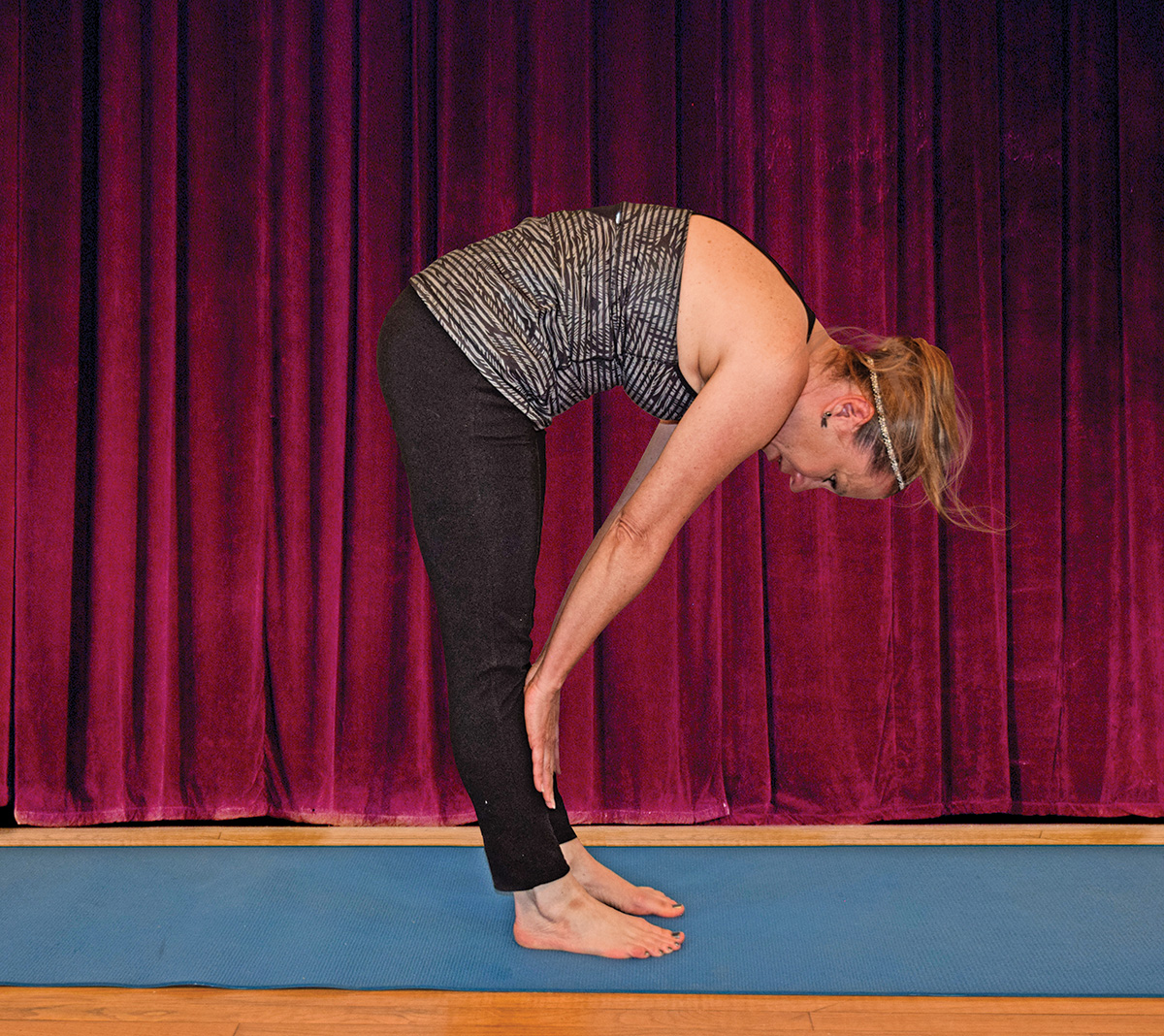
◆ Drop your head so as not to create neck strain.
◆ Keep your knees relatively straight but not locked. You’ll want to feel some stretch on the backs of your legs.
◆ Hold the pose for five breaths or to your comfort level. If you feel there’s too much blood flow to the head, slowly come out of the stretch.
◆ To exit, roll up slowly, stacking the vertebra, or take a reverse swan dive up.
◆ When finished, pause for a moment with hands in prayer position at the heart center; observe the blood flow redistributing, and allow the goodness of the posture to soak in.
◆ Standing Forward Bend can also be used as an entry point to other poses such as Plank, Lunges, Downward Dog, and Chair Pose.
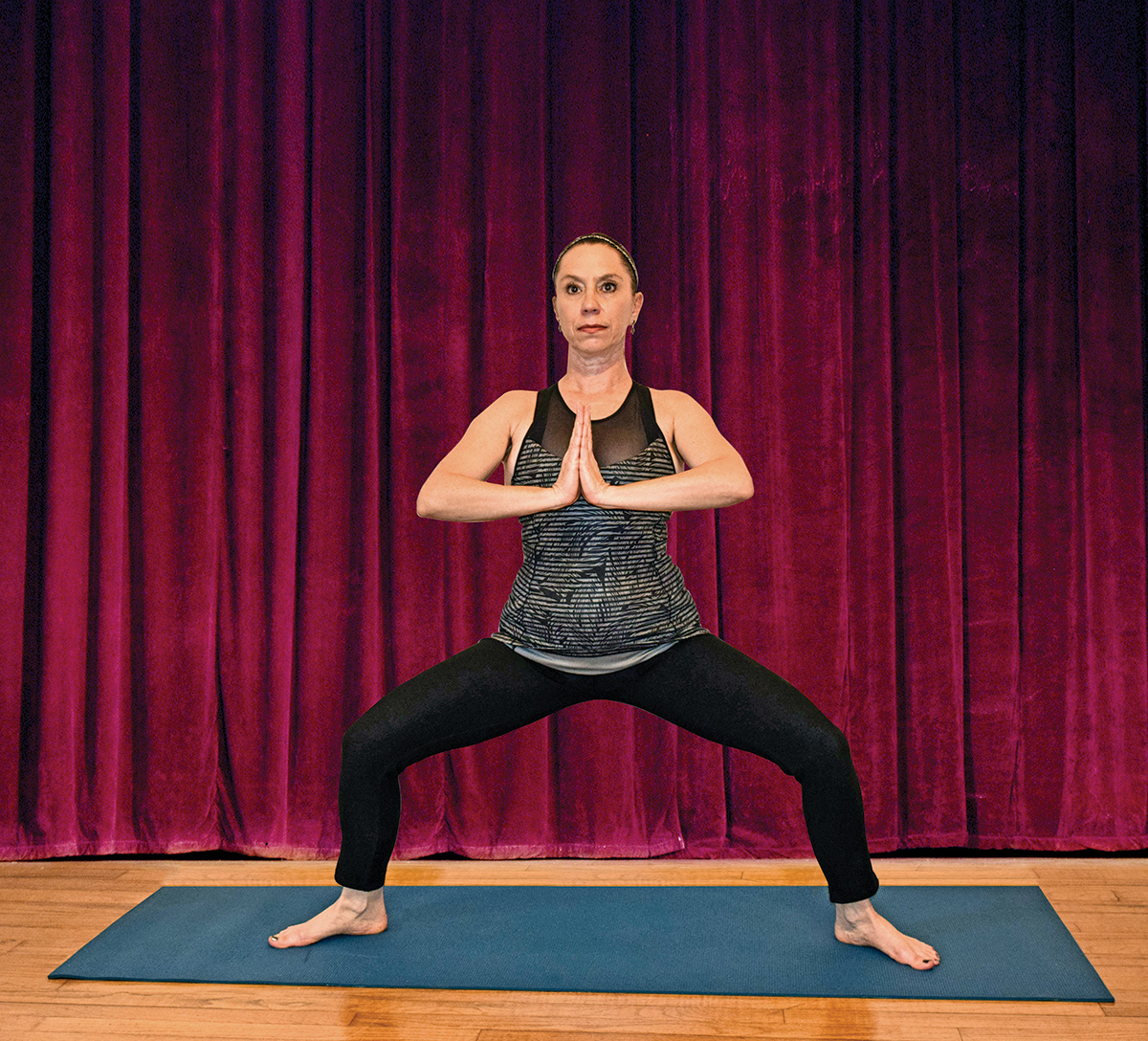
Strength: Standing Goddess Pose
Physical strength is necessary as an equestrian, whether it’s being able to mount up easier, posting, or lifting a saddle.
There are many strengthening postures such as Chair Pose, Planks, and Warrior variations, but one of my favorites for riders is Standing Goddess Pose, which focuses on legs, inner thighs, quadriceps, and buttocks.
How-To:
◆ Stand with your feet wide apart and turn your toes out slightly; to avoid knee strain, your big toe should never be turned out past the knee.
◆ Begin with hands on your hips, then bend both knees equally, sinking your tailbone toward the floor.
◆ Don’t lean forward; the crown of your head should point toward the sky.
◆ After bending your knees, different arm variations can be added. Try prayer position in front of your chest (when palms are pressed together—this engages the pectoral/chest muscles). Bringing your arms overhead at shoulder width apart is another option.
◆ Hold the posture for five deep breaths, perhaps working up to a longer hold time as your strength increases. Three sets are recommended, taking short breaks between.
Balance: Tree Pose
Improve balance and focus both in and out of the saddle through balancing postures.
There’s an array of balancing yoga postures, but one of the most basic, yet effective, is Tree Pose, which can include variations to add challenge if the basic version is too easy. On the flip side, there are modifications to make Tree Pose simpler if you’re challenged by balancing poses.
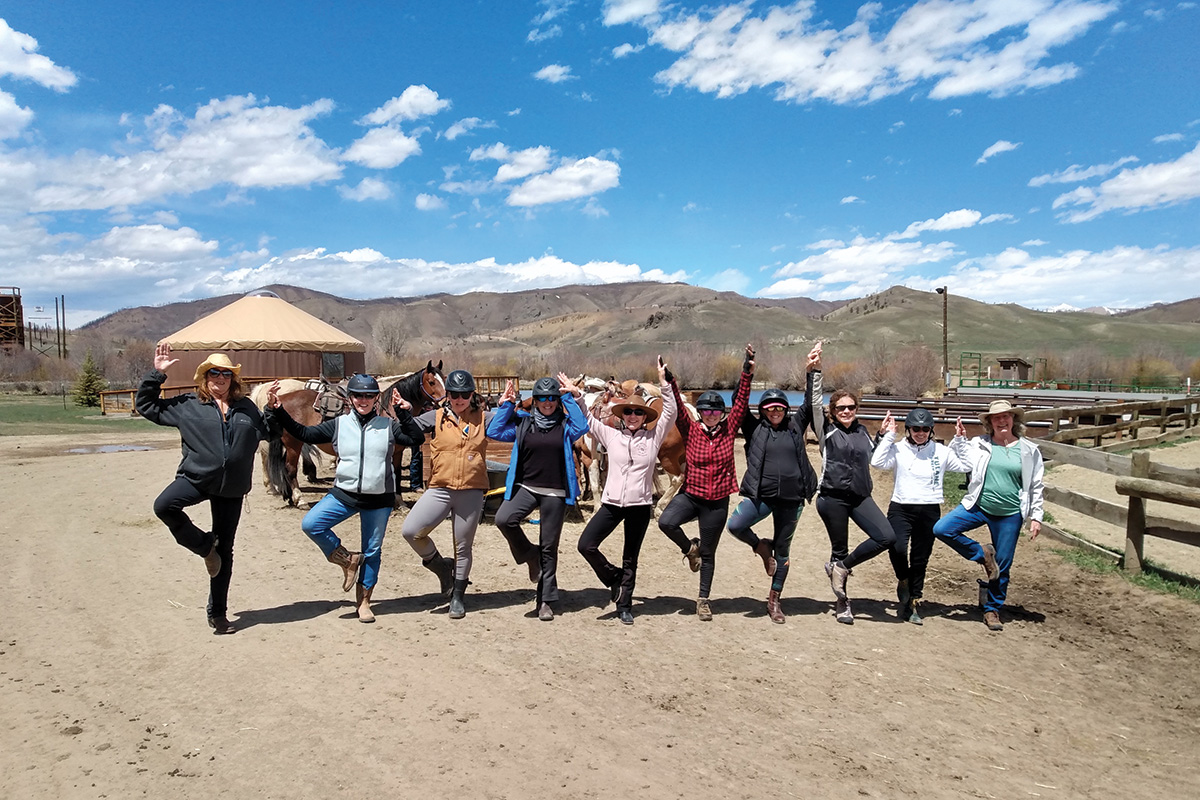
Even though balance poses may not look like strengthening postures, many tiny muscles work to hold a balanced position. As muscles build, balance improves; work from where you are and enjoy the incremental improvements you’ll see from regular practice.
Mental focus also comes into play when mastering balance and is a means to developing concentration, which is helpful in horsemanship.
How-To:
◆ Begin with both feet solidly on the floor, with your weight placed symmetrically.
◆ Gently fix your gaze on something stationary ahead of you; hold your gaze there without wavering, regardless of what’s going on around you. In yoga, we call this focused intention, or drishti.
◆ Soften your standing knee; don’t bend it, but don’t lock it either.
◆ Shift your belly button over one foot, which equates to moving your center.
The following are foot placement options (based on your level of balance) for the leg that will be moving on to the standing leg:
◆ Keeping a big toe on the floor makes the pose easier. You can work up to placing your foot higher on the standing leg: ankle, knee, thigh, or crossed. The higher the placement, the harder the posture becomes.
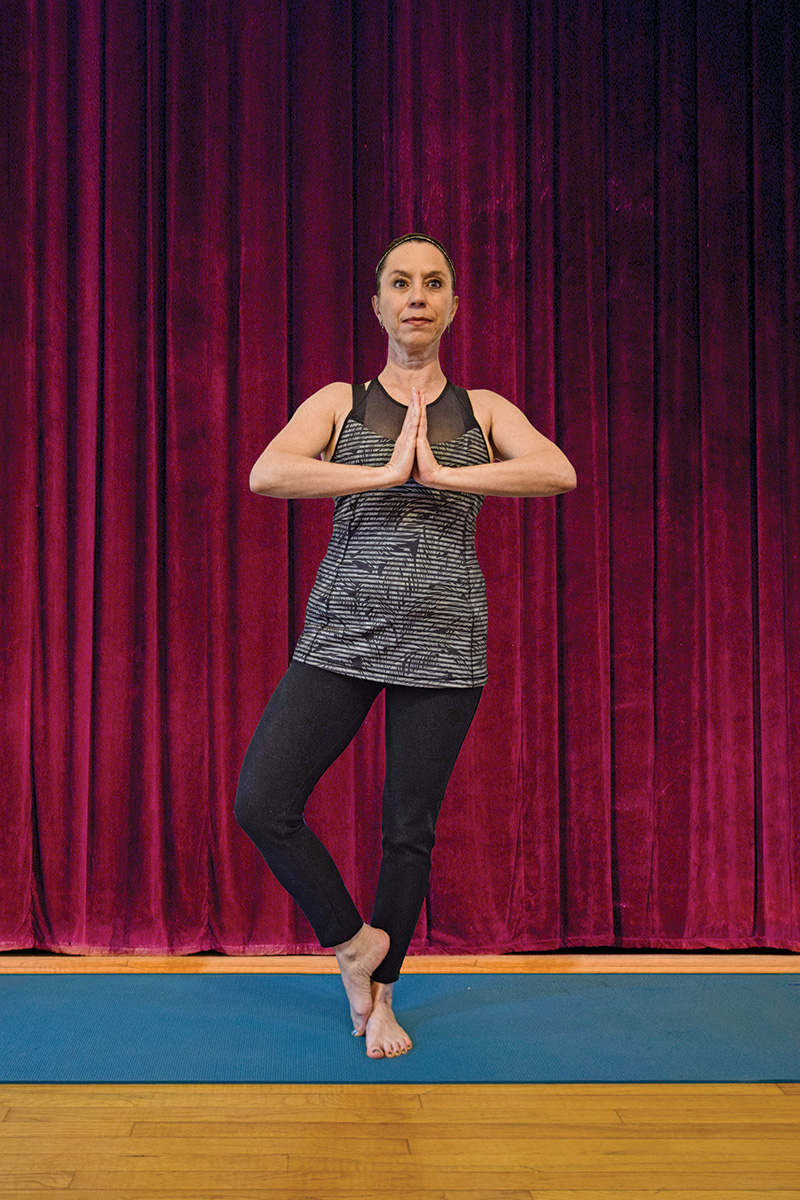
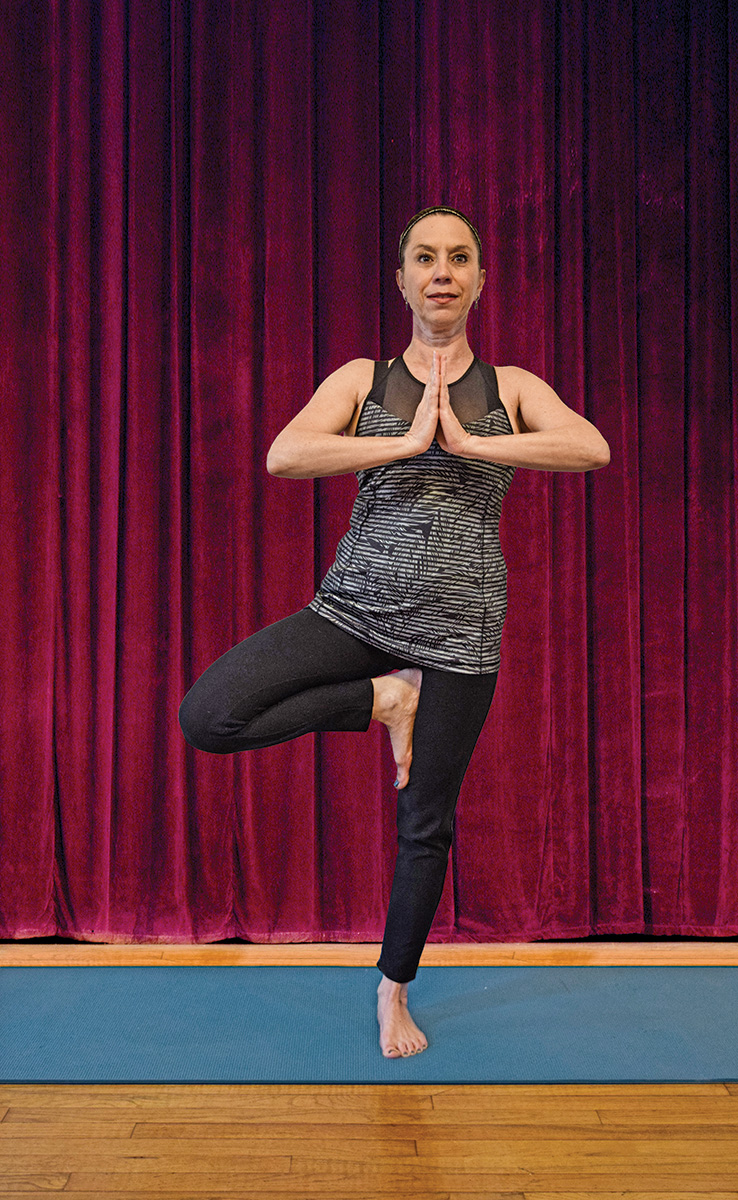
◆ If challenged by Tree Pose, there’s no harm in using a wall, chair back, or windowsill to lightly place a hand if you feel wobbly.
◆ Hands are traditionally placed in front of the chest in a prayer position. For variety, arms could be extended upward or out to the sides.
◆ Keeping your arms in a stationary position is easiest, but to add more challenge, moving them while in Tree can be another option.
◆ If Tree Pose is too easy, try it with your eyes closed, which adds another dimension of difficulty.
Key Takeaway
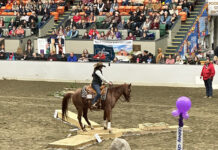
Keep your yoga and fitness regimen interesting and doable. As you’ll see from some of these photos, practice can be done on the mat, on the trail, or in the ring! Consider committing to a regular practice and glean the many benefits you’ll notice in your riding and your overall physical and mental fitness.
General Tips
|
◆ Groundwork for the Human
◆ Similarities Between Yoga and Horsemanship
◆ Your Equestrian Wellness & Fitness Journey
This article about yoga postures for equestrians appeared in the July 2024 issue of Horse Illustrated magazine. Click here to subscribe!