What is Working Equitation?
WE was developed in Europe in the mid-1990s as a fun pastime as well as a means of preserving the equestrian traditions in Spain, Portugal, Italy, and France, where Iberian horses and other breeds served as hardy, nimble, brave mounts to work cattle. The horses’ ability to collect also made them natural choices for classical dressage.
“I describe [WE] as dressage with obstacles, or a trail course with dressage,” says Taylor Lindsten, of Taylor Made Sport Horses in Scottsdale, Ariz. Primarily a dressage trainer, Lindsten is a newer WE enthusiast—and her success proves that some horses can excel in both sports: A current mount, the Georgian Grande stallion Wallace G, not only notches wins in WE, but also competes at the FEI levels in dressage, earning the Intermediate I Open championship title at the 2023 U.S. Dressage Finals.
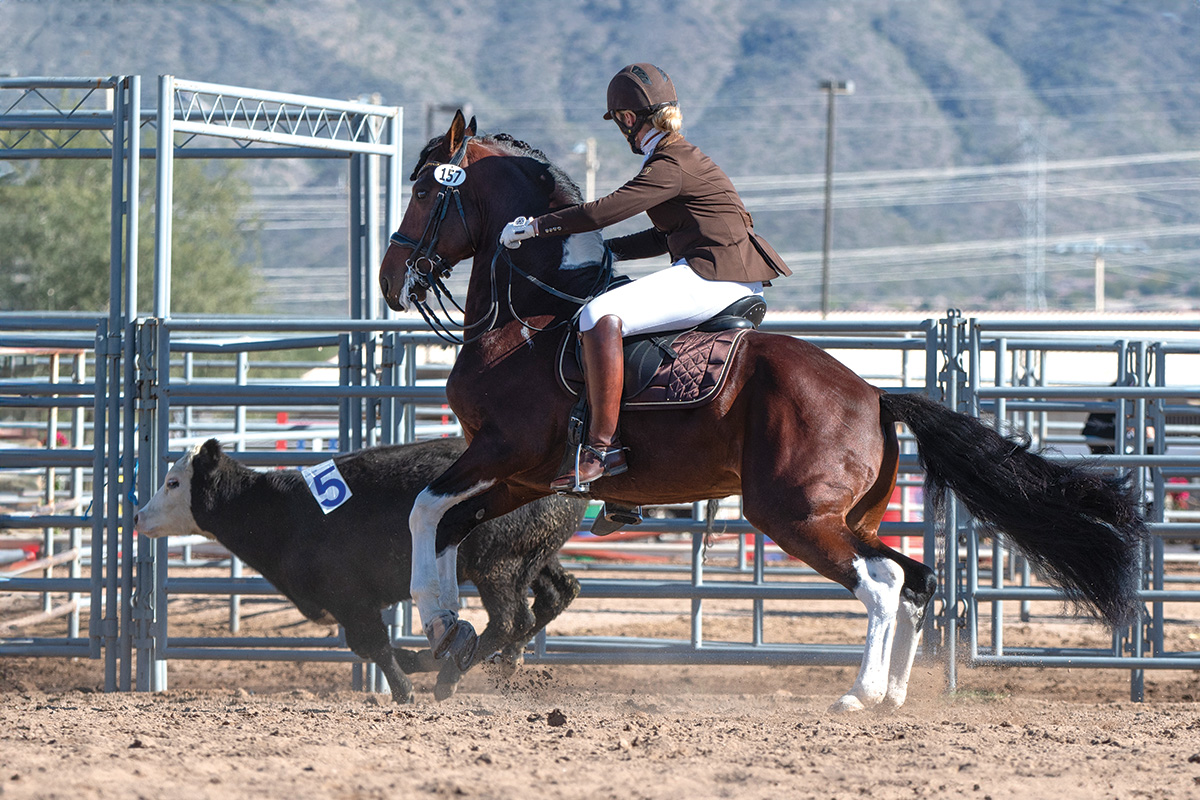
As Lindsten explains, WE consists of three “trials”: dressage, ease of handling, and speed, typically ridden all in one day. An optional fourth element, the cattle trial, is mandatory in more advanced competition, and entails working with other horse/rider combinations as a team to cut a designated cow from the herd and move it to a holding pen.
The Three Trials
Dressage
Modeled after the U.S. Equestrian/U.S. Dressage Federation’s tests and competition structure, WE dressage is ridden in a small dressage arena measuring 20×40 meters, the size often used for dressage tests in lower-level eventing (regulation size for dressage and upper-level eventing dressage tests is 20×60 meters).
The seven tests range in difficulty from Introductory (walk, trot, halt, and rein-back) to Masters (a test executed to music that includes canter work, pirouettes, extended gaits, and flying lead changes—all ridden one-handed!). Tests are judged using the established 0-10 scale of marks.
Ease of Handling
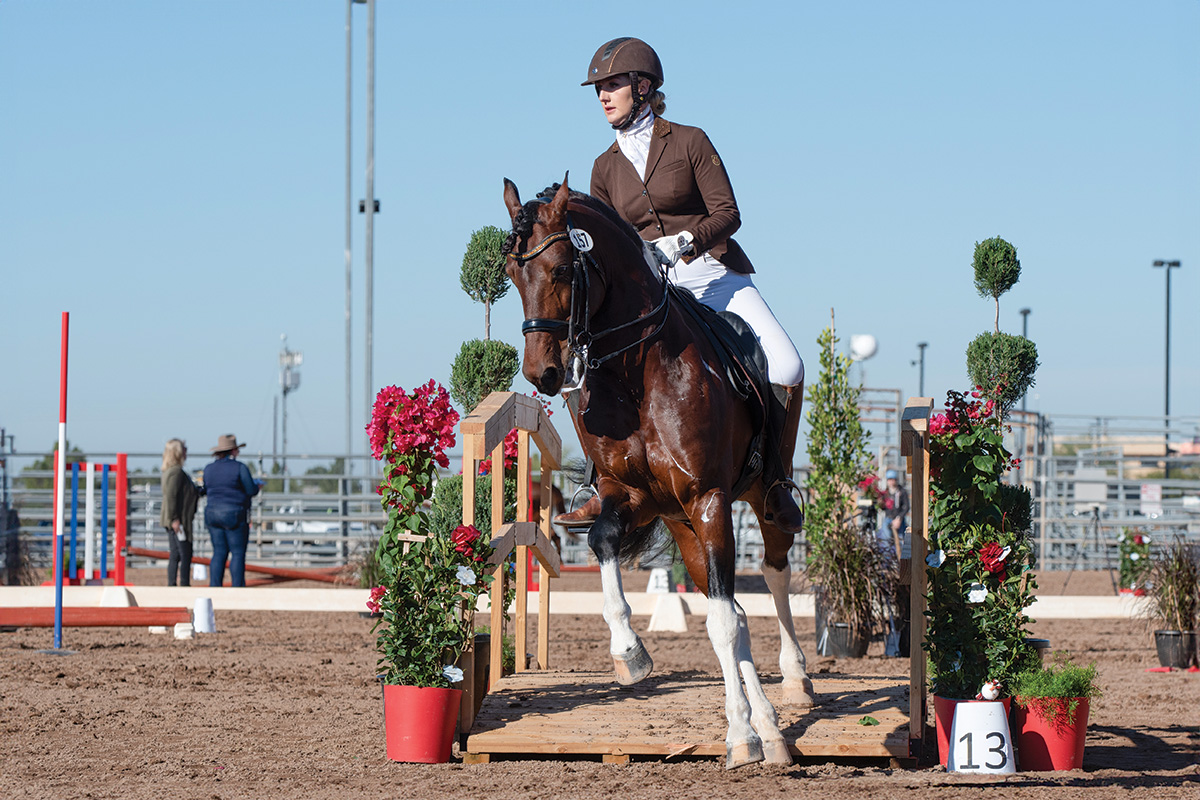
Horse and rider navigate an obstacle course that combines elements of several disciplines, including crossing a bridge, opening and closing a gate, hopping over a small jump, sidepassing over a pole, bending around poles or barrels, reining back through an “L,” and others.
Elements and required gaits increase in number and difficulty through the levels, and judges want to see competitors negotiate the obstacles “in a stylish and organized way,” Lindsten says.
Speed
The clock is the only thing that matters on this final obstacle course. Like jumping faults, riders are penalized for such errors as going off course, refusals, or even switching the hand used to handle an obstacle. In a nod to the sport’s origins, WE obstacle courses require riders to spear a ring with a long pole—shades of the garrocha that vaqueros use to maneuver cattle.
The Ideal Horse for Working Equitation
Dressage basics underlie WE, but the sport “develops a horse that is extremely versatile,” says USA Working Equitation (USAWE) Professional Instructor, technical delegate, and “L” judge Emily Kemp, who operates Kemp Horsemanship in Newton, Wisc.
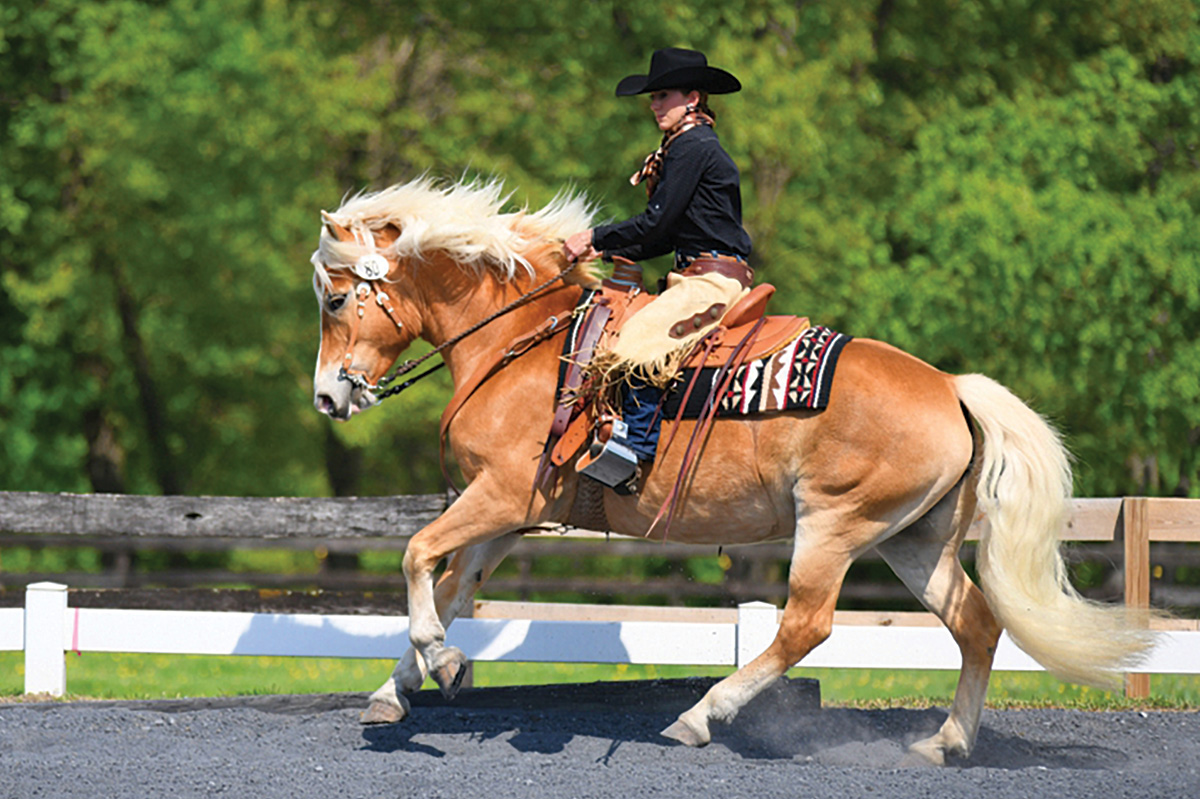
A “smaller, handier” mount may have an advantage given the speed and agility requirements—Kemp successfully showed a 14.2-hand Haflinger, which she calls “an ideal size”—but all breeds are welcome. Even gaited horses may participate, substituting their gait for the trot. But a dressage background remains a competitive advantage because “balance is huge,” she says.
The reverse may also hold true: As Lindsten discovered, WE can actually be a boon to dressage training. While teaching Wallace G the flying changes a few years ago, she found that “he had a lot more interest in his work when we were working with the obstacles.”
She rode turns around barrels and poles to help teach him to bend and yield to her leg aids, and the obstacles provided “a purpose in what I was asking him to do, and a purpose for the lead changes.”
Who Can Ride It?
In WE, rider backgrounds are similarly varied. Kemp’s wheelhouses are natural horsemanship, cutting, and reining.
Competitors may show in any discipline’s tack and apparel: Kemp goes western, while Lindsten enters at A in full dressage garb. (Just don’t mix and match, Lindsten says; ride in the apparel that your tack denotes.)
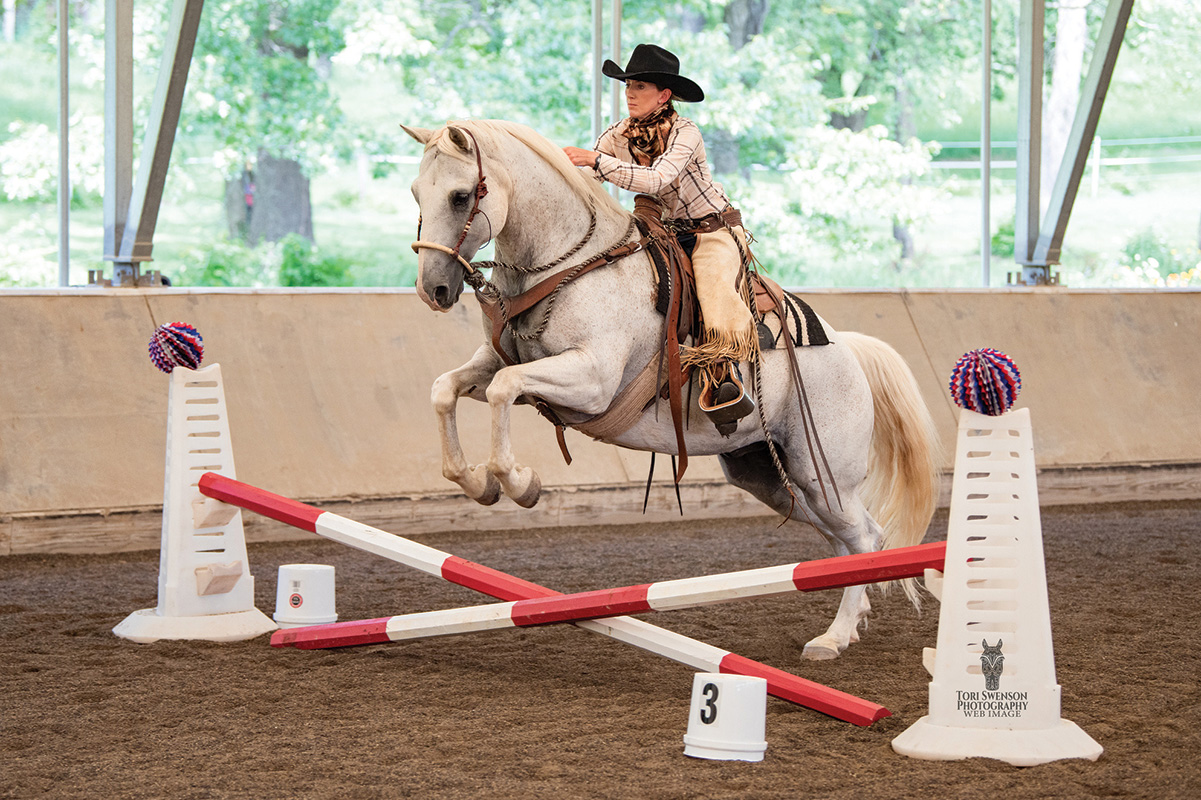
Riders with physical disabilities may apply for dispensations to compete using adaptive equipment or allowances, as well.
Kemp says that most U.S. WE enthusiasts are adults, but USAWE is “trying to grow youth participation” by reaching out to Pony Club members and other youth-oriented groups. Currently “especially popular” in California and the Pacific Northwest, the sport is working to expand nationwide, she says.
Ambitious competitors may strive to reach the sport’s international levels. The World Association of Working Equitation, the sport’s international federation, holds a World Championships every four years. The U.S. hopes to send a team in 2026—and Lindsten, for one, hopes to be on it.
Ready to Try Working Equitation?
Want to learn more about WE? Both Lindsten and Kemp recommend starting out by watching shows or clinics in your area. Find a calendar of events, rules, dressage tests, and a directory of instructors and officials on the USAWE’s website.
Kemp enthuses about the “great show environment” at WE competitions. Besides the friendly people, WE “has a way of leveling the playing field. You just keep competing until it’s done.”
The variety of skills required “takes out that super-competitive edge” found in some singular disciplines, Kemp adds, and the WE arena is one in which all breeds can compete as equals.
This article about working equitation appeared in the July 2024 issue of Horse Illustrated magazine. Click here to subscribe!