0 ITEMS
  • My Account
  • Holiday Gift Guide
  • Podcast
  • Webinar
Subscribe Combo
Enable cache13
Home Blog Page 1041

Paso Fino

0

History of the Paso Fino

The Paso Fino’s earliest ancestry includes the Barb, Andalusian and the gaited Spanish Jennet, which came to Santo Domingo (Dominican Republic) with Christopher Columbus to be used as conquistadors’ mounts throughout the 1500s.


The blood of the Spanish Jennet (now extinct) dominated the future of the Paso Fino; the unusual inherited gaits are the breed’s hallmark. The Paso Fino flourished in Puerto Rico and Columbia. Today, the Paso Fino is shown in its traditional tack and is renowned as a competitive trail horse, possessing both speed and stamina.
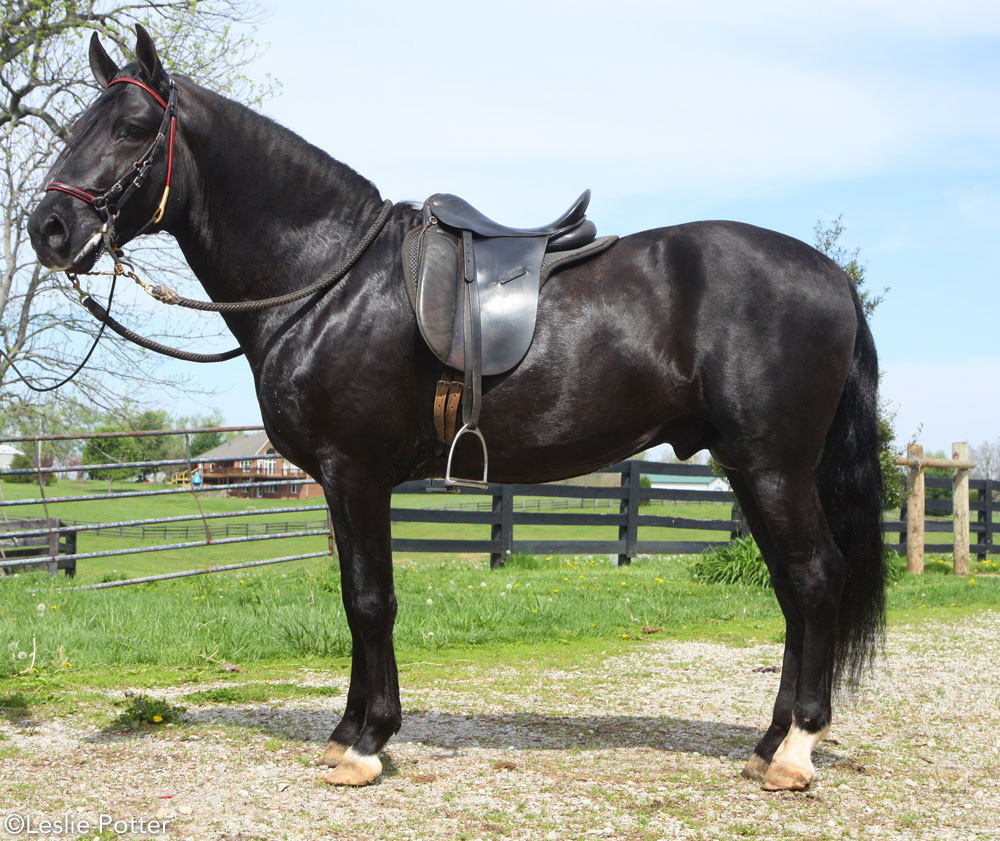
Paso Fino horse conformation

Paso Fino Characteristics and Conformation

Although the Paso Fino walks and canters, it does not trot. Its natural, highly stylized gaits include the paso fino (slowest), paso corto (the preferred gait which is as fast as the trot) and paso largo (fastest). Each foot in the comfortable gait strikes the ground independently and in an even rhythm.

The Paso Fino is a slight but elegant and refined animal standing from 13.2 to 15.2 hands high. All colors and markings are found, including pinto and palomino.
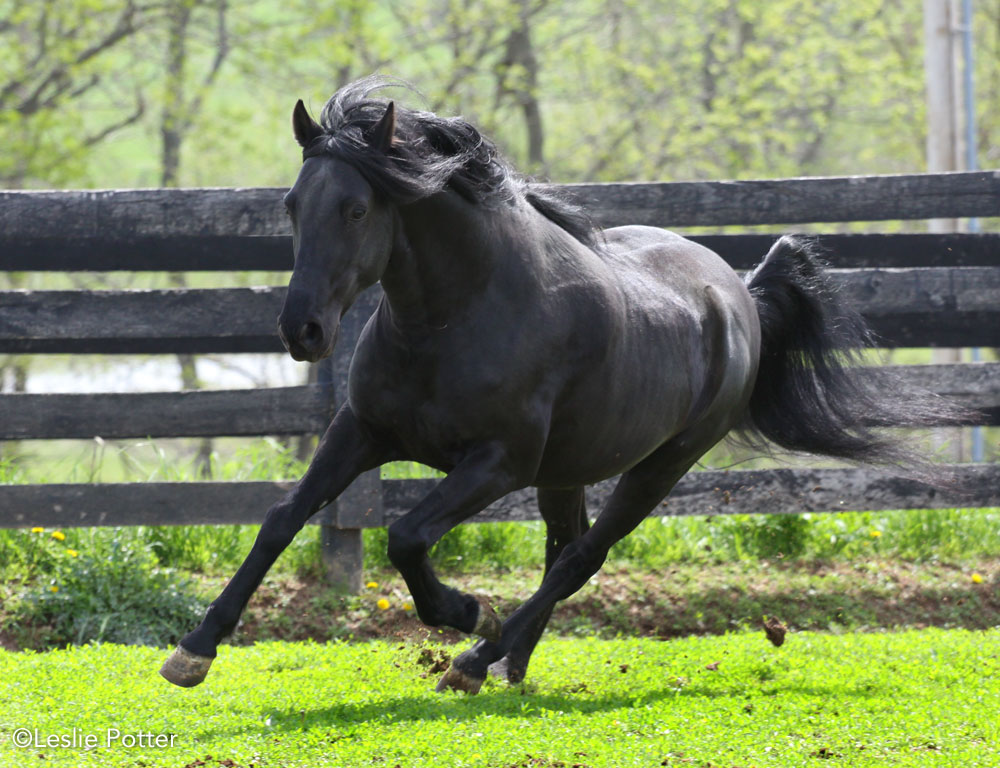
Paso Fino cantering in the field

For more information

Further Reading:

Percheron

0

Percheron History

The Percheron developed in the Le Perche region in Normandy in 732 A.D. when Barb horses were left by marauding Moors after their defeat in the Battle of Tours. Massive Flemish horses were crossed with the Barbs to give the Percheron its substance. Arabian blood was also added.

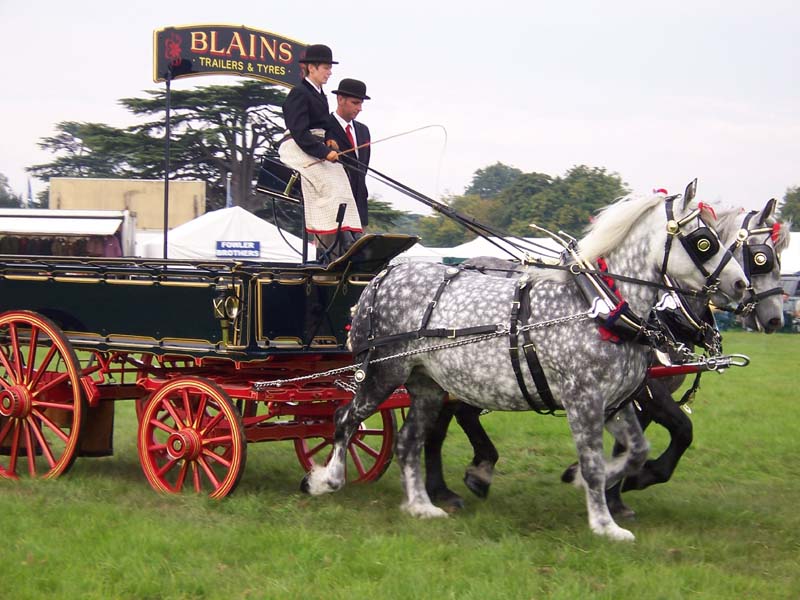
Pair of Percherons pulling a wagon
Pair of Percherons via Wikimedia Commons

In the 1800s, the French government began breeding Percherons for cavalry purposes at the famed La Pin National Stud in Le Haras du Pins in Normandy, which still exists today. Although work is what the heavy horses do best, they are valued riding horses and are beginning to make their mark in dressage. Percherons are crossed to other breeds, such as Thoroughbreds, warmbloods and Spanish breeds, to create sporthorses.

Percheron Characteristics:

Percherons range in height from 15 to 19 hands high. French Percherons are born black and turn gray by age 3. American and British Percherons are gray or black. Legs are without feathers. Percherons are said to be more energetic than other draft breeds. The French prized the horses as coach horses and called them Diligence horses (the French word for stagecoach). These horses had to pull a load quickly and with elegance, which is why Percherons also have the reputation as lovely movers.

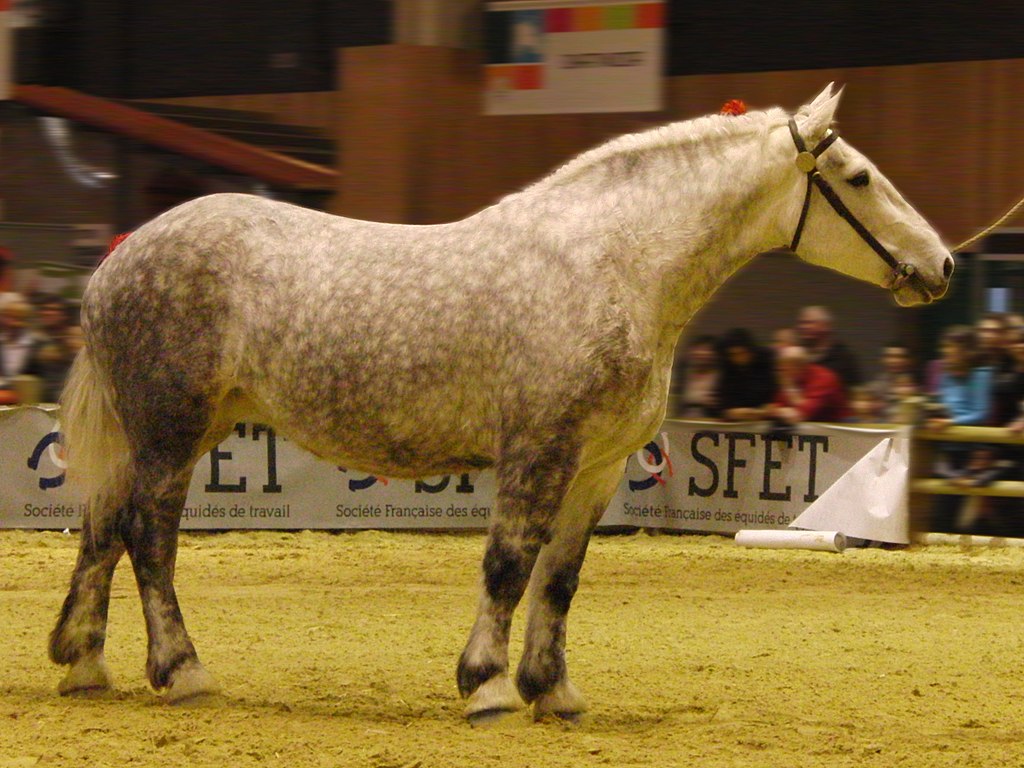
Percheron draft horse
Eponimm CC BY-SA 3.0, via Wikimedia Commons

For more information

Further Reading:

Peruvian Horse

0

Peruvian Horse

Profile: Although the Peruvian Horse, also known as the Peruvian Paso, and the Paso Fino share the same earlier parentage (Andalusian, Barb and Spanish Jennet), and are both gaited, they are not the same breed. The Peruvian Horse’s ancestors were brought to Peru from the Iberian Peninsula by conquistadors and further developed there without the influence of foreign breeds. The horses are prized pleasure riding mounts and are also found in traditional ranch work. The Peruvian Horse is the National Horse of Peru.

Characteristics: The Peruvian Horse has the same type of four-beat gait as the Paso Fino, however, the slower gait is called the paso llano and the faster, more lateral gait is the sobreandando. The Peruvian Horse also has a unique way of moving called the “termino,” where the horse lefts his knee up high and swings the hoof outward. The Peruvian Horse is said to possess a natural brilliance and energy, which enthusiasts call “brio.” The breed is medium-sized, more muscular and bolder in appearance than the Paso Fino, and stands from 14.1 to 15.2 hands high. The Peruvian Horse is found in all solid colors including buckskin, roan and palomino.

For more information: North American Peruvian Horse Association, www.napha.net

Pony of the Americas

0

Pony of the Americas Breed History

The first Pony of the Americas (POA) was born in the spring of 1954 after an Arabian/Appaloosa mare accidentally bred to a Shetland stallion. The owner offered to sell the pregnant mare to a neighbor, lawyer and Shetland pony breeder Les Boomhower.

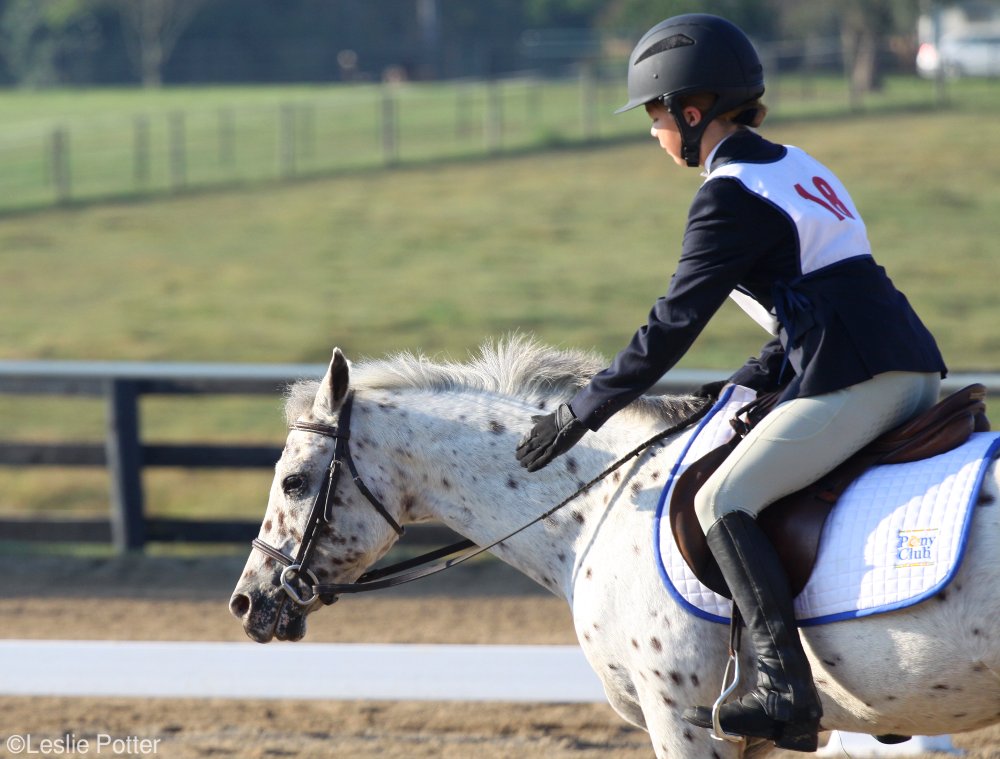
Pony of the Americas

Skeptical of this strange union, Boomhower waited until the foal was born before agreeing. The foal sported white with black marks resembling paint smears all over his body. Most intriguing to Boomhower was a mark on the colt’s flank that resembled a black handprint. Thus, the first POA was named Black Hand.

Boomhower’s background in law aided in his decision to work with other Shetland breeders to create a new POA registry just for colorful, spotted ponies. Strict standards were set for the purpose of keeping the Pony of the Americas a mount for children.

Today, height limit standards have increased slightly from the originals, which were 44 to 52 inches, but the Pony of the Americas remains a genuine children’s pony.

Pony of the Americas Characteristics

POAs must be between 46 and 56 inches. The POAs primary characteristic is its coat pattern, which can vary widely. Most common are blanket patterns, though some are leopard or roan. Mottled or parti-colored skin and white sclera are also characteristic. Striped hooves are an additional POA feature, though not necessarily always present.

For more information:

Pony of the Americas Club, www.poac.org

Racking Horse

0

Racking Horse

Profile: The Racking Horse developed on Southern plantations before the Civil War and shares its parentage with the Tennessee Walking Horse. The Racking Horse’s comfortable gait made it easy for plantation owners to ride from field to field without fatigue. The breed registry was created in the 1970s to break away from the Walking Horse’s more showy action and to concentrate on the pleasure horse aspects of the Racking Horse. The Racking Horse is used and shown in English and western pleasure and performance classes, as well as competitive trail riding. In 1975, the Racking Horse became Alabama’s official State Horse.

Characteristics: The breed’s name refers to the rack—the old-fashioned term for a gait. The Racking Horse has a four-beat gait called the single-foot, where each foot touches the ground individually. Although this gait is natural, the Racking Horse can also have a show gait, which is a higher stepping, trained movement. The Racking Horse is found in many colors, including palomino, buckskin, roan and spotted. Its average height is 15.2 hands.
For more information: Racking Horse Breeders’ Association of America, www.rackinghorse.com

Ranger

0

Ranger

Profile: In 1879, General Ulysses S. Grant was given two stallions by a Turkish Sultan, one was an Arabian (Leopard) and the other a Barb (Linden Tree). The horses were brought to America, and in 1894 they were bred with native cowhorse mares in Nebraska. Their descendents were named Colorado Rangers in 1934 after several horses were exhibited by pioneer breeder Mike Ruby at the Denver Stock Show. A breed association was later set up and all horses today must include the two Colorado Ranger foundation stallions in their pedigree: Max #2 and Patches #1. Due to their initial use and breeding, the Colorado Ranger excels at ranch work and other western riding.

Characteristics: Because of its Arabian and Barb ancestry, the Colorado Ranger is more refined than the usual western breeds. They come in a broad spectrum of colors and even include blanket and tri-colored leopard patterns. The Colorado Ranger is not an Appaloosa or Paint cross-breed nor is it a color breed. The color is actually an ancestral trait; in fact, some Appaloosas are said to have Ranger connections. Horses stand from 14.2 to 16 hands high.
For more information: The Colorado Ranger Horse Association, www.coloradoranger.com

Selle Francais

0

Selle Francais

Profile:
The Selle Francais (or French Saddle Horse) is a warmblood type developed in the government stud farms in Le Pin in Normandy, France, in the 1800s.  Where most warmbloods were crossed with draft types and Thoroughbreds, the Selle Francais was created by crossing the Anglo-Norman saddle type with the French Trotter. Other French breeds were later mixed in such as the Angevin, Limousin and Corlais. After World War II, the emphasis turned to breeding saddle horses rather than farm and cavalry horses and many regional breeds began to resemble one another. In 1958, the French government brought these breeds together under one name, le Cheval de Selle Francais.  The breed excels in show jumping but is also successful in eventing and dressage. Some Selle Francais horses are run in what the French call “other than Thoroughbred” races.

Characteristics:
The Selle Francais studbooks are not closed, but the genealogy is usually Thoroughbred, French Trotter and Anglo-Arab. The Selle Francais is a muscular and athletic horse, with an elegant profile. Horses are found in all colors, but chestnut and bay are the most common. The breed stands from 15.2 to 17 hands high.

 For more information:
North American Selle Francais Association Inc., www.sellefrancais.org

Swedish Warmblood

0

Swedish Warmblood

Profile:
Evidence shows that equines have been in Sweden since 4000 B.C. In the 1500s, the Swedish government began importing horses, most notably Dutch Friesians and some saddle breeds, to improve the indigenous Scandinavian horse. The national stud farms were located in Flyinge, Stromsholm and Kungsor. In 1658, the Swedish King Carl X Gustav set up a Royal Stud at Flyinge, choosing the best horses from the national studs. Traditionally, breeding of warmbloods in Sweden focused on two goals: farming and cavalry. In 1874 the Swedish government began inspections to stop indiscriminate breeding and create cohesive breeds, one of which was the Swedish Warmblood. The breed included the blood of the Anglo-Norman, Trakehener, Thoroughbred and Hanoverian. Unlike other warmblood breeds, the Swedish Warmblood was bred to be a saddle horse only. The Swedish Warmblood excels in all Olympic disciplines, in particular jumping and dressage.

Characteristics:
The studbook for the Swedish Warmblood remains open and many breeds are allowed, as long as they can pass the difficult inspection and fulfill requirements. Breeds include all European warmbloods, Thoroughbreds and Arabians. The Swedish Warmblood is a strong, athletic animal with beautiful flowing gaits. Horses are found in all solid colors and stands from 16 to 17 hands.

For more information:
The Swedish Warmblood Association of North America, www.swanaoffice.org

Tennessee Walking Horse

0
Tennessee Walking Horses
By Jackie O Photography [CC BY 3.0], from Wikimedia Commons

History of the Tennessee Walking Horse

The Tennessee Walking Horse is an American original, developed in central Tennessee in the late 1800s.  The horse’s genealogy includes a mixture of breeds that settlers brought with them, such as Morgans, Narragansett Pacer and Canadian Horses.  One characteristic of this new breed was the horse’s smooth gait, which was later called the running walk.  This gait replaced the ordinary bouncy trot and made it easy for farmers, deliverymen and doctors to sit for hours in the saddle.  The Tennessee Walker is shown English and western, and they are prized mounts for leisure riding and trail.

Tennessee Walking Horse Characteristics

The Tennessee Walking Horse is a noble looking animal with a straight profile and an upright build.  In the running walk, each hoof hits the ground independently; the gait can be as fast as the canter. The smooth canter is often described as a “rocking chair” canter.  The horses are shown flat shod (Plantation Walker) or with weighted shoes (Performance Horse).  The Tennessee Walker stands from 15 to 16 hands high and can be found in the following colors: black, bay, chestnut, sorrel and white.

For more information:

The Tennessee Walking Horse Breeders’ & Exhibitors’ Association, www.twhbea.com; Walking Horse Owners’ Association, www.walkinghorseowners.com
Friends of Sound Horses, www.fosh.info

Further Reading
Now That’s a Walking Horse!
Soring, show horses and the future of the Tennessee Walking Horse

The American Cream Draft

0

The American Cream Draft

Profile:
Nearly 98 percent of all American Cream Draft horses have the blood of an Iowan cream colored draft-type mare called Old Granny, who was born at the turn of the 20th century. Her beauty and unique coat coloring prompted breeders in the area to try to create a breed of cream-colored draft horses. Although Percheron, Shire and Belgian blood was later incorporated into the breed, blood typing has shown the Creams are a distinct group of horses and not simply a color breed. Although tractors have replaced horse power on the farm, the American Cream Draft and other draft horses are still used for hobby farming, logging, driving and hay rides. Some are also ridden.

Characteristics:
All horses are cream colored with white manes and tails and other white markings, as well as pink skin. Foals are born with almost white eyes and as the animal ages the eyes become amber colored. Height ranges from 15.1 to 16.3 hands high.

For more information:
The American Cream Draft Horse Association, www.acdha.org


0FansLike
0SubscribersSubscribe
We use cookies to help personalize content, tailor and measure ads, and provide a safer experience. By navigating the site, you agree to the use of cookies to collect information. Read our Cookie Policy.
OK