0 ITEMS
  • My Account
  • Holiday Gift Guide
  • Podcast
  • Webinar
Subscribe Combo
Enable cache13
Home Blog Page 106

Jeffrey Carver’s Journey: Cancer Survivor to Cutting Champion

0
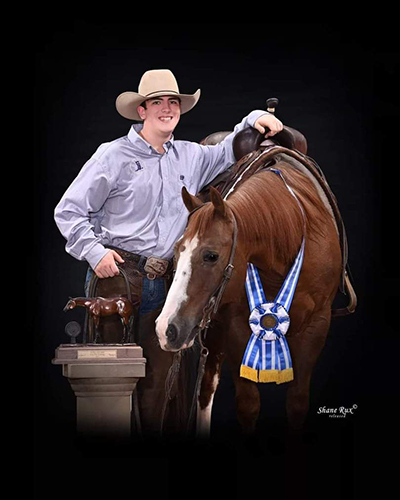
Jeffrey Carver and Whiskey Cat
Jeffrey Carver and Whiskey Cat Quarter Horse Congress 2021. Photo by Shane Rux Photography

“He is a thousand miles from kids who have gone through the same thing,” expressed Janet Carver when discussing the extraordinary journey her son, Jeffrey Carver, has endured. If anyone had told her over ten years ago that Jeffrey Carver would become an American Quarter Horse Congress cutting champion and would be hauling across the country to horse shows, away from their farm near Cleveland, Ohio, she may not have believed them.

Overcoming Obstacles

When Jeffrey was merely four years old, his parents, Tim and Janet Carver, received staggering news—a brain cancer diagnosis. Doctors discovered that a tumor was rooted in a brain stem and grew through the fourth ventricle, impacting Jeffrey’s speech development and causing head pain. After significant bedside crying and the help of countless wonderful people along the way to push through 19 hours of brain surgery, Jeffrey endured 33 radiation treatments, as well as an eye surgery, to defeat the cancer—all by the age of six.

Now at 17, he is one of the oldest survivors of his diagnosis. To top off his remarkable recovery, Jeffrey Carver is a force to be reckoned with in the cutting pen and wears a smile wherever he goes, radiating positivity. His passion for horses did not start with cutting, though. When Jeffrey was working to regain his health as a child, he could not walk in a straight line. As a result, his grandfather suggested riding in hopes that it would help him regain balance. Horses quickly became a way for Jeffrey to heal both psychologically and physically. Even though there is a possibility that his cancer could return at any time, Jeffrey has not left the saddle since.

A New Passion for Cutting Horses

Growing up, Jeffrey competed in team penning and western pleasure, but he eventually wanted to find something else to do with horses. He soon attended a clinic that was held in honor of his grandfather, known as the Jeff Carver Memorial Clinic, with Scott Amos, a cutting trainer from Loma, Colo. Jeffrey quickly formed a bond with Amos, who lost part of his leg a long time ago and understood what it is like to overcome obstacles in life. This clinic, held by Amos, quickly got Jeffrey hooked on cutting horses.

Over two years ago, Jeffrey Carver and his parents were in Fort Worth, Texas, for the National Cutting Horse Association (NCHA) Futurity. Before they went to the event, his parents contacted Amos, who had maintained a connection with Jeffrey, that they were in search for his first cutting horse. While him and his parents were in Texas, Amos lined up some horses for Jeffrey to try, leading to his current mount, Whiskey Cat. “Whiskey” put a huge smile on Jeffrey’s face as soon as they started practicing on cattle, a sign that the High Brow Cat gelding, now 11, was destined to be his partner in the show pen.

Together, Jeffrey and Whiskey have traveled across the country to various NCHA shows, primarily under the guidance of his trainer, Tyler DeLange of Fort Gratiot, Mich. Similar to the way Jeffrey and Amos bonded, Jeffrey and DeLange share a special connection through a “big brother, little brother” relationship. Jeffrey spent many weeks at a time during the last show season with DeLange and his family in Michigan as they hauled around. He even mentioned that Amy DeLange, Tyler’s mother, is his “Michigan mom,” and that he enjoys watching football with the people who have become his second family.
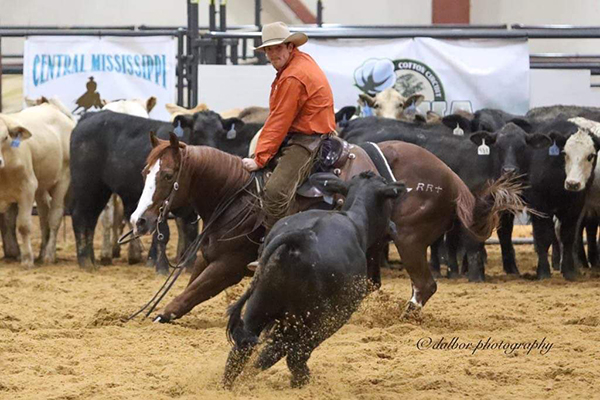
Jeffrey Carver and Whiskey Cat showing
Jeffrey Carver and Whiskey Cat in the show pen. Photo by Dalbor Photography

Success on the Road

With the help of DeLange, Jeffrey and Whiskey showed locally across Ohio, Michigan, Pennsylvania, Kentucky, and Indiana, with goals of entering larger scale NCHA shows. Jeffrey is homeschooled, allowing him to learn at his own pace and maintain a busy show schedule. Local schools were unable to provide him with appropriate support, so his parents stepped in to be his current teachers. Janet mentioned that showing has interrupted his intervention time with specialists, but Jeffrey has seemingly not lost progress. His positivity at horse shows radiates throughout the grounds, where he continues to talk with everyone and absorb the surrounding environments, boosting both his confidence and learning.

Jeffrey kicked off the 2021 season at Eastern Nationals in Jackson, Miss., as his first big show with Whiskey and with multiple judges scoring. By the second day, Jeffrey made it to the top ten in the Senior Youth class.

A few months later, Jeffrey competed at the National High School Rodeo Association Finals in Lincoln, Neb. He won his first go, putting him fourth in the first go-round of the boys cutting and landed in the top 20 overall. This show was one of Jeffrey’s favorites due to the experiences outside of the show pen, like meeting riders from all across North America, including Hawaii, Canada, Mexico, and the Bahamas. Jeffrey credited cutting horse trainer Mitch Farris, of Midway, Texas, with coaching him at the finals and convinced him to enter in the NCHA Foundation Scholarship Cutting event held that summer in Fort Worth. The Scholarship Cutting was also fun for the time spent away from competing, such as learning how to two-step by one of the other youth riders.

A Local Cutting Win for Jeffrey Carver

By fall, Jeffrey and Whiskey were an unstoppable team. Adding to his expanding list of NCHA achievements, he walked into the Coliseum at the Ohio Expo Center at one of the most esteemed breed shows in the country, the American Quarter Horse Congress in Columbus, Ohio. Jeffrey felt a wave of almost every emotion possible, ranging from nervousness to excitement. Yet, Congress was his favorite, and for good reason. Jeffrey Carver’s commitment to his cutting career lit up the show pen the day he went in for the $35,000 Non-Pro event.

“When I walked in that pen and I started cutting, there were points when I could not hear people cheering for me, or the music playing,” Jeffrey explained. “The only people I could hear were the people helping me.”

Jeffrey’s deep focus certainly paid off with a massive score of 150. He referred to his ride as an “Oh, my gosh, I did it moment.”

No one was prouder than Tyler or Jeffrey’s parents. At his very first Congress, Jeffrey was crowned champion, marking a monumental step in his journey.

The adventure did not end at Congress. Immediately after, Jeffrey and his father trailered straight to Casey Crouch’s barn in Corsicana, Texas. Crouch was DeLange’s trainer, so Jeffrey felt comfortable showing under the guidance of his own trainer’s mentor in order to allow for a few more showing opportunities before the next big competition.
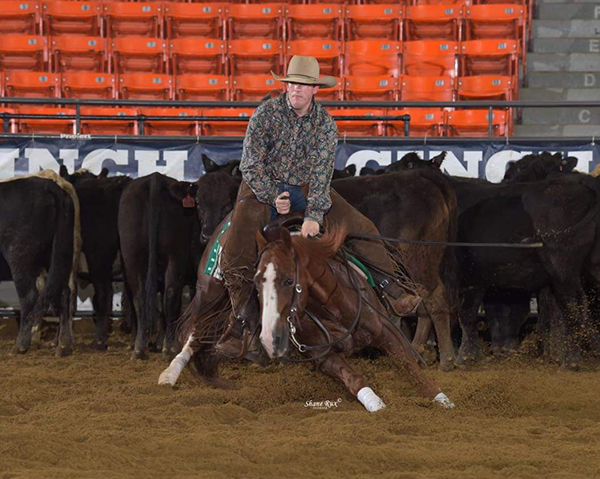
Jeffrey Carver showing at Congress
Jeffrey Carver and Whiskey Cat showing in the coliseum at Quarter Horse Congress. Photo by Shane Rux Photography

Over a month post-Congress, Jeffrey was back in Fort Worth to show at the Will Rogers Memorial Center once again. This time, he was prepared for the NCHA World Finals. All of Jeffrey’s hard work, endless miles on the road, reminders to “breathe” from Crouch, and many walks to the herd qualified him for Finals in the $35,000 Non-Pro division. Like Congress, this show was his first time at the NCHA World Finals. Looking back on his runs, he remembered the second go-round as his best with a stunning 225 score. Jeffrey left the show as seventh in the world for his class.

At only 17 years old, with less than a couple years’ experience, he became a Congress champion and placed in the top ten in the world as a non-pro/amateur, a feat not easy for anyone.

Looking to the Future

“As a parent, how do we top this for next year? It has been a truly amazing, wild ride,” says mom Janet. He is not exactly certain about topping it, but he is continuing to aim high for 2022. Jeffrey has new plans to show in Houston, Texas, and then go back to Easterns before heading home. Likewise, he has his eyes set on National High School Rodeo Association Finals again, and wants to add Youth World Finals to his show list. He is currently staying in Texas to show with Crouch until the season picks back up in Ohio, which will help Jeffrey qualify for Youth Finals. More than anything, he wants to improve on his consistency in the show pen, which will aid him in reaching each goal.

After high school, Jeffrey is hoping to assist a cutting trainer with possible ambitions to become a trainer. Although his plans are not set in stone, he knows that he wants to work with horses or work on a large equine operation in the future. Horses have helped Jeffrey heal from cancer, playing an integral role in his road to recovery as well as the path he wants to embark on later.

Along the way, Jeffrey credited Amos for inspiring him to pursue his adventure in the cutting horse industry. They share a unique understanding that cannot easily be replicated. Amos overcame childhood issues and challenges, helping Jeffrey realize that whatever he puts into something, he will get out of it.
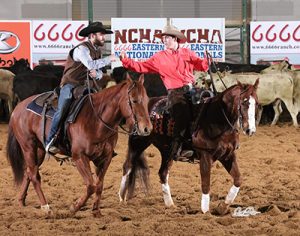
Tyler DeLange and Jeffrey Carver
Tyler DeLange (left) and Jeffrey Carver (right) going in for a fist bump. Photo by Seth Petit Photography

Jeffrey discussed that his journey would not have been complete without DeLange, either. They understand each other well and can relate on a level beyond horses. DeLange discussed that Jeffrey is his “partner in crime,” who taught him increased patience and has made him a better person at the same time. As his main trainer, DeLange could not be prouder of the progress his student has undergone in such a short amount of time.

DeLange believes that Jeffrey’s success is amazing for the Carver family and that Whiskey is a “phenomenal horse, who is a great teacher and takes care of him.” Whiskey has found his forever home with the Carvers.

Jeffrey’s journey in life serves as another reminder that one never truly knows what can happen in the future. The best we can do is support each other and offer help when needed. Jeffrey is a testament that commitment to one’s passion can reach unimaginable heights. He does not live in fear. Instead, Jeffrey Carver continues to walk back to the herd time and time again, ready to fulfill his life’s passion in the cutting pen and cheer everyone else on.

Further Reading

My Right Horse Adoptable Horse of the Week: My Fair Lucy — January 10, 2022

0
My Right Horse Adoptable Horse of the Week - My Fair Lucy
Photo Courtesy lorida Thoroughbred Retirement and Adoptive Care

Welcome to Horse Illustrated’s weekly installment of the My Right Horse Adoptable Horse of the Week, offered in partnership with The Right Horse. My Fair Lucy is this week’s adoptable horse. Check back weekly for a new featured horse so you can find your #righthorse.

Horse: My Fair Lucy, a 3-year-old 15.2-hand bay Thoroughbred filly in Indiantown, Fla.
Organization: Florida Thoroughbred Retirement and Adoptive Care (Florida TRAC)

My Fair Lucy (Lucy) is as sweet and pretty as they come! Stocky and solid, yet petite in height, she is a smart, athletic and compact package! She will make a perfect project horse for a patient and ambitious amateur looking for a beautifully moving flat or light over fences mount. Is she your #righthorse?

Click here for questions about My Fair Lucy, the My Right Horse Adoptable Horse of the Week

My Right HorseMy Right Horse is the online adoption platform of The Right Horse Initiative, a collection of equine industry and welfare professionals and advocates working together to improve the lives of horses in transition. A program of the ASPCA, their goal is to massively increase horse adoption in the United States. To find more adoptable horses and foster horses, visit www.myrighthorse.org. To learn more about The Right Horse, a program of the ASPCA, visit www.therighthorse.org.

Yoga for Riders

1

Improved balance and focus, better reaction time, increased range of motion, added strength, greater flexibility, fewer injuries, and a boosted immune system? Yes, please! Horseback yoga postures—and yoga on the ground—can help with all those and more.

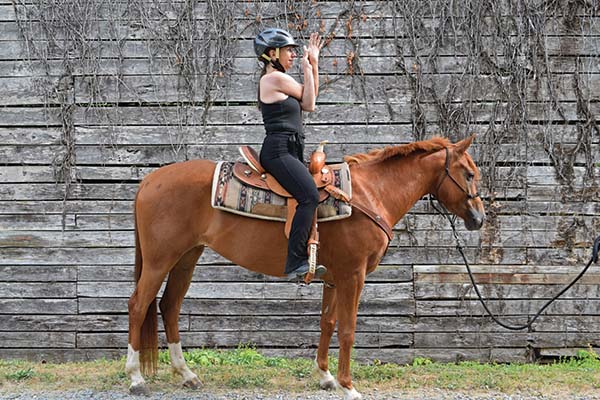
yoga on horseback
Periodically loosen tightness in your arms and shoulders during a ride with eagle arms. Photo by Carol Engan Borelli

Through personal “groundwork” in the form of yoga, you can more fully experience and fine-tune your body, thus creating better overall health and increased awareness. Riding requires the use of specific muscles—some more than others. Equestrians need to focus on developing strength in their legs and core; open hips; and a supple, healthy back and spine.

In addition, as a horse person, you probably are doing other physical things besides riding, such as lifting saddles, cleaning hooves, pushing wheelbarrows, carrying water buckets, picking up feed bags, and slinging hay bales. These are other good reasons to keep the body strong and flexible.

As we get older, it’s typical for balance to become challenged, flexibility to decrease, and strength and bone density to diminish. Our reflex time and coordination becomes compromised. Doing yoga helps us to stay strong and healthy for longer.

Yoga Stretches for Riders

After riding a while, it also feels great to get off your horse for a few moments for a little stretch session. When I take time to stretch with yoga poses occasionally during a ride, I get less stiff and sore.

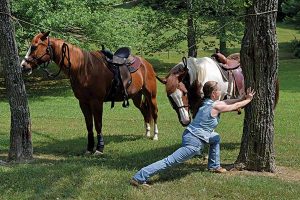
lunge yoga pose
The Lunge. Photo by Carol Engan Borelli

I also feel better when I get back on my horse—more relaxed and in-tune with him. I believe my horse moves better, not to mention that it just feels nice to move the body in gentle ways after having engaged many muscles during a riding session.

Here are some suggestions you can easily incorporate in the arena or on the trail:

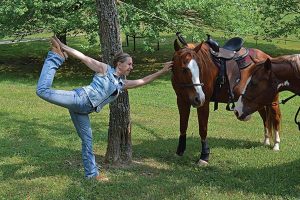
dancer yoga pose
Dancer Pose. Photo by Carol Engan Borelli

◆ The Lunge (shown here supported by a tree and a hug by Sampson) is a great stretch for the legs and Achilles tendon and is a good quadricep strengthener.

◆ Dancer Pose (shown here supported by Captain) improves balance, and stretches the legs, shoulders, and chest.

Certain yoga postures can be done on horseback to improve balance, strength, focus, mindfulness, and connection. It’s enjoyable doing light poses on your horse; it’s a good opportunity to improve balance and focus, stay relaxed, and build connection and trust.

Here, I suggest two specific poses for use on horseback: those that help the rider improve balance and alignment, as well as become truly “body aware.” It’s important to do only yoga postures that are safe for you and your horse. In most instances, I recommend having a friend (whose feedback can be helpful) hold your horse while you’re doing the movements. It’s also wise to wear a helmet.

Yoga poses on horseback can be done as a specific session or simply before riding to limber up. You can also throw in one or two of them here and there while you ride, perhaps to loosen up a tight area. Or you can use them on a break during a lesson to keep the body relaxed and less stiff.

Remember: When you stay relaxed, so does your horse.

Eagle Arms

This pose prevents tightness in the shoulders and upper back.

This is a good stretch to do before you ride, as well as when taking breaks. It’s not uncommon to feel tightness in the shoulders and back from using (engaging) those areas while riding (holding the reins and keeping a proper seat).

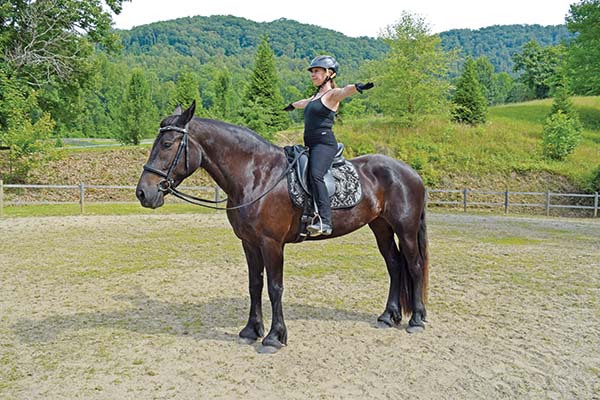
horseback yoga
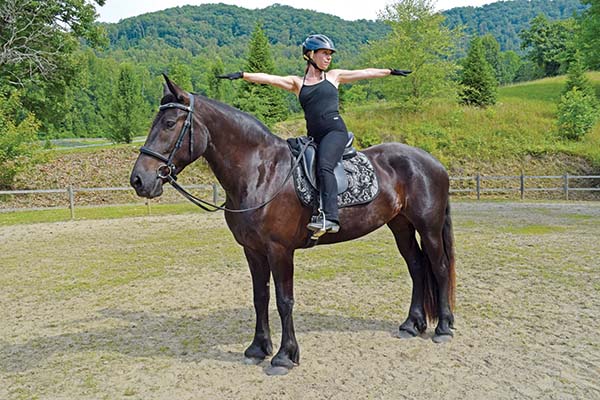
Take full breaths and feel the muscles you use to hold T pose. Photo by Carol Engan Borelli

HOW TO DO IT: Extend your arms out front, crossing one over the other at the elbows. Bend and intertwine your arms. Remember, you may or may not be able to clasp your hands—either way is fine. You can simply hold this position for several breaths, or attain added benefit by moving your crossed arms up and down with the breath. I like to do this three times: inhale while lowering, exhale going up.

The arm on top will get the deeper shoulder and shoulder-blade stretch. Do both sides, taking turns with which arm is on top. When you release the pose, notice how those areas feel.

T Pose into Warrior Arms

This pose helps with body alignment and awareness, balance, finding and moving from your physical center, learning to move from your core and working arm and upper back muscles.

horseback yoga
Incorporate a twist, looking out over your fingertips. Photo by Carol Engan Borelli
yoga for riders book
This excerpt from Yoga for Riders by Cathy Woods is adapted and reprinted with permission from Trafalgar Square Books.

HOW TO DO IT: While sitting on your horse and looking straight ahead, inhale your arms to a T position. Both arms should be at shoulder height, with palms facing downward. You can remain here while taking a few full breaths, feeling the muscles that are working to hold you in place.

Incorporate a twist to further the stretch and gaze out over your back hand’s outstretched fingertips. Continue to keep the arms at shoulder height while in the twist.

This article about yoga for riders appeared in the October 2020 issue of Horse Illustrated magazine. Click here to subscribe!

Retired Racehorses Succeed after Adoption with TIP

0

Did you know you can get rewarded for success with your retired racehorses? The Jockey Club’s Thoroughbred Incentive Program (TIP) recognizes off-the-track Thoroughbreds—and their owners—for success in their second career.

Launched in 2012, TIP has seen a meteoric rise in both interest and participation. Created to encourage the retraining of retired racehorses in other disciplines upon completion of careers in racing or breeding, the TIP program isn’t just for show horses; it’s for Thoroughbreds used as recreational mounts and in non-competitive second careers, as well. The program also recognizes young riders, a Thoroughbred of the Year, and hosts a massive championship horse show every fall.

A portrait of a young girl with her horse
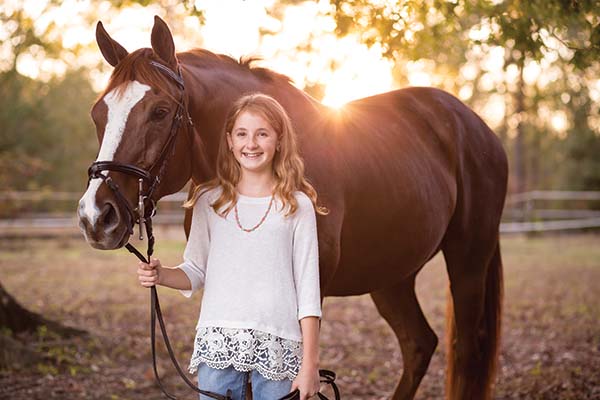
Crawford has been a TIP Youth Ambassador since 2017. She has competed her horse Get It In Ink in hunter/jumpers and First Level dressage. Photo by Laura Siegle

Huge Growth

To get an idea of the sharp rise in popularity of the TIP program, consider this: In 2012, 167 shows in the United States and Canada participated in the TIP program. In 2020, more than 1,400 horse shows will offer TIP awards, and there are 51,125 eligible Thoroughbreds participating in every imaginable discipline.

“My favorite part has to be reviewing the Thoroughbred of the Year applications each year,” says Kristin Werner, senior counsel for the Jockey Club and the designer of the TIP program. “Thoroughbreds excel as racehorses and sport horses, but many are also suited for a career involving equine-assisted therapy and activities, particularly for veterans. Reading about these incredible horses, many of which are on their third career, and the people they help and comfort on a daily basis, is an honor.”

A retired racehorse in its paddock
The 2019 Thoroughbred of the Year, Disruption (aka “Bruce”), works in an equine-assisted psychotherapy program at Second Chance Ranch. Photo courtesy Katie Merwick

The 2019 Thoroughbred of the Year recipient is owned by Katie Merwick of Second Chance Ranch (SCR) in Washington. Bruce, a retired racehorse whose Jockey Club name is Disruption, came to SCR in 2016 after his owner passed away.

“He now works in our equine-facilitated psychotherapy program, Leading With Horses,” says Merwick. “Bruce has the ability to adapt to a variety of environments. Whether it’s spending quiet time with a person coping with PTSD, entertaining children through an agility course, or lessoning with a beginner rider, Bruce knows exactly what to do.”
Merwick praises the TIP program for its recognition of Thoroughbreds as incredible athletes, both on and off the track.

“The concept of an incentive program for Thoroughbreds was long overdue, and I’m thrilled that it exists,” she says. “It has made a significant difference in putting value, recognition and awareness on how magnificent Thoroughbreds are!”

Learn more about Second Chance Ranch at www.secondchanceranch.org.

TIP Youth Ambassadors for Retired Racehorses

In 2016, the TIP Youth Ambassador Program was created to expand awareness of TIP and the versatility of the Thoroughbred, explains Werner. This prestigious designation is offered on an annual basis to young riders (18 and under) who own or lease a Thoroughbred and actively participate in TIP-sponsored shows, classes or award programs.

“A Youth Ambassador represents TIP and the Thoroughbred breed at his or her local barn, shows, competitions, or at any other activities he or she may participate in,”
Werner says.

Lottie Crawford owns and competes her retired racehorse Get It In Ink, whom she has loved for five years. Lottie shows Ink in First Level recognized dressage competitions, but she has also competed him in hunters and jumpers. She has been a TIP Youth Ambassador since 2017.

“It has been educational as well as very rewarding to work in my community to bring this program and the breed as a whole into the spotlight,” says Crawford of her time as an ambassador. “Since being selected, I have had communication with the other ambassadors, The Jockey Club liaisons, industry leaders and other Thoroughbred riders around the country. I really enjoy working with these people to establish game plans, brainstorm new ideas and travel for speaking engagements to help promote TIP and the breed.”

A retired racehorse in the show ring
Sarah Schwartz began participating in TIP classes in 2018 and started logging her performance record to be eligible for year-end awards. Photo by Winslow Photography

Crawford says she would definitely recommend the club to other kids.

“By working with The Jockey Club representatives, the other ambassadors, show management, Thoroughbred organizations and horse racing industry representatives in my area, I have learned so much about Ink and about the racing industry as a whole. The people I have met and the opportunities I have been provided with have given me an incredible foundation on which to build on my passion of showing the world the heart and unmatched work ethic of an off-track Thoroughbred.”

Performance Awards for Retired Racehorses

Based in Wisconsin, Sarah Schwartz started participating in the TIP classes in 2018, when her trainer began offering TIP awards at the show series she hosted. That same year, Schwartz began recording her competition record with her retired racehorses through TIP in order to be eligible for their year-end performance awards.

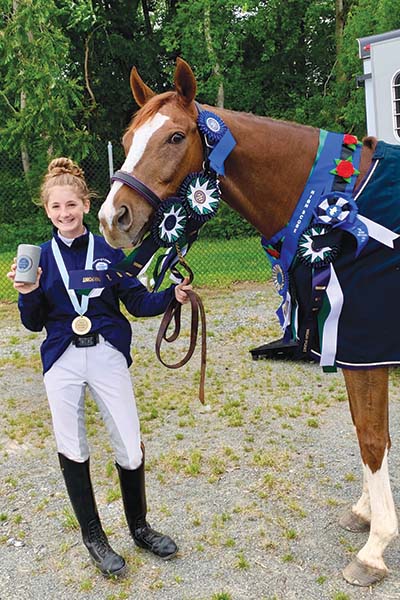
A young equestrian and her horse showing off their awards from a successful horse show
Lottie Crawford is a TIP Youth Ambassador who has won numerous TIP awards. She enjoys bringing the Thoroughbred breed into the spotlight. Photo Courtesy Lottie Crawford

Performance awards are self-reported, meaning riders must report their placings in each horse show themselves in order to be eligible for year-end awards.

“It’s not hard at all,” says Schwartz. “The biggest thing is to remember to save your show receipts, and make sure that the show secretary includes the number of entries on the receipt.”

This information is then provided to TIP and double-checked. Winners are then calculated in multiple categories, including by region and discipline.

“There are so many different awards offered in all levels and discipline of riding,” Schwartz explains. “There are born-in, state, region, adoption agency categories, and many more, so even if you aren’t top of your division, you could win another award. Many [people] don’t realize that all classes count as long as they’re reported correctly; it’s not just TIP classes that count for performance awards.”

Something for Everyone

In an effort to recognize even more retired racehorses in successful second careers, in 2016, the Thoroughbred Recreational Riding Incentive Program was added to the TIP roster for riders to track time on trails, endurance rides or other group rides, like hunter paces. (Riding in arenas, lessons, and show rings does not count.)

The huge TIP Championship Horse Show began in 2017; this event is held each September at the Kentucky Horse Park in Lexington.

For Thoroughbred owners, TIP programs and incentives are just the tip of the iceberg in celebration of the retired racehorse.

For more information, visit www.tjctip.com.

This article about the TIP program for retired racehorses appeared in the October 2020 issue of Horse Illustrated magazine. Click here to subscribe!

Voice Recognition: How Horses Respond to Voice

0

Does your horse eagerly whinny when you call to him, or is he silently holding a grudge from last week’s reprimand? A recent study from France shows that horses respond to voice and the complex array of emotions sparked are linked to his past experiences.

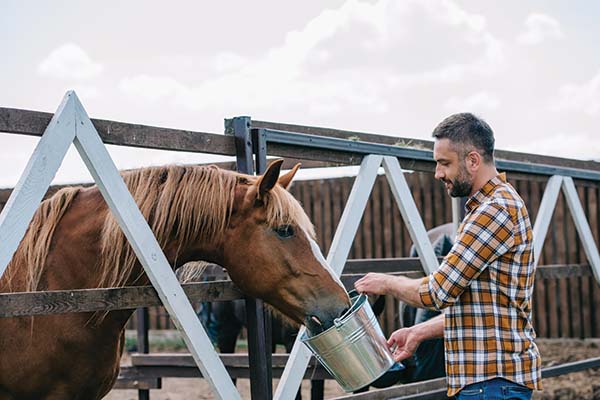
voice recognition with feed
Horses were exposed to both a tasty bucket of food and one that was frustratingly tainted with vinegar and therefore inedible. Photo by Lightfield Studios/Shutterstock

The research team that conducted the study took a deep dive into how horses integrate sounds, voices and emotions. They found that not only do horses develop a corresponding relationship to the sound of the human voice, but the horse brain—like that of humans, dogs, and other animals—also categorizes these sounds based on positive and negative associations.

Right vs. Left Brain

Studies have proven that horses assimilate sounds in distinctly different ways. Negative, stressful, or alarming sounds are processed in the right hemisphere of the brain, while positive sounds, such as the rumble of the feed truck, are processed in the left hemisphere.

Additionally, the horse’s senses, particularly his ears and eyes, are laterally—or oppositely—connected to the brain hemispheres. When a horse looks with his left eye, for example, the right hemisphere of his brain is activated, and when he uses his right eye, the opposite occurs.

A horse that senses an emergency situation will use his left eye and left ear to assess the level of threat. Knowing this information allows researchers to determine how information is perceived emotionally by the horse. A happy, social situation will be “looked upon” from the right-side senses (and the left brain hemisphere is activated), while terrifying situations—such as that ghostly plastic bag in the wind—is predominantly viewed from the left (with right brain hemisphere activation).

How the Study Worked

Based on prior studies of how horses respond to voice, the research crew hypothesized that the horse, even when deprived of other information, such as the familiarity of an owner or facial expressions, would connect a voice to a singular experience.

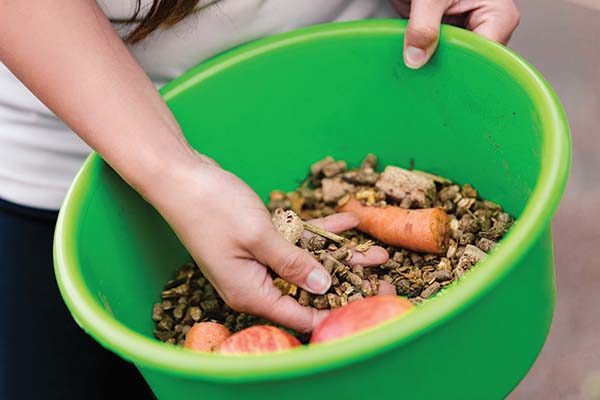
The study included 21 horses. Over a period of seven days, each horse was exposed to two different scenarios: one in which they were given a tasty bucket of food, and another where they were given the same meal, but this time the food was mixed with vinegar, making it inedible—and frustrating.

The “voice,” a continuous recording of a person reading a script, came from a small loudspeaker worn around the neck of the handler. The voices on the loudspeaker were different for the positive and negative experiences, however.

To provide a balanced assessment, 10 of the horses were from a riding center. These horses lived in stalls and were regularly used for riding lessons. The other 11 horses lived in a pasture environment. They were casually ridden and had daily interactions with people. This second group had continual access to grass or hay, while the riding center horses had more scheduled feed times and less access to roughage.

feed in dish
A different voice was associated with the positive food experience vs. the negative one. Photo by Miriam Doerr Martin Frommherz/Shutterstock

After the seven-day exposure period, the research team tested each horse. This time an unknown handler led the horse, and the voice on the loudspeaker was broadcast without food. Two video cameras were used to record the horse’s response to the voice for later analysis.

Additionally, 17 of the 21 horses were comfortably outfitted with a portable elecroencephalogram (EEG) helmet on the horse’s head in order to measure the horse’s brain waves. The EEG showed the team which side of the brain was most active during each experiment.

The Conclusion: Horses Respond to Voice

The results were not surprising. Combining the three methods of analysis, the researchers were able to conclude that there is a definite connection between sound and equine response. The team determined from the video that the food treat and coinciding voice was met with a significant increase in ears forward, attentive posture, and approach behavior. In particular, three horses pulled on the lead, with one nickering when the voice was played.

In contrast, the voice associated with the vinegar-laced food was met with an ears-back response and avoidance, with seven of the horses pulling on the lead to move away from the sound. The video also confirmed that for the positive experience, the right eye (associated with positive emotions) was used more frequently, while during the negative experience, the left eye (correlated with fear and anxiety) was significantly more engaged.

Finally, the EEG results, which measured gamma waves, confirmed the hypothesis. The positive experience showed a heightened increase in gamma waves in the right brain hemisphere. Activation of gamma waves are an indication of memory and recall—and, the researchers suspect, the expectation of a future positive event.

Though the difference was small, the researchers also noted that the pasture horses, likely because they were less dependent on the voice-related food supply, showed less frustration at the vinegar food mix.

This study confirms that the bond between humans and horses is by nature emotional, and that the quality of interactions between the two is heard—and remembered. The researchers hope that this study continues to add more information to the growing field of horse welfare.

This article about how horses respond to the human voice appeared in the October 2020 issue of Horse Illustrated magazine. Click here to subscribe!

Vet Adventures: The Value of a Veterinarian’s Time

0

For a veterinarian, time is extremely valuable. Every minute represents a chance to save an equine life—but some horse owners don’t always respect the value of a veterinarian’s time.

I checked my watch as I parked at the unfamiliar arena. I was several minutes early, but figured I’d head inside and find my new client, Jenna, whose horse was having problems jumping. I rounded a corner and entered the arena, almost bumping into a tear-stained rider glumly leading her horse back to his stall.

setting jump rails for Vet Adventures column on Veterinarian Time
Photo by Peter Titmuss/Shutterstock

“Hello?” I called, seeing a small group of ponies and riders clustered together at the far end. “Is one of you Jenna?”

A girl in her early teens lifted a hand and started to ride over, but a loud voice quickly overrode her.

“We aren’t quite ready for you, so please step out of the arena. I’ll call for you when it’s time!”

I looked around for the voice. A purposeful woman with blonde hair and tight jeans marched up to the group and began a lecture about jumping technique. I slunk out of the arena, and it was a full 15 minutes of talking before the riders began their warm-up. The woman finally walked over to me.

In It for the Long Haul

“I’m Eileen Von Fredericks. This is my barn, and you’re here to see Carlito, who isn’t jumping properly. He’s showing a neck problem, so I’ll have you watch the lesson and tell me your thoughts. I mean, you’re the vet, but it’s definitely his neck.”

I blinked. I had scheduled 90 minutes for the call but assumed a good portion of that would be taken up with diagnostics. I hadn’t planned on having to audit a whole lesson or deal with someone who wasn’t the owner.

I introduced myself and started to ask how long the lesson would be.

She started to respond, then shrieked into my face, “Push him forward, Renee! And sit up straight! Angelina, eyes up and heels down! I shouldn’t have to tell you that when you’re riding at this level!”

She marched back to the center of the arena, neatly dismissing me. Two women were standing nearby, eyes glued to the riders who were beginning to jump a series of cross-rails. Eileen barked instructions as the riders sailed past her, occasionally zeroing in on a particular girl.

“More impulsion, Renee! Make a circle and do it again! Earth to Renee! MORE IMPULSION, RENEE!! You’re not a beginner, so shape up if you want to stay in this group!”

Carlito and Jenna crashed clumsily over a jump, and Eileen whirled.

“That was YOUR fault, not his, Jenna! As usual, your approach and timing were off! You’re letting him and me down today!”

Falling Apart

As the lesson progressed, I noticed several girls wiping away tears, and I could feel my own chest tightening with anxiety as Eileen continued to rapid-fire orders at the group, who were mostly silent or answering in tiny voices. I needed to examine Carlito, but it didn’t look like it would be any time soon.

When there was a short break, I called to Eileen and asked if I could have Carlito. She ignored me, bellowing, “Jessica, please pick up a canter. No! HALT, Jessica! Do it again!”
One of the women watching the lesson was nodding.

“Jessica is so fortunate to be training with Eileen. She doesn’t take on just anyone.”

Her companion nodded her agreement vigorously, and the two mothers began extolling Eileen’s virtues. Meanwhile, Jessica had dismounted and was sobbing into her horse’s neck.

“There she goes again,” said her mother resignedly. “She’s not going to win the year-end championship with that attitude.”

I sighed sharply and looked at my watch again. It was an hour and 10 minutes into my appointment, and this veterinarian still hadn’t spent any time with or laid a hand on my patient. I waved impatiently at Eileen, who was watching me with a satisfied expression.

Finally, the Patient

Eventually Jenna and Carlito were released, and after a few other tests, I took X-rays of Carlito’s fluid-filled hocks and diagnosed severe arthritis and several bone chips.

Jenna and I were discussing treatment options when Eileen appeared, and I had to repeat everything for her. Show ribbons lined the walls in dusty layers behind her, and I shuddered as I considered what it had cost her embattled riders to win them.

Eileen smiled sweetly.

“Jenna, I told you it was the hocks, and I’m glad that Dr. Diehl agrees with me.”

I gave Eileen a blank look. Jenna was quiet, and Eileen put an arm firmly around her.

“Jenna has struggled with anxiety and speaking up for herself, but I believe in positive reinforcement, and that’s what I teach here. Not every student has what it takes to ride with me. I had to let one go last week.”

Jenna beamed at that and proudly led Carlito off to his stall. Shaking my head, I packed up and headed to my truck.

Eileen followed me out.

“I’ve had to fire some vets over the years. But you seem to know what you’re doing. You can look at some horses for me next week.”

Cutting Loose

I studied her. Fifteen years previously, her tactic could have worked, and I too might have ignored the red flags and glowed under her praise, feeling superior to the failed vets who preceded me. I too might have gleefully aligned myself with this woman who recognized my talents. After she’d sucked me in, the old me might have endured her constant belittling and narrative rewriting, then lapped up her meager praise, hopeful that I would somehow regain my initial exceptional status with her. The old me would have also become her next ex-vet, bewildered and hurt at my gradual demotion from cherished pet to scorned exile.

Nope. I knew better now. Just like Neo in the Matrix, I was going to dodge this bullet.
I smiled sweetly at her as I pulled out of her driveway for good.

“I’m sorry, Eileen, but I’m not taking on any new barns right now. In fact, I had to let one go last week. But I’ll be sure to let you know if a spot opens up.”

This Vet Adventures column about respecting the time of a veterinarian appeared in the October 2020 issue of Horse Illustrated magazine. Click here to subscribe!

Equestrian Belts

0

Most equestrians regularly purchase stunning tack and luxurious blankets for their horses, but sometimes you need to get yourself some fashionable gear, too. Browse these beautiful equestrian belts and find a statement piece that’s perfect for the barn—and everyday wear!

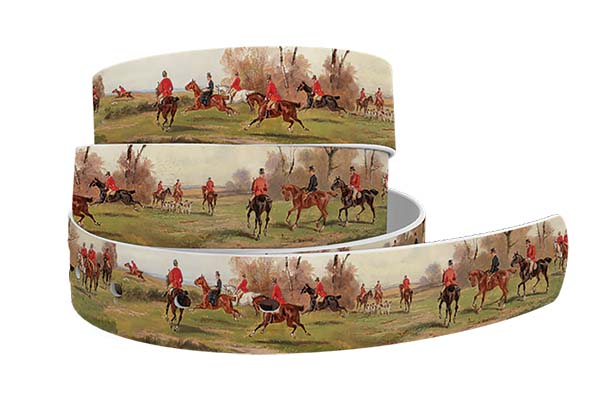
C4 Horses & Hounds Belt

C4 belts are made from durable thermo polymer and come in one size (50”), giving you the opportunity to cut it to fit perfectly. Colorful belt buckles are sold separately, giving you the chance to personalize your belt. Those fox hunting themed belt is perfect for any equestrian. $26.99; c4belts.com

C4 Horses & Hounds Belt

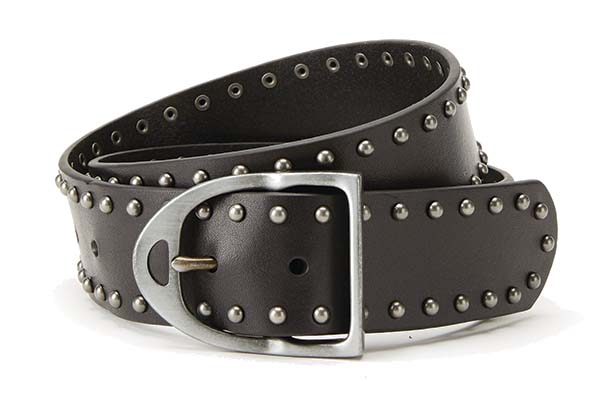
Ariat Studded Stirrup Belt

This black leather-studded stirrup belt is an excellent choice for the edgy equestrian. Smooth black leather is lined with silver studs and fastened by a stirrup buckle making this equestrian belt subtle and stylish. $84.95; ariat.com

Ariat Studded Stirrup Belt

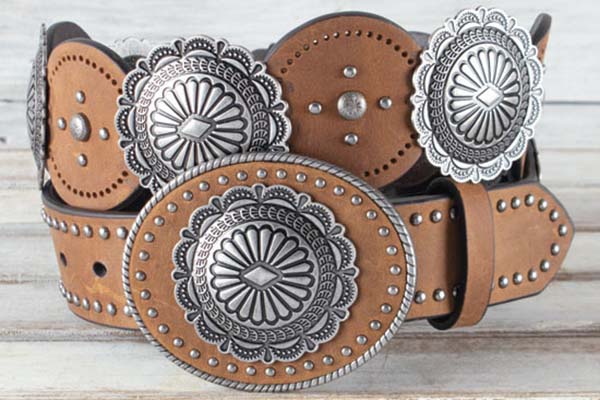
Concho Dream Hip Belt

A fashion-forward accessory, this chunky hip belt features large distressed silver conchos. The belt comes with an interchangeable buckle so you can personalize your style. $79.95; rods.com

Concho Dream Hip Belt

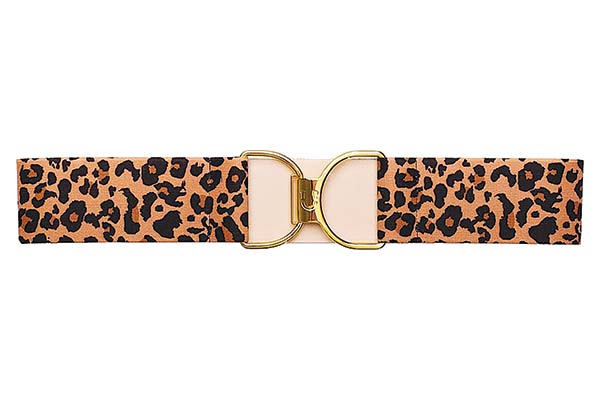
Ruespari Wild Thing Belt

Ruespari’s elastic material offers some stretch and ensures a perfect fit for every rider. From schooling at the barn to horse shows, this belt will add a little extra flash to any outfit. $90.00; ruespari.com

Ruespari Wild Thing Belt

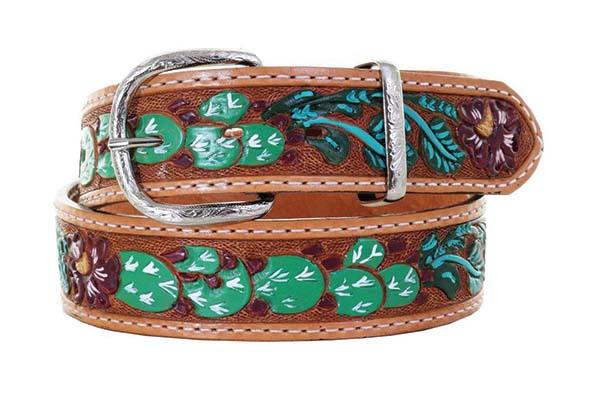
Double J Cactus Tooled Belt

Vibrantly painted cacti and flowers are perfect for expressing your Southwestern style. The natural leather belt is polished off with a row of bright white stitching. $225.00; doublejsaddlery.com

Double J Cactus Tooled Belt

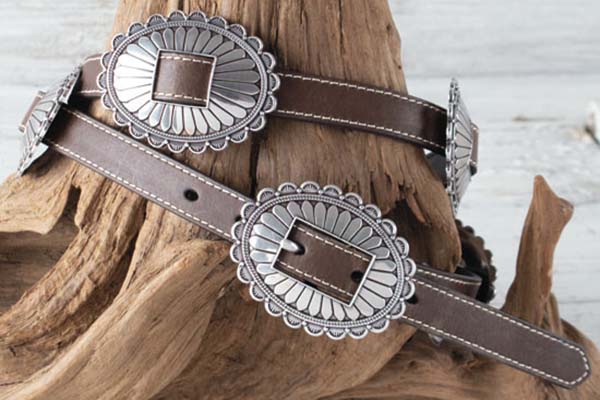
California Cowgirl Hip Belt

Large, floral-shaped conchos adorn dark brown leather. Wear this belt with your favorite riding jeans or cinch it around the waistline of your favorite dress. $55.95; rods.com

California Cowgirl Hip Belt

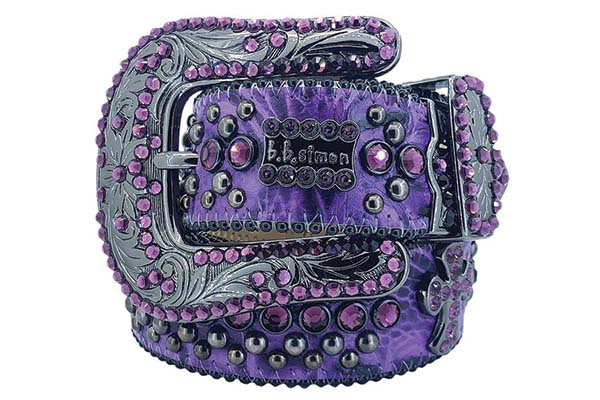
Adabelle Western Belt

Add a touch of sparkle and bold color to any outfit with this purple B.B. Simon belt. It’s made from Italian leather and adorned with Swarovski crystals. $320.00; bbsimononline.com

Adabelle Western Belt

Ariat Stirrup Belt

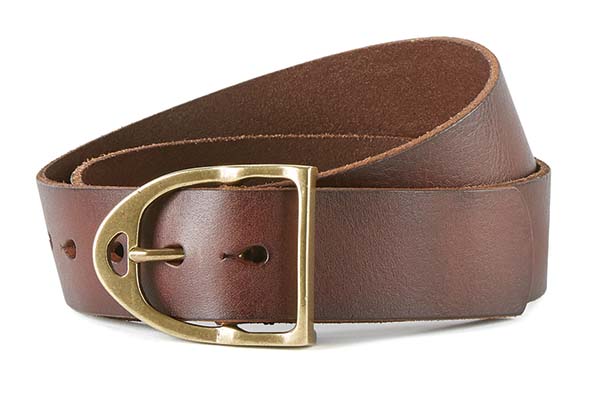
Classic brown leather is paired with a beautiful brass-shaped stirrup buckle. This equestrian belt comes at an affordable price with timeless design. It’s trendy enough to wear at the office or barn. $69.95; ariat.com

Ariat Stirrup Belt
Ariat Stirrup Belt

Grieving the Loss of a Horse

0

Grief over the loss of a horse is never easy, especially when they are like family.

grief with horses
Photo by Heidi Nyland Melocco

I remember the moment all too well. My legs scurried to stay under me as my body fell against the cold, concrete wall. On the other side he fell, too. I couldn’t watch. I had to remember him whole, galloping in his many photo shoots. This was my 16-year-old-horse, Q. But more than an animal, he was my business partner, my friend. He was family.

A moment ago, I’d hugged his sweat-soaked neck and looked down to see the droplets of red on my boots. The attempts to slide a tube through his nostrils didn’t relieve the pressure of this first-ever colic. Blood outlined his muzzle.

Q’s colon ruptured somewhere between our home and the veterinary hospital. Doctors swarmed him when he stepped off the trailer. But it was too late. Surgery wasn’t an option.

I remember the veterinarian’s words.

“He’s in pain. It’s best to put him down.”

I could only answer with a nod while unspoken questions swirled in my mind. Didn’t they know he was fine until yesterday?

In the padded room, I memorized the feel of hugging his neck. I gulped the word “goodbye.”

In the hall, my muscles failed me. Grief for my beloved horse took over.

Looking for Comfort

That was nine months ago. Since then, I’ve learned that no matter what type of love you’ve lost, it takes time to heal.

Here, I’ll share my thoughts about grief when it comes to losing a horse and hope my process may help others.

I first looked for comfort from books. Psychiatrist Elisabeth Kübler-Ross, M.D., author of On Grief & Grieving, outlines the five stages of grief we’re all familiar with: denial, anger, bargaining, depression, and acceptance.

“There is no typical loss. Our grief is as individual as our lives,” she writes.
For the equestrian perspective, I reached out to trainer Barbra Schulte, who writes about overcoming grief in her book, Healing Thoughts on Loss, Grief & Horses. I cried for her when I learned that she lost her son to cancer. Her advice?

“Be kind to yourself. Emotional pain is tough. Rest. Don’t force anything. You’ve put out tremendous mental, physical and emotional energy, and now it’s time to recover in all of those ways.”

loss of a horse
Photo by Heidi Nyland Melocco

At first, I felt guilty sharing my loss of Q with Schulte. Shouldn’t I lessen my grief of a horse in the presence of her loss of a child?

“I believe every experience of grief is unique,” she explains. “That’s because the love, the relationship, the time spent together is always rich and beautifully personal. And for that reason, I don’t compare the two, because in both instances, we begin a new chapter here without the physical presence of the other. Because our greatest desire as a person is for love and connection, that’s why it’s so painful to lose those we feel most closely connected to—and that is both people and animals.”

With thoughts from Kübler-Ross and Schulte, I kept track of my own grieving. Here’s how the stages of grief related to losing my equine friend.

Denial

Kübler-Ross associates denial with surprise. Q wasn’t old. He had no previous problems. One day he’d be my daughter’s horse. I never thought of losing him—even as we arrived at the veterinary hospital.

I sometimes, though briefly, I forgot Q was gone. When my calendar app reminded me it was time to go to the barn, I jolted, thinking I should go immediately. I quickly remembered and deleted the reminders. I shed a tear each time I was shocked again.

Gradually, I didn’t expect to see him ambling in at feeding time. I imagined seeing him in the field, but I was no longer surprised. The process continued.

Anger

I was still angry that Q was gone. Though I consciously trust they did their best, I was angry that the veterinarians couldn’t save him. I was angry to receive bills for a horse that wasn’t alive. I had to acknowledge these feelings before I could move past this angry stage.

Journaling and music helped me turn my angry thoughts to something positive. Knowing I needed to forgive myself, I wrote the word “forgive” at the top of the page and wrote out all the things I needed to be forgiven for. Forgiving myself lessened my anger and helped me move on in the process.

Bargaining

The bargaining stage may be better named “the what-ifs.” What if we had gotten to the hospital sooner? The truth is that Q is gone, and nothing I can do will change that.
For me, this step blurred with anger. My what-ifs made me think of things I could have done differently. When I shared my “what-ifs” with my long-time veterinarian, she said that she and her partners had discussed possible causes for his fast-moving colic.
What if Q had a conformational predisposition that made it easy for his gut to twist? There were many possibilities. I had to stop asking “what if” and trust that it wasn’t my fault.

Depression

Kübler-Ross says that feeling depressed during grief isn’t a sign of mental illness. Instead, it’s the appropriate response to feeling a great loss.

Knowing that I needed time to process my feelings, I carved out an hour a day for myself. I walked, I spent time with our pony, I exercised. I called a friend who was willing to listen. I sometimes just stood and stared at Q’s stall and cried. I didn’t want to stay in sadness, but I knew I needed to feel my feelings before moving on.

During this time, I chose books that reminded me of how I wanted to feel. A friend recommended the book Girl, Wash Your Face. The title alone prompted me to wash up and face the day. The book is worth a read. Rachel Hollis’ willingness to talk about emotions she faced helped me face my own.

Acceptance

Soon I could remember the good times. I was thankful when I saw Q’s photo in online advertisements. I remembered chasing him around the pasture to get the galloping shots I needed. I remembered the day he saw my pregnant belly and just kept his head there.

I kept Q’s stall clipped closed for a month. I couldn’t make myself clean it out. Then one day, I returned from the store with cleaning supplies. I pulled back the mats, washed the walls with bleach, and scrubbed everything. In the middle of his clean stall, I stopped and sobbed.

For me, cleaning his stall meant that I knew he was gone from here but not gone from my memories.

Get the Help You Need

Seek out the therapies and stress-reducers that will help you. If you have a friend you trust, seek out time in their presence. If you feel better when you pray, schedule time. If it feels like too much, get help from a licensed medical professional. There is no shame in seeking help after losing an animal.

Schulte recommends seeking out support. “Seek time with those with whom you can just be you—the people who don’t require conversation unless you want to talk. I now know that part of the richness of life is to walk through the darkest times with special friends.”

This article about dealing with grief over the loss of a horse appeared in the October 2020 issue of Horse Illustrated magazine. Click here to subscribe!

My Right Horse Adoptable Horse of the Week: Simco — January 3, 2022

0
My Right Horse Adoptable Horse of the Week - Simco
Photo Courtesy Horses’ Haven

Welcome to Horse Illustrated’s weekly installment of the My Right Horse Adoptable Horse of the Week, offered in partnership with The Right Horse. Simco is this week’s adoptable horse. Check back weekly for a new featured horse so you can find your #righthorse.

Horse: Simco, a 15.1-hand 29-year-old bay American Saddlebred in Howell, Mich.
Organization: Horses’ Haven

Simco is a wonderfully sweet horse to have around. He has been ridden in the past, but due to arthritis and a bowed tendon in the right front, he is retired from riding. Nowadays, he is quite happy to watch the goings-on around the farm and interact with everyone who comes to visit him. He is just so friendly, easy to catch, and loves to be groomed. He has been pastured with mares and geldings and gets along well with either; however, he would do best with geldings only. Simco is such a fun, outgoing character! Could he be your #righthorse?

Click here for questions about Simco, the My Right Horse Adoptable Horse of the Week

My Right HorseMy Right Horse is the online adoption platform of The Right Horse Initiative, a collection of equine industry and welfare professionals and advocates working together to improve the lives of horses in transition. A program of the ASPCA, their goal is to massively increase horse adoption in the United States. To find more adoptable horses and foster horses, visit www.myrighthorse.org. To learn more about The Right Horse, a program of the ASPCA, visit www.therighthorse.org.

Berber Horses of Morocco

0

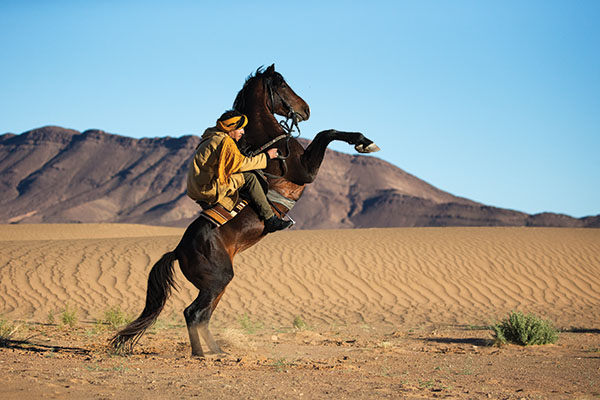
The story of the Berber horses of Morocco is inseparably connected with the Atlas Mountains and its residents. As long as anyone can remember, they have been an integral part of the landscape of the Maghreb. Their kingdom extends from Mauritania through Morocco, Algeria and Tunisia to Libya.

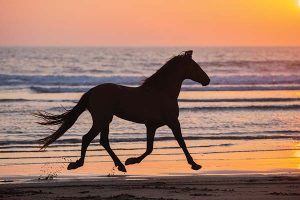
horses of Morocco
Photo by Edyta Trojanska-Koch

Before our era, the Berber (also known as the Barb) horse was the steed of numerous tribes. Depending on the need, it played the role of a work mount and a pack and war horse.

The Berbers are convinced that their horses are among the oldest breeds in the world. Scientists confirm this, with research showing that the horses that lived in the Sahara 4,000 years ago were similar to Berber horses we know today.

Barb Influence

In 647, Arabs began their invasion of the Maghreb, and then they turned to Europe. In 711, they conquered Spain, where they remained for almost eight centuries.

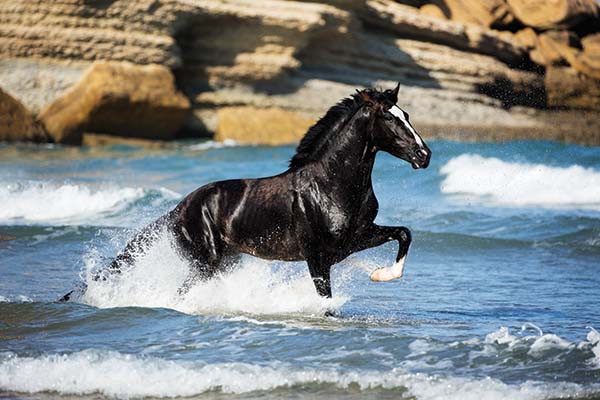
black horse in water
Photo by Edyta Trojanska-Koch

Berber horses came along with them to Europe, where they not only revolutionized the cavalry at this time, but also had an undeniable part in the creation of the Iberian breeds: the Andalusian and Lusitano. Berber and Arabian horses were often crossed. The goal was to obtain a steed combining the advantages of both breeds: the speed and strength of the Arabian with the hardiness, excellent back and golden character of the Barb.
A perfect athlete and exemplary companion, the Arab-Barb conquered the whole of the Maghreb in only one century, often to the detriment of the Barb, and introduced itself into European breeding.

The vast majority of the 300,000 Berber horses in Maghreb are Arab-Barbs. At the turn of our century, the pure Berber has almost disappeared in favor of his Arab-Barb brother.

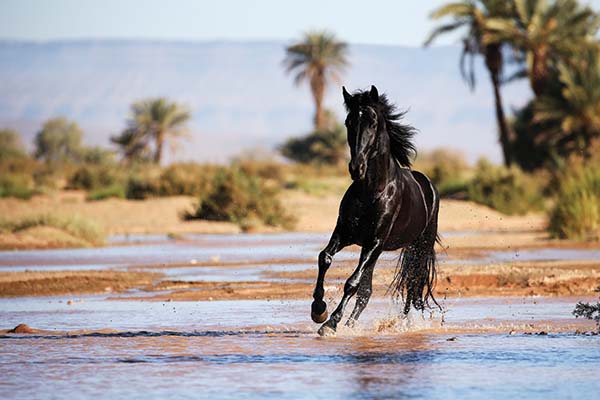
horses of Morocco
Photo by Edyta Trojanska-Koch

Barb Character

The advantages of a Berber horse are not always visible at first glance. Compared to sport horses, they’re relatively small. To those who don’t know them, they may seem rather unemotional.

Nothing could be more wrong. They have the qualities of hot-blooded horses, which are sensitive under saddle and react to the slightest cue. At the same time, they remain perfectly controllable. They possess an indisputable softness, are easy to train, and have all the skills that need only to be developed through their hardiness, endurance, docility, patience, agility, and tirelessness. The saying goes that “the Barb dies but doesn’t grow old.”

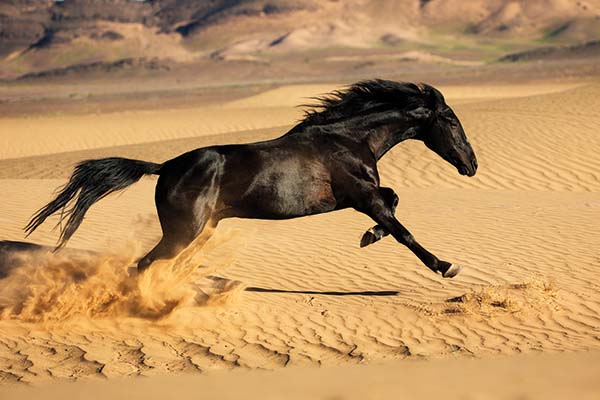
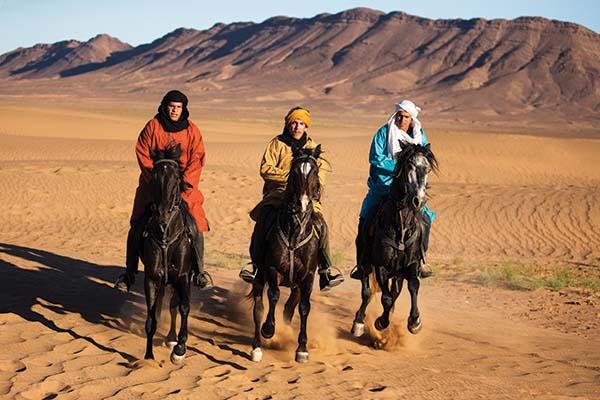
horses of Morocco
Photo by Edyta Trojanska-Koch
horses of Morocco
Photo by Edyta Trojanska-Koch
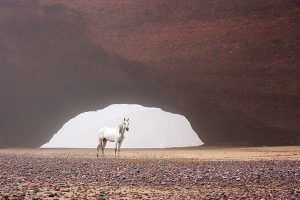
white horse in the desert
Photo by Edyta Trojanska-Koch
horses of Morocco
Photo by Edyta Trojanska-Koch

This article about the horses of Morocco appeared in the September 2020 issue of Horse Illustrated magazine. Click here to subscribe!

0FansLike
0SubscribersSubscribe
We use cookies to help personalize content, tailor and measure ads, and provide a safer experience. By navigating the site, you agree to the use of cookies to collect information. Read our Cookie Policy.
OK