0 ITEMS
  • My Account
  • Holiday Gift Guide
  • Podcast
  • Webinar
Subscribe Combo
Enable cache13
Home Blog Page 105

Playing Hard to Get: How to Train a Hard-to-Catch Horse

0
Hard-to-Catch Horse
Photo by Heidi Nyland Melocco

With halter in hand, you open the gate to your horse’s paddock. You are in a hurry since the farrier will arrive any minute. Your horse is thinking about running. When you take another step toward him, your hard-to-catch horse turns again—then he’s off. You’ve seen this behavior before and know you’re in for a long session of playing catch.

This hard-to-catch behavior may start as a game or simply as a way for your horse to let you know he’d rather not work. Without a plan to change your horse’s reaction when he sees you approach with the halter, the vice may make you feel annoyed and even defeated.

Here, trainer Jessica Dabkowski of Pony Peak Stangmanship in Laporte, Colo., shares her positive reinforcement technique. Dabkowski focuses on natural horsemanship techniques while training Mustangs and all breeds of horses.

For horses that are prone to running away, or don’t want to face you, the following technique can help your horse learn to think rather than react. You’ll teach your hard-to-catch horse that touching the halter—and ultimately putting his nose into the halter—is much more rewarding than running. Dabkowski uses treats to motivate her horses to act out the behaviors she requests.

“You’re shaping your horse’s behavior using food rewards, but your end goal is to not need the food,” says Dabkowski. “One of the great things about using food for training—as long as the training is structured—is that you can help your horse get out of the freeze-fight-flight mode and you can encourage him to seek and think.”

Positive Reinforcement Basics

When you’re using positive reinforcement, you aren’t lavishing treats on your horse for no reason. You are “marking” a behavior that you want to see again as you verbally say “good” and then follow up with a treat.

Choose treats that aren’t full of sugar. Dabkowski suggests breaking up a hay cube, using hay pellets, or looking for natural-based treats. You’ll also need a hip pack to keep treats at the ready.

When it’s time to treat your horse, make sure to give the treat away from your body. The horse only gets a treat when he is in the correct neutral position. If you’re not asking your horse to approach the “target” at the moment, he shouldn’t get a benefit from a treat.

Eventually, you’ll want to be able to put the halter on without needing food. If you say “good,” you’ll create such a strong reinforcement history that your horse will have the same neurological response as when he receives food.

Getting Started

Confine your horse in a small area so that he can’t run across a large field. Remove the lead from a rope halter so you don’t have too much to hold. Walk in to the pen with a calm presence, and resist the urge to walk forward fast. If your horse looks at the halter, say “good” and offer a treat.
Hard-to-Catch Horse
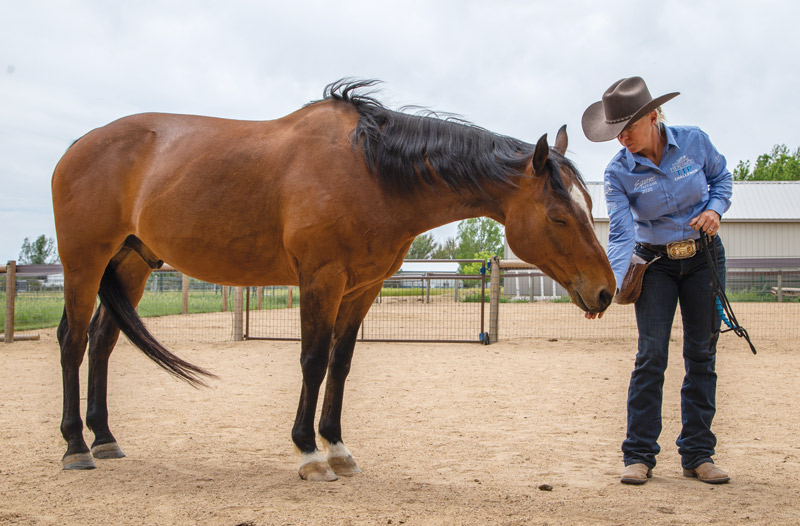
Initially, the horse gets a reward for simply looking at the halter and staying in a neutral position. Photo by Heidi Nyland Melocco

Our model horse, Charlie, allowed Dabkowski to be close but tensed when she held up the halter. She held up the halter and said “good” and gave a treat when he simply looked at the halter. Soon, he realized he could get treats and was willing to touch the halter as she held it in one hand.

Work through the following steps slowly. You may only work 10 to 15 minutes per day, always ending on a good note. Don’t rush it, and always return to basics if your horse appears worried, confused, or gets stuck.

Reward Forward Motion

Hold the halter in front of you and wait for your horse to touch it. Reward the touch or “target” behavior.

If your horse will consistently touch the halter, change your grasp. Hold the halter so that the noseband is round and he has a “hole” where he can put his nose. Now, you won’t mark when he touches the halter, but only when he reaches his nose farther into the hole. Be patient and wait for the horse to reach out and touch it. You may even hold it so that your horse has to move forward to touch it. If this is too much, return to a previous training level.

If your horse gets stuck at this point, change it up. Play “follow the halter” to reinforce his halter-touching behavior around the paddock. Your horse will learn to touch the halter after you have walked a few steps. If your horse is walking with you and allowing you to approach his left side (where you want to be to put on a halter at the end of training), return to the nose-in idea.

Move the halter farther away, and wait for your horse to move forward to touch the halter. Make sure to praise any forward motion toward the halter until your horse consistently targets the halter. Holding the halter out away from you will also help your horse learn that it’s touching the halter, and not seeking the treats from the pouch, that gets the reward.

Open Armed

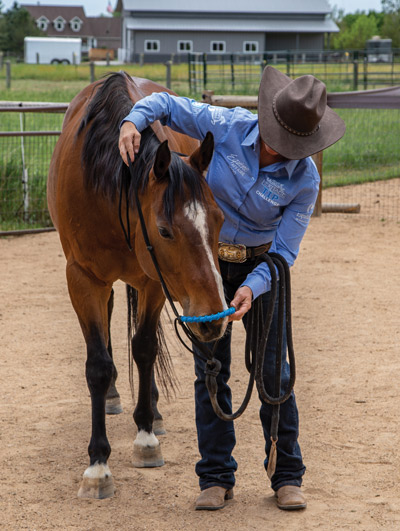
Once your horse will put his nose into the halter, move on to the next step. Now, you’ll hold the right (long) piece of the rope halter in your right arm and keep the noseband rounded with your left hand. Keep your right elbow up and bent to make a wide open window. You’ll ask your horse to put his nose through the circle created by your arm and the halter.

Reward your horse, at first, for not moving away. Then request more from him. Only reward him when he puts his nose through the hole. Then only reward him when he puts his nose through the hole and down into the noseband.
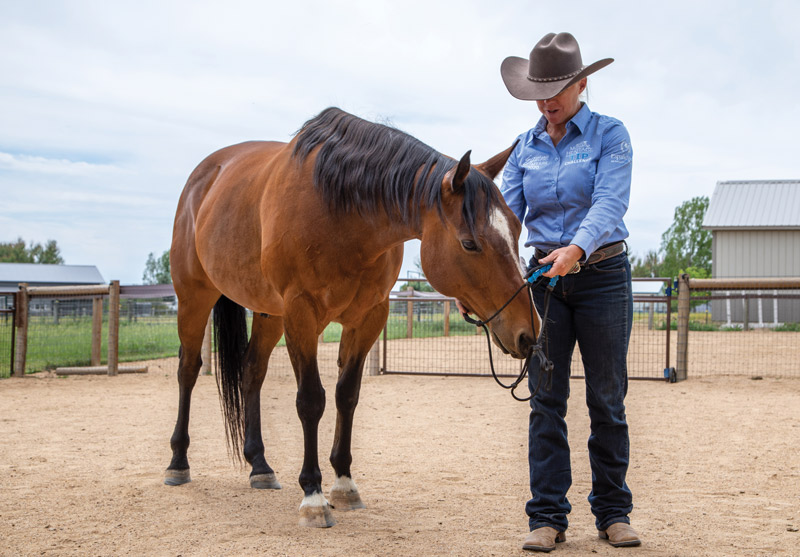
Target Training with Halter
Teach your horse to put his nose into the halter’s noseband hole to get a reward. Photo by Heidi Nyland Melocco

All In

If your normally hard-to-catch horse is willing to put his nose in and keep it there, he may be ready for you to move the crownpiece back to tie. Proceed slowly; don’t get eager. If your horse pulls away at all, or looks tense, go back to something easier, then proceed on another day. Keep using your marking word, and give treats consistently.

Moving your hand up to move the long halter piece over his head may take time. If your horse accepts the halter, simply take it off and give treats. Make sure your horse knows that putting the halter on doesn’t lead to work. Help your horse feel calm and rewarded.

Then attach the lead rope to the halter. Some horses may notice that something is different and become worried again. Start back at the early stages of halter touching to build confidence again.
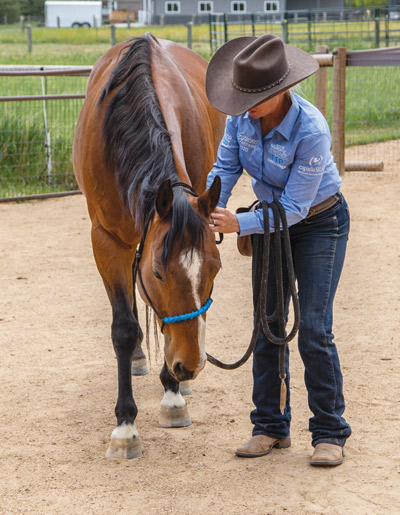
Putting a Halter On
If your horse stays calm and lets you tie the halter, take it back off again and reward with a treat. The halter shouldn’t equate with work at this point. Photo by Heidi Nyland Melocco

Even with the lead rope in place and the halter on, make sure not to put your horse to work right away. Take the halter off and reward your horse.

Continuing the Plan

Practice your new haltering plan daily. Once your horse will allow you to halter him easily, show him that being haltered leads to something good. Halter him and take him to hand graze for a few minutes before turning him loose. Help your horse associate you with not only treat rewards, but with activities he enjoys.

Eventually, you’ll want to get out of this awkward halter-targeting position and hold the halter as you would with any horse. Approach your horse from the side and notice if he tenses. If you see any resistance or he moves away, return to your earlier work and keep working on your side approach over time.

This article about training a hard-to-catch horse appeared in the November/December 2020 issue of Horse Illustrated magazine. Click here to subscribe!
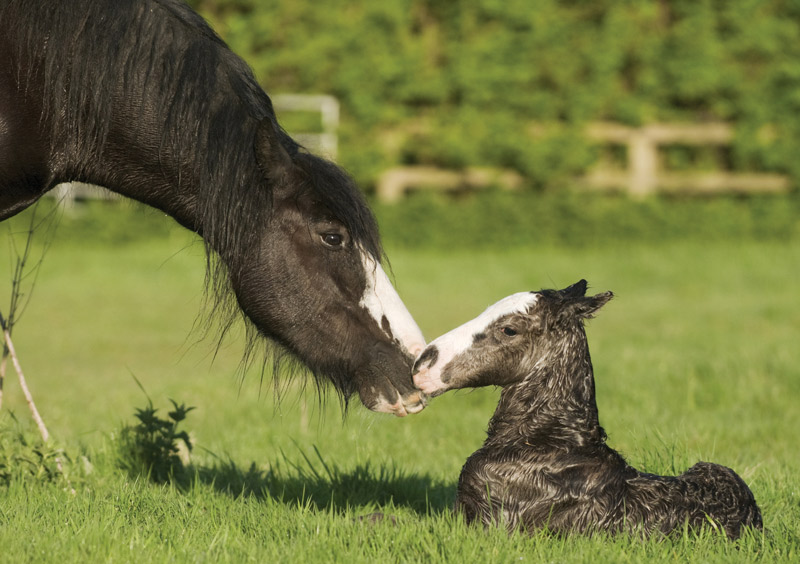
Vet Adventures: As Destiny Would Have It

0
Black mare and foal - Dealing with a difficult horse
Photo by Nigel Dowsett/Shutterstock

When a vet goes on a call about a difficult horse, the volatile mare takes charge, at least until gravity steps in.

I was in the middle of writing medical records, and I recognized the number that popped up on the screen.

“Doc! Hello, you there?” my client, Greg, bellowed into the phone. “Hey, my mare foaled this morning, and the membranes are still hanging out of her! It’s been over three hours!”

I puffed out my cheeks. It literally never failed. This was the only time this week that I could get my records and billing done, and of course a call had to come in that couldn’t wait.

“Yes, Greg,” I said glumly. “I’m just in town, and I’ll head your way in 10 minutes.”

“Well, what time will you get here?” hollered Greg, who had lived in the area his whole life and knew exactly how long it took to get around.

A Vet’s Dreaded Drive for a Difficult Horse Patient

Sighing, I pulled on my jeans and found a clean polo shirt, then laced up my manure-smelling work boots for the ten-thousandth time, rebelling at the feel of my feet back in tube socks. I just wanted one lousy day to wear something that wasn’t work clothing.

I grumped and fussed to myself as I drove the 25 minutes to Greg’s place. As I pulled up to the farm, I spotted my patient immediately and cringed, realizing just which one it was. Greg cleverly hadn’t warned me that it was Destiny, knowing that I just might have feigned being several hours away. I cursed my rotten, horrid luck.

To say Destiny was hell on wheels was being kind and generous. Really, she was a devil-hearted witch with twin demons for a soul. In my career I’d never met such a dreadful horse, but Greg swore that her babies were the best on the ranch, so he kept breeding her year after year. Normally her foalings were uneventful, but a retained placenta could be life threatening, and I had no choice but to intervene.

I stared warily at her as Greg slipped a halter over her head and led her to me, the tiny foal scrambling along behind her. Destiny made a huge point of twisting her head around to call to her foal, lashing her tail and swinging her hindquarters from side to side, the placenta swinging in an arc behind her. It was tangled in her tail, which she never stopped lashing, and she pinned her ears flat when I approached her, the whites of her eyes in stark relief against her black coat.

“Good girl, Destiny,” I cooed, as I sidled up to her, taking great care not to get between her and the baby. I patted her neck, and she shoved her shoulder hard into me, then tried to bite me.

Greg swatted her. “You quit that, you hag! Doc’s here to help you!”

Getting a Handle on Things

I tried several times to take Destiny’s vitals, but after a hind foot flew past my face and she stomped my toe and almost knocked me down, I gave up and sedated her like I always did, dodging her body as she swung furiously from side to side and spun into me.

And like always, it took 15 minutes and two re-doses before I could safely touch her. At least she was somewhat good for shots, assuming I could get close enough to give them.

The baby, a jet-black filly with a wide blaze, was busily nibbling at my pants, and I stroked her soft neck and curly little mane and gave her back a quick scratch. She closed her eyes in delight and mouthed at the air, so absolutely unlike her mother, who had horns and a tail.

Finally, Destiny’s head dropped, and her lower lip hung down. I quickly wrapped her tail and cleaned her up, then gently threaded a sterile tube into her uterus to lavage (rinse) her with saline until the fluid came out clean.

I then put some careful traction on the retained placenta, but it wasn’t budging. I injected intravenous Banamine, gave her some medicine to help her uterus shrink back down, and started her on antibiotics.

“Let’s put some weight on this placenta, Greg,” I said. “Do you have any plastic water bottles lying around?” I had to be careful with the weight—too much and the uterus could prolapse, but a pint or two would be just perfect.

Greg dug around for a bit and returned with a bottle of fly spray and an unopened bottle of diet soda.

“Sorry Doc, this was all I could find.”

I shrugged and tied the bottles closely to the hanging placenta, and Destiny’s tail immediately started lashing angrily. She came suddenly awake, the bottles swinging behind her, and aimed a kick in my direction, then charged furiously across the field, the baby hot on her heels.

Greg was howling with laughter watching the placenta flying around with the bottles and said that Destiny reminded him of a “Just Married” car. I worried as I watched her run and thought of the pressure on her uterus, but finally she came to a stop and started grazing. The foal was nursing, and I watched them closely for a while before driving off.

Strange Victory

A few hours later, I was with another client—a woman I didn’t know well—when a picture popped up on my phone of the meaty placenta on the ground draped around the soda bottle and the fly spray.

“Oh wonderful,” I said. “That’s so awesome!”

My client craned her neck to look at my phone, then gave me a bewildered look. I smiled and shrugged, figuring that explaining would take more energy than I had at the moment.

I returned to our conversation about her horse’s skin problems and said no more about it, and neither did she. She’s probably still wondering what was so awesome about a mass of bloody tissue, a bottle of fly spray and a diet soda.

This Vet Adventures column about a vet dealing with a difficult horse appeared in the November/December 2020 issue of Horse Illustrated magazine. Click here to subscribe!
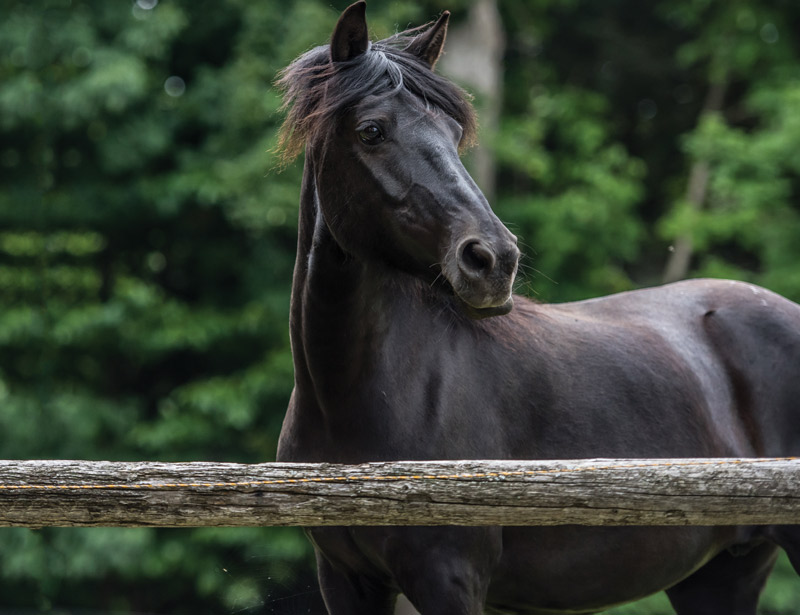
Canadian Horse Breeds

0

Horses helped settle Canada centuries ago and continue to be an important part of Canadian agriculture. Distinct horse breeds created by the challenges of Canadian weather and terrain are the pride of horse lovers throughout the country. The Newfoundland Pony, the Canadian Horse, the Canadian Warmblood and the Sable Island Horse are the results of this history.

Newfoundland Pony
The Newfoundland Pony was developed from the Dartmoor, Exmoor and New Forest ponies of the British Isles. Photo by Rich Damboise/Courtesy Newfoundland Pony Conservancy Center

Newfoundland Pony

The English, Scots and Irish who left the British Isles for the Canadian coast in the 1600s brought their beloved ponies with them. The Dartmoor, Exmoor and New Forest—hardy ponies that had learned to survive the cold North Atlantic winters—would be needed on the island that would be called Newfoundland.

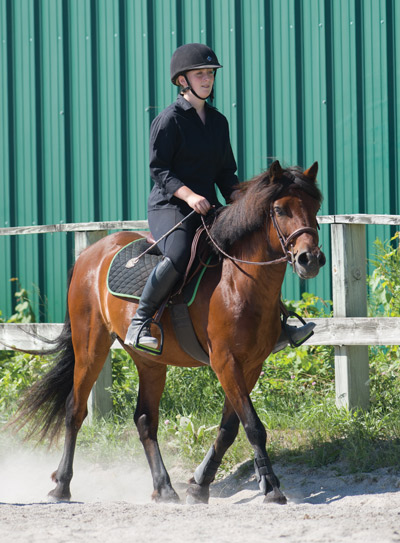
A small bay being ridden by a young rider
The Newfoundland Pony ranges from fine-boned to stocky and can be seen in a variety of solid colors. Photo by CLIX/Shawn Hamilton

Within a few hundred years of living and working on the island, the ponies of Newfoundland had become a distinct breed. Farmers and fishermen used them to plow gardens and fields, haul fishing nets and kelp from the shore, and serve as riding and carriage horses.

As with many working breeds, the Newfoundland was replaced by modern machinery. By the time the Canadian government stepped in to protect the Newfoundland Pony, less than 100 individual ponies survived. The Newfoundland Pony Society and the Newfoundland Pony Conservancy Center are two organizations working to preserve the 400 ponies left of this critically endangered breed, as listed by the Equus Survival Trust, Rare Breeds Canada and the Livestock Conservancy.

Newfoundland Ponies vary in type, from fine-boned to stocky. They stand anywhere from 11 to 14.2 hands, and come in bay, black, brown, chestnut, dun, gray and roan. Their mane and tail are thick, their fetlocks are feathered, and their hooves are hard.

Those who live with this pony value its temperament above all else. Their willingness, connection to humans, and unflappable nature helps them excel at any discipline asked of them: riding, driving, hauling, sleighing and even therapy work.

Canadian Horse

In the early 1600s, the first French settlers in Quebec struggled to farm enough food to get through the winter without the help of horses. They used their hands and primitive agricultural tools to till the soil during the short growing season.

Canadian Horse
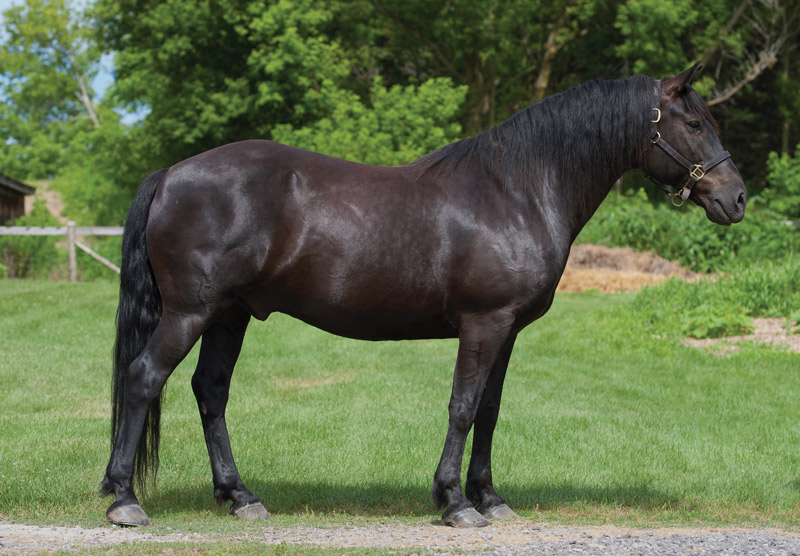
The hardy Canadian Horse is versatile under saddle or in harness. Photo by CLIX/Shawn Hamilton

After decades of this harsh existence, King Louis XIV of France sent two small shiploads of horses to the colonists. The horses that arrived carried the blood of the Norman, Breton, Arabian, Barb and Andalusian breeds.

Only the toughest of these horses went on to survive in this rugged land. By the 1700s, a breed perfectly suited to the harsh Canadian terrain had developed. Though small, this new Canadian Horse plowed fields, pulled logs, carried small children and raced for sport.

The fame of the Canadian Horse (known as le Cheval Canadien in the province of Quebec) stretched deep into New England. By the 1800s, Americans were using them to improve their own horses. It also led to a smaller number of purebred Canadian Horses.

By the time machinery began to replace horses in the early 1900s, the Canadian Horse began to decrease even more in numbers. By the 1970s, only around 400 purebred Canadian Horses remained, mostly in the province of Quebec. Through the hard work of breed advocates, the Canadian Horse now numbers around 2,000, according to the Livestock Conservancy, with most horses located in the U.S. and Canada.

The Canadian Horse has maintained much of its original conformation over the centuries. The breed standard calls for a horse with dense bone, strength and noble carriage, and with a short head, a straight neck, and a strong, short back. Standing 14 to 16 hands and weighing 1,000 to 1,400 pounds, they are mostly black, brown, bay and chestnut. A small group of breeders is working to bring back colors that were lost, including cream and palomino. This year, the first double-dilute cream Canadian Horse in over 100 years was born in Canada.

This versatile breed successfully competes in many disciplines, including dressage, hunter/jumpers, driving and western events. Their endurance, hardiness and unflappable temperament also make them great trail horses.

Sable Island Horse
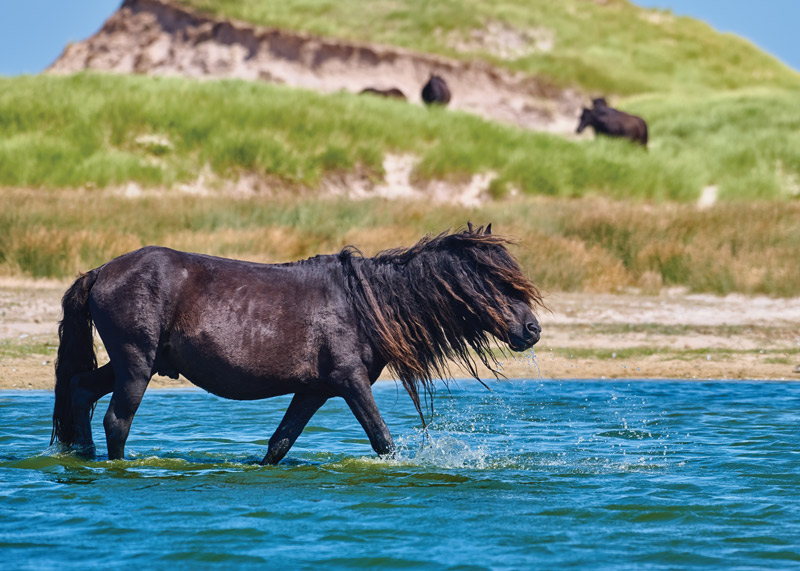
The herd on Sable Island has a tough existence with punishing winters, but they average about 500 in numbers on the 26-mile strip of sand. Photo by JoeMWilson/Shutterstock

Sable Island Horses

Give feral horses some time and they can learn to withstand the toughest of environments. A perfect example of this adaptability is Canada’s Sable Island Horse.

Brought to the 26-mile crescent-shaped Sable Island in the 1700s, the ancestors of today’s Sable Island Horse learned to endure in this harsh land of sand, salty sea air and sparse vegetation. Located 196 miles off the coast of Nova Scotia, Sable Island has winters that are unforgiving and continuously challenge the horses’ ability to survive.

Standing 13 to 14 hands tall and mostly bay and chestnut in color, Sable Island Horses are believed to have Norman, Andalusian and Spanish Barb ancestry. An average of around 500 horses live on the island at any given time. Researchers allowed to study the islands’ horses for the past two years showed that starvation and internal parasites cause anywhere from 5 to 25 percent mortality in the horses from late winter to early spring.

Now protected by the Canadian government, along with the rest of Sable Island National Park Reserve, Sable Island Horses were regularly rounded up during the 19th and early 20th centuries. As recently as the 1950s, they were sold almost exclusively for dog food, nearly wiping them out.

In 1960, advocates for the horses—including thousands of children who wrote to their legislators—stepped in to save them. Today, Sable Island Horses live only in the wild; the last domesticated horse died in 2019.

Not many people get to see the Sable Island Horse in the flesh. Visitors to the island must register with Parks Canada in advance and arrange for their own transportation by sea or air.

Canadian Warmblood

What happens when you take European Warmbloods, like the Hanoverian, Holsteiner, and Oldenberg, and breed them in Canada? You get a Canadian Warmblood. Add Canada’s unique rearing conditions of wide open spaces and often tough winters and you get a Warmblood produced as nature intended with strong bones and even temperament.

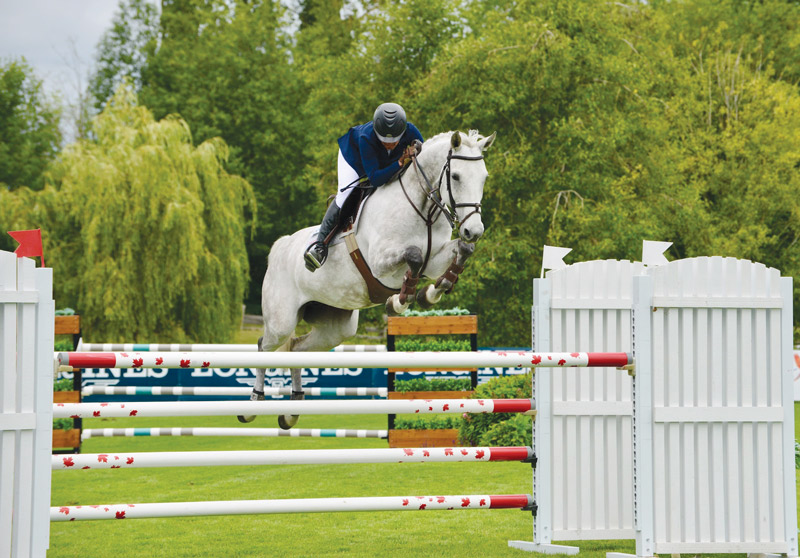
A gray show jumper
WH Coconut was named an Elite Ambassador to represent the Canadian Warmblood at the national and international levels. Photo by Cathy Crang/Courtesy Watcher Horses

In 1991, The Canadian Warmblood Horse Breeders Association (CWHBA) incorporated under the Animal Pedigree Act. The goal was to unite breeders for the purpose of furthering Warmblood horse breeding in Canada. The association works to unite breeders, owners and friends of Warmblood horses in Canada; to maintain the Stud Book of Canadian Warmblood horses; to maintain a uniform breeding program of Warmblood horses in Canada; to promote breed shows and representation in exhibitions; and to encourage public understanding of the Canadian Warmblood horse.

The CWHBA asks its breeder members to strive for a medium-sized, well-bred Warmblood that has natural talents for the Olympic and related equestrian sports: dressage, jumping, driving, eventing and hunters. Their goal should be a horse with correct conformation for soundness and longevity in one of these sports. Canadian Warmblood breeders should also work toward a horse with an even temperament who will serve as a willing partner for both amateur and professional handlers alike.

Using the bloodlines of the great European Warmblood studbooks combined with the careful work of Canadian breeders, the country is making its mark at the international (FEI) levels. Canadians are seeing the results of this effort. Over the past 20 years, Canadian Warmbloods have become ubiquitous at regional and national shows and made names for themselves at both the Olympics and the FEI World Equestrian Games.

This article about Canadian horse breeds appeared in the October 2020 issue of Horse Illustrated magazine. Click here to subscribe!
Canadian Breed Registries

Canadian Horse Breeders Association
Canadian Warmblood Horse Breeders Association
Newfoundland Pony Conservancy Center
Newfoundland Pony Society


Maintain Your Winter Riding Goals

0
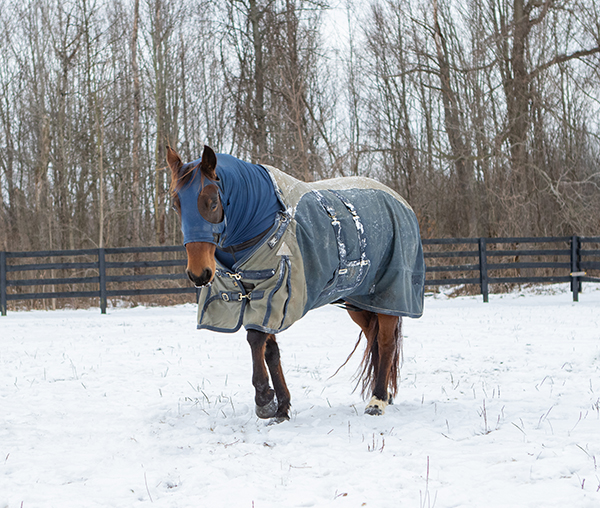
A blanketed horse walking through the snow
Do not let the snow or cold temperatures weigh your winter riding goals down. Photo by Shelby Agnew Photography

The wind is howling, the snow is knee-deep, you can no longer feel your face, and your horse is standing all the way on the other side of the pasture watching you. You contemplate reasons why you do not live in Southern California or Florida as you trudge out to fetch him, the halter in a frozen hand. It is no secret that staying motivated to ride and developing winter riding goals for you and your horse during the harsh winter months can be a challenge if you live in the northern United States or Canada.

If you struggle to maintain your motivation once the days get shorter and the temperature gets lower, then check out these tips from two Michigan riders, who definitely experience enough frigid weather every winter.

Set Realistic Winter Horse Riding Goals

Whether you are aiming for a show or not, it is helpful to have a goal in mind of where you would like to be with your horse in the future as you keep him legged up. Make sure that you understand where your horse is at in his training. Then, you can determine the steps to achieve your goal. Many Northern states hold off on showing during the winter, so these months are the perfect time of year to work on elements outside of the show pen.

Jill Dutkowski, a full-time small animal veterinarian and part-time holistic service equine veterinarian and barrel racer from Rochester, Mich., thinks of both short- and long-term goals for her six-year-old Quarter Horse mare, Coral. Since she does not need to worry about showing until a rodeo in February, Dutkowski uses her riding time to refocus on the basics after a busy season. In the short term, she will ask Coral to stay collected at the canter or trot nice, round circles, knowing that each smaller objective will lead to stronger long-term success, such as remaining mentally and physically strong for running barrels later.

Be Flexible

No goal is reached without challenges along the way. Horses do not realize the visions we have in mind for them as they often do the best they can with the information we provide them. As riders, we must adapt to their needs, which can easily change no matter the time of year.

winter riding goals with your horse - Andrea Becker with her horse, Skittles
Andrea Becker and Skittles. Photo by Shelby Agnew Photography

Andrea Becker, of Lapeer, Mich., a retiree who has ridden dressage for the past 45 years, possesses a primary goal of achieving relaxation and confidence within her 15-year-old German Riding Pony, Skittles. Every day as she mounts, Becker assesses where her little project pony is at to avoid stress and tension throughout the ride. Becker does not have current goals of showing Skittles, so there is less pressure to accomplish specific items she has in mind, making it easier for her to constantly reward the little things. She knows that not every ride with her mare will be perfect and is happy to take her time.

Mix Things Up

Without the pressure of a horse show scheduled every other weekend, winter months allow you to easily change your horse’s routine as you work toward your riding goals. Constantly working on one aspect of riding can burn some horses out. Trying a new discipline or implementing new exercises into your horse’s routine is healthy for his brain while working different muscles.

For horses like Skittles, activities that are more on the fun side keep her from growing ring sour. Although Becker drives to the barn almost every day, there are days when she does not ride. Instead, she might free longe Skittles over jumps, an exercise that Skittles loves. To further prevent her mare from becoming bored, Becker enjoys ground driving, too, which transfers certain cues over to riding.

“The off-season is an important time to work horses in a different way,” says Dutkowski. “It is time to take their brains off what they do all summer.”

Last winter, Dutkowski gave Coral’s brain a break by focusing on basic dressage maneuvers, as well as cross-rails. This season, they are trying out breakaway roping lessons, which increases Coral’s versatility while furthering her all-around skills. At the same time, both Dutkowski and Coral can decompress mentally from barrel racing. Likewise, there are days when she does not ride Coral, but will go out to spend a relaxing time with her. Dutkowski believes that consistently engaging with your horse throughout the entire year is key to maintaining a meaningful relationship.

Understand and Overcome External Obstacles

Northern winters often come with factors outside of our control that can make riding difficult, such as fewer daylight hours, harsh weather, and extreme temperatures. Instead of accepting defeat before you hang your barn coat back up, find ways to work around winter weather frustrations.

With darkness arriving earlier in the day, Dutkowski picks up additional hours at the vet office since she cannot ride in time each day after work. This way, she has additional vacation days for the summers when she travels regularly to barrel races. In her free time, she watches training videos, as well, to learn fresh drills and ideas to use for later.

Meanwhile, Becker has spare time to arrive at the barn earlier in the day, discovering that she prefers riding in the winter over the summer. During the colder months, the barn is less busy, there are no bugs, and no sweltering heat.

Sometimes, the best way to successfully battle the cold is to simply dress in layers. Dutkowski lives in heated vests, citing that they are worth every penny. Other options to properly layer up include wild rags, thermal shirts, winter gloves designed for riding, and lined pants or breeches. Some riders do not leave the house without toe or hand warmers to stuff into their boots and socks, too.

You are the Company You Keep

Holding yourself accountable to keep your horse in shape during the winter can be a struggle. Riding or checking in with other motivated friends is a fun way to keep yourself on track. Without the company of other riders, who share similar goals or experiences, it is easy to lose energy, falling into a slump. Plus, having a friend can act as a separate pair of eyes to reassure that you are on the right track as well as to help you troubleshoot issues.

Jill Dutkowski and Coral
Jill Dutkowski and Coral. Photo by Shelby Agnew Photography

Becker believes surrounding yourself by driven peers is a valuable step in reaching your goals. While the barn is less crowded during the winter, there are several other riders that also display strong commitment to their horses, contributing to a positive environment.

Becker’s best friend, Sue Ashley, a dressage trainer and owner of the barn she boards at, demonstrates motivation daily. Becker looks to Ashley as a powerful example of balancing riding and managing the farm with separate personal activities, like taking care of family on top of dog classes. Sometimes, Ashley looks in as Becker rides Skittles to see how things are going or provide guidance on how to move forward. Just by being around her friend, who is constantly on the move, Becker feels energized to pursue her own goals with Skittles.

Enjoy the Journey

While you are working toward your winter goals, remember to enjoy the journey. Do not let the winter blues hold you back from achieving ambitions with your horse. The warm sunshine may be gone for a while, but learning to adapt with your horse and appreciate time with them away from showing will only help in the long run.

No matter your age or work schedule, the best tip is to just get out to the barn. Becker described that age and sore joints do not slow her down. She enjoys the extra time with her project pony, who has taught her patience and flexibility. Since Becker’s summers involve traveling with her husband as he shows his cutting horse, she is grateful for the opportunities to progress with her own mare. Her best word of advice is to “just do it, and get out there and ride.”

Dutkowski appreciates time with Coral just as much. She trained Coral herself and is proud of the growth they have experienced as a team. At the same time, Dutkowski reflects on when she lived in Flint, Mich., where she had limited access to horses—nevermind the amount of snow or if an indoor arena was unavailable. She was grateful to ride anywhere on any horse. Now, Dutkowski does not take the indoor at her disposal for granted with any of her own horses.

Although any equestrian residing in the Great North longs for warm summer sunshine, there is no reason why winter should drag you down or prevent you from setting winter riding goals for you and your horse. Making the most of the resources available to you as you strive for your goals will help you overcome what is out of your control. Just remember to enjoy the ride along the way, no matter the season.

Further Reading

My Right Horse Adoptable Horse of the Week: Cookie — January 17, 2022

0
My Right Horse Adoptable Horse of the Week - Cookie
Photo Courtesy Hickory Hill Farm

Welcome to Horse Illustrated’s weekly installment of the My Right Horse Adoptable Horse of the Week, offered in partnership with The Right Horse. Cookie is this week’s adoptable horse. Check back weekly for a new featured horse so you can find your #righthorse.

Horse: Cookie, a 19-year-old 9-hand Appaloosa-Miniature Horse mare in Mt. Juliet, Tenn.
Organization: Hickory Hill Farm

My Right Horse Adoptable Horse of the Week - Cookie
Photo Courtesy Hickory Hill Farm

Cookie is an Appaloosa-Miniature cross mare that is around 19 or 20 years old. She stands around 35” tall. Cookie needs to go to an experienced home at this point. She has the potential to be a really good girl with consistent handling, but she has some habits that will worsen if not handled frequently. Cookie will accept a saddle and a light leadline rider. Staff at Hickory Hill Farm are not sure just how experienced she is under saddle, though, as sometimes she gets nervous. She has been hauled to local saddle club shows and did pretty well! She’s not really spooky in the arena or walking around. She did paw, pace and neigh a little while she was tied, but this behavior should get better with more experience standing tied. She’s not bad by any means and does not try to set back; she is just vocal when alone. Cookie will longe nicely and hops right on the trailer. She seems to enjoy being worked with and doing groundwork. She is not currently easy to catch, but she is getting better. Her foster is working with her frequently and her adoption fee is subject to go up as she progresses. The more she is handled, the better she gets! She does really well when handled frequently by an experienced person. Cookie will also need to be in a home with equine companions near her size as well as a dry lot with 24/7 access to hay. Her adoption fee is $350. The first step in the adoption process is completing an application. If interested, submit your application online at www.hickoryhillfarmtn.org/apply. If you have any issues, email adopt@hickoryhillfarmtn.org. Is she your #righthorse?

Click here for questions about Cookie, the My Right Horse Adoptable Horse of the Week

My Right HorseMy Right Horse is the online adoption platform of The Right Horse Initiative, a collection of equine industry and welfare professionals and advocates working together to improve the lives of horses in transition. A program of the ASPCA, their goal is to massively increase horse adoption in the United States. To find more adoptable horses and foster horses, visit www.myrighthorse.org. To learn more about The Right Horse, a program of the ASPCA, visit www.therighthorse.org.

The Road Less Traveled: The Self-Publishing Option for Equestrian Authors

0
Self-Publishing Equestrian Authors
Photo by Thicha Satapitanon/Shutterstock

Closet equine writers, it’s time to unite and come out of the creative shadows. Independent publishing continues to revolutionize how books are created, published, and read, and a corral of equine writers are blazing new trails.

“Works of fiction or even nonfiction have been considered too niche by some of the big mainstream publishers,” says award-winning equine author Carly Kade of Phoenix, Ariz. “As a result, many equine writers have decided to publish independently.”

Also Read: How to Become the Next Great Equestrian Blogger?

The Changing Landscape

In 2008, the independent publishing landscape realized a significant turning point for two reasons: First, widespread use of social media meant authors incur little or no self-promotion costs. Secondly, e-book marketplaces like Amazon, iBookStore, and Barnes and Noble now allow new and established writers to sell books worldwide. They may even have specialized publishing categories for equine writers, like Amazon’s equestrian fiction subcategory.

Susan Friedland
Writer Susan Friedland shows her horse Knight her self-published memoir, Horses Adored and Men Endured. We think he approves! Photo by Vanessa Hughes

According to Bowker, a world provider of bibliographic information, the independently published market grew by a whopping 375 percent between 2010 and 2015. Amazon continues to dominate the market with its DIY publishing platforms, CreateSpace and KDP, increasing its titles from 929,920 in 2017 to 1.4 million in 2018.

The hesitation of traditional publishers to invest in equestrian books because the readership is considered too narrow is only one part of the story. Equine writers are embracing the changes in publishing choices for critical creative and legal control. Retaining creative control of book covers, manuscript formatting, and marketing drives many to consider independently publishing their respective projects.

“People want to have control over their art,” says Heather Wallace, an independently published author in Red Bank, N.J. “They don’t want to give it away to someone, even if that person might be able to sell more copies.”

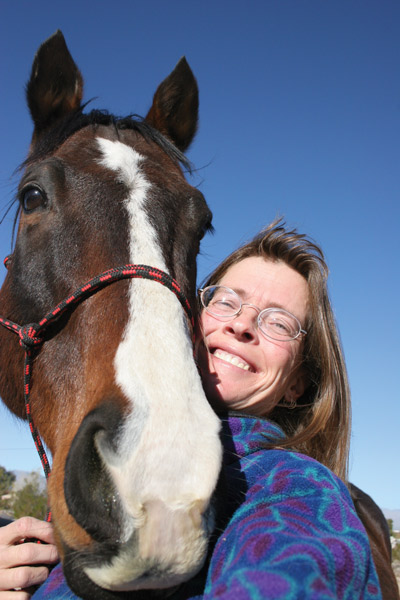
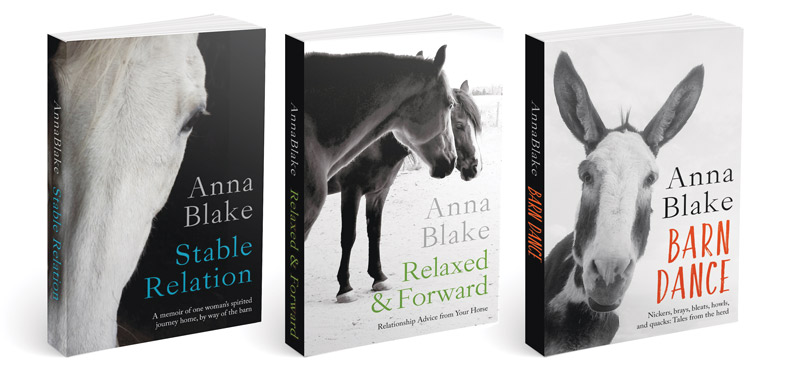
Anna Blake, a Colorado dressage trainer, clinician, horse advocate, and author of multiple books, concurs.

Heather Wallace - Self-Publishing Equestrian Authors
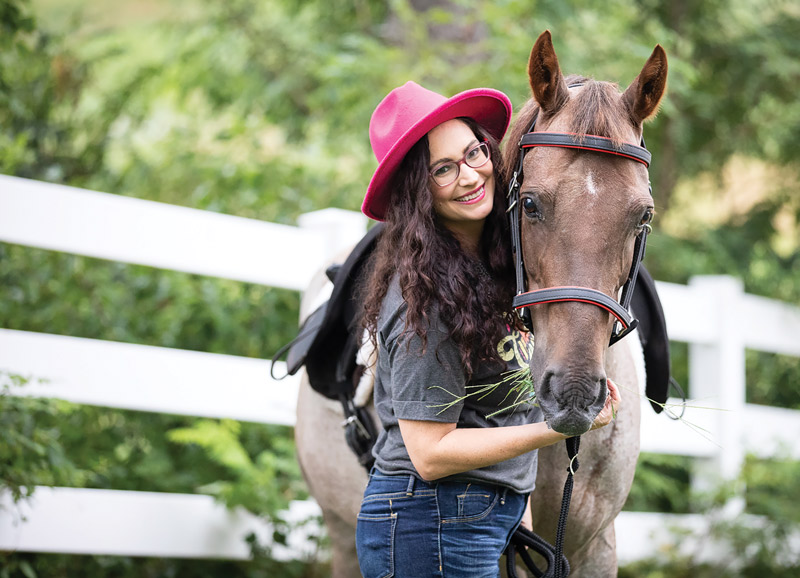
Heather Wallace enjoys the control afforded by self-publishing her books. Photo by Jamie Baldanza Photography/Courtesy Heather Wallace

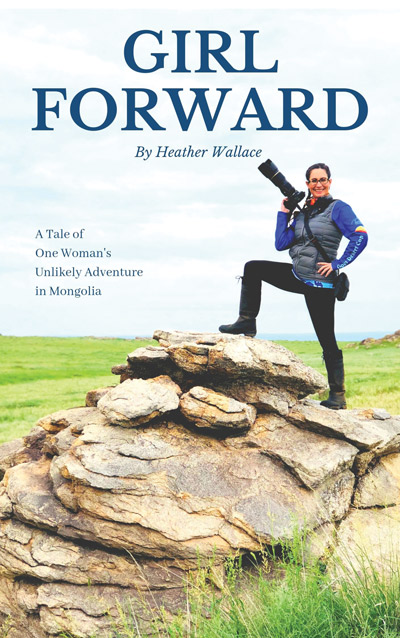
Heather Wallace Girl Forward“The big publishers have had an incredible amount of control, and authors have sat like little dogs begging for treats,” she says. “Technology and print-on-demand changed everything. Now we don’t have to destroy the rainforest and stock warehouses full of books, either.”

The Pros and Cons

The protection of assets, especially assuring full ownership of a book’s intellectual property, has spurred multiple writers to form their own publishing company to publish their titles, including Kade.

“Often when you sign with a traditional publisher, you lose your audiobook rights,” she says. “You may lose TV rights if that ever comes into the equation. Some people sign away their merchandising rights.”

Carly Kade - Self-Publishing Equestrian Authors
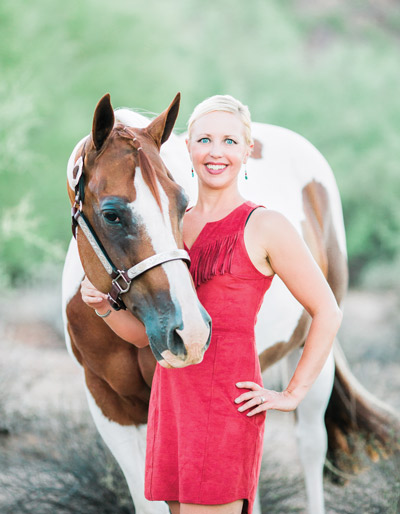
Carly Kade says there is more work involved with self-publishing, but you retain more of your rights, such as for TV or audiobook. Photo by Melanie Elise/Courtesy Carly Kade

Yet, Kade explains the flip side if authors go the independent publishing route.

“That is the power of independent publishing,” she continues. “You’ve got to do a lot of work. You’ve got to understand the process. But you own your work so that you can take it and create whatever you want with it.”

The lack of institutional support from publishing companies plays a critical role for Wallace.

“Back in the 1980s and 1990s, traditional publishers had a marketing team for authors,” she says. “Now, a publishing company won’t bring an offer [to] someone that doesn’t have a following already. Authors market their books. Many authors say, ‘Why am I giving up control and giving you 90 percent of the sales when I could do it on my own?’”

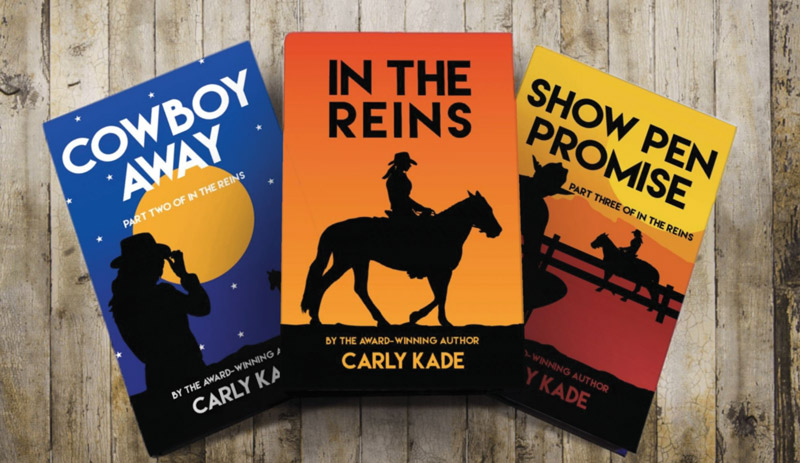
Carly Kade Books

The Emotional Touch

The emotional weight that horse owners and enthusiasts garner cannot be understated. According to 2017 survey results by the American Horse Council Foundation, horse owners number 1,013,746 in the United States. Small publishers may miss the hidden opportunity for financial success that equestrian writers recognize.

Merri Melde - Self-Publishing Equestrian Authors
Merri Melde, an endurance rider, sees recent time spent at home as beneficial to writers and readers alike. Photo by Courtesy Merri Melde

Blogger and author Susan Friedland suggests that publishing houses fall short with their lists and overlook the equine owner and book-reading market.

“My second book, called Strands of Hope: How to Grieve the Loss of a Horse, has an audience that needs the message,” she says. “There are thousands—possibly millions—of horse lovers who lose a horse every year. [Large] publishing houses don’t possess the insight to market a book to horse fans.”

Don’t underestimate the tenacity and perseverance of equine writers to get their stories out.

“I will not take no for an answer,” says Blake. “I will not be bucked off of this process.

Horsewomen are a force of nature. We muck manure. We fix fences. We write books.”

Merri Melde BookRenewed Interest in Reading

The age of COVID confirmed a shift in how readers consume media and how content is published. According to Libby, an e-reading platform, Americans borrowed over 10.1 million digital books from public libraries during the third week of March alone. Audiobook downloads continue to benefit from the fast-moving publishing landscape, offering another revenue stream for independent equine authors.

“People want to be distracted,” says Merri Melde, a photographer, writer, endurance horse conditioner, and author of four books. “They can’t go to movies. They can’t go to bars. Lockdowns became another entry point for equine writers.”

Anna Blake - Self-Publishing Equestrian Authors
Anna Blake sees self-publishing as a testament to the tenacity of horse women. Courtesy Anna Blake

Anna Blake BooksRecently, a group of independently and traditionally published authors have come together online on a platform created by Wallace to highlight authors of horse books and to help them connect with readers within this niche. Readers can search non-fiction and fiction equestrian authors, read their biographies, connect with them on social media, and find links to purchase books of interest.

For more, visit www.booksforhorselovers.com.

This article about self-publishing for equestrian authors appeared in the October 2020 issue of Horse Illustrated magazine. Click here to subscribe!
For Women Only: Serenity Ranch’s Equine Therapy Program for Female Veterans

1
Veteran Cari Simmons
Cari Simmons was turned away from many equine therapy programs for veterans because they only took men—until she found Serenity Ranch. Photo Courtesy Serenity Ranch

Cari Simmons faced her share of challenges during her 25-year career in the U.S. military, but none of them compared to becoming a female military veteran struggling with anxiety, post-traumatic stress disorder (PTSD) and depression. After grappling with these conditions for years, Simmons, who had some previous experience as a trail rider, turned to horses to help her cope.

“I was formally diagnosed in 1996, but suffered for longer than that,” says Simmons, who retired from the Air Force as a Lieutenant Colonel. “I knew the power and healing of horses, so I looked for a program that used horses for therapy.”

When she set out to find an equine assisted therapy program that was created for U.S. military veterans just like her, Simmons quickly discovered that her options were sparse—if not non-existent.

“I was originally searching for a program for veterans and was pretty peeved when they said they only took men,” Simmons recalls. “Finally, they referred me to Serenity Ranch.”

Equine assisted activities and therapy (EAAT) have long been used to help male military veterans cope with PTSD and related conditions. As a result, the vast majority of established EAAT programs focus on men and how the conditions manifest in them.

Starting Something New

Serenity Ranch was established after Micah Fink, co-founder of Heroes and Horses, an equine assisted program for male combat veterans, turned to his neighbor, Lisa Ledoux, for help accommodating the increasing number of female veterans who were applying for his program.

“The Heroes and Horses program is pretty intense—veterans go up into the hills to camp and perform back-country outdoor skills—and they don’t have a program for women,” says Ledoux, the chief operating officer for Serenity Ranch. “We decided to explore putting together a program specifically for women that used a more retreat-like approach.”

Veteran Lisa Ledoux
Lisa Ledoux got a call from her neighbor, who was running the Heroes and Horses program for men, to see if she could accommodate the female veterans. Photo Courtesy Serenity Ranch

The Ranch program plan was hatched after Ledoux and her family inherited a 71-acre property near Bozeman, Mont., from her stepfather, himself a military veteran with a long history of working with horses. A total of 43 horses—some rescued and some bred on site—reside on the property and play a role in the ranch’s programs.

By 2018, Serenity Ranch launched its pilot program designed specifically for female military veterans, as well as for women who serve as law enforcement officers, firefighters and other first responders.

According to Ledoux, the aim of the program is simple.

“Our aim is to help women cope with PTSD and other conditions by developing new ways to approach these problems,” Ledoux says.

How It Works

To do that, Serenity Ranch Program accepts between six and eight women to spend seven days and six nights at the Ranch, and pairs them with horses based on their size, equine experience and personality.

“The women are responsible for the horses’ care, feeding, grooming, riding, and just spending time with them,” Ledoux explains.

Serenity Ranch Equine Therapy
The ranch accepts six to eight women for a week, pairing them with one of 43 horses rescued or bred on site. Photo Courtesy Serenity Ranch

When they are not working with the horses, the women take part in mindfulness activities such as yoga, journaling and sharing the experiences that bought them to the program in the first place—including sexual trauma connected to their military service.

“It’s like a shark tank,” Simmons says of the military. “Most [in the military] are men, and women have to work harder and complain less than their male counterparts; also, there is a certain macho-ness that women must develop in the military or other professions that are still male-dominated. When women did speak up, you’d get the eye-roll—’Here we go again.’”

For Simmons, the ability to talk out her experiences with other women was key to making peace with the depression and anxiety connected to them.

“Our group of female vets, representing every branch of the service, ranging [in age] from 20s to 50, decided to bunk in all together on cots in the guest cabin,” she recalls. “The sharing, caring, and late raw emotion that was exchanged when we crashed after the long days was really impactful.”

The Courage to Move Forward

Long after her career as a combat veteran in the U.S. Army ended, Katherine Jordan grappled with the physical challenges of a significant back injury. Emotionally, she was haunted by depression and anxiety connected to service-related sexual trauma. Even so, the decision to get help was not an easy one to make.

Katherine Jordan Serenity Ranch Equine Therapy
Katherine Jordan experienced significant physical and emotional trauma as a result of her combat service. Photo Courtesy Serenity Ranch

“I was also turned down by the Heroes and Horses program, but I was ready when they told me about Serenity Ranch,” Jordan recalls. “At some point, you just say to yourself, ‘Get help.’”

Once she did, opening up to other program participants was challenging in itself.

“I was so petrified, because I think there is still so much stigma around women and mental health,” she says. “I was scared of speaking up because I was afraid of sharing my story—people don’t believe you—[they] look at you and say, ‘That couldn’t have happened.’”

Once she opened up, others did, too.

“It’s hard to be the first one, but I just decided that it was time for me to say something,” says Jordan. “Just one person has to speak up, then other people open up, too.”

But it takes more than talking to resolve—or even acknowledge—the residual issues that plague some of the female veterans who come to Serenity Ranch. Many struggle with a lack of confidence and physical changes to the way they look and perceive themselves and those around them.

“When these women were in the military, they were fit and confident,” Ledoux points out. “When they come to us, they are often overweight and less confident; they want to be invisible. Some of these women don’t even want to get out of bed.”

Working with the horses changes all that, Ledoux says.

“For example, when we teach them to back a horse out of their space, the women often start looking down with a hunched-over posture and they wonder why the horse won’t back up,” Ledoux explains. “We teach them to stand up tall and to be confident when they approach the horse, and when they see the horse move, they become more confident too.”

Serenity Ranch Equine Therapy
The women make lifelong friends through the program, and some even go on to work in EAAT. Photo Courtesy Serenity Ranch

Benefits of the Program

There are other benefits, says Jordan, who was an experienced horsewoman when she arrived at Serenity Ranch.

“If you have experienced trauma, horses pick up on what’s happening with you emotionally,” Jordan points out. “Also, there’s something about women working with a large animal that can be intimidating—you have to manage yourself and still have a positive relationship with the horse.”

Like some other equine-assisted therapy programs, the COVID-19 pandemic has affected Serenity Ranch, causing the facility to suspend programming until further notice.

When it does resume, Ledoux hopes to expand it to serve other female survivors, as well.

“In the past, our clients have been referred by veterans’ groups and social workers,” Ledoux explains. “But grieving women, abused women, and women dealing with breast cancer can all benefit from this program, too.”

In the meantime, Simmons and Jordan have moved on from Serenity Ranch and into careers: Jordan now works as an EAAT therapist for Easter Seals in Arizona. Simmons, who also pursued EAAT credentials, is now studying to be an equine masseuse and acupuncturist.

While both women credit the program with the ability to work through service-related issues over the short term, Simmons also believes that the Serenity Ranch experience is much longer-lasting.

“I found acceptance, empathy, lack of judgment, and camaraderie in ways I have never experienced from my brothers-in-arms,” Simmons says. “I keep in touch with the women to this day. It’s lifelong friendship.”

This article about the Serenity Ranch equine therapy program appeared in the October 2020 issue of Horse Illustrated magazine. Click here to subscribe!
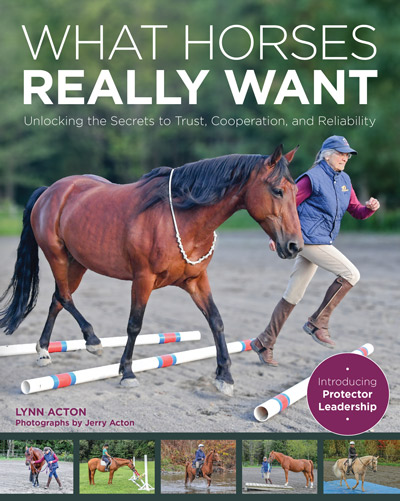
What Horses Really Want

0
horse behavior from What Horses Really Want book
Horses will usually try very hard to please you, which can be seen as initiating, anticipating, or volunteering an action they think you want. Photo by Jerry Acton
What Horses Really Want book
Courtesy Trafalgar Square Books; www.horseandriderbooks.com

This excerpt from What Horses Really Want by Lynn Acton is adapted and reprinted with permission from Trafalgar Square Books (www.horseandriderbooks.com).

Horses want to be our partners, not obedient servants. Partners think. This means they do not always do exactly what you ask (or think you’re asking). Or they sometimes do things you have not asked for. This can be a good sign that they are thinking like a partner and trying to communicate with you, keep you safe, or show signs of trust and attachment.

But, these actions can be misconstrued as disobedience. They might even be punished. It is like being with someone who ignores what we say, and it places a negative interpretation on everything we do. When we do this to our horses, we overlook important information, and turn ourselves into a source of anxiety instead of security.

Common actions of horses who are acting like partners, which might be mistaken for “bad” behavior, include:

◆ Initiating an action in an attempt to communicate with you.
◆ Pausing or experimenting to figure out what you want.
◆ Anticipating what you are going to ask.
◆ Volunteering an action that has been rewarded in the past.
◆ Disobeying for what the horse believes to be a good reason.
◆ Showing signs of trust and attachment.

Here, we will explore the last two.

Disobeying

Next to our farm is a state forest. Our horses, Bronzz and Sapphire, learned the trails on our end of it the first year we lived here. One day, both of them flatly refused to cross a culvert they’d crossed before without hesitation.

Balking Horse
Balking or refusing to cross a section of ground could be a sign of danger, not disobedience. Photo by Jerry Acton

My husband and I agreed this was not disobedience; it was a warning. Even though the culvert looked fine to us, the horses did not trust it. They readily agreed to an alternative that was much more work since we had to bushwhack through underbrush, scoot down a muddy creek bank, clamber across rocks, climb up the other bank, and squeeze through a maze of saplings.

Their suspicions were validated a couple weeks later when we got a phone call from a friend who rides the same trails. Erosion around the culvert had created dangerous sinkholes that were now obvious.

Refusing to obey a command for a valid reason is called “intelligent disobedience.” Service dogs are taught to do this. It is what stops a guide dog from leading his handler into traffic. For a horse, warning us of possible danger is part of being a responsible herd member or partner.

Horses see, hear, smell, and feel (through their hooves) things that we cannot. Faulty or misunderstood cues from a rider often require a horse to guess what to do.

Unexpected circumstances may require a horse to react faster than we can. Horses who have been punished for using their own judgment can actually be more dangerous.

My worst fall occurred when a horse obeyed my faulty command, and we landed on top of a jump. Had he refused, I would have been spared a serious injury. That was when I recognized the danger of demanding absolute obedience.

Leading a Horse
Does your horse leave his buddies to come up to you? When you turn him loose, does he go back to his friends right away, or linger near you? Photo by Jerry Acton

Intelligent disobedience is at work when horses slow down for insecure footing, refuse to go forward onto footing that looks unreliable, refuse jumps because their rider is poorly balanced, or opt to detour around situations that look risky. No prey animal wants to risk falling or getting trapped, and his caution protects us, too.

Some people fear that letting horses “get away with disobeying” undermines future obedience. My experience is exactly the opposite. When we fail to trust our horses’ good judgment, we lose credibility. When you trust your horse, he is more likely to trust you when you do need to overrule him. If you suspect a horse could be right about danger, you retain your position as decision-maker by deciding on Plan B after the horse has warned you that Plan A might be risky.

Signs of Trust and Attachment

Your horse’s attachment to you is significant, and not only for sentimental reasons. Horses who are attached to their trainer have a stronger sense of security, and therefore are calmer, more focused, and able to learn. Horses who lack this security are more likely to be fearful and distracted. Thus, attachment impacts the success of training, independent of the techniques used.

People may not doubt that their dogs love them, yet few notice that their horses are attached to them. The idea is even scoffed at by many, and surely it is easier to sell a horse if we don’t believe the horse cares. But many do care … and deeply.

We saw it the day our horse Sapphire was delivered to us. Her teenage owner was committed to showing in western pleasure. Sapphire despised ring work and repetition but was reliable on trails. A career change made good sense.

When Melissa brought Sapphire to us, Sapphire appeared to think they were on a routine clinic or lesson expedition. She dove happily into the clover-laced grass in the little pasture where we turned her out, until she saw Melissa’s truck and trailer disappearing down the road without her. Then she ran to the edge of the pasture screaming that heart-rending “don’t leave me!” whinny.

It was very clear a year later when we left her overnight at the equine hospital at Cornell University in preparation for a lameness exam. Her desperate calls rang in our ears as we left and met us when we arrived the next morning. The moment she saw us, she quieted, and became a model patient.

Possibly Sapphire got unusually attached to people, but I do not think so. I think she was just quicker to suspect she was being left behind permanently, and more eloquent about showing her distress.

Signs of attachment can be so mundane that they are misinterpreted or overlooked altogether, such as:

◆ Welcoming us with a nicker
◆ Leaving a hay pile to greet us
◆ Relaxing contentedly when we groom, talk to them, scratch itchy spots, or just hang out
◆ Not walking off immediately when we turn them out, and
◆ Tuning in to us even when we’re not asking for anything.

Attention-seeking is another sign of attachment, as are changes in behavior when we’ve been away. The most disconcerting sign of attachment is a horse “clinging” to us when he is scared. If a horse has not learned to stay out of our personal space, it can feel like he is trying to run us over. Yet, he is really acting like a scared foal who wants to press himself to his mother’s side.

Since no one wants a half-ton panic attack plastered to her side, it is hard to see this behavior as a positive sign that he is looking for our leadership. A horse who learns to respect personal space can look to us for reassurance and guidance without becoming a danger.

Things to Try

Think of positive behaviors you’ve observed that show your horse is thinking like a partner; if your responses have not encouraged these behaviors, what could you change?

And finally, watch for behaviors that might be misconstrued as disobedience but are really expressions of your horse’s unique personality. Consider positive ways to respond to these behaviors.

This article from the book What Horses Really Want appeared in the October 2020 issue of Horse Illustrated magazine. Click here to subscribe!
Western Lesson: Reining Spins That Win

0
Reining Spin
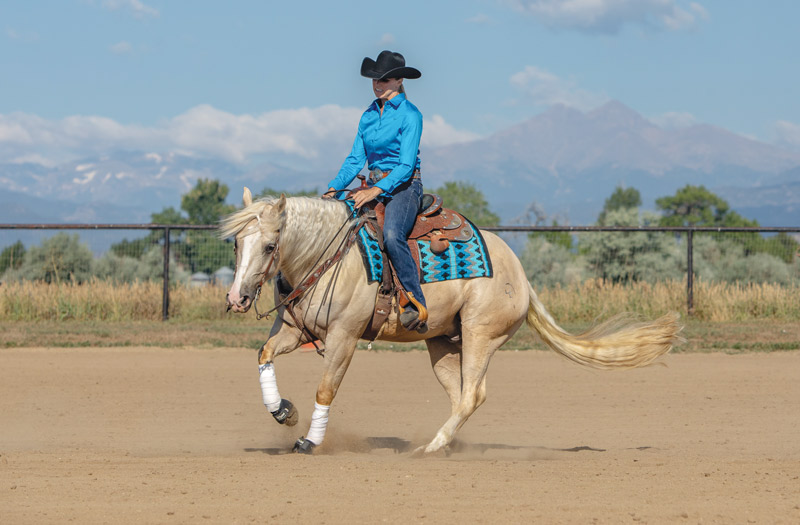
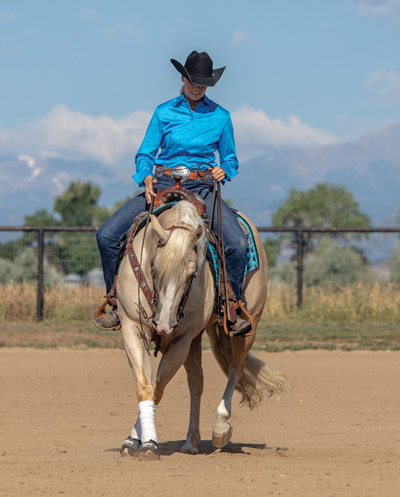
To move from the spiraling walk to the spin, take away your inside leg pressure. Notice that Schwartzenberger’s left leg is off her horse’s side. The horse’s inside hind leg stays planted as the other legs move around it. Photo by Heidi Nyland Melocco

The horse spins to the right, then left, at a reining show. With his full body engaged and his hindquarters carrying his weight, it appears that the spin is a fast turn on the haunches. However, to master this reining move, you’ll teach your horse to move forward into a better reining spin instead of pulling him back.

The spin, or “turnaround,” is part of a larger reining pattern. A starting score of 70 will go up or down depending on the cumulative pluses (+0.5, +1 or +1.5), minuses (-0.5, -1 or -1.5) and zero (denoting “average”) scores given to each move. For a plus-scoring maneuver, the horse’s body should remain straight from poll to tail while he uses his legs to spin.

Here, reining trainer and coach Sharee Schwartzenberger helps you move your horse forward into the spin by spiraling in from a walk. Then she’ll help you end your spins with precision as you change directions.

Schwartzenberger turned pro in 2017 after a lifetime of showing at top National Reining Horse Association (NRHA) and American Quarter Horse Association (AQHA) events. Her freestyle reining performances have earned her top championship titles. She coaches riders and trains reining horses in Longmont, Colo.

Schwartzenberger says that she uses the forward-first drill to teach young horses to spin for the first time. It also helps horses with anxiety. Standing still at the start can cause horses to worry and prance; starting with forward motion takes away the chance to fret.

Outfit your horse with bell boots, polo wraps or splint boots, and even knee boots to protect him during these athletic moves.

Reining Spin
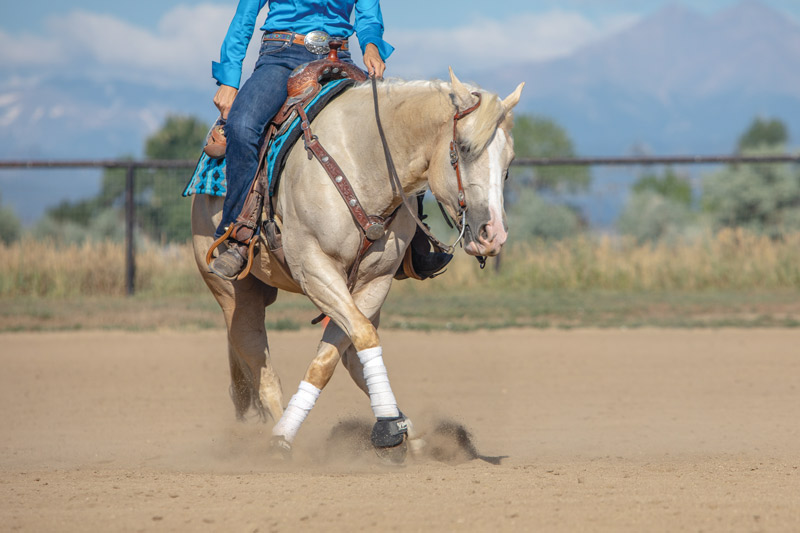
Schwartzenberger turns her horse to the left in a tight circle while keeping him moving forward. Notice that his back left leg is up, signifying a walk. Photo by Heidi Nyland Melocco

Circle In

At a show, you’ll need to start your spins from a full stop. But for practice, it’s good to remind your horse that a spin includes forward momentum.

Riding with two hands on your split reins, walk your horse in a tight circle. Keep both legs engaged on your horse’s sides so he feels the forward cue. Your horse should move in a small circle to encourage him to step across with his front legs.

When you’re ready to ask for the spin to the left, release your inside (left) leg so that you’re only applying outside (right) leg pressure. You can pick up on your inside rein to help encourage the horse to step to the side. Keep your outside (right) leg active and tap, tap, tap to encourage the movement. Add a verbal cue, such as a clucking noise to encourage a faster pace. Keep your body centered in the saddle and allow the horse to work.

If your horse listens well and responds to your walk-then-spin commands, work at a trot. Trot a small circle, then repeat the cue for the turn. Building up speed will help your horse move at a show-ready spin speed.

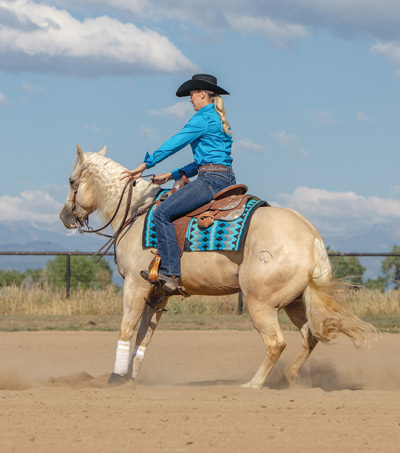
If you practice this drill regularly, Schwartzenberger says your horse will look for the cue to spin. The spin becomes a release and is easier than trotting fast circles. Master the drill riding two-handed then with one hand on the reins.

Choose Your Direction

Practice in both directions, but pay more attention to the way your horse needs the most practice. Make sure to practice this drill in between other moves and large loping circles.

Reining Spin
Eventually your horse will look for the cue to spin, and it becomes a release that is easier than trotting fast circles. Photo by Heidi Nyland Melocco

End It

To score well, you’ll need to start and finish your spin with precision. Schwartzenberger says switching directions helps your horse tune in to you and stop in the right place.

Cue your horse into a spin. After a three-quarter turn or one full spin, ask your horse to move in the opposite direction. To change directions, stop your current spin by removing outside leg pressure and raising your hand up. Move your hand toward the direction you want your horse to stop. Then cue for a spin in the opposite direction by removing your inside leg pressure and applying outside leg pressure in the new direction.

Reining Horse
Stop after a full spin by taking your outside leg pressure off and raising your hand toward the direction you want your horse to stop; now you’re ready to spin in the other direction. Photo by Heidi Nyland Melocco

Dizzy Fix

Wait up to 30 seconds after spinning before cueing your horse for something new. Taking a break can allow your horse to catch his breath and regain his footing after the dizzying maneuver.

As you ride, keep your eyes on your horse’s poll and also keep a cone in your peripheral vision. If you keep your eyes on the same plane as the horse, any dizziness should subside.

You’ll need to count your revolutions when you’re in the show arena so that you don’t do too many or too few. Most show patterns call for four to four-and-a-quarter revolutions in each direction. Count the cone each time you go by to make sure you’ll stay on pattern and master your spin.

Special thanks to our horse model, AQHA’s Voodoos Smokin (“Olaf”).

This article about how to perfect your reining spins appeared in the October 2020 issue of Horse Illustrated magazine. Click here to subscribe!
English Lesson: Next Level Transitions with Your Horse

0
Horse Riding Transitions
Rachel Shearing and her horse Miami are focused and straight as they approach the chute. Photo by Katy In Design

If you’re like me, you are probably wondering how you could get one step closer to having a responsive horse on the aids, just like the top riders. To test your connection and communication with your horse, try the following exercise, which conducts a sort of “stress test” on your transitions. This exercise can be easily executed with any horse, in any riding space, and in any discipline. The question this exercise asks is seemingly simple: Does your horse remain connected and straight through their transitions? Which leads to the question: Are your aids supporting your horse’s connection and straightness?

The only materials needed are either two poles, four to six cones, or two longe whips. You could use anything that you can find lying around that will safely make a chute and allow you to judge accuracy and straightness.

The chute—placed in the center of the long side of the arena—should be about 4 to 6 feet wide (although you can widen for an especially wobbly green horse or rider), with the option to narrow it as you progress in the exercise.

1. Proceed in your horse’s preferred direction at a working walk. Focus on rhythm and straightness. Be cognizant of your position, which should be straight through your upper body with soft hands and a straight line from elbow to bit. Your leg should be on, but not clenching, your horse’s sides.

2. As you approach the chute, be sure your horse is straight throughout his entire body from nose to tail. If your horse is having trouble with straightness through, for example, his right shoulder, use your right hand with a direct rein aid to your right hip to help correct him.

Left hip drifting out? Bring your left leg back slightly behind the girth to move his hip back over. Also be sure that your walk is truly a forward working walk. It’s easier for a horse to evade the aids in a slower gait.

3. About three to five strides from the center of the chute, stretch up through your core, feeling your belly button suck in and up. You should feel your torso and seat lighten slightly on your horse’s back as your core has now taken more responsibility for the weight of your body.

4. Transition to a halt in the center of the chute by bending your elbows to your sides while keeping your hands at the same height and adding a verbal cue. Now evaluate.

Did your horse maintain straightness, or did he shift his weight in a different direction away from center? Did you stay back in the saddle or lean forward over your hands? Was there resistance to your rein aid? Did your horse disappear from the contact?

Horse Riding Transitions
Rachel asks Miami to move up to trot from walk. They have just begun this exercise, so he is a bit slow off of the leg and shifts slightly left through the upward transition. Photo by Katy In Design

5. Repeat the same direction again. Or if all was well, reverse, repeat and evaluate. Does your horse feel different in this direction? How?

6. Once you feel successful in the walk and halt, continue walking around and come through the chute again in walk, but this time cue your horse so that he picks up trot exactly in the center of the chute in the same place that he was previously asked to halt.

Horse Riding Transitions
Having come through the chute a few more times, Miami is now steady in the contact and ready for whatever comes next. Photo by Katy In Design

Ensure you are clear with your horse. Use your aids—a stronger leg, cluck, and soft hand—to inform him that the upcoming transition will be upward rather than downward. Lazier horses may have trouble with promptness of the upwards transition but plop into the downwards transitions. Hotter horses may overreact to the aids for an upward transition, but require firmer, stronger aids for a downward transition. Think about the support your horse will need through any transition.

7. Continue making transitions between the poles at an appropriate level for you and your horse. Options include any combination of halt, walk, trot, canter, and even counter-canter. Just be sure not to start rushing at the trot and canter. Feel each transition and focus on how your horse feels underneath you.

Cantering Horse and Rider
Rachel begins her canter transitions tracking left, since that is Miami’s stronger direction. He has a prompt reaction to Rachel’s leg as he moves up into the left lead canter. Photo by Katy In Design

Is he using his body correctly and pushing from behind rather than dragging from his shoulder? Is he straight? What do you feel in your body? Are you square through your shoulders and rib cage with engaged abdominal muscles and even weight in your seat bones?

You can adapt the exercise in various ways:
◆ Ride the exercise without stirrups;
◆ Have a friend call out the transition as you turn the corner and are on the long side approaching the chute so that you have less time to prepare mentally;
◆ Add more subtle transitions, including collecting and extending each gait; and/or
◆ Add the hand gallop.

As you work through this exercise, remember to be patient! If you and your horse are really struggling with a certain transition, leave it for tomorrow. Revisit as needed as a check to see how well you are communicating with your horse. Enjoy!

Lower Leg

Rider Tipped Forward
Photo by Katy In Design

It is important to have a strong focus on your lower leg as it creates the foundation for the rest of your riding position. Watch out for these two common lower leg faults.

Rider Tipped Backward
Photo by Katy In Design

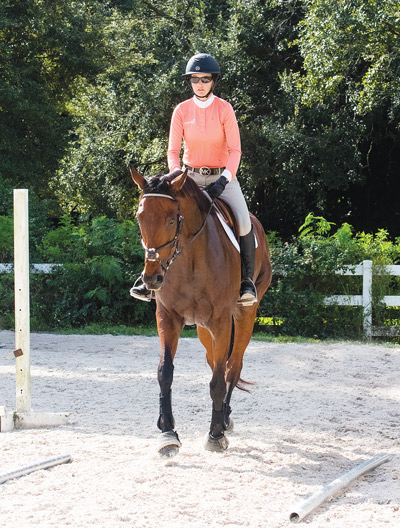
RIDER IN ORANGE: The rider has not engaged her core and has tipped forward, which causes gripping in her thigh and knee in an attempt to hang on. This causes her calf to swing backward and the rider to lose control over straightness and forward impulsion.

RIDER IN BLACK: This rider has thrown her body backward behind the motion, balancing all her weight in her hands. Her leg has moved forward toward the shoulder and is off the horse completely, which also causes the rider to lose control over straightness and forward impulsion.

This article about riding transitions originally appeared in the October 2020 issue of Horse Illustrated magazine. Click here to subscribe!
0FansLike
0SubscribersSubscribe
We use cookies to help personalize content, tailor and measure ads, and provide a safer experience. By navigating the site, you agree to the use of cookies to collect information. Read our Cookie Policy.
OK