Once upon a time, the typical horse farm needed little more than a single trusty tractor to handle most of the jobs and tasks around the farm. Tractors are still the go-to machine when you need power for big projects, but for many modern-day tasks, tractors are giving way to utility terrain vehicles (UTVs) and all-terrain vehicles (ATVs) on horse farms.
While UTVs can’t match the strength of a tractor, their smaller size and great versatility allows you to easily travel across many acres and accomplish a wide variety of jobs. Check out these 2020 options.
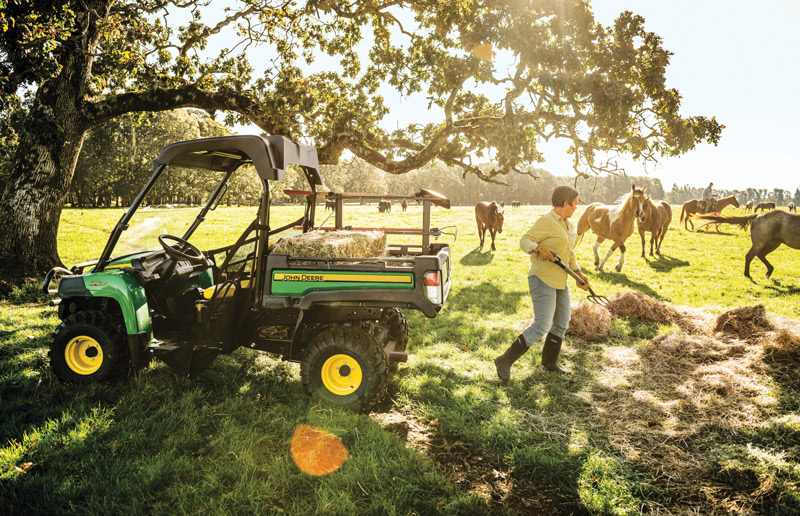
John Deere Gator
The HPX615E was built for farm and construction work. This UTV comes standard with four-wheel drive, a pickup-style tailgate, and real dumping cargo box with 16.4 cubic feet and 1,000 pounds of storage capacity. www.deere.com
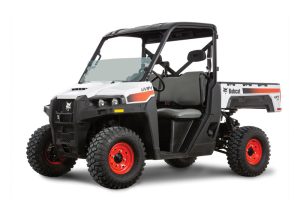
Bobcat UV34
The gas-powered UV34 features a 900-watt stator for use with a snow blade and other electric-powered accessories. The cargo box, constructed of a composite interior, handles up to 1,250 pounds and 15.6 cubic feet of materials or supplies. The UV34 features an increased tow rating, improved ground clearance, all-wheel drive and service access. A diesel version is also available. www.bobcat.com
Polaris Ranger 1000
This new UTV model offers more usable low-end grunt for towing and hauling heavy loads on your horse farm. It can tow up to 2,500 pounds and carry 1,000 pounds in the cargo bed. Other features include a more rigid chassis and a total of 18.4 gallons of interior storage space. www.polaris.com
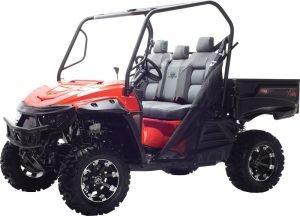
Intimidator Classic Series
Power options include a 750-cubic-centimeter Kohler gas engine (cargo bed capacity: 1,200 pounds; towing: 2,100 pounds); a 48-volt brushless electric (cargo bed capacity: 700 pounds; towing: 1,500 pounds) or a 1,000-cubic-centimeter Kohler diesel engine (cargo bed capacity: 1,200 pounds; towing: 2,100 pounds). Other key features include bench seats for up to three adult passengers and a full-size bed. www.intimidatorutv.com
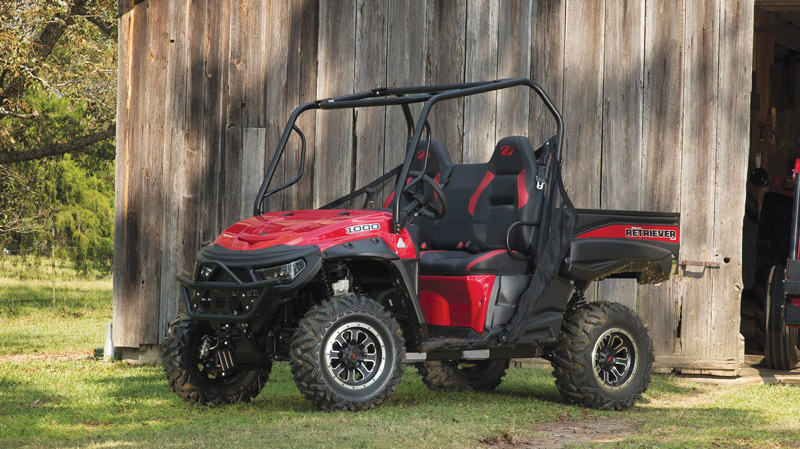
Mahindra Retriever 750
The all-new Retriever comes in single-row, crew and long-bed models in gas and diesel powertrains. Towing capacity is 2,100 pounds; cargo capacity, 1,200 pounds. www.mahindrausa.com
Kubota Sidekick RTV-XG850
The gas-powered Sidekick can travel up to 40 miles per hour. The bed can move 1,000 pounds and tow up to 2,000 pounds on flat terrain. www.kubotausa.com
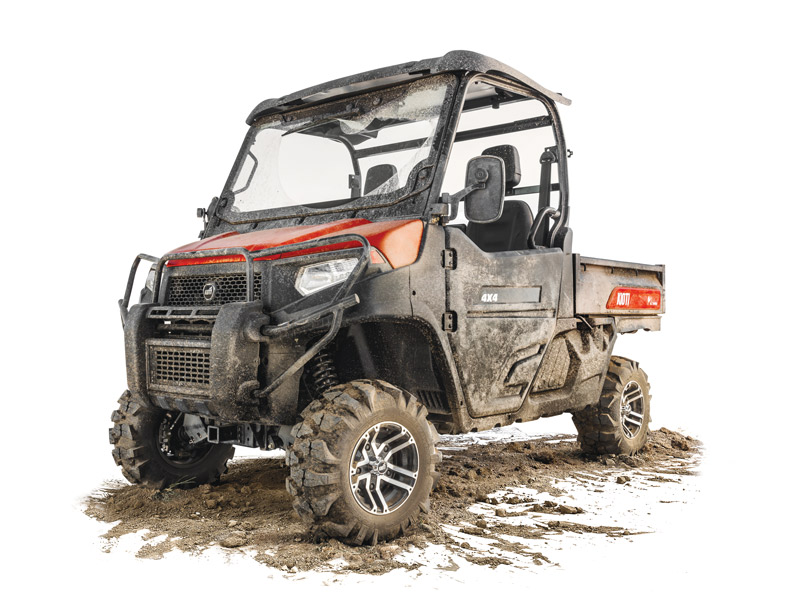
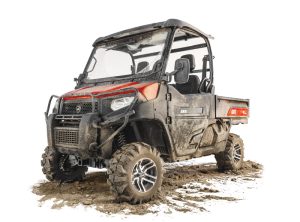
KIOTI K9
The KIOTI K9 2400 and K9 2440 offer a diesel engine with top ground speed of 31 miles per hour. The K9 2400, pictured here, features an all-metal bed, with a 1,102-pound bed capacity, a standard spray-in liner and an optional hydraulic dump kit. All K9 models feature a towing capacity of 1,300 pounds and a payload capacity of 1,750½ pounds, allowing for a full range of towing and hauling capabilities. www.kioti.com
Or Try an ATV on Your Horse Farm
There are other vehicles besides UTVs to help you get around the farm, including all-terrain vehicles (ATVs). These have handlebars as opposed to the steering wheel in a UTV.
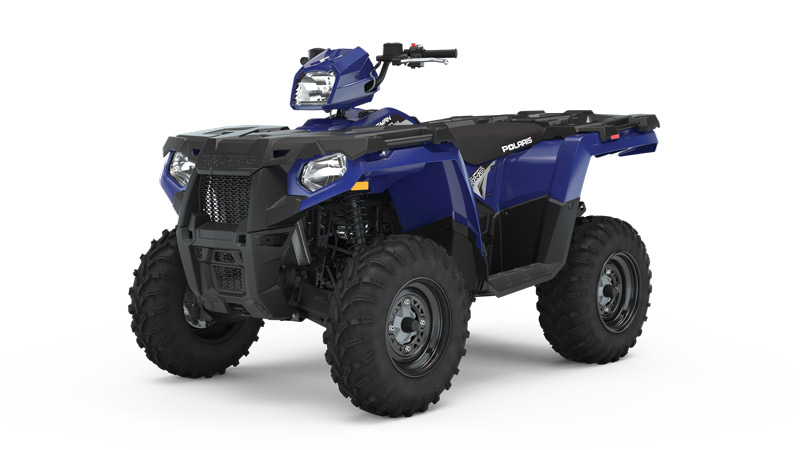
Polaris Sportsman 450 H.O.
This ATV features 8 gallons of sealed storage and a hitch receiver. It boasts a 1,200-pound towing and 485-pound payload capacity and a combined 270-pound front and rear rack capacity. A utility package upgrade is available. www.polaris.com
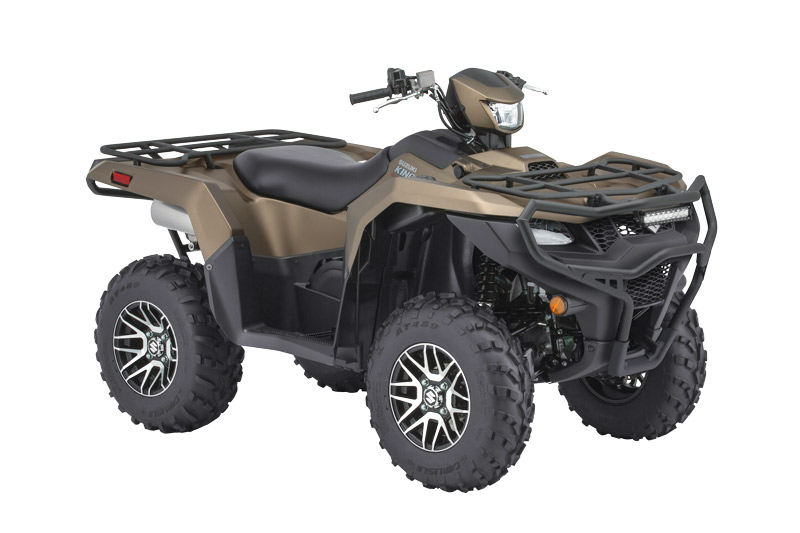
Suzuki KingQuad 500AXI
The 500AXi features towing capacity up to 1,322 pounds and a rider-selectable two- or four-wheel-drive driveline. A receiver-type trailer hitch mount makes it easy to select the type of equipment to be moved, along with winch-ready mounts for easy installation. Other features include multiple storage compartments and steel-tube cargo racks. www.suzukicycles.com
As winter months creep up on us, shorter days and cooler temperatures signal plants to slow and eventually stop their growth. The lush green of your pasture begins to turn to brown. This means less forage is available for grazing horses during the winter, and what is present lacks the nutrition found in warmer months. So how do you transition a horse from moist green grass to dry hay?
Where to Start
Roughage is an essential ingredient for healthy digestion. Spring and summer bring great opportunities for horses to indulge in green pasture, as they graze periodically throughout the day during turnout. But as grass stops growing and browns, a horse likely needs other forage sources, and possibly a complete feed or grain-type supplement.
Besides pasture, typical roughage sources include hay or complete feed pellets. Alternative fiber sources are available, such as soybean hulls, beet pulp, rice hulls, corn cobs, chaff, and straw, but these don’t allow horses to “graze” on something all day long.
Instead of being fed two to three relatively large meals in a 24-hour period, it is better for a horse to have the opportunity to nibble periodically throughout the day and night. In general, horses fed large amounts in two meals a day tend to bolt the food in a short time—an hour or two at most. This results in long fasting periods until the next meal arrives, possibly leading to ulcers or behavioral vices. This is not at all how the equine digestive system is supposed to work.
To keep your horse healthy and thriving, it’s best to feed him a minimum of 1½ to 2 percent of his body weight in roughage (hay or pasture) each day. Active equine athletes may need at least that much hay plus a grain-type supplement and/or a high-fat supplement, like vegetable oil or rice bran.
Horse Dental Care
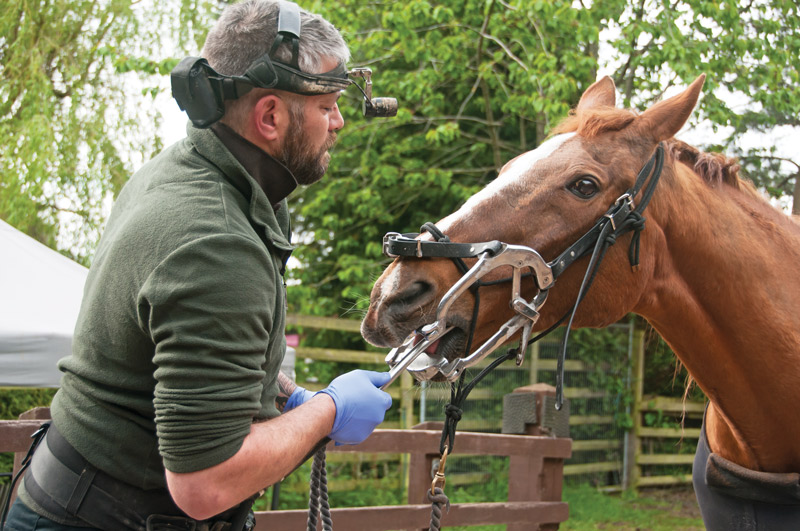
Have your horse’s teeth examined by a vet at least once a year in order to keep chewing surfaces free of painful points. Photo by Chelle129/Shutterstock
Dry hay is considerably more difficult to chew than fresh grass. This means that attention to details, like dental care, becomes important, not only so horses can extract the most nutrients from their diet, but also to minimize the risk of impaction colic or irritant diarrhea from food that isn’t chewed well.
Have your veterinarian perform a thorough dental exam at least once a year, especially heading into the winter months. Sharp points can be removed through floating procedures, so your horse is more comfortable chewing and can break down hay stems. This improves digestibility of the forage.
Senior horses often need especially diligent dental care to be able to extract the most from their hay. Some are missing so many teeth that it may be necessary to offer a gruel of soaked complete-feed pellets.
Additional calories can also be added by way of soaked beet pulp pellets, which are high in fiber and provide added safe calories for a more difficult keeper.
Slow that Gluttonous Horse Down During Winter
Ideally, a horse offered free-choice hay would control his intake, eating only as much as he needs to maintain the perfect body condition. But some individuals won’t stop eating, and—like with people—excesses calorie intake results in obesity.
Photo by Vicuschka/Shutterstock
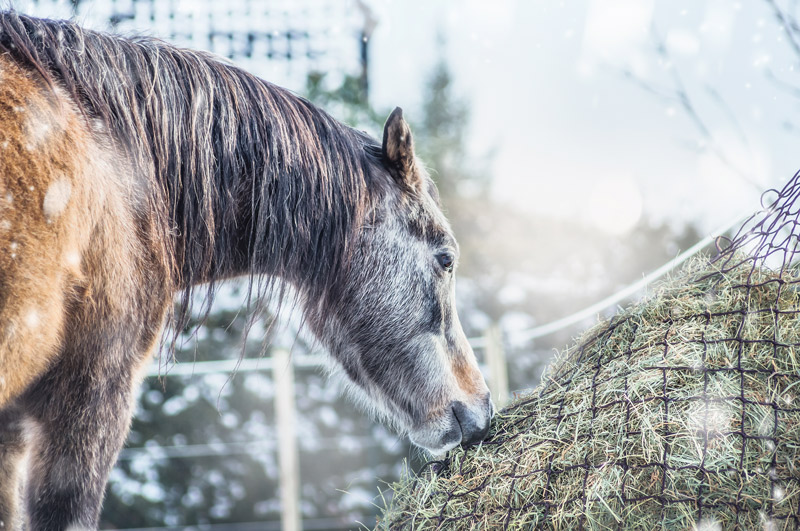
Feed intake by voracious eaters and easy keepers can be slowed by using a slow feeder. These feeding systems are made of either a container that is hung on the wall or a box or frame feeding system on the ground. Close-knit grids or small holes in the feeder forces a horse to work at getting hay out. Many commercial small-hole hay nets are also available with 1½- to 2-inch holes, but some crafty ponies may need 1¼-inch or even 1-inch holes.
Compared to throwing loose flakes of hay on the ground or in a stall, it takes a bit more effort and time for a horse to pull out hay from a slow feeder. This more closely approximates grazing, and it shortens the fasting periods between refills, keeping your horse’s stomach and intestines in a healthier state. To add to the benefits, there is less wastage caused by a horse trampling or soiling his hay, which then keeps feed expenses down.
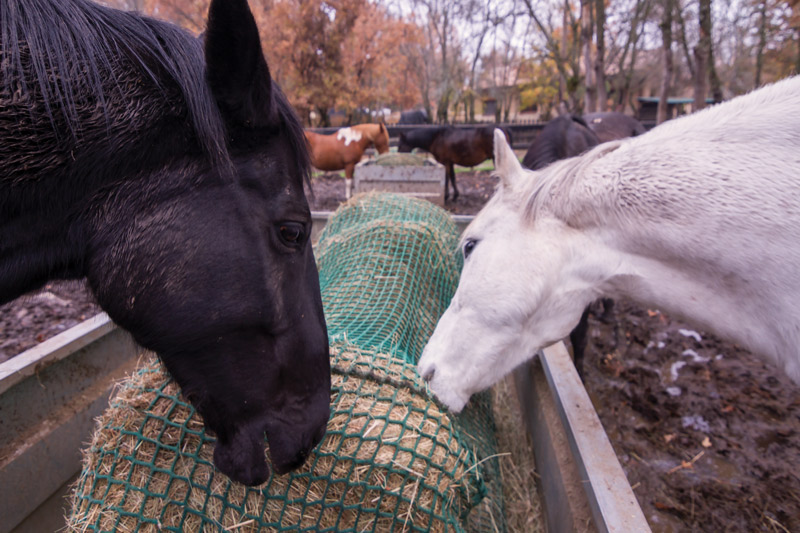
In addition to slowing down eating, netting hay helps prevent wastage and trampling. Photo by Daniel Requena Lambert/Shutterstock
For horses in a large dry lot turnout, an alternative is to use a mesh sleeve that fits around a large bale of hay. (Horses should be barefoot if using these to avoid getting a shoe tangled up.) “Double bagging” the hay bale in a net feeder further reduces the mesh size and makes it more challenging to extract hay.
Some horses figure out how to maximize how much they can pull from the holes, and will need the slow feeder bag hung from stall rafters on a breakaway rope to prevent the horse from bracing it against a firm surface and speeding up his eating.
Supplemental Nutrients During Winter
A ration balancer is a good supplement to provide for horses transitioning from pasture to hay. These are vitamin/mineral pellets fed from a large bag generally at 1 to 2 pounds per day and are great if your horse doesn’t need extra calories from grain. Consult with your veterinarian about the ration balancer most appropriate to your area.
Vitamin E is a key nutritional ingredient for all horses. Inadequate intake of vitamin E can cause muscle, neurologic, or immune system problems, and at the very least may affect performance. This vitamin may be deficient for horses that have no access to green grass, as it tends to dissipate as hay is dried after cutting and baling.
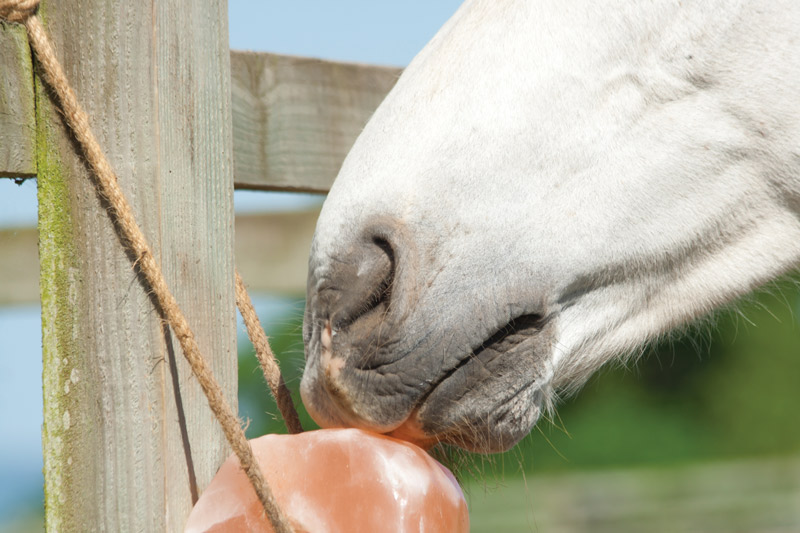
Horses will self-regulate their salt needs via a salt lick. This is preferable to adding salt to their feed, which could lead to excessive strain on the kidneys. Photo by Groomee/Shutterstock
A Canadian study demonstrated that horses with pasture access in summer months had vitamin E plasma concentrations that were 63 percent higher than non-pastured horses that consumed only hay or pelleted feed. This is a particular concern for young, growing horses as well as adult and athletic horses.
In addition, horses that are supplemented with high-fat diets to improve calorie intake may be deficient in vitamin E if it is not supplemented as an antioxidant along with the fat. The best vitamin E supplement to use is d-alpha-tocopherol, a natural vitamin E that is readily absorbed.
Vitamin A or carotene may not be present in adequate amounts if horses are fed older batches of hay or hay that has lost its green color. Most commercial feeds contain ample vitamin A, so feeding small amounts of pelleted feed is likely to provide a sufficient supply of vitamin A.
An insatiable desire for fiber may cause horses with limited pasture or forage access to consume the dirt or bedding around them. This has the potential to lead to sand colic or impaction colic. Use of psyllium fiber fed for six or seven consecutive days each month helps clear the intestines of ingested sand and dirt.
Intake of sand and dirt can be prevented in the first place with feeding systems that limit access to dirt, such as rubber mats, or by using the slow-feeder method.
Salt is an important dietary ingredient for any horse. Provide a salt block that your horse can access voluntarily. This is safer than adding salt to the feed, as any excess salt is simply urinated away, making more work for the kidneys.
In some areas of the country, the soil may be low in selenium, leading to a deficiency in the hay. Check with your veterinarian before supplementing with selenium, as over-supplementation can cause serious problems from toxicity.
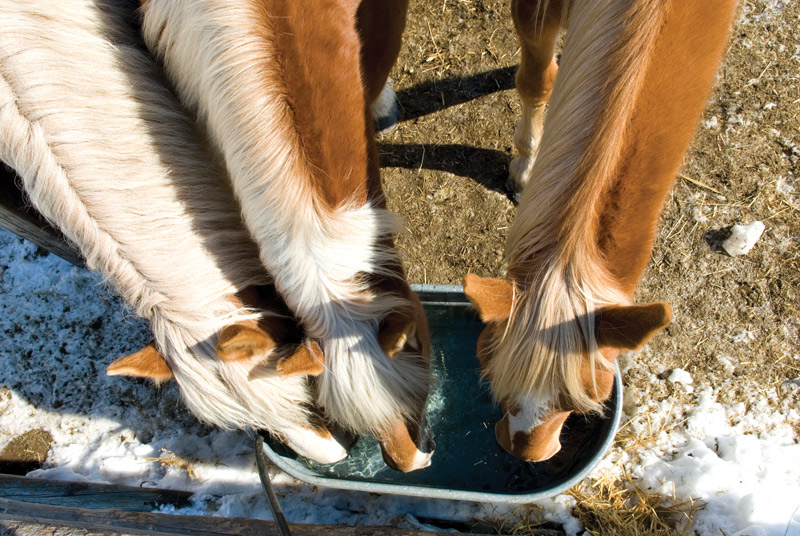
And finally, don’t forget to provide plenty of clean, unfrozen water to your horse in the winter. Water is considered an important nutrient for digestion, preventing the dry, fibrous feeds from becoming impacted in the intestines and keeping all metabolic processes running as they should. If your water tends to freeze, plug-in buckets or tank heaters designed to safely warm the water are your best bet.
Clean, non-frozen water must be available at all times to keep your horse healthy and prevent impactions. Photo by Christina Handley
Boosting Your Horse’s Nutrition During Winter
With some common sense and creativity, you can find ways for horses in winter months to acquire their feed more in keeping with natural trickle-feeding tendencies to optimize gut health. The ability to eat small, intermittent meals throughout the day also works wonders on a horse’s mental health and behavior.
During the coldest days of winter, you layer on thermals, fleece, insulated coveralls, and maybe even a headlamp to go out to the barn. There, your horse is sporting layers of his own, including a winter coat and possibly also a wardrobe of blankets. When the weather is miserable, it can be tempting to rush through barn chores. However, to ensure that your horse has good hair days as well as good health this winter, here’s what the experts recommend when it comes to grooming and blanketing.
Why Do Grooming in Winter?
Even if you’re not riding much in the winter, grooming your horse during this season is still important.
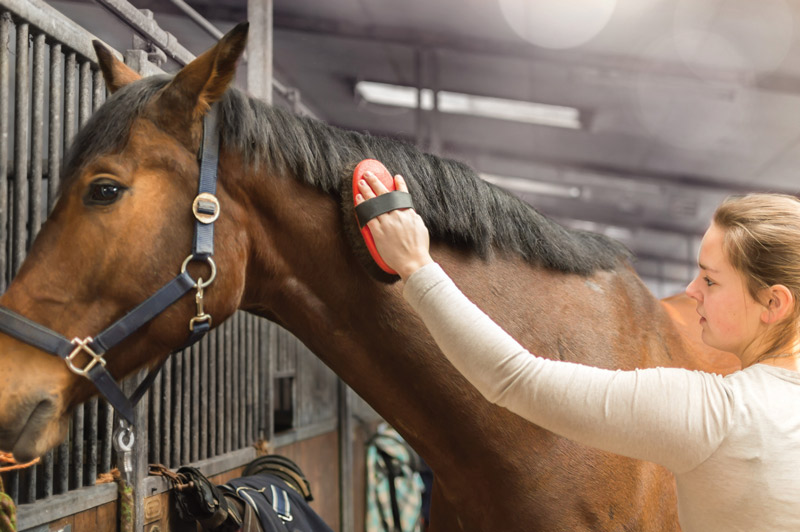
Thorough daily grooming during the winter is important for monitoring your horse’s skin, coat and overall health. Photo by Tanja Esser/Shutterstock
“Grooming is the best connection to your horse,” says former Olympic groom Liv Gude, founder of ProEquineGrooms.com. She sees grooming as a fantastic opportunity to check on your horse’s health, including his skin condition, vital signs, and leg and hoof health, in addition to spending quality time together and being able to provide mental enrichment.
Gude recommends checking vital signs daily, including digital pulses. (A strong digital pulse on the inside of the ankle may indicate a stone bruise, brewing abscess or laminitis.) Other daily winter “must-dos” include grooming the entire horse with grooming gloves and a brush, plus a thorough, hands-on inspection. She looks for swellings, scrapes, soreness, and anything abnormal.
Lisa Nesson, DVM, of Irongate Equine Clinic in Madison, Wisc., agrees that winter grooming is an important way to monitor your horse’s skin and coat condition, and can give clues to the health of the horse.
“Grooming allows you to go over your horse from head to toe looking for any issues,” she says, adding that owners should pay special attention to the legs and undersides. “It also helps you keep track of his body condition score, assessing if he’s losing or gaining concerning amounts of weight during the cold winter months.”
General body condition and weight are important to monitor all times of year, she says, but particularly when horses are dealing with colder weather.
Blanket Decisions
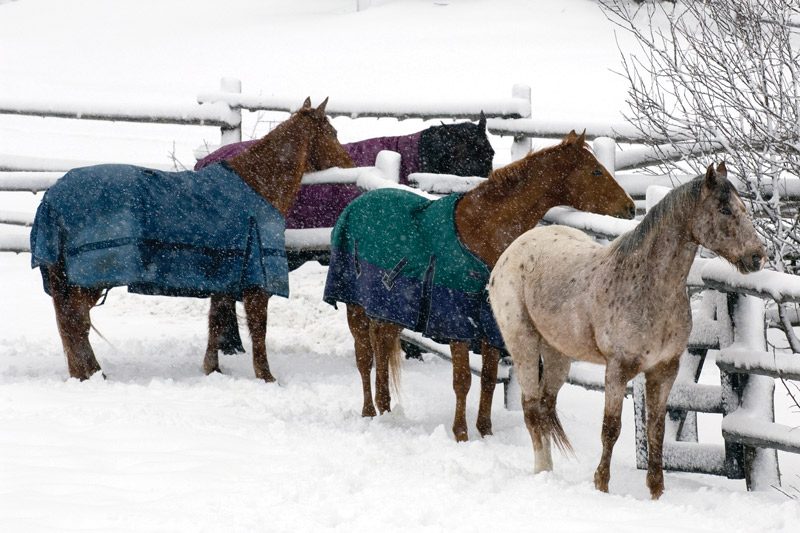
While some horses do fine without blankets when turned out for the winter, others, such as hard keepers or those not yet adjusted to the climate, will need the additional warmth that a blanket provides. Photo by Christina Handley
As the days become shorter, your horse begins growing his winter hair. This winter coat is well-designed by nature to keep your horse warm—with a few exceptions.
“The winter hair coat is typically a thicker coat, which helps keep the horse warm by providing a greater amount of insulation,” explains Nesson. “This occurs due to the longer hairs as well as the increased ability for the horse to hold the hair on end, which creates a pocket of warm air against the skin. Anything that prevents the hair from standing on end can limit the horse’s ability to self-regulate his temperature and stay warm. This includes things such as rain, blankets and heavy snow.”
It’s important to consider your horse’s individual needs when it comes to blanketing. Nesson reminds that a horse in good body weight with an adequate winter coat who is otherwise healthy and is provided adequate forage and shelter can do just fine without a blanket, but there are various instances where blanketing might be recommended.
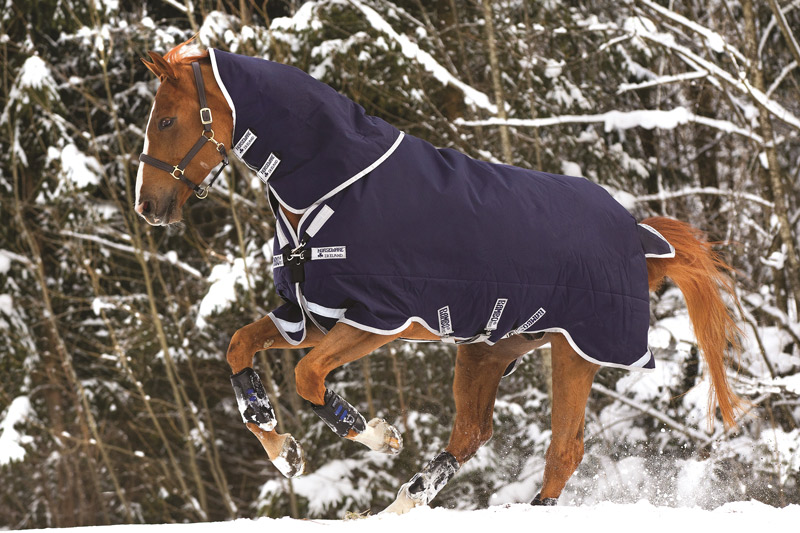
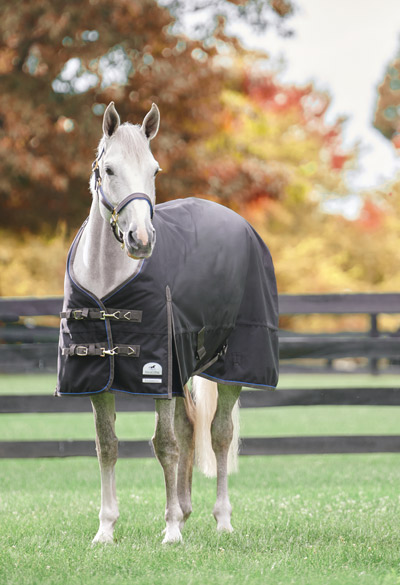
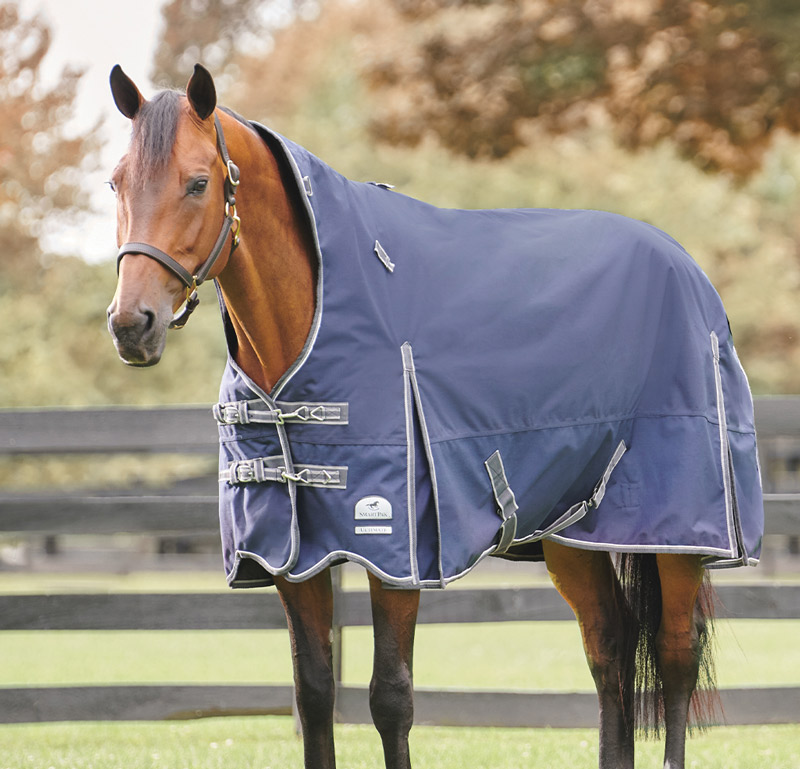
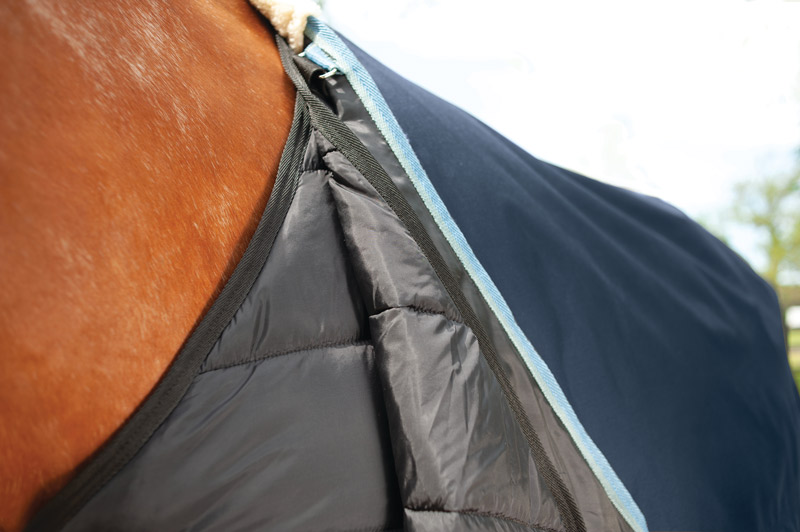
A medium-weight turnout blanket provides both waterproof protection and an added layer of warmth as weather turns colder. Photo Courtesy Smartpak
“If the horse is underweight or struggling to maintain a healthy weight, I would recommend blanketing him when the temperatures are below freezing,” she says. “Blanketing can also assist with insulation. If there is inclement weather, or sudden changes in weather that the horse may not yet be physiologically prepared for, he should be blanketed.”
Gude makes blanket decisions on a case-by-case basis for each horse.
“For a fat, retired horse living near the North Pole that resembles a woolly mammoth, I won’t use a blanket,” she says. “For the same horse that’s a hard keeper and loses weight in the winter, I would.”
Blanket Right
Blanketing your horse shouldn’t be complicated, but it does require a level of care and attention. According to Nesson, a common mistake many owners make is using blankets that are an inappropriate weight for the weather or the horse.
“Lighter-weight blankets may be necessary in fall and spring months, while you may need to rotate in a heavier blanket during winter months and cold spells,” she says.
Nesson also emphasizes the importance of removing the blanket throughout the winter to get eyes on your horse and assess his condition.
“I see horses that have either gotten too thin or too overweight under their blankets during the winter, and it’s not noted nor addressed until spring when the blanket is removed,” she says. “We also see frequent rubs, sores and entanglements when horses wear poorly fitted blankets—getting the correct size and checking fit is very important.”
You’ll also want to look for clues that your horse is comfortable in his blanket—not too warm, not too cold, but just right. And look for rub, which can show poor fit.
A sheet or blanket has the added benefit of keeping your horse clean, which keeps skin problems at bay and makes grooming before a ride much quicker. Photo by Vprotastchik/Shutterstock
“The signs of inappropriate blanket weight are typically shivering or sweating,” says Nesson. “Blankets are rated for the temperature that they should protect above, so select a blanket for the weather you are anticipating, and remember, it may change.”
Keep Clean and Curry On
When it comes to grooming, your horse’s winter coat can be a little high maintenance.
If a horse in the northern U.S. is ridden to the point of sweat, Gude clips areas where they sweat the most and uses blankets. For a horse in the southern U.S. that grows a long coat and sweats by just existing, even in the shade, she clips and uses lighter sheets as needed.
“Plan on more time curry combing,” says Gude. “Use a vacuum if you have one. Do some more curry combing. Use spot removers as needed. Pick up the curry comb and go to town again. Perhaps use a stiffer and longer brush to lift off all of the dust from your horse. Curry yet again.”
To maintain a good grooming, sheets and blankets are an essential part of Gude’s winter grooming strategy. In addition to convenience for the rider, she believes it contributes to a cleaner, and possibly healthier, horse.
“A sheet or blanket helps keep dirt and dust from your horse’s winter coat,” she says. “There’s not as much dirt and dust trapped in a long winter coat, which saves grooming time and can help ward off skin problems. The sheet also acts like a physical barrier to stains and can allow you to ride if your horse has been standing out in the rain, as they do.”
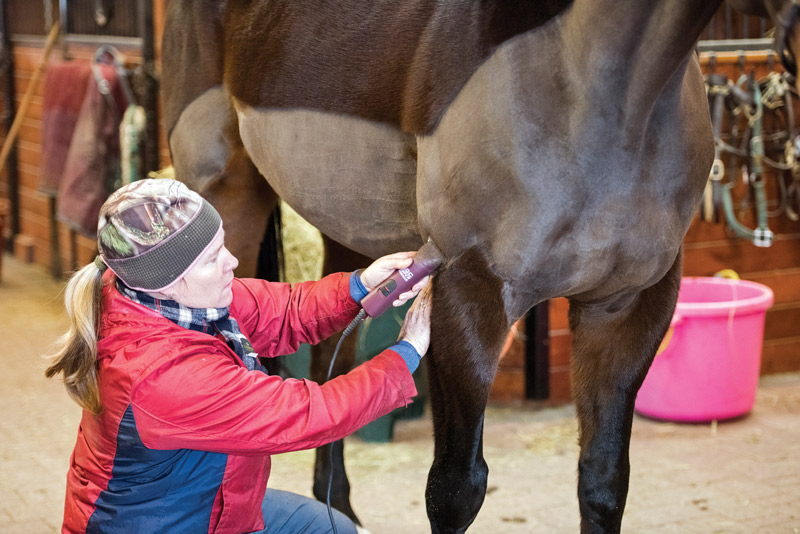
A full-body clip is not necessary, but if you work your horse regularly to the point of sweating, a partial clip will still allow him to dry out faster and also keep warmer under a blanket. Photo by Christina Handley
To Clip or Not to Clip?
If your horse’s coat is causing him to overheat or become a sweaty mess, requiring hours to cool out, you should consider body clipping. Clipping to address the sweaty areas does a couple of things for your horse.
“He will be better able to thermoregulate, as the sweat can do its job of evaporating and cooling his body without so much hair,” says Gude. “A horse that’s wet from sweat is hot under his thick coat. When you stop his exercise, he’s a wet horse in the cold air, which can take his temp too low. If the sweat is evaporating in the clipped areas, he won’t need lots of hand-walking, coolers, towel drying, and time to dry off after exercise. No sweat also means that his hair won’t be holding onto moisture, which can often pave the way for bacterial infections of the skin.”
For a horse in the southern U.S. that grows a long coat and sweats by just existing, even in the shade, she clips and uses lighter sheets as needed. Although clipping can seem like a big hairy deal, Gude has some reassuring advice.
“If clipping your horse helps him be healthier and more comfortable, you should clip him,” says Gude. “Clipping isn’t an all-or-nothing deal; it’s customizable to each and every horse and climate. You can use any pattern that you like. Maybe it’s a pattern you concoct. It doesn’t have to match a pattern you saw on the internet. You can also use clipper combs and guides to take a little off the top instead of clipping all the way to the skin.”
Body clipping isn’t just for show horses; it can also be beneficial for your horse’s comfort.
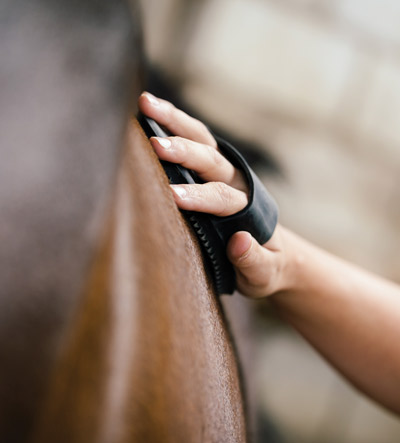
When it comes to winter hair care, curry, curry, and curry some more. Photo by Miriam Doerr Martin Frommherz/Shutterstock
“Don’t skip on clipping if your horse is sweating beyond a comfortable state, either because of exercise or the climate,” Gude advises.
If you clip, remember that you’ll need to be committed and attentive to appropriate blanketing for the weather conditions. (See “Dress Your Horse for the Weather” below.)
Ultimately, Gude’s main rule of blanketing is that your horse should get a blanket if he needs a blanket.
“Take it back to the health and comfort of your individual horse,” says Gude. “There aren’t any hard and fast rules. If you do decide to use sheets and blankets, you must take them off daily for grooming, and they are not a replacement for good care.”
About the Experts
Liv Gude is a former professional groom for Olympians, including Guenter Seidel. She started proequinegrooms.com to share her knowledge about grooming, barn management, early detection of illness, lamenesses and overall health with horse owners. Gude also hosts the Pro Equine Grooms podcast about horse care and grooming.
Lisa Nesson, DVM, is part of the team at Irongate Equine Clinic in Madison, Wisc. Nesson is a past president of the Wisconsin Equine Practitioners Association. She enjoys sharing her knowledge and passion for equine health care with many organizations throughout the Midwest. She and her family raise and train American Saddlebreds.
Dress Your Horse for the Weather
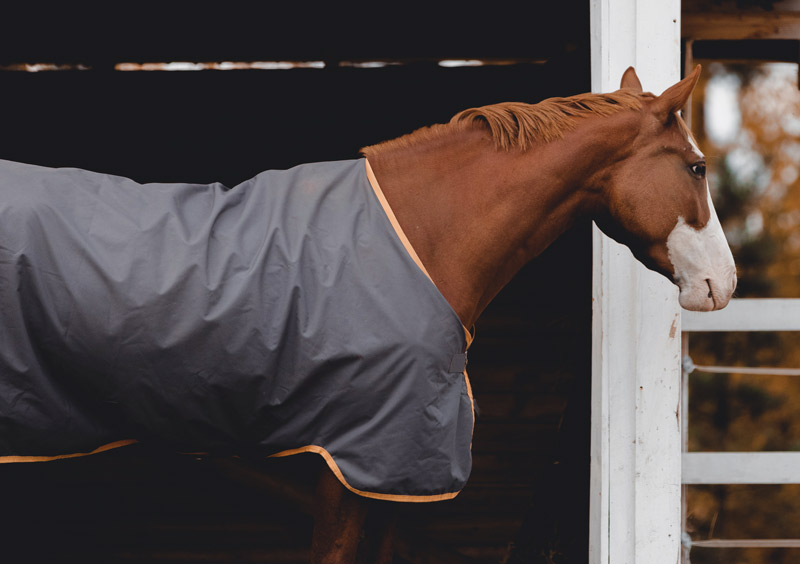
When blanketing your horse, make sure the blanket fits well, is waterproof, and is an appropriate weight for the weather and the individual horse. It’s important to remove the blanket every few days, at a minimum, to check on your horse. Photo Courtesy Smartpak
Few people are more weather-aware than horse owners, especially in the winter. Although a horse’s age, health, body condition and access to shelter are all part of the equation for blanket decisions, weather is a constant variable.
To blanket your horse appropriately for the weather conditions, the experts at SmartPak offer the following general guidelines:
Temperature isn’t the only weather factor to keep in mind during blanket season, however.
“Rain and wind can have a big impact on your horse’s ability to retain heat,” says Clare Silke, product innovation manager for Horseware Ireland. “Horses will lose considerably more heat when they’re wet or there’s a strong wind. Offering your horse a waterproof layer can act to help keep core temperature consistent and help protect against skin and coat irritations, such as rain scald.”
The regional climate and weather conditions your horse is accustomed to also play a role, influencing the setpoint where he can maintain warmth without using additional energy. This explains why horses in warmer climates often “get dressed” at milder temperatures than horses in colder areas, says SmartPak’s team of blanket pros.
As the weather changes, Silke advises monitoring the daily conditions and the way your horse reacts. Knowing what’s normal for your particular horse—from vital signs to behavior and attitude—will help you gauge his comfort and adjust your blanketing decisions accordingly.
Blanket Fit Basics
A well-fitting blanket will keep your horse warm and comfy, but an ill-fitting blanket can restrict movement, cause rubs, shift, or get tangled. Here is a guide to the basics on finding the right fit.
Measure First
To measure your horse for a blanket, start at the center of your horse’s chest and run a cloth tape measure along his side to the point of the buttocks where the “cheek” meets the tail. Include the widest part of his shoulder, and keep the tape measure level and taut. The number of inches is your horse’s true size.
Photo Courtesy Smartpak
Fit Checkpoints
Clare Silke, product innovation manager for Horseware Ireland, believes correct adjustment of the front fastenings is one of the biggest contributors to blanket fit, so she pays special attention to this area, in addition to the overall fit of the blanket.
SmartPak’s blanketing pros suggest watching your horse walk and graze in the blanket, as these natural movements will highlight flaws in the fit.
Here are the key fit checkpoints our blanket experts recommend:
◆ The top front strap should align with the top of the horse’s point of shoulder.
◆ The neckline of the blanket should lie smoothly above the shoulder.
◆ Fabric at the front of a blanket should overlap.
◆ Chest straps should be adjusted to where there is still room to slide a hand easily inside the blanket and around the horse’s neck and shoulder without feeling any tightness or pressure. Silke likes both the top and bottom strap fastened to the same hole to allow freedom of movement.
◆ Standard-neck blankets should sit slightly ahead of the withers—Silke recommends approximately 2 to 4 inches.
◆ You should also be able to slide one hand between the blanket and your horse’s withers. A blanket that’s pulled tight across your horse’s withers is a recipe for rubs, say SmartPak’s pros.
◆ The blanket should cover your horse’s barrel entirely, ideally ending just below his elbow and stifle. “Not a mini skirt, and not a bed skirt” is the advice from SmartPak.
Blankets that are too loose are less secure and can cause excessive rubbing. Silke advises following the “one hand rule”— you should be able to fit your hand between your horse and the blanket when done up correctly. She also reminds owners to check the fit of straps regularly, as they can stretch or ease out over time and may require readjustment.
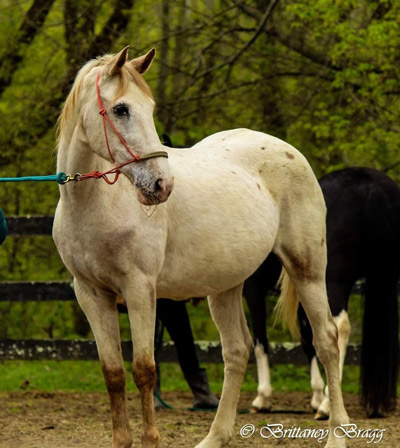
Welcome to Horse Illustrated’s weekly installment of the My Right Horse Adoptable Horse of the Week, offered in partnership with The Right Horse. Frieda is this week’s adoptable horse. Check back weekly for a new featured horse so you can find your #righthorse.
Horse:Frieda, a 21-year-old 14.3-hand Appaloosa mare in Shoals, W. Va. Organization:Heart of Phoenix
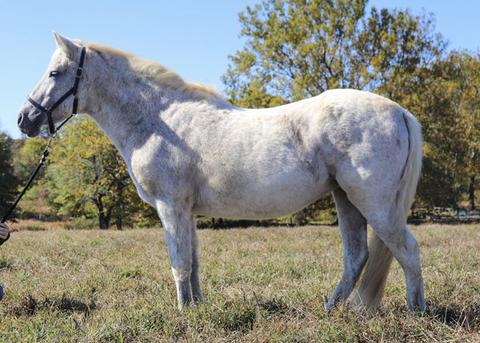
Meet Frieda! If you are looking for a steady Eddie, been there done that gal, look no farther! She has enough years in her to be very wise and polite. She enjoys trail rides and doesn’t mind arena work, either. Frieda loves to be groomed, especially her face, and will let even the littlest human love on her. She rides well English or western, but prefers the lighter English saddle. Please no riders over 175 lbs, because she does take tiny pill a day for arthritis, but that’s to be expected, as with her wisdom and kindness also comes a bit of age! She would love regular chiro benefits. You will be the talk of the town with this beautiful varnish Appaloosa backing calmly off the trailer anywhere you go! Her fee is $600. Heart of Phoenix is looking to adopt to safe homes. A history of good horsemanship, the ability to provide sufficient care with good vet, farrier and peer references are important. If you are a first-time horse owner, Heart of Phoenix will require you to board at a facility for the first year while you learn more about care. We encourage everyone to take advantage of riding lessons. Their adoption process ensures you get the right horse for you. Apply at www.horseandridermatch.com/adopt-a-horse. Is she your #righthorse?
My Right Horse is the online adoption platform of The Right Horse Initiative, a collection of equine industry and welfare professionals and advocates working together to improve the lives of horses in transition. A program of the ASPCA, their goal is to massively increase horse adoption in the United States. To find more adoptable horses and foster horses, visit www.myrighthorse.org. To learn more about The Right Horse, a program of the ASPCA, visit www.therighthorse.org.
If you’ve been to a horse expo, you’ve probably seen a bridleless riding demonstration. The lack of tack looks like an inspiring next plane of communication and connection with your horse. But is bridleless riding an attainable goal for all?
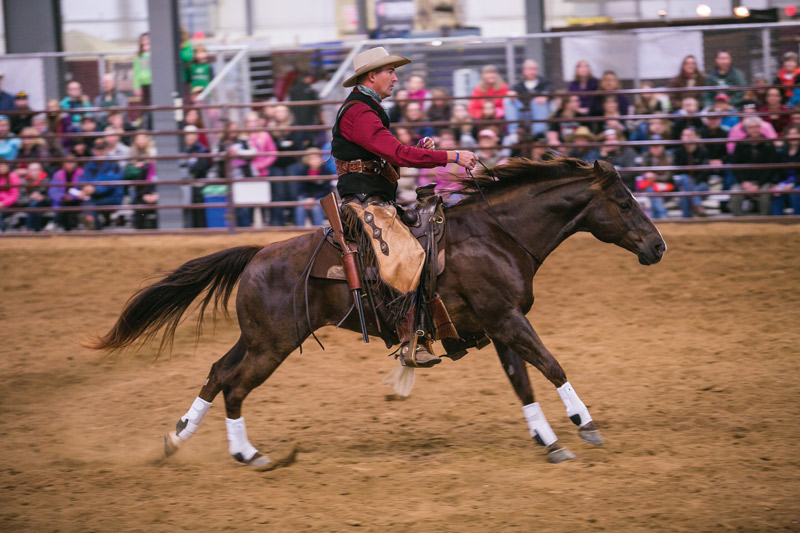
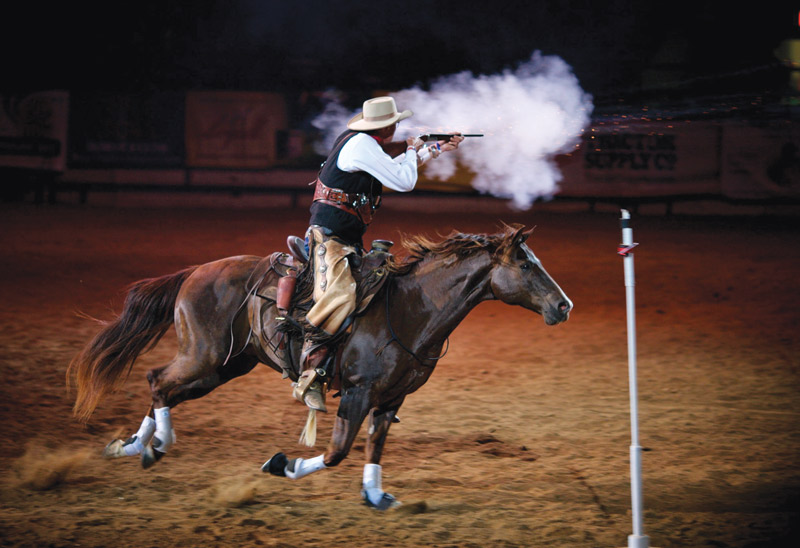
Here, we talked with longtime horsemanship trainer and 5 Star Master Parelli Instructor Jesse Peters, who made it his personal goal to compete in cowboy mounted shooting without a bridle. He won a star search competition at the Midwest Horse Fair when he successfully shot all of the targets while riding without a bridle.
Peters says riding bridleless at high speed isn’t a good goal for everyone. However, training your horse so you don’t need to rely on the reins will help your communication at any level.
“Not every horse should be ridden bridleless,” Peters says. “At home, I almost never practice without a bridle on my horse’s head. I put my reins down and ride in bridleless style. When I ride without my reins, I’m just testing all the ingredients I have built into the foundation and connection.”
Read on to gain tips to help you ride with more seat and fewer rein cues, no matter your end goal.
Far Off Dream
Peters first became aware of bridleless riding when he attended Ohio’s Equine Affaire and saw Pat and Linda Parelli’s demonstration, and later Stacy Westfall’s iconic ride at American Quarter Horse Congress.
“[Westfall] blew the world’s socks off with her first bridleless freestyle reining ride,” he says. “I thought, not only can bridleless be done, but it can be done well at speed. There was so much grace, poise and refinement in her ride.”
Peters worked as part of the Parelli team for three years to learn more about connected riding. Peters’ longtime mentor, Bobby Ruwe, pushed Peters to combine what he learned from the Parellis with mounted shooting.
“I told him I had this dream to run a whole mounted shooting pattern bridleless,” Peters says. “He thought I was crazy.”
Ruwe approached him at a later competition and asked about his goal.
“Want to try it today?”
With 800 people watching, Peters rode bridleless in a shooting competition and was only two seconds slower than his usual time.
For the next two years, he practiced and rode bridleless in competition if he had already made a mistake with the bridle on. Finally, his run times matched his bridled rides.
Jesse Peters wanted to compete bridleless in mounted shooting and get the same times as he would with a bridle, and eventually he achieved his goal. Photo by Marty Welter for the Midwest Horse Fair
Training Process
Peters says you must go through a process to learn control. You must be an accomplished rider first—with the ability to stop and turn your horse with subtle cues.
First, you’ll work on your cues to make sure that you can control your horse without constantly pulling on the reins. Peters explains you should work with a bridle on while you put your reining hand down on the horse’s mane. Your goal will be to not pick up your hand. Your leg and seat aids will accomplish your cues.
Next, you’ll keep the bridle on and ride with the reins in one hand while your opposite hand carries a “carrot stick” (long training stick) resting against your shoulder.
“Riding with the carrot stick helps to push your horse’s turns a little more and reinforce the cues,” Peters says. “For instance, with a turn, you should look, turn your belly button and use your legs. If the horse still doesn’t answer your body cues, the stick comes in to help reinforce those cues and get the turn.”
Instead of reaching for the reins, rhythmically move your stick toward your horse’s nose. For a light correction, simply wave the air. Take the pressure away and return the stick to your shoulder if the horse follows your cue.
“If the horse doesn’t respond, gently touch the horse’s nose or shoulder,” Peters says. “Touch just enough that the horse’s hair can feel it. A firmer touch means that the horse’s skin can feel it. A tag is when you touch with enough pressure so that their muscles feel pressure.”
Peters cautions against using the stick for too much pressure.
“I pick my reins up and support with the bridle and keep that touch going until the horse responds from the bridle, then I take away the bridle cue and the stick.”
Final Test
Before taking off the bridle, tie your split reins together so that you can ride without handling them—but know you could pick them up if needed. Peters says he adds two training sticks.
“Do all your riding with the sticks and your focus, belly button and seat,” he says. “When I can get everything done with a bridle but riding as if I don’t have a bridle, and I get my horse up to speed, stop and back up on every single ride, every single day, only then I can move on.”
Peters’ next step is to remove the bridle and practice with a neck rope and sticks. With time taken at all the previous stages, he says his sticks rarely move from their position on his shoulders.
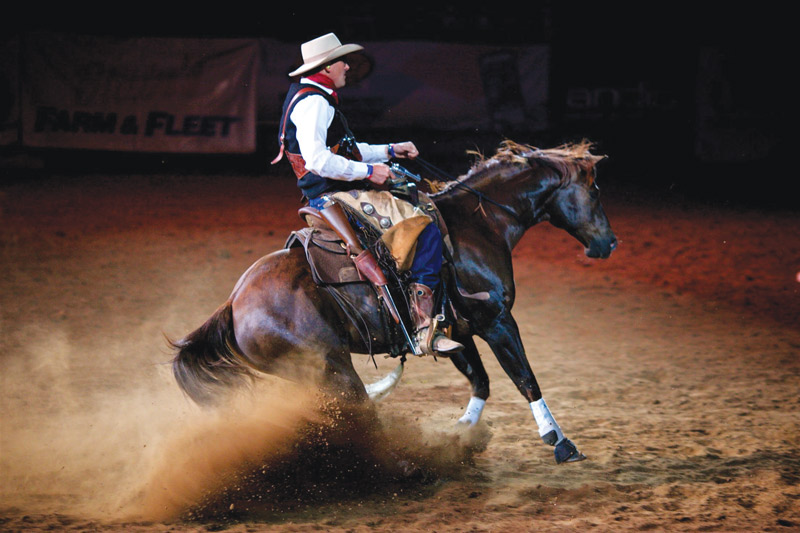
Peters was eventually able to recreate all his under-saddle moves bridleless through a careful progression of training. Photo by Marty Welter for the Midwest Horse Fair
“I can drop the sticks and ride only with the neck rope support, with all cues coming from my focus, my legs and my seat.”
The time it takes to move through these stages is different for every horse and rider. If your horse is naturally obedient, it may take less time. Some more highly dominant horses may never be good candidates for going fully bridleless.
“Some students define bridleless as being able to ride at a walk and trot with the reins over the horse’s neck while holding one stick. That might be their end goal. That’s up to them to decide.” Does bridleless riding have a purpose deeper than showing off your skills?
“[For me] it was to have a better connection with my horse,” says Peters. “Obviously it wasn’t about winning, because at first I was going slower when I took the bridle off. It was about doing something that hadn’t been done consistently by someone else at the time. It was about doing something special.”
Bridleless Mishaps
Bridleless mounted shooting competitor and 5 Star Master Parelli Instructor Jesse Peters warns riders not to try bridleless without preparation.
“After I saw Pat and Linda at Equine Affaire, I was inspired,” he says. “I got on my mare bridleless and bareback. She took off at full speed for seven or eight laps. I couldn’t get her to stop. I was just blessed to be a good rider and I stayed on. I jumped off and thought bridleless riding isn’t possible yet. It’s something you shouldn’t do at home. That was my reality check that you should not be doing this until you’re ready.
“I have seen people [doing] mounted shooting take the bridle off to see if they’re ready rather than building bridleless into a training regimen. It’s not safe to just take the bridle off and try.”
The Money Ride
Longtime horsemanship trainer and 5 Star Master Parelli Instructor Jesse Peters’ years of practice and his commitment to following his dreams led him to the big event at the Midwest Horse Fair. Here’s his memory of his $10,000-earning win (shown below).
“There were 8,000 people screaming, the house was dark, we start to run into the arena. My horse said, ‘I don’t think I can do it.’ I could feel his energy like a bomb about to go off. I told him I was asking him to go, and he complied.
“I rode into the arena with a bridle and then stopped, took it off and spun it out into the arena. We had three minutes to perform. I started out with the maneuvers I had been doing bridleless at home. I did a reining pattern and showed I was riding without hands. I got my horse used to riding in the arena with spotlights. I needed to give him the time to move around the arena and feel safe.
“From there, I put in a few stops and spins and shot into the air. Then I started while shooting. I rode a reining-style, figure-eight pattern so that I could use the whole arena. I wanted to bring the energy through the whole house.
“The fireworks went off and sprayed 20 feet in the air. Then I put the pistols away and took my shotgun out to take out the last two targets. At the end, I got off my horse, and with a tremendous amount of adrenaline, I tipped my hat to my horse and hugged him. We walked out together. We competed against some amazing riders and walked out as champions with $10,000.”
Jesse Peters is a 5-Star Master Parelli Instructor based in Greenville, Ohio. Peters’ horse, Great Pine Whiz is a 2006 Quarter Horse gelding. Visit www.JesseRPeters.com for his clinic schedule.
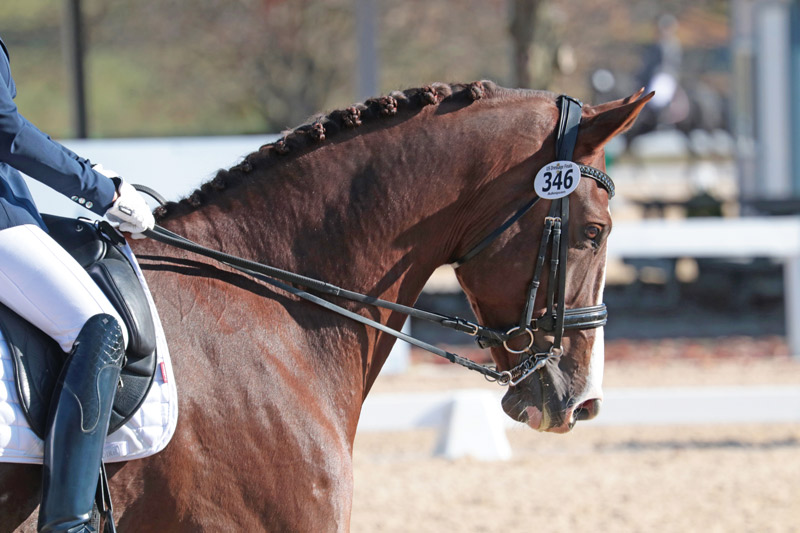
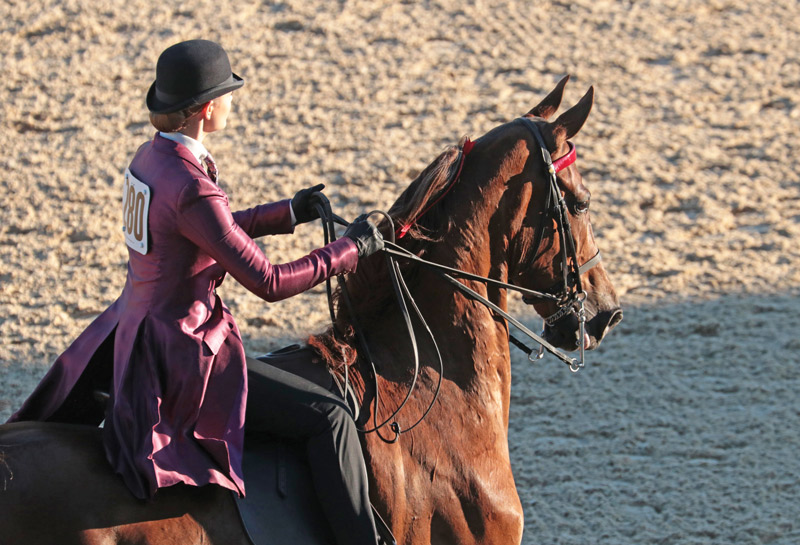
The double bridle has two bits, a curb and a snaffle, and is mostly used in the higher levels of dressage. Photo by Leslie Potter
Riders transitioning to the double bridle for dressage or saddle seat classes can find it intimidating at first to handle two reins and two bits and to understand the reins’ actions on both the snaffle and curb.
In this article, Frances Carbonnel, a Colorado-based dressage trainer, owner of Classical Legacy Dressage, and a United States Dressage Federation (USDF) bronze, silver and gold medalist, explains the function of the double bridle, when and how to introduce it, and tips for learning to ride with double reins.
What Is a Double Bridle?
The double bridle has two bits: a thin snaffle, called a bradoon, and a curb called a Weymouth.
“Each bit has a separate function in the horse’s mouth,” explains Carbonnel.
Using a double bridle requires a certain level of training—in horse and rider—before it’s introduced.
Where Is It Used?
You see the double bridle used in certain disciplines, like saddle seat and upper levels of dressage—usually Third Level and above.
Rules for using a double bridle can vary according to breed and discipline rule books, so consult your association to be sure you’re in compliance with approved use if you’re planning to show with one.
What Is the Function of a Double Bridle?
Let’s start by reviewing the function of the snaffle bit, which is what young horses of all disciplines are normally started in.
“The snaffle is used to aid the rider in establishing a consistent and elastic contact with the horse in the forward movement,” says Carbonnel.
It’s also used to receive and channel the horse’s impulsion when generated from the hindquarters, establish lateral flexion of the neck, and bend through the horse’s body when combined with the seat and leg aids.
The double bridle adds the curb, which is a leverage bit. When combined with the bradoon, the curb functions to raise the neck and stabilize the connection with the hand.
“The curb also helps the rider to further balance the horse on his hindquarters without sacrificing thoroughness and the suppleness of the back,” adds Carbonnel.
When Is It Time to Introduce One?
As Carbonnel explains, the curb bit multiplies the strength of the rider’s hand, so it’s essential to introduce it gradually and with tact to avoid destroying the confidence the young horse has developed in his rider’s hand.
“Adding the curb bit of the double bridle is done only when the horse has mastered the various lateral movements designed to supple his body and has begun the process of loading more weight to his hindquarters,” she says.
It’s never a substitute to force a horse into a frame or a certain headset.
Many dressage trainers only use “the double” intermittently once their horses reach the higher levels to make a specific training point, then return to the single snaffle bridle whenever possible, to avoid creating tension in the horse.
Saddle seat competitors usually show in a double bridle. Photo by Leslie Potter
How Do You Fit a Double Bridle?
“Two bits is a lot of metal in the horse’s mouth,” says Carbonnel. Riders need to be understanding that this is a big change for the horse. Fitting the bridle and transitioning slowly to the use of the curb are keys to helping the horse accept the double bridle.
First, take time to fit the horse with bits that conform to the shape of his mouth and that aren’t too thick.
“The curb port needs to fit the horse’s palate and tongue, and the bradoon should mimic the snaffle the horse has been training in,” adds Carbonnel.
The bradoon needs to hang in the mouth so that it doesn’t interfere with the curb on the tongue.
“This can be a challenge if the horse has a small mouth,” she says. “If the bradoon is adjusted too high in the mouth to avoid contact with the curb, it puts annoying and distracting pressure on the corners of the mouth and painful pressure on the poll.”
On the other hand, if the curb is placed too low in the mouth, it risks banging on the male horse’s canine teeth. (Mares generally don’t have canine teeth.)
“The horse may then try to alleviate the pain or the pressure of the bit by pulling his tongue back, or lolling it out to the side,” she explains. “Once this habit becomes ingrained, it is nearly impossible to correct.”
The curb chain also needs to be adjusted correctly. If it’s too loose, it will flop and tickle the horse’s chin, plus interfere with the bradoon when the reins are taken up. If it’s too tight—and if the pressure of the rider’s hand is too intense—any small or inadvertent mistake on the rider’s part becomes painful for the horse. Some horses also have sensitive chins, so the chain must be covered in rubber or leather to avoid pinching.
How Do You Hold Double Reins?
There are several ways to hold two reins in each hand. Here’s a common approach.
“As you sit in the saddle, pick up your snaffle rein as if you’re riding in a regular bridle, with the snaffle rein held between your ring finger and pinky finger,” says Carbonnel.
Take some slack out of the reins, but don’t apply pressure.
“Then, reach your hands down and pick up the curb rein between your middle finger and ring finger.”
For the first few rides, leave the curb rein very loose. Ride using the snaffle bit like you normally would—but remember that the bradoon is likely thinner than your regular snaffle and might cause a quicker reaction or different sensation in your horse’s mouth.
After you’re both comfortable with two reins and two bits, pick up the reins and gently spread your hands apart so that the slack is taken out of the curb rein without pulling on the rein. You’ll continue to ride primarily on the snaffle and not use a lot of curb pressure, even when you’re both comfortable riding with two reins.
Step Up to Two Reins
“The double bridle is a tool to be used for increasing the subtlety and finesse of the horse/rider connection, not to be used for bullying the horse into an artificial ’head set,’” says Carbonnel of the transition to the double bridle.
When you’re ready to step up to the double bridle, she suggests finding an experienced trainer who can help with fitting the bridle and teaching proficient use of the reins. Then take your time and enjoy learning this new journey with your horse!
Photo by Leslie Potter
The Pelham
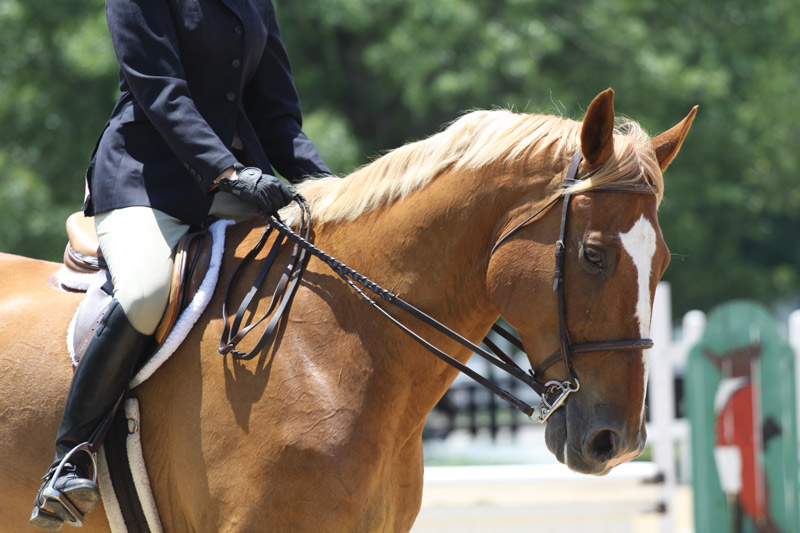
Commonly found in the world of hunter horses, the Pelham bit, which functions as a curb and a snaffle in a single bit, uses two sets of reins on different rings of one bit. The mouthpiece can be jointed like a snaffle or have a solid mouthpiece with or without a port like a curb.
While the Pelham is not legal in dressage shows, it can be used in many saddle seat classes. Since it doesn’t have two separate bits, it can be more comfortable for horses with small mouths.
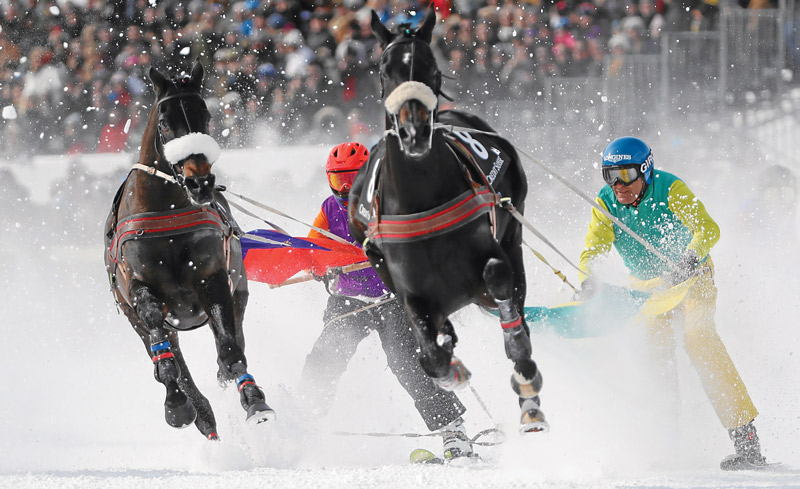
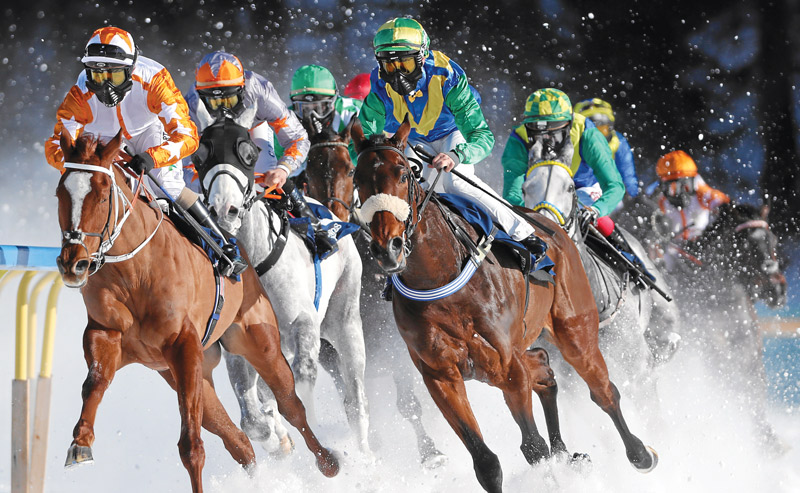
As the cluster of Thoroughbreds rounded the track toward me, I realized that this was no ordinary horse race. The horses’ nostrils puffed clouds of hot breath into the icy air, and they kicked clumps of snow into the faces of those who trailed. The field, though small, was a flurry of color and seemed just on the brink of chaos as the riderless animals pulled a rainbow of skiers, each braced in a half-squat. Spectators cheered and snapped photos, raising glasses of champagne toward the blazing winter sun. No, this was no ordinary horse race. This was White Turf in St. Moritz, a horse event in Switzerland.
The Birth of White Turf
Though the event features a range of sports—including jockeyed gallops and trotting sled races—it’s White Turf’s trademark skikjöring that draws the crowds. To the uninitiated, the Swiss sport could be easily confused with American skijoring, which is found in several mountain towns throughout the United States. After all, both involve horses pulling skiers.
But there’s an essential difference: In American skijoring, a rider controls the horse while the skier is towed by a rope, often navigating a course of jumps and other obstacles. In Swiss skikjöring, the skiers are also “drivers”—they must steer their steeds themselves.
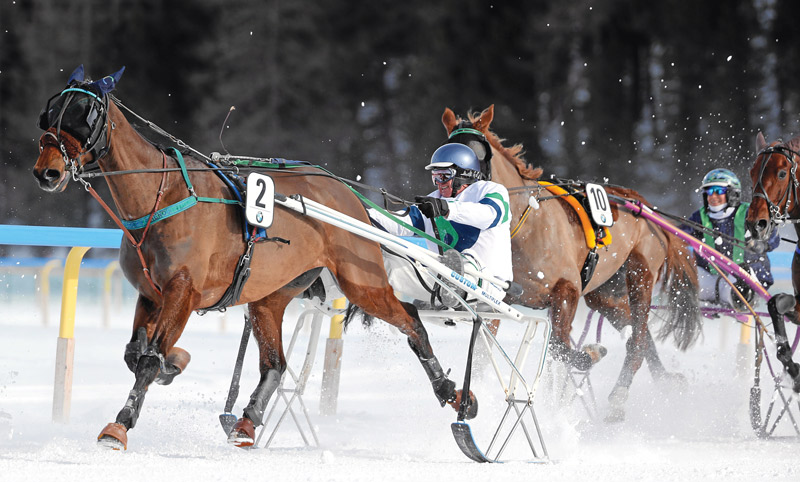
Harness racing on the snow is done with sleds instead of wheeled carts. Photo by Swiss-Image/Andy Mettler
Skikjöring, a marriage of extreme skiing and driving, became a competitive sport in 1906.
“As is the case for several other innovations in the Engadine [region of Switzerland in the Eastern Swiss Alps], it was the English who laid the foundations of what has become today’s White Turf by being pulled with ropes behind horses from St. Moritz to Silvaplana and back,” says Tina Olivia Seiler, White Turf press officer.
The first skikjöring race was quite different from the modern White Turf. The horse-driver teams started individually and covered roughly 6 miles of village roads in just over 20 minutes. However, there were not yet any frozen lakes to traverse. It wasn’t until the following year, 1907, that organizers would move the event to Lake St. Moritz where the horses began racing in groups on a prepared track, and White Turf was born.
The horses competing in galloping events in St. Moritz don’t let the snow slow them down much. They’ve nearly doubled their pace since 1906, often hitting speeds of 31 miles per hour.
But in the early decades of White Turf, neither the sports themselves nor the gear were regulated, making competition an especially risky endeavor for human and equine alike. Indeed, in 1965, not a single skikjöring driver finished the race.
In response, the sport has been recognized and regulated as an official equestrian discipline, and several actions have been taken to improve safety: The horses’ shoes are equipped with special runners, skis must be brightly colored so the horses see them, drivers must pass a test of their skills, skikjöring heats are limited to four or five teams, and the ice is evaluated to ensure it will hold beneath the weight of snowpack and the thunder of hooves.
White Turf attracts roughly 35,000 visitors annually, an international mashup of the jet-set, accidental tourists, and horse fanatics. Between races, fans can place bets, sip whiskey and hot chocolate, enjoy live music, or simply crunch across the snow to watch the athletes warm up in the paddock.
Thundering hooves and flying ice can only mean one thing—Switzerland’s White Turf in St. Moritz. Photo by Swiss-Image/Andy Mettler
A Swiss Experience
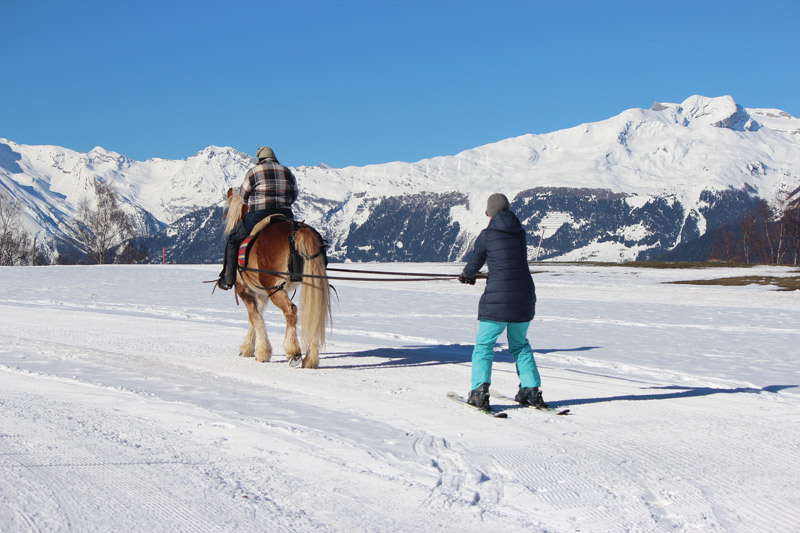
Just days before White Turf 2020, I was in a tiny village called Nax, hoping to try this quintessentially alpine sport combining horses and snow. I managed to attempt a hybrid version—that is, I used the same type of harness the skikjörers do, but in the American style, I depended on a rider to handle the steering.
As I picked up my bar, Katia turned in her saddle. “Ready?” she asked. I nodded nervously, checking to make sure my skis both pointed forward, and with a cluck and a kick, we were off at a trot. The harness pulled taut and I jerked forward, wobbling for a moment before finding my balance.
We cruised around a groomed snowfield. Soon, Katia picked up the pace, and we cantered over the soft hills and around the sweeping turns. Despite the grin splitting my face, I was grateful that, on top of keeping myself upright, I didn’t have to worry about managing the 1,600-pound horse that pulled me. We might have gotten up to 10 miles per hour.
That afternoon, I strolled the streets of Nax and lounged on my porch, gazing at the Matterhorn and nursing my already-sore muscles. I dined on raclette cheese and wine. The next morning, I took a series of buses and trains—made easier by the Swiss Travel Pass—to Brig, where I boarded The Glacier Express, the world’s “slowest express train,” bound for White Turf and the glamorous St. Moritz.
Stacey gives a hybrid version of skikjöring a try. Photo Courtesy Stacey McKenna
Experience Winter in St. Moritz, Switzerland with Horses
St. Moritz, Switzerland has several claims to fame. Tucked into the southern slopes of the Albula Alps at 5,910 feet, the town is the birthplace of winter sports, twice host to the Winter Olympic Games, and home to healing mineral springs.
Today, visitors can still sip bubbly water from a Bronze Age fountain at the Forum Paracelsus or bomb down the world’s oldest and only natural bobsled run—the St. Moritz-Celerina Olympia. They can shop their favorite couture designers, explore an emerging contemporary art scene, and indulge in top wines and cuisine from just about anywhere in the world.
And on three Sundays in February, they can gather for a one-of-a-kind meet in which intrepid athletes and their equine partners race on frozen Lake St. Moritz.
This article about the horse destination of St. Moritz, Switzerland and skikjöring at White Turf appeared in the November/December 2020 issue of Horse Illustratedmagazine. Click here to subscribe!
From making the big decision to divorce to divvying up the property, everything about the process is complicated, emotional and stressful. As a result, the care and custody of the horse is just one of many things on the about-to-be divorced owner’s mind.
That’s exactly why some decisions should be made long before a breakup looms, such as determining the animal’s value (whether he is just a companion or a high-ticket performance horse), who will take possession of the horse, and who will pay the bills for his care.
“It’s critical to take an objective look at the horse, his value, ownership, and even state divorce law long before a divorce happens,” advises Peter A. Moustakis, managing member of Sowerby and Moustakis Law, PLLC, in Dedham, Mass.
Here are some things to consider.
How Much is the Horse Worth?
A horse that spends his life in the paddock, on the trail or on the local show circuit may be invaluable to his owner, but his value in the marketplace is probably completely different than one that has a high-profile racing or performance career. That’s why attaching a dollar value to the horse is key, Moustakis says.
“That means you have to have an appraisal,” he advises.
According to Moustakis, the courts generally consider horses to be personal property that will be distributed—based on dollar value—when the divorce settlement is made, or a case is consigned to court. An appraisal conducted by a certified, professional equine appraiser establishes an objective monetary value for the horse as property based on market research and analysis.
Judges generally uses these appraisals to provide “equitable distribution” or a 50/50 property split between parties.
“For example, that can mean if the horse is worth $10,000, one party gets the horse and the other gets $10,000,” says Moustakis.
If no agreement or fair division can be reached, the court might order that the horse be sold, says Emily Robinson, family law specialist in Westlake Village, Calif., and member of the Animal Legal Defense Fund (ALDF).
“In that case, the parties split would the profit [from the sale],” she explains.
When it comes to determining a horse’s value, there are other considerations, too.
According to Ocala, Fla., attorney Mary Catherine Landt, the value of a horse that is part of a boarding barn or is held in a limited liability corporation (LLC) may be very different from one that is owned outright as personal property by one of the divorcing parties.
A companion horse tends to go to the spouse who will most look after his best interests. Photo by Maria Junge Fotografie/Shutterstock
Whose Pet Is It Anyway?
Though most owners would be hard-pressed to attach a monetary value to a so-called companion or “pet” horse, when it comes to a break-up, who maintains the horse and who pays for it matters.
“For example, has one of the parties paid for part of the horse, his training or upkeep with their salary, or do you do all the training, work, riding and showing?” says Landt. “It makes a difference.”
According to Landt, there are a variety of ways to document who pays for what for horse care.
“A separate bank account isn’t required, but it is the clearest evidence of any contributions,” she says. “Receipts are helpful if they show the source of the payment, and a regularly kept ledger can also be used as proof.”
It also makes a difference in determining the animal’s welfare, Robinson says. If the horse is considered a companion animal, then the court will look at his best interests in determining who gets him. In addition, specific statutes in some states determine how the courts award custody of a horse that has been designated a companion animal.
California, Illinois and Alaska all have laws on the books that specifically addresses custody of a companion animal in a divorce case, says ALDF staff attorney Cristina Stella.
“In all other states, how to consider companion animals in divorces is up to the discretion of the judge presiding over the proceedings,” she says.
Once the horse is awarded to one party and any type of joint custody is ordered, the non-custodial owner could protest if he or she disapproves of the animal’s care, adds Robinson.
Prenups and Pet-Nups
According to Landt, judges generally prefer that couples agree to settlements on personal property issues before their divorce cases ever get to court. Moustakis says that couples don’t have to wait for a breakup to settle property issues.
A prenuptial agreement will make sorting out the horse’s care and ownership much easier. Photo by Luliia Khabibullina/Shutterstock
Who gets what can be decided well in advance by creating prenuptial agreements that spell out in detail how property is disbursed, who is responsible for outstanding expenses, and what happens to companion animals—including horses—in the event of a breakup.
“There have been cases where divorcing couples have found that one partner had sold an animal or worse, so absolutely get a pre-nup,” advises Moustakis. “Make a personal agreement that includes who will get the animal after the breakup, what you get for compensation if you are not awarded the animal, and who is responsible for the pet horse’s expenses.”
Prenuptial agreements can also spell out visitation, care and other equine maintenance issues for non-custodial owners, he says.
Couples can also attempt to avoid contentious companion animal custody disputes by creating “pet-nups,” Stella says.
“A pet-nup is essentially like a pre-nup but for issues specifically related to custody, care, and financial responsibility for companion animals in the event of a breakup,” she says.
Tips to Keep the Horse
If obtaining—or maintaining—custody of a horse after a divorce is a goal, attorney Emily Robinson offers these tips.
PRENUPTIAL AGREEMENT: “If no prenup, making sure you are the one who provides the care, takes the horse to the vet, and bonds with the horse is helpful in a pet custody award,” she advises. “Keeping receipts would help, although if the funds spent are community funds, it may not make a difference.”
HORSE BEFORE NUPTUALS: “Purchasing the horse with separate money (premarriage funds, inheritance or gift) would make the horse your separate horse, not a community horse,” Robinson says.
PROVE AFFORDABILITY: “Financial ability to pay for the horse’s care and [his] accommodations, such as a stable or boarding arrangements, helps as well,” she says.
BONDING COUNTS: “If the children are really bonded with the horse and they live with you, that can help,” Robinson says. “Or if the horse can be designated as a therapy horse for you or your kids, that helps, too.”
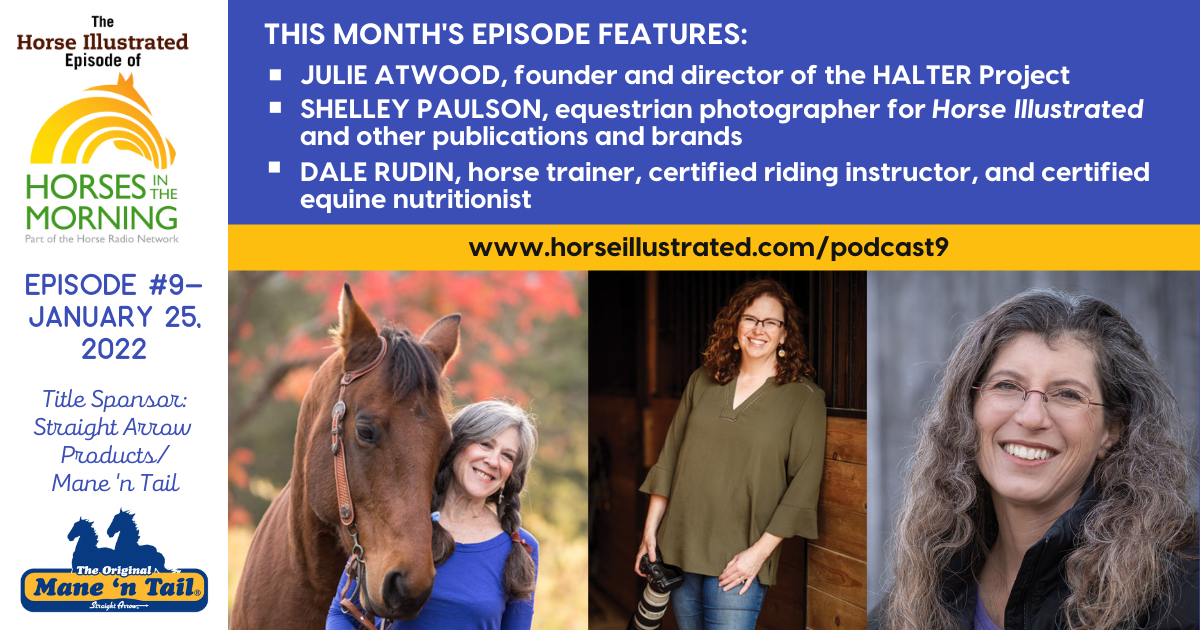
In the ninth episode of The Horse Illustrated Episode of Horses in the Morning, sponsored by Title Sponsor Straight Arrow Products, hosts Glenn the Geek and Sarah Evers Conrad chat with Julie Atwood, founder of the HALTER Project, which provides resources and training to help animal owners be prepared for disasters and common emergencies. And Shelley Paulson shares her adventures as an equestrian photographer who is commonly featured in Horse Illustrated and other publications. And Dale Rudin talks about horse training and attending and getting the most out of horse clinics.
Hosts: Sarah Conrad, Digital Content Editor of Horse Illustrated & Young Rider and Glenn the Geek, host of Horses in the Morning
Julie Atwood, founder and director of The HALTER Project
Julie Atwood is the founder and director of The HALTER Project, which was founded in 2014 to fill a regional need in California’s Northern and Bay areas for information, resources and training to help animal owners be prepared for disasters, as well as common emergencies. This small, grassroots effort is now a global program. HALTER Project provides extensive, free education and outreach resources to organizations, agencies, and individuals. It offers trainings for scholarships to firefighters, search-and-rescue and accountable care organizations, veterinarians, and volunteer animal disaster and advanced technical rescue responders.
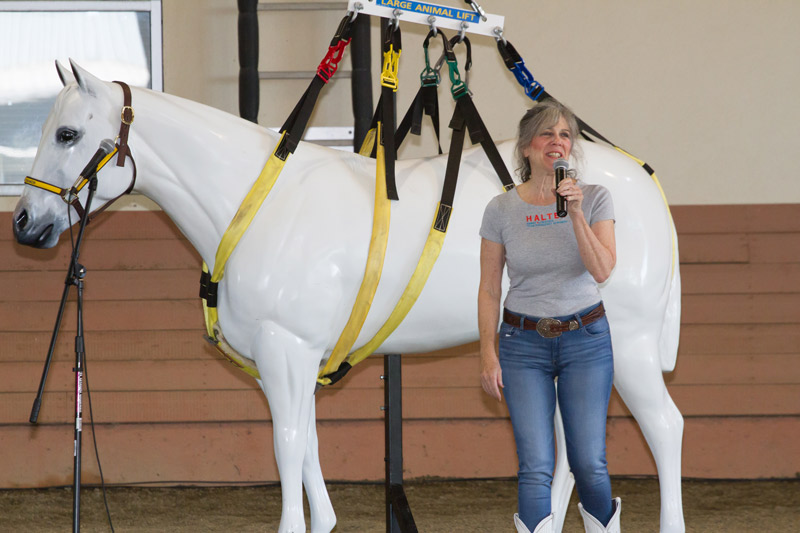
Julie Atwood speaking on behalf of The HALTER Project about emergency and disaster planning. Photo Courtesy The HALTER Project/Julie Atwood
The HALTER Project “All Species, All Hazards, All Safe” whole-community approach and attention to under-resourced areas has garnered two FEMA Individual and Community Preparedness Awards. Their semi-annual Home & Ranch Readiness event is the subject of a feature TV documentary, and www.HALTERproject.org is a widely-used resource for animal owners, stable and sanctuary managers, teachers, and community leaders.
Atwood is a lifelong horsewoman and cat-lover in Sonoma County, Calif. She’s a serial entrepreneur with careers in home design, event planning, and philanthropy.
Additional Information: For more on disaster planning from Horse Illustrated, visit When Disaster Strikes.
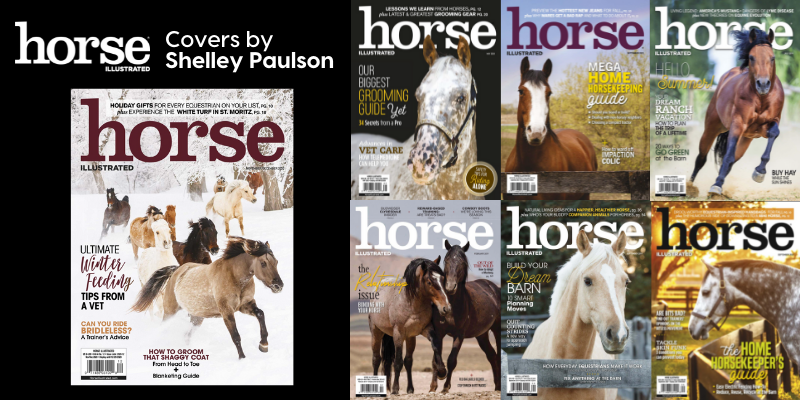
Shelley Paulson is an award-winning commercial and editorial equestrian photographer based in Minnesota. She has combined her deep love of horses with her passion for creating heartfelt, meaningful images to create a thriving full-time career as both a photographer and educator. Her work has been published worldwide and can be seen in various equestrian publications and in advertising for major equine brands such as Horse Illustrated, Western Horseman, Nutrena, and Farnam.
Horse Trainer, Clinician, and Nutritionist Dale Rudin on Attending Horse Clinics
Dale Rudin is the founder of Pure Joy Horsemanship, a welfare-centered, evidence-based, and holistic approach to equine education and care, and Pure Joy Horse Haven, a sanctuary and rehabilitation program for horses who have suffered physical and emotional trauma and abuse. She is the co-founder of Force Free Tennessee, a consumer resource for compassionate animal training and care professionals. Dale is also a Certified Horsemanship Association certified riding instructor, a certified equine nutritionist, and a member of the Pet Professional Guild. She has been working with horses and the humans who love them for over 35 years and offers in-person and remote instruction and consultations in nutrition, equine wellness, saddle fit, behavior, and rehabilitation.
Dale Rudin talks about attending horse clinics on the Horse Illustrated Podcast. Photo by Catherine Shand/SHANDPhotography
Additional Information: For more on disaster planning from Horse Illustrated, visit When Disaster Strikes.
We want to thank our Title Sponsor, the Straight Arrow Family of Brands, makers of Mane ‘n Tail, Cowboy Magic & Exhibitor’s, with over 100 years of grooming excellence. For more information about your favorite products, please visit www.straightarrowinc.com and find Straight Arrow Products at a tack shop near you!
Welcome to Horse Illustrated’s weekly installment of the My Right Horse Adoptable Horse of the Week, offered in partnership with The Right Horse. Loralei is this week’s adoptable horse. Check back weekly for a new featured horse so you can find your #righthorse.
Located in Maryland, Loralei is an adorable grey mare looking for a safe place to land during her retirement years. Loralei is the perfect size to fit in with your herd, whether you have ponies or horses. Loralei is a Peruvian Paso Fino and holds many of the traditional qualities of the breed. She is sensitive and quick-thinking. Loralei is good for the vet and farrier, stands well for grooming, and is currently turned out 24/7. Loralei gets along well with both mares and geldings. She would be the perfect companion for both horse and human. For more information about Loralei, visit www.defhr.org/horse/loralei. Is she your #righthorse?
My Right Horse is the online adoption platform of The Right Horse Initiative, a collection of equine industry and welfare professionals and advocates working together to improve the lives of horses in transition. A program of the ASPCA, their goal is to massively increase horse adoption in the United States. To find more adoptable horses and foster horses, visit www.myrighthorse.org. To learn more about The Right Horse, a program of the ASPCA, visit www.therighthorse.org.
We use cookies to help personalize content, tailor and measure ads, and provide a safer experience. By navigating the site, you agree to the use of cookies to collect information. Read our Cookie Policy.



 Once upon a time, the typical horse farm needed little more than a single trusty tractor to handle most of the jobs and tasks around the farm. Tractors are still the go-to machine when you need power for big projects, but for many modern-day tasks, tractors are giving way to utility terrain vehicles (UTVs) and all-terrain vehicles (ATVs) on horse farms.
 Bobcat UV34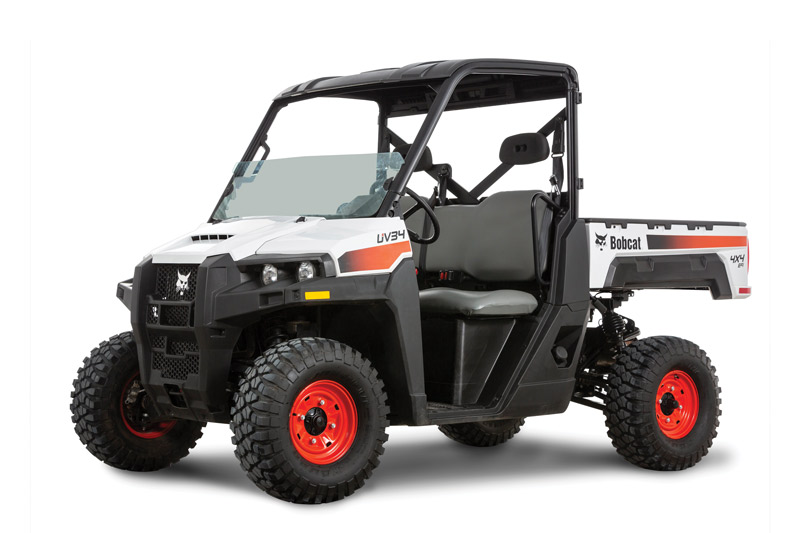
 Polaris Ranger 1000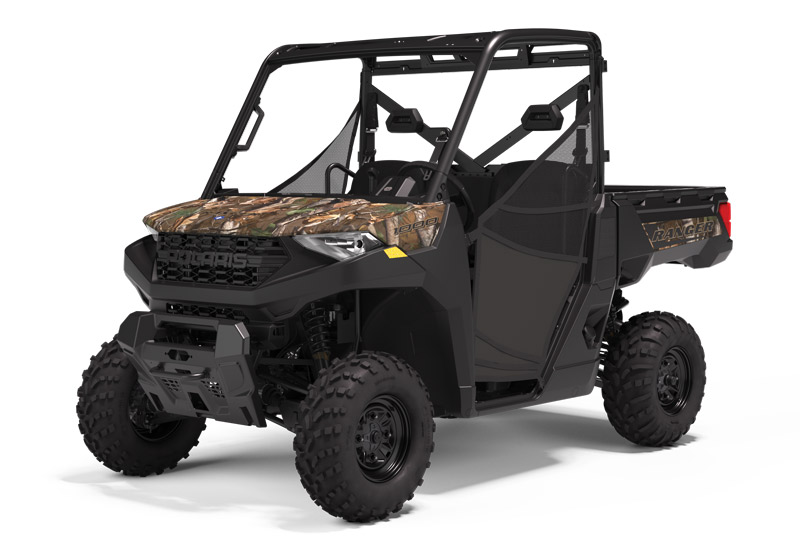
 Intimidator Classic Series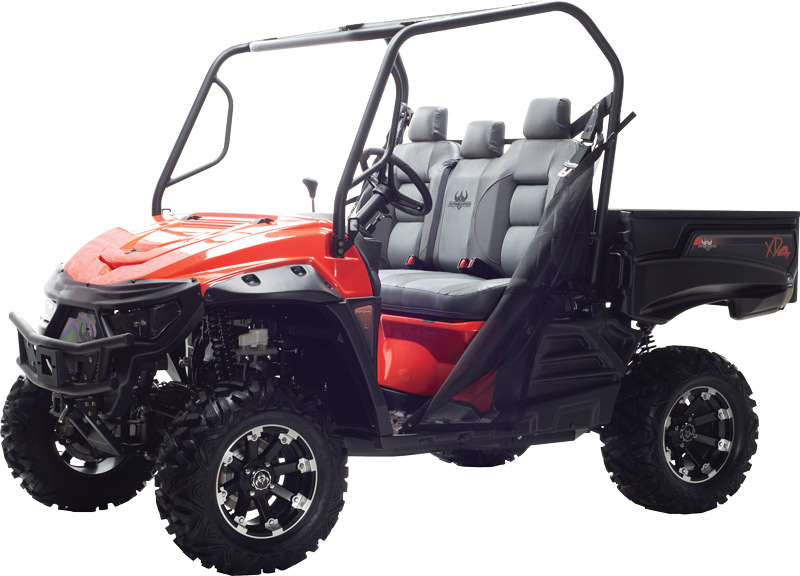
 Mahindra Retriever 750
 Kubota Sidekick RTV-XG850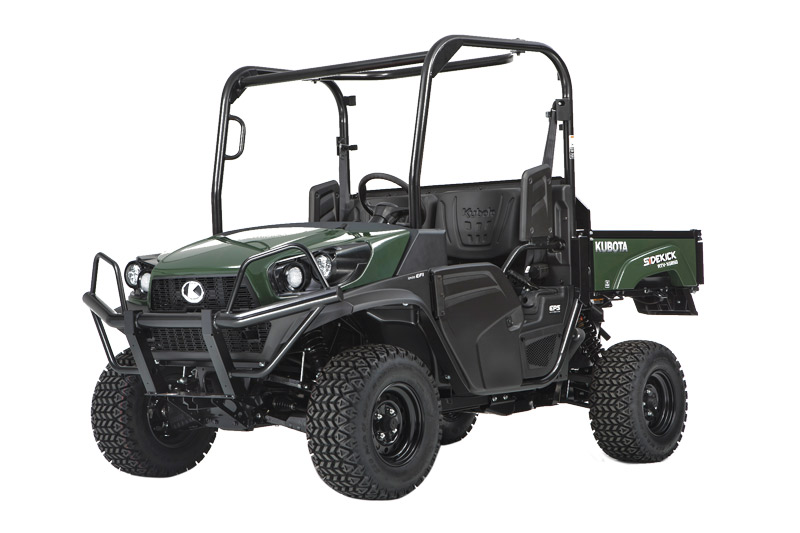
 KIOTI K9