0 ITEMS
  • My Account
  • Holiday Gift Guide
  • Podcast
  • Webinar
Subscribe Combo
Enable cache13
Home Blog Page 103

Make Me a Match: Adoption Experts Create the Perfect Horse-Owner Match

0
Horse Adoption Match
Photo by Olesya Nickolaeva/Shutterstock

Matchmaking is both an art and a science. Days End Farm Horse Rescue (DEFHR) in Lisbon, Md., has a 30-plus year history of rehabilitating and rehoming horses, and it has a specific adoption process in place to help match the right owner with the right horse. However, the unexpected success happens more often than you might think, says Sara Strauss, DEFHR’s head horse trainer.

“Horses sometimes choose their adopter, and it can be hard to explain,” she says. “One pairing that I will never forget is Yogi [now named Rogue] and Kim. Kim adopted Yogi in 2014, and I was very skeptical about the match throughout the process, as Yogi was a very hot, opinionated off-track Thoroughbred mare, and Kim was looking for a pleasure horse. Kim was set on adopting her and fell in love with her from the very beginning. That has not changed to this day.”
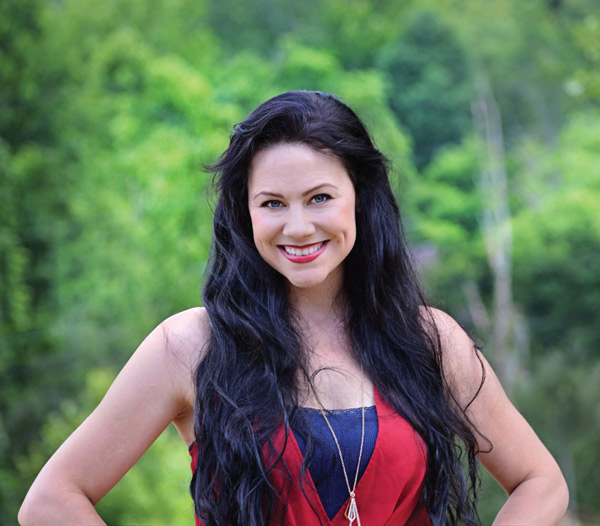
Tinia Creamer is the founder of Heart of Phoenix Rescue
Tinia Creamer is the founder of Heart of Phoenix Rescue, which has helped place over 600 horses since 2009. Photo Courtesy Tinia Creamer

Heart of Phoenix Rescue (HOP) is West Virginia’s largest equine advocacy organization, providing rescue to horses and education to horse owners throughout the Appalachian region. With over 600 horses placed since 2009, founder Tinia Creamer has had a hand in making many successful horse adoption matches.

“We use a screening process, and I like to think of it as a guiding process for the potential adopter as well,” says Creamer, who adds that the majority of matches fall predictably in line with the organization’s screening process, although there are exceptions.

“We have seen adopters stick it out and seek out assistance because they did have a connection with the horse,” adds Creamer. “And that’s real. Having a connection to a horse, even if it’s not going to be textbook easy, is real. We don’t want to make it impossible for someone if they are willing to seek training and continued support for a horse a bit above their current skill level.”

The Matching Process

The information gathered in HOP’s screening process is essential to finding the right fit.

“In addition to getting a general sense of personality, our process looks at everything from an adopter’s experience and ability to care for a horse, to how they might handle potential issues that arise and who they can turn to for support,” says Creamer.

This is where the matchmaking begins. Creamer and her team, who know the horses well, can narrow down which ones an adopter should meet. While Creamer acknowledges that the application process can seem tedious, she says that adopters ultimately see how important it is when they find the right horse.
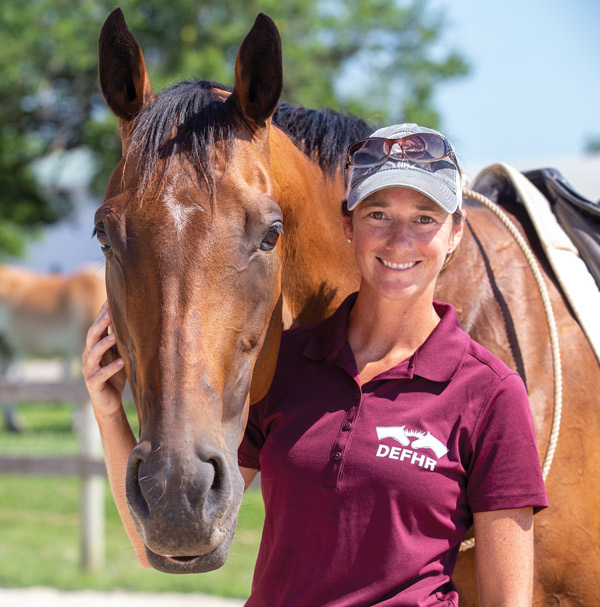
Sara Strauss, head trainer at Day’s End Farm Horse Rescue
Sara Strauss, head trainer at Day’s End Farm Horse Rescue, enjoys helping people develop a good relationship with their horse. Photo by Jump Media/Courtesy DEFHR

According to Strauss, DEFHR staff’s relationship with the horse, built on average over six months of training, is the starting point for a successful horse adoption match.

“Because of that relationship, we really know if an adopter is a suitable match for the horse based on their experience and what they are looking to do with the horse,” she explains. “What solidifies the decision is how the horse interacts with the potential adopter. We also look at what the horse is capable of doing and what the expectations of the adopter are.”

Questions to Ask

Finding the right horse is a conversation with questions for both parties. At DEFHR, potential adopters complete a horse interest form that asks questions about their riding and horse handling experience, what disciplines they plan to use the horse for, as well as why they would like to adopt from DEFHR.

However, Strauss explains that it’s a two-way street. “[Adopters should] ask a lot of questions but also be open to listening as well,” she says. “We provide a ton of information during the initial call and the appointments, but it can be overwhelming to take it all in, especially when the potential adopter is super excited to meet the horse. It’s good to bring along a friend or trainer who can reiterate what we say or even jot down notes for them.”

For those looking to adopt, it’s good to ask yourself :
◆ Am I financially ready to adopt?
◆ Am I ready to start the adoption process?
◆ Why am I inquiring about this particular horse?

Strauss and Creamer recommend potential adopters ask the organization the following:
◆ What do you want to know about my horse experience?
◆ Is this horse is a good match for me?
◆ What has the rescue done in regards to the horse’s training?
◆ Has the horse done anything unsafe that the rescue is aware of?
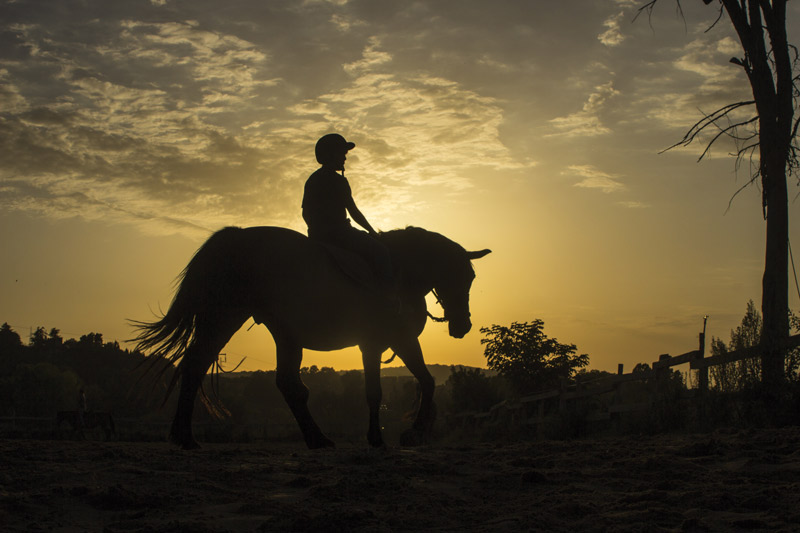
Silhouetted Rider - Horse Adoption Match
Be patient when searching for a horse—the right one is out there. Photo by Red On/Shutterstock

Creamer says that potential adopters should absolutely feel comfortable asking the tough questions about the horse’s background and their experience with it. In turn, she says, the rescue should be 100 percent comfortable answering those questions transparently.

An adopter should also ask about the policy if the adoption doesn’t work out, says Creamer, whose organization offers a “Right Horse, Right Match” guarantee.

“No matter how much a person and an organization tries, adoptions fail for reasons that you sometimes can’t foresee,” she says. “If we [both] realize that it’s not going to work, the horse comes back to us. It’s a non-judgemental easy, safe process; it’s not stressful, and you know that horse has a safe place to go and you aren’t left holding on to an animal that isn’t a good fit when you did your due diligence to try to find a good fit.”

Meet and Greet

The meeting between a potential adopter and the horse they are interested in reveals a lot.

“This allows us to see the person in action and assess their skill set with a horse in tow,” explains Strauss. “It’s great because the potential adopter will be able to catch, lead, groom and tack up the horse, and we can observe how the horse interacts with them. I also think people feel more open to talking and sharing when they are around a horse, so it’s a good time to listen.”
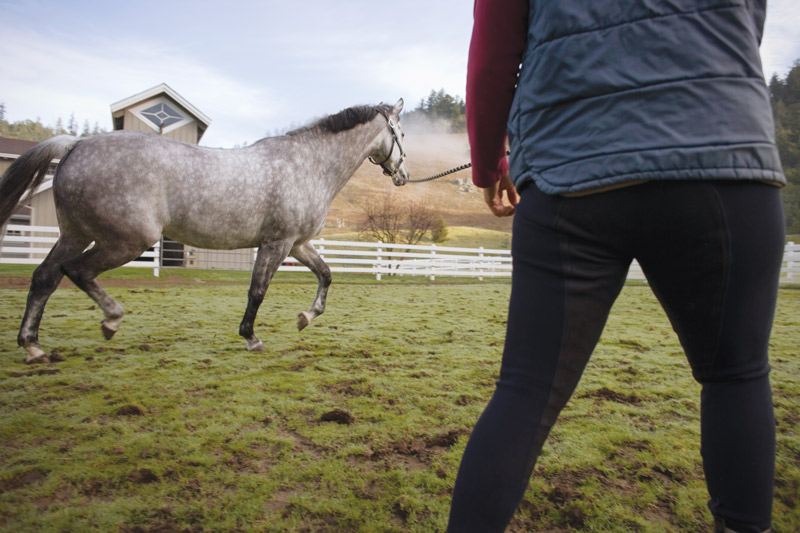
Longeing a Horse
Reputable adoption groups are transparent about each horse’s abilities, health and temperament because they want to find them the right homes. Photo by Erickson Stock/Shutterstock

Creamer likes having an objective person, such as a trainer or instructor, to help guide the meeting, as Strauss noted earlier. Meeting a horse can be emotional and euphoric, and that person can serve as a grounding influence.

“We’re looking objectively—does this horse really fit your goals and where you are now?” says Creamer. “If he doesn’t, are you willing to work with a trainer? Looking at the big picture, are you going to outgrow this horse soon, and is what you’re wanting to do with the horse what the horse wants to do? Does your best life with the horse look like the horse’s best life? Because maybe you want to show, and the horse really wants to be a trail horse.”

And sometimes it isn’t a match.

“I think people can allow themselves to fall in love with a horse through a photo or video because it’s only capturing the horse in one moment,” shares Strauss. “What’s more important is that the adopter can handle the horse safely in multiple scenarios, such as catching the horse in the field, riding him, holding the horse for the farrier, et cetera.
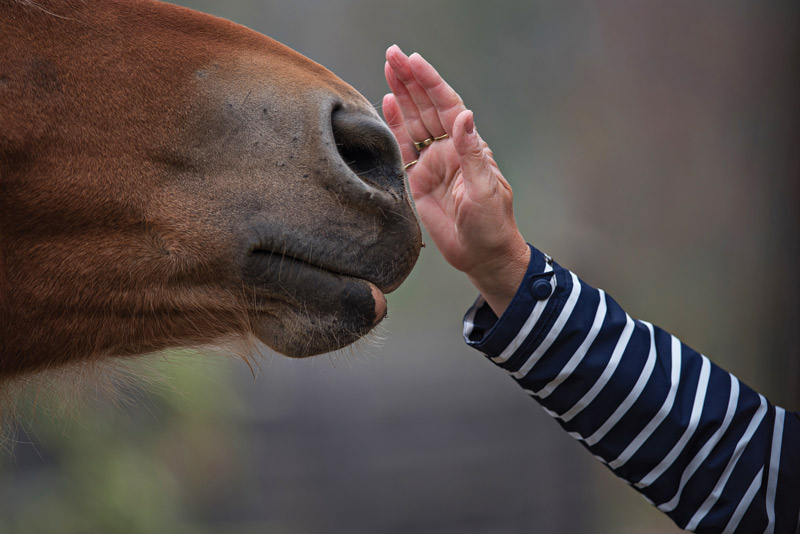
Petting a Horse - Horse Adoption Match
Once you’ve been matched up with a possible horse, it’s time to meet in person to see if he’s the right fit for you. Photo by Marie Charouzova/Shutterstock

“We are good at listening to people and asking questions that truly reveal their experience and figuring out the difference between what you want and what you need,” continues Strauss. “I think we can help guide them to a different horse or even a different rescue by being honest and explaining why they wouldn’t be a good fit and letting them know that we are looking out for their safety and enjoyment.”

Adoption Advantages

The benefits of adopting start during the matchmaking process and extend well beyond. As Creamer explains, a good rescue is only concerned about a good placement, so you’re going to have a support team helping you along the way to avoid a decision that could ultimately be very costly or cause you or your child (if the horse is meant for a youth) to wind up injured.

There’s also continuing support afterward for any kind of help adopters need through the transition process and beyond.

“When you adopt a horse from DEFHR, you are joining a family,” says Strauss. “We pride ourselves in being upfront and honest; wanting the best for the horse but also for the person involved.”
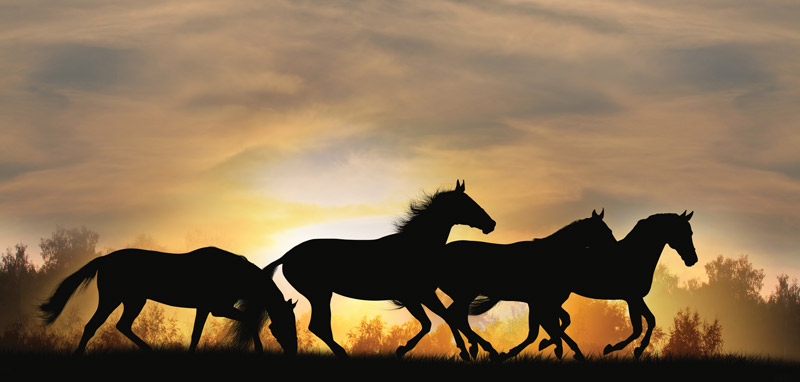
Silhouetted Horses - Horse Adoption Match
There are many homes looking to adopt a horse, but making the perfect match takes skill and experience. Photo by Mariait/Shutterstock

And if an adopter experiences financial or health setbacks, or the horse is no longer a good fit for them, the horse has a safe place.

“That’s a worry you never have to carry—you know that there’s a team behind that horse to make sure that he stays safe,” says Creamer.

Creamer advises anyone looking for a horse to be really committed to finding a good fit.

“The right horse is out there—don’t get discouraged and don’t get in a rush.”

This article about making the best horse adoption match appeared in the January/February 2021 issue of Horse Illustrated magazine. Click here to subscribe!
Vet Adventures: An Eye for Trouble

0
Small Horse Has Accidental Injury
Photo by Anja Juli/Shutterstock

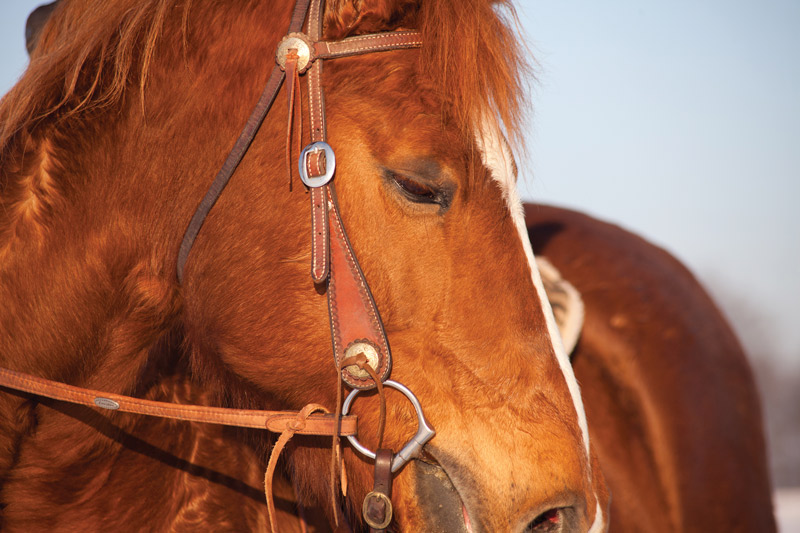
In this Vet Adventures column, a horse suffers an accidental injury, but he still finds his perfect match through a strange twist of fate. 

Everyone had high hopes for Bramble when he was born. The offspring of two prominent Quarter Horses, Bramble’s pedigree was very impressive, and he was a handsome animal with a rich sorrel coat. He was a kind and intelligent horse, but there was just one problem. Bramble refused to grow.

My first visit to the farm was to examine 2-year-old Bramble and tell the owners how to make him grow. He was tiny, barely over 13 hands, and he stood patiently while I examined him. He was unusually quiet for a young stallion, and at one point during the exam, I was sure he’d fallen asleep. Everything seemed fine otherwise, so I ran bloodwork and tested his thyroid and adrenal glands. All results were normal.

Failed Attempt

I did not have any magical growth drugs on hand, so I suggested gelding Bramble. If a horse is gelded earlier in life, then he will often grow taller, as closing of the growth plates in the legs is delayed with early castration. Bramble was already 2, so the magic window had probably already gone by, but it was still worth a try.

I performed the castration, and we watched Bramble closely for the next 12 months. Although he ate like a full-sized horse, he remained stubbornly small, and by the end of the year, the owners had given up on him.

Bramble was sold and put into training. He did somewhat well as a kid’s horse but didn’t have a great deal of enthusiasm for competitions. He hated pole bending and roping, and flatly refused to run barrels properly. He’d zigzag into the arena at a mad gallop and usually knock the first barrel over. Depending on who owned him at the time, us vets took turns evaluating Bramble for soreness, medical problems, or dental issues, but we never found much. He simply didn’t want to compete in gymkhanas or roping, and eventually he was sold to a dude ranch several towns away and put to work as a trail horse in the kids’ riding program.

Accidental Injury

Bramble settled in and quickly became a favorite on the ranch. He took good care of his young riders and never misbehaved on the trails. Occasionally he’d go to work in the arena, but since most of the cows were bigger than he was, he got intimidated easily and would back off. Several happy years passed, but one day things went terribly wrong.

Every morning, the ranch horses were brought in from the pasture. The horses knew the routine well and usually came in without incident, but one morning there was a scuffle and little Bramble was driven hard into a tree limb. The wranglers watched in horror as a branch went straight into his left eye.

When I arrived, Bramble was surrounded by several sobbing wranglers, and he had a large bandage on his head. I sedated him and gently lifted away the bloody wrap to examine the eye, but it was beyond saving. Sadly, I began to prep Bramble for an emergency surgery to remove the ruined eye.

The surgery was straightforward, and soon I was placing the final sutures. The skin would heal over the empty eye socket, but Bramble’s life was changed forever. He’d have to adapt to seeing from only one eye, and he would no longer be able to do guest rides, as the ranch owners felt that he’d be a liability on the trails.

The wranglers argued on Bramble’s behalf, but the owners were firm. If Bramble spooked at something because of the missing eye and a guest were injured, they could be liable. Plus, they admitted, no one wanted to vacation on a guest ranch and get stuck riding a one-eyed horse.

Bramble stood quietly as I bandaged him up and gave him some medicine to help with the pain. When he was awake enough to eat, we soaked some pellets into a mash so he wouldn’t have to chew, and he ate it very slowly. He looked so small and helpless in the large stall, and my heart hurt for him. He’d probably be sold, again, and I just couldn’t stand it. Who knew where he might end up this time?

One Last Home

I made some calls and so did the wranglers, but no one wanted him after hearing about his eye. There was a sale coming up, and I knew Bramble would be there if we didn’t find a solution for him. In desperation, I posted an ad on social media explaining his predicament. Initially, there was no response, but one day the phone rang.

“Dr. Diehl, I’m calling about your ad. You see, my 10-year-old daughter had cancer, and the doctors had to remove her right eye six weeks ago. She’s been really sad and withdrawn since the surgery, but when I read about Bramble’s accident, I thought maybe they could heal together. My daughter is also very small for her age, and the doctors aren’t sure how much bigger she’s going to get.”

I put the family in touch with the ranch right away, and soon a deal was made. I saw Bramble one last time to remove his stitches and do his Coggins and health certificate, and within a week he was on his way to his new—and hopefully final—home.

The girl’s mother sends me updates every now and then. Bramble and his young owner are doing short rides together and helping each other heal. Bramble has become very dear to the entire family. Most importantly, this little girl isn’t alone in her journey any longer. She has a new best friend who gives her strength to get through each day and seems to have been made just for her.

This Vet Adventures column about an accidental injury appeared in the January/February 2021 issue of Horse Illustrated magazine. Click here to subscribe!
Standing Up to the Bullies

1
Kylie Standish - Bullying in the Horse World
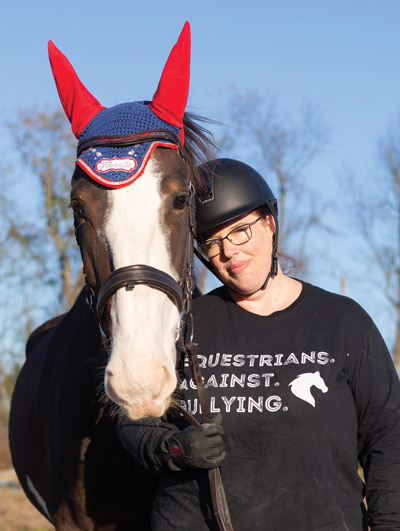
Noodle is Kylie’s 7-year-old Dutch Harness Horse. Photo by Sofia Wallis at Sofia Jade Photography

Growing up in the 1990s and early 2000s, I never had much experience with real bullying. Sure, there were the odd bullies in school who could put a damper on a good day, but they didn’t follow me home. When school was over, I was able to walk away from them until the next time I saw them. At the barn, none of my fellow riders ever said anything mean to me, and if anyone ever whispered about me at shows, I never knew about it.

These days, however, with the addition of social media, everyone is linked to everyone else. The bullies can follow you home now. Anything you post is out there for the world to see and comment on. The horse world, especially, is filled with bullying and “keyboard warriors”—people who sit behind their computer screens and type awful things to complete strangers with zero consequences.

Virtual-World Bullying in the Horse Industry

As a plus-sized rider, I have dealt with bullying for years. The phrase “poor horse” is rattled off on my social media accounts at least once a week. I work closely with my vet and trainer; I am a considerate horse owner and take incredibly good care of my boys, and I know I am not hurting them in any way, but the words still hurt.

I have considered giving up more times than I can count over the years because the cruelty and judgement of others becomes overwhelming. As I am sitting here writing this, someone commented on one of my riding videos, saying, “I’m amazed your horse’s back didn’t break.” Why do people think it’s OK to treat others like this?

For a long while, the bullying I experienced had an enormously detrimental effect on my self-esteem and wellbeing. I was depressed. I didn’t want to share my joy, because I was afraid of the backlash of posting photos of myself on a horse.

At one point, I was being stalked online by a woman who was constantly commenting on my photos and messaging me all kinds of nasty things about my weight. Another time, a friend of mine in Switzerland shared a photo of me and my horse using one of her saddle pads to her social media. The next morning, I woke up to comment after hateful comment on her post. People rattled off phrases like “go eat a salad,” “maybe the horse should be riding you,” and “you clearly don’t care about the health and wellbeing of your horse.”

It absolutely broke my heart. It made me question if I even wanted to continue life as an equestrian if that was how I was going to be treated by people who had never even met me before.

Nothing to Fear but Fear

Bullying is a huge problem in our sport. Every day, I have people writing to me on my social media accounts telling me their stories and their fears of sharing their joy, because they are so afraid of being judged.

Kylie Standish
Kylie’s horse Jackson is a 16-year-old Thoroughbred. Photo by Sofia Wallis at Sofia Jade Photography

I occasionally get a message saying, “Thank you for being such an inspiration and helping me feel comfortable about sharing my journey with my horse despite of what the bullies and haters might say.” But more times than not, the messages are along the lines of “I’ve been bullied,” or “I’ve gotten hateful comments, and now I’m afraid to share photos and videos.”

Afraid. So many people are afraid. We are equestrians. Horses bring us joy. Nobody should ever be afraid to share that joy with the world for fear of being looked down on for being “different.”

A love of horses should not have restrictions. No matter our size, skin color, income, riding level or circumstances, our hearts belong to these animals, and that should bring us all together. Equestrians need to stand up for each other, not tear each other down.

I have been through a lot. I have endured the hate and the criticism, the threats and the major depression and anxiety they bring. I have made it through all of it, and I have developed a tough armor against the hate and the hurt. Now, I want to help others do the same. I want everyone to be able to share the happiness they feel being with their horse without dwelling on the fear of judgement.

The best advice that I can give to anyone that is reading this is to surround yourself with positivity. I ride at an amazing farm called Misty Mountain Stables. I have never been at a farm that is so incredibly supportive of me and everything that I do. It has made a world of difference to my self-esteem and helps me keep the bullies from affecting me like they used to.

People bully because they are unhappy with their own lives and want to hurt others like they are hurting. I try to remember that when someone is being particularly cruel to me, and I feel sorry for them.

I love horses. I have loved them since I took my first pony ride at the age of two, 32 years ago. I will always love them, and I will never let the words of strangers, who don’t know me, keep me from following my passion. And neither should you.

This article about bullying in the horse world appeared in the January/February 2021 issue of Horse Illustrated magazine. Click here to subscribe!
Equestrian Influencer: Building an Equestrian Audio Empire with the Horse Radio Network

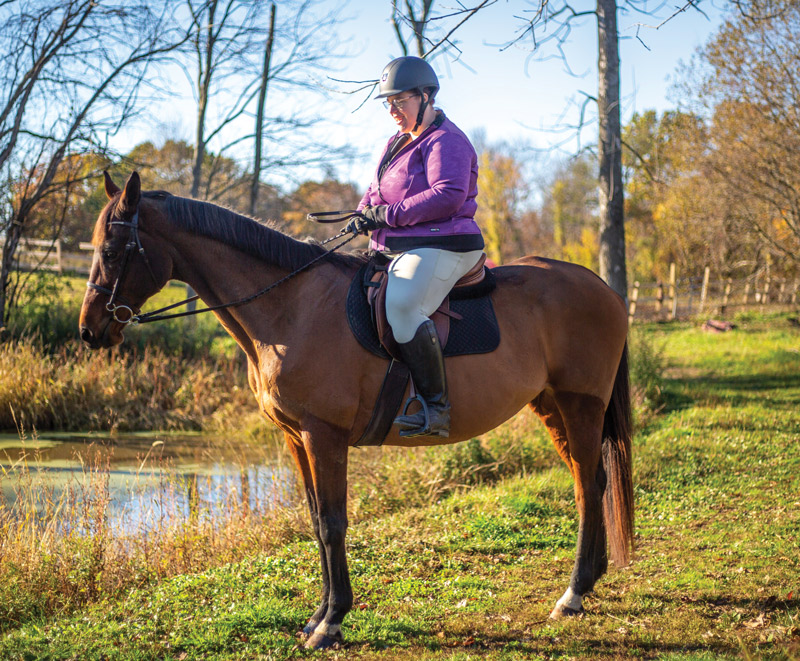
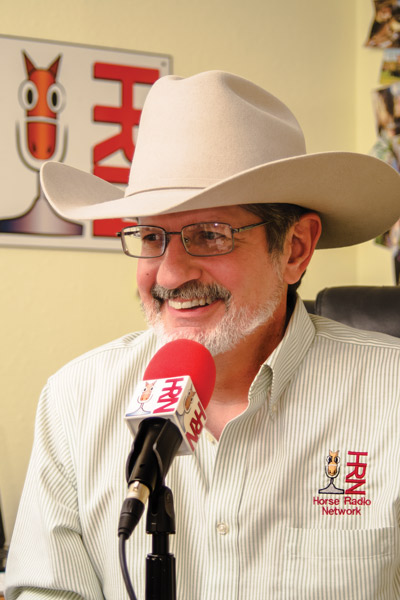
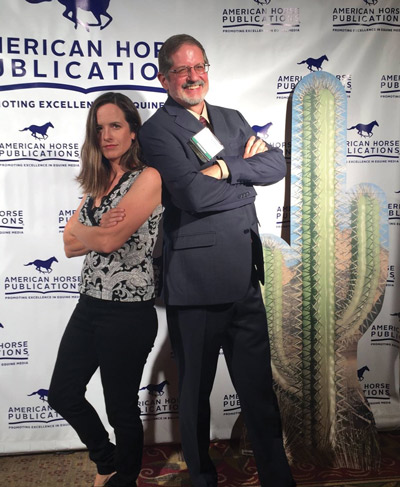
Glenn Hebert of the Horse Radio Network
Glenn Hebert, founder of the Horse Radio Network. Photo Courtesy Horse Radio Network

With more than 11,000 podcast episodes, 13,000 guests, and 33 hosts who produce 40 to 50 shows per month across 18 podcasts, the Horse Radio Network has developed the ultimate equestrian audio empire. The face of that empire is founder Glenn Hebert, aka Glenn the Geek. Alongside Glenn is his partner in all things horse for the past 32 years—wife Jennifer Hebert, aka Coach Jenn. In fact, without Jenn’s horsey influence, the Horse Radio Network might not exist, and Glenn might never have become “America’s Horse Husband,” as he is known on air. While Glenn has been a jack-of-all-trades as the network has grown, Coach Jenn keeps it all organized with her producing, editing and hosting duties.

“I just needed to do something entertaining,” says the former actor. He now jokes that this has actually been the longest gig he’s ever had.

Gaining Momentum

Glenn launched the network in August 2008 at the same time as his first podcast, the Stable Scoop Radio Show with cohost Helena Harris. He was determined to succeed, even though after the first six months, he and Harris only had 12 listeners.

“Back then, it was tougher to get guests, since nobody knew what a podcast was,” Glenn says.

But it then started growing faster as people learned how to listen to podcasts. People no longer ask, “What station is that on?”

The Horse Radio Network ended up partnering with a variety of national equine organizations, which helped raise awareness of this growing form of entertainment for horse people. Show hosts have also been critical to the network’s success.

“People come for the content, but they stay for the hosts, who really are engaging and who people like,” says Glenn. “I think that’s the key to success. I think the hosts are what make it. Eighty-five percent of podcasts start and stop within six months, and our shows have been around for years, so I think we’ve broken the mold in many ways in that they last longer, but that’s because we find the right hosts.”

The Daily Drive

Glenn’s goal was for the shows on the network to be “edutainment”—entertaining first and educational second. His dream of being a “morning drive radio guy” enticed him to push the envelope with a 90-minute weekday morning show—and Horses in the Morning was born with Glenn and cohost Jamie Jennings. It broke all the traditional podcast rules, including the one about keeping episodes short, says Glenn.

Glenn Hebert and Jamie Jennings
Glenn Hebert and Horses in the Morning co-host Jamie Jennings. Courtesy Debbie Loucks

“If it’s entertaining enough, people will allow the time,” he says. “They listen to morning drive radio shows every day, so why wouldn’t they listen to ours?”

The show was designed like morning radio shows, featuring short segments, comedy bits, trivia, live call-ins, et cetera. Glenn says Horses in the Morning has become one of the top five longest-running daily podcasts in the world.

“My goal was always that Horse Radio Network would be the No. 1 podcast network in the world when people figured out podcasting,” he says. “And that did happen. I like being the first at anything. I don’t like doing it second.”

Horses in the Morning was the biggest risk for the network to tackle, because it’s an expensive show to produce.

“It’s still our biggest show, and it’s still our most profitable show,” shares Glenn. “It’s the one that the listeners really relate to, and it’s because we’re there daily for them.”

Beyond Horses

All of this has led to other opportunities within the mainstream podcasting industry, especially since the network was making money when many podcasters weren’t. Glenn has been asked to speak at a variety of conferences, including Podcast Movement and Podfest.

In addition, Glenn branched out to cohost a travel podcast, Finding Florida, with Jaime Legagneur on the Florida Podcast Network.

Luckily, Glenn’s fear of podcasting falling out of favor was not to be. Nowadays, there are more than 1.5 million podcasts, according to Edison Research. Does he fear the competition? Not a chance.

“I’m happy that there are new podcasts in the horse world, because that helps educate people about podcasts,” he says. “Nobody ever listens to just one show. The average podcast listener listens to seven to 10 different shows.”

Horses in the Morning from Horse Radio Network LogoIn addition, Glenn says that even though they have tens of thousands of listeners, they still have a long, long way to go since there are millions of horse people and an abundance of topics to cover.

In the beginning, he says he was just a horse husband who didn’t know much, but who would learn along with the audience. Now he’s 12 years in.

“We’ve done over 11,000 episodes, and I don’t know a quarter of what there is to know about the horse world,” admits Glenn. “Here we are thousands of hours of programming later, and we still haven’t scratched the surface. There’s just so much to the horse world.”

This article about the Horse Radio Network appeared in the January/February 2021 issue of Horse Illustrated magazine. Click here to subscribe!
Further Reading

◆ The Horse Illustrated Episode of Horses in the Morning Episodes
Announcing “The Horse Illustrated Episode of Horses in the Morning”

My Right Horse Adoptable Horse of the Week: Spring Term — February 14, 2022

0
Adoptable Horse of the Week - Spring Term
Photo Courtesy Wild at Heart Horse Rescue

Welcome to Horse Illustrated’s weekly installment of the My Right Horse Adoptable Horse of the Week, offered in partnership with The Right Horse. Spring Term is this week’s adoptable horse. Check back weekly for a new featured horse so you can find your #righthorse.

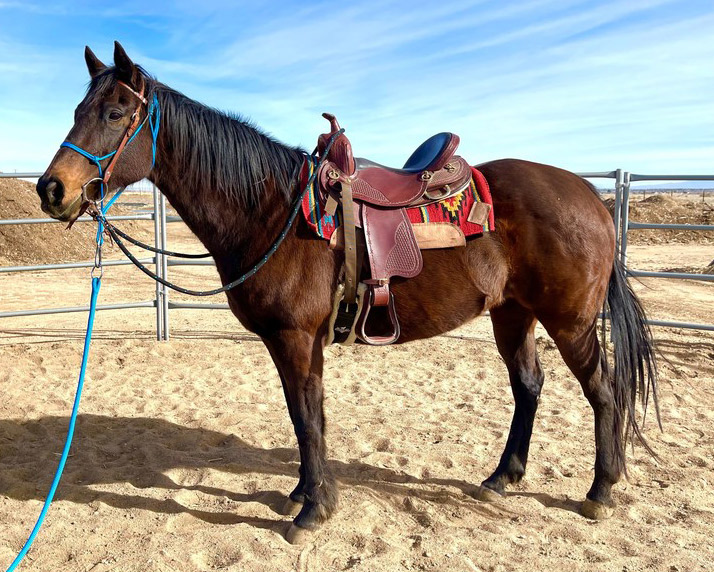
Horse: Spring Term, a 23-year-old 15.3-hand bay Thoroughbred mare in Lancaster, Calif.
Organization: Wild at Heart Horse Rescue

Spring Term is a lovely off-track Thoroughbred (OTTB) mare. She stands at 15.3 hands and has beautiful, smooth gaits. This mature lady will make a wonderful horse for someone that is ready to step up from a lesson horse to their first horse. She does wonderful arena work and has excellent ground manners. She stands for the vet and farrier, ties, clips and bathes. Loads in the trailer like a dream. Is she your #righthorse?

Click here for questions about Spring Term, the My Right Horse Adoptable Horse of the Week

My Right HorseMy Right Horse is the online adoption platform of The Right Horse Initiative, a collection of equine industry and welfare professionals and advocates working together to improve the lives of horses in transition. A program of the ASPCA, their goal is to massively increase horse adoption in the United States. To find more adoptable horses and foster horses, visit www.myrighthorse.org. To learn more about The Right Horse, a program of the ASPCA, visit www.therighthorse.org.

Keeping a Horse Blanket Clean

0
Cleaning a Horse Blanket
Photo by vprotastchik/shutterstock

“One of the best things owners can do both for maintaining their turnouts and their horses’ coats and manes is regularly removing blankets and practicing good grooming,” says Clare Silke, product innovation manager for Horseware Ireland. However, taking additional steps to maintain the interior of your horse’s clothing and blanket and keep them clean can, in turn, help keep your horse clean. Follow Silke’s advice below for a shiny, happy horse all winter long.

Silke recommends regularly wiping down the lining of blankets and hoods using warm water and a mild or non-biological detergent to remove grease and particle buildup. Once the lining is dirt free, she applies coat polish spray to these areas, creating a glossy film along the surface to help to repel dirt. This also allows the lining to move freely with the horse.

If static is a problem, a clever way to help prevent static buildup is to rub down the inside of your blankets with a dryer sheet to help remove any static clinging to the fabric.

Keeping your horse’s mane clean is a great way to prevent rubbing, says Silke. In addition to regular grooming, she likes to use mane and tail sprays to keep the mane glossy and smooth. If weather permits, she suggests a hot towel rinse along the crest to help reduce dandruff or skin particles transferring to the blanket’s interior.

“If this grooming and cleaning is done regularly while your horse is blanketed, you’ll achieve the best possible results,” says Silke.

This article about cleaning horse blankets appeared in the January/February 2021 issue of Horse Illustrated magazine. Click here to subscribe!
 

Irish Draught Horse

0
Irish Draught Horse - Kleary's Grace
Kleary’s Grace at the annual breed show of the Irish Draught Horse Society of North America. Photo Courtesy Kleary Field Irish Draughts

Before the advent of motorized vehicles, work on European farms was the job of the biggest and bulkiest horses farmers could find. The larger and stronger the horse, the heavier the load he could haul. Massive breeds like the Shire and the Belgian were in high demand throughout much of Europe, as they were needed to pull heavy plows.

There was at least one exception to this need for heavy draft horses: the island of Ireland. Unlike much of Europe, the Irish countryside was wet and rugged. Burrs and stickers clung to the thick feathers of the heavier draft breeds, and the harsh terrain was difficult for them to negotiate.

Irish farmers had to adapt. They needed a horse that was strong enough to do farm work but also nimble enough to manage the rough terrain. They had access to Connemara Ponies and now-extinct Irish Hobbies—two breeds that were hardy, agile and small. Larger breeds like the heavier Norman horses were also present in Ireland at the time, in addition to horses of Iberian breeding, such as the primitive Garrano and Sorraia breeds.

By the early 20th century, the Irish had created their own distinct breed: the Irish Draught. Truly versatile in every sense, these horses could work the farm, be ridden in foxhunts, and pull a carriage. Despite the name, the Irish Draught was not a heavy breed, and was—and still is—primarily a saddle horse.

When the Irish government first recognized them as a breed in 1901, World War I was only 13 years away. When hostilities broke out, the Irish Draught was considered an ideal cavalry horse. The breed’s numbers rose as the demand for easy-to-ride warhorses increased.

Irish Draught Horse - Gemstone Clover
Gemstone Clover, aka “Tucci,” ridden by owner Amy MacNair of Cloverstone Breeding and Sales LLC. Photo by Myrna MacNair/Courtesy Amy MacNair

It wasn’t until after World War II that the breed’s numbers began to dwindle. Many horses died in the conflict, and farmers began replacing their workhorses with tractors.

By the early 1970s, only a small number of purebred Irish Draughts remained. In 1976, a group of Irish breeders formed the Irish Draught Horse Society to help save what was left of the breed. Calling on its athletic abilities, the breed found new value as a competitive sport horse.

Today, these horses are famous as show jumpers and are also successful in other sports, such as dressage, driving and eventing. The breed is even more known for its ability to produce incredible international competition horses when crossed with other breeds. In 2008, Irish Sport Horses—crosses between Irish Draughts and other athletic breeds—were on both the British and Australian Olympic eventing teams, and earned medals for their respective countries.

Irish Draught Sport Horses

In 1993, an organization called the Irish Draught Horse Society of North America (IDHSNA) was established in the U.S. The goal was to maintain the stud books of both purebred and part-bred Irish Draught horses within North America.

Today in the U.S. and Canada, crossing one with a Thoroughbred creates an equine athlete called the Irish Draught Sport Horse. Registered with the IDHSNA, these sport horses combine the temperament, durability and power of the Irish Draught with the speed and athleticism of the Thoroughbred. This cross has produced world-famous jumping and eventing horses, like Flexible, who won the 2012 FEI World Cup Finals in show jumping for the United States with Rich Fellers aboard.

As part of its effort to promote the breed, the IDHSNA conducts annual events for owners of purebreds and sport horses, including a breed inspection and sponsorship at the Dressage at Devon show.

Manu Forti's Lady Alice
Registered 3-year-old Irish Draught filly Manu Forti’s Lady Alice. Photo Courtesy Bei DeVolld

Even though the IDHSNA had to cancel its 2020 events because of the COVID-19 pandemic, the organization is still giving out awards for best-performing Irish Draughts and Irish Draught Sport Horses at rated events this year. The breed’s annual events are scheduled to begin again in 2021.

Gina Miles and McKinlaugh
Irish Draught Sport Horse McKinlaigh and rider Gina Miles won individual silver at the Olympic Games in 2008. Photo by CLIX/Shawn Hamilton

Although many in the world of dressage, eventing and show jumping have heard of the breed, it is still considered rare. Only 528 purebred Irish Draughts are registered by the IDHSNA, with 1,523 Irish Draught Sport Horses listed.

Because of these small numbers, the Livestock Conservancy, an organization that works to protect endangered livestock and poultry breeds from extinction, has designated the Irish Draught as being of “threatened” status. This means the breed has fewer than 1,000 annual registrations in the United States, and an estimated global population of less than 5,000.

As interest continues to grow in horses that can be competitive in dressage and other international disciplines, this breed is getting a closer look, and the IDHSNA has shown an upward trend in membership and registrations over the last five years.

Fast Facts

Height: 15.1 to 16.3 hands

Color: Any solid horse color, including gray.

Overall Appearance: Powerful body with substance. Wide forehead, high-set neck, powerful back, deep girth, and a long and low-sloping croup.

Associations:
Irish Draught Horse Society of North America
Irish Draught Horse Breeders Association

This article about Irish Draught Horses appeared in the November/December 2020 issue of Horse Illustrated magazine. Click here to subscribe!
International Modern Pentathlon Committee Removes Show Jumping

1
Modern pentathlon show jumping
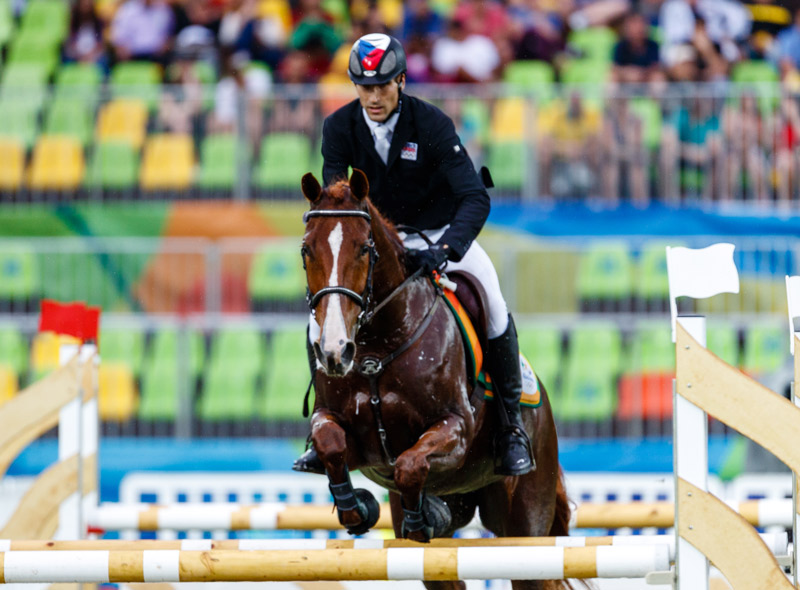
David Svoboda (CZE) riding in the show-jumping phase of the modern pentathlon during the 2016 Olympic Games in Rio de Janiero. Photo by Petr Toman/Shutterstock

Last winter, the International Modern Pentathlon Union (Union Internationale de Pentathlon Moderne, or UIPM) decided to remove equestrian show jumping from its slate of five sports. Without directly referring to the controversy that occurred during the 2020 Tokyo Olympic Games last summer where a German coach was seen striking a horse, the committee determined that “critical reforms” were necessary for the maintenance of the sport.

The changes are to take place after the 2024 Paris Olympics, meaning that equestrian show jumping remains a part of the sport until then. The UIPM has not yet chosen a new sport to replace show jumping but issued a statement saying it “has opened a consultation process to identify a suitable replacement for riding.” The statement underscored that it wishes for the new sport to be “attractive and relevant to global youth” while being low cost and gender equitable. Cycling and skateboarding have been offered as possible replacements.

The reaction has been mixed. While Australia’s modern pentathlon governing body has supported the decision, many of the sports’ elite athletes have denounced it. Britain’s Joe Choong, the current men’s Olympic gold medalist for the sport, has been particularly vocal about the decision, saying that not only were current athletes not a part of the decision to remove show jumping, but they also only learned about it from reading the news reports the day after the UIPM met.

Choong states that there had been no discussion about removing show jumping prior to the meeting and claims that the voting took place in secret. UIPM board members claim pressure from the International Olympic Committee (IOC) to make the sport more appealing to young people. Modern pentathlon has been a core Olympic sport since 1912. However, with growing pressure to include sports with greater accessibility, modern pentathlon’s future in the Olympic Games might be threatened because, as the IOC puts it, “riding limits participation.”

Choong believes that the UIPM’s governing board is out of touch with what their athletes believe. Prior to the vote, a UIPM Athletes Committee survey revealed that more than 75 percent of pentathletes wanted to keep show jumping as a part of their sport. However, according to Choong, during the vote, a 60-year-old board member and former athlete stated that his voice represented those of the pentathletes, an idea Choong found ludicrous.

Choong is not oblivious to the issues within his sport. In an opinion piece he wrote for InsideTheGames.biz, he believes that more attention ought to be paid to the horses’ welfare. “I would welcome communications with riding authorities like the International Equestrian Federation, who I know are interested in helping and discuss how to change the current riding format to put horse-and-athlete welfare at the forefront of changes,” he wrote.

Choong also knows that public opinion is against them, thanks in part to the viral video of German Olympian Annika Schleu crying atop her assigned horse at the Tokyo Olympic Games. However, he states that the current UIPM president has held his position for 28 years and has not addressed any of the concerns about animal welfare. He states that the way to solve the problems with show jumping isn’t to remove it, “but to face up to (the problems) and discuss them, together, to save pentathlon and save the horses.”

Modern pentathlon began as a showcase for necessary skills an elite cavalry officer would need if trapped behind enemy lines, or to deliver a message during a battle. As a sport rife with tradition, Choong and many other pentathletes believe that eliminating riding would turn it into a “weird mix of five different events.”

Changing the internal structure of the sport might also change its status as a core Olympic sport to one that only appears in rotation, as wrestling and squash were recently designated. The IOC has not yet determined its core sports for the 2028 Summer Games.

Morgans in the Snow: A Photo Portfolio

0
Morgan horse in the snow
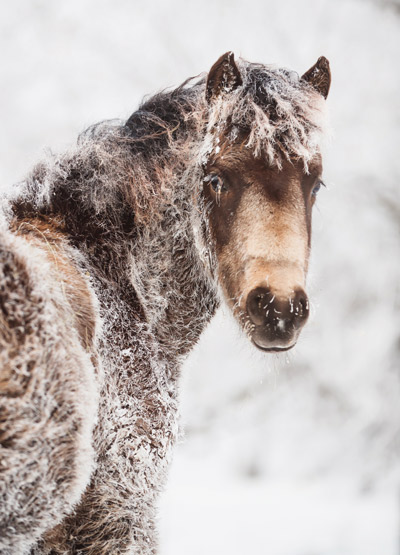
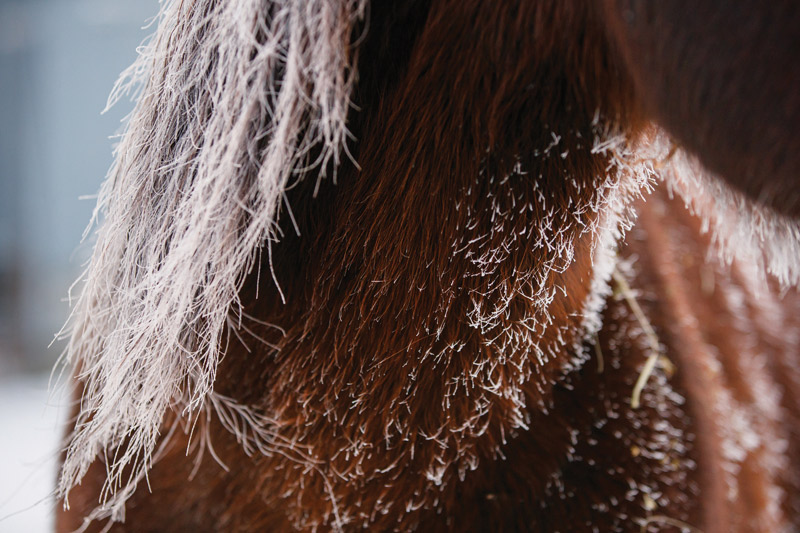
While originally I thought we were experiencing a hoarfrost event, I found later that the frost this morning was called “rime ice,” which is similar in appearance, but rime is formed by fog clinging to a surface, where hoarfrost forms on the surface, so it forms without fog. This explains why it clung to the horse’s coats. Photo by Shelley Paulson

My friend Carol Prindle of Whispering Meadows Morgan Farm and I had been talking for months about doing a winter photoshoot with her colorful herd of horses. The part we couldn’t plan is that I wanted to do it on a morning when there was frost clinging to the trees, and this only happens a few times each winter, usually with little warning.

As I was eating breakfast, morning light started to illuminate the landscape, and I looked out to see the trees heavy with frost. I messaged Carol to see if she would be game. She replied yes, and the wheels were set in motion!

I took care of my own horses, thinking I would wait until the sun came up a bit more before heading out, when she sent me a photo of one of her foals with frost clinging to his fluffy coat. I chugged my coffee, grabbed my camera gear, and hit the road.

Carol and I ended up playing with the horses in the snow and cold for over three hours because we were having so much fun!

Morgan horse in the snow
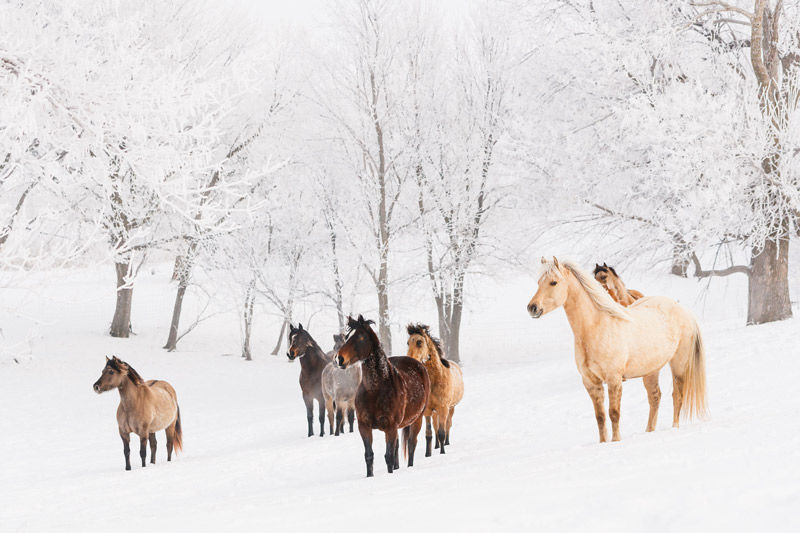
Carol’s horses stay outside year-round, so when a heavy frost fell on the landscape, it also clung to their furry coats. Photo by Shelley Paulson
Frost on Horse Coat
The frost clinging to their coats is a testament to how well insulated a horse’s winter fur is. Photo by Shelley Paulson
Morgan Horses in the Snow
While most people think of Morgans as being bay, brown, chestnut or black, they can be bred for a variety of colors, including dun and palomino. While Carol’s first passion is the preservation of the breed, their temperament and their intelligence, she enjoys breeding for color, as well. Photo by Shelley Paulson
Horse Eye
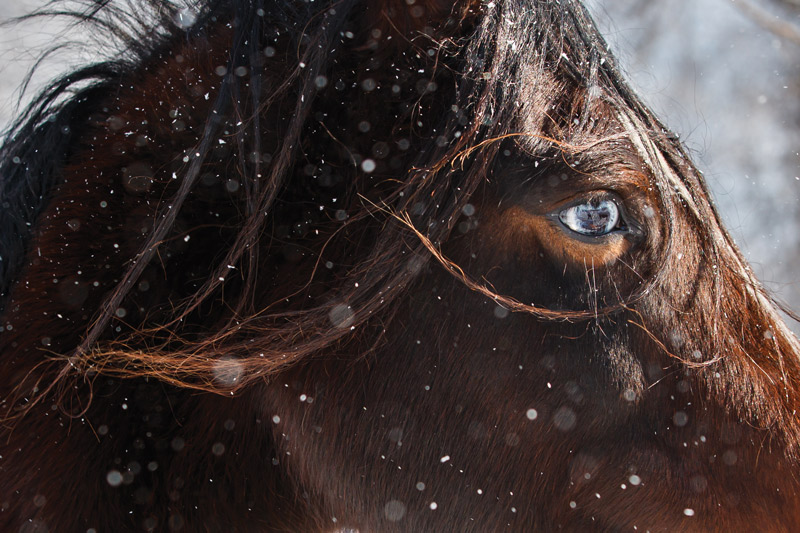
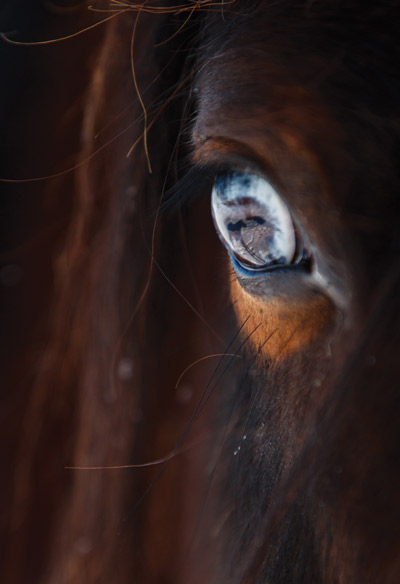
If you look closely, Anna’s eye has another eye shape in it. You can also see me taking the photo and another horse who was assisting me at the moment. Photo by Shelley Paulson
Horse Eye
Amazing what you can see in a horse’s eye! Photo by Shelley Paulson
Morgans
Midmorning, the fog lifted and the sun broke through, revealing this stunning landscape against a beautiful blue sky. Photo by Shelley Paulson
Morgan horse in the snow
Martina captured in a classic Morgan moment as she trots through the deep winter snow. Photo by Shelley Paulson

This photo story about Morgans in the snow appeared in the November/December 2020 issue of Horse Illustrated magazine. Click here to subscribe!
Equine Dreams with Horse Lover Ana Potts

0
Horse Lover Ana Potts
Ana’s passion for horses started at a very early age and has only increased as she’s matured. Photo by Kirstie Marie Photography

Anastasiya Potts is a ray of sunshine. Positive and straightforward, at age 21, Ana Potts is devoted to her beloved horses while balancing college and other responsibilities. But the petite blonde hasn’t always had a life that revolves around horses.

As a child growing up in Ukraine, Ana prayed to be adopted into a family with horses. That dream would take years to come to fruition, but when she met her American family, that far-fetched idea became a possibility. And since then, she’s grown and matured to be both an accomplished horsewoman and an adult determined to achieve her goals.

Adoption Journey for Ana Potts

Ana and her older sister, Katya, lived in an apartment with their mom, grandmother and uncle in Ukraine when they were small. Around their hometown, Ana would occasionally see horses pulling carriages.

“As soon as I saw a horse, I fell in love and wanted one so bad,” Ana recalls. “I would walk up to people and ask if I could pet their horses, and sometimes they would also let me sit in the carriage.”

When Ana was 7 and Katya was 10, they were taken to an orphanage, and their mother passed away shortly after. She still desperately wanted a horse, but more than that, a family.

“Every Christmas, they would ask us what we wanted for Christmas, and they’d give us a piece of paper to draw what we wanted,” says Ana. “I would always draw a family with horses.”

Stephanee and Zach Potts lived in New Braunfels, Texas, with their three school-age children. In 2007, the same year Ana and Katya were taken to the orphanage, the couple learned about international adoption from a local organization, and they began researching adoption of Ukrainian children. Part of that process was hosting children from orphanages in Ukraine for short-term visits. The couple were sent information about Ana, and they were immediately drawn to her.

“We just had a calling towards her—we believe God put her in our hearts, so we agreed to host her,” Stephanee says.

When Ana arrived, she couldn’t believe her eyes. Stephanee’s parents and sister, Ashley Roberts, had a ranch with horses.

“As soon as we drove in the gate and she saw the horses in the field, she was so excited,” says Stephanee. “I can’t describe how happy she was, talking a million miles an hour. She connected to the hip with my sister and would do anything to get on a horse’s back.”

Ana was ecstatic.

“They literally had horses in their backyard,” Ana says. “I stayed for three weeks, and I fell in love with the family. I went back to the orphanage and told all my friends about it.”

The orphanage misled the Potts about Katya, telling them Ana didn’t know her sister and that the older girl had heart problems. But Ana shared the truth during that first visit.

“We knew if we were going to pursue adopting Ana, we were going to pursue her and her sister together—we would never consider separating them,” Stephanee says. “We learned more about the girls, and we fell in love with Ana, so we began the process of adopting them.”

Ana and Katya were part of a group of seven girls and eight boys, but the girls were as tight as sisters and shared in Ana’s excitement about America.

Horse Lover Ana Potts
Ana dreamed of riding horses and was ecstatic when she finally got the opportunity to sit on a horse during her first visit to Texas at age 9. Photo Courtesy Ana Potts

“I prayed that I would be adopted by the Potts, and that I would have a family with horses,” Ana says.

The following summer, both Ana and Katya went to stay with the Potts family for two months. The couple took a month-long visit to Ukraine to spend time with Ana and Katya, and they also got to know their tight-knit group of friends.

“Shortly after that visit, we were asked to start our own hosting organization,” Stephanee says. “We knew these kids, so we were able to advocate for them on a personal level.”

In 2008, the arduous adoption process was complete, and both girls became part of the Potts family. Thanks in part to coordination efforts by the Potts, all of Ana’s friends from Ukraine were also adopted—most of them to families in Texas.

“We’re still best friends even today, and we see each other all the time,” Ana says.

Adjusting to the Horse Life in the U.S.

Ana’s biggest adjustment to life with the Potts family was becoming used to routine and restrictions.

“I didn’t understand why they were telling me what to do, but they explained that when I got in trouble, it’s not because they were mad at me, but because they love me and want what’s best for me,” Ana says.

Katya dove straight into ballet and pursued it with a singular passion. Although Ana tried other activities, like gymnastics, her true passion was horses and equestrian competition. This interest was nurtured in part by Ashley, who gave Ana riding lessons. The Potts moved to a ranch of their own after Ana and Katya joined them, so Ana was able to ride every day. Ana’s new sister, Allee, was already a competitive rider, and riding together bonded their relationship.

“Ana gained so much confidence through showing and riding horses, and being with them,” Stephanee says. “We could see healing take place when she would spend time with them. Anytime she would have a stressful day, she would go down to the barn, just patting them and brushing them.”

Ana quickly realized that being with horses was good for her mental state.

“Having horses was very therapeutic for me,” Ana says. “They gave me a way to access my emotions and control them. I had always wanted to ride horses, and I just felt like myself whenever I did. They reminded me of what God has blessed me with.”

Ana's New Family
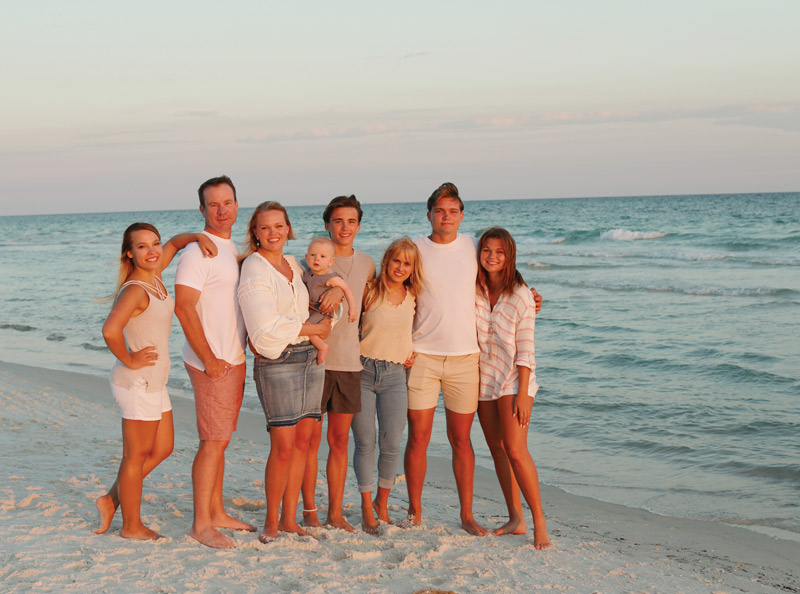
The Potts family, from left to right: Katya, dad Zach, Stephanee, brothers Jaxon and Ben, Ana, brother Jadon, and Allee. Photo Courtesy Ana Potts

Equestrian Highlights for Ana Potts

Ana started taking lessons with Ashley and showing Paint Horses, and went on to win a world championship at the American Paint Horse Association Youth World Championship Show. She decided to transition to competing on Quarter Horses and began riding with AQHA Professional Horseman Brad Jewett. When Ashley built a new barn in San Marcos, Texas, Jewett’s assistant trainer, Duke Williams, became the barn’s resident trainer.

Ana had goals for her youth career, including eventually riding for a collegiate equestrian team, and she worked with Williams throughout her time as a youth. She was second at the largest single-breed horse show in America, the All-American Quarter Horse Congress, in one of the most competitive classes—Youth 14-18 Horsemanship.

“I would say that is my biggest [youth competition] accomplishment,” Ana says.

Her favorite horse is her mare, It Was Just A Kiss (aka “Bella”).“She was definitely a tough mare,” she says. “You never could tell if she was going to go in the show pen and do her job. But I think riding her taught me to work harder and to keep getting better. Because the more we improved as a team, the more fun we had together.”

Off to College

Ana worked hard to learn English and fill in holes from her education as a child, and upon high school graduation, she was accepted at Texas A&M University. After reflecting on what she wanted her college experience to be like, she decided to decline joining the equestrian team.

Ana still rides as much as she can, but she’s also spent a year and a half volunteering at a non-profit called Life in Stride near the school, which teaches children to ride. Life in Stride’s founder, Kate Evans, says Ana was dedicated to riding and achieving her educational goals, but humble and easy to be around. Evans says Ana was a favorite of the little girls taking lessons.

Riding Western
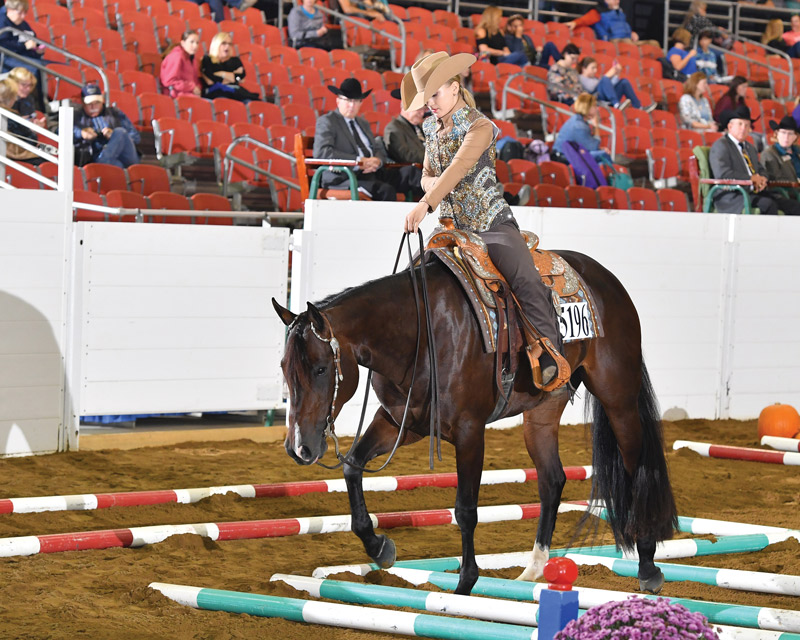
Ana and Good Tobe Lazy (“Coco”) competing in trail class. Photo Courtesy Ana Potts

“She’s super upbeat, fun, high-energy and a great rider,” says Evans. “She could work with the little ones, but she had enough skill and understanding of riding to explain concepts to the advanced riders. She is very positive, but instantly comfortable with the kids. And she’s so gracious and likeable.”

After volunteering at an orphanage in China, Ana hopes to create a Texas-based organization to bring volunteers together with that orphanage to help more children. She is also writing a book with her friends from Ukraine to share their stories.

“Ana has so much grit and determination—she doesn’t ever make excuses because of what she has been through,” Stephanee says. “She owns her life and goes for her dreams. I’m really proud of that.”

Now rooming with her sister Allee, Ana is a junior and communications major at Texas A&M. While Ana hasn’t decided on her career, she does know what her purpose is.

“My goal right now is to make a difference,” Ana says. “I want to teach riding lessons to younger kids. I would really like to have a training facility where kids from a tough background can come and use horses as therapy. I know they made a difference in my own life growing up, so I think it would be cool if I could do the same for others going through something hard.”

This article about horse lover Ana Potts appeared in the November/December 2020 issue of Horse Illustrated magazine. Click here to subscribe!
0FansLike
0SubscribersSubscribe
We use cookies to help personalize content, tailor and measure ads, and provide a safer experience. By navigating the site, you agree to the use of cookies to collect information. Read our Cookie Policy.
OK