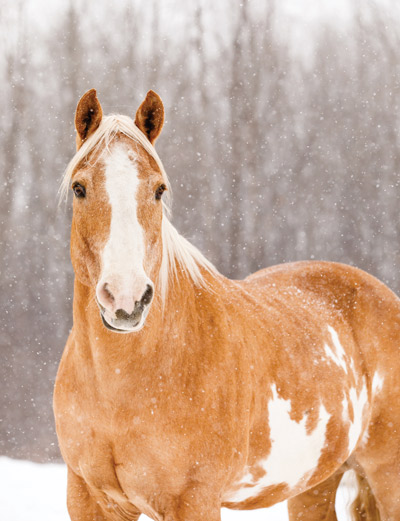
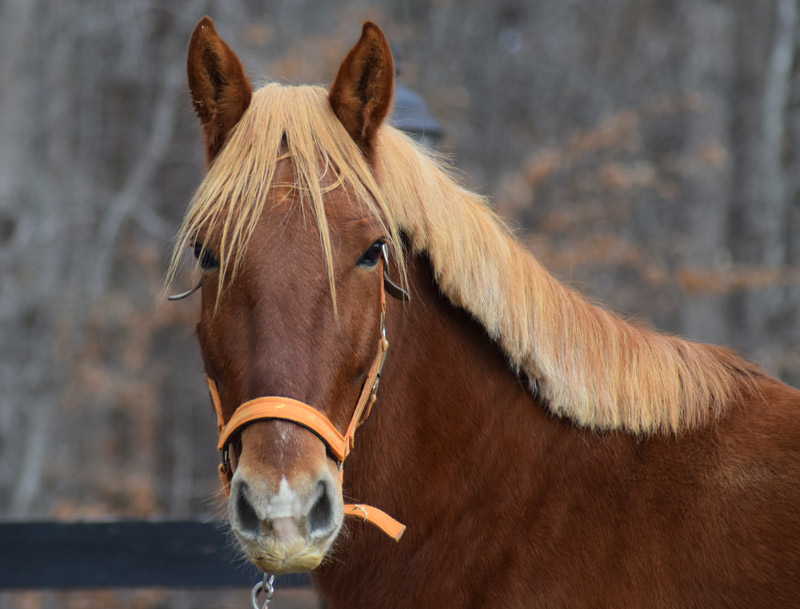
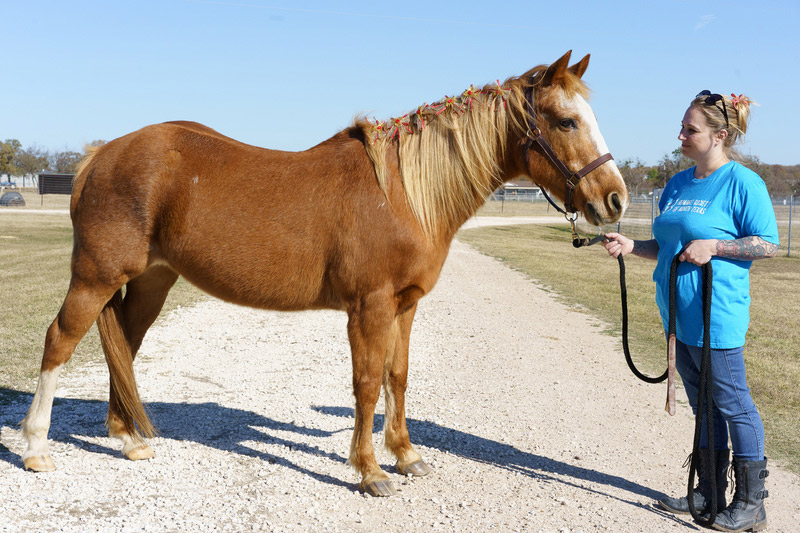
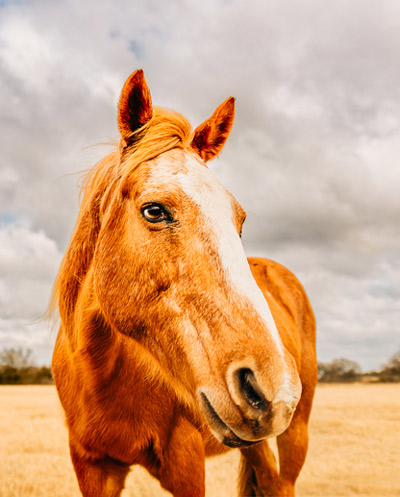
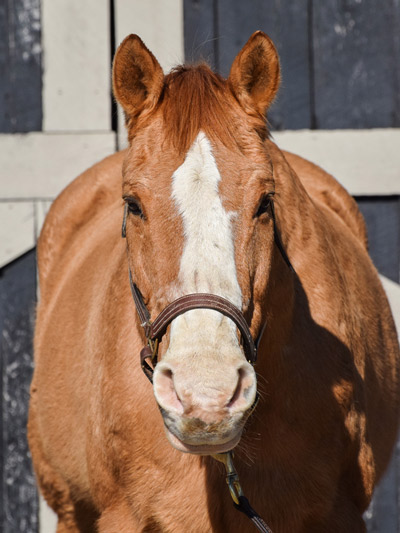
Welcome to Horse Illustrated’s weekly installment of the My Right Horse Adoptable Horse of the Week, offered in partnership with The Right Horse. Monkey is this week’s adoptable horse. Check back weekly for a new featured horse so you can find your #righthorse.
Monkey is a sweet older gentleman who came to the Kentucky Equine Adoption Center a few months ago a bit underweight but has since filled out nicely. He has a sweet personality and is kid-friendly and safe to use as a lead-line horse. He would be a great addition to any family! Is he your #righthorse?
My Right Horse is the online adoption platform of The Right Horse Initiative, a collection of equine industry and welfare professionals and advocates working together to improve the lives of horses in transition. A program of the ASPCA, their goal is to massively increase horse adoption in the United States. To find more adoptable horses and foster horses, visit www.myrighthorse.org. To learn more about The Right Horse, a program of the ASPCA, visit www.therighthorse.org.
It’s finally getting cold outside and you’re bundled up, possibly with a hot cup of cocoa or coffee in hand. But how does your horse handle the chill of winter? Let’s take a look at some answers to FAQs about winter horse care.
1. How do horses cope with cold?
An adult horse’s “comfort zone” is lower than most people think. An acclimated healthy adult horse can remain reasonably comfortable in temperatures that dip into the 20s (Fahrenheit) and below, as long as the horse stays dry and can escape wind.
Certain physiological factors help: The most obvious is a horse’s ability to grow a thick winter coat. This natural coat works to preserve warmth by trapping warm air tightly against the horse’s body, creating a layer of insulation that is remarkably efficient at buffering cold external temperatures.
Another factor in fighting the chill is the horse’s unique digestive system. The microbial fermentation of fibrous feeds taking place in a horse’s colon creates enough internal heat that your horse’s gut acts as a type of furnace to keep him warm.
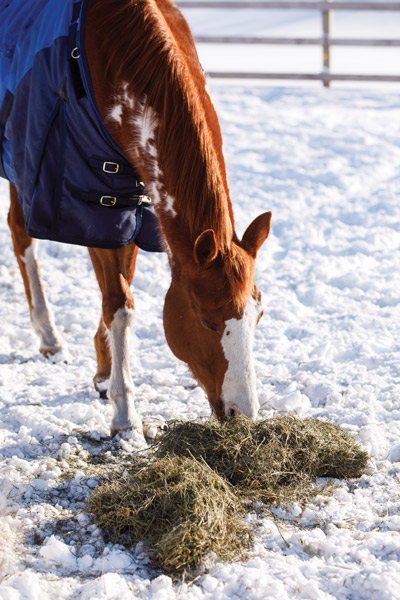
Increase your horse’s hay ration when the weather is cold; fermenting fiber in the digestive tract will help keep him warm. Photo by Shelley Paulson
2. Do blankets flatten hair and make a horse colder?
Although a horse’s natural winter coat is meant to trap warm air against his skin, placing a blanket on top of this hair does not negate the warmth. Instead, a blanket acts as an added physical layer of insulation.
While blankets do indeed physically flatten a horse’s hair, their layers take the place of the horse’s natural coat. Air trapped between a horse and the layers of blanket now act as insulation.
If you want to feel for yourself how this insulation works, pay a visit to your horse in the pasture one winter day and place your bare hand between his shoulder and the blanket to get a sense of the heat trapped in there.
There are, however, other aspects to consider when choosing to blanket your horse. Blankets are necessary for horses that are thin, sick, or older; these animals typically struggle to maintain a core body temperature in the face of harsh environmental elements. Horses that have been clipped in the winter will need some level of blanketing, as well. All other adult horses may or may not need a blanket; the blanketing debate rages on, because it depends heavily on the individual horse and his immediate external environment.
If you’re questioning whether to blanket your horse in the winter, consider his physical characteristics (e.g., body condition score, overall health status, acclimation to his environment, age, and clipping status), the winter weather you’re expecting, and whether the horse will have access to shelter in the field for protection against wind and precipitation.
3. Is it dangerous to ride a horse in cold weather?
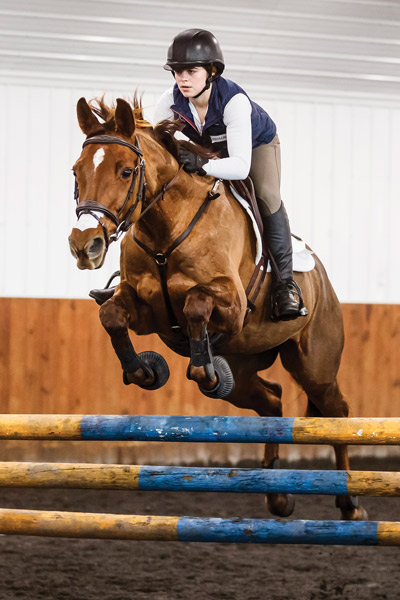
Just as you wouldn’t run a 5K in winter dressed as if it were July, winter riding requires specific preparations, but that doesn’t mean you can’t or shouldn’t enjoy hacking through the snow. One of the trickiest aspects of winter riding is preventing post-ride chills in a sweaty horse.
If you know you’ll be riding regularly throughout the winter, consider clipping your horse. With several partial clips to choose from, you can tailor your horse’s “nakedness” to your anticipated level of exertion.
If you keep up a rigorous riding schedule in the winter, you will problably need to body clip your horse to cool him out safely, as well as carefully blanketing him to replace the layers of warmth. Photo by Shelley Paulson
The benefits of clipping are two-fold: A clipped horse doesn’t sweat as much, plus he will dry much faster after a workout than a horse with a full winter coat. However, with the convenience of clipping comes the responsibility of blanketing. Removing a horse’s natural cold-weather barrier means he will need a blanket to help keep the chill away.
To shoe or not and how are other considerations for winter riding. Regular horseshoes have poor traction on ice and snow. For this reason, some people elect to pull their horses’ shoes in the winter.
However, if you think you might ride a reasonable amount in snow or icy conditions, consider talking to your farrier about studs for traction or snow pads to prevent the buildup of ice balls under your horse’s shoes. Walking on uneven packed ice also tends to bruise a horse’s soles, which is another reason some riders elect to use snow pads.
4. Can a horse get enough water by eating ice and snow?
Most domestic horses, unless already acclimated to a severe winter environment where water is scarce, have lost their natural ability (or inclination) to consume adequate amounts of ice or snow in amounts large enough to satisfy their daily water requirements. Leaving a horse to consume only ice or snow places him in a constant state of dehydration, thereby putting him at risk of impaction colic.
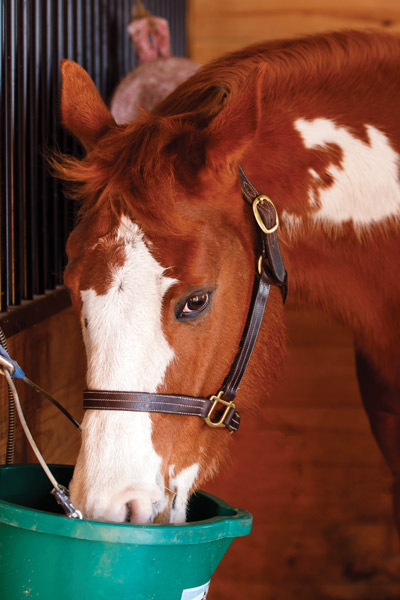
Frozen water alone isn’t the only problem in winter. Horses can be picky drinkers, and many will turn their noses up at water that is deemed too cold. Studies have shown horses prefer water between 45 and 65 degrees Fahrenheit to drink. Heated water buckets and troughs are the easiest solution for winter water woes.
Heated water buckets keep water sources from freezing and also make the water a more appealing temperature for drinking. Photo by Shelley Paulson
Decreased water intake not only increases a horse’s chance of impaction colic, but also impacts his feed intake—when a horse drinks less, he also eats less. This then further affects his ability to keep warm.
While bran mashes and other methods of adding a bit of liquid to a horse’s meal may seem like a good alternative to increase your horse’s water intake in the winter, these methods typically don’t provide enough moisture. A horse’s average water intake can vary widely due to many factors, but on average, an adult horse will drink between 5 and 10 gallons of water a day. When grazing, a lot of this water is consumed within grass.
In winter, however, hay does nothing to help with water intake, which is why it is vital to make sure your horse has continual access to clean, non-frozen (and preferably warmed) water in cold weather.
5. How should I change my horse’s diet in the winter?
Although grain has more caloric density per pound than hay, it’s actually roughage that helps keep your horse warm in the winter. Therefore, when temperatures plunge below freezing for extended periods, increase your horse’s hay ration.
Because blankets and thick winter coats easily hide a horse’s body condition, it’s important to regularly monitor his body weight, either through evaluating his Henneke body condition score (BCS) or by using a weight tape. Although tapes are notoriously inaccurate, they do catch significant changes up or down.
These objective measurements will tell you if he’s taking in too few (or too many) calories. Evaluating body weight monthly through the winter should give you a good idea about the adequacy of your horse’s diet.
Most horses do not require any further alterations to their diet during the winter. Mineral and vitamin needs stay the same as in the summer, although if your horse is a voracious salt consumer, he may appreciate some loose salt instead of a frozen salt block to lick.
Horse Illustrated’s Vet Adventures columnist shares how she discovers a massive horse health problem.
Cimarron, a stallion, lay quietly on his side in the snow as I walked up to his pen. He stretched out his neck and halfheartedly nibbled on a bit of hay, but soon abandoned the effort. There were a few tiny piles of manure around him, and he strained several times from his position on the ground.
“He’s been like this since he came home from the vet yesterday,” said Shirley. “They said he was OK because his gut sounded good. They tubed him with a gallon of oil and sent us home, but he’s not getting any better, and I’m worried about him.”
“What were his vitals and rectal exam like?” I asked, watching the stallion with concern. He groaned and rolled briefly onto his back, then returned to his side.
“I don’t think they did any of that,” said Shirley. “I’ll tell you, we was in and out fast, and they didn’t even say what was wrong with him.”
Vet Adventures Health Problem
The temperature was 15 below zero that morning, and I was bundled heavily in long underwear, coveralls, double socks and heavy boots. I sighed, unenthusiastic at the thought of stripping down in the bitter cold to perform a rectal exam and colic workup. The stallion was an unexpected addition to what was supposed to have been a quick call for some Coggins tests. Shirley was apologetic.
“They said he would get better Doc, but if anything, he’s worse.”
Poor Cimarron was trying to roll again, and I quickly went to the truck to get my equipment and drugs. The stallion did not need the vet pouting because it was cold out. He needed my help.
We got him up and moved him into the barn, which did little to improve the Arctic temperature. Despite his discomfort, Cimarron still managed to arch his neck and parade grandly past the mare in the adjoining pen. Shirley swatted him lightly.
“You’ve been colicked for two days, and you’re still showing off for the girls!”
She looked at me hopefully. “That’s a good sign, right?”
“I hope so,” I said.
Cimarron’s heart rate was in the mid 40s and his respiratory rate and temperature were normal. He did have some gut sounds, but they seemed sluggish. I didn’t like his gum color: dull pink with a blueish undertone of mottled vessels, and he strained frequently, hoisting his tail high but only passing a single manure ball here and there.
A Tingly Diagnosis
Cold or not, it was clearly time to do a rectal exam on Cimarron. I took a deep breath as I removed my coat and five heavy outer layers. Shivering in the icy air, I drew up the sedative, and the drug froze instantly in the syringe and in the bottle. I had to tuck syringe and bottle inside my shirt to thaw.
When the stallion’s head dropped and he swayed in place, I started the rectal exam, but I couldn’t advance past my wrist. Often a twisted intestine will be forced into the pelvic inlet, and initially I thought that was what I was feeling. But as I continued palpating, my heart sank as my fingers brushed past a structure that was not supposed to be there.
It was a dense tissue mass about the size of a melon adhered to the inside of his pelvis, and it felt lobulated and thick with sizable blood vessels, which told me it was there to stay, and that it meant business.
Sometimes I can feel a weird and unpleasant tingling in my arm when I touch an animal that has cancer, and my arm was definitely feeling the weird energy contained inside the invasive structure. It might sound a little nuts, but my arm is almost always right. I always recommend additional diagnostics, because writing, “I knew it was cancer because my arm tingled” in the medical record is probably not very professional. But this diagnosis was crystal clear.
Shirley watched me anxiously. There was no good way to tell her that her beloved horse most likely had cancer, and I took a deep breath.
“There’s a large mass growing inside his pelvis, Shirley. He’s straining like this because he can’t pass much manure around it and he’s got a big impaction built up in there. I can pass a tube and give him some medicine to help soften up his manure, and some rectal fluids may help break the impaction down as well.”
“That’s not gonna fix him, is it?” Shirley asked quietly.
I looked at her sadly. “There might be some better diagnostic and treatment options at a referral hospital. I’ll try to get him comfortable if you want to take him in.”
Zap to It
Shirley silently stroked Cimarron’s neck as I readied my stomach tube and pump, but she stopped me as I approached the stallion’s head. There were tears in her eyes, but her voice was steady.
“It’s not fair to him, Doc. He’s been through enough, and I want you to put him down.”
I nodded sadly and went to my truck to get the euthanasia solution. It was the right thing to do, but as I gave Cimarron his last injection and he sank to the ground, my heart ached for Shirley. She hunkered down next to the stallion and laid a hand on his head.
I patted her shoulder gently with my still-tingling palpation arm, meaning to offer comfort, but Shirley jumped as though she’d been zapped with a cattle prod.
“Ouch!” she exclaimed. “What was that?”
I stared at my arm. Had it truly absorbed the cancer energy, and had I inadvertently shocked Shirley with my amazing powers? But Shirley pulled a needle and syringe from her pants pocket and glared at it, rubbing her backside.
“Damn cap came off the needle.” Then she straightened up. “I don’t know about you, but I could sure use a cup of coffee. What do you say?”
I was in. Magical arm or not, coffee was always a good idea.
This Vet Adventures column about how a tingly arm indicates a massive horse health problem appeared in the November/December 2021 issue ofHorse Illustratedmagazine. Click here to subscribe!
We riders are bright creatures. We memorize long courses, process multi-part instructions, and generally do the whole patting-your-head-and-rubbing-your-stomach routine from the back of a thousand-pound animal with a mind of its own. Except when we can’t. Occasionally, your mental computer gets gummed up with saddle soap. You lean at the jump. You twist for a lead change. You cut the corners. Your horse riding coach or trainer offers tips and explains what you need to do. You screw up again. You’ve hit a wall.
But sometimes, out of nowhere, your horse riding coach pulls magic words or tips out of their hat that hit that mental barrier like a wrecking ball. And poof! You, your horse, and Miley Cyrus are crashing through the wall.
Sure, when in doubt, add leg. But here are a few more mind-blowing quips from my trainers that suddenly made it all make sense.
◆ “Use the pressure you want to use.” This is so logical it makes me want to scream. If you like a horse with an electric response, more pressure won’t do it; a whisper-soft leg with corrections is the way to go. If you prefer a firmer feel, you’re not going to get there anxiously holding your leg off your thin-skinned mount.
Use the pressure you want to use. It’s scary, it’s counterintuitive to me, and it works.
◆ “You have to go to work. So does your horse.” This came after I explained to a visiting trainer that my sassy, tantrum-y horse wasn’t in a “good mood.” Rule No. 1: always check whether the source of resistance is pain. But barring that, even great horses (especially certain mares) have grumpy days. I’ll make any excuse for my baby: It’s hot out! She doesn’t like the flowers! But this trainer helped me realize we still must do our jobs.
Even when I’m not “feeling the vibe,” I must go to work. And I may cut her some slack, but so does my grouchy mare.
◆ “I’m raising the jump, but ride it exactly the same.” I know this is going to be as big a shock to you as it was to me, but the fact you hear the jump cups sliding up the standards does not mean you have to get as nervous as if you just entered the Grand Prix ring for a $100,000 jump-off.
It turns out if you’re already doing OK, you don’t need to lose your entire mind over the jump going up 3 inches. Who knew?
◆ “Don’t forget to let the air out.” When you feel the anxiety rising, slowly blow air out of your mouth like you’re blowing bubbles. Whenever I do this, I realize how long I’ve been holding it in, and I feel active relaxation from all parties. Whoops.
◆ “Don’t ask until you’re ready.” Your trainer’s looking at you. Your lesson mates are looking at you. IT’S TIME TO CANTER. LIKE, RIGHT NOW. Relaaaaax. Are you ready to canter? Or has your horse been walking around half asleep, waiting for his turn through the grid? Is his white-rimmed eyeball trained on the lawnmower buzzing past? Are you discombobulated? Need some water?
Take a beat, friend. Gather yourself before rushing toward chaos and wrongness. You can afford a few moments.
◆ “Don’t make the distance work; make the distance happen.” A positive mantra from my jumping trainer to remind me this is not entirely a game of chance. My pace, rein length, and body position are all up to me. But also …
◆ “The last few strides are for your horse.” Whatever canter you have coming out of the corner, that’s your canter. The day before your wedding is not the time to be experimenting with tanning, and the strides before the jump are not the time to be experimenting with adding or subtracting a step.
If you’re blessed with an obvious distance, look up. Your job is done. Like pores in a magnifying mirror, the more you stare at the spot you chose, the worse it’s going to get.
If you see nothing, keep your pace, and 99 percent of the time, the spot will materialize out of thin air. It feels like a trust fall, but unless you’re jumping huge jumps, you’re going to be just fine.
◆ “Just sit there.” Truly the seed from which all these comments grow, and by far the hardest instruction to swallow. Riders are perfectionists; we can always be rounder, straighter, and pushing harder from behind.
But “sitting there” is an art form. When everyone is getting frustrated, don’t fret, don’t pick, just sit there. Shut the amoeba brain off for a moment and enjoy the ride.
Now get on your wrecking ball and start making some breakthroughs!
Yelani focuses on straightness as she travels down the centerline. Photo by Allyson Dean
Lessons are a regular part of the lives of most equestrians, and because of this, we as riders grow accustomed to following directions given by our instructors as we travel around the arena doing schooling exercises with our horse. But what happens when you’re riding on your own?
The first and foremost goal for any rider should be to leave the horse better than when you got on. So many times, I see riders following the fence for lap after lap, throwing in the occasional circle, unsure of what they should be doing during their ride. Circles are OK, but there are so many other options!
Whether you’re familiar with the horse you’re riding or it’s a horse that is completely new to you, it will be beneficial to work on what all horses and riders need to be reminded of daily—going forward and straight.
All of the following exercises bring these concepts to the forefront and are best attempted once the horse has had a lengthy walk (10 minutes) and a lap or two to stretch out in each direction at the trot and canter. All can be ridden at the walk, trot or canter.
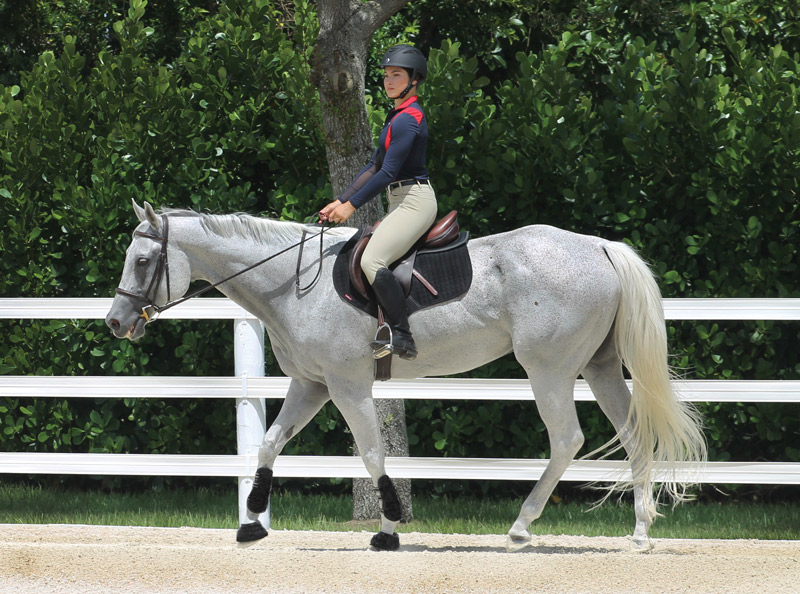
Knowing that it would be easy for Andy to drift when traveling across the diagonal, Yelani keeps his hind end engaged with her leg aids. Photo by Allyson Dean
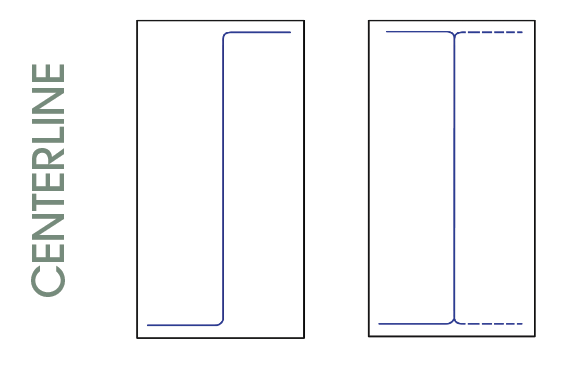
Centerline Schooling Exercise
The centerline is an invisible line that runs up the middle (center) of the arena, cutting it in half the long way. At the midpoint of the centerline is the letter X. X represents the location for change of bend, change of diagonal, and/or a change of lead.
In order for your horse to be straight from start to finish during this and other schooling exercises, you’ll need to maintain control of his shoulder through the turn at each end of the arena. This is accomplished by ensuring that your abdominals are engaged and that your hands are held 4 inches apart while gently lifting up and back, which prevents your horse from leaning on his forehand.
You then add your outside leg to help him swing his body onto (or off of) the centerline. Keep even contact in both reins to prevent an accidental outside bend in response to pressure from your outside leg.
Remember to stay riding forward, since the slower a horse goes, the easier it is for him to become crooked. The centerline can be ridden as a change of direction, or you can maintain the same direction.
Yelani looks in the direction of her turn as her right leg tells Andy to turn across the arena. She tries to do minimal work with the left rein. Photo by Allyson Dean
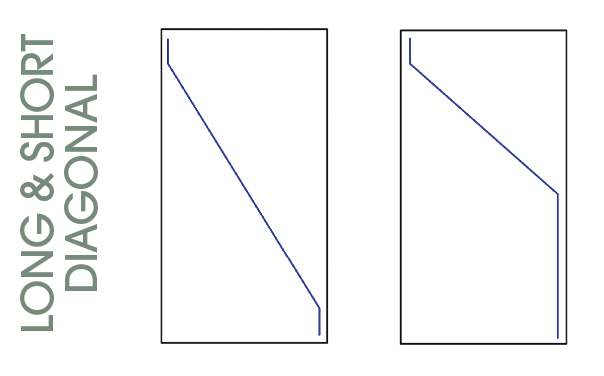
Long and Short Diagonal
The long diagonals of the arena run from corner to opposite corner and pass through X. Short diagonals go from halfway down the long side of the arena to the opposite corner, or vice versa. (See diagrams below.)
Riding across any diagonal is always done as a change of direction. The riding principles for traveling across a diagonal are very similar to those for traveling down the centerline, with a feeling of lift in the turns and a complete focus on straightness as you move across the arena.
During the centerline and both versions of the diagonal, you can begin to add transitions on the straightaway, working to maintain straightness, energy, and lift through each transition.
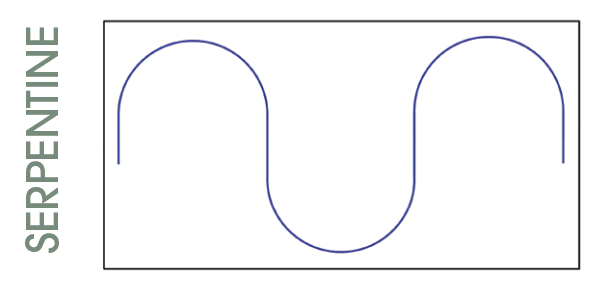
Three-Loop Serpentine With Your Horse
This figure begins and ends at either end of the centerline, crosses the centerline twice, and cuts the ring into thirds (see below).
It builds on what you have established by riding the centerlines and diagonals, but is more challenging, as the periods of straightness are shorter with the turns coming up faster. This requires increased organization in order to coordinate the turns, and when ridden in trot or canter, doing changes of diagonal or lead.
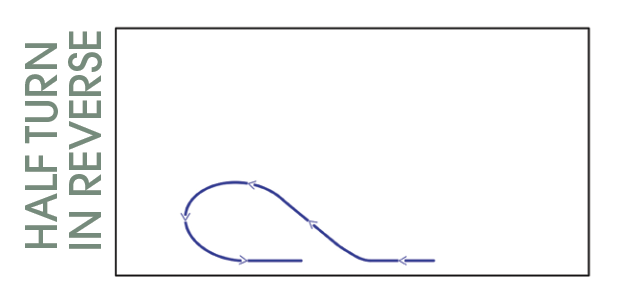
Half Turn in Reverse
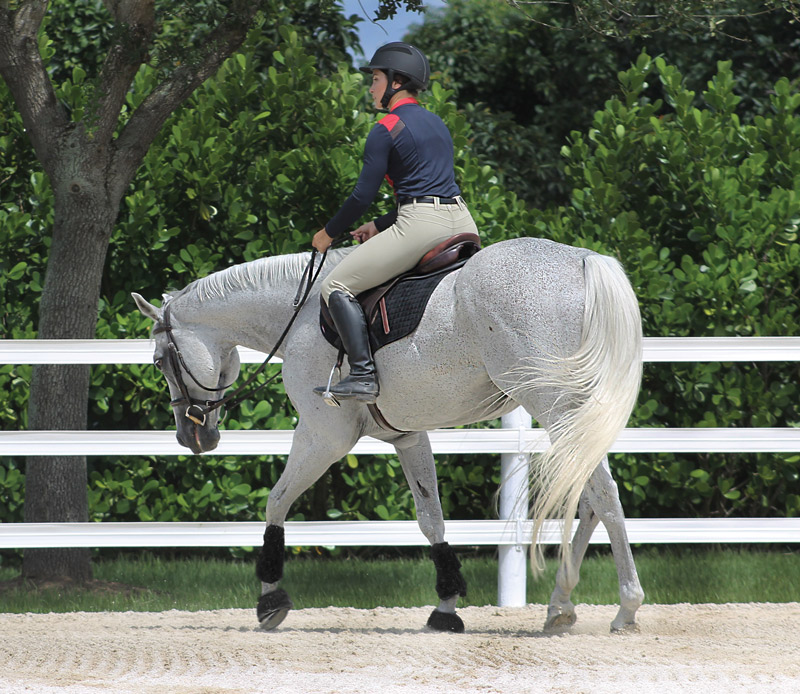
By the time this pair attempts a half turn in reverse, Yelani has Andy responding to her leg and seat aids so well that she is able to leave slack in both reins. Photo by Allyson Dean
This is a great way to switch up your change of direction. Most horses anticipate what they are about to be asked and are not often asked to turn toward the fence, so this is a good test of whether your horse is truly responding to your aids. (See diagram below right.)
Anywhere along the fence line, bring your horse off the rail with your outside leg. Ride a diagonal line for a few strides away from the fence, then begin shaping a half circle back toward the fence with your horse starting to bend around the new inside leg.
Because this is a change of direction maneuver, the former outside leg has now become the shaping inside leg, and the former inside leg will become the new outside leg, helping to push your horse around the turn to move forward and straight into the new direction alongside the fence.
Familiarizing yourself with these exercises is just the beginning. Allow them to become a part of your riding toolbox, trying them on a variety of horses and noting how different horses need to be supported in different ways. Soon you will become well versed at schooling any horse you ride to be forward and straight.
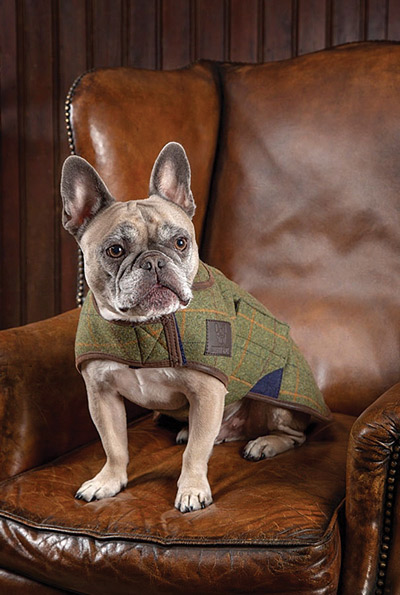
The distinguished barn dog deserves the ultimate gear, like this cozy tweed coat with faux leather trim. This fitted coat is lined with soft fleece and is designed for a close and snug fit. It may look expensive but is available at an affordable price.
Starting at $39.99; www.shop.shiresequestrian.com
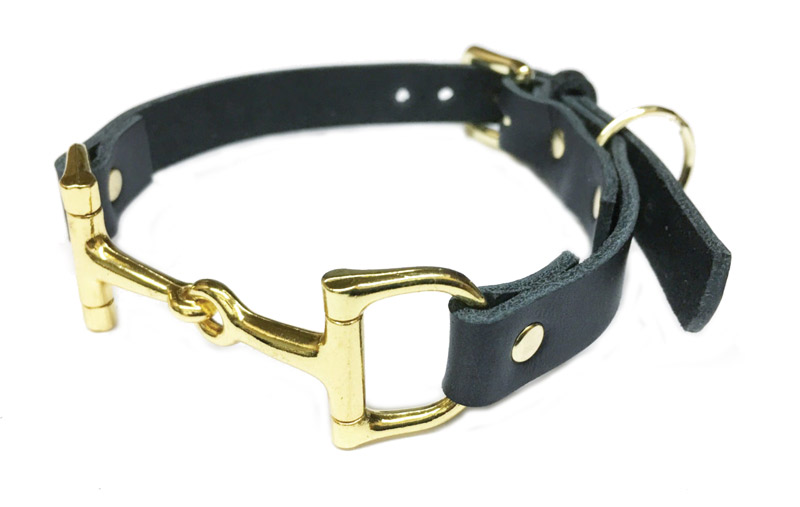
Classic Leather Dog Collar
Classic Leather Dog Collar
Luxurious leather is available in 10 delightful colors with gold or silver hardware. This minimalistic, chic dog collar features a simple snaffle to tie in the equestrian charm.
$69.99; www.etsy.com/shop/ideana
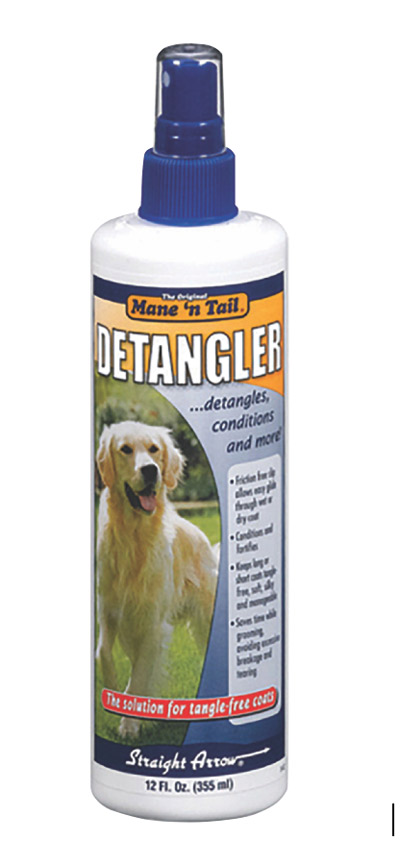
Dog Detangler
Dog Detangler
Friction free slip allows for a brush or comb to easily glide through a wet or dry coat. Conditions and fortifies hair strands and keeps long or short coats soft, silky and manageable. Comes in a pH balanced, water-based formula.$12.99; www.manentailequine.com
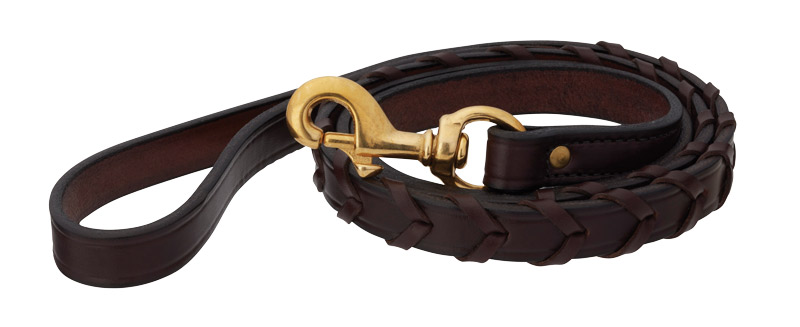
English Bridle Leather
Laced Collar & Leash The sophisticated barn dog has a matching leather collar and leash with traditional lacing resembling a pair of English reins. Quality leather is simple to clean and will last for years. The collar and leash are available in oak bark or dark havana.
Collar: $34.95; leash: $39.95; www.smartpakequine.com
English Bridle LeatherEnglish Bridle Leather
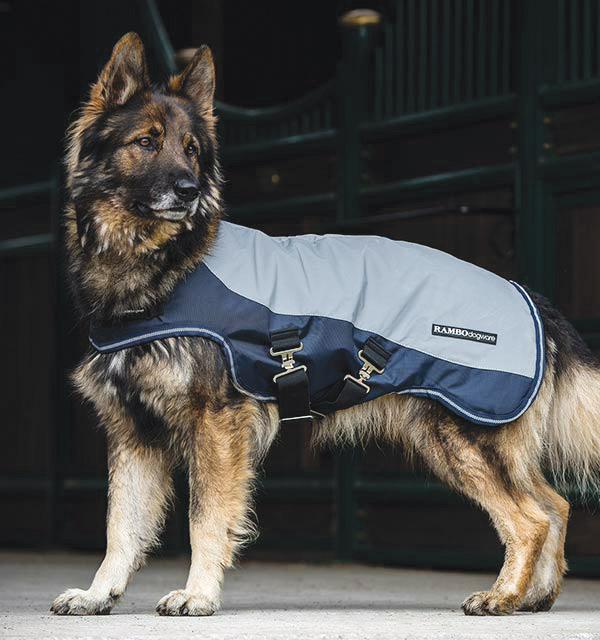
Rambo Reflective Dog Blanket
Rambo Reflective Dog Blanket
Winter nights at the barn are often cold and dark. This reflective blanket keeps your dog warm and makes him easy to see. It features traditional equestrian blanket surcingles for a snug and secure fit.
Starting at $29.95; www.shop.horseware.com
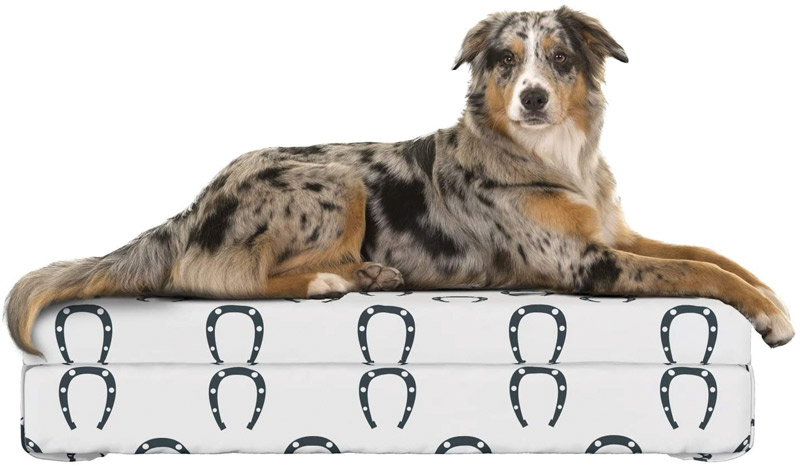
Lunarable Horseshoe Dog Bed
Lunarable Horseshoe Dog Bed
This spacious dog bed is made from quality memory foam and features a removable, washable cover. It’s a soft and cozy place for your dog to rest or sleep. The bottom features a stopper so it will stay in place no matter how active your dog is. $129.00; www.amazon.com
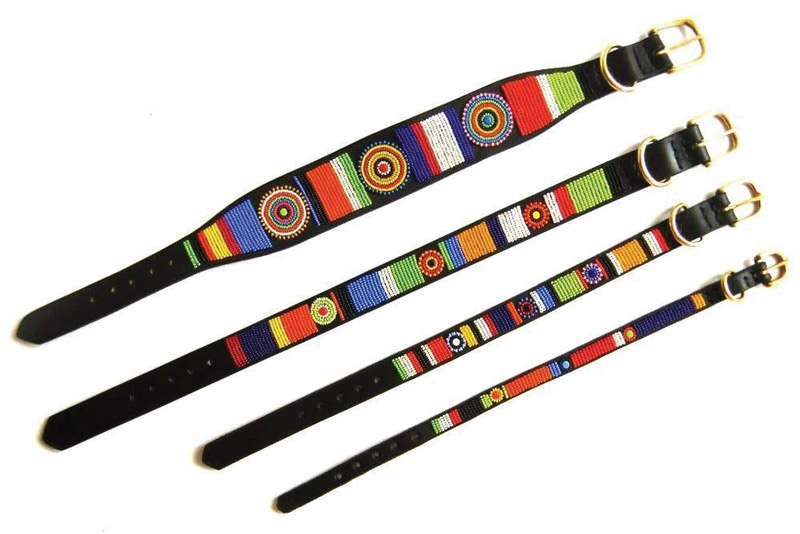
Circle of Life Beaded Dog Collar
Circle of Life Beaded Dog Collar
A vibrant and colorful collar is decorated with hand-sewn beads on leather with solid, hand-cast brass buckles. It’s a well-made piece with a second piece of leather glued and stitched to the back of the collar for comfort and durability. A modern design with intricate bead work creates a showstopping collar.
Starting at $46.00; www.twoheartsequineboutique.com
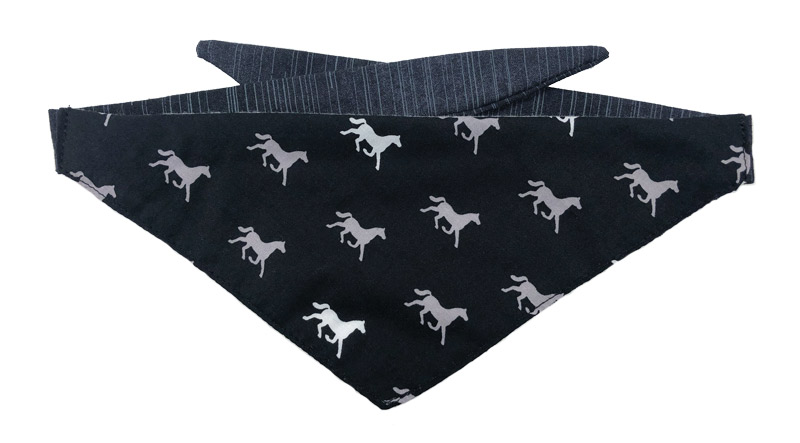
Little Equestrian Reversible Tie-On Bandana
Little Equestrian Reversible Tie-On Bandana
Adorable trotting horses prance across this navy blue reversible bandana. A thoughtful accessory is cute on any dog, but especially one with a fluffy coat. The bandana will stand out and won’t get hidden behind all of that hair.
Starting at $19.50; www.etsy.com/shop/smallfrytailormade
Horses are so sensitive they can feel a fly landing anywhere on their body and twitch the skin underneath. Knowing this, it’s no surprise that any imbalances, tightness or injury in the rider will be felt by the horse, impacting communication and balance. Coming from an equestrian family and working with trainers and riders, Scott Henderson, DPT, a physical therapist of 35 years, developed sports-specific exercises to help riders overcome the pain and tension that often accompany this high-impact pursuit. His Equifitness program is focused on what he calls “the three R’s”—releasing, re-educating and rebuilding. We’ll run through a few warm-up exercises for riding.
“Your body must be balanced so areas of tightness must be released,” says Henderson. “Once the areas of tightness are released, your body must be re-educated through retraining your central nervous system. After steps one and two, your body must be rebuilt.”
Here, he shares some of his pelvic mobility exercises that you can use to warm up before riding. These exercises are followed by his seated kicking and marching exercises, which emphasize core stability, endurance and strengthening, all while maintaining proper position.
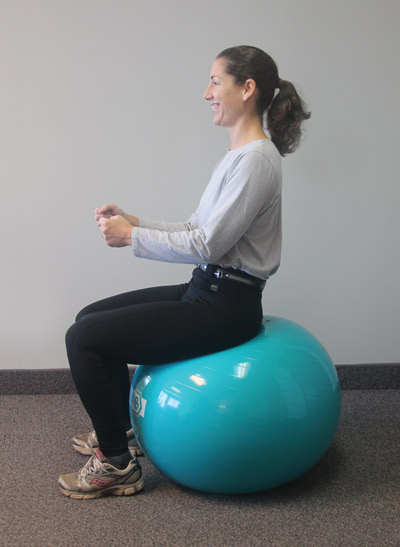
The only equipment you need is an inexpensive exercise ball. The correct ball size depends on your height: 4’11” to 5’4″ height should use a 55 cm ball; 5’4″ to 5’11” height a 65 cm ball; 5’11” to 6’7″ height, a 75 cm ball. You should be able to sit with your knees at a right angle and your thighs parallel to the ground.
Front to Back. Photo by Terry Lynn HendersonFront to Back. Photo by Terry Lynn Henderso
Pelvic Mobility
These warm-up exercises are designed to increase mobility in your hips and increase your balance, core stability, and core and hip strength, all which are important for riding.
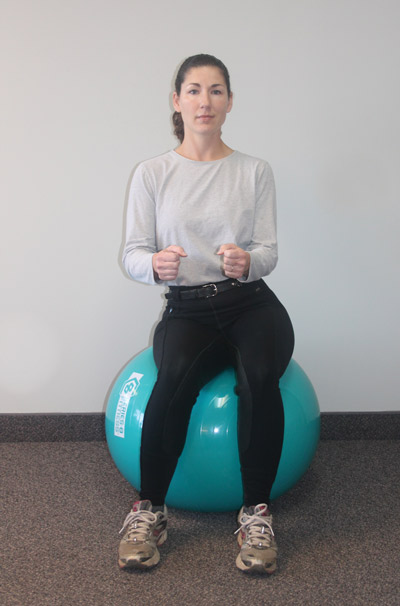
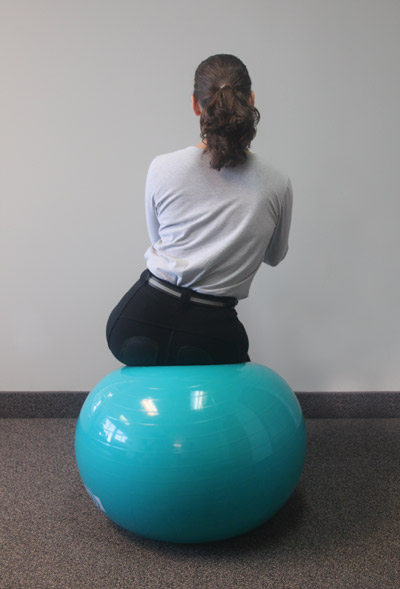
Start seated on the ball with your feet on the floor, toes pointed straight ahead, and arms in riding position. Watch that you maintain good riding position with your head up and core engaged, and your shoulders back and level.
Movement is created through your hips and your core. The key is to keep your head, shoulders and upper body still while hinging at your waist and moving your hips.
You may need to complete these movements while sitting in front of a full-length mirror to ensure that you’re not moving above your waist.
Only move as far as you are able without moving your upper body. Your movement will increase as you progress with your program and your freedom of movement increases.
Side to Side. Photo by Terry Lynn Henderson
Complete 10-20 repetitions of each movement. There are three basic movements:
1. Side to side: Alternately hinge your hips out to either side.
2. Front to back: Tuck your pelvis underneath you both forward and backward.
3. Rotation: Do hula-hoop type hip circles in both directions.
Seated Kicking and Marching
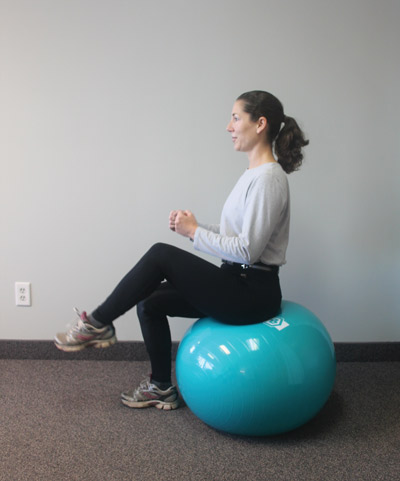
Start seated on the ball with your feet on the floor and your toes pointing straight ahead. Arms are ideally held in riding position; however, you may have to place your hands on the ball to help stabilize yourself at first. This will get easier as your core and hip strength increase. Watch that you maintain good riding posture with head up, core engaged, and shoulders back and level. There are two movements:
Rotation. Photo by Terry Lynn Henderson
1. Seated kicking: Slowly straighten each knee until the knee locks. Alternate each leg. Initially hold for a count and then return your foot to the floor. As your strength and stability improve, you will be able to hold each leg out in front of you for a 5-10 count. Repeat 10-20 repetitions of each leg.
2. Marching: Slowly pick each knee up off the floor as high as you can comfortably lift it while keeping your foot pointed straight ahead. Initially hold for a count and then return foot to the floor. As your strength and stability improve, you will be able to hold each leg up for a 5-10 count. Repeat 10-20 repetitions of each leg.
By improving your core strength and flexibility, you will start reaping the rewards in stronger communication with your horse.
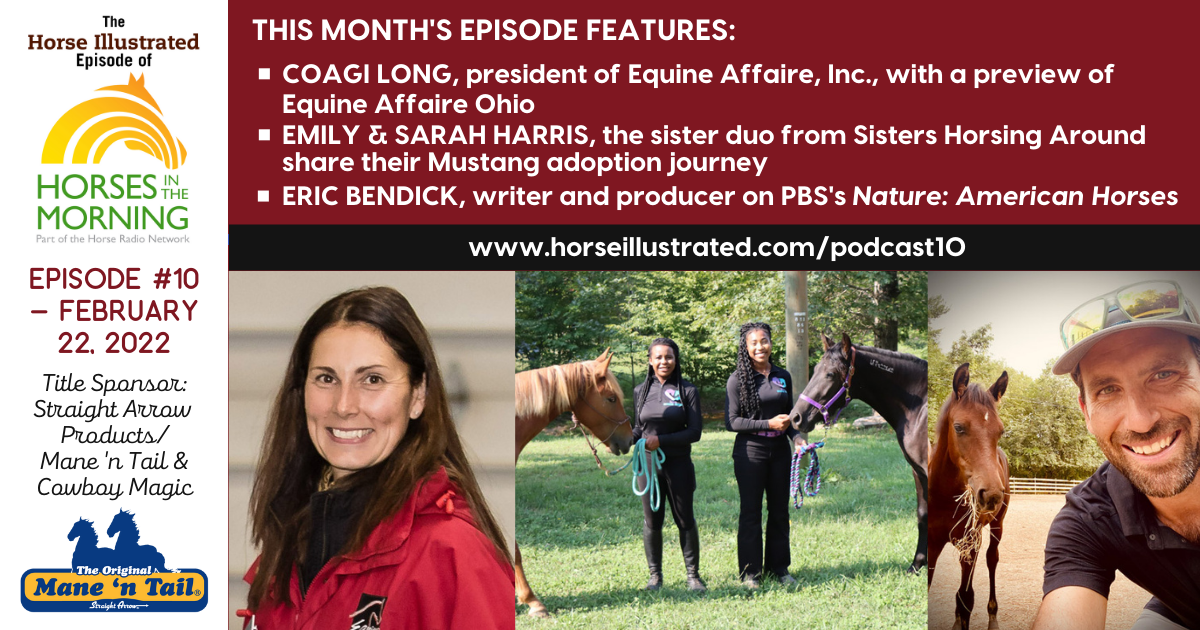
In the 10th episode of The Horse Illustrated Episode of Horses in the Morning, sponsored by Title Sponsor Straight Arrow Products, hosts Glenn the Geek and Sarah Evers Conrad chat with Coagi Long, president of Equine Affaire for a preview of Equine Affaire Ohio, which happens April 7-10; Emily and Sarah Harris of Sisters Horsing Around share about their journey with their adopted Mustangs; and Eric Bendick, talks about his role as writer and producer of Nature: American Horses, set to air on PBS.
Hosts: Sarah Conrad, Digital Content Editor of Horse Illustrated & Young Rider and Glenn the Geek, host of Horses in the Morning
Coagi Long, president of Equine Affaire, Inc, Previews Equine Affaire Ohio
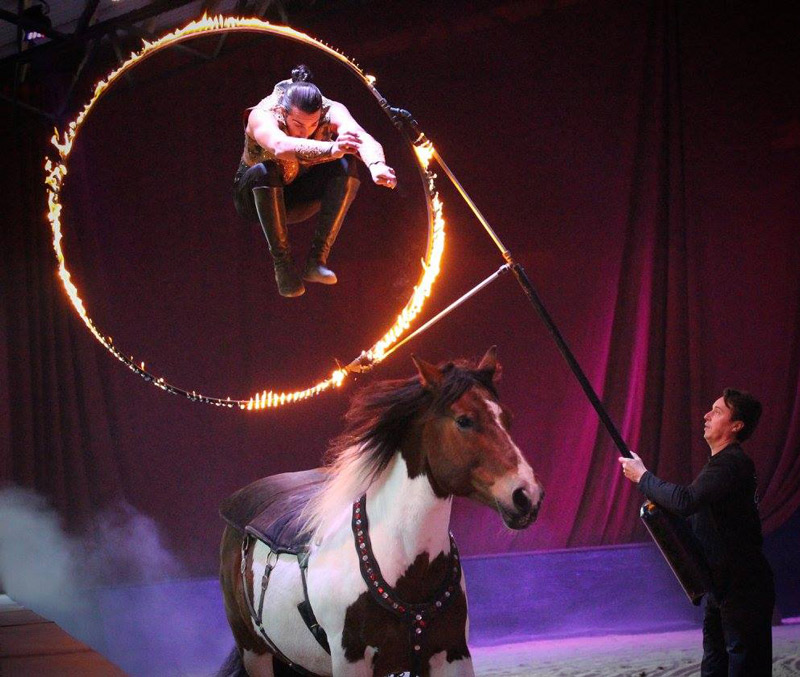
Caleb Carinchi Asche will perform at Equine Affaire Ohio. Photo Courtesy Equine Affaire
Coagi Long, president and owner of Equine Affaire, Inc., has more than 18 years of experience with the company in a variety of areas. She joined Equine Affaire in 2003 as a member of the Marketing Department, where she facilitated numerous promotional projects. She also served as program director and as vice president and executive producer from 2006 to 2018. Coagi manages the extensive program of clinics, seminars, and demonstrations and coordinates the Fantasia performers and production for each Equine Affaire. She also oversees the company’s website, manages the production elements of each event, and supervises the day-to-day operations of Equine Affaire. Coagi graduated from The University of Findlay with a BS dual major in marketing and equestrian studies and a minor in operations and logistics management. She has primarily concentrated on dressage and hunt seat, earning several intercollegiate titles in both disciplines. She competes in dressage, and trains and breeds Warmbloods at her farm in West Mansfield, Ohio.
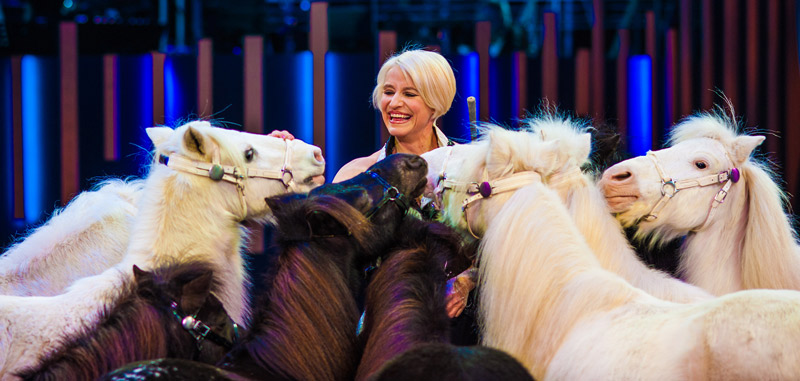
Jenny Vidbel will perform in the Equine Affaire Ohio Fantasia show. Photo Courtesy Equine Affaire
More Information on Equine Affaire Ohio and Massachusetts
Blaze is one of the Mustangs Emily and Sarah talk about on the podcast episode. Photo Courtesy Sisters Horsing Around
Emily and Sarah Harris are the sister duo of “Sisters Horsing Around,” which includes their YouTube channel, website, and social media accounts (see below). Sisters Horsing Around is a fun, engaging, informative and educational resource for horse information. As multi-discipline riders, Emily and Sarah have had a variety of experiences, and they are passionate about sharing the joys of horses. They call themselves the “Equestrian Guides” and want to help non-equestrians explore the amazing world of horses. For those that are equestrians, they want to help broaden their interests in different disciplines. They do this by creating content that can be enjoyed and understood by anyone. They also endeavor to bridge the gap between those outside the horse world and those in the horse world and bring equestrian sports into the limelight in an interesting and understandable way.
Talitha will be Sarah’s horse in the youth TIP Challenge at Equine Affaire Ohio. Photo Courtesy Sisters Horsing Around
Additional Information: Catch the first Sisters Horsing Around interview on the Horse Illustrated Episode of Horses in the Morning
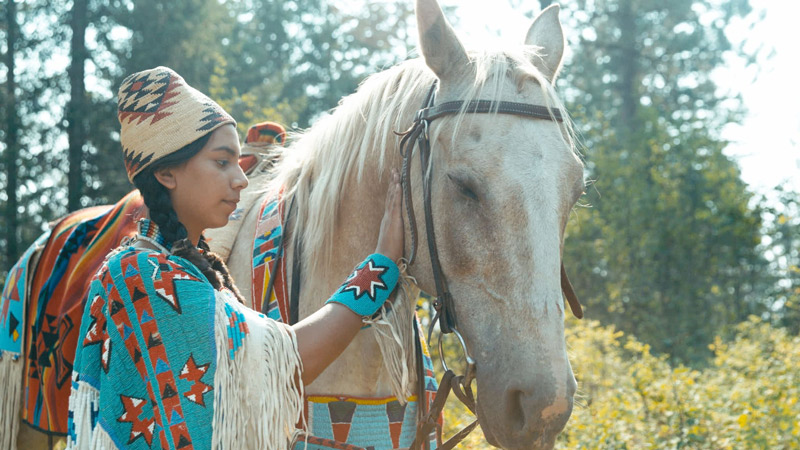
Close up of Nez Perce girl dressed in regalia, petting her Appaloosa horse in the forest on Nez Perce Tribal Land in Idaho. Photo by Jeff Reed/Courtesy of The WNET Group and TMFS GmbH
Eric Bendick, Writer and Producer of Nature: American Horses
Eric Bendick is a director, producer and writer whose work explores connectivity, conflict and wonder at the intersection of the human and natural world. Eric has led filming expeditions in many of the last wild places, such as the Florida Everglades, the Grand Canyon, the Great Bear Rainforest, and the most remote spot in Yellowstone National Park. His work has aired on PBS, National Geographic, Smithsonian and the History Channel, as well as streamed online for numerous platforms. Eric is a current grantee of the Redford Center. His productions have garnered an Emmy, Webby and numerous other awards and accolades from major film festivals around the world. He is the writer and producer of PBS’s Nature: American Horses, which airs on February 23, 2022, and then streams online afterward.
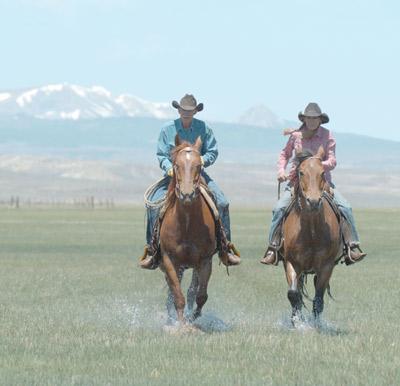
Mike and Tara Miller riding horses on their fifth generation cattle ranch in Big Piney, Wyo. Photo by Jeff Reed/Courtesy of The WNET Group and TMFS GmbH
We want to thank our Title Sponsor, the Straight Arrow Family of Brands, makers of Mane ‘n Tail, Cowboy Magic & Exhibitor’s, with over 100 years of grooming excellence. For more information about your favorite products, please visit www.straightarrowinc.com and find Straight Arrow Products at a tack shop near you!
Mustang. Morgan. Appaloosa. Quarter Horse. Each of America’s horses has a unique story to tell. From New England homesteads to cattle ranches in Wyoming to tribal lands in the Mountain West, see how the horse is part of this nation’s history in Nature: American Horses, premiering Wednesday, February 23 at 8 p.m. ET on PBS (check local listings), www.pbs.org/nature and the PBS Video app, with narration by Bill Pullman.
Discover the origin story of American horses, which can be traced all the way back to the 50-million-year-old fossil beds of Polecat Bench, Wyo. From these ancient beginnings, Equus spread around the globe, but mysteriously went extinct in North America. Arriving aboard ships of Spanish explorers, horses reclaimed the continent after a 10,000-year absence. With their return, the stage was set for a new generation of American breeds and a lifelong partnership with humans.
“Horses helped shape the landscape of our nation,” said Fred Kaufman, executive producer for Nature. “Their stories are a fascinating look at how their history and our history are inseparable.”
A combination of natural selection, selective breeding, and chance created the wide spectrum of more than 100 American horse breeds we know today. Emerging from regional patterns of work, culture, tradition and geography, these signature breeds each made their mark on the nation. Meet the Appaloosa, bred and revered by the Nez Perce tribe; the American Quarter Horse, perfectly trained to work the open range; the Morgan Horse, whose underdog story is legendary; and the wild Mustang, whose close bonds within their community shed insight into their relationships with humans. Witness vivid scenes of incredible horsepower, whether they are cutting cows in a sagebrush sea, galloping through autumn foliage in New England or racing across the Pony Express Trail.
For 40 years, Nature has pioneered a television genre that is now widely emulated in the broadcast industry, bringing the natural world to millions of viewers. The series has won more than 700 honors from the television industry, the international wildlife film communities and environmental organizations, including 20 Emmys and three Peabodys. Consistently among the most-watched primetime series on PBS, Nature continues to innovate through original digital programming, such as the new podcast Going Wild with Dr. Rae Wynn-Grant and digital series Animal IQ and Crash Course: Zoology. Nature’s award-winning website, www.pbs.org/nature, features full episodes, short films, digital series, behind-the-scenes content, news articles, educational resources and more.
Nature is available for streaming concurrent with broadcast on all station-branded PBS platforms, including www.PBS.org and the PBS Video app, available on iOS, Android, Roku streaming devices, Apple TV, Android TV, Amazon Fire TV, Samsung Smart TV, Chromecast and VIZIO. PBS station members can view many series, documentaries and specials via PBS Passport. For more information about PBS Passport, visit the PBS Passport FAQ website.
Nature: American Horses is a production of Grizzly Creek Films and The WNET Group in co-production with Terra Mater Factual Studios. The program is written and produced by Eric Bendick. Thomas Winston is producer, and the show is narrated by Bill Pullman. Fred Kaufman is executive producer, and Bill Murphy is series producer. Janet Hess is series editor. Danielle Broza is digital content and strategy lead.
Support for Nature: American Horses was provided by Kitty Hawks and Larry Lederman, The Hite Foundation and The Sun Hill Family Foundation.
Series funding for Nature is also made possible in part by the Corporation for Public Broadcasting, The Arnhold Foundation, The Fairweather Foundation, Kate W. Cassidy Foundation, Sue and Edgar Wachenheim III, Kathy Chiao and Ken Hao, Charles Rosenblum, Filomen M. D’Agostino Foundation, Lillian Goldman Charitable Trust, Leonard and Norma Klorfine, Sandra Atlas Bass, Colin S. Edwards, Gregg Peters Monsees Foundation, Koo and Patricia Yuen, and public television viewers.
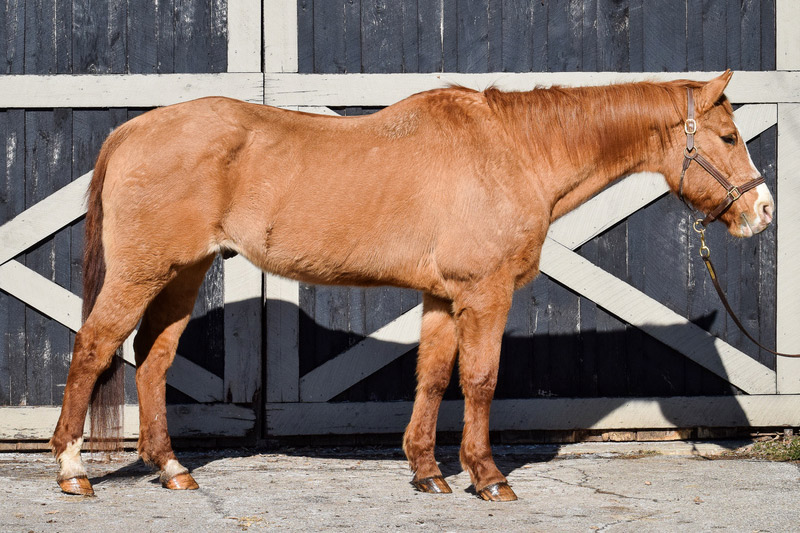
Welcome to Horse Illustrated’s weekly installment of the My Right Horse Adoptable Horse of the Week, offered in partnership with The Right Horse. Rosetta is this week’s adoptable horse. Check back weekly for a new featured horse so you can find your #righthorse.
Rosetta is a sweet small pocket pony who loves treats and is looking for a pasture to live out her retirement. She loves to see people and will approach for attention, scratches, and treats. Meal time is simply the best; you will love how she licks her chops waiting for her breakfast! Though her riding days are behind her, she would make an excellent companion to another horse and does well with a dominant mare. She also seems pretty happy on her own, though it would be great to see her with an equine buddy. She truly seems to enjoy long walks on the beach (or in the pasture if that is what you have) along with being groomed, pampered, and being treated like the queen she is. For day-to-day handling, she will need someone who can be assertive, particularly around meal times, but she is otherwise very easygoing. She would also do best with a big pasture to roam so she has plenty of room to move about and can dream her big pony dreams. Did we mention she is a volunteer favorite? She is up to date on her vaccinations, Coggins, dental care, farriery, and is microchipped. Adoption fee subject to change as her skills improve. Please fill out an interest in adoption form on our website to learn more and schedule an appointment at www.hsnt.org/equine-and-livestock. Is she your #righthorse?
My Right Horse is the online adoption platform of The Right Horse Initiative, a collection of equine industry and welfare professionals and advocates working together to improve the lives of horses in transition. A program of the ASPCA, their goal is to massively increase horse adoption in the United States. To find more adoptable horses and foster horses, visit www.myrighthorse.org. To learn more about The Right Horse, a program of the ASPCA, visit www.therighthorse.org.
We use cookies to help personalize content, tailor and measure ads, and provide a safer experience. By navigating the site, you agree to the use of cookies to collect information. Read our Cookie Policy.



 My Right Horse is the online adoption platform of The Right Horse Initiative, a collection of equine industry and welfare professionals and advocates working together to improve the lives of horses in transition. A program of the ASPCA, their goal is to massively increase horse adoption in the United States. To find more adoptable horses and foster horses, visit www.myrighthorse.org. To learn more about The Right Horse, a program of the ASPCA, visit www.therighthorse.org.