Enter our 12 Days of Christmas Giveaways here!
0 ITEMS
  • My Account
  • Holiday Gift Guide
  • Podcast
  • Webinar
Subscribe Combo
Enable cache13
Home Blog Page 1067

How to Break in a New Saddle

11

You’ve pondered styles, researched suppliers, sat in seats, evaluated trees, though about girth lengths, decided on the perfect size for your horse and compared prices. Your catalogs are tabbed and dog-eared, and you’ve visited every tack shop you could find. And now the shiny, brand-new saddle is in your hands. You groom your horse immaculately, disdainfully bypass the old saddle and tack up with your prize.

Hmm, it’s a little stiff tightening the girth.

Up in the saddle, the blissful comfort you expected from your latest-design marvel is surprisingly absent. Your horse’s first steps are accompanied by a cacophony of squeaks and creaks. No, you haven’t made a big mistake. Your saddle is probably as much as you expected and more — it just isn’t broken in yet.
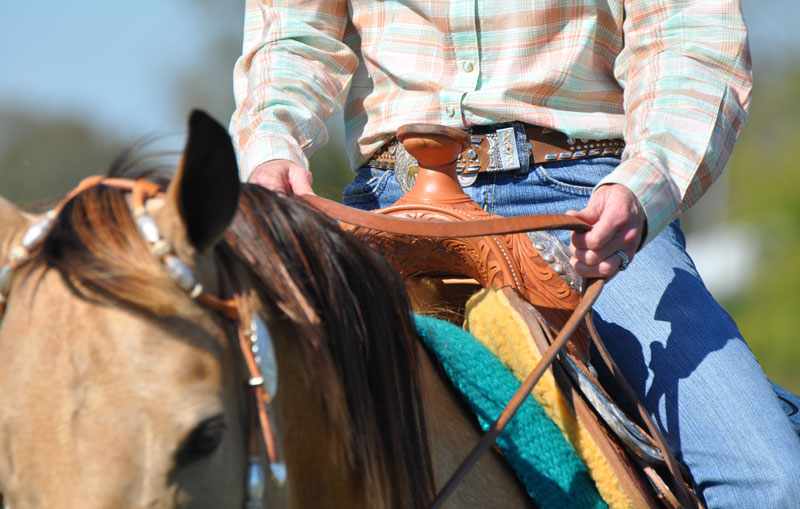
Western Saddle


How do you break a saddle in? As in many horse-related activities, there are traditional approaches as well as a little bit of new technology to help you along. Although there are many viewpoints on how to break in a new saddle, two points of consensus are: use some kind of lubricating preparation to add moisture to the leather; and ride, ride and ride until the saddle fits your seat.

Lubricating Products

Inside leather are bundle-like fibers that give it strength and flexibility. If those fibers get proper lubrication, they won’t squeak, dry out or split. Because leather is a natural substance, most who work with it recommend applying natural oils to replenish its moisture. Which products are best and worst for cleaning and lubrication leather is a topic of considerable debate.

Glycerin has traditionally been used to clean leather surfaces and maintain shine, but it doesn’t penetrate the surface. Instead, it attracts moisture from the air to keep leather pliable. Another traditional product, neatsfoot oil, penetrates the leather but has some other drawbacks, some caused by its change in composition over the years.

In the past, neatsfoot oil was actually made from boiled cattle hooves. Now products marketed as neatsfoot oils may be pork lard mixed with petroleum-based mineral oils. Neatsfoot and olive-based oils will permeate leather, but they continually migrate to the stitching and stress areas, eventually wearing off on your breeches or jeans. Neatsfoot doesn’t cause mold, but it does create an environment that can let mildew in. Also, neatsfoot oil may darken leather.

Using highly alkaline products can weaken leather’s fibers. Saddle soaps were made for convenience centuries ago by mixing soaps with oils. The soap’s cleaning effectiveness, however, is diminished by its efforts to dissolve its own oils, leaving little useful cleaning capacity to remove dirty oils from the saddle.

One-step cleaning/lubricating products are designed to be used occasionally when tack-cleaning time is tight. However, no one product can thoroughly clean and remove oils and then replace the moisture to lubricate the leather. Cleaning requires that dirt and soiled buildup be removed. Conditioning requires that oils lost in the cleaning process be replaced. Soap can also turn leather dark and remove tanning agents, causing hardening and cracking.

To begin the break-in process, Frank R. Marciante, who makes Marciante Saddles in Paulden, Arizona, recommends using and good grain oil — extra-virgin olive oil or peanut oil, but cautions that mice like peanut oil. Commercial leather dressings, such as Hydrophane, are also designed for the leather’s initial oiling.

For easier application, Marciante suggests pouring the oil in a can and painting it on with a brush. Wiping leather with a solution of bleach or vinegar was the traditional way to eliminate mildew, but that won’t prevent its return.

“If you treat your leather like skin, keeping it nourished and clean, it will last longer than you will,” says Anna Blangiforti of Unicorn Editions, makers of Leather Therapy products, which contain mold and mildew preventives. It’s especially important to clean and condition the underside of panels and flaps that rub against the horse because his body oils and salty sweat can damage the saddle, she notes.

Cleaning and conditioning products that are pH neutral will protect the leather’s fibers and stitching. Nontoxic additives prevent mold and mildew without detracting from other beneficial properties. Products with emulsifiers will also help push some built-up debris out of the pores of over-oiled saddles.

Sue Littlefield of L7 Ranch in Simla, Colorado, prefers to use a leather cream, which she applies as soon as practical to a new saddle. “I have found that it does not darken the leather as much as neatsfoot oil. It also is less sticky than oil compounds. A used, soft toothbrush is great for getting the product down into the tooling.” A good rule of thumb is that if the brush scratches your skin, it’s too stiff for the leather. And, she reminds, rawhide should never be oiled.

English Saddles

New English saddles often come with a white film of tallow, the natural fats and oils in the leather that have risen to the surface. “It’s a protectant and should be left on,” says Robin Davidson, saddle product manager at Miller’s Harness Company. As you ride, the heat and friction will rub the tallow back into the leather.

Davidson recommends treating your new saddle with a leather conditioner called dubbin, such as Lederbalsam. Dubbin is a super-fatted emollient, a thick, pasty product that helps nourish the leather.
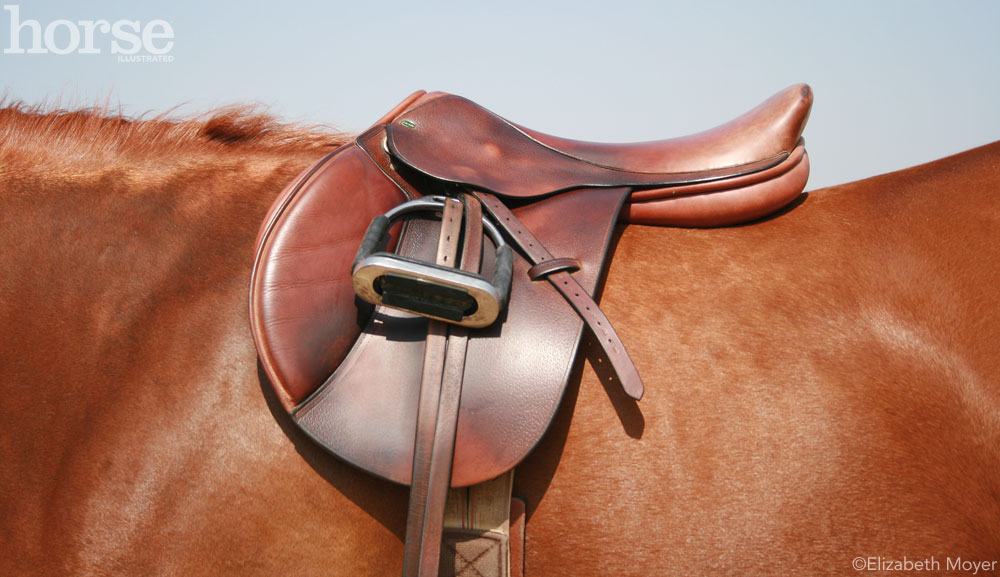
English Saddle


“It is best to treat both the hair and flesh sides of the leather,” Davidson says. If the temperature is low, let the dubbin sit in the sun to warm up or it will be thick and difficult to rub in. Use a dry cloth or sponge, and rub on a light coating. After that layer has been absorbed, add another. A saddle that has been sitting on the showroom floor for months may need two or three coats applied a few hours apart. Then invest the time and ride in it, she says.

Using a leather oil may break the saddle in more quickly because it penetrates quicker than dubbin, but it might penetrate to the core of the leather and release the dyes if it’s too saturated, she warns. Over-oiling can also cause dyes to stain breeches.

“I’ve had many long discussions with the tanners and leather couriers we use, and they prefer the old English ways to make saddles and leather last a long time,” says Davidson. She cautions riders to never dip or soak their saddles in oil.

Western Saddles

Western saddles, with their heavier leather and thicker layers, require a more time-consuming break-in process. The old cowboy approach is to throw the new saddle in a water trough, then ride it dry. By accident, Don Burress, who, with his wife Kay, owns Cowboy’s General Store in Lawrenceburg, Indiana, learned how well that works. Trail riding one summer day, he got caught in a drenching rainstorm. The group kept riding. “By the time we got home, that saddle fit me like a glove. It had gotten soaking wet and dried to the shape of my body,” says Burress. As you use leather, with oil and heat and you in the saddle, it will continue to conform to your body. “In my opinion, it doesn’t hurt to get a saddle wet,” says Burress, who has ridden for 45 years and sold saddles for 13, “but the main thing is when they dry out, you put the oil back in to replenish what dried out.”

Stirrups on a western saddle that hasn’t been broken in have a normal tendency t be parallel to the horse, when they need to be at right angles, says Burress. He soaks the saddle fenders, then rolls them back in toward the horse and ties them to dry, which sets the leathers so the foot will naturally slide into the stirrups. “When I store a saddle, I run a 2-by-4 through the stirrups to keep them turned in toward the horse,” says Burress.

Sharon Camarillo, an international horsemanship andbarrel racing instructor who is also the author of the book and video,Training, Tuning and Winning, goes even further. She takes the stirrups off, soaks the fenders up to the skirt in water for four to five minutes until the leather is about as pliable as clay, then molds them with her hands, dries them, applies a saddle soap or spray glycerin, replaces the stirrups, turns them out, and puts a rake handle through the stirrups to hold them in position. “Then I go over the saddle with a good saddle soap,” says Camarillo. “Then just ride in it. I have done the same process by riding the saddle until it dries. A night or two with a rod between the stirrups usually does it.”

Bruce Olsen of Montrose Quarter Horses in Richmond, Virginia, uses the same approach of wetting the stirrup leathers and turning the stirrups in. He places an ax handle weighted with a bucket of water hanging from it through the stirrups to stretch the leathers. He says it takes a week and a half, riding 10 hours a day to get a saddle “that feels pretty good.”

“If the stirrups are persistently hard to keep turned, softening the leather will help,” says Littlefield. She offers another time-proven solution: “If the saddle squeaks too much to tolerate, turn it upside down to where you can get under the panels, and shake a generous amount of baby powder into the tree and under the jockeys. Once righted, wipe the excess that may get onto clothing while using it. This will help alleviate some of the noise while the leather gets seated, stretched and settled in the process of being used.”

Ride, Ride, Ride

Once you’ve selected a lubricant and applied several coats to your new saddle, the next step is riding in it. But be sure that you’re just breaking in the saddle — not your body or your horse’s back — cautions Holly Covey of Mary-Dell Farm in Harrington, Delaware.

The best way to break in a new saddle is to spend hours in it. Avoid using a heavy pad, ride for 20 to 30 minutes, then stop, get off, take the saddle off, and see if there are any hot spots on the horse’s back, says Covey. And while you’re riding, watch the horse’s ears and stay alert to see if there’s something bugging him. Those may be signs that the saddle doesn’t fit.

“New English stirrup leathers don’t feel the same as old stirrup leathers,” she says. She suggests riding in the old ones until you feel more comfortable with the new saddle, but be aware that the old stirrup leathers may mark a new saddle, and you should never put them on a trial saddle. “Wear chaps or breeches and boots when riding in a new saddle. If you want to get a good sore, ride in jeans,” says Covey, adding that if you are moving your leg around trying to find a comfortable spot, the saddle won’t break in right. “If you’re switching from an all-purpose saddle to a dressage saddle, which really puts your leg in a different position, ride in the new saddle for a while, then go back to the old until your legs are used to the new leg position, or go back to your old saddle for a few minutes at the end of the ride,” she says. “I’ve ridden half the lesson in the new saddle and half in the old. A new saddle that fits properly will break in quickly. A new saddle that still has you gritting your teeth after several weeks of daily riding may not fit you or the horse.”

Don’t expose your saddle to too much sunlight at first, because it has no natural oils, she cautions. Continually clean and oil it to work softness in. If you have a black saddle, be sure you don’t wear your best white breeches. The black will rub off, especially if you sweat a bit. Most leathers have dyes that are sweat-resistant, but save the white pants until the saddle is broken in.

Although breaking in a saddle is somewhat of a “no-pain-no-gain” proposition, keep in mind that significant pain for you or your horse is a big hint that the saddle may not fit one or both of you. Keep your leather-lubricating product handy to use regularly and whenever your saddle gets wet. Your new saddle will soon be as comfortable as the old, and you’ll be ready for that show or trail ride.
Careers in the Equine Industry: Artistic Impression

9

“I sold my first horse portrait when I was 13 for $3,” recalls Joan E. MacIntyre. “Then I sold another when I was 18 for $35. I then quit my job and decided to become a horse painter. That’s all I’ve done ever since.”

For over 40 years, MacIntyre has been painting horses. Fiery, explosive racehorses. Regal, noble show horses. Working, honest draft horses. MacIntyre has, with her skillful brush, depicted equines in a beautiful manner that has made her an award-winning artist in both open juried art shows as well as equine shows. She works in a variety of media, including oils, acrylic and watercolor.

Her love of horses goes back several decades. “It all started when I saw the milkman’s horse in Milwaukee when I was about 3 years old,” she laughs, “and it’s been going on ever since.”

She began riding at age 9, but had to wait until she was 18 until she had her first horse, a Saddlebred mare. “My first love was Saddlebreds, and then I showed Morgans for a while. When I came West, I got involved with Arabians.” Because of her involvement with a variety of breeds, she has been able to study the unique conformation of each, as well as its movement and temperament qualities.

While her talent is certainly inborn, she has backed it up with a solid education. “I went to Temple University, the Tyler School of Art and the Phoenix School of Art. Since then, I have taken a lot of workshops, and still do whenever possible.”

Doing equine portraiture and fine art takes a great deal of time and effort. MacIntyre’s schedule is as busy as any working woman’s. Instead of sitting at a computer or in a board room, she works at a canvas in her home studio. A typical day involves first “doing my chores. I must go out and feed my horses in the morning. After that, I usually start painting. Depending on what I have to do, whether it’s errands such as picking up supplies or having a piece framed, I try to paint most of the day. I usually quit around 5:00 p.m. or so. Sometimes, however, when I have a lot of deadlines, I work through the night.”

When MacIntyre is commissioned for a painting, she works from photographs, but also travels to see the horse in person. She will confer with her client on several occasions to make sure that she captures not only the conformation of the individual horse, but its personality. “I have some clients who will tell me that the tail needs extra hairs, or that the horse doesn’t typically hold its ears in that position. I’ll modify the painting until the client feels it is right.” Her ability to make the paintings “just right” has made her work very sought after, and keeps her quite busy.

While all artists are different, any artist who wants to have a career in the equine world would be wise to follow MacIntyre’s example. She enters her artwork in art shows. She is affiliated with several art organizations, including the Society of Western Artists and the Horse Artists Association. She has had work printed in a variety of equine publications. She markets herself with a four-color brochure. Her attitude is professional when dealing with clients. And she meets her deadlines.

She also never stops honing her craft. Prior to moving to California’s Central Valley mountains, she was doing only commission work, mostly of racehorse portraits. “After I moved up here to the mountain country from Southern California, I got more interested in doing other things. For years, I was involved in the racetrack; I was married to a trainer, had several racehorses of my own, and was even moderately successful. That was my life, just doing commissions of racing Thoroughbreds. After I moved up here, I got further and further away from it, and got interested in doing landscape, western scenes and just about everything else.

“Also, I used to paint only after I got a commission. And that kept me pretty busy, but after I got up here, I startedto just paint everything. Every day, now, I paint four or five hours.”

Read on to learn about another equine artist.

Harmony Between Species

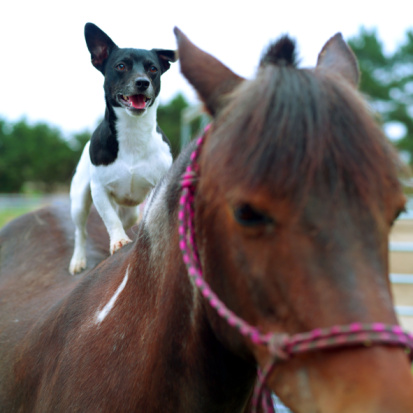
Dog riding a ponyWhen I started graduate school several years ago, I visited many boarding stables looking for just the right place for my horses. As I approached yet another farm, I had to step hard on the brake and do a double-take. Over a ridge in the pasture alongside the road came a most unlikely threesome—a horse and a dog were galloping in tandem toward my truck, with a Holstein calf leading the way! When I asked the stable owners about it later, they told me the calf and the horse were inseparable, that in fact the calf seemed to think he was a horse and behaved just like one! He had evidently been reared around both horses and dogs and had been adopted by the gregarious horse.
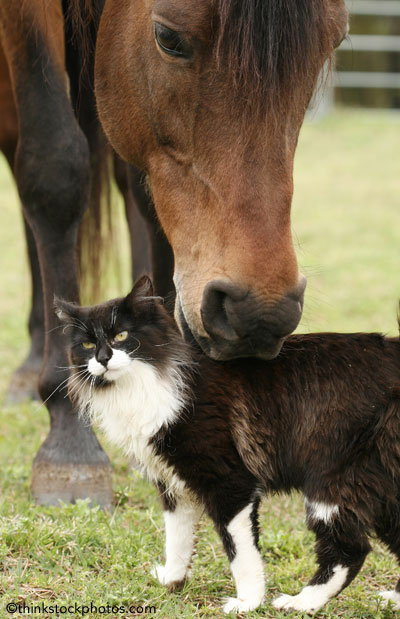
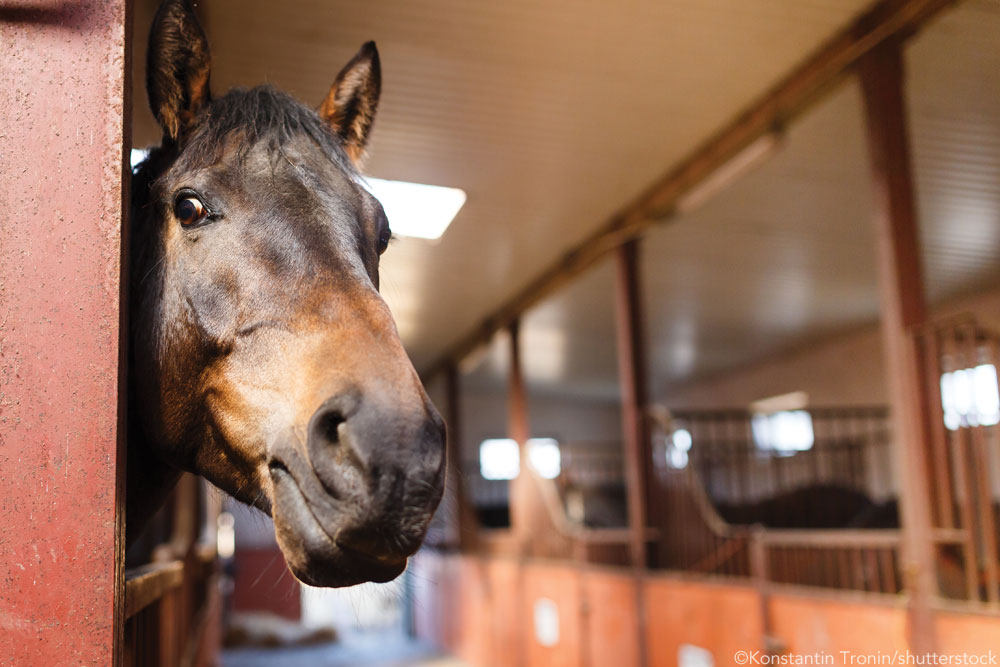
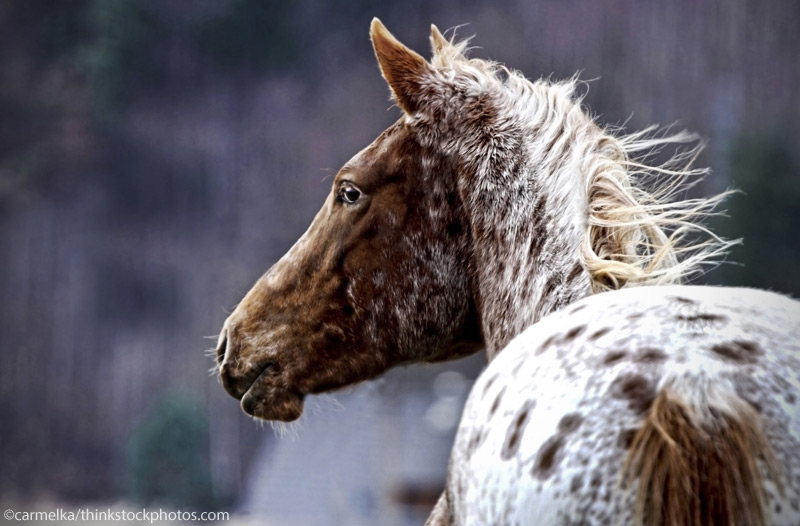
You may have seen this sort of bond between species with your own horse and dog. I’ve seen it with my mare, Duchess. One dreary afternoon last winter I drove out to the barn hoping to squeeze a short ride into my hectic schedule. I briskly tacked her up and led her into the indoor arena. Realizing I’d forgotten my helmet, I left Duchess at the mounting block while I ran back to the barn to grab it. When I returned, I saw that a very friendly barn kitten had climbed the mounting block steps to make acquaintance with my mare. Duchess had lowered her head to cat level and was curiously investigating her new friend while the kitten did the same. Awareness of my approach brought an early end to the budding relationship as Duchess turned her attention toward me and the kitten hastily scurried away. I wondered what had motivated the kitten to brazenly approach such a large creature, and why my mare had handled the encounter with an unknown animal with such gentleness.

The unique qualities of individuals such as my mare Duchess and the variability within a species such as the horse make behavior a science where absolute answers are hard to come by. Behaviorists, therefore, must make generalizations based on the behavioral tendencies of samplings of horses representing the population at large.

Most behavioral scientists agree that the reason such amicable alliances form between horses and other animals is due in large part to the horse’s unique social nature. According to Stephen Budiansky, author of The Nature of Horses, horses show a strong fundamental instinct to form long-lasting attachments to specific individuals. This basic instinct toward bonding is the glue that holds harems, the fundamental social structure of the horse, together. But so general is this drive to bond that it appears within horse society in many contexts that have nothing to do with mating. Horses removed from a herd will also readily form attachments to human owners or even a barn cat.

That is if the cat will have them. In general, cats are considered nonsocial because they do not live in groups as adults if they are living on natural prey. When placed together in a home or farm, cats will form dominance hierarchies, but marked aggression may persist in this essentially solitary species. A cat will generally do its utmost to define a territory of its own and to be self-reliant.

Dogs, on the other hand, are more like horses in that they are members of a species that forms “packs” with social bonds. What makes them different from horses is the reason for the social order—they form packs to better bring down prey, living as a group to hunt more successfully. Hence, for dogs membership in a pack is very desirable, but not a necessity for survival.

In contrast to these companion-animal species, horses, as prey animals, must rely upon each other for survival. As a result of this mutual dependence, the bond between horses is very strong. You’ve probably noticed this when trying to take your horse out for a ride without his equine buddies. Cows and goats, which are also prey herd animals, may share just as strong an attachment to their equine companions as the horse will.

Cat and Horse
So where does the horse rank in comparison to other companion animals in terms of intelligence? As I discussed in a previous column, intelligence is difficult to define in animals because we do not share a language with them. On the other hand, learning ability can be measured by trying to quantify the time it takes the horse to learn tasks or solve problems. So it makes a little more sense to try to compare the learning abilities of different species rather than their innate intelligence.

R.K. Thomas published a study review conducted on vertebrate “intelligence,” which suggested that horses score very well in comparison to other species on learning tests. Using discrimination learning, in which animals must select a specific item to earn something rewarding, Thomas reported that horses achieve high scores in comparison to other species, including many mammals.

While horses can certainly hold their own against other species in terms of learning ability, the type of learning that horses excel at is not the same as that of dogs or cats by nature. Remember, what matters for horses is to learn to survive as a flight animal — being able to recognize other herd members and to discriminate them from potential enemies; to sense danger and to react appropriately. Dogs and cats, however, must be tactical thinkers — they must select prey and devise a strategy to overpower or head off the prey. While each of the companion species is “smart,” natural selection has designed them to think and behave very differently. Horses will naturally be more reactive, dogs and cats more cunning.

So, while many different types of animals have the potential to become your companions, you’re likely to find their species-specific behavior very different. A relationship with a cat, dog or horse will have its own unique qualities, depending on the individual animal and the nature of the species. In general, the cat will be the most aloof of the three main companion species, the dog the most like our own predatory and social species. Of the three, the social horse is the most unlike us.

By bridging the gap between ourselves and an animal that often falls victim to species such as ours, we gain something of value for our own humanity. Perhaps this is the true appeal of building a relationship with a horse.

Liked this article? Here are others you’ll enjoy:
Dogs and Horses
The Benefits of Barn Cats

Horse Vaccination Tips

4

While vaccinations can prevent or minimize disease, the effectiveness of vaccines also relies, in part, on the effectiveness of the vaccination program. Follow the guidelines below to help strengthen your program.

Vaccinate the whole herd. “If you just immunize one horse in a group,” says Dr. Philip Johnson, “the other horses that are not immunized could generate up the virus as they get sick to the extent that the virus will overcome the effects of the vaccine in the protected horse.”

Protect foals by vaccinating pregnant mares. As Dr. Johnson explains, this is the smartest tack a breeder can take because “a foal acquires its immunity for the first three or four months of its life from the mare and its first milk.”

Adhere to a professionally administered routine. When you first start a horse on a vaccination program, you usually have to give two shots four to eight weeks apart in order for the horse to acquire immunity. Stick to the initial vaccine and booster schedule and leave the vaccinations to your veterinarian. “Vaccine failures can often be attributed to a vaccine that hasn’t been properly stored, is over-date, and so forth,” says Dr. Johnson. “Additionally, there is the very rare risk of an allergic reaction; if a horse does develop a reaction to the vaccine given by a horse owner, the horse might die from it.” A veterinarian at the scene could counteract that potential tragedy.

Keep vaccination records. These should detail what vaccines were given and how often. It can be extremely difficult – and risky – to treat a horse for certain diseases if the animal’s vaccination history isn’t known. Tetanus, for example, requires the potentially perilous anti-serum if no tetanus history is available.

Further Reading
What to Expect When Vaccinating
Mosquito-Borne Diseases
Equine Vaccination Strategies

Stall Mucking 101

67

How difficult is it to muck a stall? You walk in with a pitchfork, and, well, start shoveling.

Sounds simple enough and while this method certainly accomplishes the job, you could be wasting time and money if this describes your current cleaning methods. Worse yet, you could be overlooking easily preventable health hazards to your horse.

Horse in Stall


To Start

The goal of mucking a stall is simply to remove the wastes for the health and comfort of your horse. This begins by assembling the proper tools.

Your stable should be equipped with a manure fork or a pitchfork with tines positioned close together, a good broom, a plastic muck bucket large enough to hold manure from one stall but not so cumbersome you can’t handle it, and a wheelbarrow. In the winter, a rubber-headed mallet is useful for breaking the ice in water buckets. A long-handled scrub brush with which to clean buckets is also helpful, but a hay whisk will do in a pinch.

Stalls should be mucked at least once a day, although twice a day is ideal if your horses are kept in for any part of the day. This usually takes about 15 minutes per horse in the morning, and about five or 10 minutes in the evening. Mucking twice a day keeps your horse drier and cleaner — something owners of grays, paints, palominos and horses with lots of “chrome” should consider, especially if they show. Mucking twice a day will also cut your mucking time, since you begin each session with a relatively cleaner stall.

Cleaning twice with manure picked out at noon is sheer luxury, but most horse owners probably don’t have schedules that allow them to muck three times a day. In pursuing your cleaning regimen, begin by taking your horse out of the stall; either turn the animal out for a daily romp or tie it. While most horses don’t mind people working in their stalls, others seem to take delight in standing directly over their urine spots so you can’t do a through cleaning job.

After you’ve turned your horse out, tackle the water buckets, which yes, do play a role in a thorough stall mucking. While horses demand plentiful amounts of fresh water, dirty buckets lead to health hazards and dehydration. Hanging a plastic bucket with a snap hook is safe and makes for easy removal. Dump the old water far enough away from your barn so frozen or muddy rivulets won’t cause safety hazards, then take some clean water and your scrub brush and scrub out the algae, buts of hay and clumps of grain that invariably collect in water buckets. If you can’t find your scrub brush, make one out of hay. Take a fistful of hay, twist it so it forms a thick “broom,” and use this to scrub inside the bucket.

If your horse has an automatic waterer in its stall, you will probably need to clean it less, but algae can develop in those located in sunny areas. Use this time to check that the waterer is functioning properly, and scoop out any debris that may have accumulated.

With the water bucket taken care of, move your wheelbarrow as near to the stable door as possible, arm yourself with your pitchfork and manure bucket, and enter the stall. Begin by forking large clumps of manure into your bucket. You’ll want to take note of where and how much the horse defecates; if your horse is ill, you’ll be able to recognize right away if the amount of manure varies considerably from one day to the next. Make a note of the state of your horse’s stall in general. If he’s normally very clean, a stall strewn with hay and manure could indicate that he was in distress overnight.

Most horses form a pattern in their stalls, so over time, you’ll be able to clean the stall more quickly if you know the prime spots. Big piles are easy to fork up, but what about those pesky little ones that get away? One method is to shake the bedding through the tines of the pitchfork, working the stall from left to right, back to front. As long as you are systematic, you should be able to pick up the most manure for your time. You don’t have to be obsessive about picking a stall, but the more manure you remove, the cleaner and happier your horse will be.

While you’re at it, save yourself some money. Don’t take out more bedding than necessary. By sifting quickly through the bedding, you’ll be able to pick out the waste while leaving the clean bedding for another day. I was appalled one day while watching a friend pick out her stalls as she removed half the bedding, most of which was dry. Her excuse? “Takes too much time to sift through the bedding every day.” If you’ve got a cool million tucked away for shavings, keep on forking up those dry shavings, but unless you have a very messy horse, this is a big waste of money. As long as the bedding is dry, it can stay.

Next, dig up the urine spot in the stall. Generally, geldings use a spot somewhere near the middle of the stall. Mares are trickier but will often urinate near the back corners. Take out all of the bedding that seems wet or soiled, including any questionable bedding.

Finishing Touches

After you’ve dumped all the waste in the manure pile, take a quick look around the stall. Glance over the walls for loose nails and at the door for loose hinges. Nails sticking out from walls can scrape your horse, or worse, put out an eye. Push against your stall door to make sure your horse hasn’t been loosening it, planning its exit. Spending one minute a day to check the safety of the premises is certainly worth the time if it prevents heartache and/or stacks of vet bills later on.

Now you can put some clean bedding in the stall, raking it through so it mingles with the older bedding. How deeply you bed your stalls is entirely up to you and how your barn is constructed. If your flooring is cement and you do without mats, you may want to bed your horse more deeply. Dirt flooring is easier on legs and feet, and you won’t have to bed the stall as deeply as you would if you had concrete flooring. However, dirt or clay floors hod moisture, and clean-up of this flooring is generally more difficult than cement floors.

If you use stall mats, you will use even less bedding as your horse will have better cushioning on its legs and not need the deep footing. Use your own judgement and experiment according to your climate and your horse.

If your horse has cast itself in its stall in the past (gotten wedged against the wall and stuck so that it is unable to get up), you may want to bank extra bedding along the walls.

Some horses willingly keep their stalls as neat as Felix Ungar’s room. Others are the Oscar Madison type and seem to take great delight in hiding their manure from unwary grooms, grinding it into the bedding. There’s not much you can do with these horses except grin and bear it. Picking out the stall more frequently is about the easiest way to deal with these messy animals; if you can catch the piles before your horse tap dances on them, you’ll be able to remove them with greater ease.

With the bedding maintained, fill the water buckets, leave a flake or two of hay in the clean stall, and, if you have one, sweep the aisle. Nothing is worse than a clean stall and a filthy aisle. Scattered dry shavings and hay on the aisle floor are fire and health hazards, especially when dust and dirt collect with the mess. And speaking of fire, at least once a month, clean out those pesky cobwebs with a long-handled broom. Cobwebs and the dust that collects on them are fire hazards that are often overlooked by even the most careful horse owner.

Intensive Clean-Up

You should occasionally strip your horse’s stall down to the bottom for a thorough cleaning. First, sweep the floor and walls thoroughly, then disinfect them. You can mix your own disinfectant by using a chlorine bleach and water solution. While you allow the flooring to dry, scrub your horse’s feed bin with hot water and disinfectant. Remember to rinse everything completely.

Wet spots in a dirt or clay floor may have to be dug out. Some horse owners sprinkle lime powder (calcium hydroxide) over the areas in the stall that are wet most often. Lime can cause skin irritation, however, so if you sprinkle lime, bed this area well.

Store your mucking tools properly. Hang pitchforks so they cannot be stepped on by a horse or person. Brooms should also be hung so that they keep their shape and remain clean. Keep smaller items with your other barn supplies in the tack room or utility shed.

Now your barn is clean and shining, safe and sound. Go ahead and bring your horse home. The animal will be happier and healthier by far, for now its home is neat and clean, warm and dry.

Read more stall cleaning tips from the experts >>

Recognizing Learning Ability in Horses

Like many horse enthusiasts, you may occasionally wonder just how intelligent the horses in your life actually are. You maybe among the fortunate few who own a horse that is truly a breeze to train, or alternately, your mount might be what some horsemen call dull—slow to understand and comply with your requests.

Maybe you’re a horse industry professional with an interest in identifying agile-minded and compliant training prospects for show or resale. Perhaps you’re simply person working with one horse that behaves with such purposeful cleverness that you wonder about his capacity for advanced thought.

Whatever the differences in your motivations might be, what clearly interests all of us is identifying those qualities that smart horses have in common, and devising an easy, reproducible method of measuring those qualities.

Appaloosa Horse


A Clever Mind

One interesting horse in my family, an Appaloosa named Denver Deuce, methodically worked for hours at opening bull-snaps and gate latches until he was free to visit other horses and raid grain rooms. His merry fun picking latches continued through several combinations of chains, snaps and latches until a padlock was finally placed on his paddock gate.

These days, he knows when the lock is not truly closed and is quick to revert to his Houdini ways whenever the opportunity presents itself. His seeming awareness of exactly what is required to free himself from his confines, coupled with the diligence with which he carries out these activities, has admittedly impressed me over the years.

Additionally, there have been other behavioral tendencies that have alerted me that the wheels might be turning a little faster than usual in Denver’s spotted head. He possesses a cunning, scheming type of play behavior that has included, among other things, slowly and deliberately nudging me face first into a moss-filled cattle water trough. He also seems to understand the vulnerability of children. Whenever a child climbs on his back, he changes from spirited riding horse to gentle and reliable mount. Frankly, there have been times when I have looked into this horse’s eyes and felt the presence of a not-quite-so-ordinary equine mind.

Trainability

The warmblood foals out of one of my hot-blooded mares exhibit intelligence of a different nature. In nearly all respects, Duchess’ foals have tended to be much more accepting of their training than their dam has been. They have been relatively easy for me to teach and load into trailers, to stand tied for bathing and clipping, and to longe, ground-drive and start under saddle. They have exhibited a type of accepting, compliant behavior which makes them easy to train, and at least superficially, this appears to be something different than the quick-minded variety of intelligence Denver Deuce displays.

Considering how many different qualities we label as intelligent behavior, we need to determine exactly what behavioral tendencies make a horse a quick and uncomplicated training prospect, and whether they correlate to a behavioral demeanor we can watch for in horses in general.

Intelligence is difficult, if not impossible, to quantify in a species whose language we cannot understand because actions alone cannot explain the logic or awareness behind them.

On the other hand, learning ability, or trainability, can be measured by trying to quantify the time it takes the horse to learn tasks or solve problems. This may seem like a trivial distinction until we consider that what appears to be intelligent behavior in our horses may actually be detrimental behavior for their wild relatives.

Intelligence vs. Learning Ability

Intelligent behavior for horses may be entirely at odds with the purposes of their riders. For example, spooking and bolting at frightening objects is a smart response for these prey animals to make in the wild, but humans require that horses learn to overcome such self-serving behavior to better suit our purposes.Our interest appears to be not so much in determining the actual intelligence of horses, but rather in their aptitude for quickly and correctly learning the lessons we teach.

In behavioral science, we recognize a difference between the ability to perceive and comprehend meaning, which we call intelligence, and the willingness to comply with human expectations, which we call learning ability.

It is important to realize that a large part of what we expect horses to learn is at odds with their general nature. For example, most trainers have experienced the resistance green horses have to many of the tasks we expect of them, including standing still for clippers, crossing water on the trail and walking into horse trailers. The survival instincts of horses are, to some degree, within them all, compelling them to flee from the loud noise and vibration of the clippers, to avoid stepping into places where solid ground is not visible and to escape the trap of trailer confinement.

In order to select horses that can be easily trained to perform task contrary to their nature, and that also demonstrate the presence of a thinking mind rather than a reacting one, we must be able to identify those horses that behave differently from the flight tendencies of the species.

An excellent example of such a horse once belonged to a friend of mine. A few years back, Ellen was bringing her horses up to the barn for their evening meal when she noticed her new Quarter Horse mare was not with the others. She climbed on another horse and rode along her fence lines until she came upon the young mare. The mare’s hind leg had become ensnared in wire fencing as a result of aggressive herding and driving by one of the established geldings in the band. Judging from the horse’s condition, the leg must have been tangled in the fence for several hours, but this 3-year-old filly stood patiently on three legs, with her injured leg suspended in the wire fencing until help arrived. According to the veterinarian involved, the fact that his horse did not panic and struggle is principally what protected her from permanently debilitating tendon and vascular damage. I’m certain most of us would value such a sane and sensible disposition in the horses we trust to carry us.

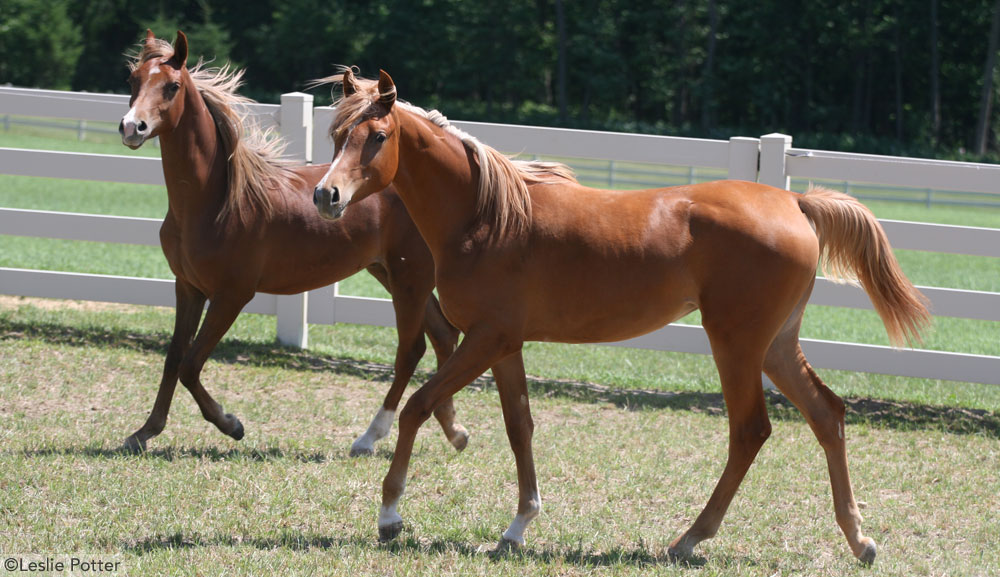
Chestnut Arabian Yearlings


Quantifying Learning Ability

One method of measuring learning ability that has been used in many different animal species is called discrimination learning. The idea is for the animal to select the “correct” item from two or more items to earn something rewarding, such as food. The assumption is that horses which perform highest on the test are also likely to have the greatest learning aptitude outside of the testing situation. The earliest discrimination studies determined that horses could learn to make correct choices between black and white feed boxes, and this early success paved the way for more advanced studies. Another group of researchers used a discrimination test to discover that long training sessions led to inefficient learning in horses, a fact we should all remember the next time we feel compelled to work on that flying lead change yet another time to “get it right!”

One type of discrimination test, called concept formation testing, measures a horse’s ability to use early learning to solve new problems. In horse training, we expect horses to build upon prior learning to attain new levels of performance. For example, a turn on the haunch requires the horse to recognize and respond correctly to a combination of rein and leg aids presented earlier as separate and basic elements. A horse with an aptitude for forming concepts would presumably be easier to train than one lacking the ability to quickly grasp the overall training objective or “big picture.” This presumption was consistent with the results of a study I performed with a colleague in 1994, wherein the horses that were best at learning to identify triangular shapes in a discrimination test also happened to be at the top of an unofficial ranking by the campus riding instructors for training aptitude exhibited in the lesson ring.

The next study I conducted examined the relationship between the results of discrimination testing and performance on tasks we all ask horses to perform, such as crossing bridges and jumping obstacles. A visual-discrimination test was used to see if the horses could switch from “black is correct” to “white is correct” periodically to test for quick, flexible thinking. When testing was completed, the results indicated that that reversal learning tests did not correlate well with learning to jump obstacles and cross bridges, but perhaps more importantly, the study revealed that many subjects had problems making the switch to the new correct choice at color reversal time. This finding indicated that some horses have great difficulty reversing their initial training. It may be much harder to undo bad earlier experiences than we’ve all assumed. The long-term effects of early training may be more important than we ever imagined.

Building a Better Horse

Presently, behaviorists are making rapid advances in understanding learning ability in horses. However, that quick and easy method for measuring a horse’s trainability still eludes us. As long as there are breeders trying to produce the best horses possible, trainers needing to turn out polished performers as quickly as is reasonable and a horse-buying public interested in getting the most for their money, this question merits our continued efforts to find an answer. Equine enthusiasts should remember the development of this species depends on the decisions we make. As we discover ways to determine learning ability in horses, we may soon be able to accurately select for this trait in our breeding programs. For better or for worse, the future of the horse rests with us all, and it may soon be within our power to do the right thing for both the species and for ourselves, which is to produce consistently adaptable and able-minded horses.

Walk-to-Lope Transitions

11

A smooth, seamless walk-to-lope transition isn’t just a must in the show pen. A horse that can easily strike off without throwing his head up and lunging into the gait, or breaking first into a trot, provides a more balanced, safe and enjoyable ride.

Your own position and use of the aids is what will make the difference between a collected, relaxed depart, and a rushed, anxious one, whether you’re teaching a young athlete or retraining a troublesome scamp. If you do it right, lope departs can be a sweet lesson in harmony. But do it wrong and you can throw your horse off balance, frustrate and confuse him — and end up with a horse that equates loping with anxiety.

To help you do it right, world champion Paint and Quarter Horse trainer Karen Qualls offers her technique for creating a perfect departure, and shares her tips for overcoming bad habits a horse may have developed in his takeoffs.

Before jumping in with all six feet, though, Karen advises that to do a correct lope depart, your horse should be willing to move off your leg cues with forward impulsion from his hindquarters; be comfortable with leg yields; and he should readily give to the bridle (relax his poll and soften his mouth) in response to the rein cues. If your horse hasn’t learned these basics, he’s not truly ready to perform a smooth walk-to-lope transition. This doesn’t, of course, mean that you can’t get your horse to take off but chances are, the transition will be rough and you may end up on the wrong lead.

Assuming you and your horse can calmly handle the basics, you’re ready to take off.

First, outfit your horse in a mild bit, such as a snaffle or short curb, and split reins. To start, you’ll use two hands to teach this maneuver, then gradually change to one-handed steering once he’s mastered it.

You’ll use both hands so you can capture his head and neck and you’ll push into the lope with your legs, so he won’t lunge forward. You’ll want to work in an area with good footing — it shouldn’t be too hard, too deep or too slippery — and where you’ll have room to move straight. You’ll find it easier in an oblong arena with straight sides, since horses have a tendency to drop their inside shoulder and cut in when taking off at a turn.

Western Dressage

Let’s Depart

When you’re ready to begin, ask your horse for a nice, forward-moving walk You should be sitting balanced in the saddle, with hips and shoulders vertically aligned, both legs relaxed and off his sides at the cinch, chin up and hands relaxed and held just below and in front of the pommel. Look ahead and choose a point along the straight rail that you’ll aim to take off at, and a few strides before you reach it, prepare for the departure by taking up the slack in your reins.

To do this, draw your elbows back until they’re even with your hips (you don’t want to pull them any farther or you’ll lose maneuverability and therefore control). Keep your hands low to keep your horse’s head low, and tip his head to the inside slightly so you can see the corner of his eye — by applying slightly more pressure on the inside rein. This will cause him to lift his inside shoulder, making it easy for him to get on the correct lead. If you pull the rein in instead of just applying firmer pressure, he’ll either turn in a circle or lose his forward motion and become frustrated. On the other hand, if you can’t see his eye, you won’t achieve your goal.

Now that you have control of the horse’s forward motion, you’re in a position to prevent him from lunging into the gait or tossing his head at the departure.

Next, drop your weight and sit deeper in the saddle, while keeping your back straight. To do this you’ll tilt your pelvic bone back slightly so you roll a bit more on your jeans’ back pockets. This pressure will encourage your horse to use his hind end, and combined with your rein and leg aids, will help him get into a rounded, controlled frame.

Now you’re ready for the leg aids. Just before you reach your spot on the rail, find your horse’s belly with your outside leg by lightly closing your outside calf on his side, just enough to feel it. Your goal is to bring your spur in close so it’s readily accessible, but prevent you from accidentally jabbing him when you ask for the lope. (At this point, you should be able to hold a grape between your leg and saddle without crushing it.)

Your inside leg should remain relaxed at the cinch, off his side, unless he drifts sideways, which we’ll address later. At your takeoff point, slowly slide your outside leg back behind the girth a few inches: This is so your horse knows not to sidepass with his ribcage but to engage his hindquarters; it’ll push his inside hind over and encourage him to step over and forward — and therefore push off into the correct lead. Then bring your spur in arid press lightly.

Each horse is unique and will require different pressure, and by this point you should know how much pressure your horse requires. But start out light and increase as needed. If you don’t get enough impulsion and your horse breaks into a trot instead of a lope, gently bring him back down to a walk and simply ask for the lope again, increasing the pressure on your spur. Don’t jab him, which will just startle him and make him anxious, causing him to rush into the lope, and don’t reprimand him. Just try again and adjust your cues next time.

If your weight, hands and legs are in this position, your horse should slip gracefully from the walk into the lope. If so, you need to soften the aids as a reward. However, don’t throw away the reins and forget your legs or your horse may falter in his gait or fight the bit. You need to retain a certain amount of feel. Don’t look down to check for correct lead. You can glance quickly at his shoulder or check by feel. If you have difficulty with these methods, have a friend on the ground tell you and count out the strides so you watch your horse’s shoulder and learn what it looks like. Feel is something you develop, but you might notice your inside hip being thrust farther forward than your outside one.

If he hasn’t given you a good depart, read the next section, Troubleshooting Tips, and try again, focusing on your cues to avoid making an error.

If you’re consistently using all your aids correctly on a horse that has a solid foundation in the basics, it’s rare that your horse will take off on the wrong lead or give you a rough departure. If he does, you might be working with a horse that has been taught incorrectly and been rewarded for the misbehavior. In this case, you might be wise to hire a professional to correct the problem so you can worry more about your form than your horse’s. If a trainer isn’t available, you can try to work him out of it yourself by being scrupulously perfect with your cues and lavishing praise and pats when he gets itright.

You should notice that when your horse understands the cues, he’ll anticipate the departure by preparing immediately when you do (but your hold on the reins should prevent him breaking into the lope before you allow him), so you’ll want to shorten the distance between setting him up and cueing him to depart. Once he’s performing smooth departures as a matter of course with two hands on the rein, you’re ready to train him with one hand. The simplest way is to gradually bring your hands closer together as you cue for departs until your fingers are touching, and you can hold the reins in one hand.

Troubleshooting Tips

These common problems are caused by human error. If you’re having a problem, try these fixes.

  • If your horse drops his shoulder and darts to the inside, you’re not using enough inside rein. Try again and this time lift your inside hand slightly, or even lay the rein against his neck and block his shoulder.
  • If he drifts sideways with his body or sidepasses, you haven’t kept your inside leg prepared to act as a barrier. Apply light pressure with your inside calf (or even whole leg if he’s a bit dead-sided) at the cinch to encourage him to stop the drift and remain in place.
  • If he breaks into a trot, you’re either not applying enough pressure with your outside leg, or you have too much of a hold on his head. Don’t clamp on his mouth or apply the reins too tight.
  • If he backs up, throws his head or even goes to the extreme of rearing, you’re probably holding the reins too tightly. Remember, the thrust as he pushes off with his hindquarters in response to your leg pressure will push him into your hands and they should be soft enough to accommodate this. Your goal is just to contain and control his forward movement — not hold so tight that you block it.
  • If, on the other hand he bolts, kicks out or even bucks, you’re probably using your leg aids incorrectly: You might be bringing your leg in too quickly and jabbing him with your spur, or using too much outside leg.
  • If you lean too far forward, but you still use your leg and arm cues correctly, he may still go, but he is liable to get a hurried departure or trot off because your hips aren’t pressing down, encouraging him to use his. There’s no pressure in the seat. But don’t overcompensate.
  • If you lean too far back, you’ll get left behind the motion of the horse and could jerk his mouth as he takes off into the lope.
  • If you feel you’ve cued correctly and your position is correct and he still trots into the lope, he’s probably leaning his barrel into your spur so his shoulder and hindquarters are out of position and he’s throwing himself off balance. This means you need to drop back and work on leg yields before trying walk-to-lope departs.
  • If he still picks up the wrong lead, it probably isn’t related to medical causes, but if he has other difficulties, you might want to have him checked out by vet anyway to rule this out. What’s more likely is that he’s picked up bad habits. In this case, you may be better off sending him to a trainer for correction.

Karen Qualls trains Paints in western and all-around events from her ranch Premier Performance Horses in Chino Hills, Calif. Karen and her students have won numerous world titles.

Newborn Foal Care

7

Foal
After foaling, the umbilical cord ideally will break at the right time, but may also break too soon, or not break at all. If the cord breaks too soon, there is little you can do. If, however, the umbilicus does not break when the mare stands, you must break it.

Wrap your hand around the cord and grasp it firmly (don’t squeeze it). If blood is still flowing through, you’ll feel a pulsation. Wait. Once the pulse subsides, it is safe to break it. A short distance from the foal’s abdomen, you will see a slight narrowing. Grasp it firmly on both sides of this narrowed area and pull. The cord should separate readily; if it doesn’t, your veterinarian will be able to do the job.

When the umbilicus breaks, the stump must be treated with iodine. Fill a 6 cc syringe case with 7 percent iodine and invert it over the stump. This will cauterize the site and prevent potential infection.

Now your foal must get up. With a normal pregnancy and normal delivery, this should take an hour or less. If by an hour the foal hasn’t been able to make it up, try to help it. Occasionally you must physically pick the foal up and balance it. The best way to do this is to cradle the foal between its chest and rump, but if it refuses to stay up or can’t be lifted, you have a problem. The foal must nurse, and if it can’t it may run into the next potential difficulty.

Assuming that the foal is up (either by itself or with help), it will want to eat. Some foals go right to the nipple, but many will attempt to nurse everything but the right thing – the mare’s elbows or hocks, the wall, the feed bucket, even you. You can guide such a foal to the nipple, place it in the youngster’s mouth, squeeze a little milk for the foal to taste, and it will shake its head, spit it out, and wobble over and try to nurse the door.

If this persists, or if your foal is having trouble standing, your vet will need to milk some colostrum out of the mare and feed it to the foal by passing a stomach tube. The youngster must have the colostrum, which contains important antibodies that will protect the young animal from infection.

A newborn foal’s rectum contains hard, marble-sized fecal matter called meconium. If you see your foal straining at any time, or you have not observed a bowel movement within six hours, administer an enema. It’s a good idea to buy a couple of commercial human enemas before the foal is due. A phosphate enema is preferable to a mineral oil enema because it is considerably less messy.

The morning following delivery, turn mare and foal out by themselves in a small paddock. Exercise is important for both. If the weather is nice, they can stay out all day. If the weather is really rotten, allow them to move around the barn aisle.

Potential Problems

A fairly common problem seen at birth or shortly thereafter is entropion (the inversion of one or both lower eyelids). If not corrected, the inverted eyelid will rub the eyeball, causing ulceration and eventual blindness in the eye. Correction is simple, but it must be done immediately. If you notice the condition in your foal, call your veterinarian.

Other possible problems may involve the foal’s legs, the two main difficulties being contracted tendons and angular (“crooked”) deformities. A foal with contracted tendons often cannot stand, so the affected foal should not be turned out. Stall rest and support bandages are required, sometimes along with medication to help reduce the contraction. If the condition is serious, the foal may need to be tube fed for a few days.

Angular deformities, unless severe, will not prevent your foal from leading a fairly normal life, but they may prevent the animal from becoming a performance horse. Time is often the only remedy needed, but when self-correction does not occur, let the veterinarian decide how long to wait before intervening. Simple periosteal elevation works remarkably well in most cases.

Two possible umbilical difficulties can occur in the young foal, both potentially lethal yet readily corrected: umbilical hernia and pervious urachus.

Next to angular deformities, umbilical hernias are probably the most common defects in young foals. Even so, they are far from usual. The problem is present at birth, but may not become apparent until days or weeks later, when a bulge appears on the underside of the foal’s belly.

A hernia is the protrusion of an organ or tissue through an abnormal opening, in this case a deficit in the abdominal wall. Hernias range in size from the diameter of a pencil (or smaller) up to a hole 2 inches or so in diameter. In the case of the umbilical hernia, the hernia is not the problem; the danger of a loop of intestine dropping through and becoming strangulated is. Even the larger ones often repair themselves, so unless a loop of intestine drops into one, just leave it alone and observe regularly. In addition to your own observations, have the veterinarian check it periodically.

If the hernia doesn’t reduce on its own, or if the intestine is involved, one of two procedures can be performed. If the hernia is smaller than two fingers in diameter, the vet can clamp it; this is best done in the fall or winter when the flies are gone. If, however, the intestine is involved, don’t wait. If the opening is greater than two fingers, surgery is necessary.

The other condition is pervious urachus, which involves the structure within the umbilical cord that carries urine from the fetal bladder to the placenta. This is supposed to close at birth and usually does, but occasionally it stays open (“pervious”) or partially open. In rare occasions it may reopen a day or so after foaling, and become infected.

This often goes unnoticed because of a lack of inspection, so make inspection a part of your routine. On the morning after foaling, and every morning for a few days thereafter, feel the stump. If it is wet, call the veterinarian. Cauterization with silver nitrate sticks for a few days will take care of the problem in most cases.

Preventive Measures

Most likely your mare will present you with a normal, healthy foal. In that case, you must first get a halter on the foal! Check the halter regularly for correct fit, and replace it as needed. Second, use that halter. Handle the foal, pet it and lead it around to let it become accustomed to the halter and to being handled.

Within the next day or so after foaling, worm your foal with an appropriate paste wormer. This will help in controlling foal heat scours (diarrhea that occurs at about eight to ten days of age), as well as assuring that the foal gets off to a parasite-free start in life. If diarrhea does develop, cleanse the area with warm water and apply a coat of petroleum jelly. If it persists for more than two days, or has a strong odor, call the veterinarian. Continue to worm the foal at one-month intervals until it is an adult, at which time it can go to a two-month schedule. Shortly after birth, also give the foal a paste gut inoculant available through your vet.

Assuming your mare was properly vaccinated and is thus able to protect her foal through nursing, you need to begin the foal’s own vaccination program (depending on your area) at 90 days of age. Your veterinarian will guide you as to what schedule to follow after the initial vaccinations.

The key to raising a healthy foal, and ultimately a healthy horse, is observation. Other than you, no one is more concerned with your foal’s well-being than your veterinarian, so look your foal over every day and call the doctor if you notice anything out of the ordinary.

Note: This article is provided as basic information, and is not intended to supersede veterinary consultation. Always talk to your veterinarian regarding any equine health problems you might encounter.

See all mares and foals articles >>

How to Tell a Horse’s Age by Looking at Its Teeth

7

By Rachel Parker

We’ve all heard the saying, “Don’t look a gift horse in the mouth.” Why? Because you can determine a horse’s age by looking at his teeth and it would be rude to try to put a dollar value on a gift. It would be like sending a friend to Tiffany’s to see how much your new boyfriend spent on those earrings he gave you for Christmas.

Horse Teeth

But truth be told, if you really did peel back the lips of your gift horse, would you really know how old he was anyway? Probably not. Fortunately, learning to determine equine age is not that much more complicated than counting the rings on a tree trunk — you just have to know what to look for. Continue reading and you’ll soon be lining up the horses at your barn in chronological order.

Tooth Wear

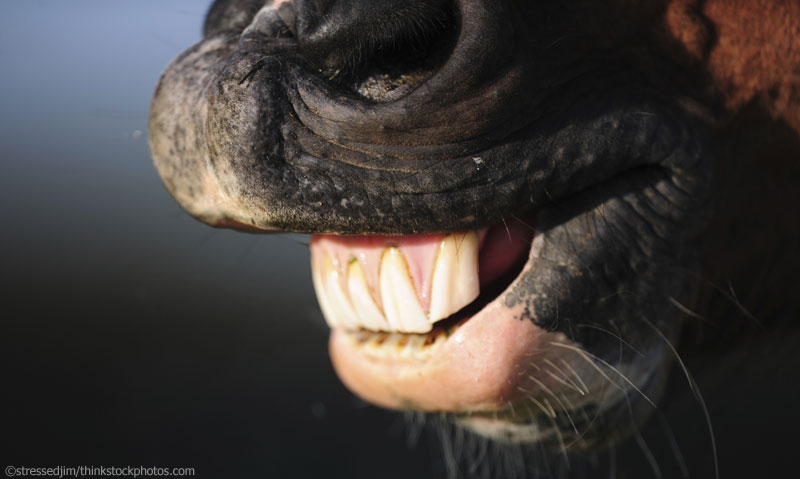
As a horse ages, his teeth wear down in a specific pattern. This results in characteristics that are common to all equine teeth as they approach certain ages. Both the temporary and permanent teeth follow the same sequence of wear: from the lower jaw to the upper jaw, and from front to back — or from the central incisor to the intermediate incisor to the back comer incisor.

The first sign of wear is the loss of the dark cup, a hollow space formed by the central enamel, which becomes filled with food. As the tooth wears, the pulp becomes exposed. This is referred to as a dental star. Also, when a tooth is young, its top, or table, is oval-shaped. As it wears down it becomes rounder, then triangular.

Galvayne’s Groove

Another way to assess age is by looking for Galvayne’s Groove. Found on the corner incisor, this line appears to travel from the top of the tooth to the bottom as the horse ages. It first appears in 10-year-olds. By 15 years of age, Galvayne’s Groove is halfway down the corner incisor. At 20, it reaches the full length of the tooth. After that it begins to recede from the gum line. It is halfway gone at the age of 25 and completely gone by 30.

The Shape of Teeth

As the tooth wears down, it changes from a long oval shape to a round shape and finally to a triangular one. When the horse reaches his 16th year, the central incisors become triangular. As with the wear of the dark cups, the pattern continues to the intermediate incisor in the horse’s 17th year. At 18, the back corner incisor becomes triangular, too.

Dental Fraud

Unfortunately, not everyone involved with horses uses this knowledge for good. Unscrupulous horse dealers may try to alter their horses’ teeth so they can pass them off as younger or older animals. They may pull the temporary teeth of a younger horse so that the permanent teeth will come in faster, making the horse appear to be older. Also, the teeth may be bishoped, or drilled, so that black marks appear instead of the white dental stars that characterize older horses. This effect may also be achieved by staining or burning the tables of the teeth.

However, these alterations can be detected by checking to see if the central enamel that forms the cup is visible. If the teeth have been bishoped, this enamel will not be present. Also, the slanting of the horse’s teeth and the shape of the teeth are unalterable. A younger horse’s teeth form a vertical angle as they meet each other, but as he ages, the angle juts out more and more, approaching an outward 90 degrees. And as mentioned, younger teeth are more oval, becoming more triangular and narrow with age.

Armed with this knowledge, you can make an informed decision when buying a horse — or just sneak a peak at the price tag on that gift.

Further Reading

Horse Fly Control

12

Flymask
Are both you and your horse are being driven crazy by flies? The choice you make in fly control products can be made easier if you understand the different types of products that are on the market.

On the Horse

Sprays are by far the most popular type of on-animal product available, although shampoos, roll-ons and wipes are becoming increasingly popular. The majority of equine fly application products are repellents, which are designed to keep flies from biting and feeding on your horse.

The Pyrethrins

The active ingredient in most on-animal fly applications is based on the pyrethrins, a group of chemicals found in chrysanthemums. The chrysanthemums that supply pyrethrins grow mostly in Africa, and must be hand picked and processed in order to obtain the chemical. It is this elaborate and painstaking procedure that makes pyrethrins an expensive ingredient in fly control products.

Chemical Control

There are other ingredients included in on-animal fly control products besides pyrethrins. A type of synthetic chemical known as a synergist is added specifically to make pyrethrins and other insecticides/repellents more potent. Entomologists have discovered that insects have detoxifying enzymes in their systems that can break down the pyrethrins. Synergists inhibit these enzymes, giving the product greater power to invade the insect’s body.

Covering Up

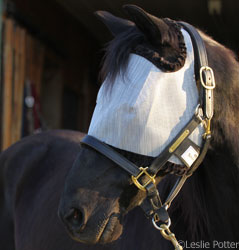
Some insects feed on the secretions of the horse’s eyes and nose. Some fly masks cover just the top portion of the horse’s face, while others also include ear covers to keep biting gnats from irritating the ears. Leg netting is another method of keeping flies from making contact with the skin.

Premise Control

  • Aerosol sprays are usually administered through automatically timed systems located in each stall, periodically releasing a spray of pyrethrins-based insecticide that mists down upon the environment. The spray also mists the horse occupying the stall, protecting the animal safely.
  • Feed-through products are added to the horse’s feed on a daily basis with the intent of making the manure sterile and unusable as food to fly larvae. Any larvae that is hatched in the manure produced by a horse on a feed-through product will die before it has the chance to develop. In order for the product to be effective, all the horses in a given area must be ingesting the product. Otherwise, larvae will simply hatch in the untreated manure and the fly population will go unhindered.
  • Fly traps include fly strips and fly containers. Fly strips are usually yellow ribbons of sticky tape that can be suspended from stall ceilings and other areas within the stable. Flies are attracted to colors in the orange and yellow spectrum; drawn to the strip, they stick to it once they alight. Container traps usually use bait systems, where flies are attracted to a jar or bag containing water and a food or hormone bait. The fly crawls into the container, and the clear sides confuse it, since flies do not recognize glass or see-through plastic. Exhaustion overcomes the insect, and it drops into the water and drowns.
  • Fly parasitoids are gaining in popularity as an effective fly control method that is both safe and gentle for the horse and the environment. The most commonly sold fly parasitoids are tiny wasps in the Chalcididae family. These wasps, which are much smaller than flies, feed on the larvae of the fly while it is still in the horse’s manure. These wasps do not bite or sting humans or other animals, and are so tiny that they are rarely even noticed.

Good Management

When all is said and done, the real secret to successful fly control is proper stable management. Frequent disposal of soiled bedding and droppings, as well as standing water, is essential to controlling flies. Stabling horses away from cattle is another way to keep flies at bay, because parasitic flies are particularly drawn to cattle, and these flies will harass horses as well. A combination of on-animal products and premise controls can do wonders to keep your horse happy, healthy and free of those pesky flies.

The author would like to thank entomologists William B. Warner and Fred W. Knapp for their assistance in preparing this article.

Further Reading

0FansLike
0SubscribersSubscribe
We use cookies to help personalize content, tailor and measure ads, and provide a safer experience. By navigating the site, you agree to the use of cookies to collect information. Read our Cookie Policy.
OK