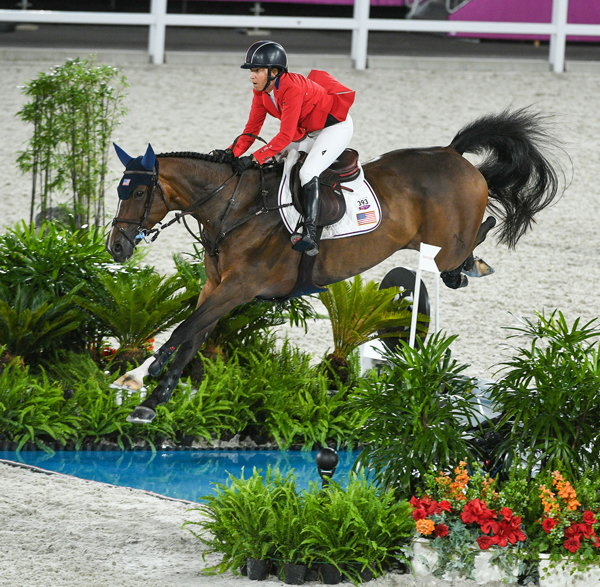
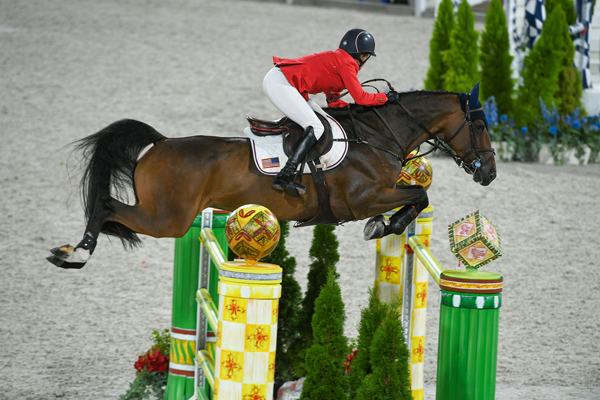
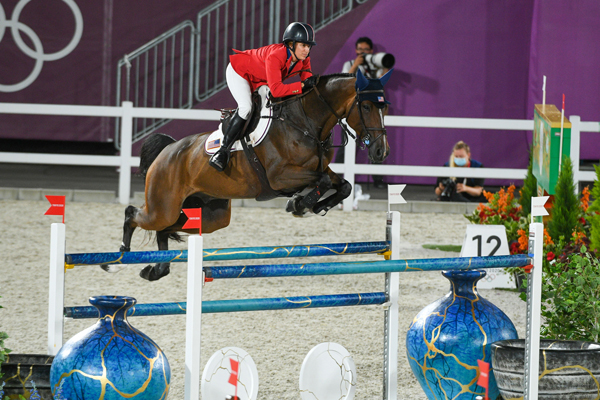
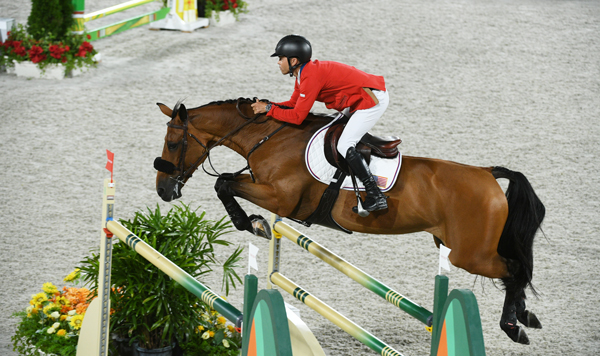
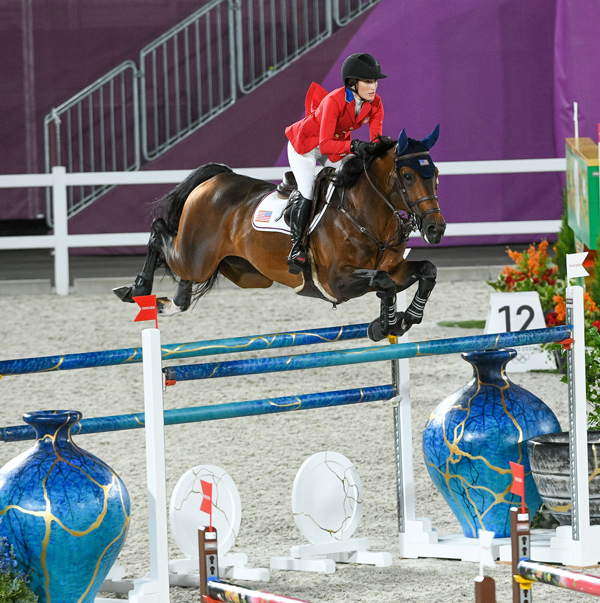
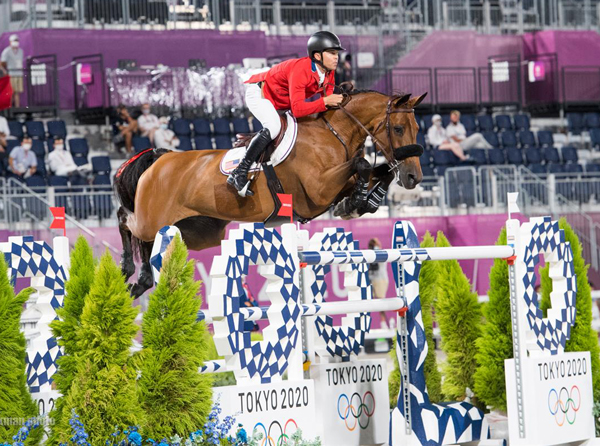
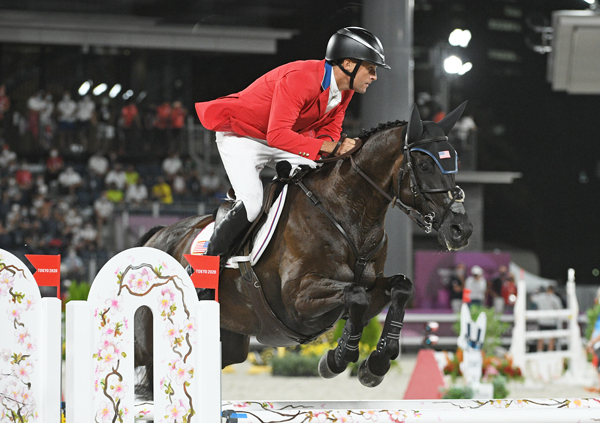
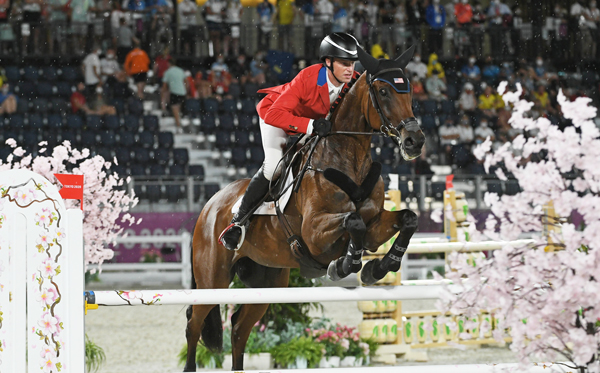
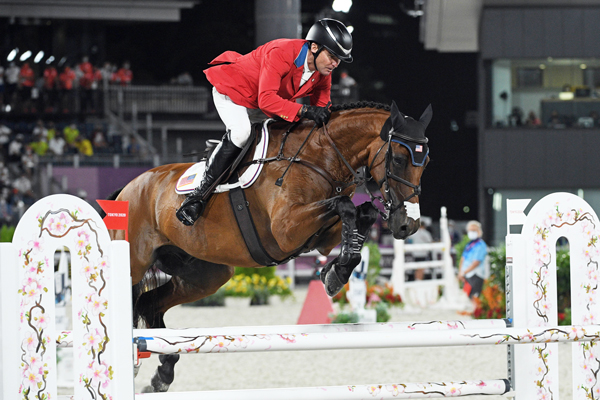
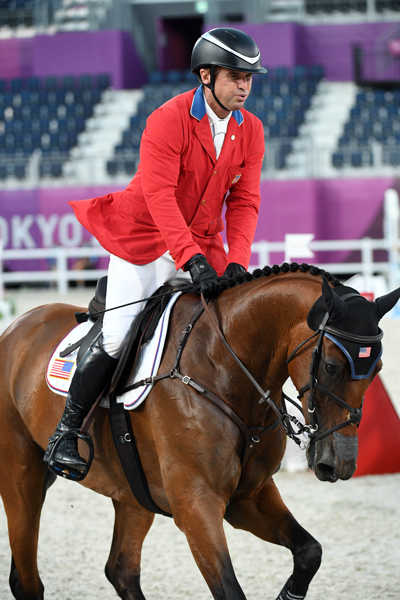
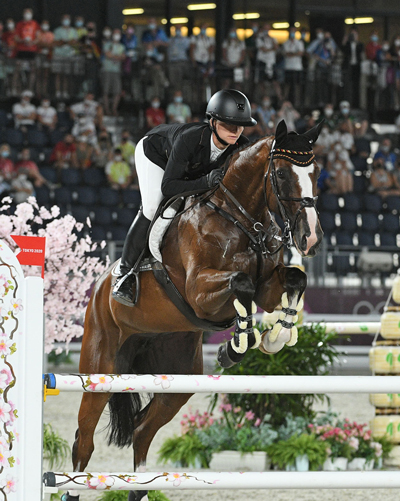
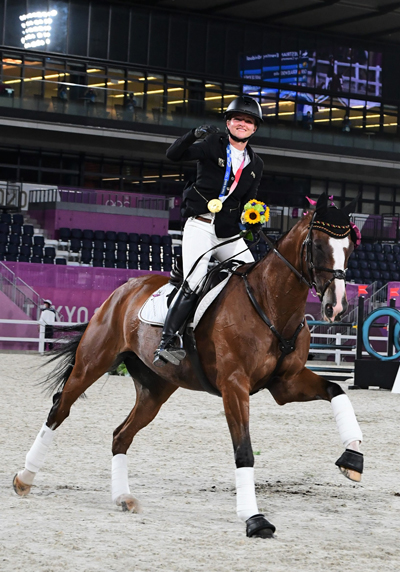
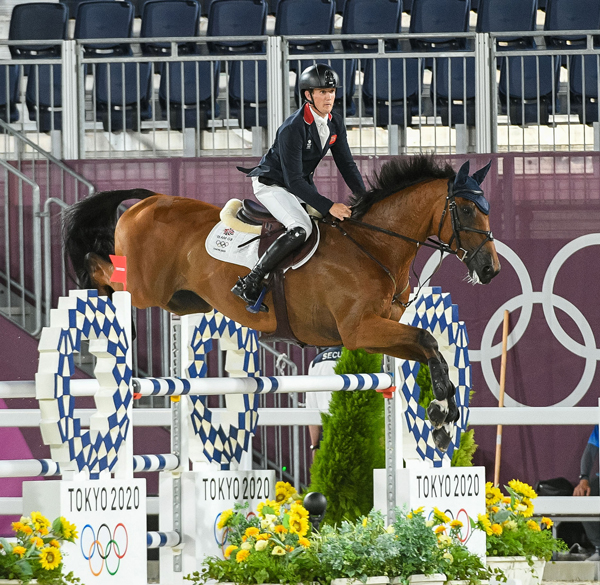
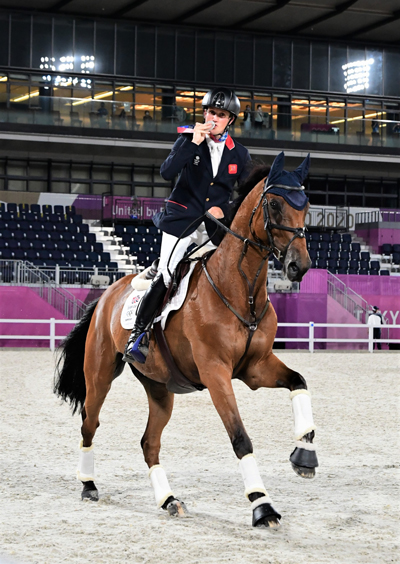
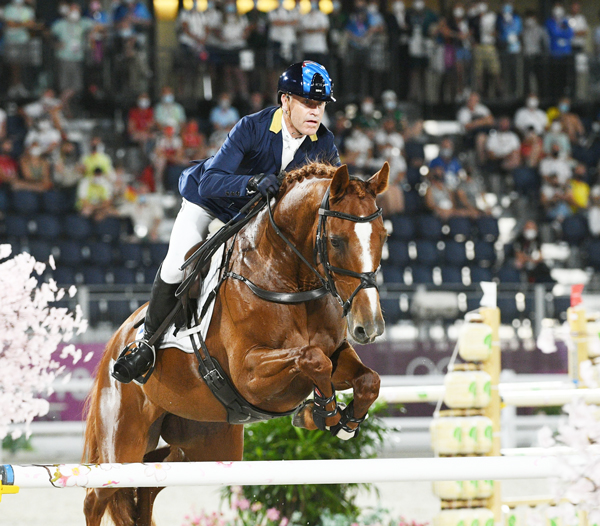
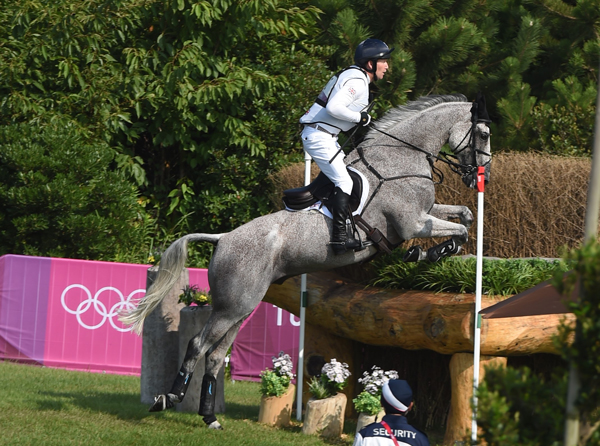
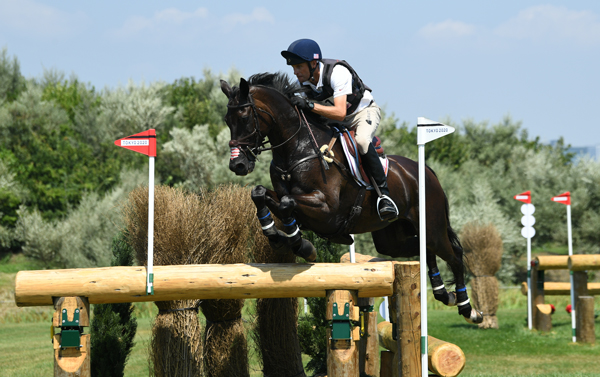
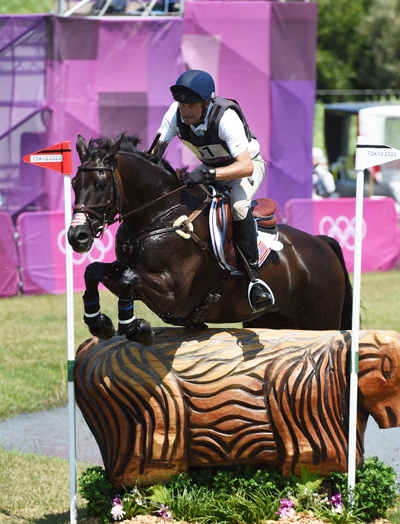
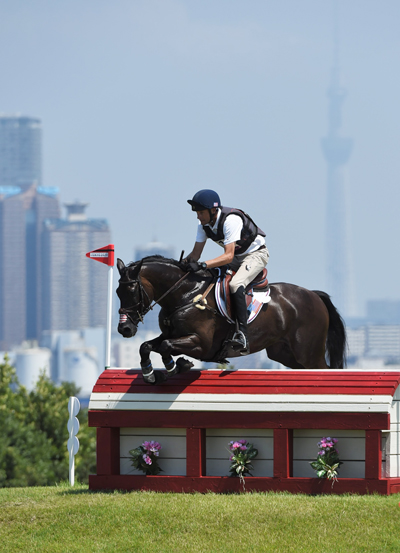
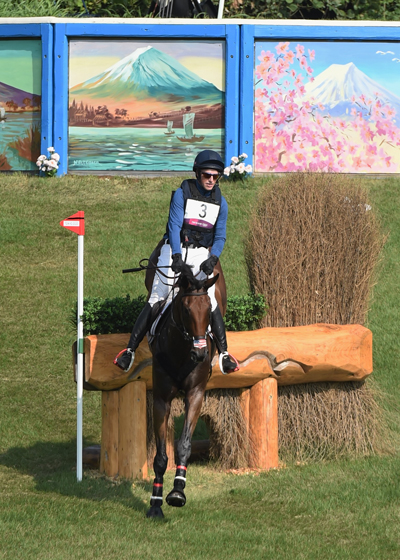
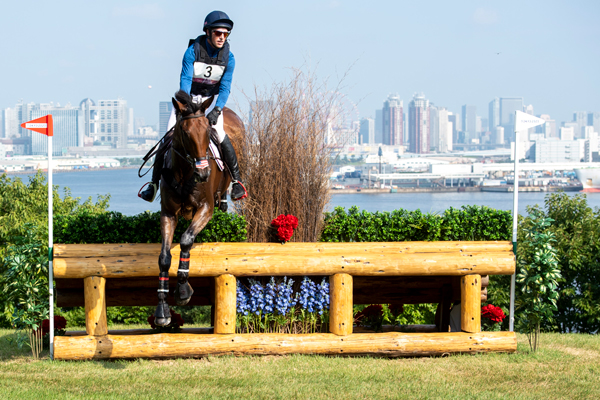
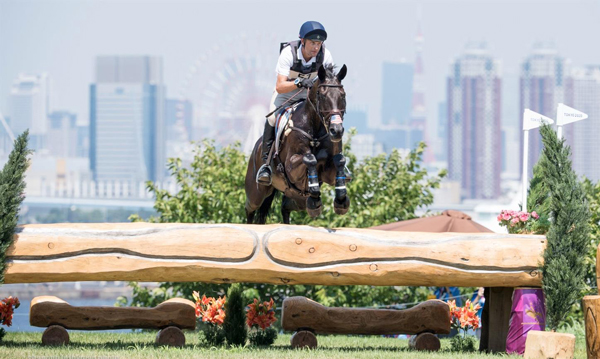
Laura Kraut and Baloutinue. Photo by MacMillan Photography and Media Services
On Tuesday, August 3, show jumpers from 34 nations took their turns around the first course of the Tokyo 2020 Olympic Games―the individual qualifying round. This year the Olympic rules have changed in several ways.
First, there will only be teams of three horse-and-rider combinations, not four with a drop score as there has been in the past. Second, in addition to the fact that the individual medals will be awarded first, there will only be one qualifying round each for both the individual and team medals followed the next day by the final round for individual and team medals. The other change is that in the final round for both individual and team medals, the scores from the previous qualifiers will be wiped, and every rider or team starts fresh on equal footing.
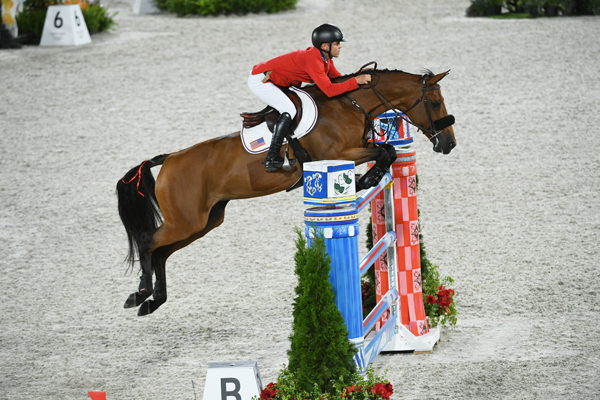
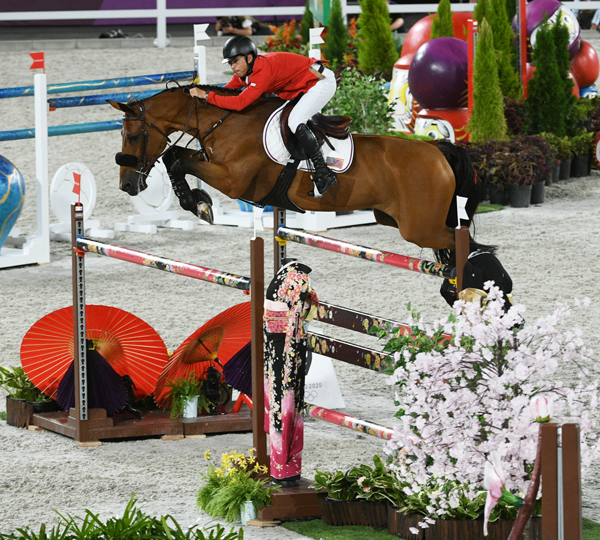
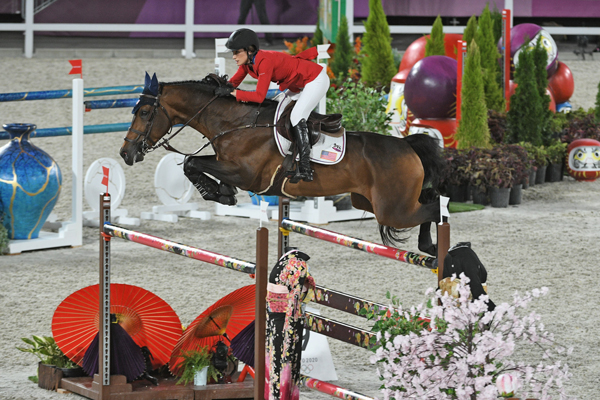
Kent Farrington and Gazelle. Photo by MacMillan Photography and Media Services
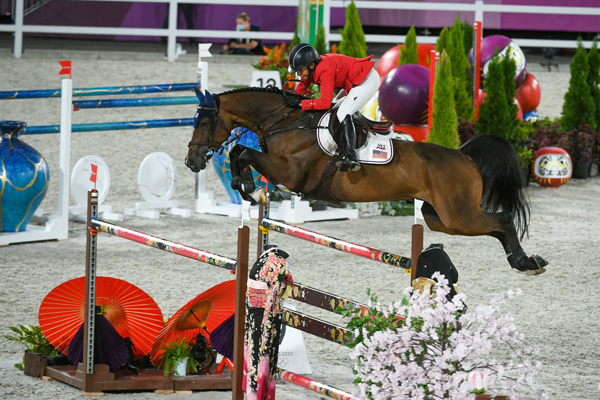
The course for the first show jumping individual qualification round at the Tokyo Olympics, designed by Spain’s Santiago Varela, was sizeable, colorful and asked technical questions. To illustrate the culture of the host nation, each jump featured a decorative theme from Japan, including sumo wrestlers, koi goldfish, the Tokyo skyline, festivals, kimonos, origami, traditional musical instruments, museums, birds and animals, as well as the Tokyo and Rio Olympic Games jumps.
Seventy-three horse-and-rider combinations tackled the individual qualifying round, and 25 exited happy to have produced fault-free rounds. An additional four jumped clear, but incurred just one time fault. And, one more horse-and-rider jumped clear, but went over the time to add two points. These three groups make up the 30 who were invited back to compete in the final later that evening.
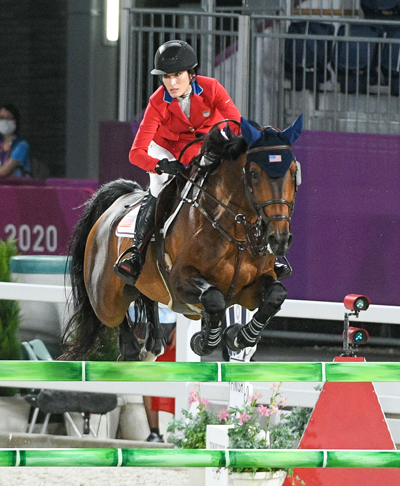
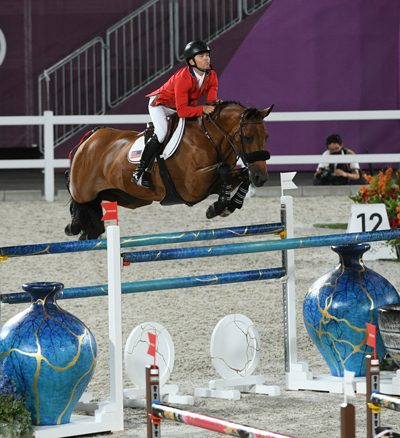
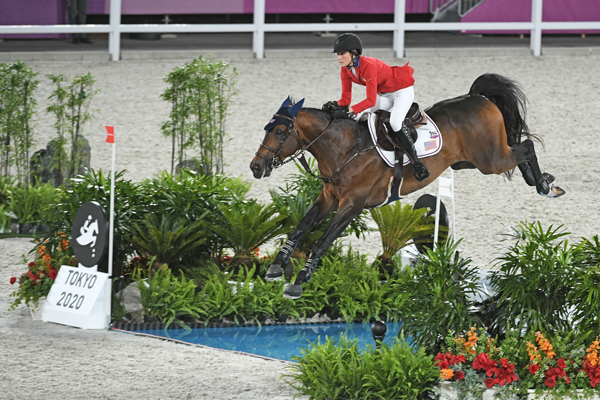
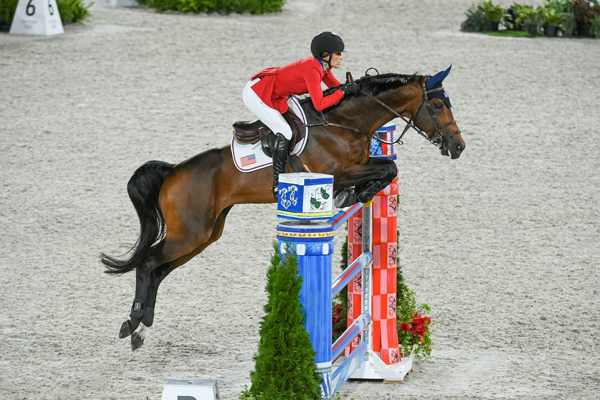
Jessica Springsteen and Don Juan van de Donkhoeve. Photo by MacMillan Photography and Media Services
Among the 30 who qualified to move on are all three riders for Belgium, Great Britain, Ireland, Japan and Sweden, and two riders each for Egypt, Israel, The Netherlands and Switzerland. The remaining seven riders of the top 30 are one each from Brazil, Canada, France, Germany, Latvia, New Zealand, Norway and Portugal.
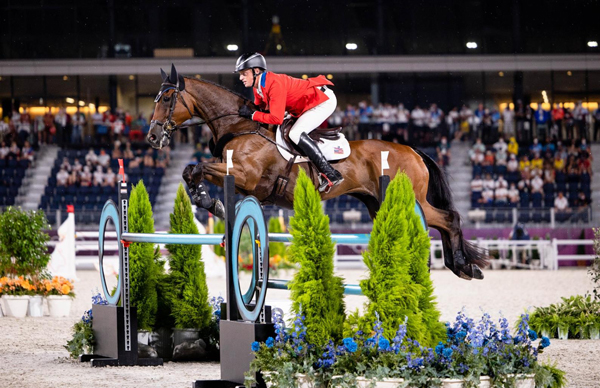
Unfortunately, even though the U.S. riders and their horses looked fresh and ready to jump in the area, some unlucky rubs and toe tips brought rails down for all three, keeping all of them out of the final. Kent Farrington on Gazelle and Jessica Springsteen on Don Juan van de Donkhoeve each had one rail and Laura Kraut and Baloutinue had two.
It is interesting to note that all three U.S. riders brought a rail down at the same fence, 13a, which was part of the Japanese Hairpins and Bow double, with Kraut and Baloutinue also lowering the last fence on course, the Japanese musical instrument jump. The American riders will now save their horses for the team competition, which begins later this week with the qualifying round on Friday, August 6.
With the Mexican riders also out of the individual competition, the sole representative for North America in the individual final will be Canada’s Mario Deslauriers riding his 12-year-old Holsteiner mare Bardolina 2. Deslauriers and Bardolina left all the jumps up and blazed around the course last night, logging the fifth-fastest time.
“It felt a little rough, but my mare fought with me the whole time, and we worked it out and got a great result,” said Deslauriers of his round with Bardolina whom he also competed at the 2018 FEI World Equestrian Games in Tryon, N.C.
“Bardolina’s very catty,” he said. “She goes a little to the right all the time, but she always wants to go. She’s very bloody, very touchy—too much sometimes. I have to compensate a little bit, try to keep her straight, but she’s done it well, so I’m totally happy.”
Laura Kraut and Baloutinue. Photo by MacMillan Photography and Media ServicesLaura Kraut and Baloutinue. Photo by MacMillan Photography and Media ServicesLaura Kraut and Baloutinue. Photo by MacMillan Photography and Media ServicesKent Farrington and Gazelle. Photo by MacMillan Photography and Media ServicesKent Farrington and Gazelle. Photo by MacMillan Photography and Media ServicesKent Farrington and Gazelle. Photo by MacMillan Photography and Media ServicesJessica Springsteen and Don Juan van de Donkhoeve. Photo by MacMillan Photography and Media ServicesJessica Springsteen and Don Juan van de Donkhoeve. Photo by MacMillan Photography and Media ServicesJessica Springsteen and Don Juan van de Donkhoeve. Photo by MacMillan Photography and Media ServicesJessica Springsteen and Don Juan van de Donkhoeve. Photo by MacMillan Photography and Media Services
Kent Farrington and Gazelle. Photo by Shannon Brinkman/Courtesy U.S. Equestrian
The U.S. Jumping Team fielded the maximum of three athlete-and-horse combinations in the Jumping Individual Qualifier at the Equestrian Park in Tokyo, Japan, with the three combinations narrowly missing the cut for a return for the Individual Final tomorrow evening, and all focus shifting to preparations for the Jumping Team Qualifier on Friday.
Jessica Springsteen and Don Juan van de Donkhoeve were the first pair to test the Santiago Varela (ESP) 1.65m track under the lights, crossing through the finish in 87.15 seconds and an unfortunate four faults. Kent Farrington and Gazelle were the second combination out for the team and just barely rubbed the first rail of the last double to finish with a time of 88.57 seconds and an additional four faults added to their score. Laura Kraut and Baloutinue rounded out the combinations for the U.S. Jumping Team and completed the track with eight faults in 85.23 seconds.
Springsteen, of Colts Neck, N.J., and Don Juan van de Donkhoeve, a 12-year-old Belgian Warmblood stallion owned by Stone Hill Farm, made their Olympic debut for the U.S. Jumping Team and impressed in their trip around the beautifully built track. Springsteen felt the pressure of being the first combination out for the U.S. and delivered with a strong start to their week of competition ahead.
“My horse jumped unbelievable,” said Springsteen. “I couldn’t be happier with him. When I walked that line, I thought that would ride a little bit more up, but my horse has such a big stride, and he jumped the wall very forward, so I just think I was a little bit quieter there, but all-in-all, I’m thrilled with the round, and I’m excited for the rest of the week.”
Farrington, of Wellington, Fla., and Gazelle, one of the most notable and successful combinations in the world, looked formidable as they tackled the course, but one uncharacteristic rail kept them out of the qualifying for the Individual Final. Gazelle, a 15-year-old Belgian Warmblood mare owned by Robin Parsky and Kent Farrington, is a seasoned competitor at the international level and now adds an Olympic Games to her long list of accomplishments. Farrington was disappointed with the score but is ready to game plan with the team for Friday’s competition.
“A harsh reality of our sport is that you have one rail down and you’re out,” he said. “The new format here being what it is, is that this is the only qualifier for the individual final and is all or nothing, and unfortunately for the American team right now, it’s nothing, so just a tough night for us. Any horse can have a rail down, and it wasn’t the right day to have one down, so it was costly. We’ll go back as a team and regroup with a plan and look forward to doing better later this week.”
As the most recent partnership of the team combinations, Laura Kraut, of Royal Palm Beach, Fla., and Baloutinue, an 11-year-old Hanoverian gelding owned by St. Bride’s Farm, faced their biggest track together so far this evening. and the energetic and nimble gelding looked fit and ready for the rest of the week ahead.
“I was really pleased with three quarters of the course,” said Kraut. “I thought my horse jumped fantastic. He was focused, and he stuck right with the plan that I wanted. I wouldn’t say that it actually went wrong; I got the jump into the wall that I wanted, which led me into the four, and he had an uncharacteristic touch of a back pole. I lost a tiny bit of concentration to the last and didn’t fight as much as I should have, and he barely touched that. I’m not disappointed in him at all, just disappointed with the score.”
Team Chef d’Equipe Robert Ridland discussed his analysis of tonight’s track and what he expects in the days to come for the Individual Final and the Jumping Team Qualifier and Team Finals competitions, which will be the focus for the next two days.
“The strategy was to go clean, which we didn’t do, but all along we’ve been very aware that this is a four-day process, and the horses jumped very well tonight, and the riders rode well,” said Ridland. “It just wasn’t our night, but the flip side is we’ll have fresher horses on Friday night, and the course designer, Santiago, is definitely going to step things up tomorrow. This wasn’t our plan, but we’ll play it to our advantage to some degree, and I think we’re in good shape for Friday, though it’s obviously disappointing to not be in contention for an individual medal.”
The Jumping Individual Final for medals will begin at 7:00 p.m. JST/6:00 a.m. EDT tomorrow, August 4, and the Jumping Team Qualifier will begin at 7:00 p.m. on Friday, August 6 at 7:00 p.m. JST/ 6:00 a.m. EDT.
Boyd Martin and Tsetserleg. Photo by Allen MacMillan/MacMillan Photography and Media Services
The 2020 Tokyo Olympics eventing wrapped up yesterday with the “thrill of victory and the agony of defeat” one would expect from Olympic competition. The conclusion saw the rise of some new faces and the staying power of old hats, too.
In the end, the British Team of Oliver Townend and Ballaghmor Class, Laura Collett and London 52, and Tom McEwan and Toledo de Kerser, led decisively start to finish and won the first Olympic gold for Britain since 1972, ending a 49-year drought. Their final score was 86.3.
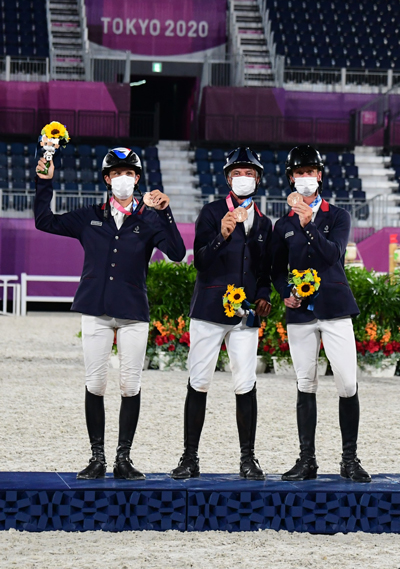
Team silver went to Australia; team members were Shane Rose and Virgil, Kevin McNab and Scuderia 1918 Don Quidam, and Andrew Hoy and Vassily de Lassos. They won the hard-fought battle over France to take the second spot with a score of 100.20. The French Team of Christopher Six and Totem de Brecey, Nicolas Touzaint and Absolut Gold HDC, and Karim Florent Laghouag and Triton Fontaine scored 101.50 for bronze. See our photo gallery.
Doug Payne and Vandiver. Photo by Allen MacMillan/MacMillan Photography and Media Services
Individual Medal Winners
Chief among personal victories in eventing was that of Germany’s Julia Krajewski, who became the first woman ever to win individual eventing gold at an Olympic Games. Although she also competed in the 2016 Rio de Janeiro Olympics, she was eliminated there. The 32-year-old and her relatively-green-to-the-CCI4*-level mare Amande De B’Neville, sailed around cross-country to finish second that day and then went on to jump a flawless round in the stadium to clench their medal. “Mandy,” as she is known around the barn, is an 11-year-old Selle Français mare that Krajewski owns in partnership with Bernd Heicke.
Though Krajewski had been a member of the German team at other championships, she had not yet found her footing as a champion rider until Tokyo. She was literally leaping in the air with joy on the medal podium.
“I’m super proud of my horse,” said Krajewski in the press conference after the medal ceremony. “I’m relieved and happy that I made it happen. I’m very thankful to everyone who’s been with me all the way. For some time, I thought the Olympics would happen without me, and that was fine. Then going to Saumur [France] and winning there, and feeling that Mandy really stepped up a level, I thought we could deliver something big. I thought ‘maybe I’ve got a little chance of going.’
“After the cross-country, I was fairly positive we could finish well, because she’s such a good jumper, and I thought, ‘if it goes wrong, it’s all in your hands.’” shared Krajewski. “Before we went in, I said ‘Mandy, we’re going to get it, and I think she knew it was a special day.”
Tom McEwan, 20, from Great Britain, was another fresh face to Olympic competition, capturing the silver with the 14-year-old Selle Français gelding Toledo de Kerser, who is owned by Fred and Penny Barker, Jane Inns and Alison McEwan. McEwan was a member of the gold-medal British squad with the same horse at the 2018 World Equestrian Games in Tryon, North Carolina, but Tokyo was his Olympic debut.
Bronze went to the Olympic veteran Andrew Hoy, 62, of Australia and David and Paula Evans’ 12-year-old Anglo-Arabian gelding Vassily De Lassos. Hoy has represented Australia at eight Olympic Games and has won six medals thus far (three gold, two silver and a bronze).
In a bright spot for the host nation, their rider, Kazuma Tomoto took a well-deserved fourth place when he guided the 12-year-old Selle Français gelding Vinci De La Vigne to a clear round in the individual final.
Phillip Dutton and Z. Photo by Allen MacMillan/MacMillan Photography and Media Services
How North American Riders Fared
The results for North American event riders in Tokyo, while fairly consistent in their performances and all finished, was not what they had hoped. The U.S. Team (Doug Payne and Vandiver, Phillip Dutton and Z, and Boyd Martin with Tsetserleg TSF) was eighth after dressage and with three clear jumping rounds on cross-country, albeit with time faults, they moved up to fifth after the second phase.
Unfortunate rails for all three in the first show jumping round dropped the team to a sixth-place finish; still this was the best Olympic finish for the U.S. squad in several Olympic cycles. The last time the U.S.A. finished higher was when they won the bronze in the 2004 Athens Olympics, where interestingly enough, the sire of both Vandiver and Tsetserleg (Windfall *Pg*E*) was a member of that team.
All three U.S. riders finished the first round in the top 25 and qualified for the individual finals. But, the rails continued to fall for the U.S. riders in that round and ultimately they settled for 16th place (Payne and Vandiver), 20th place (Martin and Tsetserleg) and 21st place (Phillip Dutton and Z).
Despite their disappointment, the U.S. riders were all gracious in sharing quotes after their rides yesterday. Payne showed his affection for his long-time equine partner, a 17-year-old Trakehner gelding that he owns with his wife and Vandiver’s breeder, Debi Crowley. “What’s left to say about this horse’s heart?” he asked. “He helped Team U.S.A. finish sixth with the best team result since the Athens Olympics. While always looking for ways to improve, now is the time to reflect and be thankful for what has just happened.”
Martin echoed with his clear admiration for Tsetserleg, a 14-year-old Trakehner gelding owned by the Turner family. “Of all the horses I’ve been lucky enough to ride, Thomas is just such a trier. What he lacks a little bit in natural talent, he absolutely makes up with his heart and desire, and having a horse that digs deep for you when the going gets tough is priceless.”
“While our final day here in Tokyo didn’t go to plan, Z tried really hard, and we did our best. I’d like to thank his owners for making this opportunity possible,” said Dutton in a final interview in Tokyo about the competition with Z, a 13-year-old Zangersheide gelding owned by Thomas Tierney, Ann Jones, Caroline Moran, Simon Roosevelt, and Suzanne Lacy. “Unfortunately, I think Z really was feeling the effects of yesterday. He didn’t jump quite as well as I would have liked to have done, but I was very proud to be a part of this team with Boyd Martin and Doug Payne and the horses we had. We live to fight another day!”
Phillip Dutton at the end of his show jumping round at the Tokyo Olympics. Photo by Allen MacMillan/MacMillan Photography and Media Services
Eventing Stats
After 63 horses rode down centerline in eventing dressage, two withdrew before cross-country citing minor injuries as the issue, and another was listed in the order of go for cross-country, but did not start. So, 60 horse-and-rider pairs challenged Derek di Grazia’s cross-country course on Sunday, with 10 of those being eliminated on course and two others retiring (20 percent did not finish).
Looking at the cross-country fence-by-fence analysis, two of the horse-and-rider pairs were eliminated due to three refusals, while another four riders missed a jump element on course and were eliminated for that reason. There were also three eliminations due to rider falls and one due to a fall of both horse and rider.
The other thing of note on the cross-country analysis was the number of times that frangible pins on the jumps were triggered here, which means that 11 penalty points were added to the rider’s score. The frangible pins at jump number 14c were broken seven times, and another horse activated the pins at fence 18b. One key horse-and-rider combo affected by triggering the frangibles at 14c was the leader after dressage, Germany’s Michael Jung and Chipmunk FRH. The 11 penalty points assessed to Jung, who was the 2012 and 2016 Olympic champion, dropped him from first to 10th at the end of cross-country.
Very, very sadly, one of the two horses retired voluntarily on course was the Swedish horse Jet Set, whose rider Robin Godel recognized a change in the horse’s way of going after they galloped away from the Mt. Fuji Water Complex (obstacle # 20). Godel hopped off and immediately attended to his horse, with emergency veterinary staff and a horse ambulance there shortly thereafter.
About an hour later, the sad news came from the FEI that “ultrasound scans revealed that Jet Set had an irreparable ligament rupture in the lower right limb, just above the hoof, and on humane grounds and with the agreement of the owners and athlete, the decision was taken to put the horse to sleep.” All of us here in Tokyo for equestrian sport were heartbroken over the news; our thoughts are with the rider, horse owner and all on the Swedish team.
Yesterday morning at the final horse inspection ,one more horse was eliminated when Joanna Pawlak’s mare Fantasic Frieda (Poland) did not pass. That left 47 to tackle Santiago Varela’s first-round show jumping course, which determined the team medals and who qualified for the next show jumping round. The top 25 moved on to the second round, which determined the individual medals.
Show Jumpers Move Into Tokyo
The show jumpers have moved into the Olympic stabling at Baji Koen. They had their first horse inspection three days ago and a training session two days ago. All horses passed the jumper initial horse inspection, which included the reserve horses as well; two were held on initial inspection and were re-inspected the next morning, when they were finally accepted. The show jumping competition gets underway this evening in the first individual qualifier with all 75 horse-and-rider combinations slated to compete.
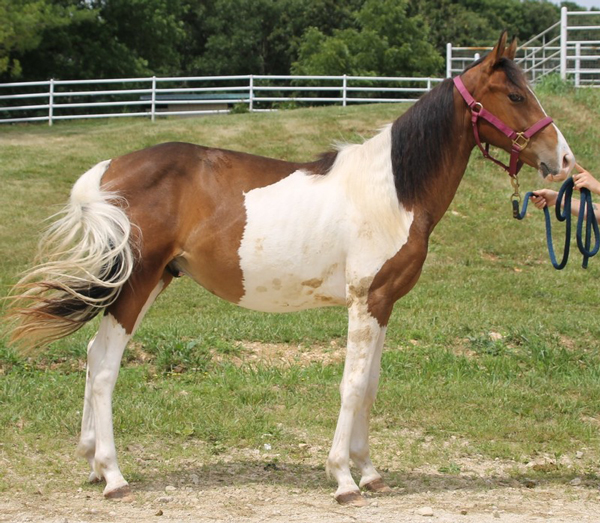
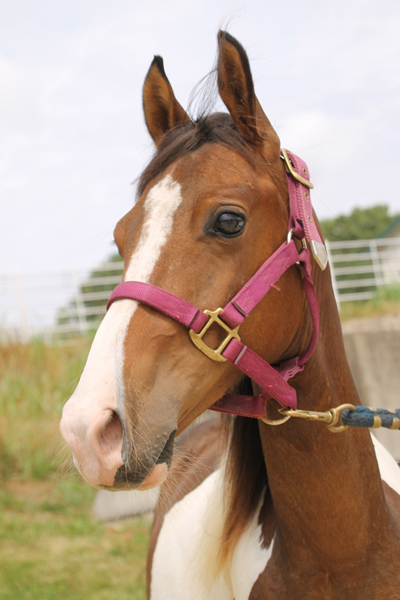
Welcome to Horse Illustrated’s weekly installment of the My Right Horse Adoptable Horse of the Week, offered in partnership with The Right Horse. Bronson is this week’s adoptable horse. Check back weekly for a new featured horse so you can find your #righthorse.
This handsome little man is Bronson! Surrendered by his owners when they realized they could no longer give the care he needed, Bronson arrived underweight and still nursing from his mother. Upon his arrival, Bronson was skittish and preferred to avoid his handlers. Fast forward a few months, and he has become quite the cuddle bug! While gaining his trust, staff at Longmeadow Rescue Ranch taught him how to pick up his feet and accept a halter. Bronson has turned quite the corner in his time there, and he is now ready for his forever home! He will require a home with a handler that has experience working with babies. We cannot wait to see him grow into the handsome adult he is bound to be!
My Right Horse is the online adoption platform of The Right Horse Initiative, a collection of equine industry and welfare professionals and advocates working together to improve the lives of horses in transition. A program of the ASPCA, their goal is to massively increase horse adoption in the United States. To find more adoptable horses and foster horses, visit www.myrighthorse.org. To learn more about The Right Horse, a program of the ASPCA, visit www.therighthorse.org.
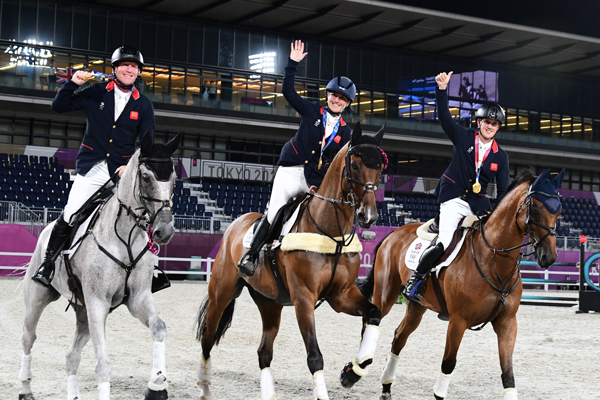
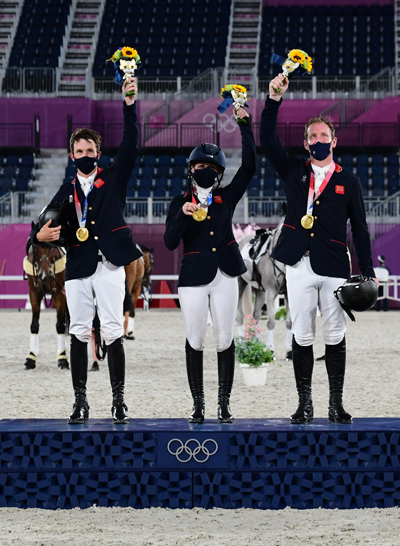
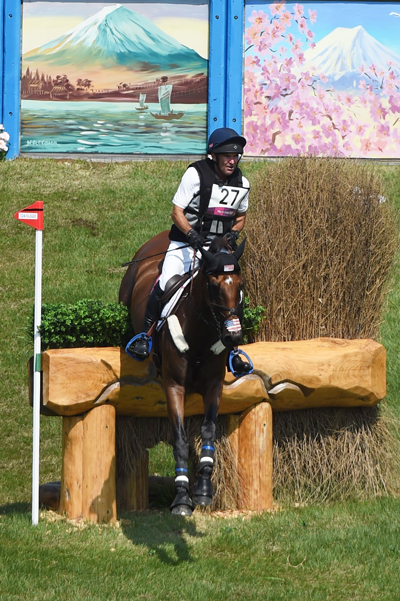
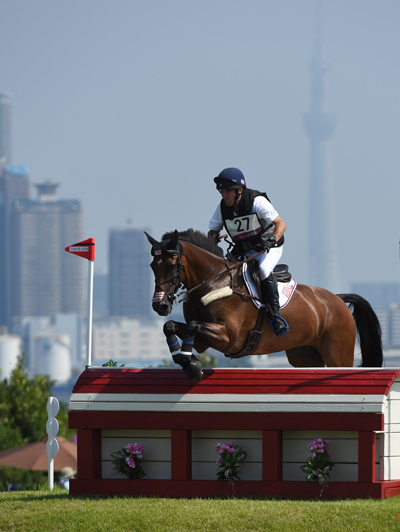
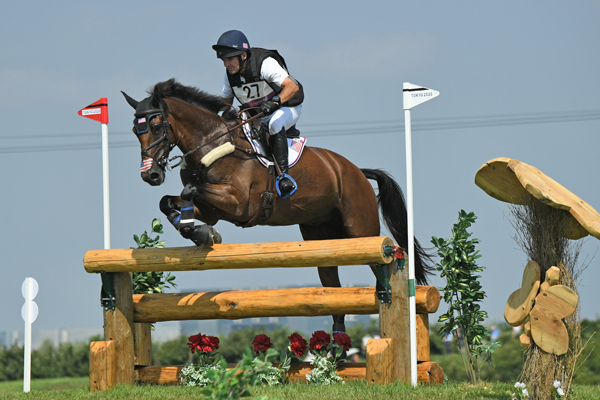
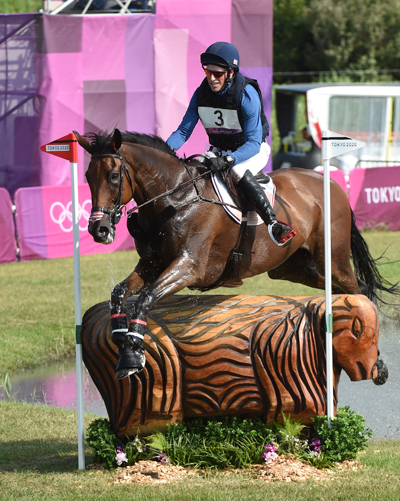
The team from Great Britain of (l-r) Oliver Townend aboard Ballaghmor Class, Laura Collett aboard London 52, and Tom McEwen aboard Toledo de Kerser captured team gold medals after several grueling days of eventing competition at the Olympic Games Tokyo 2020.
2. Team Gold for Great Britain
Photo by MacMillan Photography and Media Services
Tom McEwen, Laura Collett, and Oliver Townend made up Team Great Britain in eventing. They won team gold on a total score of 86.30.
3. Team Great Britain Celebrates
Photo by Sarah Miller/MacMillan Photography and Media Services
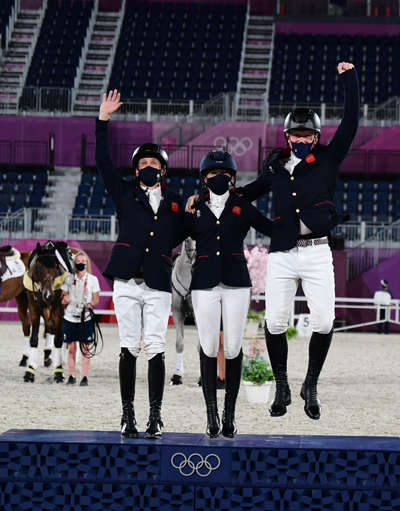
Tom McEwen, Laura Collett, and Oliver Townend.
4. Team Silver for Australia
Photo by MacMillan Photography and Media Services
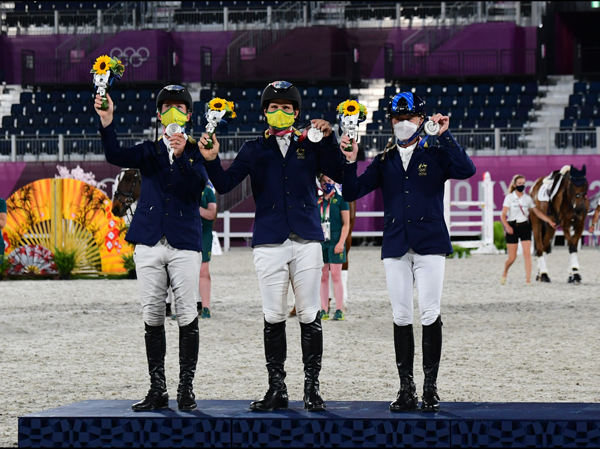
Shane Rose on Virgil, Kevin McNab on Scuderia 1918 Don Quidam, and Andrew Hoy aboard Vassily De Lassos made up Team Australia, who ended with a team silver medal on a score of 100.20.
5. Team Bronze for France
Photo by MacMillan Photography and Media Services
Nicolas Touzaint and Absolut Gold HDC, Christopher Six and Totem De Brecey, and Karim Florent Laghouag aboard Triton Fontaine landed in the bronze-medal spot with a score of 101.50
6. Gold, Silver, and Bronze
Photo by MacMillan Photography and Media Services
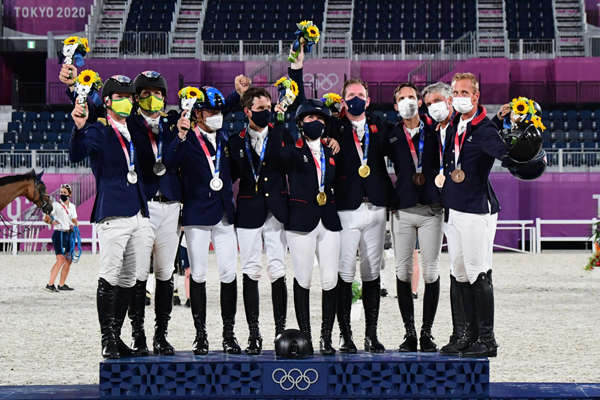
All of the medal winners from the eventing team competition atop the medal podium.
7. Individual Medalists in Eventing
Photo by Sarah Miller/MacMillan Photography and Media Services
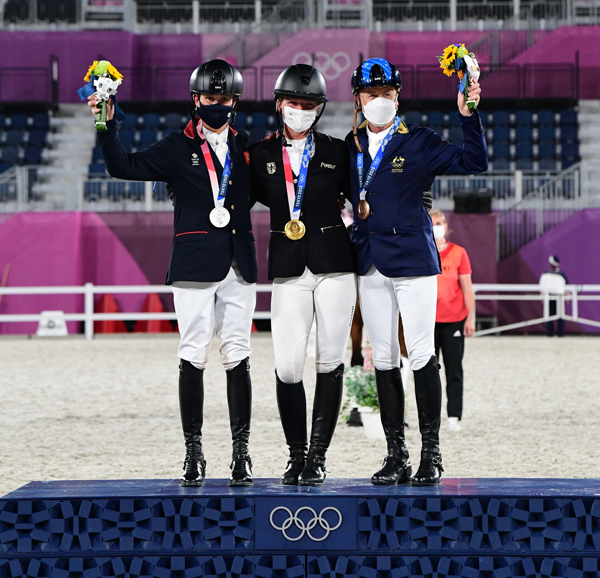
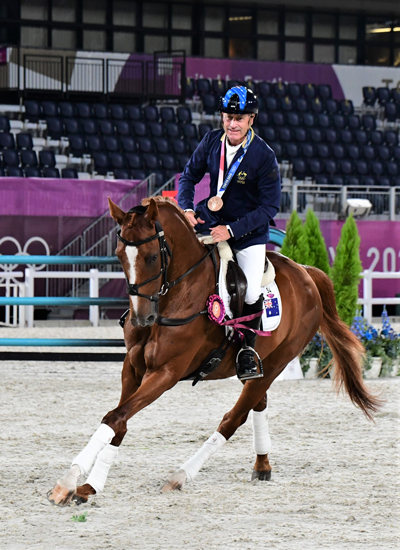
Individual Eventing Medalists: Germany’s Julia Krajewski and Amande de B’Neville (gold, center), Great Britain’s Tom McEwen and Toledo de Kerser (silver, left), and Australia’s Andrew Hoy and Vassily De Lassos (bronze, right).
8. Julia Krajewski and Amande de B’neville
Julia Krajewski and Amande de B’Neville. Photo by Allen MacMillan/MacMillan Photography and Media Services
Julia Krajewski and Amande de B’Neville finished with a clean show jumping round and a total score of 26.00 to end up on top for eventing individual riders.
9. Julia’s Victory Gallop
Julia Krajewski and Amande de B’Neville. Photo by MacMillan Photography and Media Services
10. Tom McEwen and Toledo de Kerser
Tom McEwen and Toledo de Kerser. Photo by Allen MacMillan/MacMillan Photography and Media Services
Tom McEwen and Toledo de Kerser finished top of all the British riders with a score of 29.30 to end up an individual silver medalist, as well as winning a team gold medal in eventing at the Tokyo Olympic Games.
11. Tom’s Victory Gallop
Tom McEwen and Toledo de Kerser. Photo by MacMillan Photography and Media Services
12. Andrew Hoy and Vassily De Lassos
Andrew Hoy and Vassily De Lassos. Photo by Allen MacMillan/MacMillan Photography and Media Services
Andrew Hoy and Vassily De Lassos finished on a score of 29.60 for Australia, and not only ended up with an individual bronze medal, but the 62-year-old finished his 8th Olympic Games and now has accumulated three gold, three silvers and a bronze over his entire career.
13. Andrew Hoy Aboard an Anglo-Arabian
Andrew Hoy and Vassily De Lassos. Photo by MacMillan Photography and Media Services
At age 62, Andrew Hoy is Australia’s oldest Olympic medalist, but don’t let his age fool you. He’s as good as he ever has been, and he has competed in more Olympic Games than any other Australian athlete. Vassily De Lassos is a 12-year-old Anglo-Arabian.
Doug Payne and Vandiver. Photo Courtesy U.S. Equestrian
The US Eventing Team finished in sixth place out of 14 nations on the final day of competition with show jumping at the Olympic Games Tokyo 2020 and ended the competition with a team total of 125.80 faults. Doug Payne and Vandiver added four jumping faults to their overall score to finish the team phase with a 43.80, and Phillip Dutton and Z added eight jumping faults to their total for a final score of 43.30. The anchor combination of Boyd Martin and Tsetserleg added a single rail to their overall total to finish on 38.70.
All three combinations finished in the top 25 and moved on to jump a second round for individual medals. Following their individual rounds, Payne and Vandiver finished as the highest-placed U.S. combination on a total of 48.20 for 16th place, Martin and Tsetserleg on a 52.30 for 20th place, and Dutton and Z with a 52.30 for 21st.
In the team competition, Payne, of Rougemont, N.C., and Vandiver, a 17-year-old Trakehner gelding (owned by Debi Crowley, Doug Payne, and Jessica Payne), jumped a great round, and barely tapped the hind rail of the oxer into the one stride combination, ultimately adding four faults to their score.
“He was jumping absolutely great and got a little shifty in the line, and we got caught out on the back rail at the red and yellow, and honestly I’m pretty frustrated at that, but he was jumping so well that I couldn’t ask a whole lot more from him,” said Payne. “He’s shown a lot of heart this week, and I’m just so thankful to have him.”
Dutton, of West Grove, Pa., and Z, a 13-year-old Zangersheide gelding (owned by Evie Dutton, Ann Jones, Suzanne Lacy, Caroline Moran, Simon Roosevelt, and Thomas Tierney), pulled two uncharacteristic rails around the course, to complete the team phase on 43.30 penalties. While disappointed with the round, Dutton commended Z’s effort and overall, the improvement of the team standings from the past several Olympic cycles and is looking forward to the continued growth of the program and team.
“I’m really disappointed, obviously,” commented Dutton. “He was trying really hard, and I was going to try and get down to the triple in six, and then I had to change my mind, and he had to work so hard to get out, that he had the out down and that rattled him a little bit.”
“It’s a good course, and you’ve got to be able to be on an open stride or add and you can’t try to do both,” continued Dutton. “You have to keep it all in perspective. This is certainly an improvement from the team perspective for the U.S. for a while now, and we had aimed for higher, but we hit the board.”
As the final combination in the show jumping rotation for the US Eventing team in Tokyo, Martin, of Cochranville, Pa., and Tsetserleg, a 14-year-old Trakehner gelding (owned by Christine Turner, Tommie Turner, and Thomas Turner), edged the same rail as Payne and Vandiver to add four faults to their score. Martin was proud of the round with “Thomas” as the jumping phase is notably his toughest phase, and he jumped well with Martin in the irons.
“I thought my horse came out and jumped very well,” said Martin. “He’s always a bit tricky in combinations, and I was dreading that red-and-yellow one-stride oxer to vertical, and I think in hindsight I got there a touch too early, and he just nicked it with a toe, so saying that I’m pretty pleased with him all around. He’s a great horse and tries hard, and he’s a champion.
With a sixth-place finish, the team felt the sting of being unable to deliver a podium finish, but overall, the improvement and depth of the team is something to be built upon with the Paris 2024 Olympic Games on the horizon. Chef d’Equipe Erik Duvander felt the team had the opportunity to reach the medals if things had gone more their way, but overall, the improvement and growth is something to be attested to for the future. In total, the team has been on the road for the past three-and-a-half weeks with a trip to Aachen, Germany, before their two-week stay in Tokyo, and Duvander commented on the logistics and travel associated with these Games.
“In all of my years of competing and coaching in championships in this sport, I have never experienced such an arduous trip for the horses,” said Duvander. “Our team handled the process without doubt and ultimately kept the welfare of our horses at the forefront of every decision. Our team truly showed their mettle on the cross-country yesterday. The horses gave their absolute all on the final day in show jumping and tried until the end with everything they had left.”
“Our grooms and staff who have worked so meticulously to care for these horses deserved a better result,” he continued after the US Eventing Team’s finish after show jumping at the Olympic Games Tokyo 2020. “It has been an extraordinary effort across the board since we left the U.S., from everyone on the long list—the reserve combinations who traveled to Germany and those who participated at the Mandatory Outing—everyone has fronted up for the U.S team and done everything within their power to support our success. I have a great belief in the future of the U.S., as I know we are on the right track.”
Enjoy our eventing cross-country photo gallery from the Olympic Games Tokyo 2020 with leading rider after cross-country Oliver Townend, and Team USA’s Boyd Martin, Phillip Dutton, and Doug Payne.
Oliver Townend and Ballaghmor Class (GBR)
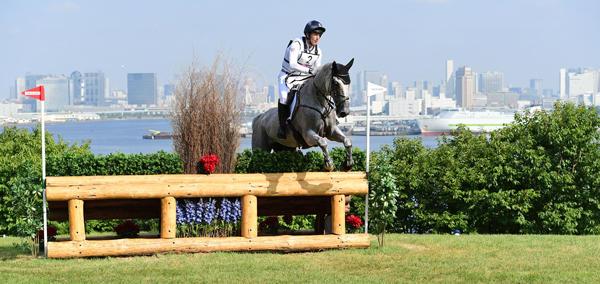
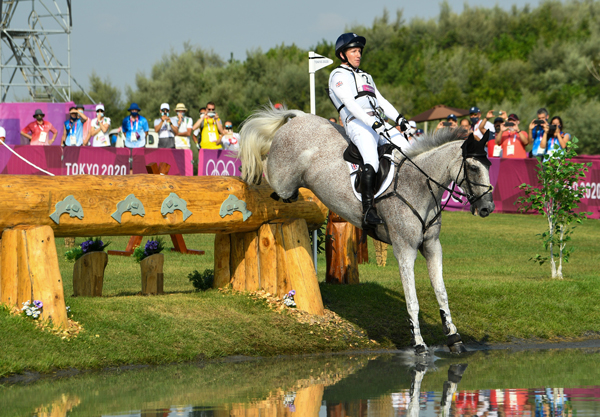
Olliver Townend and Ballaghmor Class of Great Britain lead on a score of 23.60 after a clean cross-country round.
Oliver Townend and Ballaghmor Class. Photo by Kim MacMillan/MacMillan Photography and Media ServicesOliver Townend and Ballaghmor Class. Photo by Allen MacMillan/MacMillan Photography and Media ServicesOliver Townend and Ballaghmor Class. Photo by Sarah Miller/MacMillan Photography and Media Services
Boyd Martin and Tsetserleg (USA)
Boyd Martin and Tsetserleg, aka Thomas, are in 14th after cross-country with a total score of 34.30 after 3.2 time faults.
Boyd Martin and Tsetserleg. Photo by MacMillan Photography and Media ServicesBoyd Martin and Tsetserleg. Photo by Sarah Miller/MacMillan Photography and Media ServicesBoyd Martin and Tsetserleg. Photo by Sarah Miller/MacMillan Photography and Media Services
Phillip Dutton and Z (USA)
Phillip Dutton and Z are in 17th, right behind Boyd Martin, with a score of 35.30 after 4.80 time faults on cross-country.
Phillip Dutton and Z. Photo by Sarah Miller/MacMillan Photography and Media ServicesPhillip Dutton and Z. Photo by Sarah Miller/MacMillan Photography and Media ServicesPhillip Dutton and Z. Photo by MacMillan Photography and Media Services
Doug Payne and Vandiver (USA)
Doug Payne and Vandiver finished the second phase of eventing with 6.80 time faults on the cross-country course to stand on 39.80 going in to show jumping.
Doug Payne and Vandiver. Photo by MacMillan Photography and Media ServicesDoug Payne and Vandiver. Photo by MacMillan Photography and Media ServicesDoug Payne and Vandiver. Photo by Sarah Miller/MacMillan Photography and Media Services
Stay tuned for our continued coverage from the Olympic Games Tokyo 2020 with a full report on cross-country from equestrian journalist Kim MacMillan, and the wrap-up of eventing with the final round of showjumping to see how Phillip Dutton, Boyd Martin, and Doug Payne finish individually and for the team final.
Boyd Martin and Tsetserleg. Photo by Shannon Brinkman/Courtesy U.S. Equestrian
The US Eventing Team made strong work of Derek Di Grazia’s cross-country track at Sea Forest Cross Country Course in the middle of Tokyo Bay, with all three combinations crossing through the finish line with no jumping penalties. Doug Payne and Vandiver led off the team as the third combination to test the course and came home with just 6.8 time faults and move forward to tomorrow on a 39.80. Phillip Dutton and Z dashed through the course and finished with just 4.8 time faults and currently sit in 17th. The anchor combination of Boyd Martin and Tsetserleg took to the track mid-morning and flew around with ease, adding just 3.20 penalties for a two-phase score of 34.30, which sits them just inside the top 15. The team currently sits in fifth place with 109.40 combined penalties heading into the final day of competition.
As the lead-off combination, the pressure was on Payne, of Rougemont, N.C., and Vandiver, a 17-year-old Trakhener gelding (owned by Debi Crowley, Doug Payne and Jessica Payne), to path find for the team and provide feedback on how the combinations rode and where the following two pairs could help shave off time. Vandiver is a seasoned veteran and showed his experience, tackling the course with confidence and securing the team’s first critical completion with just 6.8 time faults added to their score, which put him in 23rd.
““It was incredible. I couldn’t be happier to have Quinn [Vandiver],” said Payne. “He has the biggest heart of any horse I’ve had the opportunity to work with. He can be a bit unconventional at times, but he tries his heart out and that’s all you can ask for around a course like this. The first minute you had to accept that you were going to be down, and the rest was how quick and efficient you could dare to be with how your horse felt. He was excellent though, and I think a clear here was the most important thing with no drop score to fall back on.”
In his seventh Olympic Games, Dutton, of West Grove, Pa., is no stranger to pressure situations and with the changes in format for the Tokyo 2020 Olympic Games, the pressure was hotly on all US team combinations to navigate the cross-country track and bring their horses across the finish line. Dutton and Z, a 13-year-old Zangersheide (owned by Evie Dutton, Ann Jones, Suzanne Lacy, Caroline Moran, Simon Roosevelt, and Thomas Tierney), started their trip around the track off strong before being held by the officials as they tended to another rider after a fall. In a testament to his experience, Dutton was able to refocus and restart Z without issue and earned the team’s second completion of the day.
“It went well. When you’re going that fast, you’ve got to take some chances, and I had a bit of a last life at the last water,” said Dutton. “And I got held on course, which is not ideal when you have to stop and start again, but he’s a great horse with a big heart, and I think that it couldn’t have gone much better. This was a lot of hard work with the turns, accelerating, and slowing down, but we knew that coming in and needed to get the horses fit and prepared for that.”
Regardless of his starting position, Martin, of Cochranville, Pa., felt the edge of needing to deliver for his team, but particularly as the anchor combination, he and Tsetserleg, a 14-year-old Trakhener gelding (owned by Christine Turner, Tommie Turner, and Thomas Turner), were tasked with not only finishing the track, but getting the team as close to striking distance of the podium as possible. The mighty pair sped around the snake-shaped course, and though Martin admitted the course design with the twists and turns wasn’t a particular strength for Thomas, the gelding gave it his all and brought the pair home with just 3.2 seconds in time faults.
“It’s a big sigh of relief getting around well,” said Martin. “Thomas tried his absolute heart out. It wasn’t a course that suited him that well with the twists and turns, but he dug deep. He finished well and proud to be an American. Three American horses finished well today.”
The chef d’equipe for the US eventing team, Erik Duvander, was pleased with how each combination tackled the cross-country course at the Olympic Games Tokyo 2020 and ultimately improved their team position heading into the final day of competition, because of their gritty and tactful riding. With the jumping phase ahead, the team will focus on recovering the horses this evening and will set their sights on delivering for the U.S. once again tomorrow.
“We succeeded with improving our position from the dressage with three clear rounds,” said Duvander. “I am very happy with how our riders rode on cross country today. Tactfully, they went as fast as the horses allowed them to go on this type of track and in the hot conditions. All horses finished well and look happy back in the stables at the main venue.”
Eventing competition will conclude tomorrow with team and individual medal honors being awarded. Team competition will take place first, beginning at 5:00 p.m. JST/4:00 a.m. EDT, before the top 25 combinations will return for a second jumping round for individual medals under the lights at Equestrian Park starting at 6:45 p.m. JST/5:45 a.m. EDT.
Welcome to Tokyo Takeaways by StreamHorseTV! In this series, StreamHorseTV will be talking Tokyo Equestrian with the lovely and knowledgeable Catie Staszak, international show jumping commentator, multimedia sports journalist, and CEO of Catie Staszak Media. We will provide discussion, insight and commentary around all the action happening on the ground during the Tokyo Olympic equestrian competitions. In this installment of StreamhorseTV’s Tokyo Takeaways series, Staszak recounts the thrills of watching the dressage competition live, and comments on the impressive medal record Charlotte Dujardin now holds for Great Britain. She also explains what surprised her about Phillip Dutton’s feedback on the cross-country course, as we play a clip of Dutton’s Diaries.
Team USA Dressage Puts Up Their Best Finish in 73 Years
Dressage is often deemed “horse dancing” as it features rhythmic footwork, pirouettes and otherwise fancy moves that the horses display in a routine set to music in the arena. In Tokyo’s final dressage round, Team USA’s horses danced like nobody was watching.
The team of Adrienne Lyle on Salvino, Steffen Peters on Suppenkasper, and Sabine Schut-Kery on Sanceo rode to team silver, the best U.S. finish in 73 years.
Staszak commends the ground-shattering performance of German-born U.S. rider Schut-Kery, who has been an elite dressage competitor for many years, in her first Olympics with the horse she has brought up since three years of age. She rode the test of her life, earning an 81.59%, which was a massive personal best in the finals. Staszak calls Schut-Kery, of Napa, Cali., an “American hero of these Olympic games.” Staszak describes her jubilation watching this at home. “I was cheering at the screen. It was an historic moment,” she adds, crediting the incredible partnership of Schut-Kery and Sanceo. “It’s undeniable, really. They know each other inside and out, and that is an advantage, and they proved that.
Natalie Mayrath, StreamHorseTV’s Director of Content, gushes that her favorite quote of the day was Steffen Peters saying that he “cried when I came out, gave Mopsie a big hug, and just thanked him from the bottom of my heart,” referring to his not large, but giant, 18.2-hand mount Suppenkasper, affectionately known by his barn name of Mopsie.
As reported by The Chronicle of the Horse, Peters also got emotional watching Schut-Kery throw down the score of a lifetime. “For me to experience this after five Olympic Games, and witnessing the last three minutes, in sobbing tears, of Sabine’s test, was an incredible moment,” said Peters. “That I can still get so emotional at 57 years old shows how badly I still want this and really still enjoy it.”
Germany has won every Olympic dressage team gold since 1984, except for Great Britain edging them out in 2012, which Staszak points out has everything to do with the legendary wonder horse Valegro. And they made no exceptions at these games, taking the gold home again in the team competition. Their trio of riders included Isabell Werth, Jessica von Bredow-Werndl, who set an Olympic record, and Dorothee Schneider, who was in a traumatic riding accident when her horse died underneath her just several weeks before the Olympics.
Format changes seemed a success according to Staszak. “New to the Grand Prix Special was the addition of (non-judged) music, which with no spectators in the stands, certainly helped create more atmosphere in the arena,” she said on StreamhorseTV’s Tokyo Takeaways #2 on dressage. “Peters, known for his choreography, rode his test to a brilliant compilation that included Coldplay’s Fix You and Snow Patrol’s Chasing Cars.”
How Heat Is Affecting The Horses
The heat in Japan has been a major question and concern in the lead-up for the Tokyo Games, even before the year-long postponement went into effect. Mayrath comments that the dressage horses indeed looked sweaty, and Staszak explains the Tokyo officials are pulling out all the stops in keeping the horses cool, comfortable and safe. The schedules have intentionally been fashioned in the a.m. and p.m. hours in avoidance of midday heat, but we wonder how cross-country day will go as that usually fills an entire day.
Welcome to Tokyo Takeaways by StreamHorseTV! In the Tokyo Takeaways series, StreamHorseTV will be talking Tokyo Equestrian with the lovely and knowledgeable Catie Staszak, international show jumping commentator, multimedia sports journalist, and CEO of Catie Staszak Media. We will provide discussion, insight and commentary around all the action happening on the ground during the Tokyo Olympic equestrian competitions.
In this debut edition, we discuss format changes that increase pressure on the riders, the impact of no spectators, surprises in team selections and withdrawals, and the major differences between Days 1 and 2 of the Dressage qualifying round.
Our first conversation kicks off by discussing the riders and horses Team USA has selected for each equestrian Olympic discipline, updates on performance expectations, format changes, and substitution or withdrawals affecting the teams along the way. The year-long delay, coupled with the absence of spectators, surely has an impact on both the horses and riders, as Staszak points out.
The Impact of Format Changes Looms for a Strong U.S. Team
Team USA is strong in all equestrian Olympic formats for these games, with big names and veteran competitors gracing the selection lists. Staszak mentions that eventing may have been the most challenging for selectors to choose just three horse-and-rider combinations (format changes mandate that equestrian teams be composed of three members, whereas in the past there have been four with the worst performance score dropped in the final tally for medals). Staszak notes that Team USA show jumper Laura Kraut said recently in an interview that it puts more emphasis on pressure for each rider’s score being counted. No longer is there a cushion where you know if you mess up, your score can be dropped.
Surprises Along The Way
There were twists and turns as the teams were determined over the last few months. Some surprises included the absence of a notable name on the show jumping team list: Beezie Madden. Staszak recounts that Madden’s top horse for contention in 2020, Darry Lou, had a contracted sale agreement, which was put through after the games were delayed, leaving Madden with a tremendously talented, but younger horse named Garant. After early rounds of the final observation event in Rotterdam for the Olympics, Madden stated Garant would be withdrawn from contention as he wasn’t quite ready for the demands of the Olympic competition. In Madden’s case, the year-long delay proved a difference in her prospects for making this Olympic Team.
When Liz Halliday-Sharp and Deniro Z pulled out due to injury after being named onto the original team, Doug Payne and Vandiver were moved into her slot with Tamra Smith and Mai Baum as the traveling reserve, or alternate pair on-deck. Natalie Mayrath, StreamHorseTV’s Director Of Content, mentioned that she thought Smith and Mai Baum would be selected for the original team. In Smith’s case, having moved from the four-star level up into five-star with this horse just recently at the 2021 Land Rover Kentucky Three-Day Event, a 2020 games may not have seen them as contenders in this event.
Read the full story and watch the full episode of Tokyo Takeaways with Catie Staszak on StreamHorseTV for commentary on the surprise withdrawal for Team USA in Dressage, and why Charlotte Dujardin isn’t bringing the horse everyone expected to Tokyo.
Join us again in the coming days for Episode #2 of Tokyo Takeaways with Catie Staszak for StreamhorseTV, where we will discuss who makes the Dressage podium, and look ahead toward eventing!
About StreamHorseTV
StreamHorseTV, where horse enthusiasts can join to expand their horizons, is the premier live-stream, replay, entertainment and education community for all international equestrian disciplines, sports and breeds. Follow StreamHorseTV on Facebook, Instagram, YouTube, and Twitter and subscribe for free at StreamHorse.TV.
About Catie Staszak Media
Catie Staszak is the CEO of Catie Staszak Media, Inc. and international show jumping commentator. Primarily working with the Longines FEI Jumping World Cup North American League, Staszak has announced at showjumping events across the globe. In 2018, she moderated at the FEI Sports Forum in Lausanne, Switzerland, and in 2019, she was named a Chief Liaison Officer for Olympic Broadcasting Services at the Tokyo Olympic Games.
Staszak founded Catie Staszak Media in 2018, a boutique media agency with a focus on storytelling-based marketing and PR. When she’s not working, she’s enjoying time with her “superhero” horse Zantos, whom she shows in the Amateur-Owner jumpers, and her dog/sidekick, Omaha.
We use cookies to help personalize content, tailor and measure ads, and provide a safer experience. By navigating the site, you agree to the use of cookies to collect information. Read our Cookie Policy.