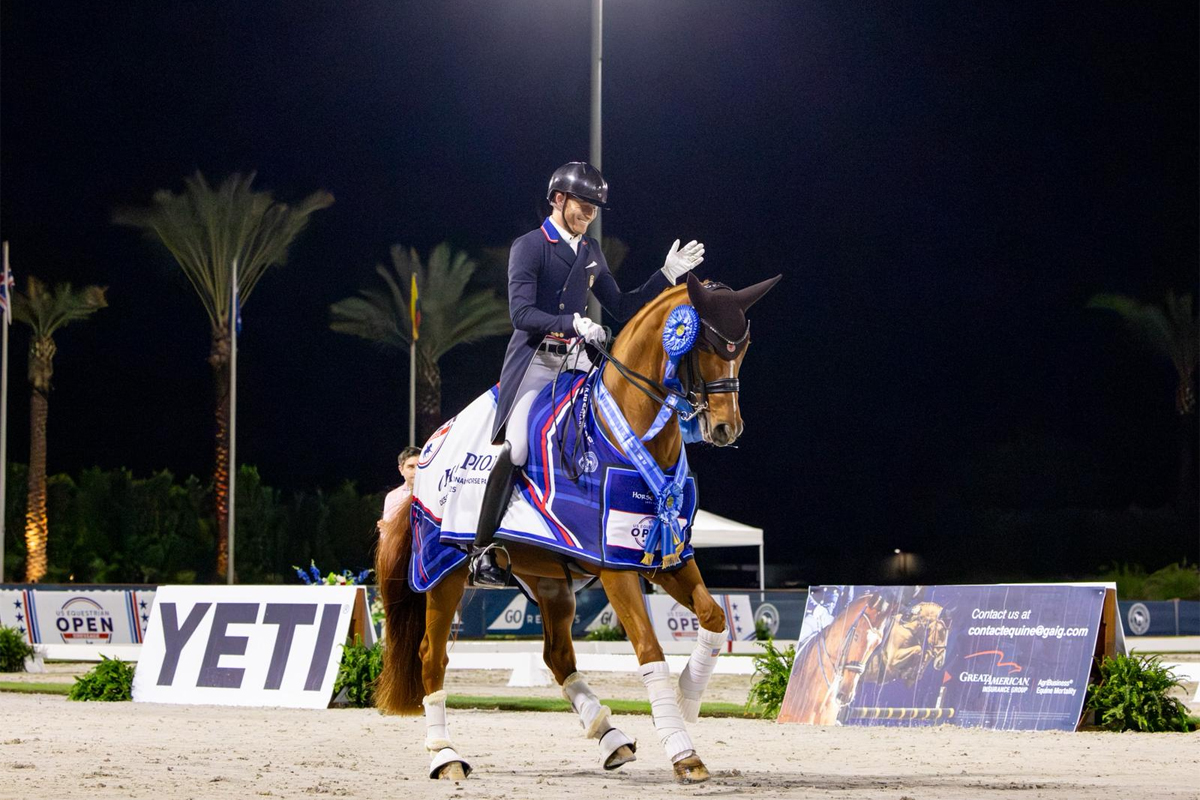
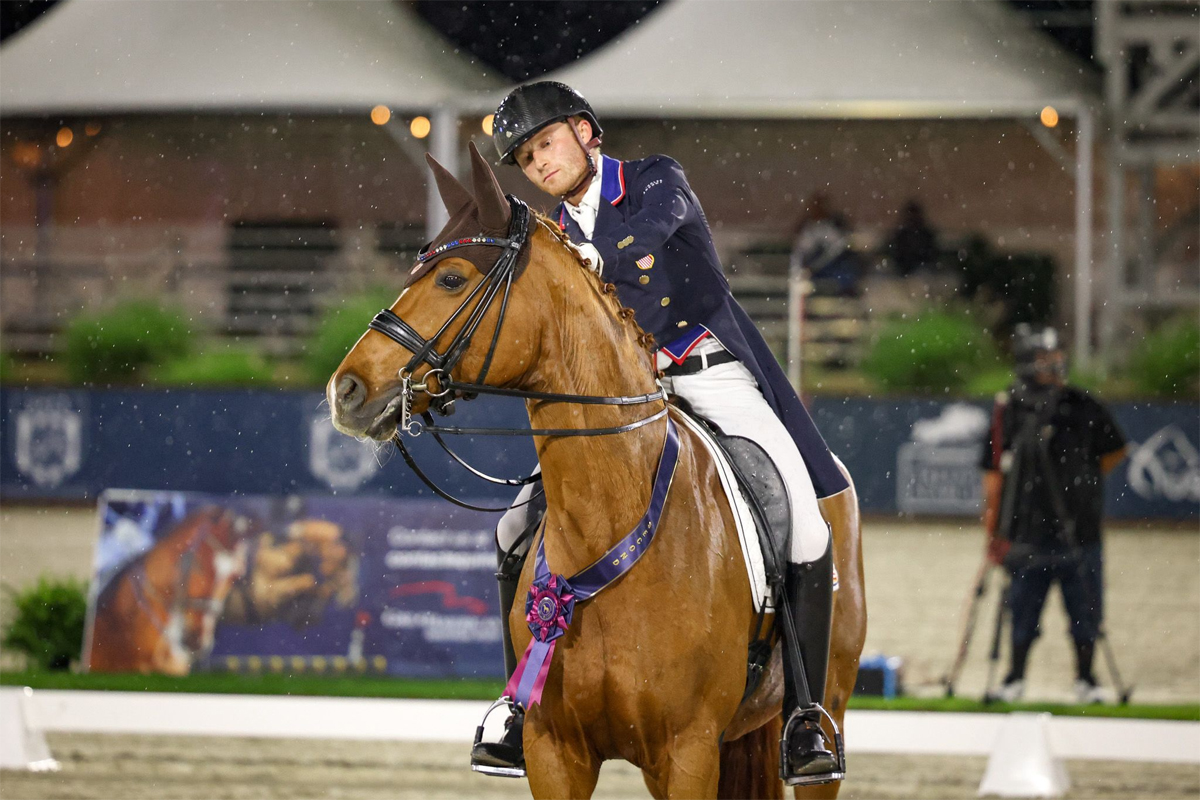
Thermal, Calif. — Ben Ebeling (USA) and Bellena stole the show in the inaugural US Equestrian Open Dressage Final, hoisting the impressive trophy to conclude the first year of the finals across the three Olympic disciplines. The partnership earned a personal best score of 79.903% for their freestyle composition to a mix of iconic female pop artists to stand firmly atop the podium. Felicitas Hendricks (GER) and Drombusch OLD took second place on a final score of 78.260%, while Anna Marek (USA) and Fayvel finished in third on 77.830%. The competition this week at Desert International Horse Park also marked the first-ever CDI5* hosted on the West Coast.
Ben Ebeling and Bellana celebrate with a victory gallop. Photo by AveryWallace/US Equestrian
“Every time I ask this horse to come through for me, she is just so clutch. She’s just an incredible competitor and I’m so lucky to have her by my side and in that arena. We’ve been working together for a year now and we’re just continuing to build this synergetic and symbiotic bond,” said Ebeling. “I’m just so proud of her. As I’ve said, a rider is nothing without their horse, so really, thank you, Belle.”
“Our freestyle really highlights her personality as a diva mare and is a testament to strong powerful women. The freestyle includes sections of songs from artists like Rihanna, Beyonce, and Gwen Stefani, and honestly, I don’t think anyone can do it better than a mare and that’s been the inspiration behind this freestyle,” said Ebeling of his musical selection.
Of the evening and monumental achievement, Ebeling noted the format of the competition and the opportunity to highlight the Grand Prix Freestyle a positive push the sport needs to be able to connect with more people and attract a broader audience.
“I think it’s such a great way to capture the hearts and minds of a wider audience. It’s an amazing opportunity for our sport and to show that we can make it fun and entertaining, while highlighting the incredible attributes of our horses. Getting to have my name inked on this trophy with other greats, including two Olympians, it just motivates me more to keep going and keep pushing.”
Ben Ebeling and Bellana. Photo by AveryWallace/US Equestrian
With Drombusch OLD and her own 2011 Oldenburg gelding (Destano x DiMaggio), Felicitas Hendricks (GER) set the tone in the second half of the class, earning a 78.260% to put the pressure on both Ebeling and Marek to deliver. Hendricks, who earned her qualification during the Wellington season in her campaign last spring, competed in the desert for the first time and was thrilled with both her horse and the experience.
“I’ve been with this horse for a long, long time and he just never stops impressing me. I think today was one of the best feelings we’ve had together,” said Hendricks of her ride. “It’s special when you have been partners for as long as we have and you still feel like you’re continuing to grow and develop together – getting better with every ride. I’m so thankful for him and to be able to experience this together.”
Marek (Dunnellon, Fla.) and Fayvel, a 2010 KWPN gelding (Zizi Top x Houston) owned by Cynthia Davila, finished their week with a strong third-place finish in the final class of the week, capping an incredibly strong season for the pair, which included their overall series win, alongside their FEI Grand Prix CDI5* win on Friday evening.
“What’s really fun about showing this horse is that he’s uncomplicated to ride. He lets me really ride and not hold back. With Fayvel, I can really go for it and on a night like tonight, when the pressure is on, I know I’m going to fight for it and he’s going to be right there with me every step of the way and we don’t need to hold back,” explained Marek. “It’s been an amazing week here for us in California and I’m so grateful for the opportunity to compete here with him.”
A total of twelve combinations moved forward to contest the FEI Grand Prix Freestyle CDI5* under the lights, with four different combinations earning personal bests, with competitors across the competition representing the U.S., Canada, and Germany.
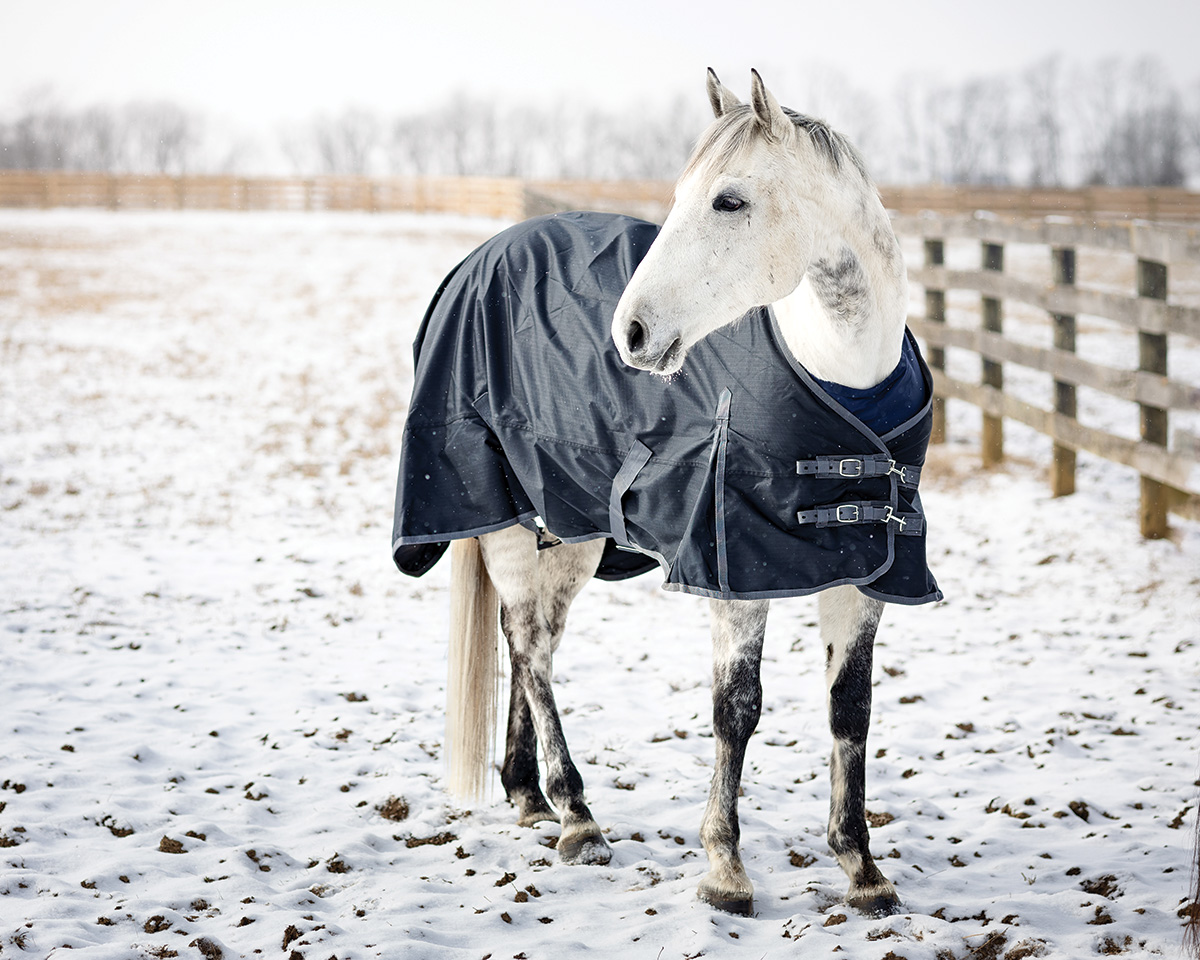
As winter rolls around, every equestrian begins frantically watching the weather. Snow, rain, mud, sudden temperature drops—you never know what winter might bring. We all strive to give our horses the best care we can, leading us to wonder: What’s the best way to keep horses warm? Is it blanketing?
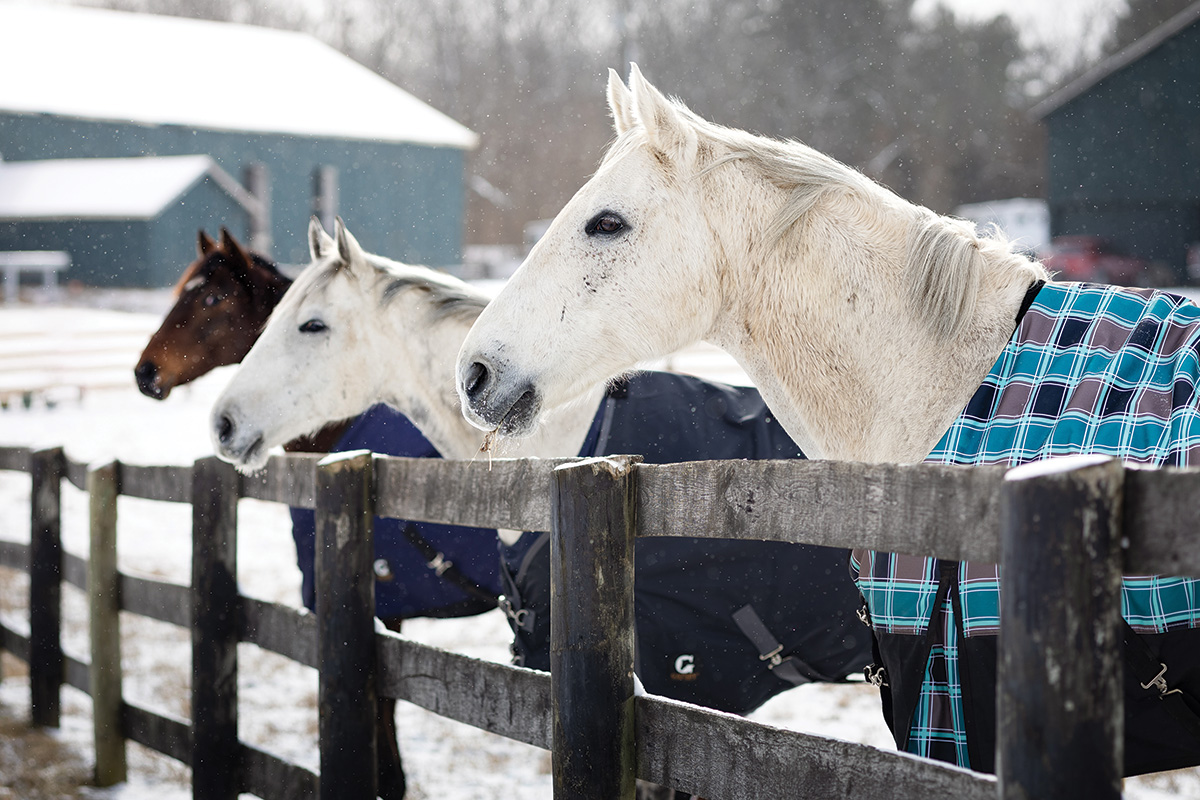
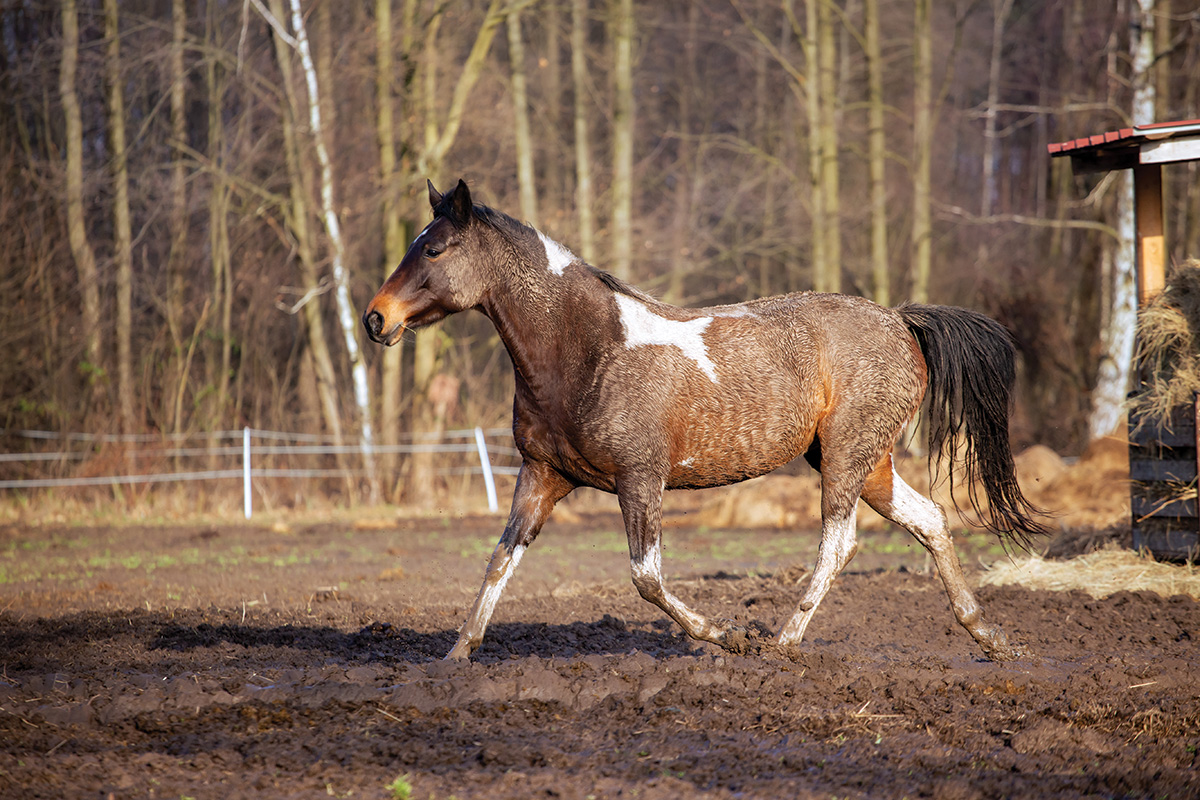
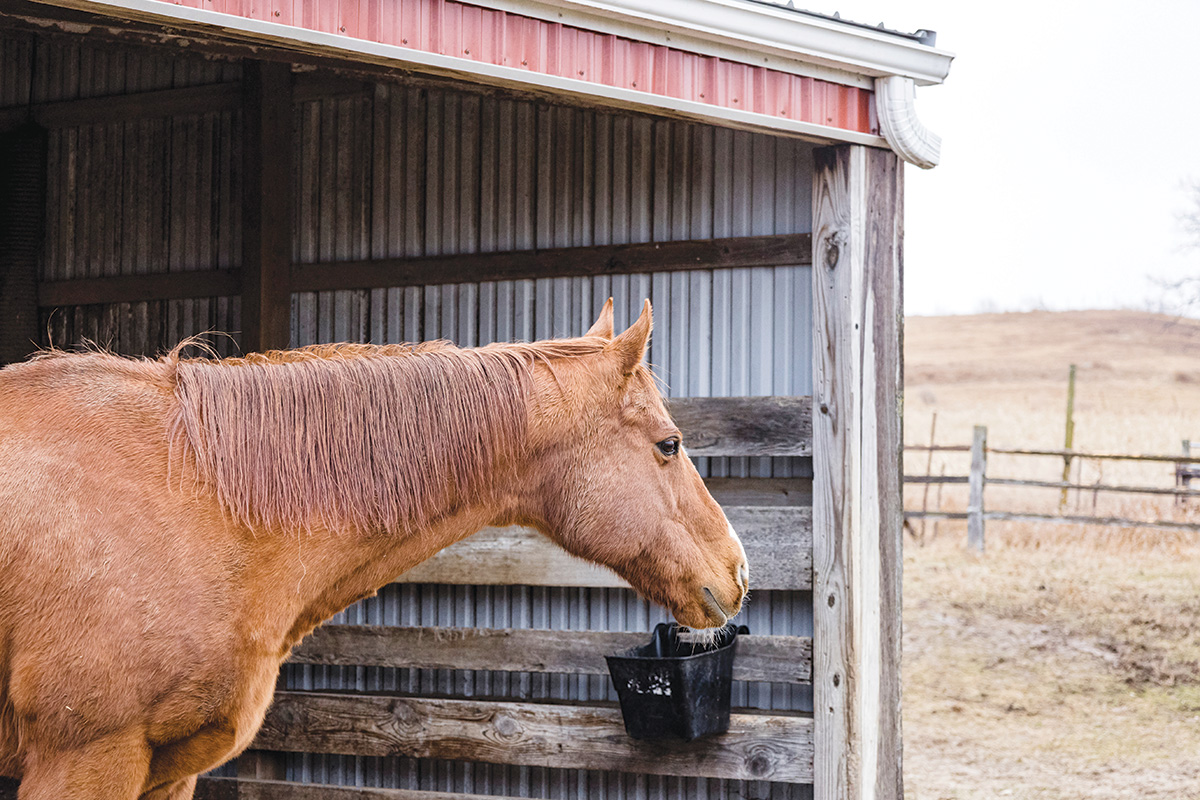
How you decide when to blanket—or not blanket—your horse can depend on many factors, including climate, coat length, access to shelter, his individual internal thermostat, health, age, and weight.
Photo by MW Creative Photography
Understanding A Horse’s Coat
You’ve probably noticed that blanketing can be a controversial topic.
“Everybody has an opinion, but nobody seemed to have the science to back it up,” says Michelle DeBoer, Ph.D., an associate professor at the University of Wisconsin River Falls with a research interest in horse blanketing. She began her research with the goal of improving horse welfare and reducing stress for owners making blanketing decisions.
To understand how to blanket horses, we must understand how their natural coats work. According to DeBoer, a horse’s coat provides warmth using piloerection. Piloerection, which occurs in many kinds of animals, works when the hair stands up on end. When you see your horse’s coat “puff up,” it is actually creating air pockets underneath the hair follicles, which traps warmth.
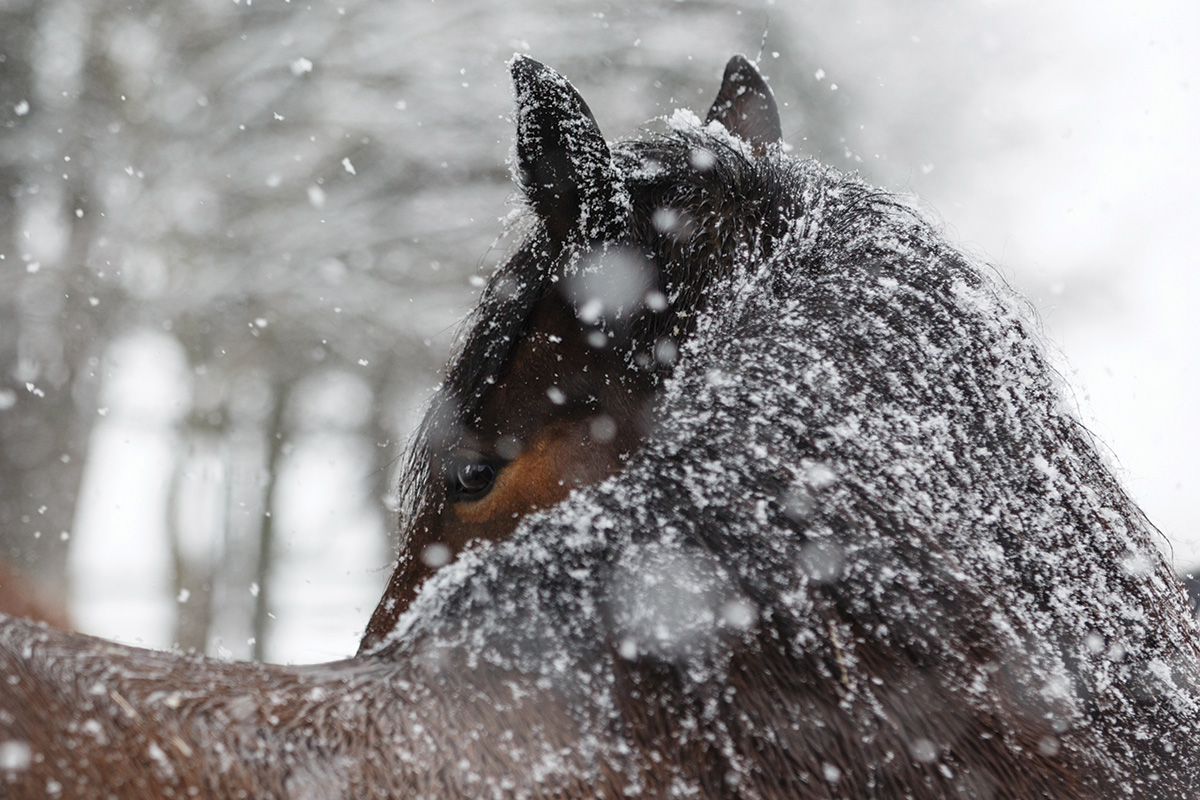
Weather conditions may impact your horse’s ability to fluff up. For example, a wet coat cannot use piloerection, which creates a risk that your horse can become cold. According to the website for Mid-Rivers Equine Centre in Wentzville, Mo., snow can often be kept at bay by a thick coat. Heat can stay trapped within, resulting in snow simply sitting on top of the coat.
If the snow begins to melt, it may indicate that your horse’s coat is not insulating properly. On the other hand, heavy rain that breaks through the top layer of a horse’s coat and soaks down to the skin poses a risk in cold weather.
If the snow on an unblanketed horse’s back begins to melt, it may indicate that his coat is not insulating properly. Photo by Nadine Haase/Adobe Stock
“Flattening the Coat”
Many owners are concerned about blanketing because they fear it may damage a horse’s natural coat and insulating ability.
A blanket should not have a significant negative impact on the natural coat’s insulation. According to Fernando Camargo, DVM, Ph.D., an associate professor at the University of Kentucky and Sarah Coleman, executive director of the Kentucky Horse Council, there is no research that indicates that putting a blanket on a horse will make them colder by flattening their coat.
There is no research to suggest that blanketing “flattens” a horse’s coat and makes him colder. Photo by MW Creative Photography
If you’re concerned that blanketing today means your horse will need to be blanketed more in the future, there is little need for concern, according to DeBoer. It takes approximately five to 12 weeks to see a change in a horse’s coat due to blanketing, and the changes don’t seem to have long-term effects.
In other words, if you decide to blanket one winter, it does not doom you to blanket the same way next year and beyond.
Thermoneutral Zone
At what temperature should you start blanketing? This depends on the individual equine and weather conditions. However, DeBoer states that horses have a “thermoneutral” zone where they don’t use any extra energy to stay warm (or cool).
This temperature varies greatly depending on the horse’s climate. DeBoer says that horses adjusted to colder areas don’t start burning additional calories until it is 5 to 18 degrees Fahrenheit, while horses that are accustomed to warmer regions need to produce extra heat at around 41 degrees Fahrenheit. If wet, horses begin producing extra heat at around 59 degrees.
Similarly, Rutgers University’s Netti R. Liburt, Ph.D., and equine extension specialist Carey Williams, Ph.D., state that 59 degrees Fahrenheit is also the approximate bottom of the thermoneutral zone for a body-clipped horse or one with a summer coat.
If wet, horses need to burn more calories to stay warm at around 59 degrees Fahrenheit. Photo by Ella/Adobe Stock
Weight and Health
A heavier horse has a bigger insulating layer of fat, which will keep him warmer when the temperatures drop. An underweight horse, on the other hand, may feel colder sooner than other horses in the same weather conditions.
An overweight or healthy weight horse could perhaps stand to burn some of the extra calories it takes to stay warm in cold conditions, while a horse that is underweight, a hard keeper, or in poor health may not be able to spare the same calories.
Hay Use
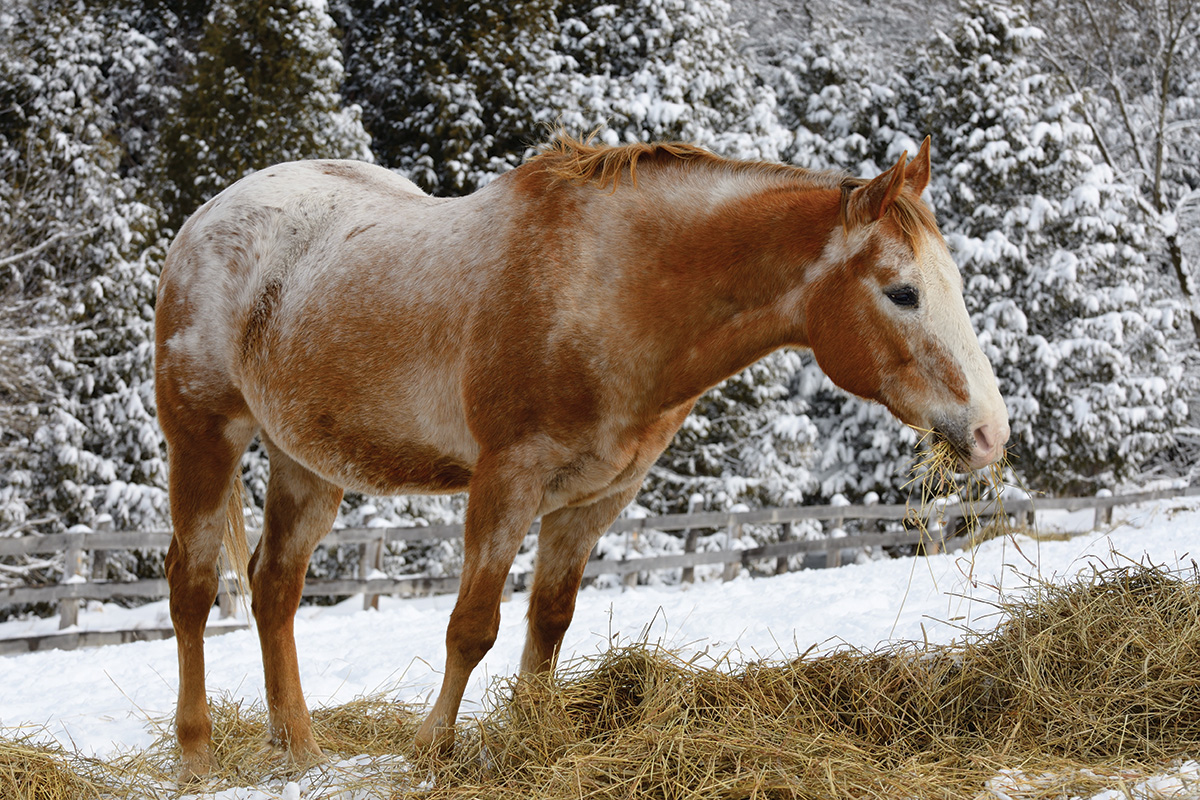
A horse’s digestive system creates significant amounts of heat while breaking down fiber in the hindgut, kind of like an internal wood stove, so forage is an important part of keeping a horse warm.
According to DeBoer, this also means that blanketing can help reduce hay use during the winter. In her study on horse’s dry matter intake and condition, she found that “blanketed horses had a reduced hay intake compared to non-blanketed horses.”
In her study on horse’s dry matter intake and condition, Dr. DeBoer found that “blanketed horses had a reduced hay intake compared to non-blanketed horses.” Photo by Reimar/Adobe Stock
If barns and owners are experiencing a winter hay shortage, or don’t have good access to places to put lots of forage in their fields, this may be an option to consider. It also can be important for horses who are stalled overnight, and therefore may go longer periods without forage.
Shivering and Ear Check
Sometimes an owner may worry that they can’t tell if their horse is too cold. DeBoer says that shivering is her No. 1 way to check.
“If a horse is shivering, he is too cold,” she says. “While they can shiver for short periods of time and be OK, if they are required to shiver for a long period of time as a way to stay warm, it can lead to weight loss and health problems for the horse. I most often see shivering when it is wet and windy.”
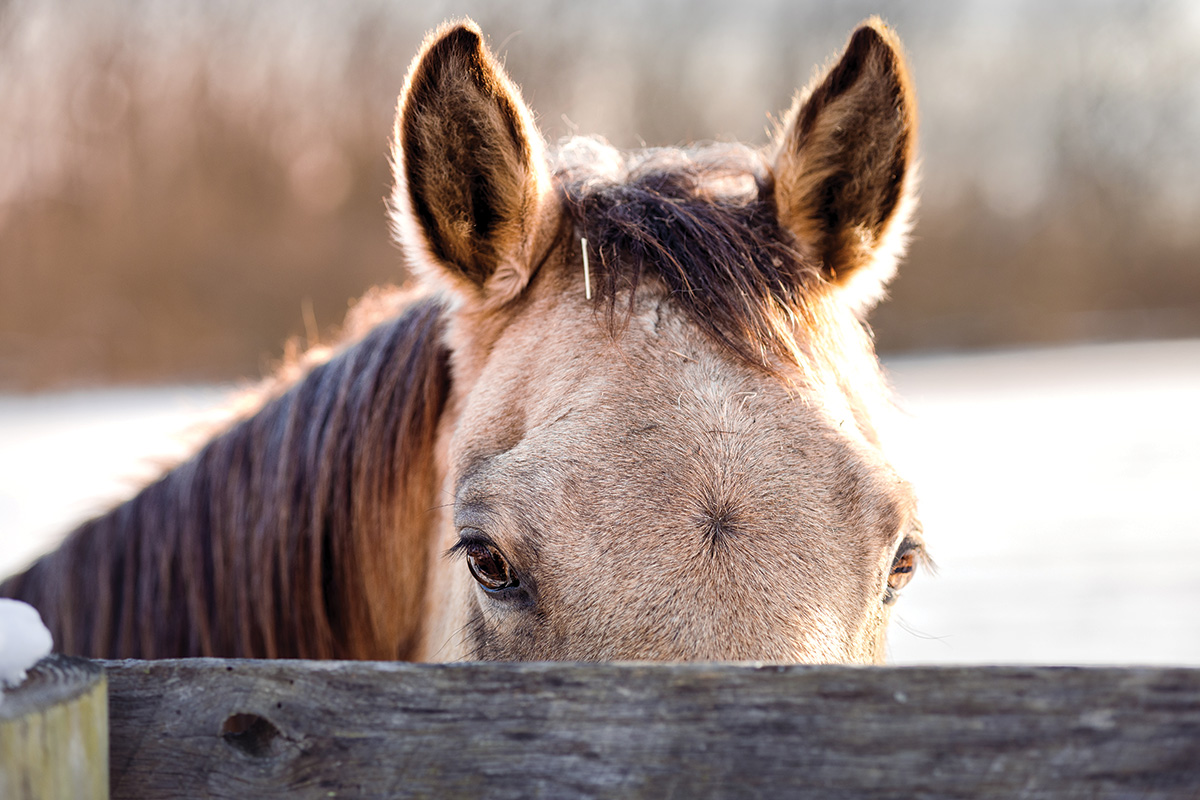
DeBoer also suggests that a more subjective way of gauging your horse’s temperature is checking the base of his ears.
“This can be an indicator of your horse’s condition, as a cold horse will reduce blood flow to extremities in an attempt to conserve heat by keeping the majority of blood within the core of the animal,” she says.
While a subjective method for checking your horse’s warmth, an “ear check” is a quick way to feel for whether blood is reaching the extremities. Photo by MW Creative Photography
DeBoer notes, however, that this is not an “end-all, be-all” method.
All of these factors can feel like a lot to consider, so it’s important to observe your horse for yourself. Is his weight dropping, is he shivering, or is he sweating and hot in his blanket? When it rains, does his undercoat remain dry, or is he immediately soaked through?
When you take the time to observe your horse, you will eventually develop an idea of how he reacts to different weather conditions.
“If you choose to blanket, you need to be more vigilant in managing your horse, but if you don’t, you want to make sure he has the resources to stay warm on his own, primarily adequate or extra hay and a shelter,” says DeBoer.
Blanket Away! (Mindfully)
Blankets are useful tools, and you may use them for a variety of reasons. In real-world situations, it may not be possible to constantly micromanage your horse’s warmth. Most unclipped horses that are a healthy weight can manage winter on their own, especially with good shelter access.
Most unclipped horses that are a healthy weight and have access to shelter from wind and precipitation can manage winter without a blanket. Photo by Margaret Burlingham/Adobe Stock
Throwing a heavy blanket on a horse and then leaving it on when the temperature rises again could potentially be just as harmful as a horse being cold.
“When we over-blanket, it can trap too much heat underneath the blanket,” says DeBoer. “Besides the obvious concern of making the horse uncomfortable, if he gets so warm he begins to sweat, this can create an environment that fosters skin infections or rain rot.”
When blanketing, always consider when you will next be able to check on your horse and switch his blankets. Consider your resources and time when deciding how to blanket.
Tens of thousands of horse enthusiasts lined up at the gates of the Eastern States Exposition in West Springfield, Mass., November 6-9, 2025 in anticipation of Equine Affaire. They came ready to discover new breeds, consider adopting, sell used tack on consignment, watch demonstrations, ride with their favorite clinician, participate in interactive events, and shop at the largest horse-related trade show in the East. They came for everything that makes Equine Affaire the premier equine exposition North America.
And they came because they love horses.
Equine Affaire November 2025 in West Springfield, Mass. Photo by Julie Maddock
Horses—and Donkeys—of All Kinds
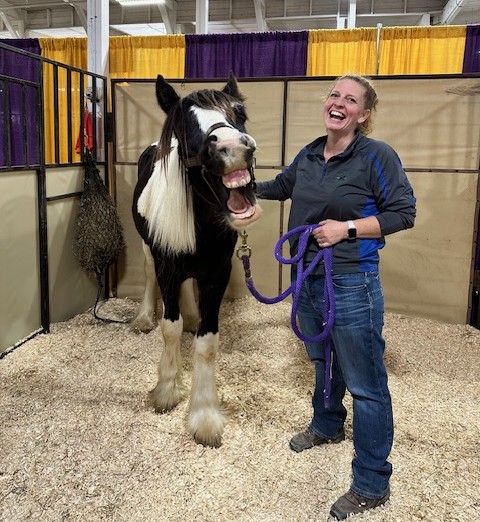
Equine Affaire draws attendees and event participants from all over the United States, Canada, and beyond. And over 50 breeds of horses have participated in the various events at Equine Affaire, proudly represented by their national breed associations. The Breed Pavilion was buzzing as horse lovers got to meet and greet enchanting breeds, including the Arabian, Dales Pony, Icelandic, Gypsy Vanner, and many more.
Misha Duvernoy and Finan—a Gypsy Vanner yearling she bred and owns—share a laugh in The Breed Pavilion. Photo by Julie Maddock
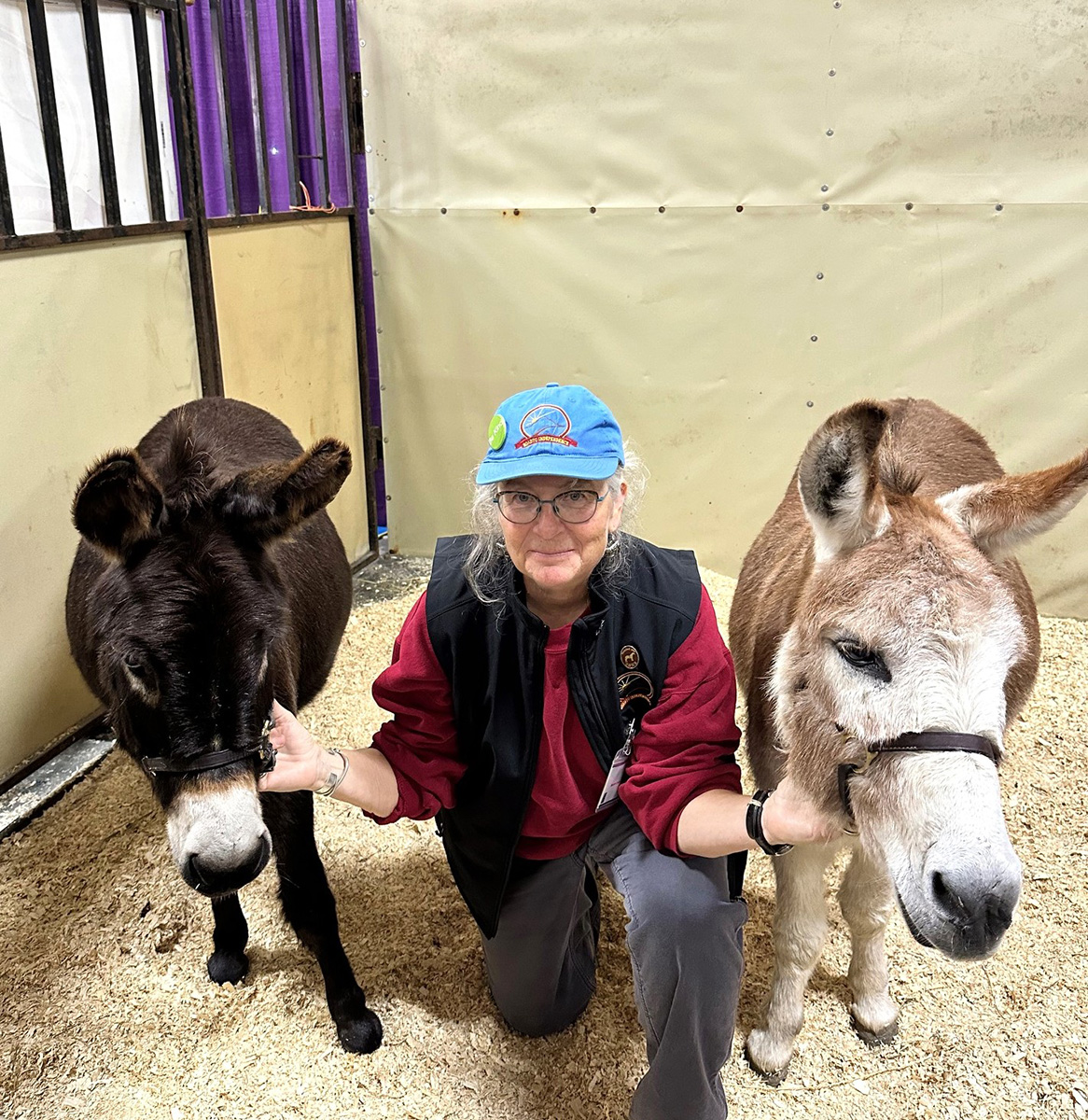
And this year introduced something special at Equine Affaire—the Donkey Extravaganza. You read that right: donkeys of exceptional cuteness were on hand for educational presentations. With those long ears and expressive eyes, they captivated young and old alike. Donkey lovers were delighted to shop from vendors catering to donkey-related products and services.
Margaret Coulter, Director of Road To Independence, with miniature donkeys. Photo by Julie Maddock
Clinics, Seminars and Demonstrations
The educational opportunities are almost unlimited at Equine Affaire. With clinics, seminars and demonstrations running simultaneously all day in multiple arenas and stages, attendees strategically planned their schedule of events to attend. Clinics included show jumping foundations with Gaby Reutter, ranch riding with Cole Cameron, galloping techniques for eventing cross-county with Phyllis Dawson, classical dressage principles, trailer loading techniques, the basics of saddle fitting, caring for feathers, and even the chance to drive a Whispery Pines Percheron. And that’s just the tip of the iceberg!
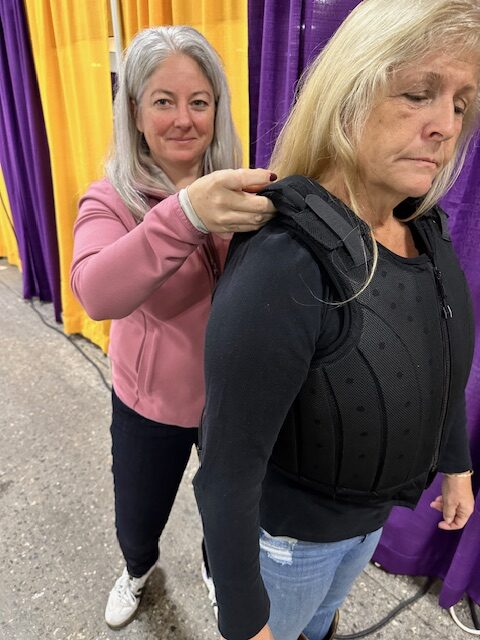
On Thursday afternoon, Kimberly Chick—British Equestrian Trade Association (BETA)-certified helmet and safety vest fitter and owner of Fair Hill Saddlery—presented a clinic on selecting and fitting a safety vest. Safety vests and airbag vests are advanced gear designed to add an extra layer of protection.
“Every rider and handler of a horse is subject to injury—from the ground, mounted, loading, literally anything. And a safety vest protects our vital organs and bones,” Chick explained.
But choosing the right vest and having it professionally fitted is critical.
“There’s a big difference between a 65-year-old trail rider and a 30-year-old eventer,” Chick explains. The discipline and rider’s goals help Chick choose the right vest for a rider, ensuring it isn’t too high above the rib cage or sitting too low on the back.
Chick’s expert tips to selecting a vest: “Buy the highest level of BETA certification that fits you the best and that your budget allows. Your body is worth the investment.”
Kimberly Chick, a BETA-certified helmet and safety vest fitter, helps a rider properly fit a safety vest. Photo by Julie Maddock
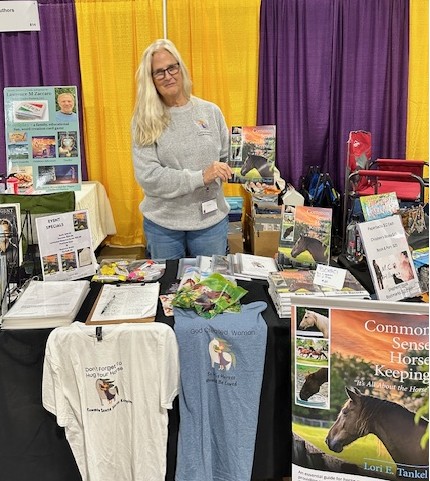
On Friday, Lori Tankel, author of Common Sense Horse Keeping, presented the clinic “Disaster Planning for Horse Owners: How to Be Prepared for the Unexpected.” Tankel stressed how crucial it is for horse owners and barn managers to take seriously disaster preparedness.
“It’s just as important to have a disaster plan as it is to have a fire plan… It will help you deal with disaster challenges in a calm and organized manner,” Tankel said. “Take ownership of your disaster plan—identify potential disasters, put it in writing, post it in the barn, provide a copy to boarders and staff, and then drill it often. Your goal is to ID your horse, load him, and evacuate as quickly as possible. Can you board your horse in any condition, at any time? His life may depend on it.”
Lori Tankel, author and presenter, shared expert tips on how horse owners and barn managers can implement a disaster preparedness plan. Photo by Julie Maddock
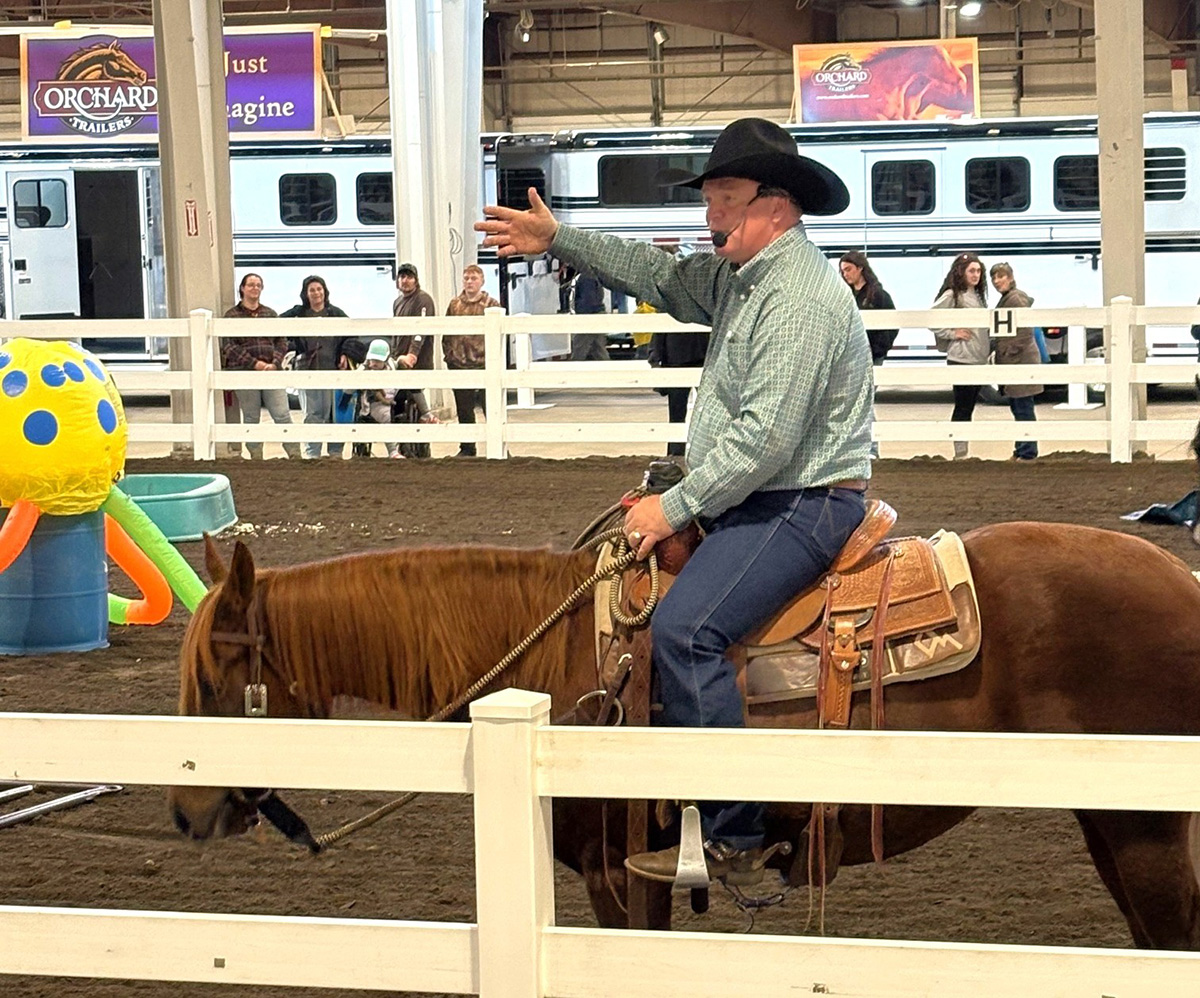
On Saturday morning, Ken McNabb presented the clinic “Overcoming Trail Obstacles: Teaching Your Horse to Have Confidence on the Trail Course.” McNabb explained that “once your horse’s confidence is in you, he will do anything… the more difficult a situation, the quicker you build the relationship with your horse, teaching him to trust you in all situations. You can’t stop your horse from spooking, but you can shape how you will handle it.”
For example, overreacting to a horse that is spooking at a tarp by yelling, kicking, or otherwise trying to force him to go over it will only reinforce the “danger” of the tarp. “Take the fear out, relax, look at the tarp, release, look at it again, release; take the time needed to build the horse’s confidence,” McNabb shared. “My goal is not to desensitize my horse. I want my horse sensitive, but I want to build his emotional control, allowing him to discover he has more courage than fear.”
Ken McNabb demonstrates how to build courage and confidence when confronting spooky obstacles. Photo by Barry Maddock
Equine Affaire’s Ride With a Pro program is a unique experience that allows riders and horses to take a lesson directly from nationally recognized professionals in various disciplines. Riders pushed down any lingering nerves and quickly realized this was their chance to soak up expert advice.
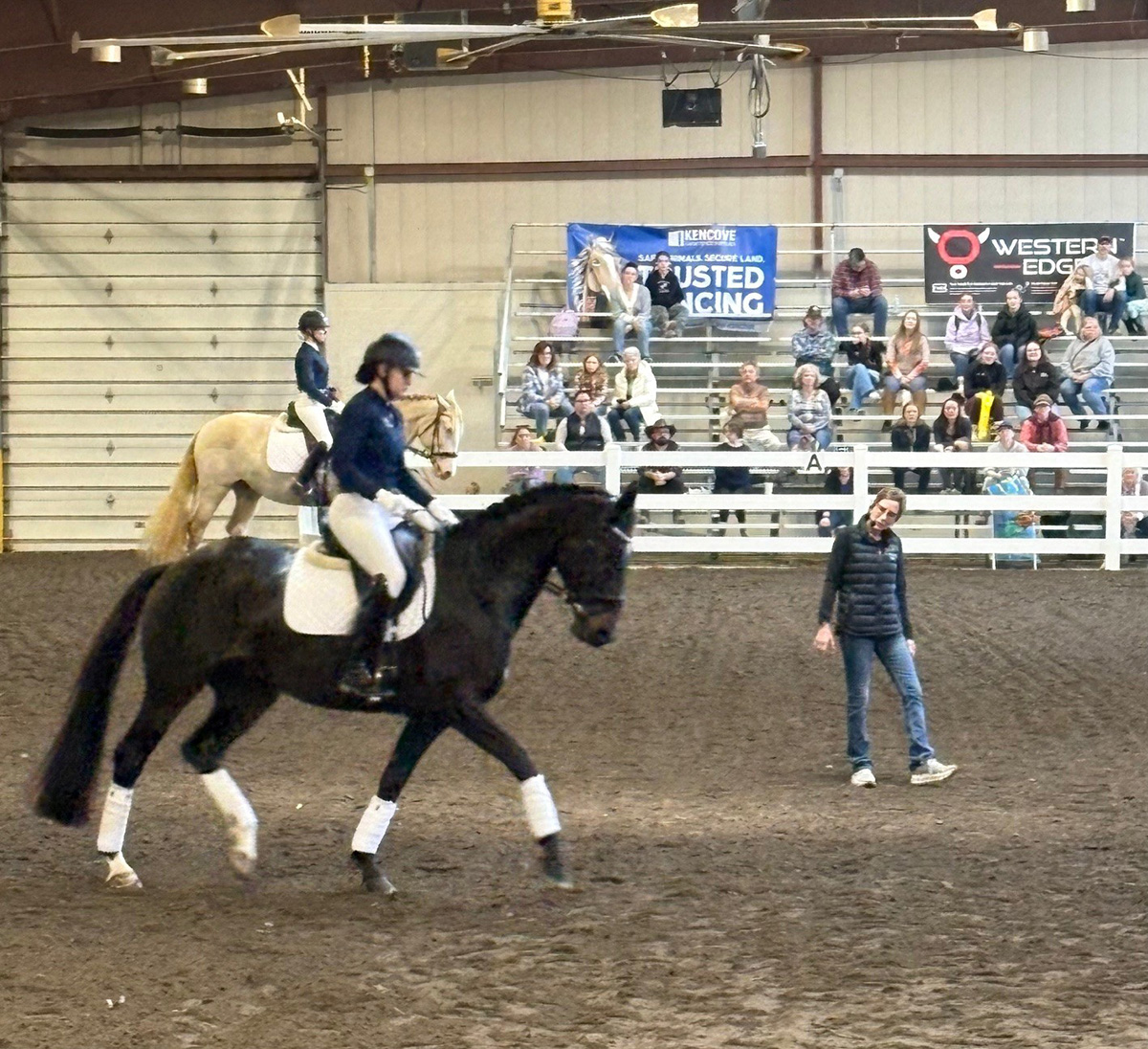
Jane Karol’s clinic “Classical Dressage: Developing the Horse & Rider at Training and First Level” focused on building a language of trust with your horse, how tiny adjustments can make a big impact, and why going back to the basics of Training and First Level exercises shouldn’t be underestimated.
“Softer hands [are] fundamental in a smooth walk to canter transition,” Karol said. She stressed “teaching the horse that the leg doesn’t mean go faster, but to go in a more balanced way” and that the “seemingly simple exercise—trot, canter, trot, canter—is a fantastic exercise for riders at every level.”
Classical Dressage, Ride With a Pro, presented by Jane Karol. Photo by Barry Maddock
Versatile Horse & Rider Competition
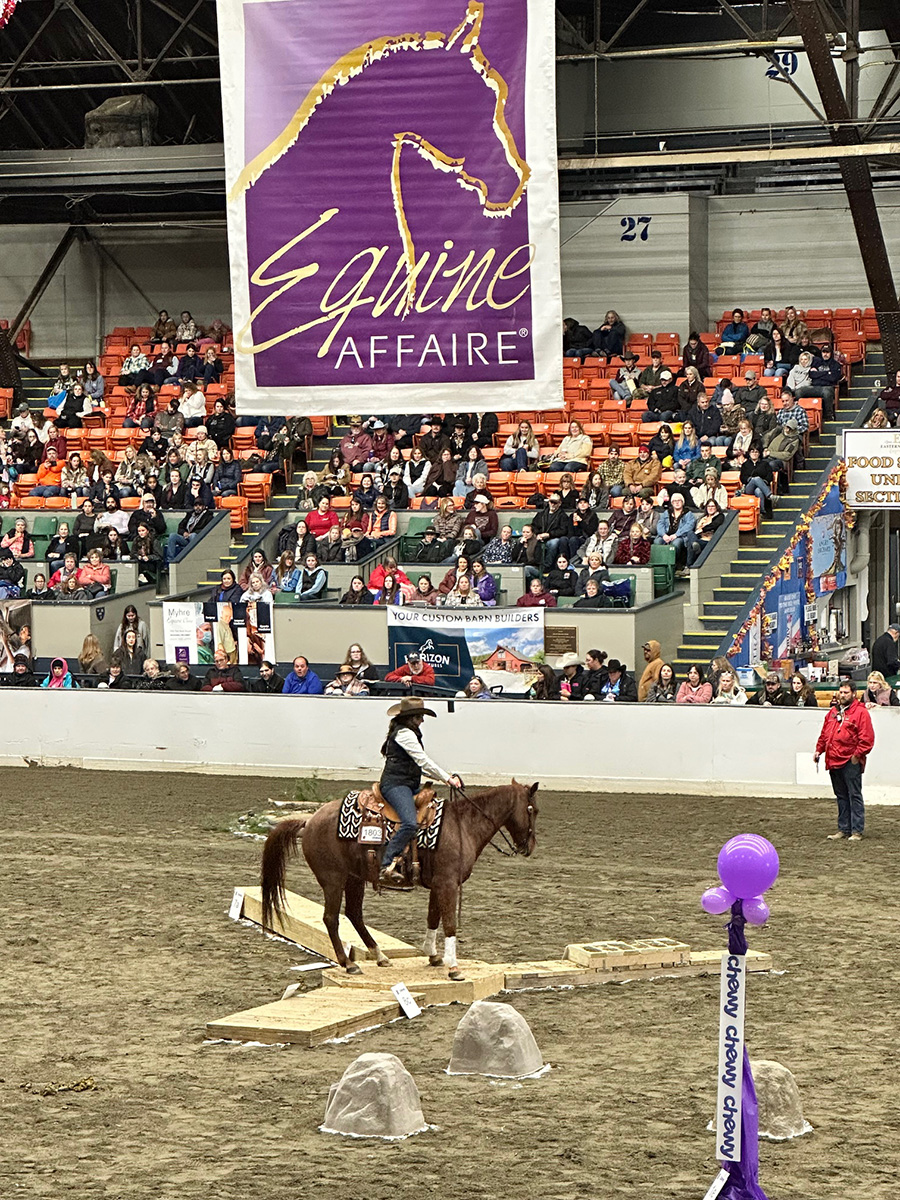
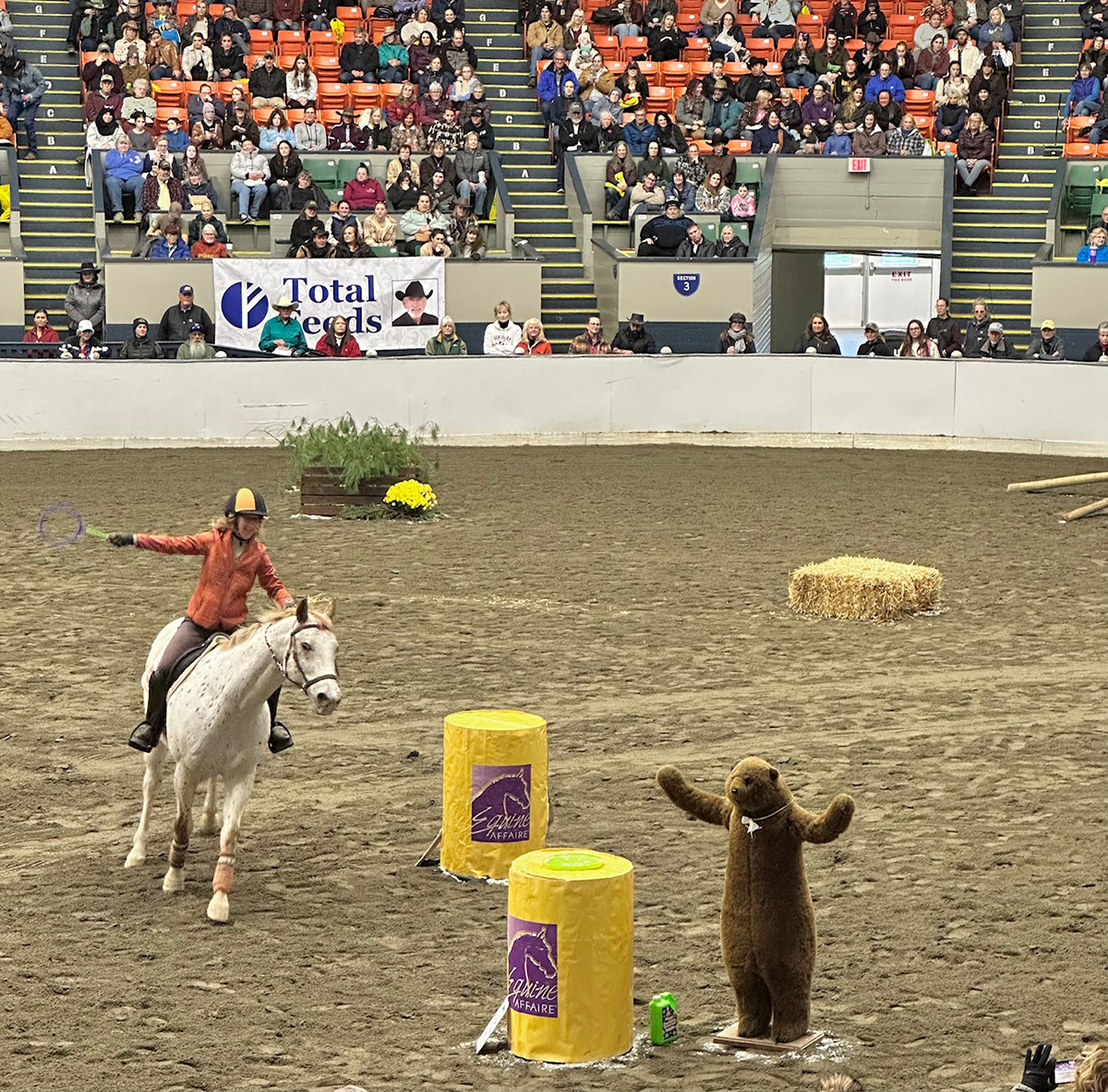
One of the most popular events took place on Friday afternoon in the Coliseum—Equine Affaire’s Versatile Horse & Rider Competition—with Equine Affaire’s favorite emcee, Noah Rattner, and this year’s judge, Jason Irwin. Horse and rider teams were judged on how well they raced through an obstacle course which included pulling a sled, balancing on bridges, bubble wands, a bear, working a gate, a teeter-totter, jumps, and much more. The challenging course tested communication and horsemanship skills. With $5,500 in cash and other prizes on the line, the competition really heated up.
Bubbles and a bear make for an interesting combination at an obstacle station during the Versatile Horse & Rider Competition. Photo by Julie Maddock
Adoption at Equine Affaire
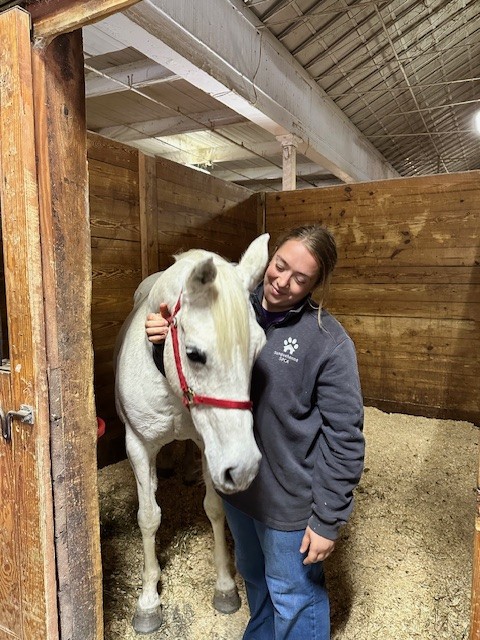
The ASPCA Right Horse Adoption Affaire, along with other equine adoption organizations, spent the event introducing people to healthy, desirable, and deserving horses and donkeys in hopes of finding new loving homes. At Equine Affaire in Ohio in April 2025, 30 horses were adopted. Unable to adopt in person at Equine Affaire? Visit myrighthorse.org to meet adoptable equines across the United States.
A 16-year-old Arabian named Cinder (pictured with his handler from Susquehanna SPCA, Samantha Ceresna) was adopted during Equine Affaire Massachusetts 2025. Photo by Julie Maddock
Fantasia
This unforgettable “musical celebration of the horse” combines inspiring music, outstanding choreography, talented equestrians, and exceptional horses that come together in an uplifting and memorable performance. Fantasia is the perfect way to end a day at Equine Affaire!
The Vital Role of Equine Affaire Volunteers
Equine Affaire is a complicated affair with moving parts and people working tirelessly behind the scenes to make it a success—including the many volunteers who return year after year. Equine Affaire HR & Business Manager, Lori Helsel, is the guiding force behind engaging and managing the 75 volunteers needed throughout the four-day event, with each volunteer working multiple shifts a day. Volunteers with big smiles greet and hand out event programs at the entrance gates, assist clinic prop crews with setup during educational programs, help customers drop off items to be sold at the Marketplace Consignment, assist youth in the Equine Fundamentals Forum and popular “Stick Horse Rodeo,” coordinate crowd control during horse rotations in the Breed Pavilion, and work as ushers at Fantasia.
“The assistance of volunteers in fulfilling these duties is invaluable,” Helsel explained. “One of the things I appreciate most is the passion and enthusiasm our volunteers display. It’s infectious and elevates the energy and enjoyment for attendees, exhibitors, and everyone they meet.”
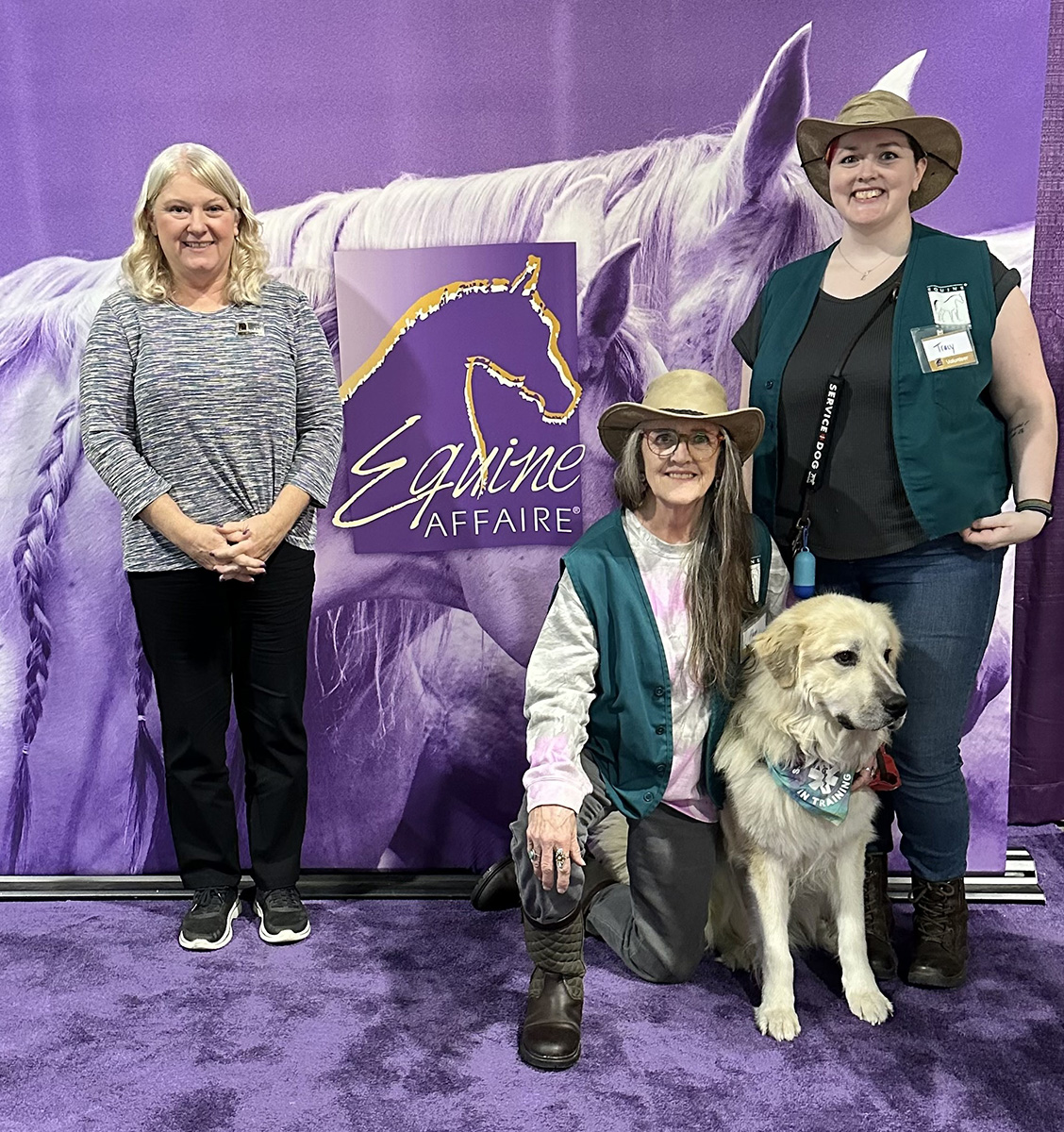
Some Equine Affaire volunteers have made it a family affair. Pam Heffernan and her daughter Tracy Bowman have been volunteering together for seventeen years. “I think my favorite thing is just being able to spend four days with my mom,” Bowman said. “I’m obsessed with horses so any reason to be around horses and horse people I’ll jump at. But more than anything, it’s the people. We work with them only for four days out of the year, but we’ve known them for so long that they become like family.”
“It gives us something to look forward to every year,” Heffernan added. “I really enjoy working with kids in the youth pavilion, making the stick horses, and keeping the area organized.”
Lori Helsel, Equine Affaire HR & Business Manager, and longtime volunteers Pam Heffernan and Tracy Bowman. Photo by Julie Maddock
Don’t miss your chance to celebrate the horses we all love. Start planning now for the next Equine Affaire, happening in Columbus, Ohio April 9-12, 2026. Learn more here.
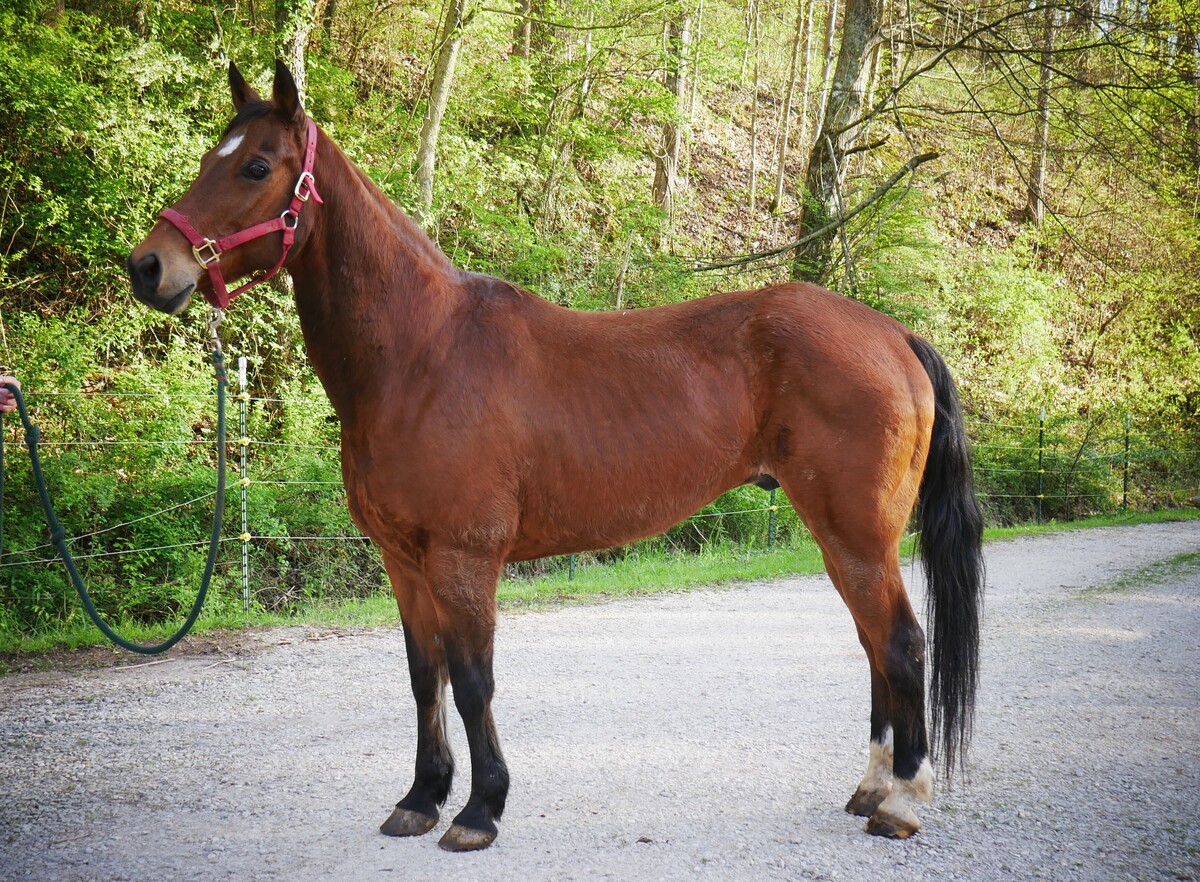
Adoptable Horse: Gummy, a 24-year-old, 14.2hh American Quarter Horse gelding Organization: West Virginia Horse Network, Guthrie, W.Va.
Get to Know Adoptable Horse Gummy
Gummy (also known as Gunther) is a Quarter Horse gelding who is looking for a home as a companion horse. He is pasture sound but cannot be ridden due to a previous injury. He is looking for an adopter with a farrier that is patient and supportive when he is not as flexible as he would like to be.
Gummy is easy to handle. He is happy and kind. He loves to be hosed down in the heat of the summer and will let you know just where to spray the water on him.
In his younger years, Gummy was a working horse. He is looking for a job that would keep his mind active, such as in-hand obstacles, long walks on the beach or whatever other non-riding activities you have in mind.
He enjoys herd life and thrives in a pasture setting. Gummy is currently at a foster home where he is providing loving and patient companionship for a 38-year-old horse that recently lost his best friend. Once Gummy is done with his role there, he’ll be looking for an adopter with similar needs.
He is also dashingly handsome, so he’d be great to help with photos/selfies, etc.
ASPCA Right Horse is the online adoption platform of The Right Horse Initiative, a collection of equine industry and welfare professionals and advocates working together to improve the lives of horses in transition. A program of the ASPCA, their goal is to massively increase horse adoption in the United States. To find more adoptable horses and foster horses, visit www.myrighthorse.org. To learn more about The Right Horse, a program of the ASPCA, visit www.aspcarighthorse.org.
And just like that, the holidays are upon us! Are you struggling to find that perfect gift for the horse lover in your life? For the most part, equestrians are practical people, so it may be time to rethink what holiday gifts will make the most impact. Consider a gift that a horse owner wouldn’t buy for him or herself, since so many of their resources go to equine expenses.
Photo by Terri Cage/Adobe Stock
Think Outside the Gift Box
Inflation and increased cost of living is no joke, which makes it all the more important to be resourceful where gift-giving is concerned. When it comes to equestrians, you can never go wrong with a present you know they’ll use.
You could consider a gift of support, enrichment, or wellness. A friend on a tight budget may be lacking something just for herself these days. Additionally, personalized keepsake gifts are something that can be cherished for years.
Supportive Suggestions
Here are some ideas to get your creative gift-giving juices flowing:
◆ A gift card to a feed or tack store, or even a credit at a vet’s office or boarding facility. Every horse owner would appreciate these!
◆If you’re on a budget, create a coupon book with clever ways to be of service, such as an offer to clean stalls, groom, or horse-sit so your equestrian friend can take a little time off.
◆Meals are a great way to nourish and nurture, especially in the cooler months. Prepare some hearty, easy heat-up meals for the busy equestrian. A bowl of hot soup, stew, or a breakfast casserole are welcome after freezing winter barn chores. To bump it up a notch, a month (or more) membership for boxed meal deliveries—such as Blue Apron, Hello Fresh, or similar—can brighten someone’s winter menu and save them from having to plan meals and make trips to the grocery store. Hint: Most services offer a variety of options, such as vegetarian, family-friendly, lower-calorie, and quick prep.
◆ Horse owners work hard and enjoy pampering, such as a gift certificate for a massage, a restorative yoga class, or a spa day.
◆Gift ideas for equestrian wellness could include a journal or an equestrian planner book to help with goals and/or intention-setting. Yoga sessions with an instructor who focuses on yoga for riders can also be supportive of physical and mental fitness.
◆The gift of learning, such as a gift certificate to a horsemanship clinic, equine expo, or an online course is a unique way to give.
◆ Enrichment through travel and light adventure is another way to give creatively if you’re financially able. Fund or contribute to a retreat experience, a weekend at a dude ranch, or a getaway to an equestrian trade show.
◆If tangible gifts are more your style, consider an equestrian book, a sturdy pair of warm barn boots, heated gloves, or maybe some fresh lead ropes and halters. Stocking stuffers could include inexpensive hand and boot warmers, or perhaps an insulated mug or reusable water bottle for the barn.
◆Since most reading is done online these days, it can feel like a treat to get a subscription to an equestrian magazine. Receiving it by mail all year is a great reminder of your friendship.
◆ Personalized keepsakes can be very meaningful. Imagine how much you’d love a framed photograph or poster of your horse, or a professional painting or drawing. Picture books are easy to create online with platforms such as Shutterfly, and they make for a great coffee table book. After my heart horse passed, I was given a beautifully inscribed windchime to remind me of him every time it chimes—I just love it!
Give from the Heart
Gift-giving can be big or small. As long as it’s heart-centered, that’s all that matters. It’s important to stay true to your budget and not have the burden of paying off debt long after the holidays. Your family and genuine friends will understand. Remember, it’s OK to keep it simple, and your horsey friends will appreciate the sentiment.
Wishing you and your equines a beautiful holiday season!
Looking for a handsome partner with experience and a heart of gold? Cabrio is your guy! This 2008 Holsteiner gelding comes with extensive hunter/jumper experience and is as sweet as they come. While Wild at Heart hasn’t yet completed his under-saddle evaluation at the rescue, Cabrio has already impressed them with his excellent ground manners, kind personality, and willingness to please.
Cabrio does require a low-starch diet, but that doesn’t hold him back one bit—he’s healthy, happy, and eager to connect with his person. With his background, brains, and beauty, Cabrio has the potential to shine in his next home, whether that’s continuing in the show ring or enjoying a new adventure with someone who appreciates his gentle nature.
Don’t miss the chance to welcome this sweet, experienced gelding into your family.
ASPCA Right Horse is the online adoption platform of The Right Horse Initiative, a collection of equine industry and welfare professionals and advocates working together to improve the lives of horses in transition. A program of the ASPCA, their goal is to massively increase horse adoption in the United States. To find more adoptable horses and foster horses, visit www.myrighthorse.org. To learn more about The Right Horse, a program of the ASPCA, visit www.aspcarighthorse.org.
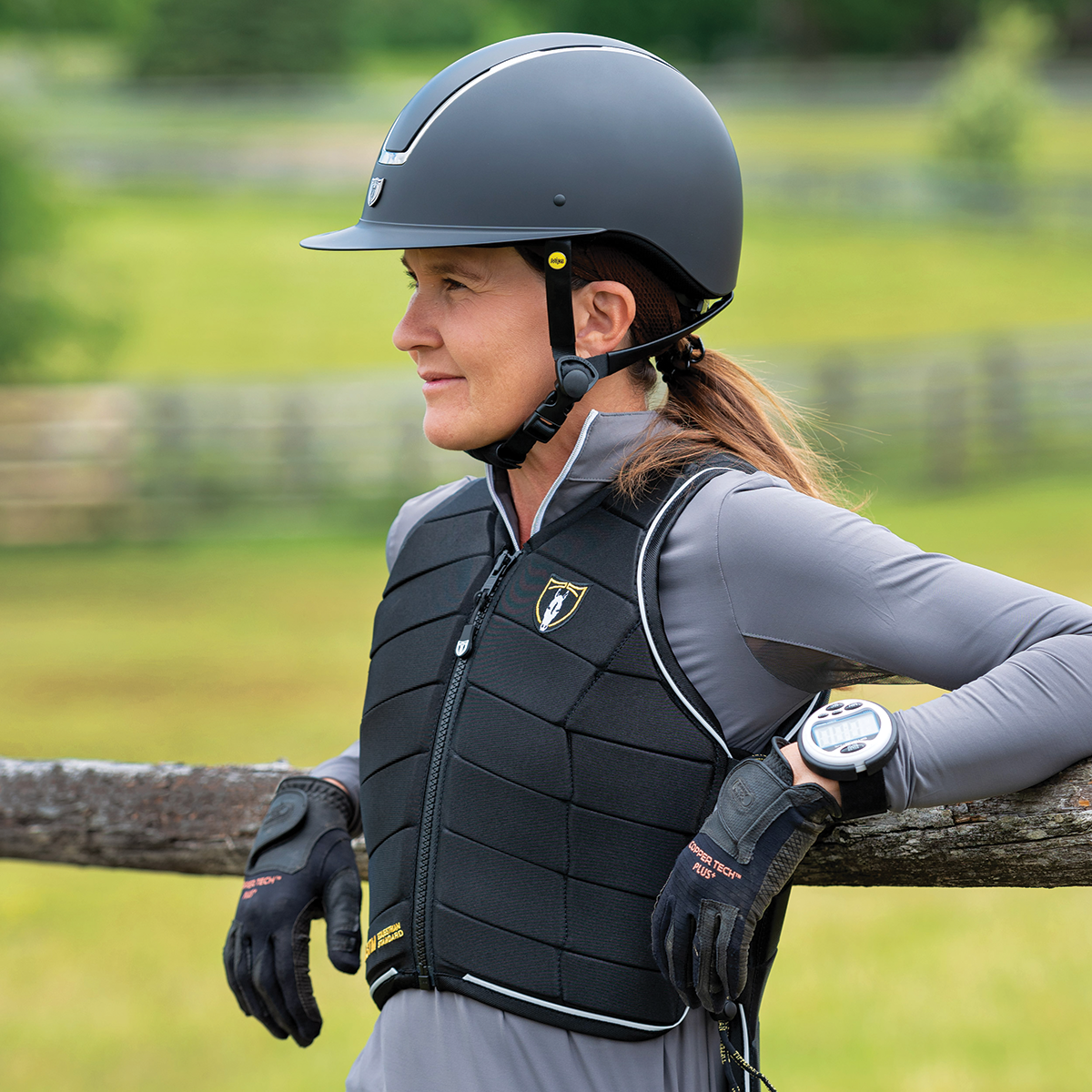
Accidents happen! And equestrians must be mindful of the possibility of them. Protect your body from head to toe with the latest advances in equestrian safety gear.
Troxel Spirit with Mips®
A low profile and full-coverage design for optimal comfort. The vent placement allows for maximum airflow, and there’s a FlipFold removable washable headliner. The DialFit system allows for a precise fit. The Spirit helmet with MIPS is ASTM/SEI-certified and is available in several colors and patterns.
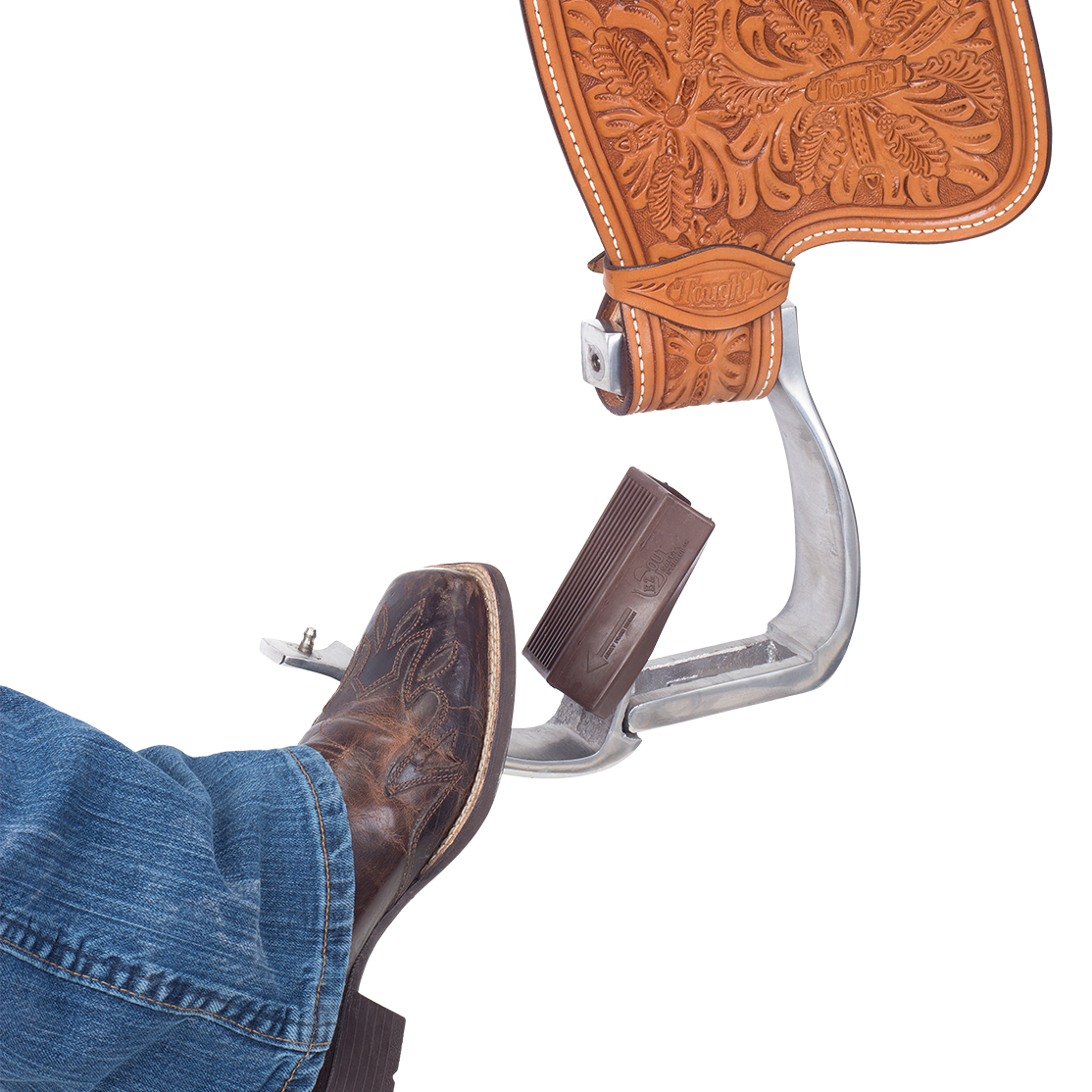
Don’t get stuck in a bad situation! When pressure is applied to the outside of this stirrup, like in a fall, the side of this stirrup will open up and give your foot room to release. This safety feature helps to prevent getting tangled in the stirrups and sustaining further injury. Available in adult and youth sizes.
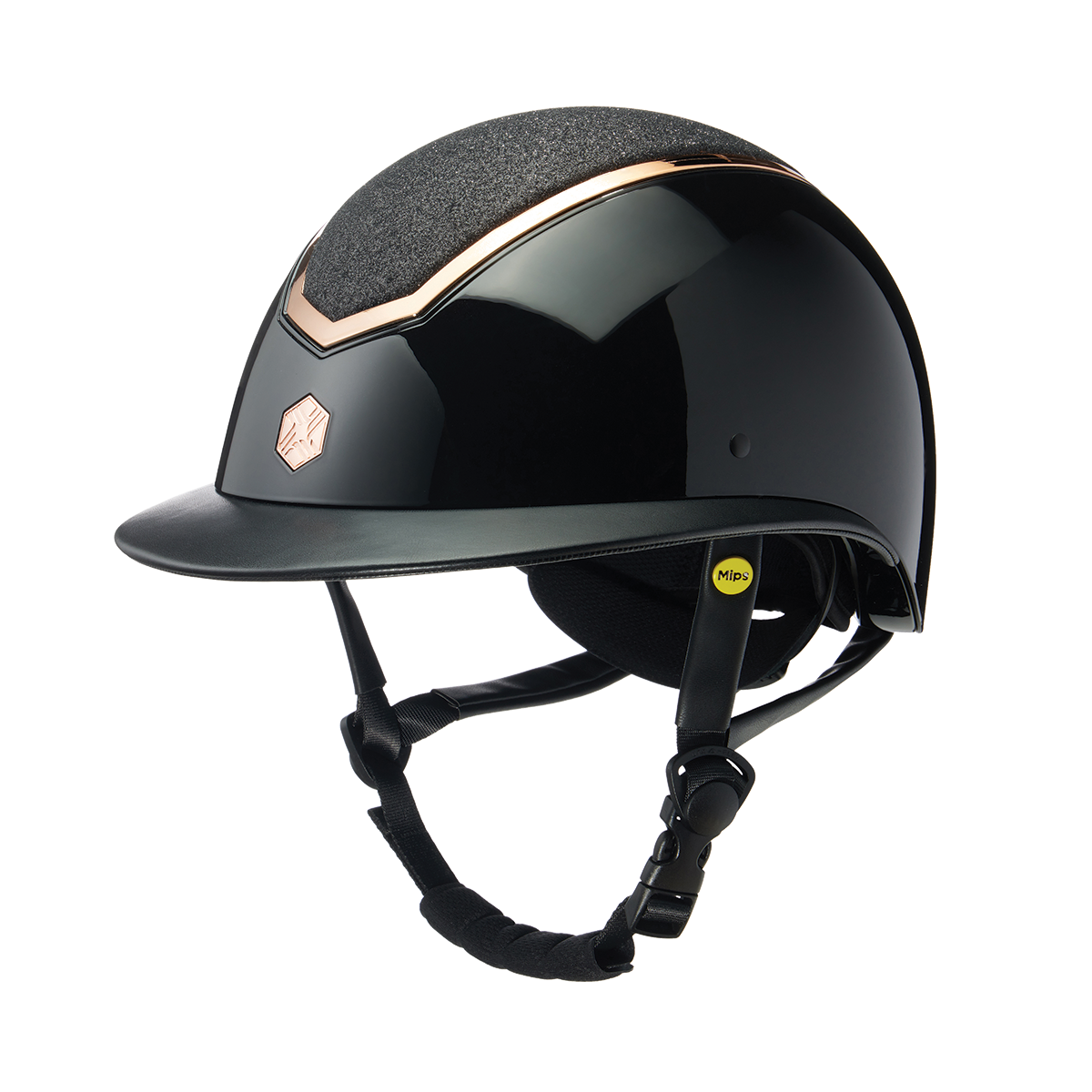
This is the first dial-fit helmet in the U.S. that has all three international safety certifications. Lightweight with extensive ventilation, it features a sweat-wicking, machine washable headband. Available in both navy and black, there is optional MIPS protection and both standard or wide peaks.
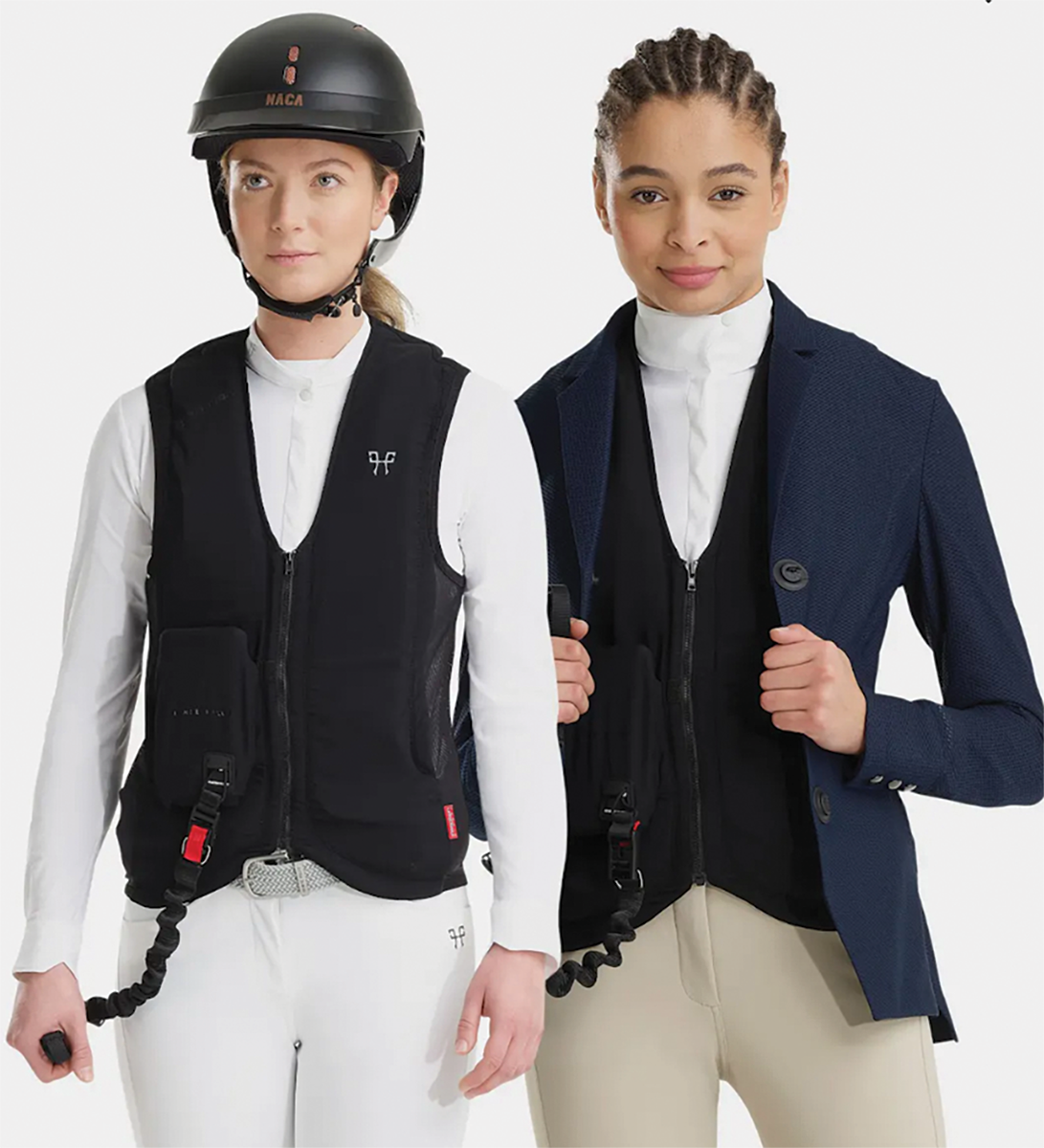
Made in France and approved to the new NF S72-800:2022 standard (the first and only standard developed for equestrian airbags), the Twist’Air Airbag vest ensures safety, comfort and discretion. Can be worn under one of Horse Pilot’s competition or schooling jackets.
Available for $799 (compatible jackets sold separately) on horsepilot.com.
Racesafe ProVent3
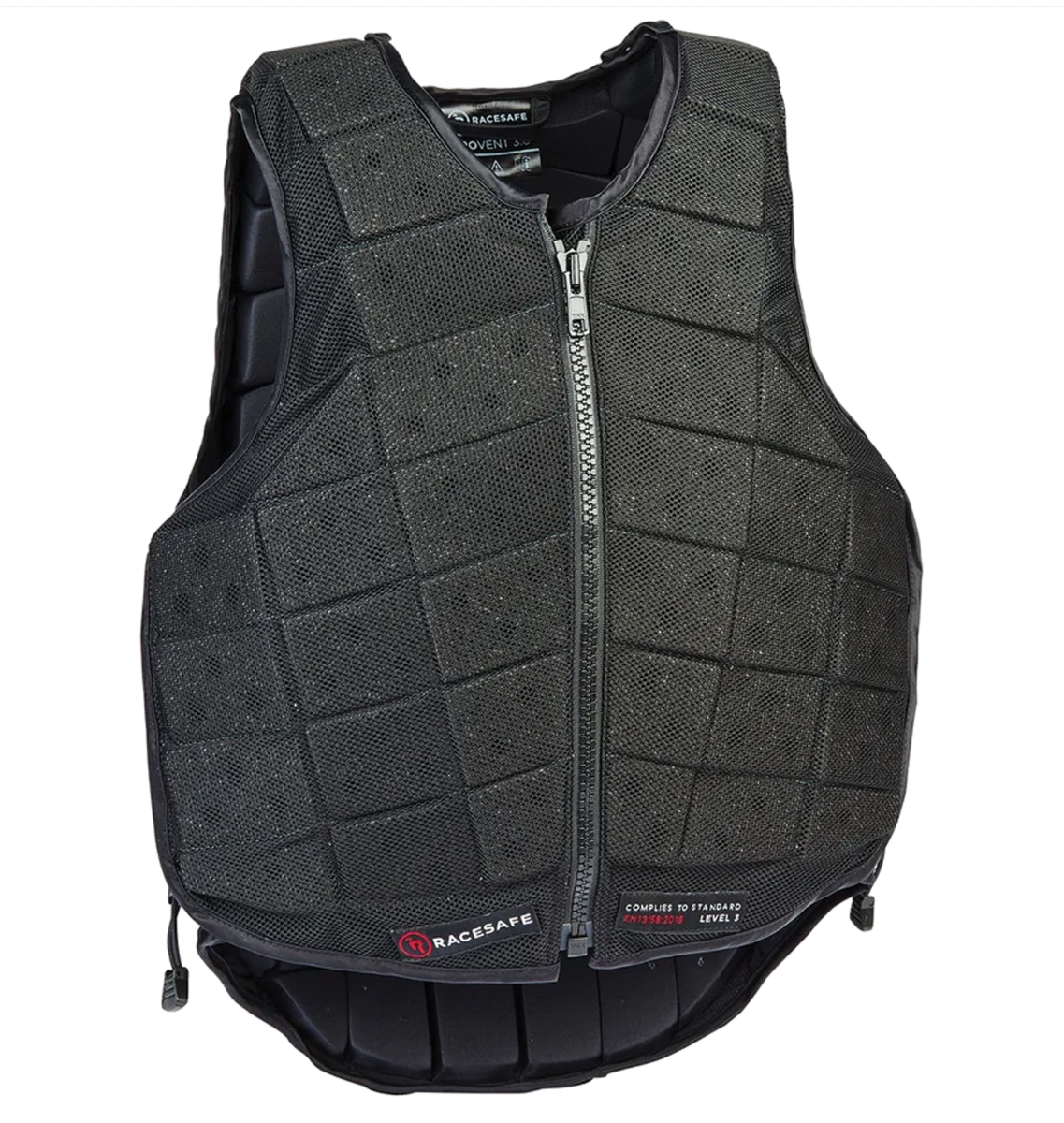
Combining breathable, lightweight comfort with maximum protection for riders of all ages and disciplines. The Racesafe ProVent3 offers the highest standards in safety performance, certified to BETA 2018 Standard level 3. Made of over 100 individually hinged segments for rider flexibility and movement in a wide range of sizes for a custom fit.
Patented Tectonic Foam plating is a unique double-layer pattern that moves and flexes without any separation or gaps. Live Spine technology provides increased impact protection while flexing and matching movement. SEI certified to the ASTM F1937 standard, and the most comfortable option to pair with an air vest.
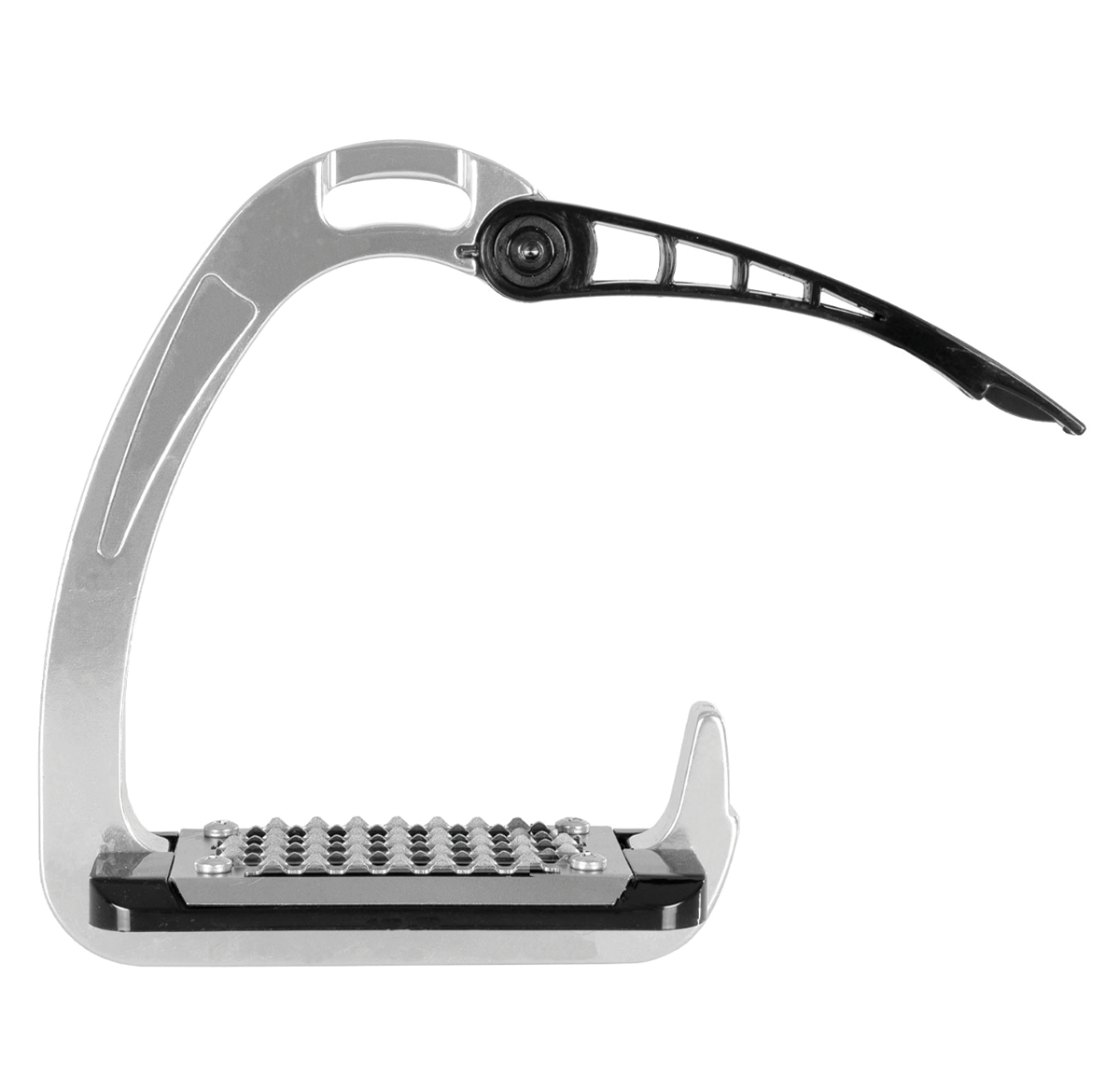
The Arena Alupro stirrups feature a patented side opening and an advanced technical composition. The stainless steel pad with horizontal holes ensures optimal grip in all conditions. The strategically placed lock-and-release mechanism prevents accidental slipping. Available in eight colors.
Welcome to Barn Banter, the official podcast of Horse Illustrated. In Barn Banter episode 37, hosts Susan Friedland and Horse Illustrated Editor In Chief Holly Caccamise chat with Coagi Long, president and owner of Equine Affaire.
To end the episode, Susan and Holly chat with Simon d’Unienville of Healing Heroes Through Horsemanship about Win Often (“Whinny”), Sweetheart, and Virulente (FR) (“Violet”), this month’s ASPCA Right Horse adoptable horses.
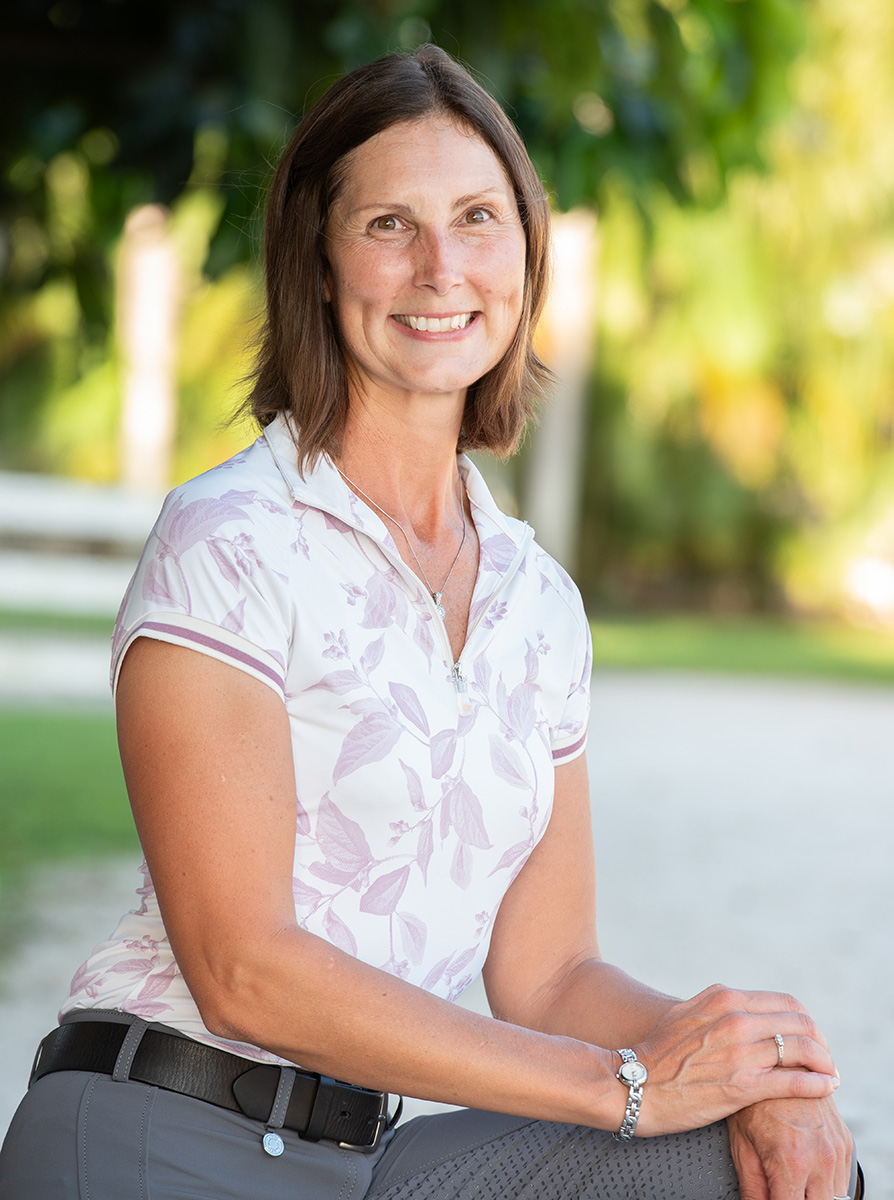
Coagi Long, president and owner of Equine Affaire, Inc. has more than 20 years of experience with the company in a variety of areas. She joined Equine Affaire in 2003 as a member of the marketing department, where she facilitated numerous promotional projects. She also served as Program Director, and Vice President & Executive Producer between 2006 and 2018.
Coagi now manages the production elements of each event, supervises the day-to-day operations of Equine Affaire, Inc., organizes the extensive program of clinics, seminars, and demonstrations, and coordinates the Fantasia performers and production for each Equine Affaire.
Coagi graduated summa cum laude from the University of Findlay, where she earned a Bachelor of Science degree with a dual major in marketing and equestrian studies and a minor in operations and logistics management. With a love for riding and training since her early childhood, she has primarily concentrated on dressage and hunt seat. While at Findlay, she earned several awards, including three consecutive Intercollegiate Hunt Seat National Championship titles and 2003 Intercollegiate Dressage Association Reserve National Champion. Coagi is a member of the United States Dressage Federation and the United States Equestrian Federation. She continues to pursue her competitive career in dressage and trains Warmbloods at her farm in West Mansfield, Ohio.
Adoptable Horse of the Month from Healing Heroes Through Horsemanship
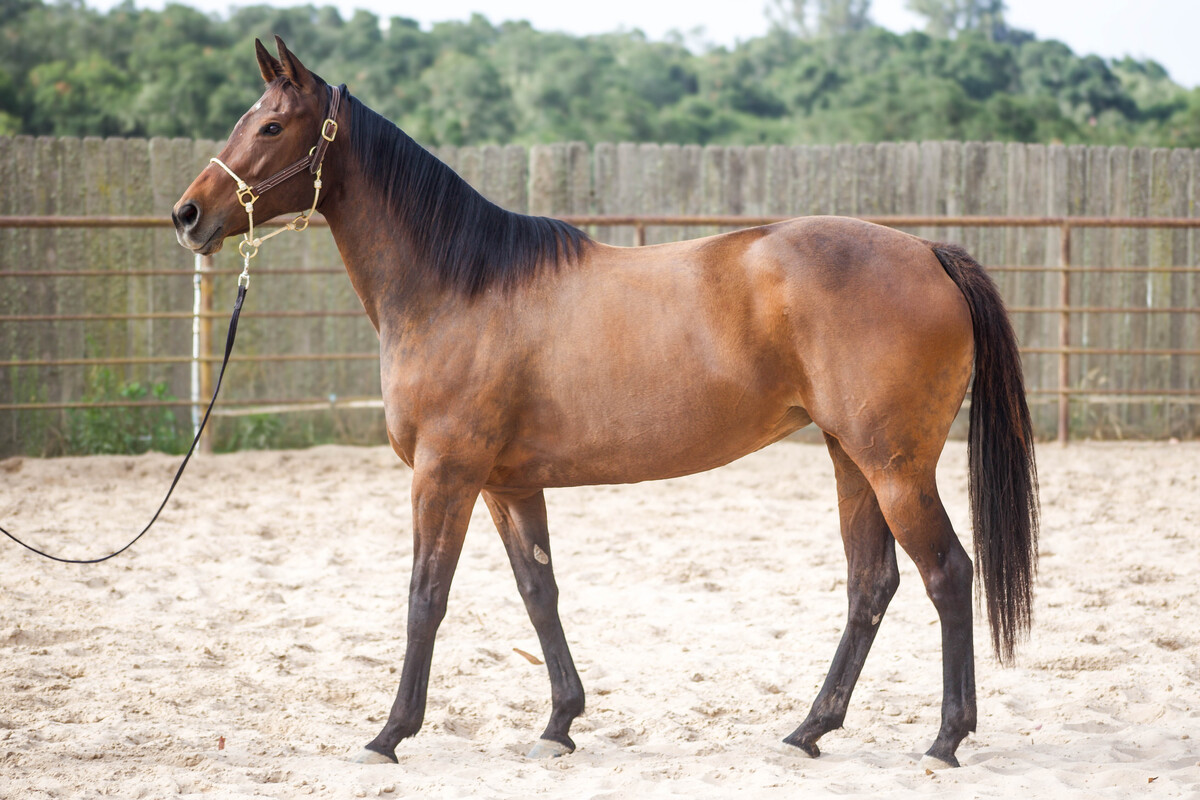
Win Often (“Whinny”)
Win Often (“Whinny”). Photo courtesy Healing Heroes Through Horsemanship
After 12 starts on the track, with an impressive 9 podium finishes, Whinny retired to a well-earned second career as a broodmare. Now, after raising several lovely foals, this striking and intelligent mare is back under saddle and easing into light work in both English and western tack. She’s the type who knows her job and prefers to take things at her own pace.
Whinny is happiest in a quiet, consistent environment with minimal fuss — enjoying the simple things like turnout time with friends and leisurely trail rides with a calm rider she trusts. She’s not one for endless drilling or pampering sessions, but she appreciates calm, kind handling and clear boundaries.
Her ideal home is one where she can live outdoors most of the time, whether in a small herd or larger group pasture, with someone who values companionship over performance. She would make a wonderful pasture partner, light trail companion, or gentle riding horse for an experienced novice to intermediate who appreciates a mare with personality.
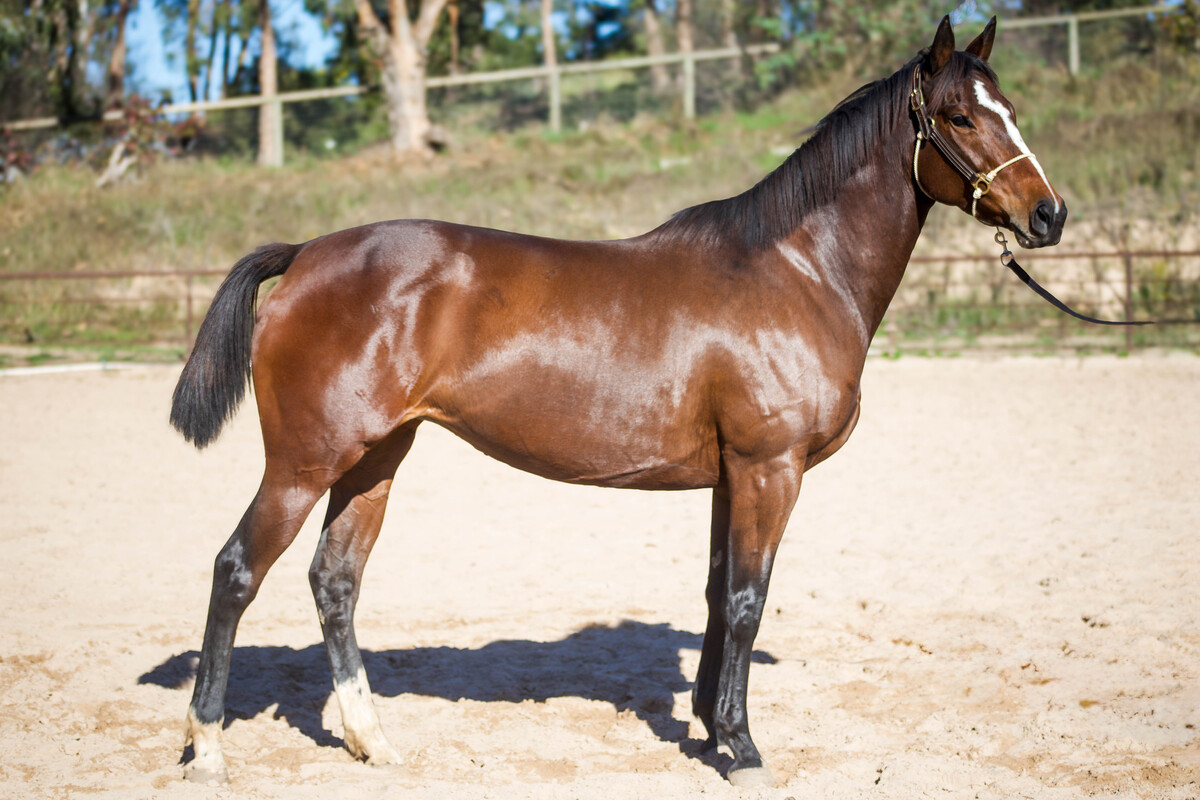
Sweetheart. Photo courtesy Healing Heroes Through Horsemanship
Sweetheart is a 2018 mare whose name truly says it all. After just three starts on the track, it was clear that racing wasn’t her calling. But with her excellent bloodlines and kind temperament, she transitioned naturally into a successful broodmare career, raising three beautiful foals.
Now back under saddle, Sweetheart is showing a willing attitude and a calm, steady nature as she begins her retraining in both English and western tack. She takes each new experience in stride and continues to grow in confidence with consistent handling and patient guidance.
With her conformation, elegant movement, and easygoing disposition, Sweetheart has the potential to shine in a variety of disciplines, whether that’s hunter/jumper, English or western pleasure, trail or more.
True to her name, she’s gentle, level-headed, and a pleasure to have in the barn. She gets along well in a herd, stands quietly for the vet and farrier, and enjoys attention without being pushy. Sweetheart is the kind of mare who makes every day a little brighter — soft-natured, willing, and ready to make someone very happy in her next chapter.
Virulente (FR) (“Violet”). Photo courtesy Healing Heroes Through Horsemanship
Violet is a 2019 mare with an impressive international background and all the elegance you’d expect from her Irish lineage. Born, raised, and started under saddle in France, she showed early talent on the track, earning five in-the-money finishes in just nine starts and breaking her maiden with a win before being imported to California.
After retiring from racing, Violet produced two lovely foals and is now beginning her transition back under saddle. Though still early in her retraining, she’s already showing glimpses of natural balance, scope, and athleticism that suggest real promise for a future in eventing or other sport horse disciplines.
Violet combines refined conformation with a smart, forward-thinking temperament. She’s curious, willing, and enjoys having a job, making her a rewarding prospect for someone who appreciates a talented mare with both class and character.
With her strong European bloodlines, quality movement, and eager attitude, Violet is poised to make an exceptional partner for an experienced rider looking to develop a versatile and athletic prospect.
Like many draft breeds, the Percheron was used on farms across Europe and America. Today, the breed’s smaller registry numbers are primarily due to the costs associated with caring for horses. The Percheron Horse Association of America (PHAOA) currently has 34,084 horses registered.
“To help preserve the breed, individuals should prioritize continuing to register purebred livestock,” says Stacie Lynch, PHAOA executive director. “This investment is crucial for maintaining the breed’s integrity and ensuring the ability to trace pedigree and breeder information.
“It’s important for breeders to recognize the broader impact of registration, extending beyond just mares and stallions to include geldings,” she continues. “By registering all horses, regardless of their roles, breeders contribute to the breed’s welfare, support the registry, and safeguard the legacies of exceptional horses. This proactive approach ensures that each remarkable individual is duly recognized and remembered for generations to come.”
And the Percheron is definitely a breed worth remembering. Not many breeds can go from energetic high-stepping show horses to calm, quiet stable ponies, but the Percheron can. It’s one of the reasons lovers of the breed are so dedicated to them.
The Ames Percherons
“I grew up with draft horses,” says Jacqui Shaw, manager at Ames Percheron Farm, Inc., in Minnesota. “My dad, Jim Westbrook, bred Percherons when I was young and then became a professional hitch driver. It’s a family tradition. It just gets in your blood.” Jacqui’s husband Travis is also hitch driver for Ames Percheron Farm. He got his start in middle school with his neighbor’s draft horses.
The Ames family has a long history with the breed, starting with John and Eliza Ames, who immigrated to America from England in 1874 and farmed with Percherons. In the early 1900s, they began to show them.
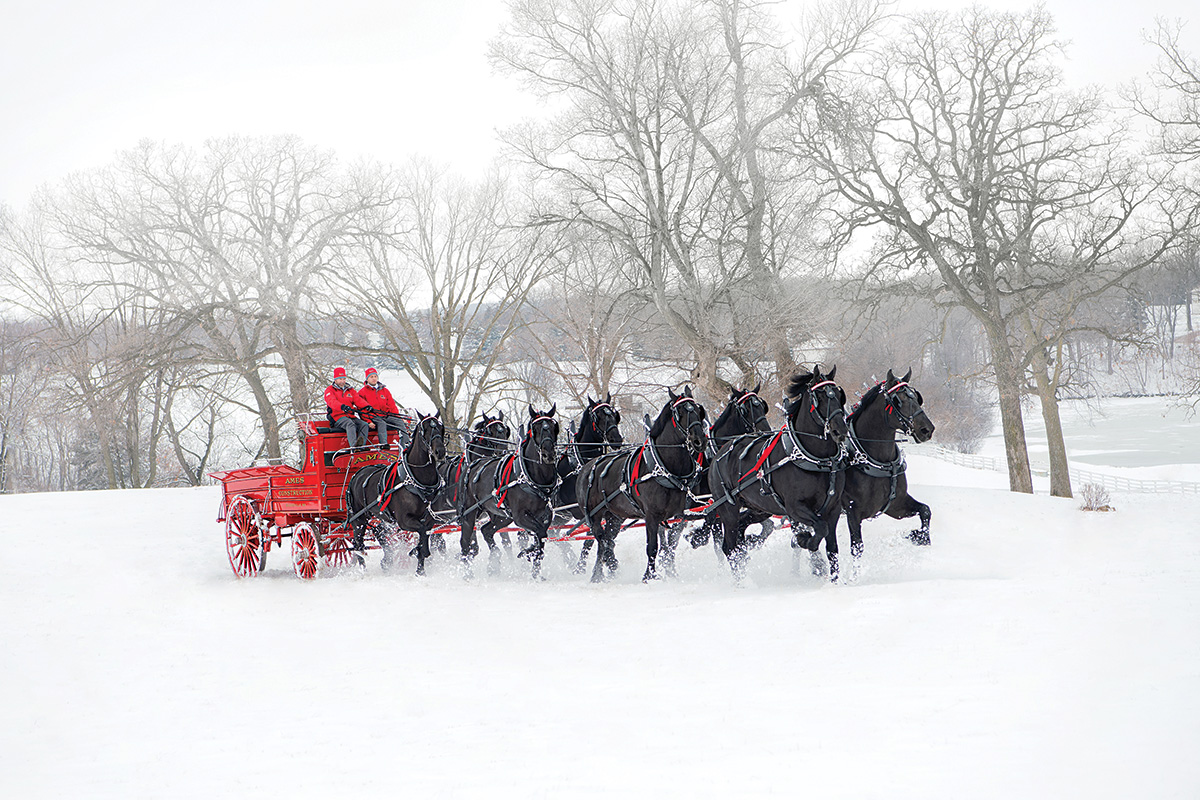
As time went on, showing became their focus. In the early 1990s, brothers Dick, Butch, John and Ron Ames decided to invest in a team of driving Percherons to be sponsored by their company, Ames Construction. It was a way to keep their family tradition alive, and Dick had a real passion for the horses.
Showing a Big Hitch
Today, the Ames Percherons show in six- and eight-horse hitch configurations year-round, attending between 10 and 15 shows annually. And they have it down to a science. A team of five to six people can get the team ready in as little as 45 minutes, though the average is 90—still a speedy time!
The Ames Percherons show in six- and eight-horse configurations year round. Photo by Avalon Photography
And getting to the show? That takes two 53-foot big rigs: One that holds the harnesses and cart, and one that hauls the 10 horses. The trailer has space for 15 horses, but Jacqui says they never take that many.
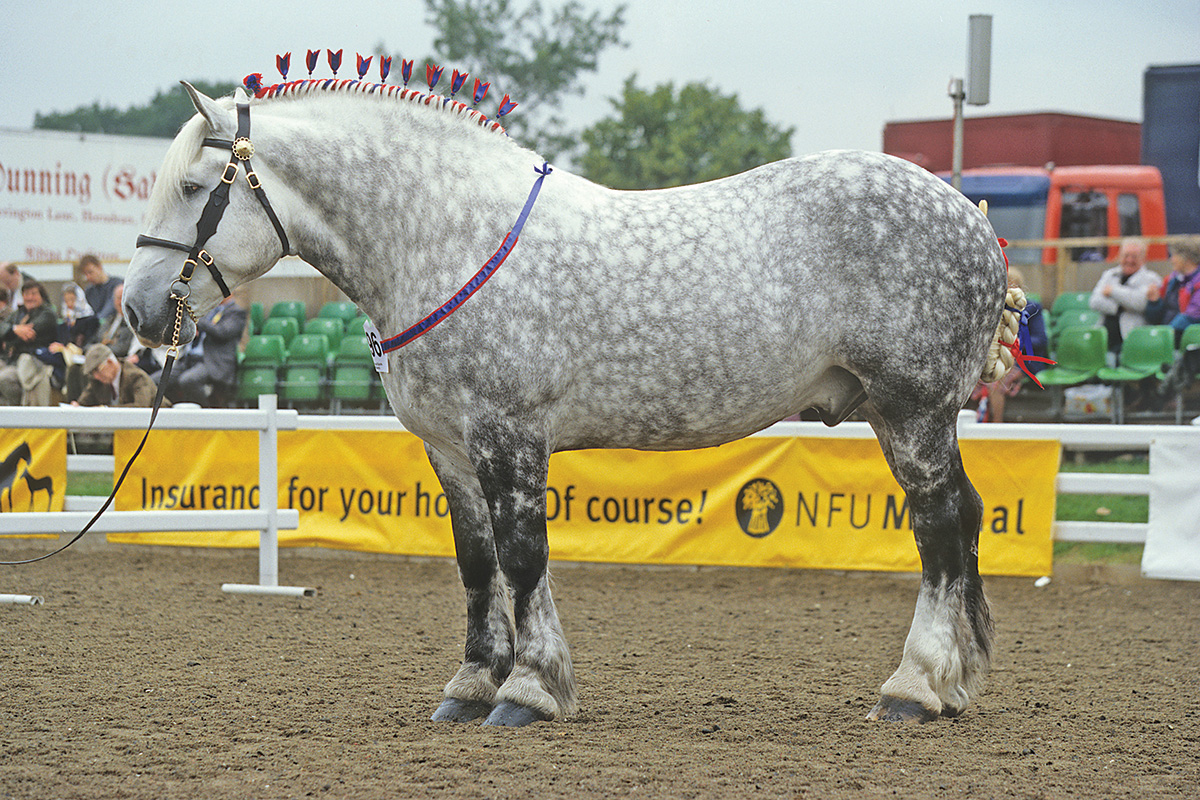
Ames used to show teams of dapple grays, but Jacqui says the color is getting harder to find as it fell out of fashion, and some of the main breeders of gray Percherons were PMU farms in Canada that are now closed. So, they switched to an all-black team, for the most part.
“We still have a couple grays that get dyed to match the blacks for shows,” says Jacqui. (They use animal-safe cattle dye, and it’s legal at the shows they compete at.) “It’s all about appearance at these shows, and we even dye the blacks to make sure their coats really shine. Some get bleached by the sun, so we need to cover the brown. Almost every team at our level dyes their horses, in all breeds.”
While once common within the breed, gray Percherons are now outnumbered by black horses. Photo by Bob Langrish
A Dual Personality
Since 2000, Ames Percheron Farm has won the North American Classic Series six-horse Championship four times, and has multiple national titles in both the six- and eight-horse hitch. But Jacqui says that even if they couldn’t show, she and her husband would be content to just take care of the horses.
“These guys, the big horses, have a real gentle demeanor in the barn,” she says. “We train them to be flashy when they are showing, so you hook them up and they have a whole different personality. They are a powerful athlete that gives their all.
“But then you take them back to the barn and they put their heads down and just want to be petted,” she continues. “I’ve had a lot of riding horses, but they don’t have that split personality, where they can turn off the ‘hot’ when they aren’t showing.”
Jacqui Shaw says her Percherons can turn on the fire when it’s time to perform, but are sweet in-your-pocket horses around the barn. Photo by Shelley Paulson
This sweet personality makes them a fan favorite, as crowds of people gather around to meet and pet them at shows.
“We get people saying they want one when they are ready for retirement, because they are so sweet and gentle,” Jacqui says.
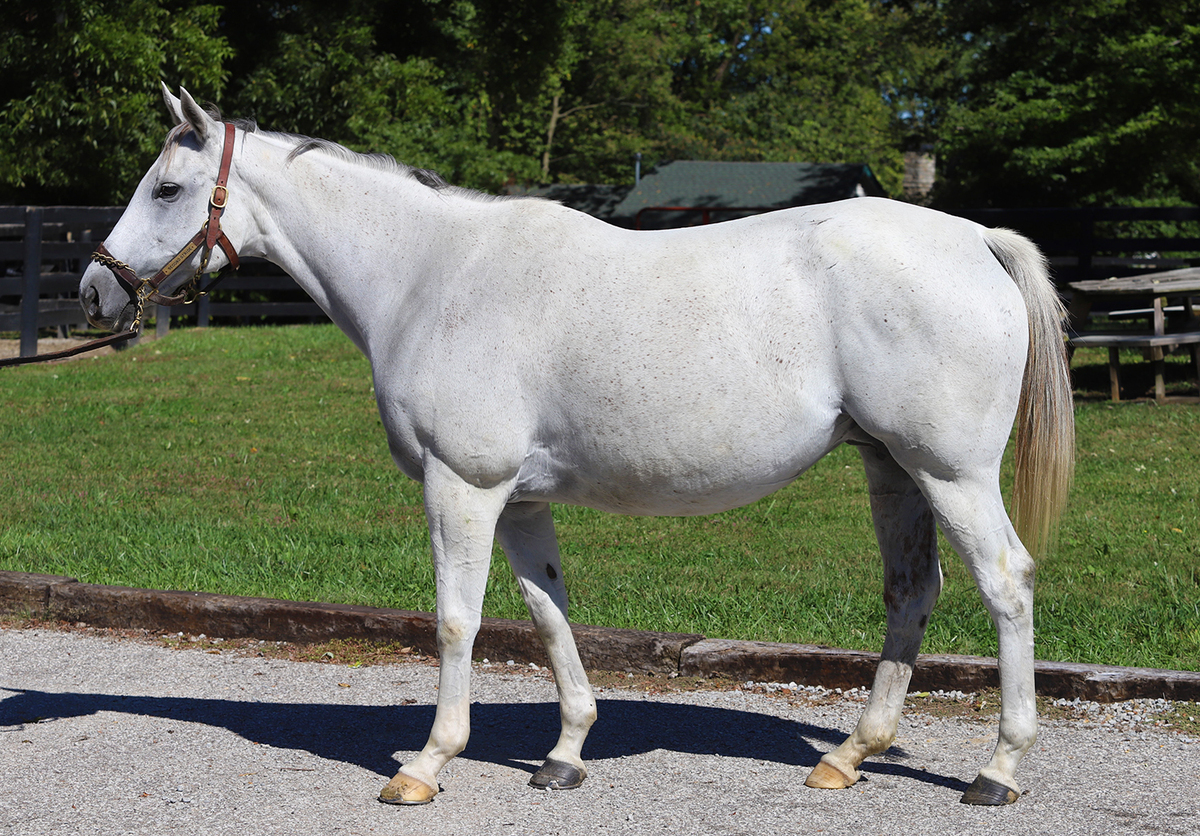
Adoptable Horse: Silver Kitty, a 12-year-old, 15.0hh Thoroughbred mare Organization: Second Stride, Prospect, Ky.
Get to Know Adoptable Horse Silver Kitty
A 12-year-old Thoroughbred mare, Silver Kitty last raced in 2017. Second Stride was not told of any injury history and she moves soundly under saddle. “Kitty” has had four foals, the last being in 2025. She is eligible for the Retired Racehorse Project Thoroughbred Makeover Broodmare Division.
Kitty is a very kind and easy going mare. She seems to be intelligent and not concerned about much at all. She doesn’t mind being in a stall, as she stays quiet and munches on her hay. She is also fine being in a field 24/7. She gets along well with her friends and settles down quickly to graze. She walks nicely on a lead rope and is well behaved for grooming, bathing and tacking up. She stands quietly on crossties and enjoys being back under saddle.
She has a cute little trot, but her canter needs some refining. She would make a great lesson or beginner horse. Good for kids and grandkids, Kitty would make a perfect family horse and will be suitable for any age appropriate discipline.
Contact Second Stride today about ASPCA Right Horse Adoptable Horse of the Week, Silver Kitty!
Photo courtesy Second Stride
ASPCA Right Horse
ASPCA Right Horse is the online adoption platform of The Right Horse Initiative, a collection of equine industry and welfare professionals and advocates working together to improve the lives of horses in transition. A program of the ASPCA, their goal is to massively increase horse adoption in the United States. To find more adoptable horses and foster horses, visit www.myrighthorse.org. To learn more about The Right Horse, a program of the ASPCA, visit www.aspcarighthorse.org.
We use cookies to help personalize content, tailor and measure ads, and provide a safer experience. By navigating the site, you agree to the use of cookies to collect information. Read our Cookie Policy.