Enter our 12 Days of Christmas Giveaways here!
0 ITEMS
  • My Account
  • Holiday Gift Guide
  • Podcast
  • Webinar
Subscribe Combo
Enable cache13
Home Blog Page 3

A Horseback Riding Holiday in Ireland

0

Equestrian travel is always at the top of my bucket list. I’d already been on several horseback riding holidays in Ireland, and knew that any chance to ride there shouldn’t be missed. So when the opportunity arose to head to the Emerald Isle, I jumped at the opportunity.
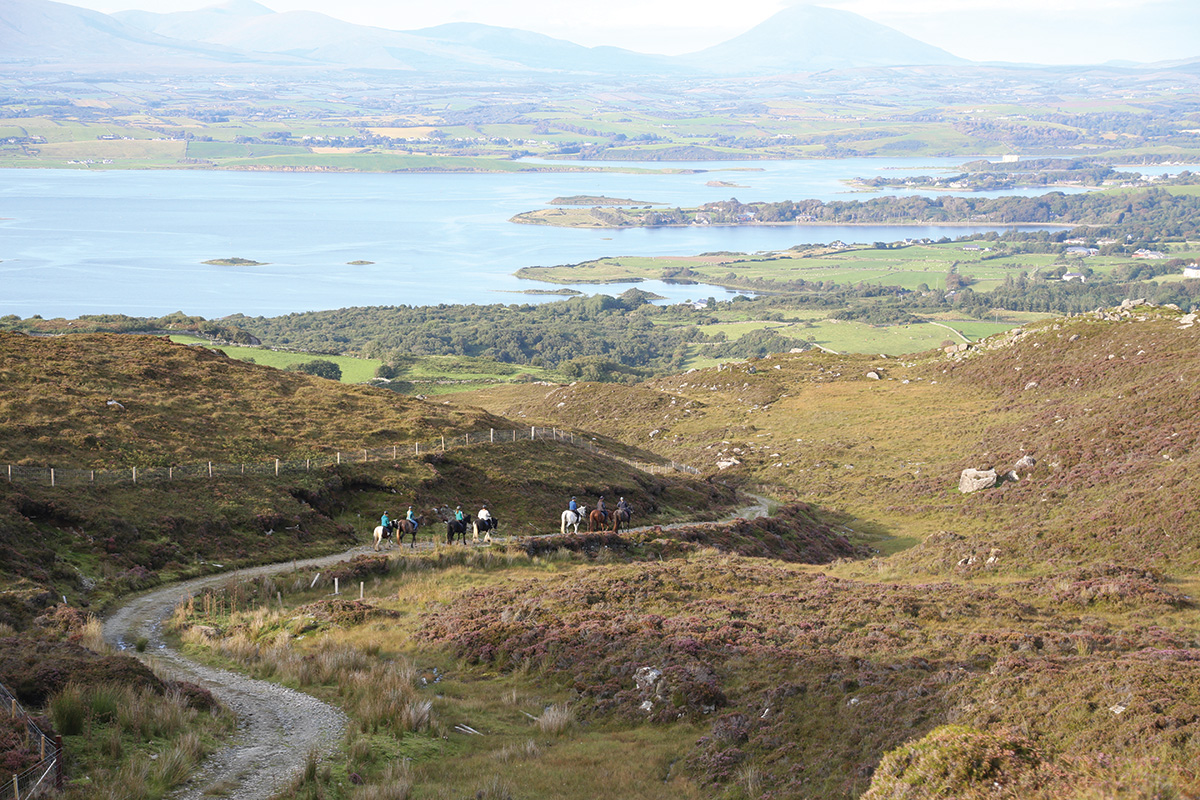
Horseback riding on holiday in Ireland.
Photo by Amber Heintzberger

Castle Leslie

With just a week available, I had to make the most out of every day. After spending a day recovering from jetlag and catching up with friends, it was off to Castle Leslie in County Monaghan. Located on the border of Northern Ireland, this was a perfect couple of days of horse-themed luxury.

I rented a car for the week, and while I adjusted pretty quickly to driving on the left-hand side of the road and shifting gears with my left hand, train service is available for anyone who doesn’t want the added stress of navigating the country roads by car.

The castle has an illustrious family history, and offers several options for accommodations. If you really want to make a splash, you can stay in the castle proper, or if you’d prefer more peace and quiet, the Old Stable Mews are located far out back on the property.
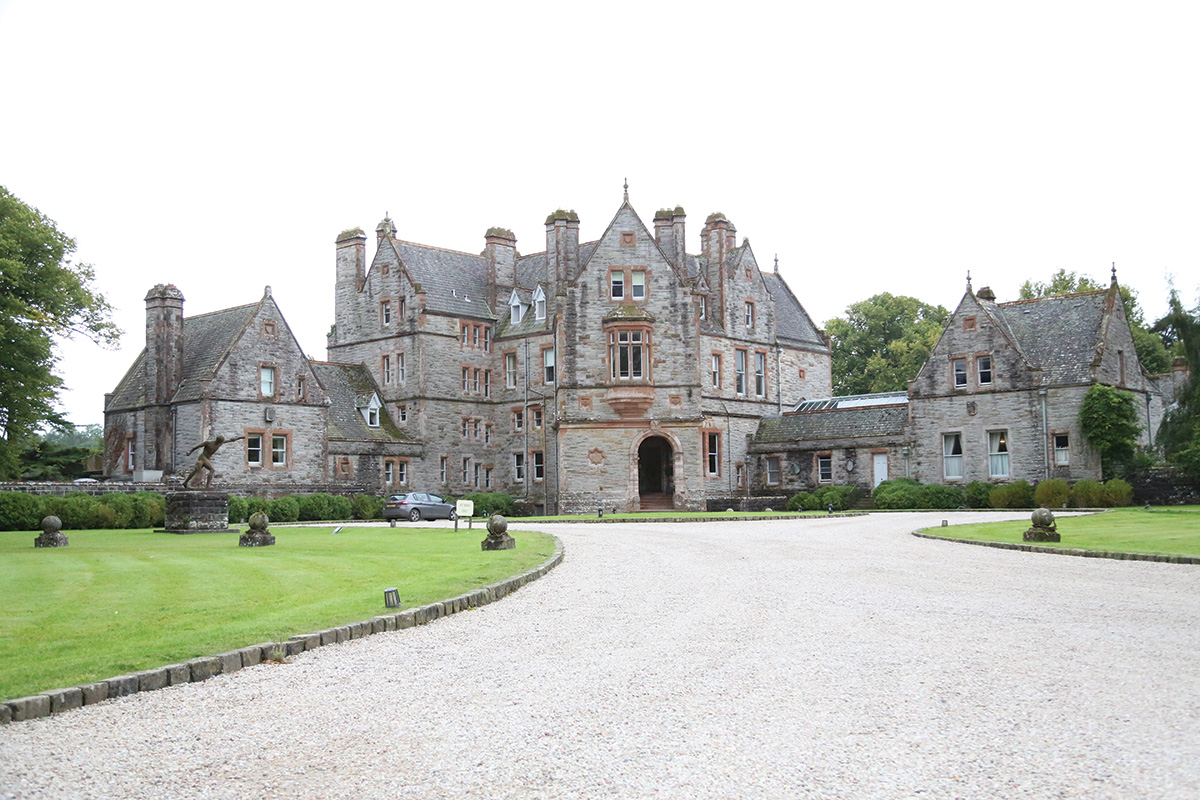
Castle Leslie.
Castle Leslie. Photo by Amber Heintzberger

Most people interested in riding will be content to stay in The Lodge, which is connected to the stables and features the upscale Snaffles restaurant, drinks at Connor’s Pub, and a spa for relaxing after time in the saddle.

I arranged the trip to Castle Leslie through Unicorn Trails Horse Riding Holidays Worldwide, and the reservation process was easy and well managed. Every detail of the trip was smoothly planned in advance, and checking in at The Lodge was an easy process. The accommodations were well equipped and exceedingly comfortable. It was a huge highlight that the small balcony overlooked the stable yard.

My kids were heading back to school that week, but airfare from New Jersey to Ireland drops significantly in September: my flight was about $400, compared to over $1,000 in August.

My non-horsey husband agreed to deal with the back-to-school week so I could enjoy an adventure with my old friend, George Barry, who I’ve known since we were teenagers, when he and his sister and my brother competed in the International Tetrathlon exchange through Pony Club back in the late 1990s.

We’d traveled together before, and he’s a competent rider, and since riding is a high-risk sport—and so is driving a car in Ireland—I felt a little safer traveling with a companion.

Cross-Country Jumping

After settling in, we stretched our legs with a wander around the grounds and the castle. That evening we enjoyed an elegant six-course dinner at Snaffles. The food was delicious, featuring mainly locally sourced, fresh ingredients, and the service was impeccable. After dinner, we wandered out the door to the stables and admired the facilities and horses before retiring for the evening.

The full Irish breakfast the next morning was equally as impressive as dinner, if not more so. There was also an impressive array of fresh fruit, pastries and other breakfast items that left me wishing my appetite was larger. But with our horses waiting, I reined in my appetite. After changing into boots and breeches, we headed out to the stables.

The horses were fit and well cared for, and the borrowed helmets and cross-country vests were in good condition and up to the latest safety standards. I rode a gorgeous big gray mare named Blueberry, while George was on a stout gelding named Arnie. I’m 5’11”, and Blueberry took up my leg nicely. There were horses of all shapes and sizes, for riders of all shapes, sizes and levels of experience. A questionnaire in advance made sure that we met our ideal match.

Our instructor, Steven Carty, performed a brief assessment before we set off across the countryside. Steven was lovely and we chatted about the horses, the lifestyle working at the stables, and the history of the estate. If we’d had another night, I would have enjoyed sitting down with him for a pint at Connor’s Pub.

The jumps were on the small side, but since we were both out of practice, it was perfect. The cross-country course is extensive, but since we only had one day, we kept things simple, and the horses clearly knew the drill.

Next, we made our way to the corner of the lake, where we could jump in and out from a small bank or down a series of steps. Splashing through the lake with the castle in the background felt like a scene from a fairytale.
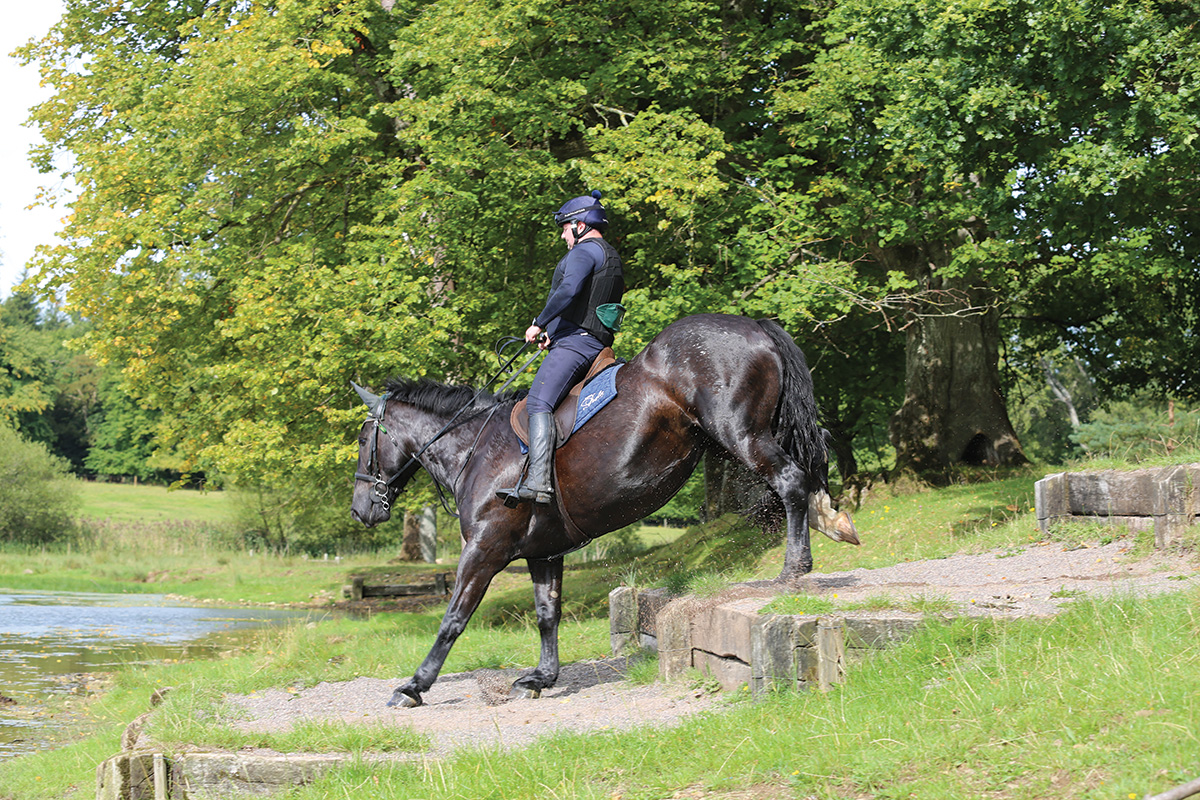
Horseback riding on a cross-country course in Ireland.
The cross-country course included a series of small steps down to the water. Photo by Amber Heintzberger

A walk in the woods that afternoon left me wishing we had more time to explore the estate. It was a peaceful way to wrap up our short visit, as the grounds and gardens are just as beautiful as the buildings.

The Wild Atlantic Way

I would have happily spent a week at the castle living the life of luxury, but our next stop would bring plenty of fun adventures. (In fact, if I were to do the trip again, I’d arrange to head to the castle after the beach).

A couple hours’ drive west to County Mayo brought us to the small coastal town of Westport, a scenic village set on the calm, clear waters of Clew Bay. The bay is home to a number of tiny islands—“one for every day of the year”—and set in the shadow of Croagh Patrick, the mountain where Saint Patrick is said to have driven the snakes from Ireland.

This segment of the trip was organized by Ireland Equestrian Tours and operated by Go Trekking Ireland. Laura Lamb of Ireland Equestrian Tours sent a number of brochures over with information about the various options, and the Wild Atlantic Way seemed a good fit for a bit of adventure and beach riding after our cross-country schooling up in County Monaghan.

We stayed at George’s uncle John’s house on the way, and got an early start to Westport so that we could be out riding early, before the tide came in. We met the proprietor of the Westport Woods Hotel, Michael Lennon, who took us to his stables to select our horses for a beach ride. I chose a tall, athletic and solidly built chestnut hunter type named Coady, while George rode a gray named Naymar.

Beach Ride to Remember

We followed the horsebox to a spot where we unloaded and mounted up. Four of us set off across the bay. Our guide, Joanne Mason, was on a smaller cob who was fairly submerged in some of the deeper water crossings, so I was glad to be on a long-legged sport horse!
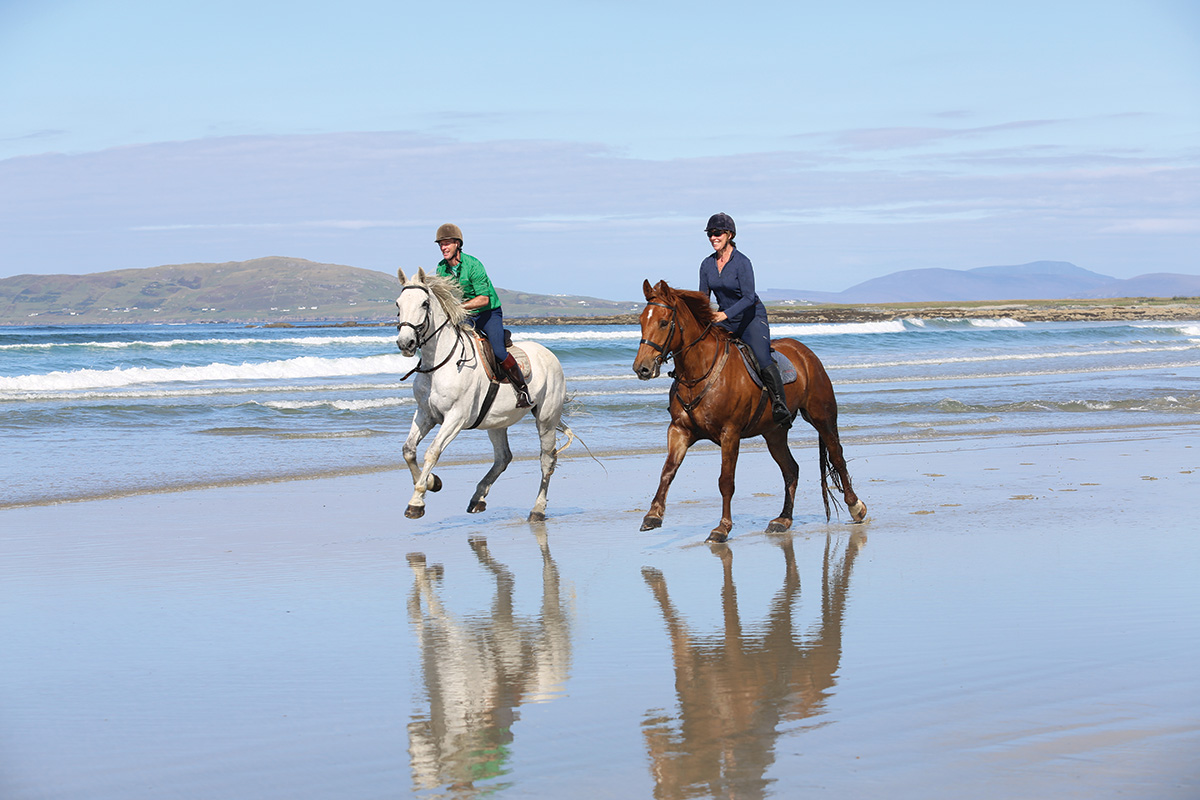
Horseback riding on a beach in Ireland on holiday.
Amber and George had a blast galloping Coady and Naymar down the beach. Photo by Amber Heintzberger

Eventually we ended up on Bertra Strand, where we had a good gallop on the beach and then rode out on a grassy headland overlooking a couple of large islands. After clattering over a stony section, we came to another beach where we rode out in the waves, before crossing back over to Bertra Strand for another good gallop in the shadow of Croagh Patrick. By the time we wrapped up our antics, the tide had come in, so we picked our way around the bay and back to the horsebox.

After riding, we stopped at a local pub for a truly Irish experience: drinking a pint in front of a peat fire. While harvesting peat is banned in much of the country, some locals are still allowed to harvest a limited amount using ancient methods, and the particular smoky atmosphere in the pub evoked a bygone era.
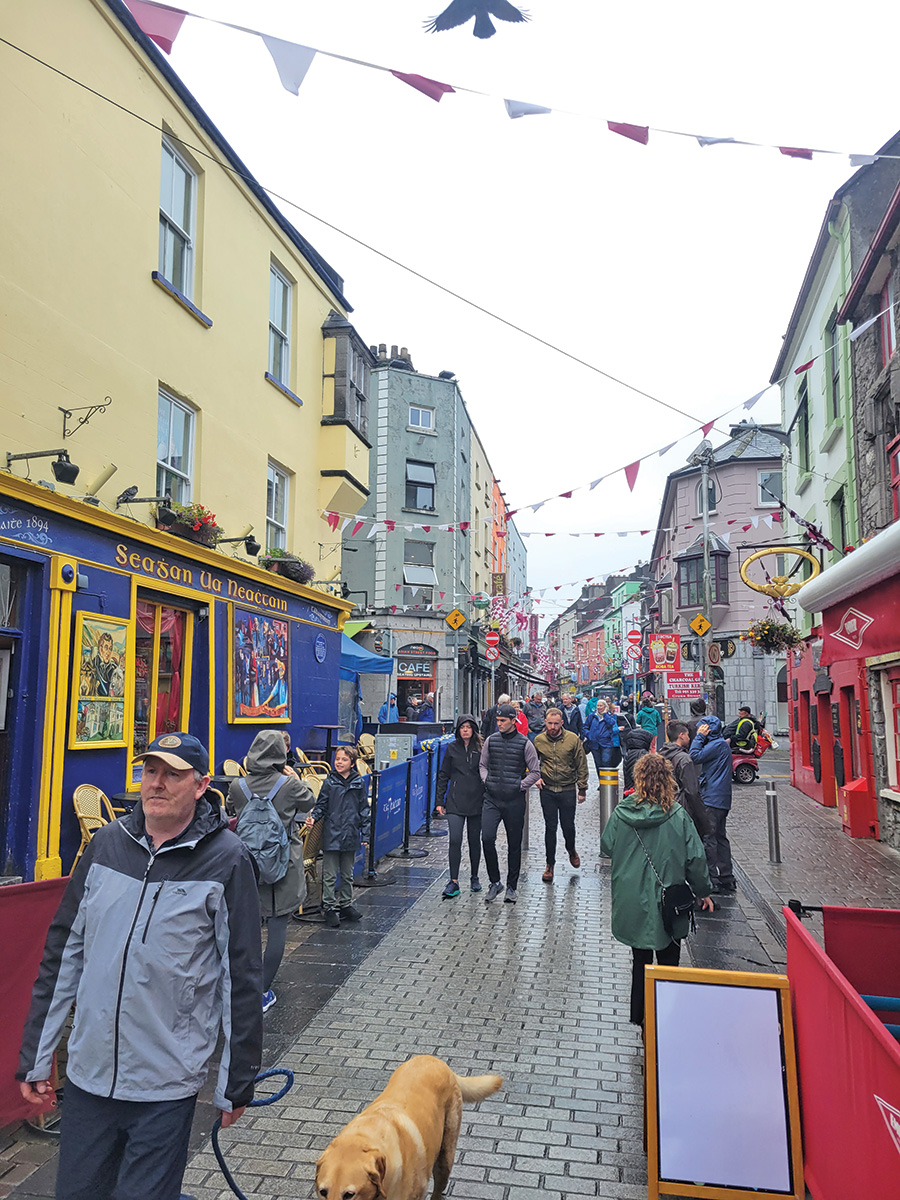
A village on the Emerald Isle.
If you go, make sure to get out and explore nearby towns, restaurants and pubs for a taste of the local flair. Photo by Amber Heintzberger

At Michael’s suggestion, we spent the afternoon at Ballinrobe Races, about 45 minutes south. It was the final meet of the season and there was a good crowd out for the racing. This was a fun way to see another aspect of the Irish horse industry and enjoy the excitement of placing a few small bets. I braved the bookies and bet a couple of Euros on two winning horses, bringing home around 40 Euros and a slightly inflated sense of my ability to judge a winning horse.
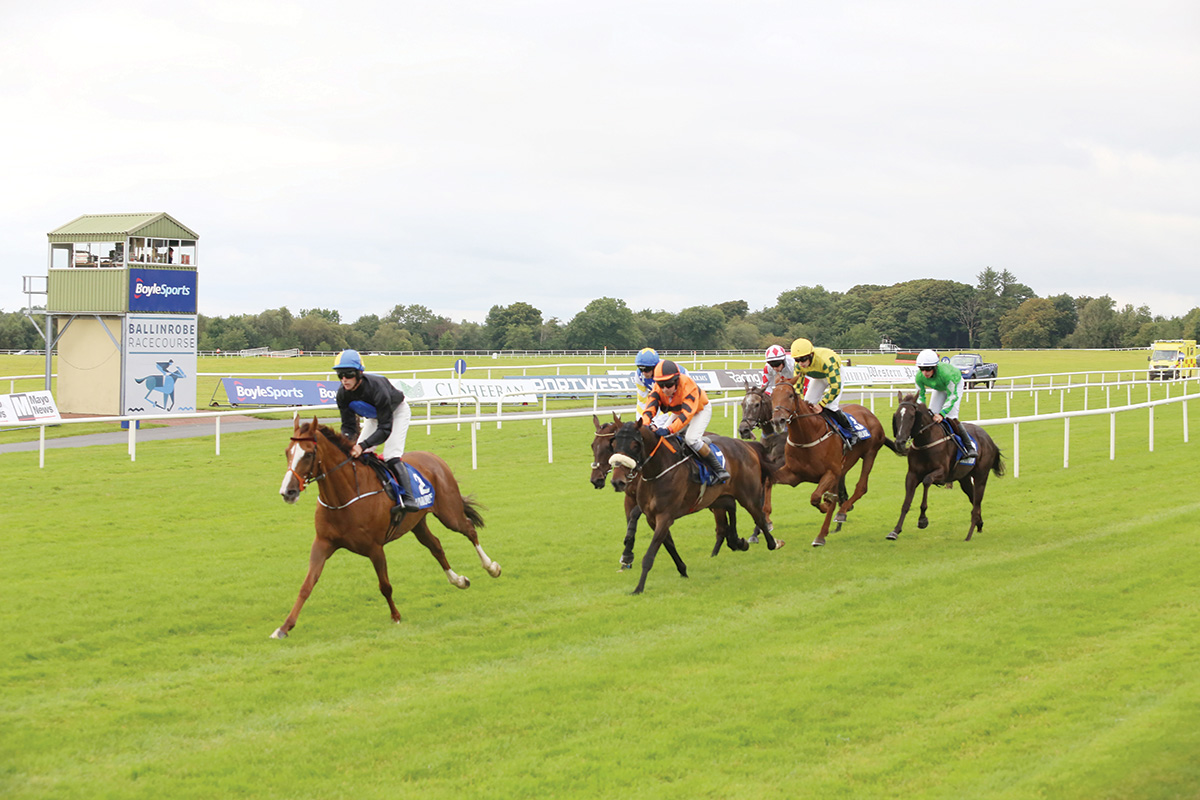
The Ballinrobe Races.
Ballinrobe Races provided a fun way to see another aspect of the Irish horse industry. Photo by Amber Heintzberger

That evening, we settled on the Westway Pub in downtown Westport for a bite to eat. The food was fresh and simple and the atmosphere smart but casual. I’d hoped to stop in to listen to the traditional music at another pub up the street, but with another day of riding planned, opted for an early bedtime instead.

Surfing Beach

The next morning the horses were hauled to Carrownisky Strand, a popular surfing beach a half-hour or so down the road. It was a gorgeous, sunny day and a little surreal unloading the horses in a sandy parking area populated mainly by surfers and families taking their kids to the beach for the day.

We made a bit of a spectacle, galloping on the wide, sandy beach, which is the home to an annual horse race. The horses were eager to go and we were all too happy to oblige, with sea spray splashing in our grinning faces.

To cool the horses out, we hacked to the nearby Bunlahinch Clapper Footbridge, the largest complete clapper bridge in Ireland, at 50 meters long. Its 37 arches are constructed in a primitive style, each made of flat limestone slabs, and likely dates to the 1840s.

On the way back, we walked past cow pastures and bogs where sheep were grazing on the verdant grass, later taking another lively canter down the beach. The horses were very fit and had plenty in the tank to give another good run.

Mountain Ride

The original plan was to do the mountain ride the following day, but with stormy weather in the forecast, I opted to join a group going out that afternoon. After a short rest at the hotel, I headed back to the stables with Michael and an American woman and her daughter who had just arrived on holiday. (George had taken an unplanned dismount into the saltwater on our beach ride and wasn’t keen to go on a three-hour ride in soaking wet clothing, so he stayed behind and had a stroll around the town).

I was on Coady once again, and we rode directly from the stables and enjoyed a long, leisurely hack to the base of the mountain. Other than an easy canter up a long gravel track, this ride maintained a leisurely pace and was a good opportunity to take in views of the peat bog, the mountain, and sweeping views of Clew Bay, following narrow lanes winding over hills and through little valleys past cottages and farms.
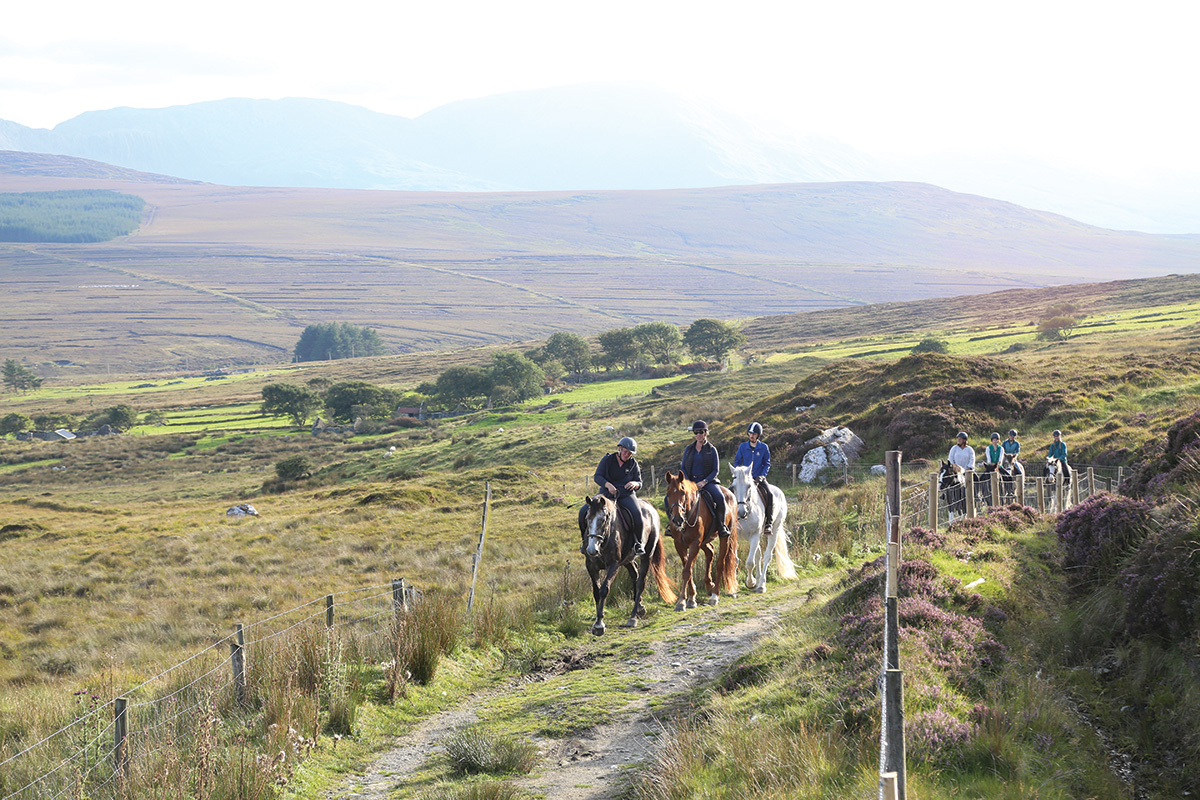
Horseback riding in Ireland on holiday.
Riders enjoyed a long, leisurely ride to the base of the mountain, a good opportunity to take in views of the peat bog, mountain, and sweeping views of Clew Bay. Photo by Amber Heintzberger

That evening, we walked from the hotel to the Quay for dinner at the Towers Pub, a little more upscale than the previous evening’s location. Following Joanne’s recommendation, we followed dinner with pink gin cocktails garnished with strawberries at the Coast Hotel across the street. It was charming and refreshing and a nice accompaniment to the live music featured that evening.

All too soon, it was time to head to the airport, return the trusty rental car and fly home.

◆ Amber’s Packing Tips and List for an Irish Riding Holiday

This article about a horseback riding holiday in Ireland appeared in the November/December 2024 issue of Horse Illustrated magazine. Click here to subscribe!
ASPCA Right Horse Adoptable Horse of the Week: Cajun Crazy

0

Welcome to Horse Illustrated’s weekly installment of the Right Horse Adoptable Horse of the Week, offered in partnership with the ASPCA’s Right Horse program. This week’s adoptable horse is Cajun Crazy! Check back weekly for a new featured horse so you can find your Right Horse.

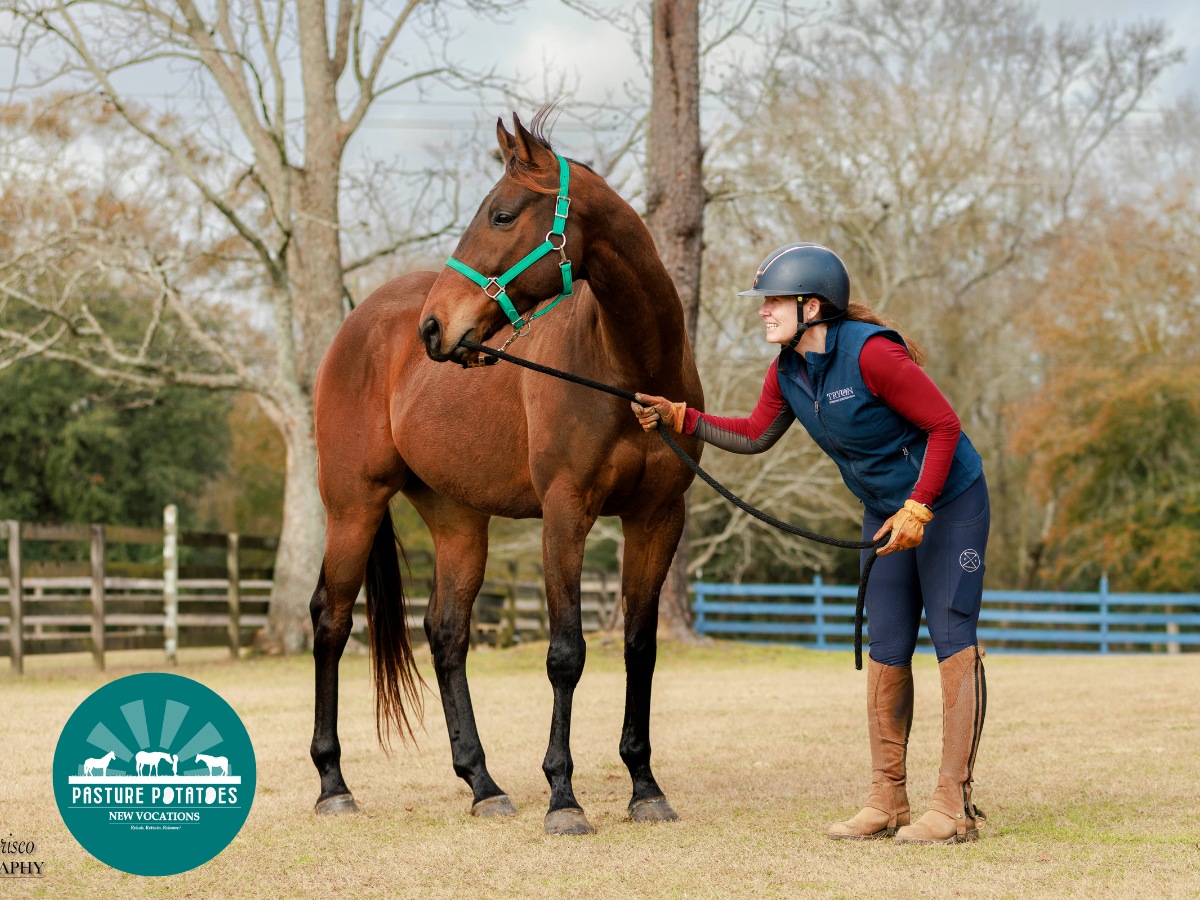
Adoptable horse Cajun Crazy (CC).
Photo courtesy New Vocations Racehorse Adoption Program

Adoptable Horse: Cajun Crazy, a 5-year-old, 16.2hh Thoroughbred gelding
Organization: New Vocations Racehorse Adoption Program, Covington, La.

Get to Know Adoptable Horse Cajun Crazy

Meet Cajun Crazy, available from New Vocations’ Pasture Potatoes Program, meaning he is eligible for adoption to a non-riding home only.

“CC” needs a handler who is used to dealing with mouthy, busy youngsters. He is okay for handling but will try to play with you using his lips or teeth. When he is not trying to put his mouth or teeth on everything, CC stands quietly in the crossties for grooming and picking his feet.

CC lives outside in a herd of three geldings and does very well with others. He is a happy friendly horse with an oral fixation. He wears steel front shoes.

CC is ready to pursue a second career as your loving Pasture Potato! His adoption is eligible for shipping credit up to $1,000.

Contact New Vocations Racehorse Adoption Program today about ASPCA Right Horse Adoptable Horse of the Week, Cajun Crazy!

Working with a bay Thoroughbred gelding.
Photo courtesy New Vocations Racehorse Adoption Program

ASPCA Right Horse

My Right HorseASPCA Right Horse is the online adoption platform of The Right Horse Initiative, a collection of equine industry and welfare professionals and advocates working together to improve the lives of horses in transition. A program of the ASPCA, their goal is to massively increase horse adoption in the United States. To find more adoptable horses and foster horses, visit www.myrighthorse.org. To learn more about The Right Horse, a program of the ASPCA, visit www.aspcarighthorse.org.

Draft Horse Health and Care

0

Maybe it’s the flowing leg feathers, the gentle personality, or maybe it’s the height—18 hands? 19? More? There are certainly many charms of a draft horse. What horse owner hasn’t thought, Maybe someday! But due to their size, there are some unique health and care considerations a horse owner should understand before taking the plunge with a draft horse.

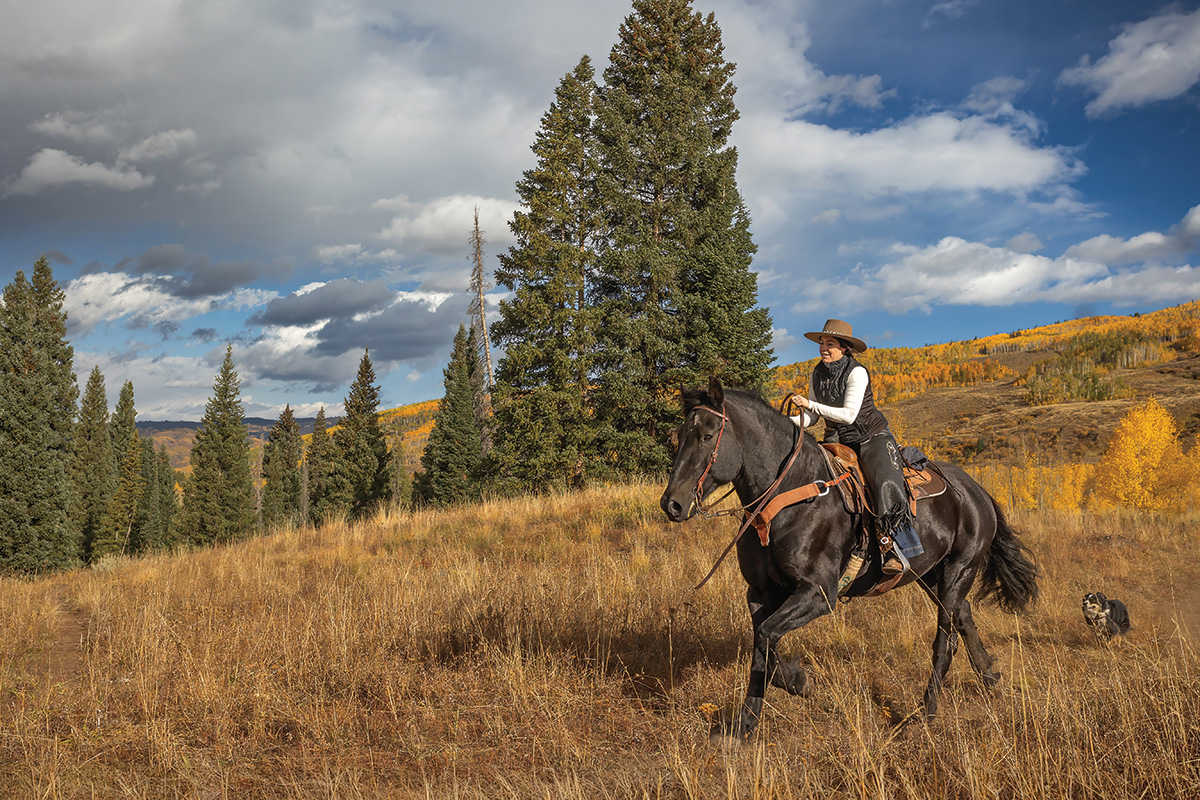
A cowgirl gallops on a draft horse with a dog following.
Photo by Terri Cage/Adobe Stock

Draft Horse Hoof Care

Gentle Giants Draft Rescue is a 300-plus acre facility in Mt. Airy, Md., that rehabilitates and re-homes draft horses. They are currently home to more than 150 drafts. Executive Director and founder Christine Hajek says the most common problem seen in draft breeds is hoof neglect.

One misconception about drafts is that due to their size, they wear down their feet on their own. This is not true; as with other horse breeds, drafts require regular hoof trims. However, given their size, “Expect to pay more for the farrier,” she says.

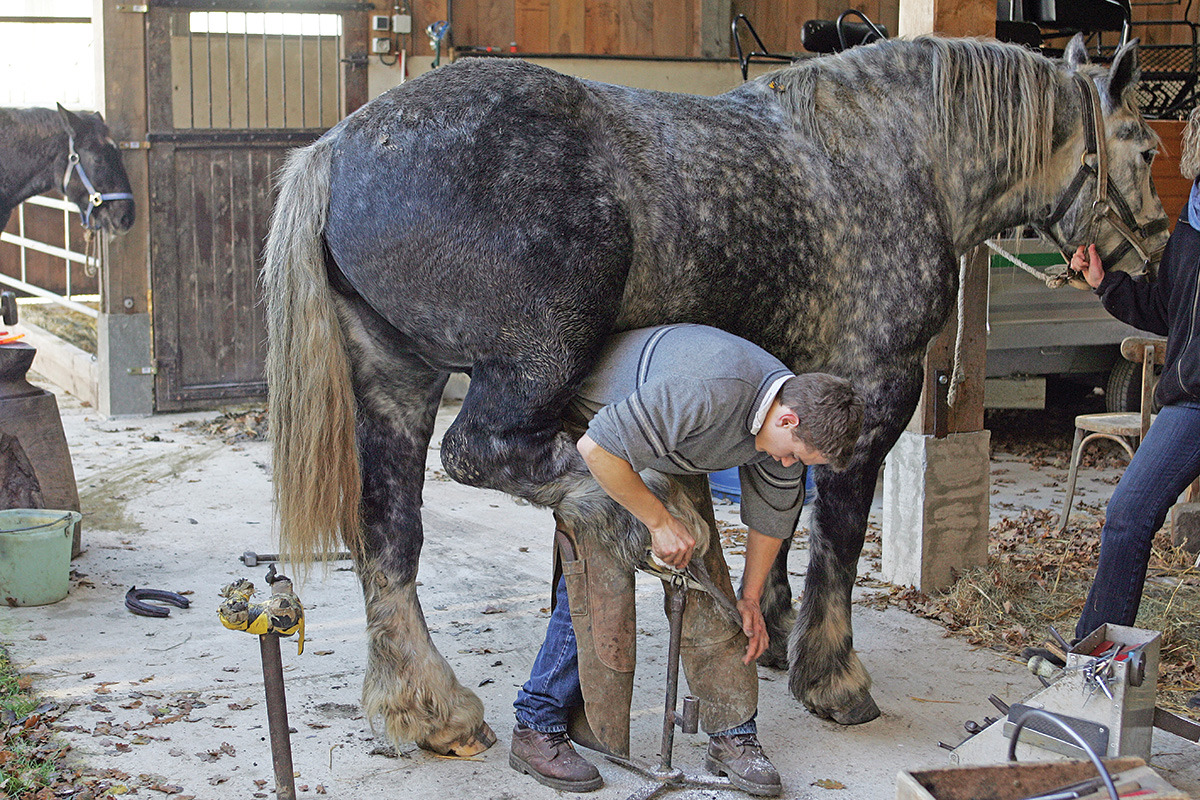
A farrier working on a draft horse. Hoof care can be more expensive for draft horses.
Be prepared that farrier costs for draft horses can be higher than with light breeds. Photo by slowmotiongli/Adobe Stock

Drafts can have a reputation for being stubborn about picking up and holding up their feet. This is in large part due to their background. Many drafts come from Amish and Mennonite farms, says Hajek. There, feet are trimmed in wooden restraints called stocks, so many drafts haven’t been taught to stand while having their feet held by a person.

However, this can be overcome by patient, consistent training. Staff at Gentle Giants use clicker training to accustom drafts to having their feet handled.

Skin Beneath the Feathers

Along with the beautiful feathers some draft breeds have comes extra work in keeping the skin underneath healthy. Long hair on the lower legs can create an environment that is ideal for bacteria and parasite proliferation. Many drafts that arrive at Gentle Giants have a skin condition called scratches, mite infestations, or both, says Hajek.

Scratches, also called mud fever, is a dermatitis of the pastern and heel. Overgrowth of microorganisms on the skin’s surface results in localized inflammation, causing these areas to appear greasy. The skin will be red, thickened, and scabby, and may be sensitive to touch.

Mange mites, specifically chorioptic mites (Chorioptes species), commonly take up residence along a draft horse’s lower legs. Infestations result in intense itching that can cause a horse to stomp and yank his foot away when held. Some owners may misinterpret this as a behavioral issue; however, when the underlying condition is treated, this issue resolves.

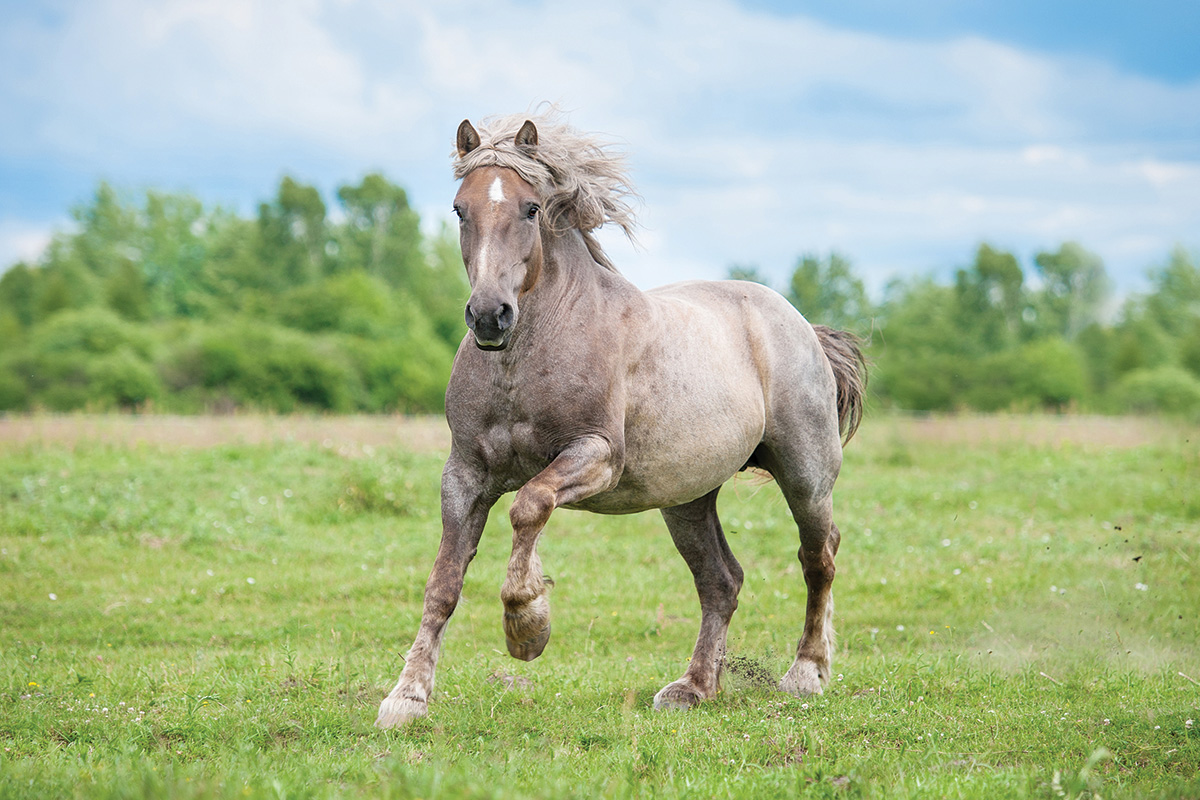
A roan draft horse galloping in a field.
Photo by Rita Kochmarjova/Adobe Stock

Managing these skin conditions involves a delicate balance between moisture and dryness. Yes, those beautiful feathers will likely have to be shaved off (but they grow back!) in order to expose the mites and dry out any bacteria present. Initially, regular leg bathing will help fight these infections, followed by thorough drying.

Keeping the horse’s legs clean and dry then is key in keeping these skin issues at bay. Work with your veterinarian to determine the best shampoo for your draft and any other medications needed, such as an antiparasitic or antibiotic for severe infections.

Belgians, specifically, are at risk for a different type of condition in the legs called chronic progressive lymphedema, or CPL. Belgians with this condition develop swelling in their lower legs, which can lead to thickened skin and lesions. Not much is currently understood about this disease, but it is progressive and there is no treatment. Anyone interested in a Belgian should carefully inquire about the horse’s background and lineage, if known.

Feeding Fat

Most adult draft horses in little to light work and general good health are relatively easy keepers, meaning they can maintain a good body condition on quality forage, such as hay or pasture. In fact, if fed according to the guidelines on many feed bags based on body weight, owners may accidentally over-feed their draft, leading to obesity and associated metabolic issues, such as insulin resistance and laminitis.

Inappropriate diet is a common issue in many of the draft rescues rehabilitated at Gentle Giants.

“They were fed based on light breed horse guidelines,” Hajek explains.

When a draft horse does require a higher level of nutrition than what simple forage can provide, they may need more fat as opposed to the high starch seen in grain mixes.

“A lot of people don’t realize drafts may need a higher-fat diet,” says Hajek.

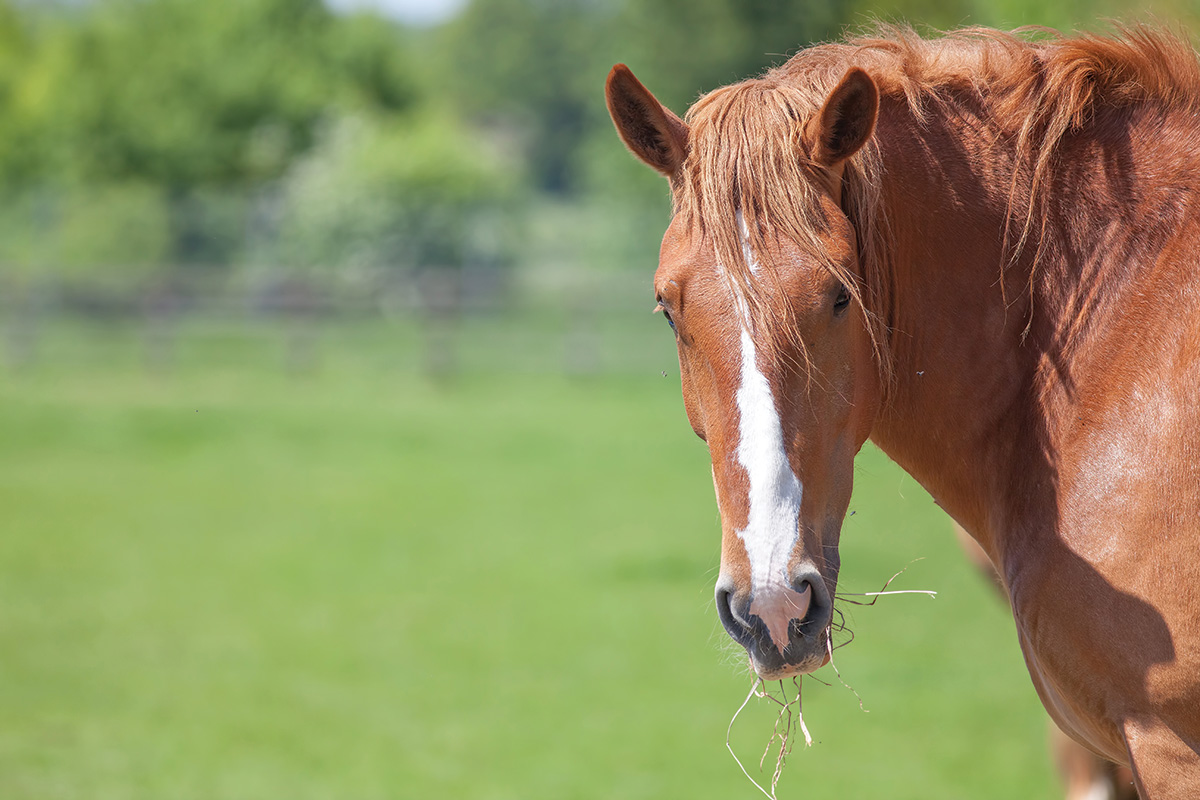
A chestnut gelding in a field.
Most draft horses are easy keepers with good-quality forage, but look into a fat supplement instead of grain if extra calories are needed. Photo by Ian Dyball/Adobe Stock

If your draft horse requires a high-calorie concentrate in addition to good quality forage, work with your veterinarian or an equine nutritionist to ensure he is getting a balanced diet appropriate for his metabolic needs, age, and workload.

Possible PSSM

One serious nutrition issue common in draft horses is a metabolic disorder called equine polysaccharide storage myopathy (PSSM or EPSM). Horses with PSSM are unable to properly metabolize and store carbohydrates, which becomes an issue when a horse is fed a high-carbohydrate diet (such as grain) and then exercised.

Mild signs of PSSM include muscle weakness, twitches, and gait abnormalities, but severity of the condition varies, and can escalate to colic-like signs, refusal to move, severe muscle cramping, and kidney issues due to muscle cell death.

PSSM is diagnosed via bloodwork, muscle biopsy, and, more recently, genetic testing. While there is no cure, PSSM can be managed successfully by switching to a diet high in fat instead of carbohydrates and a consistent exercise regimen. Careful management should be overseen by a veterinarian.

Neurologic Conditions

Draft horses are also more prone to some neuromuscular disorders than can look like PSSM.

Shivers and stringhalt are two neurologic conditions that typically result in an abnormal gait, most notably in the hind legs. These conditions aren’t lethal, but they can make a horse reluctant to lift his feet for a farrier.

Some horses with shivers or stringhalt can still be ridden or driven. Severity and management of these conditions varies by horse.

Eye Health

Some breeds of drafts with wide white markings on their faces, such as Belgians, Clydesdales and Haflingers, are predisposed to a locally invasive type of cancer in the eye called squamous cell carcinoma (SCC).

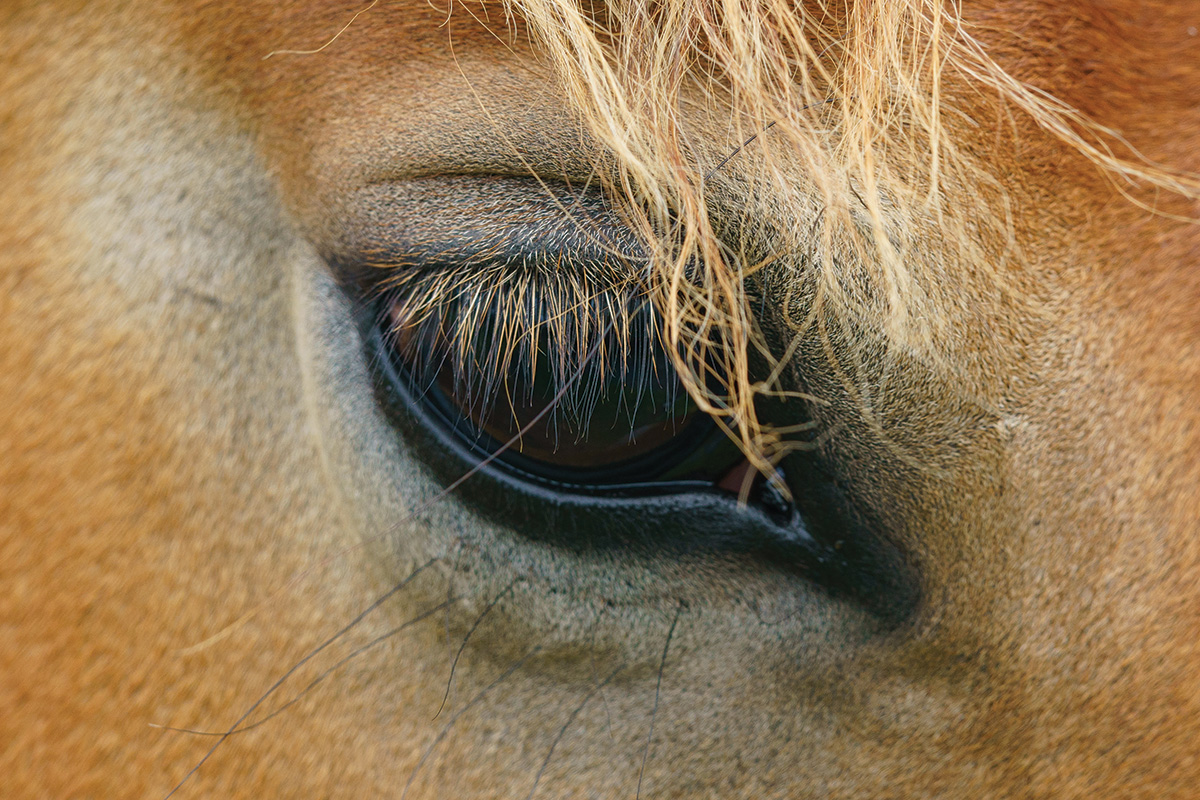
An equine eye.
Belgians and other breeds with large white facial markings can be more prone to squamous cell carcinoma of the eye. Photo by Yury and Tanya/Adobe Stock

SCC can range in severity. A small lesion on the third eyelid can be relatively straightforward to remove. But in extreme cases, removal of the eye may be necessary, or possibly euthanasia if the underlying bone is involved.

Owners of Belgians and any breed with excessive white on the face should regularly monitor their horse’s eyes for any unusual coloration, irregularity, or signs of irritation. If something is abnormal, have your veterinarian conduct a closer examination. The earlier SCC is diagnosed, the better the prognosis.

Heat & Humidity

Due to their larger frames and associated musculature, draft horses can struggle to dissipate heat, which can lead to heat stress. When you add to this the challenges of keeping heavily feathered legs dry in humidity, it can be difficult to keep a draft breed comfortable in the summer.

For this reason, if you live in the southeastern United States, Hajek cautions against getting a draft. At the very least, she advises, avoid getting a draft horse from a northern climate and transporting him south, where he isn’t acclimated to the heat and humidity.

Key Takeaway

At the end of the day, a draft horse is still a horse, with the same training needs, personality quirks, and general care requirements.

“They train the same way [as a lighter breed],” says Hajek. “People tend to treat them like they’re different. The worst stereotype of drafts is that they’re dull and slow. That’s not the case at all.”

With proper care and consistent training, just like their smaller counterparts, draft horses make excellent mounts and companions. There’s just a bit more of them to love.

This article about draft horse health and care appeared in the November/December 2024 issue of Horse Illustrated magazine. Click here to subscribe!
Vogg Is Victorious at 2025 Maryland 5 Star at Fair Hill 

0

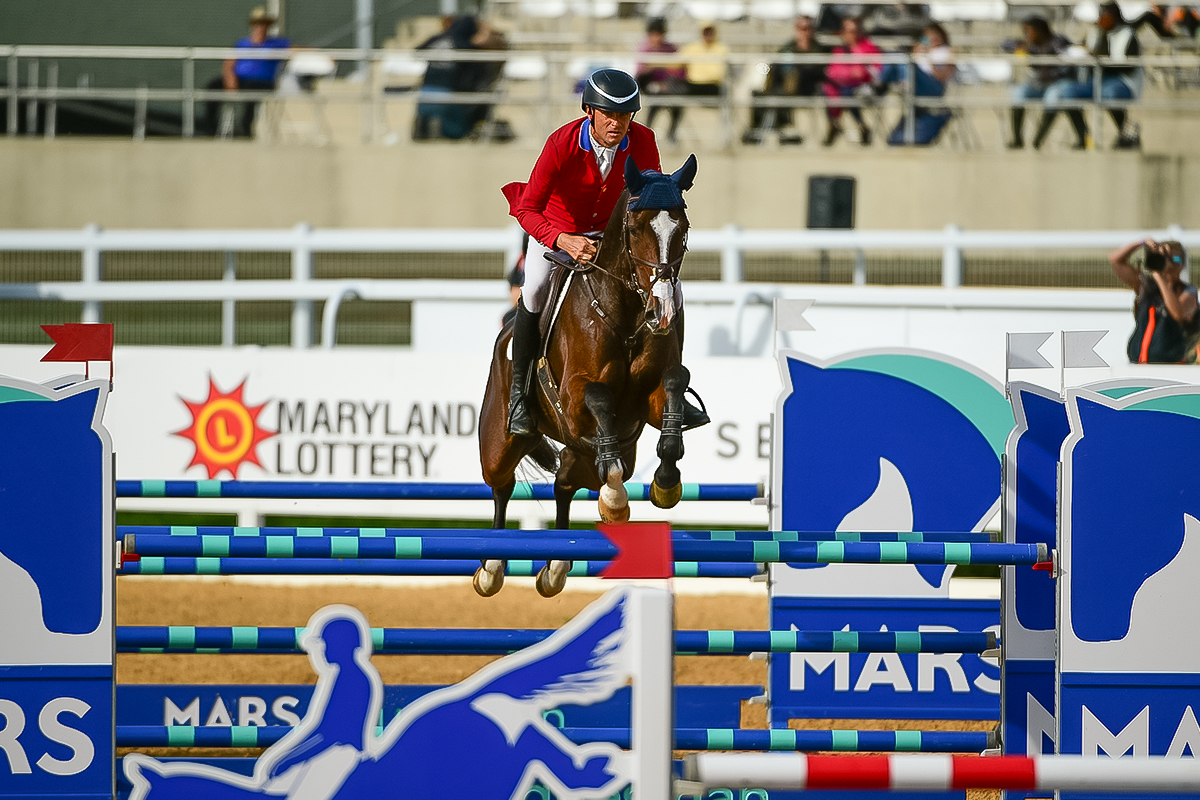
Little did Swiss rider Felix Vogg know when he spent a year in the USA living and training at Boyd and Silva Martin’s Windurra Farm in Cochranville, Pa., that he would return to the area someday to stand atop the winner’s podium at the 2025 Mars Maryland 5 Star at Fair Hill. He captured the win in the fifth renewal of the world’s newest 5* aboard the 14-year-old Holsteiner mare Cartania (Cartani 4 – Clinton) he owns with Phoenix Eventing over 21 other starters.  

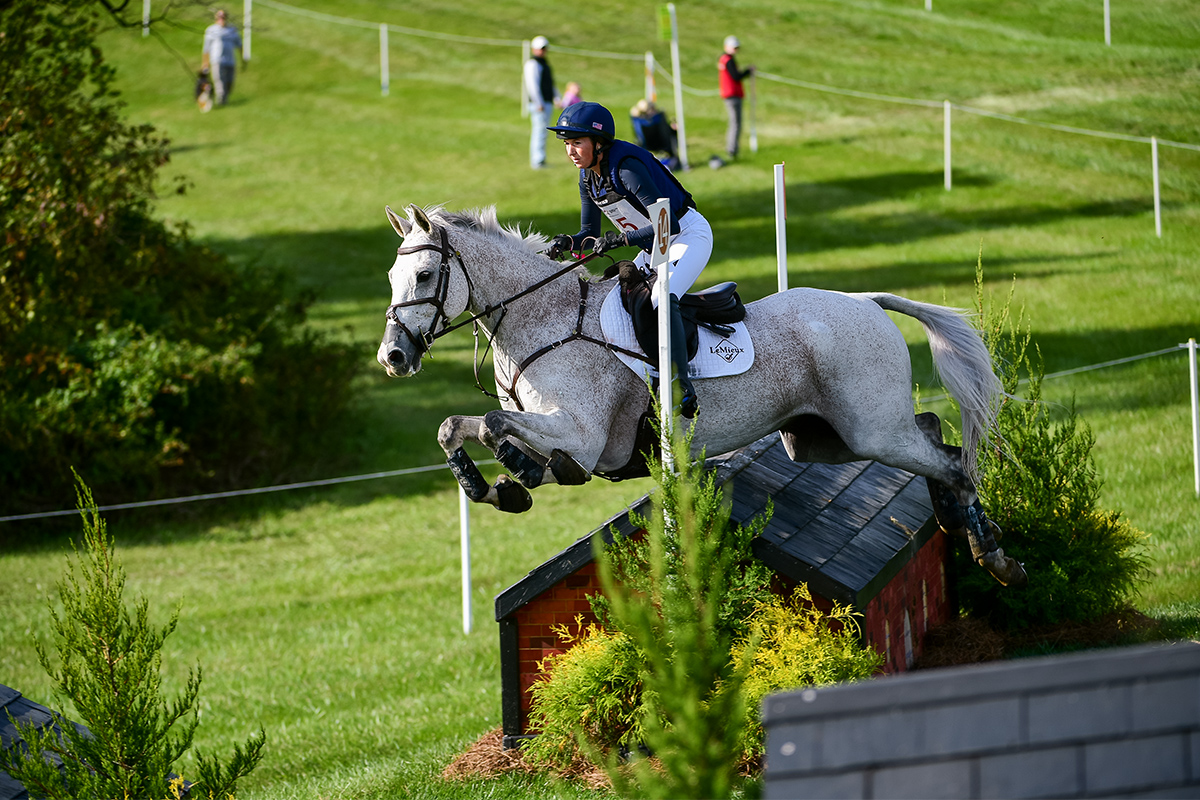
Felix Vogg (SUI) and Cartania, winners of 2025 Maryland 5 Star at Fair Hill CCI5*-L division.
Felix Vogg (SUI) and Cartania, winners of 2025 Maryland 5 Star at Fair Hill CCI5*-L division. Photo by Allen MacMillan

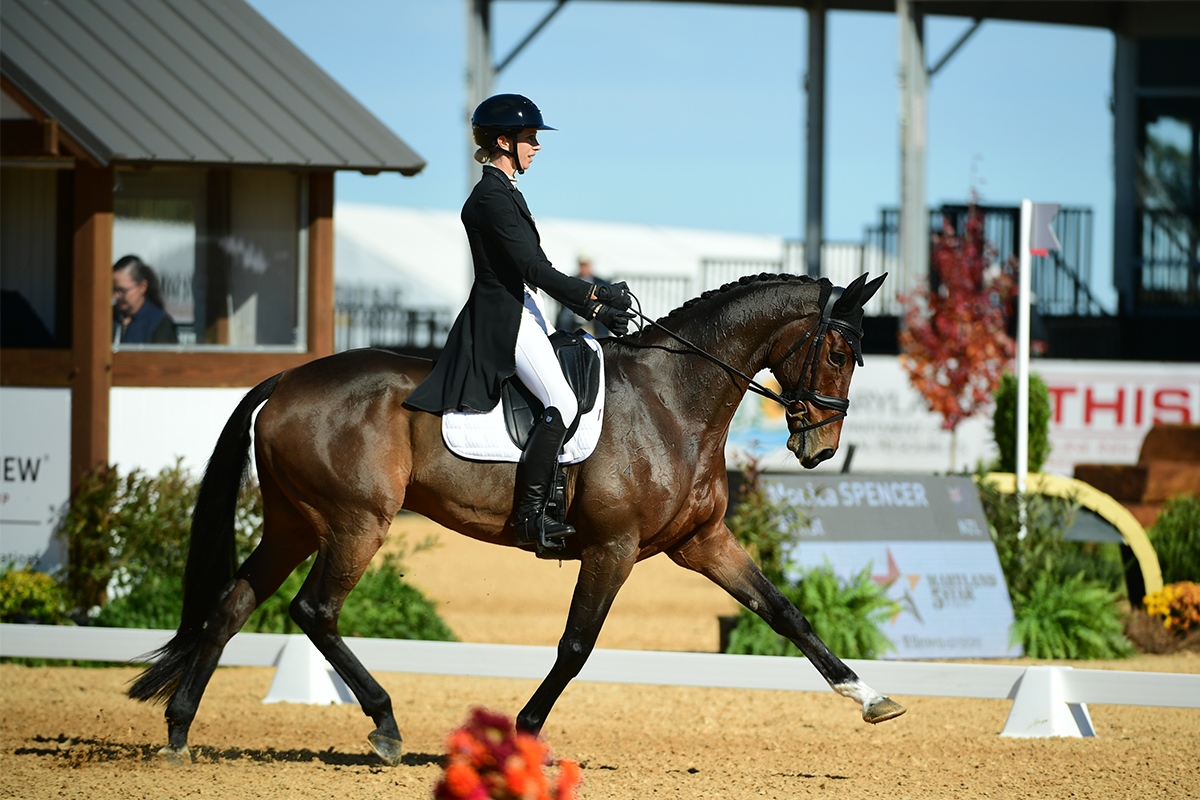
Monica Spencer (NZL), riding her own 14-year-old Thoroughbred Artist (Guillotine – Volksraad), was second and the USA’s Boyd Martin and Yankee Creek Ranch’s 12-year-old Holsteiner gelding Commando 3 (Connor 48 – Amigo xx) took third. Caroline Pamukcu riding HSH Blake and Jennie Brannigan on FE Lifestyle, both from the USA, were fourth and fifth, respectively. For a complete set of the results from the 2025 Mars Maryland 5 Star at Fair Hill, visit here.

Monica Spencer (NZL) and Artist, second place in the 2025 Maryland 5 Star at Fair Hill CCI5*-L division.
Monica Spencer (NZL) and Artist, second place in the 2025 Maryland 5 Star at Fair Hill CCI5*-L division. Photo by Allen MacMillan

It was Vogg’s first time competing at the Maryland 5 Star and his second 5* win (he also won in Luhmühlen in 2022 aboard Colero). He is the first Swiss event rider to win twice at the level, the first Swiss competitor to win the Maryland 5 Star, and is only the second Swiss rider ever to win a 5* (Hans Schwarzenbach won Badminton in 1951 which was the top FEI level, but at the time was called a 4*). He joins these past Maryland 5 Star winners on the prestigious list: Boyd Martin (USA) with On Cue, 2021; Tim Price (NZL) and Coup de Coeur Dudevin, 2022; Austin O’Conner (IRE) on Colorado Blue, 2023, and Oliver Townend (GBR) aboard Ballaghmor Class, 2024.  

Vogg and Cartania were in the hunt to win the CCI5*-L division from their first pass down center line in the dressage arena on Friday. They laid down a beautiful test, scoring 28.3 which put them in third after dressage behind Spencer and Artist (23.7) and Pamukcu on HSH Blake (28.2).  

Then, on Saturday, Vogg and Cartania were one of only four pairs to complete new designer Pierre Le Goupil’s (FRA) cross-country course, jumping both clear and within the time. The other three horses achieving a double-clear run were Thoroughbreds (Spencer’s Artist who ranked first after cross-country, Mia Farley’s (USA) Phelps who sat in third at the end of the day, and Sophia Hill’s (AUS) Humble Glory who finished the cross-country in seventh position). Of the 22 starters from six countries (Australia, Canada, Great Britain, New Zealand, Switzerland, USA), 13 completed cross-country for a finish rate of 59.09% over Le Goupil’s course.

After all 13 of the 5* horses presented passed the final horse inspection Sunday morning, it was on to the show jumping phase. The competitors returned mostly in reverse order of finish from cross-country, with Pamucku jumping her horses out of order since she had two competing (HSH Tolan King in addition to Blake). Entering the arena next to last, Vogg and Cartania did what they had to do, jump clear with only 0.4 time penalties over Michel Vaillancourt’s stadium course.

When overnight leaders Spencer and Artist dropped two rails, the victory was Vogg’s. Martin and Commando 3 also left the rails up and confidently sailed around the course for double-clear to move up from fifth after cross-country to take third. Pamukcu and Blake did the same, advancing from sixth to fourth.

Vogg was able to make the trip to the Maryland 5 Star with support from a Maryland 5 Star International Riders Travel Grant. The Grant program assists elite riders from around the globe to travel to Maryland to compete.

“Many people invite me [to the U.S.] but costs are quite high. To be honest, without that grant, I wouldn’t be sitting here,” Vogg said. “I am very thankful that people donated so that we can all come over.” 

Quietly smiling after the win, he admitted that he had a bet with his groom that involved her cutting his hair if he won and him cutting her hair if he didn’t. He was understandably elated on the victory, “It is unbelievable; the horse was unbelievable. Of course, I wanted to win all week, many people wanted that. She was all week mentally so strong.”   

One Degree of Separation from Boyd Martin

Sitting in the final 5* press conference, Martin shared that he, Vogg and Spencer had a connection to the area around Fair Hill. Martin’s farm is only half an hour from the showgrounds.  

“Felix was sort of living with us in America for about a year. He’s a top fella,” said Martin. “Me and Monica are a great mates; she’s my next-door neighbor. So, I love to win, but it’s not so bad being third to these two champion riders, who are both fantastic people. I feel honored to be here with them. They’re well deserved to come first and second. My horse Commando, he’s just a champion.” 

Boyd Martin (USA) and Commando 3, third place in the 2025 Maryland 5 Star at Fair Hill CCI5*-L division.
Boyd Martin (USA) and Commando 3, third place in the 2025 Maryland 5 Star at Fair Hill CCI5*-L division. Photo by Allen MacMillan

Immediately after the press conference, Vogg hopped on a plane to travel to Pratoni, Italy, (the site of the 2022 FEI World Championships) to compete five horses in a horse trials there. And, Cartania was headed home for some well-deserved rest.  

Spencer has been based in the USA for a little less than two years. All week she had shown emotion about the connection with her long-time equine partner Artist, a.k.a. “Max,” “I’ve had him since he was four and he’s just been a great horse for me. He has taken me all over the world. We come to these big events and I’m just thankful to be here. He just tries so hard.” 

Her plans for after the Maryland 5 Star included a much-deserved vacation for Max and a trip for her and her husband Andrew and son Gus to go on a vacation back to New Zealand for three weeks to visit family and friends. She hasn’t been home since moving to the USA in February 2024.  

Martin jumped on a jet right after the Maryland 5 Star as well, flying to France to compete in the Pau 5* where he will compete Cooley Nutcracker, one of fellow eventer Liz Halliday’s mounts that Martin took on during her rehabilitation from a traumatic brain injury.  

Elsewhere at the Maryland 5 Star

Maryland native Isabelle Bosley, riding Karen Martin’s 8-year-old gelding Oldenburg gelding Conner (Consiro 3 – Concetto), led the CCI3* division from start to finish, winning on a score of 24.8. From Monkton, Md., Bosley comes from an equestrian family with her parents training racehorses. She has also competed in timber racing.

Isabelle Bosley (USA) and Conner, winners of the 3*.
Isabelle Bosley (USA) and Conner, winners of the 2025 Maryland 5 Star at Fair Hill CCI3* division. Photo by Kim MacMillan

“I couldn’t be happier,” she said, “It means so much to have my family and friends here supporting me this weekend. Conner was incredible; he’s such a good boy. He’s definitely not for sale.”  

Second in the 3* was Alyssa Phillips, who also maintained that spot throughout the weekend, on her 10-year-old Holsteiner gelding Rockett 19. And, third from wire to wire was Olivia Dutton riding Jewelent, a 13-year-old Irish Sport Horse her father competed before her.  

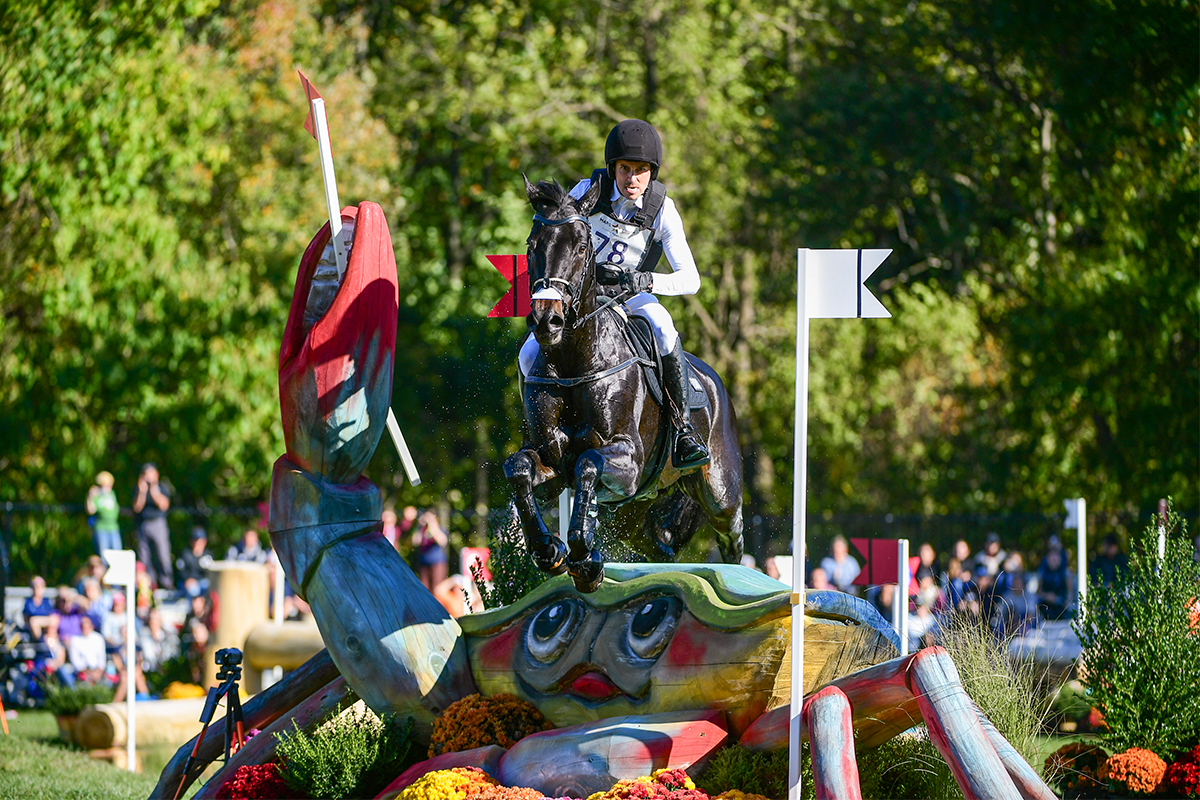
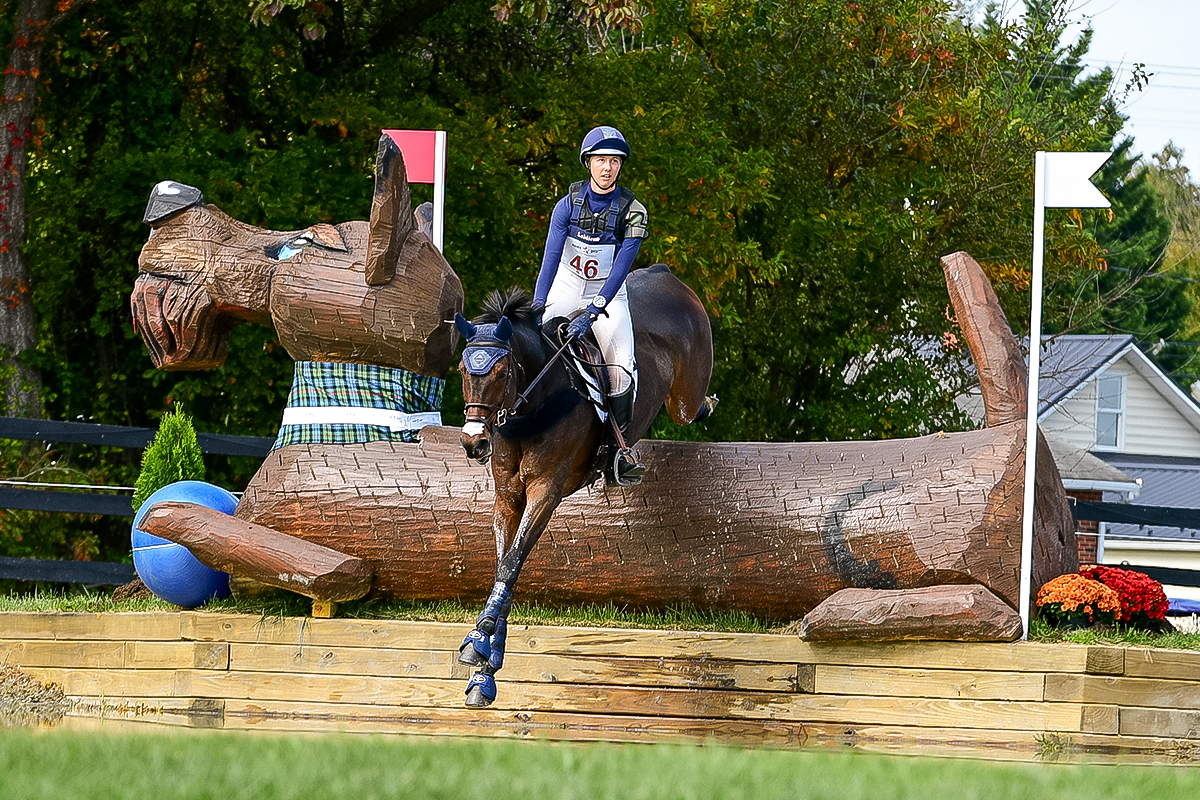
Alyssa Phillips (USA) and Rockett 19 on the cross-country course.
Alyssa Phillips (USA) and Rockett 19, second in the 2025 Maryland 5 Star at Fair Hill CCI3* division. Photo by Kim MacMillan
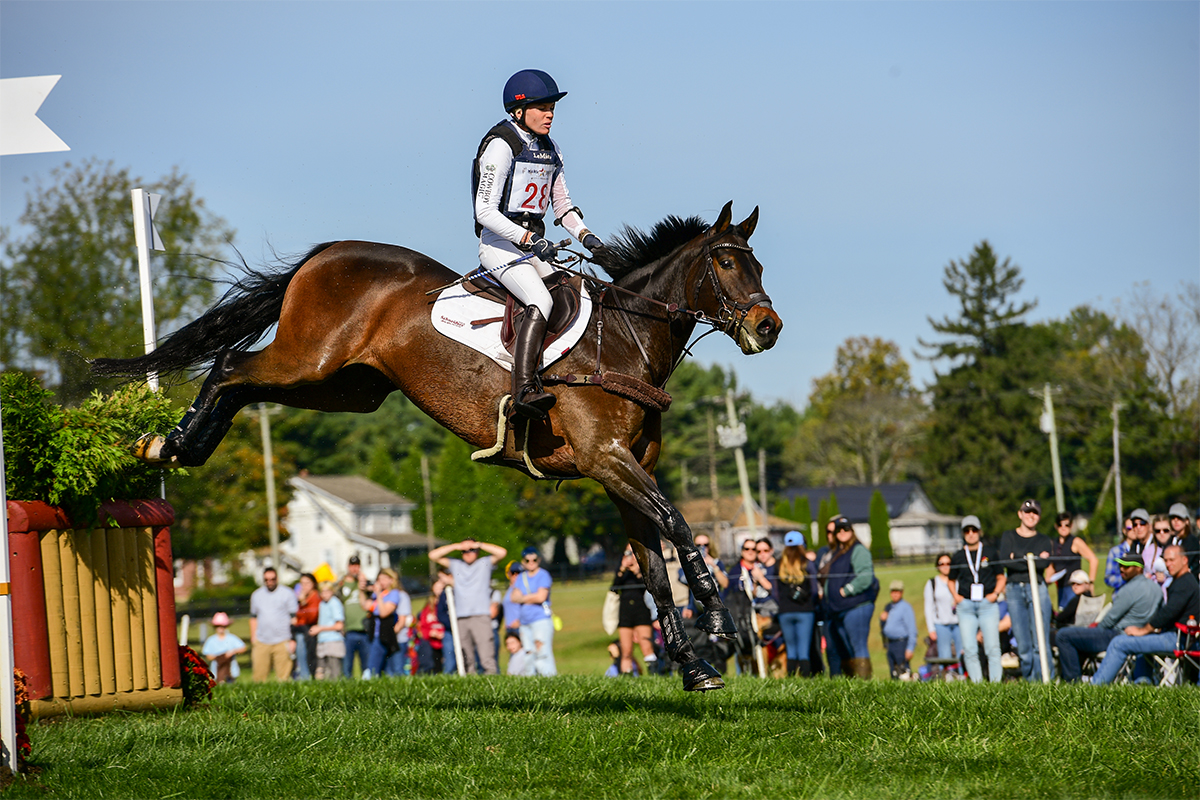
Olivia Dutton (USA) and Jewelent on cross-country.
Olivia Dutton (USA) and Jewelent, third place in the 2025 Maryland 5 Star at Fair Hill CCI3* division. Photo by Allen MacMillan

In the USEA Young Event Horse Championships, presented by Dubarry, the winner of the 5-Year-Old Class was Pine Top Penny Belline ridden by Kylie Cahoon. MBF Mirror Image ridden by Arielle Aharoni won the 4-Year-Old Young Event Horse Division.  

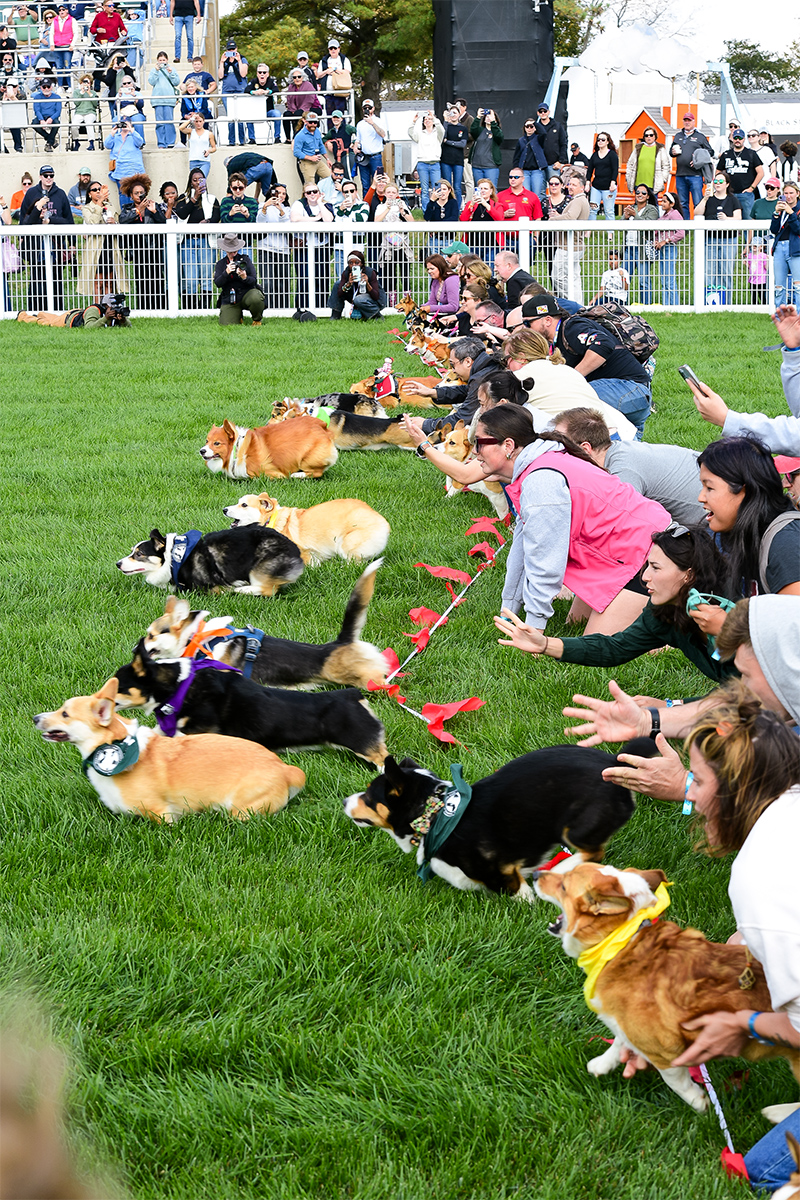
In the Maryland Corgi Cup, around 125 enthusiastic, short-legged dogs made a mad dash over several heats in the morning, then a whittled field raced a final time in the afternoon to determine the victor. First-time winner Cheese took home a trophy and gift basket from Corgi Cup producers Major League Eventing. 

Corgis race off the line during the finals of the 2025 Corgi Cup.
Corgis race off the line during the finals of the 2025 Maryland Corgi Cup where “Cheese” was the victor. Photo by Allen MacMillan

The long weekend was full of other family fun, including a Kid’s Corner area with games, crafts, a petting zoo, and a Hall of Champions tent which housed successful event horses such as Jennie Brannigan’s Cambalda, two of Boyd Martin’s Olympic horses Otis Barbotiere and Black Foot Mystery, and Erin Sylvester’s Paddy the Caddy. During the lunch break on Saturday, Shetland Pony races delighted spectators too. Also on Saturday the Maryland 5 Star hosted a beer, wine and spirits festival, and on Sunday a local food vendors showcase. Throughout, there was a nice variety of shopping and dining choices, as well as live music performances. The Real Rider Cup, a Thoroughbred retraining fundraiser, a dog adoption event, and the Mars Pet Experience chalet were also part of the fun.  

For more news and the dates of the 2026 Maryland 5 Star at Fair Hill event, visit the Maryland 5 Star website. 

To watch replays of the action at the 2025 Maryland 5 Star at Fair Hill, go to FEI TV via ClipMyHorse (subscription required). 

This article about the 2025 Maryland 5 Star is a web exclusive for Horse Illustrated magazine. Click here to subscribe!

All About Bits

0

More times than not, riders will try numerous bits in different styles, thicknesses and sizes before finding the best fit for their horse. Here, we talked to five trainers to glean their top “bits” of wisdom, with both western and English disciplines in mind.

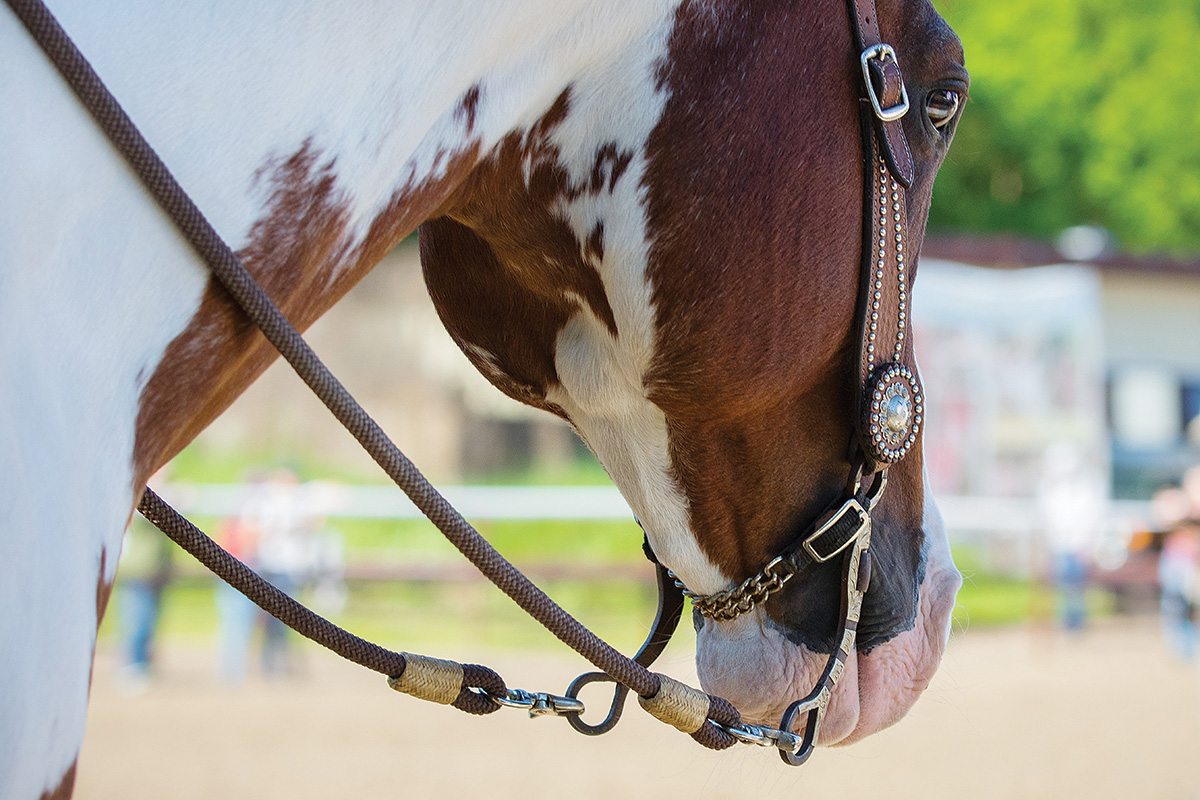
A Western bit in a Paint Horse's mouth.
Photo by Svetlana/Adobe Stock

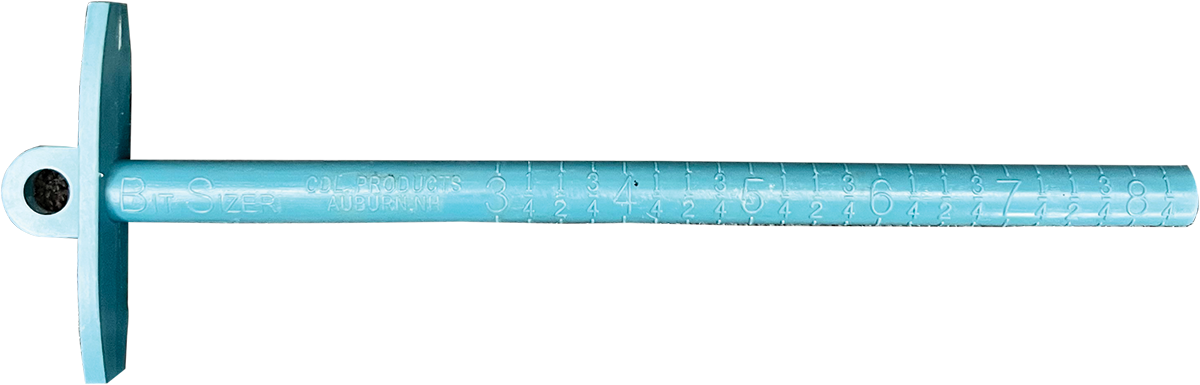
“Knowing how bits should sit and fit in a horse’s mouth could help avoid serious problems and setbacks—I suggest using a bit-sizer to start,” says Alan Fisher, a champion trainer with over 20 years’ experience based in Eastover, N.C., who specializes in western pleasure prospects.

He says that riders need to learn the control points of different bits, the mechanics behind mouthpieces, and what exactly should be achieved with each type of bit.

A sizer.
A bit sizer is great to have as the first step in finding the right bit for your horse. Photo by Laura Boynton Jobson

Snaffles vs. Ported

There are two important categories of bits: ported (leverage) and snaffle (direct action).

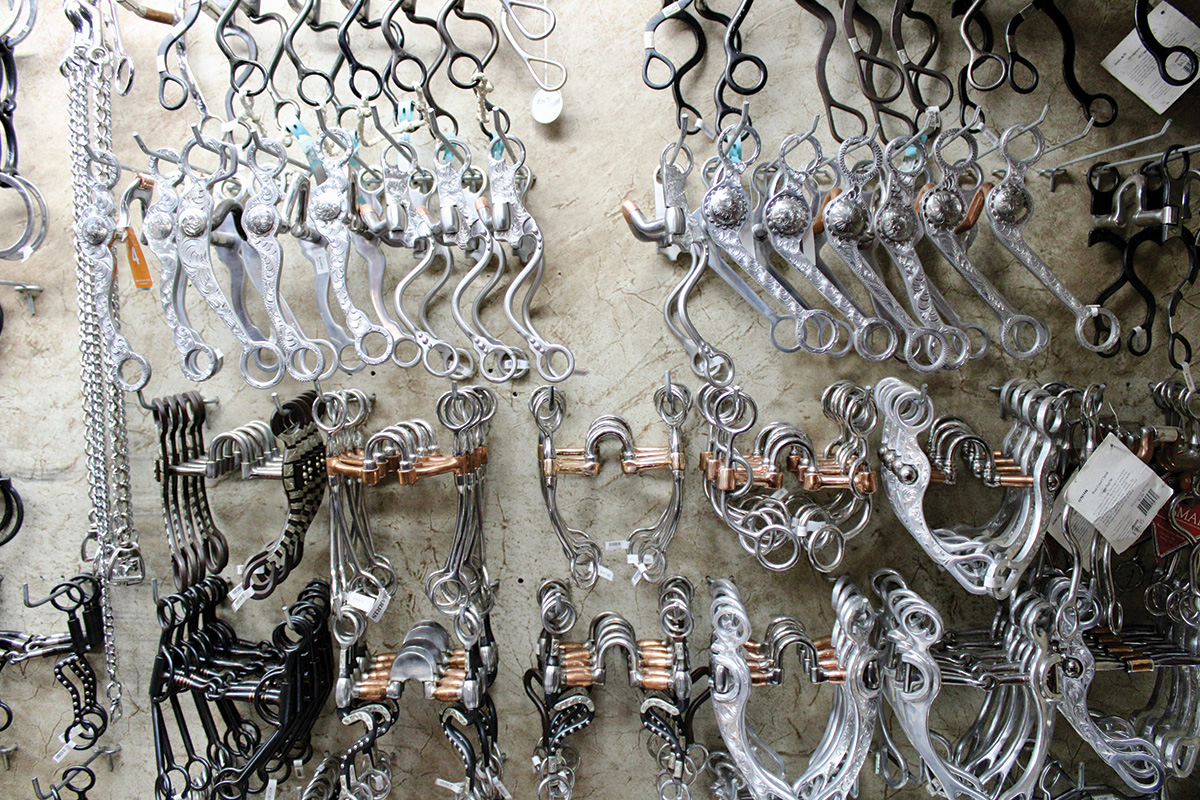
Ported or “correction” bits come in low, medium, and high leverage levels, and feature an inverted curve, U-shape, spoon-shape, square-hinge or spade-shape at the center of the mouthpiece. These shapes provide tongue pressure relief. Western bits have shanks that connect the reins to the bit, which vary from 4 to 8 inches long.

A wall of Western curb bits.
Western curb bits have many styles of shanks, metals, and mouthpieces to choose from.

Both English and western ported bits come with a chain or curb strap to stop the bit from harming a horse’s mouth.

Snaffle bits work by direct pressure from the ring to the rider’s hand through the rein, and either type of bit can be made from stainless steel, copper, titanium, sweet iron or aluminum. Some mild snaffles are made of plastic, rubber, leather or fabric material.

A horse in a full-cheek snaffle bit.
Snaffle bits use direct action from the rein. Full-cheek rings help guide and turn the horse. Photo by Nigel Baker/Adobe Stock

Snaffle Cheek Pieces

While ported bits always have a shank cheek, there are several common styles of cheek rings in snaffles, each with a different effect.

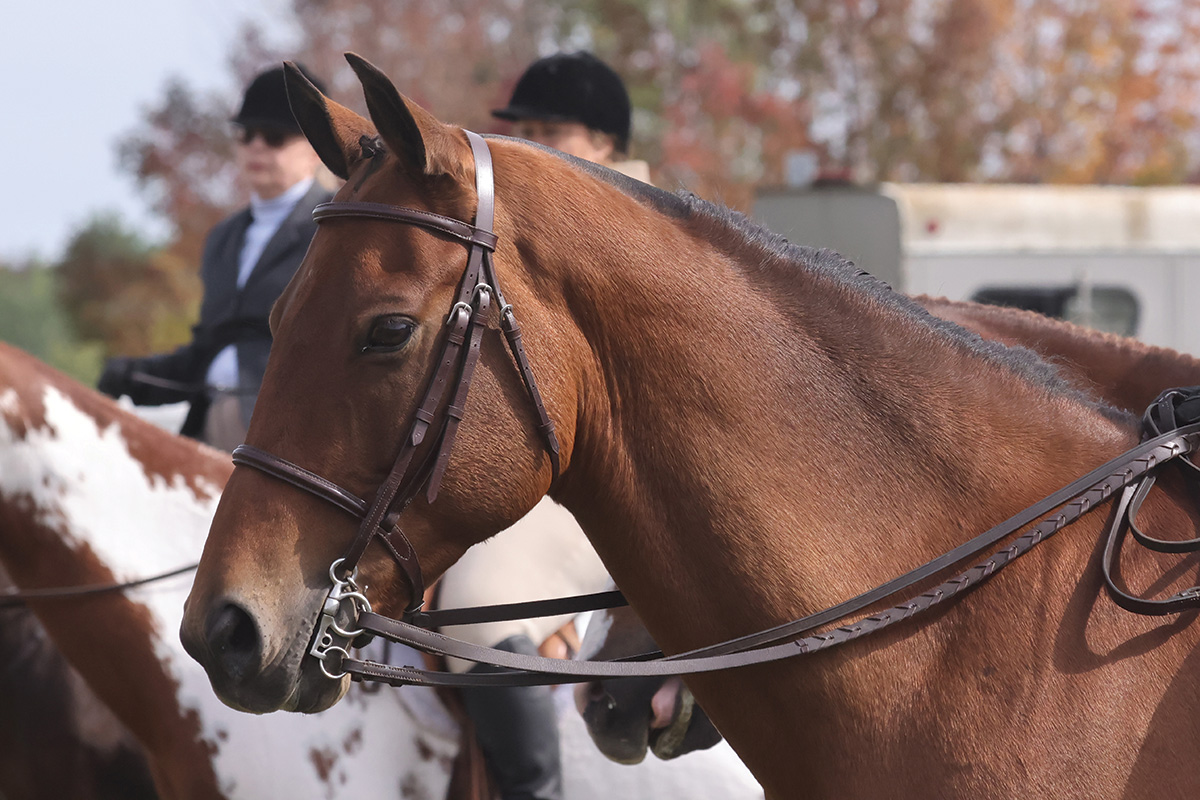
Loose rings move with the horse’s lips, tongue and jaw by gliding through the attached mouthpiece.

Full cheeks have two short bars coming off the sides, one on top and one on the bottom of the fixed mouthpiece. This bit is useful for young or inexperienced horses who need help with steering or to learn how to carry their head without tilting.

D-ring and eggbutt snaffles are both fixed options that resemble the letter D or an oval-egg shape. These are less likely to move side to side in the mouth.

Snaffle Mouthpieces

As opposed to the mouthpieces described above for ported bits, snaffles have straight mouthpieces with various shapes and joints.

Non-jointed snaffles have a mouthpiece that’s straight across with no breaks in the metal, rubber or plastic.

Single-jointed snaffles are considered a basic, and feature a break in the bit with a joint in the middle that creates a V-shape in a horse’s mouth that puts rein pressure on the bars of the jaw and edges of the tongue.

Double-jointed snaffles follow the shape of the tongue better than a single-jointed bit. They have two joints that connect the sides of the bit with a central link.

Smooth snaffles are on the milder side and work well with sensitive mouths and for beginners who aren’t as gentle on a horse’s mouth.

Twisted-wire snaffles are considered more severe and are commonly used for horses that tend to hang or pull on the rider’s hands, or when more control is needed, such as galloping cross-country.

Roller bits have movable pieces that rotate and help a horse to relax his mouth and jaw.

Combo Action

English riders sometimes use leverage bits combined with snaffle action.

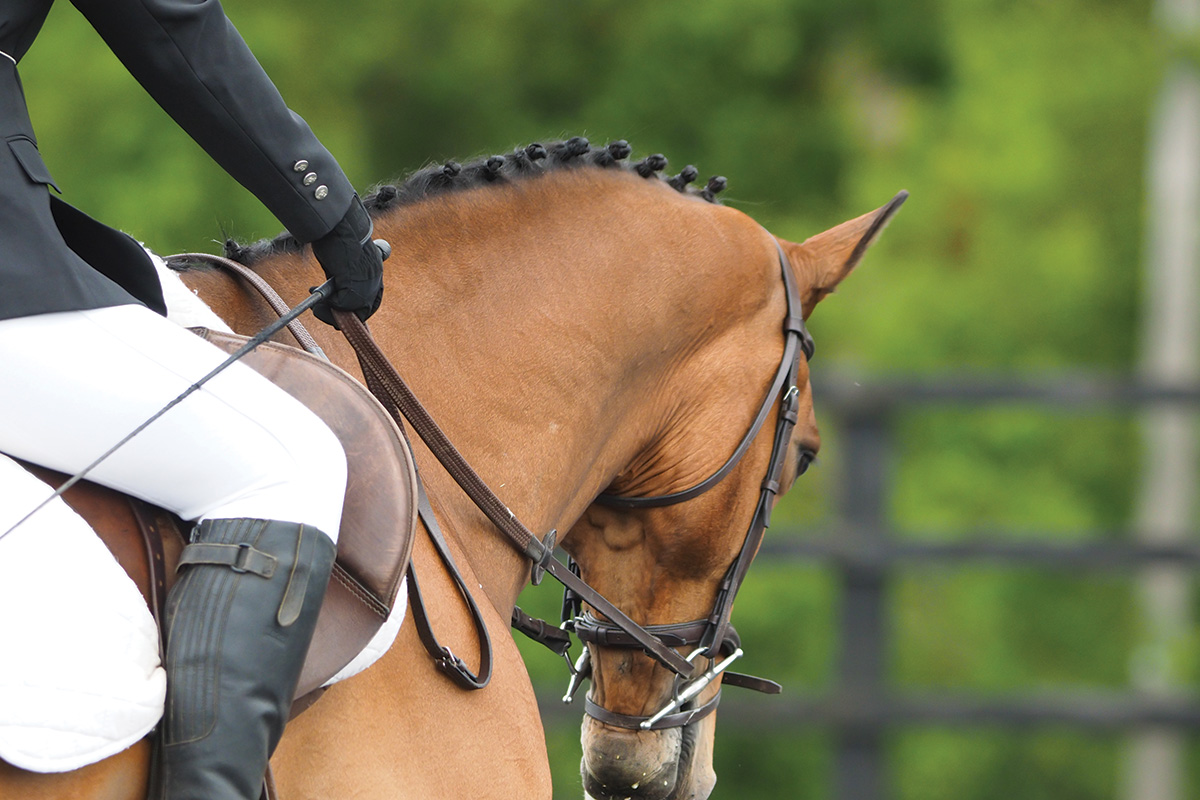
Double bridles have a curb bit and chain, a snaffle bit with small loose rings called a bradoon, and two sets of reins. They are used in upper-level dressage and show jumping, as well as saddle seat riding.

Pelham bits are most often found in hunter rings, on foxhunters, and on the polo field, and are designed to combine the action of a curb bit with a snaffle, like a double bridle.

This bit provides leverage on the jaw with its lower shanks and curb chain to encourage flexion at the poll and stronger brakes, while the snaffle mouthpiece gives turning control.

Pelhams are usually used with two sets of reins, although “converters” are available for beginners that switch the bit to one set of reins—but these negate much of the bit’s action.

A bay in a pelham.
Pelhams combine leverage and snaffle action using two sets of reins. Photo by Janet/Adobe Stock

Soft Feel

Western trainer Shawn Alter shares that nerves and being scared is why most riders have heavy hands and tend to use the bit too aggressively.

“You must take the time to practice and gain the muscle memory of going to the horse’s mouth softly, asking first, and giving him a chance to respond while softening with your fingers to create a nice flow without any yanking,” says Alter, who owns Shawn Alter Quarter Horses in New Alexander, Pa., and specializes in showing, training, selling and judging horses for local and open shows.

“To be an efficient and well-rounded rider, you’ll need to learn to ride more with your seat and legs, and have less pull on the reins.”

A Bit Reactive

“Horses often learn to be angry at the bit when they feel rushed or pushed beyond their abilities,” says all-around Quarter Horse trainer Melissa Jones, who owns Jones Performance Horses along with her husband, Chris, in Reelsville, Ind. “Horses who haven’t learned to give to the bit or choose not to give tend to turn defensive and act out.”

The more you are heavy-handed or jerk on a horse’s mouth, the more the horse will want to get away from that pressure, she says.

“Not leaning on a snaffle is important because our goal is for the horse not to lean on the bit, and holding will reinforce that.”

Releasing Pressure

Trainer Alyse Roberts says that releasing bit pressure as a reward is key for teaching a horse to self-carry correctly.

“I’d rather see a rider who releases hand pressure too soon rather than too late,” says Roberts, who owns Alyse Roberts Performance Horses located in Purcell, Okla., and specializes in all breed hunter under saddle. “Hanging on the bit defeats the purpose and can upset a horse who is trying to do his job, but the rider keeps getting in the way.”

Dental Check-Up

All-around trainer and judge Jamie Dowdy says that it’s critical to rule out physical discomfort in the mouth, which gives the impression of bit trouble.

“A yearly dental exam is needed, especially in young horses, as they can be experiencing mouth and teeth soreness due to shedding baby caps and possible wolf teeth,” says Dowdy of Hartman Farms, a Quarter Horse facility in Marshfield, Mo. “Older horses need routine dentals for preventative measures to stay ahead of any developing problems.”

Just walking into a tack store and looking at the wall of bits can seem daunting. Our bit experts all mentioned that having an experienced trainer guide the transition to a new bit is a smart way to set your horse up for steering, control and—most importantly—communication success.

This article about bits appeared in the November/December 2024 issue of Horse Illustrated magazine. Click here to subscribe!
Get to Know Your Horse with These Groundwork Exercises

0

Every horse is different. Some prefer moving fast, and some favor a slow stroll. Some enjoy crunching carrots, and others delight in gobbling grain. Some love crossing creeks, while some prefer to brave bridges. It’s safe to say no two horses are alike. For this reason—and many others—equestrians can benefit from investing time in getting to know their horse, and there is no better way to do that than the right groundwork exercises.

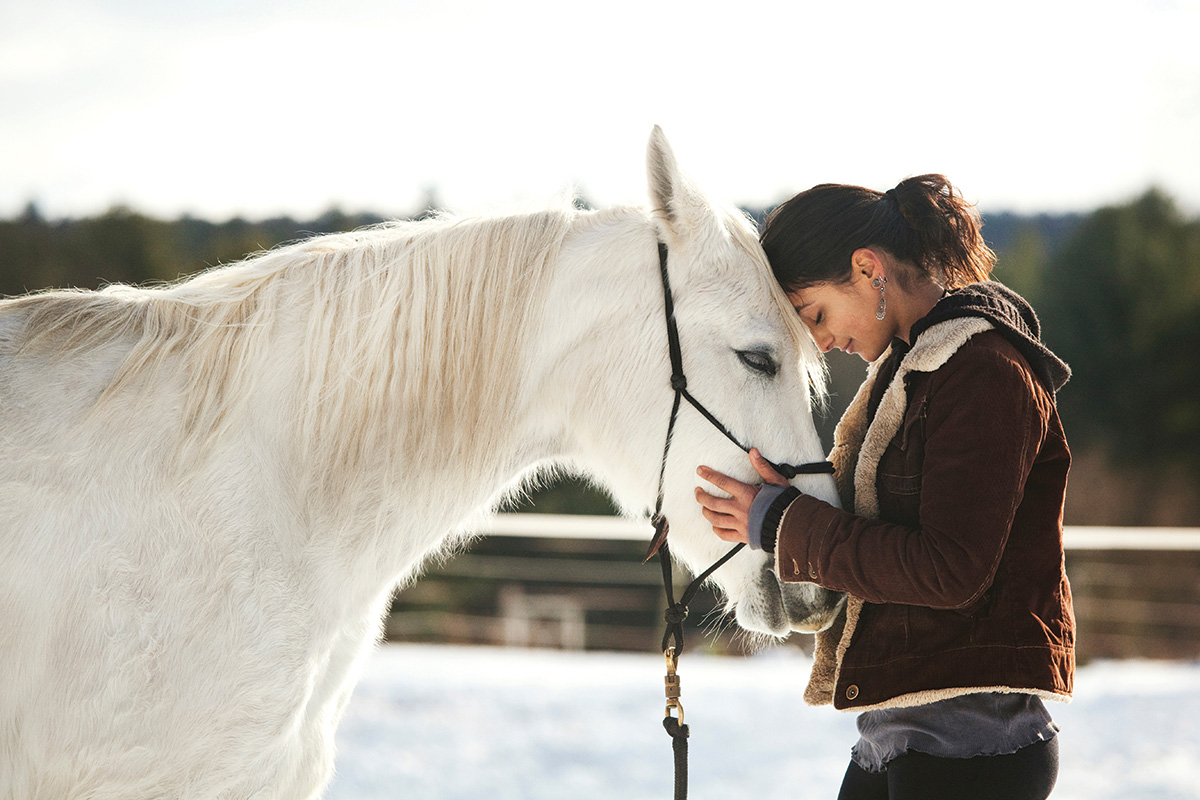
A woman hugging a gray mare in winter.
Photo by Cavan for Adobe/Adobe Stock

2022 Fort Worth Extreme Mustang Makeover Champion and horse trainer Camille White uses groundwork as a tool to help her learn more about a horse, and shares with us one of her favorite exercises.

Using Groundwork to Build Trust

In White’s experience, groundwork is an essential part of building trust with a horse. When on the ground, you have a good read of your horse’s facial expressions and can observe how he is carrying himself. She adds that it can be helpful to see a horse’s reaction to something from the ground before observing it from the saddle.

One of her favorite get-to-know-you groundwork activities is a longeing exercise that teaches the horse how to relax and involves both sensitizing and desensitizing components. White describes “sensitizing” as getting a horse sensitive to cues and teaching him how to move his body, while “desensitizing” is teaching a horse to accept new and scary things.

She explains that many of a horse’s opinions, personality, and coping mechanisms become apparent when he is moving, making this a great exercise to help you learn how your horse thinks and what things he prefers.

“It’s a lot harder for horses to hide what they’re thinking when they’re moving, as opposed to standing still,” says White.

When teaching the exercise, White says to be clear and consistent with your horse by communicating the same way every time. By doing this, he will learn what he can and can’t expect from you, and his trust in you will grow. 

The Exercise

The following steps outline a two-part longeing exercise that White uses to get to know the horses she works with. To perform this exercise, you will need a rope halter, a 12-to-16-foot lead rope, and a flag.

Photos by Shoshana Rudski

Part One: Sensitizing

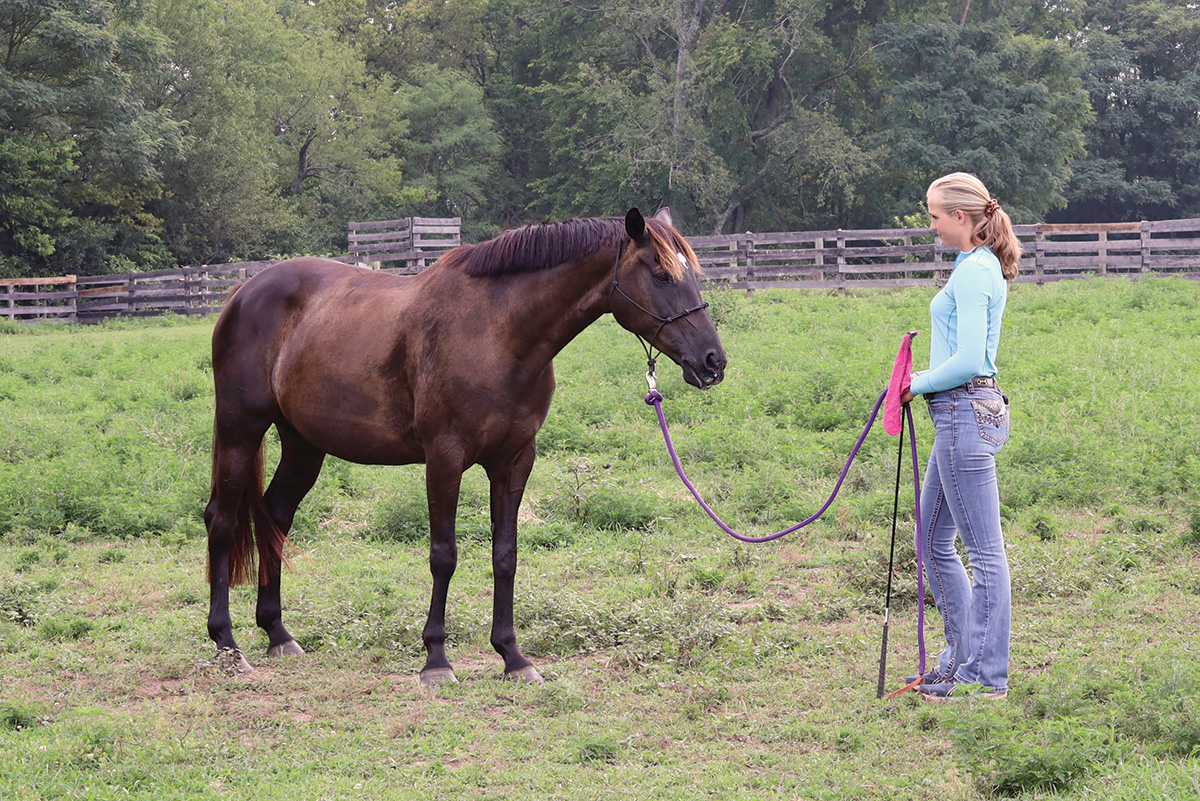
Step 1: Walk to the middle of the arena. Have your horse stand at the end of the lead rope, facing you. Hold the rope in the hand you will use to point in the direction you want him to go. Hold the flag in your other hand.

Step 1 of the groundwork exercise with the horse.
Step 1.

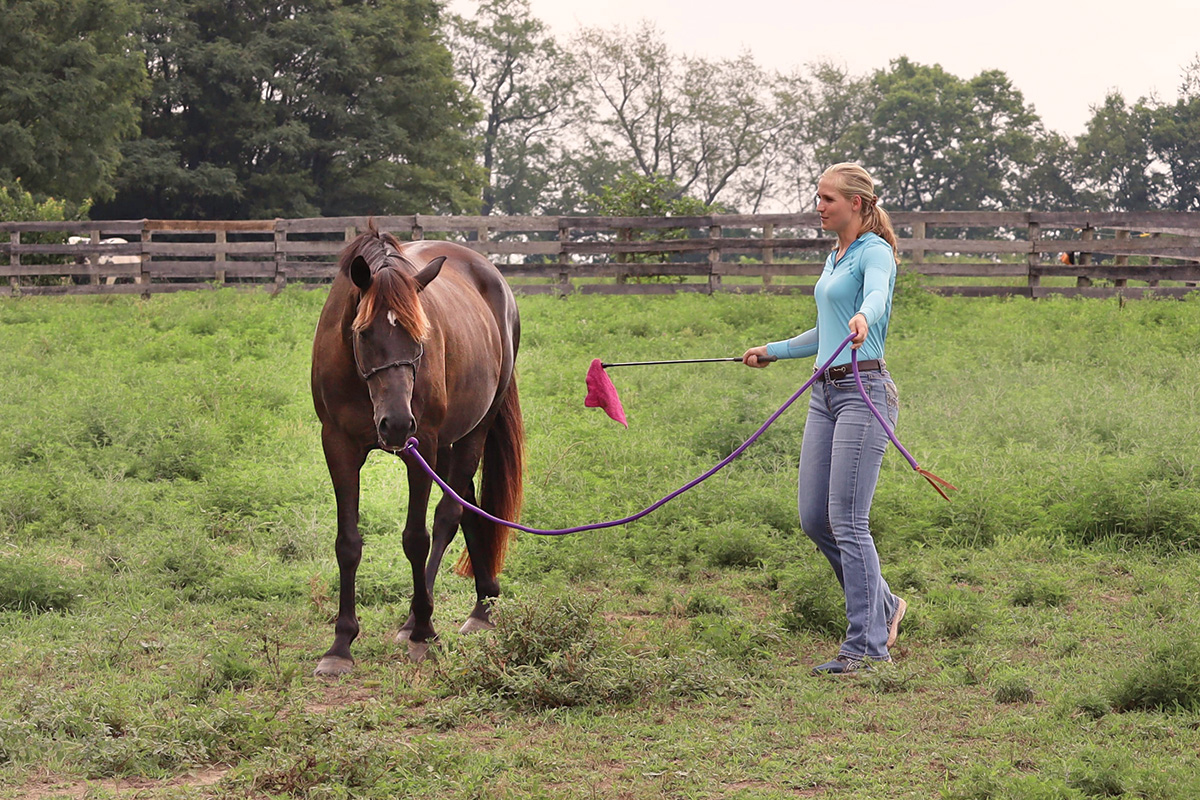
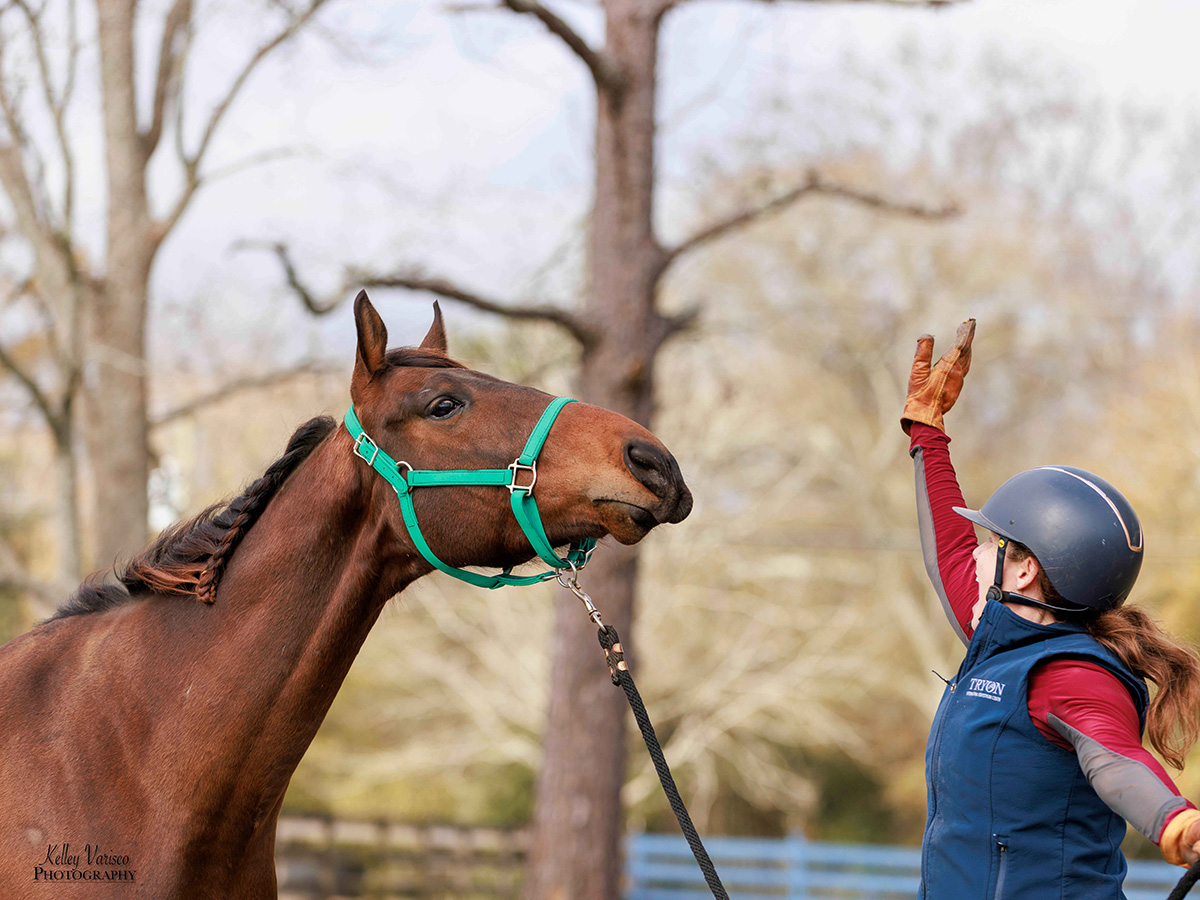
Step 2: Ask the horse to move by using your rope hand to point in the direction you want him to go. The horse should move his shoulders away from you and start to walk in a circle around you. Keep your feet planted. Once the horse moves in the direction you pointed, relax your rope hand to let him know he responded correctly.

Problem solving: If the horse doesn’t move after you point, increase the pressure of your ask by wiggling the flag toward his shoulder. If there is still no movement, tap his shoulder with increasing pressure until he moves in the direction you asked. If the horse moves in the wrong direction, keep applying steady pressure until he steps in the correct direction. Once he responds correctly, drop your flag hand and relax your rope hand.

Step 3: Allow the horse to keep moving forward. Once you ask him to walk in a circle around you, he should continue walking until asked to stop or given another command.

Problem solving: When learning the exercise, your horse may walk a few steps, then stop and face you. If this happens, repeat step 2 until he walks on the circle without stopping.

An equestrian getting to know a horse through a groundwork exercise.
Steps 2 and 3.

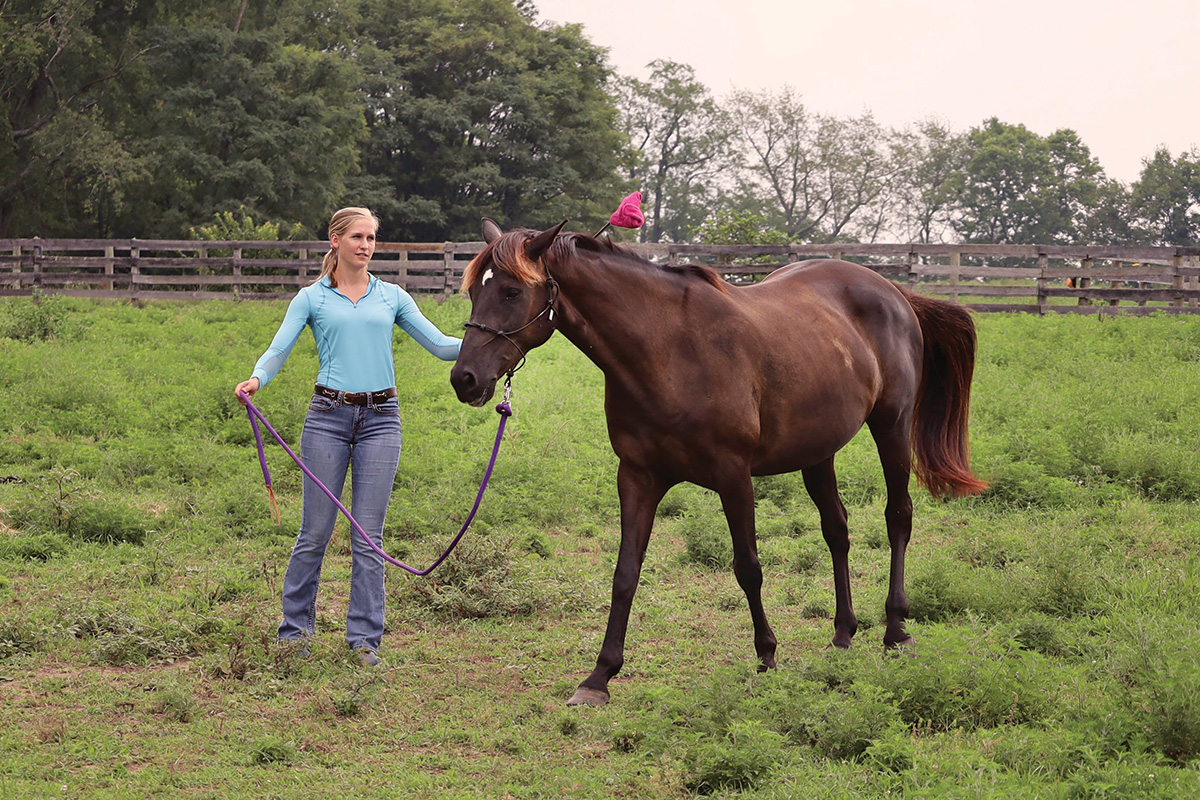
Step 4: Ask the horse to stop. Once he understands step 3, teach him to stop by sliding your rope hand up the rope and taking one step toward the horse’s hindquarters. He should move his hindquarters away and turn to face you. In response, walk to the horse and rub his face to let him know he responded correctly.

Problem solving: If the horse doesn’t move away after you take a step toward him, take another step toward the hindquarters. Keep walking toward the hindquarters until he stops and turns to face you. White notes that you may need to step toward the hindquarters and wave the flag when first teaching this step.

Step 5: Repeat steps 2-4 in opposite direction.

An equestrian getting to know a horse through a groundwork exercise.
Step 5.

Part Two: Desensitizing

Once your horse understands how to complete part one going both directions, it’s time to introduce a final step to the exercise.

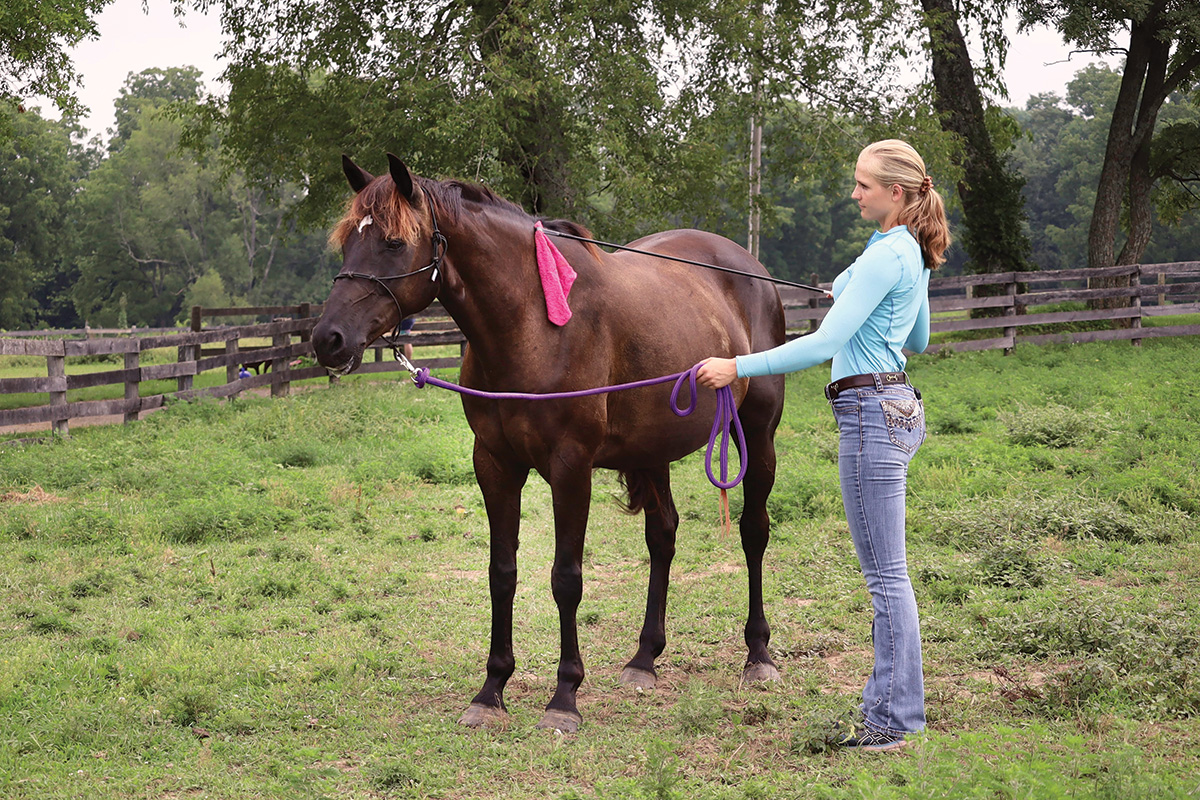
Step 6: Ask your horse to walk in a circle around you like you did for step 2. Then, reach out with the flag and gently rub his shoulder while the horse is walking. He should stay relaxed at the walk while the flag rubs his shoulder.

Problem solving: If your horse jumps or speeds up when the flag moves toward his shoulder, bring the flag back and keep it at the distance where he started to get nervous. Once he relaxes, take the flag away. Wait a bit, then re-introduce the flag and attempt to bring it closer than last time. Repeat this process and bring the flag closer each time you re-introduce it.

An equestrian working with a brown mare.
Step 6.

If your horse stops or freezes when the flag touches him, return to steps 2 and 3 before attempting to rub his shoulder with the flag again.

Getting to Know You

Humans don’t become experts on each other after one meeting, and neither do humans and horses. Getting to know a horse takes time and effort.

Whether your horse is a carrot cruncher that loves to cross creeks or a grain gobbler that prefers a slow stroll, groundwork can be a great tool to help you learn more about him.

This article about using groundwork exercises to get to know your horse appeared in the November/December 2024 issue of Horse Illustrated magazine. Click here to subscribe!
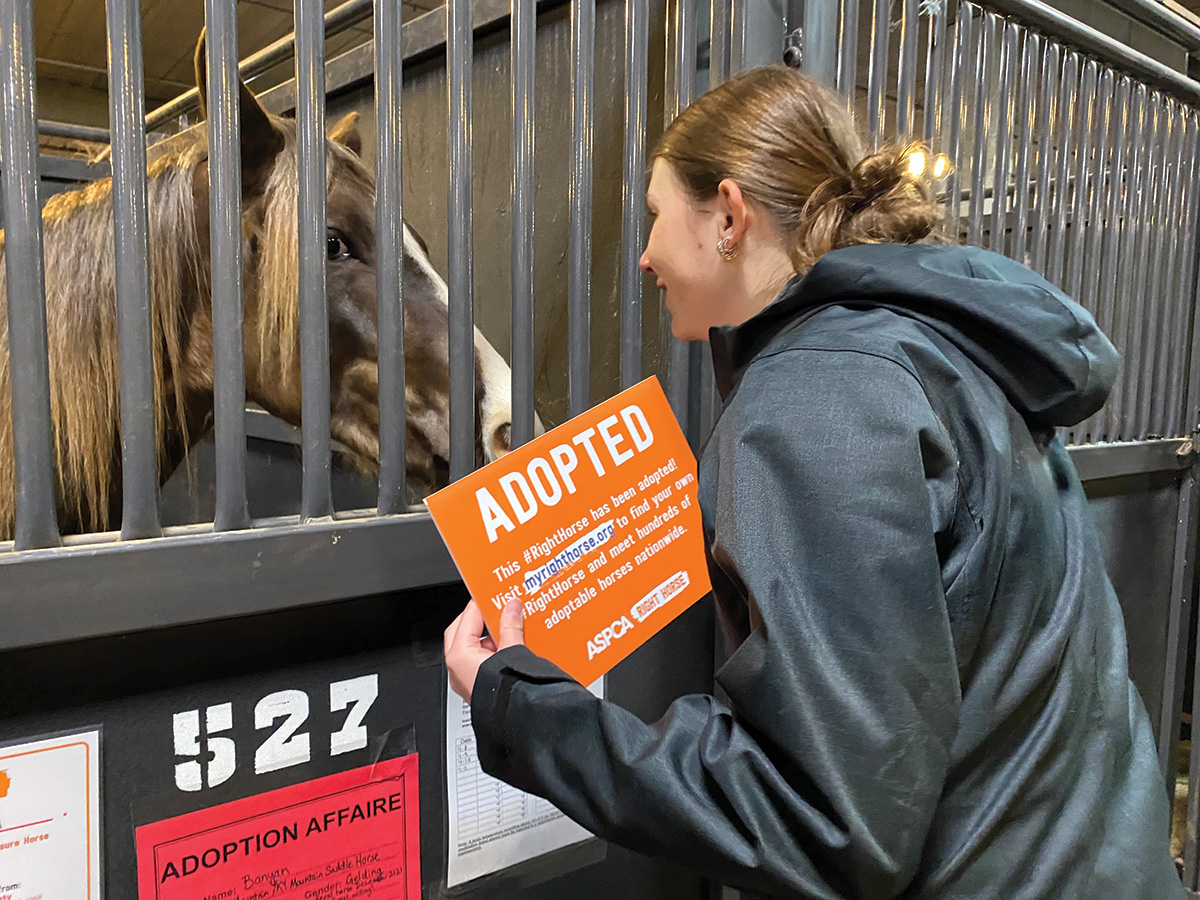
The Adoption Affaire at Equine Affaire

0

Attending Equine Affaire is a “must-do” for many equestrians. Known for its educational programming, trade show, entertainment, breed pavilion, demonstrations, and much more, it’s the place for anyone with even the slightest interest in horses. Starting in 2019 at the Columbus, Ohio, Equine Affaire, the offerings became even more exciting. Now, at both the Ohio and West Springfield, Mass., events, you can take part in the Adoption Affaire and return home with a souvenir you’ll never forget—an adopted horse of your own!

Adoption Affaire at Equine Affaire.

“The Adoption Affaire has become a special part of Equine Affaire over the years, and we are honored to continue partnering with the ASPCA Right Horse Program in Ohio and in Massachusetts,” says Allison Rehnborg, marketing coordinator for Equine Affaire. “Visiting the Adoption Affaire stalls in the Horse & Farm Exhibits is an incredibly heartwarming experience at both of our events because you can see horses and people connecting in some truly special ways. I’ve had the privilege of hearing about the horses adopted at Equine Affaire thriving in their new homes months and years after the fact. Sometimes we even get to see them again because their owners bring them back to participate in our clinics or demos.”

Finding the Fun

The Adoption Affaire was a huge success from the get-go, and it continues to grow.

“We’ve noticed, especially over the last couple of years at the Ohio event, that public support is increasing,” says Bailey Richards, ASPCA Right Horse Program manager. “We’ve seen more people seek out the adoption barn instead of stumbling upon it.”

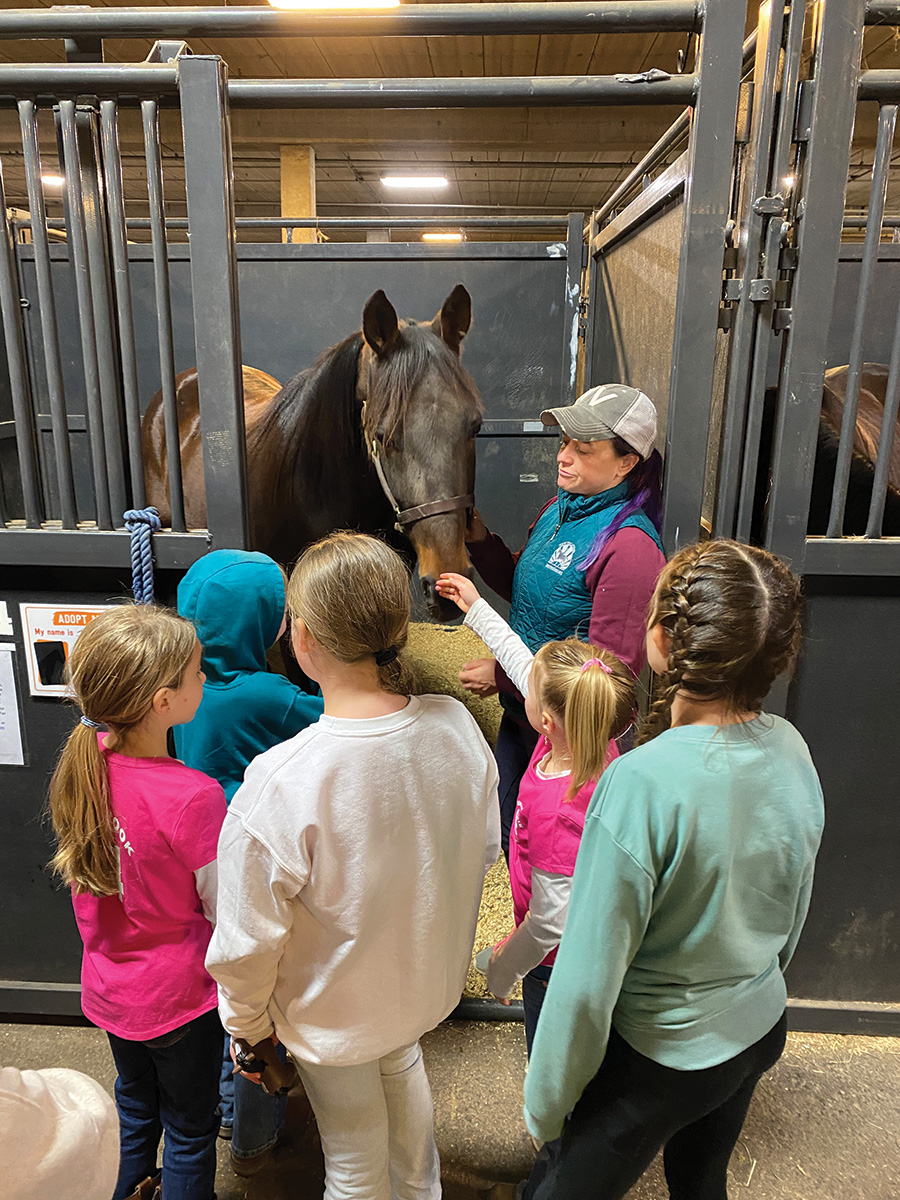
Young kids meet a horse at the event.
Visiting the Adoption Affaire stalls in the Horse & Farm Exhibits is a heartwarming experience because you can see horses and people connecting in special ways.

These visitors have expressed that they wanted to get to the barn early before all of the horses were adopted. But even if you aren’t specifically seeking out the Adoption Barn, you won’t have any trouble finding it.

“Equine Affaire is a fantastic partner of ours,” says Richards. “They let us put up signs across the whole area.”

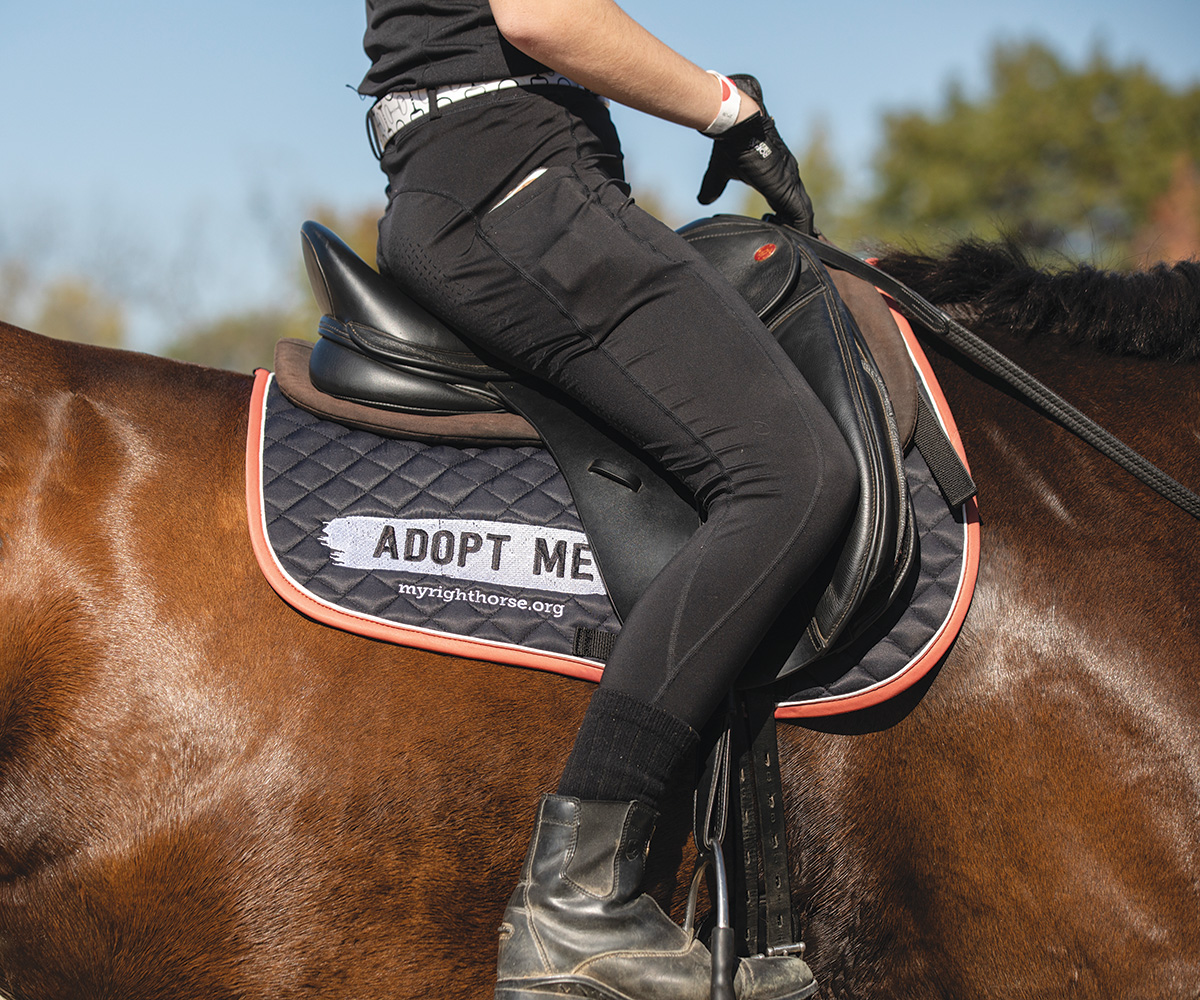
In addition, whenever they are out of their stalls, adoptable horses wear special bright orange saddle pads and coolers with the words “adopt me” in large letters. Anyone with questions can talk directly with the horses’ handlers or visit the ASPCA Right Horse booth.

A horse wearing an "Adopt Me" saddle pad.
Whenever they are out of their stalls, adoptable horses wear special saddle pads and coolers with the words “adopt me” on them. Anyone with questions can talk directly with the horse’s handler.

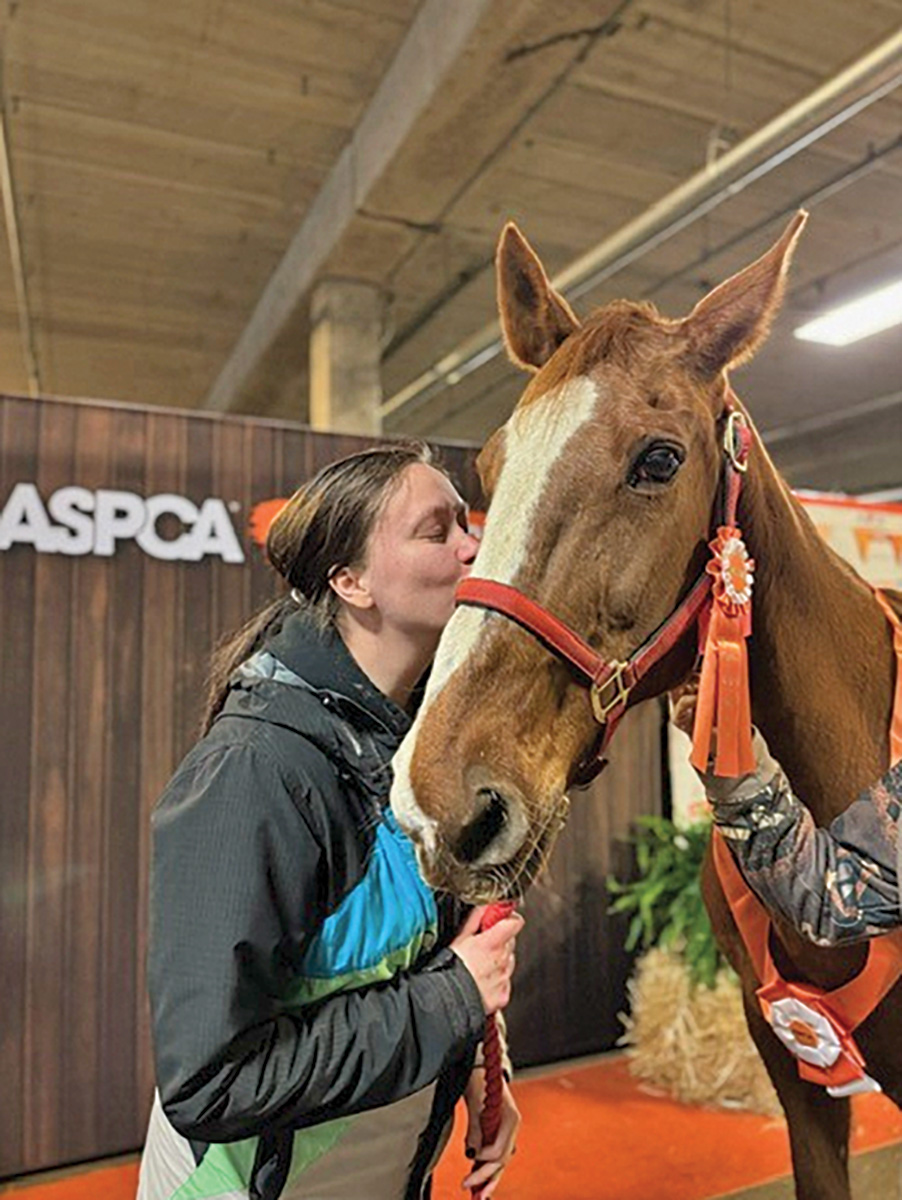
Richards says that you might also become aware of the Adoption Affaire when you see horses strolling down an orange carpet accompanied by a ringing bell and an announcement that they have been adopted. Adopted horses and their owners are treated like celebrities with photos and cheering to celebrate the occasion.

Finally, during a showcase activity, adoptable horses are brought out to perform while information about them is shared.

A girl kisses the horse she's just adopted at the Adoption Affaire at Equine Affaire.
Adopted horses are announced over a megaphone and walked down the orange carpet.

Success Stories Abound

According to Richards, ASPCA Right Horse Partners brought 32 horses to the Equine Affaire this past April in Ohio. Twenty-eight of those were adopted on-site. As they were returning home, interest in adoption was expressed for the remaining four horses.

Some of the most memorable adoption stories include Brianne, who adopted her first horse, Tootsie, at the 2023 Equine Affaire Ohio. In 2024, she returned with her husband to volunteer at the adoption barn. During the event, Brianne, who is expecting a baby, became interested in adding a second adoptable equine to add to the family, Toledo. Her husband, Hunter, then arranged for a surprise adoption!

Another adoption success story is that of Noelle. Noelle, a 30-year-old pony, prefers children to adults and had strong preferences about who her adopter might be. Harper, Noelle’s eventual adopter, felt equally strong about finding her perfect match. During the Ohio Equine Affaire, the two formed an instant, mutual connection that led to an adoption and new partnership.

Planning for Massachusetts

Equine Affaire Massachusetts is set for November 6-9, 2025, and the Adoption Affaire will be featured within the Horse & Farm Exhibits area in C-Barn. The Adoption Affaire will include a variety of rescues and sanctuaries with healthy, trained, adoptable horses of a variety of breeds, backgrounds, and ages. Attendees can meet the horses in person and apply to adopt on the spot. Regardless of your specific reason for attending the event, a chance to meet, learn more, and potentially adopt a horse is a can’t-miss occasion.

This article about the Adoption Affaire at Equine Affaire appeared in the November/December 2024 issue of Horse Illustrated magazine. Click here to subscribe!
ASPCA Right Horse Adoptable Horse of the Week: Silk

0

Welcome to Horse Illustrated’s weekly installment of the Right Horse Adoptable Horse of the Week, offered in partnership with the ASPCA’s Right Horse program. This week’s adoptable horse is Silk! Check back weekly for a new featured horse so you can find your Right Horse.

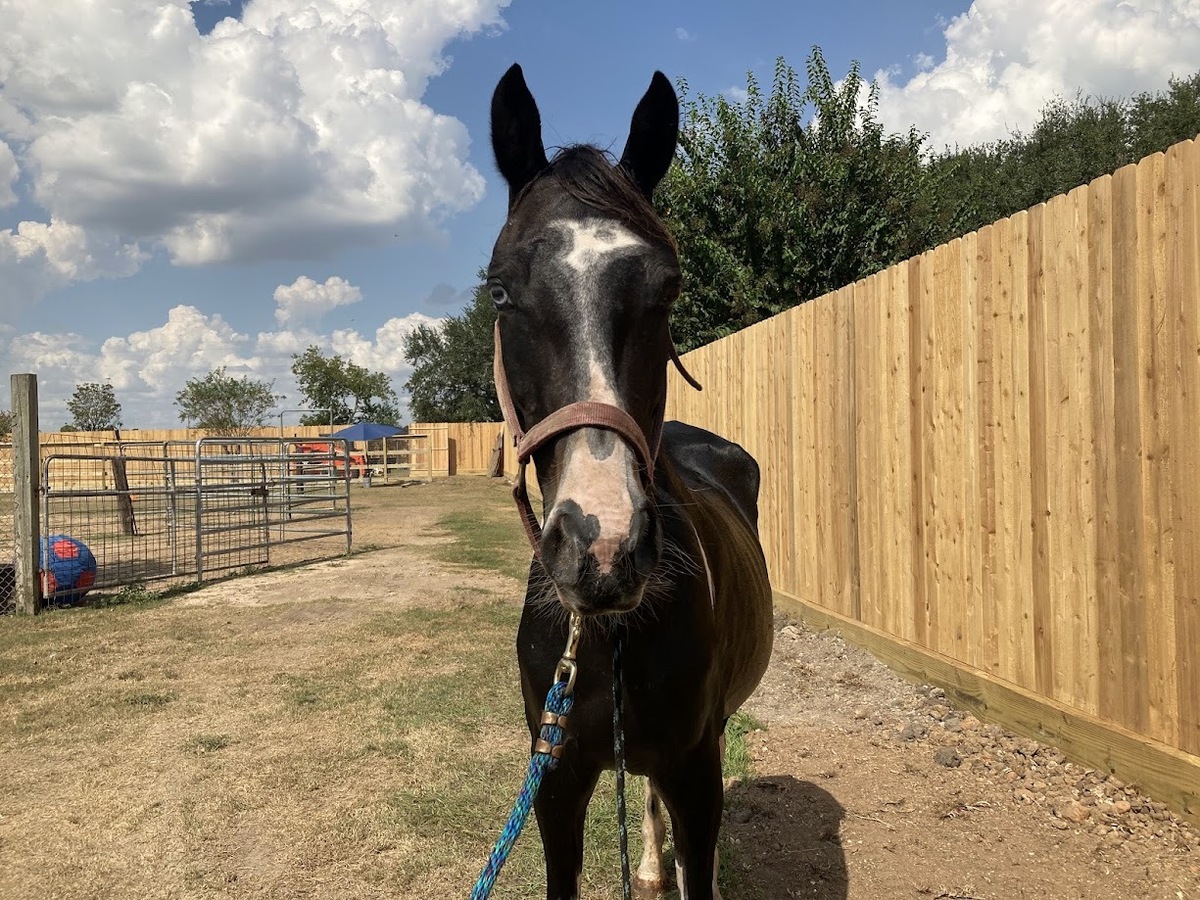
Adoptable horse Silk.
Photo courtesy Houston Humane Society

Adoptable Horse: Silk, an 8-year-old, 14.3hh grade mare
Organization: Houston Humane Society, Houston, Texas

Get to Know Adoptable Horse Silk

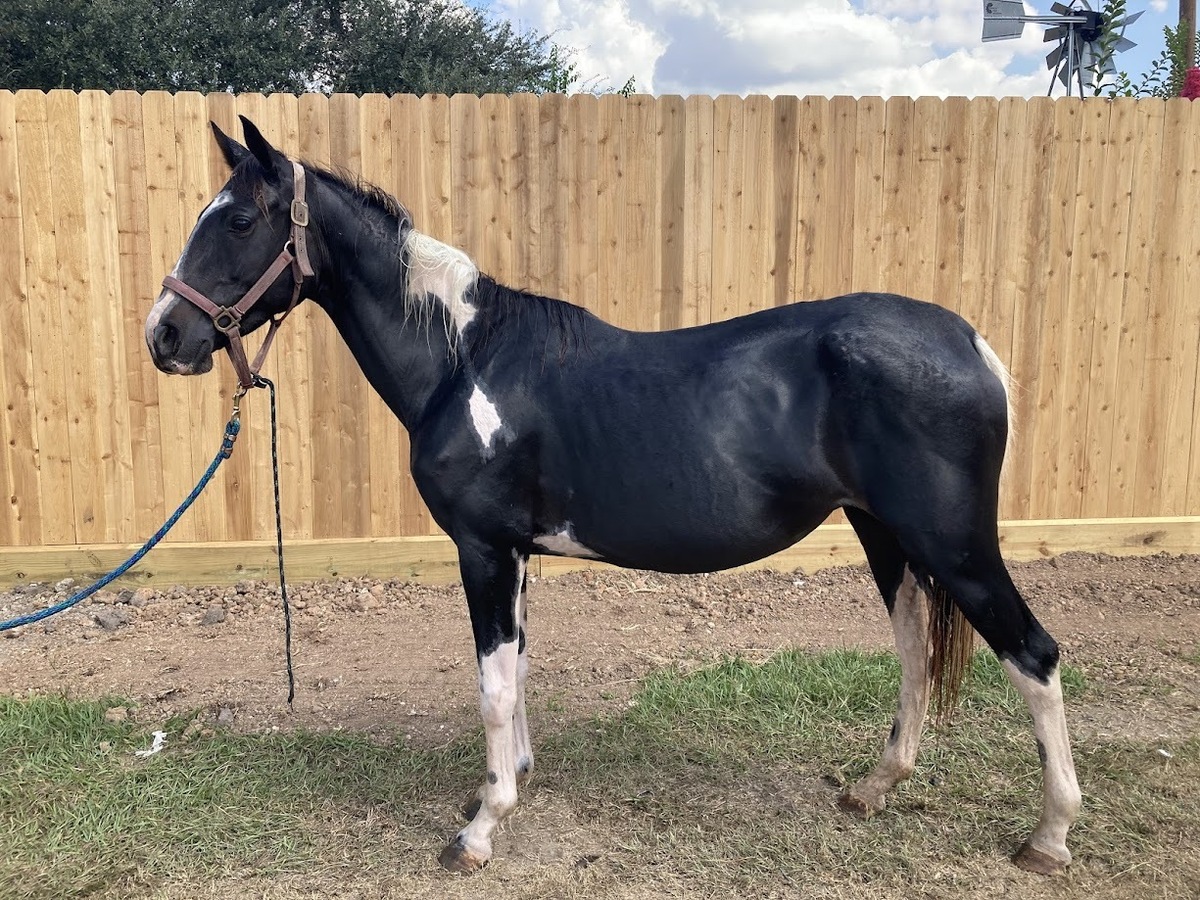
Meet Slik! This beautiful 8-year-old black tobiano mare is as striking as she is unique, with her bold markings and one brilliant blue eye that always catches attention. Behind her flashy looks is a gentle soul who just wants to feel safe and understood.

She has a calm presence in the pasture and enjoys spending time with her herd. While she can be a little cautious at first, once she trusts you, she’s affectionate and enjoys attention. At 8 years old, she’s in the prime of her life and ready for the next chapter with someone who will give her patience, kindness, and consistency.

She’s seeking an adopter who can give her the steady guidance she deserves and help her continue building confidence. With her good looks, sweet nature, and a willingness to connect, Silk has all the makings of a loyal companion.

Contact Houston Humane Society today about ASPCA Right Horse Adoptable Horse of the Week, Silk!

A bay tobiano mare.
Photo courtesy Houston Humane Society

ASPCA Right Horse

My Right HorseASPCA Right Horse is the online adoption platform of The Right Horse Initiative, a collection of equine industry and welfare professionals and advocates working together to improve the lives of horses in transition. A program of the ASPCA, their goal is to massively increase horse adoption in the United States. To find more adoptable horses and foster horses, visit www.myrighthorse.org. To learn more about The Right Horse, a program of the ASPCA, visit www.aspcarighthorse.org.

Boyd Martin Makes History as First-Ever US Equestrian Open Eventing Final CCI4*-L Champion Aboard Miks Master C

0

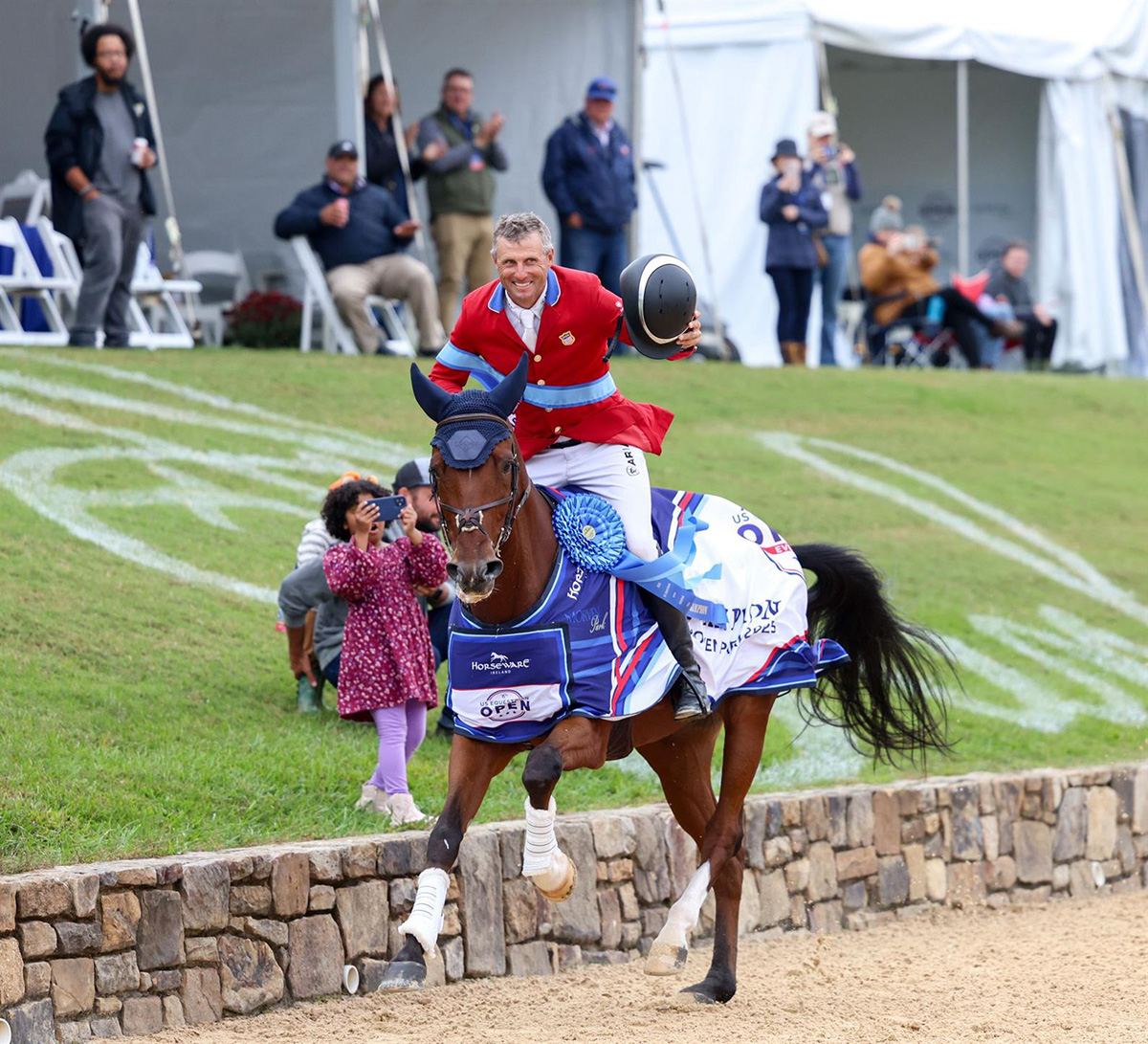
Leesburg, Va. — The inaugural US Equestrian Open Eventing Final came to an exciting conclusion at Morven Park International Equestrian Center with four-time Olympian Boyd Martin and Miks Master C delivering a standout performance in the final jumping phase to capture the historic win. The pair’s victory marked the conclusion of an exciting week of world-class competition, which was ultimately decided by the triple combination of the final line in the last phase. Martin and Miks Master C solidified their victory after producing a clear round in the Grand Prix Arena and finished the weekend on a final score of 28.7.

Boyd Martin and Miks Master C become the first-ever winners of the US Equestrian Open Eventing Final CCI4*-L.
Boyd Martin and Miks Master C become the first-ever winners of the US Equestrian Open Eventing Final CCI4*-L. Photo courtesy Avery Wallace/US Equestrian

“It’s an incredible feeling to win here,” said Martin. “This event has been so well organized, and Morven Park is one of the best venues in the world. For years, we’ve all seen the potential here. Morven Park has beautiful cross-country tracks, great rings, and a world-class facility. The US Equestrian Open has brought in amazing prize money and attracted the country’s best horses and riders and to win this inaugural event is a huge honor.”

Martin (Cochranville, Pa.) and the Miks Master C, a 2012 U.S.-bred Swedish Warmblood gelding (Mighty Magic x Qui Luma CBF), owned by Ocala Horse Properties, LLC., Deborah Palmer, and Rachael Isaacson, and cared for by Stephanie Simpson, completed the weekend on a final  combined score of 28.7 after producing a clear round int the main arena secure their win and take home the lion’s share of the $200,000 prize pot. Both Martin and Miks Master C’s names will now be added to the perpetual US Equestrian Open trophy, marking their place in history as the US Equestrian Open Eventing Final’s first-ever champions. Additionally, Martin was also awarded the MARS American Bred Talent Trophy which was award to the top-finishing U.S.-bred horse in the competition in the CCI4*-L division.

Miks Master C is a newer mount for Martin, having previously been campaigned by fellow U.S. Eventing Team athlete Liz Halliday before joining Martin’s program just over a year ago. The partnership has now found its rhythm at the top levels of the sport, with Martin noting this victory holds special significance for him, personally, his team, and the supportive team behind Miks Master C. Martin reflected on the journey of taking over the ride following Halliday’s accident in 2024, and the growing partnership he’s developed with the talented gelding.

“I’m so grateful to the owners for trusting me with one of Liz’s top horses. Miks Master C is a legend. He was Liz’s top hopeful, and this whole year we’ve just been getting to know each other. He’s an incredible horse with the right mix of power, grit, and heart.”

Martin shared that though he was still getting to know “Mikki” this year, he has always admired him. “When Liz first bought him, I was extremely jealous,” he said with a laugh. “Mikki is totally my type of horse. He has a lot of Thoroughbred in him. He’s one of those horses that moves like a Warmblood, but thinks like Thoroughbred – a true three-day eventer with an amazing gallop.”

After a thrilling cross-country phase yesterday, which featured a traditionally challenging and technical Derek di Grazia (USA)-designed track, Will Coleman (Ocala, Fla.) and his veteran partner Off The Record entered Sunday’s jumping phase as the overnight leaders on their impressive dressage score of 25.1 However, one rail at B of the triple combination ultimately opened the door for Martin and Miks Master C to move to the top of the leaderboard.

Coleman’s strategic and polished riding across all three phases secured both second and third place aboard Off The Record, a 2009 Irish Sport Horse gelding (VDL Arkansas x Drumagoland Bay), owned by Off The Record Syndicate, and cared for by Erin Jarboe, and  Very Dignified, a 2015 Irish Sport Horse mare (Dignified Van’t Zorgvliet x Kateys Gem), owned by Jerome Broussard, Elizabeth Lendrum, and Gloria Callen, also cared for by Jarboe, respectively. Coleman piloted both horses to just two of the three clear rounds yesterday around the CCI4*-L track, keeping both horses competitively inline on the leaderboard. Ultimately, Off The Record would finish on a final three-phase score of 29.1, while Very Dignified, earned a 35.4, in the pair’s CCI4*-L debut together.

For the Virginia-native Coleman, the introduction of the US Equestrian Open concept to the already historic importance of the Morven Park venue in the region’s deep traditional connection to horses and horse sport, allowed the competitive atmosphere to be elevated while also offering the opportunity to showcase the sport at its best.

“It’s an awesome cross-country course on one of the best eventing-specific venues in the U.S.,” said Coleman. “Anyone who is curious about eventing or wants to see what eventing all is about; they got such an awesome taste of that here at Morven Park this weekend.”

Both riders commended course designer Chris Barnard’s (USA) track on the final day for its technical demands and tight time allowed, which kept the pressure of the moment palpable to the very last ride of the class.

“The course was good and very technical,” Martin noted. “You had to ride it almost like a jump-off. It rewarded forward, efficient riding and showed how beneficial it is to practice pure show jumping on the side.”

When asked about the future of the US Equestrian Open Eventing  Final and Series, and what the athletes hope to see as it continues to evolve and grow, Coleman shared his optimistic outlook.

“This is just the beginning,” he said. “What US Equestrian has built with this series is something that’s going to continue to grow, build more momentum, attract bigger crowds, and more prize money, which is really exciting for us as athletes, for our owners, and for our teams.”

View full US Equestrian Open Eventing Final results here.

— Edited Press Release

Standlee Turns Bales Pink for Breast Cancer Awareness

0

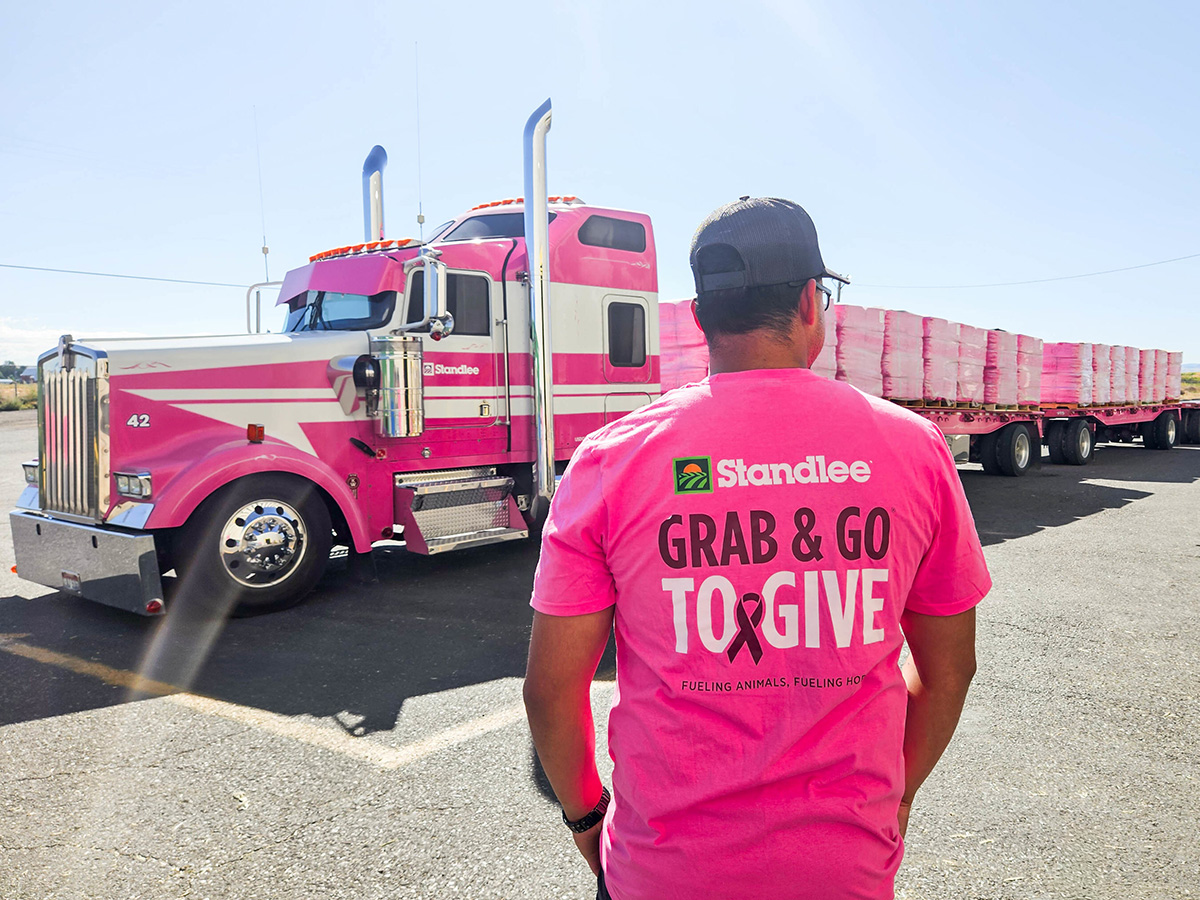
Kimberly, Idaho  For millions of people and families, breast cancer is a fight that touches every part of life. This October, Standlee Premium Western Forage® is proud to launch its 5th annual breast cancer awareness initiative: Grab & Go® to Give, a campaign rooted in community, hope, and action. For the first time ever, Standlee’s iconic green Grab & Go bales are turning pink. This is not just a color change, but a symbol of solidarity with those impacted by breast cancer.

A pink truck and "Grab & Go to Give" T-shirt.
At Standlee, supporting the fight against breast cancer is more than a tradition, it’s part of their identity. These pink bales symbolize hope, strength, and unity as we honor the people in our barns, homes, and communities who face this battle.

The pink bales, featuring limited-edition packaging, have been distributed to retailers across the country, spreading awareness from coast to coast. When you choose a pink Grab & Go bale, you’re not only fueling your animals with the same high-quality forage you’ve always trusted – you’re also fueling the fight against breast cancer.

“Supporting the fight against breast cancer has long been part of who we are at Standlee,” said Jessica Wright, VP of Marketing. “Each year, we are reminded that this battle affects the people standing right beside us, in our own barns, homes, and communities. These pink bales are a reminder that together, we can fight for a future without breast cancer.”

This year’s milestone marks five consecutive years of Standlee’s commitment to the cause. Previous campaigns have spotlighted personal stories of resilience and inspired the equine community nationwide to join in the fight against breast cancer.

Funds from this year’s campaign will support the following organizations:

  • Breast Cancer Research Foundation (BCRF) – Funding innovative research to prevent and cure breast cancer worldwide.
  • Living Beyond Breast Cancer (LBBC) – Providing education, resources, and a supportive community for people affected by breast cancer.
  • Riding Beyond – Offering equine-assisted programs that promote healing and empowerment for women facing cancer.
  • Rural Gone Urban Foundation – Providing judgment-free grants and financial support to women battling breast cancer, empowering them to make memories and invest in legacies for themselves and their families.
  • Horses and Hope – Supporting medically underserved individuals, especially those in the Kentucky horse industry and beyond, through education, screening, and support to help with early detection and care.

Join the movement: every pink Grab & Go bale purchased helps support these organizations and the people they serve. Together, we can stand stronger in the fight to wrap up breast cancer, one bale at a time.

For more information about Standlee’s Grab & Go to Give campaign, visit www.standleeforage.com/promotions/grab-go-give/ or contact marketing@standlee.com.

The Standlee Grab & Go to Give Campaign in support of breast cancer awareness.
For Standlee, the fight against breast cancer is deeply personal. Every pink bale they produce is a reminder that this battle affects the people standing right beside us, and that together, we can keep pushing toward a future without breast cancer.

About Standlee

Standlee puts the health and well-being of the animals you love first by delivering the best nutrition through premium forage and highest-quality animal care products.

Founded in 1981, Standlee has carefully grown and manufactured sun-cured forage to ensure high-quality and consistent nutrition. Their finished products are managed to ensure year-round supply and are delivered to customers by the largest distribution network of forage products in the United States. They provide premium forage in a variety of types and in a wide range of product formats, including pellets, cubes, chopped, and bales. To keep your animals at peak health and performance throughout the year Standlee forage is the perfect nutritional solution for horses, livestock, small animals, and poultry.

Standlee has committed to providing a premium experience when purchasing their products. You can trust it was made with the same dedication as if they are caring for your own animals.

— Edited Press Release

0FansLike
0SubscribersSubscribe
We use cookies to help personalize content, tailor and measure ads, and provide a safer experience. By navigating the site, you agree to the use of cookies to collect information. Read our Cookie Policy.
OK