0 ITEMS
  • My Account
  • Holiday Gift Guide
  • Podcast
  • Webinar
Subscribe Combo
Enable cache13
Home Blog Page 632

Canadian National Arabian Championship Horse Show begins today

4
Arabian and half-Arabian horses will be on stage at the Canadian Arabian and Half-Arabian Championship this week.

After more than 20 years in Regina, Saskatchewan, the Canadian National Arabian & Half-Arabian Championship Horse Show has a new venue. The second leg of the North American Arabian Triple Crown will now be held in the Keystone Centre in Brandon, Manitoba from August 15-20, 2011. A memo from Arabian Horse Association president Lance Walters cited contract issues with the previous venue as the impetus for the move, but expressed optimism about the new location.

“The facilities [at the Keystone Center] are designed for horse shows, has management in tune to horse show needs, and the city encourages our locating the Canadian National Arabian and Half Arabian Show there,” said Walters.

The show attracts Arabian exhibitors from approximately 40 states in the U.S. and six Canadian provinces. Classes are offered for junior exhibitors, amateur riders and professionals in many of the divisions the versatile Arabian excels in, from halter and show hack to dressage and working cow horse.

Canadian Nationals features some of the best show horses in North America. All horses must qualify for the show by competing at A-rated Arabian shows and Regional Arabian shows or at open shows for some divisions.

The show is free for spectators and is also available to view online at www.arabianhorseglobal.com (free registration required.)

For more information, including a schedule of classes, visit www.arabianhorses.org

Half-Arabian horse missing after escaping barn fire at Goslin-Nix Training Center

8
Whiskey Lullaby has been missing since an August 9 barn fire in Magnolia, Texas. Photo courtesy Stolen Horse International/Netposse.com

After a tragic barn fire on August 9 in which nearly half of the equine residents were killed, the owners and friends of Goslin-Nix Training Center are still searching for one missing horse.

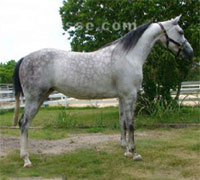
A half-Arabian mare named Whiskey Lullaby escaped from the fire, but fled the stable area and was last seen running loose on a nearby road. Whiskey is 7 years old, 15-hands and dapple gray with a black tail and almost-black mane. She may have burns or other injuries as a result of the fire.

Whiskey is an accomplished show horse in the half-Arabian western pleasure division. Her owners are offering a reward for her safe return. To help find Whiskey, visit her page at netposse.com and download the flyer to post in public places. The information can also be shared via email, facebook and other social networking sites.

Click here to view Whiskey’s netposse page.

Click here for Whiskey’s facebook page.

Further Reading
Stolen Horse International launches crime watch program
Horse theft prevention tips

Learn to Identify the Typical Non-Horsey Man

6

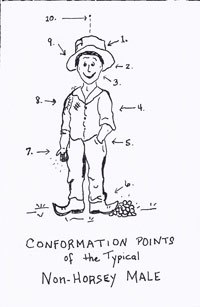
We’ve all seen countless conformation diagrams of horses. They helped us learn the common features and identifying traits of our favorite four-legged beast. Well, I think it’s time we had the same sort of descriptive illustration for another creature familiar to all of us: The Non-Horsey Human Male.


Click for larger image

1. Hat: Typically western in design, this item of camouflage allows for seamless integration into closed-set herds of equestrians; allows wearer to “look the part.”

2. Eyes: Though not quite spring-loaded, they have the ability to “pop out” in response to certain stimuli, for example, reading the feed store receipt and discovering the current cost of alfalfa.

3. Mouth: Remarkably deceptive, the mouth is capable of convincingly uttering half-truths, such as, “Wow, Honey, your hips and thighs look amazing in those skin-tight riding breeches!”

4. Upper Body: Ideally suited for performing vital tasks necessary for basic survival like barn repair, horse trailer maintenance, and digging fence post holes.

5. Pliable Lower Arm: Thanks to amazing dexterity, hand can deftly reach into pants pocket to locate loose change in order to pay for 25-lb. bag of carrots.

6. Boots: Component of standard operating safety equipment to prevent loss of use.

7. Disfigured Fingers: Typically due to ignoring instructions to stop hand-feeding treats to the mouthy gelding. (Common blemish and does not usually cause unsoundness).

8. Shabby Coat: Acceptable patterns include Horse Slobber Spots, Barn Paint Speckles and “My Wife Spent Our Savings on a New Silver Western Saddle so I had to Shop at the Thrift Store” Frazzle.

9. Brain: Despite cranial studies that show a capacity for independent, rational thought, that potential evaporates once the species is amorously attached to a Horsewoman.

10. Height: Standards vary widely, however, must be tall enough to stack hay three bales high and lift saddle onto back of 17.2-hand warmblood.

<< Previous Entry

Back to Life with Horses

Colorado equine-assisted therapy program helps people and horses

5

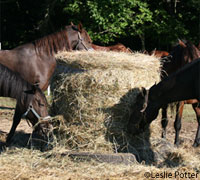
Horses eating hayThe economy has been particularly rough on horse farms this year’s widespread hay shortages have caused the price of hay to skyrocket, making it more difficult than ever for many people to care for their equine companions. With most horse rescues already at capacity, recent American Society for the Prevention of Cruelty to Animals (ASPCA) Equine Fund grantee Dream Catcher Therapy Center had the foresight to address the problem of horse abandonment at its source, resolving to help people through tough times so they can keep their beloved animals.

Although the Dream Catcher Therapy Center’s primary role is to provide animal assisted therapy for those with physical or mental health issues, it has become a vital resource in western Colorado through its hay bank. The ASPCA’s most recent grant of $4,000 will allow the Center to shore up its supply of hay, which will be available free of charge to individuals requesting help.

“This is a good group that thinks beyond their own doors and asks, ‘How can we keep horses in their homes?’ as opposed to them winding up in rescue or headed for slaughter,” says Jacque Schultz, Senior Director, ASPCA Equine Fund.

Located in Olathe, Colorado, the Dream Catcher Therapy Center has helped more than 1,200 disabled children and adults, and has rescued, rehabilitated and re-homed hundreds of at-risk horses. The Center is a verified Global Federation of Animal Sanctuaries facility. This is the ASPCA’s fourth grant to them in as many years.

The ASPCA is on track to award more than 10 million dollars in grant money to worthy animal welfare groups across the U.S. in 2011. To learn more, including how your organization can apply for an ASPCA Grant, please visit aspcapro.org.

Texas barn fire claims 13 equine lives

9


CORRECTION: This article originally stated that 14 horses had died in the fire. Only 13 horses died and one escaped the barn but is currently missing. Click here for more information.

Original Article:
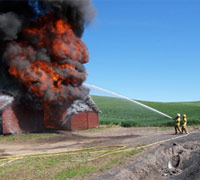
On Tuesday, August 9, a fire tore through a barn that housed 28 Arabian and half-Arabian show horses in Magnolia, Texas. The Goslin-Nix Training Center was owned and operated by Fred Goslin and his family along with trainer Gwen Nix.

The fire was initially reported by a local resident, David Singleton, who noticed the fire on his daily commute to work around 6 a.m. Half of the horses in the barn were claimed by the fire, but half were able to escape thanks to Goslin and his family and neighbors who opened outer stable doors to let the horses out. None of the surviving animals sustained serious injuries.

The 30,000-square foot barn was completely destroyed by the fast-moving fire, and according to an article on yourhoustonnews.com, the building was not insured. High winds at the time of the fire put the family’s house at risk, but firefighters were able to control the blaze before it spread to other buildings.

The cause of the fire is still under investigation, but early reports do not suggest anything suspicious.

The Arabian Horsemens Distress Fund, an organization that helps professionals in the Arabian horse community in times of need, is collecting donations to help clean up and rebuild the stable. For more information, visit www.horsemensdistressfund.com.

Further Reading
Extinguish the Threat of Barn Fires
Be Prepared for a Barn Fire

There’s still time to vote for America’s Favorite Equestrian

3
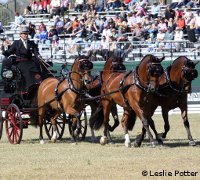
Chester Weber at the World Equestrian Games
Chester Weber

The results of Round 3 of America’s Favorite Equestrian are in. Four equestrians in each of the eight disciplines that participated in the 2010 Alltech FEI World Equestrian Games have moved onto Round 4.

Who’s In the Lead?

Dressage: Debbie McDonald followed by Steffen Peters, Guenter Seidel and Courtney King-Dye.

Driving: Chester Weber followed by Tucker Johnson, Rochelle Temple and Suzy Stafford.

Endurance: Becky Hart followed by Dave Rabe, Julie Suhr and Bill Wilson.

Eventing: Tiana Coudray followed by Boyd Martin, Kimberly Severson and Phillip Dutton.

Jumping: Anne Kursinski followed by Beezie Madden, Margie Engle and McLain Ward.

Para-Dressage: Jennifer Baker followed by Mary Jordan, Jonathan Wentz and Robin Brueckmann.

Reining: Andrea Fappani followed by Tom McCutcheon, Shawn Flarida and Tim McQuay.

Vaulting: Megan Benjamin followed by Katherine Wick, Devon Maitozo and Ali Divita.

Keep Voting! One more equestrian with the lowest number of votes in each discipline will drop off the list at the end of Round 4 on September 30, 2011. Don’t let it be your favorite! All it takes is a $5 gift to The EQUUS Foundation to keep your favorite in the running for America’s Favorite Equestrian.
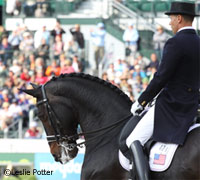
Steffen Peters at the World Equestrian Games
Steffen Peters

How to Vote:
Visit www.equusfoundation.org/vote

For a $5 contribution, you can select your favorite equestrian (listed by discipline) and follow the instructions provided to use mobile texting to vote. After texting your vote, you must reply YES to confirm your vote and $5 donation.

You can also vote using an online form or vote by mail.

All donations received by the EQUUS Foundation will be used in support of horse-related charitable causes.

How it Works:
Round 4: Voting ends on September 30, 2011. In each featured discipline, the three equestrians with the most votes will continue to Round 5, the final round.

Round 5: Voting ends on October 31, 2011. America’s Favorite Equestrian will be selected based on the athletes with the highest number of votes recorded in each of the eight disciplines.

Winner Selections:
The athlete from each discipline with the most votes will join the ranks of America’s Favorite Equestrian. These winners will be announced in November 2011 at the National Horse Show, taking place at the Kentucky Horse Park in Lexington, KY.

About America’s Favorite Equestrian:
The EQUUS Foundation and the United States Equestrian Federation (USEF) jointly launched the charitable mobile texting competition in celebration of the 2010 Alltech FEI World Equestrian Games and the eight international disciplines represented on the field of play.
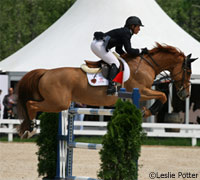
Beezie Madden and Play On
Beezie Madden

The objective is for America’s Favorite Equestrian to be an ongoing program with all equestrian disciplines/breeds represented and the winners recognized in a permanent “Hall of Fame”. For this inaugural program, the disciplines competing in the 2010 Alltech FEI World Equestrian Games were selected for the program, with the many of the equestrians selected by the respective Recognized Affiliates of USEF.

The EQUUS Foundation has pledged to award a minimum of $10,000 in grants in support of USEF programs within these eight international equestrian disciplines. The discipline generating the greatest number of votes will receive an additional $5,000 grant award for its USEF-affiliated association subject to raising sufficient funds. Donations raised over $15,000 will be used to support horse-related charitable causes.

About The EQUUS Foundation, Inc.
The EQUUS Foundation, Inc., established in August 2002, as a 501(c)(3) national charitable foundation, seeks to raise public awareness of the value of the horse in society through education and the awarding of grants to charities that use the horse to benefit the public, promote the health and welfare of horses, and elevate the equestrian sport as a whole.

The Foundation is governed by a Board of Directors, which is responsible for the selection of the grant recipients. The Board includes: Jenny Belknap Kees, Chairman; Catherine Herman, Vice Chairman; Jane FitzGerald, Secretary/Treasurer; Lynn Coakley, President; David Distler, David Goodwin, Patricia Keenan, Frank Madden, Richard Mitchell DVM, Clea Newman Soderlund, Susan Weber and Visse Wedell.

Thanks to the generosity of its donors, The EQUUS Foundation helps thousands of people and horses each year. Over $1.5 million in grants has been awarded since the first awards in 2003. Donations are tax-deductible to the full extent of the law. For more information, visit www.equusfoundation.org

How to fit an English bridle to your horse

4
Hunter show horse
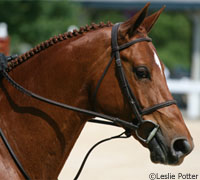
A properly fitted bridle will be comfortable and look good on your horse. Photo: Leslie Potter

Edited Press Release

Properly fitting a bridle may not be as difficult as fitting a saddle, but there are some key tips you should keep in mind. “When we fit bridles for pros like Louise Serio, Scott Stewart, and Anne Kursinski, it’s critical that we create a look that shows off each horse,” explains Rebecca Bisilliat, co-owner of Arc de Triomphe. Follow these basic rules for fitting a bridle and you will create the same top-notch, winning look for your horse.

Browbands

Brow bands that are properly fitted will place the crown piece comfortably behind the ear base. If it’s too small, it will rub the horse behind the ears. If it’s too big, the brow band will gap in the center of the horse’s forehead, or hang down over the horse’s eyes.

Cheekpieces & Buckle Adjustments

Cheekpieces are a crucial part of the bridle for both functionality and aesthetics. With regards to functionality, the cheekpieces place the bit in the proper position. When cheeks are adjusted correctly, there will be a wrinkle or two in the corners of the horses’ mouth.

Buckles that are properly adjusted create a pleasing look. When the cheekpieces are adjusted correctly, the buckles lie next to, or within one inch above, the horse’s eye. If they are in any other position, they are the wrong size for that horse. Longer cheekpieces can be made shorter; however, before you decide to have them altered, ask if you can purchase this part separately.

Throatlatches

Throatlatches have only one function: to prevent the bridle from coming off the horse’s head. Proper adjustment means the throatlatch allows the throat to expand when the head is properly flexed. If it’s too loose it will not perform its intended function. You should be able to fit your closed fist between the leather and the horse’s throat.

Nosebands

Generally, nosebands should be placed two fingers width below the cheekbones, depending upon the size of the bit ring. If the bit ring is large, then the noseband should be placed higher. The cheek leather should rest about a half inch behind the cheekbone. A standard, or non-crank, noseband should encircle the horse’s head and allow you to slip two fingers between the jaw and the leather. For a crank noseband, tighten it completely without making the horse uncomfortable.

Each of the English disciplines including hunter, jumper, dressage, eventing, foxhunting, trail, and endurance, has their own style of tack and dress. “If you are showing, it is imperative to be aware of the different traditions so you can look the part. And you’ll need to know the equipment requirements for each discipline by doing some research within the USEF rule book,” advises Bissilat.

Further Reading
Tack Fit
Video: English Saddle Fit

ADT offers more than 25 styles of stocked and custom bridles to make your horse shine. For more information please visit www.ADTtack.com.

Moving on to a New Horse Trainer

3

Q: I’ve been riding with my current trainer for many years, ever since I was a little kid. I feel like I’ve outgrown her and want to move to another barn where all my friends ride. The lessons are more advanced there, and I believe my horse and I would really improve. How do I tell my trainer that I’m leaving? How can I stay on friendly terms with her? Will it always be awkward when I run into her at shows? I’m so nervous about this!

A: It’s obvious that you respect your long-time trainer and value what she’s taught you. Otherwise you wouldn’t have such anxiety about telling her you’re moving on. Focus on those positive feelings of admiration as you tell her, plainly and calmly, that you’ll be moving to the new barn on a specific date. Share your reasons with her: That you miss the companionship of your friends and that, thanks to all the wonderful horsemanship skills she’s taught you, you’re excited to explore new challenges at this other barn. Make sure you have this discussion in person, when you can sit together quietly for a few moments. Though you might feel nervous or emotional—a few tears in the tack room never hurt anyone—she’ll appreciate your honesty and maturity.

Any professional who’s been in the horse business for any length of time realizes that clients come and go. It’s a fact of life that no trainer can be all things to all horses and riders. For example, one trainer might be a wizard with starting green horses while another one might be a miracle worker with nervous adult riders. So take some comfort in knowing that you aren’t the first client who has graduated from a childhood trainer to one with a more sophisticated method of instruction. Chances are, the trainer you’re about to leave has heard the Good-bye Speech many times before.

To keep your relationship on friendly terms, send her a handwritten note a few weeks after you leave. Tell her again how important she’s been in your life, both on and off a horse. Then, when you do see her at a show, be cheerful and polite. Speak well about her to others. Recommend her to other young riders seeking quality lessons in basic horsemanship. After all, this trainer gave you a wonderful start. Let her do the same for someone else.


Deworming strategies for horse owners at boarding stables

2
Grazing Horse


If you
board your horse, a safe and healthy environment for your horse is of utmost importance. With resistance increasing in small strongyles and no new dewormer on the horizon, horse owners should be asking barn managers about parasite practices wherever they board. According to Merial’s article on parasite resistance, parasite resistance is a farm situation. Yet each farm will be impacted by the individual horses living on it, so it makes sense to ask your barn manager about parasite control practices. Consider asking the following questions.

  • How many horses are boarded?
  • How many horses are routinely pastured together?
  • Do you manage pastures by dragging or removing manure from shared pastures?
  • Are new arrivals isolated until a fecal egg count, appropriate treatment, and follow-up egg count is completed?
  • Do you require clients to have fecal egg counts performed on their horses and to follow guidelines that recommend selective treatment for parasites?
  • Do you document fecal egg counts and deworming treatments on all resident horses?
  • Do you take responsibility for collecting stool samples for boarders, or do you require boarders to collect their own?
  • Do you require boarders to share the results of fecal egg counts with the barn manager?
  • Have you seen any evidence of resistance in any horse on the farm?

If you have questions about parasites or your testing and treatment program contact Dr. John Byrd at www.horsemenslab.com.

Horsemen’s Laboratory owner Dr. John Byrd has extensive experience with racing and breeding horses and maintains Westbrook Boarding Stable. He created Horsemen’s Laboratory in 1992 so that horse owners could better evaluate their worm control programs and make informed decisions about deworming their horses. To learn more about Horsemen’s Laboratory, parasites, to sign up for the monthly newsletter, and to order fecal egg count testing kits and visit www.horsemenslab.com.

Tips for hot weather horse care

3
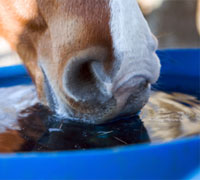
Beware of dehydration on hot, humid days.

August is the hottest month in many parts of the country. For equestrian riding enthusiasts this may necessitate paying extra attention to your horse’s physical needs and changing your riding habits.

“Heat related illness such as heat stress can quickly become heat exhaustion if preventive measures are not taken,” notes Dr. Glennon Mays, clinical associate professor at the Texas A&M College of Veterinary Medicine & Biomedical Sciences.

Hot, humid weather combined with over exertion and fluid loss can lead to heat stress. Signs of heat stress include dehydration, elevated body temperature, excessive sweating or no sweating, accelerated heart and respiratory rates, and sluggishness, says Mays.

A horse’s normal body temperature range is 99 to 101 degrees F; body temperature above 103 F is cause for concern since 104 F and greater generally require medical attention. Additionally, you should be aware of your horse’s pulse and respiration rates. Normal equine resting pulse rate is 32-44 beats per minute and respiration rate is usually 8-16 breaths per minute, notes Mays.

In addition to checking vital signs, you can help your horse avoid heat stress this summer by providing clean fresh water, good ventilation and shade. Also, ride in the early morning or late evening when outdoor temperatures are cooler, suggests Mays.

“Adequate water intake is critical. An average size horse needs about 10 gallons of fresh water per day. In the summertime, a physically active adult horse may consume more than 20 gallons of water daily,” notes Mays. “Water loss from sweating also means that electrolytes (sodium, potassium, and calcium) are lost and these need to be replaced after exercising. Free access to minerals and salt will help your horse maintain its electrolyte balance. Your veterinarian can advise you with instructions on ways to mix electrolytes into your horse’s water or feed.”

Your horse’s stall should be well ventilated with good air circulation. Regular fans help circulate air inside the building. Be sure that fans and electrical cords are out of your horse’s reach and safely distanced from water sources, cautions Mays. For pastured horses, provide shade via trees or loafing sheds.

During and after physical activity, your horse moves warm interior blood through veins and into capillaries at the skin’s surface, explains Mays. When the skin of your horse is cooled this surface blood is cooled also and thus the body temperature of your horse decreases. A cool water bath will help your overheated horse dissipate excess heat faster. The water conducts the heat from the surface of the horse and water evaporation from the skin cools your horse’s body. Standing the horse in cool water also helps to dissipate heat through the hooves.

Heat related illness can be a very serious condition for your horse and should not be taken casually, cautions Mays. A well-informed horse owner is capable of preventing overheating from occurring when he/she knows the signs of heat stress and what care to provide.

In the good old summertime continue to ride your horse, but be aware of the signs of heat stress. Tailor you riding time to humidity and temperature conditions. Provide ample fresh clean water and additional sources of electrolytes. Set up fans to help circulate air around your horse. Also, remember the rider exposes him/herself to potential heat-related issues. Take appropriate precautions for yourself as well!

Further Reading
Ten tips to stay safe with your horse in hot weather

0FansLike
0SubscribersSubscribe
We use cookies to help personalize content, tailor and measure ads, and provide a safer experience. By navigating the site, you agree to the use of cookies to collect information. Read our Cookie Policy.
OK