0 ITEMS
  • My Account
  • Holiday Gift Guide
  • Podcast
  • Webinar
Subscribe Combo
Enable cache13
Home Blog Page 640

Introducing the Professional Association of Therapeutic Horsemanship

6

NARHA changed its name to PATH InternationalThe professional organization that promotes equine-assisted activities and therapies to improve the lives of people with disabilities has a new name: the Professional Association of Therapeutic Horsemanship International (PATH International.) Formerly NARHA (North American Riding for the Handicapped Association), PATH International better expresses the scope of the 42-year-old organization whose 6,300 therapy horses and 3,500 instructors serve 42,000 children and adults with physical, mental and psychological challenges at 800+ member centers around the world.

The PATH International board and members chose the term therapeutic horsemanship because it more accurately conveys the organization’s numerous disciplines. PATH International centers now offer equine-facilitated psychotherapy and learning, therapeutic carriage driving, interactive vaulting, hippotherapy, competition and programs for leadership, team building and stable management.

Therapeutic horsemanship also encompasses a wider spectrum of disabilities and needs that a skilled therapy horse and certified instructor can address to help clients improve their cognitive, emotional, social and/or behavior skills. In addition to many physical disabilities such as cerebral palsy, Down syndrome, multiple sclerosis, paralysis, stroke and traumatic brain injury, PATH International centers work with those with autism, attention deficit disorder, anxiety and depression and have targeted programs to help at-risk teens, injured veterans and military personnel, seniors with Alzheimer’s and victims of domestic and sexual abuse.

By incorporating the terms international and professional in its new name, PATH International reflects its global growth, as the association now has members on all continents except Antarctica. Individual and center members in countries from Brazil, Spain and the Netherlands to Israel, the United Arab Emirates, South Korea and China continue to join PATH International for its excellent certification and accreditation programs and reputation for high-quality safety standards.

The professionalism of PATH International programs is matched by the expertise of its 8,000 members, half of whom are certified as PATH International instructors. Some members are also physical, occupational, speech language pathology or mental health therapists; others work closely with health practitioners to benefit their clients. Many centers partner with hospitals, schools, the Veterans Administration and rehabilitation, residential and adult day care centers.

The association’s tagline best expresses the work that its centers, staff, volunteers, equines and donors accomplish: Ensuring excellence and changing lives through equine-assisted activities and therapies. For more information, high-resolution images or to find a center near you, visit www.pathintl.org.

As a global authority, resource and advocate for the equine-assisted activities and therapies industry since 1969, the Professional Association of Therapeutic Horsemanship International (PATH International) creates, maintains and improves quality and safety standards for the industry. At more than 800 member centers worldwide, over 42,000 children and adults find a sense of independence through involvement with horses. In addition to therapeutic riding, a center may offer any number of equine-assisted activities including hippotherapy, equine-facilitated mental health, driving, interactive vaulting, trail riding, competition, ground work or stable management. More than 30,000 volunteers, 3,500 instructors, 6,300 therapy horses and thousands of contributors from all over the world help people at PATH International member centers.
U.S. Department of Agriculture issues final Equine Herpesvirus situation report

6

Quarantined horseThe Animal and Plant Health Inspection Service (APHIS) has been tracking cases of Equine Herpesvirus (EHV-1) since the first cases of the outbreak were reported in early May. With its final situation report issued on June 23, APHIS reports no new cases of the disease.

EHV-1 is fairly common, but the neurologic form of the disease, called Equine Herpes Myeloencephalopathy (EHM) can be fatal and is contagious between horses. All cases of EHV-1 and EHM in this spring’s outbreak were traced back to the National Cutting Horse Association Western National Championship in Ogden, Utah, April 29-May 8. The original carrier of the disease was never identified, but EHV-1 and EHM infections were confirmed in ten western states and Canada after the competition.

According to the APHIS final report, there were a total of 57 confirmed cases of EHV-1, 33 confirmed cases of EHM and 13 equine deaths, including euthanasias, suspected or confirmed to be a result of the outbreak.

The incident forced many stables into quarantine and caused the cancellation of many shows and events in the western United States. With no new cases reported, APHIS has officially declared the outbreak to be contained.

Further Reading
Updated Information on EHM
Horse owners advised to take caution in light of EHV-1 outbreak

Spielberg and Horses

8

By now you have probably heard of War Horse, the young adult novel turned London/Broadway stage sensation. The play recently cleaned up at the Tony Awards, winning the big award for “Best Play” along with five other awards. The production is noted for its use of lifesize horse puppets to portray the equine characters. While the puppets are highly stylized, the trained puppeteers control their every movement and mannerism, creating a convincing equine portrayal.

Or so I’m told. I haven’t actually seen it. Have you looked at theater ticket prices lately? You can read more about the stage production and the puppets in the August issue of Horse Illustrated.

Here’s what I do know. It’s a story about a horse named Joey and his boy, Albert, separated by war, and their journey to reunite. It’s said to be a tear-jerker. And if there’s anyone who loves a tear-jerker, it’s Steven Spielberg. The legendary director/producer got his hands on War Horse and the film version is expected to hit theaters this December. The first official trailer was just released.

No disrespect to Seabiscuit, Secretariat or Dreamer, but I’m kind of excited to see a horse movie that doesn’t have a thing to do with racing. War Horse is being marketed a movie for all ages, so bring the kids, but also the tissues. Then we’ll wait to see if Joey and Albert can make as much of a splash at the Oscars as they did at the Tonys.

Edit: Here’s a newer, longer War Horse trailer. An official release date has been announced. The film will hit theaters in the U.S. on December 25.

<< Previous Entry

Back to The Near Side

0

Question of the Week: Lyme Disease Outbreak

14

Q: There has been an outbreak of Lyme disease in my area. What can I do to reduce the risk of my horse getting it? Is there a vaccination for horses? If my horse does get it, is there anything I can do to treat it?

A: Cases of Lyme disease, in humans, canines and equines, have been increasing rapidly over the past decade. A majority of this clinical rise has to do with encroachment of urban/suburban housing and development into wooded land which in turn causes an increase in human and domestic animal exposure to deer and other wildlife. White-tailed deer are the primary host of the deer tick, the ectoparasite responsible for transmitting Borrelia burgdorferi, the spiral-shaped bacteria called spirochetes that cause Lyme disease.

Historically, equine Lyme disease has been somewhat difficult to diagnose, as the clinical signs can wax and wane and be somewhat indistinguishable from other musculoskeletal disorders. Lyme disease has been labeled “the great imitator” by many a frustrated veterinarian and physician, as clinical signs can sometimes be a challenge to pin down. Clinical signs of horses suffering an active infection of Lyme disease can present with signs similar to canine Lyme disease: shifting leg lameness, a low-grade fever, stiffness, and muscle soreness. Measuring Lyme disease antibodies in equine serum via a test called an ELISA (enzyme-linked immunosorbent assay) test or a Western blot can also be indicative of active infection. However, test results can become complicated by the fact that horses can have antibodies to the disease and not have an active infection.

If your horse exhibits lethargy, fever, or muscle soreness (which may be in the legs, neck, back, or a shifting leg lameness), have your vet out for a complete physical exam and blood work to rule out other cases of this group of clinical signs. Lyme disease is present predominantly in the Northeast, (in fact Lyme disease was first discovered in Old Lyme, CT, hence its name), but is gradually moving across the US and is seen frequently now down as far south as Florida and is spreading across the Midwest.

If Lyme disease if diagnosed in your horse, your vet will likely prescribe a three to six week course of a daily oral antibiotic called doxycycline and maybe even an NSAID (non-steroidal anti-inflammatory) such as flunixin meglumine (Banamine) to make your horse more comfortable. Intravenous injections of the antibiotic tetracycline can also be used to cure this disease. Cases of equine Lyme disease tend to respond fairly quickly to either antibiotic therapy – sometimes owners may see clinical improvement within a few days. However, it is imperative to continue treatment for the fully prescribed period to ensure proper clearance of the bacteria from within the body.

Due to a horse’s coat, the classic bull’s eye skin lesion seen in humans with Lyme disease is not evident in horses (or dogs for the same reason). Additionally, one of the more serious complications sometimes seen in dogs and humans called Lyme nephritis, or kidney inflammation, luckily hasn’t really been demonstrated in the equine world so far.

As with most diseases, an ounce of prevention is worth a pound of cure. Make it part of your daily grooming routine to check your horse for ticks, keeping in mind that deer ticks are very small and like to attach in hidden crevices on the body, so be sure to check behind your horse’s elbows, along the cinch, groin, behind the ears, under the jaw, and between his hind legs. If you see an attached tick, remove it with tweezers by steady pressure at the head. It can be a bit distressing (and disgusting!) to see a huge, engorged tick attached to your beloved companion but take heart – the transmission of Lyme disease requires tick attachment for 12 to 24 hours – so as long as you are removing ticks on a once to twice daily basis, chances for transmission of this disease are greatly minimized.

There is currently no USDA approved equine vaccine for Lyme disease. Anecdotally some individuals have used the canine vaccine on their horses but this is highly discouraged as there is no scientific data to prove this helps in equine prevention against Lyme disease. Furthermore, administering a canine vaccine to a horse may increase the risk of causing an adverse reaction in your horse. Proper tick control is currently the best way to help prevent this disease.

— Anna O’Brien, DVM

Ask your questions on the horseillustrated.com Forums >>

See more Expert Q&As >>

Submit your Ask the Expert question >>


Alltech FEI World Equestrian Games economic impact study completed

5
World Equestrian Games medal
The Alltech FEI World Equestrian Games were held in Lexington, Kentucky from Sept. 26-Oct. 10, 2010. Photo: Leslie Potter

The Alltech FEI World Equestrian Games held in 2010 at the Kentucky Horse Park had an economic impact of $201.5 million, Governor Steve Beshear announced today.

“The World Equestrian Games were indeed a success and this report illustrates the positive result that our local and state governments, our sponsors, the many volunteers, the business community and the citizens of the Commonwealth working together can have.” Gov. Beshear said. “It also underscores the important role of the Kentucky Horse Park and the legacy the games will have for future years.”

Gov. Beshear, First Lady Jane Beshear, Alltech founder Dr. Pearse Lyons, Tourism, Arts and Heritage Secretary Marcheta Sparrow and Kentucky Horse Park Executive Director John Nicholson participated in the announcement today at the Kentucky Horse Park.

“The World Equestrian Games was a unique opportunity to reaffirm our standing as Horse Capital of the World, as well as promote tourism and business in Kentucky,” said Mrs. Beshear. “To witness the event first-hand, from its inception to the closing ceremony of the final day, I am thrilled with its success and want to thank everyone who took part in creating and executing such a tremendous, historic event for our state.”

The Alltech World Equestrian Games were held Sept. 25 through Oct. 10, 2010, the first time the international event had been held outside of Europe. The games are composed of eight events – dressage, driving, endurance, eventing, jumping, para dressage, reining and vaulting.

According to the report commissioned by the Tourism, Arts and Heritage Cabinet, the Alltech World Equestrian Games Foundation reported that it sold or provided complimentary tickets to 419,853 visitors. They came from 63 countries and all 50 states.

The economic impact took into account “direct” spending that accounted for $128.2 million. This includes guest spending at the Horse Park, lodging, restaurants, shopping centers and retail outlets.

It also considered “indirect” spending – $73.3 million – such as money spent for food and lodging suppliers, construction and other services that were needed to support the influx of guests.

The report found that $55.4 million was spent on tickets, food, souvenirs and other items at the event while $39.6 million was spent on lodging. The games also generated nearly $18.4 million in state taxes and nearly $4.6 million in local taxes, the report said.

“While these financial impact numbers are quite impressive and stronger than even anticipated, the impact extends far beyond the monetary evaluation,” said Dr. Lyons. “For years to come, our community will reap the benefits of the Alltech FEI World Equestrian Games, from a new sense of community pride to statewide improvements and infrastructures that continue to drive tourism today.”

The study was conducted for the cabinet by Certec Inc. of Versailles. Information for the study was supplied by the World Games 2010 Foundation Inc., the Kentucky Horse Park, and the Kentucky Tourism, Arts and Heritage Cabinet. An online version of the report is available at kentuckytourism.com.

“The investment Gov. Beshear and the legislature made here at the Horse Park has already made this facility the best in the nation for equine-related events and organizations,” Lexington Mayor Jim Gray said. “The visibility the Games brought to our city and the investments the state made in Lexington to help our city host the Games – road improvements, a much improved gateway into our city and a new runway at the airport – have elevated Lexington’s brand as the Horse Capital of the World. The legacy and the economic impact of the Games have been remarkable.”

See all World Equestrian Games news >>

PVDA Ride for Life benefits breast cancer research

5
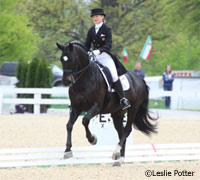
Jane Hannigan and Maksymilian
Jane Hannigan, shown here at the 2010 Kentucky Cup Dressage, is one of the featured Grand Prix riders at the PVDA ride for life. Photo: Leslie Potter

Combining equestrian entertainment at its best with support for breast cancer research, the Potomac Valley Dressage Association (PVDA) will present the 8th Annual PVDA Ride for Life, June 25-26, at the Prince Georges Equestrian Center (14900 Pennsylvania Ave.) in Upper Marlboro, Md.

Attracting as many as 6,000 visitors throughout the course of the weekend, the event will feature a two-day USDF-recognized dressage show, the acclaimed Dancing Horse Challenge, demonstration rides, children’s activities, boutique shopping, a black-tie optional gala, silent auction and many more opportunities for family fun, while raising funds for the Johns Hopkins Avon Foundation Breast Center in Baltimore.

“We are very dependent these days on the generosity of others to fulfill our mission and goals of the breast center,” said Lillie D. Shockney, RN, BS, MAS, administrative director of the Johns Hopkins Avon Foundation Breast Center. “The Ride for Life event greatly supports our efforts so that more patients can become survivors of this disease, as well as receive quality of care at Hopkins, and through our training efforts, also elsewhere.”

Dancing Horse Challenge
The weekend’s highlight is the Dancing Horse Challenge, Saturday, from 6:00 to 8:30 p.m. (doors open at 5:00).

As one of the premier equestrian nights on the East Coast, this lyrical blend of dance, music, lights and equestrian prowess is woven into a moving theatrical performance.

Featuring international and national riders and Olympians, the Dancing Horse Challenge becomes a call to heal, to give and, most importantly, to celebrate life. Grand Marshals are Ann Romney, former Massachusetts First Lady and dressage Gold Medalist, and Olympian Debbie McDonald. Special guest is Olympian Courtney King-Dye.

Yvonne and Kim Barteau of KYB Dressage, famous for entertaining audiences with skits inspired by the “Lion King” and “Arabian Nights,” will be returning to perform new vignettes. Vitor Silva, acclaimed instructor and founder of the Sons of the Wind School of Equestrian Arts, will be returning this year also to perform dressage and haute ecole movements with his Lusitano stallions. Bent Jensen, an Olympian, Grand Prix champion and trainer, will perform a full-costumed, musical freestyle based on the music of Lady Gaga. Dutch Chapman, a two-time NRHA World Champion and acclaimed trainer, will perform western reining demonstrations.

Additional riders on the bill to perform musical freestyles include Shannon Dueck (World Cup and Grand Prix champion and Pan AM Games Silver Medalist, Jane Hannigan (Grand Prix rider) and Kathy Priest, (Grand Prix rider, trainer and instructor). For updates about participating riders and their performances, visit /redirect.php?location=www.pvdarideforlife.org.

Throughout the evening, guests can purchase food and beverages on the concourse from Putting on the Ritz. They also can shop among our vendors, look for Ride for Life souvenirs and visit the silent auction area to bid on such items as jewelry, artwork, crafts, memorabilia, gift certificates and riding clinics.

Immediately following the Dancing Horse Challenge is “Dancing in the Dirt,” which invites everyone in the stands to come down to the sand arena and dance to the live sounds of The Unruly Blues until 11:30 p.m.

Gala
The Dancing with the Stars-themed, Saturday night black-tie optional gala kicks off at 5 p.m. with a cocktail reception and strolling magic by Bill Gross. Gala guests will have special seating for the Dancing Horse Challenge and can go back and forth from the show to the auction and the reception for appetizers, and free beer and wine courtesy of Bob Hall, Inc. and Woodhall Winery.

The Cause
Proceeds from rider participation, sponsorships, ticket sales, merchandise sales, auction purchases, and food and beverage sales will be donated to the Johns Hopkins Avon Foundation Breast Center. Since its inception in 2004, the annual PVDA Ride for Life has raised over $320,000 for breast cancer research and improving the lives of those afflicted and their loved ones. This year, the event committee hopes to raise over $100,000.

Event History
Eight years ago, breast cancer survivor Patricia Artimovich found that her belief in the healing power of horses gave her the support to cry, to believe in her future and to gain strength through her battle and recovery. She felt that she had gained so much through her association with these “gentle giants” that she wanted to open that avenue to others and involve the dressage community.

Artimovich recommended that the Potomac Valley Dressage Association, a 501(c)(3) charitable organization), dedicate one of its one-day dressage shows and its proceeds to the Johns Hopkins Avon Foundation Breast Center, where she had received treatment. Since then, the Ride for Life has expanded to a weekend event and become a member of the Signature Dressage Seriesä.

About The PVDA
The Potomac Valley Dressage Association (PVDA) is the second oldest dressage club in the United States. Founded in 1964 in Gaithersburg, Md., it is a non-profit 501 (c) 3 organization that promotes the art and sport of dressage by providing leadership, education, scholarships and competitions. PVDA membership encompasses dressage enthusiasts in Maryland, Virginia, the District of Columbia, West Virginia, North Carolina, Pennsylvania, Delaware and New Jersey. For more information, visit www.pvdarideforlife.org.

Tips for Trail Riders: How to Slay a Dragon in 13 Steps

6

Life with Horses - Tips for Trail Riders: How to Slay a Dragon in 13 Steps
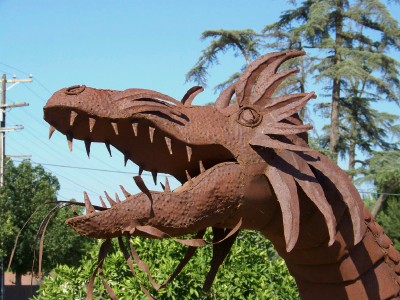
Just in case you come across a dragon like this on your next trail ride, I have some tips to help you slay it.

As I mentioned in my previous blog posting, my blustery, in-your-face Paint gelding, Wally, has finally met his match. And it’s a dragon statue sculpted out of rusted metal. After Wally suffered an existential crisis the first time he encountered the dragon, you’d think that I’d simply avoid riding past it again.

But then, you’d be wrong.

Because I’m nothing if not a horsewoman who wants to prove a point to her horse. And that point would be that metal dragons are not going to kill us anytime soon so we can just continue on past it thank you very much you idiot sorrel gelding.

Just in case you might encounter a dragon while riding, I’d like you to be prepared. So, with a hint of humor, I offer up How to Slay a Dragon in 13 Steps:

  1. As you approach the Realm of the Dragon, do so at a slow, leisurely pace. This will instill a sense of calm and tranquility to your horse. Who knows? Maybe he won’t even notice the towering monstrosity with its leering stance until you’ve ridden past it. And then it’ll be over before it starts.
  2. Well, that didn’t work.
  3. Take a moment to marvel at the equine’s ability to recognize subtle cues from the environment that signal potential doom and gloom. Interestingly, this may correlate with the behavior your horse displays when he sees the vet truck pull into the driveway.
  4. During initial phase of horse’s physical signs of Mental Meltdown (i.e. arched neck, bulging eyes, snorting nostrils, ears pricked forward like tines on a dinner fork, etc.) make a calculated attempt to distract him from dragon and also reconnect to your aids. Institute tactics promoted by that chorus of experts in your memory bank, including Clinton Anderson, George Morris, Julie Goodnight and Margie, your first instructor from Pony Club when you were 9.
  5. Despite all these well-intentioned Words of Wisdom, experience tells you that you’ll soon reach a point where your horse’s allegiance to your aids will be surpassed by his instinctual urge to get away from the dragon.
  6. Yes indeed. Always a multi-tasker, your horse decides to exhibit both aspects of the fabled “fight or flight” conundrum: He’s fighting you for not allowing him to take flight from the dragon.
  7. Achieving a détente of sorts, you finally convince your horse to settle down long enough to realize that the dragon is not going to eat him. Well, at least not right at this very moment. Pat your horse enthusiastically on the neck. Look for signs that he’s relaxing. Did he lick his lips? Turn an ear back toward you? Flex at the poll? Cock a hind leg?
  8. Somewhat emboldened, you urge your horse across the street, because this would amount to true victory. He shall now cross the street and continue down the trail, traipsing directly into the path of the dragon! Hoo-rah!
  9. Or… not. He reaches the middle of the crosswalk and simply. Cannot. Take. Another. Step. Frozen in place, you attempt to restart his forward momentum. This exercise in futility only serves to prove once and for all that no 115-pound woman can physically make a 1,000-pound horse go someplace he most certainly does not want to go.
  10. Rather than allow your horse to perform his version of the Electric Slide on a public thoroughfare covered with asphalt, you turn him around and go back to the safe side of the street (the non-dragon side) and reconsider your options. Ask yourself: “Is this the hill I want to die on?” Envision the hospital visits, the whisperings at the funeral, and the obituary in the local paper. People will be quizzically asking each other in hushed tones, “And it involved a dragon statue?”
  11. Dismount. Pull reins over horse’s head. Lead him across road to meet the dragon face to face. Although horse doesn’t follow readily, he does come, each stiff-legged step mimicking the unsure, wary walk of Frankenstein’s monster. No doubt he’s calculated that the length of the reins will permit just enough time for him to bolt and run after the dragon snatches you in its jaws.
  12. Stand outside dragon’s lair for an indeterminate amount of time, as long as it takes for horse’s eyeballs to return to their original position in his skull. Console horse continuously by stroking mane and interjecting soothing comments like, “At some point you’re going to grasp that this is an inanimate object and then you’re going to feel really stupid.” Meanwhile, wish you had a dollar for every driver who pauses to ask if you were bucked off. (Doesn’t anyone every dismount voluntarily in this town?)
  13. Fortunately, before sunset and before your husband contacts the sheriff and insists on a search party, your horse visibly sighs and drops his head. After much contemplation he has dismissed the dragon as merely another example of bad yard art. Finally. You stick a foot in the stirrup and remount. Pat horse reassuringly. Then school horse back and forth in front of dragon until you’ve worn a furrow in the patch of crab grass outside the fence line.

Eventually head home, both you and the horse exhausted from the ordeal of slaying a dragon.

<< Previous Entry

Back to Life with Horses

Government Accountability Office releases report on horse slaughter

21

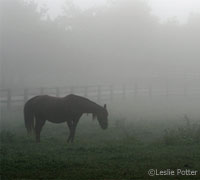
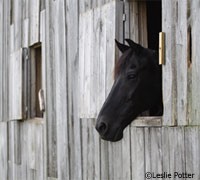
Horse in fogEither allow domestic horse slaughter in the United States or ban it and the export of horses to foreign countries for slaughter. This is the recommendation made by the Government Accountability Office (GAO) in the long-awaited report on horse slaughter. Click here to read the full report.
Officially titled, “Horse Welfare: Action Needed to Address Unintended Consequences from Cessation of Domestic Slaughter,” the report explores if and how horse welfare has been affected by the de facto ban on horse slaughter beginning in 2007. While slaughter is not technically illegal, the USDA is prohibited from funding inspections of horse meat or horses for slaughter, effectively eliminating the practice. Some of the aspects of horse welfare taken into consideration for the GAO report are rates of neglect and abandonment, sale prices of horses, and welfare of horses being transported to slaughter.

The report finds that horse welfare in the United States has declined since the closure of the American slaughterhouses, although that decline appears to be due in part to insufficient regulations protecting horses and not simply the lack of a domestic slaughter option. In fact, one of the GAO’s proposals is to explicitly ban horse slaughter and the export of horses to slaughter for human consumption. The report’s final recommendation is as follows:


“…to allow USDA to better ensure horse welfare…Congress may wish to consider allowing USDA to again use appropriated funds to inspect U.S. horses being transported to slaughter. Also, Congress may wish to consider allowing USDA to again use appropriated funds to inspect horses at domestic slaughtering facilities…Alternatively, Congress may wish to consider instituting and explicit ban on the domestic slaughter of horses and export of U.S. horses instead for slaughter in foreign countries.”


Some of the report’s findings:

  • Prices for low- to mid-priced horses decreased as much as 21% due to the end of domestic slaughter with the lowest-priced horses being affected the most. The sale prices on high-end horses were not significantly affected. The GAO used horse prices from three large auctions that deal in both loose (unbroke horses typically sold for meat) and riding horses and therefore do not include any data from private sales. The median sale price from the data used was $1,400.
  • At the same time, the economic downturn depressed horse prices by around 5% at all price levels, including high-end horses. In other words, while slaughterhouse closures had a much greater impact than the economy on low-end horses’ sale prices, any decrease in selling price for higher end horses was likely a result of the recession. For the purposes of this research, high-end horses are those that sold at auction for more than $1,750.
  • In interviewing state veterinarians and animal welfare associations, the GAO found widespread but anecdotal reports of an increase in horse neglect and abandonment since 2007. No official statistics exist, however.
  • Horses being shipped to slaughter now travel more than 200 miles farther than they did prior to the closure of the American slaughterhouses. Furthermore, the U.S. laws for humane transport no longer apply after the horses have crossed the border into Canada or Mexico.

The Animal and Plant Health Inspection Service (APHIS) transport regulation was established in 2001 to protect the welfare of horses being shipped to slaughter. Among other things, the regulation states that shippers must provide adequate food, water and rest, trailers must have sufficient space and ventilation, stallions and aggressive horses must be segregated from others, and horses must not be blind in both eyes, unable to bear weight on all four legs, or nearing their foaling date. The GAO report found that the current system has some gaping holes preventing enforcement of the transport regulation.

  • When horses are transported to slaughter, they may stop at feedlots along the way and aren’t designated as “for slaughter” until the final leg of their journey. The transport regulation only protects horses with that designation, so APHIS has no power to enforce regulations until that final leg of what is often a very long trip.
  • Because the USDA is prohibited from funding horse inspections, the officers charged with ensuring that drivers taking horses to slaughterhouses cannot actually examine the horses, only their documentation. APHIS proposed an amendment to fix this loophole in 2007, but the USDA has not yet implemented the change.
  • The transport program has insufficient funding with only two staff members and a limited travel budget. Because of this, they are unable to provide enforcement at the many Mexican and Canadian border crossings that horses are shipped through.

In response to the GAO’s recommendations, the USDA has agreed to work to implement the APHIS’s proposed amendment to expand the transport regulation. The USDA has also said that they will train additional personnel to enforce transport regulations and work with officials from Canada, Mexico, and the Texas Department of Agriculture to ensure consistent handling of slaughter horses throughout the shipping process.

Horse slaughter will continue to be a highly controversial issue within the horse industry and the federal government. Earlier this month, Senator Mary Landrieu (D-La.) and Lindsey Graham (R-S.C.) introduced SB 1176, the American Horse Slaughter Prevention Act, which would outlaw sale or transport of horses or horse meat for human consumption. The bill is currently sitting in committee and has not been scheduled for a vote.

Further Reading
How Humane is Horse Slaughter?
Horse Welfare: Action needed to address the unintended consequences from cessation of domestic slaughter

Advanced Water Crossing

0

Even the most experienced trail horses will resist some types of water crossings because their instincts tell them it is unsafe. These might include:

  • Steep descents into the water
  • Thick mud along the banks
  • A soft surface under the water
  • Anything floating in the water
  • Rapidly moving water
  • A reflection off the water
  • Large rocks and boulders in the water

When you encounter any of these, listen to your horse and act accordingly. Always be prepared to dismount and test the surface yourself. If you find yourself sinking in thick mud or you can’t determine if the surface under the water is safe, then don’t attempt to cross it. If the current is strong or deep, find another, safer route. You don’t want to undo all the good water-crossing training you’ve done or, more importantly, get into a situation where you or your horse can be injured.

Back to Conquer Water Crossing >>

0FansLike
0SubscribersSubscribe
We use cookies to help personalize content, tailor and measure ads, and provide a safer experience. By navigating the site, you agree to the use of cookies to collect information. Read our Cookie Policy.
OK