0 ITEMS
  • My Account
  • Holiday Gift Guide
  • Podcast
  • Webinar
Subscribe Combo
Enable cache13
Home Blog Page 641

Question of the Week: My horse won’t jump in both directions

1

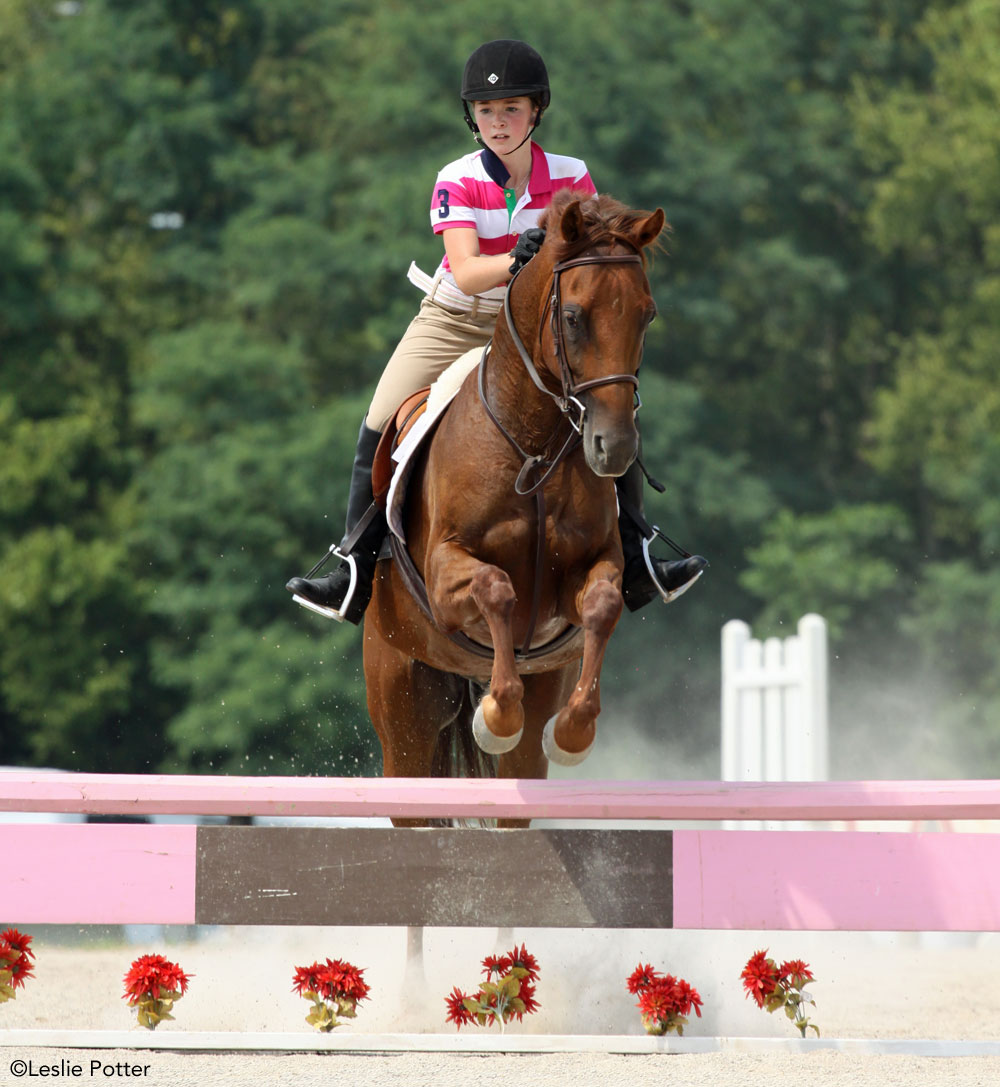
Horse and rider jumping a vertical jump.

Q: I’m teaching my green horse to jump and I’m having a problem I can’t seem to fix. My horse jumps fine in one direction, but going the other way he often refuses. What am I doing wrong?

A: Horses often prefer to jump one direction more than the other, whether it’s on a large circle (cantering jumps on the left or right lead) or a straight line (headed either toward or away from the gate or barn). Part of training a horse to jump, however, is to make sure their performance is consistent regardless of the direction. Here are a few things to consider.

First, go back to flatwork. Spend time trotting and cantering back and forth over simple poles on the ground or small crossrails. Focus on riding a track that takes your horse directly across the center of the obstacle. Use cones or other markers to help you visualize your track. Then halt in a straight line. If your horse shifts his haunches or forehand off the track, gently push him over with your leg. Don’t settle for “good enough.”

Next, work on cantering medium-sized circles (about the diameter of a longe line), keeping your horse round and bent in the correct direction. Lay a single ground pole across your circular track, and then eventually graduate to a small crossrail. Make sure you travel in both directions so your horse becomes soft and supple regardless of which lead he’s on. Any time you feel your horse bulge or push through your inside or outside leg, in an effort to escape the circular track, correct him with your leg aids.

Finally, consider enlisting some help from a riding instructor in your community. Having someone on the ground who can evaluate errors in your position or missing elements in your horse’s training can benefit both you and your horse. Keep in mind that once a horse begins to refuse it can become a habit. Eventually you’ll begin to anticipate the refusals, which undermines your self-confidence and affects your position in the saddle. Then your horse’s performance will suffer further. It’s sort of a vicious cycle, but fortunately some professional instruction should give you the insight, and the encouragement, you need.

Celebration at Old Friends

0

Recently we posted a news item about Old Friends, a Thoroughbred retirement center here in Kentucky. Due to a clerical error at the bank, the charity found itself in dire need of a pretty substantial amount of money to pay the mortgage. The good news: They were able to raise the funds and negotiate with the bank to get everything resolved. The better news: They posted this video of their mascot, Little Silver Charm, playing soccer, and it is ridiculously cute.

Read more about Old Friends and Little Silver Charm here.

<< Previous Entry

Back to The Near Side

Conquer Water Crossing

0

Does your horse act as if he’ll go down like the Titanic if he has to cross a water puddle? Would he rather scale a cliff than cross a creek? If so, here’s your ticket for a safe passage to the other side.

I know firsthand the frustration of trying to coax an unwilling horse across water. In the past, every time I would come to a water crossing of any kind, whether it be a stagnant puddle or a meandering stream, my horse would find some way around it—usually via thick underbrush or low-hanging branches.

If there wasn’t a way around it, he’d jump over it like it was the final round of a puissance class. If the water crossing was impassable in his mind, he would engage his hindquarters and execute a high-speed spin and reverse combination that left me dizzy, barely hanging on and wondering where he’d learned such a maneuver, as I certainly hadn’t taught him. On several occasions, we would reach an impasse. He wasn’t budging and I wasn’t giving up … until, of course, I did.
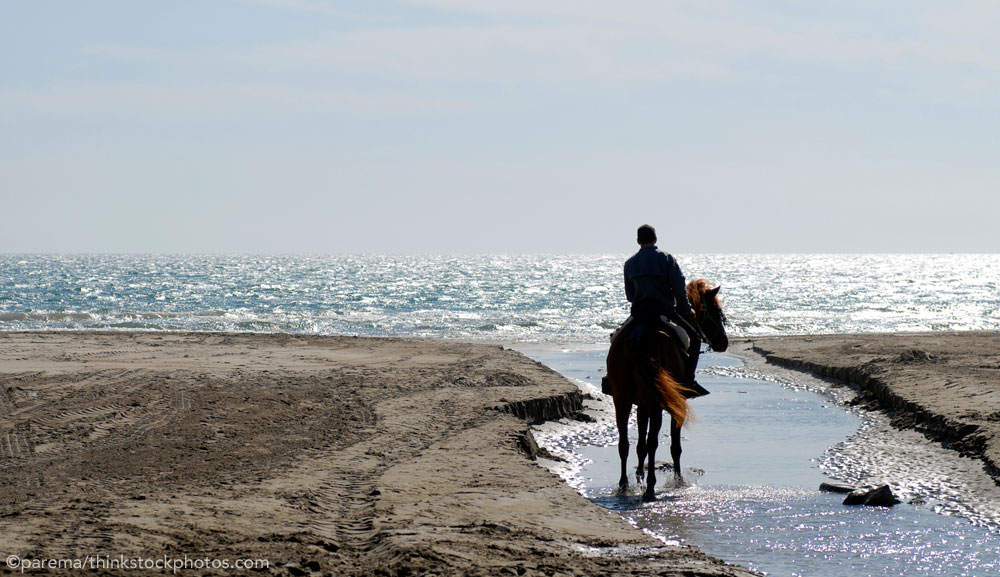
Water Crossing on the Beach


What was it about water that made my trusty trail mount so fearful? I thought about this one day as I retreated for home, defeated by my horse and a 4-foot-wide creek. I realized that, while I was meticulous about training my horse to have impeccable manners on the ground and under saddle, I never took the time to teach him to cross water. Rather than dealing with the situation, I would just hang on and hope for the best. I had an “I’ll cross that bridge when I get to it” attitude. The problem was that there was never a bridge. I decided it was time to build a lesson plan for crossing all types of water obstacles obediently and—more importantly—safely.

On Dry Land

It can be unnerving to ride a horse that opts to scramble through or over just about anything (usually without paying attention) to avoid getting his feet wet. Worse than that is a horse that gets right up to a water crossing, bunches up and then leaps wildly over it. This is a recipe for a wreck because the horse is so intent on clearing the water that he’s not at all focused on his landing spot. Even if you manage to stay seated through the launch, there’s still the chance of getting jarred out of the saddle upon landing. None of this makes the next water crossing any easier.

The first step is to go back to school (the arena) and brush up on some basic skills. These skills are must-haves for all trail horses, as there is nothing potentially more dangerous than a horse that doesn’t listen to his rider when encountering a scary obstacle. If that obstacle is a downed tree or a rocky section of trail, it’s not such a big deal; however, a washed-out cliff or a rattlesnake might be.

A trail horse must listen to his rider’s leg, rein and voice cues at all times. He should willingly yield and sidepass in both directions. He should back up easily and calmly, turn on the haunches to change direction and stand quietly. If he is resistant in the arena, he will be resistant out on the trail, so practice these skills at home.

Remind your horse (if he forgot) or teach him (if you haven’t already done so) that he must not jump over obstacles unless asked. He should willingly step over or through any obstacle. This is best accomplished by teaching your horse to step-whoa. Ask your horse to take one step, then stop, and then take another step and stop. When asking your horse to take a step, squeeze lightly with your legs (don’t kick), lean forward slightly, give the reins and say “step.” As soon as you feel him pick up a front foot, sit up, pick up your reins and say “whoa.” Make your cues subtle yet precise. Your horse should put that foot down and stop. Practice this exercise until your horse consistently responds to your commands by taking one step at a time.

When trail riding, practice these exercises exactly as you did in the arena. Sidepass around a rock, leg-yield from one side of the trail to the other and execute a turn on the haunches to reverse direction on a narrow trail. Practice the step-whoa as you encounter changes in the terrain. This will prepare your horse for water-cross training.

Get Your Feet Wet

When you are ready to conduct your first water crossing field test, be prepared to get your feet wet. Wear rubber boots if you don’t want to get your riding shoes and socks wet. If you’re not willing to walk into the water, your horse won’t be, either. Select a suitable location: A large puddle or shallow creek with a solid bottom is ideal. Don’t use a pond, puddle or creek that is muddy, mucky or too deep. You want to convince your horse that putting his feet in the water isn’t going to result in him being sucked into a giant black hole. Having that actually happen won’t do much for your success. Whatever location you choose, make sure that it’s wide enough that jumping over it isn’t an option.

Begin the lesson mounted. Ask your horse to approach the water. If he tries to go to one side or the other, use your legs to cue him back to the center. Don’t worry about asking him to go forward until you get him back to that spot and can hold him there. You must be firm in letting him know that he needs to listen to your leg. Next, ask him to take one step, then stop, then take another step and stop again. As soon as he gets to the water’s edge, stop and let him stand there and think about it. If he wants to smell the water, let him. If he wants to drink it, even better!

A horse that really dislikes water and equally dislikes having to do something he doesn’t want to do will usually become agitated and perhaps even throw a tantrum. It is important that you don’t do the same. In situations like this, it can become less about the water and more about who is going to get their way—you or your horse. Be patient, consistent and reassuring to your horse. Your firm cues should let him know that he has no other option but to do what you ask.

Because your horse is strongly motivated by self-preservation, make sure that your actions do not increase his fear. If your horse resists your cues when you are 3 feet from the water’s edge, then make getting 2 feet from the water’s edge your goal. When you get to 2 feet, make getting 1 foot from the edge your goal. With each goal met, convey reassurance and confidence to your horse.

If you make it to the edge of the water and your horse will stand there quietly, then dismount. Put the reins over his head and snap them to the halter (assuming you use a halter/bridle combination headstall). Stand beside him and walk forward into the water, cueing him to do the same. Many horses that won’t cross water on their own will willingly follow their rider through. If this goes well, stop when your horse has all four feet in the water and let him get used to it. Continue through the water to the opposite bank. If your horse gets anxious, slow down. Don’t allow him to rush out of the water.

Repeat this exercise, walking back and forth across the water until your horse follows you willingly without hesitation. Then mount up and repeat the exercise under saddle. Once your horse calmly crosses this particular puddle or creek, go in search of another and repeat the lesson or ride around for a while and then return to the same water crossing. Finally, accept that you will need to repeat this exercise every time you encounter a water crossing until your horse accepts that all water crossings are more or less the same.

Monkey See, Monkey Do

If your horse fails this exercise miserably and the only progress you make is getting him to stand still for a few minutes 6 feet from the water’s edge, then you must resort to conning him into crossing the water. The best way to con a horse is by bringing along another horse. If you follow my monthly Trail Guide column, you know I am a big proponent of the “buddy system.” A green trail horse will quickly bond with another, more experienced horse and follow him wherever he goes, including through water.
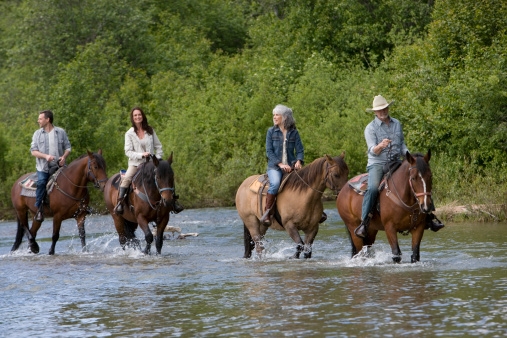
Group trail riding through water


Put the veteran horse in the lead. Have him walk to the edge of the water and then into it. Cue your horse to follow. Ideally, you’d like for him to step into the water, sniff it and taste it. If he won’t, then have the veteran horse move farther into the water and out to the opposite bank. Your horse will be torn between not wanting to step into the water and not wanting to be left behind. As soon as you get him into the water, stop him or at least slow down his forward movement. Remember, you don’t want him rushing out of the water. Make him walk out calmly.

Turn around and do it again. You will likely find that it will take just as long as it did the first time. In your horse’s mind, the same water crossing from the opposite direction isn’t the same water crossing. Repeat the exercise until your horse willingly enters the water without hesitation and leaves it calmly.

Next, go for a short ride and then return to the water crossing or go to another one. You want to expose your horse to the obstacle repeatedly in the same day,
and then go back as regularly as possible.

Once your horse is comfortable walking through puddles and creeks, the next exercise is to cross a narrow water obstacle. The goal of this lesson is to walk through or over something that he could easily jump. Utilize the step-whoa command to achieve this. Practice by going back and forth across the obstacle until your horse is electing to walk over or through it on his own.

Further Reading
Pat Parelli: Crossing Water with Confidence
Advanced Water Crossing


This article originally appeared in the July 2010 issue of Horse Illustrated. Click here to subscribe.

Equine Respiratory Health

8

The daily exchange of oxygen in our horse’s lungs is something we often take for granted. Flaring nostrils after a brisk gallop is something we equate with good health and that fiery equine mystique that reminds us of our mount’s wild heritage. It’s only when something goes wrong with a cough here or a runny nose there that we realize what can happen when our horse’s respiratory health is at risk. Here is a guide to the most common equine respiratory ailments, how they can be treated, and most importantly, how to prevent them.

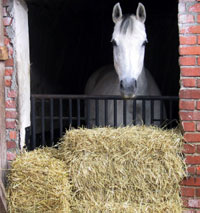
Horse looking out stall window
If your horse can’t live outdoors, make sure your stalls are well-ventilated.

Causes

While there are subsets of respiratory diseases that affect specific types of horses more frequently, such as young foals and elite athletes such as racehorses, the most commonly encountered causes of respiratory disease in the local barn fall into two categories: inflammatory and infectious.

Perhaps the seemingly most ubiquitous respiratory ailment of the adult horse is Recurrent Airway Obstruction (RAO), also known as heaves or “broken wind”, and previously referred to as Chronic Obstructive Pulmonary Disorder (COPD). RAO is a hypersensitivity reaction in the horse’s airways to microscopic allergens in the environment, usually spores of fungi or mold. These allergens cause inflammatory reactions in the horse’s respiratory system, resulting in the release of histamine and other chemical mediators that increase production of airway secretions and cause constriction of the airways. This bronchoconstriction results in the following clinical signs: increased respiratory effort, exercise intolerance, and a chronic cough. Some horses suffering from chronic and untreated heaves develop what is called a “heave line” – excessive muscle development along the rib cage from constant heavy breathing.

Once diagnosed by a veterinarian, heaves can usually be controlled by environmental management (see below) and therapeutic drugs. Medications used usually involve steroids and bronchodilators, sometimes in the form of inhalants.

The most common causes of contagious respiratory diseases are a result of viral infections. Horses are susceptible to the influenza virus, as well as the herpes virus family, specifically equine herpesvirus 4, also known as rhinopneumonitis. Both of these illnesses usually result in a fever, lethargy, and some nasal discharge with or without a cough. Antibiotics are usually given to prevent secondary bacterial infections, and rest, TLC, and other supportive care such as IV fluid therapy, may be required as the horse recovers. Other viruses such as equine herpesvirus 1 and adenovirus can also cause respiratory illness, but are not as common as the other two viruses mentioned here.

Strangles, caused by the bacterium Streptococcus equi, is another highly contagious respiratory disease, manifested by abscessed lymph nodes located most commonly under the horse’s jaw line, or throatlatch, area. Although normally a superficial disease, occasionally the bacteria spread systemically, causing what is called “bastard strangles” which can be life threatening.

The use of antibiotics to treat strangles is sometimes debatable and oftentimes this condition is managed with supportive care until the abscesses are drained. The fluid from these abscesses contains enormous amounts of bacteria, making the contents highly contagious, leaving clean up of the disease to be a nightmare for a large barn. Prevention by vaccine is the best course of action.

Prevention

The air quality in your horse’s daily environment is the greatest influencer on the health of your horse’s lungs. Environmental dust and allergens or the exposure to pathogens spread by other horses can, to a certain extent, be eliminated through proper barn management.

Horse in stall with hay

The most natural environment for a horse to live is outside. Many horse owners assume a cozy stall is the ideal environment when in fact a large pasture is the easiest place to decrease dust/mold/pollen and other allergens that can cause inflammatory reactions within your horse’s lungs.

However, in many places a wide-open field is simply not a feasible way to keep a horse. If this is the case, you can still keep the “no-allergen” rule in mind when stalling a horse. Firstly, choose your bedding wisely – not all straws and shavings are created equal. Experiment with different composites and brands to find the bedding that generates the least amount of dust. Secondly, evaluate the hay. Depending on the cutting and the age of the bales, hay can be extremely dusty – if this is the case, simply wetting the hay down does an excellent job of ridding extra dust.

Also consider where your hay is stored. The best place to store hay is in another building altogether. If this is not feasible, moving the hay as far from the stalls as possible is another solution.

Ventilation is also important. Always try to keep as many doors and windows open in the barn as possible, allowing fresh air to travel through and circulate away dust and ammonia fumes.

A current vaccine program is the best prevention against infectious causes of respiratory disease. Your horse’s personal vaccine program will be determined by many factors, so be sure to discuss it with your veterinarian. In general, if your horse has at least some exposure to other horses, vaccines for influenza and rhinopneumonitis are warranted. Horses that travel frequently should be boostered for “flu/rhino” at least twice a year. There are also vaccines available for strangles.

When traveling, bring your horse’s own grooming equipment and buckets. Don’t share tack and keep direct contact between your horse and others to a minimum.

By implementing some simple management practices into your routine along with being aware of the most common respiratory diseases, preventing these problems in your horse can be fairly straightforward, allowing you to breathe easy when it comes to the health of your horse’s lungs.

Further Reading
Heaves in Horses
Why does my senior horse cough?

Young Paint Horse exhibitors prepare for 2011 Youth World Championship Show

5

Paint horseThe focus is on the youth at the 2011 American Junior Paint Horse Association (AjPHA) Youth
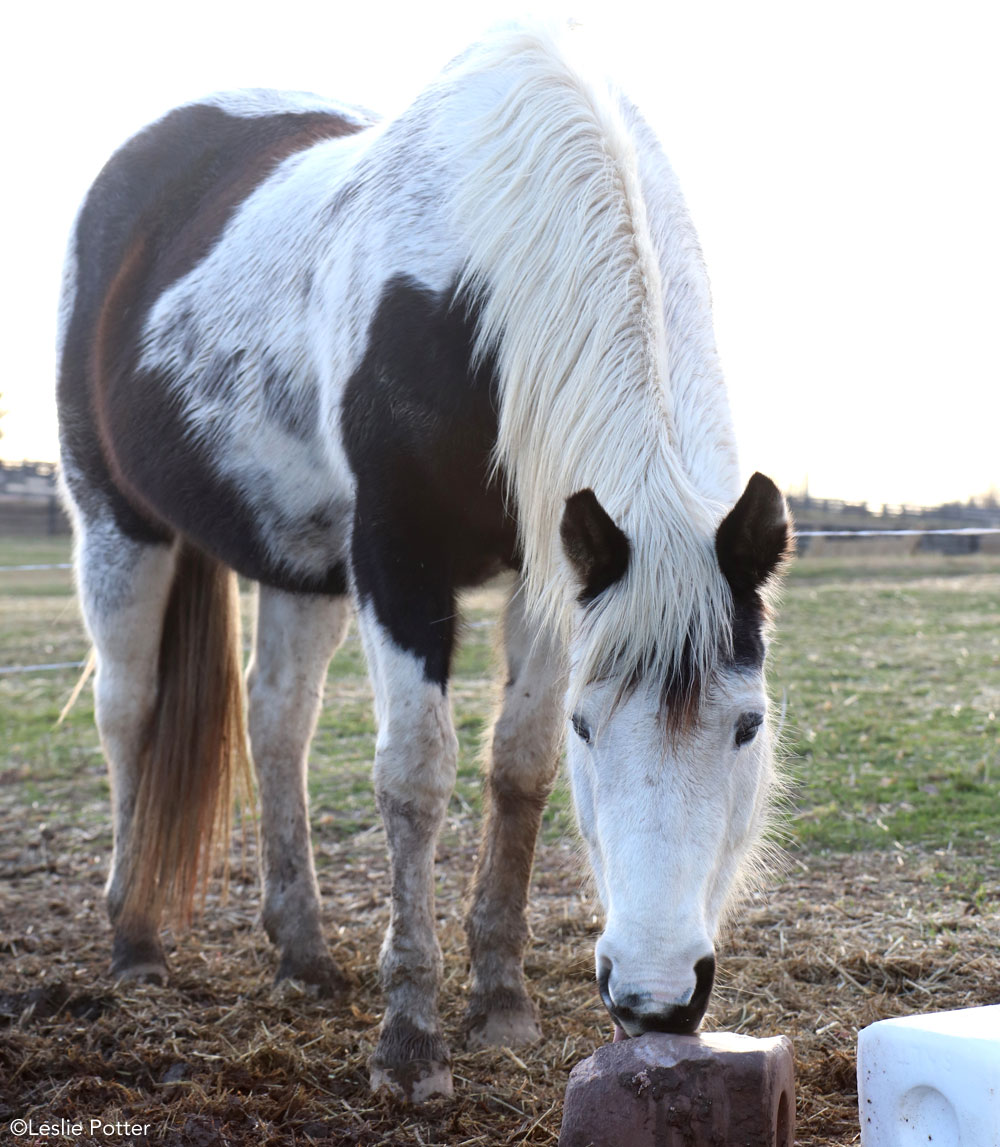
World Championship Show June 24 – July 2 in Fort Worth. The AjPHA Youth World Show will
showcase the talent of both the Paint Horse breed and the young people who exhibit them with
73 world-title classes in a full array of disciplines, in addition to a handful of assorted
other classes specifically for the youth competitors.

The fun begins as youth from across the country converge to compete for world championship
titles, share in common experiences, and make memories with nine full days of horse show
classes and a large array of other youth activities. The Association has received 1,284 class
entries to date.

World championship titles will be awarded in a full gamut of classes: leadline, walk-trot,
halter, showmanship, English performance classes, Western performance classes, speed events
and cattle events. APHA has added Novice Youth Hunt Seat Equitation Over Fences to the lineup
and reining classes are dual-approved by the National Reining Horse Association (NRHA). The
only youth class that will not be held at the summer event is youth cutting, which will be
held in conjunction with the remainder of the cutting classes this fall at the Open & Amateur
World Championship Paint Horse Show, November 2-12.

Outside of the Youth World Show most specialty events held for speed classes and ropers are
“pay out” events – meaning that the top-placing finishers receive cash payouts instead of
points. With that in mind, the Youth World Show this year will offer “jackpots” in the speed
and roping classes so that participants who opt in by paying a separate $25 entry fee will be
in the running for cash payout, in addition to the traditional breed registry points and
prizes.

The fastest overall times in each class (regardless of division) will be eligible for the
jackpot payouts. The classes included in the jackpot option include: Barrel Racing (Novice
Youth 18 & Under, Youth 13 & Under, Youth 14-18); Pole Bending (Novice Youth 18 & Under, Youth
13 & Under, Youth 14-18); Heading (Youth 18 & Under); Heeling (Youth 18 & Under); Steer
Stopping (Youth 18 & Under); Breakaway Roping (Youth 18 & Under).

More than a horse show
The Youth World Show is more than a horse show – with dozens of activities planned that don’t
require a horse to be involved.

Youth Boot Camp
Designed to give those youth competing at the World Show who don’t have the opportunity to
work with a trainer a chance to receive hands-on instruction from industry professionals in
preparation for the World Show experience. APHA professionals will assist the youth with
feedback and helpful hints for horsemanship, equitation and showmanship.

AjPHA Year-End Awards Banquet
Before World Show classes begin, AjPHA recognizes the top youth competitors for their 2010
year-end achievements at the AjPHA Year-End Banquet & Dinner on Friday, June 24. Advance
tickets required.

Paint For A Day Youth Open All-Breed Show
We “zing the bling” and make it fun at Paint For A Day on Saturday, June 25. All breeds of
horses are welcome, and each entrant receives a free AjPHA membership. All will have a great
day of learning about the Paint Horse industry, making new friends and being able to show
their horse. Plus, you’ll get a chance to take in the sights and sounds of a World
Championship Paint Horse Show.

Hart Youth Horse Judging Contest
One of the largest competitions of its kind, the AjPHA Judging Contest will be held on
Sunday, June 26. Individuals and teams can compete in two age divisions (13 & Under or 14-19)
as well as two categories (Open and AjPHA/APHA Regional Club). Top individuals and teams take
home great awards. The high-point individual in each age division will receive a special $500
award presented by the event’s presenting sponsor Hart Trailers. High-point teams in each age
division and category will receive Gist buckles.

AjPHA National Convention
The largest meeting of the year for all “j” members, and a prime opportunity to help shape
the future of the youth Association. Youth will vote on their national directors, hear about
rule changes, vote on by-law changes and elect the AjPHA Executive Committee on June 28.

  • Clue of the Day Contest Throughout the show
  • Activity Involvement Punch Card Contest Throughout the show
  • Youth Team Tournament June 24, 25, 27
  • Boot Scramble June 25
  • Youth Welcome Party w/live band “XAOS”
    sponsored by Double C Acres June 25
  • Community Kids’ Day June 26
  • Horseless Arena Games & Activities Night
    June 26
  • Metro Golf Car Decorating Contest June 29
  • Coloring Contest Deadline June 28
  • Youth Exhibitor Social
    sponsored by The Fortenberry Family
    & Gillespie Show Horses
    June 29
  • Championship Dog Races June 29 & July 1
  • Ice Cream Social (JJ concourse)
    sponsored by Purina June 30
  • Gist Stick Horse Contest July 2
  • Parents’ Western Pleasure July 2
  • Youth Versatility Challenge July 2
  • Youth Awards Presentation July 2

Additionally, the vendors of the Colors of the West Gift Show are open daily from 9 a.m. to 6
p.m. around the show with fun, convenient shopping opportunities for all.

Full details, premium books and class entry forms are available online at
www.aphaworldshow.com. Entries are accepted until 5 p.m. the day prior to the class. The AjPHA
Youth World Show is open to all youth with registered American Paint Horses.

In the best interest of horse health, stringent measures have been put in place by both the
City of Fort Worth’s Will Rogers Memorial Center facility and the American Paint Horse
Association (APHA) to maintain a healthy and safe environment. APHA will enforce a 10-day
health certificate requirement (instead of the traditional 30-day certificate) and will have a
health check-in station for all horses entering the grounds to verify proper documentation
before horses can be unloaded.

Iodized salt can help your horse’s health

4
Horse with a red mineral block and white salt block
White and brown salt blocks generally do not contain iodine, whereas blue and red ones do.

A full-sized horse does best on a diet that offers 1 to 6 mg of iodine each day to keep his thyroid gland working properly. Because the iodine content of grass is too low to measure, it is best to rely on supplementation — from salt or other sources — to meet your horse’s need. Many supplements and fortified feeds already add it. It’s always best to know what your horse is consuming since too much iodine can damage the thyroid gland.

Since all full-sized horses require at least one ounce (2 tablespoons) of salt per day for maintenance (and up to 3 ounces/day when perspiring heavily), iodized salt is a good way to add iodine and provide the needed salt as well. Granulated salt that you buy in the grocery store comes in both non-iodized and iodized versions; one teaspoon of iodized table salt contains 0.4 mg of iodine (3 tsp = 1 Tablespoon = 15 ml).

White and brown salt blocks generally do not contain iodine, whereas blue and red ones do. Sea salt, kelp, and other natural salt sources can vary tremendously in their iodine content. Only use reputable sources that guarantee their iodine analysis in writing.

Looking for more advice on optimal nutrition for your horse? For more than 20 years, Dr. Juliet Getty has taught and consulted on equine nutrition. Her comprehensive book, Feed Your Horse Like A Horse: Optimizing your horse’s nutrition for a lifetime of vibrant health, is available in hardcover and CD through her website or at Amazon.com. At www.gettyequinenutrition.com horse owners and managers will find a library of helpful articles, the “Ask the Nutritionist” forum, and a calendar of appearances, teleconferences and interviews; register at the website for Dr. Getty’s popular (and free) monthly e-newsletter, “Forage for Thought.”

Dragonslayer

5

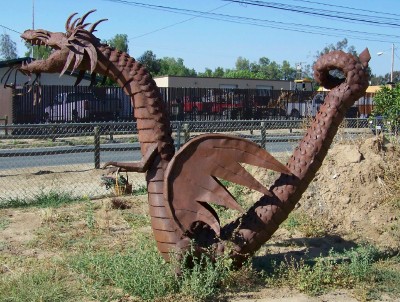
Scary dragon statue

Wally has met his match, and it’s a big metal dragon statue.

I believe I speak for all trail riders when I say that avoiding a Spook Fest is one of our primary goals. Fortunately, most of the time the scariest things we encounter are rather mundane, like blowing plastic bags, school buses and yippy little dogs. It might take a moment, but our horses eventually process the situation, analyze the potential threat (or lack thereof) and move on. It’s when our horses can’t categorize the object that trouble ensues. At least that’s my theory.

As a case in point I offer up Wally and the way he reacts to a metal dragon statue in our town. It sits on a sparse corner lot several blocks from my house. I hesitate to say the rusty sculpture is life-sized because I’m not quite sure how large dragons are in real life. But this thing’s pretty big. It’s also quite detailed, all the way down to the flaming tongue and outstretched talons. Why someone thought it looked cool presiding over a patch of dirt and wild mustard plants I’m not sure, but there it sits. And Wally simply cannot handle it.

Keep in mind that Wally is what I consider a very brave, confident horse. In any group or herd situation, he is the alpha horse. Combine that attitude with years of professional western training and, generally speaking, he’s an awesome horse to ride on the trails. He splashes through water crossings like an amphibian. He’s fearless around traffic. He trudges up hills like a bulldozer. But when faced with a dragon? He falls apart.

Ideally, at the onset of the dragon duel, I’d like him stay sane long enough for me to show him that the dragon isn’t real. Then I could convince him that the dragon isn’t any more likely to eat him than, say, the ratty looking furniture that’s often left abandoned, curbside, on trash days. That sort of stuff he inspects with intense curiosity, like a shopper at a thrift store.

How does Wally react to the dragon? Stark fear. His muscles become rigid, his eyes pop out of his head like they’re spring-loaded, and he exhibits a bold desire to go in any direction, providing it’s not in the direction of the dragon. Wally’s encounters with the dragon could be Exhibit A in “Proof that a Human Being Cannot Physically Coerce a Horse into Going Someplace it Does Not Want to Go.”

And yet, I did succeed, eventually, in getting him past the dragon. Twice.

The trade-off? I had to spend a considerable amount of time standing next to a sagging chain link fence, under the gaze of a mythical beast, while holding the reins of a snorting horse. I’ll share that whole experience—recounted with a humorous slant—in my next blog post.

<< Previous Entry 

Back to Life with Horses

Robert Cacchione of the Intercollegiate Horse Show Association receives recognition

6

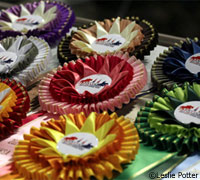
Intercollegiate Horse Show Association ribbonsPfizer Animal Health and American Horse Publications (AHP) presented Robert Cacchione with the tenth annual Equine Industry Vision Award at a ceremonial breakfast held during the AHP 2011 Hoofprints in the Sand Seminar in San Diego, CA. Established in 2002, the Equine Industry Vision Award was the first of its kind to showcase innovation and recognize ingenuity and service across the entire equine market.
Robert has earned this honor for his exemplary vision to start an organization that would allow any college student to participate in horse shows, regardless of financial status or riding level. As Executive Director and Co-Founder, Robert Cacchione is best known for his 44 years of dedication to the Intercollegiate Horse Show Association (IHSA).

“It’s an honor to recognize Robert Cacchione and his outstanding vision and service to the IHSA on the special tenth anniversary of the Equine Industry Vision Award,” said Kristin Ruff, Director at Pfizer Animal Health. “Robert Cacchione and the IHSA have helped transition thousands of young graduates into various segments of the equine industry.”

Anyone who has participated in the IHSA or is familiar with the organization automatically thinks of Robert Cacchione as the two go hand-in-hand. Robert’s vision began in 1967, while he was a Business Administration major at Fairleigh Dickinson University in New Jersey. Through the campus riding club, Robert met the Dean of the History Department, Jack Fritz. He proposed the idea to Jack of making the sport he loved available to any college student, regardless of gender, experience or financial wherewithal. At the core of Robert’s own passion for riding and keen appreciation for the opportunities made available to him as a young horseman, is his understanding of the horse’s role as a great equalizer. With the concept of a level playing field as his cornerstone, he rallied the support of like-minded individuals from educational institutions first in his region, and ultimately, from throughout the United States. Thus, with Jack Fritz by his side as co-founder, the Intercollegiate Horse Show Association was born.

From five colleges and a handful of riders in that 1966-67 inaugural year of competition, today’s IHSA serves more than 370 participating colleges and universities and 8,700 riders across 47 states and Canada. IHSA alum impact every facet of the equine industry, from U.S. Olympic Show Jumping Medalists, AQHA and NRHA champions, to dedicated talent behind the scenes, in administration and promotional roles overseeing the national goals of breed and discipline associations, and equine welfare.

With 44 years of Robert’s dedication and leadership, the IHSA has had some great milestones. In 1971, Robert arranged for New York Cartier Jewelers to donate the Cartier Cup (valued $32,000) to be awarded for a 20-year period to the IHSA year-end national champion team. In 1984, Robert was named “Man of the Year,” by the Westchester County Horse Council, for his work promoting riding for New York State youth. That same year, the Intercollegiate Equestrian Foundation was incorporated to make scholarships available to select students on the bases of need, academic performance and participation in the IHSA tradition of sportsmanship and enthusiasm. Also, IHSA Nationals held Hunter Seat and Western classes together for the first time.

By 1992, the 25th Anniversary of the IHSA, the organization included 212 colleges in 34 states. The IHSA Board of Directors also began recognizing an Alumni division as integral to the organization. 1996 marked the start of academic awards for IHSA senior students, including Senior Athletic Academic Achievement Award for seniors on an IHSA team with a GPA of 3.5 or better; and in 1997 a Sportsmanship Award was added for outstanding performance by a student, coach, or volunteer at Nationals.

In 2007, Robert and the IHSA board voted to donate a portion of IHSA entry fees from Novice Hunter Seat Equitation on the Flat and Novice Western Horsemanship classes to Ride for the Ribbon, in support of breast cancer research.

In 2010, thanks to Robert’s tireless networking and the board of directors, the IHSA gained affiliation with the U.S. Hunter Jumper Association (USHJA), and launched an IHSA Chapter of the Professional Horsemen’s Association of America (PHA), further increasing the educational and membership benefits available to students and coaches.

“Robert Cacchione is a man of passion and extraordinary work ethic,” said L.A. Pomeroy, Official Media Liaison, Intercollegiate Horse Show Association. “His vision has touched the lives of thousands of students, coaches and volunteers, while changing the scope of intercollegiate competition. Everyone at the IHSA is so proud to share in this life-long achievement with him.”

The other finalists for this year’s Equine Industry Vision Award included Michael Blowen, president and founder of Old Friends, Certified Horsemanship Association and the Equine Land Conservation Resource. To request a nomination ballot for 2012 Equine Industry Vision award, please contact Chris Brune, Executive Director, American Horse Publications at 386-760-7743 or email AHorsePubs@aol.com. Nomination information will be available in fall 2011 at the AHP website at www.americanhorsepubs.org.

Four Przewalski horses released to their native habitat in Mongolia

8
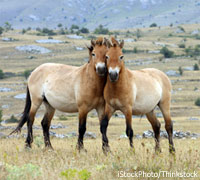
Przewalski Horses
Przewalski horses are the only truly wild breed as they have never been domesticated.

Four young Przewalski horses bred in captivity in the Czech Republic have been reintroduced to their native habitat in Mongolia. They will join more than 20 other horses previously reintroduced in the western Mongolian reserve of Khomiin Tal. The new herd members are Kordula, Cassovia and Lima, all mares, and one stallion called Matyáš.

Przewalski horses are native to the steppes, or grassy plains, of Mongolia. They are said to be the only truly wild horses as they have never been domesticated as opposed to American Mustangs and Australian Brumbies whose ancestors are believed to be feral. Przewalskis became extinct in the wild in the early 1970s due to mass hunting and spreading agriculture taking over the wild horses’ grazing land. Dedicated preservationists kept records on the horses kept in captivity and in the early 1990s, began the reintroduction process.

The first horses were brought in from the Netherlands in 1992. They were kept in acclimatization areas for the first two years while they learned how to live with the new climate and vegetation and created strong herd structures.

The four horses from Prague made the 3,700-mile, 17-hour journey in a military aircraft and will make the the final 170 miles to the Hustai Nuruu nature reserve on the road in a trailer. They will be kept in the acclimatization area and observed as they adapt to their new home.

For photos and more information about the horses, visit the Prague Zoo’s website at zoopraha.cz/en

What should you do if you encounter severe weather while trailering your horse?

4

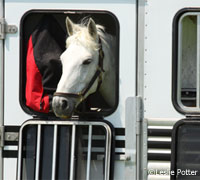
Horse in trailerThe severe weather season is upon us, and when things get rough, we’re reminded to DUCK:
  • D – Go DOWN to the lowest level.
  • U – Get UNDER something.
  • C – COVER your head.
  • K – KEEP in shelter until the storm has passed.

But how do you DUCK if you’re on the road and threatened by bad weather, including hail, heavy rain, thunderstorms and tornadoes? Getting to safety could be particularly tricky when you’re on the road hauling your horses.

USRider, the national provider of roadside emergency assistance for equestrians, spoke with large-animal rescue expert Rebecca Gimenez, Ph.D., about what to do when traveling in bad weather situations.

Gimenez, who is the president and a primary instructor for Technical Large Animal Emergency Rescue (www.tlaer.org), said, “Bad weather should NOT be a surprise.”

She adds,” With cell phones, GPS [units] and other conveniences of the modern world, you should ensure that you have access to a reliable weather app. Pick one that works for you – make sure it has moving radar and prediction capabilities. Have your navigator/alternate driver check it regularly on your route. Purchase a weather radio or a CB with a weather channel you can monitor.”

Another tip is to drive extra cautiously. Even in light snow or rain, slow down to a safer speed and allow greater following distance in front of your rig. Drive defensively, turn on your hazard lights, and, if the precipitation or wind gets too high that you cannot see, pull way off the road or preferably at the next parking lot available and wait it out.

Gimenez cautions, “No matter what you may have heard, NEVER attempt to shelter under an overpass from a tornado, nor park your rig under a flimsy gas station overhang. Instead, plan a route that will take you out of harm’s way – left or right – of the approaching storm and attempt to find shelter for yourselves in a solid building.”

She adds that in a real weather emergency, the horses will have to be left to nature’s will inside the trailer. “They are safer there – protected from rain, hail, snow, wind, and flying debris. Never let animals loose on any highway – that actually INCREASES the chances of them being injured, versus being inside their steel or aluminum protective envelope,” explained Gimenez.

Further Reading
Trailer accident survey yields tips
Trailering Checklist
Safe Trailering

Through its Equestrian Motor Plan, USRider provides emergency road service to its Members in the lower 48 states as well as Alaska and Canada. Designed for those who travel with horses, USRider provides emergency roadside assistance and towing services, along with other travel-related benefits geared especially toward horse owners, such as towing up to 100 miles plus roadside repairs for tow vehicles and trailers with horses, emergency stabling and veterinary referrals.

For more information about USRider, visit the USRider website at www.usrider.org or call (800) 844-1409.

0FansLike
0SubscribersSubscribe
We use cookies to help personalize content, tailor and measure ads, and provide a safer experience. By navigating the site, you agree to the use of cookies to collect information. Read our Cookie Policy.
OK