0 ITEMS
  • My Account
  • Holiday Gift Guide
  • Podcast
  • Webinar
Subscribe Combo
Enable cache13
Home Blog Page 642

Western Show Grooming

4
Western Pleasure horse show
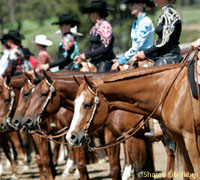
Western pleasure and showmanship classes are typically the most demanding in terms of turnout and presentation. Photo: Sharon Fibelkorn

Showing your western performance horse isn’t only about exhibiting his talent and training. It’s also about how you present him in the ring. He needs to follow the current standards to look like he belongs and give an outstanding impression every time he passes in front of the judge.

Proper grooming is always appropriate no matter the class or if it’s a backyard or top rated world-class show.   You should always present your horse at his best.  However, for those who are just starting out, there is far less pressure and emphasis on perfection at local events.   Not everyone may have their horse’s ears clipped or their manes banded.  Additionally some performance events, such as reining, don’t place as much emphasis on turn out and grooming.  Traditionally the pleasure classes are the most demanding, as well as Showmanship in which your horse’s presentation contributes to the overall score.

Preparation
On the day before the show, bathe and clip your horse. It’s best to clip your horse before you bathe him, but if his legs are dirty give them a scrub and a rinse and then let them dry. If you don’t, the clippers will leave track marks and the blades will gum up. The long hairs on the backs and inside of your horse’s legs from the knees down should be removed. If your horse has white socks or stockings, clip the white against the hair with a coarse blade. Trim the hairs that hang over his coronet bands, too. On your horse’s face use a fine blade to remove the long hairs all around his muzzle and chin. With a coarser blade, trim down the guard hairs above and below his eyes, but take care to avoid cutting his eyelashes. You’ll also use the fine blade to clean out the hair inside your horse’s ears and a slightly coarser blade to trim around the edges. For stock breeds, such as Quarter Horses, trim your horse’s bridle path 2 to 4 inches back from the poll.

After clipping, bathe your horse with a conditioning shampoo that doesn’t strip the natural oils in his coat. Pay special attention to getting his whites as white as they can be, and make sure his mane and tail are clean to the base and tangle-free. Once your horse is clean, scrape off any excess water and mist your horse with a conditioning spray to replace oils and add sheen to his coat. A silicone based spray over that will repel dirt and also can also help with tangles. Take care not to spray the saddle or girth area so that your saddle doesn’t slip. Don’t spray his mane either, because it will make it harder to band.

Mane and Tail
Western mane bands
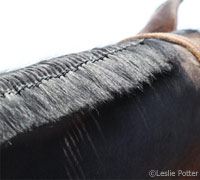
Banding your horse’s mane will give him a cleaner topline. Photo: Leslie Potter

If you are showing an Arabian, Morgan, Saddlebred, or gaited horse, you will typically leave the mane at its full length. For stock horse breeds such as Quarter Horses, Paints and Appaloosas, the mane will need to be shortened to the proper length for banding. Leaving it a little longer can make a thicker neck look better, and a shorter mane will add depth to a thin neck. Shortening your horse’s mane can be done a few days before the show. Banding needs to be done after your horse’s bath and can be done the day before the show. Separate out small sections of mane, about a half inch wide. Dampen the section of mane that you are working.   Separate out a section to be banded and use a hair clip to hold the rest out of the way.  Pull the hair flat and tight toward you across the crest of the mane.  Position so the band at the edge of the crest so that when you tighten it it holds the mane down and and flat across the top.  Retighten any bands that come loose before your classes and apply a thin coat of hair gel to hold down any stragglers.   Band your horse’s forelock too so that it lies flat against his forehead.  Use a very light coat of gel or conditioner to keep it looking neat and quiet without making it look stiff or clumpy.  

Your horse’s tail should be banged, or cut straight across at the bottom. Hold your horse’s tailbone in the position of his natural carriage a couple in inches away from his body this so that it looks straight when he’s moving. If your horse’s tail is short or on the thin side, use a tail extension to give it a fuller and longer appearance. Not all breeds allow tail extensions, and some have restrictions on what type of tail extension you can use. Be sure to check your rule book.

Finishing Touches
On show day, clean any dirt that your horse accumulated during the night. Use a safety razor or muzzle shaver to clean up the stubble on his nose and chin. Scrub his hooves with the scrubber side of a sponge and soap and water if necessary. If your horse has any white hair on his legs, rub in white chalk or baby powder for added brightness. When his hooves are clean and dry, apply hoof oil or polish. Make sure you do this after whitening your horse’s legs to avoid making his hooves white, too. A coat of black hoof polish or clear lacquer gives your overall looks a glamorous finishing touch. Just make sure that the product you use is legal for your breed or association.  For example, Appaloosas are only shown with clear polish to emphasize their natural hoof coloration and Arabians are shown without hoof black as well.

Put baby oil or face highlighter on a towel and rub it into your horse’s muzzle, around his eyes, and the inside of his ears. Apply a thin mist (to prevent streaking) of coat spray and fly spray. Before you go into the ring, use a clean brush or towel to wipe down your horse’s coat. Brush out his tail and make sure all his bands are tight and flat. Wipe off his hooves, around his lips, inside his nostrils, and around his eyes. Remove any remaining dust with a towel that’s lightly dampened with a spray of alcohol.

Give your horse a final visual once-over and then you can enter the ring knowing that your horse looks dazzling and ready to impress.

Further Reading
How to Band a Western Horse’s Mane
Grooming for Halter and Showmanship

See all course materials
The Ladies Crossrail and Chit Chat Club

3

Life with Horses - The Ladies Crossrail and Chit Chat Club
Danny and I head down the trail again for our Wednesday crossrails and chit-chat club.

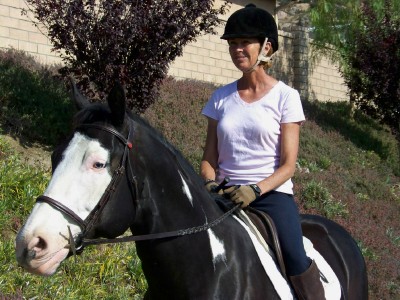
Most people look forward to the weekends. I look forward to Wednesdays. That’s the day I tack up Danny in his hunt seat saddle and bridle, strap on my old velvet show helmet and ride a few blocks to the stable where my friend, Debbie, boards her ex-show horse. She and I ride together for an hour or so, spending just as much time on girl talk as we do on practicing our horsemanship.

Don’t get me wrong. In between sharing the latest local gossip and comparing how our respective husbands have either perplexed or annoyed us, we work our horses. Debbie’s flashy Thoroughbred, Rainy, had a stellar career in the show ring and once Deb gets him in the groove he stretches down on the bit and cruises around like he’s competing in a flat class. Danny, on the other hand, has only recently perfected the art of traveling in a straight line. When I bought him it required an Act of God to get him to pick up the left lead, he was so crooked. So I spend most of my Wednesday flatwork on simple basics like transitions, circles and simple and flying lead changes.

Needless to say, Debbie and I aren’t kids anymore. The culmination of decades spent on the back of a horse, plus the wear and tear of life, has left both of us battered. Debbie has recently recovered from knee replacement surgery and also suffers from chronic arthritis. I guess I don’t have to list all of my health problems. Fortunately, Rainy and Danny have tons of mileage on their odometers. Like a couple of vintage sedans, they suit us just fine.

A couple of Wednesdays ago I told Debbie, “We’re a couple of middle-aged women riding our creaky geldings.”

“What’s wrong with that?” she replied.

Of course, Debbie and I both have a bit of daredevil still left in us. (Maybe that’s the last thing to go?) So when we finish our flatwork we size up the jumps in the arena. As of yet we haven’t gotten beyond a few crossrails, some flower boxes and a small white panel. Debbie will freely admit that’s because she’s still ruminating over the fact that she fell off and suffered a concussion while trotting Rainy over a series of cavaletti a couple of months ago.

Remind her of it and she’ll say in her sing-song voice, “I still can’t figure out how that happened.”

My excuse? I’m mounted on a tall gelding with a big, loopy stride like a giraffe. And even though he came with an armful of accolades from the seller, including the enthusiastically delivered proclamation, “He’ll jump anything you point him at,” I’m not quite ready to point him at much of anything higher than the aforementioned crossrails, flower boxes and small white panel. After all, I bought him in October and it’s taken me this long to get him to canter in a straight line rather than shimmying down the arena rail contorted like a crab.

As you can imagine, the jumping courses Debbie and I perform evoke reactions from spectators ranging from admiration to riotous laughter. Sometimes Debbie gets lost midway and goes off course… even though there are only a half-dozen jumps on our pre-planned route.

“Debbie,” I’ll say, “I think your advanced age is affecting your short-term memory.”

Then it’ll be my turn. Last Wednesday, Danny jumped a dozen crossrails, ten different ways. He stays quiet and safe, but consistency is definitely not his forte.

After one lackluster effort, Debbie chided me with, “Hey, that last time he didn’t even pick up his legs.”

I had to point out that the mere fact that Danny had started on one side of the crossrail and ended up on the other side of the crossrail indicated that he had, indeed, picked up his legs.

Thankfully, as we advanced to trotting and then cantering the white panel, both Debbie’s mental acuity and my horse’s jumping style improved. Apparently we all sharpen up when we’re faced with a bit of a challenge. Maybe that’s a lesson I can take away from my weekly Wednesday adventure.

<< Previous Entry

Back to Life with Horses

Question of the Week: Keeping Joints Healthy

9

Barrel Racing
Q: My barrel racing gelding is generally sound and healthy and I want to keep him that way. He’s 16 now, and I am concerned about keeping his joints healthy. Is there anything I can do to help preserve his joints?

A: Degenerative joint disease (DJD), also known as osteoarthritis (OA), is a progressive condition typically seen in older horses (and humans!). Being progressive, it often silently develops and by the time radiographic changes appear and the horse is clinically lame, the damage is done and the condition is only managed, not cured. That said, you are in the right frame of mind to start preventative care as early and as best you can, since there are management practices out there to help slow the development of DJD.

Skeletal joints are a surprisingly complex anatomical entity. These joints have evolved to not only allow for smooth bodily movement, but also to create a shock-absorbing mechanism. DJD develops as this shock-absorbing mechanism breaks down in mainly two ways: by the wearing down of the articular (joint) cartilage which lines the ends of bones when they meet at a joint, and by the decrease of synovial fluid, which is the viscous, highly protective fluid within a joint that provides lubrication for movement and nourishment to the tissues within.

Most people in the horse industry are familiar with joint supplements and this is often the first line of defense when it comes to helping prevent the development of equine arthritis. There are many oral products on the market now to help sustain the cartilage and synovial fluid of a horse’s joints and they are labeled as chondroprotectants (the prefix chondro- means “relating to cartilage”). Most of these products contain chondroitin sulfate, glucosamine, or hyaluronic acid and sometimes combinations of these. Each of these ingredients is a building block for articular cartilage so adding them to your horse’s diet can help maintain the cartilage he already has and help repair cartilage that is slightly worn. Many of these chondroprotectants are labeled as everyday additives in your horse’s feed and for true effect, should usually be added as a constant supplement, year round. There are many brands on the market, so be knowledgeable about what you are buying – these supplements are not regulated by the FDA and therefore each brand can have varying concentrations of the key ingredient. Enlist help from your veterinarian when picking out which one is best for your horse.

There are also injectable joint supplements on the market. These supplements were developed to circumvent the sometimes incomplete gastrointestinal absorption of oral supplements. Intramuscular (IM) and intravenous (IV) injections of polysulfated glycosaminoglycan (Adequan) and hyaluronic acid (Legend), respectively, are available with much higher concentrations of active product than the oral supplements and therefore can be given less frequently, however they can be more expensive and require either a veterinarian or someone with experience giving IM or IV injections to administer them to your horse.

Other management practices you can easily implement to help prevent arthritis in your gelding include regular exercise and proper hoof care. Regular exercise helps maintain robust circulation to your horse’s joints, which helps maintain joint health. Regular exercise also helps keep your horse at an appropriate body weight – overweight horses place greater stress on their joints. Regular trimming of your horse’s hooves helps maintain hoof balance. Unbalanced feet can cause undue stress on joints, a pre-cursor to arthritis. Regular and proper shoeing, if your horse requires it, should also be maintained.

Other more aggressive forms of arthritis management, such as joint injections comprised of corticosteroids and hyaluronic acid and shockwave therapy, are also available for those horses training heavily or already showing signs of decreased performance due to DJD. Fortunately, good arthritis management starts with prevention. Ben Franklin’s quote, “an ounce of prevention is worth a pound of cure”, could not be truer when it comes to DJD.

— Anna O’Brien, DVM

Ask your questions on the horseillustrated.com Forums >>

See more Expert Q&As >>

Submit your Ask the Expert question >>


How does grazing time affect ponies’ grass intake?

3

Grazing horseMost horse owners know that rich grass, especially the fresh grass that grows in the spring, can be dangerous in large quantities. Overconsumption of starches and fructan, a sugar present in many grasses, can lead to laminitis, leading many horse owners to restrict grazing in the spring and early summer.
Ponies are especially susceptible to laminitis, as are horses who are easy-keepers, overweight or cresty. Research conducted at Aberystwyth University in Wales studied the effects of reducing grazing time for ponies to see how it would impact overall grass consumption.

Two groups, each consisting of four pony mares, were used for the study over a six-week period. One group of ponies had full-time access to pasture. The other group was given three hours of pasture time daily and were stabled with free-choice access to water and haylage for the remainder of the day.

The researchers found that the ponies in the limited grazing group ate more during their three hours in pasture than the other group did during those same three hours, and the gap between the two groups increased over time. During the first week of the study, the ponies on limited grazing were consuming approximately 25% of their daily forage intake during their three hours of turnout time. By the final week of the study, they had increased their rate of grass consumption so that they were consuming 40% of their daily forage intake during their three hours in the pasture. This suggests that the ponies were not only able to increase their grass intake considerably, but that they may have learned that behavior as they began to anticipate the limited grazing routine.

Horse owners who are concerned that their horses may be consuming too much grass, even on limited turnout, have other options. Horses can be turned out on dry lots, or paddocks with little to no grazing. Horses kept on grass pasture can also be outfitted with a grazing muzzle during the spring and early summer to physically limit the amount of grass they can take in.

For more information:
Changes in proportions of dry matter intakes by ponies with access to pasture and haylage for 3 and 20 hours per day respectively for six weeks. J. Ince,A. Longland,C. J. Newbold,P. Harris. Journal of Equine Veterinary Science (2011)

Rolex Kentucky Three-Day Event assists fire relief efforts

7
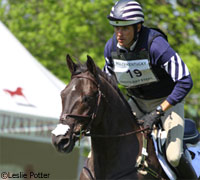
Boyd Martin and Remington XXV
Boyd Martin and Remington XXV on the cross-country course at the 2011 Rolex Kentucky Three-Day Event. Photo: Leslie Potter

Equestrian Events, Inc. (EEI), producer of the Rolex Kentucky Three-Day Event, presented by Bridgestone, has joined the effort to provide financial assistance to Eventing rider Boyd Martin in the aftermath of the tragic fire on May 31 at True Prospect Farm in West Grove, PA.

A fire at the farm, owned by Phillip and Evie Dutton, destroyed the barn utilized by Martin and took the lives of six horses while injuring five others. Three people living in an apartment near the barn lost all their possessions. The Eventing community has rallied with support and EEI has pledged a $1,500 donation plus 5% of all sales of merchandise sold through the Kentucky Three-Day Event Shop at www.rk3de.org/shop for the next 60 days. The Kentucky Three-Day Shop includes various Rolex Kentucky merchandise, from hats to jackets and everything between.

“The Eventing community has been shaken by this tragedy that resulted in tremendous loss for Boyd and Silva Martin in particular, and also for Phillip and Evie Dutton and others at the farm,” said Christina Gray, Director of Competition for the Rolex Kentucky Three-Day Event. “Boyd and Phillip are two of the best loved and most respected riders in our sport and all of us associated with the Rolex Kentucky Three-Day Event want to help by providing financial assistance.”

Both Martin and Dutton are regular competitors at the Rolex Kentucky Three-Day Event and both rode for the United States at last fall’s Alltech FEI World Equestrian Games. Those wishing to make donations to assist with fire relief may do so through Southern California Equestrian Sports, Inc. (SCES), a non-profit organization dedicated to helping equestrian riders and organizers. Donations may be made on line at www.scesports.org.

The only CCI4* in the Western Hemisphere, the Rolex Kentucky Three-Day Event features the USEF Four Star Championship for the U.S. Equestrian Team Foundation Pinnacle Cup, signifying the zenith in Eventing competition in the United States. The event draws 50-100,000 spectators and is seen by millions more on worldwide telecasts including a domestic broadcast on NBC.

Further information on the Rolex Kentucky Three-Day Event, Presented by Bridgestone, is available at the Rolex Kentucky website at www.rk3de.org.

Further information on fire relief efforts is available at www.boydandsilvamartin.com.

The Olympics: do you still watch?

2

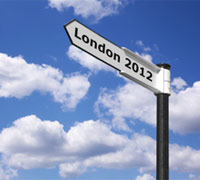
London Olympics signIt seems like just yesterday we were trying to follow the equestrian events across the globe at the 2008 Beijing Olympics, and yet, we’re now about a year away from the 2012 London games. Where has the time gone? And moreover, does anyone still care?
Don’t get me wrong. I love the Olympics. I’m not a big sports fan, but something about the pageantry and tradition of the Olympics sucks me in. I don’t really think about competitive swimming or speed skating for nearly four years straight, but then I will sit and watch them for hours just because they’re part of the Olympics. Call it an addiction.

Still, if I had to give up every random Olympic sport in exchange for comprehensive coverage of the equestrian events, I’d do it in a heartbeat. I don’t really have that option, though, do I? In NBC’s two weeks of summer Olympic coverage, how many minutes are devoted to equestrian? In 2008, I think it was right around zero. If you have cable, you might have better luck with the coverage on some of the other channels, but not much.

Now, I’m not here to point the finger at NBC. We equestrians are a small but devoted audience, but when deciding on which sports to give precious airtime, numbers win over enthusiasm every time. More people want to watch gymnastics than dressage. I get it. And NBC has given extensive coverage to all sports, even equestrian events, on its various websites. But that doesn’t help you if you’re out in the boonies with a slow connection and is less gratifying if you have to watch on a tiny laptop screen.

Recently, NBC beat out its competitors to secure coverage of the next four Olympics, starting with the 2014 winter games (they had already landed the London coverage.) They have announced that they “will make every event available live on one platform or another.” Previously, NBC’s model was to tape the favorite events and hold them until the prime time broadcast. So even if you wanted to watch Michael Phelps swim for the gold live at 2:00am, you couldn’t do it, not even online.

That’s not the relevant bit to the equestrian sports fans, though, given that no one was holding on to equestrian footage to save it for prime time. But if they do indeed follow through with broadcasting “every event” live, that means we can destroy our eyesight staring at our computer screens for hours and hours of dressage, eventing and show jumping. Hooray!

It’s still a year away, but thinking ahead, will you watch? Will you devote your Internet connection to streaming NBC’s coverage of equestrian events? Will you seek it out on cable, or (fingers crossed) enjoy whatever scraps they might throw us in the prime time network broadcast?

I expect I’ll be hogging all the bandwidth to watch the horses live in London as much as I can. I can’t help it. It’s an addiction.

<< Previous Entry

Back to The Near Side

Biosecurity tips for horse owners

5

Horse vaccinationsWith summer just around the corner, many of us are getting ready to enjoy the prime time of our equine-enthusiast lives. Along with the increased activity and travel with our horses comes an increased threat of equine infectious disease, especially infectious upper respiratory diseases like equine influenza, equine herpesvirus (rhino) and strangles.
The key component to an infectious disease control program is a good vaccination protocol developed by you and your veterinarian. However, it must be recognized that vaccination programs will not succeed without appropriate management practices. Here are some tips to decrease the chances of your horse getting sick from an infectious or contagious disease while traveling:

  • Start with a good vaccination program developed by you and your veterinarian.
  • Whenever possible use your own trailer and avoid shipping with horses from other farms. Make sure the trailer is clean and well-ventilated.
  • Avoid hauling long distances.
  • Don’t let your horse touch other horses, especially nose-to-nose.
  • Avoid using community water tanks and don’t share equipment (water buckets, feed pans, brushes, etc.)
  • Spray or disinfect stalls at show grounds prior to putting your horse in the stall.
  • Wash your hands after handling other horses and before handling your own horse.

Horse owners can enhance their horse’s response to vaccination, enhance the efficacy of the vaccines used and better protect their horses against infectious and contagious diseases by applying intelligent and appropriate management strategies while they are on the road this summer.

Be on the look out for sweet itch this summer

8

Horses mutual grooming
“Sweet…”, as a modern term, denotes pleasure and enjoyment. However, for a horse, sweet itch can be anything but “sweet…”.

“Sweet Itch, also known as summer eczema or equine dermatitis, is one of several seasonal allergies that your horse may encounter,” notes Dr. Glennon Mays, clinical associate professor at the Texas A&M College of Veterinary Medicine & Biomedical Sciences.

“Equine dermatitis can have varying causes,” explains Mays. “Allergens may irritant your horse’s skin, but viruses and bacteria may also manifest themselves as dermatitis. These foreign agents can cause inflammatory conditions in the skin and may affect your horse’s hair coat. Equine sweet itch is a seasonal allergic skin condition that can be caused by fly bites or midge bites. Horses that suffer from sweet itch have developed an allergy to these bites.”

Insects flourish in the summer and horses may have sensitivities to insect bites, notes Mays. In particular, black flies, known as buffalo gnats, can seek horses as hosts. These flies feed on the blood of mammals and are attracted to hosts by smell, heat and sight. They prefer the host’s head, hair and ears but will also bite any skin that is exposed.

“The female black flies are blood feeders,” explains Mays. “The fly bites by cutting into the skin and feeding on the pooled blood. Anticoagulants injected into the feeding sight cause an allergic reaction.”

Black flies feed during the day, so stable animals during the day when fly populations may be more abundant. Fly repellents applied to the chest, belly and ears can be effective if applied daily, says Mays. Cloth coverings fitted over horses’ ears may be used for additional protection. Coverings may also be used to protect your horse’s eyes and head.

“Allergic dermatitis can result from the black fly bite,” states Mays. “Antigens in their saliva can cause allergic reactions. Additionally, the black fly bite can become painful and itchy as blisters form. Therefore, protecting the face and ears from flies eliminates a major source of irritation for your horse.”

Equine dermatitis will usually result in symptoms such as scratching, biting affected area, crusts, hair coat damage or loss, flaky dandruff and thickened skin, explains Mays. The itchy skin can be further irritated when the horse rubs the area (on fences or stalls) to the point of hair loss and scabbed skin. This is when secondary bacteria can enter the skin and cause infection.

“Sweet itch is commonly seen in 4 to 6 year old horses,” notes Mays. “Repeated exposure to the allergen, in this case, fly bite, is required for the allergy to develop.”

To help reduce the incidence of sweet itch, begin preventative measures before fly season is in full force, suggests Mays. Use a fan in your horse’s stall. The constant airflow deters flies from lighting and biting. If possible, place fine-mesh screens over barn openings to prevent flies from entering stalls. Install automated insecticide mist systems to help control fly populations. Consult your local veterinarian for the best insecticide to use in your stables and on your horse.

Black fly, stable fly, horse fly and midge bites all can cause allergic skin reactions in horses. Corticosteroids are the most useful treatment for controlling these skin allergies, notes Mays. This anti-inflammatory helps stop the itching so that the skin can heal. However, there may be steroid side-effects in horses, so they must only be prescribed by your veterinarian.

If your horse has an annual encounter with summer sweet itch, help him to manage the itch by taking preventative measures to lessen the severity of an annoying allergy.

Equestrian Helmet Top 10 Facts and Myths

10

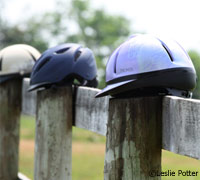
Equestrian helmetsHere are some facts and myths that every rider needs to know about protective headwear.
Facts

    1. Horseback riders have the same number of injury accidents* as motorcycle riders.Because the hospital admission rate for injured riders (0.49/1000 hours) is greater than motorcycle riding (0.14/1000 hours), football and skiing, it is definitely considered a high-risk activity, per a study cited in The Equestrian Medical Safety Association (EMSA) Spring 2010 Newsletter.
    2. Your horse doing something unpredictable—like spooking, bucking, or bolting—is how most head injuries occur, but 20% happen when you’re simply around horses.
      The majority of head injuries are caused by unpredictable events, such as your horse spooking. And even more surprising, 1 in 5 people who are seriously injured weren’t even riding – they were just hanging out around horses or watching someone else.
    3. The most common reason among riders for admission to hospital and death are head injuries.
      About 70,000 people go to the emergency room each year for equestrian-related injuries. About 12,000 of those people have suffered head injuries.
    4. Helmets work. Most deaths from head injury can be prevented by wearing ASTM/SEI approved helmets that fit correctly and have the harness firmly applied.
      To get the most protection out of your helmet, it needs to fit you well, and be properly adjusted every single time you ride, including a snug chin strap.
    5. Most riding injuries occur during pleasure riding.

Myths

    1. Bike or skateboard helmets are fine for riding horses.
      Cycling and equestrian standards are very different. Bicycle helmets are similar to horseback riding safety helmets in appearance, but are not subject to the design specifications and standards that a riding helmet must pass in order to provide adequate protection.An equestrian helmet offers additional protection to the back of the head and the sweatband area of the helmet. Equestrian helmets are tested by the Safety Equipment Institute (SEI) for chinstrap retention, penetration by a sharp object, and for impact absorption. These tests are specifically for horseback riding related accidents.
    2. Horseback riding isn’t dangerous as long as you aren’t riding fast.
      Actually, the risk of injury is more closely tied to your distance above the ground, not speed. Falls from only over 2 feet high can cause serious injury, no matter how slow your horse is! The risk of injury is tied to how much you ride, not how good you are.
    3. The more expensive your helmet is, the more it will protect you.
      You can spend $500 on a helmet, but it won’t make it any safer. As long as it’s SEI/ASTM certified, you’re buying a certified protective helmet. Spending more might get you different padding, fancier decorations or materials, but it doesn’t translate into more protection.
    4. If you don’t have a helmet, just borrow a friend’s.
      Avoid loaning your helmet to others. As a savvy rider, you want to know exactly what
      kind of treatment your helmet has experienced during its lifespan so you can knowledgeably assess its integrity over time.
    5. After a fall if your helmet took the impact of the fall, it’s fine unless you see a crack in it.You need to replace your helmet if you’re ever in a fall. It could have a defect that’s invisible, and if you fall on that same part of the helmet again, you won’t have the protection that you should. And even if your helmet never takes a hit, it’s a good idea to replace it at least every five years (or sooner if you ride often), just because the helmet material can take a beating from all the sweat, heat, dust, and rain.

Learn more with Troxel’s Helmet Education Guide

Further Reading

Wild horses arrive at Madeleine Pickens’ eco-sanctuary in Nevada

15

Wild horseOn Friday, June 3, wild horse advocate Madeleine Pickens announced that the first group of wild horses had arrived at the Mustang Monument Wild Horse Eco-Preserve. These horses are part of a pilot program where 1,000 horses managed by the Bureau of Land Management (BLM) will be moved to the sanctuary.

Pickens has been a longtime advocate for animal welfare. After learning that many racehorses were being killed in slaughterhouses after their racing days were over, Pickens and her husband, billionaire T. Boone Pickens worked to end horse slaughter. In 2008, Mrs. Pickens approached the BLM with the intent to create a sanctuary to house Mustangs that had been rounded up and removed from public land. Finally, in fall of 2010, the BLM agreed to support a pilot program for Pickens’ sanctuary.

The first horses arrive at Madeleine Pickens’ Mustang Monument

The sanctuary covers more than 500,000 acres, according to Pickens’ website, and is located near Elko, Nev. Earlier this month, the first group of horses, all mares and foals, was trucked in and let loose at the Mustang Monument.

Pickens hopes that her sanctuary will ultimately become a tourist destination and educational opportunity for Americans. Under her original plan, visitors would be able to camp and hike in the sanctuary and see the Mustangs in their natural habitat. For now, she is just happy to see horses at home at the Mustang Monument.

“I cannot aptly describe the experience, but this is definitely a mission driven by God,” she said on her website. “He has blessed us all with this wonderful gift…We are so lucky. I am so lucky. I’ve been surrounded by so many supporters and friends and I can’t thank you all enough. I am overwhelmed, speechless, and very fulfilled. It’s a new beginning.”

0FansLike
0SubscribersSubscribe
We use cookies to help personalize content, tailor and measure ads, and provide a safer experience. By navigating the site, you agree to the use of cookies to collect information. Read our Cookie Policy.
OK