

6 ITEMS
 
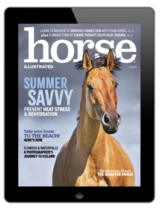
    • horse illustrated – june 2023 digital
    • Horse Illustrated – June 2023 Digital

    • $3.99
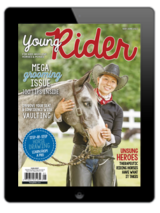
    • young rider july/august 2023
    • Young Rider July/August 2023

    • $5.99
    • young rider july/aug 2023 digital
    • Young Rider July/Aug 2023 Digital

    • $3.99
    • horse illustrated – july 2023 digital
    • Horse Illustrated – July 2023 Digital

    • $3.99
    • young rider may/june 2023 digital
    • Young Rider May/June 2023 Digital

    • $3.99
    • horse illustrated – may 2023 digital
    • Horse Illustrated – May 2023 Digital

    • $3.99
  • My Account
  • Holiday Gift Guide
  • Podcast
  • Webinar
Subscribe Combo
Enable cache13
Home Blog Page 651

Horse Clipping Basics

18

Learn basic trimming techniques to keep your horse looking his best.

By Leslie Potter

Trimming your horse’s face, bridle path and legs will help keep him looking neat and tidy and make grooming easier. If you compete, clipping is an essential component of proper show-ring turnout.

Before You Begin
If you have never clipped your horse before, you will need to gradually introduce him to the clippers. First, let him see and sniff them while they are turned off before you slowly move them around his face. Once he is relaxed with that, switch them on and hold them against his neck to let him get used to the noise and vibration. Carefully move the clippers near the areas where you will clip. Most horses are amenable to clippers once they’ve had a chance to get used to them. If your horse seems frightened by them, take your time and consider recruiting the help of an experienced horseperson.

The Gear
For regular trimming, you will need a small set of clippers. There are cordless models and ones that plug in. Some have adjustable blades that range from No. 10 to No. 30 using a switch while others use changeable blades. A lower number indicates a coarser cut. Generally you will want a No. 10 blade for most clipping and a No. 30 or 40 for finer detail. Wider blades are available for body clipping, but for regular trimming, narrower is usually preferable.

Make sure you have clipper oil and apply a few drops to your blades before and after each use. This will keep your blades running smoothly and extend their useful life. You may also want to have some blade wash on hand for cleaning between uses and coolant spray to keep the blades from becoming hot and uncomfortable for your horse during long clipping sessions.

Trimming the Face
Most horses grow long hair under their jaw during the winter. To trim this area, use a No. 10 blade and starting at the throatlatch, trim in the direction of hair growth toward the muzzle. The goal here is not to trim down to the skin, but just to get rid of the extra long hairs to create a more chiseled appearance. Look at the jaw from both sides to make sure you have clipped evenly.

Your next step will be to trim the whiskers around your horse’s nose. Because whiskers are believed to help horses detect things—such as stall walls—in the dark, many horse owners choose to leave them untrimmed. However, most horses do just fine without them, so whether you choose to trim is up to you. If you do trim them, use your No. 10 blade and again trim in the direction of hair growth. Trim the whiskers down to the base, but be sure to leave the finer hairs just on the inside of the horse’s nostrils.

Most horse owners choose to leave the whiskers that grow around the horse’s eyes, but others trim them for shows. If you do trim them, be careful not to get too close to the eyelashes. Those should never be trimmed as they provide protection from eye irritants. Move slowly and carefully when clipping near your horse’s eye. You may want to gently cover your horse’s eye with your hand while trimming the whiskers so that the trimmings don’t fall in his eye.

Bridle Path
The correct length for a bridle path varies depending on your horse’s breed and use. In the hunter/jumper, eventing and dressage worlds, bridle paths are kept at 1-2″, just enough space for the headstall to sit without interfering with the mane. This length is usually preferred for horses kept as pleasure mounts. Horses showing on the breed circuit for Quarter Horses and similar breeds may have a slightly longer bridle path, approximately 2-3″. Horses associated with saddle seat riding, namely Saddlebreds, Morgans and Arabians, may have bridle paths 6″ or longer. Arabians competing on the breed circuit often have nearly half their mane trimmed off to create a highly refined look.

Bear in mind that if you compete at open hunter/jumper or dressage shows rather than on your breed’s circuit, you should generally defer to the discipline standard rather than the breed standard.

When clipping the bridle path, you can go in either direction. If you start at the poll and work back, be careful not to trim too far. Half an inch may not be a big deal, but if you trim half an inch too far each time you clip, eventually you’ll have more bridle path than you bargained for. Conversely, if you clip in the other direction, be careful not to take off too much forelock. Always err on the side of caution. It’s much easier to clip off a little more later than it is to wait for your horse’s mane to grow back if you’ve clipped too much.

If your horse has a very thick mane, you can angle the end of your bridle path so that the underside of the mane is trimmed just a bit farther than the top. This will help the top of the mane lie flat.

Clipping the Ears
While it is common in some show circuits to clip your horse’s ears, most horse owners should leave the inner ear hair. It provides protection from bugs in the summer and insulates in the winter. However, you can trim some of the excess hair to create a neater appearance.

Use caution when clipping around your horse’s ears, which will be more sensitive to noise and vibration than other parts. Some horses that willingly accept clipping anywhere else will try to leave the scene as soon as you head for their ears, so don’t be afraid to recruit a helper.

A finer blade, such as a No. 30 or 40, will make trimming the fine hairs of the ear a bit easier. Cup the ear with your hand and gently squeeze the sides together. Starting at the top, trim downwards to remove the protruding ear hair. You can also go back and carefully trim the edges of the ear for a more refined look.

Clipping the Legs
If your horse is turned out in the winter, you’ve probably noticed that he picks up a lot of mud and ice on the long hair around his fetlocks and pasterns. This is actually a good thing as that hair protects his skin from mud and the potentially harmful bacteria that comes with it. But once the weather has warmed up enough that you can wash your horse’s legs as needed, you’ll want to trim that lower leg hair.

Use your No. 10 blade and start at the back of the knee, moving down in the direction of hair growth to the fetlock. Trim off the long hairs on the back of the leg and remove the long hair that grows on the fetlock and the back of the pastern.

Some breeds, such as Friesians, draft horses and some pony breeds, are meant to be shown with full feathering on their legs. Check your breed’s rule book or judging guidelines if you are unsure if you should leave your horse’s feathers alone.

Keeping your horse trimmed isn’t just a tactic for the show ring. Regular clipping will make your daily grooming easier and leave your horse looking great.

Click here to see all materials for this course.

Basic Clipping 100 – Classes

2

•  Basic Clipping 100 – Classes

Reading AssignmentReading Assignment: Learn basic trimming techniques to keep your horse looking his best.
VideoVideo: Watch a demonstration on how to trim your horse’s face, bridle path and legs for a neat and tidy appearance.
QuizQuiz: Test your knowledge about horse clipping basics.


Instructors:  Leslie Potter holds a Bachelor of Science degree in Equestrian Science from William Woods University. She has competed with Morgans, Saddlebreds and Arabians as well as in hunters and dressage. Holly Werner Caccamise spent nearly a year as a professional eventing groom, getting hundreds of opportunities to work on her braiding technique. She currently events at Novice level with her off-the-track Thoroughbred Dexter.


Back to class schedule>>

Horse Grooming Jigsaw Puzzle

1

This page requires Adobe Flash Player

Get Adobe Flash player

Session 100 – Horse Health Basics 101

5

•  Horse Health 101: Basics

Horse Health 101: Basics Reading AssignmentReading Assignment: Learn about the equine health essentials before bringing home a horse.
Horse Health 101: Basics VideoVideo: Watch the video about taking your horse’s vital signs.
Horse Health 101: Basics ChartChart: Read the chart on Horse Health Preventive Care Checklist
Horse Health 101: Basics QuizQuiz: Take these 10 questions to test your knowledge on equine health essentials.


EXTRA CREDIT!
Take this quiz and earn extra credit point towards you Club Horse account! Take the quiz now >>

DOWNLOADABLE WIDGET
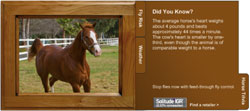
Display your horse in a picture frame on your desktop with this fun widget. Also get your local weather, fly risk and loads of horse trivia to make you smarter at the next horse show. Brought to you by Solitude IGR™, feed-through fly control from Pfizer. Download the widget >>

Dowloadable Widget

Brought to You By
Solitude IGR

Brought to you by Solitude IGR


Instructor: Dr. Laura Riley is a graduate of the Virginia-Maryland Regional College of Veterinary Medicine at Virginia Tech.  She practiced equine and camelid medicine in the hunt country of Maryland before moving to her riverside cabin in beautiful West Virginia to write and teach.

 Back to class schedule>>

Horse Health College Session 100 – Class Schedule

88
Horse Health College – Open Classes
• Equine Health Basics – Covers the essentials of equine health care that every horse owner should know. Find out how to take your horse’s vital signs to know what is normal for him. Learn how to recognize changes that could indicate the start of health problems. Includes tips on how to take the proper precautions to keep your horse safe, healthy and happy at home.

Instructor: Dr. Laura Riley is a graduate of the Virginia-Maryland Regional College of Veterinary Medicine at Virginia Tech.  She practiced equine and camelid medicine in the hunt country of Maryland before moving to her riverside cabin in beautiful West Virginia to write and teach.

Reading
Assignment
ChartVideoQuiz
Equine Health Basics Reading AssignmentEquine Health Basics ChartEquine Health Basics VideoEquine Health Basics Quiz
• Intro to Parasites – Get to know the internal parasites that threaten your horse’s health. Learn their lifecycle and find out how they infect horses. Discover how deworming strategies have changed over the years and what you should be doing now to protect your horse.

Instructor: Karla Rugh, D.V.M., Ph.D., of Rocheport, Missouri, has been a veterinarian for more than 35 years. She has experience in equine/food animal practice, companion animal practice, academia and research. She has written three books and more than 50 articles about pet care. Dr. Rugh owns five horses, who reside at Sycamore Hollow, her family’s farm.

Reading
Assignment
ChartVideoQuiz
Intro to Parasites Reading AssignmentIntro to Parasites ChartIntro to Parasites Quiz
• Equine Respiratory Health – What are the symptoms of respiratory ailments and how can you help an affected horse recover? Learn what stable management strategies can reduce the risk of respiratory problems in your barn.

Instructor: Anna O’Brien, DVM, is currently a large animal ambulatory veterinarian in central Maryland. From miniature horses to zebras at the local zoo, her practice tackles anything equine in nature with a few cows, goats, sheep, pigs, llamas, and alpacas thrown in for good measure.

Reading
Assignment
ChartVideoQuiz
Equine Respiratory Health Reading AssignmentEquine Respiratory Health ChartEquine Respiratory Health Quiz
• Equine Vaccines – Learn what to expect when vaccinating and find out what diseases every horse owner should be vaccinating for.

Instructor: Karla Rugh, D.V.M., Ph.D., of Rocheport, Missouri, has been a veterinarian for more than 35 years. She has experience in equine/food animal practice, companion animal practice, academia and research. She has written three books and more than 50 articles about pet care. Dr. Rugh owns five horses, who reside at Sycamore Hollow, her family’s farm.

Reading
Assignment
ChartVideoQuiz
Equine Vaccines Reading AssignmentEquine Vaccines VideoEquine Vaccines Quiz
• Lameness Basics – Learn how a vet performs a lameness exam and what the results can show about your horse’s joint health and soundness.

Instructor: Nancy Loving, DVM is a performance horse veterinarian based in Colorado. She is the author of All Horse Systems Go.

Reading
Assignment
ChartVideoQuiz
Lameness Basics Reading AssignmentLameness Basics VideoLameness Basics Quiz
• Parasite Control Strategies – Learn about parasite control strategies.

Instructor: Karla Rugh, D.V.M., Ph.D., of Rocheport, Missouri, has been a veterinarian for more than 35 years. She has experience in equine/food animal practice, companion animal practice, academia and research. She has written three books and more than 50 articles about pet care. Dr. Rugh owns five horses, who reside at Sycamore Hollow, her family’s farm.

Reading
Assignment
Slide-
show
VideoQuiz
Parasite Control Strategies Reading AssignmentParasite Control Strategies SlideshowParasite Control Strategies Quiz
• Risk-Based Vaccinations – Learn more about equine diseases that affect different geographic regions in the U.S.

Instructor: Karla Rugh, D.V.M., Ph.D., of Rocheport, Missouri, has been a veterinarian for more than 35 years. She has experience in equine/food animal practice, companion animal practice, academia and research. She has written three books and more than 50 articles about pet care. Dr. Rugh owns five horses, who reside at Sycamore Hollow, her family’s farm.

Reading
Assignment
ChartVideoQuiz
Risk-Based Vaccinations Reading AssignmentRisk-Based Vaccinations ChartRisk-Based Vaccinations Quiz
• Equine Wellness – Tips to keep your horse healthy year-round with a focus on major health issues including colic and laminitis as well as seasonal health concerns. Overview of symptoms and treatments and a strong focus on preventative care.

Instructor: Anna O’Brien, DVM, is currently a large animal ambulatory veterinarian in central Maryland. From miniature horses to zebras at the local zoo, her practice tackles anything equine in nature with a few cows, goats, sheep, pigs, llamas, and alpacas thrown in for good measure.

Reading
Assignment
ChartVideoQuiz
Equine Wellness Reading AssignmentEquine Wellness ChartEquine Wellness Quiz
• Fly Control – Find out about various stable management techniques that will reduce populations of biting insects when spring comes around.

Instructor: Sharon Biggs.

Reading
Assignment
ChartVideoQuiz
Fly Control Reading AssignmentFly Control ChartFly Control Quiz

45 horses set to start in the 2011 Rolex Kentucky Three-Day Event

7
William Fox-Pitt and Cool Mountain
William Fox-Pitt and Cool Mountain won the 2010 Rolex Kentucky Three-Day Event. Photo: Leslie Potter

The traditional first horse inspection before dressage kicks off on Thursday for the Rolex Kentucky Three-Day event was plagued with weather-related rescheduling, but in the end all horses presented passed inspection.

After severe thunderstorms were predicted for Wednesday afternoon, the decision was made to move the first horse inspection from 3:00 p.m. to 10:00 a.m. As the morning unfolded, however, tornado warnings in and around Lexington, Ky., forced an evacuation of the stables as horses, riders and grooms bunkered down at the Alltech indoor arena.

Once the coast was clear, the jog was pushed back to 11:00 a.m., and although it begun in the rain, the sun was shining before long at the Kentucky Horse Park.

Of the 45 horses presented, all passed the inspection of the ground jury. Phillip Dutton’s longtime partner TruLuck was not presented, but he still has a mount in the competition with Fernhill Eagle.

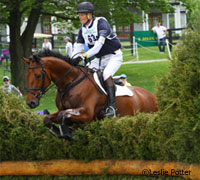
Bruce (Buck) Davidson Jr. has just returned from the Mitsubishi Motors Badminton Horse Trials, where he rode BallyNoe Castle RM to 21st place. He’ll ride Titanium in Kentucky this weekend. The pair was 16th at Rolex in 2010 in the horse’s first CCI4*, and Davidson is looking forward to one of his favorite events.

“It’s always awesome to come to Kentucky,” says Davidson. “Every year it’s like Christmas Day. It’s the best event we have in the United States, and one of the best in the world. The fact that I had the chance to do my first Badminton this year and then come here is pretty special. These are two really nice horses.”

Both events are part of the Rolex Grand Slam of Eventing which also includes the Land Rover Burghley Horse Trials. Any rider who wins all three events in succession takes a $350,000 bonus for their achievement. Eventing legend Mark Todd (New Zealand), the winner from Badminton last weekend with NZB Land Vision, also made the trip from Great Britain after Badminton ended on Monday to attempt to win the second leg in Kentucky. He will ride Grass Valley this week.

Defending Rolex champion William Fox-Pitt of Great Britain is back. His 2011 mount, Neuf de Couers, will be contesting his first CCI4* in Kentucky, similar to Fox-Pitt’s winning mount from 2010, Cool Mountain.

Dressage gets underway on Thursday at 10:00 a.m. Allison Springer will lead off with the first of her two horses, Arthur.
Ride times are available at www.rk3de.com

Watch the competition live (and free) at USEFNetwork.com NBC has announced that it will broadcast live coverage of the show jumping phase along with highlights of previous days on Sunday, May 1 at 2:00pm EDT.

Allison Springer is in the lead after day one at the Rolex Kentucky Three-Day Event

5
Allison Springer and Arthur
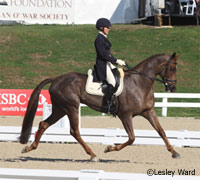
Allison Springer and Arthur are in the lead after day one of dressage. Photo: Lesley Ward

Sunshine and pleasantly cool temperatures in the 60s were a welcome relief from Wednesday’s thunderstorms and and tornado warnings. A small crowd peppered the vast grandstands as Allison Springer and Arthur were first into the ring on Thursday. Always a formidable pair in dressage, they did not disappoint, scoring a 42.3 that could not be caught the rest of the day.

After 22 horses finished their tests on Thursday, veteran Olympic rider Mary King of Great Britain aboard her homebred gelding, Kings Temptress, found herself in second place on a score of 47.7. In third were Will Coleman and Twizzel with 48.2.

Springer was happy with her test, although she had hoped to score even better. “Arthur is a quirky, spooky horse, and I’ve been working really hard to ride him better. Going first is not ideal at all, but going on Thursday [as opposed to the second half of the dressage tests still to come on Friday], it’s a little quieter. I wanted a 36 or 37, and I know we’re going to do that someday.”

 Mary King and Kings Temptress
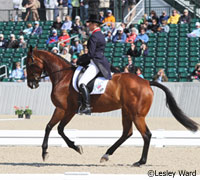
Mary King of Great Britain is in second place with her homebred Kings Temptress. Photo: Lesley Ward

When asked about how she thought the torrential rains throughout the past days and weeks would affect the footing for cross-country on Saturday, Springer didn’t seem concerned. “A couple of years ago we had quite a bit of rain before cross-country, but after a few dry days the ground was actually hard. I think this ground can take the water. The riders like the ground harder, but horses like it a little softer.”

This year will mark the first time the cross-country course has been designed entirely by Derek di Grazia, although di Grazia worked for years under previous designer Michael Etherington-Smith. Springer seemed eager to take on the course. “Derek did a phenomenal job. It’s a great four-star course with some great galloping jumps. I’m going to ride every single fence though; you can’t let up and let something silly happen.”

Springer’s second mount in the competition, Destination Known, will ride dressage on Friday. While Arthur has been to Rolex multiple times, this will be Destination Known’s first four-star. Also to ride on Friday will be Karen O’Connor on Quintus 54; last week’s Badminton champion, the legendary Mark Todd of New Zealand, aboard Grass Valley; last year’s Rolex winner, William Fox-Pitt of Great Britain, on Neuf des Coeurs; and Buck Davidson aboard Titanium. Needless to say, there is sure to be a shakeup in the scores before dressage concludes on Friday afternoon.

More Rolex Coverage
45 horses set to start in the 2011 Rolex Kentucky Three-Day Event

Inaugural Kentucky Reining Cup at Rolex

1
Lisa Coulter
Lisa Coulter won the best dressed female award at the reining horse inspection. Photo: Elizabeth Moyer

As the dressage phase of the 2011 Rolex Kentucky Three-Day Event got underway at the Kentucky Horse Park in Lexington, the competitors of the first Kentucky Reining Cup, being held concurrently with the four-star three-day event, were inspected outside the Alltech Arena for tomorrow evening’s competition. All 20 horses passed, including country music legend Lyle Lovett’s Smart and Shiney, a beautiful palomino presented by co-owner Tim McQuay. A member of the 2010 Alltech FEI World Equestrian Games gold medal-winning reining team, McQuay is competing on another palomino named Rudy Dun It. Fellow WEG teammates Shawn Flarida, Tom McCutcheon and Craig Schmersal are also competing. Schmersal has three entries, including his silver medal-winning WEG mount, Mister Montana Nic.

Tom McCutcheon
Tom McCutcheon was named best dressed male rider. Photo: Elizabeth Moyer

Jogging alongside their equine partners, who were all groomed to a high-gloss, the riders were vying for a pair of Dubarry boots and the title of best dressed male or female. Tom McCutcheon and Lisa Coulter earned the honor.

The CRI5* Kentucky Reining Cup, sponsored by Ariat, will be held in the Alltech Arena from 6 p.m. to 8 p.m. It represents the highest level of reining competition and is the only five-star event in the western hemisphere this year. The reining freestyle, which will crown its first-ever world champion, takes place on Saturday evening in the Alltech Arena. For more information, go to www.kentuckyreining.com.

Title Goes Here

0

dadfdfadf ddfdgdfdklf d kld fdk fdkfkd fkdfkdkdfsdk fdkfdk fdklfdk fdk fkad fklsdf

dfadk fdklfskldfkladf lskfas

fsdkl fkdlfsdklfdksfsdkf ksd fsdkflsdkf ksdf klasdfdklflsdkfklsd fklsdkfsdgldjgldk;fkdlfsd

fdklfkldfkl;sd fl;kadfklfksdfkdsfk dk kd kdklf sdlfksdfkdas fafkldfklkfsl fklfk flfkas

sdkfl dslfkasdflksdfdksfkldklfskfklsfksklkdk f  dfksd afldk fkls dkfkl sdfl asdkl fslklfksdklfsldflksdfd kll;s

dklf akldf skl kldfklas flksdfklsaklflaskd klasd klfklsdfdklf dklfaklsdfdlflsd akfkl adfkla;

0FansLike
0SubscribersSubscribe
We use cookies to help personalize content, tailor and measure ads, and provide a safer experience. By navigating the site, you agree to the use of cookies to collect information. Read our Cookie Policy.
OK