Enter our 12 Days of Christmas Giveaways here!
0 ITEMS
  • My Account
  • Holiday Gift Guide
  • Podcast
  • Webinar
Subscribe Combo
Enable cache13
Home Blog Page 7

Hoof Abscess Treatment Options

0

The panic sets in as soon as you see it: Your horse is hopping around, dead lame. You breathe a sigh of relief when your vet gets out the hoof testers and tells you it’s “just” an abscess. But what treatment can you use to get a hoof abscess to heal as quickly as possible?

Hoof abscesses are caused by bacteria entering the hoof through a sole bruise/puncture or a diseased white line. White blood cells build up to combat the bacteria, creating painful pressure around a pocket of fluid.

Treatment involves encouraging the abscess to pop, then keeping the area clean while the abscess’s track through the hoof heals.
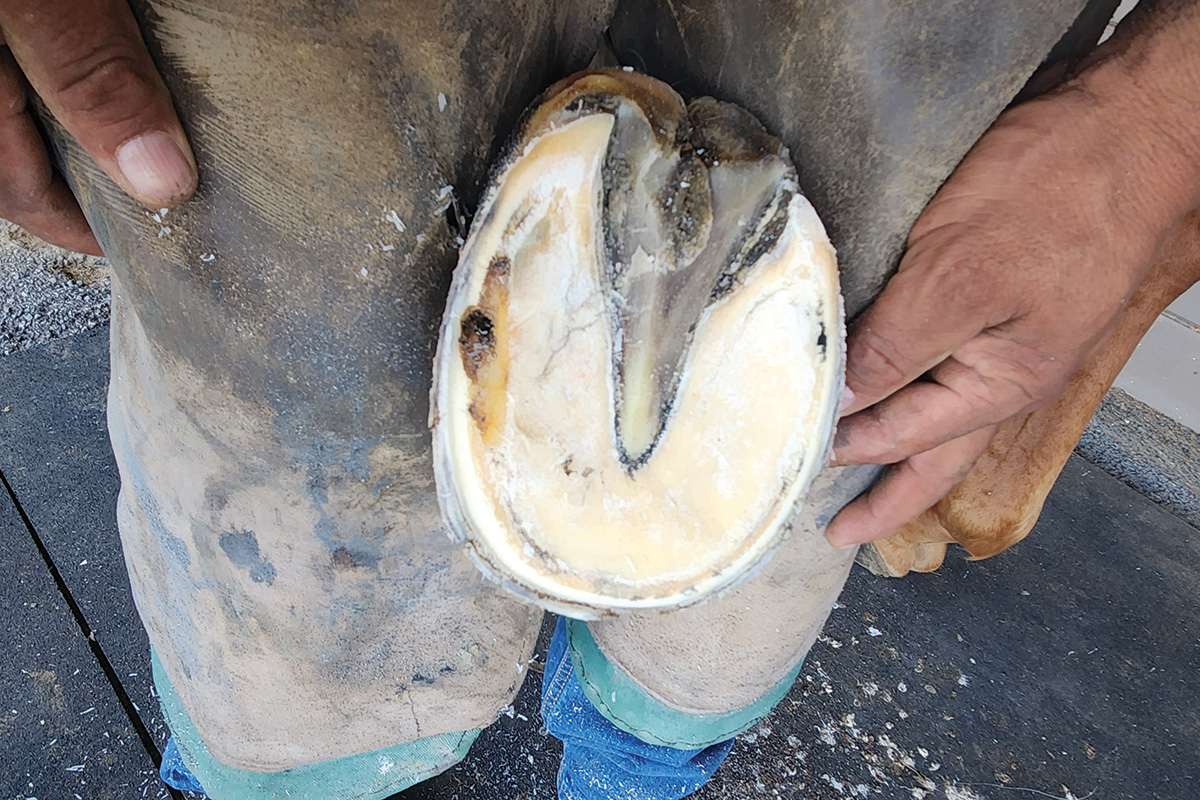
A hoof abscess.
After an abscess ruptures, it’s vital to keep the hoof clean and draining until it heals. Photo by Sarah E. Coleman

If you’ve ever dealt with an abscess, you may still have nightmares about toting hot water to the barn in winter and asking your fidgety horse to please stand in a bucket for just a few minutes longer. But you can banish abscess apprehension using tools you may already own.

To Soak Or Not To Soak

Soaking a horse’s foot is one of the oldest remedies to draw out an abscess; many people swear that soaking the hoof in water will soften the hoof, offering a path of least resistance to the pocket of pus looking for a way out of the hoof capsule. However, getting a horse to stand—quietly—in a 5-gallon bucket of warm water for up to 30 minutes can be nearly an act of Congress.

If the abscess is trending toward the sole of the hoof, standing the horse in a shallow rubber feed pan may work—and make him less fidgety, since he has more room to place his foot on the bottom of the pan. If the abscess needs to work its way out through the coronary band, however, a shallow pan won’t be an option, as it will be impossible to get the water up high enough to cover the area.
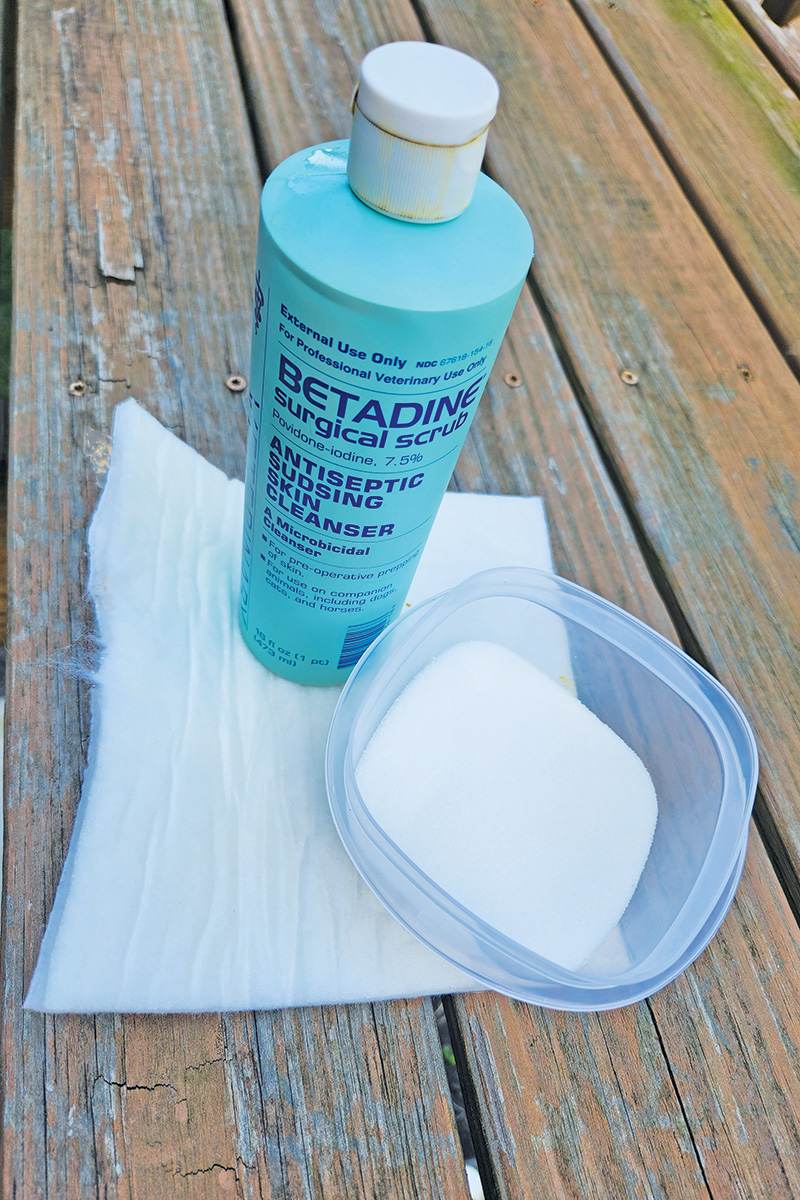
A rubber feed pan and Betadine soap.
For an abscess at the bottom of the sole, soaking a shallow rubber feed pan can be the simplest method. Photo by Sarah E. Coleman

Supplement the Soak

While water alone will soften the hoof to encourage an abscess to burst, there are additives that can be used to offer even more drawing power. These can include:

Epsom salts: Easily purchased at the local grocery store, Epsom salts (magnesium sulfate) offer both inflammation relief and antimicrobial benefits. Adding a cup to the soaking water will help draw out the infection in the horse’s hoof.

Bleach: You’d be hard pressed to find a household without at least one gallon of bleach, and there are plenty of equine- and farm-related applications for it. Best for abscesses is the 5.25 percent household bleach, which destroys bacteria, viruses and mold.

Apple cider vinegar: Adding a ¼ cup of vinegar to 1 gallon of warm water will allow the acidity in the apple cider vinegar to draw out infection.

Baking soda: Adding 1 to 2 tablespoons of baking soda (sodium bicarbonate) per quart/liter of warm water has also been known to draw out an abscess. With disinfectant, antibacterial and antifungal properties, baking soda can be used in conjunction with Epsom salts in soaking water.

Povidone-iodine (Betadine): Adding 2 ounces of povidone-iodine, possibly in conjunction with 1 cup of Epsom salts, to water that reaches just over the horse’s coronary band can help draw out an abscess.

Non-Bucket Options

If you can’t seem to get your horse to stand in a 5-gallon bucket, but would still like to soak his hoof, there are other options.

Muck tubs: Some horses are more likely to stand with both their feet in a larger bucket, like a muck tub.

Hoof soaking boots: Made of nylon, hoof soaking boots go on over your horse’s hoof like a sock and contain an interior bag you can change out to keep everything hygenic. A foam pad at the bottom offers support and protects the bag from being worn through by the horse’s hoof. Fill the bag with water and any additive you choose, place the horse’s leg in the boot, and close it with the straps provided.
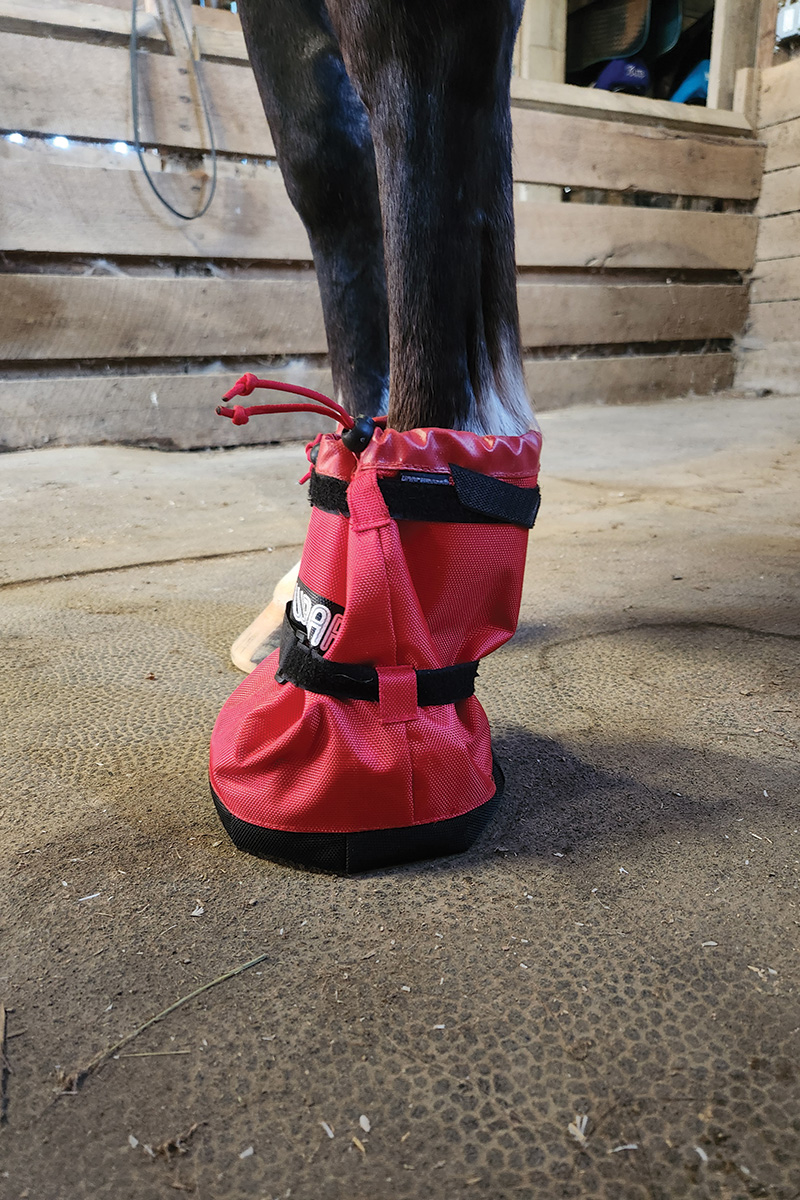
Soaking boots.
Soaking boots made for abscess care replace the easily knocked-over bucket. Photo by Sarah E. Coleman

Ice boots: Often used after strenuous exercise, these tall, up-to-the-knee boots can also be used to soak abscesses.

Plastic bags: If you’d rather repurpose something you already have on hand, try using a heavy plastic bag (like the kind some supplements come in) or some IV bags (ask your vet to save a few for you if you have none on hand). Applying a soaking bag to the horse’s foot allows him to move around instead of having to stand still while soaking. Duct tape on top of the bag around the ankle will keep it secure, and you can cut the whole thing off with bandage scissors when done.

A word of caution: If you’re strapping anything around your horse’s leg, it’s worthwhile to get him used to having something on his foot before adding water.

Poultice Power

Whether you choose to soak or not, all horses with abscesses benefit from a pack or poultice applied to the affected hoof to act as a longer-term drawing agent.

Commercial pads that already contain drawing agents can be a timesaver. One of the most popular is Animalintex, a cotton wool pad that contains tragacanth gum and boric acid; it’s available in both sheets and hoof-shaped pads. You can wet it with hot or cold water, apply to the hoof, and wrap the whole thing with Vetrap followed by duct tape.

Poultice Alternatives

You can also use cotton 4×4 pads, cotton wool, gauze or diapers to pack the hoof if no poultice pads are handy. The following are often added to the packing material and placed against the sole of the hoof to act as drawing agents before securing on the hoof.
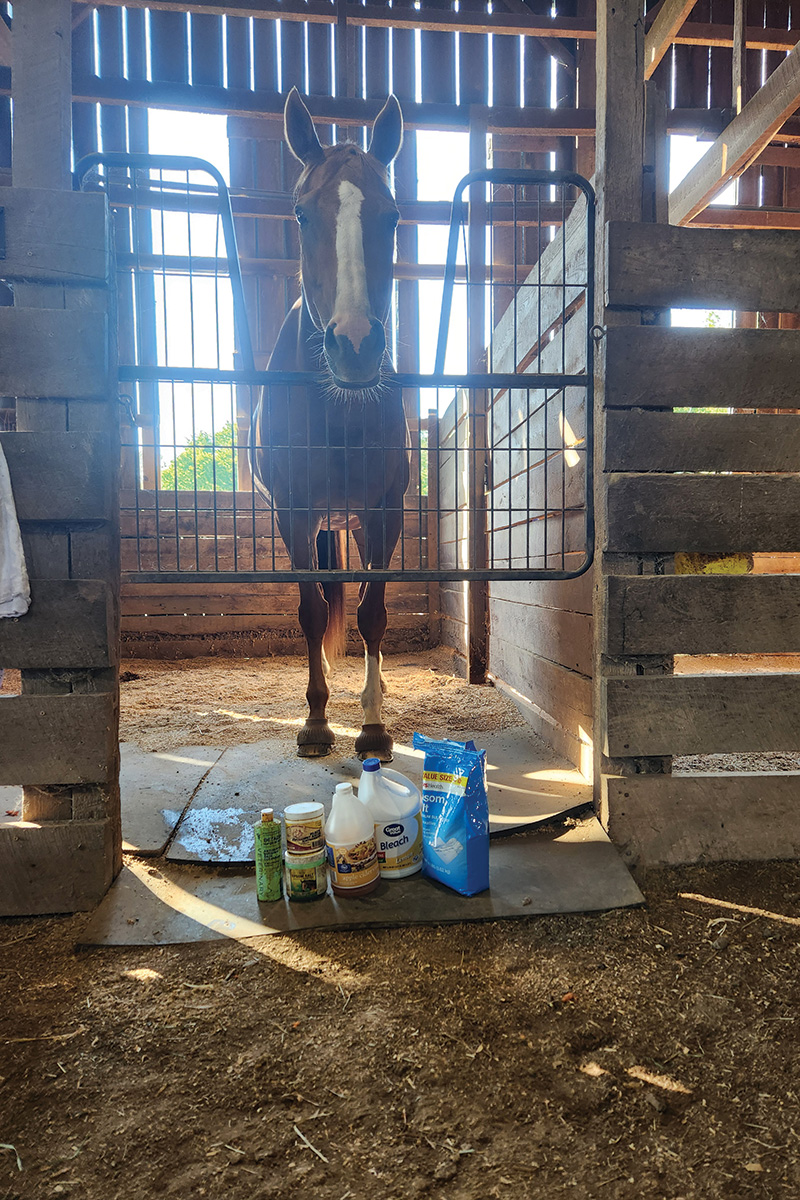
Various solvents set outside of a horse's stall for hoof abscess treatment.
Ichthammol, Epsom salts, bleach and other solutions are all popular methods for cleaning and drawing out abscesses during a soak. Photo by Sarah E. Coleman

Baking soda: Add water to baking soda to make a paste and slather the sole of the hoof with the mixture; some people choose to add Epsom salts to the mixture as well.

Linseed: Damp, warm cooked linseeds that are boiled and made into a mash can be packed into the hoof and wrapped.

Epsom salts and Vaseline: Combine both ingredients to make a gel that sticks to the bottom of the hoof.

Manuka honey: the antibacterial properties of honey are well documented; it draws out toxins, as well as cleans and prevents infection and encourages healing once the abscess track is open.

Sugardine: Combine ¼ cup sugar with 3 tablespoons of povidone-iodine solution until it makes a thick, granular paste to slather on the bottom of the hoof. Sugar absorbs the moisture in which bacteria thrives; the povidone-iodine helps kill any bacteria that is present.
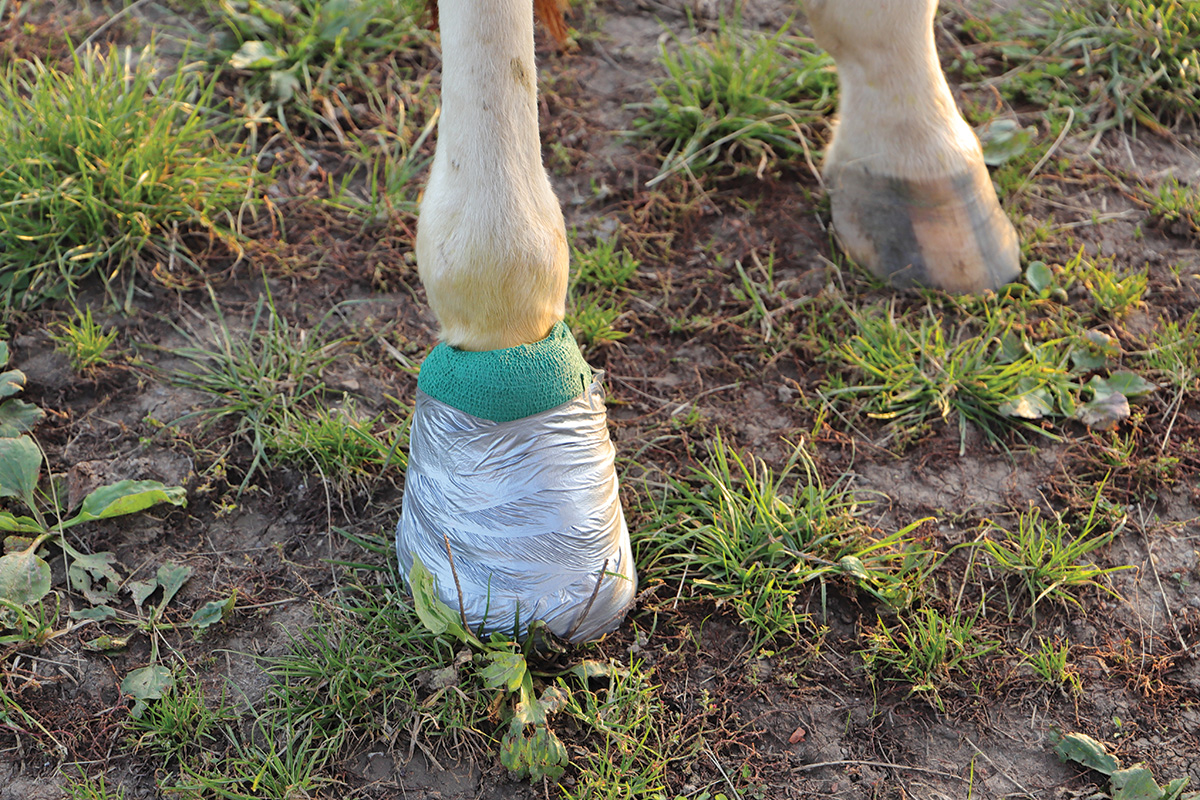
A horse's hoof wrapped for treatment of an abscess.
“Sugardine” is a combo of sugar and Betadine made into a paste. The sugar draws out moisture while povidone-iodine kills bacteria. Photo by Sarah E. Coleman

Ichthammol: Stinky and incredibly sticky, this old-school remedy for drawing an abscess is still one of the best.

Cabbage leaves: Cabbage leaves boiled in Epsom salt water to make them pliable is a lesser-used home remedy that draws out infection and eases pain. The leaves can also be chopped, boiled and packed into the hoof sole.

Sauerkraut: No time to boil your own cabbage leaves? Packing the hoof with sauerkraut has also been said to work; the sauerkraut’s acidity makes it hard for bacteria to survive.

Wrapping

Once you’ve picked your drawing agent and slathered it on, you can create your own wrapping using heavy-duty plastic bags (like the ones some supplements come in), Vetrap, and duct tape, or you can purchase a pre-made boot to hold the dressing in place.

These boots offer a variety of fasteners depending on the brand; they may have zippers or Velcro straps. The best boot for your horse will be one that is easy to get on and stays on—some horses are Houdinis about removing things.

Key Takeaway

Abscesses can be painful for the horse and frustrating for his owner, but with perseverance and a bit of ingenuity, they will (hopefully) resolve rapidly. If at any time you’re concerned that the abscess is not resolving or that your horse’s pain is unmanageable, reach out to your vet for guidance.

This article about hoof abscess treatment options appeared in the September 2024 issue of Horse Illustrated magazine. Click here to subscribe!
The Origin of the Misty Story

0

Published in 1947, Misty of Chincoteague was not only the book that changed Marguerite’s life and made her a bestselling author, but it was also the book that changed the fortunes of an entire island community, virtually overnight and seemingly forever.

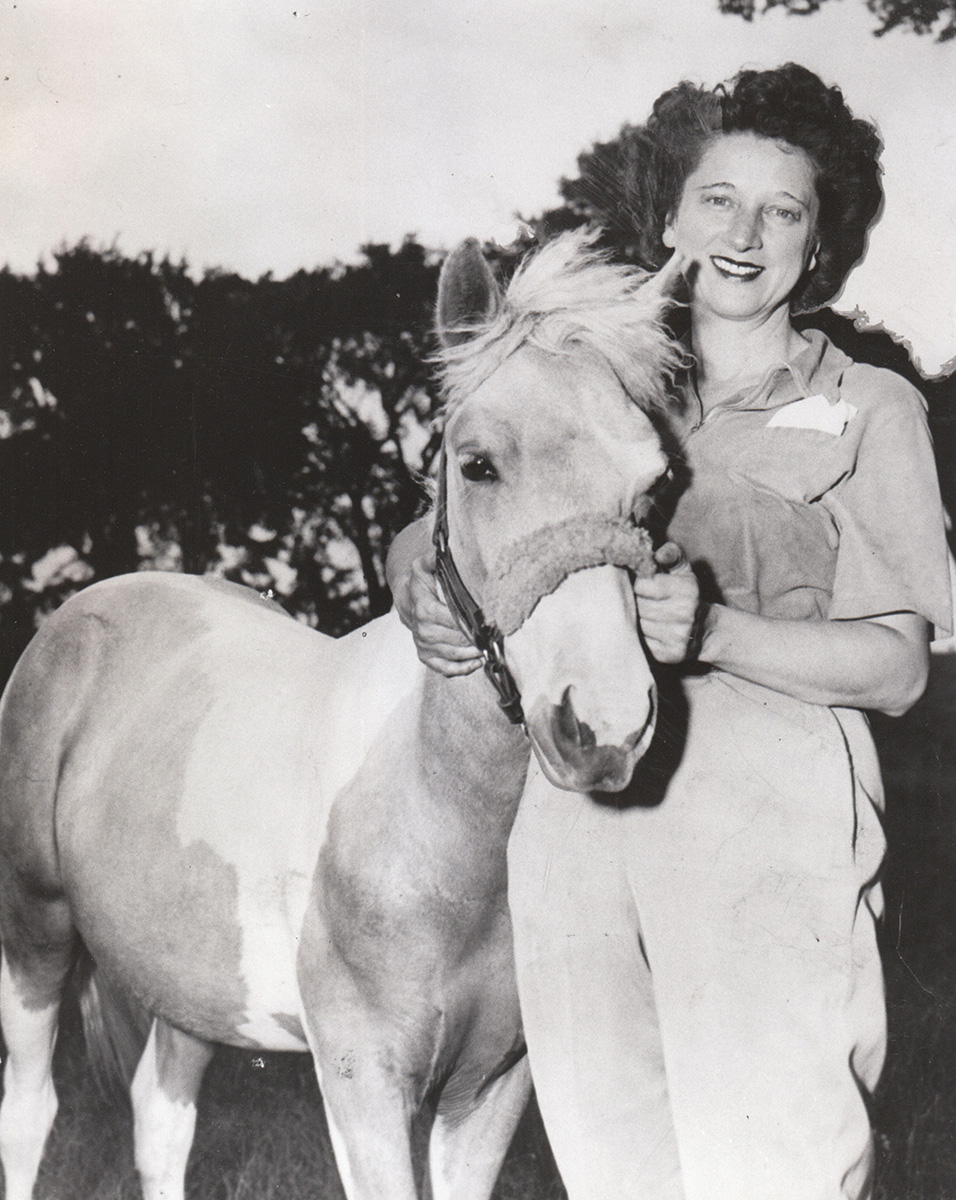
Misty and Marguerite Henry.
Misty and Marguerite Henry. Photo courtesy of the private collection of Marguerite Henry

Misty also influenced and informed countless generations of horse-loving children who pilgrimaged with their parents to Chincoteague Island, Va., hoping to come home with a pony just like Misty. The book still inspires great numbers of people to travel to Chincoteague and perhaps even buy a pony of their own during the now-famous Pony Penning Week.

An Idea Is Born

Misty of Chincoteague had a simple origin story. Dr. Mary Alice Jones of Rand McNally, Marguerite’s editor, overheard a conversation while attending a dinner party. Jones listened in as a fellow dinner guest talked about an annual roundup of wild ponies on an island off the coast of Virginia. The ponies were herded into the water from their home on Assateague Island and swum across the channel to neighboring Chincoteague Island each July. There they were auctioned off, with all proceeds benefiting the Chincoteague Volunteer Fire Department.

Jones shared the information with Marguerite, who was immediately enthusiastic about writing a story about the event. Marguerite planned to visit the island and take a local Wayne horsewoman along with her. She also decided to invite her illustrator, Dennis Wesley, as he had moved from New York to Virginia and could capture the possible story in pictures while they were on the island. Dennis was immediately game to join the expedition. Many of his drawings in the book were from their experiences during that trip.

Marguerite booked a room at Miss Molly’s Inn on Main Street in Chincoteague for her first exploration of the island. During that first visit, Marguerite took endless notes as she and her travel companions spent days looking for wild ponies and talked with Chincoteague residents.

While she was walking around town, interviewing local townspeople, Marguerite happened upon two attractive teenagers named Maureen and Paul. It turned out that they lived with their grandparents, Clarence and Ida Beebe, on a ranch not far from Miss Molly’s Inn.

Grandpa Beebe was not only the owner of a pony ranch on Chincoteague, but he proved to be an invaluable source of information on the island and the history of the wild ponies. Beebe’s grandchildren, Paul and Maureen, helped train the ponies that he later sold.

When Marguerite met Maureen and Paul, they were riding the same pony bareback. She told them that she had come to the island to write a book about the wild ponies and Chincoteague Island, and perhaps one pony in particular—a gold-and-white foal she had seen and worried might be auctioned off.

“Suppose some parent with a clumsy clod of a child bought Misty in the auction tomorrow and had no idea of waiting until she grew strong enough to be ridden,” Marguerite frets in A Pictorial Life Story of Misty.

It was Clarence and Ida Beebe who helped move Marguerite’s story along—and who turned out to be critical to the book’s success, especially Grandpa Beebe’s idea that Paul and Maureen should feature as characters. Grandpa Beebe and Marguerite shook hands on a deal for the gold-and-white foal.

“There was no bill of sale. No bargaining. Just $150 offered and accepted,” Marguerite wrote in Pictorial.

Grandpa Beebe—“wiry, spry-legged as a grasshopper,” proved to be a brilliant find, and as charming as he was knowledgeable about both ponies and life. His grandchildren were the characters Marguerite needed at the center of her book, and his words were what lit up the pages.

Misty on the Mainland

Grandpa Beebe kept his word, and a few months later he shipped 4-month-old Misty to Marguerite in Wayne by way of a railroad box car. It was an arrangement that they had both agreed would only be temporary. Misty would live with Marguerite for as long as necessary to finish her book. It was an odd deal to make, but Grandpa Beebe felt the money paid for Misty would be useful for his grandchildren’s education. And of course, the plan was that Misty would eventually be returned to the Beebes where she would be trained to be ridden and someday bred.

When it was time for Misty to be shipped to Wayne, there was one obstacle: Marguerite didn’t have a barn. But her neighbors the Quayles did, and they offered its use. The Quayle children and their friends even helped to clean up the two-stall structure, especially eager to lend a hand when they heard that a wild pony from Virginia was about to arrive.

But when the “wild pony” arrived looking ragged and sad on a cold rainy day in November 1946, Marguerite had some serious misgivings. Misty had traveled four days by train and looked very much worse for wear. Marguerite was truly shocked at the sight of the filly.

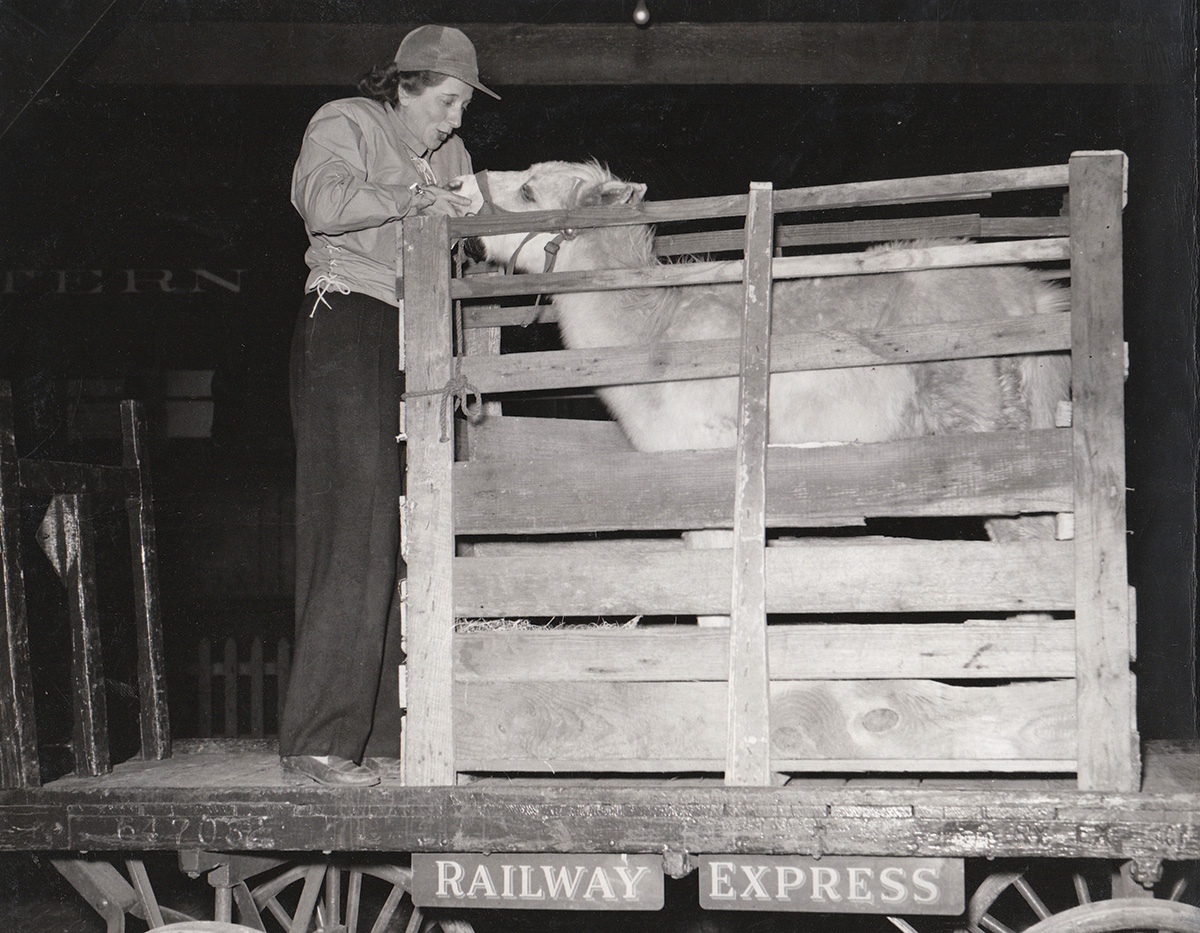
The real-life Misty with Marguerite Henry when she arrived via train.
The real-life Misty with Marguerite Henry when she arrived via train in Wayne, Ill. Photo © Sid Wolfmann Studio originally appeared in A Pictorial Life Story of Misty (Rand McNally, 1976)

When Misty stepped out of the rough crate that Grandpa Beebe had made, Marguerite thought the sorry-looking foal looked nothing like the gold-and-white pony she recalled seeing just a few months earlier on the island. Marguerite felt sorry for the cold, lonely pony and a bit guilty as well.

What had she done, taking the tiny foal so far from home? The author ended up spending the night in the Quayles’ stable with Misty, keeping the pony company and hoping that somehow the story she’d had in mind might still work out.

The next day dawned on a more promising note. When Misty awoke in the strange little barn, she gave Marguerite a kick while being led her out of her stall. Marguerite took this as a good omen.

Misty’s arrival in Wayne created quite a stir among the neighborhood.

“Children appeared as if by magic to help get her ready for her arrival. There were sisters Susie with her mop of dark curly hair and Judy with her flaxen braids; Tex, with the deep-set eyes; Eddie and Arthur like roly-poly pups,” Marguerite wrote.

These budding young equestrians grew up to be accomplished riders: Judy Martin became a top pony breeder and an alternate on the Olympic equestrian team, and the young Mary Jon “Jonnie” Quayle Edwards took up eventing and remained a serious rider all her life.

Now in her 80s, Edwards still teaches and rides almost every day. And, in her stable of horses there is a pinto pony—named Misty, of course. 

The cover of Dear Readers and Riders: A Biography.

This excerpt from Dear Readers and Riders: A Biography (2024) is reprinted with permission from Trafalgar Square Books. For more information or to order the book, visit here.

FEI 2026 Aachen World Championships Countdown Under One Year To Go With Brisk Ticket Sales 

0

August 11 marked one year to go until the 2026 FEI World Championships in Aachen, Germany. They will run August 10-23, 2026 (these dates include the first horse inspections which may or may not be viewable by the general public). Essentially a mini World Equestrian Games, Aachen 2026 will include competition in six of the seven FEI sports disciplines (dressage, driving, eventing, para-dressage, show jumping, and vaulting), as well as entertainment and educational sessions.  

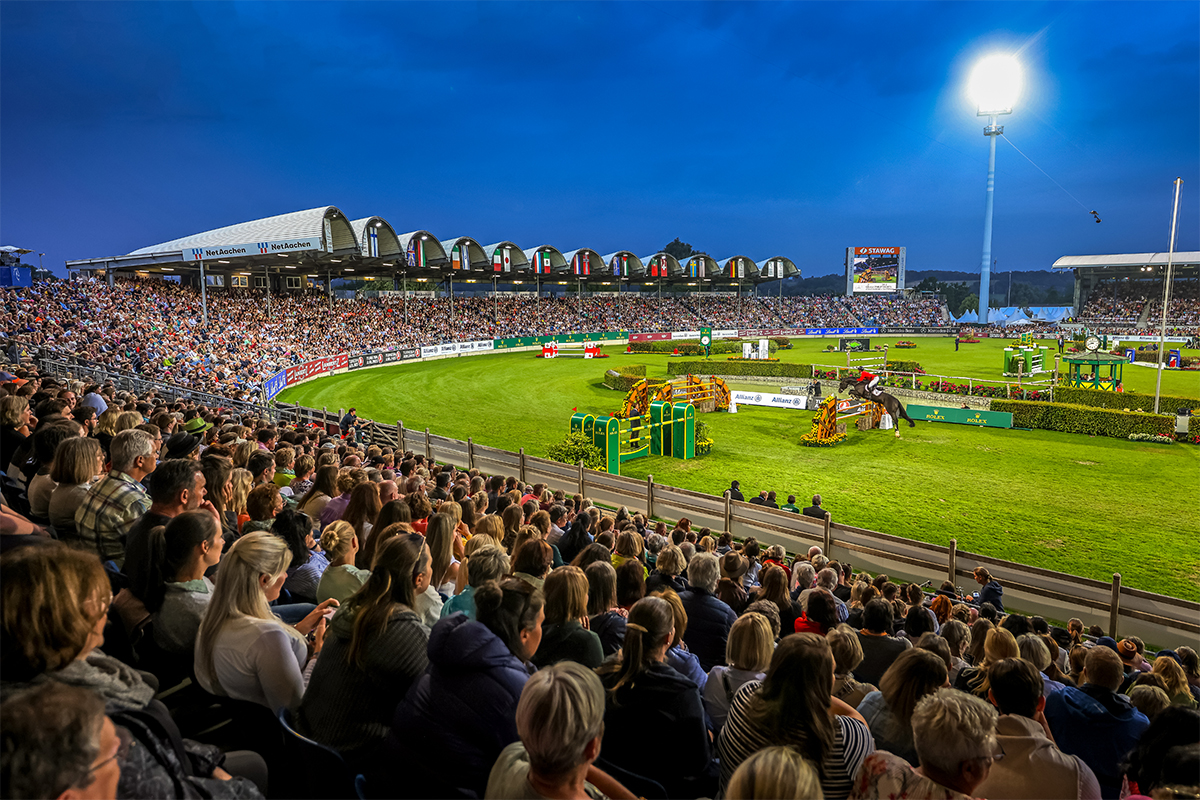
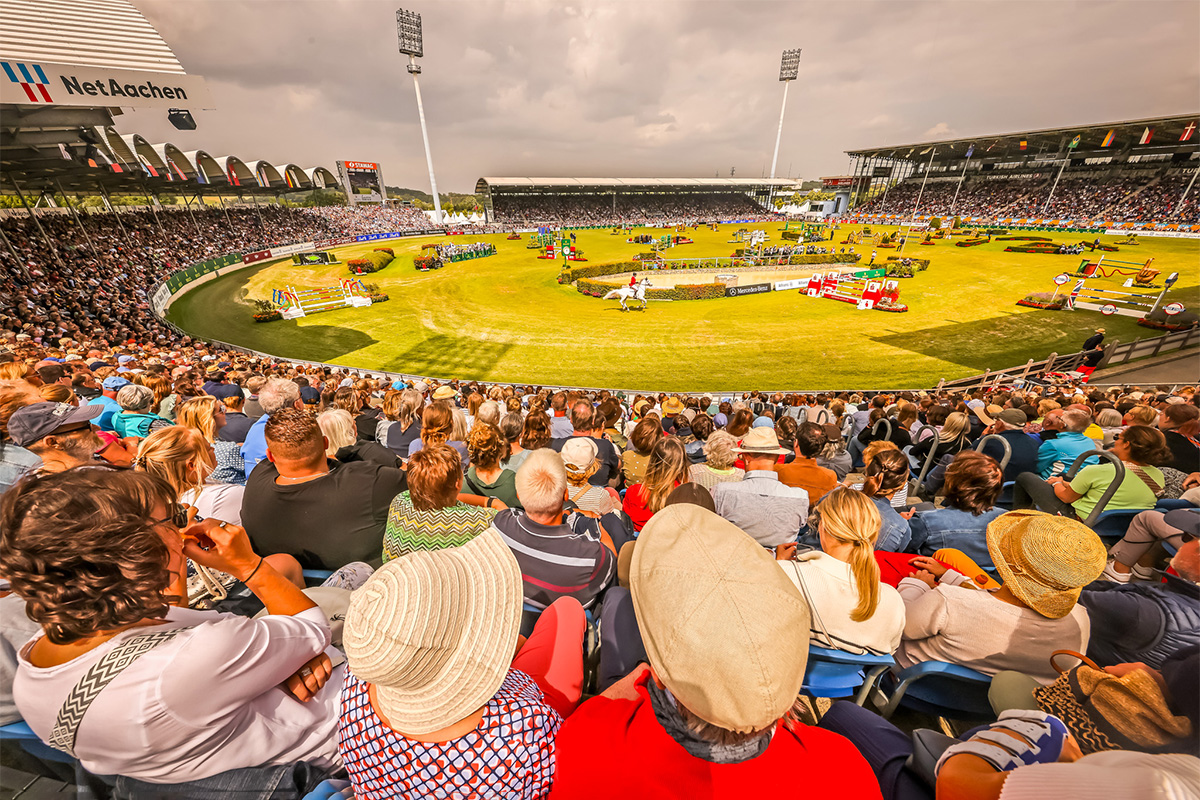
The Aachen Main Stadium, which will host 2026 FEI World Championships events.
Photo courtesy CHIO Aachen

The folks in Aachen are old pros at big equestrian events. The iconic venue has been home to equestrian competition since 1898 and they hosted the 2006 FEI World Equestrian Games, so expect a well-organized Championships next year. For nearly 100 years they have staged several international-level shows each season, most notably their CHIO Aachen in July when the riders, drivers, vaulters and spectators from around the world gather for top-level sport.  Ask anyone who’s been and they’ll tell you, “Aachen is not to be missed! You’ll love it there.” 

Stefanie Peters, President of the Aachen-Laurensberger, talked about their commitment to hold the 2026 Championships in an August 11 press conference, “It is a great honor for us to host these important Championships. We will do everything in our power to offer equestrian sport a stage that will do more than justice to this international highlight.”  

She listed some of targeted investments, partly funded by the German government, that are to be made in time for the World Championships. These include installing a cover over Arena 3 and modernization of the cross-country course (which is being designed by Italian Giuseppe Della Chiesa), to name just a few. “Our goal is for Aachen to continue to be seen as the global flagship of equestrian sports in the future and to set new standards for major international events.”  

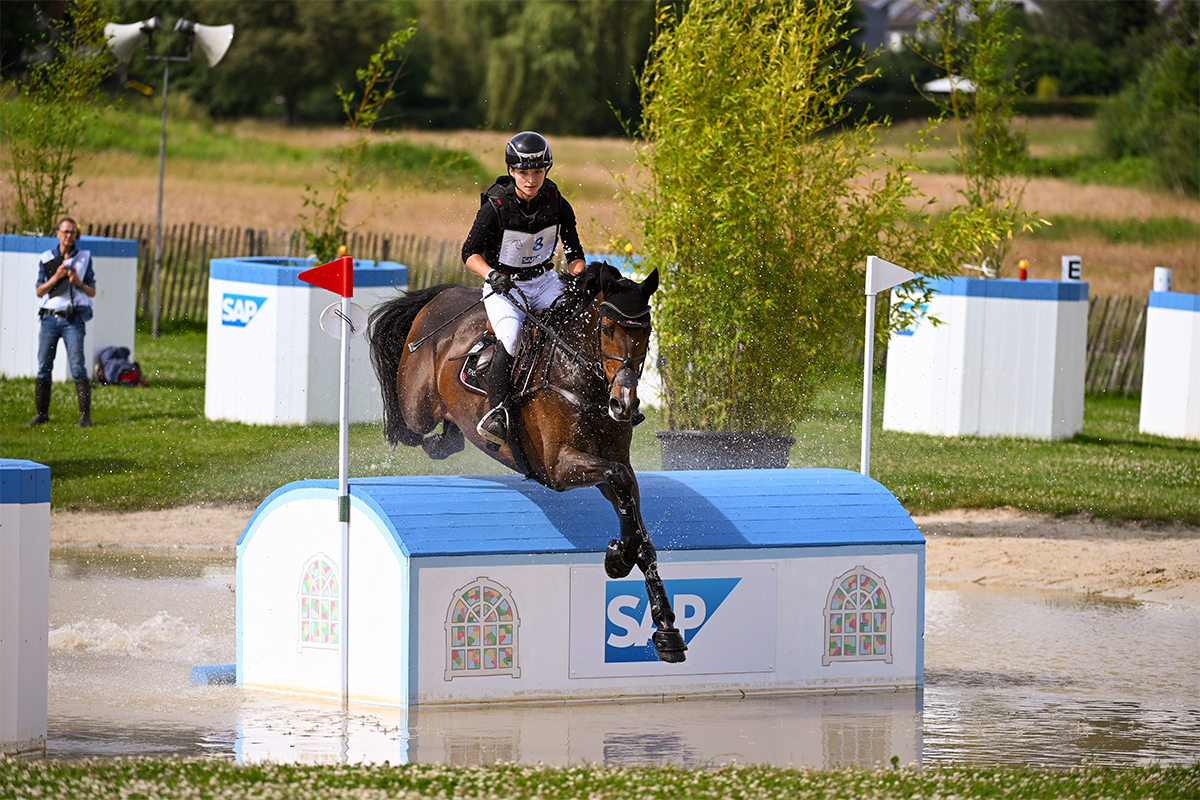
Olympic gold medalist from Germany Julia Krajewski riding Nickle in cross-country.
Olympic gold medalist from Germany Julia Krajewski riding Nickle at CHIO Aachen. Photo by CHIO Aachen/Hubert Fischer

FEI 2026 Aachen World Championships Schedule & Venue

The fourteen days of the 2026 Aachen World Championships competition is divided into two weeks with three sports each week. Week one features dressage, eventing and vaulting, then in week two show jumping, four-in-hand combined driving and para-dressage fill the calendar. 

There will be three competition stadiums and an outdoor course where eventing cross-country and driving marathon will be run. The Main Stadium will host the opening ceremonies, dressage, show jumping, and the final show jumping phase of eventing. Stadium 2 will be the home of the driving dressage and cones phases and eventing dressage. Stadium 3 will stage the vaulting and para-dressage classes.  

The Aachen Main Stadium, which will host 2026 FEI World Championships events.
The Aachen Main Stadium during CHIO Aachen jumping competition. Photo courtesy CHIO Aachen

Rave Reviews for Aachen

Germany’s Isabell Werth, the most decorated dressage rider of all time, had nothing but praise for the 2006 Championships during a press conference to mark the one-year until Aachen 2026, “The FEI World Equestrian Games 2006 in Aachen were the greatest championships we, as riders, have ever experienced.” 

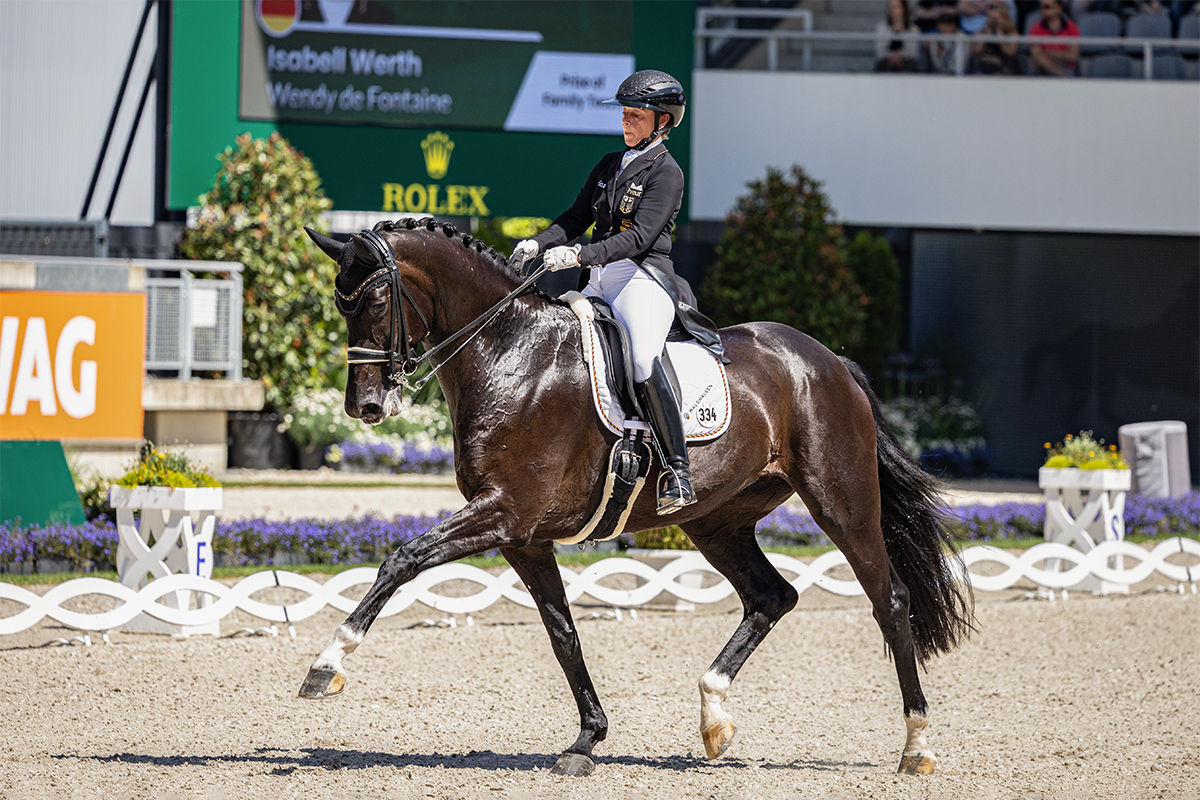
The most decorated dressage rider of all time, Isabell Werth of Germany, riding Wendy.
The most decorated dressage rider of all time, Isabell Werth of Germany, riding Wendy at the 2025 CHIO Aachen. Photo by CHIO Aachen/Jasmin Metzner

“Aachen is the mecca of show jumping. It’s one of the greatest shows in the world,” said Olympian and U.S. Show Jumping Team Chef d’Equipe Robert Ridland, after a U.S. Team Nations Cup CSIO5* win in Aachen in July. “There’s truly nothing like winning as a team here in Aachen.” 

Six-time Olympian for the USA, McLain Ward commented on his affinity for showing at Aachen while competing there in 2024, “I think I came to Aachen for the first time 30 years ago, not to date myself, and it just never gets old.” 

2024 Olympic show jumping gold medalist Christian Kukuk from Germany attended the 2006 Aachen Championships as a 16-year-old spectator on the stands and looks forward to making a bid for his country’s team in 2026. He said he had always hoped that a Championship of this magnitude would be staged in Aachen again. “I have not forgotten that breathtaking atmosphere.”  

FEI vaulting championships at Aachen.
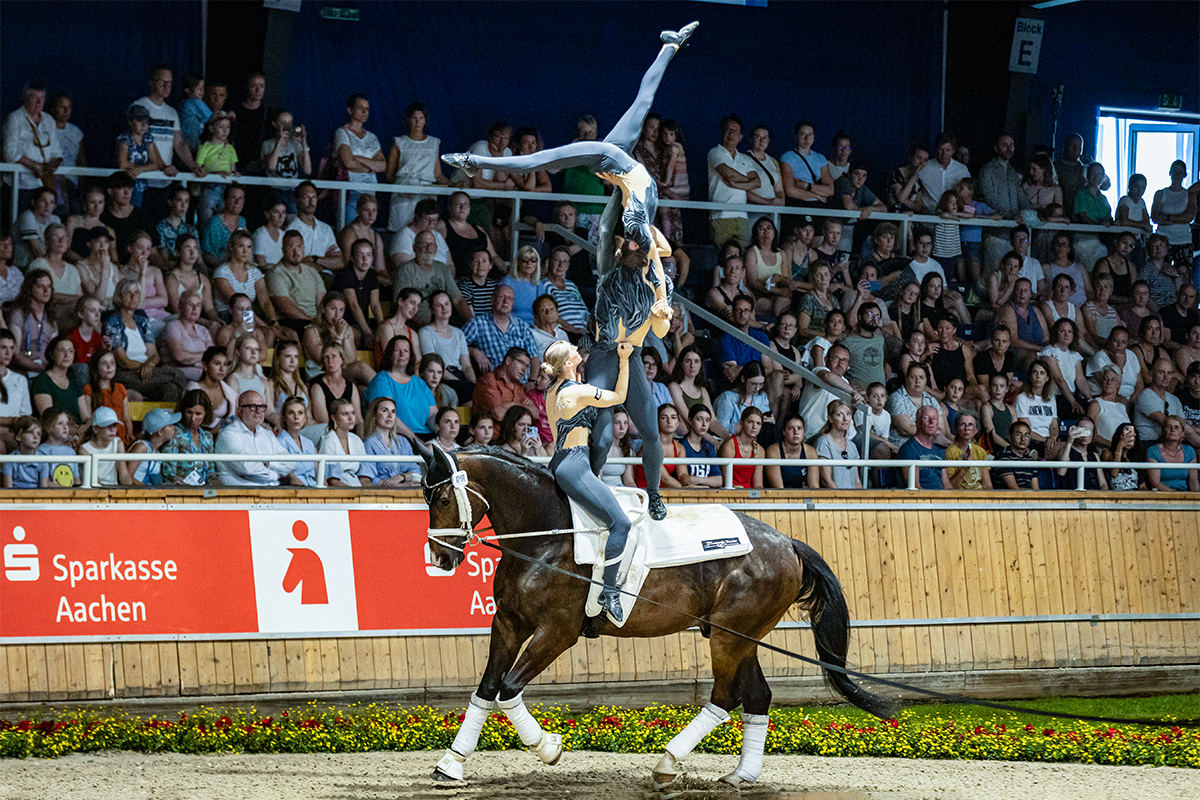
A German vaulting squad performing at CHIO Aachen. Photo by CHIO Aachen/Jasmin Metzner

Tickets, Travel & Housing Tips

Tickets for this every-four-years event are selling fast with over 50 percent already purchased, so don’t wait if you want to attend in person. Ticket prices run from the 15-Euro Village Passes (with no competition seating) up to 620 Euros for a show jumping all-access pass in the Mercedes Benz Grandstand, with many affordable pricing options in between.  

Eventing cross-country and driving marathon tickets cost 50 and 30 Euros, respectively. Para-dressage tickets are free with the purchase of another ticket (stadium seating for another sport or a village pass). Reasonably priced standing-room-only stadium tickets are also available for dressage and show jumping. Ticket prices may also include local bus fare for the date on the ticket.  

The USA’s Chester Weber during an awards ceremony.
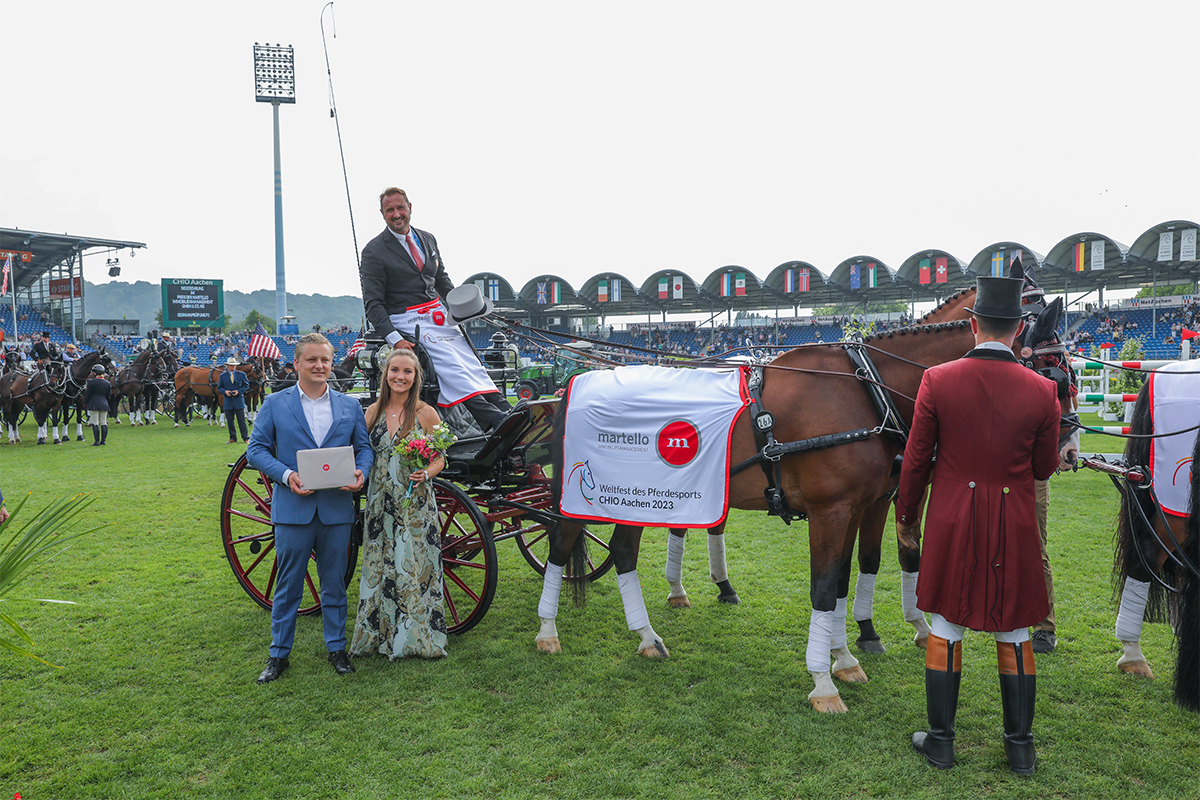
The USA’s Chester Weber during an awards ceremony at the 2023 CHIO Aachen. Photo by CHIO Aachen/Michael Strauch

Closest airports to Aachen are Cologne Bonn Airport in Germany (53 miles), Düsseldorf Airport in Germany (62 miles), Maastricht Aachen Airport(17 miles) in the Netherlands andLiège Airport (37 miles) in Belgium. Aachen transportation options include trains and buses as well as car rentals, taxis, ride share companies such as Uber and FreeNow, and bicycle rentals. When looking for housing, in addition to looking in Germany, also consider hotels and rentals in Belgium and the Netherlands due to the close proximity of Aachen to those borders. The address of the Aachen showgrounds is: Albert-Servais-Allee 50, 52070 Aachen, Germany.  

More About Aachen

The city of Aachen is located in the German state of North Rhine-Westphalia directly bordering Belgium to the southwest and the Netherlands to the northwest. The city has approximately 261,000 residents and is situated in the northern foothills of the High Fens and the Eifel Mountains and along the Wurm River. 

Links to More information

Ticket Sales

Ticket Sales Brochure
◆ Online Ticket Sales

Television Coverage

The competition will also be available live and on demand on FEI.TV via ClipMyHorse (subscription required).

General Information

For more information about the 2026 FEI Aachen World Championships, visit their website or the 2026 Aachen FEI page.

Aachen 2026 World Championships E-Newsletter
Aachen Tourism (includes housing and travel information) 

2026 FEI World Endurance Championships

Fans of the seventh FEI sport, endurance, should note that the 2026 FEI World Endurance Championships will be in AlUla, Saudi Arabia, on October, 17, 2026. For more information about that competition, visit here. 

But Wait, There’s More!

Aachen 2026 also begins another exciting three-year cycle of top-tier equestrian championships with the 2027 Pan American Games in Lima, Peru, and the 2028 Los Angeles Olympic and Paralympic Games following. Ticket sales for the LA28 Olympic and Paralympic Games and the Lima 2027 Pan American Games should open soon. (Anyone considering a trip to the Lima Pan Am Games could easily tack on a side excursion to see the historic Machu Picchu site in the Peruvian Andes too. It’s well worth the effort and organized tourism packages are readily available through approved tourism vendors listed on the Games website.)  

But before all of those, to whet the appetite of equestrian fans for international sport here in North America, the Maryland 5* at Fair Hill Three-Day Event happens October 15-19, 2025, the Defender Kentucky Three-Day Event April 23-26, 2026, and then April 8-12, 2026, the USA will host FEI World Cup Finals for dressage and jumping at the Dickies Arena in Fort Worth, Texas.

Watch for further updates on all of these competitions, as well as event coverage, on HorseIllustrated.com and in print in Horse Illustrated magazine. 

Try These Two Ground Obstacles

0

Obstacles for horses to cross appear on the trail, in the show ring and even in between the pasture and barn. (Hello, newly fallen tree branch that wasn’t there yesterday!) Teaching a horse to confidently approach these obstacles from the ground will take the angst and frustration out of many situations.

“It’s super beneficial to expose a horse to any sort of obstacle you can get your hands on because it creates better communication and trust between handler and horse,” says Camille White, who operates Camille’s Mustangs out of Bryan, Texas. White is also the 2022 Fort Worth Extreme Mustang Makeover Champion.

Preparation

Before you begin introducing a bridge or step-over to your horse, White advises preparing him by making sure he has a few prerequisites down pat.

Can Stand Still: A horse that knows how to stand still shows that he is capable of down-regulating his nervous system and accessing the thinking side of his brain, according to White. During obstacle training, she rewards the horse by releasing all pressure and allowing the horse to stand still and relax.

Legs Are Desensitized: When working with obstacles like bridges or step-overs, there is a good chance the obstacle will touch the horse’s legs. White prepares the horse for this sensation by introducing him to the feeling of having his legs touched by various objects before starting obstacle training.

Has a Good Follow: Before she starts obstacle work, White wants the horse to know how to track her when being led. She calls this “having a good follow.” In addition to tracking her, she wants the horse to know how to maintain a respectful distance from her.

Can Isolate Body Parts: White wants the horse to know how to move specific body parts when asked so she can position him to approach the obstacle. This includes the ability to move his shoulders and hindquarters from both sides. Once finished, she wants to see the horse return to a neutral, relaxed state.

Understands Halter Pressure: White teaches a horse how to respond correctly to halter pressure before starting obstacle training. When she picks up on the lead rope and the halter tightens across the horse’s poll, she wants him to smoothly and willingly move forward with her.

Ground Obstacle #1: Bridges

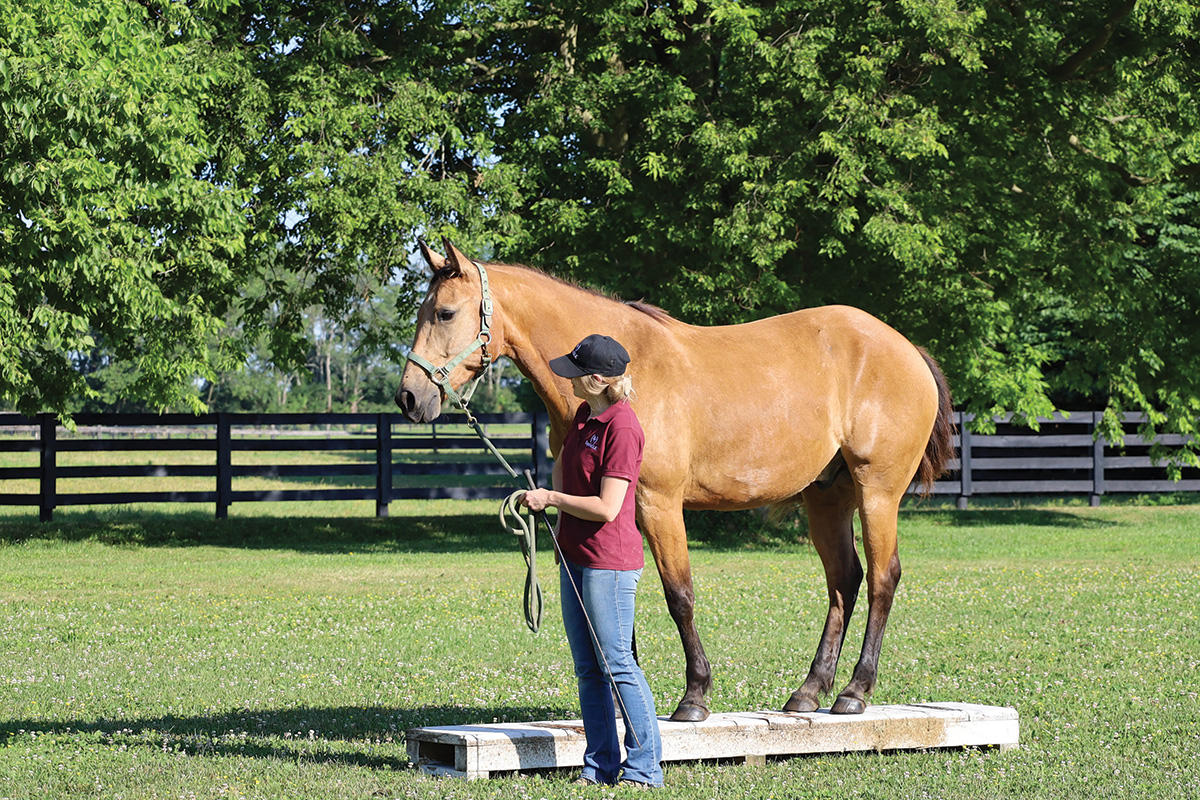
Bridges can show up in the show ring and on the trail. But White explains that learning how to step onto a bridge can also teach a horse how to step onto other strange surfaces, such as loading into a trailer. Groundwork is the key to introducing bridges and other novel surfaces.

Step 1: Begin by confidently approaching the bridge and ask your horse to follow. Don’t stop or hesitate when walking toward the obstacle, as this may communicate to the horse that it’s unsafe to move forward. If he hesitates, reinforce your ask by continuing to move forward and creating gentle pressure across the horse’s poll with the halter.

Working a horse with a bridge ground obstacle.
Step 1: Confidently approach the bridge and ask your horse to follow. Photo by Shoshana Rudski

Step 2: Reward effort. Watch for the horse to commit to following you across the bridge. As soon as he commits, release all pressure. Try to time the release of pressure with the horse crossing the bridge to associate it with the obstacle. You may have to reward many small steps (such as sniffing the bridge or taking a single step toward it) before the horse commits to crossing the obstacle.

Working a horse with a bridge ground obstacle.
Step 2: As soon as your horse commits to following you across the bridge, release all pressure. Photo by Shoshana Rudski

Step 3: Once he is comfortable calmly crossing the bridge, have the horse cross it again, but ask him to stop in the middle. When he stops, release all pressure and allow him to relax on the bridge. This helps the horse associate relaxation with the obstacle. If your timing is well-placed during step 2, this step will come naturally to most horses.

Allowing the gelding to stop and relax at the top of the bridge.
Step 3: Once your horse is comfortable crossing the bridge, ask him to stop in the middle. Photo by Shoshana Rudski

Be ready to troubleshoot the top three most common challenges when it comes to introducing a bridge crossing from the ground.

Refusal to Move: If the horse refuses to move during your approach, yield his hindquarters and shoulders to unlock his feet, then approach the bridge again. If he still refuses, create pressure at the hindquarters to encourage forward movement. Begin by simply looking at his hindquarters. If there is no response, increase pressure by using an extension of your arm, such as a training flag, to tap the horse’s hindquarters until he moves forward. Reward the smallest effort by removing all pressure.

Moving Backward: If the horse moves backward, move with him without releasing the tension on the lead rope. Continue to ask him to take one step forward in the right direction. Reward effort, which may be as small as the horse leaning toward the bridge.

Rushing the Bridge: The first time the horse crosses the bridge, he may rush over it. If he rushes through the obstacle, immediately turn around and cross the obstacle again. Repeat until he slows down and becomes intentional about where he places his feet.

Ground Obstacle #2: Step-Overs

Step-overs appear in the form of ground poles, cavalletti poles, logs, branches and even puddles of water. A horse that knows how to step over an obstacle can successfully navigate many different situations. White shares the following steps for teaching a horse how to step over obstacles from the ground.

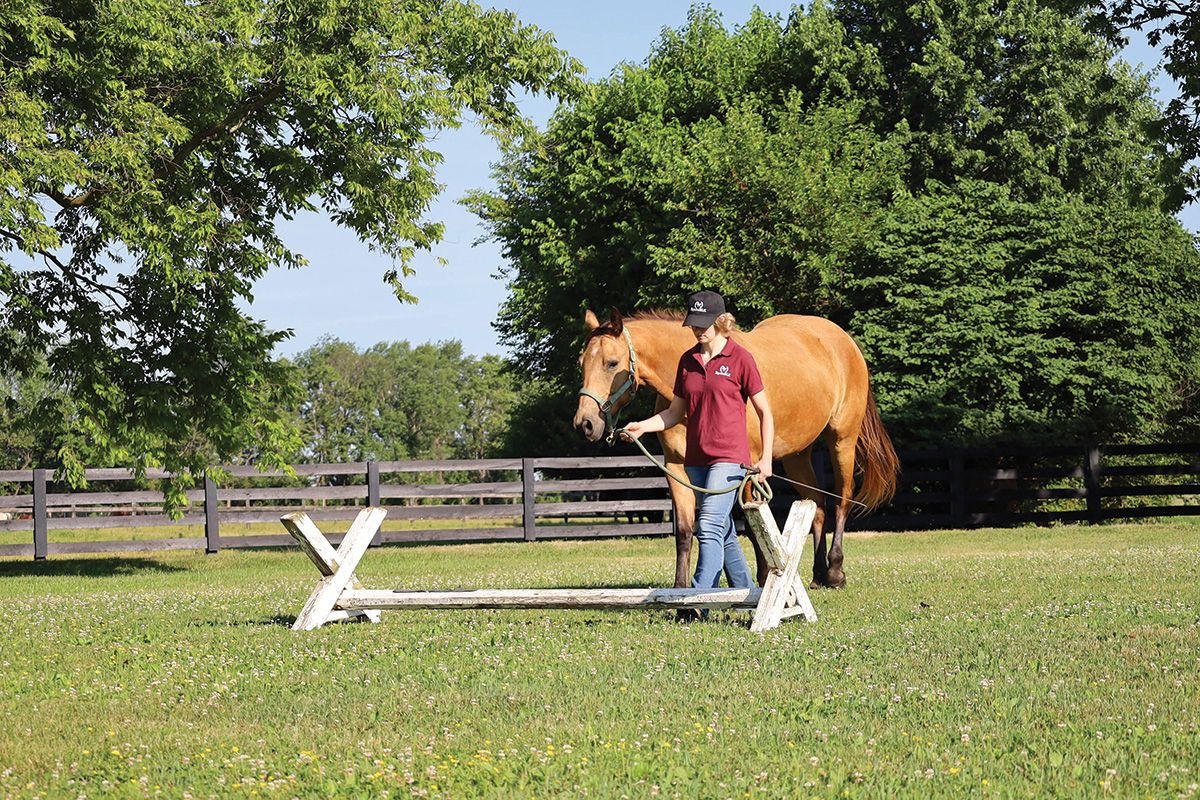
Step 1: Start with an easy item to step over, such as a ground pole. Confidently approach the step-over and ask the horse to follow. Don’t stop or hesitate when walking toward the obstacle, as this may communicate to the horse that it’s unsafe to move forward. If he hesitates, reinforce your ask by continuing to move forward and creating gentle pressure across his poll with the halter.

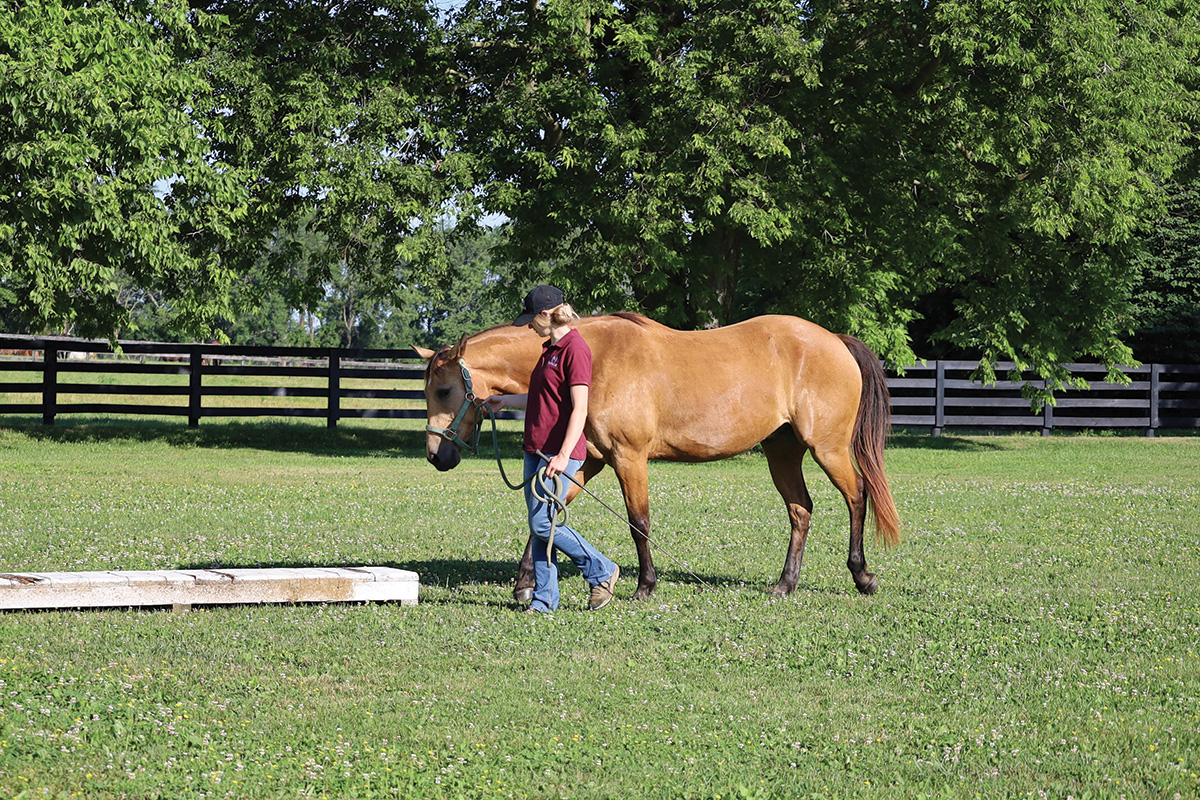
Working a horse with a step-over ground obstacle.
Step 1: Just like the bridge, confidently approach the ground pole. Photo by Shoshana Rudski

Step 2: Reward effort. Watch for the horse to commit to following you across the pole. As soon as he commits, release all pressure. Try to time the release of pressure with him crossing the bridge to associate it with the obstacle. You may have to reward many small steps (such as sniffing the pole or taking a single step toward it) before the horse commits to crossing the obstacle.

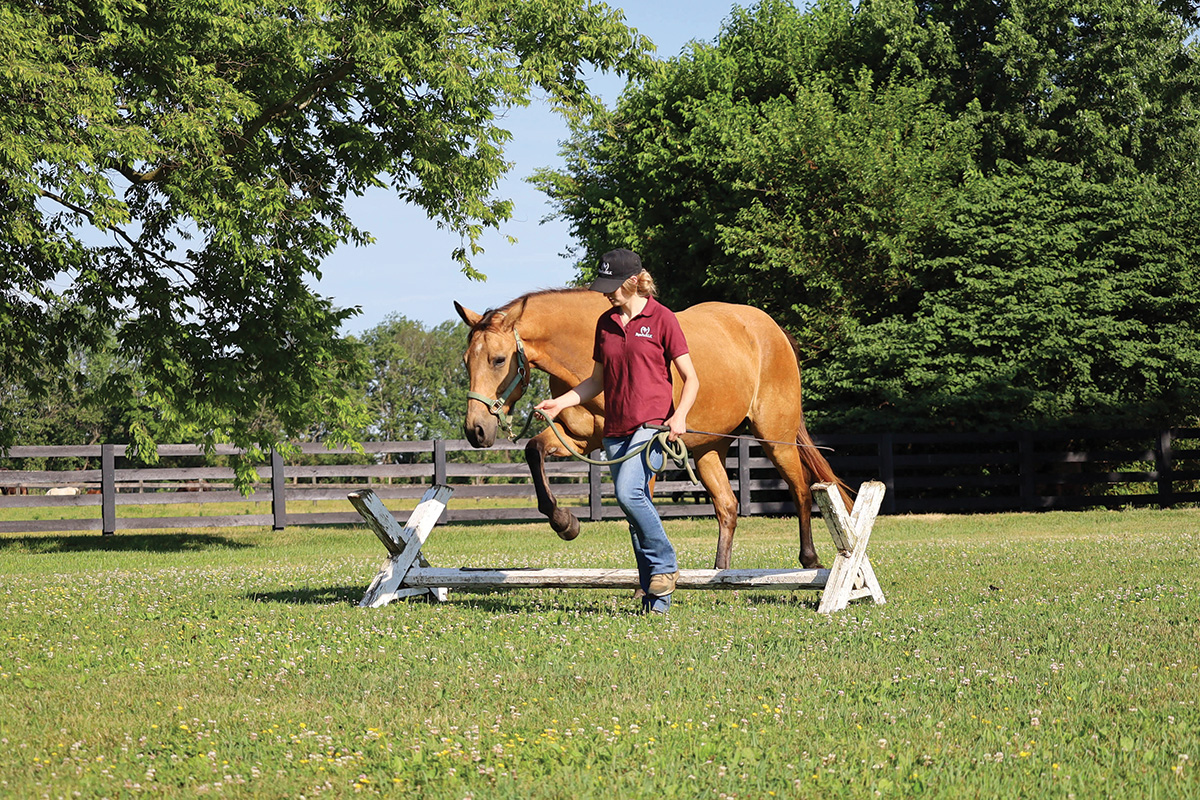
Step 3: Once the horse is comfortable stepping over a single ground pole, increase the challenge by adding more ground poles in a row and eventually increasing the height of the step-over. Follow steps 1 and 2 until he can calmly cross the obstacle.

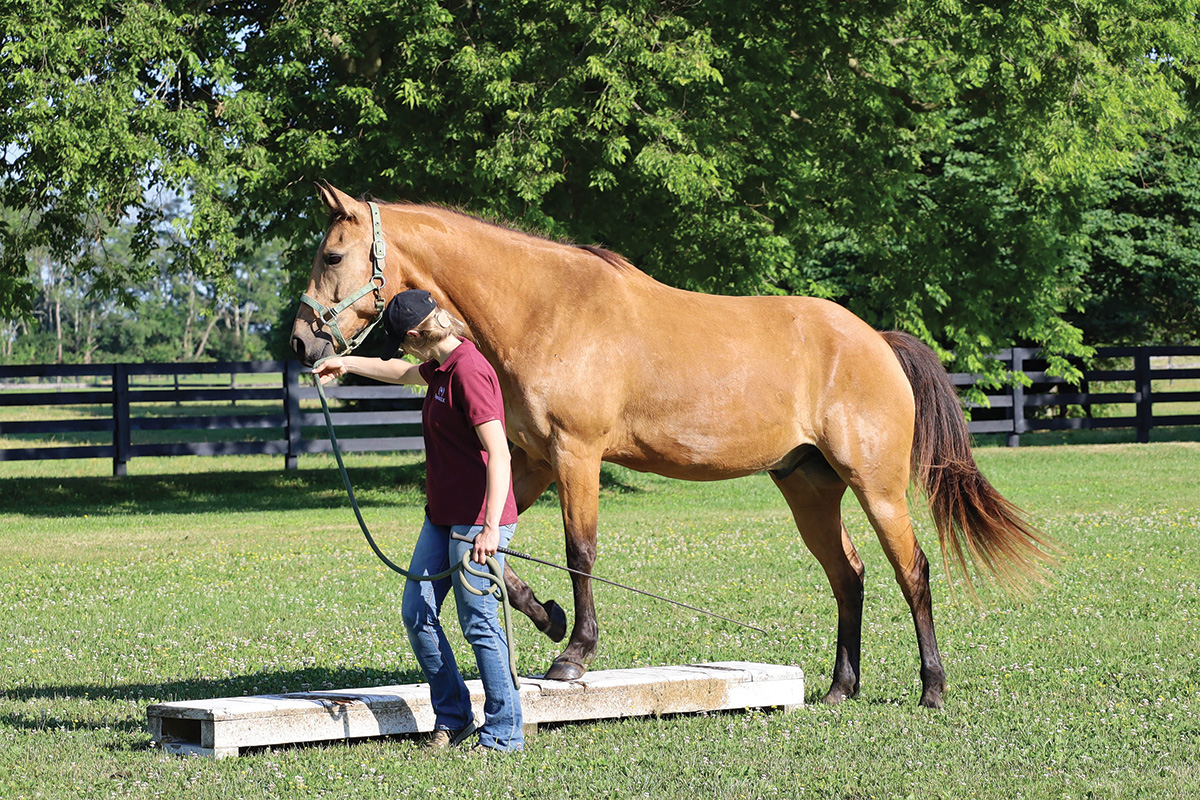
Going over the step-over.
Step 3: Once your horse is confident stepping over a pole, add more poles or increase the height of the step-over. Photo by Shoshana Rudski

Again, there are some common issues you should be ready to troubleshoot from the get-go when it comes to step-overs.

Avoiding the Obstacle: If the horse tries to sidestep or go around the obstacle, isolate his shoulder and ask him to return to a straight position before asking him to move forward toward the obstacle again.

Reacting to the Obstacle Touching His Legs: If the horse reacts poorly to the obstacle touching his legs, return to the prerequisite of familiarizing him with foreign objects touching his legs before trying the obstacle again.

Rushing the Step-Over: Adding height to the step-over may cause the horse to rush or jump over it. If that happens, immediately turn around and cross the obstacle again. Repeat until he slows down and becomes intentional about where he places his feet.

“Preparedness is always going to be your best friend when working with horses,” says White.

She encourages you to prepare your horse for situations that require him to cross obstacles before the need to cross an obstacle arises. Teaching your horse how to become comfortable with obstacles takes time, but it’s time worth investing.

More Groundwork Articles

◆ Groundwork for When You Can’t Ride
Five Groundwork Exercises for Your Horse

Groundwork Exercises to Improve Communication
Groundwork with a Purpose
How to Start Training a Horse for Liberty

This article about ground obstacles appeared in the September 2024 issue of Horse Illustrated magazine. Click here to subscribe!
Visit the V6 Ranch

0

Travel is good for the soul, they say. And when travel involves horses? Well, that’s good for everything. If you’re dreaming of a riding vacation where you can relax into the peace of rolling ranch land peppered with oaks and pines and sprinkled with wildflowers, the song of rivers and the call of hawks, the creak of the saddle and the footfalls of your good ranch horse, the V6 Ranch is calling.

The V6 Ranch in California.
Photo by Molly Virginia Photography

Located in Parkfield, “the Cowboy Side of California,” the V6 Ranch is owned and operated by the Varian family. A world away (but just four hours from L.A. or San Francisco), this 20,000-acre working cattle ranch is balm for the modern soul and medicine for horse lovers of all ages and abilities.

Founding a Ranch

In 1958, Jack Varian had just earned a degree in animal husbandry and married his sweetheart Zera, whom he called Zee. She grew up with horses in Southern California, and they were ready to start their life together as cattle ranchers.

Their first ranch was on hardscrabble, unforgiving land. After working it for three years, by some miracle a man wanted to buy it and Jack and Zee happily sold.

Two years later, they found a ranch of about 8,000 acres in the tiny town of Parkfield, nestled in the Cholame Valley in Central California. This land was completely different from their first ranch. Rich with life, water, and beauty, they soon understood why the indigenous Tachi Yokut inhabitants had named the area Cholame (“the beautiful one”).

The Varian family in 1966.
The six Varians (V6), Jack and Zee with their four children, in 1966.

Jack and Zee called the place the V6 Ranch after their family of six, which included their kids Katherine, Lillian, John and Gregory. They acquired more acres over the years as they raised their family on the ranch. Then a funny thing happened.

“As all of us kids finished college and were looking to start our new lives, we all realized we wanted to come back to Parkfield,” says son John Varian.

The problem? Even though the ranch was now 20,000 acres, with the cattle operation running about 1,000 head per year, it provided income to only support Jack and Zee. The rest of the kids would need to find a different way to make a living if they wanted to live on the V6.

Welcome to Parkfield, Pop. 18

By the 1980s, the little town of Parkfield was pretty much gone. There were still a few homes and residents but no public buildings. The old bar had burned down in the 1970s. There was a one-room schoolhouse and a community hall, but the rest of the buildings were abandoned.

“I had some construction experience from doing side jobs in college, so Dad and I started rebuilding Parkfield in 1989,” says John. “We decided we needed a restaurant first, so we started by building the Parkfield Cafe. At first, it didn’t have an indoor kitchen, so we began cooking outside on the pit for guests.”

The restaurant was finished as a log cabin—“the only thing we knew how to build”—and the Parkfield Cafe started to become a destination for barbeque and hearty meals. Once the restaurant took hold, the family decided to build a lodge so people could stay overnight.

In 1991, they built the Parkfield Lodge, using lots of reclaimed and repurposed material. It has 10 unique rooms and a gathering room with a rock fireplace.

“Then we kept going and repurposed the old buildings in Parkfield,” says John. “Now the old town provides comfortable lodging for our guests.”

The original 1920s Shell Water Tower is a two-story suite. The local post office, which was dragged to its location in 1906 by a team of horses, is a two-bedroom suite. The spacious Cowboy Cabin, built by John and his ranch crew, offers privacy and rustic luxury.

The original 1920s Shell Water Tower.
Repurposed old buildings in Parkfield lodge guests, including the original 1920s Shell Water Tower, a two-story suite. Photo by Robin Frenette

Bring on the Cattle Drives

One night in 1991, Jack and Zee went to town to see the movie City Slickers.

“As the family story goes, they watched as city folk ventured out to a cattle ranch for a vacation,” John says. “Driving home, they agreed. This was the next step for the V6.”

A cattle drive at the V6 Ranch.
The 1991 movie City Slickers inspired the Varians to let guests join their cattle drives for a real working ranch experience. Photo by Lauren Maeve

The idea: Take what they’d started in Parkfield with the cafe and lodge and begin to expand what they offered. Why not offer the ranching work and the experiences they had every day and share it with people?

John’s wife Barb created a brochure about their new cattle drives and started spreading the word.

“People came and had a great time, and it just went from there,” says John. “Then we continued to expand on what people wanted with different rides and experiences. We also knew that people with their own horses would love to come ride out on our working cattle ranch, so we built the Horse Camp to accommodate that.”

Saddle Up

“As a working cattle ranch, we have a lot of work to do and a lot of ranch land to cover,” John explains. “We love being able to share the work we’d be doing anyway with people from all over the world.”

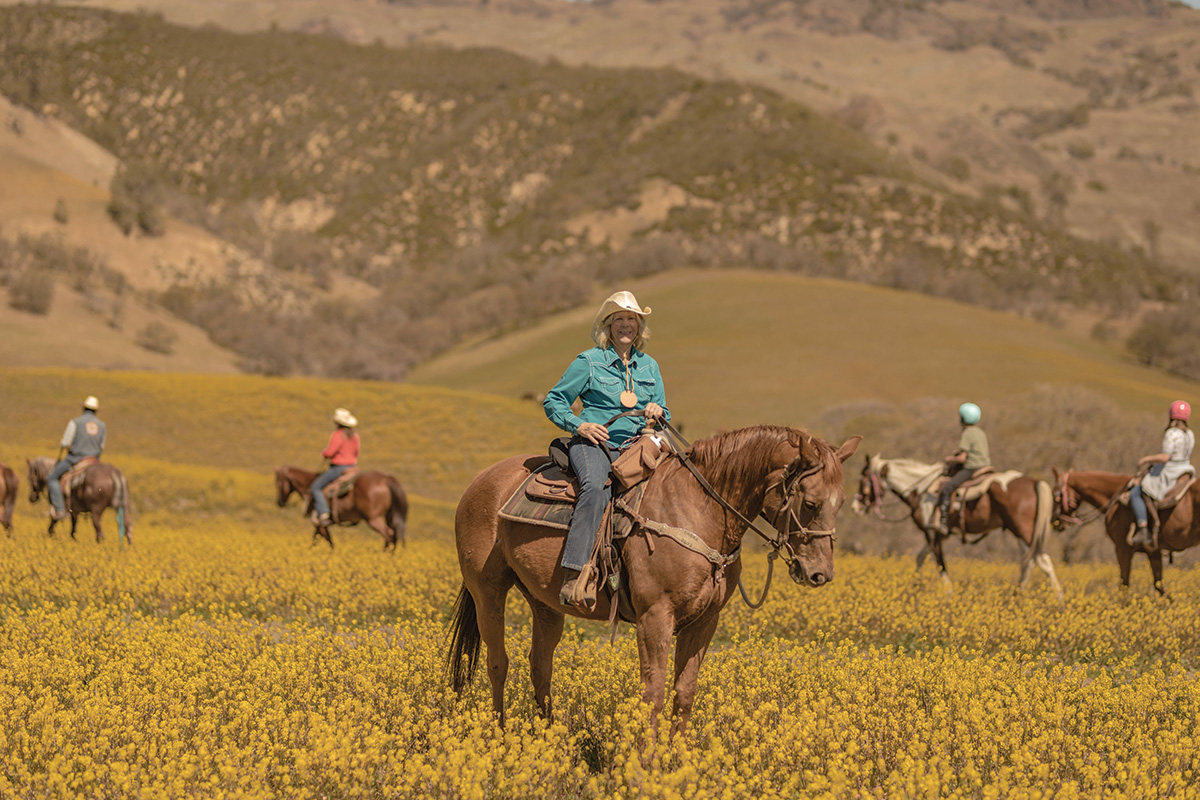
Today, the V6 offers a range of ways to experience ranch life during the needs of each season. All V6 Ranch experiences are open to riders aged 7 and older and all skill levels. The ranch hands and wranglers at the V6 are family or friends from local ranches, so you’re in good hands. On many of the rides, you can bring your own horse.

Here’s what awaits you at the V6:

Dude Ranch Weekends: Two and a half days of riding out on the ranch, hearty meals, a massage, lodging in one of the fun Parkfield town buildings, and a chance to unplug and unwind. These are great for families and riders who may be newer to horses.

Cowboy Academy: Five-day working ranch experience where riders can improve their horsemanship and working knowledge of cattle and ranch skills, from gathering and sorting cattle to roping, ranch obstacles courses, and beautiful trail rides.

Cowboy Academy 102: Five-day, corral-based ride focused on honing roping and cattle-sorting skills, including breakaway roping live cattle in the corral, roping a mechanical steer, learning how to read a cow, alley sorting, and more.

Cattle sorting at the V6 Ranch.
The Cowboy Academies teach skills like roping and cattle sorting to eager guests. Photo by Lauren Varian

Wrangler Ride: With coaching from the V6 Ranch crew, explore the trails and learn a wide variety of ranch skills such as gathering, sorting, roping and negotiating ranch obstacles.

Cattle Drives: For more than 30 years, the Varian family has invited guests four times a year to help gather and move cattle throughout the vast lands of the V6 Ranch. On each day of the four-day drive, riders will spend about six hours in the saddle gathering and moving cattle and then sleep under the stars.

Pack Trip: New for 2024, join the Varian family to ride and camp out for four days on the most remote and beautiful parts of the V6.

Meet the Horses

In addition to the variety of riding and experiences, another thing that’s special about the V6 is that there is no nose-to-tail trail riding.

“Our horses are ranch horses, not dude horses, because you can’t gather cattle nose to tail,” John explains. “You’ve got to spread out and be able to direct your horse wherever you need to go, and the same when you’re in the arena sorting or at a branding.”

The horses that the guests ride are the same horses that the Varian crew uses when no guests are at the ranch. The horses are experienced, savvy and can navigate the hills, rivers, and draws of the V6 with confidence.

With Quarter Horses, Paints, and Half-Arabians in their herd, it’s the horses’ cow sense, ranch work experience and intelligence, not their specific breed, that makes them great partners.

Interesting to note is that Jack Varian’s cousin was Sheila Varian, the renowned Arabian breeder, trainer, and horsewoman. In 1961, she changed history when she became the first woman to win the Reined Cow Horse Open Championship at San Francisco’s Cow Palace, and she did so on her Arabian mare, Ronteza.

Sheila came out to the V6 quite often and brought her rock-solid Arabian ranch horses to sort, brand, and gather cattle in the roughest places on the ranch. Today, the V6 has a few Half-Arabians from Sheila’s breeding program.

Getting to the V6 Ranch

“As I like to say, Parkfield is in the middle of nowhere, but it’s four hours from everything,” says John. The V6 is reachable by several airports: San Luis Obispo (SBP; 65 miles), Fresno (FAT; 110 miles), and San Jose (SJC; 175 miles). It’s also a half-day’s drive from Los Angeles or San Francisco.

The entrance to V6 Ranch.
Located in Parkfield, Calif., “the cowboy side of California,” the V6 Ranch is four hours from Los Angeles or San Francisco. Photo by Lauren Varian

Another Place and Time

If the whisper of a simpler time and the distant echo of hoofbeats is calling to you, take a trip to the V6 Ranch. Every member of the Varian family will welcome you to relax and enjoy, and the ranch horses will eagerly join you as you discover “the beautiful one.”

For more information on visiting V6 Ranch in Parkfield, Calif., visit v6ranch.com. If a ride you’re interested in is booked, add yourself to the waitlist. Last-minute cancellations often open up.

This article about the V6 Ranch appeared in the October 2024 issue of Horse Illustrated magazine. Click here to subscribe!

ASPCA Right Horse Adoptable Horse of the Week: Jenny

0

Welcome to Horse Illustrated’s weekly installment of the Right Horse Adoptable Horse of the Week, offered in partnership with the ASPCA’s Right Horse program. This week’s adoptable horse is Jenny! Check back weekly for a new featured horse so you can find your Right Horse.

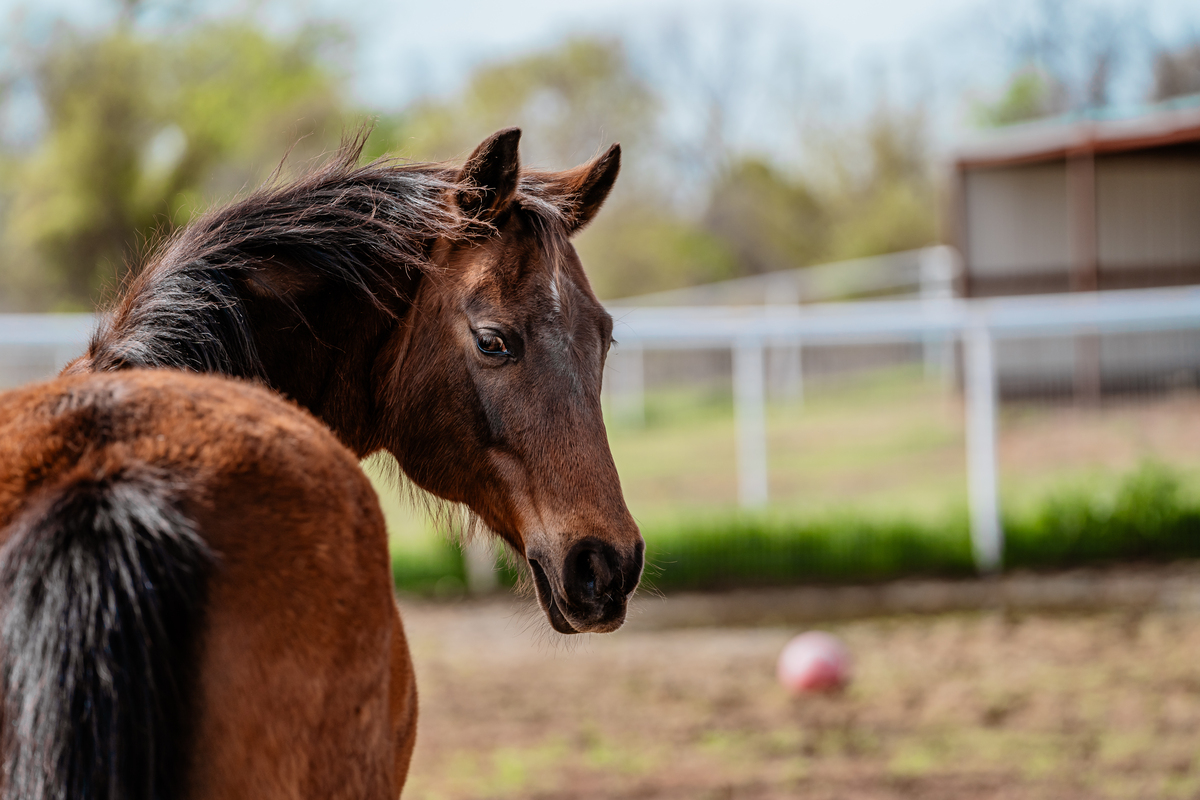
Adoptable horse Jenny.
Photo courtesy Humane Society of North Texas

Adoptable Horse: Jenny, an 20-year-old, 14.3hh Arabian/Saddlebred cross mare
Organization: Humane Society of North Texas, Joshua, Texas

Get to Know Adoptable Horse Jenny

Meet Jenny! This Arabian/Saddlebred cross mare is as sweet as she is beautiful. Jenny is seeking a new home as a companion horse. She has foundered in the past and as a result, she requires turnout on a dry lot or with a grazing muzzle if on lower quality grass. She also requires meds in the form of Prascend and Equioxx to keep her comfortable. This amazing girl deserves a happy home where she can retire and get all the love and attention she deserves.

Jenny is up to date on shots, Coggins, dental care, farrier care, and is microchipped.

Contact Humane Society of North Texas today about ASPCA Right Horse Adoptable Horse of the Week, Jenny!

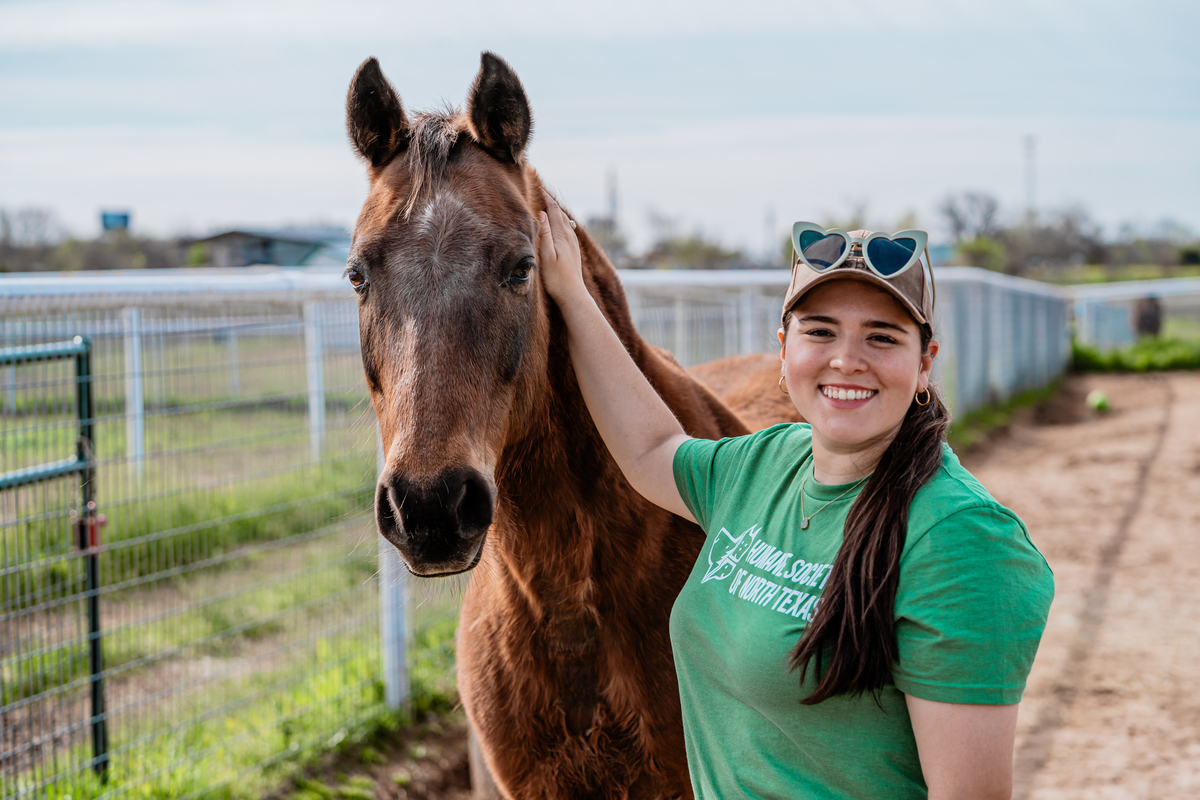
The mare with a HSNT volunteer.
Photo courtesy Humane Society of North Texas

ASPCA Right Horse

My Right HorseASPCA Right Horse is the online adoption platform of The Right Horse Initiative, a collection of equine industry and welfare professionals and advocates working together to improve the lives of horses in transition. A program of the ASPCA, their goal is to massively increase horse adoption in the United States. To find more adoptable horses and foster horses, visit www.myrighthorse.org. To learn more about The Right Horse, a program of the ASPCA, visit www.aspcarighthorse.org.

5 Functional Exercises to Improve Your Riding

0

Riding demands a dynamic blend of stability, balance, strength, and coordination to communicate effectively with your equine partner. To improve these qualities, there are five simple and functional exercises you can do to improve your riding that are based on five elements of human movement: push, level change, pull, rotation, and locomotion. Enhancing these components will improve your self-carriage, communication and ability as a rider.

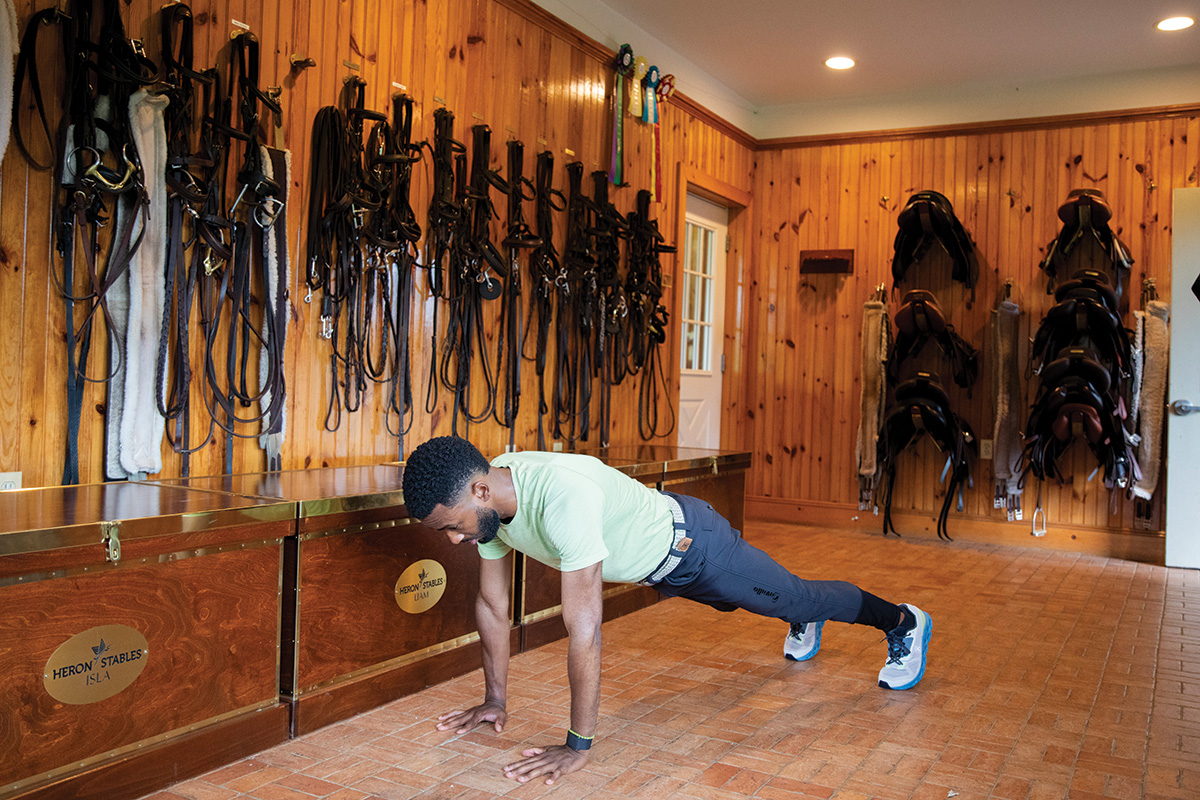
1. Push: Push-Up

The goal of the push-up is to improve upper body strength, shoulder mobility, and posture. This exercise incorporates upper-body postural control with core strength while improving shoulder stability, which adds more confidence and better control with your horse when mounted.

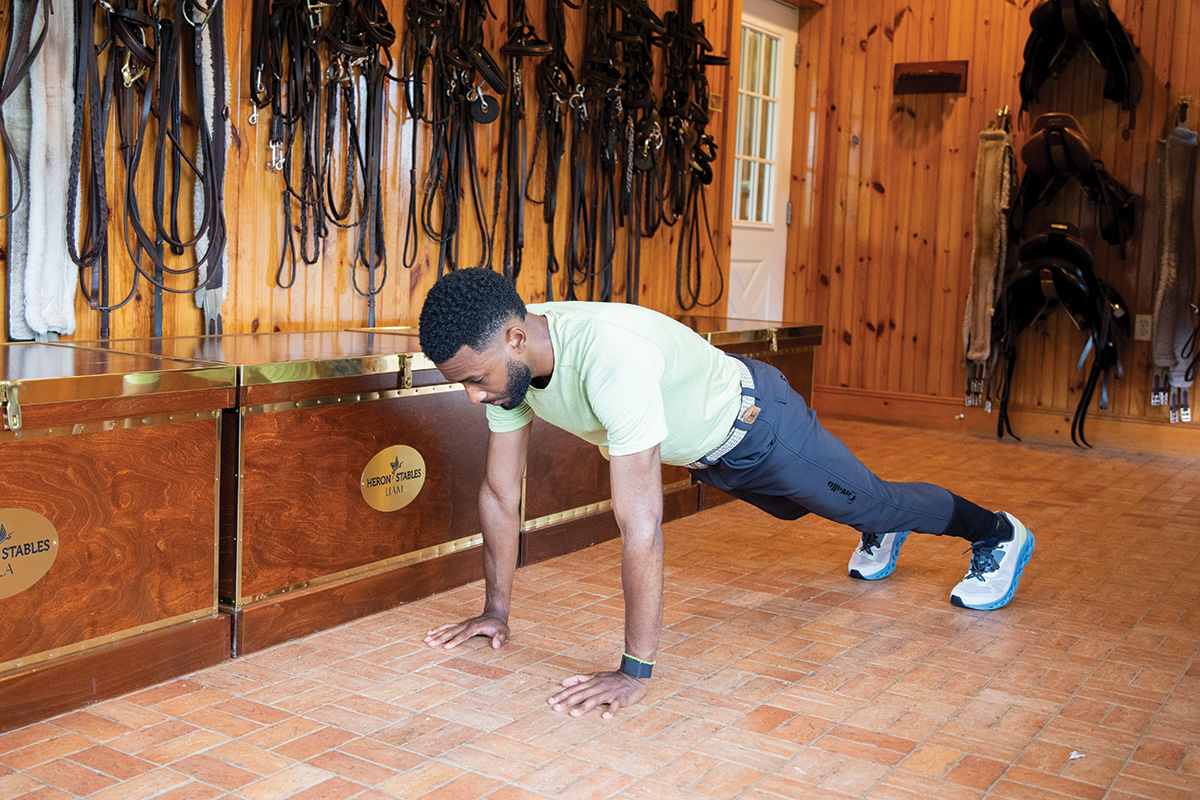
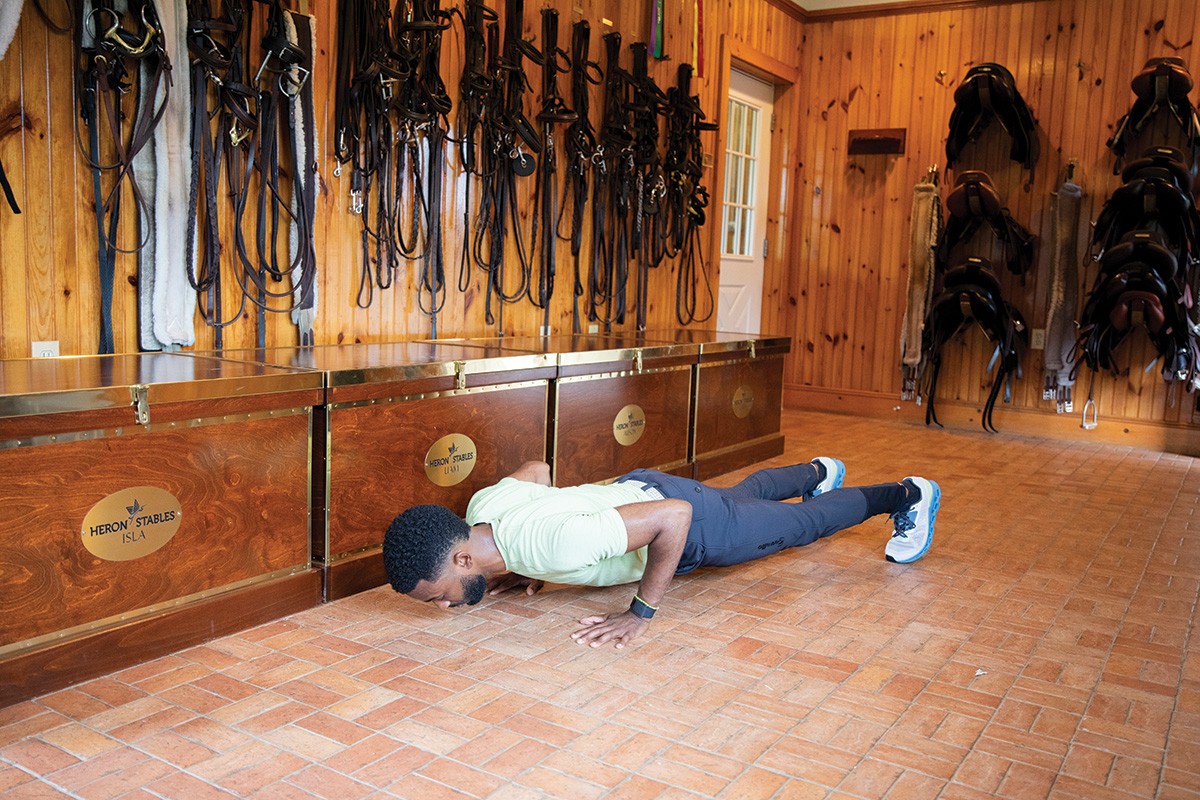
Start on your hands and your knees with your hands positioned under your shoulders. To begin the exercise, assume a high plank position (or modify with knees on the floor). While keeping your body straight, lower your chest and hips down toward the floor as far as you can. Push up to the starting position and repeat.

Assuming a high plank to perform push-ups.
Assume a high plank or modified plank position (on knees).

This should feel like an upper-body workout of your shoulders, chest, and triceps. You should also feel your core, glutes and quads working to maintain a stable position.

A push-up, which is a good functional exercise for riding.
While keeping your body straight, lower your chest and hips down to the ground as far as you can.

Form Tips

  • Keep your body in a straight line with your neck neutral.
  • Engage your core muscles throughout the movement to stabilize and protect your lower back.
  • Stay evenly balanced through both arms as you lower down and push up.

2. Level Change: Bodyweight Stationary Lunge

The goal of this exercise improves the strength, balance, and stability every equestrian needs for effective riding. The unilateral nature of lunges mirrors the independent leg actions required in the saddle, ensuring precise cues. Strong and stable legs aid in maintaining a centered seat, especially during intricate movements or dynamic transitions.

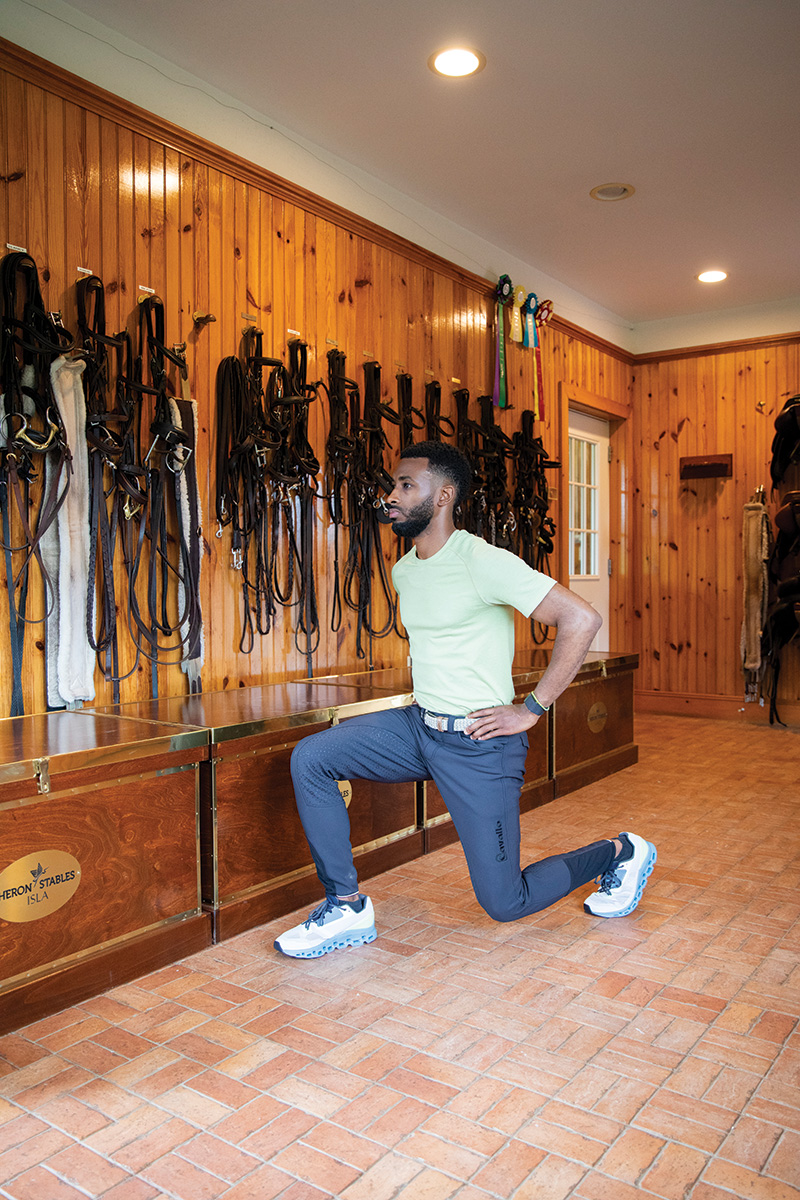
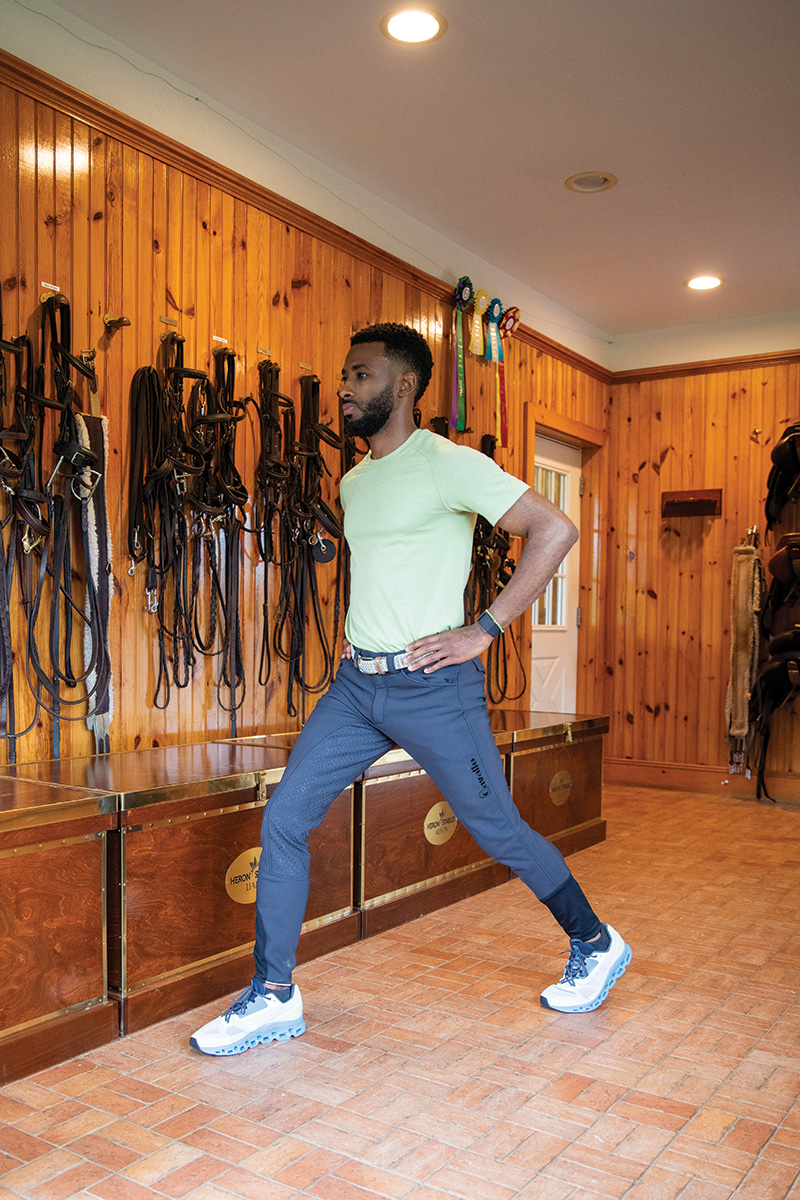
Start standing upright with your feet together, then step forward with one leg, keeping the other leg stationary. Lower your body until both knees are bent at about a 90-degree angle. Ensure your front knee is directly above your ankle, and the other knee hovers just above the ground. Pushing through your front heel, return to the starting position. Repeat.

A stationary lunge, which is a good functional exercise for riding.
Step forward with one leg. Lower your body until both knees are bent at about a 90-degree angle. Keep your front knee directly above your ankle, and the other knee just above the ground.

You should feel all the muscles in your legs working, especially the quad muscles. Your front leg should be doing most of the lifting.

Pushing through your front heel, return to the starting position of the lunge.
Pushing through your front heel, return to the starting position.

Form Tips

  • Refrain from pushing from your back leg.
  • Maintain your balance by engaging your core.

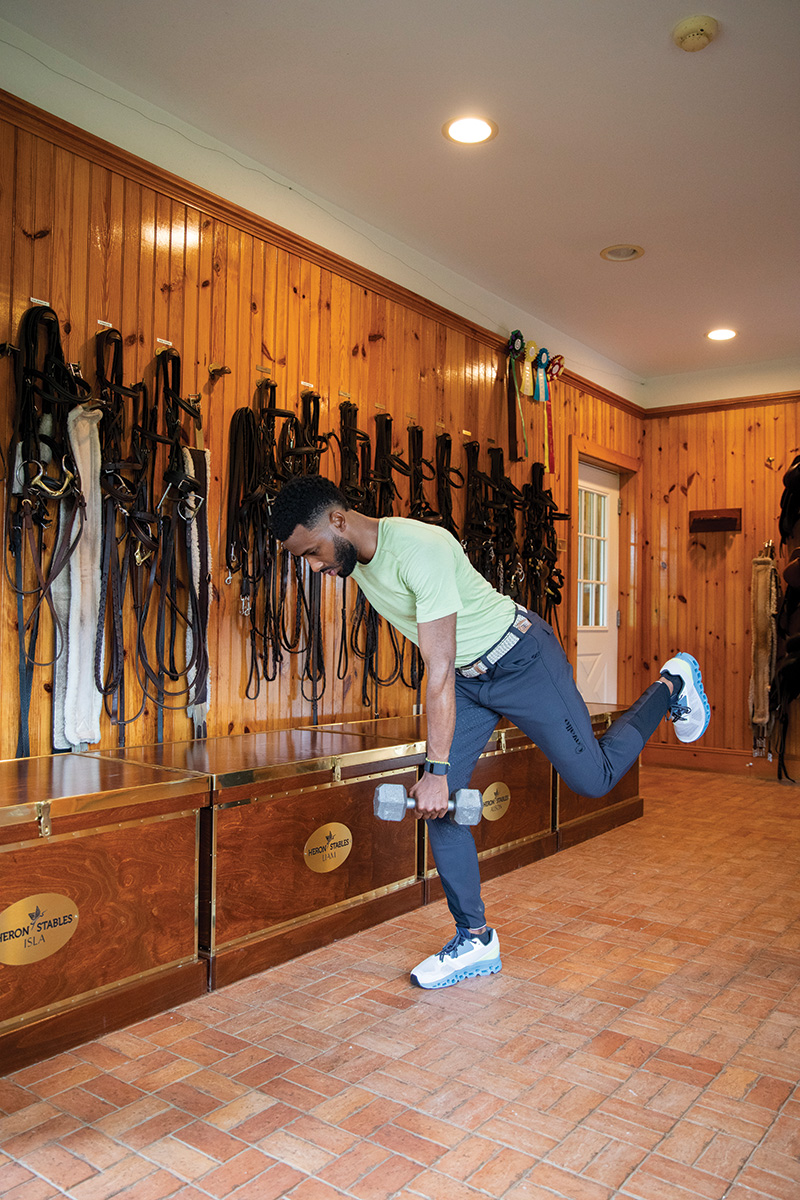
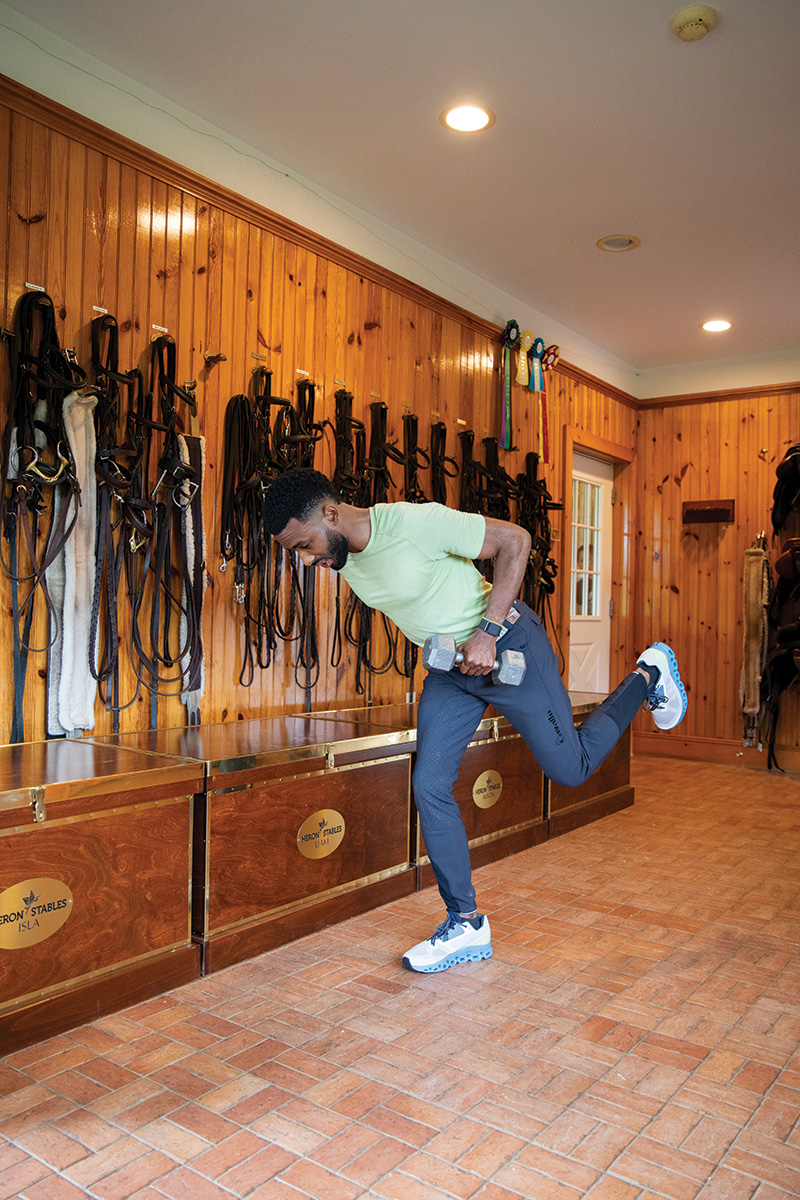
3. Pull: Single Leg & Arm Row

The goal of the row is to improve your balance, position and shoulder mobility for better posture in the saddle.

This exercise offers numerous benefits that enhance riding performance. Rows improve your posture and stability in the shoulder girdle by strengthening your upper back and shoulder muscles, both of which are important for maintaining balance with your horse. This exercise helps correct body asymmetry, helping create more balanced aids.

Begin in a standing position on one leg and hold the dumbbell in your opposite hand. From this position, hinge forward at the hips, reaching down with the weight. At the bottom of the hip-hinge position, perform a row motion by starting with your arm straight. Initiate the row motion and pull your shoulder blade back while bending your elbow toward your ribcage.

A single leg and arm row, which is a good functional exercise for riding.
Begin standing on one leg, holding a dumbbell in the opposite hand. From this position, hinge forward at the hips, reaching down with the weight.

You will feel the muscles of your leg working, including your quads, hamstring, glutes, and foot muscles. When performing the row, you work your shoulder muscles and the muscles surrounding your shoulder blade.

A single leg and arm row
Perform a row by pulling your shoulder blade back and your elbow to the side of your torso.

Form Tips

  • Perform a hip-hinge by pushing your hips back and shifting your torso forward.
  • Don’t lock your knee straight; instead, keep a slight bend in it.

4. Rotation: T-Roll

The T-roll is a fantastic exercise that combines elements of strength, balance, and mobility, all of which are important for riders.

This exercise strengthens your core, which is crucial for maintaining a stable seat and effective aids in the saddle. The rotational component also improves your shoulder stability and overall body awareness and control. These are factors that can contribute to better self-carriage and communication with your horse.

This exercise also engages your shoulder and back muscles, which promote better posture and upper-body strength for more effective rein control and pressure.

Begin in a high plank position, with your hands underneath your shoulders and your body forming a straight line from head to heels.

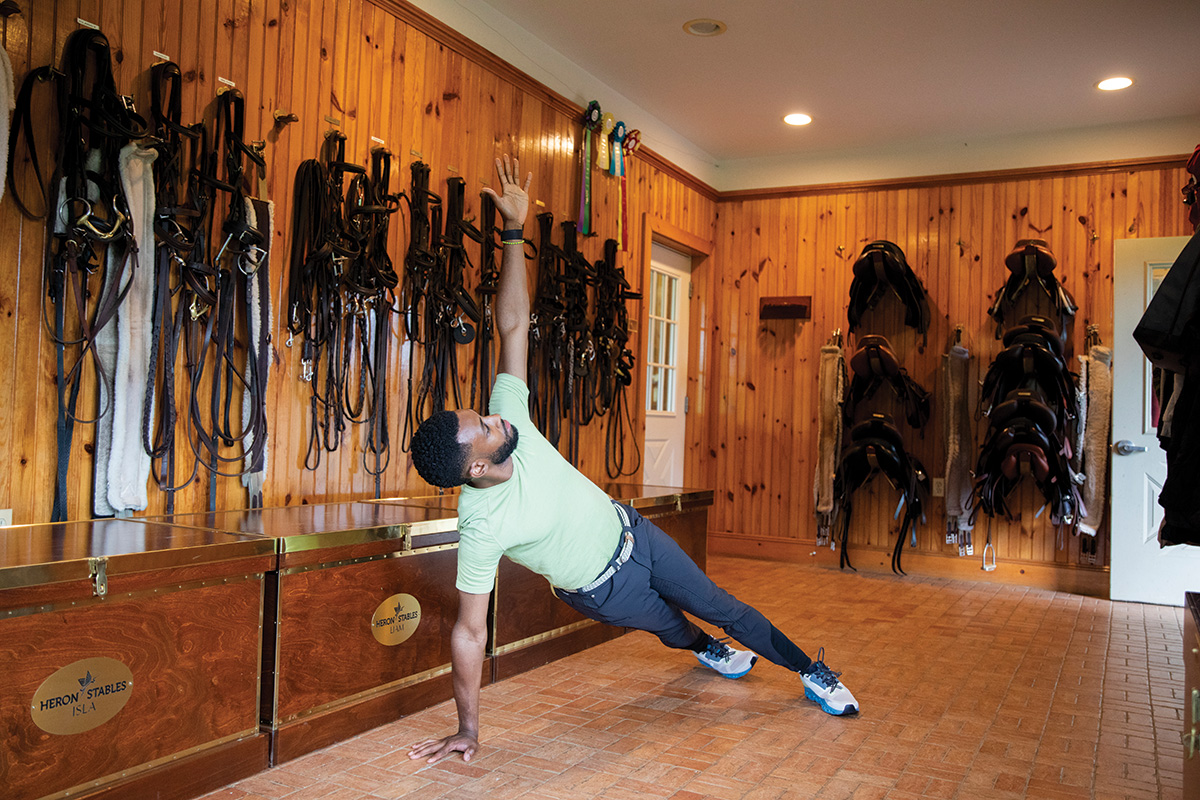
Engage your core and shift your weight onto one hand. Lift the opposite hand off the ground and rotate your torso, extending your arm toward the ceiling to make a “T.” Hold this position briefly before returning to the starting plank position. Repeat the movement on the other side, rotating and extending.

Performing a high plank.
Begin in a high plank position with your hands underneath your shoulders and your body forming a straight line. Engage your core and shift your weight onto one hand.

You’ll feel your core muscles engaging for stability. Your shoulder and arm muscles are stabilizing when holding the plank and during the rotation. Your obliques engage during the twisting motion, and your back muscles contribute to maintaining the “T” posture.

A T-roll plank, which is a good functional exercise for riding.
While keeping your core engaged, lift the opposite hand off the ground and rotate your torso, extending your arm toward the ceiling in a “T” shape.

Form Tips

  • Keep your body in a straight line when in the plank position; avoid letting your hips sag or lifting them too high.
  • Maintain a strong, engaged core throughout the entire movement to stabilize your spine.
  • Keep your weight-bearing arm straight (but not locked) to support your body during rotation.
  • Choose a controlled, deliberate pace for the exercise to ensure proper form and maximum benefits.
  • If balance is a challenge, you can widen your foot stance in the plank position for more stability.

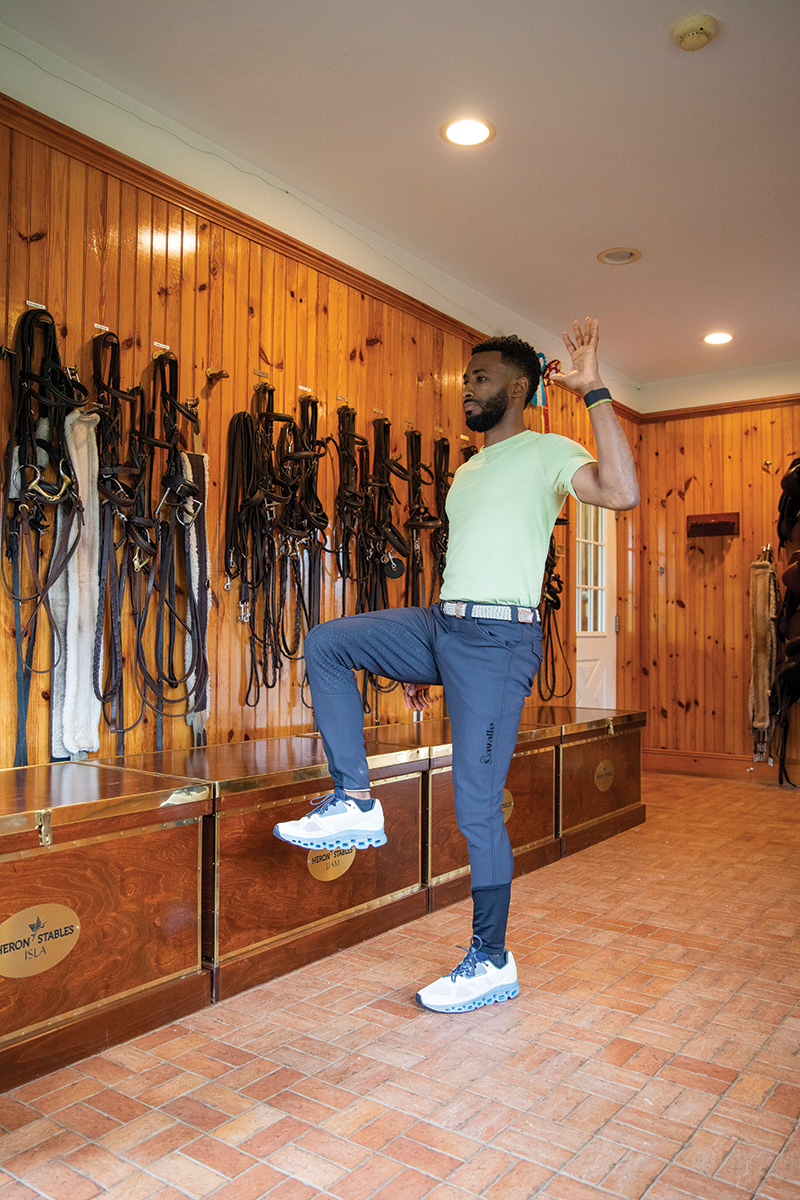
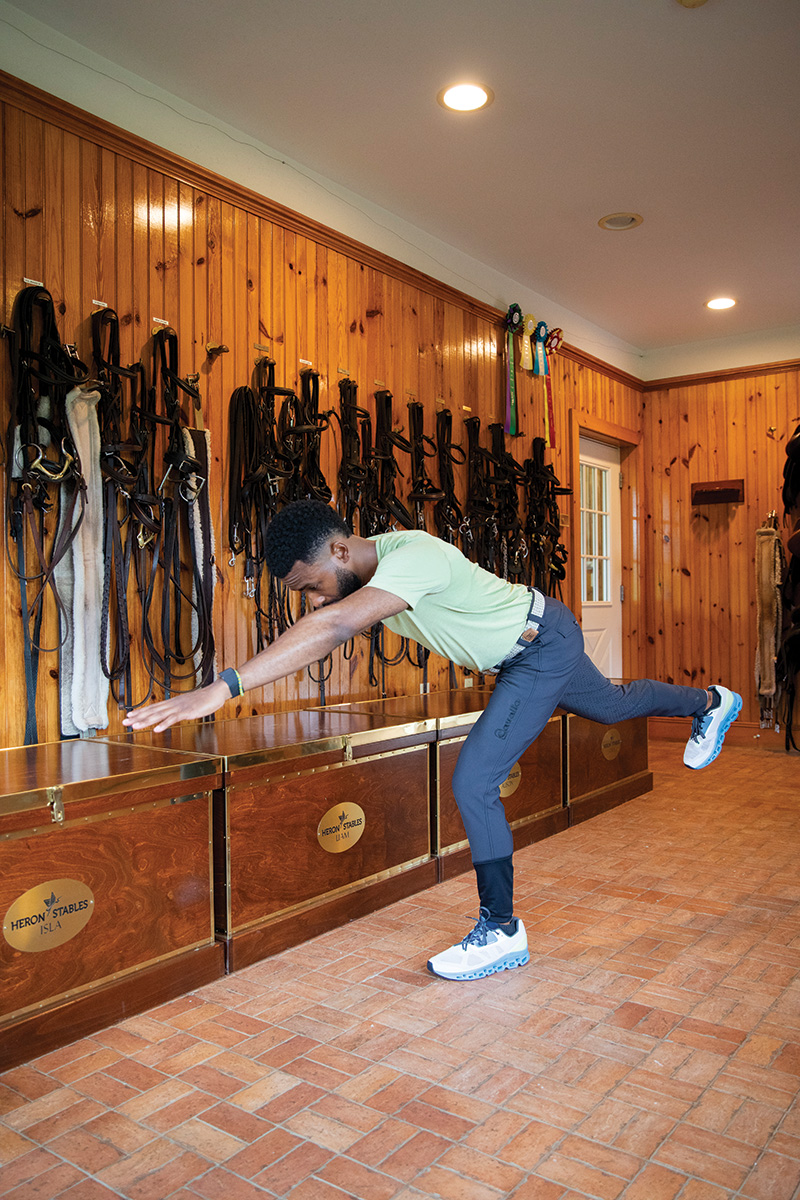
5. Locomotion: Anterior Reach

The goal of the anterior reach exercise is to improve single leg stability, proprioception (sense of body position) and balance.

This is an effective single-leg exercise that engages your core, improves balance, and promotes functional mobility, all of which are crucial for maintaining a steady seat and effective aids when riding. By strengthening your lower body, this exercise will help improve your stability in the saddle, a fundamental component of good horsemanship.

Start by standing straight with your feet hip-width apart. Choose a leg to extend. Keep your toes lifted and foot flexed. While extending this leg, push your hips back and slightly bend the knee of your standing leg, keeping a flat back and an engaged core.

Beginning to raise a leg to perform an anterior reach.
Begin by standing up straight. Choose a leg to raise, keeping your foot flexed.

Gradually lower your torso, reaching your back leg parallel to the ground. Hold this position for a second, then return to a starting position. Repeat the same motion with the other leg.

This primarily engages your core and lower body, specifically the hamstrings, glutes, quadriceps, and calf muscles. It also engages the stabilizing muscles of the foot and ankle.

An anterior reach, which is a good functional exercise for riding.
Push your hips back and slightly bend the knee of your standing leg, gradually lowering your torso and raising your back leg until parallel to the ground.

Form Tips

  • Keep a neutral spine and engage your core.
  • Perform the exercise with slow, controlled movements to make it more effective.
  • Focus on maintaining balance and form, not how far you can reach.
  • If balance is a challenge, do this exercise near a wall or a stable object for light support.
  • Begin with a smaller range of motion and gradually increase as your strength and balance improve.

More From Ifa Simmonds

Get more info on Ifa Simmond’s Equestrian Fitness Academy website, or message him to set up a clinic, workshop, or live training session.

This article about functional exercises for riding appeared in the September 2024 issue of Horse Illustrated magazine. Click here to subscribe!
Evaluating Horses with the Basic Behaviors Profile

0

Learn how a 14-point checklist called the Basic Behaviors Profile (BBP) is helping adoptable horses find homes.

Like dating, finding the right horse can be an extensive search to find The One. The quest will most likely involve endless scrolling and comparing online listings to find your potential match. If you’re looking into adopting a horse, you just might find some extra information in that profile to make the hunt a little easier.

For example, your search to adopt a Steady Eddy could lead you to a listing for a horse named ARH Banana for Breakfast. While the palomino pinto gelding may have a silly sounding name for a senior gentleman, according to his online profile, he’s steady as they come, up to date on his vetting, an experienced trail horse, and a been-there, done-that kind of guy.

Checking Off the Boxes

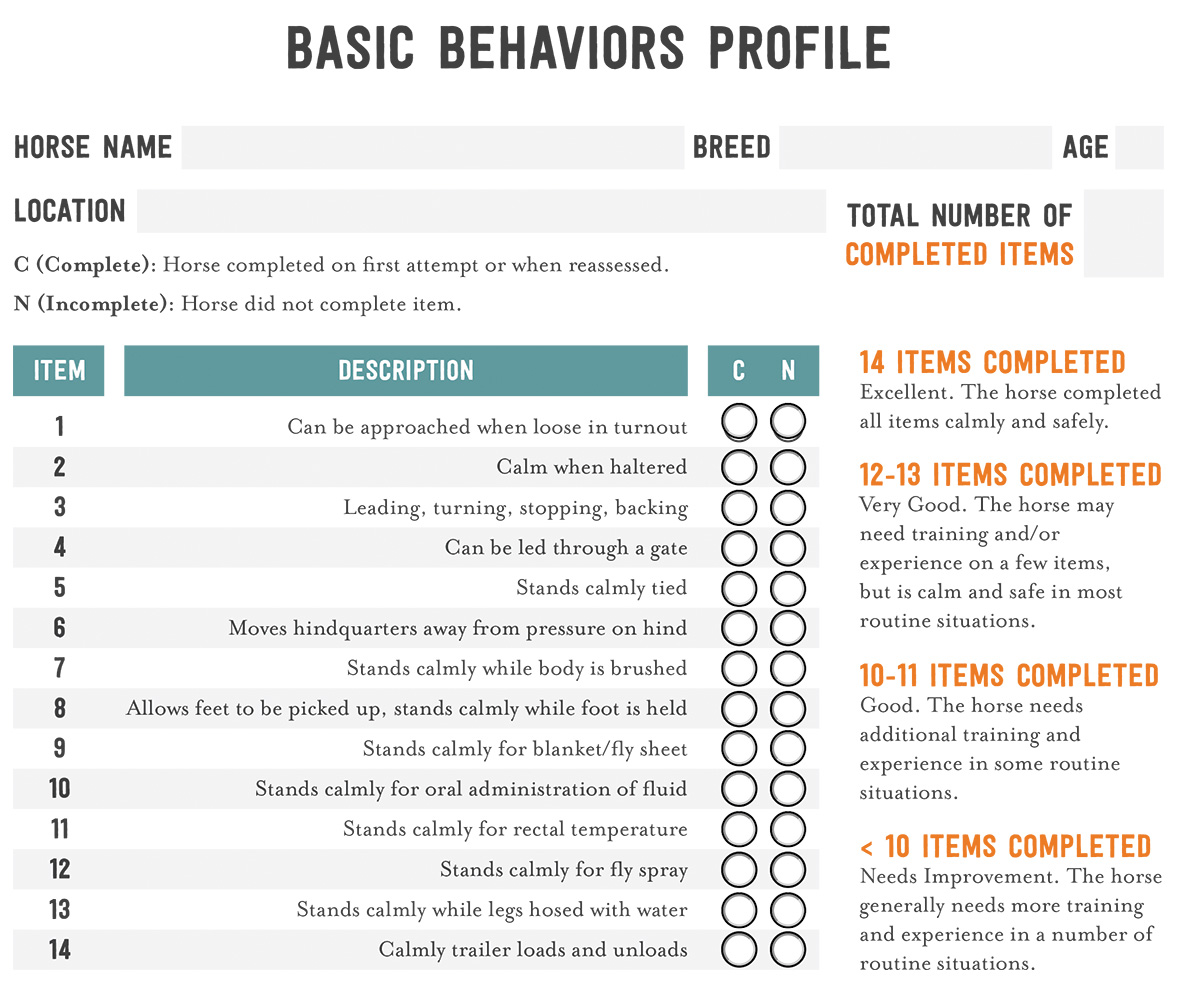
How do you know? Anyone wanting further evidence can see he checks off a lot of boxes in the solid equine citizen department through the Basic Behaviors Profile (BBP) posted with his listing on myrighthorse.org.

Thanks to this handy tool, potential adopters of this seasoned steed know that he has demonstrated that he can be approached in turnout, calmly haltered and led through a gate, allows his feet to be picked up, stands calmly tied and to be brushed, fly sprayed and blanketed, and various other behaviors on the 14-point checklist of common groundwork skills.

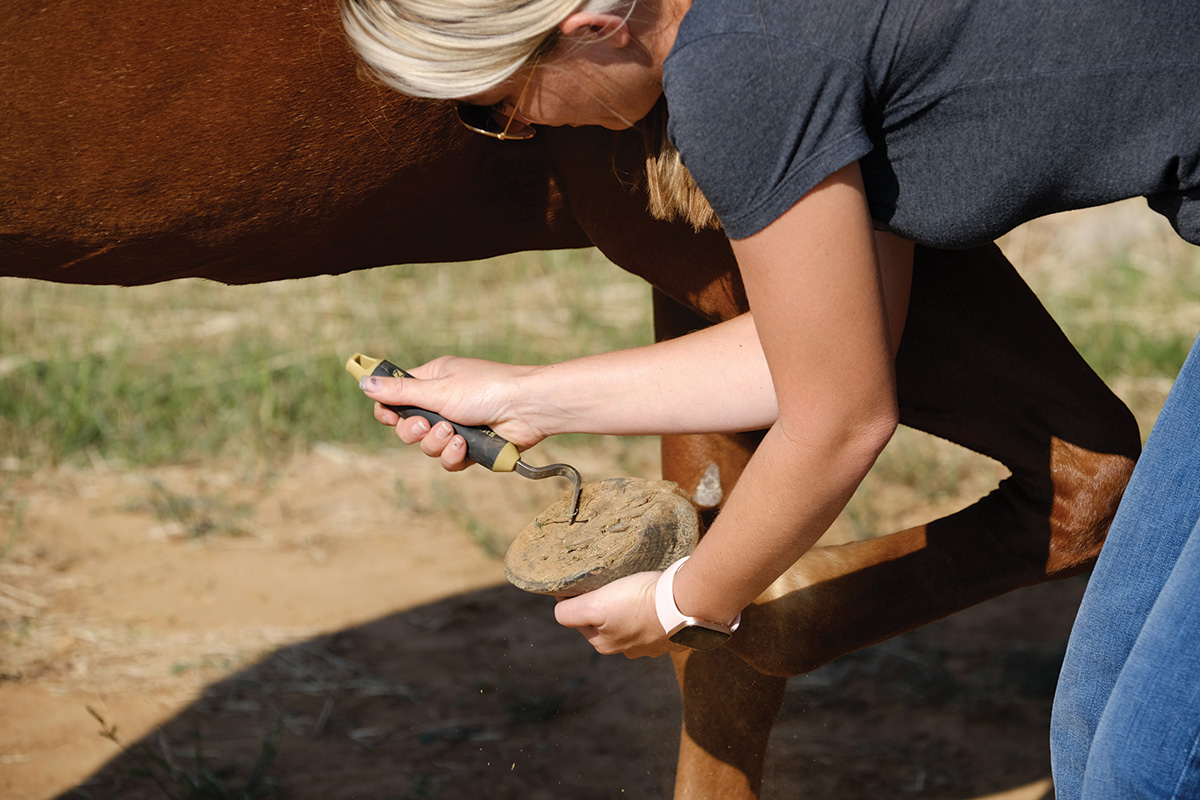
Picking out a hoof.
Ground-handling skills are essential for all horses, and the BBP provides a standardized way to assess how a horse responds to these requests. Photo by ccestep8/Adobe Stock

While it’s just one part of the information on a horse’s resume, and there will be more questions, conversations, and hopefully a meet-and-greet to assess a match, the BBP has proven helpful to streamline the evaluation process on both sides.

“The Basic Behaviors Profile has helped create a standardized evaluation process for adopters,” says Cailin Caldwell, ASPCA Right Horse Program Director. “When they visit myrighthorse.org, they can quickly see the skills each horse has and which ones they still need to work on, helping them better find their right horse. Many adopters appreciate the information and transparency the tool lends to the adoption experience.

“On the other side, the Basic Behaviors Profile helps adoption organizations more efficiently identify training opportunities and then leverage that information to make happy, adoptive matches for their horses. Many of our partners now use the tool regularly when bringing a new horse into their facility, which has made the training and evaluation process smoother for both their staff and adopters.”

Origins of the Basic Behaviors Profile

The BBP was created, designed and field-tested by a team of equine experts and behaviorists to help improve the adoption process for the ASPCA Right Horse Program. Since its introduction in 2018, it has been used by ASPCA Right Horse partner organizations and is available free online for anyone to use, including equine adoption organizations, trainers, and individual horse owners.

Knowing what a horse knows is useful information. No matter what type of horse you’re looking for, ground-handling skills are essential for all horses, and the BBP provides a standardized way to assess how a horse responds to these requests.

“The Basic Behaviors profile is a series of 14 tasks that are ideal for any equine to be able to complete throughout their life,” explains Kylie Solís-McGarity, equine behavior and training specialist at the ASPCA Equine Transition and Adoption Center (ETAC) in El Reno, Okla. “They’re things that are going to be able to support [the horse’s] health in the long term and his ability to be seen by a vet and farrier. In an adoption space, it’s a way for us to be able to look at his skillset and assess the training state on all of our equines.”

A horse at the ASPCA Equine Transition and Adoption Center (ETAC), where the Basic Behaviors Profile is used to evaluate a horse's temperament.
The ETAC has found significantly reduced length of stay because trainers prioritize working through the list on the Basic Behaviors Profile. Photo courtesy ASPCA

A Good Starting Point

The BBP isn’t a training method, nor does it promote any specific training technique. Instead, it’s an evaluation tool that helps assess ground manners and handling. For trainers, it serves as a useful starting point to form a training plan.

“A lot of horses come in with what I call ‘swiss cheese’ training,” says Solís-McGarity. “They know some things and they’ve got some holes in other places. This is a really great way to know where they need additional support in their training.”

Loading a reluctant gelding into a trailer.
Learning about any holes in your horse’s training, such as trailer loading, could help in a situation like a vet emergency. Photo by Annabell Gsödl/Adobe Stock

Solís-McGarity holds a bachelor’s degree in equine science as well as a master’s in animal behavior and welfare from Colorado State University. She applies those skills at ETAC, where services reach over 100 horses annually; of those, about half will go through some sort of behavior or training work before rehoming.

By no means do these skills need to be completed before a horse can be adopted. Instead, Solís-McGarity notes that it’s a useful way to communicate clearly with an adopter and pass on information about a horse’s skills and knowledge.

The BBP is one of the first steps for horses coming into ETAC.

“We do this before a medical exam because we’re going to be looking at things like, can they be haltered?” she says. “Can they be led, can they stand tied, can they pick up their feet, are they able to receive oral medications? What are their reactions to these very common and low-type stressors? Once we do the behavioral profile, we can much more easily inform our vet as to expectations with medical handling as well.”

Solís-McGarity is very specific about not doing any training while she is doing the profile.

“It’s not a time to train a horse, but to take in information on whether he knows it or not and what his reactions are,” she says. “And then if he can’t complete a task, we just move on and will focus training efforts during a different time.”

Tracking Basic Behaviors Profile Score During Training

Once a horse starts full-time training, Solís-McGarity likes to complete the profile every two weeks to track his progress, and again when the horse is adopted, right before he leaves.

The BBP offers a numerical score of completed items on the list. It’s not pass/fail; items are simply noted as complete or incomplete. Solís-McGarity explains that a low BBP score isn’t a reflection of a horse’s trainability. Instead, it’s a helpful way to get the conversation started, gather more information, and get to know the horse.

A look at the detailed sheet of the Basic Behaviors Profile.
Each question has a detailed sheet, but the final page of the BBP provides for easy scoring.

“It’s a great way to start getting to know the challenges, good and bad, of each horse, because no horse is going to be perfect,” says Solís-McGarity. “Since it’s a complete/incomplete, the range of reasons why it’s incomplete could be very minimal, or it could be something that’s going to require a lot of work in the future.”

For example, if someone is looking for a great trail horse, the fact that he’s fussy about deworming may not be a big deal, while a skill like tying well is of higher importance.

Useful for Any Horse Owner

The BBP is also useful to try at home with your own horse for a variety of reasons. First and foremost, it creates a safety net.

“More than anything, all of us want our horses to have a secure and safe future,” says Solís-McGarity. “And if there ever comes a point where you have to rehome your horse, if you have gone through some of these skills and given the horse a really good foundation so he knows how to be a good citizen, it really helps him find wonderful, loving homes in the future.”

It’s also good to keep skills current to avoid getting into a tough spot, such as trailer loading for a vet emergency or evacuation during a natural disaster.

Especially with young horses, or if you have a lot of horses and it’s hard to get to them all, Solis-McGarity recommends adding the BBP to expand your tool kit outside of the normal “go out to the barn and ride” routine.

Reducing Time to Adoption

At ETAC, the proof is in the numbers, with a reduced length of stay—the time a horse spends at the facility from intake to adoption.

“It has significantly reduced length of stay for us because we have a goal of getting it completed, and we get tons of information on a horse from doing the profile right off the bat,” says Solís-McGarity. “And the more info we have, the more we can pass to adopters, and the faster we can get them into their right homes.”

It worked for Banana for Breakfast, who was quickly adopted.

The BBP is available at aspcarighthorse.org/basic-behaviors-profile. To browse listings of adoptable horses, including many with the Basic Behaviors Profile, visit myrighthorse.org, the ASPCA’s online adoption platform for equines.

This article about the Basic Behaviors Profile appeared in the September 2024 issue of Horse Illustrated magazine. Click here to subscribe!
Your Horse Life: Young Horse Challenge

0

Endless milkweed—silky white puffs and yellowing pods that split and curl—come into sharp focus between the ears of my horse. The ears are darker viewed from the saddle than on the ground. Sooty buckskin in color. They swivel, flop and sometimes point at invisible things as we make our way through the field. It’s ride five. Leaves crunch as we turn into the woods. Chaps’ neck arches with curiosity, nostrils, ears, eyes alert. Bold feet move us into dappled light.

He is a 3-year-old Shire sport horse with one blue eye and an unflappable nature. Hay bales flying from above? Fine. Chainsaw? Fine. Feed bags blowing in the wind, a weed-whacker? No problem.

Kitson and Chaps.
Kitson and Chaps, a Shire sport horse, spent two years getting to know each other before he was ready to ride. Photo by Linda Alder

Impulse Buy

I bought beautiful Chaps on impulse when he was little more than a year old. He was the size of a pony with much growing to do. For two years we have enjoyed trail walks, grooming and hand-grazing. My Section D Welsh Cob and I ponied him on quiet hacks.

On the long walk to Chaps’ turnout field, we worked on small goals, my shoulder to his cheek: walk next to me, not in front. Stop when I stop. It is possible to walk through grass without grazing.

Chaps learned fast. But soon this joy monger would need to learn to carry a rider. I’d sent a deposit a year before for a spot in a colt-starting program with a gentle cowboy named Randy Brown. Chaps walked right onto the trailer the day he left for his three-month Shenandoah Valley summer “riding camp.”

First Ride

By all reports he did great. Still, worry set in as I drove down to ride him for the first time. I had been riding my cob for 17 years. I hadn’t quite faced the fact that now I’d need to ride a freshly started youngster.

I recalled the day my oldest child was born. I’d sailed through a blissful pregnancy, but having a newborn to care for at the end of it was still a shock.

The Blue Ridge mountains cast shadows over the unfamiliar barn. Chaps greeted me warmly. Outside, he stood like a soldier as I stretched my leg over his back for the first time. He moved off at an unhurried, unworried pace.

This new perspective felt right, his wide shoulders and thick mane in front of me. Chaps seemed to understand that it was me up there on his back, ears flicking in my direction to check in. I exhaled and put my shoulders back as joy began to replace angst, one stride at a time.

14 Days

The next day, Randy escorted us through an expanse of beautiful farmland. We walked. We talked. I reached my hand back to scratch a spot on Chaps’ back just behind my leg. Later, I used the word “momentous” to describe the brief ride. It had importance.

When Randy delivered Chaps home at the end of September, he admonished me to make the most out of my training investment. To lightly ride—or do something with the horse—every day for 14 days, starting immediately. “Just ride him,” Randy said.

I still had anxiety about the new responsibility (and risk) of riding a young, inexperienced horse. The first day, we explored the ring. Then we expanded our travels to the fields and into the woods around the property. There was a single meeting of my knee and a tree (I yelped so loud he was careful from then on).

I could see that Chaps still had much to learn: Don’t rush downhill, pay attention to your feet even if there’s something to look at, don’t veer off the trail. When I let him wander, our first stop was always a visit to Teddy, his pasture mate relegated to a paddock.

Crunching Leaves

While our rides were short and light-hearted, the everyday routine meant daily bursts in our trust and confidence in each other. Chaps didn’t spook much. I reassured him as needed.

On that fifth day as we turned into the woods with the crunch of leaves underfoot, I worried how I would make the rest of 14 days work. I had a full-time job, a teen with a broken arm who couldn’t tie his own shoes, a husband out of town, three dogs, a cat and a turtle to mind. I was determined, but what if getting there every day—17 miles each way—started to feel like a chore?

Maybe it was the crunch of the leaves that reminded me of my 12-year-old self on that turn into the woods. The sound could be my autobiography. It reminded me in that moment of how hard I had to work for access to horses when I was a kid.

Kitson riding the young Shire gelding.
Chaps helped Kitson recall her inner 12-year-old horse girl, who would do anything for saddle time. Photo by Linda Alder

I persuaded the school bus driver to drop me off at a riding school along her route. Then I convinced a riding instructor to let me do chores in exchange for lessons. It wasn’t long before she let me wander off on solo trail rides on Whiskey, a liver chestnut Quarter Horse she had in training. I’d sing to him when he would startle from noisy geese overhead or a passing car on a dirt road. Often we were alone in the woods, just me, Whiskey, and his hooves crunching through the leaves.

Inner Horse Girl

The weather cooperated for every one of Chaps’ and rides during those intense two weeks. The trees turned autumn colors as we explored forgotten corners of the farm and made figure-8s around trees. We lingered with hawks and deer. I quit worrying where all this was going.

Day 14 was not our best ride, but it didn’t matter. None of this was a chore. It was pure joy.

Along the way, this remarkable young horse helped me pay respect to my younger horse-loving self, and the work it sometimes takes to get and keep yourself in the saddle—over a lifetime if you’re lucky.

This article appeared in the September 2024 issue of Horse Illustrated magazine. Click here to subscribe!
Make Feed Meet a Horse’s Needs at Every Life Stage

0

A horse has unique nutritional needs that start even before he is born. Owners who understand the reasons behind those nutritional requirements, and how they will change over time, will be better able to select appropriate feeds that help protect a horse’s health, performance potential and longevity.  

Horses at various stages of life, which require specific needs.
Photo by Belozorova Elena/Adobe Stock

It’s essential to look closely at the specifics involved during every life stage to determine how proper nutrition helps support a horse’s development.  

A Foal’s Immediate Needs

Feeding for the developing horse needs to start as soon as the mare becomes pregnant, but the nutritional demands accelerate significantly in the final trimester. At that point, the foal is growing rapidly, and the mare’s energy requirements rise sharply. 

“That final third of gestation is a critical point to make sure you’re providing adequate protein, vitamins, minerals and the calorie content to maintain that broodmare in at least a body condition score of five. For a lot of broodmares, you want to see a body condition score of six as they go into foaling,” said Dr. Randel Raub, Sentinel® director of research and nutrition. 

After foaling, the work begins to build a foundation for a healthy, well-developed adult horse. As a foal goes from relying entirely on the mare’s milk to consuming solid feed, consider the type of feed based on the type of hay or forage they also are eating. Typically, feeds for growing foals are higher in protein.  

“You want to target a diet that’s relatively lower in starches and sugars,” Dr. Raub said. “If you’re growing an equine athlete for a long, healthy, lameness-free, productive career, try to avoid any rapid changes in growth rate where you put the foal in a stress condition, usually around weaning.” 

Up through 8 weeks of age, foals will begin to nibble on hay and grain; at this point, you should gradually introduce the foal to high-quality feed to support digestive development.  

  • Creep feeding: A specially formulated creep feed helps foals get essential nutrients without competition from the mare. 
  • Protein: High-quality sources such as soybean meal or alfalfa support muscle and tissue growth. 
  • Calcium and phosphorus: Proper ratios are essential for developing strong bones. 
  • Digestive health: Prebiotics and probiotics can aid gut health and development. 

Feeding Goals Grow with the Horse

As a horse matures into adulthood, access to water and forage remains essential, but feed ingredients and specific nutritional needs will change. Start assessing his needs by considering the horse’s activity level.  

A horse that exercises a lot will need more protein, fat and fiber than other horses that have moderate levels of activity. Equine nutritionists such as Dr. Raub and Jeanne Van Der Veen, Sentinel equine and specialty nutritionist, recommend trying a higher-fat horse feed with an active horse. Higher-fat feed sources allow the horse to get extra calories needed for more intensive exercise without increasing grain intake. 

“A balanced diet isn’t just about feeding more or less,” Van Der Veen said. “It’s about ensuring the right nutrients are delivered at the right levels to support optimal growth, performance or recovery.” 

When planning a horse’s diet, no matter what his activity level, it is important to consider body condition score (BCS). Getting the right amounts and ratios of nutrients helps support a horse’s overall health and body condition.  

Some things to consider if a horse is being fed below the suggested rate or struggling to maintain a healthy body condition: 

  • Start by getting the horse up to his suggested feeding rate 
  • Consider a high-fat supplement or higher-fat feed. 
  • Provide a protein, vitamin and mineral supplement 
  • Additional protein can be especially helpful if a horse isn’t getting enough from forage to maintain a healthy body condition 

“The path to optimal health is a journey, not a quick fix,” Van Der Veen said. “Regular assessments and small adjustments can make a big difference over time.” 

Balancing the Needs of Breeding Horses

Prior to breeding, a balanced feed with moderate protein and fat levels, along with quality forage, helps support increased nutritional demands. For a mare, adequate vitamins and minerals are essential for reproduction. 

The mare’s nutritional requirements skyrocket during the final trimester because of the rapid growth rate of the foal. In addition to energy and protein, pregnant mares need calcium, phosphorus and other minerals to allow for proper bone and tissue development in the foal.  

“When that foal hits the ground, the energy demands of the lactating mare are as high as the absolute hardest-working horse you can imagine,” Dr. Raub said. “It’s just phenomenal. They mostly double their nutrient requirements during lactation compared to their maintenance requirements.” 

Once again, look to the body condition score for helpful guidance on how to approach feeding a mare. 

“We want to see a score of five or six in the gestating mare,” Dr. Raub said. “You don’t want them in an obese situation because that can hurt rebreeding efficiency, and you don’t want an obese mare going through the foaling process. You compromise that mare’s ability to deliver the tremendous nutrient content that lactation requires.” 

“They’re already in a negative nutrient balance if you have them at a condition score of four or less, and you put them in a compromised position during lactation—and especially if you’re looking at rebreeding opportunities,” Dr. Raub said. 

For example, if a gestating mare has a body condition score of four or lower, then that horse will have a negative nutrient balance. This can put the horse in a compromised position during lactation, Dr. Raub said, especially concerning rebreeding opportunities.  

Addressing a Horse’s Needs in His Later Years

Though there is no set definition, horses aged 15 or older are typically considered in their senior years. While forage is still the foundation of their diet, senior horses may require adjustments for dental and digestive needs. 

Some things to look for in an older horse: 

  • Reduced digestive efficiency 
  • Dental problems 
    • Trouble chewing 
    • Feed falling out while chewing 
  • Weight loss 
  • Joint stiffness 
  • Weakened immune system 
  • Changes in body condition 

If these changes are apparent, equine nutritionists recommend a highly digestible, easily chewed feed, such as extruded, which can help alleviate them. Extruded feed is pressure cooked and combines moisture, heat and pressure to produce a light and airy nugget. This consistency makes it easier for senior horses to chew and is more easily digestible than typical pelleted feed, allowing for better nutrient absorption. Additionally, they can be soaked for a much shorter time than pelleted feeds, which enables a horse to break them down readily. 

“We use extruded feed as a preventative measure, particularly for older horses that have poor dentition or a history of choke,” said Dr. Abby Geick, equine veterinarian at the New England Equine Medical & Surgical Center. “Extruded feed breaks down nicely in a mash, and it also contains adequate vitamins and nutrients, which really is key for older horses.” 

Helping Horses Through a Lifetime of Wellness

Finding the right nutritional balance is essential whether feeding during the intense, high-energy demands of a mare’s final trimester through lactation, preparing a horse for performance or helping a senior horse thrive in his later years. Thoughtful nutrition planning and knowing how to best serve a horse at every age will provide benefits, year after year  

This article is a web exclusive for Horse Illustrated magazine. Click here to subscribe!
0FansLike
0SubscribersSubscribe
We use cookies to help personalize content, tailor and measure ads, and provide a safer experience. By navigating the site, you agree to the use of cookies to collect information. Read our Cookie Policy.
OK