Enter our 12 Days of Christmas Giveaways here!
0 ITEMS
  • My Account
  • Holiday Gift Guide
  • Podcast
  • Webinar
Subscribe Combo
Enable cache13
Home Blog Page 6

Solutions for Stall Boredom

0

Whether temporarily or permanently living in a stall, try these strategies to banish stall boredom and keep your horse stimulated.

A classy bay gelding stares out of his stall. He stamps his feet, then pricks his ears when he sees anyone walk by. Normally by this time of day, he’d be working under saddle or kicking up his heels in the pasture, but today he’s been sidelined due to a minor injury. Now he is getting frustrated and anxious. He might be thinking, “What happened here? Where did everyone go? What am I missing? I’m bored, bored, bored!”
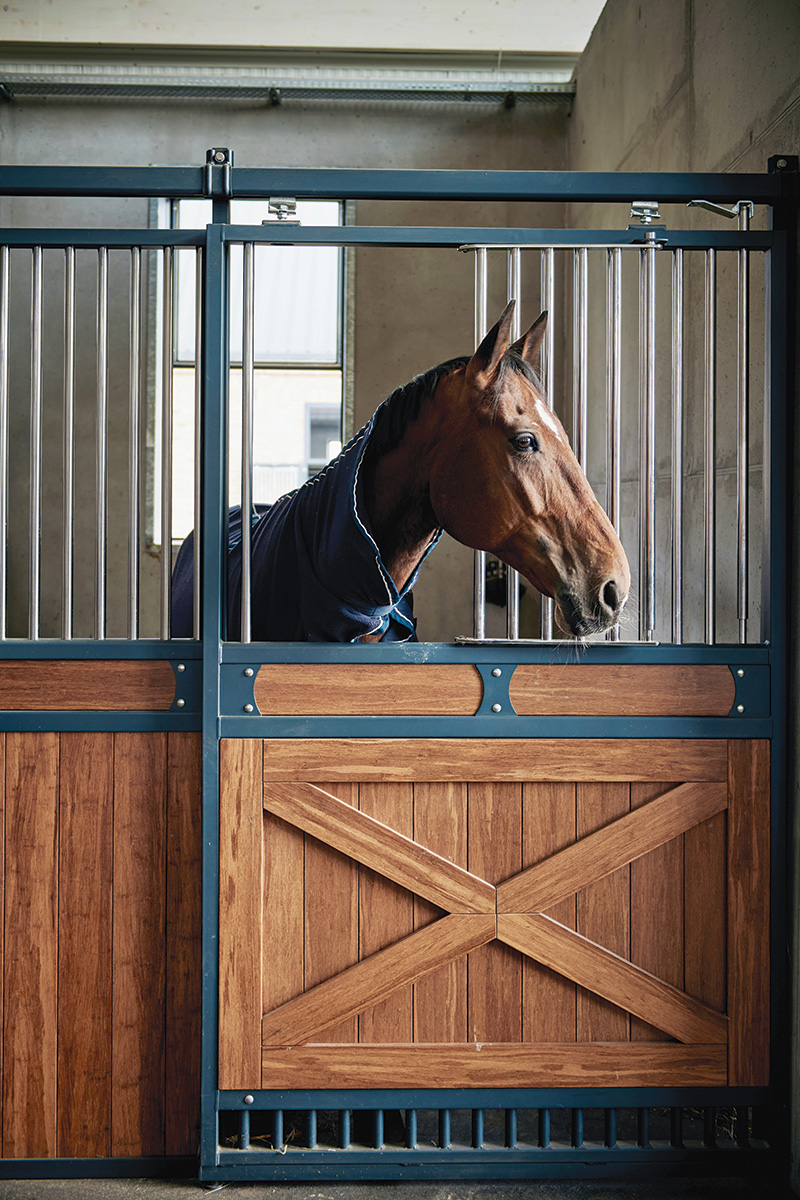
A horse in a stall.
Photo by PhotoLifestyle/Adobe Stock

By nature, horses are nomadic herd animals. In the wild, they’re almost always on the move together—grazing and walking, grazing and walking—with short periods of rest in between.

Yet domesticated horses are often stalled, at the very least a few hours each day. They spend even more time in a stall when an injury dictates rest, or in show-circuit situations where turnout may be limited. While in most cases more time outside makes for a happier, healthier horse, there are times when keeping them in is unavoidable.

The challenge is safely maintaining and entertaining a stalled horse to support his mental and physical well-being. This breaks down into four categories: creating a calm environment; adjusting nutrition to meet his current needs; fighting dehydration; and planning activities for the horse to combat boredom.

Think Like A Horse

Carefully think through what your horse needs and wants to be happy, then try to provide that within the confines of a stall. Food, water and attention are top of the list. If the horse is injured or recovering from surgery, then of course medication and physical therapy are probably on the itinerary too. Providing all of these things interspersed throughout the day will help break up the monotony.

“Don’t use a human’s thought process as perception for a horse,” advises Kirsten Johnson, founder and owner of Kentucky Equine Sports Medicine and Rehabilitation Center (KESMARC) in Versailles, Ky. “Think like a horse. They like to eat. They like their humans—some of them like their humans more than others. Give them a quiet, comfortable environment where they are getting the needed nutrition and grooming.”

Stall Placement & Set Up

Johnson says a horse relegated to stall rest for healing should be moved to a quieter part of the barn; a change of venue to a rehab barn may be an even better idea. She stresses that it’s important for humans working with horses on stall rest to maintain a calm, low-key demeanor, too. Be mindful of any factors that may disrupt the peace. 

“Avoid exposing the horse in full stall rest to over-stimulating situations, including other horses being turned out or ridden,” she says. “A horse on stall rest gets very anxious when he thinks he’s been left behind or isn’t doing his normal riding activity. Sometimes the worst place for a stall-bound horse is in a training barn, or whatever his normal setting is.”

One of her pet peeves is a stall with little or no bedding.

“If a horse has to be in a stall, then give him a proper bed, and make it nice and cushy,” she says. “In most cases, I prefer shavings over straw because there are fewer allergens in it. I find the cleanest, most dust-free shavings I can. But if the horse has severe allergies, then shredded paper is best. I use straw for horses with open wounds. If I have a horse with a fracture, then I want the bedding banked around the sides of the stall.”
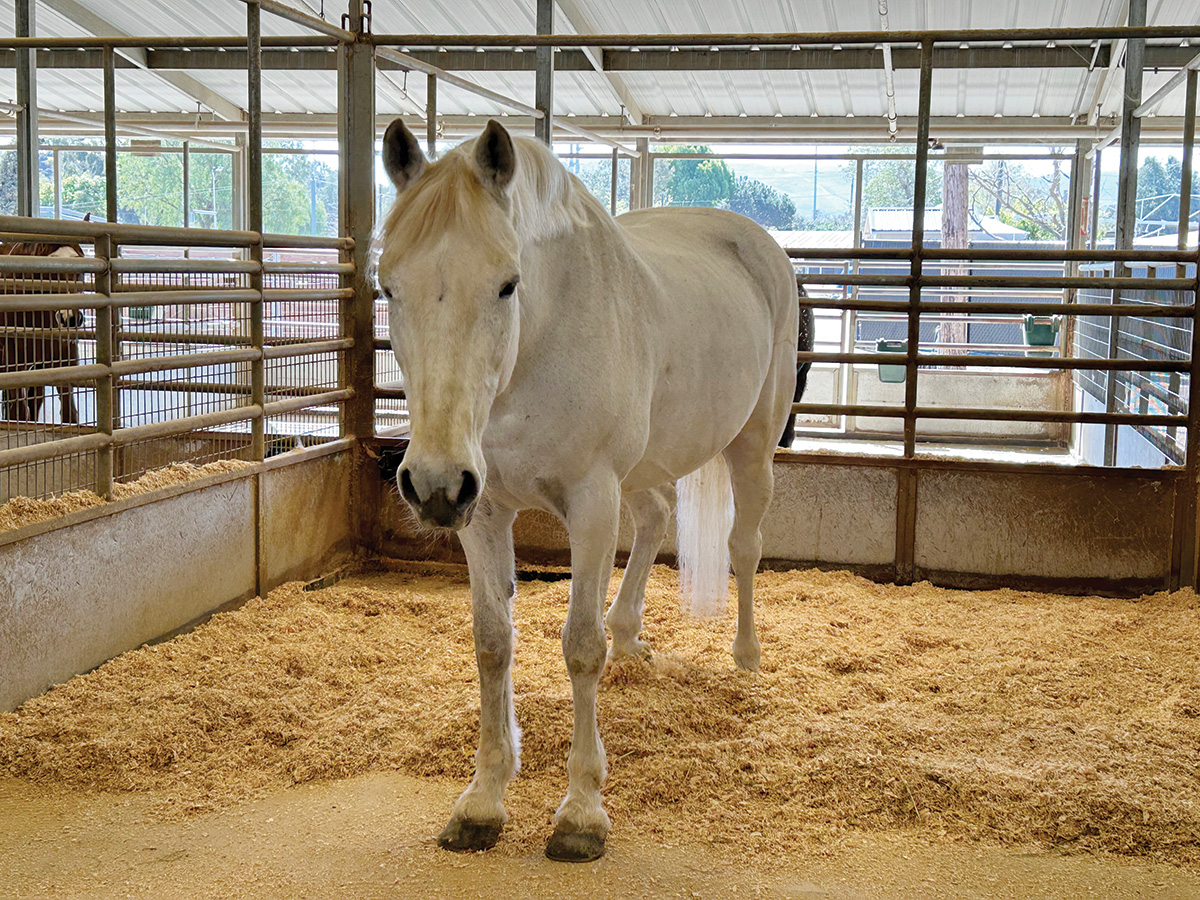
A gray gelding standing on shavings.
A nice bed of fluffy shavings away from stressors such as an arena where horses are being ridden helps maintain a calm, low-key demeanor. Photo by Holly Caccamise

Though it may be tempting to introduce a companion animal for the horse on stall rest, Johnson advises against that, citing experiences where it backfired. It might be OK if the horse already has an animal buddy living with him, but don’t add a new animal to the mix.

Feeding Strategies

“Feed smaller meals more frequently” headlines the advice from Tania Cubitt, Ph.D., an equine nutrition consultant based out of Virginia for Performance Horse Nutrition. These are words to live by not only for horses on stall rest, but for any horse. This helps prevent an unhealthy overload on the horse’s digestive system and offers a good distraction to reduce boredom.

Cubitt specializes in feeding strategies for special-needs horses. She says the mantra “forage first” is important. Feed a palatable, dust-free, and mold-free hay suited for the horse’s age and body condition, then augment that with concentrate (equine-specific bagged grain, fat/fiber feed, or ration balancer), depending on the individual horse’s requirements.

“Provide plenty of forage and make it available all the time to mimic grazing,” she says. “Feed hay first to slow down the rate of intake of grain.”
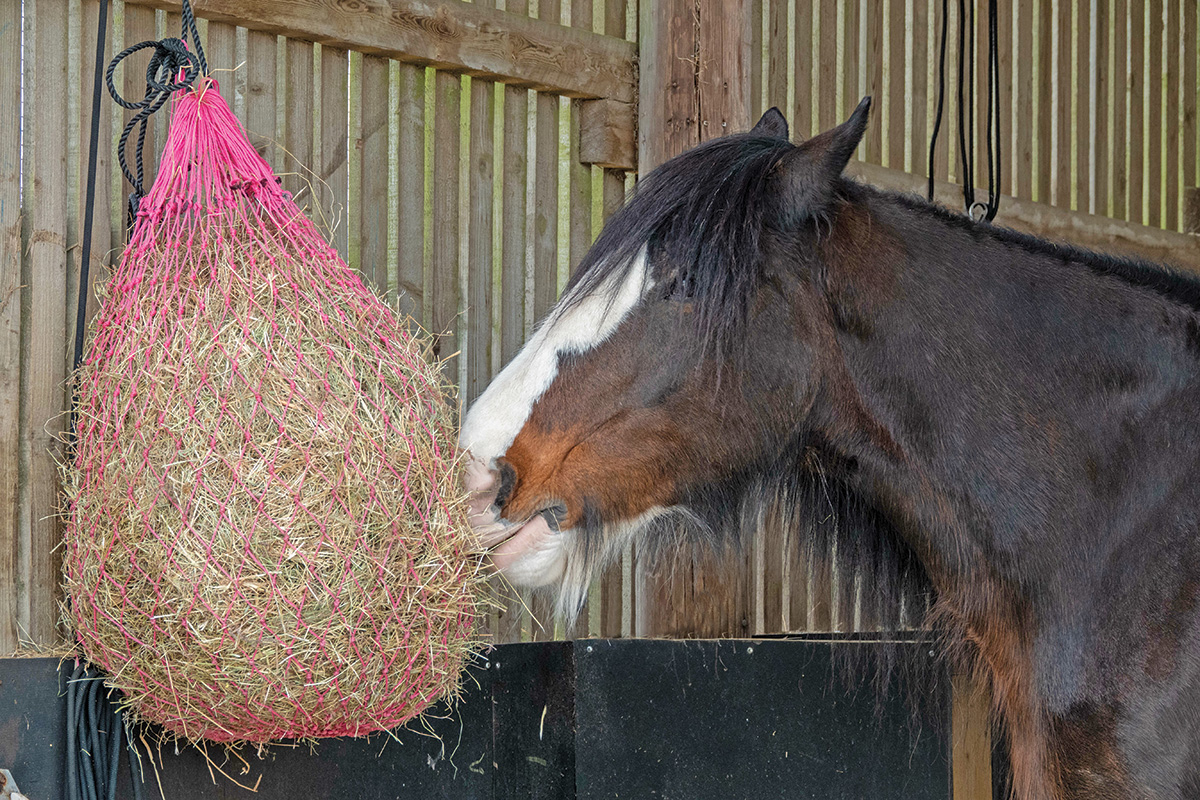
A Clydesdale eating from a hay bag to combat stall boredom.
Having forage to snack on all day helps replicate grazing and keeps the stall-bound horse busy. Photo by Penny/Adobe Stock

Cubitt says that many people don’t realize that an injured horse has similar nutritional needs to those of a horse in light work because he needs to rebuild his body. Therefore it may not be correct to cut out all concentrates in the stall-bound horse’s diet, although starches and sugars should be replaced by fats and fiber to reduce excitability.

She also recommends the following:

Instead of the full portion of grain that the horse might receive when in work, pelleted ration balancers, which meet protein, vitamin and mineral requirements, may be fed along with hay to a horse on layup.

Feeding treats is fine, but “everything in moderation.” She recommends forage-based or forage-only horse treats for idle horses. And, yes, the occasional carrot is fine too.

Use slow feeders for hay and grain to reduce intake rate. Cubitt prefers the those that rest on the ground rather than hanging ones.

Hydration

Monitoring water intake of horses on stall rest is critical. They may back off on water consumption since their activity level is lower; this can result in dehydration and increase the risk of colic, among other serious ailments.

Cubitt advises giving wet feed, if tolerated by the horse, to increase hydration, and says feeding soaked beet pulp is one good way to do this. Johnson agrees and is a big proponent of soaking hay before feeding, too.

Activities & Hand-Walking

There are many options for in-stall activities to break up the long hours for a horse on layup. Grooming sessions are great bonding time for horse and handler and contribute to the horse’s overall health and relaxation.

You can also try carrot stretches, clicker training and other exercises. Hide treats around the stall. See if the horse responds well to soothing music. Get creative, but also keep safety and maintaining a calm environment in mind.

Johnson says not many rehabbing horses need complete stall rest for the duration of their healing, so if the horse is cleared for hand-walking around the barn or arena, that will help beat the boredom. Just know the horse and be prepared so hand-walking remains as safe as possible for horse and human.
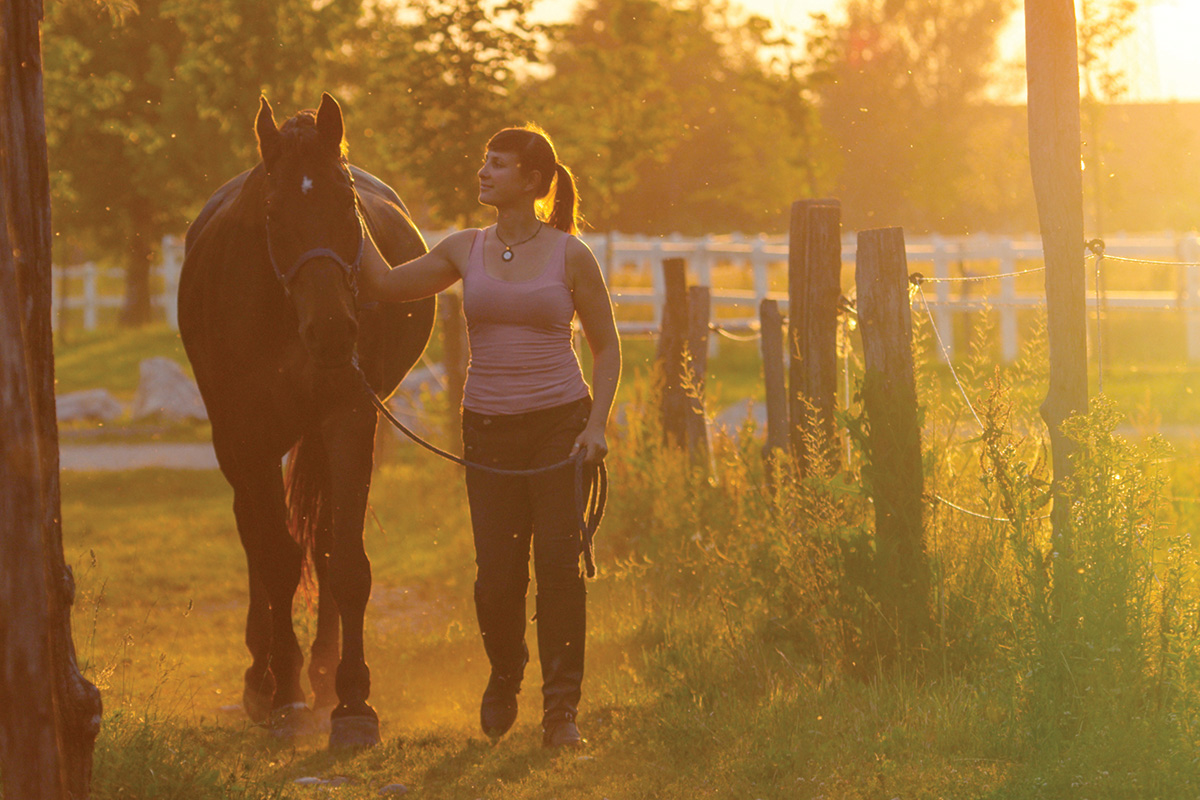
Hand-walking a horse.
If the vet has cleared your horse for hand-walking and it’s safe to do so, this will help with rehab as well as alleviating boredom. Photo by PhotoLifestyle/Adobe Stock

Stall Toys & Treat Dispensers

A wide variety of fun horse treat dispensers and stall toys are available, not only for rehabbing horses; they can be great time-fillers for any horse in a stall or paddock.
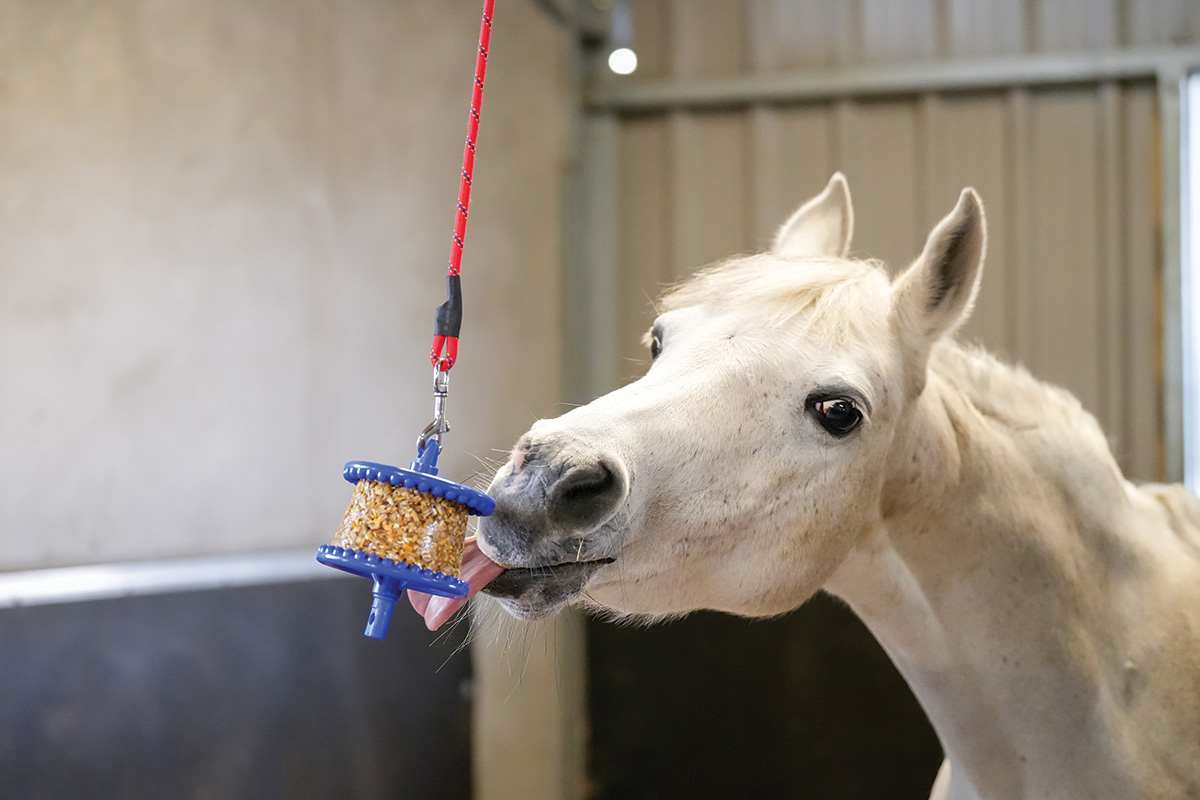
A horse playing with a stall toy to combat stall boredom.
Hanging toys and treats offer a time-consuming challenge. Just make sure they can’t be pinned against a wall! Photo courtesy Likit

There are stall balls and tug toys for the horse to grab and bounce around, hanging toys to nose and swing, rolling balls and puzzle boxes with holes that dispense treats as the horse moves the toy, hanging lickable treat dispensers and entertaining “lollypops” for horses. There are also scratch pads to mount on stall walls that allow horses to reach their itchy spots.

Recent studies in the United Kingdom1 and the U.S.2 included the use of some stall toys and treat dispensers. Both reported a reduction in stereotypical behaviors (also called barn vices, which researchers now believe are initiated by stress) in the studied horses.
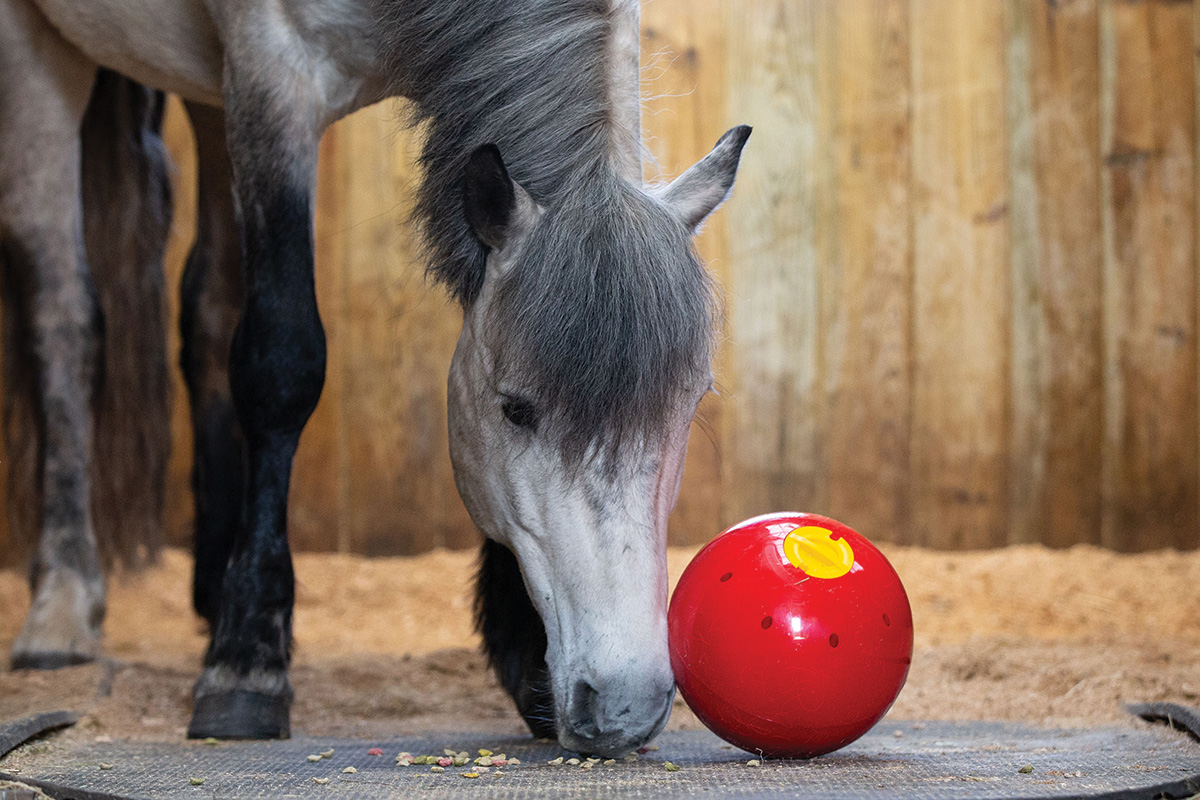
A horse playing with a stall toy to combat stall boredom.
Rolling pellet dispensers like the Snak-a-Ball give horses a mentally and physically stimulating task during stall time. Photo courtesy Likit

Regardless of the enrichment items you choose, make sure that the toy and any mounting hardware are sturdy enough to withstand abuse from an overenthusiastic equine. Johnson cautions that some horses may overdo it with toys, annihilating the object and possibly injuring themselves in the fray, so read all directions and be cautious when introducing new playthings.

Treatment & Physiotherapy

Make sure to include an injured horse’s entire care team during the rehab process. Consult veterinarians, physiotherapists, farriers and nutritionists, as well as grooms and trainers, to create a plan. Prescribed veterinary treatment, massage, and other physiotherapy modalities will help heal the horse while also occupying its mind.

Even with a well thought-out plan to break up the boredom, Johnson says some horses on stall rest may need herbal quieting remedies or long-term sedation for their own safety if they become overly exuberant. Don’t be shy about speaking with a veterinarian if these options are necessary.

About the Experts

Tania Cubitt
Tania Cubitt, Ph.D.

Tania A. Cubitt, Ph.D., is an equine nutrition consultant with Performance Horse Nutrition who specializes in feeding broodmares and senior horses as well as those afflicted with gastric ulcers, metabolic syndrome, and developmental orthopedic disease.
Kirsten Johnson
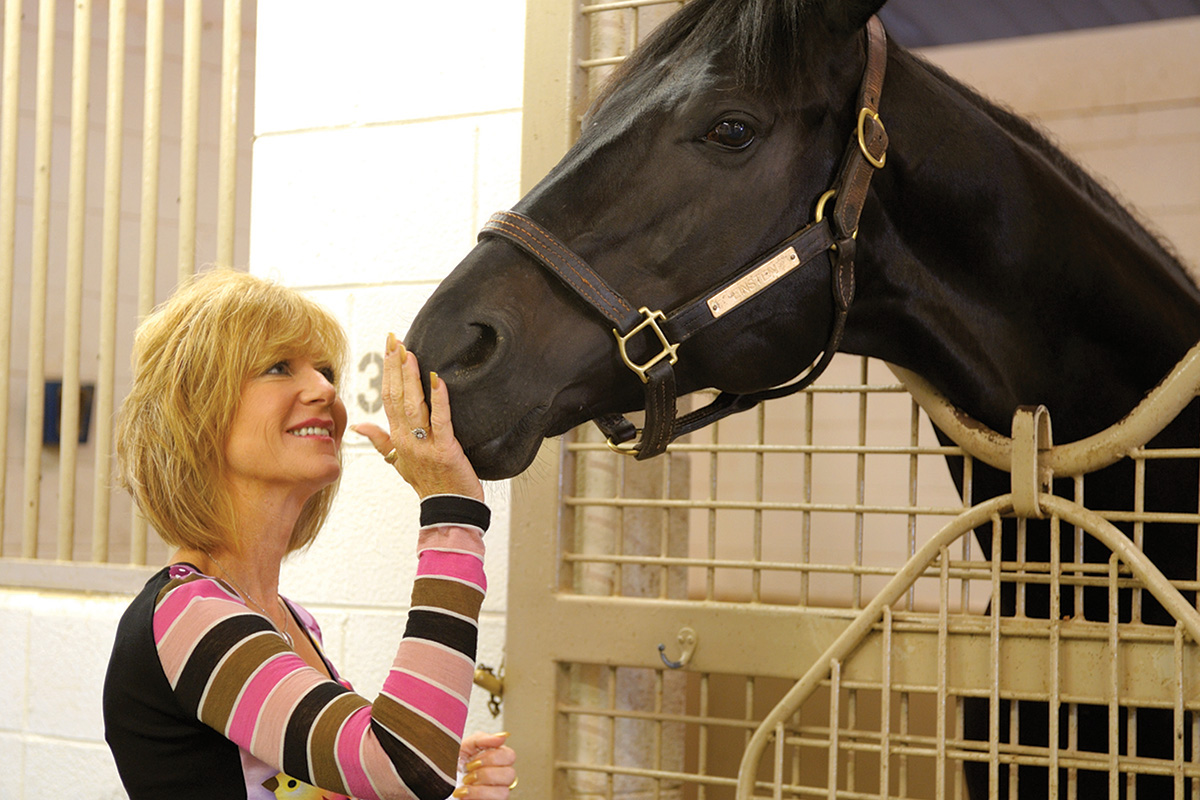
Kirsten Johnson

Kirsten Johnson is the founder and owner of Kentucky Equine Sports Medicine and Rehabilitation Center (KESMARC) in Versailles, Ky. KESMARC offers a wide variety of treatment options, including a hyperbaric oxygen chamber, a swimming pool, cold therapy, pulsed electromagnetic field (PEMF), Theraplate, and more.

1 “The effect of a stable toy, ‘The Boredom Breaker,’ on the behaviour and welfare of stabled horses”; Ball, M.; School of Veterinary Science, University of Bristol

2 “Effects of environmental factors on cribbing activity by horses”; Whishera, L. et al.; 2011; Applied Animal Behavior Science 

This article about solutions for stall boredom appeared in the September 2024 issue of Horse Illustrated magazine. Click here to subscribe!
Garmin’s Blaze Equine Wellness System: Blazing Trails

0

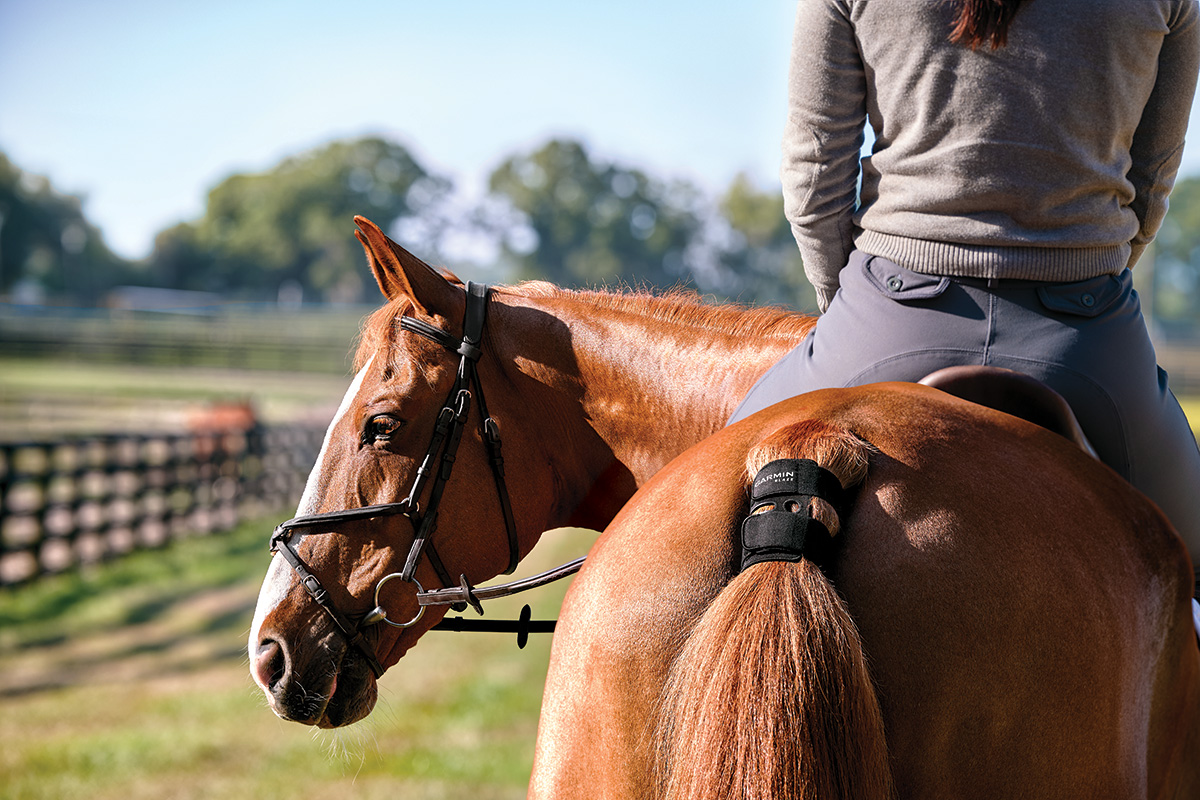
Riding and training horses is largely a task we do by feel and intuition. But Garmin, known for its GPS technology and innovative products for a variety of sports and activities, has just launched a wearable device for horses. With a removable sensor embedded in a comfortable tail wrap, the Garmin Blaze Equine Wellness System tracks your horse’s health markers and information, sending data to your watch and smartphone. This is the first product of its kind in the equine market, and it’s set to make waves across disciplines.

The Garmin Blaze Equine Wellness System.
Placed in a durable, washable neoprene tail wrap, the Garmin Blaze Equine Wellness System tracks your horse’s health markers and information.

“Garmin is a world leader in the health and fitness industry, and we are excited to bring our advanced sensor data and technology to the equine market with the introduction of Blaze,” Susan Lyman, Garmin Vice President of Consumer Sales and Marketing says. “Whether you’re eventing, racing, jumping or anything in between, this new system will help you monitor your horse’s health to keep them performing at their best.”

Innovative Design

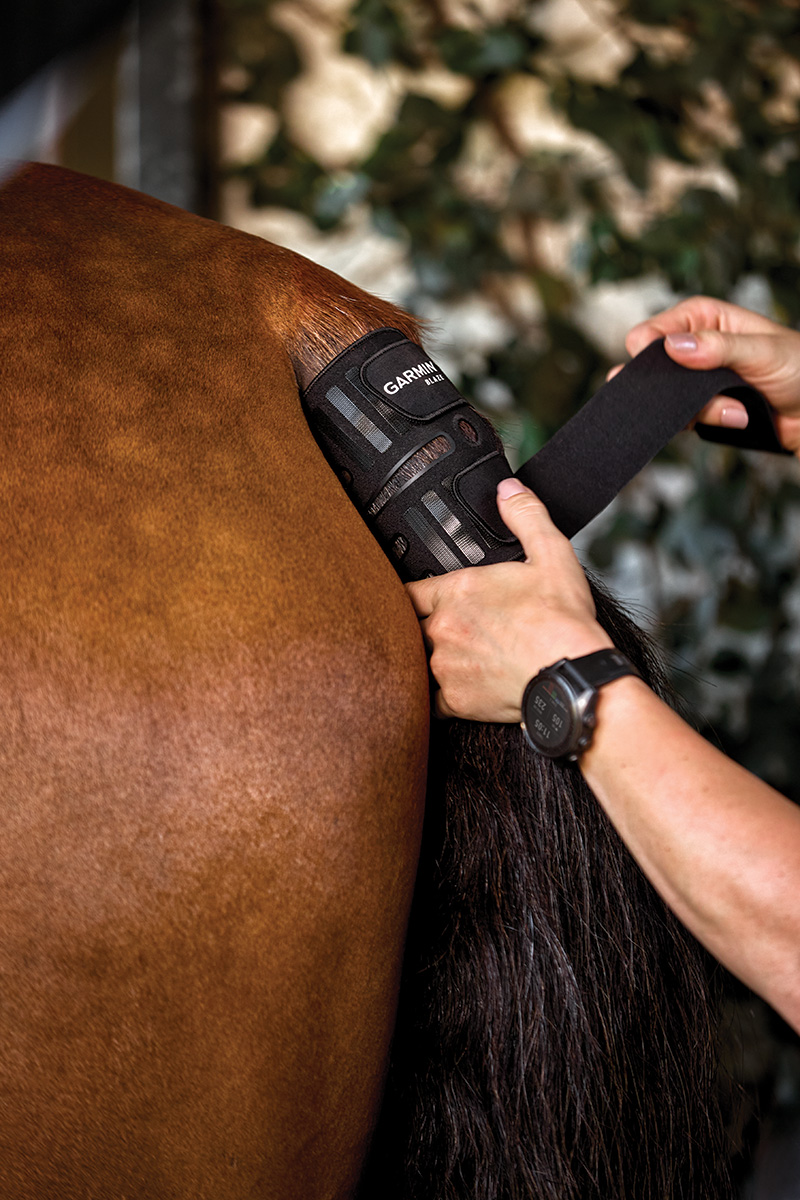
The Blaze system starts with a removable, rechargeable sensor the size of a half-dollar, placed in a durable, washable neoprene wrap that can be adjusted for a perfect fit. The wrap securely holds the sensor to the skin on the underside of the horse’s tail, without irritating the horse or requiring any skin preparation.

The Blaze system starts with a removable, rechargeable sensor the size of a half-dollar, placed in a wrap that securely holds the sensor to the skin on the underside of the horse’s tail, without irritating the horse or requiring any skin preparation.

The sensor’s battery life is up to 25 hours, and the wrap can be worn for up 10 hours continuously.

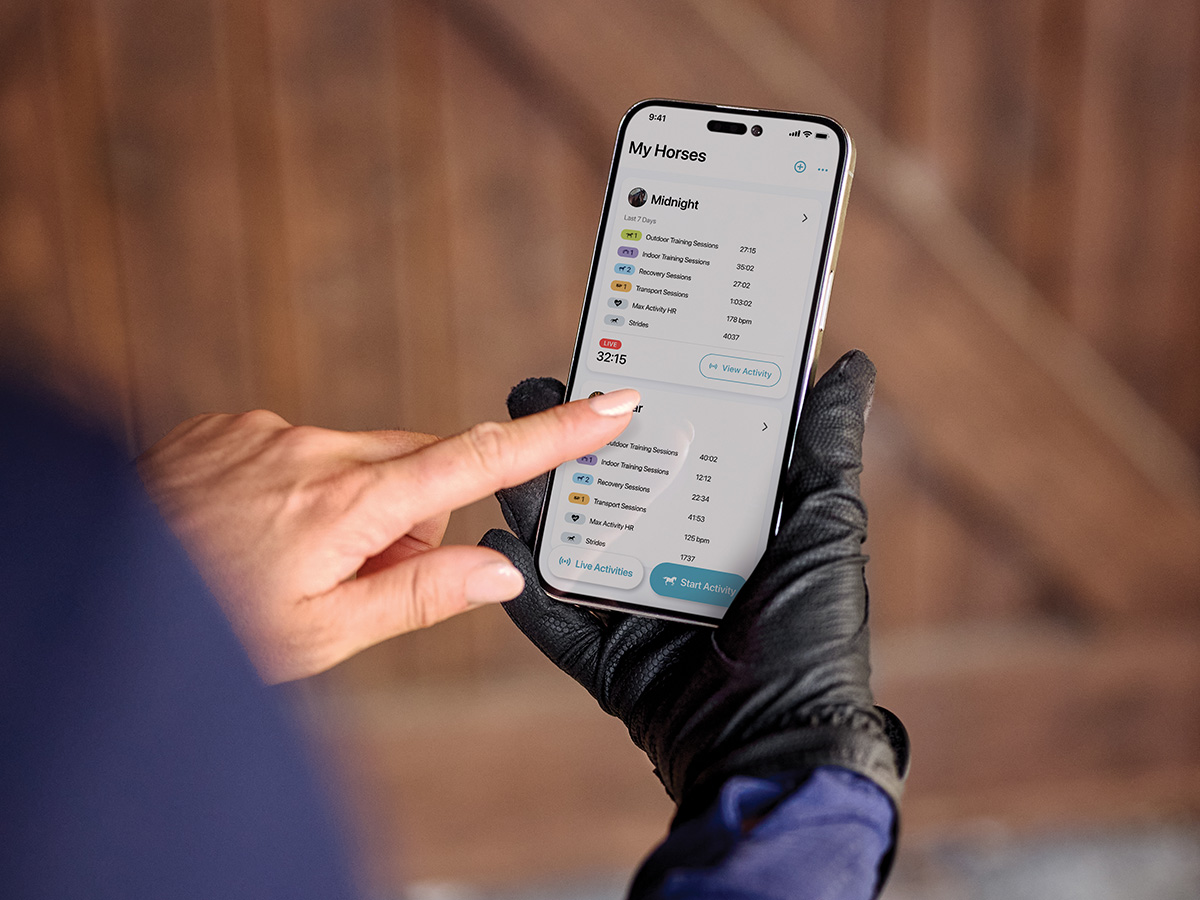
Easily paired with the Blaze Connect IQ app on your Garmin smartwatch or the Blaze app on your phone, you’ll sync your devices and instantly access a treasure trove of information about your horse, gathered and updated in real time. You can share your live stats with your trainer or friends in spectator mode. One sensor and wrap can be used on multiple horses, as you can create profiles for each one and easily select the right equine in the app.

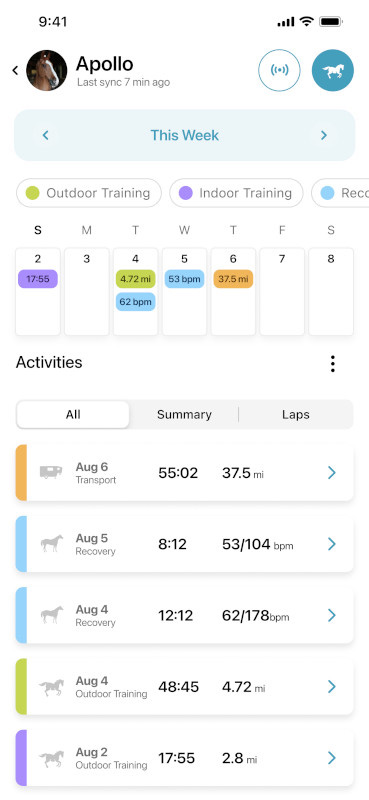
The gathered stats in the app.
Easily paired with the Blaze Connect IQ app on your Garmin smartwatch or the Blaze app on your phone, you’ll sync your devices and instantly access the information gathered by the Blaze system.

Valuable Data

Choose from the following activities to track in the app: Ride, Recovery and Transport. While riding, you can track your horse’s heart rate, strides, gait, distance, skin temperature and changes to that temperature, and much more. You can also see the heat score in your area to determine if it’s safe to ride in current conditions. You can track your horse’s recovery as his heart rate changes, and that can be tracked while riding and in separate sessions for low-intensity wellness monitoring.

Choose from the following activities to track in the app: Ride, Recovery and Transport.

The Blaze can be used during transport to monitor your horse’s stress levels and comfort in the trailer, all conveniently accessed on your Garmin device or phone app.

After logging activity, you can view all of your data right in the app on your phone, and can easily toggle between horses.

Garmin-Backed

Blaze comes from a long line of Garmin products designed to help humans get greater enjoyment out of activities they already love. From aviation, marine and automobile navigation devices, to wearables for hiking, biking, running, swimming and other sports, Garmin has produced accurate tools that are proven to be durable in harsh conditions. Founded over 35 years ago, Garmin’s headquarters is located in Olathe, Kan., with offices worldwide.

Blaze was also tested by independent researchers at Cornell University College of Veterinary Medicine, compared against medical-grade ECG systems. Over 100 tail wrap variations were evaluated, and it was tested at a Thoroughbred training center with more than 100 horses each day.

While developing Blaze, the device was tested in a wide variety of methods to make sure it’s both accurate and durable, holding up to impact, horse sweat, heat, cold and more.

The Blaze Equine Wellness System with tail wrap and sensor is priced at $599.99 and is available at Garmin.com.

This article about Garmin’s Blaze Equine Wellness System is a web exclusive for Horse Illustrated magazine. Click here to subscribe!
Breed Portrait: Haflinger

0

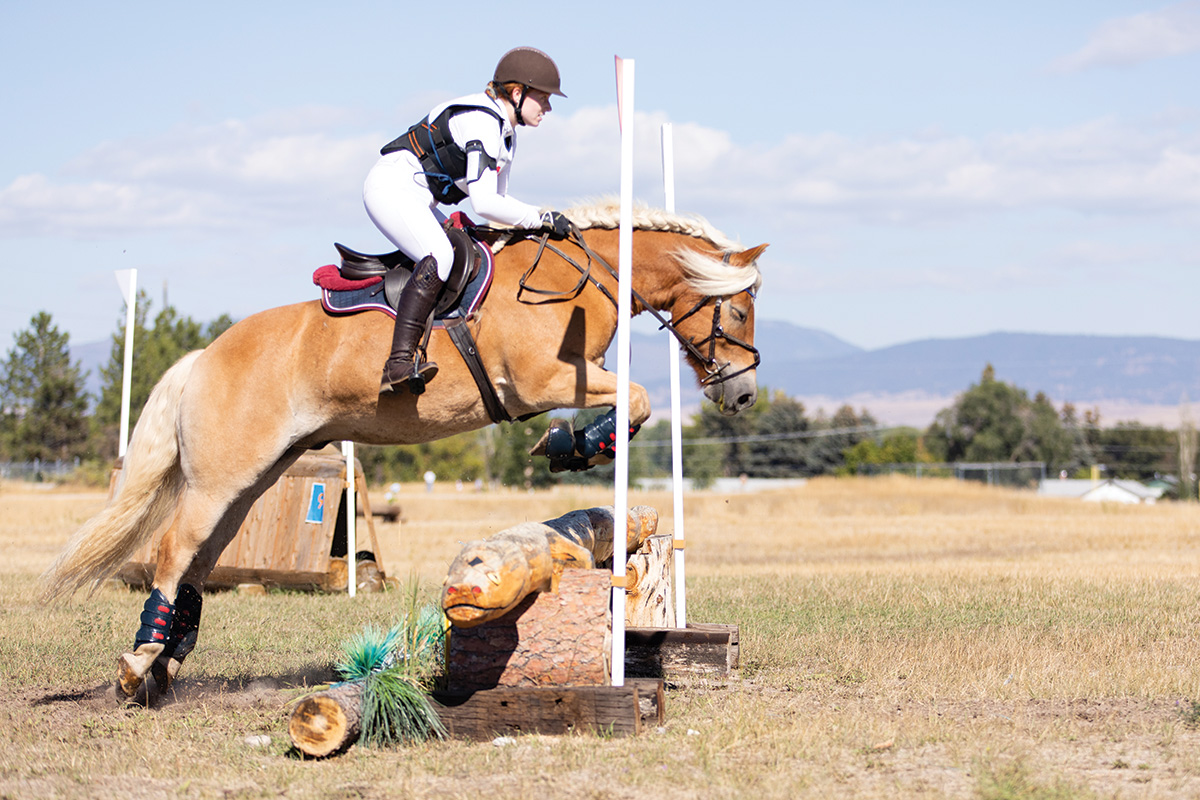
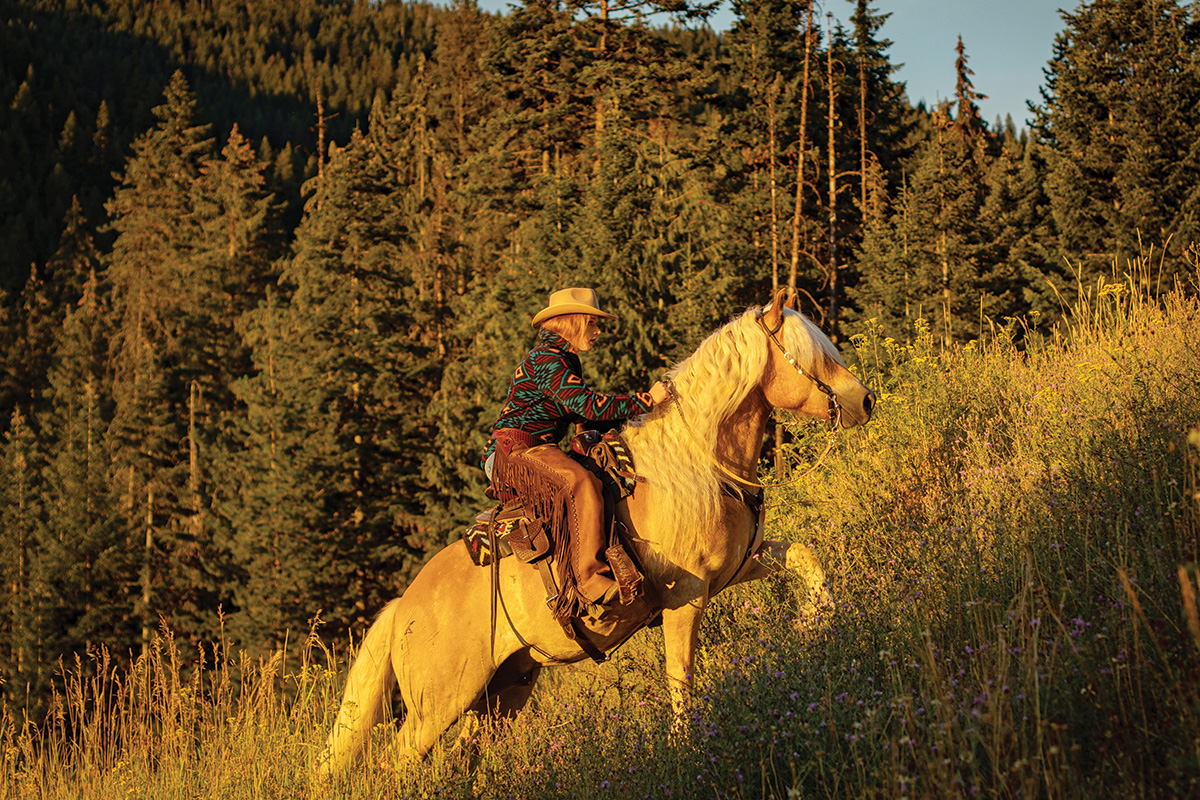
A little piece of Austrian gold, the Haflinger breed is a small horse whose hearty disposition makes it suitable for almost any discipline. Standing 13.2 to 15 hands and recognizable for their gleaming chestnut coat with flaxen mane and tail, the American Haflinger Registry has over 31,000 registered horses.

Owners of these tough horses share that they can do pretty much anything you ask of them—and excel at it.

Stewie

If you ask a Haflinger owner why they own one, one of the main reasons is because they are safe and dependable.

“As a ‘middle-aged’ woman with an equestrian hobby, having a horse that’s gentle, intelligent, and can do it all is important,” shares Kendal Vaitkus. She went to a Haflinger show in 2011 and became hooked on these horses, as well as the kind, inviting atmosphere of the other owners.

“In 2018, I had an opportunity to purchase a Haflinger, and I haven’t looked back since,” she says. “I can’t afford to have one horse that trail rides, one horse that drives and another to ride dressage. The Haflinger is a great solution for me!  This breed generally likes to keep busy, so they don’t mind learning all sorts of fun and interesting things. To me, the Haflinger is a perfect, versatile pony wrapped up in a beautiful golden package. I’ll admit, they’re like potato chips … you can’t have just one.”

A portrait of Kendal and Stewie.
Kendal and Stewie do Second Level dressage, western, halter, trail riding and driving. Photo by Plus One Photography

True to her words, Vaitkus owns two Haflingers. Will Beat the Storm of 2s (“Stewie”) was her first Haflinger. Now 15, Stewie takes her out on the trails and into the dressage, western, halter and driving rings. He has won numerous high points and is currently schooling Second Level in dressage. Her other Haflinger is a gelding named Northstar LLRH.

Rollie

Sometimes a love and appreciation for the breed is passed down through the generations.

“Grandpa Bill was searching the internet for the perfect family horse he could share with his young grandchildren,” shares John Ellingson. “He quickly learned that the Haflinger was known for being very sensible and was a great choice for young families.”

Ellingson’s grandfather drove eight hours to buy his first Haflinger, a daughter of the famous Aristocrat. That was 20 years ago. Since then, the Ellingsons have bred and trained Haflingers.

“Not every Haflinger is suited for children, but on average they are calmer, less reactive and more cold-blooded than most breeds,” says Ellingson. “We try to identify very calm individuals at a young age. We give them plenty of age-appropriate training. You can create a very special horse that is relaxed and gentle.”

One of their current horses is N-Rollie TVS, a 15.1-hand gelding, who started life working on an Amish farm. Rollie is now shown and co-owned by 16-year-old Talayna Steiner, a neighbor of the Ellingsons and part of their 4-H Club.

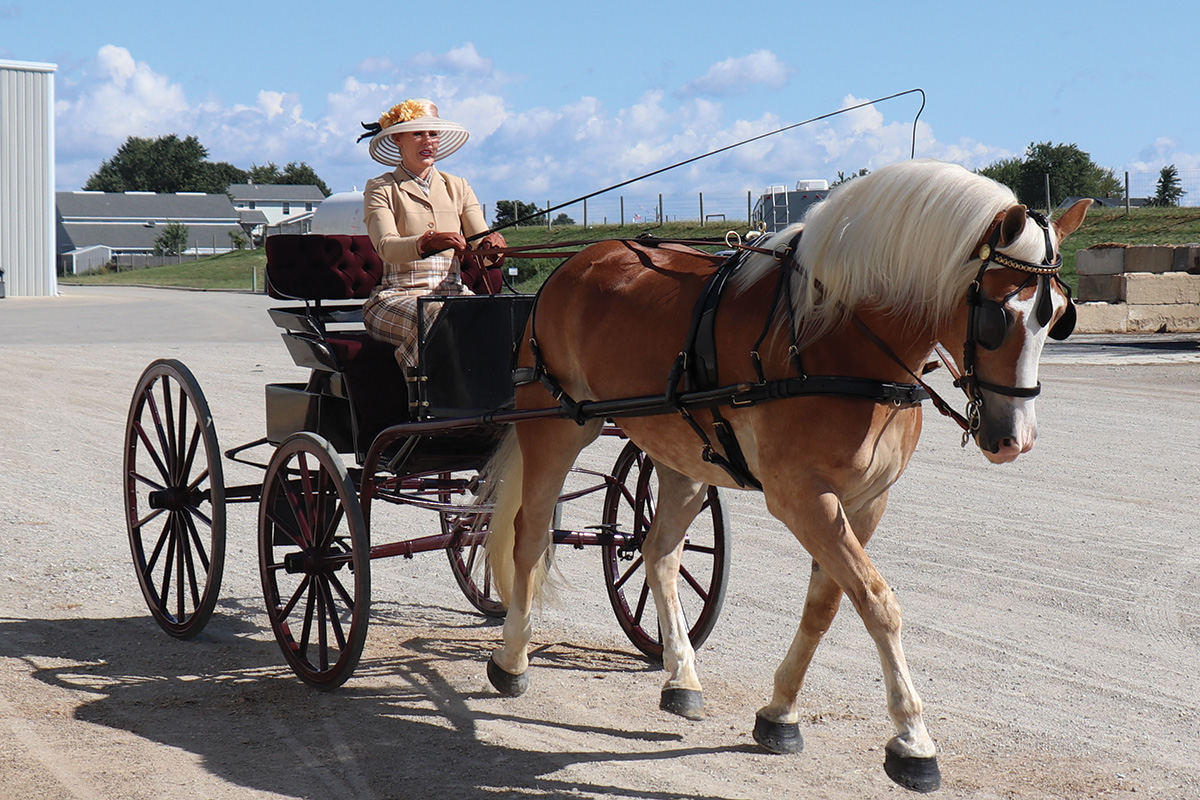
A Haflinger pulling a cart.
Rollie has many wins in pleasure driving, hitch, obstacle driving and halter, and is now taking the western rings by storm. Photo courtesy Ellingson Family

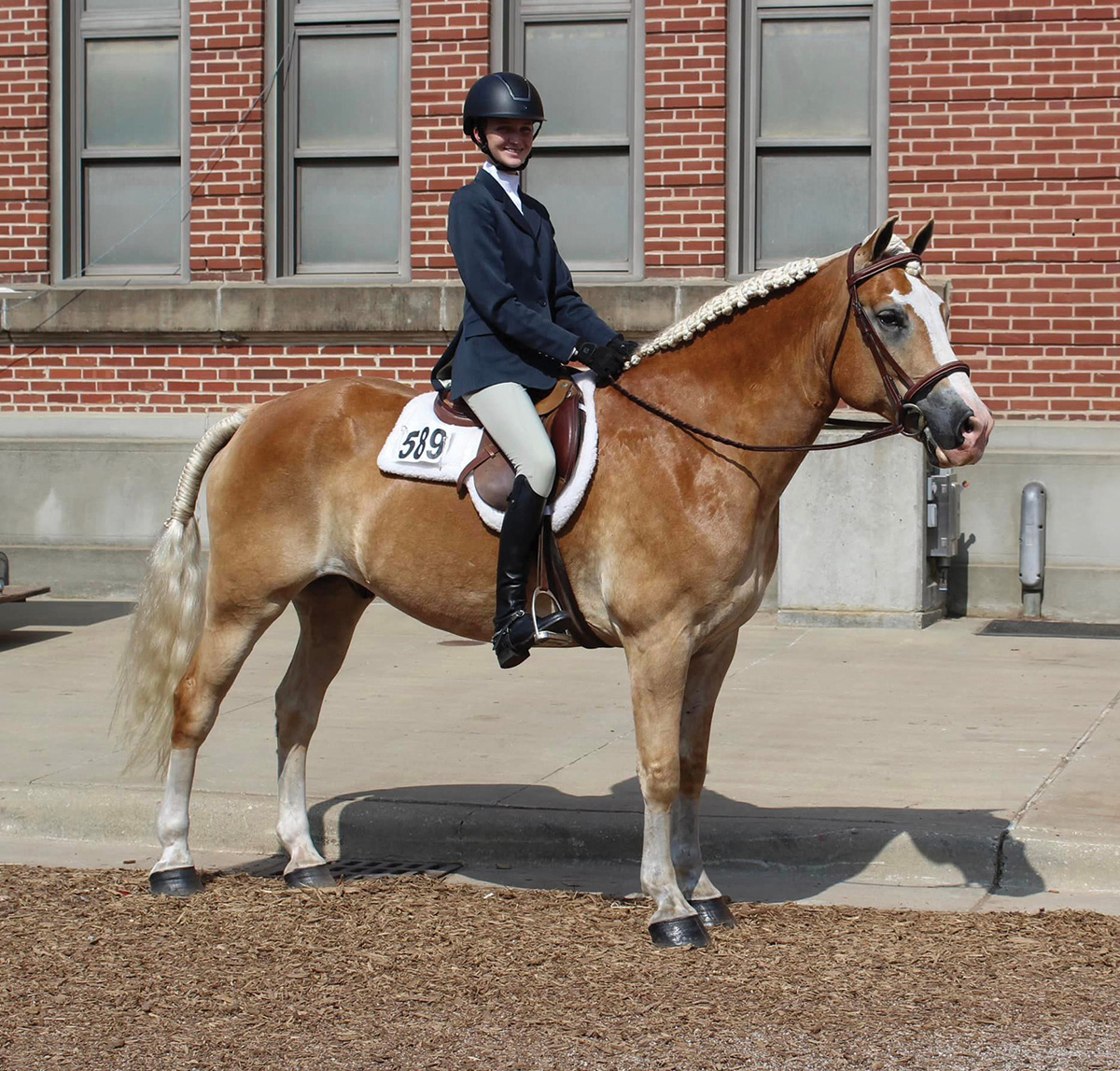
Aside from being an excellent farming horse, Rollie excels at many disciplines in the show ring, including winning state 4-H jumping, hunter and equitation over fences, and English pleasure. Outside of 4-H, he has many wins in pleasure driving, hitch, obstacle driving and halter. He is now taking the western rings by storm.

Talayna riding Rollie at a show.
Rollie is shown and co-owned by 16-year-old Talayna, a neighbor of the Ellingsons and part of their 4-H Club. Photo courtesy Ellingson Family

Von

Tara Williams, who sits on the board of directors for the American Haflinger Registry, first rode one just to keep the mare trained up for her young sister. A self-professed big bay Quarter Horse or Thoroughbred girl, she wasn’t expecting to fall hard for the Haflinger.

“As I rode my sister’s horse, I then had offers to catch ride others, and I realized that they are remarkably athletic and smart,” she says. “Von was one of those catch rides, who I then purchased. He was my gateway Haflinger!”

Wil-Von Mikas RVH (“Von”) is a 14-year-old, 15-hand gelding Tara still owns and shows. He is a multiple national champion, 2018 Reserve Versatility Champion and 2023 Versatility Champion.

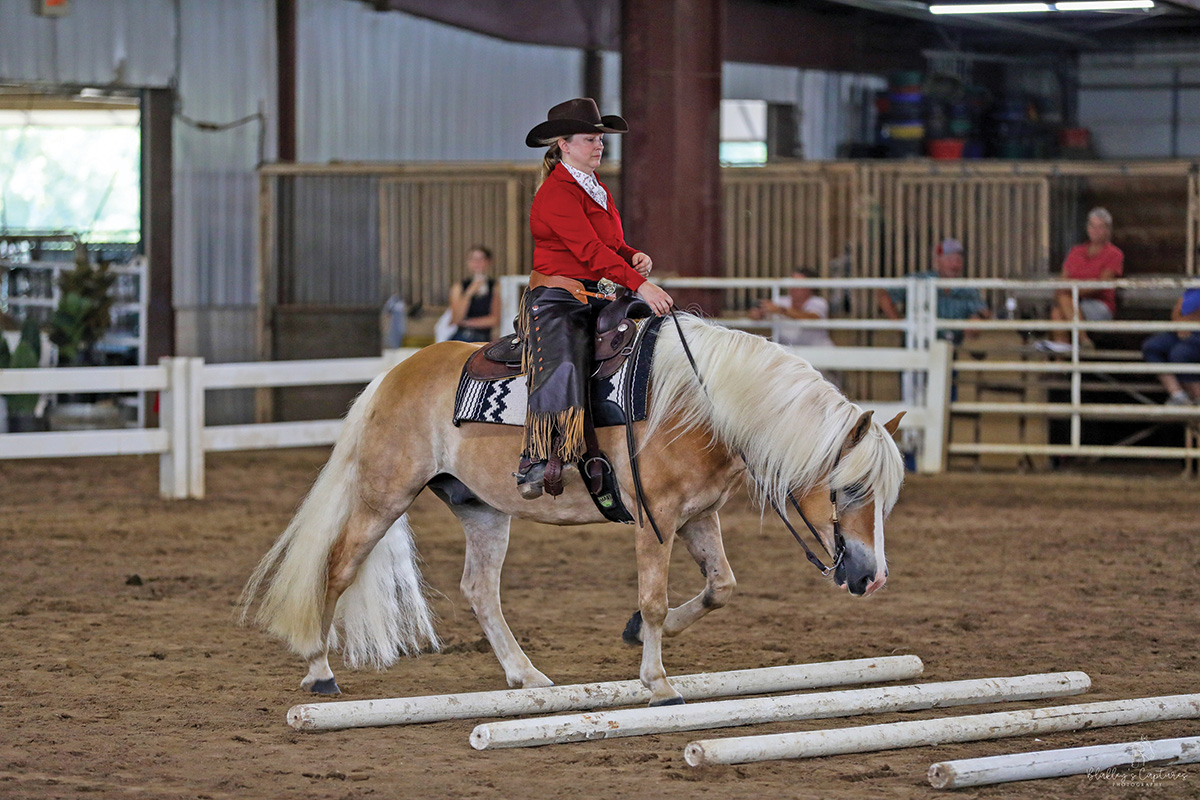
A Haflinger showing in a trail class.
Von excels in everything from dressage to western and trail riding, earning the title of 2023 Versatility Champion. Photo by Blakley’s Captures Photography

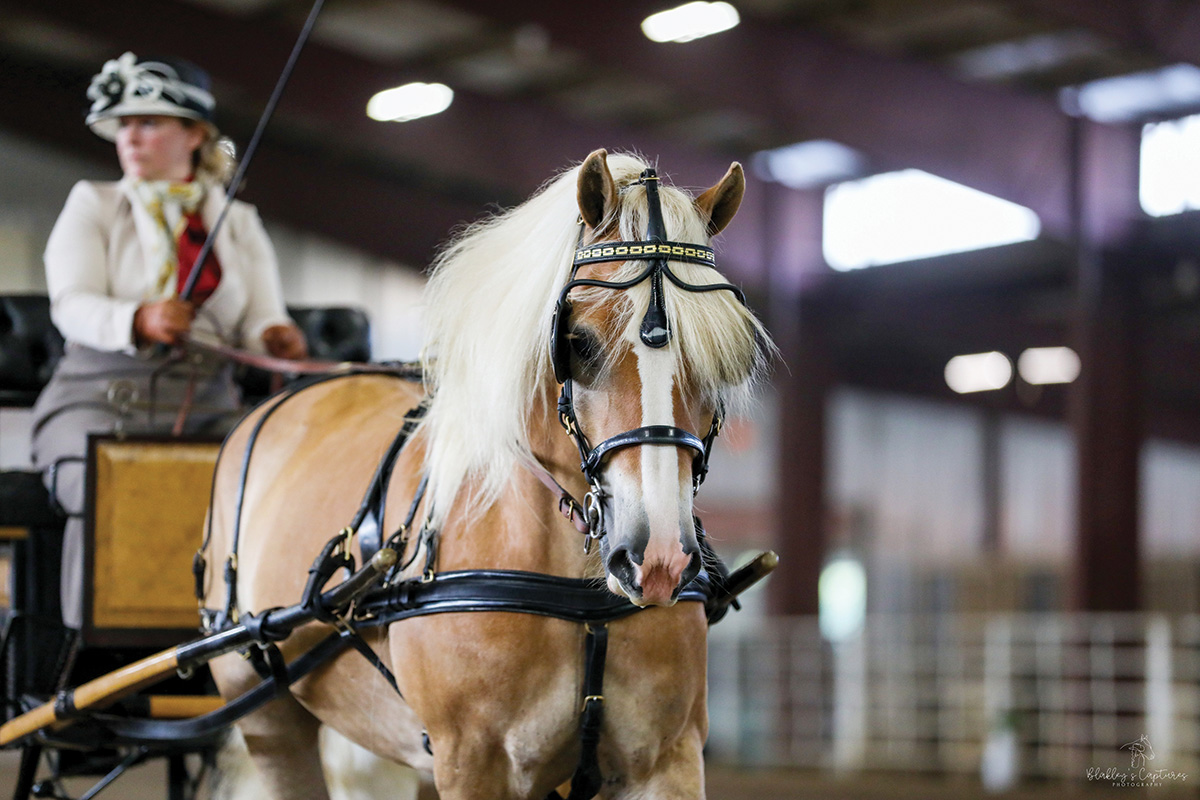
“I love a horse that can make good choices and has the athleticism to back it all up,” says Williams. “They are a very hardy breed that generally stays sound and performing well long into their golden years. One of the other things I love is how versatile they are. I can grab the same horse to go trail ride one afternoon, drive at a competition the next, and go jump a hunter pace the next.”

When not in the breed ring, Von drags her arena, goes on trail rides, competes in Second Level western and classical dressage, and even does ranch classes. Previously, they were members of the High Flying Haflingers Jumping Drill Team, performing at events like Equine Affaire’s Fantasia show and the Mane Event in Canada.

A Haflinger in a driving competition.
Von can drive in a competition one day and ride in a hunter pace the next. Photo by Blakley’s Captures Photography

Roush

The Haflinger stands his ground when put up against horses that may be much larger in stature.

Roush, owned by Anika Sadler, has taken his owner to many wins. Some of his many accomplishments include qualifying for the Great American Insurance Group/U.S. Dressage Federation (USDF) Regional Championships, winning the Idaho Dressage & Eventing Association (IDEA) Adult Amateur USDF Freestyle Champion, Adequan/USDF All-Breeds Adult Amateur Freestyle Champion, and Reserve Champion at the Rainier Northwest Championship.

A Haflinger jumping on a cross-country horse.
Roush loves to jump and is a Beginner Novice champion in eventing. Photo by Katherine Schot Photography

He is an IDEA Adult Amateur U.S. Eventing Association (USEA) Beginner Novice Champion, and has top-10 placings with the Western Dressage Association of America’s International Challenge multiple years in a row.

When he isn’t in the show ring, you can find him skijioring in the winter and gaming in the summer. He has even been used as a model by Kastel Denmark, Outback Trading and more.

“He is an excellent ambassador of the breed, their wonderful character and versatility,” says Sadler.

A Haflinger on a trail ride.
Outside the show ring, Roush can be found trail riding, skijoring, and modeling for equestrian catalogs. Photo courtesy Anika Sadler

Haflingers Can Do It All

Williams says Haflingers were bred to be this versatile, having to traverse the terrain of the southern Tyrolean Mountains and be the work horse, children’s horse, riding horse and haul-the-crops-to-town horse.

It resulted in a low-maintenance horse with a varied job description, and that lends them very well to a lot of modern jobs, from hitch horse to hunter,” she adds.

This article about the Haflinger breed appeared in the September 2024 issue of Horse Illustrated magazine. Click here to subscribe!
An Excerpt from Distant Skies

0

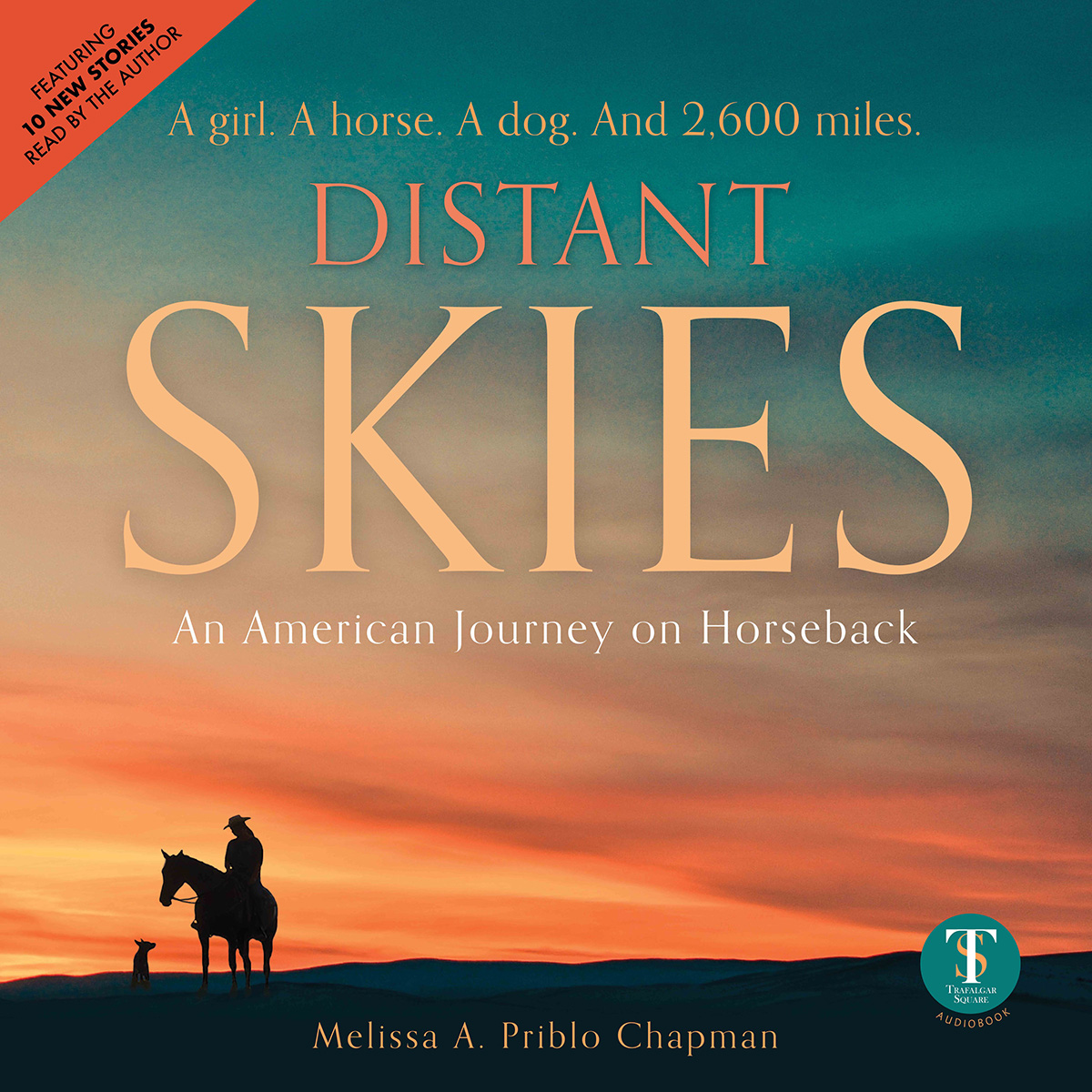
Enjoy this newly released excerpt from the Distant Skies audiobook, featuring 10 previously unpublished stories from the journey and read by the author. Melissa Chapman was 23 years old and part of a happy, loving family. She had a decent job, a boyfriend she cared about, and friends she enjoyed. Yet she said goodbye to all of it. Carrying a puppy named Gypsy, she climbed aboard a horse and rode away from everything, heading west.

The Distant Skies audiobook cover.

Hidden Campsite

Whether it was my sense of direction, good luck, or a skill I’d developed, I usually was able to keep us true to the westerly direction I wanted to go in. But several factors over a few days had brought us a bit south of where I wanted to be. I’d perused my maps and talked it over with the Newtons, a ranching family we’d stayed with, and we had a route in mind that would angle us north and west. Following the directions Dave and Jeff Newton gave me had us sharing the road with traffic, and riding past car lots and fast-food restaurants. At a burger joint in Los Lunas, New Mexico, two reporters caught up to us, and I answered their questions while Rainy and Amanda, my horse and mule and Gypsy, my Collie-German_shepherd mix, and I took a break from the road. I held back a laugh when one reporter, nervously eyeing Rainy’s big head practically resting on the picnic table, asked “Uh, do they always stay right at the table with you when you eat?”

A few miles past Los Lunas the stores and commercial businesses dwindled. By late in the day, we’d completely left that world behind. My animals and I were back in the land of open space and sage brush, where there was no one around but us. The Newtons had described an old water tower to me, and I searched for it as we traveled along the lonely road. “Is it okay to camp there?” I’d asked, and they’d laughed. “Who’s going to bother you?” Mr. Newton had answered. “There’s no one out there.”

They’d spoken the truth. Right about when I began to feel the day should be winding down, I spied the top of the old water tower. We turned down a narrow path that led away from the road and down a sandy incline toward railroad tracks. There was a little hollow down the slope and the remains of an old fence leaned in along the tracks. I dismounted and began the little rituals that made a place feel like “our place” when we camped.

Like every day, the first thing I did was relieve Rainy and Amanda of their burdens. I wanted them to know their work was done and they could rest and relax. I took my saddle, the pack saddle, and the packs, and placed them around our camping spot. It created a curving boundary of sorts and became the outline of our home for the night. It made me feel less like we were small specks in the wide-open space. I fed the animals, opening little bags of sweet feed onto the ground. I stayed with them while they ate, scratching their itchy spots, and hugging their necks. I thanked them for all they’d done during the day.

Our spot was invisible from the road, and though that’s usually what I wanted, it somehow felt extra secluded by the water tank. I had that strange sensation that came with the feeling that not one person in the world knew where we were.

I slept restlessly and woke from a dream that involved a raft and a dark empty sea. I looked outside the tent and saw that Rainy and Amanda were near, staying close in the brushy area we’d claimed.

Late in the night, I woke again, this time to a noise that I should not have heard, tucked away in the desert gully by the unused railroad tracks. It was not wild animals or blowing wind that caused me to sit up and listen.

It was the unmistakable sound of revelry. The clink of bottles, the faint bass beat of music, the occasional smashing of glass and bursts of male laughter.

With a sharp intake of breath, I sat up and grasped the loose scruff of Gypsy’s neck in my hand. We both stayed still, straining our ears. I prayed, willing so hard that the partiers came no farther down the track. I prayed that Rainy wouldn’t neigh, that Amanda wouldn’t send her unusual bray/whinny out into the night. I listened to see if it sounded like those partiers were on the move. How many did it sound like? Were they a few innocent teens out for a clandestine six-pack, or a mob of nasty men, cruising the desert at night?

Gypsy and I sat that way, listening, for what seemed like a long while. My breath was shallow and my heart beat too fast.

Finally, there was the sound of a few more bottles breaking, the slap of a hand on a vehicle, and then the sound of car doors slamming and an engine starting up. At last, the noise faded into silence.

After a while, I allowed myself to lie back down. I dozed again, eventually, but it was the kind of sleep that had served my dog and horse companions and our ancient ancestors so well; sleep that was shallow, with senses still partly alert, tuned to catch the sound of danger in the night.

Order Distant Skies here.

This excerpt from Distant Skies by Melissa Chapman is reprinted with permission from Trafalgar Square Books.

Barn Banter – Episode 35

0

Barn Banter Episode 30 banner

Welcome to Barn Banter, the official podcast of Horse Illustrated. In Barn Banter episode 35, hosts Susan Friedland and Horse Illustrated Editor In Chief Holly Caccamise chat with Alyssa Mathews, filmmaker and equestrian YouTuber.

To end the episode, Susan and Holly chat with Allison Moorehead, volunteer at Horses and Hound Rescue Foundation, about Dawson City, this month’s ASPCA Right Horse adoptable horse.

Click here to listen on mobile.

Alyssa Mathews, Filmmaker and Equestrian YouTuber

Barn Banter episode 35 guest Alyssa Mathews.

Alyssa Mathews is an award-winning filmmaker, equestrian YouTuber, and founder of DiscoverTheHorse—an equine adventure series and breed education project documenting her Quest to ride every horse breed. She has ridden 150 breeds and traveled to 30 countries—so far. Her videos give viewers a chance to ride along, learn what makes each breed special, and discover horses they might not have known about. In 2021, Horse Illustrated recognized her as a “Female Equine Industry Trailblazer.” Her mission is to share horses with others and inspire people to chase their dreams. All videos are available for free on the DiscoverTheHorse YouTube channel.

The DiscoverTheHorse Website
Subscribe to DiscoverTheHorse on YouTube
◆ Follow DiscoverTheHorse on Instagram
◆ Follow DiscoverTheHorse on Facebook

Adoptable Horse of the Month, Dawson City

Dawson City, the featured adoptable horse on Barn Banter episode 35.
Photo courtesy Horse and Hound Rescue Foundation

Dawson City is a tall, handsome gelding who knows how to turn heads. With four white feet and a bold, thick blaze, he’s sure to catch everyone’s eye with his striking good looks. Responsibly retired and sound, Dawson is ready for his next chapter.

In the pasture, he’s friendly and easy to catch, but don’t be fooled—Dawson knows he’s hot stuff and holds the top spot in the pecking order. He’s confident and charismatic, making him a standout both in looks and personality.

After some well-deserved downtime, Dawson will be evaluated to see what direction he’s best suited for. He’s waiting to meet his next admirer!

Learn more about Dawson City here.

In addition to Barn Banter episode 35, you can check out all previous episodes of Horse Illustrated’s podcasts here.

ASPCA Right Horse Adoptable Horse of the Week: Secret Crush

0

Welcome to Horse Illustrated’s weekly installment of the Right Horse Adoptable Horse of the Week, offered in partnership with the ASPCA’s Right Horse program. This week’s adoptable horse is Secret Crush! Check back weekly for a new featured horse so you can find your Right Horse.

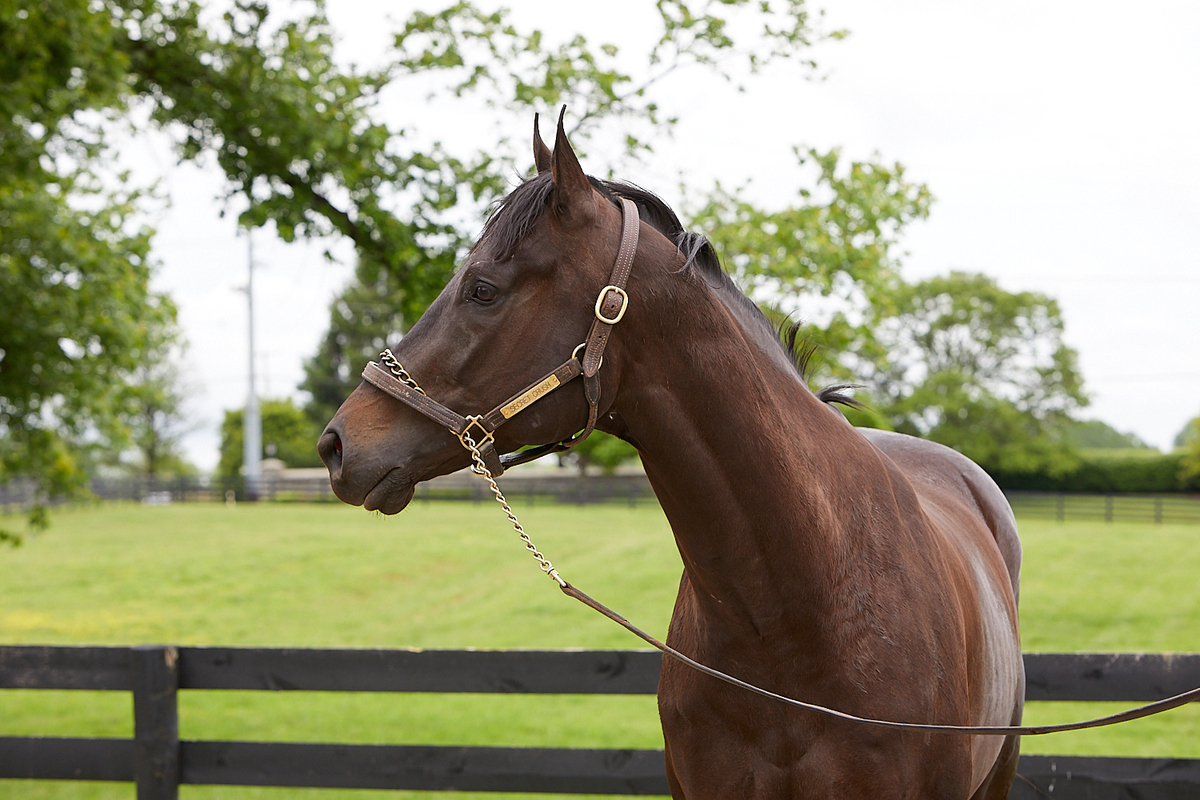
Adoptable horse Secret Crush.
Photo courtesy Second Stride

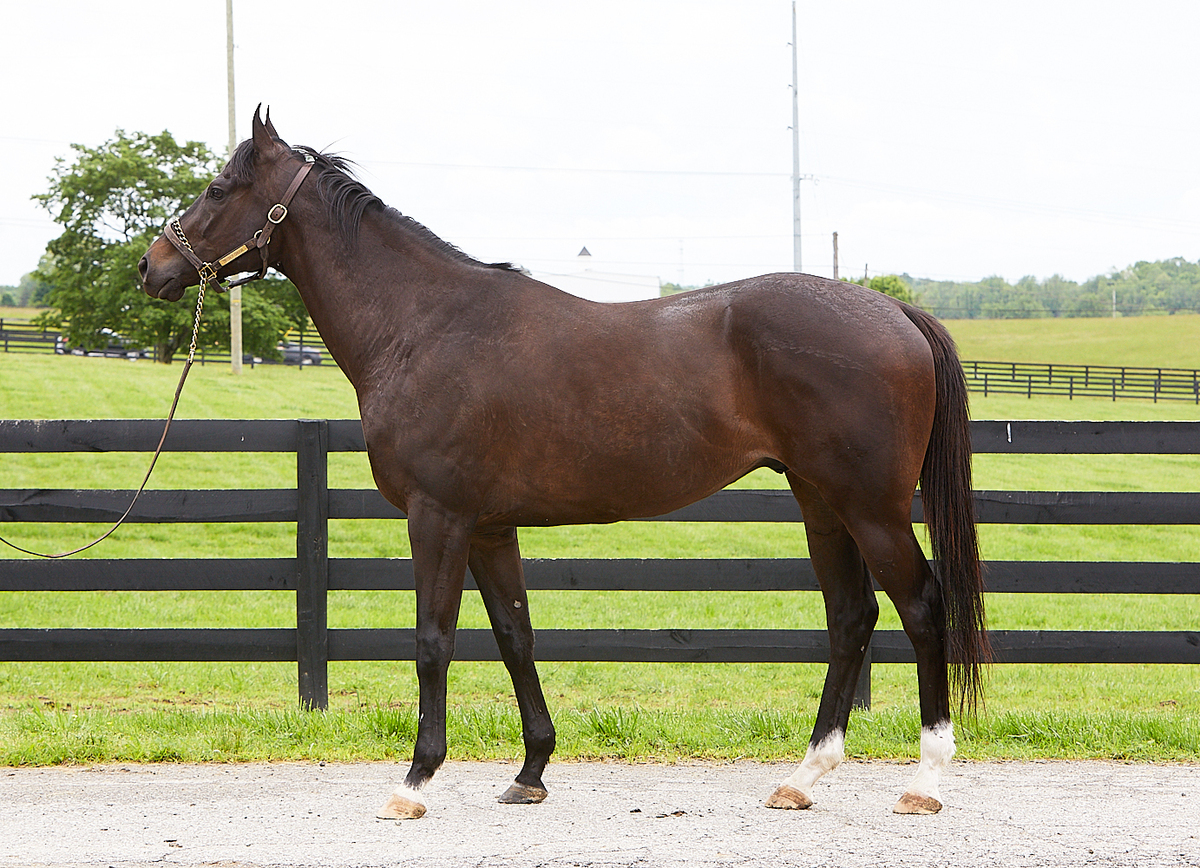
Adoptable Horse: Secret Crush, a 4-year-old, 16.3hh Thoroughbred gelding
Organization: Second Stride, Prospect, Ky.

Get to Know Adoptable Horse Secret Crush

By Candy Ride and out of Elarose (out of the legendary mare Take Charge Lady), Secret Crush retired from racing in April 2025 with a left front suspensory tear with sesamoid involvement. He is currently on round pen turnout until August 18, 2025. He will then need an ultrasound done to determine if he is ready for turnout and riding. If he is sound in August under saddle at the trot, and stays that way long term, he may be suitable for low level sport use. He will be suitable for trails later this summer.

Crush is a fun gelding to have in the barn. He can be mischievous and playful. He is quiet when in the round pen and is quiet in his stall as well. He seems to be an easy keeper, is quiet for grooming, and walks nicely on a lead rope. He is respectful of his handlers and was good for the vet and farrier. He is well-behaved for the vet and farrier. He will be a fun horse to bring along and teach. He’s easy on the eyes as well!

Contact Second Stride today about ASPCA Right Horse Adoptable Horse of the Week, Secret Crush!

Conformation photo of a bay Thoroughbred.
Photo courtesy Second Stride

ASPCA Right Horse

My Right HorseASPCA Right Horse is the online adoption platform of The Right Horse Initiative, a collection of equine industry and welfare professionals and advocates working together to improve the lives of horses in transition. A program of the ASPCA, their goal is to massively increase horse adoption in the United States. To find more adoptable horses and foster horses, visit www.myrighthorse.org. To learn more about The Right Horse, a program of the ASPCA, visit www.aspcarighthorse.org.

Arena Footing 101

0

If you’re considering building, improving or fixing a riding arena, it’s easy to become confused by all of the natural and man-made options. The first step, however, is to learn what makes good arena footing versus poor arena footing in order to prevent injuries to your horse. These are not only costly in terms of vet bills, but also require rehabilitation time that keeps you out of the saddle and the show ring. 

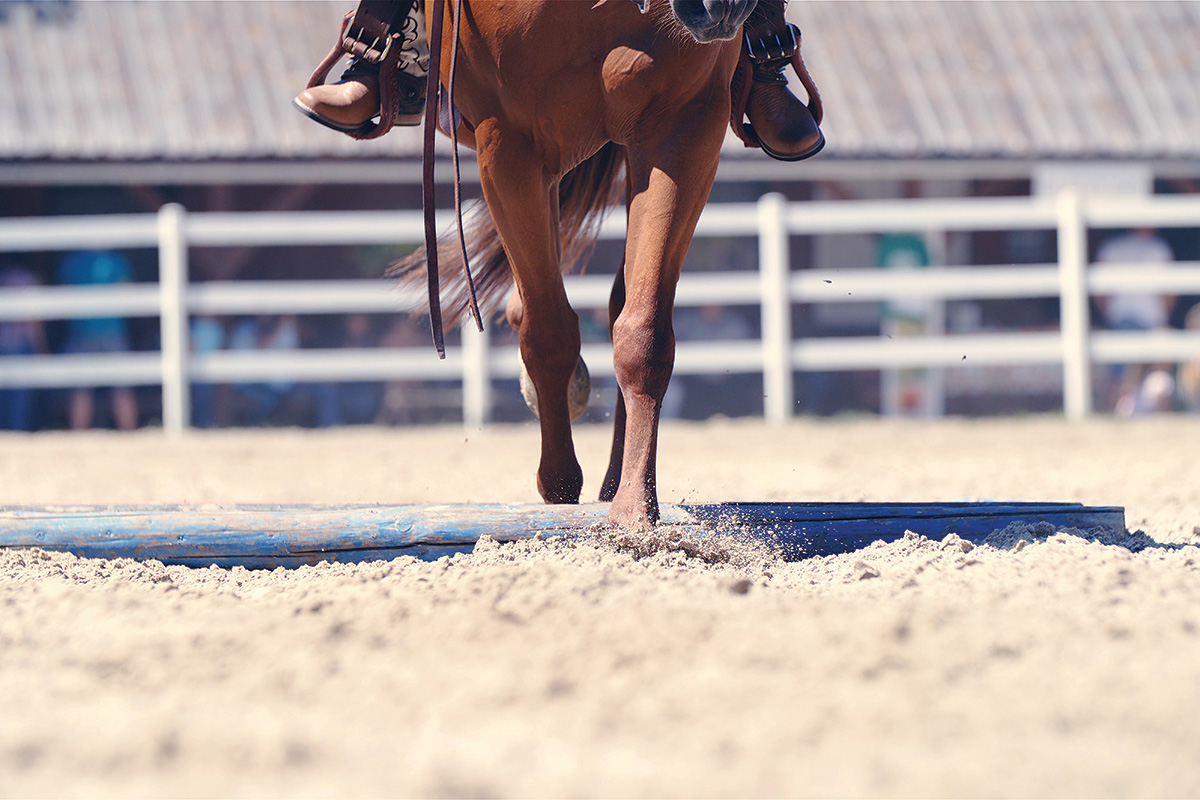
Horse arena footing.
Photo by Video_StockOrg/Adobe Stock

The Basics of Good Arena Footing

The ideal footing needs to:

  • Have traction
  • Have no dust
  • Have cushioning
  • Deter injuries
  • Boost performance
  • Provide stability
  • Provide rebound energy (the responsiveness and resiliency of the footing surface to return it its original form by returning energy back to the horse)

Factors that make footing poor quality include:

  • Too deep
  • Too hard
  • Too uneven
  • Too loose
  • Too dusty
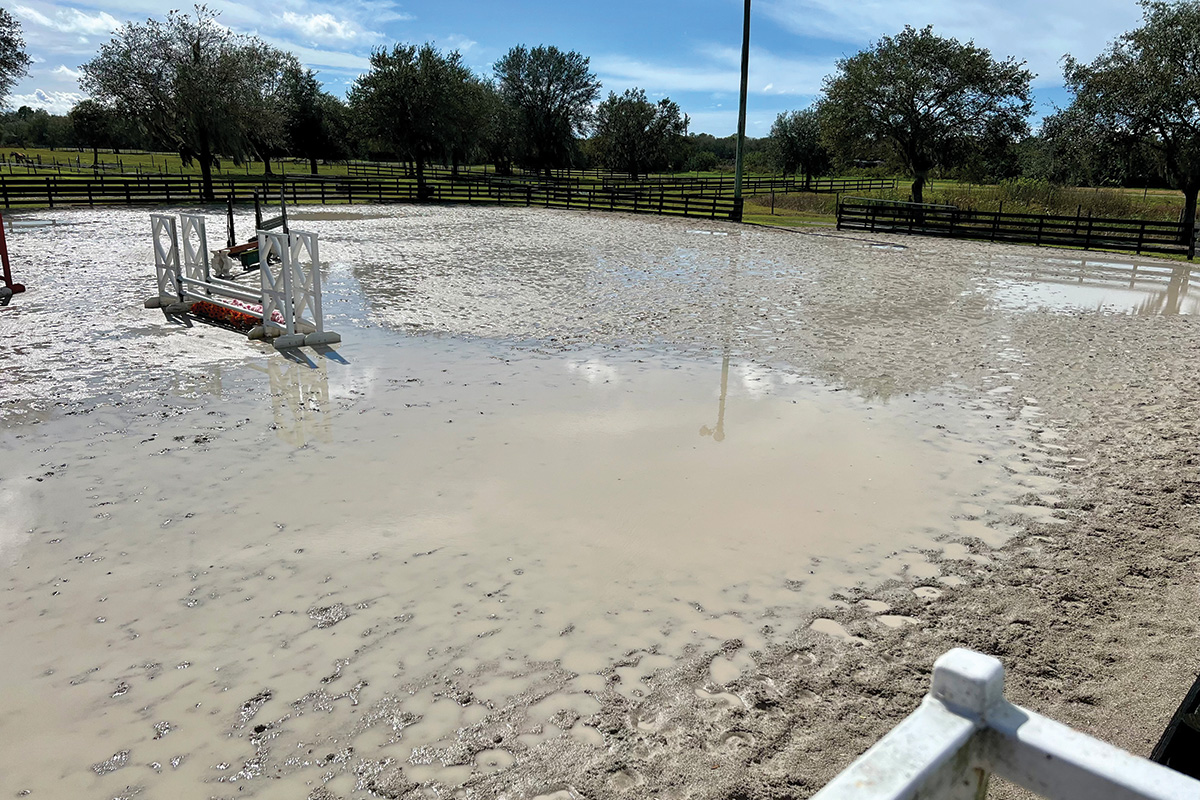
  • Non-draining
  • Slippery
A flooded ring.
Footing that doesn’t drain quickly or properly can become problematic. Photo by Laura Boynton Jobson

There are three primary layers to arenas: the top footing, the sub-surface, and the base.

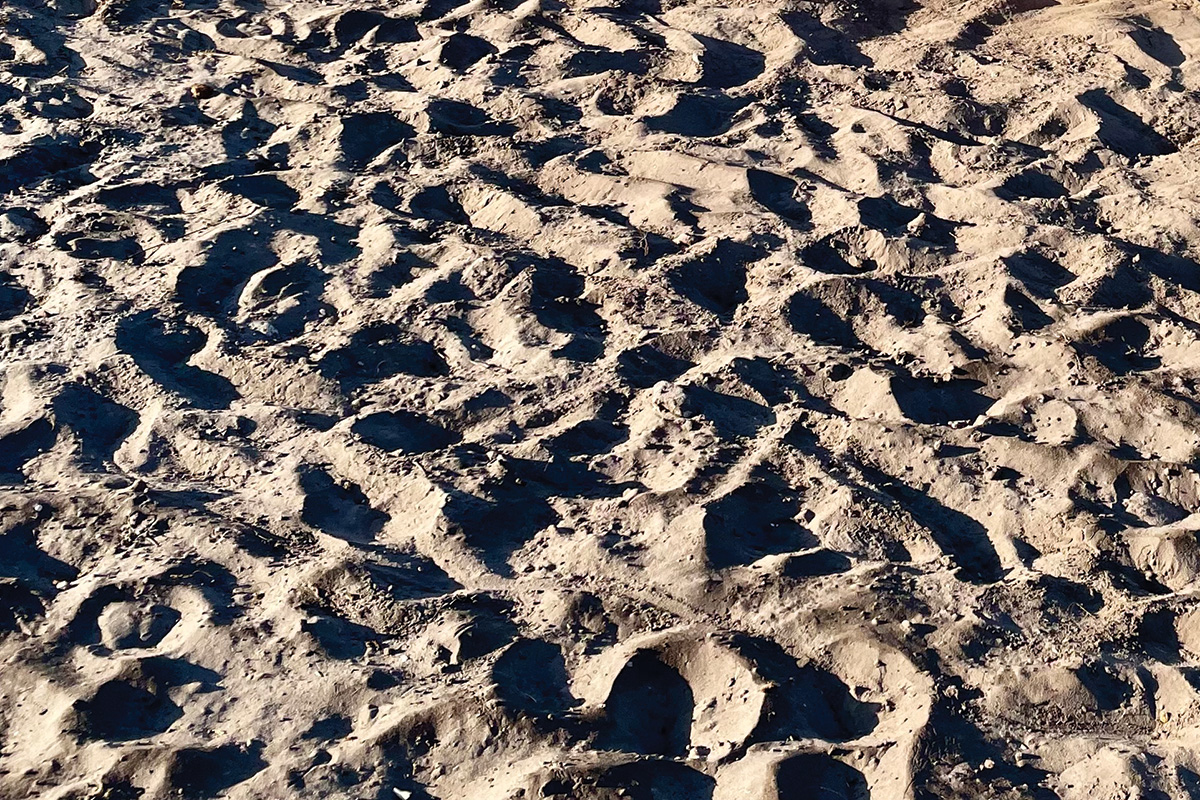
Sand is the most popular surface used across the world, both with and without synthetic fibers added. Others include wood chips/sawdust, rubber chips, grass, and dirt. The sub-surface has many options: a drainage layer, grid-mats, compacted stone, sand, or another manufactured material. Most bases are made out of clay, stone dust, and the natural native soil of the property.

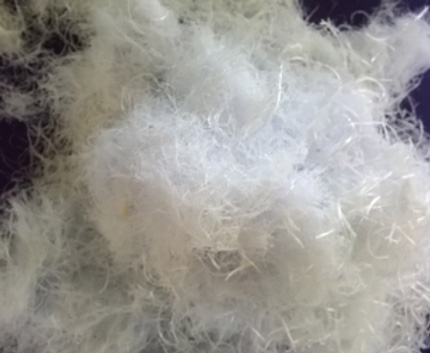
A synthetic fiber blend.
Synthetic fiber blends are popular for new arena builds. It tends to be more uniform and low-dust than pure sand. Photo courtesy GGT-Footing

What the arena is made of, how much traffic goes through it, precipitation and temperature all play a part in keeping an arena safe.

Different arenas have different requirements to keep them in peak performance, but most require the following:

  • Watering regularly
  • Regular dragging and grooming
  • Removal of manure, urine and other organic material
  • Adding new sand
  • Raking upkeep
  • Picking out weeds, rocks and other debris
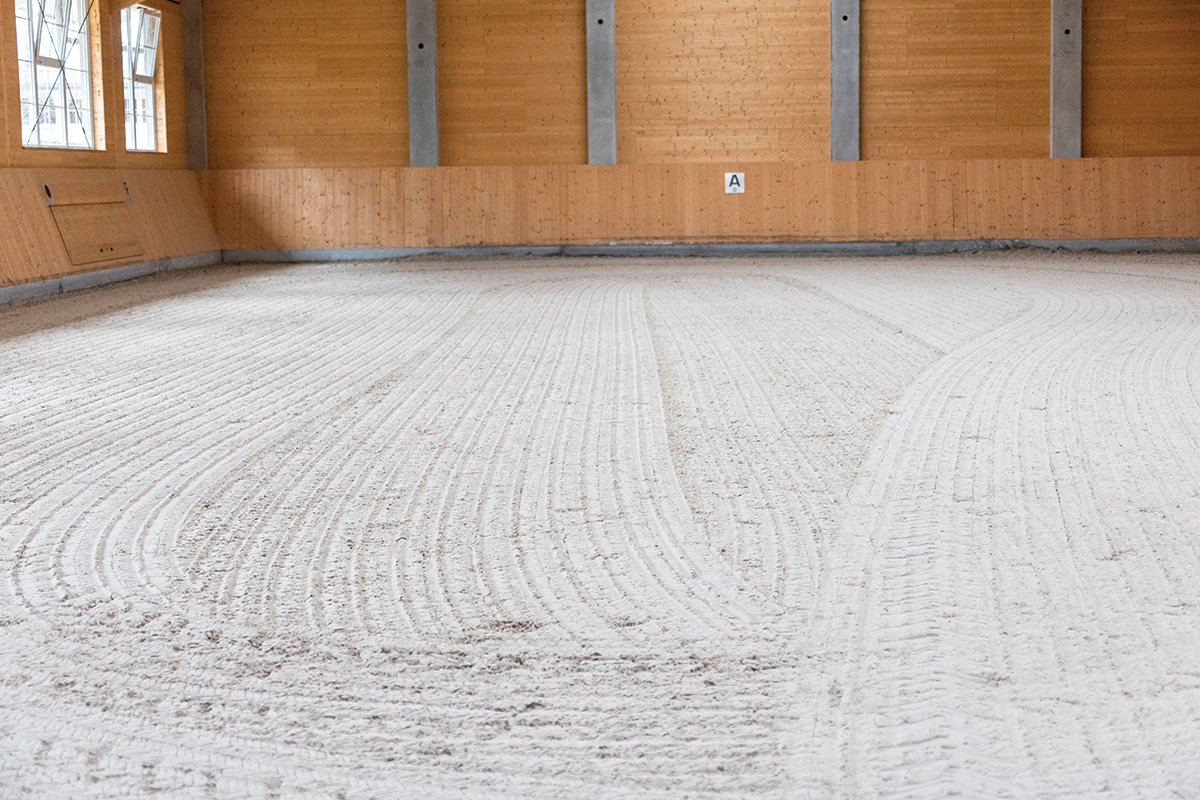
Horse arena footing.
Regular watering, dragging, manure removal and adding sand as needed are important parts of maintaining safe footing. Photo by Christiane Slawik

Sand and Fiber Footing

Cynthia Brewster Keating is the national director of sales and marketing director for GGT-Footing. For more than 25 years, Polysols, the parent company of GGT-Footing, has been producing innovative equestrian footing products for riding arenas.

“The arena footing products are repurposed remnant virgin material that’s used to make various fibers and textile blends,” says Keating. “The focus is on developing the best combination of synthetic chopped non-woven material and combining it with the highest-quality sands from quarries across the county.

“The different disciplines require a different amount of tightness in the sand,” she adds. “The pleasure blend has minimal fiber and is designed to keep the sand fluffy. The dressage blend has 15 percent fiber and is designed to provide variations according to how it is groomed and maintained. The jumper blend has 30 percent fiber, designed to offer concussion, relief, and stability as well as rebound energy.”

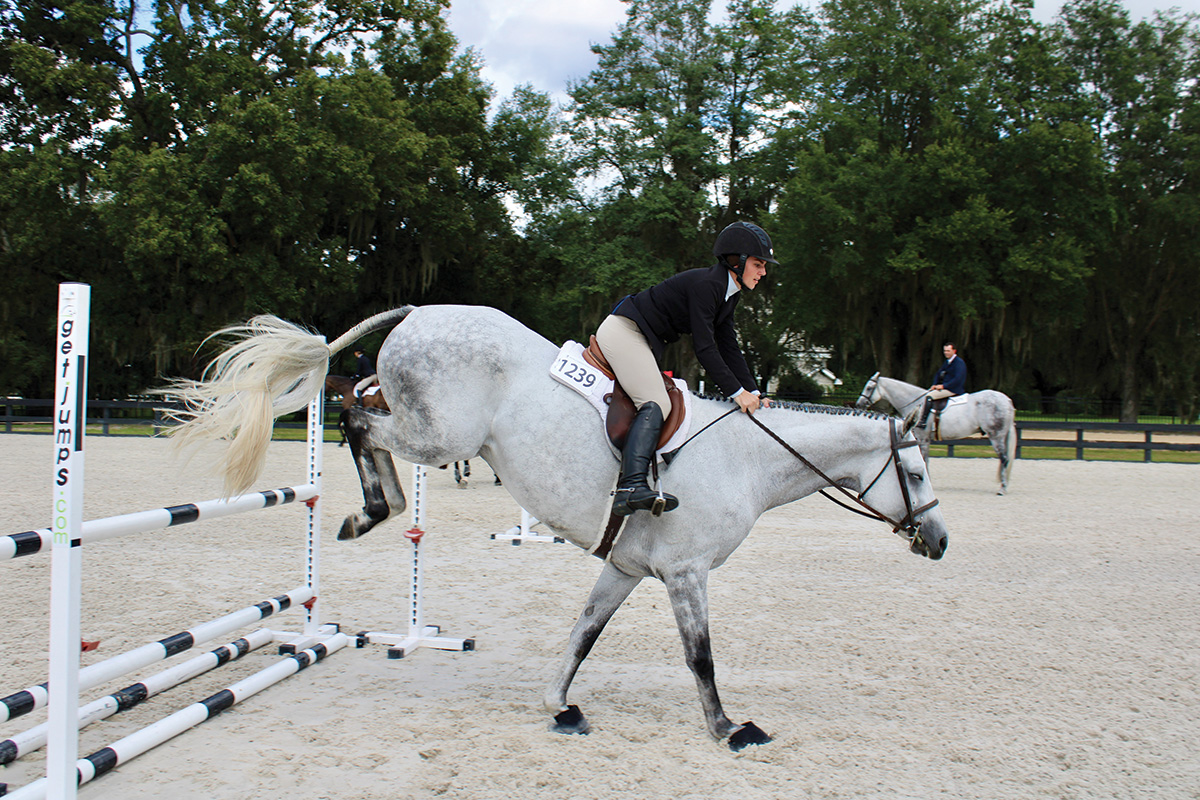
A hunter/jumper landing from a jump.
The percentage of fiber to sand is higher in footing used by hunter/jumpers, who need more rebound energy. Photo by Laura Boynton Jobson

Keating has found that the quality of the sand is not as good as it used to be in the United States due to amount of fracking and the oil industry.

“Because of this, we have found that it’s important to use more fiber, regardless of what your discipline is,” says Keating. “Ninety percent of our sales are blend. We use our competition blend at high-end horse shows, which is 50 percent geotextile and 50 percent fiber. [These shows] require the most support and concussion relief, especially in the Grand Prix dressage and jumper arenas.

“Nowadays, it’s recommended that you hire a consultant that can test the sand that you are thinking of using,” she adds. “Many professional arena builders are now using mixtures of variable grades of sand to achieve the best results.”

Keating says anyone building arenas should assess the level of riding and how many horses go through their arena each day.

“Across the country, there are a varying products available for base, so it’s best to work with a contractor who is familiar with your specific property and ground,” she says.

A Vet’s View

Poor footing can be a big contributor to lameness, according to Rob van Wessum, DVM, M.S., who practices at Equine All-Sports Medicine Center in Mason, Mich. He’s also a Grand Prix dressage rider who holds a diplomate from the American College of Equine Veterinary Sports Medicine and Rehabilitation (ACVSMR).

He says that close to 50 percent of his case load of lame horses is due to improper footing and improper training techniques in inadequate footing. He mostly sees tendon or ligament injuries related to both these factors.

Horse arena footing.
Dr. van Wessum says that close to 50 percent of his case load of lame horses is due to improper footing. Pictured: deep, dry, uneven footing.

“In deep footing with lack of stability, the horse moves the footing material too much, which means less rebound of ground-reaction forces into the horse, causing tendon injuries, especially suspensory ligament injuries,” says van Wessum. “The horse loses energy with every stride, moving footing instead of himself. That puts a lot of strain on muscles to deliver more energy. A horse is built for rebound energy stored in tendons, so a lot of kinetic energy is stored as elastic energy during the air phase and then used in the next stance phase. With deep footing, there is far less rebound energy.

“When muscles get fatigued due to excess work in deep footing for too long in the same kind of work, a horse can’t stabilize his core anymore, which will cause damage to the connective tissue as result,” he continues. “Connective tissue is often ligament, fascia or tendon. You can find it in the limbs but also in the back, neck, and pelvis region. Damage to all those regions is diagnosed daily in our practice.”

Consequences of Poor Arena Footing

Footing that is so deep the coronary band disappears is one of the most common kinds of bad footing.

“The opposite of too deep is too hard, which can damage to the bone structures due to concussive forces,” says van Wessum.

He explains that footing that has too much grip, like when too much fiber is added, can cause damage to the collateral ligaments of the coffin, pastern, and fetlock joint. This is due to rotational forces when riding in small circles, lateral gaits, or landing and turning after jumps—any time the foot gets stuck on the footing while the upper part of the limb turns. He also sees this with too-deep footing when it is muddy or clay-like and sucks the hooves in.

“Footing that is too slippery due to rain or over-watering causes many injuries, such as ligament and tendon injuries in the lower limb, but also spinal ligament injuries in the neck, back and pelvis,” says van Wessum.

One of the worst kinds of footings van Wessum sees is when the same arena has different areas within it, like harder, softer and then deeper areas.

“When the quality of the footing suddenly changes, a misstep and strain or distortion of joint or ligament is the result,” he says.

Van Wessum stresses that there is no general rule for quality footing materials.

“It depends on what the arena is used for, where it’s located geographically, the traffic through the arena (one or two horses a day versus 60), and the quality of the maintenance,” he explains.

The Best Prevention

What are the best steps a rider can take to protect their horse? Incorporate proper training and exercise to adapt to the quality of footing, according to van Wessum.

“When the footing is deeper, shorter bouts of more intense work, alternating with walking, helps the horse recover and avoid fatigue,” he says. “Proper shoeing and timely reshoeing so the angles don’t change too much is extremely important.”

Van Wessum does not see any advantage to boots or leg protection when it comes to preventing injury due to bad footing.

His client horses receive regular soundness exams (approximately every six months) to monitor any small changes in performance and sensitivity of tendons and ligaments before they become a bigger issue.

“We saw horses from the same facility showing tenderness in the suspensory ligament,” says van Wessum. “After looking at the footing, we could see that it was getting too deep because of less watering in dry times.”

It’s smart to take a walk in any new footing with your horse before riding, exercising or competing. Pay attention to the depth, consistency and condition of the arena.

What’s under your horse’s feet will affect his overall soundness, confidence and performance. Knowing how horses react to different surfaces will help you determine the best type of footing to ride in.

With patience and proper training, you can help your horse travel on many surfaces safely and without injury.

This article about arena footing appeared in the September 2024 issue of Horse Illustrated magazine. Click here to subscribe!
Scottsdale Arabian Horse Show Set to Celebrate 71st Year in 2026

0

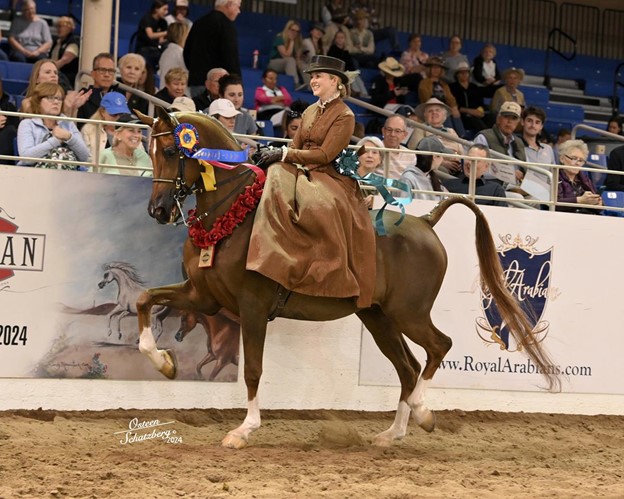
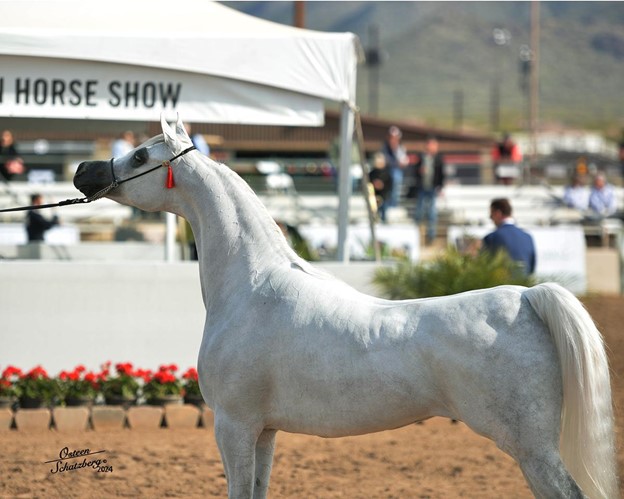
For a breed that originated in the desert, perhaps there is no better setting for the world’s largest Arabian horse show than the desert itself. Each year, the Scottsdale Arabian Horse Show in Arizona sees nearly 2,000 purebred and half-Arabian horses from all over the world gather for the breed’s ultimate showcase. In 2026, the legendary horse show will return to its longtime venue WestWorld from February 12-22 for the 71st edition of the event.

Photo courtesy Arabian Horse Association of Arizona

First held in 1955—a year after the Arizona Arabian Horse Association was formed—the Scottsdale Arabian Horse Show offers a variety of classes, including Dressage, English, Western Pleasure, Trail, Native Costume, Liberty, and Halter, where exquisite Arabian horses show their grace and beauty. Winning at this show is prestigious; a win at Scottsdale can mean big money in the breeding barns.

Photo courtesy Arabian Horse Association of Arizona

The excitement of the Scottsdale Arabian Horse Shows extends beyond just the exhibitors. The event is family friendly, with free admission for those under the age of 17. In addition to viewing the variety of exciting classes at the show, spectators have the chance to meet an Arabian horse, attend an interactive ambassador horse experience, enjoy behind-the-scenes barn tours, paint a pony, and attend seminars and demonstrations—all free with admission. Plus, there is no shortage of dining and shopping; the Shopping Expo features more than 200 vendor booths, offering everything from lavish jewelry, clothing, works of art, and more.

In addition to the competition, the event serves as a fundraiser for a number of charities that support equine therapy, medical research, youth programs, and more.

For more information, visit www.scottsdaleshow.com.


How the Equine Disease Communications Center is Changing the Game

0

The Equine Disease Communication Center helps broadcast real-time alerts to prevent and mitigate equine infectious diseases.

The threat of communicable disease in horses is very real. To name just a few examples, it’s not uncommon to use public water troughs on trail rides or to share one rag to wipe the nose of every horse from one barn before they walk into the show ring.

A groom wiping down a horse's nose with a rag.
Grooms using the same rag to wipe down noses from horse to horse at a show are one example of how infectious disease can be spread. Photo by Tetiana Yurkovska/Adobe Stock

Though “routine,” each of these practices—and many others—invite the spread of disease, potentially between hundreds of horses.

Though horses are often in the company of others and don’t become ill, what happens when a horse comes down with an infectious disease? How are horse owners alerted, especially if their horse may have been in contact with the sick horse? How do they know what information is real and what has been blown out of proportion? Most importantly, how do owners learn how to keep their horses safe?

These questions and others were the impetus behind the creation of the Equine Disease Communication Center (EDCC). Similar to how the Weather Channel broadcasts weather alerts, the EDCC alerts horse owners to infectious diseases that are reported in North America.

Horses drinking from a water trough.
Photo by Richard Nantais/Adobe Stock

The Cutting Show in Utah

In 2011, a cutting horse show in Ogden, Utah, experienced a significant equine herpesvirus (EHV-1) outbreak. With no means of organized information dissemination, rumors about the situation escalated rapidly, causing a state of near panic in some owners.

In total, over 2,000 horses were potentially exposed to the disease on 242 premises in 19 states. At the outbreak’s conclusion, 90 horses tested positive for the EHV-1 or equine herpesvirus myeloencephalopathy (EHM), another name for the neurologic disease associated with an EHV infection. Fifty-four of the 90 had been at the Ogden event. Thirteen horses died or were euthanized.

During the outbreak, Facebook and X (then called Twitter) lit up with rumors, causing heightened anxiety over horse health and spurring the cancellation of equine events across the country, even though most events had no connection with any horses that attended the Ogden event.

Seventeen of the confirmed EHV-1 and EHM cases were in California; show organizers opted to cancel 142 of the 530 sanctioned shows that were to be held in the state that year. The economic impact of those cancellations was significant and would be felt for years.

Creating the Equine Disease Communications Center

It became clear that a unified industry response plan to disease outbreaks was needed—one that not only allowed for the dissemination of legitimate data, but that also provided vetted information on how to prevent disease transmission and how to handle disease outbreaks.

The American Horse Council, the American Association of Equine Practitioners (AAEP), and the United States Equestrian Federation (USEF) all collaborated to fundraise and launch the Equine Disease Communications Center, which went live in 2015.

Nathaniel “Nat” White, DVM, DACVS, professor emeritus of equine surgery at the Marion duPont Scott Equine Medical Center in Leesburg, Va., and director of the EDCC, organized the working model and gave the EDCC its moniker. In 2023, White won the Equine Industry Vision Award for this work at the American Horse Publications Equine Media Conference in Tempe, Ariz.

According to White, it was anything but a one-man show. State veterinarians, veterinary practices, horse-owner organizations (like breed and discipline associations), and individual donors helped—and continue to do so.

“Similar to the CDC [Centers for Disease Control and Prevention], the EDCC seeks information about disease outbreaks, posts messages, and informs the equine industry about confirmed diseases, their location, and if there are potential risks to other horses,” White explains.

The Equine Disease Communications Center website.
The EDCC seeks information about disease outbreaks, posts messages, and informs the equine industry about confirmed diseases, their location, and if there are potential risks to other horses. Photo from equinediseasecc.org

How It Works

Unlike a phone number or website where anyone can submit leads on suspected illness, the EDCC allows only specific people to report disease: an attending veterinarian or a state or federal official.

The veterinarian or official submits a confirmed or suspected disease through the EDCC website, which records the information in the database. The database then generates an alert, which is posted to the EDCC website and Facebook page.

A veterinarian on a computer. Only an attending veterinarian or state or federal official can report diseases to the Equine Disease Communication Center.
Only an attending veterinarian or state or federal official can report diseases to the EDCC. Photo by Christiane Slawik

Anyone who has become an alert subscriber via the EDCC website is also emailed. The reported disease is linked to an EDCC disease page, which has information describing the disease, the diagnosis and the treatment, says White. Downloadable disease fact sheets are also available.

All information regarding disease outbreak mitigation and how to handle an affected horse is reviewed for accuracy by the AAEP Infectious Disease Committee, which is populated by subject matter experts.

Reportable Diseases

Though the veterinarian or official can report a confirmed case of any equine disease to the EDCC, reporting of infectious diseases is of the most importance, says Katie Flynn, BVMS, the U.S. Equestrian Federation’s senior staff veterinarian. A confirmed “reportable” disease is submitted to the EDCC by the state veterinarian, who is made aware of a confirmed diagnosis by the testing laboratory.

A reportable disease is one that is deemed to have a potential for significant impact on the equine industry, both on the health of the United States equine population and economically. When a reportable disease is diagnosed, the veterinarian or laboratory employee is required to report the disease to state or national veterinary health officials.

A veterinarian drawing blood from a horse. Only an attending veterinarian or state or federal official can report diseases to the Equine Disease Communication Center.
A reportable disease is one that is deemed to have a potential for significant impact on the equine industry, both on the health of the United States equine population and economically. Photo by Christiane Slawik

The list of reportable disease varies by state and may include:

Equine Herpesvirus-1 neurologic (Equine Herpesvirus Myeloencephalopathy)

Equine Herpesvirus -1 abortion

Equine influenza, Streptococcus equi (strangles)

Western Equine Encephalitis (WEE) and Eastern Equine Encephalitis (EEE)

West Nile virus (WNV)

Equine infectious anemia (EIA)

Equine piroplasmosis (EP)

Equine viral arteritis (EVA)

Rabies

Vesicular stomatitis (VS)

Many veterinarians, state horse councils and other horse-health organizations rely on the EDCC to inform horse owners of disease outbreaks. The alerts are posted in real time—the same day they are reported.

However, this doesn’t mean that the alert comes out the day the horse becomes ill; the alert is posted the day the veterinarian receives positive confirmation that the horse is ill with a specific disease.

The alert system can provide information about disease risk to horses at a specific location or at the location where the horses intend to travel, like to a horse show or trail ride.

“As the Equine Health and Biosecurity Veterinarian for the USEF, I encourage all horse show managers to visit this site frequently to keep informed of disease occurrences in the area,” says Flynn. “[This way] they can be prepared to implement stricter biosecurity measures, such as requiring shorter-dated health certificates or mandating temperature-taking for horses at their event.”

The EDCC alert system isn’t just for equine event managers or those who travel with their horses.

“This is also a beneficial tool for boarding facility managers,” says Flynn. “If a disease is detected in the geographic area of their facility, they can implement enhanced biosecurity measures, such as requiring every horse to have its temperature taken twice daily to quickly identify and isolate any potential sick horses to protect the rest of the herd.”

But Is It Working?

Though the EDCC is working as intended (as a warning system that can help prevent the spread of infectious equine diseases), more reporting of diseases is necessary. Submission of any disease to the EDCC is voluntary—whether it’s considered reportable or not.

“Reporting to the EDCC is voluntary, but strongly encouraged as a means for increasing awareness of equine infection diseases in the U.S.,” says Flynn. “Horse owners want to know if there is disease in the area that could put their horse at risk, so it’s important for horse owners to support and encourage reporting of equine infectious diseases cases by their veterinarian to the EDCC.”

A group of equestrians and veterinarians.
It’s important for horse owners to support and encourage reporting of equine infectious diseases cases by their veterinarian to the EDCC. Photo by Christiane Slawik

The EDCC is a unique resource that serves to protect horses and the horse industry. All horse owners should sign up for EDCC alerts so they can be informed and aware of possible infectious disease in their area.

“Vigilance is necessary to ensure we’re adequately prepared for the storm—horse health, weather, or otherwise,” says White.

You can do your part by promoting the EDCC “as the trusted, accurate and verified disease alerts and biosecurity information,” says Flynn.

There is no fee associated with the use of the EDCC. However, donations to keep the service going are welcomed—and necessary.

Learn more at equinediseasecc.org.

This article about the Equine Disease Communications Center appeared in the September 2024 issue of Horse Illustrated magazine. Click here to subscribe!
ASPCA Right Horse Adoptable Horse of the Week: Rolo

0

Welcome to Horse Illustrated’s weekly installment of the Right Horse Adoptable Horse of the Week, offered in partnership with the ASPCA’s Right Horse program. This week’s adoptable horse is Rolo! Check back weekly for a new featured horse so you can find your Right Horse.

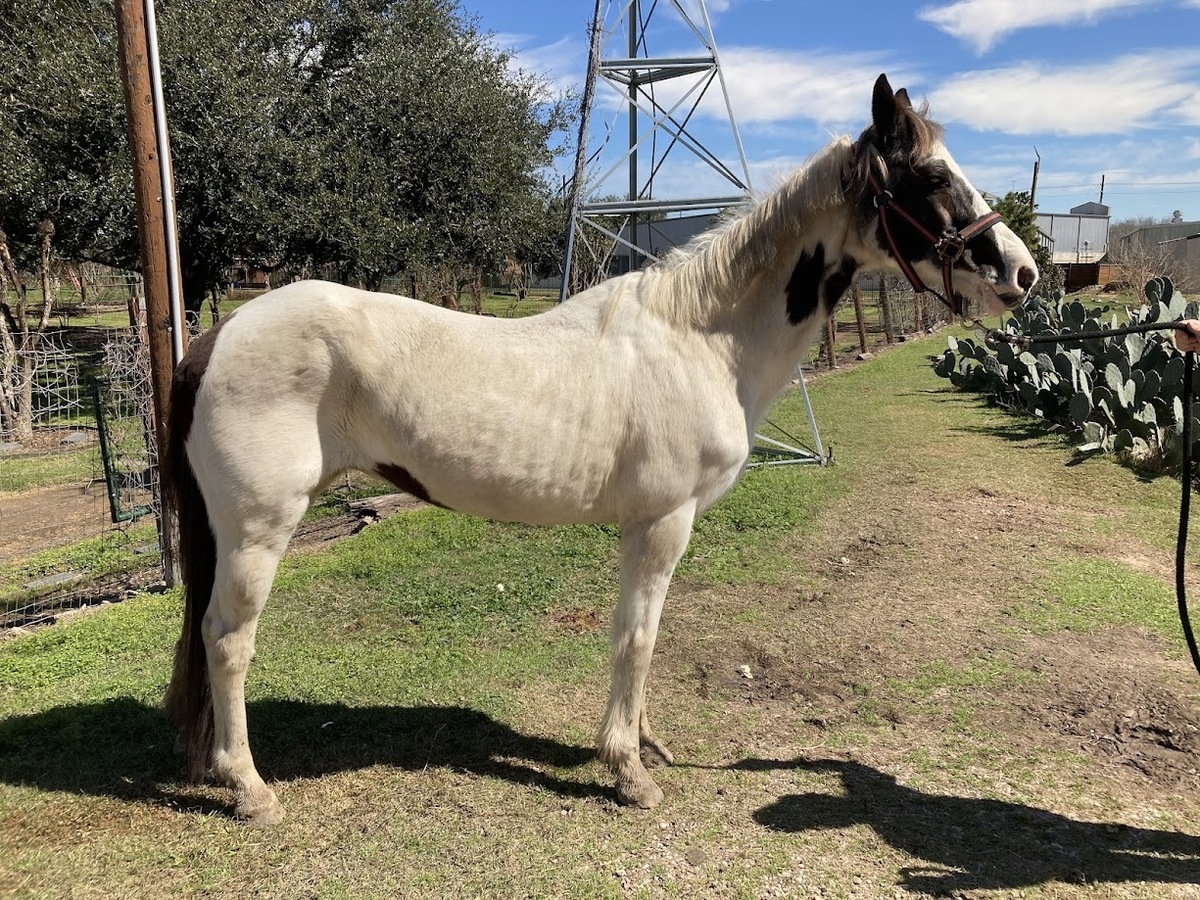
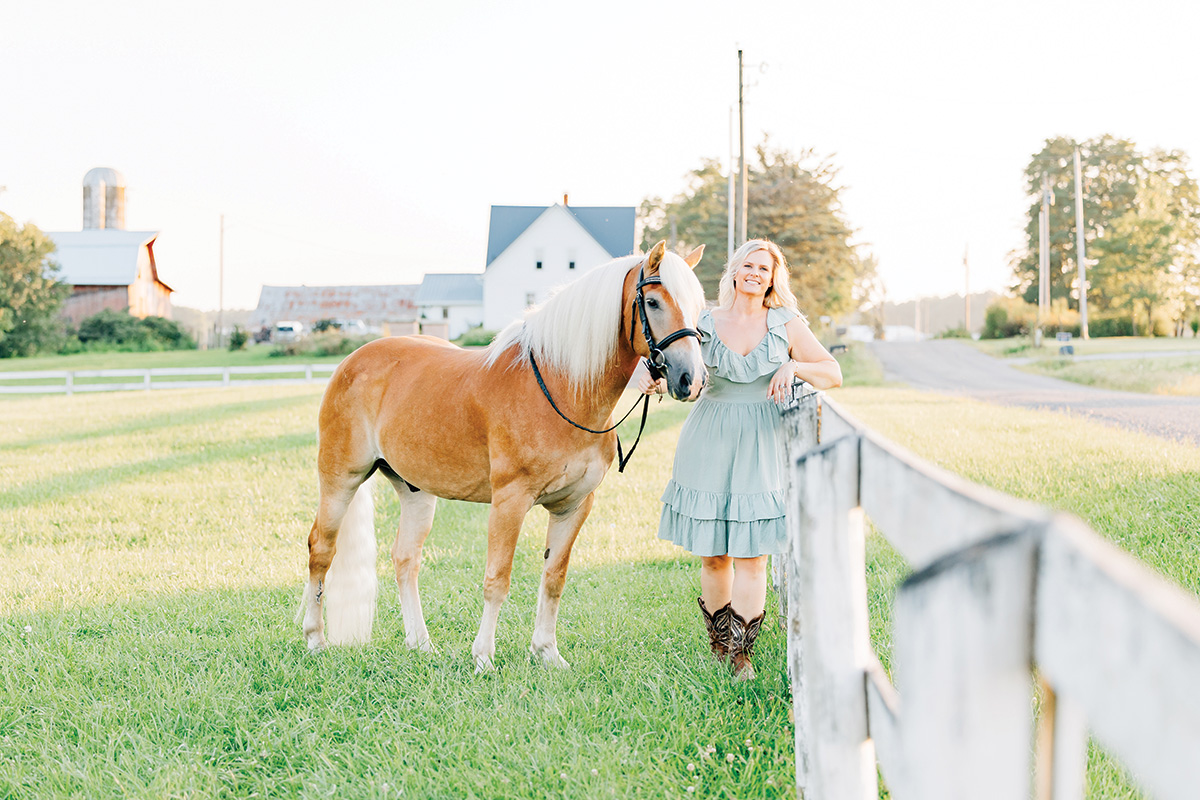
Adoptable horse Rolo.
Photo courtesy Houston Humane Society

Adoptable Horse: Rolo, a 23-year-old, 15.0hh Tennessee Walking Horse (Grade) mare
Organization: Houston Humane Society, Houston, Texas

Get to Know Adoptable Horse Rolo

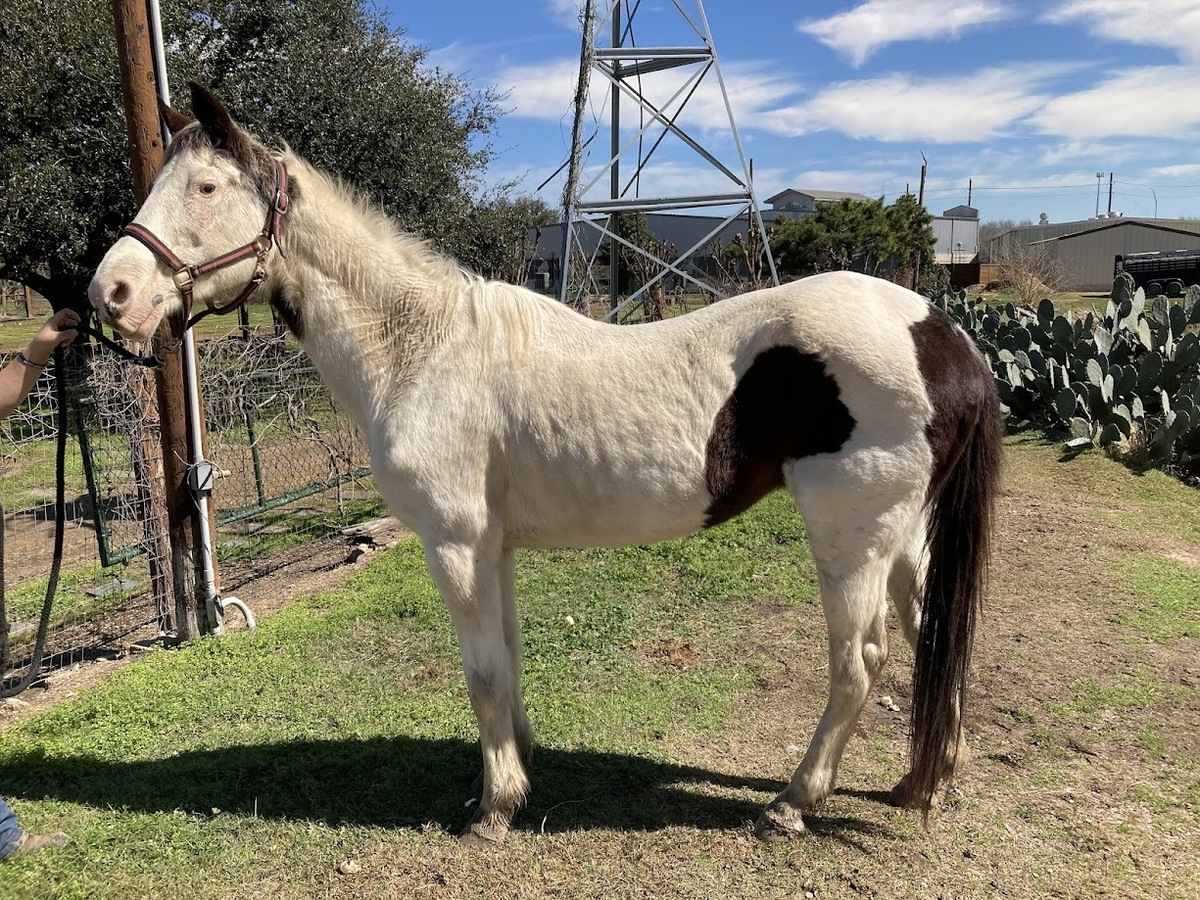
Rolo is the wise, gentle elder of the barn. With her striking pinto coat and calm demeanor, she exudes a sense of serenity that puts everyone at ease. Although she’s no longer interested in riding, Rolo still loves to spend her days grazing in the pasture, enjoying the simple pleasures of life. She’s a patient and nurturing soul, often seen quietly observing the younger horses and offering them a calming presence. Rolo enjoys her daily grooming sessions, where she stands still and appreciates the gentle attention, as well as the occasional treat—especially Nickerdoodles, which she happily accepts with a soft nudge. She’s the type of horse who loves quiet companionship, and while she may move slower these days, she’s still full of grace and charm. Rolo is the heart of the herd, and her loving nature makes her a cherished companion for all who know her.

Please note that Rolo has squamous cell carcinoma on the left eye, and possible osteoarthritis in pelvis/hind limbs.

A few fun facts about Rolo:

Favorite Activity: Grazing peacefully in the pasture and soaking up the sun

Likes: Quiet moments, gentle brushing, snacks, and spending time with her favorite human

Dislikes: Loud noises, abrupt changes, and being rushed

Contact Houston Humane Society today about ASPCA Right Horse Adoptable Horse of the Week, Rolo!

A tovero mare.
Photo courtesy Houston Humane Society

ASPCA Right Horse

My Right HorseASPCA Right Horse is the online adoption platform of The Right Horse Initiative, a collection of equine industry and welfare professionals and advocates working together to improve the lives of horses in transition. A program of the ASPCA, their goal is to massively increase horse adoption in the United States. To find more adoptable horses and foster horses, visit www.myrighthorse.org. To learn more about The Right Horse, a program of the ASPCA, visit www.aspcarighthorse.org.

0FansLike
0SubscribersSubscribe
We use cookies to help personalize content, tailor and measure ads, and provide a safer experience. By navigating the site, you agree to the use of cookies to collect information. Read our Cookie Policy.
OK