Enter our 12 Days of Christmas Giveaways here!
0 ITEMS
  • My Account
  • Holiday Gift Guide
  • Podcast
  • Webinar
Subscribe Combo
Enable cache13
Home Blog Page 5

When Is It Time to Retire Your Horse?

0

Two of my horses illustrate the vast differences that exist between retirement scenarios. Faax was a fabulous Arabian jumper. Fearless to the fences, my confidence never wavered when we strode into the ring. Our partnership was so close that I immediately intuited when it was time for him to retire my beloved horse from jumping.
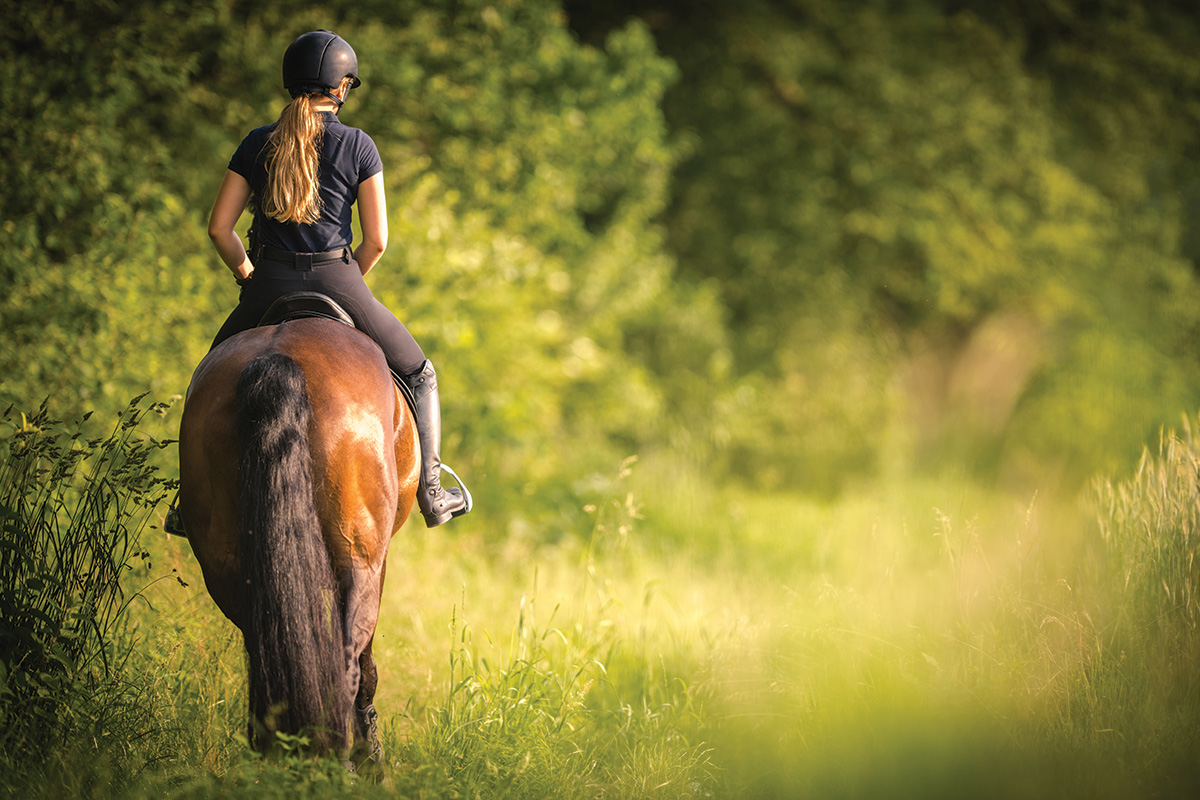
Trail riding.
Photo by peterzayda/Adobe Stock

Still, his show ring career wasn’t over. From there, we transitioned to a successful second career in dressage. After several good years, it was time to let this career go, too. By then in his early 30s but still not content to be fully retired, his final job was as a leadline mount for my then-young daughter. His full retirement, when it finally came a few years later, was something I felt we were both happy and comfortable with.

On the other hand, my half-Arabian mare, Sally, was an example of a difficult early retirement. A highly versatile horse, just one of her many talents was her performance in the hunter ring.
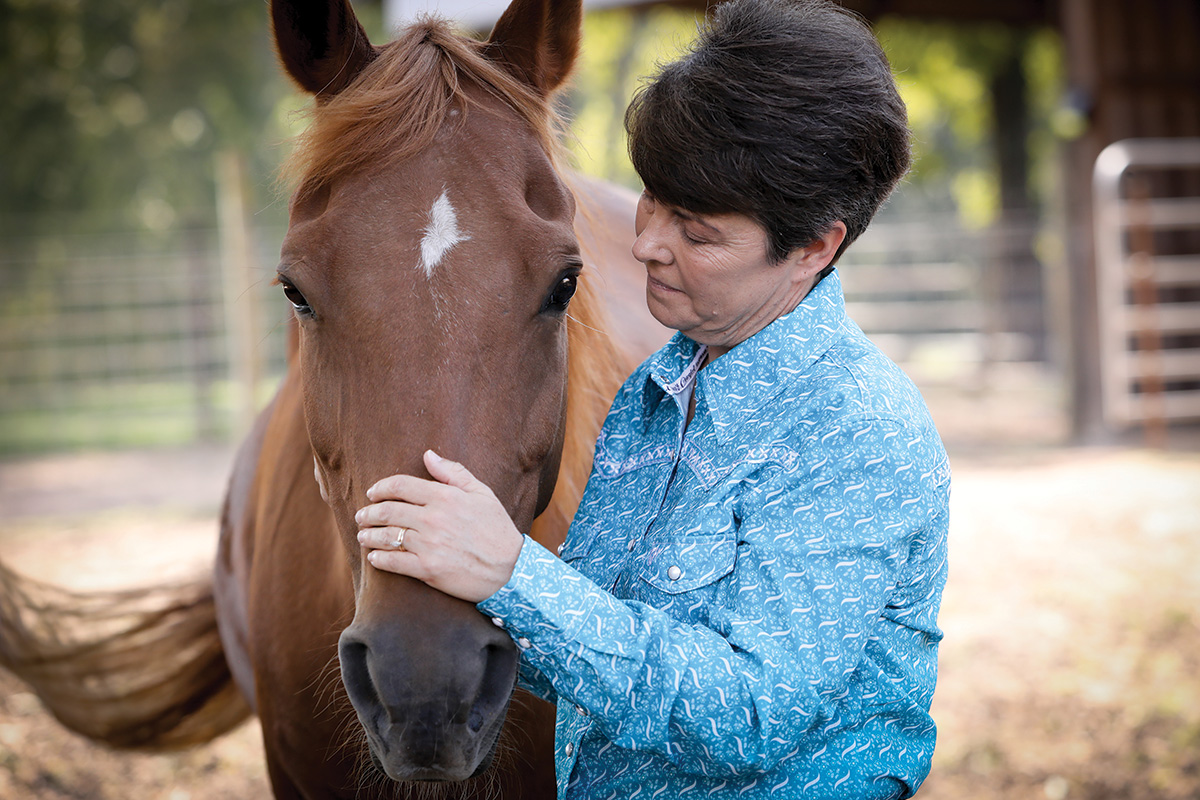
The author and Sally.
The author’s Half-Arabian mare, Sally, had an early retirement (shown at the age of 21). Photo by Carissa Ramsdell

However, despite my best efforts, she has never truly been a healthy horse. Some of her health conditions we have been able to name and treat. Though these issues may have limited her, they never took her completely out of the game.

Other conditions have been mysterious and less well-managed due to their undefined nature; her treatments have been a roller coaster of successes and failures. Numerous tests have led to dead ends leading to more significant restrictions.

Though still in her early 20s, her most recent job change has been from a semi-retired trail horse to pasture-sound companion horse. By outward appearances, she looks amazing, but she is unable to tolerate a rider.

Soundness and Injuries

With so many possible retirement scenarios, what is considered an average age for retirement? What is considered an early retirement?

The decision to retire a horse is based on several different factors, according to Jud Easterwood, DVM, of Easterwood Equine Hospital in Calera, Ala.

“Most of these factors are health or soundness related,” he says. “I don’t think there is an average age. We have some horses that are able to perform well into their 20s. Other horses have had significant injuries that lead to chronic lameness or issues with pain. These horses have to retire much earlier.”

Easterwood says that he considers “early” retirement one that occurs before the age of 20. In his experience, these unfortunate early retirement scenarios are usually centered around tendon or suspensory ligament injuries. He says they can also be brought on by conditions such as arthritis or ringbone.

“Any serious injury could result in these conditions that a horse can’t overcome to get back into high-level performance work,” he says.

Metabolic & Back Problems

Sometimes, conditions such as PPID and the insulin resistance that sometimes accompanies it can necessitate early retirement, especially when it leads to other conditions, such as chronic laminitis and potentially founder. Easterwood says that while these issues are typically seen in horses over the age of 20, they do occasionally occur in younger horses, too.
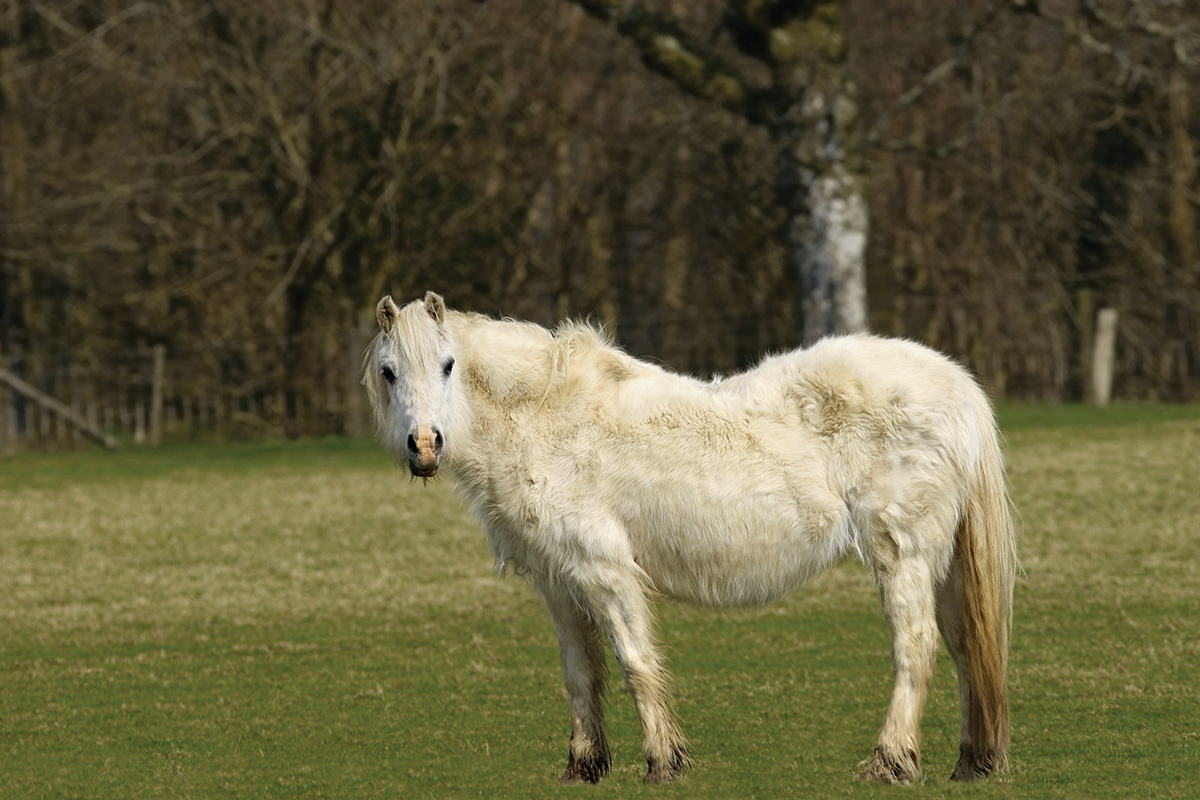
A horse with PPID, which can necessitate the decision that it's time to retire a horse.
Conditions such as PPID, most commonly seen in horses age 20 and older, can lead to chronic laminitis and necessitate retirement. Photo by Marilyn Barbone/Adobe Stock

Over the years, because imaging has improved, he notes that horses being diagnosed with back problems have also become much more common. Rather than undiagnosed pain, he says we are now able to pinpoint kissing spines and neck arthritis.

“These may not stand out to you like leg lameness, but they create an overall sour behavior or back soreness,” says Easterwood. Depending on their severity, these may also require retirement.

Signs That It’s Time to Retire

What are the signs that your horse may be ready to retire?

“Any sort of chronic lameness or pain issues would be the No. 1 condition that leads to retirement,” says Easterwood. “No. 2 is when the horse doesn’t enjoy his job anymore and has become sour.”

He also lists conditions such as liver disease; inflammatory bowel disease that leads to chronic diarrhea and weight loss; neurological diseases that cause ataxia, such as EPM or (less commonly) West Nile virus; or any condition that is difficult to treat and that leads to performance problems.

Semi or Full Retirement?

Regardless of age, when you decide to retire your horse, you’ll need to consider partial or full retirement. Easterwood says that he likes to use the words “serviceably sound” with owners considering partial retirement for their horses.

“You may have a horse that is not 100 percent sound and is no longer suitable for show jumping, barrel racing, or other types of intense performance sports,” he says. “But [semi-retirement is an option] if the horse is still able to get around fine and enjoy doing activities such as trail riding, flat work, ground work, or being ridden in lessons.”
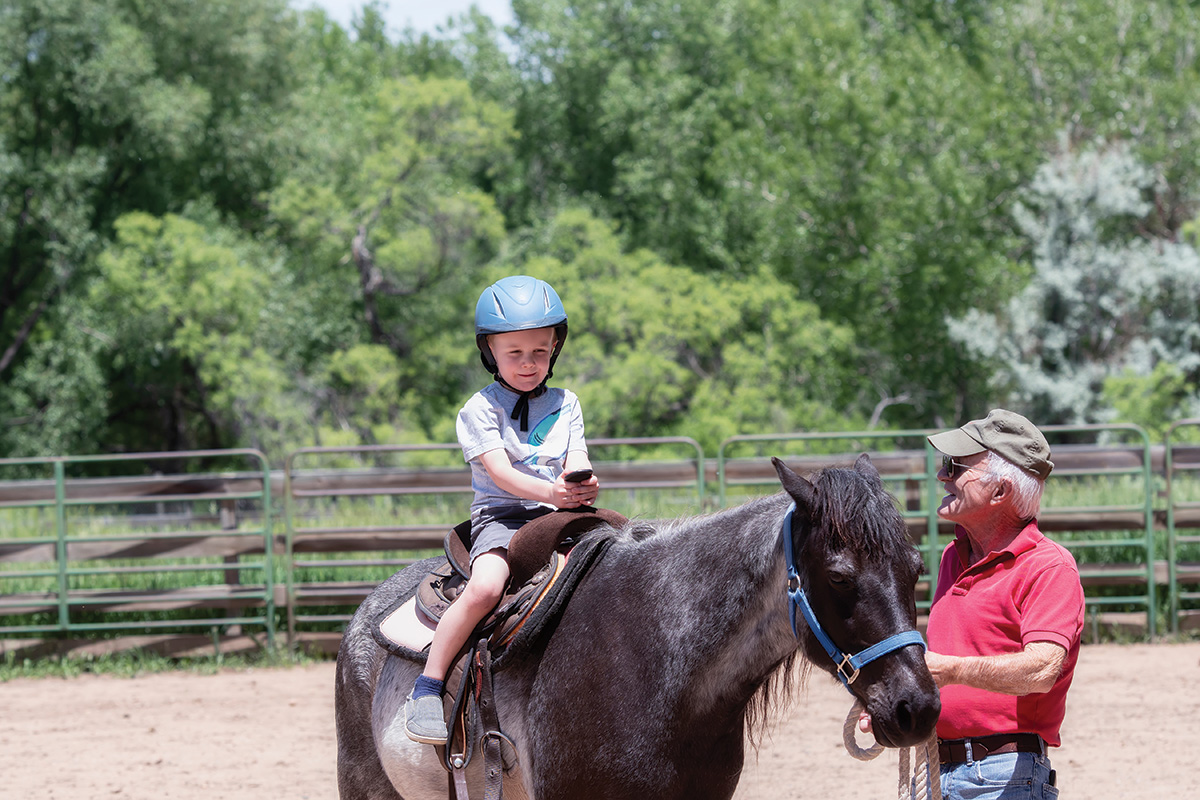
A young girl taking a riding lesson.
Lessons or light rides from children can be a good form of semi-retirement for horses that can’t keep up a high-level competitive career. Photo by Rachel Kolokoff Hopper/Adobe Stock

He says some horses can do these things well and maintain a good exercise regimen, even though they are stepping back from their previous high-intensity careers.

However, there is one important caveat that Easterwood advises for owners considering semi-retirement. If you’re considering having a child take over the ride on your horse, he advises having the horse evaluated by a veterinarian to determine whether there are any issues the horse may have with tripping and falling in order to prevent potentially devastating accidents.

Whether or not semi or full retirement is a happy occasion for your horse depends on several factors.

Easterwood’s first recommendation for keeping retirees engaged is to exercise as tolerated. Keeping horses stabled or pastured near high-activity areas can also help keep retirees engaged, while stall or pasture toys can provide further enrichment.

Prolonging Soundness

While retirement may be inevitable for most horses, there are some steps you can take to extend your horse’s working career. Easterwood says that good veterinary care is a staple to keeping horses sound and happy in their job.

“It doesn’t have to be frequent,” he says. “I recommend annual to biannual X-rays and lameness evaluations to make sure you are keeping up with any changes to previous injuries and to make sure that nothing new has developed.”
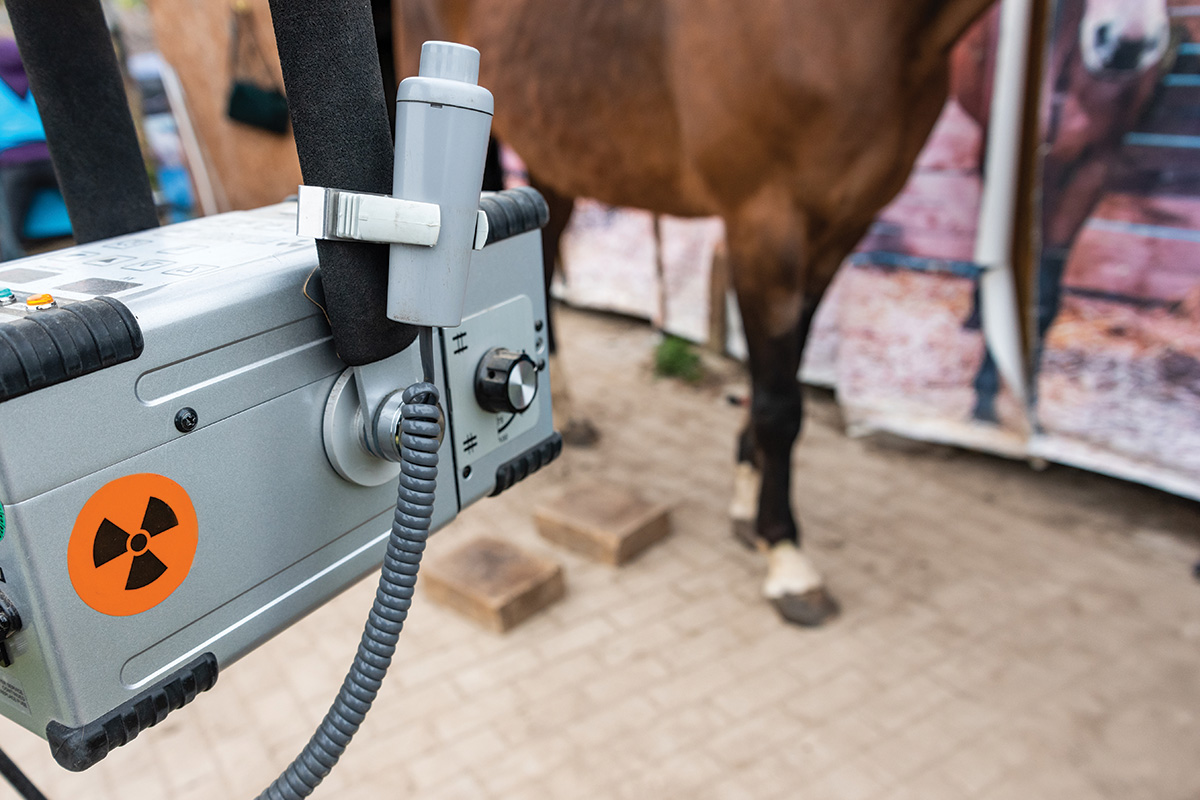
Taking X-rays of a horse.
Taking annual X-rays can help track arthritic changes that affect soundness for work. Photo by McKornik/Adobe Stock

If conditions such as arthritis, degenerative joint disease, or joint injuries exist, he recommends the use of prescription intramuscular injections for their treatment. He says that veterinarians also sometimes use intra-articular injections to relieve pain and keep horses comfortable.

Even if your horse is free of any condition requiring injections, Easterwood says that oral supplements can work to reduce wear and tear. He also says that therapies such as chiropractic adjustments, massage, acupuncture, and PEMF treatments can augment traditional veterinary care to the benefit of your horse.
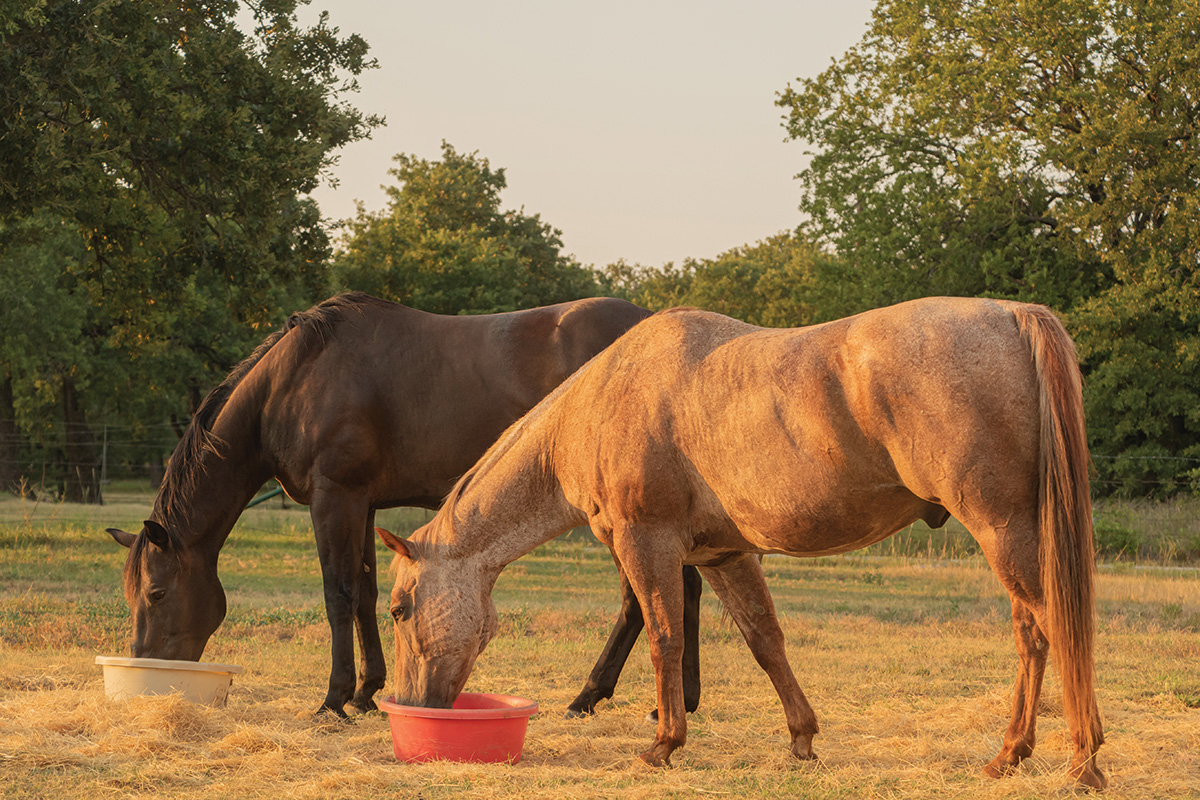
Senior horses receiving proper nutrition can extend the time needed to retire them.
Good nutrition and joint health supplements can help extend soundness and delay a horse’s retirement. Photo by Debra Lawrence/Adobe Stock

Easterwood also advises screening for metabolic diseases as the horse ages, but also if your horse exhibits any signs any signs that warrant it.

Though no guarantee, the above steps, along with maintaining a good diet and exercise plan—as well as updated vaccinations, deworming, and dental care—can go a long way toward ensuring that your horse enjoys a long career.

By and large, the decision to retire your horse can be one of the more difficult decisions that horse owners face. By watching for indications and taking the appropriate steps, you can rest assured that you are making the best decisions for your horse’s future.

This article about when to retire your horse appeared in the October 2024 issue of Horse Illustrated magazine. Click here to subscribe!
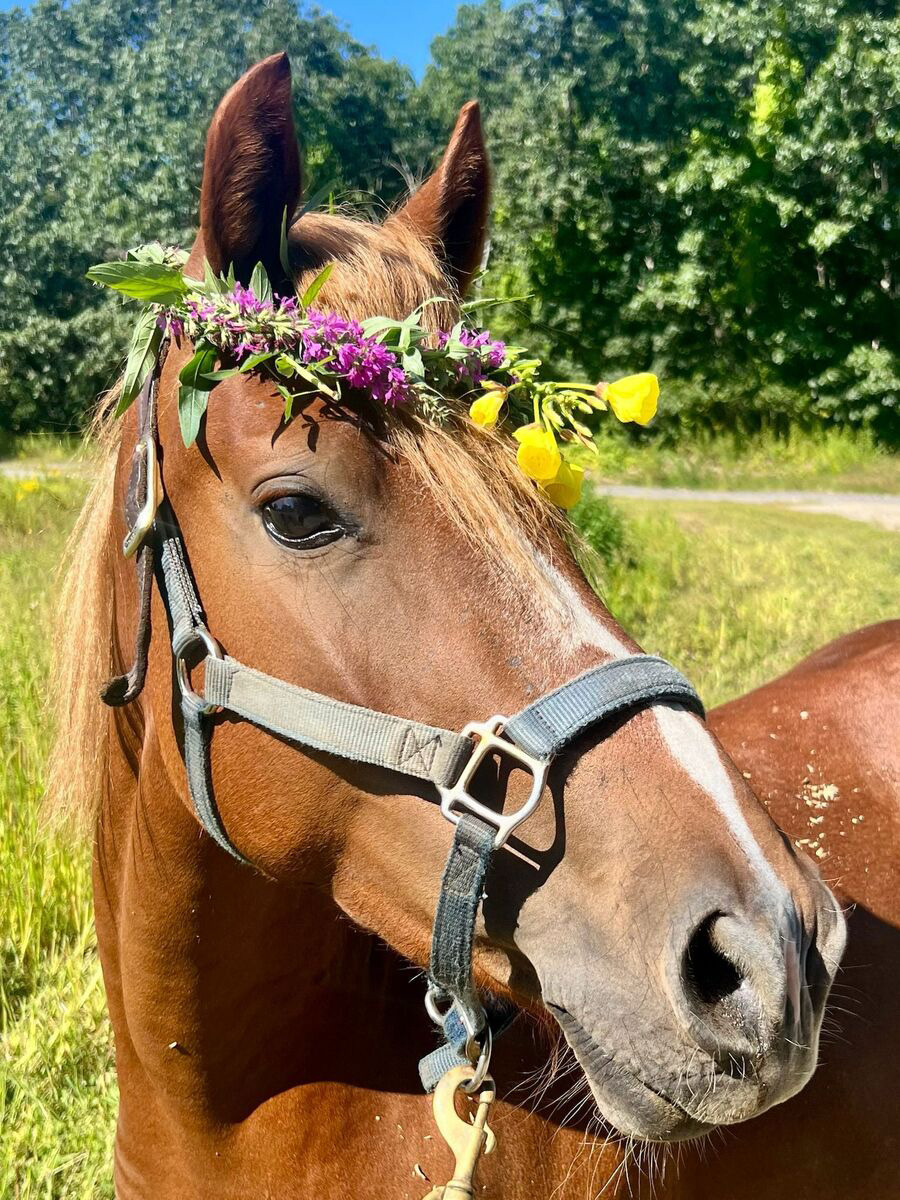
ASPCA Right Horse Adoptable Horse of the Week: Libby

0

Welcome to Horse Illustrated’s weekly installment of the Right Horse Adoptable Horse of the Week, offered in partnership with the ASPCA’s Right Horse program. This week’s adoptable horse is Libby! Check back weekly for a new featured horse so you can find your Right Horse.

Adoptable horse Libby.
Photo courtesy MSPCA at Nevins Farm

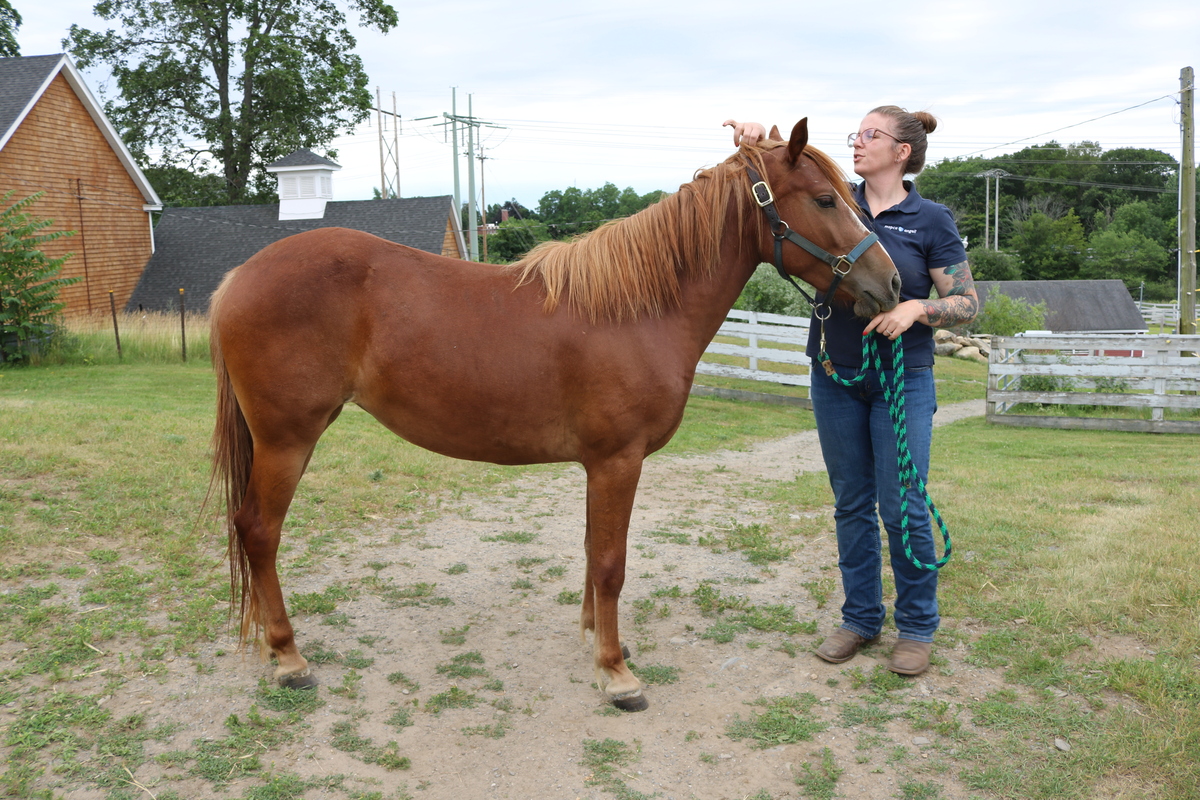
Adoptable Horse: Libby, a 3-year-old, 13.1hh Friesian cross filly
Organization: MSPCA at Nevins Farm, Methuen, Mass.

Get to Know Adoptable Horse Libby

Libby is a smart, fun and sweet filly!

Libby came to MSPCA at Nevins Farm in poor condition with minimal training. While in their care, they have discovered that she loves people and has a great brain. Libby loves to explore and have new experiences. She is willing and learns new skills quickly. The Nevins Farm team adores her.

So far, Libby has learned to be caught, haltered and lead. She will let you pick up all four feet and is learning to stand for the farrier without the assistance of sedation. Her newest skill is loading in an open stock trailer. While initially nervous and wary of this big aluminum box, after just one short working session she was hopping on and off like a an old pro. After the session finished, she tried to follow the staff member back out of her paddock, wondering what was next.

Recently the team brought her to an off-property, in-hand obstacle clinic and she did so well interacting with new people and new horses and was confident going over and through the obstacles in the arena. She is currently learning how to stand tied and to be bathed. She is truly a pleasure to work with.

Libby is an easy keeper. She is a bit small in stature (13.1hh), likely due to her rocky nutritional start in life. MSPCA isn’t sure what height she will mature to. They are currently adopting her out as a companion/groundwork candidate as they are unsure of her potential to be ridden in the future. Recently Libby has been learning how to wear a saddle and has taken it all in stride. She will need a confident, experienced adopter who can continue her education or an adopter who will work with a trainer to continue her education.

Contact MSPCA at Nevins Farm today about ASPCA Right Horse Adoptable Horse of the Week, Libby!

A small chestnut filly.
Photo courtesy MSPCA at Nevins Farm

ASPCA Right Horse

My Right HorseASPCA Right Horse is the online adoption platform of The Right Horse Initiative, a collection of equine industry and welfare professionals and advocates working together to improve the lives of horses in transition. A program of the ASPCA, their goal is to massively increase horse adoption in the United States. To find more adoptable horses and foster horses, visit www.myrighthorse.org. To learn more about The Right Horse, a program of the ASPCA, visit www.aspcarighthorse.org.

An Exercise for Your Horse’s Hindquarter Engagement

0

Engagement of the hindquarters is a crucial part of everyday riding, used across all disciplines. The hindquarters are the powerhouse and the engine, creating all the things that we want from our horses, including impulsion, straightness, and efficient turns. Here, we’ll profile an exercise that improves hindquarter engagement by giving both you and your horse a feel for a properly executed turn on the haunches.

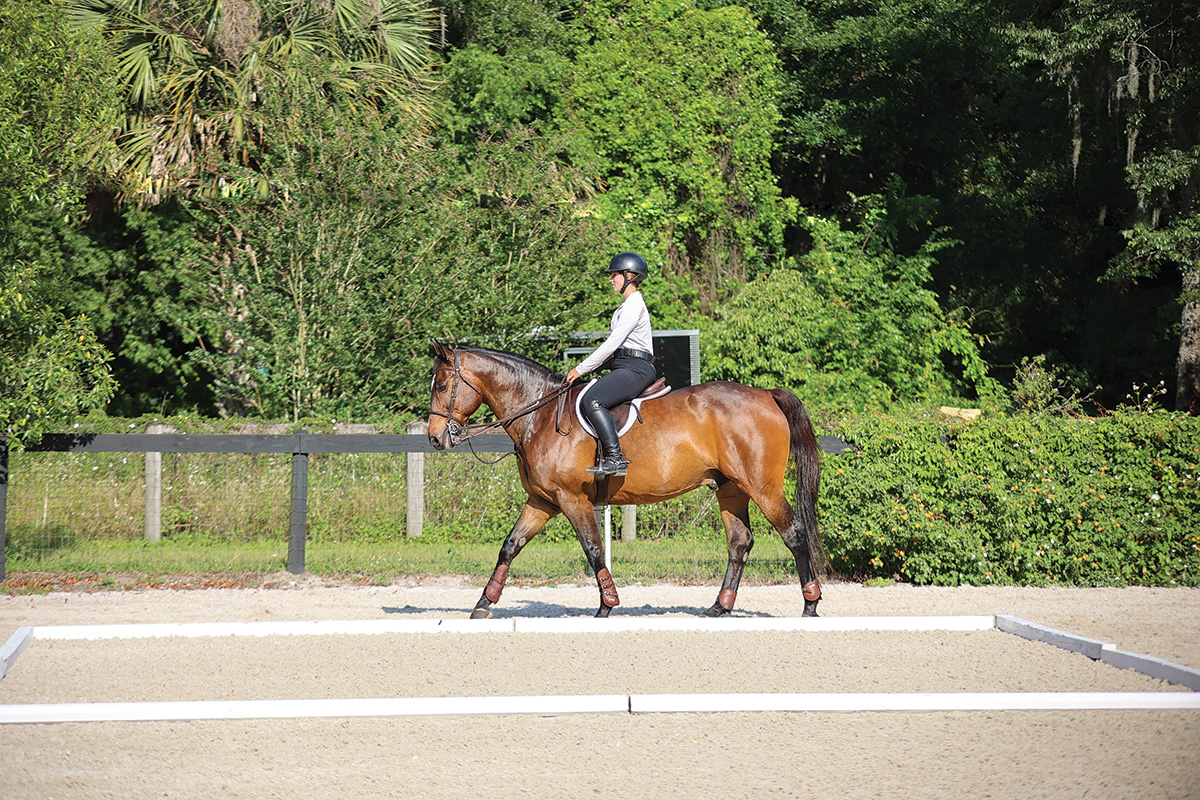
An equestrian entering the ring aboard a bay.
Photo by Allyson Weiland

Warming Up

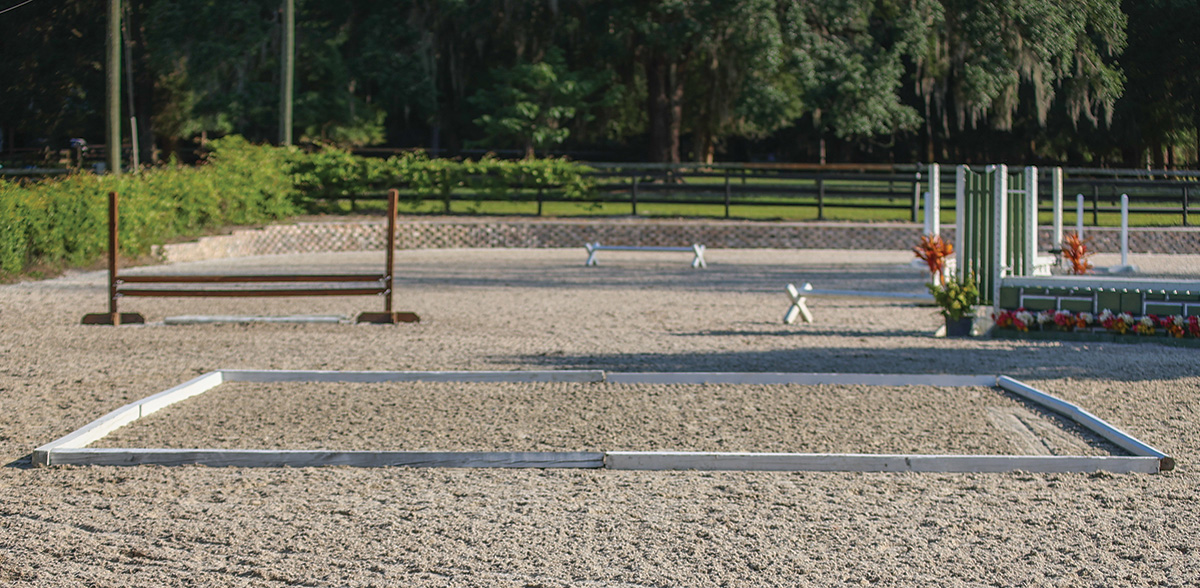
Set up for this exercise by placing eight poles in a square shape, with two poles creating each side of the square. If you don’t have poles to create the shape, get creative with any (safe!) items you do have on hand. Each side of the square will be about 20 feet long.

The poles set up in a square or box.
Create a box using two poles to form each side. Photo by Allyson Weiland

As you warm your horse up prior to beginning this exercise, leg-yields and circles are beneficial. In the circles, focus on riding your horse from back to front with him pushing from behind and working up into the hand.

During the leg-yields, be sure to note how your horse is moving off of each of your legs. If your horse has a notably weaker side, you will probably want to start on his stronger side so that the two of you can more easily sort out the exercise in the beginning.

At the Walk

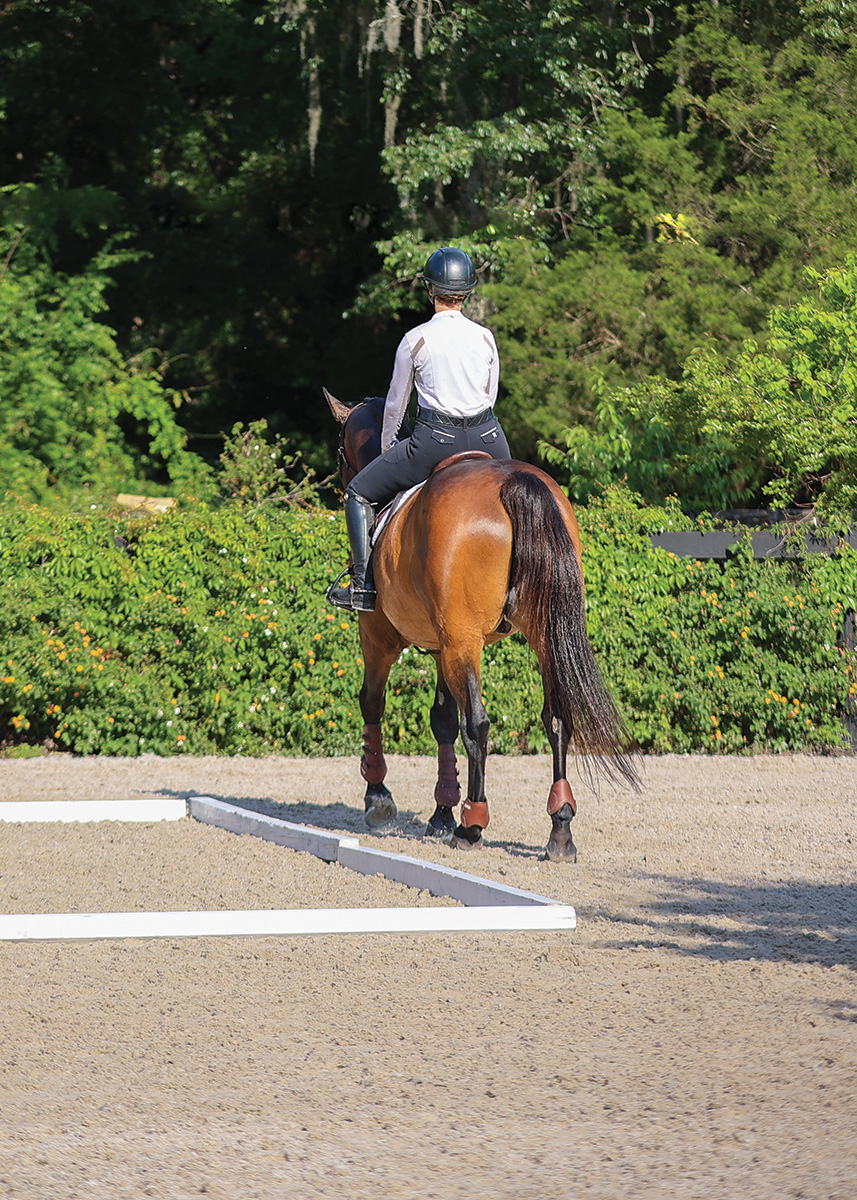
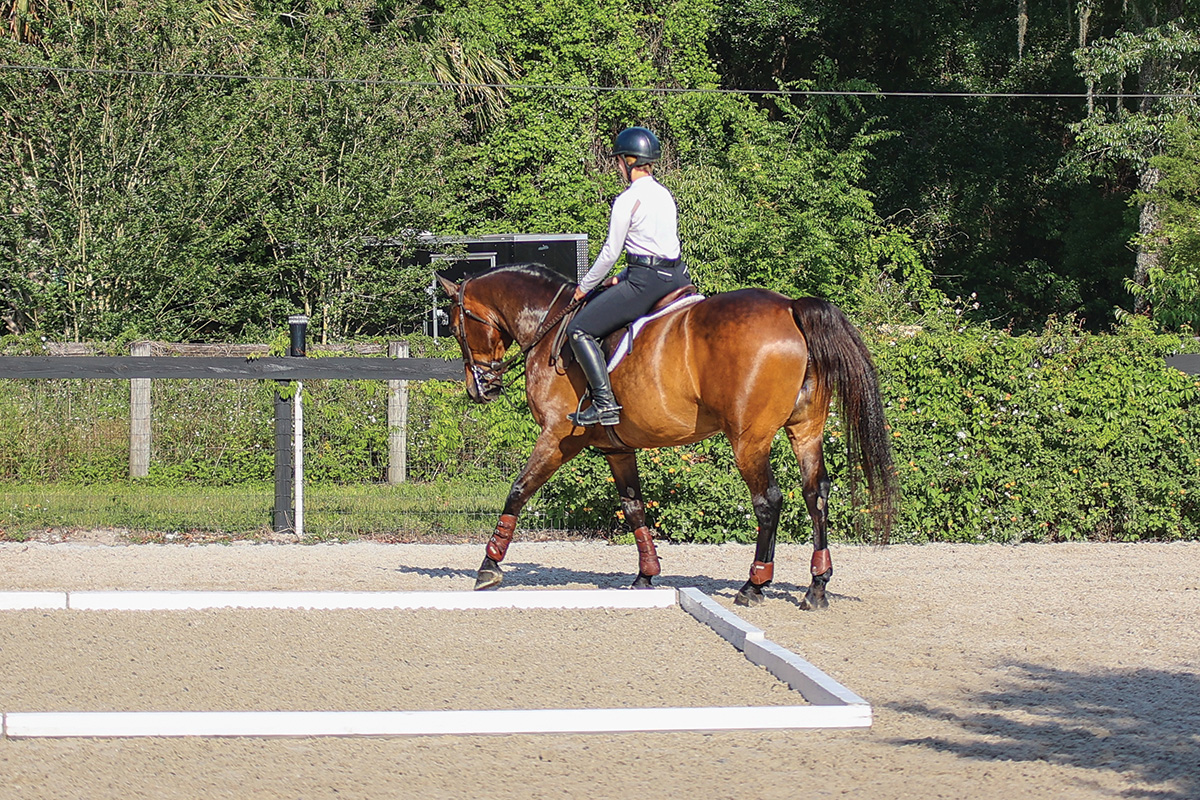
Begin the exercise by bringing your horse alongside one of the box’s sides in a forward, working walk. As you approach the last quarter of the side of the square that you’re on, begin to collect the horse’s step slightly, half-halt, and then apply outside leg just as your horse’s front legs have passed the corner of the box. This will result in your horse performing a quarter-turn on the haunches, with his body still parallel to the next side of the square.

An exercise for a horse's hindquarter engagement.
As you approach the last quarter of the side, begin to collect your horse’s step slightly with a half-halt. Photo by Allyson Weiland

The most common mistake is for the horse’s shoulders to fall to the outside, bulging out around the turn. Instead, you want him to rock back and lift during the half-halt, sending his energy into his outside hind leg to aid him in executing a pivot-like motion that turns his body and then propels him forward with power in the new direction.

An exercise for a horse's hindquarter engagement.
Apply outside leg just as your horse’s front legs have passed the corner of the box. Photo by Allyson Weiland

This can be maintained with strong outside rein contact blocking the horse’s shoulder from popping out. His energy will then continue to flow forward through the cycle of being captured by the collection, rocked back into his hindquarters by the half-halt, and then funneled around the turn by the outside leg.

If the horse is slow to respond to your outside leg pressure, use a bumping leg or a whip/crop to improve his response to your leg the first few times.

At the Trot

Once you have fine-tuned your timing and understand the feeling you are searching for from your horse, you can move up to the trot. I generally find this easiest in the sitting trot, as your seat is very useful for reminding the horse to rock back and balance.

By this time, your horse should be moving willingly off your leg. As he carries more momentum in the trot, don’t allow him to swing loosely around the corner and end up further from the pole guides in the trot than he was in the walk. He should maintain his power and collection and use it to keep the turns sharp.

An exercise for a horse's hindquarter engagement.
At the trot, maintain power and collection to keep the turns sharp, not floating away from the corners. Photo by Allyson Weiland

During this exercise, it’s crucial to allow your horse to take breaks and go to another section of the arena to stretch. It’s also not an exercise that should be drilled endlessly if your horse is finding it difficult. Revisit it over the course of a few days or weeks so as to not make your horse sore or frustrated in one session.

More Advanced Work

If you have been successful with this exercise and have a horse working at a more advanced level, use two sides of the box as a guide for trying a square turn in the canter. This is especially difficult, so I wouldn’t suggest asking your horse to do this for more than one or two turns at a time.

Another way to expand this exercise is by using it as part of an extension and collection exercise. The extension section could be anything you choose. For example, ride the full box in trot, then working canter across the diagonal, do a flying change of lead, canter back toward the box, collected trot, then ride the box again in the other direction.

There are plenty of times during your horse’s career that he may need an exercise to sharpen him up to the leg, create strength and muscle memory in the hindquarters, or that you need to remind yourself to make better use of your outside aids to support turning. This easily set-up exercise can do all of those for you, and more!

More Training Advice from This Author

Achieve the Correct Timing of Riding Aids
How to Improve a Lazy Horse’s Responsiveness
Solutions for a Horse Stopping at Jumps
Making a Spooky Horse More Confident
How to Train a Horse That’s Rushing Jumps

This article about an exercise for your horse’s hindquarter engagement appeared in the September 2024 issue of Horse Illustrated magazine. Click here to subscribe!
Master the Ground Tie

0

Some exercises we teach our horses require the horse and handler to learn a series of complex steps that require intense focus and impeccable timing. The ground tie isn’t one of those exercises.

Although simple, trainer Clay Cavinder explains that the ground tie exercise teaches a horse how to be accountable and reduces the temptation for you to micromanage him.

Cavinder is a professor and extension horse specialist for Mississippi State University. In addition to training horses and teaching students, he is a professional judge for the American Quarter Horse Association, American Paint Horse Association, and National Snaffle Bit Association.

Why Ground Tie

While many horse-friendly locations provide ample places to secure horses, not every place has a solid, safe place to tie, Cavinder explains. When hitching posts are lacking, ground tying can come in handy.

Also, if you’re interested in showing in ranch horse classes, you may encounter patterns that require your horse to know how to ground tie. So what does a good ground tie look like?

Cavinder explains that the ground tie exercise demands a horse know how to stand still. In a show setting, the obstacle requires you to dismount and walk around the horse or go accomplish a task while the horse stays where you left him.

“Once you park the horse’s four feet, he doesn’t move—he stands there,” Cavinder says.

When he is judging this obstacle, he not only wants to see the horse’s hooves planted, but he also wants to see the horse’s head and neck stay still, too. He’s looking for a horse that mimics a statue. The horse shouldn’t be putting his head on the ground and fidgeting in the dirt. Instead, he should be alert, still, and focused on you.

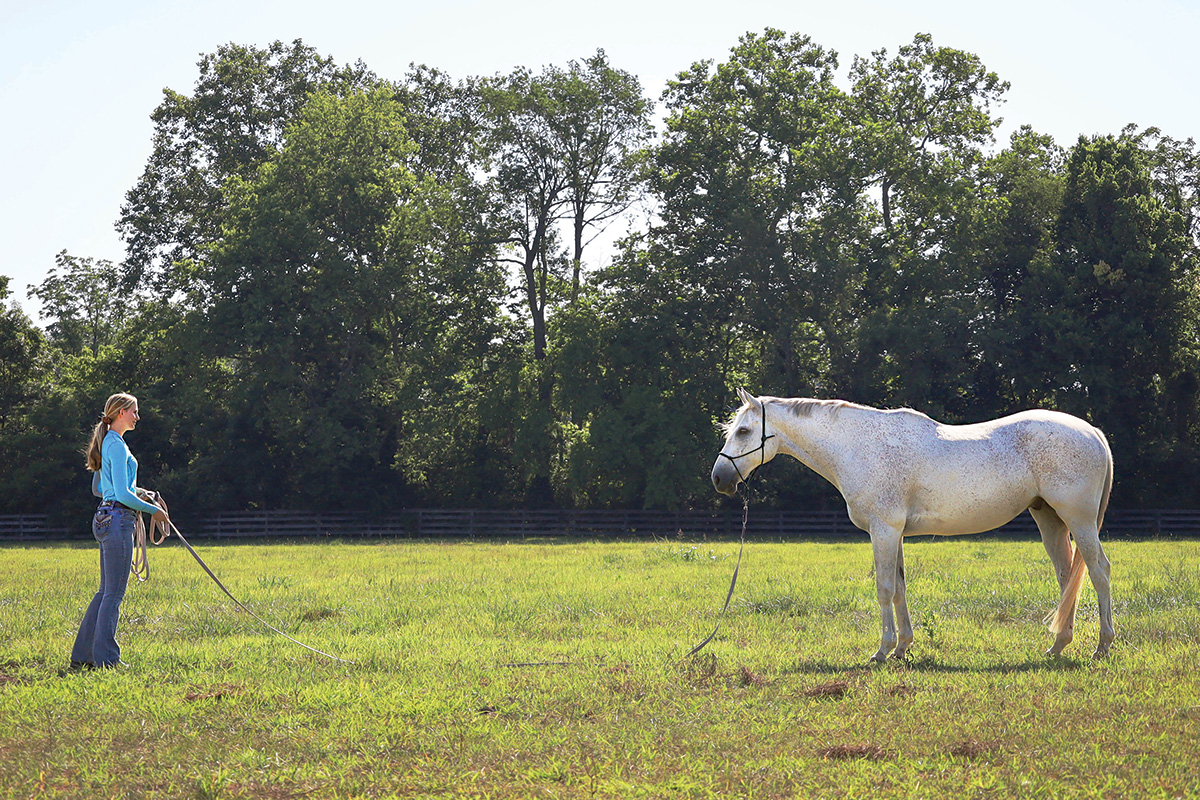
A gray gelding.
The horse should stand with all four feet, head, and neck still, like a statue, while ground tied. Photo by Shoshana Rudski

Preparing to Teach

Before you consider teaching a horse to ground tie, Cavinder advises settling your horse. This isn’t an exercise to teach a freshly halter-broke horse that jumps when your hands move.

Instead, the horse should feel safe around you and know simple cues, such as what “whoa” means. If that’s the case, teaching the ground tie can help you build trust with your horse.

“Ground tying develops ‘Whoa means whoa, don’t move your feet, and let me work around you and develop this trusting bond with you,’” says Cavinder.

He uses a three-step process to train horses consisting of cue, response and reinforcement. It breaks down as follows:

Step 1: Provide the horse with a cue. A cue is any stimulus you give the horse. It can be verbal or physical.

An equestrian teaching a gelding with a cue.
Teach a verbal or physical cue to stand. Photo by Shoshana Rudski

Step 2: Read the horse’s response to the cue. The response is the horse’s feedback (or lack thereof) to a cue.

Step 3: Reinforce the cue. These are actions you take that help the horse understand if his response was right or wrong.

Once these prerequisites are complete, Cavinder says you can begin teaching your horse the ground tie exercise.

Teaching the Ground Tie

To teach this exercise, outfit your horse in a nylon halter. Cavinder recommends using a longe line instead of a lead rope while your horse is first learning the exercise. He breaks the ground tie down into the following three steps.

Step 1 (Cue): Drop the longe line on the ground in front of the horse and say “whoa.” (Hold on to the very end of the longe line in case your horse tries to leave.) Take one to two steps away from him.

Teaching a horse to ground tie.
Drop the longe line, use your verbal or physical cue to stand, and take a couple of steps back. Photo by Shoshana Rudski

Step 2 (Response): Watch how the horse responds. Does he choose to follow you, or move in another direction? Does he take a step and then stop? Does he stand still the entire time? Carefully assess the horse’s response to your cue.

Step 3 (Reinforcement): Communicate to your horse whether he responded correctly to the cue. If he responds by moving, show him that was the wrong response by either lifting his head and backing him up or asking him to move his hip away from you in a forehand turn. Then start over at Step 1.

If your horse responds by standing still or taking a single step and then standing still, show him he found the correct answer by returning to his side and petting or praising him.

As he begins to understand the exercise, you should gradually increase the number of steps you take away from the horse and vary their direction. The horse should remain still until you return.

Teaching a horse to ground tie.
Gradually increase the number of steps back you take while asking the horse to stand. Photo by Shoshana Rudski

Common Pitfalls

Although simple, there are several pitfalls Cavinder sees equestrians struggle with when teaching their horses how to ground tie.

Micromanaging the Horse: Cavinder cautions against micromanaging the horse. For example, when a horse is first learning the exercise, Cavinder doesn’t correct him if he takes a single step forward. Instead, he watches the horse’s response and gives him time to self-correct.

As the horse gains an understanding of the exercise, Cavinder’s expectations increase. You want the horse to try to answer the question being asked of him, and that requires him to search for the correct answer.

Giving Up: Horse training takes time. Too often, Cavinder sees equestrians watch or read training material, try the exercise a couple of times, and give up. Like humans, horses take time to learn.

Setting Unrealistic Expectations: Every horse is different. One horse may learn the exercise in three days, but others won’t. Additionally, a horse’s age and experience should help determine the expectations set for him. For example, Cavinder says yearlings should have lots of wiggle room for errors, while an older, well-trained horse will be expected to respond correctly sooner.

Misunderstanding the Three-Step Process: If you aren’t implementing the three-step process correctly, you can’t expect your horse to understand what you’re asking him to do. For example, being inconsistent with cues or misinterpreting the horse’s response will confuse him.

While simple, ground tying is a great skill for you and your horse to learn together. When a safe place to tie isn’t available and you’re faced with ground tying as the only option, you’ll be able to count on your horse to stay right where you left him.

As an added bonus, properly executing this training helps strengthen your relationship with your horse and lays a solid foundation for learning more challenging exercises together.

This article about the ground tie appeared in the October 2024 issue of Horse Illustrated magazine. Click here to subscribe!
Horse Museums You Should Visit

0

If you’re both horse-obsessed and a history buff, horse museums were made for you. Museums dedicated to the grandeur of horses can be found throughout the U.S., celebrating breeds, disciplines and the legacy of equines in our country.

While it might be hard to personally visit all the horse museums in America—they span from Maine to Idaho—you can learn a lot about horses and their amazing history by just checking out their websites. Pay a virtual visit to these museums to learn more about horses, shop their online souvenir stores, and if you like what you see, make plans to see them in person.

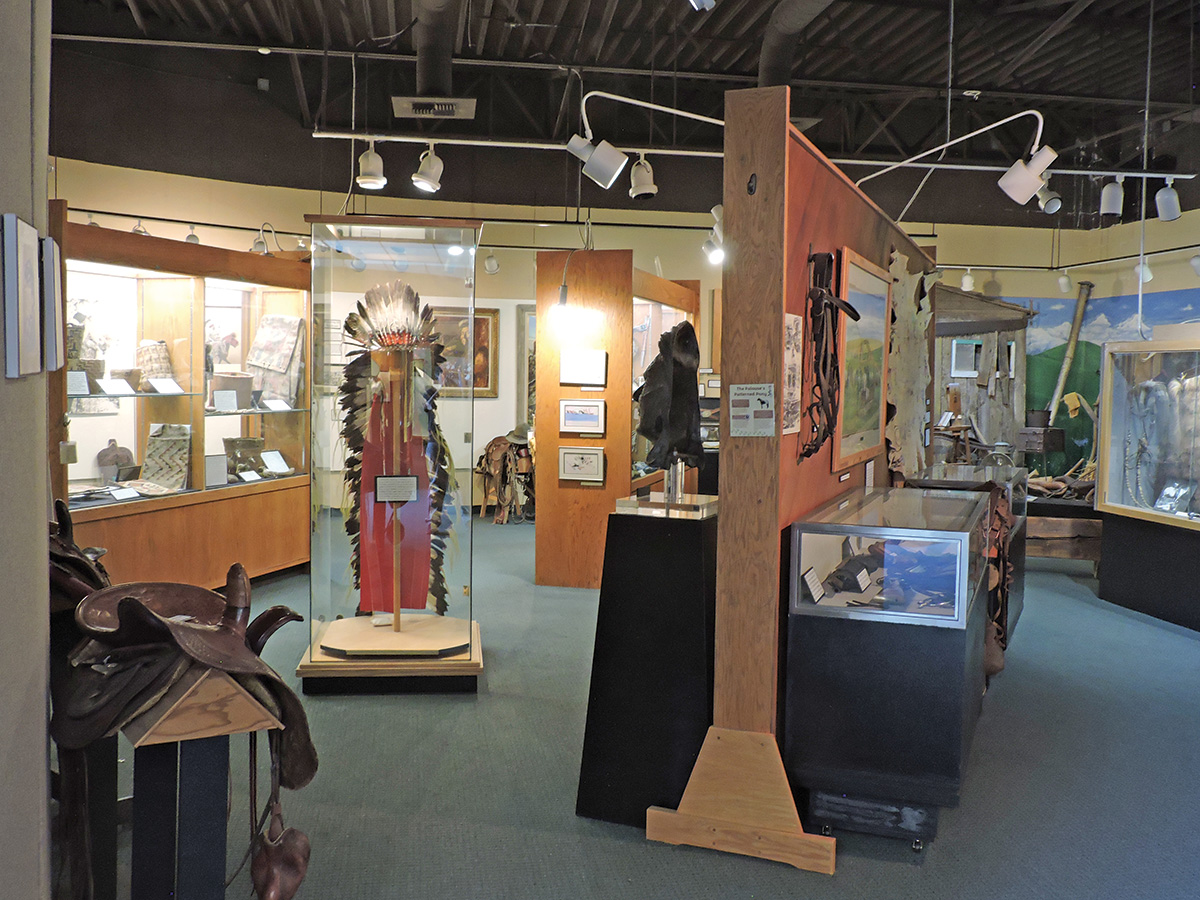
Appaloosa Museum & Heritage Center

The Appaloosa Museum & Heritage Center.

The Appaloosa Horse played an important part in the history of the Pacific Northwest, and the Appaloosa Museum & Heritage Center in Moscow, Idaho, pays tribute to this colorful breed.

The record of the spotted horse, going back to prehistoric times, begins your journey on the museum’s website, featuring historical artwork showing the origins of colorful-coated equines. You can get a sense of the exhibits at the museum on the Museum Features page, and get details on how to book an in-person tour.

Don’t leave the site without stopping at the museum store, where you can buy everything from Appaloosa posters to jewelry.

Learn more at appaloosamuseum.com.

American Quarter Horse Hall of Fame & Museum

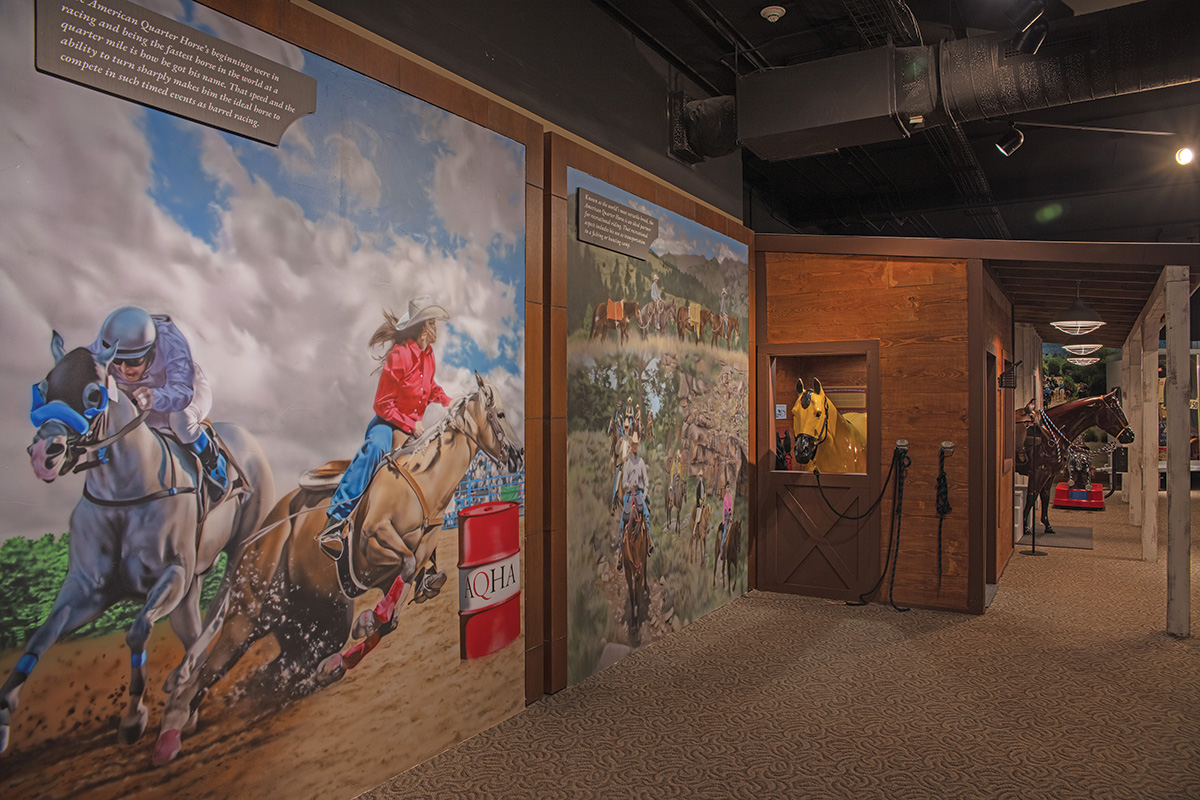
The AQHA Hall of Fame.
The American Quarter Horse Hall of Fame & Museum.

The American Quarter Horse is the most popular breed of horse in the world, and the museum dedicated to it in Amarillo, Texas, reflects that popularity. This grand museum features galleries, halls and theaters, all dedicated to the what the American Quarter Horse Association has dubbed America’s most versatile horse.

On the museum website, you’ll find photos and exhibit details, along with information on how to visit the museum in person. Bring your wallet if you make the trip—the museum has a great gift shop.

Learn more at aqha.com/museum.

American Saddlebred Museum

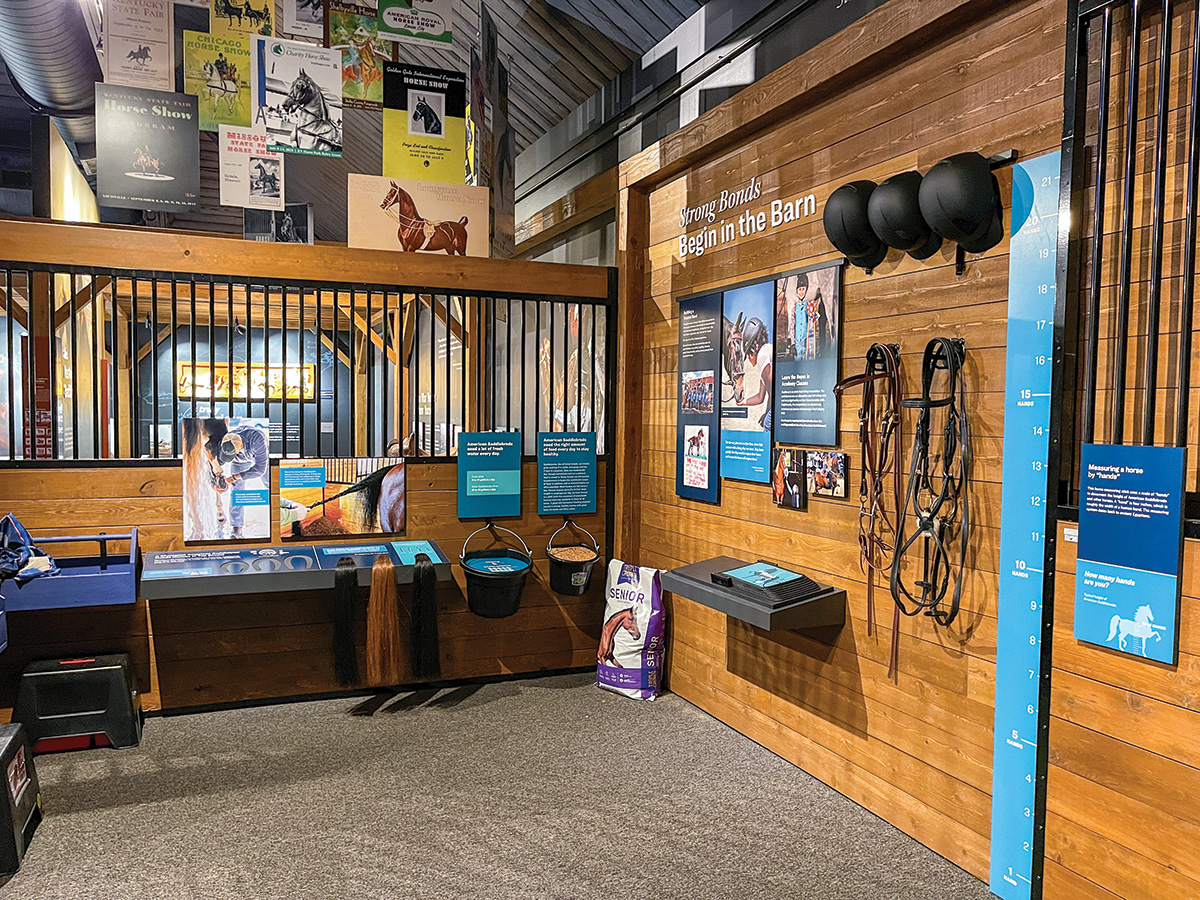
The American Saddlebred Museum.
The American Saddlebred Museum is located at the Kentucky Horse Park in Lexington, Ky.

The American Saddlebred Museum, dedicated solely to the American Saddlebred Horse, is located in Lexington, Ky., on the grounds of the Kentucky Horse Park. It houses the largest collection of Saddlebred horse artifacts in the world. 

The museum website provides images from the John P. and Dorothy Lenore Gallery Wing, which houses the museum’s temporary exhibitions, as well as the gift shop.

For in-person visitors, the Elisabeth M. Goth History Wing features interactive areas covering early history and formation of the breed; a mare and foal sculpture; a movie about the breed in the American Saddlebred Experience Theater; a children’s area where kids can color and put together puzzles; a section where visitors can try on show clothes and check their riding posture; and an interactive display where visitors can experience the feeling of being on a horse.

Learn more at asbmuseum.org.

International Museum of the Horse

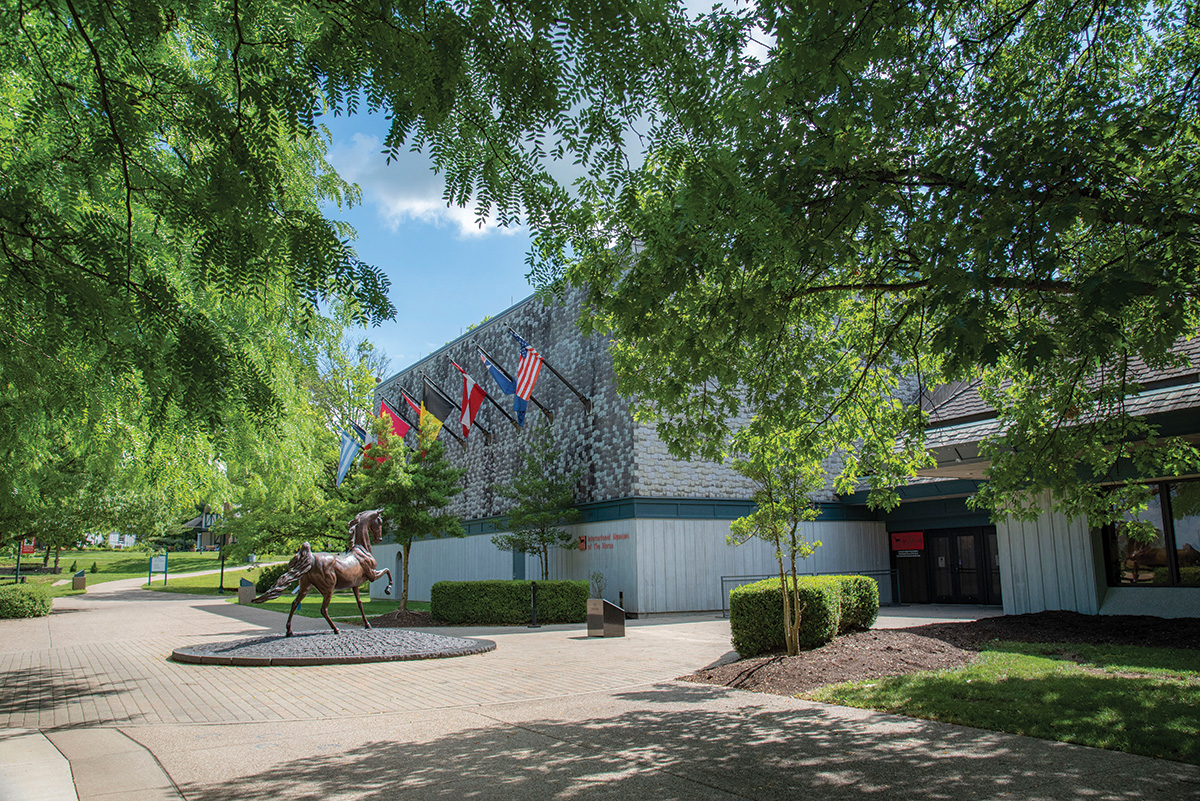
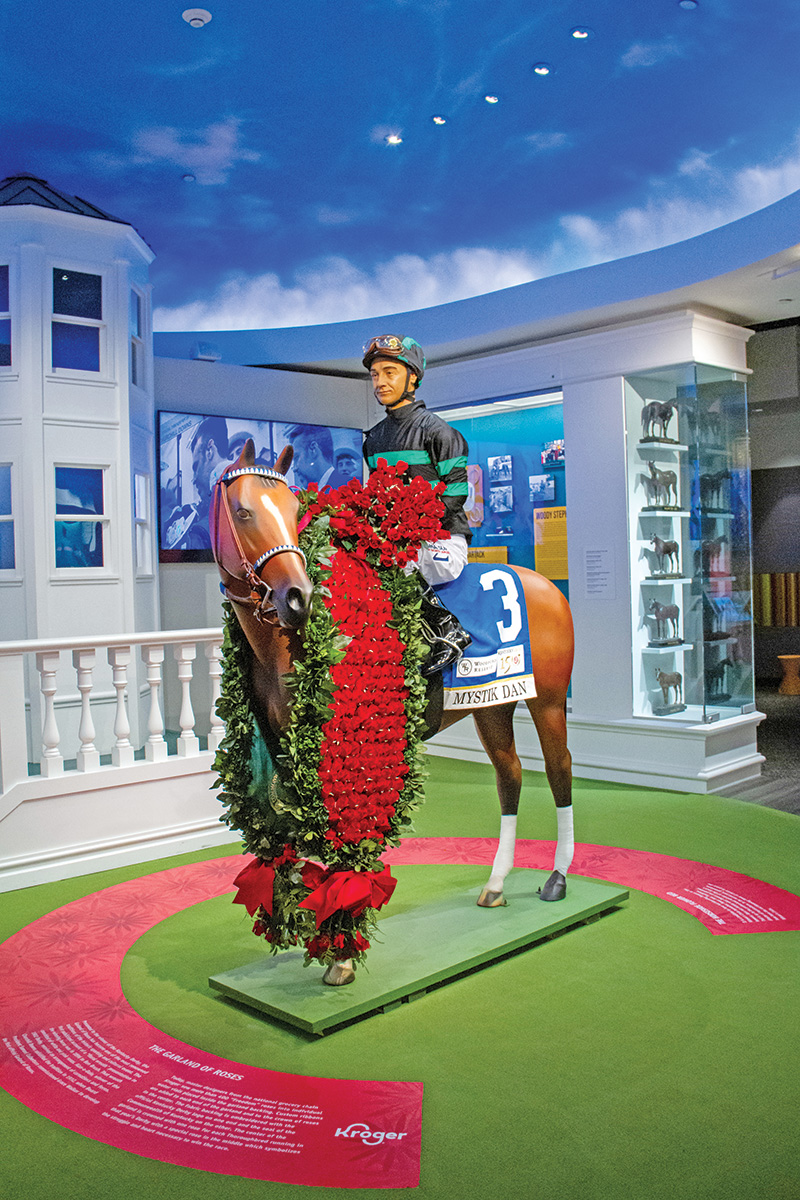
The International Museum of the Horse.
The International Museum of the Horse is also located at the Kentucky Horse Park.

The largest and most comprehensive of all horse museums is the 64,000-square-foot International Museum of the Horse, located at the Kentucky Horse Park in Lexington, Ky. Dedicated to exploring the history of all horses and their impact on human civilization, the museum maintains an ever-growing library and archives, and serves as a resource for scholars and researchers throughout the world.

The museum’s website contains a searchable collection, which allows you to view museum items online based on keywords. You can also get a glimpse of exhibits inside the museum, which will whet your appetite for an in-person visit.

Learn more at kyhorsepark.com/explore/international-museum-of-the-horse.

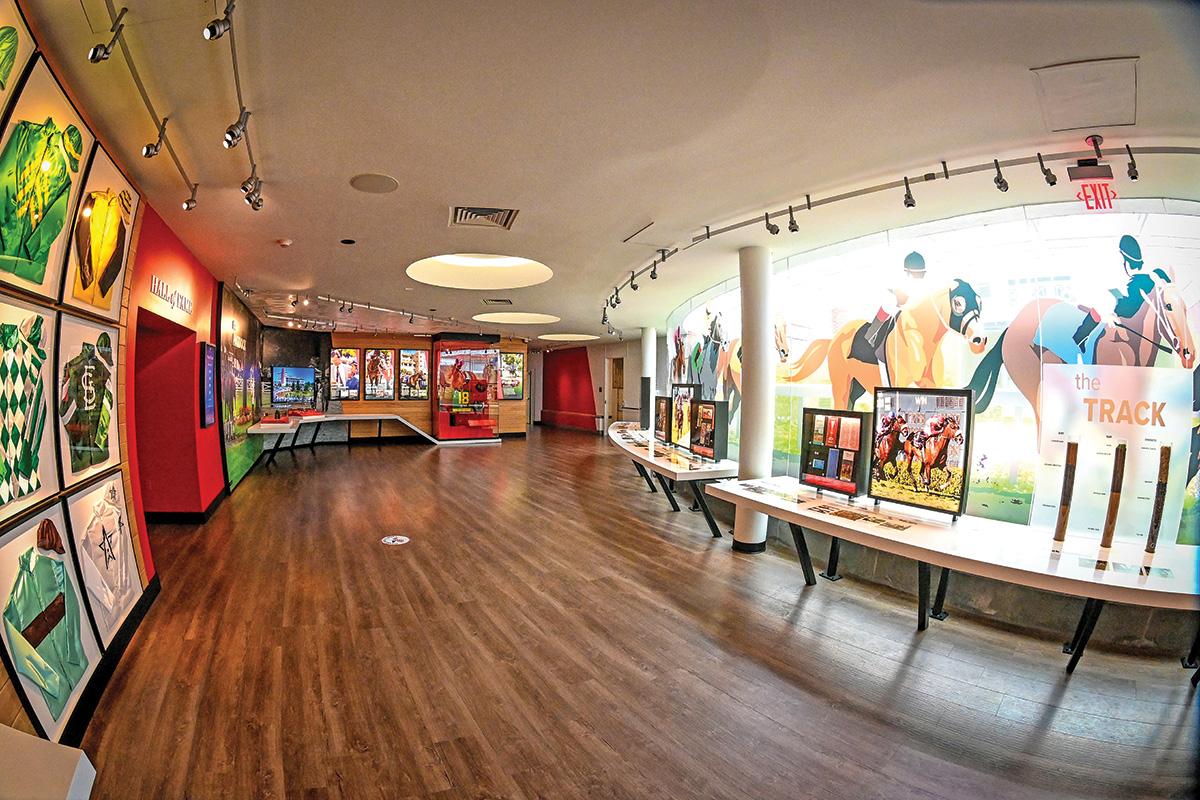
Kentucky Derby Museum

The Kentucky Derby Museum.
The Kentucky Derby Museum is fittingly located at Churchill Downs in Louisville, Ky.

The most famous horse race in America has its own museum! Located at Churchill Downs in Louisville, Ky., home of the race itself, the Kentucky Derby Museum recently celebrated its 150th anniversary of the race with new exhibits, track tours and a History of the Kentucky Derby book release.

A visit to the museum website provides you with a peek at the new exhibits (including a “Long Shots” exhibit and a display dedicated to Secretariat), a review of the museum’s permanent collection, and a chance to shop online at the Derby Museum Store.

Learn more at derbymuseum.org.

National Morgan Horse Museum

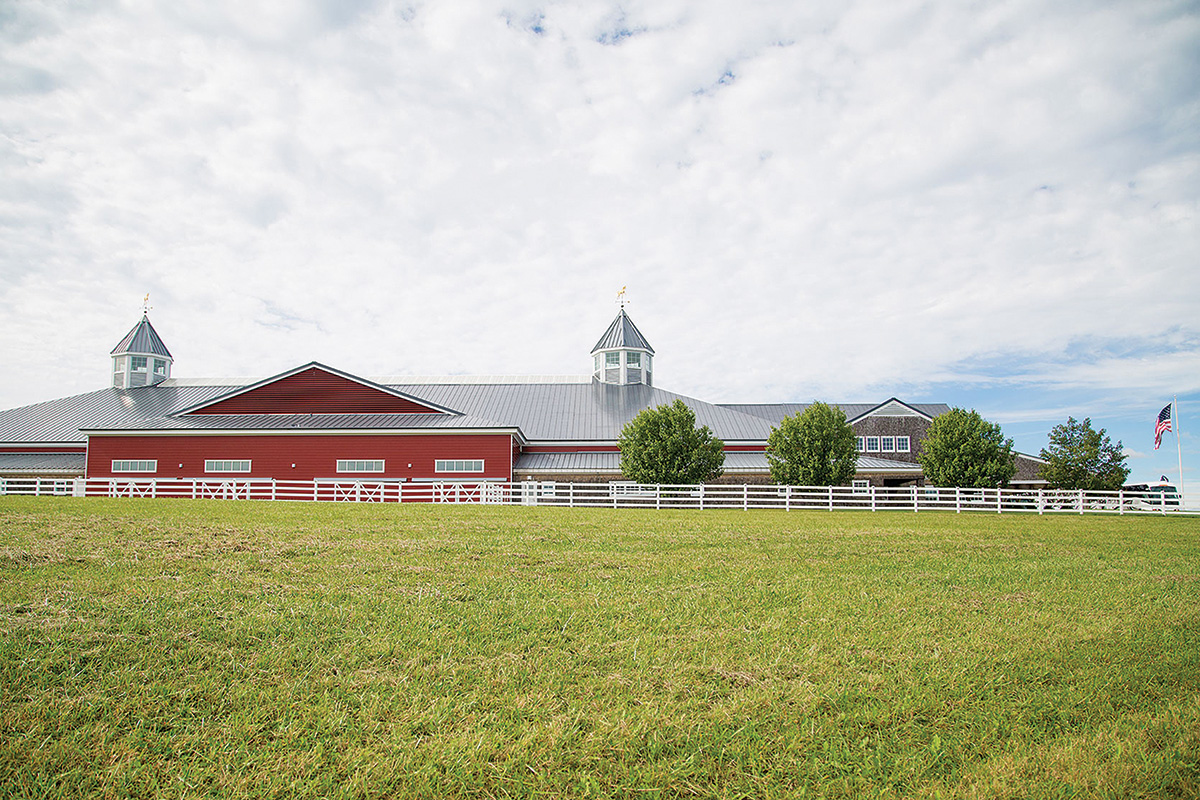
The Pineland Farms Equestrian Center.
The National Morgan Horse Museum is located at the Pineland Farms Equestrian Center in Maine.

Located at the Pineland Farms Equestrian Center in New Gloucester, Maine, the National Morgan Horse Museum is run by the American Morgan Horse Association, and is dedicated to the history and development of the Morgan Horse in the United States.

The museum website includes historical photographs and articles about Morgans, plus promotional videos about the museum, which provide a look into what the museum has to offer to in-person visitors.

Learn more at morganhorse.com/about/museum.

National Museum of Racing & Hall of Fame

The racing hall of fame.
The National Museum of Racing & Hall of Fame is located in scenic Saratoga Springs, N.Y.

You can learn everything you need to know about Thoroughbred racing in a fascinating series of exhibits at the National Museum of Racing & Hall of Fame, located in historic Saratoga Springs, N.Y.

Paintings from the collection of 20th century racing enthusiast Charles H. Thieriot, an exhibit on the famous racehorse Ruffian, and a juried racing photography exhibit are all currently on display at the museum. The permanent collection includes sculptures, trophies, racing memorabilia, an assortment of paintings and photographs, and of course the Hall of Fame.

Visitors to the website can learn more about what the museum has to offer, as well as buy select items at the online gift shop.

Learn more at racingmuseum.org.

National Sporting Library & Museum

The National Sporting Library.
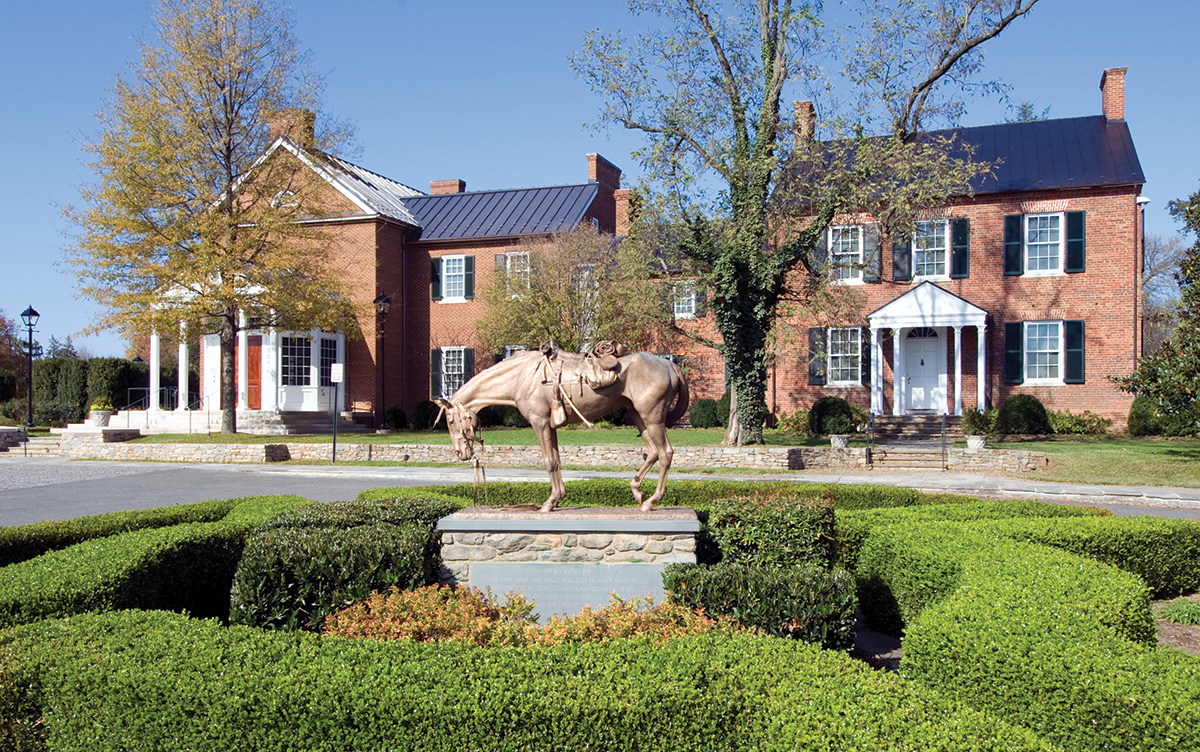
The National Sporting Library & Museum is located in Middleburg, Va.

Founded in 1954, the National Sporting Library & Museum (NSLM) is located in Middleburg, Va., the heart of Virginia’s beautiful foxhunting country.

The inviting six-acre campus, world-class research library, and fine art museum highlight the rich heritage and tradition of country pursuits. Angling, horsemanship, shooting, steeplechase, foxhunting, flat racing, polo, coaching, and wildlife are among the subjects you can explore in the institution’s general stacks, rare book holdings, archives, and art collection.

The NSLM also offers a wide variety of educational programs, exhibitions, and family activities throughout the year.

Learn more at nationalsporting.org.

This article about horse museums appeared in the October 2024 issue of Horse Illustrated magazine. Click here to subscribe!
ASPCA Right Horse Adoptable Horse of the Week: Chevy

0

Welcome to Horse Illustrated’s weekly installment of the Right Horse Adoptable Horse of the Week, offered in partnership with the ASPCA’s Right Horse program. This week’s adoptable horse is Chevy! Check back weekly for a new featured horse so you can find your Right Horse.

Adoptable horse Chevy.
Photo courtesy West Virginia Horse Network

Adoptable Horse: Chevy, an 18-year-old, 15.0hh Tennessee Walking Horse gelding
Organization: West Virginia Horse Network, Elkview, W.Va.

Get to Know Adoptable Horse Chevy

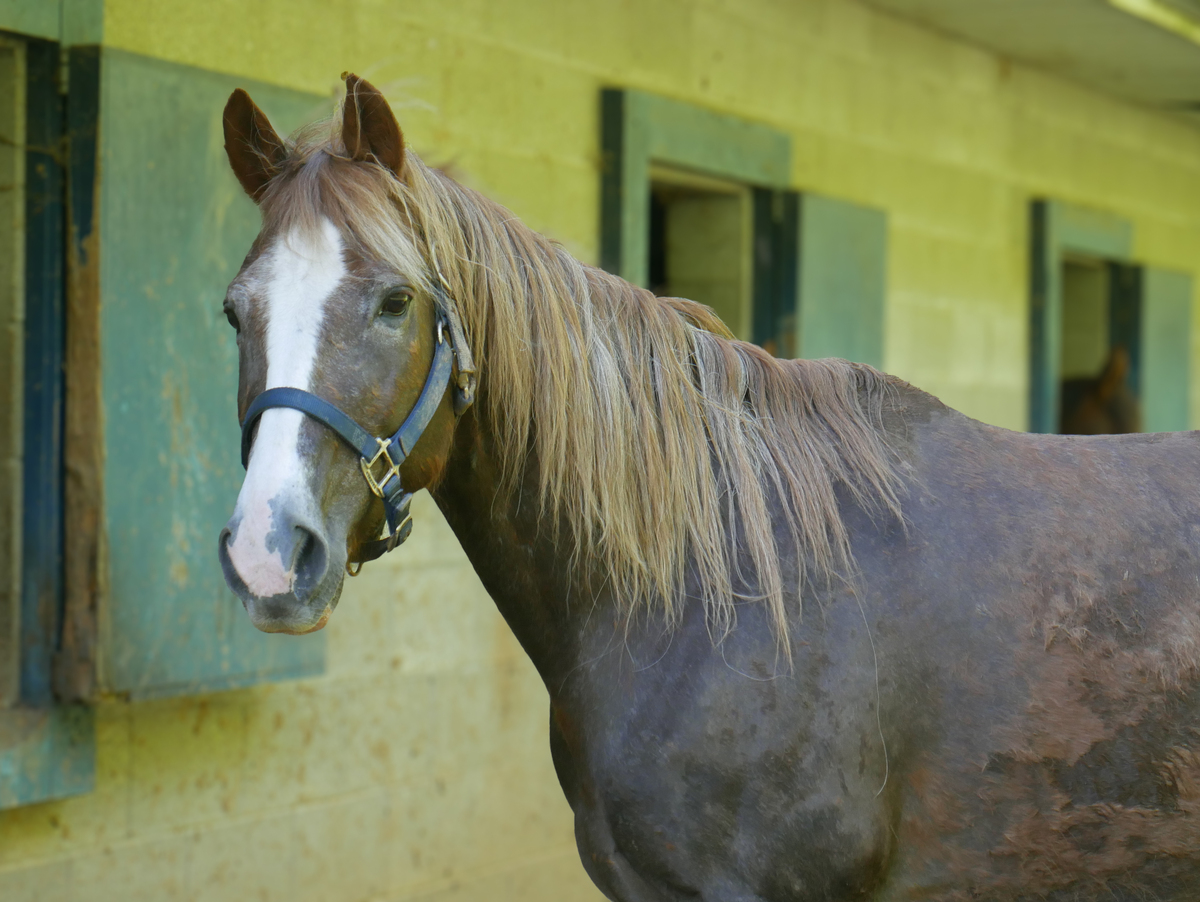
Meet Chevy, a Tennessee Walking Horse gelding who is adoptable as a companion horse. He has a very sweet and engaging personality and is a typical goofy gelding. He is the barn clown.

Chevy bonds with other horses and would make a great buddy for a horse needing a trusty pasture friend. He likes to give hugs and is really just the sweetest guy.

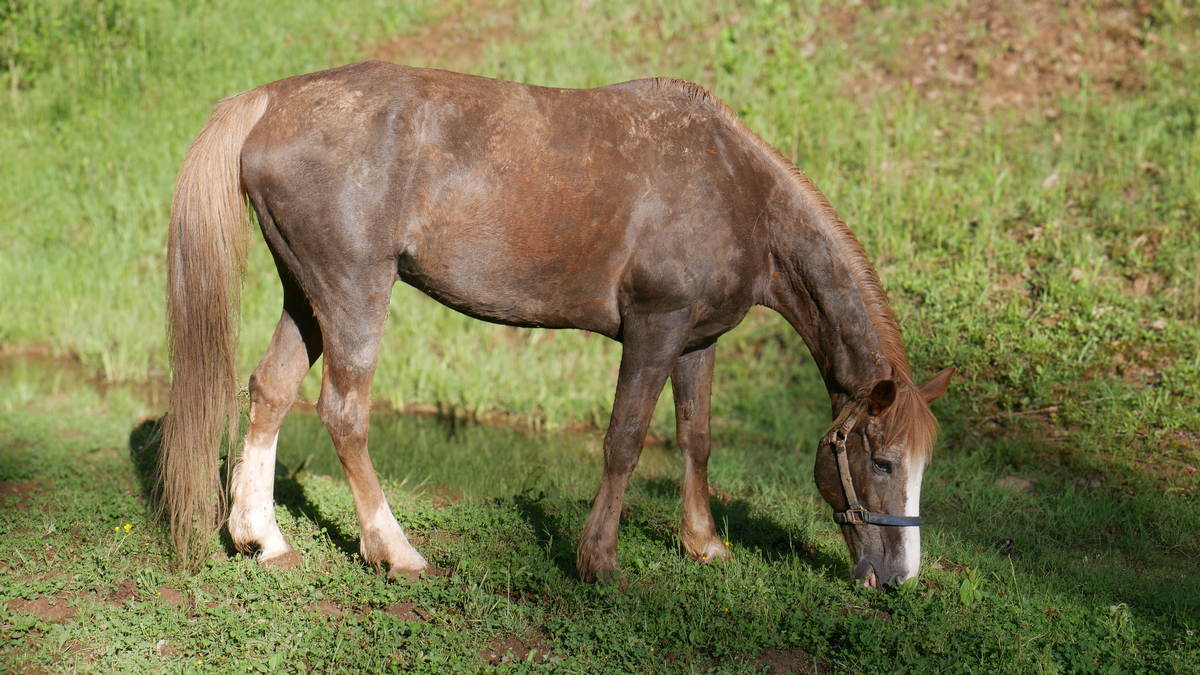
Please excuse the mud in his photos… he really enjoys turnout time. He can be a “hard keeper” and an adopter will need to be willing to follow West Virginia Horse Network’s feeding instructions. Chevy eats senior feed, and may also need occasional maintenance for ulcers.

Contact West Virginia Horse Network today about ASPCA Right Horse Adoptable Horse of the Week, Chevy!

A Tennessee Walker gelding.
Photo courtesy West Virginia Horse Network

ASPCA Right Horse

My Right HorseASPCA Right Horse is the online adoption platform of The Right Horse Initiative, a collection of equine industry and welfare professionals and advocates working together to improve the lives of horses in transition. A program of the ASPCA, their goal is to massively increase horse adoption in the United States. To find more adoptable horses and foster horses, visit www.myrighthorse.org. To learn more about The Right Horse, a program of the ASPCA, visit www.aspcarighthorse.org.

Improve Your Horse’s Feeding Time Behavior

0

Feeding time always seems like a rush. Hurry up and feed so you can continue with your barn time or head off to your kid’s ball game. But if you’re in too much of a rush, you may not have time to interact with your horse and solidify the respectful relationship you want later. It’s easy to be so rushed that you allow your horse to move into your space to grab food away—without having time to correct the newly allowed behavior.

Reason for Respect

Trainer Mike Brashear states that you’re training your horse every time you’re near him. While your horse may not be aggressive or mean, stepping into your space when he isn’t invited can lead to accidents.

Imagine walking into your horse’s pen to put hay in a slow feeder. Would your horse stand at a distance and only approach once you finish loading the feeder, or would he move forward into your space and steal a mouthful of hay as an appetizer?

If your horse is the type who would come to you and grab a snack, you may be in need of Brashear’s training tips so that your horse doesn’t accidentally munch your fingers, bump into you and cause a fall, or put you in a vulnerable position if multiple horses are in the feeding area.

“When you walk in the pen any other time, you want your horse to come to you,” he says. “Your horse learns that if he comes to you, he gets pets and gets loved on. So when you enter with hay, that’s what he’s going to do as well, unless you teach him something different. You may look at grabbing hay as disrespect, but the horse looks at it as, ‘This is what is allowed.’”

Ideally, Brashear says he wants his horses to wait. He works to put “wait” on his horses wherever and whenever possible so that they tune into his cues.

At feeding time, he wants horses to stand at a 3- to 6-foot distance and wait for him to set down and move away from the hay or grain. Brashear uses the following steps to teach a horse when he can come into your space (to get the food) and when he should respectfully keep his distance.

Teaching “Wait”

Make sure your horse has had his usual meal so that you aren’t training a hungry horse. Also make sure you have time to work with your horse without being rushed. Brashear suggests making this the groundwork that you do before you ride.

Outfit your horse with a rope halter and a 12-foot training lead attached to the halter with a knot. For now, leave the food in the barn. You’ll teach the cues without temptation present first. Only after your horse is doing well and obeying your request to stand and wait should you attempt it at feeding time.

“It’s always better to start with a connection with your horse so you have some control and can send him back out,” says Brashear.

1. Start by facing your horse and stand about 3 feet in front of him. Mimic the distance you’d like to be from your horse when you feed him in his stall or paddock.

Working with a horse to improve feeding time behavior.
Begin without food present and stand about 3 feet in front of your horse. Photo by Heidi Nyland Melocco

2. If your horse moves into your space, shake the lead rope to encourage him to step or rock back. If he doesn’t move, shake harder. Make sure to keep your feet in the same place. You don’t want to chase the horse away or act aggressively. Instead, you’re just teaching him to respond to the rope correction and stay in place as you asked.

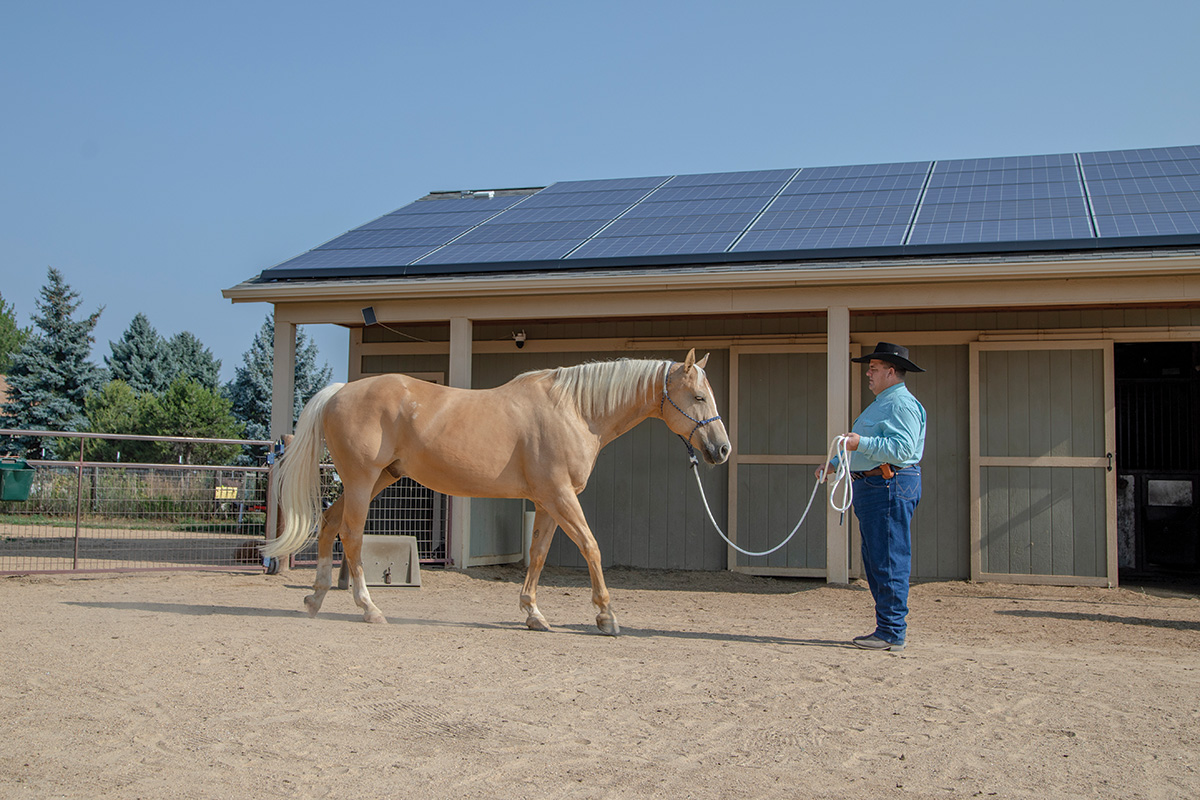
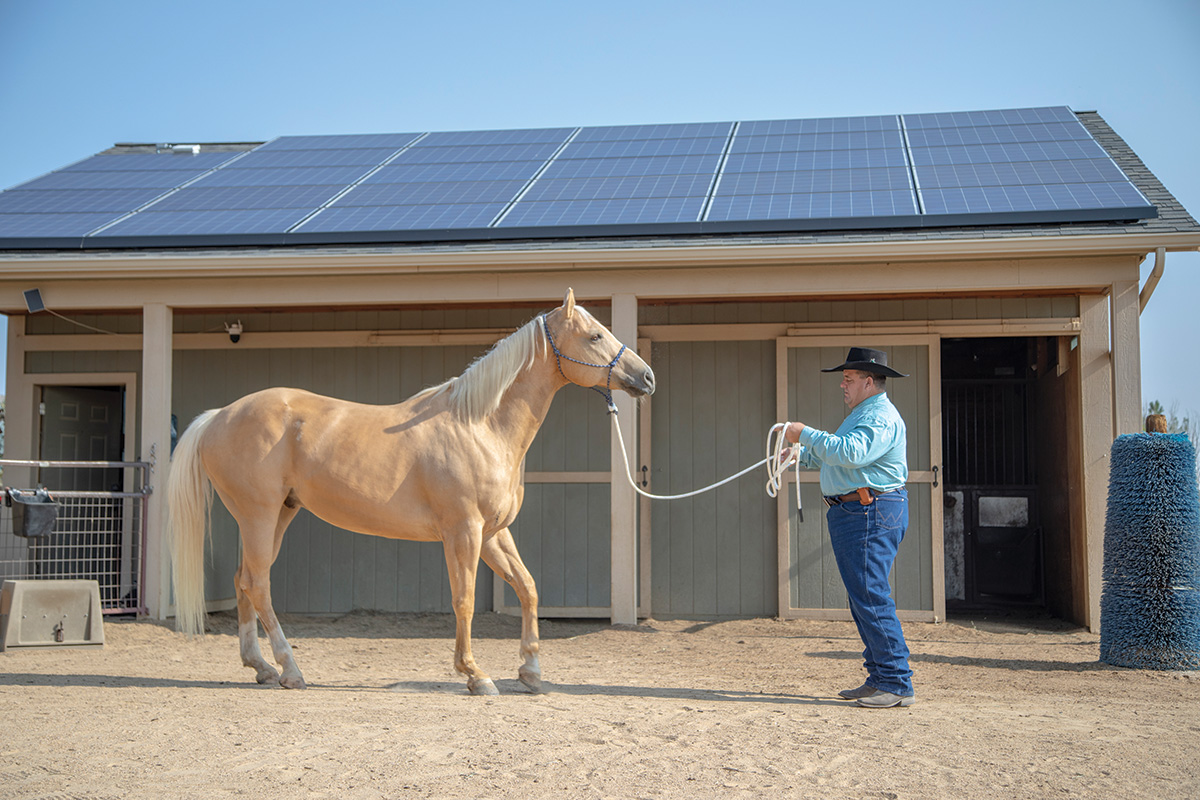
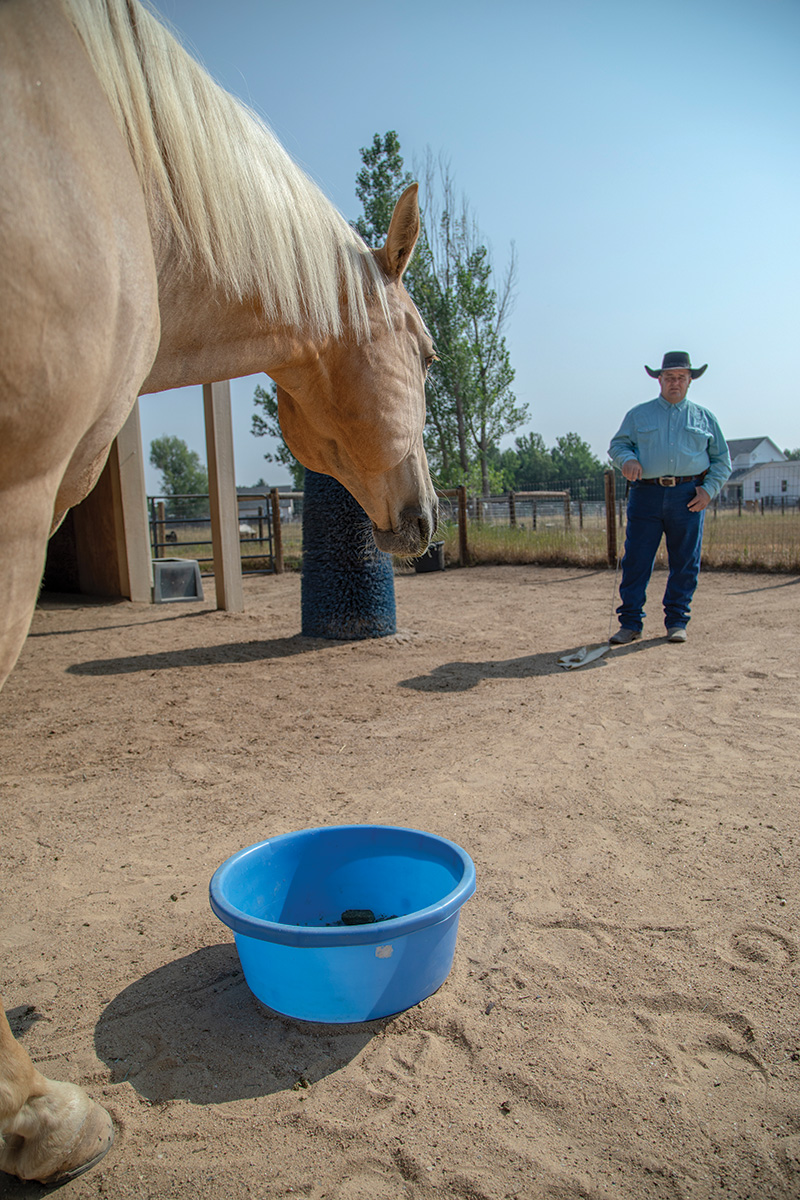
Mike Brashear working with a palomino.
If your horse starts to step into your space, shake the lead rope and ask him to step back. Photo by Heidi Nyland Melocco

“I don’t want to walk to my horse or act mean,” says Brashear. “I want to teach him to wait. When the horse steps back, all my energy stops, and I stop moving the rope. That change of energy is the release.”

You may add a verbal cue of “get back” to remind your horse to stand still in a calm way. If your horse will stand still and not move into your space, back up and see if he will come into your space. Your moving back will invite the horse forward.

If you step forward, he should move accordingly, too. If you stop again, make sure that he will stand still. Practice this again. When you want your horse to move closer to you, step back (while still facing your horse) and take slack out of your lead rope.

As you work without feed present, think about how this same skill will work at feeding time. Think, “You can’t come up to this feeder until I’m back out of the stall door. If I turn my back and walk away, you can come up, but you can’t come up on me on your own accord.”

Add Feed

Next, set up the same scenario (standing in front of your horse and expecting him to stand respectfully), but have a pan of grain at your feet.   

Brashear says that now it’s time to ask your horse to move in and out of your space on command while the food is present. First, ask your horse to stand 3 to 6 feet away from you and the feed. Allow him to wait for about 30 seconds.

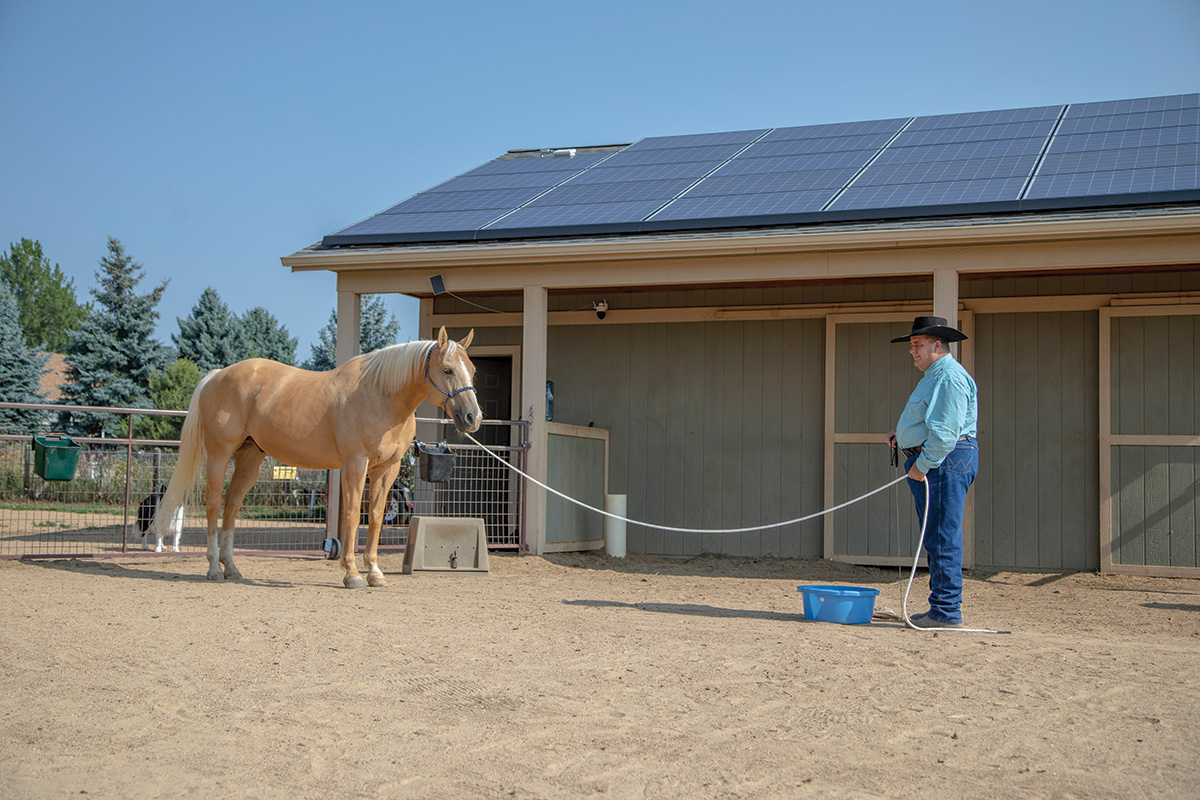
Working with a horse to improve feeding time behavior.
First, ask the horse to stand away from you and the feed for 30 seconds. Photo by Heidi Nyland Melocco

Ask your horse to come into your space by slumping your shoulders and stepping back. This change will invite your horse to move forward to get a bite from the feed pan.

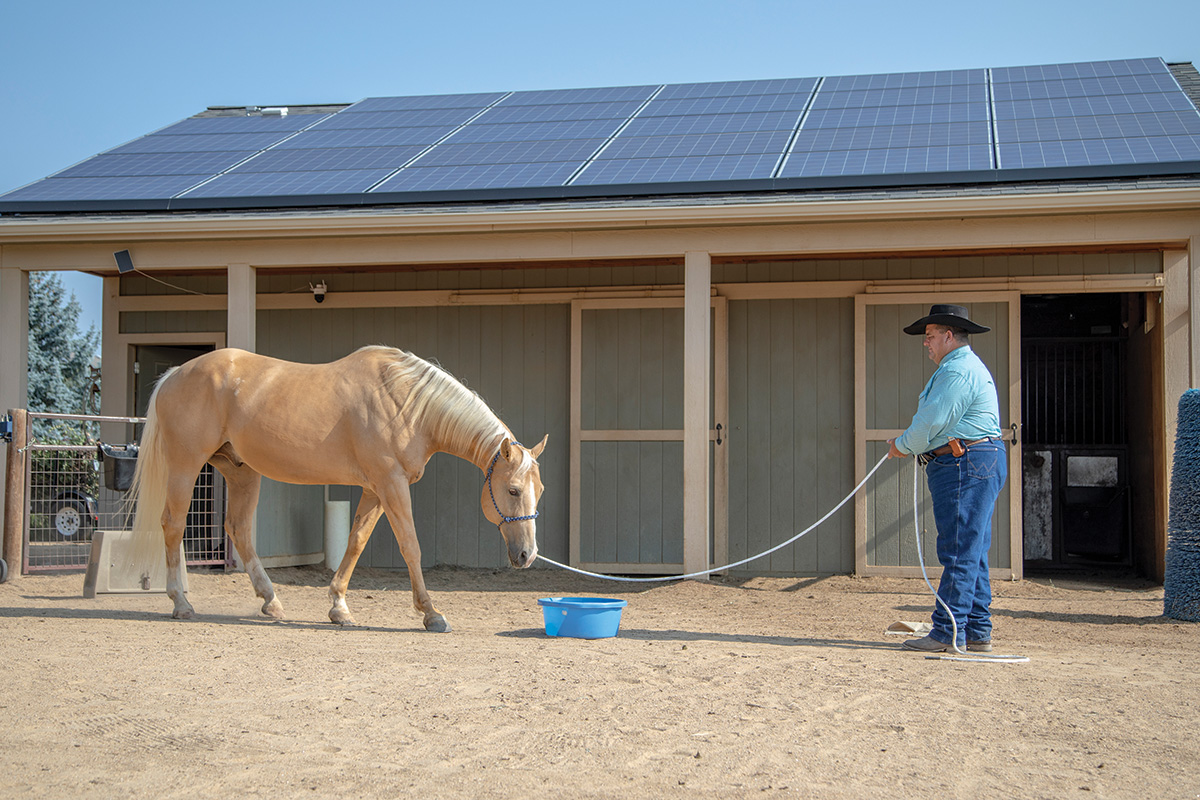
Working with a horse to improve feeding time behavior.
Next, ask the horse to come forward and take a bite of feed. Photo by Heidi Nyland Melocco

“Horses will usually take one bite of grain, then lift up their heads to swallow,” he says. “Once your horse has taken a bite, ask him to step back and leave the feed again. Step forward and stand tall. Ask him to stand and wait until invited in again.”

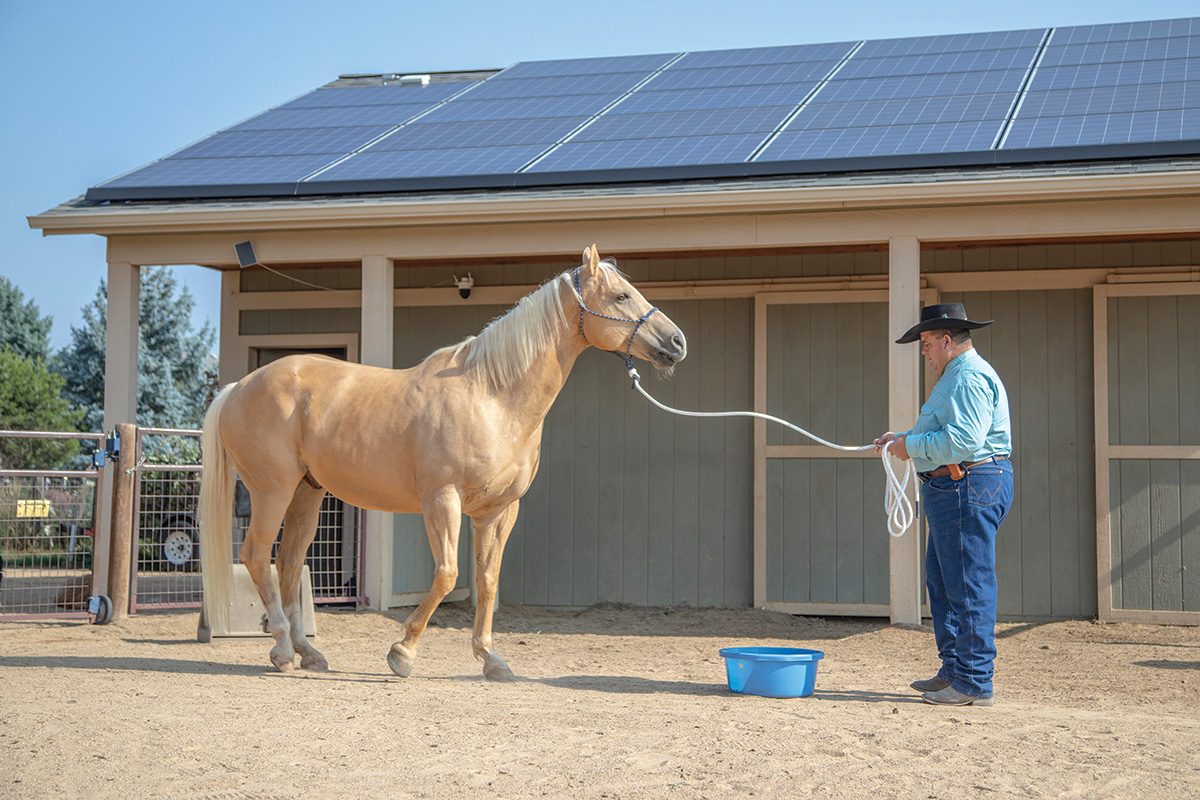
Mike Brashear working with a palomino.
After he lifts his head to swallow the feed, ask him to step back again. Photo by Heidi Nyland Melocco

Practice this over and over.

“Every bite of grain that my horse gets is dependent on me asking him to come into me,” says Brashear.

If your horse is responding well to your cues, practice again with a web halter. You want to know if your body language alone is enough to tell your horse to back up. With a “lighter” halter, you can tell if your horse is listening to your cues but still have some connection to him.

Finally, it’s time to test your horse without a halter. Work where you would feed your horse, but when he isn’t waiting for a meal. Take the halter off altogether and try the same setup.

Working with a horse to improve feeding time behavior.
Once your horse has learned in a halter, you can progress to doing the exercise at liberty. Photo by Heidi Nyland Melocco

If your horse stands and waits, notice if he’s looking for your cues.

“If he looks like he’s wondering if he should move to the food or not, he’s watching you,” says Brashear. “Make him wait and stand for about 30 seconds. Then, step back and away and allow him to get the food. Your rocking back draws him to you and allows him to get to the grain.”

Keep in mind that you may have to move back to previous training steps if your horse isn’t listening without the halter. Ask him to move away again when he picks his head up. Step forward and increase the energy in your body, then move your hands up and away just like you would have while holding the lead.

If he doesn’t respond, increase your energy until you get a change—without yelling or appearing angry. If your horse won’t move away or listen, go back and work with the rope halter and lead.

At Feeding Time

After you have practiced sending your horse away from the grain during a practice session, it’s time to do the same work at feeding time. Make sure that you have time and aren’t in a rush.

When you walk into the pen, carry the hay to the feeder and make sure that you’re aware of your horse’s position. If your horse comes up to you and you’re focused on filling up the feeder, put the hay down and focus on the horse just as you did in the last “no-halter” training session. Put your arms up and calmly tell your horse “get back.”

When you remind your horse of the training you did with the halter, he should learn that you expect the same behavior any time you are near him—including at feeding time.

This article about improving a horse’s behavior at feeding time appeared in the October 2024 issue of Horse Illustrated magazine. Click here to subscribe!
Improve Balance to Prevent Riding Falls As You Get Older

0

As the risk of falls increases with age, find out what you can do to improve balance and stay in the saddle.

“When you are young and fall off a horse, you might break something. When you’re my age and you fall off, you splatter.” So said Roy Rogers, the King of the Cowboys.

While every rider fears falling from a horse, any tumble anywhere at any age can be dangerous. While trips and falls are generally not a big worry for younger people, the risk increases dramatically as we get older.

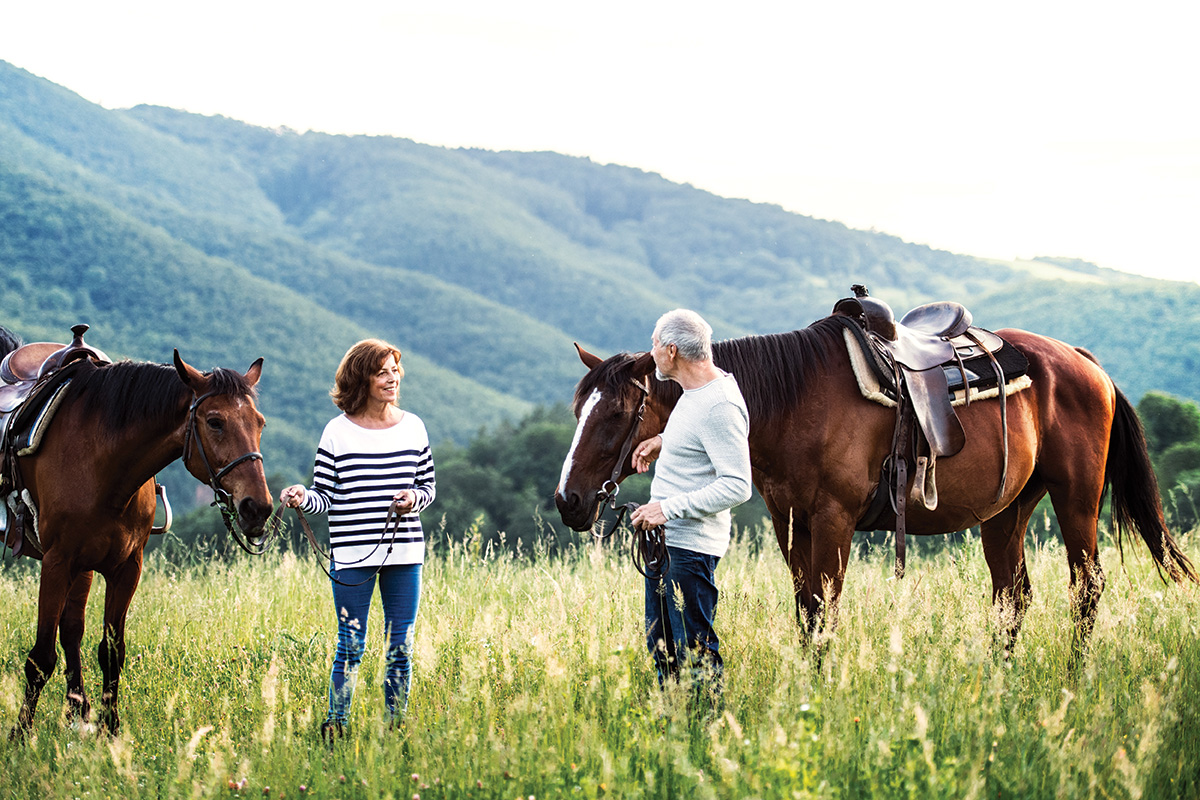
An older couple taking a break on a trail ride.
Photo by Halfpoint/Adobe Stock

Hazards of Falls

About 30 percent of Americans over the age of 65 fall each year. That equates to nearly three million emergency room visits. To be even more gloomy, complications from those falls are the leading cause of injury-related deaths for that age group.

The normal changes in our bodies as we age set us up to lose balance and coordination. Weakening muscles and bones, poor posture, declining vision and hearing, and aching joints all conspire to throw us off balance. The result is often an unintended and disastrous collision with the ground.

Understanding how this happens and how to adapt to these physical changes improves your daily life and, as a happy additional benefit, improves your riding.

Balance & Posture

Balance dictates your coordination and ability to stand, walk, stoop, and turn without toppling. “Proprioception” is the scientific term for how we sense where we are in space.

Nerve endings throughout your body deliver an ongoing play-by-play to your brain of where your body is and what it’s doing. Your brain analyzes all the input as fast as a wizard kid solving a Rubik’s Cube and signals your muscles to react and keep you anchored.

For example, as you walk around the barn, you step on many different surfaces: the hard center of the barn aisle, the soft bedding in the stall, the rubber mats in the wash rack, the grass in the pasture, and the sand in the arena. You might be aware of the changes in the surfaces, but probably not of the changes your body makes to adjust your footing on each of them.

Balance depends on core, leg, and ankle strength. Strengthening muscles and developing good balance can slow the inevitable decline. If you already have balance troubles, exercises and behavioral changes help correct them.    

It starts with proper posture. The ideal posture is also what you want when sitting in the saddle: level shoulders and hips; ears, shoulders, elbows, hips, and ankles in a straight line; looking ahead, your toes and chest are pointed in the direction of travel. This lets you move easily and flexibly so you can react quickly to what is happening around you.

A rider displaying proper riding balance that prevents falls.
Ideal posture on the ground is also ideal in the saddle: level shoulders and hips; ears, shoulders, elbows, hips, and ankles in a straight line; and looking ahead with toes and chest pointed in the direction of travel. Photo by 24K-Production/Adobe Stock

Maintaining that position depends on a strong core. You’re not looking for six pack abs, but deep inner muscles that create a steady support. Standing in the correct position automatically requires you to use your abdominal muscles so you’re essentially doing mild crunches all day.

Strong leg muscles and ankles add even more support. All this is great for riding, since it makes you more secure in the saddle.

Bone Density & Vision

Another factor is bone density. Bones regenerate somewhat when you’re younger, but once you hit 50, bone loss outpaces formation. This means a higher chance of breaking something.

Strength training and weight-bearing exercises both help to slow bone loss and increase bone density. Posting while you ride counts, as does walking after a horse that doesn’t want to come in from the pasture.

Vision is also vital. As you age, you lose your peripheral vision. It happens so slowly that you may not even realize it. As your range of vision becomes smaller, you unconsciously shift your focus to compensate. You look at the ground a yard or so in front of your feet when you walk, which means you tilt forward, shifting your center of gravity. If you stumble, you can’t immediately compensate and right yourself.

There are plenty of ways to improve balance, coordination, and peripheral vision. The simplest is training yourself to stand and move in the correct position. Instead of looking down, focus forward on where you want to go, like looking ahead when approaching a jump.

An equestrian focusing forward and practicing proper posture on the ground, which helps with proper riding balance in the saddle to prevent falls.
Focus ahead instead of on the ground in front of you as you walk to help improve posture. Photo by JackF/Adobe Stock

Develop ever better balance by walking on uneven terrain (chasing that horse again) or riding a bicycle. The gold standard for developing core strength, posture, strong muscles, and flexibility is Pilates. Gyms, the YMCA, and senior centers offer balance programs, while internet videos are good alternatives for home workouts.

Exercises That Help with Balance

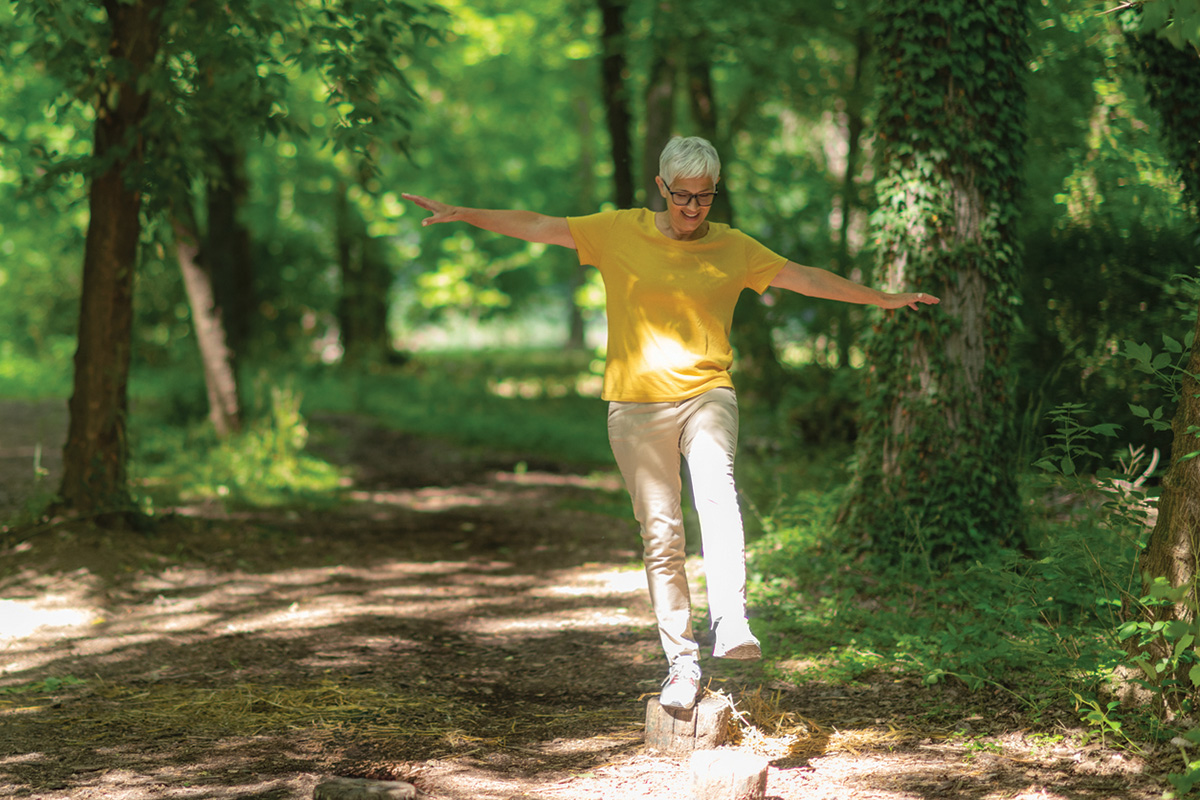
An older woman exercising in the forest.
Exercises where you stand on one foot will help improve balance during everyday life. Photo by Microgen/iStock

Here are some simple exercises you can do on your own. Try doing them without holding out your arms for balance.

  • One-leg balance: stand with your feet hip-width apart. Life one foot off the ground for 30 seconds. Switch sides.
  • Tightrope walk: Walk in a straight line, placing one foot directly in front of the other, heel-to-toe, as though walking on a tightrope.
  • Flamingo stand: Lift one leg to a 90-degree position. Hold for a count of 10. Repeat on the other leg.
  • Ankle strengthener: While sitting, push your foot as though you are pressing on the gas pedal of your car. Do this 10 to 12 times, then rotate your foot in each direction 10 times. Finally, shift your heel 10 times in each direction.

This article about improving balance to prevent riding falls as you get older appeared in the October 2024 issue of Horse Illustrated magazine. Click here to subscribe!
Returning to Riding Later in Life

0

I’m not going to lie … slipping my boots back in the stirrups, gathering the reins, and starting to ride again after so many years away from it was a bit intimidating. OK … more like scary, daunting, overwhelming.

But I’ve never been one to shy away from a challenge. In fact, I find it weirdly empowering to not only step out of my comfort zone, but to jump right off the cliff.

So, as I neared the tender age of 50 (how did that happen?), I realized just how much I missed horses and riding. I missed hanging out in the barn, breathing in the intoxicating scent of leather and hay, and staring into a horse’s dark, intelligent eyes. And I asked myself, “What are you waiting for?”

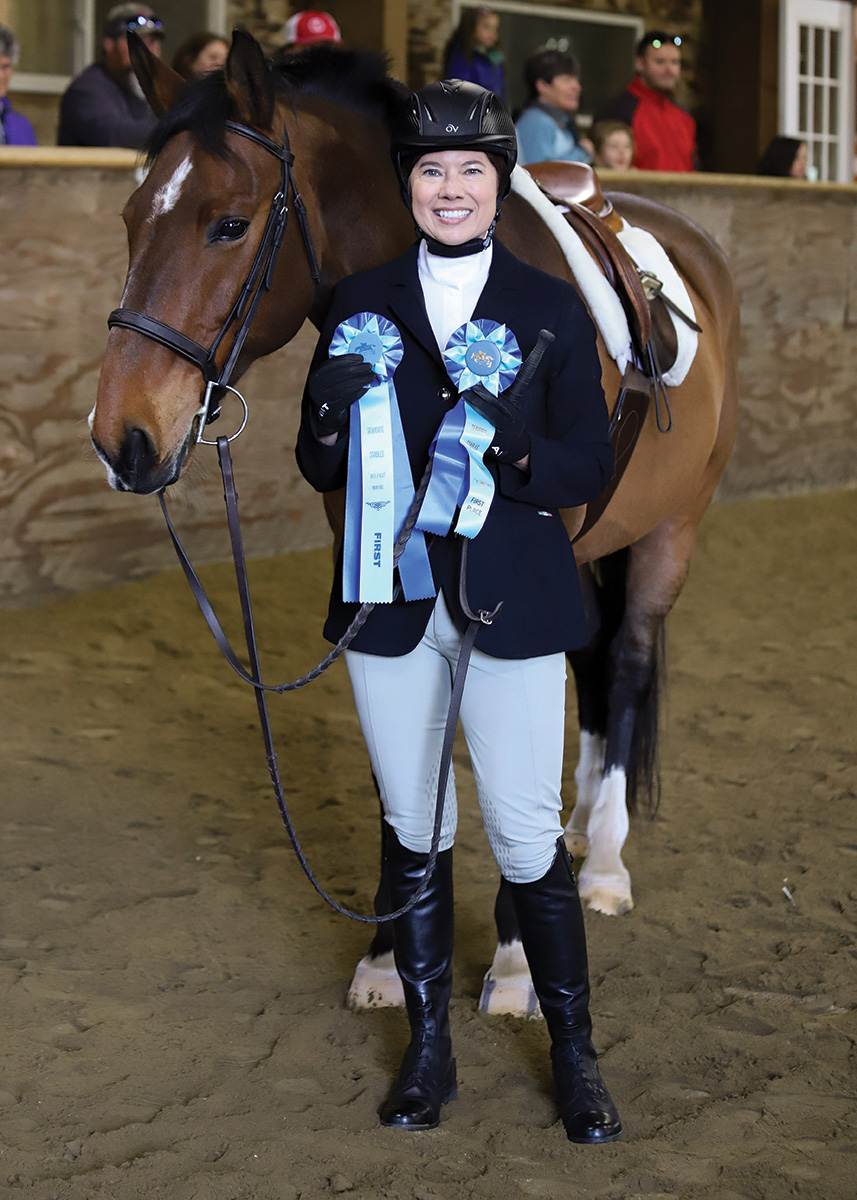
Julie Maddock at a horse show after returning to riding later in life.
Photo by Hillary Turner

Getting Back in the Saddle Later in Life

I grew up with horses and ponies. Took lessons as a teenager. Spent all my school vacations and summer days galloping through fields with my friends. I was obsessed with two things: horses and Bon Jovi.

And then my 20s led me to new trails: marriage, building a business, and a busy lifestyle that eventually crowded out any horse opportunities other than an occasional trail ride.    

And then, one day last year, it hit me: I love riding! I love horses! I had the circumstances to start seriously riding again. And I knew it would be amazing.

Positive thinking is essential, but reality can’t be ignored. I’m 20 years older, my knees are shot from my lifelong addiction to stilettos, and my right shoulder partially dislocates regularly just for the sheer fun of it.

So, as an adult (AKA “older”) rider returning to the sport, I had a few lessons to learn and concessions to make. And if you’re new to riding or considering returning, perhaps these tips will make the transition smoother.

Do Your Research

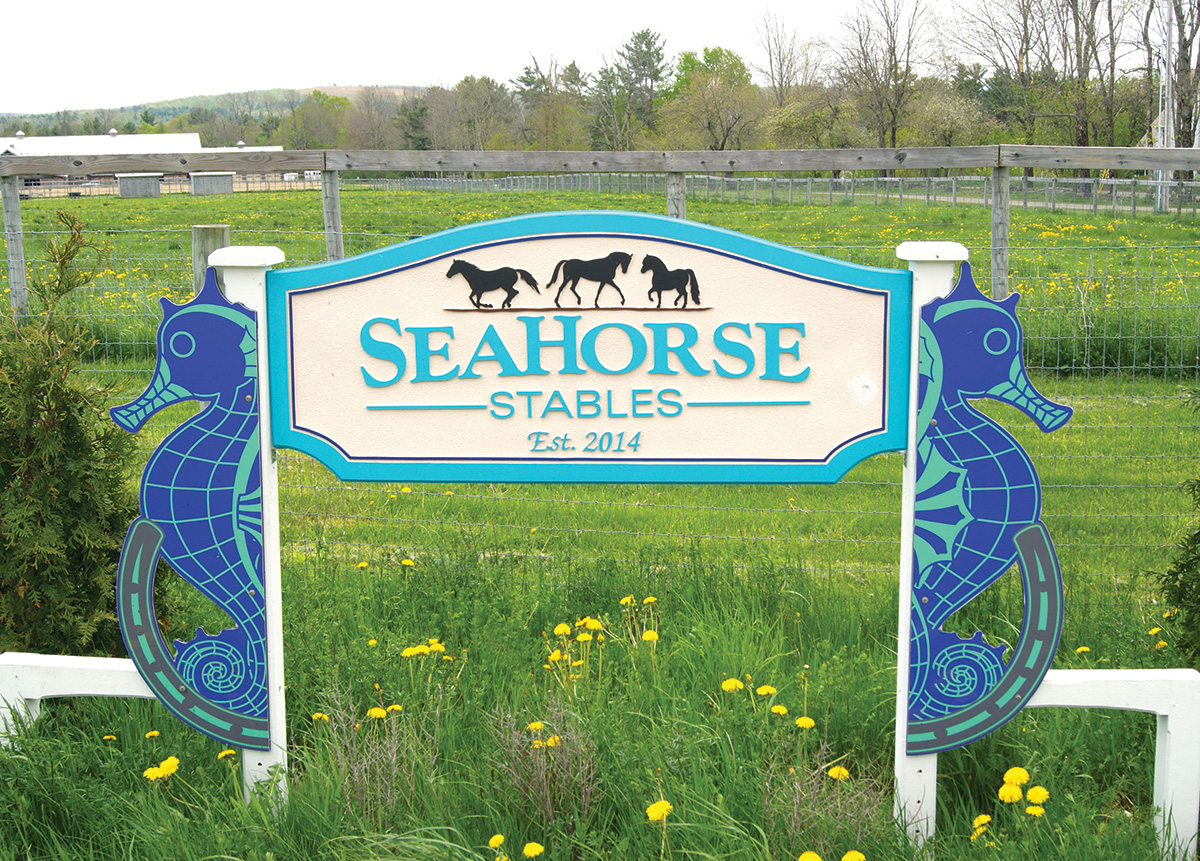
When owner Amy Miller gave me a tour of SeaHorse Stables in Belfast, Maine—a 30-acre hunter/jumper equestrian facility—I was impressed by the family-friendly atmosphere, the huge indoor arena so I could ride year-round safely, the luxury of heated bathrooms and tack rooms (yes, that matters), and the fact that riders of all ages and abilities are welcome.

I wanted a place where I could get the full experience: grooming, tacking up, taking a lesson, and then enjoying time with the horse after. When you feel at home with your barn family and friends, you are in a much better position to relax and focus on enjoying your lessons.   

SeaHorse Stables.
Julie found the perfect barn family fit at SeaHorse Stables. Photo courtesy Julie Maddock

Work with a Trainer

A certified riding instructor has the expertise and experience to teach you how to ride correctly, replace bad habits with good ones, rebuild your confidence, match a horse’s personality to your own, and ensure every lesson is not only fun but also challenging.

Up Your Fitness Level

“It is of the utmost importance that adult amateur riders work on their fitness and symmetry out of the saddle,” says Stephanie Seheult, DPT, who specializes in equestrian fitness at Advanced Physio.

“When a weakness is identified, do targeted exercises and stretches, which will help you improve your position and strength in the saddle,” she continues. “Knee-to-shoulder stretches will help relieve tightness in your posterior hip, and side-lying leg lifts with your heels down will work on the gluteus medius muscle.”

To up my endurance and leg strength, I not only increased my cardio workouts, but added game-changing equestrian-based exercises and stretches to my daily routine.

Embrace Imperfection

Riding will quickly teach you the value of humility. I laugh at my mistakes (my two-point looks more like a six-point!) and refuse to take myself too seriously.

When we ditch striving for perfection, the journey to becoming a better rider is so much more rewarding—and a whole lot more fun.   

So I Said Yes

It’s never too late to do something you love. Eighty-year-old Betty Oare finished 8th in the Adult Hunting Championship at the Washington International Horse Show in 2021. Now that’s impressive!

But when my trainer invited me to enter the spring schooling show after just two months of lessons, my first response was, “No. Thanks, but no.”

I mean really … competing in a horse show for the first time ever at my age and less-than-stellar ability? What was she thinking? Wasn’t it too late for me to even consider entering?

Apparently not.

That annoying, competitive, never-say-no-to-a-challenge voice inside my head grew louder: Face down the fear. If you can zipline through the jungles of Costa Rica hanging upside down by your ankles, you can certainly walk and trot on command.

So I said yes.

And was surprised by the level of excitement that began to build in anticipation of the big day. I tackled each lesson with renewed zeal. I rewarded myself with a new show shirt and tan breeches. Most importantly, I smashed down any disquieting thoughts that arose, telling me to leave the show ring to the flawless 14-year-olds with perfect two-point position and ankles that flex like rubber.         

Show day finally arrived. I was riding Jimmy (the most forgiving lesson horse you’ll ever meet) in the first two classes: Adult Equitation Walk/Trot and Adult Pleasure Walk/Trot.

And … we won, both classes! Two blue ribbons! (Full disclosure: only two people competed in my class; my win may not be quite as impressive as you were envisioning.)

I like to think Betty Oare would be proud of me for not galloping away from a challenge just because some people might think you’re too old or it’s too late to try.

I got my first taste of competition. And I liked the flavor. It was a chance to put to the test everything my trainer had been sounding down into my brain, hands, seat, and legs. Will I enter another show? I hope so. Will I keep riding into my 50s, 60s, 70s, and beyond? Most definitely!

Because it’s never too late.

This article about riding later in life appeared in the October 2024 issue of Horse Illustrated magazine. Click here to subscribe!
ASPCA Right Horse Adoptable Horse of the Week: Prince

0

Welcome to Horse Illustrated’s weekly installment of the Right Horse Adoptable Horse of the Week, offered in partnership with the ASPCA’s Right Horse program. This week’s adoptable horse is Prince! Check back weekly for a new featured horse so you can find your Right Horse.

Adoptable horse Prince.
Photo courtesy Wild at Heart Horse Rescue

Adoptable Horse: Prince, a 3-year-old, 14.0hh Mustang gelding
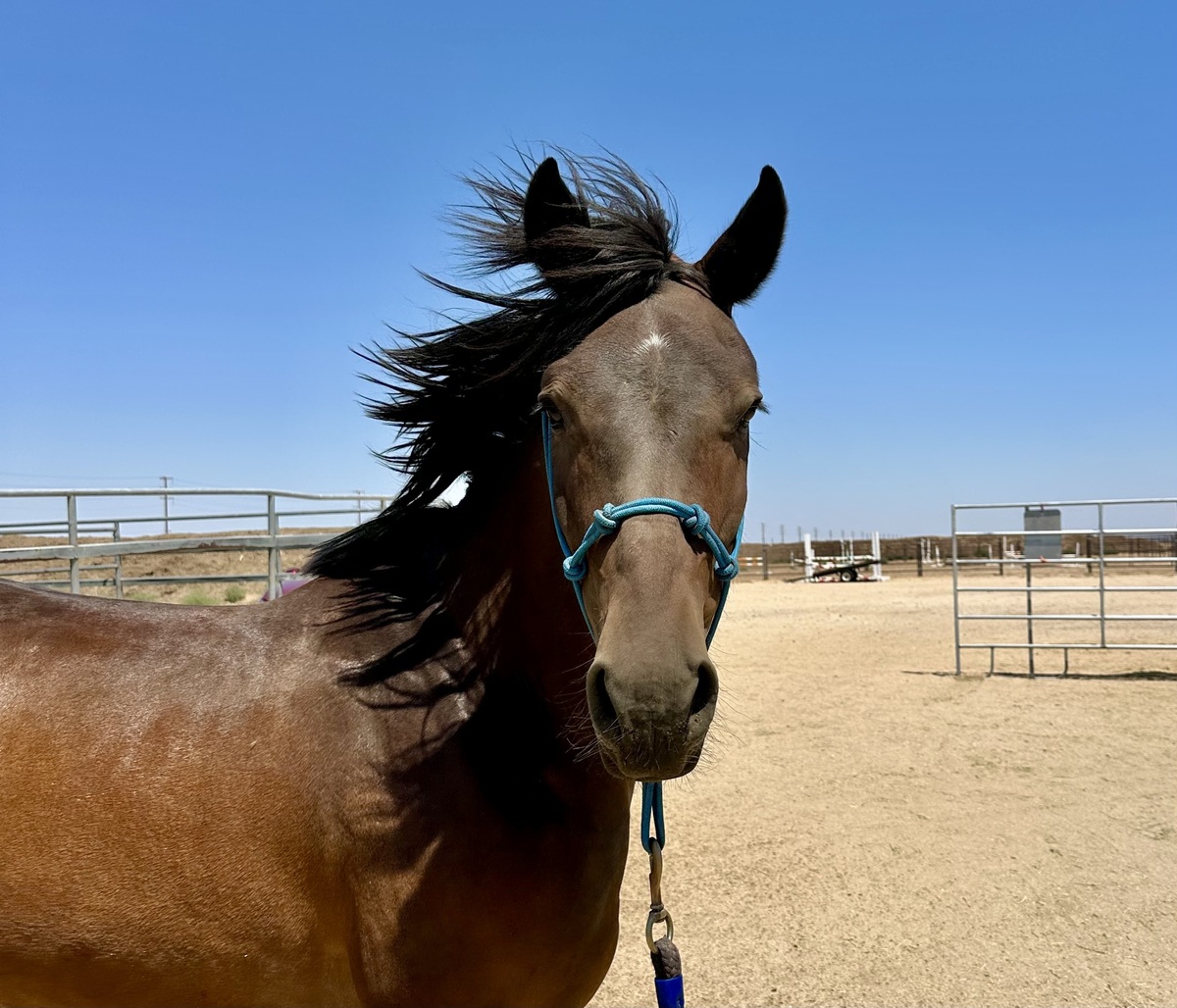
Organization: Wild at Heart Horse Rescue, Lancaster, Calif.

Get to Know Adoptable Horse Prince

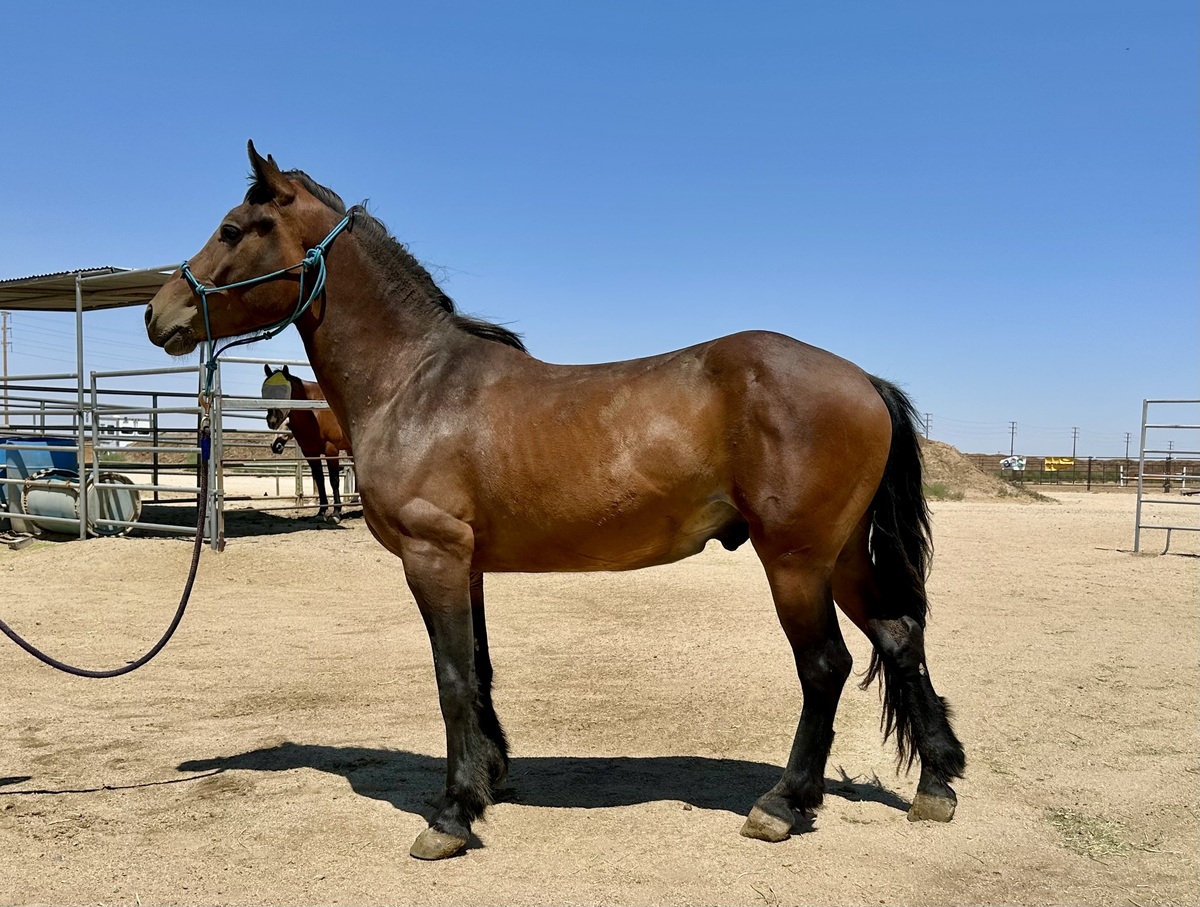
Prince is a 2022 Mustang gelding full of potential and personality! This young gentleman is currently in saddle training and making great progress under saddle. He’s easy to handle on the ground, halters and leads like a pro, and happily picks up his feet for the farrier.

Prince enjoys turnout in a group and is always easy to catch afterward, proving he’s both friendly and cooperative. With his sweet disposition and willingness to learn, Prince is ready for a loving adopter who wants to continue his training journey and build a lasting bond.

If you’re looking for a young, trainable Mustang with a heart as big as his potential, Prince might just be your perfect match!

Contact Wild at Heart Horse Rescue today about ASPCA Right Horse Adoptable Horse of the Week, Prince!

A bay Mustang gelding.
Photo courtesy Wild at Heart Horse Rescue

ASPCA Right Horse

My Right HorseASPCA Right Horse is the online adoption platform of The Right Horse Initiative, a collection of equine industry and welfare professionals and advocates working together to improve the lives of horses in transition. A program of the ASPCA, their goal is to massively increase horse adoption in the United States. To find more adoptable horses and foster horses, visit www.myrighthorse.org. To learn more about The Right Horse, a program of the ASPCA, visit www.aspcarighthorse.org.

0FansLike
0SubscribersSubscribe
We use cookies to help personalize content, tailor and measure ads, and provide a safer experience. By navigating the site, you agree to the use of cookies to collect information. Read our Cookie Policy.
OK