“It’s super beneficial to expose a horse to any sort of obstacle you can get your hands on because it creates better communication and trust between handler and horse,” says Camille White, who operates Camille’s Mustangs out of Bryan, Texas. White is also the 2022 Fort Worth Extreme Mustang Makeover Champion.
Preparation
Before you begin introducing a bridge or step-over to your horse, White advises preparing him by making sure he has a few prerequisites down pat.
Can Stand Still: A horse that knows how to stand still shows that he is capable of down-regulating his nervous system and accessing the thinking side of his brain, according to White. During obstacle training, she rewards the horse by releasing all pressure and allowing the horse to stand still and relax.
Legs Are Desensitized: When working with obstacles like bridges or step-overs, there is a good chance the obstacle will touch the horse’s legs. White prepares the horse for this sensation by introducing him to the feeling of having his legs touched by various objects before starting obstacle training.
Has a Good Follow: Before she starts obstacle work, White wants the horse to know how to track her when being led. She calls this “having a good follow.” In addition to tracking her, she wants the horse to know how to maintain a respectful distance from her.
Can Isolate Body Parts: White wants the horse to know how to move specific body parts when asked so she can position him to approach the obstacle. This includes the ability to move his shoulders and hindquarters from both sides. Once finished, she wants to see the horse return to a neutral, relaxed state.
Understands Halter Pressure: White teaches a horse how to respond correctly to halter pressure before starting obstacle training. When she picks up on the lead rope and the halter tightens across the horse’s poll, she wants him to smoothly and willingly move forward with her.
Ground Obstacle #1: Bridges
Bridges can show up in the show ring and on the trail. But White explains that learning how to step onto a bridge can also teach a horse how to step onto other strange surfaces, such as loading into a trailer. Groundwork is the key to introducing bridges and other novel surfaces.
Step 1: Begin by confidently approaching the bridge and ask your horse to follow. Don’t stop or hesitate when walking toward the obstacle, as this may communicate to the horse that it’s unsafe to move forward. If he hesitates, reinforce your ask by continuing to move forward and creating gentle pressure across the horse’s poll with the halter.
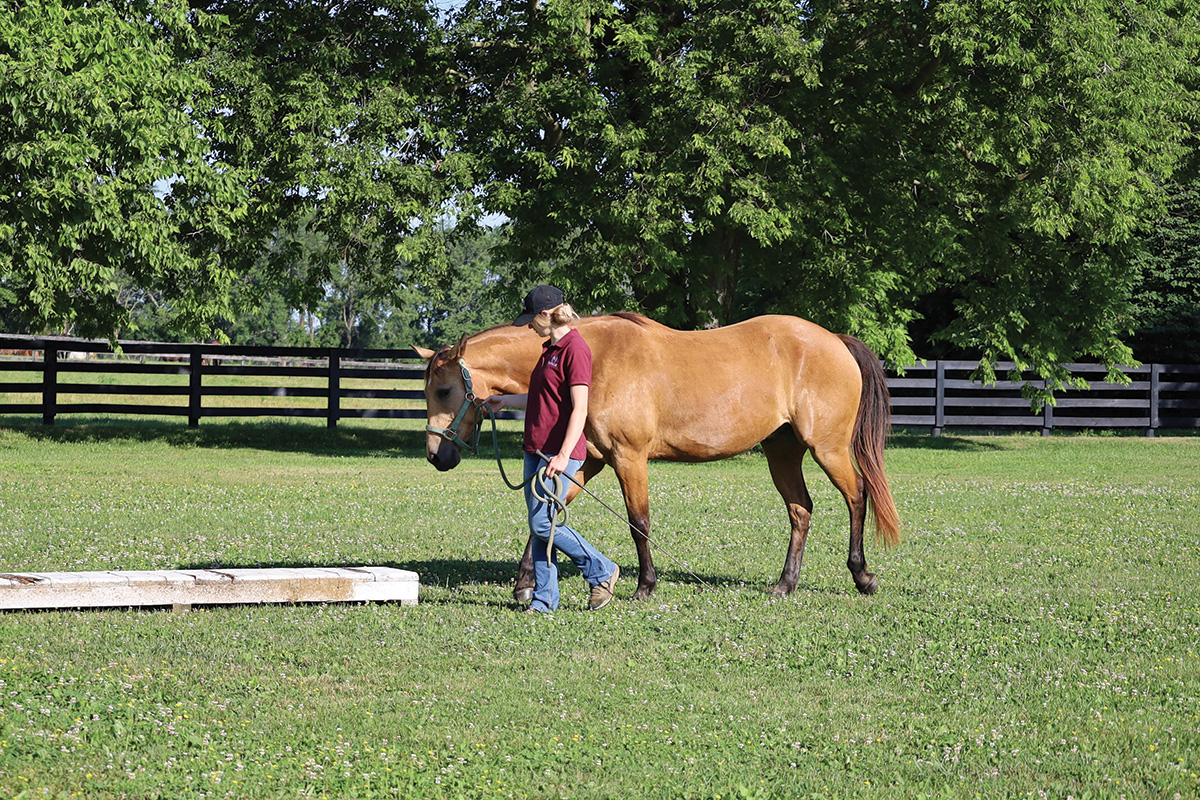
Step 2: Reward effort. Watch for the horse to commit to following you across the bridge. As soon as he commits, release all pressure. Try to time the release of pressure with the horse crossing the bridge to associate it with the obstacle. You may have to reward many small steps (such as sniffing the bridge or taking a single step toward it) before the horse commits to crossing the obstacle.
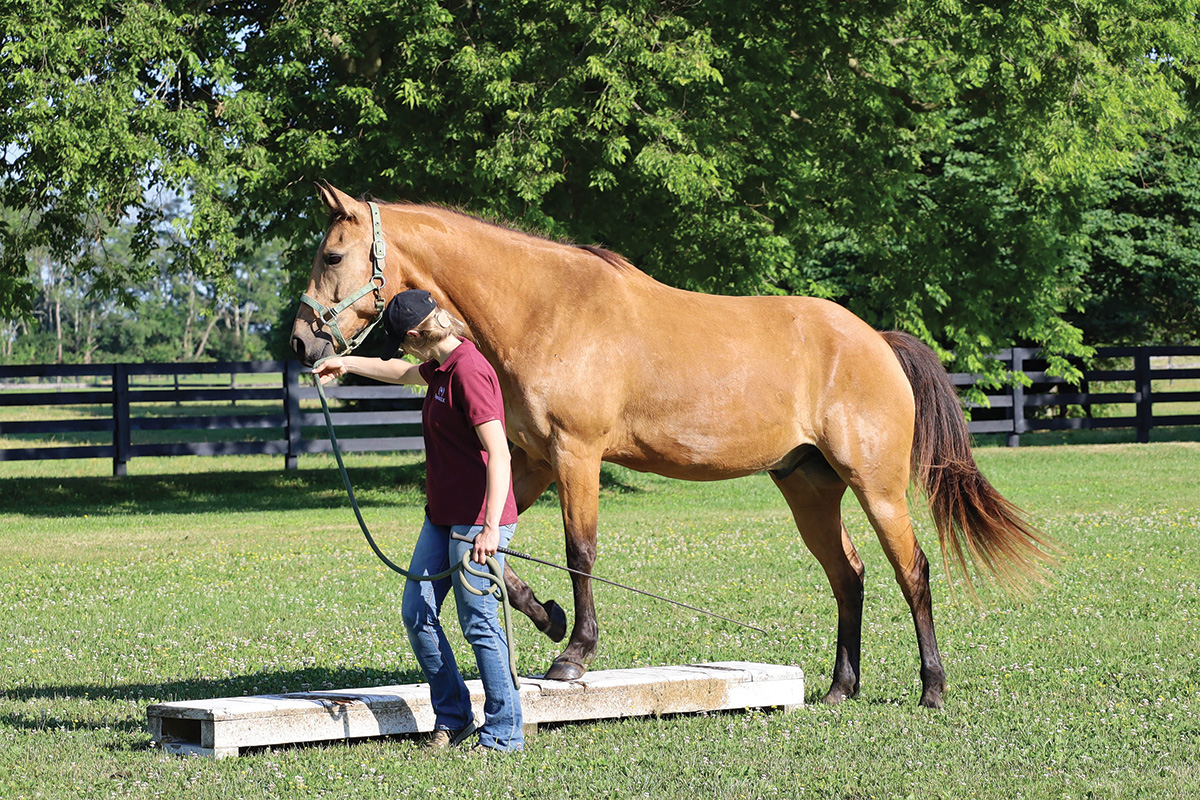
Step 3: Once he is comfortable calmly crossing the bridge, have the horse cross it again, but ask him to stop in the middle. When he stops, release all pressure and allow him to relax on the bridge. This helps the horse associate relaxation with the obstacle. If your timing is well-placed during step 2, this step will come naturally to most horses.
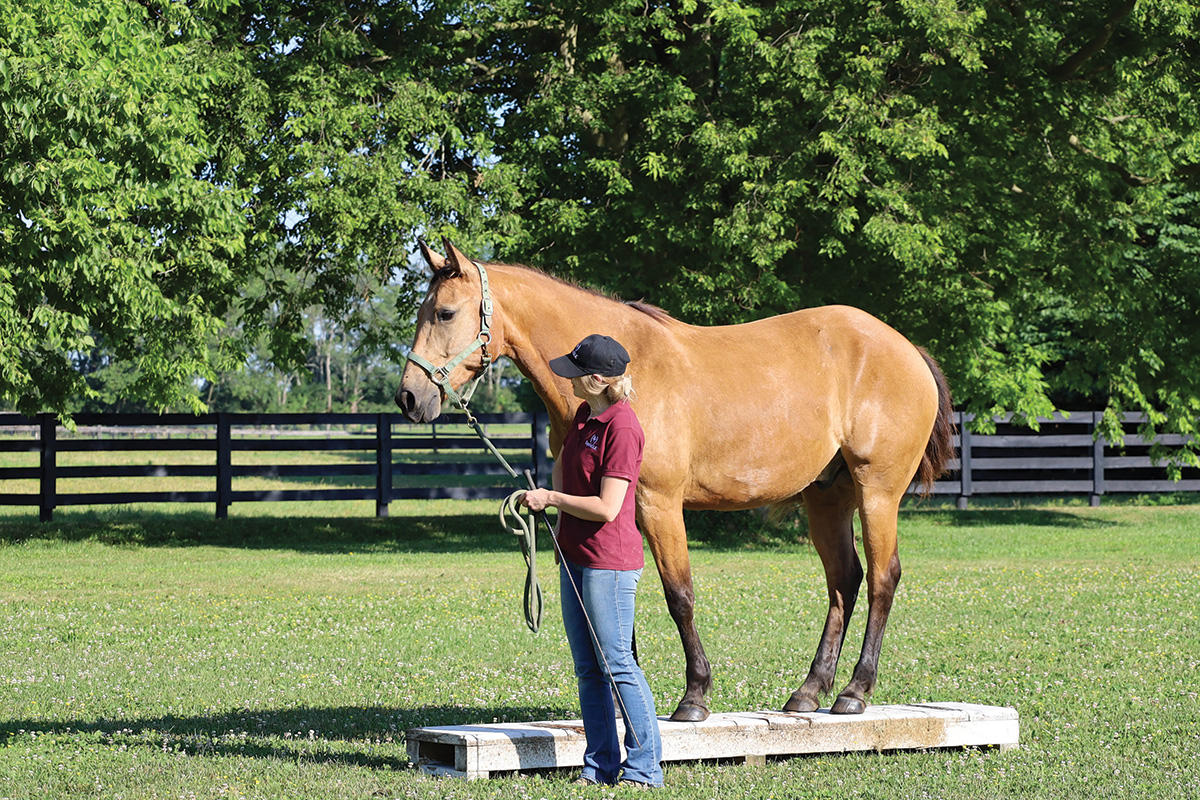
Be ready to troubleshoot the top three most common challenges when it comes to introducing a bridge crossing from the ground.
Refusal to Move: If the horse refuses to move during your approach, yield his hindquarters and shoulders to unlock his feet, then approach the bridge again. If he still refuses, create pressure at the hindquarters to encourage forward movement. Begin by simply looking at his hindquarters. If there is no response, increase pressure by using an extension of your arm, such as a training flag, to tap the horse’s hindquarters until he moves forward. Reward the smallest effort by removing all pressure.
Moving Backward: If the horse moves backward, move with him without releasing the tension on the lead rope. Continue to ask him to take one step forward in the right direction. Reward effort, which may be as small as the horse leaning toward the bridge.
Rushing the Bridge: The first time the horse crosses the bridge, he may rush over it. If he rushes through the obstacle, immediately turn around and cross the obstacle again. Repeat until he slows down and becomes intentional about where he places his feet.
Ground Obstacle #2: Step-Overs
Step-overs appear in the form of ground poles, cavalletti poles, logs, branches and even puddles of water. A horse that knows how to step over an obstacle can successfully navigate many different situations. White shares the following steps for teaching a horse how to step over obstacles from the ground.
Step 1: Start with an easy item to step over, such as a ground pole. Confidently approach the step-over and ask the horse to follow. Don’t stop or hesitate when walking toward the obstacle, as this may communicate to the horse that it’s unsafe to move forward. If he hesitates, reinforce your ask by continuing to move forward and creating gentle pressure across his poll with the halter.
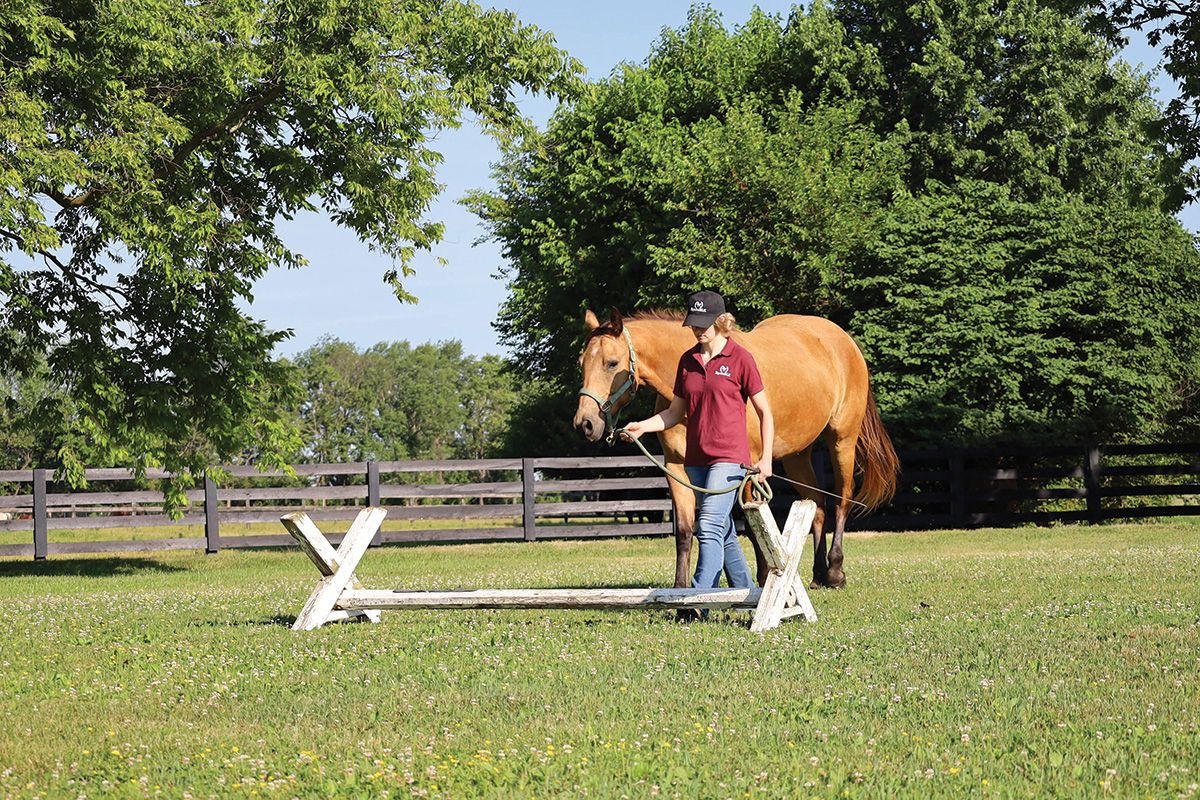
Step 2: Reward effort. Watch for the horse to commit to following you across the pole. As soon as he commits, release all pressure. Try to time the release of pressure with him crossing the bridge to associate it with the obstacle. You may have to reward many small steps (such as sniffing the pole or taking a single step toward it) before the horse commits to crossing the obstacle.
Step 3: Once the horse is comfortable stepping over a single ground pole, increase the challenge by adding more ground poles in a row and eventually increasing the height of the step-over. Follow steps 1 and 2 until he can calmly cross the obstacle.
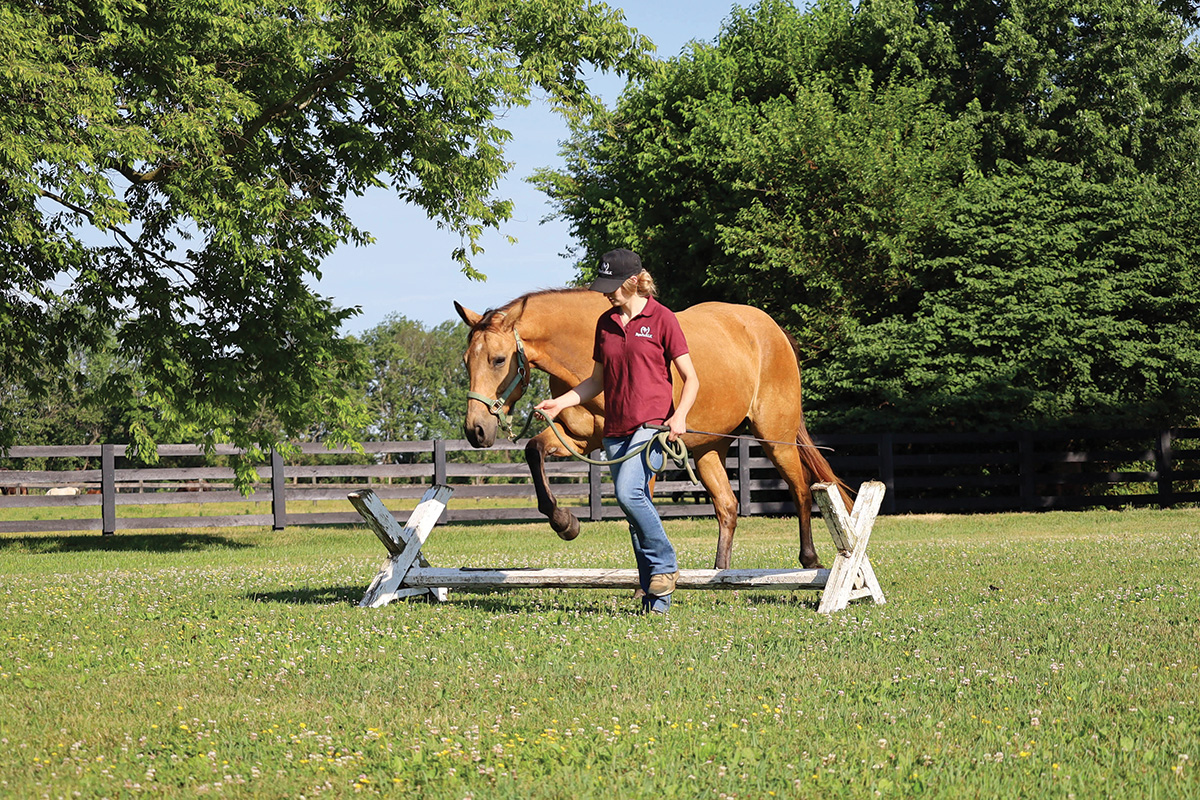
Again, there are some common issues you should be ready to troubleshoot from the get-go when it comes to step-overs.
Avoiding the Obstacle: If the horse tries to sidestep or go around the obstacle, isolate his shoulder and ask him to return to a straight position before asking him to move forward toward the obstacle again.
Reacting to the Obstacle Touching His Legs: If the horse reacts poorly to the obstacle touching his legs, return to the prerequisite of familiarizing him with foreign objects touching his legs before trying the obstacle again.
Rushing the Step-Over: Adding height to the step-over may cause the horse to rush or jump over it. If that happens, immediately turn around and cross the obstacle again. Repeat until he slows down and becomes intentional about where he places his feet.
“Preparedness is always going to be your best friend when working with horses,” says White.
She encourages you to prepare your horse for situations that require him to cross obstacles before the need to cross an obstacle arises. Teaching your horse how to become comfortable with obstacles takes time, but it’s time worth investing.
More Groundwork Articles
◆ Five Groundwork Exercises for Your Horse
◆ Groundwork Exercises to Improve Communication
◆ Groundwork with a Purpose
◆ How to Start Training a Horse for Liberty
This article about ground obstacles appeared in the September 2024 issue of Horse Illustrated magazine. Click here to subscribe!