Enter our 12 Days of Christmas Giveaways here!
0 ITEMS
  • My Account
  • Holiday Gift Guide
  • Podcast
  • Webinar
Subscribe Combo
Enable cache13
Home Blog Page 1044

English Horse Training

0


English Training

Hunter Jumper

Hunter Jumper

Whether you crave the thrill of the jumper ring or are drawn to the elegance of hunters, this is the place for those who love to jump.

SEE ALL TOPICS

Eventing

Eventing

From the elegance of dressage to the thrill of cross-country and the excitement of stadium jumping, this is the place to learn more about three-day eventing.

SEE ALL ARTICLES

Endurance

Endurance

It’s not just a casual trail ride. Learn about conditioning, preparation, and long-distance riding from experts in the sport of endurance.

SEE ALL TOPICS

Dressage

Dressage

Whether you use dressage as a training tool at home or you’re working on competitive goals, you’ll find all the info you need here.

SEE ALL ARTICLES

Saddle Seat

Saddle Seat

Find all the info you need for riding, training and showing your high-stepping saddle seat horse..

SEE ALL ARTICLES

English Expert

English Training Experts

Need advice on jumping, dressage or other English riding topics? Our team of expert trainers and judges is here to help you out.

SEE ALL ARTICLES

0
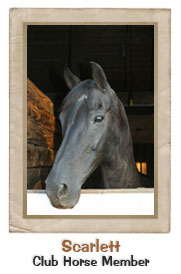
When you join Club Horse, you can give your special friend his or her very own web page! The whole world can know about your horse’s special quirks and cool habits. Plus, you can earn points for rewards such as the ones shown in the Club Horse rewards catalog. Keep checking back, new rewards are added regularly!

See How Horse Rewards Works Now!

Browse Rewards Catalog

Horse Rewards - Member Log-in

Horse Rewards - Member Profiles

Community Guidelines for Participation

6

Welcome to Our Community!

These are just some basic rules you should follow so we can all enjoy our time here!

You must have a full understanding of all the rules. If you are unsure about any rule, do not hesitate to ask a moderator. If you receive a warning and are unaware of the rule, it is assumed you falsely agreed to the rules during registration, which could result in a ban

When participating in our community, there are a few simple rules we ask each member to follow:

1. Communicate in a friendly and respectful manner

It’s OK to share your opinions and to disagree, we simply ask that you do so without attacking another member in the process.

If you feel you have been personally attacked in our community, don’t respond with an attack of your own. Instead, e-mail the Moderator to alert us of the problem.

2. Keep it clean

Profanity and obscenities will not be tolerated. This includes masked profanity where letters are substituted with special characters.

3. Don’t instigate arguments

Content intended to inflame or disrupt the community is not allowed. This includes harassment of fellow members and the community team, links to inappropriate content, racial, ethnic, religious, or other slurs as well as any name-calling. Any violation of federal or state law will not be tolerated and may result in immediate suspension from the site. For further information regarding the terms of use of this website, please click here.

4. No solicitations

No unsolicited or unauthorized advertising. This includes promotion of items for personal financial gain, as well as promotion of an item or issue for the purpose of mass communication. Further, mass posting or ‘spamming’ the community is not allowed.

Soliciting means you are persuading other members to buy something, try a new service, visit another website, etc., where the members may or may not have interest in doing so.
The private messaging system is for you to exchange advice, learn, and have fun. Using the private messaging system and message board as a means of mass communication for solicitation is strictly prohibited. Report abuse to the moderator by forwarding the private communication. We must have proof to stop future abuse.

5. Don’t share personally identifiable information

To protect your privacy and to ensure your online safety, we ask that you do not post personally identifiable information. This includes phone numbers, address, instant messaging screen names (AOL, ICQ, Yahoo, MSN, etc,) or web address leading to such information. Further, we ask that you do not share someone else’s personally identifiable information.

6. Don’t post copyrighted material

We ask that you do not post any copyrighted or trademarked material unless you have the express written consent of the owner to do so. The Animal Network is not responsible for any posts that infringe on copyright laws. If a copyright has been broken, you may be held legally responsible.

7. Respect our Community Team

The community team does its best to maintain the integrity and standards of the community areas. Should a problem arise in the community, we ask that you assist the community team by paying attention to its posts and following any directions the team provides.

8. Signatures

Your signature is not to exceed 500 pixels by 200 pixels.

If all the contents of your signature do not fit into the above space, your signature is too big. The lone exception is text. Text may go further right than the edge of the box because it wraps naturally. However, all images must fit in this area. You may have as many images in this area, but they can’t exceed the boundaries, and no one image can exceed any boundary.

Your total signature images must be less than 100K in size. To find how large your signature is, right click your image and choose “Properties” to see what your file size is. Please note: Animated images are big in file size.

The rules and guidelines of the community apply to signatures as well.

9. External links

Linking to other sites is allowed, however, please adhere to the above rules when posting links.

10. Keep on topic

Please keep all postings and subject matter relevant to the activities on this website. This is a forum where all members share and give advice and information. It is not a place to gossip, rant, or rave about subject matters not pertaining to the discussion.

These rules are here for your protection. They ensure we maintain a fun, safe and supportive environment where members can talk about the animals they adore. Members who continually break these rules are subject to account suspension and are no longer eligible for participation in our community.

Now that you know the rules, we invite you to join in our community and look forward to your participation. Welcome!

HorseChannel.com’s Terms of Use

3

ACCEPTANCE OF TERMS

This Terms of Use agreement sets forth the terms and conditions for using the horseillustrated.com website and other I-5 Publishing LLC websites, which include www.i5publishing.com and other I-5 Publishing-operated websites corresponding to I-5 Publishing’s various publications. This Terms of Use agreement constitutes a legally binding agreement between you and horseillustrated.com. Please read this agreement carefully before using horseillustrated.com, registering for any services offered by horseillustrated.com, making any purchases, or activating any account with horseillustrated.com

By using horseillustrated.com, you agree that you have read the Terms of Use agreement, understand it and agree to be bound by its terms and conditions, as we have the right to amend at any time and post on the horseillustrated.com and other I-5 Publishing Websites. Your use of the horseillustrated.com signifies your agreement to these Terms of Use. Likewise, your continued use of horseillustrated.com after revisions have been posted indicates your acceptance of such revisions.

PRIVACY

Your use of horseillustrated.com is governed by the I-5 Publishing Privacy Policy, which is incorporated by reference. You agree to I-5 Publishing’s collection, use and sharing of your information as set forth in the Privacy Policy.

CHILDREN

We do not permit children under 13 to register for services, like our discussion forums without express written consent from their parent or guardian, also known as a COPPA release form. We encourage parents or guardians to supervise Internet activity of all children under 18. Click here for more information on the Children’s Online Privacy Protection Rule (COPPA).

PROPRIETARY RIGHTS

horseillustrated.com and therefore its parent I-5 Publishing LLC owns all rights, title and interest in and to the material appearing on the horseillustrated.com Website, including, without limitation, all marks, graphics, images, layouts, presentation, page headers, button icons, typefaces, trade names, trade dress, logos, content, website design, data compilations, and text, which are protected by copyright, trademark, trade dress and other intellectual property laws. Any use of horseillustrated.com’s trademarks, trade dress or copyrighted materials without our express permission is strictly forbidden.

PERMITTED USE

Your accessing and viewing of horseillustrated.com is only for your personal, non-commercial use. Aside from page caching and the downloading of a single copy of horseillustrated.com for your own personal, non-commercial use, no other uses are permitted.

USER CONDUCT

horseillustrated.com offers a number of activities and opportunities for interaction, which include but are not specific to chat areas, message boards and/or email functions. Prior to participation, we require users to register and provide a username, password and email address. Because of the public nature of the activities on this website, we recommend that you exercise discretion in the type of information you decide to post in our activities. We have no control over the privacy practices of any community user. Likewise, we have no control over the content posted by the users of the activities on this website and cannot ensure that the content will not be objectionable or offensive. Objections to content can be made to InternetSupport@i5publishing.com. Although we have no obligation to monitor content, we reserve the right to delete or edit content from any of the activities on this website at any time for any reason.

By participating in the activities on this website, you agree that you will not post any content that:

  1. Is vulgar, obscene, profane, sexually oriented, harassing, hateful, threatening, abusive, slanderous, defamatory or invades the privacy of any third party;
  2. Is offensive on the basis of race, ethnicity, gender, age, disability, sexual orientation or religion;
  3. Violates any rights of any third party, including patent, trademark, trade secret, copyright, right of publicity, moral rights, or other proprietary rights, or any laws;
  4. Does not relate to the subject matter of the activities on this website for which you have registered;
  5. Contains any viruses, worms or other components intended to provide unauthorized access to third party data or disrupt or damage the functioning of computer hardware, software or telecommunications equipment;
  6. Constitutes spam, unsolicited advertising, chain letters or any form of gambling or lottery;
  7. Is commercial in nature including, but not limited to any advertising content.

By posting content to any of the activities on this website, you automatically assign to horseillustrated.com and I-5 Publishing all rights, title and interest in and to such content and grant horseillustrated.com and I-5 Publishing the right to use your name or identifying information in connection with such posted content. Although we have no obligation to monitor content, we reserve the right to delete or edit content that you may have submitted at any time for any reason.

USER RESPONSIBILITIES
It is solely your responsibility to keep your account information and password secure. Do not disclose your account information, including password to anyone that you have not authorized to use your account. You assume all liability from the use of horseillustrated.com from any users that use your account. You agree to notify horseillustrated.com immediately of any unauthorized account use or security breach. horseillustrated.com and I-5 Publishing LLC disclaims all liability arising from your failure to keep your account information and password secure.

DISCLAIMER
horseillustrated.com AND ALL OTHER I-5 PUBLISHING LLC WEBSITES AND RELATED SERVICES ARE PROVIDED “AS IS” AND WITHOUT EXPRESS OR IMPLIED WARRANTY. WE DISCLAIM ALL WARRANTIES AS TO THE OPERATION OF horseillustrated.com, THE CONTENT, INFORMATION MADE AVAILABLE ON THIS SITE, AND GOOD OR SERVICES PURCHASED THROUGH THIS SITE. TO THE EXTENT PERMITTED UNDER LAW, WE DISCLAIM ALL IMPLIED WARRANTIES OF MERCHANTABILITY, ACCURACY, FITNESS FOR A PARTICULR PURPOSE TITLE, AND NON-INFRINGEMENT. WITHOUT LIMITING THE FOREGOING, I-5 PUBLISHING LLC DOES NOT WARRANT THAT USE OF horseillustrated.com AND OTHER I-5 PUBLISHING LLC WEBSITES WILL BE UNINTERRUPTED, SECURE, OR FREE FROM ERRORS, VIRUSES OR OTHER HARMFUL COMPONENTS. YOUR USE OF horseillustrated.com AND OTHER I-5 PUBLISHING LLC WEBSITES IS SOLELY AT YOUR RISK.

THIRD-PARTY WEBSITES LINKED TO OR FROM horseillustrated.com ARE NOT CONTROLLED BY I-5 PUBLISHING. I-5 PUBLISHING LLC EXPRESSLY DISCLAIMS RESPONSIBILITY FOR THE CONTENT ON THIRD-PARTY WEBSITES. YOU IRREVOCABLY WAIVE ANY CLAIM AGAINST horseillustrated.com AND I-5 PUBLISHING REGARDING SUCH THIRD-PARTY WEBSITES AND CONTENT.

LIMITATION OF LIABILITY
horseillustrated.com AND I-5 PUBLISHING LLC SHALL NOT BE LIABLE UNDER ANY CIRCUMSTANCES FOR ANY DIRECT, INDIRECT, SPECIAL, PUNITIVE, EXEMPLARY, INCIDENTIAL OR CONSEQUENTIAL DAMAGES RESULTING FROM THE USE OF OR THE INABILITY TO USE horseillustrated.com AND OTHER I-5 PUBLISHING LLC WEBSITES OR SERVICES AVAILABLE IN CONNECTION THEREWITH. APPLICABLE LAW MAY NOT ALLOW THE LIMITATION OR EXCLUSION OF LIABILITY OR DAMAGES, SO THE ABOVE MAY NOT APPLY TO YOU. UNDER NO CIRCUMSTANCES SHALL OUR LIABILITY TO YOU IN CONNECTION WITH USE OF horseillustrated.com AND ALL OTHER I-5 PUBLISHING LLC WEBSITES EXCEED THE AMOUNT PAID BY YOU, IF ANY, FOR ACCESSING THE horseillustrated.com AND OTHER I-5 PUBLISHING LLC WEBSITES.

INDEMNIFICATION
You agree to indemnify and hold horseillustrated.com and I-5 Publishing LLC and its subsidiaries, affiliates, partners, directors, officers, employees, agents and representatives harmless from and against any claim or demand, including attorney fees and costs, made by any third party arising out of your use of the horseillustrated.com, and content you may have posted, any violation of any third party rights, any violation of the Terms of Use, or any violation of any other law.

GENERAL
These Terms of Use and the relationship between you and horseillustrated.com shall be governed by the laws of the State of California without regard to its conflict of law provisions. Any action relating to these Terms of Use will be brought exclusively in the federal or state courts located in Los Angeles, California, and you consent to the personal jurisdiction of such courts. No failure or delay by horseillustrated.com and I-5 Publishing LLC in exercising any right under these Terms of Use will operate as a waiver thereof. The invalidity or unenforceability of any provision of these Terms of Use will not affect the validity or enforceability of any other provision, all of which will remain in full force and effect. You agree that regardless of any statute or law to the contrary, any claim or cause of action arising out of, related to or connected with the use of horseillustrated.com or these Terms of Use must be filed within one year after such claim or cause of action arose or be permanently barred. The section titles in these Terms of Use are for the convenience of the parties only and have no legal or contractual effect. These Terms of Use, including the Privacy Policy and the Forum Agreement incorporated herein by reference, represent the entire understanding of the parties regarding its subject matter, and supersede all prior and contemporaneous agreements and understandings between the parties regarding its subject matter. You shall not assign your rights or obligations hereunder without I-5 Publishing’s prior written consent.

CLAIMS OF INFRINGEMENT OF COPYRIGHT MATERIAL
horseillustrated.com and I-5 Publishing LLC respects the intellectual property rights of others and we expect our users to do the same. If you believe that material posted on the horseillustrated.com infringes your copyright, please provide a written notification containing all of the following to our Copyright Agent:

  1. A physical or electronic signature of the owner of the allegedly infringed copyright (or such person’s authorized representative).
  2. A description of the copyrighted work claimed to have been infringed, or, if multiple copyrighted works at issue, a list of such works.
  3. A description of the material on horseillustrated.com (including the precise websites addresses on which the allegedly infringing material appears) that is claimed to be infringing or to be the subject of infringing activity, with information reasonably sufficient to permit us to locate the material.
  4. Contact information for the complaining party, including address, telephone number, and, if available, an e-mail address.
  5. A statement that you have a good faith belief that use of the allegedly infringing material is not authorized by the copyright owner, its agent, or the law.
  6. A statement that the information in the notification is accurate, and under penalty of perjury, that you are authorized to act on behalf of the owner of the copyright that is allegedly infringed.

horseillustrated.com does not guarantee that any complained-of content will be deleted or modified. horseillustrated.com’s Copyright Agent for notice of claims of copyright infringement is:

Copyright Infringement
Digital Department
I-5 Publishing LLC
3 Burroughs
Irvine, CA 92618

or email to:

Internet Support

TERMINATION
These Terms of Use are effective until terminated by either party. horseillustrated.com may, in its sole discretion, without notice to you, suspend or terminate your use of the horseillustrated.com Websites or terminate any account or registration for any discussion forum. You may terminate these Terms of Use at any time, by discontinuing use of horseillustrated.com. However, you are still liable for any violations of the Terms of Use prior to any termination. horseillustrated.com and I-5 Publishing shall not be liable to you or any third party for any claims or damages arising out of any termination or suspension of access or use of horseillustrated.com.

Seven Tips for Preventing Colic

16

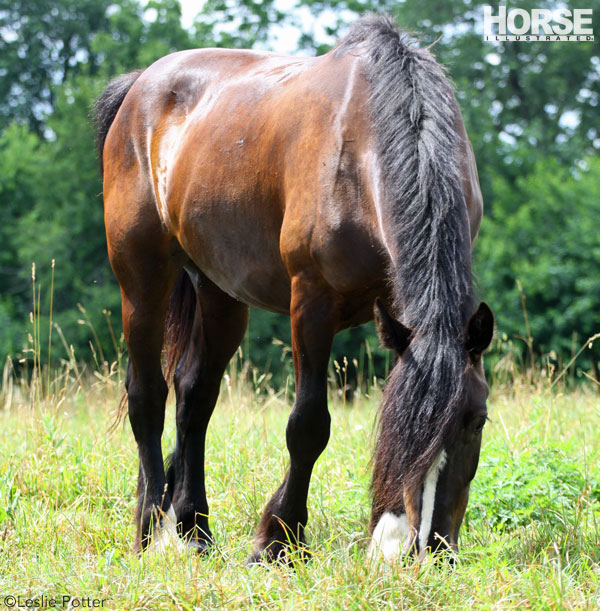
Grazing Horse
1. Routine: Keeping a consistent daily routine is important for horses. Any change in a horse’s routine can lead to digestive upset. Feed at the same time each day and turn out for the same number of hours daily. 

2. Institute Feed Changes Gradually: If you are going to switch from one feed brand to another, for instance from timothy to alfalfa, do it slowly. Mix the two feeds together for a week or so while gradually removing the old feed and increasing the new.

3. Monitor Your Horse’s Environment: Keep an eye on the field! If the apple tree is loaded, you might think about limiting Trigger’s time out in that field. If it is the first bloom of lush green grass in the spring, introduce your horses to it gradually. If a storm brings a lot of tree limbs and other debris into the pasture, clean it up.

4. Deworm Your Horses On a Regular Schedule: A gut full of parasites can cause bellyaches. Having to kill off too many parasites at once can also cause a bellyache. It’s best to not let it get out of hand in the first place. With the ease of administering today’s paste dewormers, there is no reason not to deworm on a regular basis. Speak with your veterinarian about a good deworming schedule for a horse residing in your part of the country.

5. Float Those Teeth: Veterinarians and equine dentists are available options to float your horse’s teeth. When the teeth are left unattended, they develop sharp points that can cause ulcers in your horse’s mouth. Also, you want your horse to have the greatest grinding surface available so that he can get that food in the best digestible condition possible before sending it south to his stomach.

6. Keep The Feed Room Door Locked: Have your feed in containers the horses can’t break into should the door be left open. Gorging on any sort of feedstuff will give horses colic. A serious grain-overload colic will be followed by a terrible case of laminitis (founder), all of which is avoidable if the feed room door is kept locked.

7. Water, Water Everywhere: Horses need clean, fresh potable water available at all times. Don’t forget to keep the water tub in the field clean and filled. Also, the stall should have at least one large automatic waterer or large bucket available. Remember, horses are not evolutionarily adapted to drinking solid water. For that matter, our equine friends aren’t all that fond of very cold water. In order to avoid a fecal impaction, provide water above 50 degrees at all times.

Liked this article? Here are others you’ll enjoy:
Colic Surgery Guide
Acupressure for Colic
When to Call the Vet

News article title

0

body of the article goes here.

djagjduieiuahkjgd
dlkagdjkgaie
dkgajdjgoiae
dkagjoies

digjiei

kagkei
Jim Belushi, the star of TV’s “According to Jim,” is used to giving interviews. But his favorite was one that didn’t focus on him but his dogs.

“I did an Animal Planet interview where I took my dogs out and showed them all the tricks I had taught my dogs,” says the actor, who owns two German Shepherd Dogs, Truly Scrumptious and Choo Choo Train, in an interview with the Chicago Sun-Times. “It was my favorite interview to do. But you have to understand, I love animals. I mean, I love dogs. So to be on Animal Planet is like a big deal for me.”

Still, the famously raunchy comedian doesn’t hesitate to mention one of the downsides of dog ownership. “I’ve picked up more [poop] than you can imagine,” he says. “After 15 years of owning dogs, I’ve become a very good doctor, by the way. I can tell you how they’re feeling by their poop.”

News article title
Dateline/description goes here More >>

Riding After Deworming

3
Horseback Riding

Q: I have a 12-year-old gelding on a regular deworming program (I rotate ivermectin, pyrantel pamoate, fenbendazole, and praziquantel/ivermectin) and he’s very healthy*. Is there any problem with exercising him on the same day that I deworm? Should he get some time off after deworming?

A: For a horse that has been on a regular, well-balanced deworming program, there is no reason why you cannot exercise him on the day the dewormer is administered. The word “regular” conveys a meaning of at least several times a year. Depending on stocking rates (horses per acre) and management, most horses benefit from deworming at least every three months. The chemicals that you have listed are excellent choices and should be quite effective in reducing parasites in your horse.

If your horse had not been dewormed in a long time, particularly if he were quite young, there would be a slight risk of colic after deworming due to a heavy parasite load being expelled. In that scenario, it might be advisable to give the horse that day off after deworming, or consider a half dose of a fenbendazole product, to avoid killing large numbers of ascarid parasites at once. This half dose would then ideally be followed up within several days with an ivermectin or moxidectin dewormer.

*Editor’s Note: Since this article was originally published, a standard rotation is no longer recommended. Read more about current deworming science here.

Julia H. Wilson, DVM, Diplomate, ACVIM, associate professor & division head, Large Animal Medicine, Veterinary Population Medicine, College of Veterinary Medicine, University of Minnesota.


The Making of a Cow Horse

9


In the Old West tradition, horses earned their keep when gathering and trailing cattle on the open range. In fact, getting a herd of cattle to market in those days took a top hand mounted on a horse with plenty of cow sense.

Hollywood has helped perpetuate a myth that horses and cows go together like peanut butter and jelly, but most horse people know better. Truth be told, most horses today have never been exposed to cattle, so they have a tendency to react toward cows more like water does to oil.

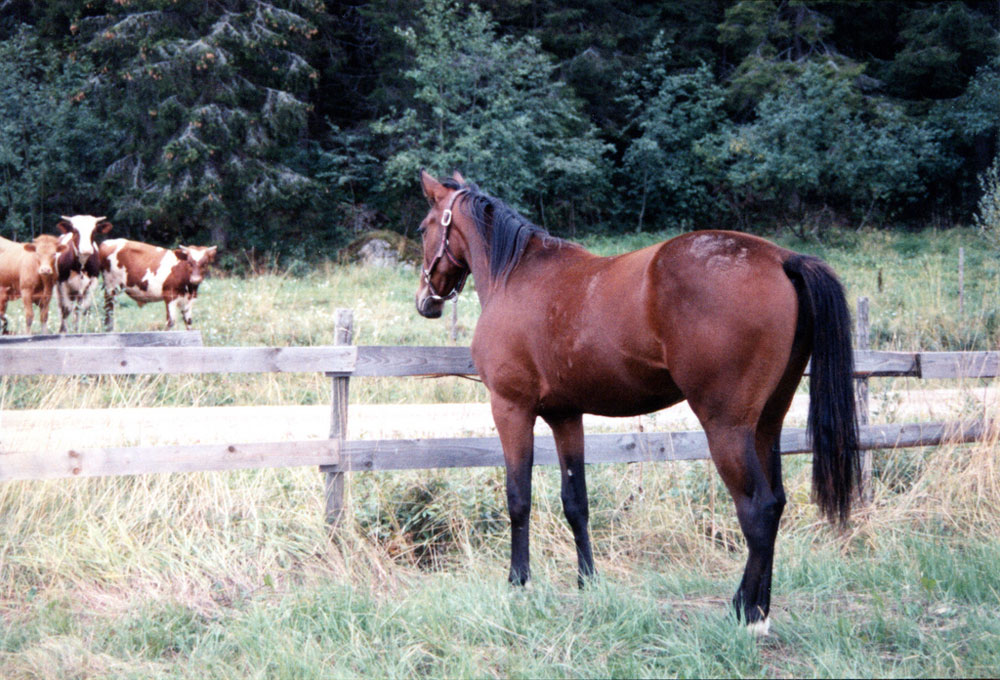
Cattle and Horse
Untitled by Smerika via flickr/CC BY-SA 2.0

However, there is good news. “The way the horse reacts at first doesn’t have much to do with the way he ends up being,” says C.L. Collins, who resides on the Twenty Two Ranch in Harrison, Ark. He was raised in a ranching family in west Texas where he grew up working livestock from horseback. Over the years he’s successfully competed in various cattle events such as calf and steer roping, with cutting as his main interest, and has earned more than $50,000 in his lifetime effort in the sport. “Making a cow horse is a very long process; the horse will have plenty of time to make changes in his attitude toward cattle,” Collins says.

While all horses are not equal in natural cow sense, practically any horse, on some level, can be trained to work with cattle. “Any horse can be used to work cows, but some horses never get cow savvy,” Collins says. All in all, it’s the trainer’s job to help his animal develop into a good working horse.

Just as anything else in training, introducing your horse to cattle and developing in him the ability to work cows is a step-by-step process.

Before introducing your horse to cattle, he should have a good handle of the basics under saddle. “The horse needs to move and stop on command without hesitation and without resistance,” Collins says. “But, I think lots of horses do very well if they learn to be a broke horse while working cattle. The cow gives them a reason to stop and turn. For this reason I like to start working with a horse around cattle as soon as the horse is green broke well enough to take him to where the cattle are. A horse that is too well trained might have the tendency to wait for the rider’s cue rather than respond to the cow on his own.”

However, the average horse owner might find broader success if they start with a broke horse that has a good stop on him and responds well to both rein and leg pressure at the walk, jog and lope.

Horse, Meet Cow

Some horses are curious and will actually want to approach cows, while others have an earnest desire to get as far away from them as possible. Since you may not know how your horse will react to cows, the best way to introduce them to him is in a safe manner, possibly where you can, to some degree, control his reaction. As an additional caution, avoid bulls. “I have worked cattle of all ages and sexes, including bulls,” Collins says. “Bulls can be unpredictable.” It is wiser for the beginner to only work with steers and gentle cows until both horse and rider have gained a fair amount of cow savvy.

One method might be to turn your horse loose in a safely constructed arena or pen with a single cow and let him become acquainted with her on his own. However, in this situation you have very little control over how your horse handles the introduction.

Riding out with a group of cow savvy horses and riders to a pasture with cattle is another way to introduce your horse to cows. Depending on how comfortable, or uncomfortable, your horse is around cattle will govern just how close you’ll be able to ride to the cows in the beginning.

Your goal when introducing your horse to cattle is to get him calm and comfortable. “A nervous horse doesn’t learn much,” Collins says. Giving your nervous horse something else to think about while riding with cattle will help. To keep up with, and eventually control, a wily ol’ cow, your horse will need to be supple both laterally and horizontally, so this is a good time to work at relaxing his poll and loosening up his shoulders. Your warm-up should also include executing smooth transitions between all three gaits as well as stops, turns and leg yields.

Warning: Be cautious when working your horse in a pasture. Grazing land, unlike an arena, may have many concealed hazards, so carefully check the terrain for rodent holes, parts of old farm equipment and old wire fences hidden in the grass before you begin working your horse.

In the beginning, your horse may be troubled with the presence of the cows and will give less of his attention to you than he does the cattle. This is fine; it gives you the opportunity to draw his attention back to what you want. Each time his attention wanders, bring it back by asking for a change in direction or speed.

“If the horse is nervous, I often turn him around, maybe once, maybe 10 times,” Collins says. “I’ll do it until the horse is relaxed and paying attention to what I’m telling him instead of what he was nervous about.”

As you continue working with your horse, slowly close the gap until you’re able to ride near the herd without him feeling troubled and losing his concentration.

An alternative approach to introducing your horse to cows is to use pens or an arena. “Because cattle tend to stop in corners, the best pens to work with cattle are round,” Collins says. “Solid pen walls are preferred over other fencing, but any fence that will contain the cattle is adequate,” Collins explains. “I have used pens as small in diameter as 80 feet and as big as 180 feet, but my favorite size, if I am alone in the pen, would be 100 feet. If another rider is in the pen with me, a good size area would be 120 to 150 feet.” Keep in mind that the smaller the pen the more pressure there will be on the cow, thus that same pressure will transmit to the horse. “For this reason, a larger pen is better for either an inexperienced horse or an inexperienced rider,” Collins explains.

Start out by placing a group of cows in a small enclosure at one end of a pen where your horse can easily see them, then ride your horse into the opposite end, and begin by warming him up, such as was suggested when working in the pasture scenario. When your horse is able to hold his concentration on you while riding along the fence where the cows are held, it’s time to go one-on-one with a cow.

Building Cow Interest

At this point you’ll actually want your horse to hold his attention on the cow rather than you. You are merely along for the ride and to encourage your horse to watch and follow a cow.

If you are riding in a pasture, you may have a tougher time pursuing a single cow, since cows have a tendency to bunch together when they feel light pressure from a horse and rider. In the pen situation, you’ll find it’s easier.

Regardless of where you ride, your objective for this training session is to build the desire in your horse to watch a cow and move when she does. To do this, ride your horse forward until the cow feels just enough pressure to move off, then direct your horse to follow. At this point in the training, the cow should determine the direction of travel, while you will simply direct your horse to follow, called “trailing” the cow.

When the cow stops, rein your horse to a stop and allow him to watch the cow for a few moments. If your horse looks away from the cow, use the direct rein and pull his head back in the direction of the cow. In this instance, the direct rein is the rein closest to the cow. When the cow moves, ask your horse to again trail the cow. When first introducing a horse to working cattle, riding two handed will make it easier for him to understand your rein cues and what you are asking him to do.

Continue this line of guidance until your horse begins to acknowledge the cow on his own. In other words, your horse begins to “move with the cow” with fewer and fewer directional aids from you.

Controlling the Cow

Once your horse is trailing the cow well on his own, it’s time to begin taking control of the cow’s direction of travel and speed. Begin by “tracking” the cow, that is, ride parallel to the cow rather than behind her.

Walk your horse into the cow to get her moving along the fence, then rein your horse to move up parallel with the cow. If your horse tries to slow down in order to slip back behind the cow, as he did when trailing, you’ll have to cue him with your direct leg (the leg closest to the cow) in order to hold him in position, and put enough forward pressure on him to maintain speed.

Tracking can be performed at varying distances from the cow. The closer you ride to the cow the more pressure you place on her—she’ll take action by either speeding up or stopping and changing directions. In other words, the cow’s movement all depends on your horse’s relative position to her. This is where your own cow smarts come into play. (See  “Are You Cow Savvy?” on pg. 106)

A position behind the cow’s eye will initiate forward movement. On the other hand, riding toward the front of the cow’s head will challenge her and cause her to turn or stop. But how do you hold a cow?

“The surest way to hold a cow is to take the pressure off,” Collins explains. “The cow moves because the horse is closer to her than she feels comfortable with. If we want a cow to stop, we put more distance between her and the horse. How much distance depends on the individual cow and her own comfort zone. Often we can do this and still maintain a position that allows us to control the cow.”

Working a Herd

If you’ve been riding in a pasture of cattle your horse is slightly ahead of the game, but if you’ve been using the pen system, and your horse has gained sufficient experience and confidence with a single cow, it’s time to ride him into a herd. While your horse may have been comfortable one-on-one with a cow, walking into a herd of cattle may intimidate him.

Bring a small herd of cows into the training pen and start by riding at a walk in a wide circle around them. When your horse appears relaxed with this, step him closer to the herd in increasingly smaller circles. Next, rein into and through the middle of the herd. Try to split the herd by continuing to walk straight through it. Circle the herd once more to bring the cattle back together, then rein your horse back through the center again. Continue this exercise until your horse is completely comfortable moving through the herd.

As your horse progresses, ride through the center of the herd and stop in the middle of it for a few moments before proceeding to the opposite side. Next time you might try peeling a single cow from the herd, and keeping her separated by tracking her around the pen.

Remember that introducing your horse to cattle should be a pleasant experience for him. In order to build his confidence and interest, start slow. Once your horse realizes that he can actually control a herd of cattle, he’ll become an enthusiastic partner and solid working cow horse.

Further Reading
Test Riding a Cutting Horse
Team Penning

Kim and Kari Baker are identical twins who raise Appaloosas on their ranch in Montana.

Entry-Level Eventing

15

Can you keep your horse on the bit through basic dressage movements? Is he comfortable negotiating difficult terrain while hacking out? Can he handle a course of small jumps with ease? If you answered yes to all three, you’ve probably considered eventing. If you’re not already involved in this exciting sport, here’s your chance to give it a try.

In January 2005, the United States Eventing Association (USEA) recognized a new introductory level called Beginner Novice. As explained in the 2005 USEA rulebook, “the Beginner Novice level is designed to introduce green horses and riders to horse trials … the entire experience should be safe, inviting and educational.”

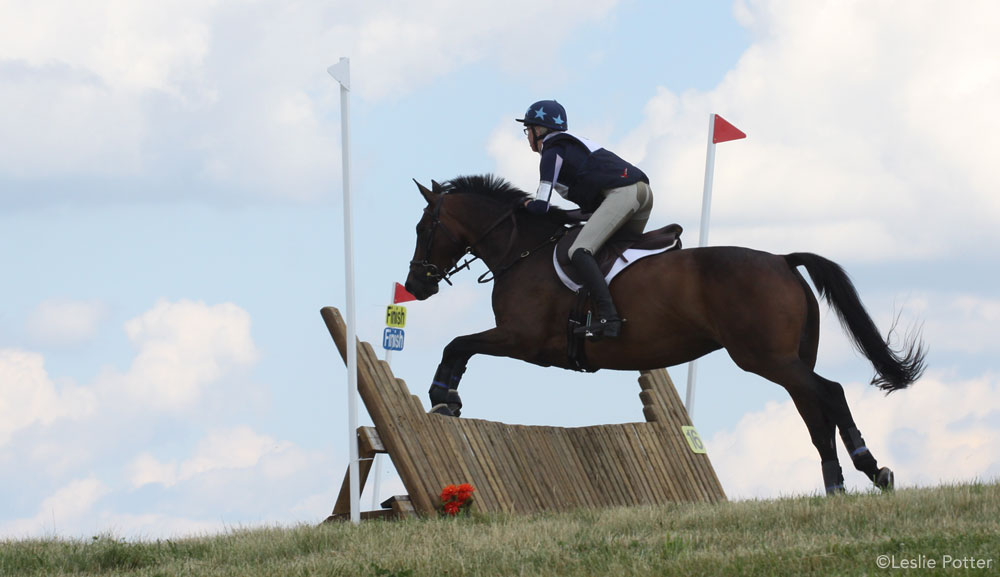
Beginner Novice Cross-Country

Beginner Novice jumps cannot exceed 2’7″—and that’s a big step down from the sport’s next level, Novice, where the jumps reach 2’11”. The Beginner Novice dressage tests ask for walk, trot, canter, with a figure no more demanding than a 20-meter circle, plus a required halt at the test’s conclusion. The cross-country course is short—about four minutes of moderate cantering—and offers 14 – 18 straightforward and inviting jumps, including a bank up, a water crossing and a shallow ditch. The show jumping test requires nine to 11 fences with only one two-stride combination allowed.

Does this sound like a challenge within your reach? As the USEA’s executive director Jo Whitehouse says, “We welcome everybody who in their hearts consider themselves eventers to give our sport a try.”

Not for Beginners

Despite the name, Beginner Novice is not actually intended for beginning riders. The USEA rulebook suggests that Beginner Novice is “designed for competitors and horses that have already had experience at schooling competitions in all three disciplines.”

Well-known event trainer and national and international eventing judge Jane Hamlin from Cornish, N.H., makes sure her riders have solid basic positions and are firmly in control outside arena walls before she lets them start cross-country work. “I want to see a rider canter from point A to point B in an open field before I throw a jump into the mix,” she says. “Control is always an issue. I want to see them ride safely off the manicured paths and work up and down slopes before we start cross-country work.”

One of the best ways to try out cross-country is to sign up for a hunter pace. Here you’ll ride a prescribed course through hunt country, jumping optional fences in a relaxed manner. Since a hunter pace isn’t judged, you can trot fences or even skip the ones you don’t feel ready for. Try to find a riding buddy with an experienced cross-country horse to guide you, so you’ll have a lead over any fence you feel nervous about.

Schooling Events

Events not recognized by the USEA—often called schooling events—offer a terrific educational challenge for would-be eventers. These can be found across the country and are often run by the same organizers who manage official USEA events.

One of these organizers is Laurie Hudson, who manages Hitching Post Farm in South Royalton, Vt. Laurie runs one recognized event in May but offers schooling shows throughout the summer at her farm.

“We run our schooling trials following the same rules and guidelines as recognized events,” Laurie says. “But things are a little more relaxed. It’s a great place for a first-timer.” The cost is usually slightly lower, too; unrecognized events often cost between $70 – $80, whereas most USEA event entries typically start around $110.

Penny and Brian Ross organize some of the sport’s most prestigious competitions, including this year’s North American Young Riders Championships, at the Virginia Horse Center in Lexington, Va. But the Rosses also run a series of low-key competitions with beginner schooling levels throughout the year—from pace events to unrecognized horse trials—often attracting 200 – 300 riders per outing.

“We give eventing newcomers the chance to ride over safe, well-designed fences and learn what the sport is all about in a fun yet educational way,” Penny says.

While schooling events offer an excellent opportunity for first-time event competitors, make sure that the unrecognized event you choose is run by reputable and knowledgeable individuals. Fran Cross from Southampton, Mass., who runs an unrecognized Beginner Novice division along with her USEA events, King Oak Farm Horse Trials, notes, “We’ve always put the same construction care and detail into our Beginner Novice cross-country jumps as we have our Novice fences,” she explains. “A Beginner Novice should never be simply a couple of logs strewn across a trail.”

Why Recognized?

So with schooling events flourishing, why did the USEA bring the Beginner Novice level into the fold?

“At many schooling events, organizers would set their own guidelines for jumping efforts—which means Beginner Novice at one place might be 2′ while another farm might offer a 2’6” course,” Jo Whitehouse explains. “Riders didn’t know what they were getting into.”

“Now the USEA has standardized the level, with fence dimensions clearly specified in the rulebook,” she continues. “USEA recognition means that licensed officials will evaluate courses, check footing and make sure the competition is run according to our standards.”

Beginner Novice Cross-Country
Beginner Novice is intended to be a step up from the lower levels you’ll experience at unrecognized/schooling shows.

That’s where the added expense comes, too—rated judges and trained officials come at a premium—and many of the USEA requirements, such as having a vet and farrier on the grounds, providing ambulance service, food concessions and even portable toilets do not come cheaply.

On the plus side, your USEA entry dollar buys a much more professional competition. The Beginner Novice division receives the same attention to detail as does the sport’s highest level, Advanced. “Recognition also means that Beginner Novice riders have the chance to aim for both national and regional year-end points, championships and awards,” Jo adds.

You don’t have to join USEA to compete in a recognized Beginner Novice event, but you must pay a $25 non-member fee with each entry. That payment, however, earns you a subscription to the organization’s magazine, Eventing USA. Should you decide to join USEA later in the season, any non-member fee payments will count toward the annual membership fee.

Cross-Country Preparation

The required speed for the Beginner Novice level cross-country is 300 to 350 meters per minute—a controlled canter as opposed to a gallop. Still, riders used to arena jumps on flat ground and perfect footing will find the notion of jumping fixed obstacles over varied terrain quite a challenge at first.

For many of Jane Hamlin’s students with showing backgrounds, a 2’6″ jump looks fine in the ring but becomes quite daunting when it’s a log pile in the middle of a field. “The hardest thing for so many riders to learn is, cross-country isn’t about one perfect position that you can practice endlessly,” she says.

Event riders do maintain a traditional two-point position when galloping between jumps. But for safety reasons, riders need to shift into a more secure position—shoulders back, seat bones in the saddle—on the approach to a solid cross-country fence. “You have to develop the suppleness to move with your horse, stay out of his way, yet remain in a safe balance,” Jane explains.

For neophyte eventers, learning to adopt a more centered position for cross-country jumping represents the biggest learning curve required by the sport. If your budget allows, seek out cross-country instruction from an experienced eventing professional before you start competing.

Rules of the Road

If you’ve never evented before, it makes sense to watch an event before you try riding in one. The USEA publishes “The Omnibus Schedule” four times a year, which lists entry information and specifics about recognized events nationwide. (Check out the USEA website for additional information.) If you’re ready to compete, remember that each event has an “opening date” for entries, six weeks prior to the competition; make sure your entry is postmarked on or after opening date. Events often fill up quickly, so try to get your entry in on time.

For the dressage and show jumping phases, you’ll need formal attire (black or navy show coat, white or tan breeches, boots, white shirt and stock tie). Cross-country attire is casual, but riders must wear a mandatory body protector and a medical armband.

Read the USEA rulebook to make sure you follow appropriate tack requirements. The rules specify which bits are allowed in each phase and explain what’s legal in warm-up, too. For example, you can warm up with a running martingale for dressage but it must be removed for the test; standing martingales are never allowed in any phase; and protective horse boots are allowed in warm-up but not in the dressage arena.

Even if you read the rulebook thoroughly, the sport’s many technicalities can overwhelm a new competitor. For example, your dressage test must be memorized and test “readers” are not permitted; warm-up fences are always flagged so they may only be jumped in one direction. Try to find an experienced eventing friend to accompany you to your first competition until you learn the ropes of your new endeavor.

Any veteran eventer will tell you not to worry about chasing ribbons during your inaugural events. Learn to jump both cross-country and stadium fences confidently first, even if you pick up a few time faults in the process. Almost all Beginner Novice fences can be safely trotted. You can always learn to go faster once you’ve gained some experience.

Riders walk the cross-country course two or three times before they ride. Most events offer free instructional course walks to new eventers; take advantage of this opportunity. Or, call the event organizer in advance and ask for the name of an eventer you might walk the course with.

In eventing, low scores are what competitors strive for. The percentage dressage score you earn in your test will be turned into a negative mark, so the lowest score wins. Clear jumping rounds in cross-country and show jumping will add no further penalties to your score, while picking up time or jumping faults in either of these phases will add to your score and lower your placing.

Camaraderie rather than competitiveness is the general atmosphere at events. Most riders compete for personal goals rather than blue ribbons. You’ll hear many competitors delighted by their horses’ noble cross-country efforts even with the odd mistake—a hesitation going into the water, say—that cost them a prize.

As part of this community spirit, eventers are always willing to embrace newcomers. So when you go to your first event, don’t hesitate to ask questions of the person you’ve parked your trailer or stabled next to. Just say, “This is my first event and …” Chances are the experienced eventers around you will flock to your side.

Annie Eldridge is an event rider who trains out of her Setters’ Run Farm in Duxbury, Mass., and is HI’s regular English Training Talk columnist.

Microchip Tracking is Purely Voluntary

0

Despite hoopla and hysteria brewing on the Internet, claims that the United States government would implement a mandatory identification system for livestock, including horses, appear to be untrue. The U.S. Department of Agriculture is emphasizing that the National Animal Identification System (NAIS) will be a voluntary program and that no plans are in place to make the program mandatory.

The NAIS is a system intended to control the spread of disease and to minimize the negative impact of a disease outbreak on the livestock industry. This would be done through the identification of premises that hold or manage livestock, animal identification and the recording of animal movements. Some states are mandating parts of the system within their state, for example mandatory premises registration in Wisconsin, but the NAIS as a national comprehensive program is not mandatory.

“I’ve been taking a hard look at the program, basically took it all the way down to the frame and rebuilding, trying to make it simpler, make it more evident of what it’s all about, trying to dispel some of the misinformation and rumor and innuendo that’s been associated with it,” says Bruce Knight, the new under secretary for marketing and regulatory programs at USDA in an article that appeared on Oct. 20, 2006 on the Brownfield Ag Network.

“I think the most important thing for everybody to recognize is this is a voluntary program,” Knight continues. “So that means that we’ve got to have a program that a rancher can look at and say, ‘this is worth the extra cost on my operation.'”

So if horse owners decide to use microchips for identification purposes, that’s up to them. There is no conspiracy against the private ownership of equines or other ranch animals. For further information on the NAIS, you can visit https://www.aphis.usda.gov/wps/portal/aphis/ourfocus/animalhealth?1dmy&urile=wcm%3apath%3a%2FAPHIS_Content_Library%2FSA_Our_Focus%2FSA_Animal_Health%2FSA_Traceability.

0FansLike
0SubscribersSubscribe
We use cookies to help personalize content, tailor and measure ads, and provide a safer experience. By navigating the site, you agree to the use of cookies to collect information. Read our Cookie Policy.
OK