Enter our 12 Days of Christmas Giveaways here!
0 ITEMS
  • My Account
  • Holiday Gift Guide
  • Podcast
  • Webinar
Subscribe Combo
Enable cache13
Home Blog Page 1046

The Stresses of Easy Living

51
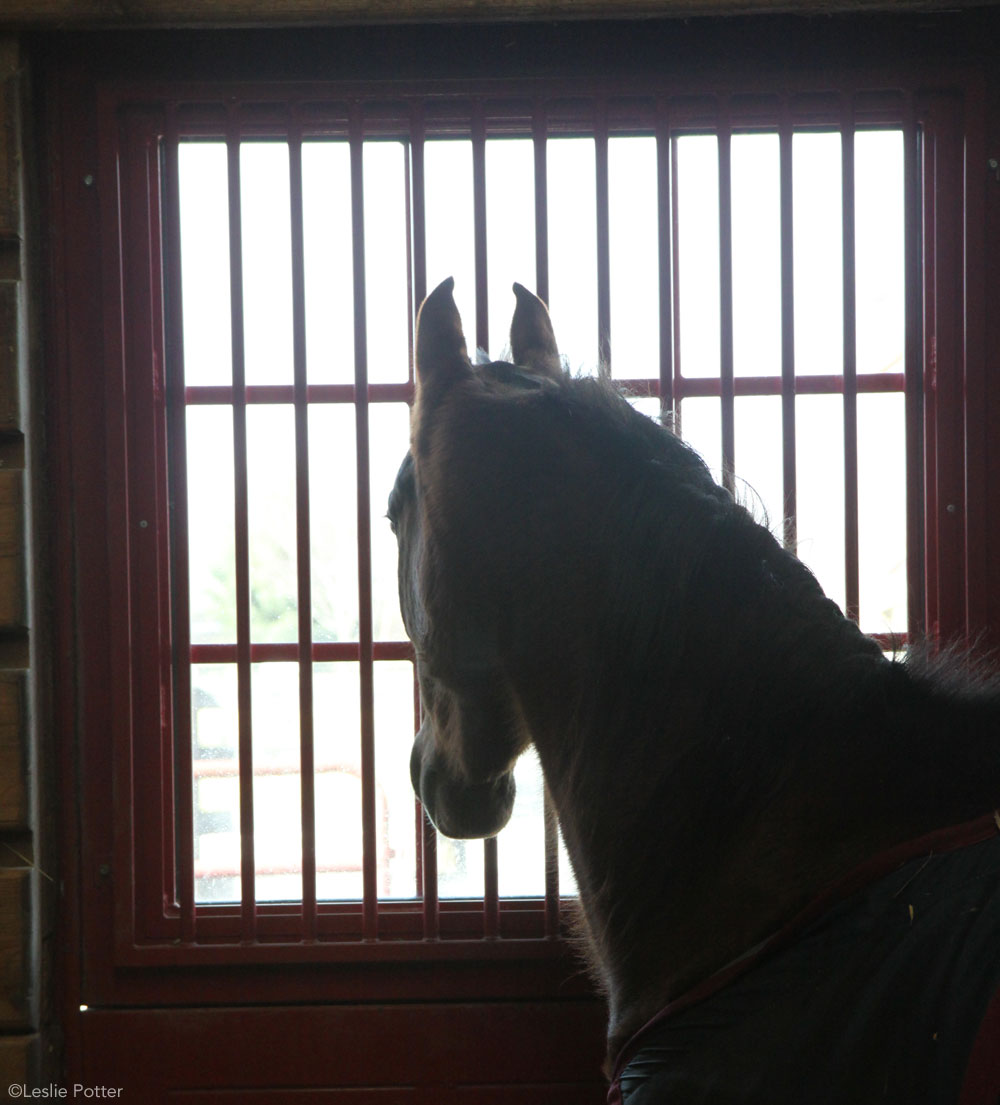
Horse In Stall

It’s a wonderful feeling to know that you’re doing the best you can for your horse. When you consider how this creature generously gives both body and heart to bring you happiness, it’s obvious that he deserves the finest care you can comfortably afford to provide in return. If it’s within your means, this may mean providing a box stall deeply bedded in fresh straw or shavings and nightly blanketing. You sleep peacefully at night knowing that unlike the unfortunate horses you see braving the elements in fields and paddocks, your horse is properly cared for in a home almost as cozy as your own.

It might come as a surprise, however, to know that your horse’s idea of a perfect living arrangement may differ radically from your own. In fact, your ideal may be creating stress and causing vices and health problems for your equine friend.

The Great Outdoors

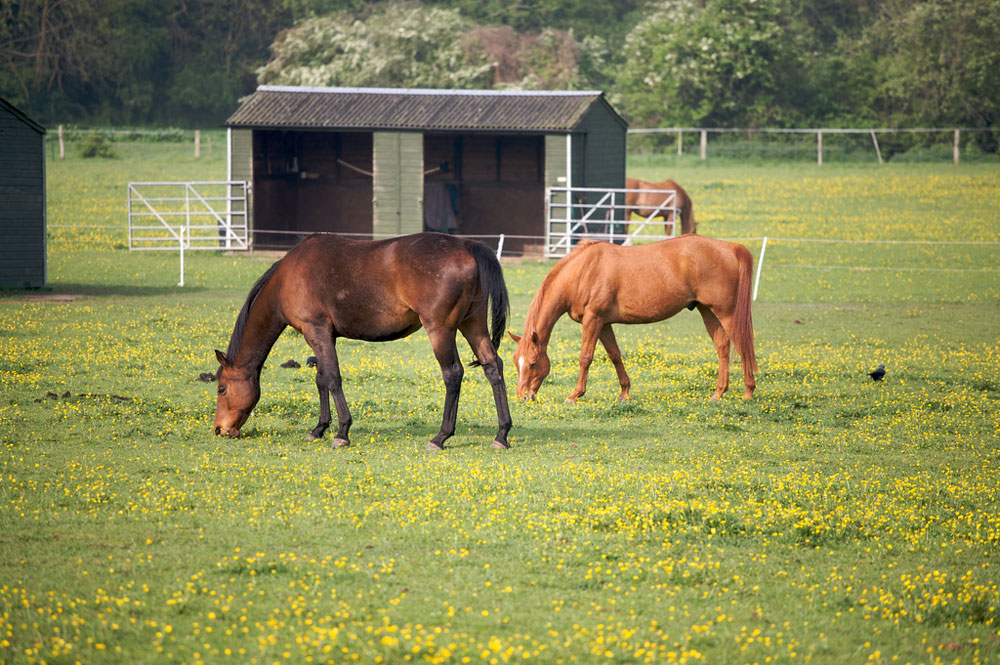
As herbivores, horses are designed to graze for food several hours a day. In one study, horses in natural settings spent an astonishing 70 percent of their time grazing. Grazing activities give positive purpose to a horse’s daily routine. Additionally, as members of a species with a strong social structure, most horses enjoy living in the company of other compatible horses. Stall confinement and lack of equine social contact can result in such behavior problems as wood chewing, cribbing or stall weaving that stem from excess energy, social deprivation or sheer boredom.

While you may be concerned about whether your horse can comfortably contend with increased exposure to the elements, horses are equipped by nature with physical adaptations to cope with environmental variations. In addition to water-resistant coats that thicken or shed with the seasons, they also possess specialized vascular systems within their hooves that maintain adequate temperatures and circulatory patterns under a wide variety of external conditions, like while traveling through snow. Most healthy horses should be able to handle moderate seasonal fluctuations in the environment while living outdoors, provided that an adequate run-in shelter is available.

Studies indicate that horses exhibit fewer behavioral problems when living closer to their natural state, outdoors with other horses. In fact, the more restrictive life of “luxury” that many horses lead has been shown to result in various deviant behavior patterns. It’s been demonstrated that confinement and isolation do increase aggression. You only have to walk down a trainer’s breezeway at the local racetrack or show barn to see the effect that being cooped up has on the attitudes of horses brimming over with energy.

Have you ever noticed the number of horses that will pin their ears and posture aggressively as you walk quietly past them in their tiny box stalls? That’s no coincidence.

The Social Structure

In 1991, Michael Mal and his colleagues published a study in the journal Applied Animal Behaviour Science, in which 36 mares were assigned to live in either group pastures, confinement stalls that still permitted contact with other horses or in isolation with no contact permitted with other horses. Observations on their exercise habits, feeding behaviors and resting habits were recorded. Dr. Mal discovered that the pastured mares spent the most time resting and grazing, while the isolated mares spent the most time trotting around, traveling farther than the other groups. The isolated mares also spent the least time standing and resting. The mares that were confined to stalls but had contact with other horses were not as restless as the isolated mares, but were definitely more active and tended to engage in a wider variety of activities than did the pastured mares. The results of this study supported the research of others who have indicated that over-management of horses is often a source of stress for them.

These findings were enhanced by a later study of the social and environmental preferences of a group of 10 Standardbred, Thoroughbred and Quarter Horse mares. The horses were housed either as two horses living together, as one horse living separately but with other horses in the adjoining pen, or as one horse living alone and without neighbors. They determined that the solitary horses living without neighbors walked and trotted more often — at the expense of feeding time — than did either of the other groups. It was also noted that the solitary horses with neighbors spent 50 percent of their time in visual or physical contact with the other horses.

Bad Habits

There’s little doubt that stall confinement and inadequate exercise can trigger many of the behavioral problems in horses, which are known as vices. The Veterinarian’s Encyclopedia of Animal Behavior reports cribbing, biting and holding on to stall walls and mangers, and wood chewing often originate due to lack of exercise and environmental stimuli. It also states that behavioral problems, such as stall pacing, in which horses walk or trot around their stalls in a fixed pattern, and stall weaving, in which they rhythmically shift their weight from one foreleg to the other, are adaptive patterns that confined animals develop in an effort to expend excess energy and to overcome the lack of environmental stimuli. In the book Domestic Animal Behavior for Veterinarians and Animal Scientists, by Dr. Katherine Houpt, the author states that the best treatment for stall walking or weaving is to keep the animal with other horses on pasture with a run-in for shelter. She also offers that other vices, such as stall kicking and pawing, sometimes develop as forms of self-stimulation for confined animals (in addition to other reasons). The litany of problems related to confined housing and insufficient exercise levels is quite compelling.

With this in mind, however, there are still several negatives related to maintaining horses on pasture, particularly when they are housed with other horses. Physical injury can occur simply from frolicking about in the pasture or as a result of traumatic episodes with other horses. But when weighing these concerns, it’s important to consider that some of the behaviors stall-confined horses engage in can be physically damaging as well. The physical risks of pasture life can be minimized by acquainting the horse with the boundaries of obstacles within the pasture while being led by a handler, as well as making certain that each new horse and his pasture mates are compatible.
Horse In Stall
Horses by Peter Pearson on flickr/CC BY-SA 2.0

Also, the dominance hierarchy, or pecking order, of horses living together can translate into variations in the food, water and shelter resources available to each horse; typically the highest ranked horses get rounder and stay drier while the underdogs get leaner. However, if this becomes problematic, separate feeding areas for each horse can be established.

There is one behavioral problem that tends to show up more frequently in pastured horses than those isolated or confined, which I call codependency. Pastured horses quite simply do not want to be separated from each other, for ridden work or for any other reason. This can be a real danger if either the working horse or the horse left behind in the pasture starts behaving desperately. If this becomes a problem with your horse, you may need to work with a trainer to overcome this situation.

Hopefully, horse owners will consider this information from all angles and will make informed decisions about what’s best for their own horses. After carefully studying the pros and cons of stall confinement versus pasture living for horses, I expect that many owners will conclude that the benefit most horses gain from living closer to nature in the company of other horses usually exceeds the risks that can be associated with it, although certain horses will prove to be exceptions.

If we endeavor to be keenly observant of the behavior of every horse entrusted to our care, and strive to provide the living situation that each individual horse seems to need, the comfort and happiness of our horses will be the best reward.

Further Reading
The Best of Outdoor Living
The Gender War

5

Few would argue that little girls and horses seem to have a special connection. Popularized in classic stories and film, the undying devotion of a girl for her horse is the stuff legends are made of. And at a glance, life does appear to imitate art where horses are concerned. You may not know many little boys who’d be willing to trade in their Tonka trucks for real-life ponies, but chances are good you know quite a few “horse-crazy” young ladies who would give up almost anything to spend hours on end with horses.

Boy Riding

Here in the United States, the tip of the scales toward the female equestrian is reflected in adult life as well. Go have a look at the students at your local riding school—the majority of pupils are probably women. Thumb through your favorite equine products catalog and you’ll notice that much of the apparel is designed for females. And even in your favorite horse magazines, articles and advertising are often targeted to a predominantly female readership. Are women really drawn by nature to horses in a way that men are not, or is this apparent bias a product of the society we live in? Is one gender simply naturally more in tune with horses, or do other factors, such as previous experience or personality traits, figure larger?

I contend that passion for horses is not by nature an exclusively female domain. In some countries I’ve visited, men do play a significant role in horse society. In Great Britain, for example, pony trekking and hunting on horseback are part of a social fabric that embraces both men and women. And the owners and trainers of the horses I met in Egypt were predominantly male. During my visit, I made the acquaintance of one Egyptian horseman who had a deep and natural bond with his beautiful Arabian mare, a bond which produced one of the best trained horses I have ever had the pleasure to ride.

Here at home, the male/horse relationship is actually stronger than at first it might appear. Consider the legendary bond between the cowboy and his faithful horse. That legacy lives on today with an abundance of men in the traditional western sports of roping, cutting and team penning. There are certainly plenty of prominent horsemen at the higher levels of the English disciplines, too, and the USET certainly isn’t short on male team members. If you make a list of the finest nationally known trainers, you’re sure to name quite a few men as well.

Depending on the individual horse’s character and prior experiences, certain aspects of the handler’s gender can have a positive or negative effect. In equine society, pecking orders known as dominance hierarchies keep the peace between individual animals living together. There are many factors that can result in one horse being dominant over another, but the quality that most affects dominance status is a horse’s overall size. The largest horses are usually the most dominant ones. With dominant horses, a man’s tendency to have a larger body size and a deeper voice may be advantageous for establishing a dominant position in the cooperative relationship between horse and human. But for more submissive horses or those who have had negative prior experiences with humans, the more imposing physical characteristics men often have can be a serious disadvantage. On the other hand, women may have an edge because their social conditioning emphasizes picking up nonverbal cues, and relating rather than dominating. Bear in mind that horses are both herd animals and prey animals, so trainers must walk a fine line between maintaining the upper hand socially and not being overly threatening, intimidating or “predatory.”

Girl Riding

When humans work with horses, we should be aware that either the horse or the human will be dominant, even in the most cooperative relationship, according to the rules horses themselves live by. With size playing a significant role in horse/horse dominance interactions, it would seem that men would have a distinct advantage over most women in establishing the dominant position with horses due to their larger stature. But fortunately for smaller riders, establishing human dominance with horses is not simply a matter of physical intimidation. It is clear from watching a good trainer or rider at work that human dominance is asserted and maintained largely through confidence and assurance, which is relayed through body posture, a language that horses through long evolutionary adaptation are well-equipped to understand. It can be advantageous to be large, but it is certainly not necessary.

I have heard it said that stallions can be especially sensitive to differences between male and female handlers, so therefore men make better stallion handlers. While stallions can indeed present unique behavioral challenges, what really matters in handling stallions are those same qualities that matter for all horses: experience and confidence. Aggressive behavior in stallions serves many adaptive purposes. Stallions “drive” or “herd” their mares and foals using classic aggressive postures: ears lowered and pinned back and neck outstretched. They also rely upon aggression to drive their juvenile offspring out of the herd, which serves as an evolutionary safeguard against inbreeding. They also rely upon violent aggression to defend their bands against thefts by other stallions or attacks by predators. Many stallions by nature are inclined to be dominant for these very reasons, and therefore require experienced and attentive handling, whatever the gender of the handler.

Read more about research into horses’ perception of male and female riders >>

Horses, like humans, are individuals with unique personalities. As such, each horse will be more responsive to particular qualities of some handlers and less responsive to others, and this will vary with the horse.

There are no simple formulas for successful equine interactions because horses and humans are all individuals. By their very nature, horse activities require a meeting of two unique minds, and what has to result is a harmonious relationship based on mutual trust and respect. Success with horses is no more likely for a female than for a male based simply on gender alone, whether the relationship is between a stallion and his handler or a child and her pony. The qualities of self-assurance and an air of easy confidence around horses are very important and develop in time through experience, but they won’t work for every horse, every time. For above all else, the personal compatibility between a person and the individual horse he or she is working with is the factor of greatest importance in the horse/human equation.

Trail Class: Gates

10

Nobody has opened more gates in competition with greater success than Cynthia Cantleberry. This Paso Robles, California, trainer has amassed an unprecedented 14 AQHA World Championship trail titles in her career, which makes her the winningest trail competitor in the 24-year history of the show. In 1994, she became the first person ever to win World Championships in both the senior and junior horse divisions in the same year, on the 17-year-old mare El Seven Becky and the 4-year-old filly Larks Lumbata.

With countless Class-A and regional wins, Cantleberry is the undisputed authority when it comes to training winning trail horses. While the mechanics of opening a gate, riding through and closing it again are basic, it is Cantleberry’s personal style that has helped set her apart in competition. It is a style based on her no-nonsense philosophy of what a trail class should represent.

“In my opinion, the whole idea of opening and closing a gate from horseback is not to let the cows out,” says Cantleberry. “Which is ironic because most ranches have wire gates these days, so you have to get off anyway.”

Trail Class
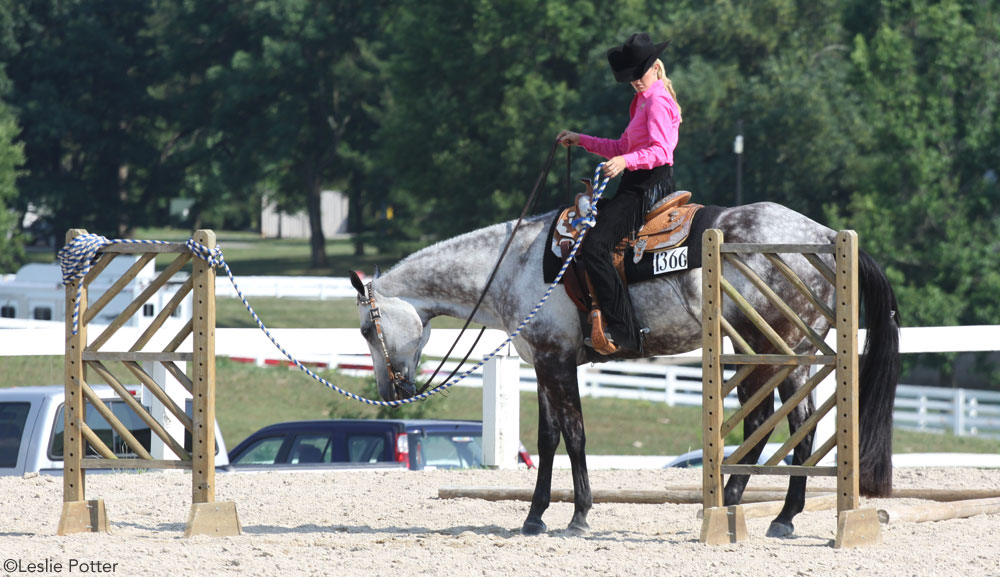
Rope gates, which are cheaper to build and easy to transport, are becoming increasingly common at shows. Practice with different types of gates so that you’re prepared for anything you might encounter in a trail class. Photo: Leslie Potter

Nevertheless, Cantleberry adheres to the traditional principle behind the maneuver when working the gate in front of a judge. Visualizing a herd of restless cattle about to bolt through the opening gives her the incentive to keep her horse tight to the gate, resulting in a neatly executed maneuver. “I’m not saying this is gospel,” says Cantleberry. “It’s just the way I analyze it and work it. Some judges may score me a little higher because of it, and others probably don’t even notice.”

The Basics

Before attempting to teach a horse to negotiate a gate, there are some basic skills that must be mastered by both horse and rider.

First, the horse should be able to stand quietly on a loose rein, without fidgeting or moving, while the rider reaches down or over to grasp the gate.

The horse should also be able to back up in a straight line with only light pressure on the reins. He should also be able to sidepass in both directions, turn on the forehand and turn on the haunches.

The rider should be able to open a gate without inadvertently moving his or her legs against the horse’s sides and without causing weight to shift so that the seat bones dig into the horse on one side. Doing either of these will send conflicting signals to the horse, and confuse and possibly irritate him. Not only will the rider be incapable of performing a smoothly executed gate, but if the horse swishes his tail in irritation, it could catch on the gate or gate decoration, and scare or hurt the horse. This understandably would not enhance the horse’s trust in gates or his performance.

Riders should practice these skills with a trainer in the arena and on the trail until they are second nature. Once the power steering is perfected, it’s time to put it all together at the gate.

Consider All Options

The AQHA Rule Book specifies eight different ways to open and close a gate. The rider can pull the gate toward the horse and ride through it, or push it away and ride through it. Likewise, the rider can push or pull the gate open and back the horse through it. These four maneuvers can be performed with either the right or left hand, giving eight possible combinations. A trail class will always specify which method exhibitors are to use when the course is posted. Because a rider will never know which method will be chosen for any given class, it is important that the horse is not habituated to any particular method while schooling at home. It is far better, says Cantleberry, to school in the basics so that the rider can put them together as needed for each situation. “The gates at shows will be different from the gates at home,” notes Cantleberry. “So I want my horse obedient to the aids, not reacting to the gate.”

Cantleberry has several different gates in and around her arena at home to practice with, so that her horses feel comfortable with a wide variety and aren’t intimidated by ones they’ve never seen. Rope gates, which are cheaper to build and easy to transport, are becoming increasingly common at shows. Because they are easier to open and close, they also help to speed large classes along. A class of 120 entries — not unusual at larger shows — can be shortened by as much as two hours if management installs a rope gate instead of a traditional one.

Another advantage for the competitor, says Cantleberry, is that it doesn’t take much skill to work a rope gate. “You can make a green horse look pretty good at a rope gate,” she says. “They are more forgiving. You just pull the rope off and ride through. The most you might do is sidepass a little.”

Step By Step

The Approach: The obstacle preceding the gate in the course will determine the direction and speed of a competitor’s approach to the gate. The judge will begin scoring this move as soon as the rider focuses on the gate, so the approach must be smooth and efficient, without a lot of maneuvering for position. The horse should walk up and stand parallel to the gate with no hesitation, and the rider’s right or left shoulder (depending on whether it is a right- or left-handed gate) should be directly above the latch. Correct equitation would dictate that this also means the rider’s hip and lower leg will be immediately adjacent to the latch. This way the rider doesn’t have to stretch forward or back to work the latch, as it is right there within easy reach. Cantleberry says her goal is to remain as close as possible to the gate at all times without actually hitting it.

Riding Forward Through, Push: To open the gate this way, Cantleberry positions her horse’s head so it’s facing the latch, and his haunches are close to the gate’s hinges. After flipping the gate’s latch, Cantleberry backs up just far enough for her horse’s head to clear the upright post. Since the idea is to keep the gate blocked against escaping cattle, she won’t push it all the way open yet. Instead, she opens it just wide enough to guide the horse’s head through. “Some people open the gate real wide at this point, but it’s easy to lose control that way,” she says. Keeping the opening small helps decrease the margin for error, but it also requires more skill to ride through a tight opening without bumping the gate or touching it with anything but a hand.

Cantleberry advises riding forward only halfway through the opening, pushing the gate just wide enough to let the horse pass through it. At this point, the gate is just behind her leg, and her hand on the latch is slightly behind her hip. She then asks the horse to stop and begin to execute a turn on the haunches to open the gate the rest of the way while still blocking the opening.

When the opening is wide enough for the horse to bring his hind end through, she asks him to take a step forward and then cues for a turn on the forehand. “This will pivot his body around my gate hand and bring the haunches through,” she says. “Now I only have to sidepass a step or two in order to latch the gate and turn my attention to the next obstacle.”

Riding Forward Through, Pull: To pull the gate open rather than push it, Cantleberry starts from the same position with her leg slightly behind the latch, then she reaches down and unhooks the gate. Sidepassing away from it just enough — a step or two — creates an opening wide enough to ride through without hitting the horse’s hips on the posts. A turn on the forehand pivots the horse around her gate hand until his head is pointing through the opening. “I ride through just far enough for his hind end to clear,” she says. As she does this, she slides her hand along the top rail so she doesn’t get off balance.

When his body is all the way through and parallel to the open gate, she cues fora back up, moving his haunches slightly away from the gate in order to close it behind her. “When he has backed up far enough for me to refasten the latch, the gate should already be completely closed, and none of the cattle got out.”

Back Through and Push Open: Backing through a gate calls for a different approach. The horse will be facing the hinged end of the gate rather than the latch end. Although the horse still needs to be parallel to the gate, the latch should be directly in front of the rider’s knee, not slightly behind it. This puts the horse in a better position to maneuver while the rider still maintains maximum control of the gate.

After lifting the latch, Cantleberry rides forward a few steps until her horse’s hind end is just past the gatepost. Asking her horse to turn on the forehand, she slowly pushes the gate open as the horse steps toward it with his haunches.

When the opening is wide enough, she asks him to back straight through without bumping the gate with a hip or a stirrup. This requires the rider to look over his or her shoulder while backing, and is where some riders get into trouble. “I’m careful not to shift my balance in the saddle as I turn my upper body or it would inadvertently cause my horse to back up crooked,” says Cantleberry.

Once her hand is on the latch again, she asks her horse for a 180-degree turn on the haunches. This pivots his front end through the opening, putting her in position to ask for a short sidepass toward the gate to close it.

Back Through and Pull Open: The last alternative is to pull the gate open and back the horse through it. When her horse is parallel to the gate with his head toward the hinges, Cantleberry lifts the latch and asks him to step back and away from the gate, pulling it open in the process. “I keep my horse’s hip into the gate, which blocks the opening and keeps his head out of the greenery,” she explains.

Once the opening is wide enough, a turn on the forehand maneuvers the haunches through the gate. When the turn on the forehand is complete, her horse is through the gate, and Cantleberry is in the optimum position to close the gate behind her, with the latch directly below her knee.

A simple sidepass toward the gate is all she needs to complete the maneuver. “Don’t get too hung up on when to turn on the forehand and when to turn on the haunches,” advises Cantleberry. “Rather than try to memorize what to do when, just try to remember that you always want to block the hole as much as possible without touching the gate or any of the landscape.”

Flowers and shrubs may make a colorful obstacle, but they can also increase its difficulty level. Knocking over a potted plant or, worse yet, reaching out and snatching a mouthful, will be counted against a horse’s performance.

Departure: Just because the gate is closed doesn’t mean Cantleberry’s done working it. A rider who gets careless at the end can sabotage a perfect score. When leaving the gate, the rider should be sure not to hit it when turning away, Cantleberry warns. “Give enough room for a clean exit.”

Depending on the configuration of the gate and the location of the next obstacle, this could mean simply riding straight ahead or sidepassing a few feet away from the gate before turning toward the rest of the trail course.

An important note: If the gate has feet or support braces, be careful that your horse doesn’t step on them. Not only will it cost you lost points, but it can injure him as well. And above all, don’t rush. It is far better to take 30 extra seconds and appear focused and methodical, than it is to try to save time and risk a careless mistake.

Breaking up the challenge of the gate into distinct, separate steps — approach, unlatch, ride through, close and depart — will require the rider to pay attention to important details that can make a significant difference.

Doing this will not only result in higher scores from the judges at shows, but can have “real life” practical effects as well: Guarding the gate when going though just may prevent you from an embarrassing mistake that could cost a day’s work rounding up lost cattle!

Further Reading


Video: Opening Gates from Horseback

Conquering Trail Terrors

5

Tips on how to help a horse handle the trailShady, meandering bridle trails, vast stretches of deserted beaches and granite-strewn switchbacks high above the timber line may be as close to heaven as a person can get and still sit in the saddle, right? Maybe. If your horse has the same view of Nirvana as you do, then no doubt the two of you have many pleasant miles under your belt and girth. But for some horses, a trek through Mother Nature is nothing more than a stressful series of panic attacks. What should be a relaxing hack across the countryside can turn an inexperienced trail horse into a neurotic nightmare of a mount. Under constant siege by suspicious shadows and rustling bushes, some horses would rather spend a day harnessed to a mill wheel than walk a mile down the trail. This can be due to temperament, lack of training or bad habits that have been allowed to persist, thanks to a previous owner. Even ex-show or racehorses that are impervious to roaring crowds and flapping flags can fall apart at the sight of moss-covered boulders or fallen trees. And trusting youngsters that have grown up quiet and docile around the barn may bolt bug-eyed from the first herd of mountain bikers they meet. But with a little persistence and common sense, most competent riders can help a spoiled, insecure or high-strung horse improve his trail attitude and etiquette.

Not Just a Trail Horse

The trail is a perfect place to escape from the competitive demands of many equine disciplines. Seasoned show horses of all types can benefit from a little decompression time on the trail every week. Not only does it serve to freshen their attitudes toward work, it is an excellent opportunity to exercise muscle groups not normally used on flat, even ground. For horses that have spent most of their professional lives within the confines of an arena, the idea of moonlighting as a trail horse may take some getting used to. Fortunately, there are several steps a rider can take to help make the transition easier.

Like anything we do with our horses, good trail skills must be taught. The goal is to have a horse that is alert, yet calm; and sensitive to the rider’s aids, yet not overly reactive to the environment. He must be mannerly in a group and dependable alone. And even while showing respect for his rider’s wishes, a truly great trail horse will also possess the ability to think independently. When a good horse refuses to cross a stream or bridge, a smart rider will take heed and find out why.

While the schooling of a serviceable saddle horse may not require the precision of dressage or the mental demands of reining, a safe trail horse must have a solid foundation in the basics. No horse should be asked to negotiate the constantly changing environment away from home without first being taught how to go forward calmly at the walk, trot and canter; how to stop, back up, turn on the forehand and the haunches; and leg yield, collect, extend and stand tied quietly. To take a horse down the trail that has not yet mastered these skills is like driving a car with no steering or brake fluids on the freeway at rush hour. You are a danger to yourself and others.

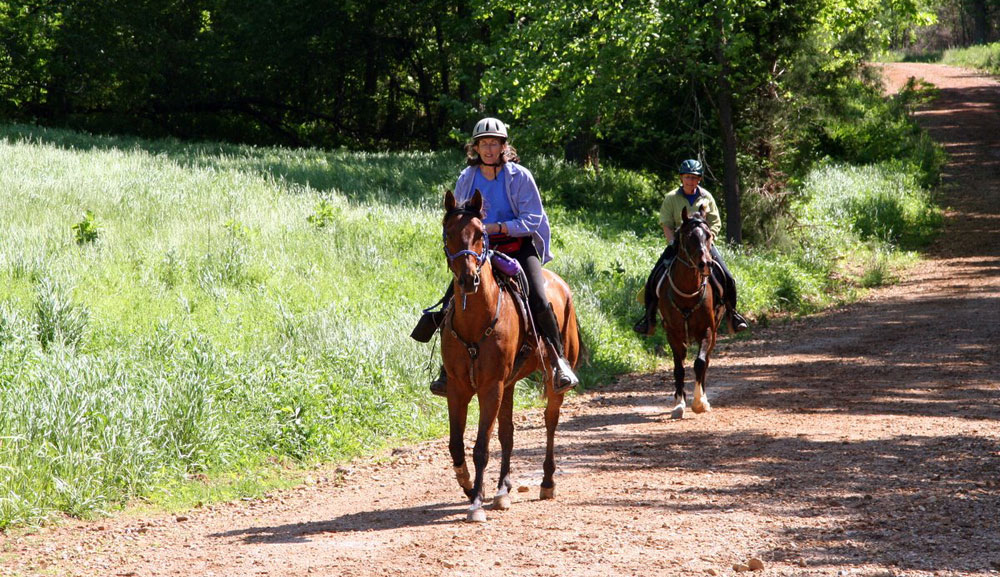
Trail Riding on a Dirt Road

Bit By Bit

An old horse trainer’s proverb, “One percent a day for 100 days,” describes how best to tackle the challenge of the trail. The first trail ride may not even be on the trail at all. Riding around the stable or pasture where your horse lives will yield many obstacles on which to practice confidence-building. The attitude of the rider goes a long way in determining the attitude of the horse. As you ride around the stable yard, remain calm and unhurried. Encourage the horse to approach and investigate anything that catches his attention A wheelbarrow parked in a new spot, a pile of leaves, a coat draped over the arena rail, an overflowing trash barrel; all of these can be used as training opportunities.

If your horse shows signs of spooking at an object, don’t focus on riding by it. Simply ask him to stand and face it. Don’t ask him to walk forward until his attention begins to wander off the offending subject. Then ask him to approach only as far as he feels comfortable. When he shows signs of wanting to sidle away or starts to snort suspiciously, stop again and let him look. Keep the reins as loose as is practical, and use leg aids to keep his body straight and prevent him from ducking out to one side or another. As you feel him start to relax, repeat this process, even if he only takes one step at a time, until he is within sniffing range. Pat him on the neck and talk soothingly as he extends his neck to investigate. As you feel the tension leave his body, praise him lavishly. Approach the object a few more times, with lots of verbal encouragement, until your horse will walk up to and past the once-scary object.

This is a great exercise to do at home after a schooling session as a cool-down. It will develop your horse’s confidence in your judgment and make the outside world seem less intimidating. It also enforces the universal concept of forward motion. And when you encounter an intimidating object out on the trail, you can use these same skills to ride past it safely.

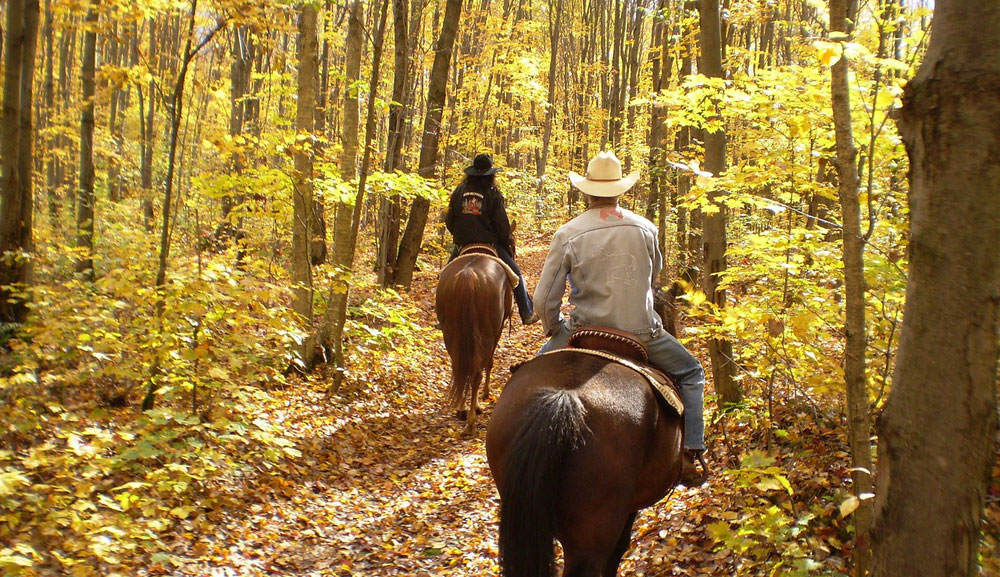
Trail Riding in Autumn Woods
Photo via pixabay.com/CC0/Public Domain

Safety in Numbers

Horses are, by nature, herd animals. This means they find safety and comfort among others of their own kind. Likewise, they constantly read the body language of other horses, and take their companions’ opinions into consideration when reacting to certain situations. A horse alone has more tendency to feel vulnerable and be easily frightened, and to react with that age-old reflex of self-preservation: flight.

One of the best ways to introduce an inexperienced horse to an unfamiliar trail is in the company of a quiet, steady, bombproof escort. The confidence exuded by an old hand will put the younger animal at ease. Let the master lead the way for starters. Any major obstacles, such as water crossings, fallen logs or mud puddles, will be taken in stride, and the lack of anxiety about such objects will rub off a little more each time the two go out together.

Asking the “student” to go up ahead when he is feeling relaxed and the trail is clear will start to build the confidence needed to strike out alone. But don’t assume just any company is better than no company at all. Setting off through the woods with another greenhorn is likely to deteriorate into an equine remake of “Dumb and Dumber.” Both will find items to shy at that the other would have missed. Their lack of confidence will fuel their silliness and create a dependency on each other based on fear rather than respect.

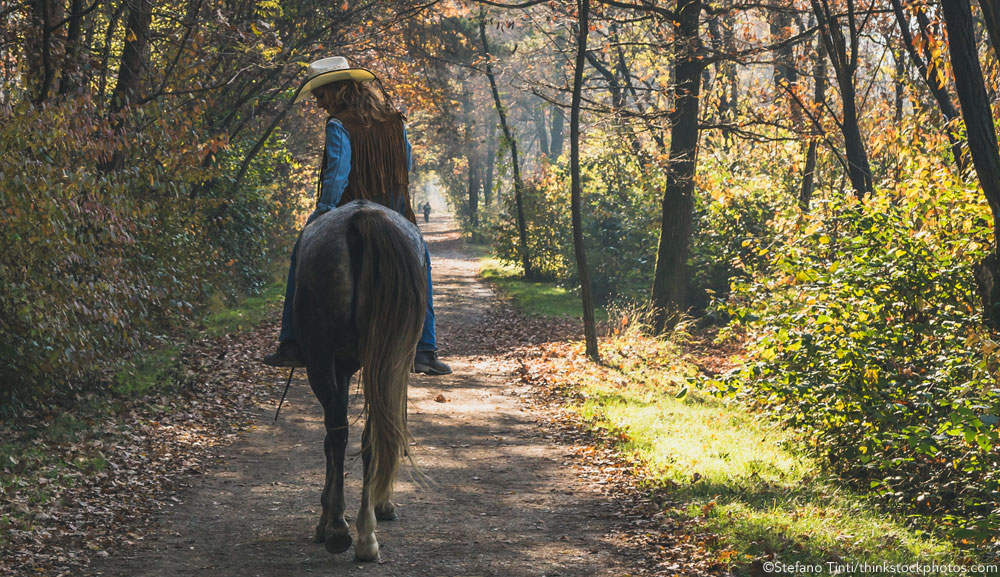
Trail Riding Alone

Going it Alone

Company on the trail isn’t just safer, it’s more fun for horse and rider. But there are times when one must go solo.

Riders become separated on the trail for many reasons, and often there is simply no one else to accompany you. Hitting the trail without another horse along can cause some horses to become nervous or balky.

For the first solo ride, pick a trail that your horse is familiar with. This should be a route you have traveled several times without incident in the company of another horse. Be sure to let someone know where you’re going and when to expect you back. You may even want to ask another rider to bring up the rear, 10 or 15 minutes behind you. Strive to make the maiden voyage successful. Without letting the horse get away with refusing anything, choose the easiest routes around or over obstacles. The idea is to have a positive experience, not master a demanding course.

If your horse shows anxiety by whinnying as you ride away from home, don’t reprimand him. This behavior should cease once you are out of earshot of other horses. Instead, speak quietly and reassuringly, without giving any indication that he has any option other than to go where he is asked. If the footing is safe, moving out at a brisk trotwill help focus his attention. Gradually increase the duration and distance of these solo rides until your horse is as comfortable alone as he is in a group.

The next step is to practice separating from other riders out on the trail. This can cause even more anxiety than leaving the stable alone. Once again, horse training imitates life. It is much easier to be the one leaving than to be the one left behind. Forging ahead up the trail is the easiest way to depart from companions. If you come to a fork, take the less-traveled one, then turn around and catch up to the group from behind. This is much easier than trying to keep your horse calm while all his buddies trot off and leave him. Separation anxiety can reach a fevered pitch in this situation, and some horses become downright dangerous when separated from their stablemates.

Turning around and heading home may mollify the troubled mount, or you may want to plan ahead and bring a stout halter rope and a good book. If you aren’t in a hurry to get somewhere, tying to a good tree and waiting out the tantrum is another effective solution. Be sure to tie high enough so that he can’t get a leg over the rope, as he is bound to paw and even rear in his attempts to rejoin the crew. While it may seem like psychological torture, this is the equivalent of sending a screaming child to his room to chill out. If you have the patience to ride out the storm (which may last more than an hour), you will find that tree therapy is one of the most useful training sessions you can have with your horse. Its benefits will prove useful in more ways than you can imagine.

Trail Riding in Autumn Woods
Photo by jdj150 on flickr/CC BY 2.0

Minimize Surprises

The reality of modern trail use is that many different groups are traveling the same routes these days. Unless you have the luxury of equines-only bridle trails, you should fully expect to encounter hikers, mountain bikes, motorcycles, hunters and automobiles at some point. In a perfect world, all trail users would coexist in peace. After all, we all value recreation and open space. The majority of people are courteous and respectful of horses, if not a little leery, and yield the right of way to riders. But even a group of polite dirt bikers, decked out with Darth Vader helmets and hip boots, can cause quite a fright to an unsuspecting horse.

Rather than leave first acquaintances to fate, or worse yet, avoid the trail completely for fear of a head-on collision, take a proactive approach to trail sharing. It is much easier to accustom a horse to the sights and sounds of bikes and motorcycles from the comfort of familiar surroundings than out on some narrow switchback.

If you have a few friends with mountain bikes, ask them to drop by the barn before or after a ride. Let your horse thoroughly investigate the odd contraptions before he ever sees them move. After he has sniffed them to his satisfaction, have one or two ride slowly away from him, have them stop, and lead or ride your horse up to and past them. Continue to leap frog like this until your horse takes no notice of the bikes. Then use the same tactic to simulate head-on encounters. If the bike riders talk in normal, friendly tones as they approach, it will reinforce the fact that these are just plain, ordinary people riding by. Mountain bikes seem less threatening than motorcycles, but they can actually cause more accidents because their approach is quieter. Motorcycles, on the other hand, can be heard miles away, giving riders a chance to pull off the trail and wait. But many horses (and people too) find the noise extremely irritating. Giving a horse the opportunity to become accustomed to the sound of motorcycle engines before encountering them away from home will help avoid mishaps. You can use the same method suggested for mountain bikes, or leave the horse loose in a pipe corral or tied to a stout post while the bikes drive slowly back and forth. Always keep the proximity of the motorcycle outside the horse’s panic zone. If he shows signs of pulling back or trying to flee, instruct the driver to cut the engine or put more distance between bike and horse. After a few sessions, the sound of dirt-bike engines should cause no more alarm than the sound of a car.

Trail Riding

Sweetening the Barn Sours

If you don’t have a barn-sour horse, be sure not to create one by accident. Don’t ever quit a trail ride at any point suggested by the horse. If he gets to a certain fork in the road or some other landmark and makes the decision to turn around, make sure not to heed his advice. Even if it means you have to dismount and lead the would-be stall potato another mile up the trail, it will be worth the effort. The decision to return home should always be the prerogative of the rider.

And by all means, never allow a horse to run back to the barn. If insisting on a walk results in jigging or head-tossing, pull the horse into a tight circle, (unless you are riding on the edge of a cliff) and don’t release him until he has stopped spinning in circles. Allow the horse to set off down the trail again until he breaks from a walk, then circle again, this time in the opposite direction. This may have to be repeated many times, so don’t be in a hurry to get home yourself. Eventually the message will get through that progress will only be made at the walk. This requires diligence and patience on the part of the rider. The temptation to simply hang on the reins will create a hard-mouthed horse that will pull you all the way home at whatever speed he chooses.

To further reduce the attraction of charging for home, make home a little less attractive to start with. Instead of unsaddling immediately, grooming and then feeding, take 10 minutes or so to ride or longe in the arena. Let him stand tied for a while with the saddle on, or put him on the hot walker before dinner. Anything that makes the homecoming less attractive than the trail ride will help bring about an attitude change.

Knowledge is Power

Lastly, never fall into the trap of dismissing a horse that is having difficulties on the trail as being stupid. Horses are excellent mirrors of the people who handle them, and by avoiding a deeper understanding of your horse’s problem you are missing an opportunity to learn something about yourself as well. Reducing challenging incidents to their most basic components will usually reveal the true nature of the problem. For instance, rather than putting up with a bad habit like head-tossing, take a moment to analyze exactly when your horse reacts this way and what else is happening. Is it when you turn for home? Are you unconsciously pulling on his mouth? Is it when other horses get too far ahead? Do you hear the sound of metal clanking against tooth enamel? Each situation would require a different solution to the generic problem of head-tossing.

Once you understand the underlying cause of annoying behaviors, you are halfway to the solution. Like children secure in their boundaries, the happiest horses are the ones that know what is expected of them. When trail riding becomes a series of attainable tasks, it loses its ominous overtones. Smaller successes lead to greater ones, and each one builds confidence. And horses, like people, are happiest at their work when they are happy within themselves.

Further Reading


30 Trail Riding Tips


Mind Your Trail Manners


Trail Riding Problem Solver

Training Without Force

12


Woman Leading Horse
One thing that never changes about horsemanship is that most riders search endlessly for ways to improve the performance of their mounts. Not quite satisfied with what we’re getting out of our horses, we’ll try this technique or that approach in the quest for great results. While it’s good to strive to improve our horses, there’s a fine line between having reasonable training expectations and pushing too hard and expecting too much.

Many seemingly complex horse behavior problems stem from one single rider fault, a fault in our logic: We assume our horses have the same agenda and goals that we have. When they let us down, we’re disappointed in them for not upholding their end of a bargain they never agreed to in the first place, and we push them all the harder. If our coercion results in compliance, we may think we’ve achieved our training goals. But in reality, a resentful, sour attitude will often be festering, which will give us trouble down the road. Ironically, the road to better performance is usually to ask for and expect less from our horses while learning to appreciate and build upon more of what they give us willingly. Think of it as the path of least resistance.

Much of what I speak of is bonafide animal behavior doctrine, but I’ve learned the truth of it through my own experiences as a trainer. In all honesty, some of the most harmonious times I’ve had with horses actually occurred before I acquired a “formal” riding education.

I was 10 when I was given a horse of my own in the form of a 5-year-old, untrained Welsh Pony. The school of hard knocks taught me balance, and I taught Amigo what he needed to know to be controllable: to walk, trot, gallop, turn or stop in response to my cues. That was all we needed to be in complete harmony together—absolutely nothing more. My purpose in owning a horse was to feel a part of what he was: to feel the wind in my face as we galloped down the trail, to sit in the grass and watch him eat and to have him follow me everywhere of his own free will. I enjoyed him and the horse that followed, a Thoroughbred-Appaloosa mare named Canela, with the freedom of spirit that came from accepting them exactly as they were and appreciating what came naturally from them in return. I imposed minimal stresses on them because standards of performance were the furthest things from my mind, and what resulted from this simplicity was a unity where horse and rider were willing partners.

Changing Goals

My connection with horses remained my driving force, and as a young adult I elected to pursue formal training to develop a career with horses. By this time I already had proper riding lessons under my belt, but now my academic pursuits were grooming me to be a professional trainer. I was learning the fundamentals of training horses and riders for the show ring, and the emphasis of my relationship with my own horse started to change. I realized I had to start building my reputation as a trainer in the show-ring, and my horse had to help me achieve this end. It started to be increasingly important to me to show frequently and place well. It became harder to appreciate my horse for her unique qualities when we were being judged by someone new every weekend and our performances were being measured against ideals.

A particular philosophy I encountered early on seemed very effective at the time, but has proved to be flawed over the long term. You’ve probably heard some version of the philosophy that the road to success is to make the horse more concerned about disobeying you than he is about the things in his environment that worry him. In other words, make the cost of misbehavior high enough to keep the horse in line. Dominating the horse in this fashion may net quick results, but dominating through force rather than by gently cultivating willing performance can ultimately lead to a sour attitude. It’s true that dominance of one horse over another is a natural part of the herd dynamic that all horses understand, and riders should expect to be the dominant member of the horse and rider team. But be aware that being assertive and being aggressive are two different things. Appropriate corrections serve to remind your horse that you’re the leader, while the correction that’s overdone can make your horse fearful and possibly resentful of you. Remember that a patient approach and consistent techniques are the long-term partnership builders.

Working With the Horse’s Nature

Effective riders understand and learn to work around, rather than battle against, the natural tendencies of their horses. It’s important to learn to accept the inherent behavior patterns that define this species because they are relatively consistent and unchanging. They are the limiting factors that riders must work within. Respecting our horses as partners means never trying to overpower them and force them into performing like wind-up toys. It means recognizing that the burden of effective communication between horse and rider ultimately belongs to the rider. Getting more adamant usually isn’t the solution if a horse responds inappropriately to a cue. Instead, recognize that the message is probably not understood. Learn to enjoy and delight in the process of developing the type of relationship with a horse where meaningful communication and true understanding build a partnership that is its own reward.

There is an essential element of horse behavior that can help us to be effective with them. First and foremost, horses are prey animals. Their senses are quickly aroused, and they react instantaneously to what they sense in ways that may seem extreme to us. When they sense something threatening, their inclination is to panic, bolt and run. If we don’t make allowances for this species-specific behavior in our training approach, we’re doomed to fail. We can help them learn to react to their fears in a “safer” way, but we cannot train their fear out of them. Their sensory modalities are different than ours, and we may not have the physiologic ability to perceive much of what they react to. However, there is usually a legitimate, underlying reason for the flight reaction, whether or not we’re actually aware of it.

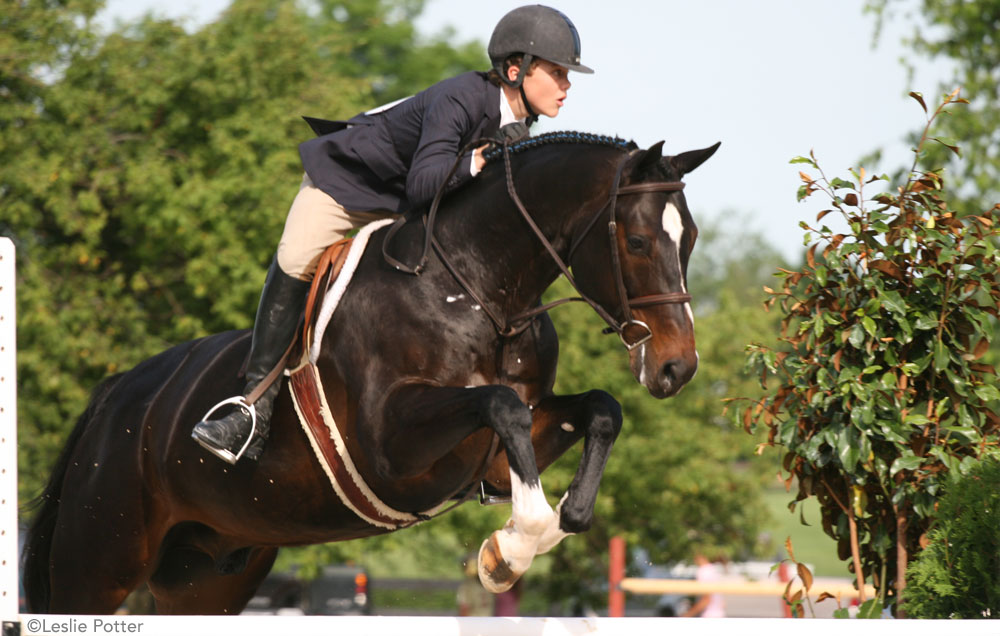
While it’s true that there are behavioral patterns that prevail in most horses, it’s also important to recognize that each horse is an individual with a unique personality. Instead of struggling to make horses fit into a mold, accept and embrace each horse’s individuality as a mystery you have the privilege of trying to understand. Riders have a role much like that of a school teacher in that we must keep our pupils feeling positive about the training process by allowing them room to express their uniqueness. You’ve probably watched a jumper or two that likes to throw in a little buck stride here and there on course that seems to say, “I’m feeling good and having a great time!” Others just go quietly and uneventfully about the same business. They’re all doing the same work, yet each horse’s individuality shines through. If a rider is attuned to her horse, she’ll know the difference between ordinary behavior stemming from her mount’s unique personality quirks and the tense, rigid, sullen behavior of an unhappy horse. This is a very important distinction to make, because the former is acceptable, while the latter should alert the rider that it’s time to slow down and get the horse back on the team.

Beach Ride


Even when we truly love and cherish our horses, it’s very easy to succumb to the ever-present pressure to perform. Who out there doesn’t want to be the one with the glorious horse that can do it all? What show rider doesn’t have her sights set on the blue ribbon? The problem is that sometimes the desire to excel makes riders try to rush things that really take time to develop.

Losing Focus

Winning was everything to one longtime campaigner I knew several years ago. He tried out new horses as easily as he changed clothes each show season. If the horse didn’t win, down the road he went, and another prospect was purchased to take his place. He talked endlessly about the latest training gadgets, and he was reputed to employ a pharmacological advantage over the competition from time to time. He embraced techniques that made his horses tired or sore on the day of the show to gain their compliance in the ring. When he collected a blue ribbon or trophy to add to the abundant collection on his walls, his horsemanship was validated. When he lost, he was miserable, and the horse could expect a renewed burst of training wizardry. The tragedy of this situation was that the joy that should have been part of the horse-rider relationship was conspicuously absent here. Everything of value to this horseman was won or lost on a perfect stranger’s call.

It’s easy to think that winning in our disciplines is a valid test of the training we’re doing. But does the show ring really respect the individual differences between horses, or does it tend to expect homogeneity from its diverse population? Do you want your horse to be your partner or a cookie-cutter model reluctantly enslaved beneath you?

Instead of aiming to win, riders might make better use of the show ring by using it as an opportunity to evaluate their own progress against that of prior shows. Instead of looking at the placing in the class, it might be more objective to look at the trend in the horse and rider scores over time to assess one’s own training progress. Winning should not be the objective—team building should!

The aim of riding should always be to bring out the best in our horses. Whatever happens to be the performance event we enjoy, we can find our pleasure in the feeling of unity and harmony that develops over time as we develop our horse’s willing cooperation in our performance endeavors. It’s a long, often harder road that requires patience and humility, but the rewards we garner along the way make it well worth the effort. Learning to read and understand our horses well is an investment that pays some very satisfying dividends!

Horse Herd Hierarchy

1

Horses in the wild live together in bands as a means of defense against predators. This communal living arrangement necessitates that “rules” be established to govern social interactions between members of the herd in order to reduce the likelihood of serious aggressive conflicts within the group. These social interactions help the horses establish which horse is in charge, which one gets bossed around and all the ranks in between.

Dominant Behavior

Within the Organization

The most important factor, according to research, that determines a horse’s position within the dominance order has been observed to be the horse’s overall size. We almost always find the largest horses “running the show,” with their smaller counterparts settling for the leftovers.

So if size is what counts in determining who will dominate, what chance do we little humans have to gain the power position over animals five or ten times our size? Should we all just sell those saddles and take up badminton?

Fortunately, size isn’t the only thing that matters in the equine social order. We’ve all seen those small but spunky ponies calling the shots in their paddocks, or the old gelding that knows how to get along with any group of pasture mates. These exceptions to the rule of size tell us that factors such as age, gender, prior experience living in groups and temperament also play some role in establishing an animal’s rank within the group.

The Young Filly’s Rank

When it comes to age and dominance status, there’s nobody lowlier than a newborn foal, especially a filly. Pull this youngster away from mom, and she becomes fair game for any horse’s social conquest. But leave her next to mom and the foal will share her mother’s dominance status while they move about together, interacting with the others.

Besides inheriting the genes from the dam that will allow the foal to someday grow large enough to physically insist on a particular rank, the foal is also learning from her mother how to behave as a dominant horse with respect to other herd members.

This is why the argument for early handling of foals makes such good practical sense. We’re teaching the foal that it must be submissive to us while it is still too small and weak to resist us. Sometimes a physical reprimand is required to reinforce our dominance, but it must be delivered the way it would be from another horse – sharp and quick. A drawn-out, physical reprimand can result in fear or panic in the horse.

Fillies tend to rank lowest within their group. Therefore, the sex of the horse does have some effect on status, although this can vary widely between herds. Normally, we would expect to see a stallion at the very top of the pecking order, which, as related to the hormone testosterone, accounts in large part for the aggressive behavioral tendencies we see in many stallions. Following stallions are mature mares, mature geldings (if present), yearling colts, yearling fillies, weanling colts and finally, weanling fillies. It is not unusual to see mares and geldings mixed throughout the ranks, and so it is best to consider the dominance status of these two groups as similar, with much greater variation between individual horses rather than between the two groups.

Disposition Matters

Aggressive and persistent horses will eventually dominate over larger but more placid-tempered horses through the triumph of tenacity. This is often what we see going wrong in horse/handler relationships where the equine is bold and willful and the human a bit more gentle or passive. Sometimes the sincere but unfortunately misguided person believes that the horse/human relationship is an equal partnership, not realizing one partner has to assume the dominant role according to the guidelines horses themselves live by.

A little time spent with a reputable trainer working on developing gentle but absolute assertiveness in dealing with a dominant horse can reap long-term dividends in terms of effecting compliant and manageable behavior.

Learning to recognize a disagreement as a dominance problem allows you to resolve it in a way that your horse will understand, putting you back on the road to a truly harmonious relationship.

Further Reading
Training without Force
How to Speak Horse
Taming the Aggressive Alpha Mare

Deworming A Horse

0

Ask your vet to tell you which dewormers you should use at different times of the year.

Picking up piles of manure in your horse’s field and dumping them in a pile somewhere else can cut down on worms.

Look at the dewormer’s instructions to find out how much to give your horse. Turn the ring on the syringe so your horse gets the correct amount for his weight.

If your horse absolutely hates being dewormed, take an old syringe, wash it out and fill it with something yummy like applesauce or molasses and water. Squirt this in your horse’s mouth every once in a while. Soon, he might not mind being dewormed so much.

After squirting the dewormer paste into your horse’s mouth, hold his head up for a moment to make sure he doesn’t spit it right out!

Always check the use-by date on a syringe of dewormer. If it’s been sitting on a shelf too long it won’t work properly.Only spread manure around a field with a chain harrow when it’s very HOT. Sun kills worm eggs. If you drag a field when it’s warm or rainy, all you’ll do is spread the eggs around more.

Make sure that your horse’s mouth is empty before deworming him.

If you haven’t dewormed your horse in a while, cut down on his hard feed (pellets, sweet feed) the day before, the day of and the day after his deworming. The dewormer may kill a lot of worms which could get stuck in his intestines. You don’t want large quantities of digested feed getting stuck behind the worm blockage because this causes colic.

Worms can develop a resistance to one dewormer if it is given all of the time. You need to rotate your dewormers. Ask your vet for a dewormer rotation  schedule.

If your horse looks thin and his coat doesn’t shine, he might have worms. Deworm him immediately!

Worms thrive in moist, warm environments so you must get serious about deworming all of your horses in the spring and summer.

When you use a paste dewormer, put the syringe in the corner of your horse’s mouth and aim for the back of his tongue. Squirt the paste in one quick motion.

Horse dewormer can make a dog really sick, so make sure you wipeup any spilt paste and throw syringes away after they are used.

Rotating pastures with other animals like sheep or cows can cut down on worms.
Removing bot eggs from your horse’s legs and tummy with a special bot knife or razor can help prevent worms.

If you leave the bot legs there, your horse may scratch himself with his mouth and swallow them. The bot eggs end up in his digestive system where they turn into worms. Yuck!

Beware of EVA in Horses

1

Equine Viral Arteritis is nothing for horse owners to sneeze at, especially as breeding season is just around the corner. In particular, Texas equine producers, veterinarians and livestock health officials have become increasingly concerned about Equine Viral Arteritis (EVA), which has been detected in New Mexico and Utah this year. A viral disease of horses, donkeys and other equine animals, EVA causes mares to abort, can cause mild to severe respiratory disease in some horses and may also cause some stallions to become chronically infected and shed the virus in semen. While EVA has been encountered rarely and is not a reportable disease in Texas, regulations have been implemented in some states, including Kentucky, New York and Colorado.

While some infected equine exhibit no signs of disease, owners should be alert and notify their accredited private veterinary practitioner if horses or foals develop signs of EVA, including fever, depression, diarrhea, coughing or nasal discharge, or swelling of the legs, body or head. Laboratory testing is necessary to confirm a diagnosis, as other equine diseases can present similar clinical signs.

“EVA is not currently a reportable disease in Texas,” says Dr. Bob Hillman, Texas’ state veterinarian and head of the Texas Animal Health Commission (TAHC), the state’s livestock and poultry health regulatory agency. “However, we urge veterinarians and horse owners to report suspected and confirmed cases of EVA to the TAHC to ensure we have the most accurate picture of the disease in the state and can provide up-to-date information to veterinarians and equine owners.”

Horses can be infected by inhaling the equine arteritis virus, through natural service of a mare by a carrier stallion, artificial insemination of a mare with semen from a carrier stallion, or by being exposed to bedding or other objects contaminated with the virus. Stallions that shed the equine arteritis virus in their semen can infect unvaccinated mares, causing a respiratory disease and abortion. Acutely infected horses spread the infection to other horses via the respiratory route. A pregnant mare may also be infected through contact with acutely infected horses and may abort. Cleaning and disinfection of stalls, trailers and equipment can reduce the risk of EVA exposure.

“Know the EVA status of stallions, semen shipments and mares before they are introduced onto your farm. Consult your accredited private veterinary practitioner about vaccination protocols for brood mares, stallions and colt foals, and ensure that good biosecurity measures are followed,” Hillman says.

Links to additional information about EVA may be accessed at the TAHC’s web site at www.tahc.state.tx.us.

Young Rider Desktop Wallpapers

0

Right-click and choose “save target as” on the appropriate size link to download your wallpaper.

Foals wallpaper Mare and foal desktop wallpaperHorses grazing desktop wallpaper
Resolution:
800×600 | 1024×768 | 1280×960
Resolution:
800×600 | 1024×768 | 1280×960
Resolution:
800×600 | 1024×768 | 1280×960
Haflinger Horse desktop wallpaperArabian horse desktop wallpaper
Resolution:
800×600 | 1024×768 | 1280×960
Resolution:
800×600 | 1024×768 | 1280×960

How to Win Western Horsemanship

4

HorsemanshipWe’ve all heard it, maybe even said it ourselves: “If I could afford a $20,000 horse who moved like that I could win, too!” And to be perfectly honest, perhaps that’s even partly true for some events, where championship status relies at least partially on the horse’s exceptional way of going and conformation, while the rider’s skill and dedication are secondary to the quality of horseflesh beneath.

Not so for western horsemanship. “Western horsemanship judges the rider as opposed to the horse,” says Holly Hover, an AQHA judge, competitor, clinician, and Phoenix-based youth and amateur all-around trainer. “The event benefits people who don’t have the opportunity to purchase the really fancy, expensive horses. It’s an event where people can practice and gain momentum through their own hard work and be awarded for efforts in the arena. It’s the rider’s skill that earns a placing in the arena.”

Horsemanship

Western horsemanship judges on the correctness of the rider’s seat, hands and feet, the finesse in riding, and the strength of his or her lines and angles as the competitor rides a series of maneuvers in a 30- to 60-second pattern devised by the judge and posted the day of the event.

The pattern may include a variety of different maneuvers, many of which mimic elements of western pleasure, reining, western riding and trail classes, says Holly. For example, “Straight lines — meaning walk trot, jog and lope on a straight line — and a lot of circles, arcs and turnarounds. There’s always a stop and a back. Judges can ask for circles, spins, quarter-turns, half-turns, turn-and-a-half, any combination of turning on the haunches or forehand and sidepassing. Extending the gut to a hand gallop or extending the trot is very popular now. You’ll commonly see straight-line patterns where the exhibitor is asked to maneuver up and down the arena in a straight line, adding different, difficult maneuvers.”

The difficulty of the pattern varies according to the class. For novices, the patterns are simpler and may consist of some variety of walking to a marker, jogging a circle and loping a straight line to the end of the arena. For upper-level classes, the patterns are much quicker and tougher, says Holly. “Maybe four or five quick maneuvers, such as jog to a marker, spin to the right, extend the trot, rollback left, lope an arc around to the next marker. Quick patterns in and out utilizing a challenging variety of maneuvers (are what’s usually expected).”

Scoring for the pattern in AQHA western horsemanship classes ranges from 0 to 20, with 20 being a perfect score. The judge scores on each element, plus the overall impression. In evaluating the quality of a rider’s performance in the pattern, judges look for smoothness of transition, flow and finesse. Mistakes, such as missed transitions, wrong leads, et cetera, subtract from the rider’s score.

“Normally for a novice rider, a middle-of-the-road score like a 14 or 15 will win the class — a fault-free, no-mistakes pattern,” says Holly. “But when you get to the world-class level, an average no-mistakes pattern won’t win. You’ve got to be fancy. You must step up and attack the pattern.”

Laying the Groundwork

Although beginning riders can compete in novice classes, before entering a competition, riders and horses should have a good working knowledge of basic horsemanship. Says Holly, “They should understand leads, the arc the horse can perform, how to make a horse go on a straight line, and upward and downward transitions. The horse and rider should be able to perform at home all the maneuvers that may be asked for at the show.”

In choosing a horse on which to compete, Holly recommends one who is calm and forgiving. “We’ve seen trouble with horses who are easily agitated, nervous and maybe anticipatory of any kind of training,” she says. Movement and way of going, while not as important as in, say a western pleasure class, can still influence a ride somewhat: “The horse needs to be a soft mover,” says Holly. “A rough horse tends to make the rider look weak. We try to get horses who are extremely good lopers, although we can give a little on the quality of the jog. It is much easier through training to enhance the jog but rarely can you improve a poor loper.”


As for conformation, Holly says larger horses tend to have difficulty with a lot of the western maneuvers, such as spins and lead changes, while smaller horses can’t always impart the look necessary to make a rider appear taller and bolder. Holly prefers horses between 15.2 and 16.1 hands for her training program, although not necessarily from a judge’s point of view.

Age range for competitive horses is wide. “At the world level, you’ll see horses between the ages of 4 and 15,” says Holly. “But some horses for the little kids are in their 20s and are still good horses.”

Holly’s training philosophy emphasizes teamwork between horse and rider. “It’s important that the rider and horse are prepared as a team and not individually,” she says. “There seems to be better timing when a rider and horse have prepared together a lot, as opposed to the trainer getting on the horse, fixing him and then the rider following the trainer. In addition, the rider who understands and knows the horse, who can prevent or cover up mistakes the horse makes is probably the rider who’s going to win as opposed to a rider who comes in and gets on a trainer’s horse and goes to show.”

This teamwork is created through lots of exercises and drills: Many of Holly’s students ride at least five times a week. “We work on exercises to strengthen the rider,” says Holly. “Different calisthenics and balance exercises, such as riding their horses without stirrups and standing in their stirrups. This enhances the strength of a correct seat and feet.” The team also practices the parts of the various maneuvers, including spinning, lead changes, riding with and without contact in the bridle, and so forth.

Holly also teaches her students to think and react swiftly — something that is especially crucial when the unexpected happens in the showring. “I do drills with them where I send them down the center of the arena and then call out different maneuvers. I might ask them to jog a straight line, counter-canter, circle to the right, change leads, continue a straight line, stop, rollback left, extend the jog, circle right. Having them move their horses in and out of maneuvers that they aren’t even aware are going to happen creates very quick thinking in the pattern, and that’s important.”

Show Day

Once horse and rider understand and are successfully performing the maneuvers that will be asked for at their level, they’re ready to show. On show day, the judge posts the pattern he or she has devised a minimum of 1 hour before the class. “Normally all those maneuvers are ones that we’ve worked on at home, but in a different order,” says Holly. “As far as having a lot of prior knowledge of the exact pattern, we don’t. That’s what makes it fun!”

She copies the pattern down, then discusses and analyzes it with her students to identify its “pattern psychology.” Explains Holly, “A lot of times judges depict the pattern using heavy adjectives and adverbs; anytime a judge is specific about things, we try to read into the pattern what the judge is looking for. Also, almost every judge has one pet peeve or one maneuver that he or she is really wanting to see done well. So we go through the pattern with the exhibitors, trying to decide where the ‘meat’ of the pattern is, and really work on getting that portrayed to the judge.”

At the same time, Holly warns about putting so much emphasis on the meat of the pattern that the exhibitor gets sloppy with basic elements, such as the straight lines, or smooth transitions. “The judge marks on each element, so the rider really needs the whole package, not just the meat.”

When riding the pattern, riders should concentrate on the elements the horse is good at and not dwell on the parts of the pattern where the horse is weak. “The biggest mistake is when riders try to enhance a maneuver that they know their horse isn’t really good at,” Holly cautions. In trying to punch up a weak maneuver, many riders end up spurring the horse or getting anxious or angry. “The judge can really pick up on that. You end up having a rough maneuver or maybe an abusive look, and you’ll lose more points than you’ll ever gain.

“Instead, where you’re not so strong, just try to get by as best as possible. Remember that judges mark each maneuver, so try for a 0 score (an adequate, no-points-taken-off move) on the weak element, and spotlight your pattern where you’re good,” she says. For instance, if your horse is a beautiful mover but hasn’t quite mastered the 360-degree turn, in a pattern that would call for a spin, she suggests “the rider should ease through the turns and then show off the rest of the pattern. Be bold.”

Even though Holly suggests you don’t obsess about your weakness, keep in mind that one of the most important keys to putting together a winning pattern is striving for the whole package, rather than just certain parts. Maintain correct but relaxed feet, leg, arm and seat positions, and strive for a flowing ride, avoiding jerky movements from maneuver to maneuver. Greener riders should aim for nothing more than a good, clean safe pattern, says Holly, while advanced competitors need to be fancier in their maneuvers and step up and attack the pattern. “Never make a judge wait,” advises Holly. “Be up and ready when the judge calls for you to perform. This exudes confidence. Assess your pattern and ride boldly through the maneuvers you know you have mastered. At the end of the pattern, turn and acknowledge the judge with a nod and retire to the end of the arena as directed by the judge. A smile of confidence is a subliminal sign that you have succeeded.”

But perhaps the real key to winning is the attitude and resolve the rider develops at home. Holly is convinced that through hard work and practice, anyone who’s determined to can be a winner in western horsemanship. “It’s really important that people sit down at the beginning of the year and say, ‘This is what I want to do. How can I get there? How much will I need to spend? How hard do I need to work?’ I’ve never had one person who has had long-range goals and stuck to them not get done what they wanted to get done. And that’s what’s fun about this event: If you stick with it and work and knock it out, you’re going to find success.”

Puttin’ on the Glitz — Conservatively

Although competitors are judged on how well they handle their horses, they should also show their respect for the class by dressing properly. “We spend a lot of time and put a lot of importance into the clothes,” says Holly Hover. “Clothes need to be well-fitted and they need to suit your body type.” For example, shorter-legged riders can have their chaps made to fit higher to give the appearance of having a longer leg. Heavy body types should stick to one color throughout the outfit — black, hunter green, dark rust, etc.Holly recommends that older youth and amateurs stay with earth tones, although youngsters can have a bit more fun with colors. “It’s an unwritten protocol,” she explains. “You need to stay conservative and not overdo it with baubles, braiding and sparkles.”The general rule is your clothes should fit, your hat needs to be clean and shaped correctly, and your nice chaps fit correctly. Keep your clothes pressed and starched, so that the look is very, very tight.” Horsemanship blouses are designed to be form-fitting and accentuate your body position — shoulders, elbows, back — in the saddle.

The horse should wear a saddle that fits both the rider and the mount. Notes Holly, “A lot of people show with too big or too small of a seat, and that will make a huge difference in how they sit. Saddles don’t have to be fancy or expensive, she adds, but you shouldn’t come into the arena with an old work saddle and expect to be world class.


Further Reading

0FansLike
0SubscribersSubscribe
We use cookies to help personalize content, tailor and measure ads, and provide a safer experience. By navigating the site, you agree to the use of cookies to collect information. Read our Cookie Policy.
OK