Enter our 12 Days of Christmas Giveaways here!
0 ITEMS
  • My Account
  • Holiday Gift Guide
  • Podcast
  • Webinar
Subscribe Combo
Enable cache13
Home Blog Page 1060

Horse Trailering Checklist

3

Under the laws of nature, the best way to avoid any kind of an emergency is to be fully prepared for one—whether you are making a long distance, cross-country haul or a short trek down the road to the show grounds.

What you will need for the towing vehicle & trailer:

  • Spare tires for the towing vehicle and trailer (inflated to proper PSI)
  • A jack and tire iron or lug wrench
  • Three emergency triangles or flares (triangles are best)
  • Extra supply of coolant/engine oil/transmission and power steering fluids, plus a funnel and service rags
  • WD-40 or other lubricant
  • Chocks to safely block wheels
  • Flash light and extra batteries
  • Tape (electrical and duct)
  • Spare fuses and bulbs for exterior and interior lights
  • A charged fire extinguisher
  • Sharp knife and wire cutters
  • Tool kit
  • Jugs of clean water (can be used for radiator or horses)
  • Jumper cables
  • Spare belts and hoses
  • Tow chain or cable
  • Portable compressor
  • Quick fix tire repair kit
  • Broom/shovel/manure fork and disposal bags
  • Vehicle registrations for the towing vehicle and trailer
  • Proof of insurance

What you will need for your horse:

  • A spare halter for each horse
  • Extra lead ropes for each horse
  • A bucket and sponge
  • Feed buckets
  • Hay and feed
  • Water
  • Fly repellent
  • 100 feet of 1/2″ rope
  • An equine first-aid kit
  • Identification information on each horse
  • Brand inspection papers (when applicable)
  • Health certificate (when applicable)

For You:

  • Orange safety vest
  • Work gloves
  • Extra cash and credit card
  • Driver’s license
  • Road atlas
  • Cellular phone and/or CB radio (in rural mountainous areas without cell phone service a CB radio may be more valuable)
  • Phone directory with numbers for your veterinarian, insurance company, emergency roadside assistance numbers and numbers of family/or friends who can be notified if you become incapacitated
  • First-aid kit

Further Reading
First Aid Kits for Horses and Riders

The authors, an identical twin team, live and ranch in northwest Montana. Along with raising a few Appaloosa horses, they are also professional equine photographers.

Equestrian Related Liabilities

0

Equine Liability Signs

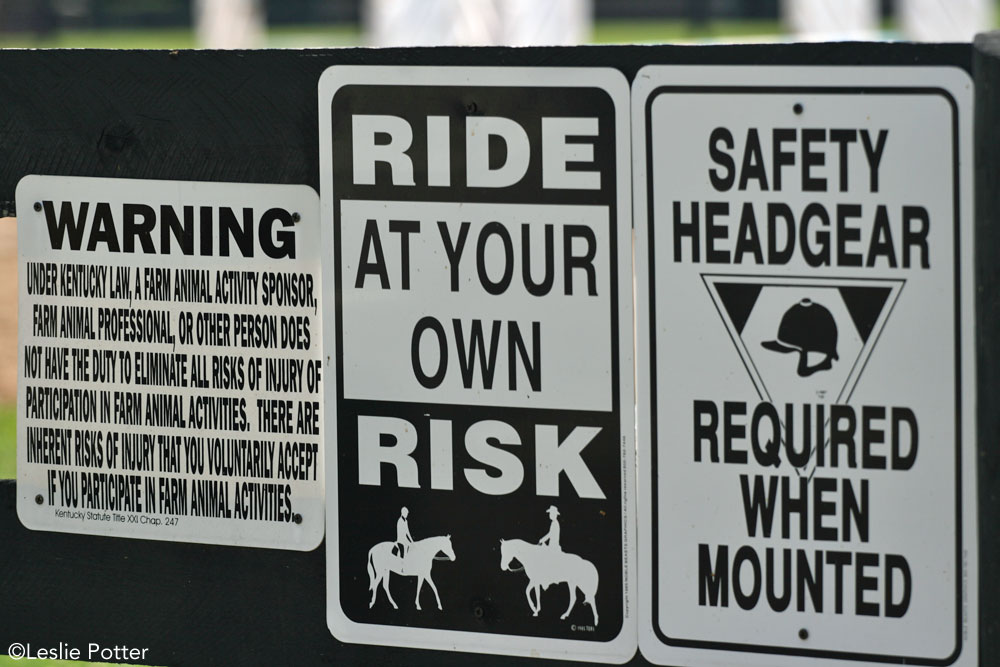
If you provide horses for others to ride, allow others to ride on your property or sponsor equine activities (like fox hunts, horse shows, trail rides, lessons, hay rides, et cetera), signed release forms are a necessity. If you are the one borrowing or renting a horse, riding on another’s property or attending an equestrian event, a release will limit your rights to recover damages if you are injured.

If you decide to use a release, determine what information should be included: The name of the equine professional (or sponsor), the name of the participant and the date. If the participant is going to be involved in the activity on a repetitive basis (lessons, for example), a statement that the release is effective until cancelled or amended in writing and signed by both parties should be in the release.

If you are in a state that requires the liability act warning language, be sure to include that in your contract. If the participants are minors, require the parents to sign the release.

A statement that the participant releases the professional or sponsor from liability for injury or death that may occur from the horse activity should be included. Many releases list the specific risks that are “inherent” in equine activities, such as the horse spooking, shying, bolting, rearing, bucking, running, suddenly moving, biting and so on. A statement that the participant is knowingly assuming those risks should also be included.

Keep in mind that laws (and their contract requirements) vary from state to state. A release that is appropriate in one state may not be in another. The list above is not all-inclusive and may not include everything that should be in your release. To ensure the best protection, consult with an attorney familiar with the equine liability laws in your state.

This article is not intended to constitute legal advice. If legal advice or other expert assistance is required, the services of a competent professional should be sought.

Tonna Tharp Farrar of The Farra Firm LLC in Kansas City, Missouri, has a nationwide equine law practice where she brings practical knowledge of the horse industry from owning, showing and breeding horses over the past 20 years to the legal profession. She currently competes at AQHA shows with her horse, CJ Sharp Chuter.

Equine Emotions

Your mare always seems happy to see you when you arrive at the barn — nickering loudly and often galloping away from her playmates to meet you at the paddock gate when you call her name. Although it makes you feel good inside that she’s so eager to greet you, a question keeps popping into your head: Does she really have emotional attachment to me or does she just equate my presence with all those free, crisp carrots?
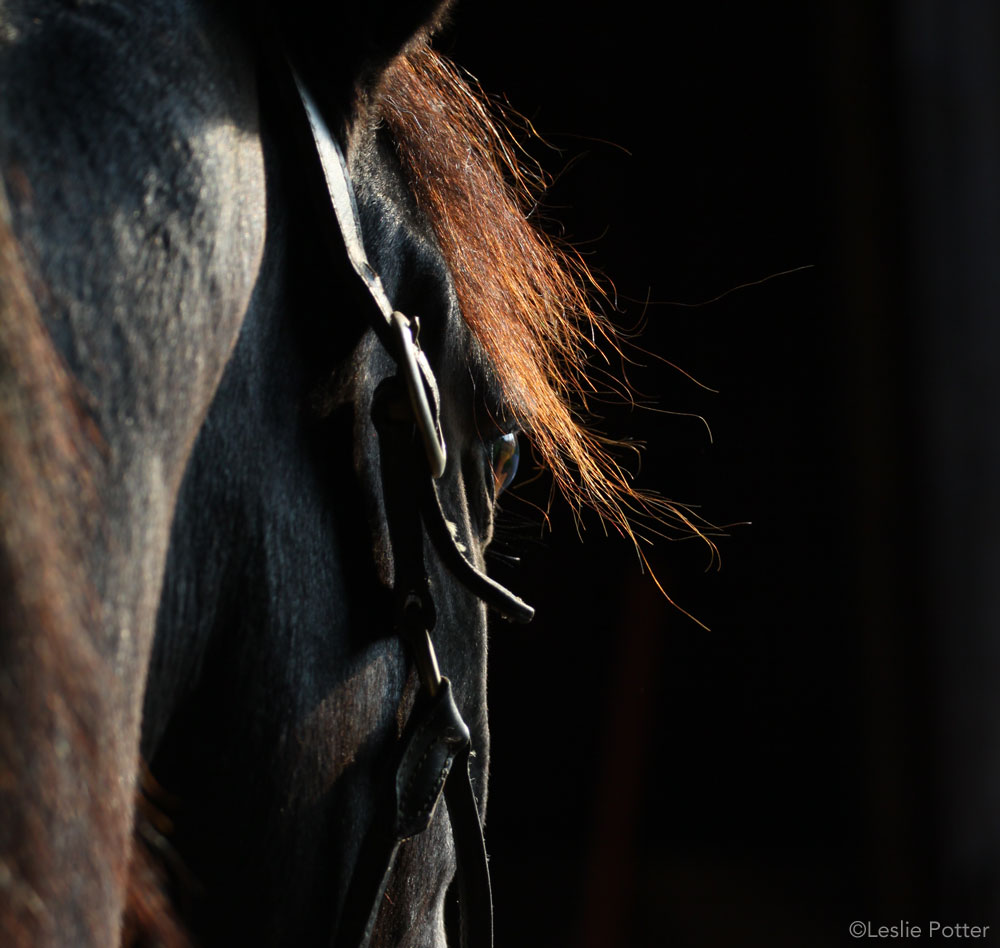
Closeup of a horse's face

Do Horses Have Feelings?

The question of whether animals have feelings has perplexed philosophers and animal behaviorists for centuries. Philosopher Rene Descartes once argued that because animals could not be proven to have feelings, they should be regarded as automatons that acted mechanically.

A few centuries later, George John Romanes (a student of Charles Darwin) argued for “injective knowledge,” or that you could infer what was going on inside someone’s mind by observing their reactions to particular circumstances and by knowing how another feels in the same situation. For example, if one animal experiences fear in a dangerous situation and acts a certain way as a result, you could presume that another animal acting similarly in the same situation is also experiencing fear.

The debate continues today. Behavior science is no longer subjective, and when studying animals, scientists have to observe, quantify and explain specific aspects of their behavior without adding personal interpretation. You see, two different people can look at the same equine behavior but come up with two entirely different interpretations, just because of their own life experiences and world views.

For example, I used to exercise horses for someone who believed that animals did not have emotional lives. We would hack our horses together, spending hours on the trail debating the motivations behind the things our horses did. I’d argue passionately about how horses have their own unique motivations for their actions, but he’d come back with how that same behavior could occur automatically, without emotional drive. Neither point of view could be proved right, but we each believed in the truth of our points of view.

That is both the beauty and the shortcoming of behavior science. Only motivations that can be proved are legitimate explanations for behavior within the scientific method. Placing emotional responses on animals may not be wrong, but it cannot be proved to be right, either. For this reason, ascribing human emotion to animal behavior is considered to be unscientific and is generally not done.

What Motivates Animals

Most of what animals do gets explained by two basic and proven animal drives: to stay alive at any given moment (which ultimately results in individual survival), and breed and nurture offspring (which ultimately results in survival of the species). Seeking food, water, shelter and mates can all be accounted for by the drives to survive and reproduce.

On the other hand, if a horse does something that seems like a unique — maybe even emotional — behavior, it’s still pretty difficult to prove his motives. Because we don’t whinny and nicker, and because they haven’t quite mastered English, Spanish or German, horses are not able to tell us their reasons for their actions in absolute terms. Instead, we have to watch what they do and interpret it as best we can.

In my own horses, I’ve observed behavior at times that does not seem to fit an explanation by the two basic drives. For example, one of my mares would act distressed and stop eating whenever her pasturemate was removed for long time periods. Refusing to eat was not exactly good for her personal survival, nor did it do anything to improve her reproductive fitness. To me, the behavior seemed more complicated and personal than “drive” behavior, something more along the lines of how we feel when we’re depressed and lonely.

In a similar vein, some of the research being done with primates is also indicating capacity for emotion. Many of you are familiar with Koko, the gorilla who learned sign language with Dr. Francine Patterson and had a seemingly loving relationship with her orange tabby kitten, Ball. She has been known to express herself as “sad” in relation to apparently distressing events, or to express sentiments such as “love” with respect to people and other animals. Granted, these expressions might seem simplistic when you compare them to our human feelings, but keep in mind that the capacity of these nonhuman animals to learn such human “language” is equally basic, similar to that of very young children. While we have detailed means for expressing every little detail about how we feel, animals don’t. So it is possible that their emotional lives might be much more basic than ours, felt strongly and simply, in the moment and without great complexity.

As a result of such studies, the evidence is building that primates are capable of feelings similar to ours. If primates (not including us) show a capacity to express specific emotions using the language we teach them to communicate with, then might it also be possible that other nonhuman animals, such as horses, also experience similar feelings?

Relating to Equine Emotion

Let’s assume for a moment that horses do have the capacity for emotions. What are the advantages to this? The disadvantages?

One important advantage is that it helps in horse training by giving us a familiar framework for relating to horses. It is easier to understand their behavior if it can be related to our own. If the horse acts in a way that seems frightened, we can assume he is afraid of whatever is happening around him and can handle the situation accordingly.

Another advantage of assuming our horses have the capacity to feel is that we must then accord appropriate respect to them. We must keep in mind their emotional well-being, which is not necessary if we think of them as lacking feelings. Thinking of horses as having emotions requires us to have a certain amount of consideration which we might not otherwise feel like we need to provide. The end result is a higher and more humane standard of care for horses, benefiting horses and society in general.

On the minus side, where do we draw the line? If our horse kicks for no apparent reason, do we assume that horses know the difference between “right” and “wrong,” and hold him accountable for behaving without conscience? Because he has emotional capacity, does he also have a code of morality? I personally equate a companion animal’s emotional development to that of very young children, in whom emotions are mainly self-serving and in whom morality is absent. Even in humans, knowing right from wrong is not innate but must be taught.

Another disadvantage is that it gives owners an excuse for their horses’ bad behavior. It can be used as a crutch to explain away things that should be addressed. For example, a horse that bites a passerby could be excused as “unhappy” or “having a bad day.”

It is possible that we could simply be wrong about ascribing the capacity for some level of emotional life to animals. But considering what can be gained in our partnerships with animals by giving them credit for possessing at least rudimentary emotions, what will we lose if we aren’t right? Considering our physical similarities to nonhuman animals in terms of the “hard-wiring” needed for emotional capability — that is, possessing brains, nerves and pain receptors — I find it extremely unlikely that emotional capacity is uniquely present only in the human animal.

Just because science is struggling with this issue, you as an owner don’t need to be. You and I know beyond a doubt that our animals are individuals of personality and character — and eventually science will catch up and find ways to measure this emotional aspect of their behavior. It might be that horses only have the emotional capacity of very young children, but that is still a powerful emotional life worth of our consideration. When we as humans disregard our horse’s emotional well-being, it leads to a host of problems that can be avoided simply by just giving credit where it’s due.

Further Reading
Recognizing Learning Ability in Horses

Orphan Foal Critical Care

1

Foal
The outcome of most births in the equine world will end with a healthy foal. However once in a while things go awry and for one reason or another a foal is orphaned. Compared to a typical foal, a newborn orphan demands additional attention to ensure a good chance of survival.
 
“Due to the type of placentation that a mare has, there is very little ‘antibody’ transfer to the fetus in utero. Therefore it’s essential that, if at all possible, the orphan receives his dam’s ‘first milk’, or colostrum,” says Dacelle Peckler, DVM, of Danville, Kentucky.

Colostrum can be acquired in a variety of ways. The best way is to milk the orphan foal’s dam immediately after she gives birth. If this is not possible, colostrum from another mare that has also recently foaled can be substituted. An alternative option is to purchase ‘first milk’ from a horse breeder’s colostrum bank. Your vet should be able to provide you with a list of such banks in your area.

“Preferably I like a foal to receive colostrum within four hours of birth; however it may still be administered up to 12 hours after foaling with good results,” says Dr. Peckler. For the first six hours of an orphan foal’s life it should be bottle-fed about 250 ml of colostrum every hour, for a total of 1.5 to 2 liters. Should you fail to supply colostrum to the foal, you still have another option. “When the foal is past the window for oral colostrum, equine immunoglobulin can be administered in the form of IV plasma,” says Dr. Peckler.

After treating the foal’s navel stump, it is essential to assess your foal’s health status. “Check his heart rate, respiration, gastrointestinal motility, and most importantly, his temperature,” says Dr. Peckler. “Record morning and evening vital signs for the first few days, but at any sign of trouble, a quick temperature check will be important information to relay to your veterinarian.”

Approximately one hour following birth the foal’s temperature should be about 100.4 to 102 degrees Fahrenheit. Anything above or below this temperature is cause for concern, Dr. Peckler adds, “even if your foal is behaving normally, he will likely need veterinary intervention.” If your orphan becomes lethargic, lacks an interest in eating, or shows any sign of lameness, call your vet.

Once immediate care of the orphan has been met you will need to turn your attention to supplying him some sort of nourishment around the clock. With the help of your vet, a local breeding farm, or a veterinary university, a gentle nurse mare may be located and would be the ideal feeding situation. However, orphan foals will also do fine on commercial mare’s milk replacement products, as well as on homemade brews of 1 to 2 teaspoons of honey or white corn syrup to 8 ounces of 2 percent cow’s milk.

Due to a foal’s natural suckling instinct, feeding the orphan with a bottle and lamb’s nipple should be relatively easy. For those fussy foals, dipping the nipple into a little Karo Syrup will help encourage acceptance of the rubber nipple. However, you may eventually want to teach the foal to drink from a bucket, which will make feedings easier when he begins to consume larger quantities of milk.

For the first five days of your orphan’s life he should be fed around the clock every hour, and should consume about 330 ml per feeding. As your foal grows you will need to increase the total amount of nourishment per feeding, but will also be able to lengthen the time between each feeding. Ask your veterinarian for a schedule that will keep your foal healthy and growing.

With the help of an alert and involved owner, orphan foals can survive and are very capable of growing into future serviceable mounts.

Identical twins Kim and Kari Baker work as a free-lance writing/photography team and raise Appaloosas on their Montana ranch.

Be Smart When Horse Shopping

18

Girl looking at horseHorse shopping was never much trouble for me. When I found the horse appealing and we seemed to click, the deal was done. If the horse was green, I’d teach him solid basics and put plenty of miles on him. If the horse came to me with “problems,” I liked the challenge of working through them and seeing him blossom over time. Selecting a horse was simply a matter of following my instincts, and it didn’t require much thought or effort. But what if you don’t have the time, experience or ability to work with a young, hot or problem-child horse? How can you accurately assess the true temperament and training of a horse you will only see on a few occasions under carefully controlled circumstances?
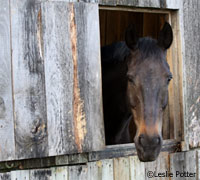
Before I give you some tips on what to look for, I want to stress that shopping for a horse is a buyer beware endeavor. I have emphasized these words because they are the most important thing to remember while looking for a horse. This may seem obvious, but we often forget that sellers want to sell their horses. I don’t mean to imply that sellers are dishonest (although some definitely are), but rather to remind you that their aim is to present horses in the best possible light. There are quite a few who want to be certain their horses go to compatible owners, but there are also some who are looking to unload problems. While some states require the selling party to disclose everything they know, both positive and negative, to a potential buyer, others require sellers to disclose only that which a prospective buyer specifically asks about. Whatever the case, if you are looking at a horse as a purchase prospect and you want to protect yourself (as much as possible) from making a mistake, it’s up to you to proceed with caution, ask all the right questions and accurately evaluate the answers and to be an astute observer of horse behavior.

Before you respond to an ad or visit any horses, assess your own needs and write everything down. Ask yourself and your trainer the following questions: How long have you been riding? What level of competition are you at? What breed, sex and age of horse would best suit your plans? Do you need a “schoolmaster” to help you develop your skills? How many young, green horses have you worked with before? Do you have the patience, time and knowledge base for a youngster? How much would you have to spend to get your ideal horse? Can you afford it? Can you afford the professional training of taking on a horse with training or behavior problems? If not, what factors are your priorities and which can you compromise on?

As a rule, young, untrained horses are the least expensive because they are unproven and require extensive time and training. However, if you are short on money but have plenty of free time and experience, such a horse might be right for you. If you don’t ride often or are new to riding, or have career or family demands that leave little time for training, by all means spend the extra money and get an experienced horse. Keep in mind that well-trained horses do not have to be expensive. You can find a good horse on a budget if you’d consider an older horse that may be a bit past his peak but may very well be a schoolmaster that can teach you a thing or two.

Horse in stallOnce you’ve narrowed down the ads to answer, you’re ready to start looking at horses. Be objective. Don’t let your emotions or the horse’s color or surface beauty get in the way of an astute and accurate assessment of his basic temperament and training. If you don’t think you can do this, bring a horse-savvy friend along to keep you on track, or better yet, bring your trainer and let her help you assess the horse.
Bringing your trainer along is also a good idea if you’re unfamiliar with interpreting a horse’s mood and personality from his behavior. A complete “dictionary” of equine body language is beyond the scope of this column, but here are a few examples of what you can detect.

Request that the owner not have the horse caught, tacked up or exercised before your arrival. The horse’s behavior during catching, leading, grooming, saddling and riding while fresh is important information to have. As you observe the horse, try to assess his general temperament type. Does he rush toward you, ears flattened and teeth gnashing? Then you might be looking at a horse with an aggression problem. He may just need a little love, proper training and consistency to achieve a brilliant show career, but if that’s more than you can realistically handle, you’re better off passing him over.

Or does he turn his rear toward you, hiding his head in the corner of the stall? This guy may be burned out. Perhaps he was campaigned too hard and long, or maybe he’s become frustrated by being chucked and thumped too often as a lesson or first horse. Are you up to finding out why and rekindling his interest in work?

On the other hand, if the prospect comes up to you eagerly, yet calmly, seeming alert and interested but showing no signs of nervousness (snorting with flared nostrils, wide eyes, ears flicking wildly while he stretches his neck out to see you while keeping his distance), as you catch, halter and lead him out of his stall, you may have found a good choice.

Be aware of the horse’s behavior around the seller as well as with you. What is your impression of him as he’s being led and groomed? How are his manners during saddling? Does he work well under saddle for his owner, your trainer and you? Watch the horse closely for signs of nervousness or fear, and observe the owner’s reactions. These subtleties can tell you a lot about the horse’s training foundation and whether it’s based on trust, terror or disrespect between owner and horse.

Visit and ride the horse several times, including at least one unannounced visit. Remember you are on the seller’s turf and have no way of knowing what was done to prepare the horse for your visit. Maybe he has been longed extensively or ridden hard before your arrival to make him calm and tractable. He might even have been tranquilized or medicated to mask pain or stiffness. You should discuss these possibilities with your vet to determine how to safely proceed and protect yourself. If the seller will agree to a trial period for the horse at your barn prior to the sale, that’s a great opportunity for you to learn what the horse is really like.

Proceeding objectively and paying attention to the behavior you observe doesn’t eliminate your risk, but you greatly improve your chances of finding a horse you’ll enjoy—and that will enjoy you.

Further Reading
Horse Buying Checklist
Option to Lease

Breeding Contracts

3

You’ve found the perfect stallion for your mare and have high hopes for the foal that will result from their union. But before you send your mare for breeding, you need to take a good look at one more important aspect of the arrangement: the breeding contract.

The owner of the stallion you have chosen for hire should present you with a contract to sign. (If he or she doesn’t, you need to contact an equine attorney and have one drafted.) It’s important to read this document thoroughly and know what you are agreeing to before you put your signature at the bottom.

In her book, “Equine Law & Horse Sense,” Julie I. Fershtman, an attorney in Farmington Hills, Mich., points to areas she has seen disputed in breeding situations:

  • When can the mare owner get a refund and how much?
  • When can a substitute mare or stallion be used instead of the horses specified in the contract?
  • What medical procedures will the stallion owner be authorized to arrange for the mare (such as routine palpation)?
  • What does the contract really mean by “live foal guarantee”?
  • If the contract requires live breeding (also called “live cover”), what happens if the stallion is sold or moves a great distance away before the breeding takes place?

Before you sign a breeding contract, be sure these areas are covered to avoid potential problems. 

A good contract will also cover points such as a foal guarantee (whether a foal is guaranteed to result out of the union, and if so, how long it must live to be considered a live foal), a clear description of the parties and horses involved, boarding and mare care issues, and insurance requirements.

If you are unsure of the language or stipulations of a breeding contract, consult an attorney experienced in equine law before you sign. 

Seasonal Feeding

2

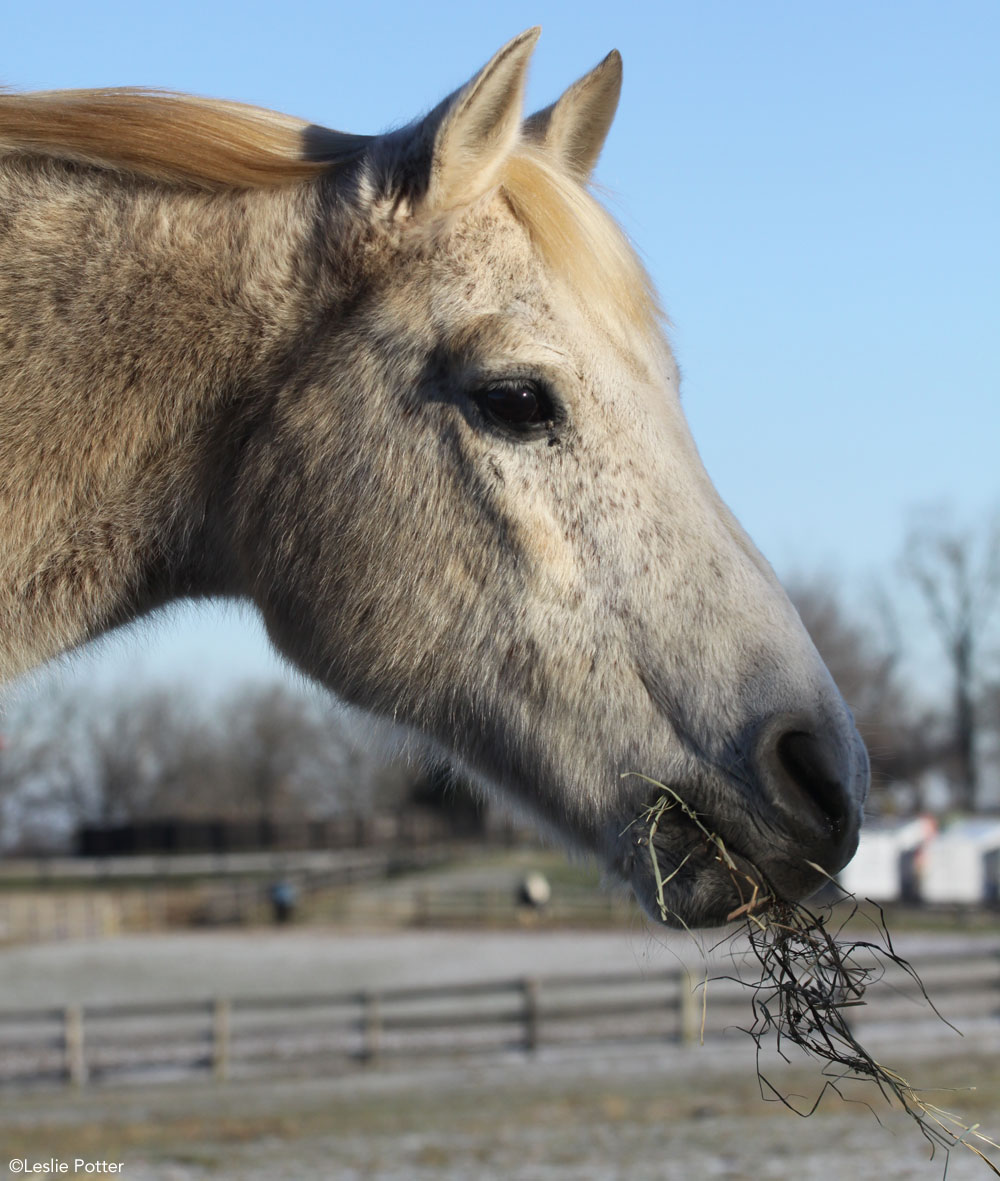
Gray horse eating hay in winter

Although your horse appreciates consistency in his daily rations, the changing seasons do affect how you feed him. Here are some considerations for his diet all through the year:

SPRING: Be careful when turning your horse out on pasture after a winter season of hay—that rich spring grass can be a shock to his system. To avoid triggering a case of colic or laminitis, reintroduce your horse to spring grazing slowly, gradually increasing the time he spends on pasture over two to three weeks. Horses that have previously foundered, or ponies (always prone to the condition) may have to be restricted from spring grazing entirely or fitted with grazing muzzles.

SUMMER: Heat and humidity can take their toll on both horses and riders. To ensure your horse is cooling himself effectively, provide constant access to clean, fresh water as well as loose or block salt. High-performance horses that sweat profusely may benefit from being offered electrolytes—but check the labels carefully; some commercial electrolyte preparations can be mostly sugar and coloring. Choose a product which lists sodium, chloride and potassium as the first few ingredients, and avoid those which list sucrose, glucose, dextrose, fructose or other sugars above the salt content. You can create your own electrolyte supplement by mixing a tablespoon each of ordinary table salt and “lite” salt (a mix of sodium chloride and potassium chloride, available at larger supermarkets) in a few tablespoons of applesauce.

FALL: Prepare your horse to weather winter by making sure he’s in good flesh now. If he’s a little ribby, gradually increase the amount of fiber in his diet, by offering more hay and/or other roughage sources (such as soaked beet pulp), throughout the day. Remember that if he’s on pasture, the nutritional value of the grazing plummets as the temperatures drop and the days grow shorter, so make sure his diet is nutritionally complete by feeding only good-quality hay, not more than a year old (vitamins in hay deteriorate over time), plus a commercial brand balanced grain ration if he needs more dietary energy. A broad-spectrum vitamin/mineral supplement can also be helpful through the fall and winter seasons. Click here for more information on fall grazing.

WINTER: Equine water intake decreases in winter, and the incidence of impaction colic skyrockets—so encourage your horse to drink at every opportunity. Break the ice in his bucket or trough several times a day, use a stock-tank heater, or offer lukewarm water (about 45-50 degrees F) to increase his desire to take in a lot of liquid. Click here for more on winter feeding.

Horses generate heat when they digest roughage, so to help your horse maintain his internal temperature, offer him free-choice hay rather than increasing his grain ration. Keep a close eye on your horse’s weight throughout the winter, too, especially if he’s in his teens or twenties or has dental issues.

Further Reading
Seven Feeding Myths Shattered
Storing Bagged Feed

The author is a freelance writer based in Canada.

Resolving Conflicts with a Non-horsey Partner

12

Are you married to, or in a relationship with, a non-horsey person? If so, you’re not alone. If you’ve seen firsthand how the amount of time and money you spend on your horse can lead to conflict, well, you’re not alone there, either.

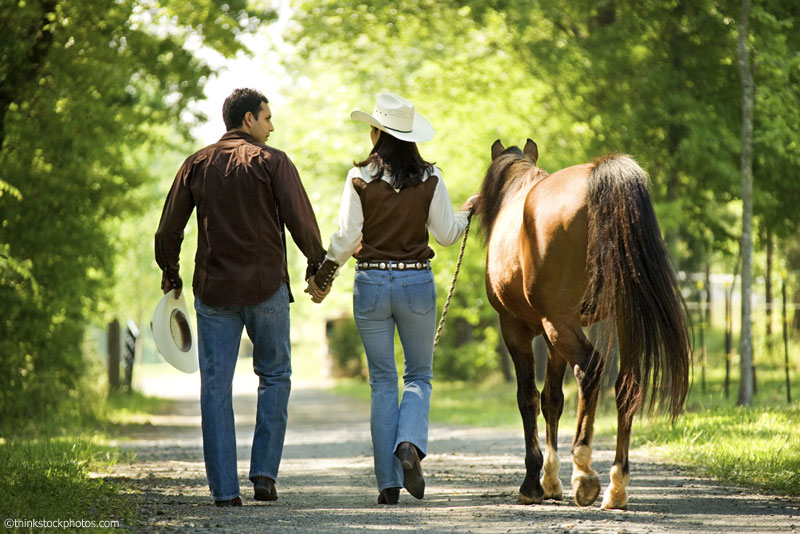
Couple with Horse


But differences of opinion don’t have to mean  permanently hurt feelings–or worse. With the right problem-solving approach, successfully negotiated conflicts can lead to a deeper, more resilient relationship. When both people have the tools and the confidence to solve challenges, each will emerge a winner.

Remember, though, that what seems to be a horse-related conflict may have much deeper roots. “Often people argue about what they think are horse issues but that really have to do with control, respect, conflict and so on in the relationship,” explains Dr. Janet Sasson Edgette, an author, equestrian sport psychologist and general family and adolescent psychologist. Her two books, “Heads Up!: Practical Sports Psychology for Riders, Their Families, and Their Trainers” and “The Rider’s Edge: Sport Psychology for Riders” address a variety of rider and relationship concerns.

Here are some tips from Dr. Edgette and others for resolving conflicts with the non-rider in your life.

Take the initiative to resolve issues. Dr. Edgette says pointedly, “I’ve heard too many riders get very demanding, very whiny, about their riding. They act entitled to it by virtue of the fact that they’re very good at it, or they love it.” This may be true, but it’s up to us to take responsibility for the impact riding has on our relationships.

Take a team approach. Instead of placing blame, try to approach problems from the same side of the fence. Share your feelings, listen to one another’s perspectives and work collectively to come up with solutions.

Include your partner. Remember when you didn’t know a sidepass from a shoulder-in and how confusing it all was? Take the time to communicate with your partner in terms he or she can understand. Our horse language is foreign to non-riders, so try to explain things without the horsey jargon. When your partner understands the finer points of riding, your sport may suddenly become more interesting. But if you’re dragging your partner to horse events because you fear going alone—and they’d really rather stay home—find like-minded horse people you can travel with instead.

Encourage the partner’s activities as well. Is there some hobby or interest your partner would like to pursue? If so, be supportive of it. Even better, carve out time to enjoy it with them if at all possible. It’s important that you plan time to spend together.

Educate the non-horsey person about costs. Your partner might see equines as four-legged money pits, but perhaps it’s because there’s a basic lack of knowledge of what things cost. Sit down with your partner and explain the costs associated with board (or hay and feed if you keep horses at home), shoeing, vaccinations, worming and care, plus the expenses for any type of competition you participate in. Seeing the costs in black and white will give your partner a better understanding of where the money goes, and an appreciation for the fact that while you must spend money to properly care for your horse, you’re not necessarily being a spendthrift.

Appreciate your differences—and each other. The money and time that horses take can be hot issues in a relationship, but these problems can be solved—with outside help if needed. The bonus is that the communication skills learned along the way can be applied to other struggles in the relationship.

Further Reading
Make Way for the Horse
Balancing Family and Friends with Horses.


The author’s husband John possesses those qualities necessary to his horse-obsessed wife.

Evaluating Equine Fitness

5

BEFORE YOU GO…
You will probably want to spend many hours in the saddle to see as much country as possible. Do yourself and your horse a favor and make sure the two of you are fit enough for a riding vacation. Overweight or under conditioned horses are prone to saddle sores, heat stroke and fatigue-induced injuries. A sensible conditioning program starting six to eight weeks before your trip will make the excursion more pleasant for both of you.

To build endurance, try interval training on the trail. Start by trotting on level ground for five – 10 minutes, followed by three minutes of walking. Do this several times throughout each trail ride. Gradually increase the amount of trotting time, and add in some light hills after the first week or so. If you really want to monitor your horse’s progress, invest in an equine heart monitor. This device can tell you when your horse is working too hard for his own good. Equine heart rates will vary between individuals and are affected by things such as age, weight, temperature, fitness, and illness or injury. In very general terms, an average, healthy adult horse’s resting heart rate should be between 30-40 beats per minute. A healthy aerobic working heart rate range is between 100-140 BPM. If heart rate goes above 180 BPM, slow down!

As for your own comfort, a few adjustments will make multiple days in the saddle a little more comfortable. Sheepskin seat covers are available for every type of saddle. They provide additional rider comfort without sacrificing “feel” of the horse. Water bottle holders which fit snugly to the pommel or cantle of the saddle will allow you to have your drink of choice at your fingertips throughout the day. If you find your feet going numb after hours in the stirrup, try a closed-cell foam stirrup pad. Be sure to lengthen your stirrup leathers a notch to make up for the added height. And dismounting to walk down hills will not only give your horse a break, it prevents leg muscles from getting as sore.

Further Reading
Conditioning Horses with Hill Work
Selecting the Right Riding Vacation

The author is a freelance writer based in Northern California.

Traveling With Your Horse

1

By Cary L. Szuwalski


When you are preparing to travel with your horse, packing is an organizational challenge. Every horse traveling is more than likely to be accompanied by a mound of equipment. The key to efficient packing is to stow first those items that you won’t need until you arrive at your destination, such as your show equipment if you are going to a show. The things that should be packed last are those things that you will need to use while you are on the road. Here is a list of items that you should pack within easy reach. In an emergency, you don’t want to have to sort through odds and ends to get to the necessities.


  • important documents: CVIs, vehicle and trailer registration and insurance
  • telephone numbers and directions to your locations
  • cellular phone
  • road atlas
  • cash and credit cards
  • names and telephone numbers of veterinarians and farriers along the way
  • first-aid kits for horses and humans
  • clean buckets, sterile towels and rags
  • water container
  • fly repellent
  • hoof pick
  • twitch
  • knife
  • wire cutters
  • hammer
  • flashlight
  • fire extinguisher
  • extra double-ended panic snaps
  • lariat or lungeline
  • hobbles
  • extra halters and lead ropes
  • reflective triangles
  • flares
  • red flag
  • chock (tire) blocks
  • tool kit
  • tire iron and jack
  • jumper cables
  • tire chains
  • tow chain
  • replacement fuses
  • electrical and duct tape
  • gas can
  • motor oil
  • coolant
  • hose
  • windshield scraper, shovel and sand (if traveling in winter)
  • 0FansLike
    0SubscribersSubscribe
    We use cookies to help personalize content, tailor and measure ads, and provide a safer experience. By navigating the site, you agree to the use of cookies to collect information. Read our Cookie Policy.
    OK