0 ITEMS
  • My Account
  • Holiday Gift Guide
  • Podcast
  • Webinar
Subscribe Combo
Enable cache13
Home Blog Page 110

Saving Horse Trail Sports

1
Horse Trail Sports
Photo Courtesy of North American Trail Ride Conference

Trail riding is among the most popular equestrian pastimes, and competing on the trail was once something many trail riders enjoyed. But due to a variety of factors, two organizations that sanction competition on the trail have seen a big dip in both membership and ride participation: The North American Trail Ride Conference (NATRC) and the American Endurance Ride Conference (AERC) have experienced a significant decrease in interest in horse trail sports over the past several years.

Without enough members and rider participants to support events, the very existence of both organizations was in jeopardy. Fortunately for those who love to compete on the trail, both NATRC and the AERC are actively working to save their sports.

Competitive Trail

NATRC, a 501(c)(3) non-profit, is the oldest competitive trail riding organization in the United States. The group started in 1961 with the goal of creating interest in developing both good trail horses and good on-the-trail horsemanship.
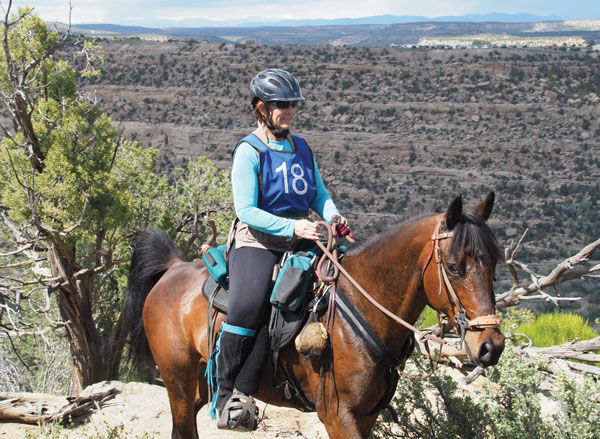
North American Trail Ride Conference - Horse Trail Sports
Horsemanship and vet scores must both be high to place well in competitive trail. Photo Courtesy of North American Trail Ride Conference

NATRC rides are not races; they are judged competitions with veterinarian and horsemanship judges. NATRC-sanctioned rides are held throughout the U.S., Canada and Mexico, and are held at 8- to 90-mile distances, depending on the division.

In the three divisions that have existed in NATRC for decades—Novice, Competitive Pleasure and Open—both horse and rider are judged separately by different judges. Rides vary from one to three days in length and require horses and riders to camp overnight.

During competition, the horse is evaluated by a veterinary judge, who examines the horse for soundness and baseline vitals—temperature, pulse and respiration—before the ride and then again after the ride.

The vet gauges these same stats at points along the ride, in addition to the horse’s manners and partnership with the rider. The horse’s vital signs are taken with the goal of determining his condition and ability to continue. At the same time, a horsemanship judge evaluates the rider’s safety, handling and riding at check-in, checkout and during the ride.

The horse in each division with the highest point score is the winner in this horse trail sport. A separate win goes to the rider with the most points in each division.

Twenty years ago, NATRC rides had so many entries that participants had to be turned away. More recently, the sport has struggled to find enough people and horses to even hold an event.
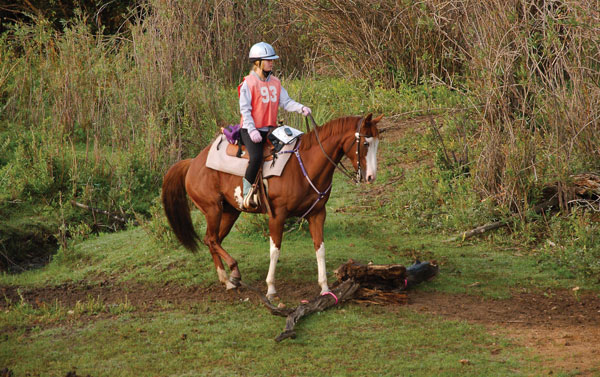
North American Trail Ride Conference - Horse Trail Sports
Photo Courtesy of North American Trail Ride Conference

According to Sarah Rinne, NATRC’s executive director, this 30 percent decline in participation over the past several years has several reasons behind it. Some of the main factors include a decrease in free time, age-related barriers for NATRC’s main rider demographic, and general finances.

“Society is busier than ever, and our sport [requires] a lot of time for proper care and conditioning of a distance horse,” she says. “It’s not just the time commitment of traveling to rides and competing.”

Rinne adds that it is exceptionally challenging to draw younger riders these days.

“The sport is competing for a substantial amount of time and expendable income from those who may not have it while starting careers and families,” she says.
Realizing the sport was in trouble, the NATRC’s national board of directors took a poll to determine the kinds of changes they should make.

“We conducted a survey in 2018 that was open to current members, past members and those who have not been members,” says Rinne. “This was to capture a better picture of what we were doing well, where we needed to adjust, and the barriers that exist for current or potential riders. In addition, we worked to evaluate other organizations and the market as a whole in order to develop strategies for the future.”
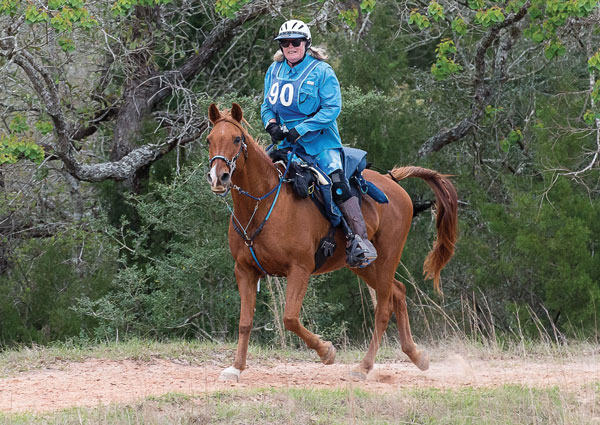
North American Trail Ride Conference - Horse Trail Sports
Photo Courtesy of North American Trail Ride Conference

As a result, a number of new concepts designed to increase participation in the sport were implemented in 2019.

“NATRC has responded to these barriers by offering more levels of membership that fit our members in different stages of life, as well as introducing a new competitive option called the Leisure division,” says Rinne. “Our new division is geared to be a one-day format in which competitors can arrive onsite that morning, check in for the competition, ride the designated 8- to 12-mile course, and check out. There is a quick turnaround for awards, allowing competitors to return home that day.”

Rinne points out that the Leisure division embraces NATRC’s philosophies while also accommodating riders’ busy lives. So far, the addition of this division is showing promise.

“We have noticed an increase in ridership due to the addition of the Leisure division format,” says Rinne. “In some cases, that division has enabled our rides to be financially successful, or at a minimum, not take a loss.”

Endurance

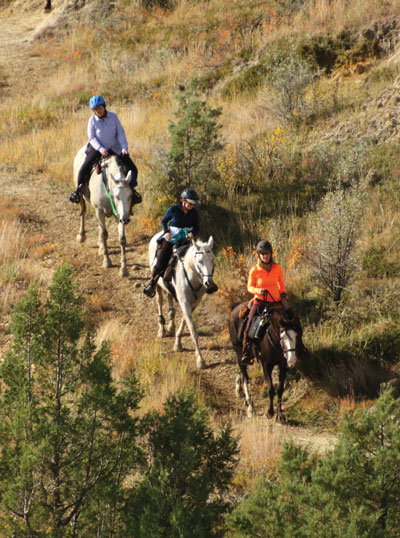
The AERC, also a 501(c)(3) non-profit organization, started in 1972 as a group of local riders in California, and eventually grew to become a nationwide organization. Endurance rides around the U.S. and Canada are sanctioned by AERC and span 50 miles or more.
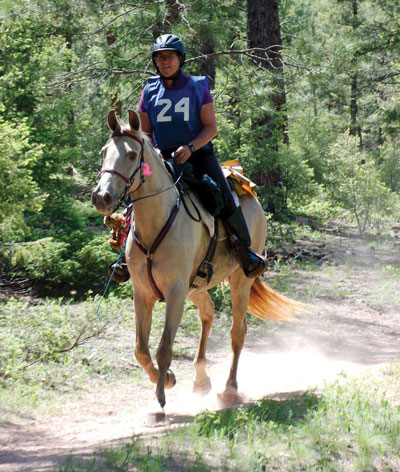
American Endurance Ride Conference
AERC’s philosophy is “to finish is to win.” Photo by Bob Zimmerman

The organization also sanctions limited-distance rides of 25 to 35 miles. AERC rides take participants through scenic trails consisting of all kinds of terrain, and have been the most popular type of trail competition for decades.

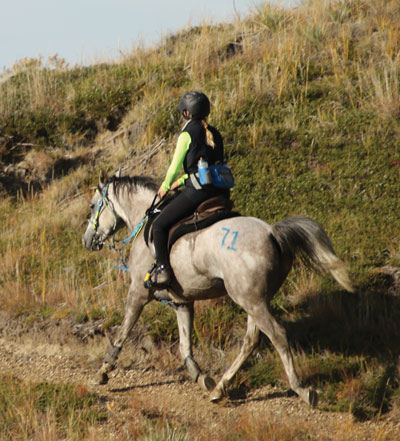
In AERC endurance rides, participating horses are examined for soundness before starting out on the trail. Along the ride, they are periodically checked for soundness and for normal physical and metabolic parameters.

Horses that appear lame are excused from competition, while those whose pulse and respiration remain elevated after a 30-minute rest are held until their vitals return to normal.

Once the ride is complete, the horse is checked again for soundness and normal vitals. Horses that pass this final check are given completion status.

The horse-and-rider team who finish first are the winners. However, AERC’s philosophy is “to finish is to win.” Many riders participate without the intent of winning, but just to enjoy the sport. An award for the best conditioned horse is given by the ride veterinarian, based on a horse’s soundness and metabolic status at the end of the ride.

For decades, AERC rides have been huge events. It wasn’t unusual to see 100 participants or more at an AERC event. The recession of 2008 changed that, however, resulting in the lowest rider participation in the history of the sport.

“The high point in ride entries for AERC was 2007,” says AERC President Monica Chapman. “There has since been a downward trend to 2018.”

By 2018, AERC had gone from 20,972 to 14,939 riders over an eight-year period.

The economic downturn of 2008 led the way in bringing participation down, but Chapman attributes the continued fall-off to more horse owners and riders aging out, while newer riders don’t have the time or money to participate in as many events. She also points to the overall rising costs of keeping a horse.
American Endurance Ride Conference
Endurance is a true race, with the fastest horse to finish and pass the vet checks declared the winner. Photo by Bob Zimmerman

Faced with this reality, the AERC began an effort to boost membership and rider participation.

“Last year, we ran a campaign called Ride One More,” says Chapman. “Anyone who rode one more ride than the year before got a special award.”

For 2020, AERC is running another campaign called Step it Up. “Step It Up rewards members for [things like] trying a new distance, becoming a ride manager, and volunteering for a ride,” she says. “We also have mentorship programs, educational clinics, webinars, and the Green Beans Endurance Challenge Program for newcomers to the sport.”

These new programs seem to be doing the trick. In 2019, AERC’s ride participation numbers went up, along with membership.

“In 2019, our numbers slightly rebounded, despite many event cancellations due to weather,” says Chapman.

Effects of a Pandemic on Horse Trail Sports

Although the COVID-19 pandemic has caused both NATRC and the AERC to cancel many of their planned rides in 2020, the hope is that both sports will continue to see an upswing in participation once events can be rescheduled.

“All organizations are going to experience the financial and societal impacts of the COVID-19 pandemic,” says Rinne. “While it’s not entirely clear how extensively NATRC will be impacted, we have taken steps to negate what we can by implementing additional participation options for members to remain active with their horses and NATRC, while also respecting Centers for Disease Control recommendations.”

One thing is clear: if new pushes by these two organizations are successful, horse trail sports will continue to prosper for years to come.

This article about horse trail sports appeared in the August 2020 issue of Horse Illustrated magazine. Click here to subscribe!
Plan Ahead for Colic Surgery Decisions for Your Horse

1
Horse Colic Surgery
Photo by Alexia Khruscheva/Shutterstock

Colic surgery. It’s invasive, astronomically expensive, and there’s no guarantee it will be successful. If your horse does make it through the colic surgery, recovery is long, arduous and time-consuming. And when he’s recovered, he’ll always be prone to future colic.

Right? Maybe.

Or maybe not.

Lifting the Veil of Fear

Depending on the type of colic your horse has and how quickly it’s treated, he’ll have up to a 90 percent chance of coming through surgery and healing uneventfully.

While colic surgery is a major decision, continual advances in techniques, medications and follow-up treatment mean that colic surgery today can be a life-saving procedure with a good recovery rate and a return to full work after healing.

As with any major decision related to your horse’s care, the more knowledge you have before the stress and drama of an emergency situation, the better.

Common Types of Colic

Some forms of colic that require surgery are more favorable than others in terms of prognosis and recovery.

“These include large colon displacements, impactions and enteroliths [stones], which typically yield upwards of 90 percent success rates for hospital discharge,” says Wade Walker, DVM, Dipl. ACVS-LA. Walker is with Alamo Pintado Equine Medical Center in Los Olivos, Calif., a regional equine treatment center that performs over 100 colic surgeries per year.

Colics with less favorable prognoses include those in which the blood supply to the small intestine or large colon is compromised and the surrounding tissue is damaged.

“For example, a strangulating lipoma or a large colon volvulus [twist] are more severe cases,” he explains. “These require more serious intervention, and recovery from surgery may be more complicated.”

Pre-Op for Horse Colic Surgery

When your horse arrives at the emergency clinic, testing will begin to determine the degree of compromise.

Abdominal Ultrasound
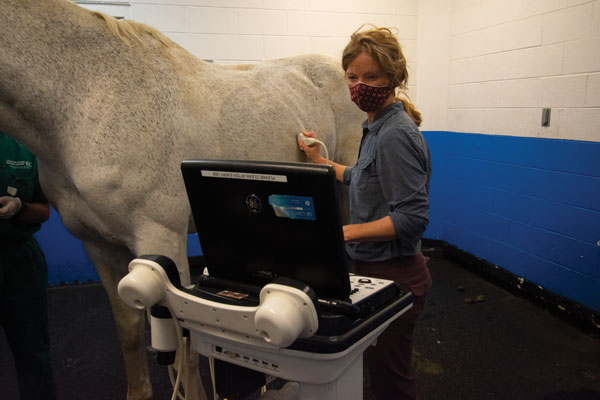
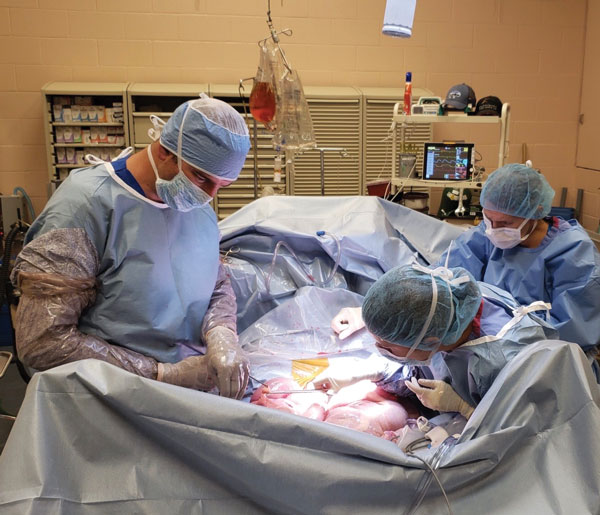
Dr. Shannon Murray performs an ultrasound to help determine the cause of colic prior to surgery. Photo Courtesy Littleton Equine Medical Center

“Abdominal ultrasound, assessment of the horse’s vital signs and a physical exam begin our decision-making process,” says Walker.

“We’ll also perform several diagnostic tests, including lab work on blood to evaluate hydration status, white blood cell count, organ function, systemic infection and other criteria. Lab work can also be run on abdominal fluid, if warranted, to gather additional information,” says Shannon Murray, DVM, M.S., Dipl. ACVS, with Littleton Equine Medical Center in Littleton, Colo. The clinic, founded in 1950, is a recognized referral center for the Rocky Mountain region.

“We’re continually monitoring the horse’s pain level,” she adds. “In some cases, additional medical treatment in the clinic setting can resolve the colic without surgery. Severe pain can mean surgery is the next step.”

Based on initial prognosis and your agreement to proceed, your horse will be prepped for surgery.

“While surgery can be a big decision for the owner to make, once we open the abdominal wall, we will have a better idea of what we are dealing with,” says Murray. “Before that, all of the diagnostics help guide us in [determining] the type of colic your horse is experiencing, but surgery provides a clear picture of the situation.”

In the O.R.

“I always tell clients that there are many steps and evaluation points during surgery,” says Murray. “We keep in touch with the owner, and at any time, we can change course or stop the surgery based on what we find. The severity, prognosis and financial considerations that increase with a more complicated surgery may mean that we choose a different outcome.”

Horse Colic Surgery
Alamo Pintado Equine Medical Center (pictured) performs over 100 colic surgeries per year. Photo Courtesy Alamo Pintado Equine Medical Center

Each colic surgery is different, depending on the underlying cause and disease process.

“In general, for displacements, the abdominal contents are removed and replaced in their correct position,” says Walker. “In the case of feed impactions, the bowel is opened and the feed is surgically massaged out in order to empty the bowel.”

If the bowel has lost its blood supply, the devitalized section must be removed, and the healthy components are stitched back together as well as possible.

“In the worst cases, we see that the intestine has ruptured, causing systemic infection,” says Murray. “Sadly, this means euthanasia is needed.”

Colic Symptoms

If your horse hasn’t had a colic episode before, you may not know what the symptoms look like, which can range from subtle to obvious:

◆ being quieter than normal
◆ going off feed
◆ lying down more than normal
◆ exhibiting the Flehmen response
◆ looking at flanks
◆ pawing
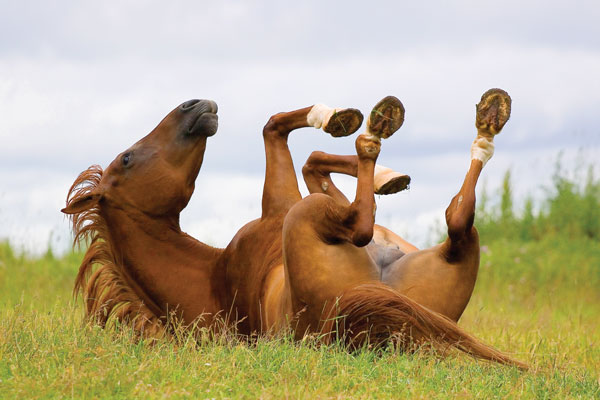
◆ rolling
◆ frantic attempts to lie down
◆ thrashing to the point of injury

Post-Op and Recovery

When surgery is complete, a typical recovery and rehab schedule for your horse may look as follows.

◆ First week: Following surgery, the horse will remain at the clinic on stall rest, with frequent monitoring and medications administered as needed.
◆ First month: Stall rest with hand walking for 10-15 minutes, two to four times per day. Hand grazing is ideal.
◆ Second month: Stall rest with access to a small pen or paddock with daily hand walking.
◆ Third month: Stall rest with access to a larger turnout area or small pasture.
◆ Fourth month: Return to riding. For some horse owners, the rehab requirements may be a bigger decision point of colic surgery than the financial aspects.

After Horse Colic Surgery
Dr. Murray applies a belly band the day after surgery to help support and compress the gut. Photo Courtesy Littleton Equine Medical Center

“There is no guilt or shame in deciding against colic surgery, knowing what the after-care will require and whether you have the means to provide that, or whether your horse’s behavior is conducive to the required recovery and rehab,” says Murray.

If the owner isn’t able to provide appropriate physical rehab but has the financial means, the horse can be boarded temporarily at a rehab facility. Some vet clinics offer a reduced rate for longer-term care if the horse will be staying during the recovery period.

In general, most horses return to their normal diet following surgery. Some horses, such as older horses with tooth loss or poor chewing ability, may be changed to a wet or soaked diet.

Cost and Insurance

There’s no guarantee of success with colic surgery, but if your horse is a good candidate and the prognosis is good, your decision may come down to the financial concerns.

Colic surgery costs vary greatly based on size of the horse, the complexity of the surgery, complications and more. A general ballpark is $8,000 to $15,000.

For some horse owners, the cost is a non-issue, while for others, cost may be the deciding factor. If agreeing to colic surgery means your financial stability is threatened, think hard about the decision.

“Owners should never feel bad for the decision they need to make,” says Murray. “Know what you can afford before you’re faced with making a decision in a very stressful time.”

Several supplement companies offer free colic surgery reimbursement up to $10,000 if you use their supplements and provide your horse with several wellness protocols, including an annual physical exam plus deworming, dental care and vaccination programs.

“Colic insurance can be a blessing in these cases, and potentially remove the economic factors that affect decision-making,” says Walker.

Another option to help with expenses is the CareCredit program. If medical bills put on this credit card are paid in full within a certain amount of time, no interest is charged.

Of course, there is also traditional equine insurance, which covers mortality and high medical expenses, most commonly colic surgery. Know your coverage amount, any exclusions, whether it only pays out if surgery is attempted, and any other details before signing on for a monthly or yearly premium.

Hand Grazing a Horse
For the first two months of recovery after colic surgery, daily hand-walking and grazing is ideal exercise. Photo by Diane Garcia/Shutterstock

Next Steps

Facing a potential colic surgery may be one of the most stressful events a horse owner can ever experience. But you’re not alone.

“Your veterinarian is there to guide you through the process and apply as much evidence-based information as possible,” says Walker. “Efficient and informed decision-making often yields the best outcomes.”

Finally, have a plan for transporting your horse to the emergency clinic. If you don’t have your own trailer, line up friends, family, or a local transport provider you can call in an emergency.

Before you’re ever faced with a colic that may need surgery, take some time to pre-plan and consider whether colic surgery may be an option for your horse.
Remember that whatever your decision is, your veterinarian understands and is ready to support you.

Is Your Horse a Good Candidate for Surgery?

◆ One of the best indicators of success in treating colic is time—the sooner the horse begins receiving treatment, the better the prognosis. Several types of colic can be resolved with a farm call and medications.

◆ Your horse’s age is not necessarily a factor. Several studies have shown that older or geriatric horses have similar prognoses and recoveries as younger horses.

◆ Does your horse have pre-existing conditions or co-morbidities? Cushing’s disease, active laminitis, arthritis, and other conditions may make recovery more challenging.

◆ As with age, your horse’s personality is not necessarily a factor. While naturally quiet horses may deal easier with the stall rest needed to recover, many horses have the ability to adjust and cope with their environment. Horses that became restless or agitated with stall rest can be helped with certain medications.

This article about horse colic surgery appeared in the August 2020 issue of Horse Illustrated magazine. Click here to subscribe!
Equestrian Handbags

0

Rebecca Ray Burghley - Equestrian HandbagsShow off your passion for horses outside the barn with these equestrian handbags.

Rebecca Ray Burghley

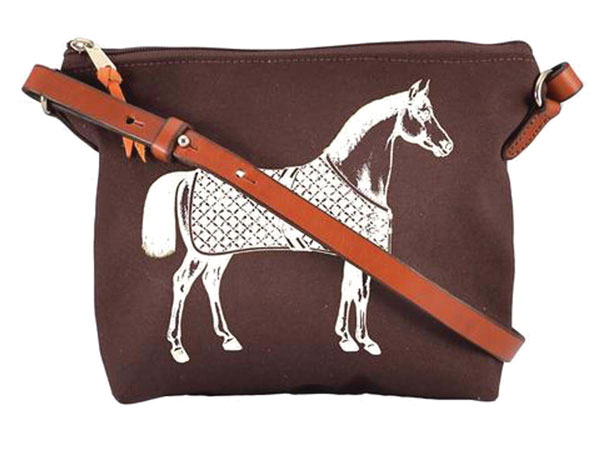
Crafted from durable cotton duck canvas by Amish seamstresses, this crossbody design features a leather strap. The bag is available in chocolate or natural hue and is a wonderful medium-sized bag for travel or running errands.
$98.00; www.rebeccaraydesign.com


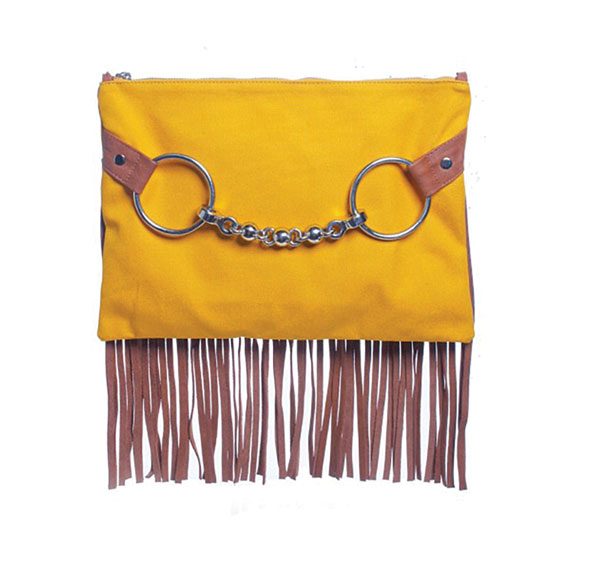
Adi Kissilevich Bubble Bag - Equestrian HandbagsAdi Kissilevich Bubble Bag

A modern clutch features one of Adi’s signature stainless steel horse bit accents. This canvas bag decorated with leather fringe can go from day to night, and a detachable shoulder strap easily transforms it into a crossbody with a snap. The sunny yellow hue is a great shade for fall.
$260.00; www.adikissilevichusa.com


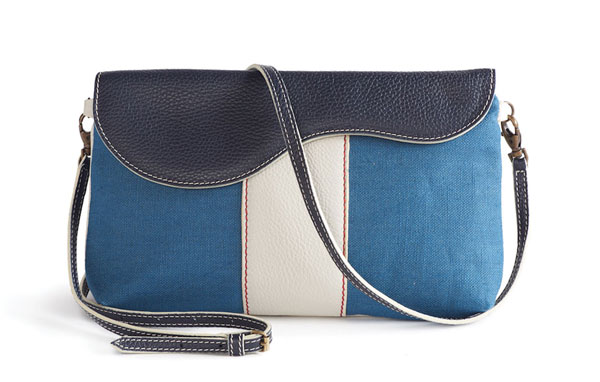
Oughton Limited PaddockOughton Limited Paddock

The Paddock bag goes from crossbody to clutch in seconds with the click of a simple leather strap. A familiar silhouette of a saddle is divided by a white leather stripe stitched with red thread, representing a girth. The three shades of leather are all sourced from Florence, Italy.
$195.00; www.oughtonlimited.com


Tucker Tweed Sedgefield - Equestrian HandbagsTucker Tweed Sedgefield

If you’re searching for a classic handbag you can enjoy year after year, Tucker Tweed’s high-quality bag finished in pebble-grain leather is the one. The bag is named after the legendary Sedgefield showgrounds in North Carolina, a notable destination for equestrians. The Tucker Tweed Signature design is accented with gold hardware and comes with an adjustable shoulder strap.
$279.00; www.tuckertweed.com


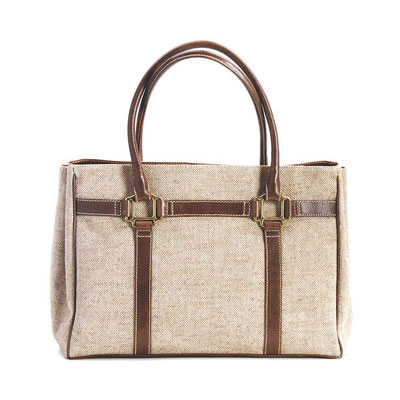
Oughton Limited Carteret Oughton Limited Carteret

This sleek tweed tote is handmade in Italy, offering a taste of luxury. The neutral tan color with textured tweed is accented with halter hardware for a subtle equestrian style. The bag is outfitted with gusset pleats that can be unbuttoned to expand the bag’s size. Use as a fabulous carryall or overnight bag, perfect for the woman on the move.
$435.00; www.oughtonlimited.com


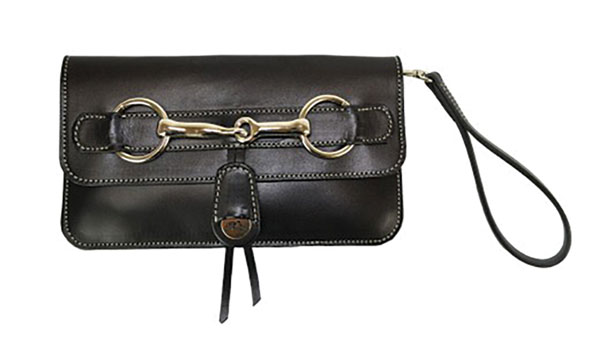
Rebecca Ray Mackenzie - Equestrian HandbagsRebecca Ray Mackenzie

This beautiful design comes in a compact package. The durable clutch is made with black bridle leather and trimmed with eye-catching white stitching. A nickel snaffle bit is positioned front and center on the clutch. A light leather transforms the clutch into a wristlet for running errands during the day.
$225.00; www.rebeccaraydesign.com


Alessandro Albanese Limited Edition - Equestrian HandbagsAlessandro Albanese Limited Edition

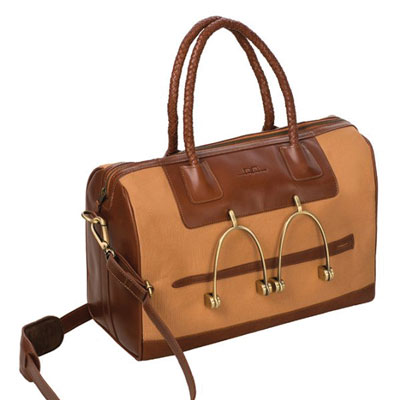
This spacious leather and canvas bag is a flawless carryall for weekend trips or a busy student. A limited-edition offering from Alessandro Albanese, it has braided handles plus a removable and adjustable shoulder strap. The ultimate equestrian details include a pair of spurs on the front of the bag.
$310.00; shop.
www.alessandroalbanese.com


Stylish Equestrian Hanna Stylish Equestrian Hanna

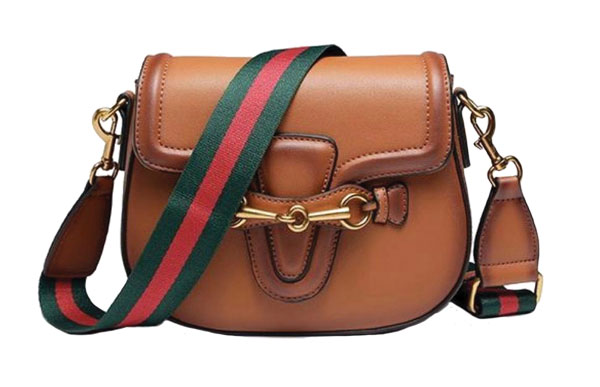
A sleek vegan “leather” crossbody in cognac is the perfect size for everyday errands. The front of the bag is accented with a gold bit detail. Use the matching vegan strap or swap out for a designer-inspired fabric strap. It’s also available in midnight black. $88.00;
www.stylishequestrian.com

This article about equestrian handbags appeared in the September 2020 issue of Horse Illustrated magazine. Click here to subscribe!
 

Horse Holiday Gifts for All

0

Hunt Seat Paper Co. Holiday Cards - Horse Holiday GiftsHunt Seat Paper Co. Holiday Cards

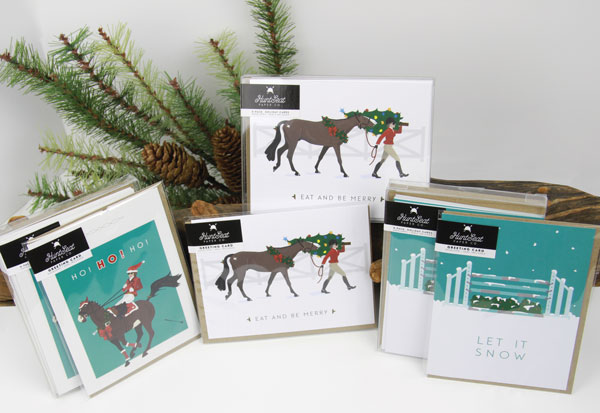
Give your horsey friends a holiday greeting with equestrian flair. Ho! Ho! Ho!, Eat and Be Merry, and Let It Snow box sets of eight, perfect to go along with any horse holiday gift as well. $19.00; www.huntseatpaperco.com


HandsOn Gloves - Horse Holiday GiftsHandsOn Gloves

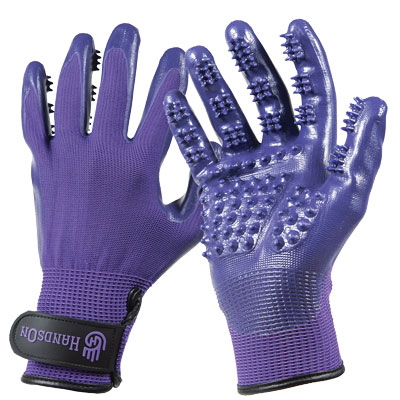
No. 1-ranked, multi-award winning HandsOn Gloves are the all-in-one shedding/bathing/grooming gloves. Animal-preferred for the great massage and closer bonding time than a brush. $24.99; www.handsongloves.com


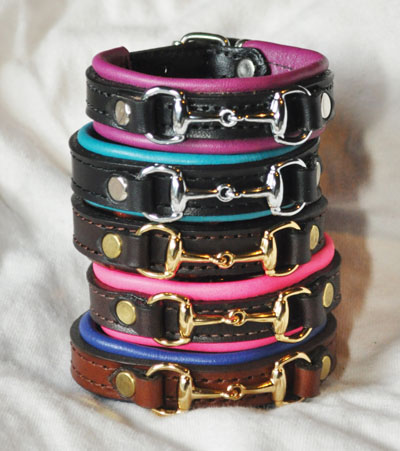
Narrow Bit Bracelet - Horse Holiday GiftsNarrow Bit Bracelet

Choose from four leather and 47 padding colors! Silver or brass hardware. $35.00; www.cleverwithleather.com


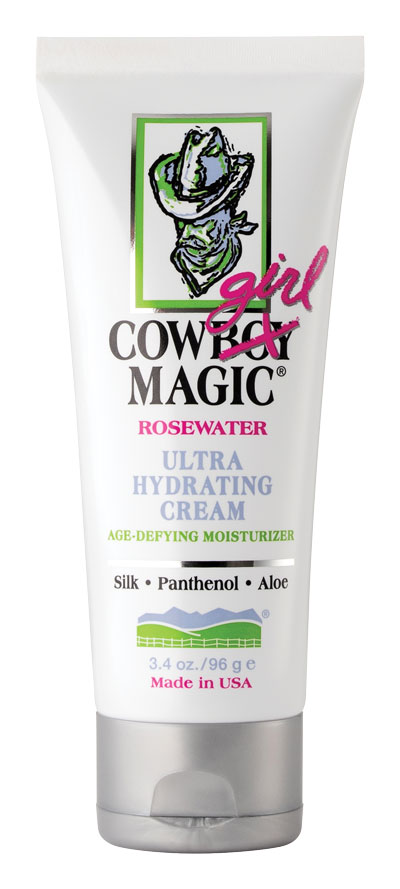
Cowgirl Magic Ultra Hydrating CreamCowgirl Magic Ultra Hydrating Cream

Features a clean, light fragrance and age-defying properties for the body, face, hands and feet. Enriched with a blend of coconut, apricot, avocado, sesame and olive oil that restore suppleness to the skin.
$12.99; www.cowboymagic.com


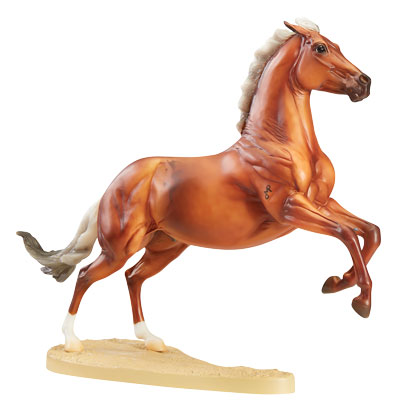
Big Chex to Cash Breyer Model Horse - Horse Holiday GiftsBig Chex to Cash Breyer Model Horse

A stunning dappled palomino stallion who has earned more than $220,000 in prize money and multiple national reining championships. $44.99. www.breyerhorses.com


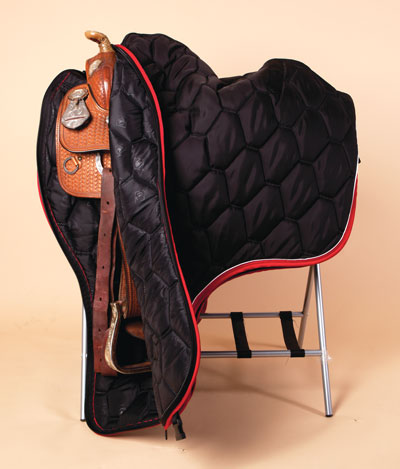
Quilted Western Saddle Carrier by Big DQuilted Western Saddle Carrier by Big D

A SmartPak exclusive! Safely transport your show saddle. Match other coordinating bags in your favorite colors. Monogram/name customization available.
$99.95; www.smartpak.com


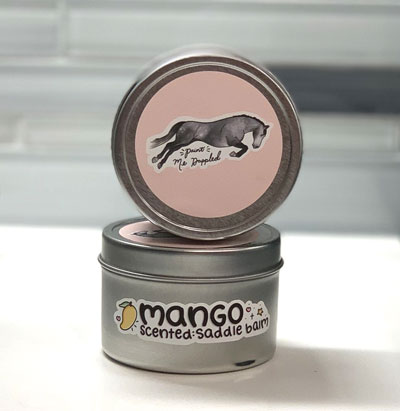
Paint Me Dappled Leather BalmPaint Me Dappled Leather Balm

Scented leather balm comes in a 4-oz. tin. Great for bridles, saddles, leather girths, boots, or anything leather! Many scents available. $10.00;
www.twoheartsequineboutique.com


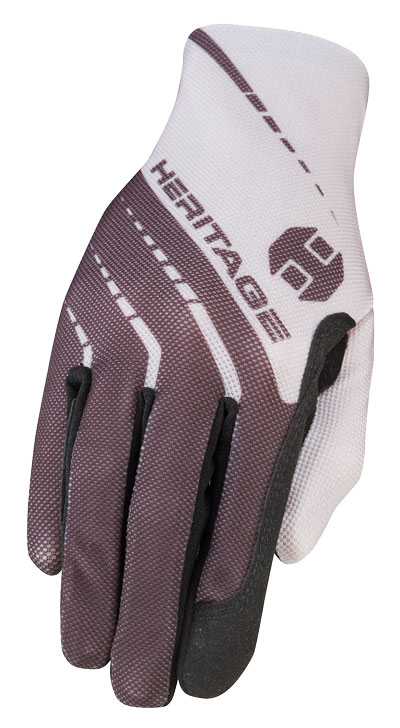
Heritage Solara GloveHeritage Solara Glove

Made with a mesh material that helps conform to your natural hand shape while providing ventilation. Also features Super Grip synthetic suede palm. $29.95; www.heritagegloves.com


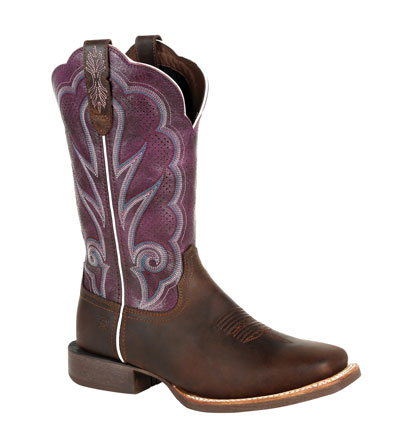
Durango Lady Rebel Pro Lady Ventilated Western BootDurango Lady Rebel Pro Lady Ventilated Western Boot

Features a ventilated shaft to promote maximum air flow, X-Treme Comfort insole, and calf expansion for universal wider fit. Full grain leather shaft and slip-resistant rubber outsole. $166.00; www.durangoboots.com


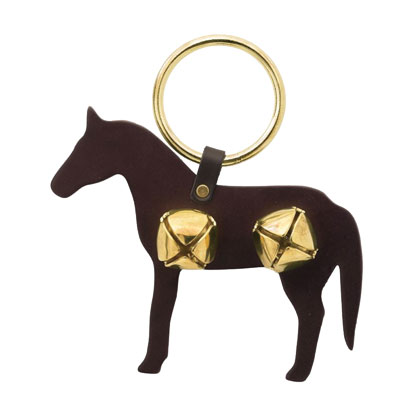
Tory Leather Company Sleigh Bell Door HangerTory Leather Company Sleigh Bell Door Hanger

An equestrian touch welcomes your guests for the holidays with cheerful country style and the pleasant sound of jingle bells. $21.95.
www.doversaddlery.com

This article about horse holiday gifts appeared in the November/December 2020 issue of Horse Illustrated magazine. Click here to subscribe!
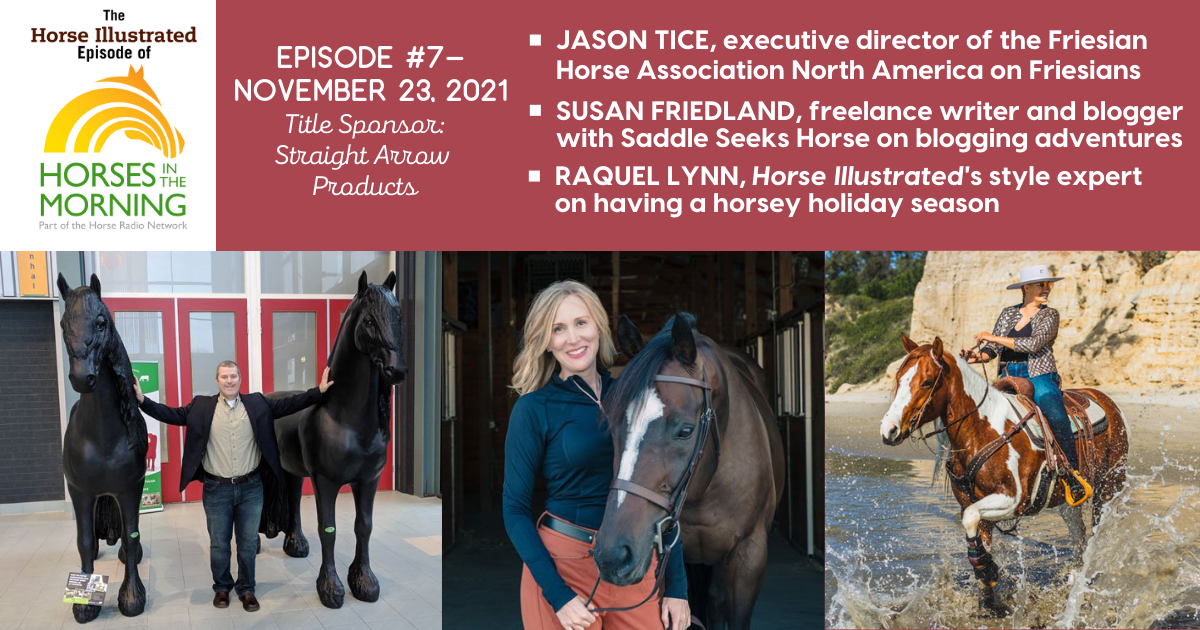
Podcast Episode #7: Friesians, Equestrian Blogging Adventures, and Having a Horsey Holiday Season for November 23, 2021 from Title Sponsor Straight Arrow Products

0

Podcast 7 - Friesian Horse Association with Jason Tice, equestrian blogging adventures with Susan Friedland, horsey holidays with Raquel LynnIn the seventh episode of The Horse Illustrated Episode of Horses in the Morning, sponsored by Title Sponsor Straight Arrow Products, hosts Glenn the Geek and Sarah Evers Conrad talk to Jason Tice about the Friesian breed and the Friesian Horse Association North America, freelance writer Susan Friedland of Saddle Seeks Horse and her equestrian blogging adventures, and to Horse Illustrated’s style expert Raquel Lynn about how to have a horsey holiday season.

Hosts: Sarah Conrad, Digital Content Editor of Horse Illustrated & Young Rider and Glenn the Geek, host of Horses in the Morning

Title Sponsor: Straight Arrow Family of Brands

Holiday Contest Mentioned: Share your favorite horse memory for a chance to win

Special Subscription Offer from Horse Illustrated: For the holiday season, treat yourself with a year subscription to Horse Illustrated AND gift a subscription to another horsey friend or family member for only $24.95. That’s two subscriptions for one low price. Visit www.horseillustrated.com/blackfriday anytime between Thursday, November 25th and Tuesday, November 30th.

There’s an App for that!  Check out the new Horse Radio Network app for iPhone and Android. Follow Horse Radio Network on Twitter or follow Horses In The Morning on Facebook.


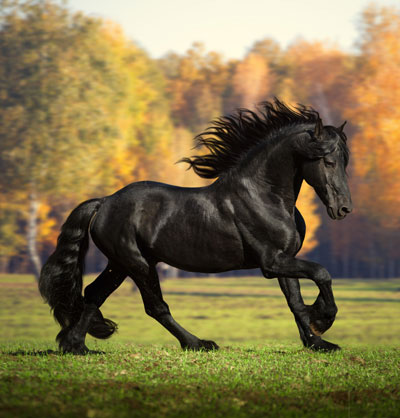
Jason Tice on the Friesian Horse Association North America

Friesian Horse - Jason Tice - Friesian Horse Association North America
Photo by Viktoriia Bondarenko/Shutterstock

Jason Tice has been the Executive Director for the Friesian Horse Association North America (FHANA) for more than 13 years. He came to FHANA based on his experience with membership management and event planning. Previously, he did event planning for the senior PGA tour on events like the Allianz Championship and the senior LPGA tour on events such as the HyVee classic. He has watched the Friesian breed grow in popularity in North America, especially in the world of sport and with the Amish community. Not only can this breed compete at high levels of dressage and driving, but now it is having success in western dressage. Originally from Ames, IA, and a graduate of Iowa State University, his interest in horses started when he met his wife Jessica. They currently have a 22-year-old Arabian that they raised from a baby and an off-track Thoroughbred.

Additional Information: We featured the Friesian breed in the August 2020 issue of Horse Illustrated, but for those who are subscribed, you’ll get to see another breed profile in the upcoming January/February issue of Horse Illustrated.

Links for the Friesian Horse Association North America:

◆ Official Website: www.fhana.com


Susan Friedland and Her Equestrian Blogging Adventures

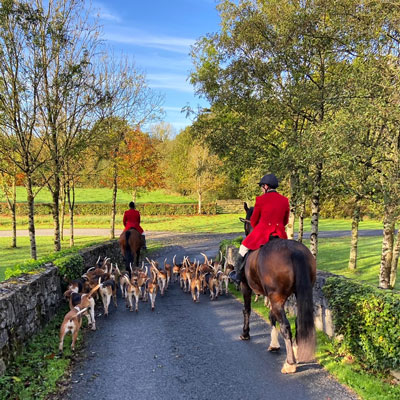
Limerick Hunt - Susan Friedland - Equestrian Blogging Adventures
Photo Courtesy Susan Friedland

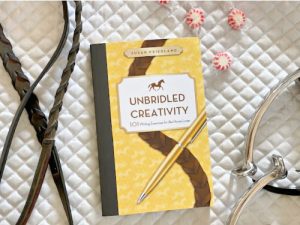
Equestrian author Susan Friedland, founder of the popular blog Saddle Seeks Horse, shares about her blogging adventures, equestrian travel, authentic product reviews and the joys and tribulations of life with Knight–her saintly Thoroughbred, a kissing spine thriver. Unbridled Creativity: 101 Writing Exercises for the Horse Lover, Susan’s latest book, merges horse themes with creative questions to inspire the riding writer. Recent trending posts on Saddle Seeks Horse have been Susan’s Horse Riding in Ireland series, Winter Horse Riding Gear: the Ultimate Guide, and horse book reading list recommendations. In addition to collaborating with brands to amplify their online presence, Susan works with individuals to improve their writing craft, social media savvy and on publishing for the equestrian market.

Unbridled Creativity Book - Susan Friedland
Photo Courtesy Susan Friedland

Additional Information:
Susan’s articles on HorseIllustrated.com
Interview of Susan Friedland of Saddle Seeks Horse at Equitana

Links about Susan Friedland

◆ Receive Saddle Seeks Horse blog updates via email: Subscribe here!
◆ Buy Susan’s books! saddleseekshorse.com/shop
◆ Follow on Instagram: @saddleseekshorse
◆ Follow on Facebook: @saddleseekshorse
◆ Read the blog: Saddle Seeks Horse
◆ Connect with Susan: susan@saddleseekshorse.com


Raquel Lynn on How to Have a Horsey Holiday Season

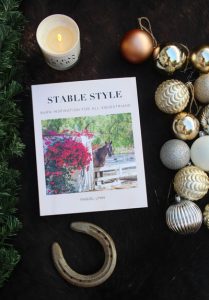
Raquel Lynn lives in an equestrian neighborhood in Los Angeles with her husband Adam, Paint mare Fira, Mango the Pomeranian and four Silkie chickens. She works from home and runs two blogs: Stable Style and Horses & Heels. Raquel also enjoys freelancing for a handful of popular equine magazines, including Horse Illustrated, Chrome, and Paint Horse Journal. She just recently released her first book, Stable Style: Barn Inspiration for all Equestrians, available on Amazon and www.stablestyle.net.

We also featured Raquel in our Equestrian Influencers column. Read all about her urban lifestyle riding her horse Fira through the streets of Los Angeles, her career as an at home writer and social media guru, and about her two successful brands here.

Stable Style book - Raquel Lynn - Horsey Holidays
Photo Courtesy Raquel Lynn

Additional Information:
Raquel’s articles on HorseIllustrated.com
Raquel’s article on Horsey Holiday Entertaining

Links about Raquel Lynn

◆ Official Websites: www.horsesandheels.com and www.stablestyle.net
www.instagram.com/horsesandheels_
www.facebook.com/HorsesandHeels
www.stablestyle.net
www.instagram.com/stablestyle
www.stablestyle.net/shop
www.facebook.com/stablestyle


Title Sponsor

Straight Arrow Mane n' TailWe want to thank our Title Sponsor, the Straight Arrow Family of Brands, makers of Mane ‘n Tail, Cowboy Magic & Exhibitor’s, with over 100 years of grooming excellence. For more information about your favorite products, please visit www.straightarrowinc.com and find Straight Arrow Products at a tack shop near you!

The “Magic” in Cowboy Magic comes from the bond between you and your horse. Cowboy Magic celebrates every moment with you, from quiet chats in the pasture to the adrenaline rush of competition. We want to invite you to embrace your “Magic Moment” with your horse by sharing your favorite photos with Cowboy Magic on social media using #CowboyMagicMoment.

My Right Horse Adoptable Horse of the Week: Ginger — November 22, 2021

0
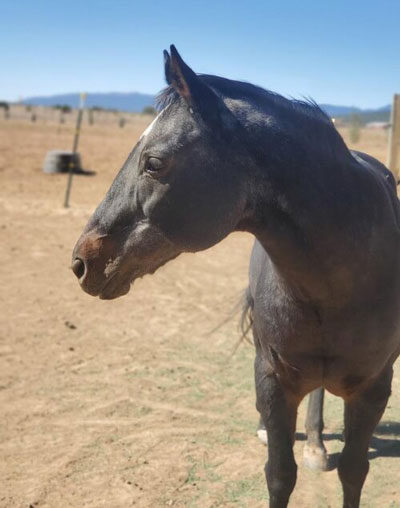
My Right Horse Adoptable Horse of the Week - Ginger
Photo Courtesy New Mexico Horse Rescue

Welcome to Horse Illustrated’s weekly installment of the My Right Horse Adoptable Horse of the Week, offered in partnership with The Right Horse. Ginger is this week’s adoptable horse. Check back weekly for a new featured horse so you can find your #righthorse.

Horse: Ginger, a 14.2-hand 21-year-old bay Mustang mare in Stanley, N.M.
Organization: New Mexico Horse Rescue at Walkin N Circles Ranch

A stout, healthy, and spunky gal, Ginger has a lot of energy for her age. Because of minor age-related arthritis, Ginger should be considered a companion pal. She really enjoys attention, loves going on walks, picks up her feet easily, loads in a trailer and is calm when faced with unknowns. If you’re looking for a dependable horse who gets along with any horse, Ginger is your gal! Could she be your #righthorse?

Click here for questions about Ginger, the My Right Horse Adoptable Horse of the Week

My Right HorseMy Right Horse is the online adoption platform of The Right Horse Initiative, a collection of equine industry and welfare professionals and advocates working together to improve the lives of horses in transition. A program of the ASPCA, their goal is to massively increase horse adoption in the United States. To find more adoptable horses and foster horses, visit www.myrighthorse.org. To learn more about The Right Horse, a program of the ASPCA, visit www.therighthorse.org.

Horse Holiday Entertaining

0

Raquel Lynn helps you become the host with the most for the holiday season using these helpful tips and chic accessories with a horse theme.

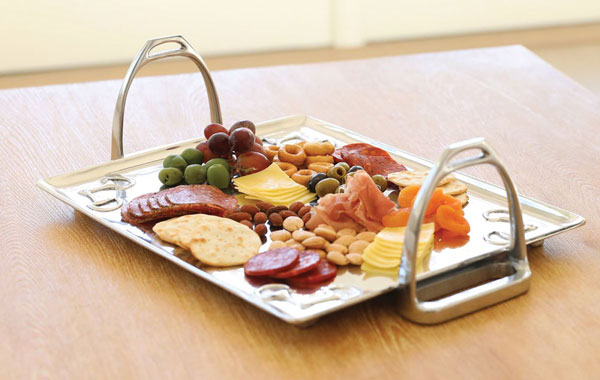
Horse Holiday Entertaining - Stirrup TrayStirrup Tray

You can never have enough serving trays or platters, especially for easy appetizers, cheese boards and individual desserts. The stirrup tray is a splurge-worthy lifetime piece.

DIY: If you want the look for less, consider arranging a pair of vintage irons in a similar fashion around a platter of your choice. Secondhand tack shops, eBay and local Facebook groups are a great place to search for well-loved tack to be repurposed around the home.
$192.00; stylishequestrian.com


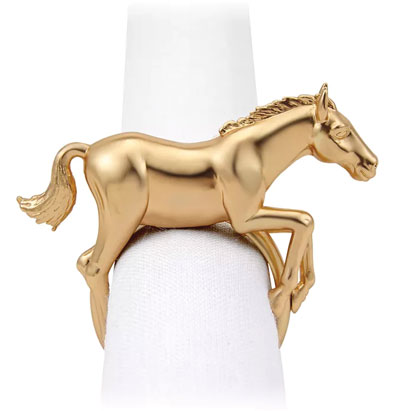
Horse Holiday Entertaining - Horse Napkin RingHorse Napkin Jewels

‘Tis the season for entertaining and showing off your equestrian style. Add the perfect amount of glam to your table with these 24k gold-plated napkin holders. Your guests will love this whimsical and elegant horse design. These are a splurge-worthy table accessory you can cherish every time you host a party.

Décor Tip: Add pops of gold, silver or copper to elevate and add interest to your table. Decorate your table with old (clean!) horse bits, spurs and horseshoes to add more metal and a touch of elegance.
$195.00; bloomingdales.com


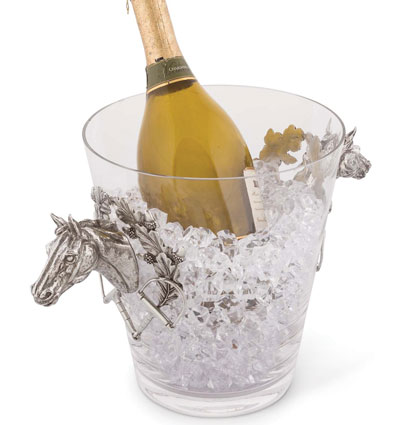
Horse Holiday Entertaining - Horse Ice BucketHorse Glass Ice Bucket

This timeless ice bucket with hand-cast equestrian pewter details by Vagabond House is ready to chill your favorite bottle of wine or champagne. An ice bucket this beautiful is truly a work of art.

DIY: Make a cocktail station by putting out a large punch bowl with a few bottles of chilled champagne, sprigs of rosemary, mint leaves and slices of citrus (bonus points for blood orange slices). Batch drinks and self-serve cocktail stations save you time and keeps guests entertained making creative drinks. Set up a cute bar area with a small table or use an existing bar cart from your home. Set out a few cocktail recipes (virgin and original versions) and wrap the table or cart with garland for a festive touch.
$319.00; wildlifewonders.com


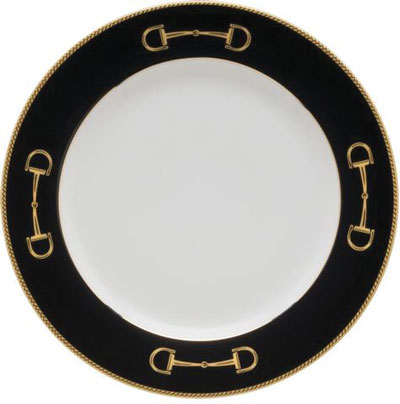
Cheval PlateJulie Wear Cheval Black Luncheon Plate

This chic luncheon plate features a sleek twist on snaffle bits with gold accents against a black background. They are hand-painted on porcelain and made in the United States; also available in brown.

Hostess Tip: Create individual name tags and plan the seating arrangements before your guests arrive. This makes sitting down to eat simple. Be mindful and sit guests where they will be comfortable.
$68.00; shopwhitedogwood.com


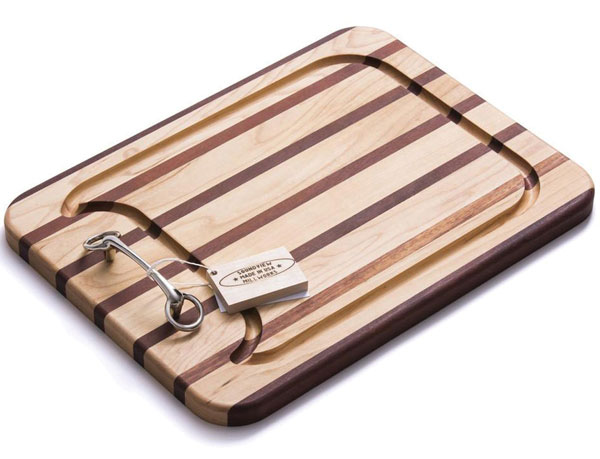
Horse Holiday Entertaining - Horse Appetizer BoardHorse Bit Appetizer Board

This simple wooden appetizer board features a single horse bit on the end. It’s perfect for a cheese board.

Cheese Board Tips: Putting together a great cheese board doesn’t have to be expensive; it just needs an assortment of small bites that complement one another. Try a minimum of three different cheeses, an assortment of meats, bread and/or crackers, nuts, fruits or jam, olives, and a savory spread (bruschetta, olive tapenade). Dried fruit, pickles, assorted chocolates and honey are also great additions to a cheese board.
$97.00; farmhousetack.com


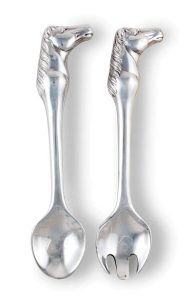
Horse Holiday Entertaining - Horse Serving SetHorse Figural Serving Set

Serve up savory side dishes with these pretty horse-head serving utensils. They are handcrafted in sand-cast aluminum by Arthur Court for durability that’s made to last. Pass these around the table for family-style serving that your guests are guaranteed to notice.
$52.00; arthurcourt.com


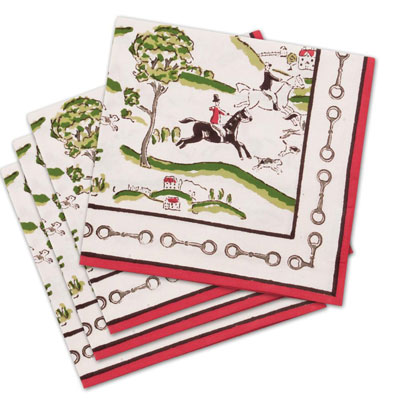
Fox Hunt NapkinsHighland Fox Hunt Cotton Napkins

Try a set of fox hunt cotton napkins and placemats for the ultimate matching look. Cloth napkins are environmentally friendly, easy to wash, and can be enjoyed year after year.

Style Tip: Arrange the table with red flowers and pine boughs or another greenery to bring out the red and green in these napkins. If you are adding candles for ambience, be sure to use unscented candles at the table; an overly sweet candle can ruin the dining experience.
$49.95; horseandhound.com


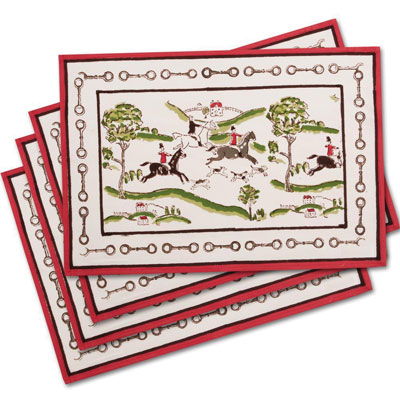
Fox Hunt PlacematsHighland Fox Hunt Placemats

Say “tally ho” with these vibrant red, white and green placemats displaying a familiar fox hunt scene. They appropriately feature Christmas colors to help create a festive place setting. A tablecloth can sometimes look too formal, and is risky if you have young kids running around—they pull down very easily. This is where placemats step in to class up the table.
$49.95; horseandhound.com

This article about horse holiday entertaining appeared in the November/December 2021 issue of Horse Illustrated magazine. Click here to subscribe!
 

How to Prevent Snakes Around Your Horse Barn

0
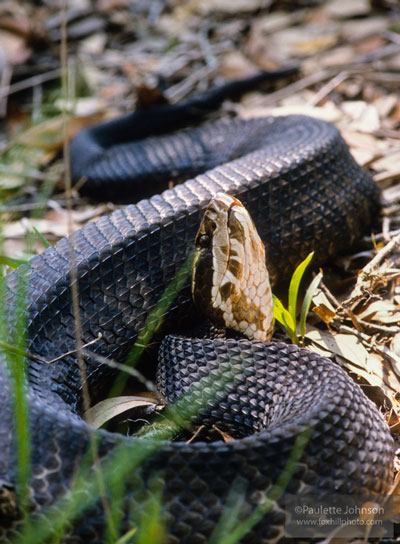
Black Snake - Snakes and Horses
Photo by Daniel Johnson

In many regions, summer is the time when snakes are the most active, although snake activity can pick up in the fall as temperatures start to drop and snakes come out for warm sunshine before their season of hibernation starts. They tend to be more common in rural areas—like where you may have your horse stabled. Even if you’re not afraid of snakes, seeing one slither out in front of you on the trail can be startling—for you and your horse. Let’s take a quick look at some ways to help avoid snakes around your horses, and we’ll explore what to do if your horse comes in contact with one of these reptiles.

Types of Snakes

We don’t have the room for a complete listing of snakes by region, but it’s definitely wise for you to research what kind of snakes you do have in your state (residents of Alaska and Hawaii rejoice: you don’t have snakes!). Most snake species in the U.S. are not venomous but may still be capable of delivering a nasty nip. Four of the most common venomous snakes in the U.S. include:

SNAKEREGION
CottonmouthSoutheast U.S.
CopperheadSoutheast U.S.
CoralSouthern U.S.
Rattlesnakes (various types)Widespread throughout the Pacific Coast, Rocky Mountain Regions, and Eastern U.S.


Snakes on the Trail

Trail riding in snake country? Consider trying the following:

Use leg wraps. If you’re trail riding in an area prone to snakes, you can try wrapping your horse’s legs with lower leg wraps thick enough to prevent a bite.
Avoid brush. This isn’t always possible, but if you can stay in open country and avoid thick grass or brush where you can’t see the ground, you and your horse will have a better chance at avoiding snakes to begin with. Snakes are almost certainly not seeking out you or your horse; many snakebites occur when the snake is surprised.
Protect yourself. Be sure that you wear boots and leg protection to help prevent snakebites.
Listen! If your horse hears something, stop and take a listen with him! He can spot a snake better than you can.

Snakes in the Barn

Want to keep snakes away from the barn and pastures? No problem. The key is to eliminate things that snakes are attracted to. These include:

Rock piles. Snakes are coldblooded, so they have to seek out warm areas in their environment to help heat up their bodies. Rock piles tend to hold warmth from the sun, and they provide a million little tunnels and hideouts for snakes, so removing rock piles is a smart move.
Other piles. It’s also smart to remove general piles of materials like lumber, fence posts, or pallets, for the same reason.
Tall grass. When snakes are startled, they often make an immediate run for the nearest area of deep grass or brush. Keeping these areas mowed and the exterior of your stable trimmed down will help discourage snakes from hanging out around the stable.
Rodents. Many snakes prey on small critters like mice, so keeping those populations under control may discourage snakes (and you don’t want rodents around your barn anyway).

Snakes in the Horse Trailer

Most horse trailers don’t see use every day, or even every week. So it’s possible that an enterprising serpent might decide to take up residence in such a handy shelter. You can take a few simple steps to help avoid having a snake in your horse trailer, such as:

Keep it cleaned out. Just like around the stable, a snake is probably less likely to hide in a clean horse trailer, because there isn’t anywhere for him to take cover. And if you do remove any old hay, bedding, or gear from your trailer after a ride, it’s easy to see if there is a snake inside next time.
Check underneath. Be sure to look under the horse trailer before using it!
Park it indoors. You might not have space for your trailer indoors, but if you can get it inside a garage or pole building, you have another barrier between it and snakes.

If a Bite Does Occur

If a snake does bite your horse, here are a four basic tips:

Don’t panic. Call your horse’s veterinarian and follow their advice precisely while you wait for help to arrive. Try to keep your horse calm, as extra activity can make the venom spread faster. Keep in mind that venomous snake bites in horses are less frequently fatal because of the horse’s larger size. But horses may still suffer severe allergic reactions or infections at the bite site.
Try to find the bite location. Your veterinarian may supply specific first aid instructions depending on the bite’s location—especially if the bite is on your horse’s nose (that’s a very common spot) where the swelling could affect breathing.
Identify the snake. It’s helpful if you can safely identify the snake species, but don’t put yourself at risk to do so.
Follow instructions. After the veterinarian arrives, precisely follow their advice for post-bite care.

Oftentimes, snakes are simply part of the outdoor experience, like bugs or thunderstorms. And they’d really rather stay away from you as much as you’d like to stay away from them. But it pays to think ahead, do a little research, and be prepared. Hopefully, the closest you and your horse ever get to a snake is viewing one as it casually slides away in the other direction.

Natural Insect Repellents for Horses

0
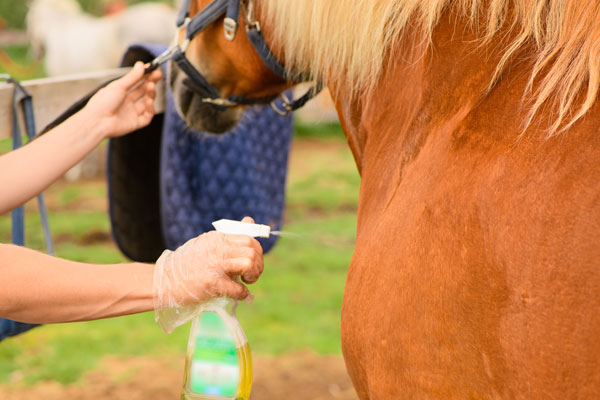
Natural Insect Repellents for Horses
Photo by Irina Orlova/Shutterstock

While for most horses, insects are just a nuisance, but some are incredibly sensitive to insect bites, have chronic inflammation from Lyme disease, or have allergic reactions and cannot use commonly used chemical sprays. So what are some natural, but effective alternatives to use as insect repellents for horses? See below for some great options.

Natural Insect Sprays for Horses

Ecovet Fly Repellent uses naturally occurring fatty acids to confuse an insect’s natural GPS so they cannot locate your horse. They actually get confused and fly in circles!
Nature’s Defense by Farnam is a water-based spray that uses common essential oils meant to deter flies, mosquitos, and gnats.
Nature’s Force Natural Fly Repellent uses essential oils that bugs avoid, such as clove, thyme, cinnamon, and lemongrass.
BugPellent Cylinder is a solid insect repellent meant to hang in the barn to naturally deter flying insects.
Essentials Insect Repellent by Animal Bodywork & Aromatherapy is a handmade, custom blend of essential oils to gently repel common insects and cling to the hair for 24 hours.
◆ Catnip? Studies have shown that catnip is more effective at repelling flies and mosquitos than DEET. Add some to your favorite DIY blend with a carrier oil and your horse will thank you.

Supplements

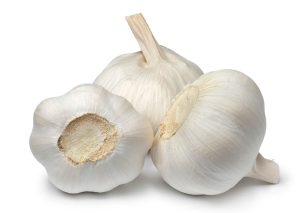
Garlic
Photo by Picture Partners/Shutterstock

Supplements containing garlic are intended to be ingested and protect your horse from nasty insects from the inside out, all while helping to balance a healthy immune system. These products include garlic.

SmartPak’s Smart Bug Off supports healthy skin and a normal inflammatory response in a tasty pellet form with no added sugar.
Springtime Supplements Bug-Off Garlic provides a 24-hour shield against flies, ticks, mosquitoes, gnats, no-see-ums, and other flying pests as a supplement you add to your horse’s feed.
Redmond Rock Crushed with Garlic is added to your horse’s feed, which encourages hydration as well for those horses that don’t drink enough and who are sensitive to insect bites.
Manna Pro Nature’s Force Bug Clear includes garlic, turmeric (200 mg), grape seed extract, Brewer’s dried yeast, diatomaceous earth and more.

Mineral Powder

Tick Natural Terminator (TNT) is a small business dedicated to toxin and chemical-free prevention. According to the brand’s patent application: “The present invention is unique because of the presence of dried ground mint, which repels aphids; white flies, and others; dried ground oregano, which repels most insects; food-grade silicon dioxide, which adheres to insect and tick exoskeletons as they crawl through it, dehydrating their exoskeletons, which kills them mechanically instead of chemically.”

Sonic Repellent

The effectiveness of ultrasound to repel ticks and other insects has not been clinically proven, but there are a number of them on the market to plug into your barn sockets or even attach to your animal. While primarily geared to dogs and cats, the Only Natural’s Pet Tick Tag and the SonicGaurd Horse Ultrasonic Tick and Flea Repeller emit a frequency that is meant to naturally repel insects when worn on the body. Braid it into your horse’s mane or attach it to their halter if worn regularly during turnout.

Insect Eaters and Traps

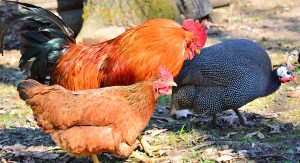
Natural Insect Repellents for Horses - Chicken and Guinea Fowl
Photo by Predrag Lukic/Shutterstock

Removing pests from the barn is easier said than done, but less bugs mean less insects biting you and your animals.

◆ Chickens or Guinea Hens! While they may not help the flies, they do eat ticks and other small insects as well as scratch at the manure and disperse it among the paddock to prevent large manure piles that attract flies.
Fly Predators by Spalding Labs is used in a natural environment as a natural enemy that serves as a major check of pest fly populations by destroying the next generation of flies in their immature pupa (cocoon) stage, which breaks the gestation and multiplication cycle naturally.
EZ Trap Fly Trap is an adhesive fly trap with a large surface for trapping flies.
RESCUE! Disposable Hanging Fly Trap is hung outdoors and will easily catch up to 20,000 flies.

And while not technically an insect repellent, the Shoofly Leggins do a wonderful job keeping creeping crawlers from climbing up your horse’s legs and keep the stomping and resulting cracked hooves to a minimum.

Prevention is always the best option when it comes to pests. While no insect repellent is 100% effective, combine some natural alternatives that prevent and repel without adding toxic chemicals to your sensitive horse.

Horseback Riding on the Trail Without Cell Signal

0
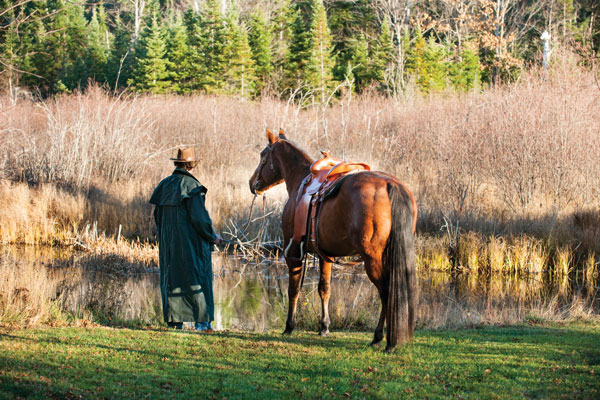
Trail Rider with Western Horse - No Cell Signal
Photo by Daniel Johnson

Summer and fall are fine times of year to get out of the arena and onto the trail for some new scenery. But some of the most interesting and exciting places to go horseback riding on the trail may lead you into terrain where cell service coverage gives you a spotty signal or even non-existent.

For a society that has come to view cell coverage as a given, riding out into a land of “0 bars” may sound a little risky, and you may wonder if it’s a safe thing to do. Luckily, you’re not out of options—there are other ways to stay in touch with civilization and find your way, even when you’re enjoying out-of-the-way areas.

Two-Way Radios

Easy two-way communication has been available for decades using one of the simplest technologies available—radio. Sometimes referred to by the more playful term “walkie-talkies,” two-way radios can be an excellent method of short-distance communication in locations where cell service is unavailable.

They’re not quite as easy to use as cell phones, as you and your partner have to take turns talking and can’t speak over each other at the same time. Nevertheless, two-way radios are compact, reliable and fairly inexpensive. Despite the name, you can add multiple radios to a two-way setup, so that each rider in your group can carry one and stay in touch even if you can’t see each other. It’s also useful to leave one radio with a person back “home” (wherever that may be) who isn’t going on the ride.

The only real drawback is that two-way radios have a fairly restricted working range that is limited by the terrain (hills, trees, et cetera). While these radios can theoretically offer ranges of 30+ miles, in real-life scenarios you’ll likely get clear reception for only a handful of miles. Still, that may be sufficient for your ride. And because of the restricted distances, you probably won’t need an FCC license to use these devices (as you might for other types of amateur radios).

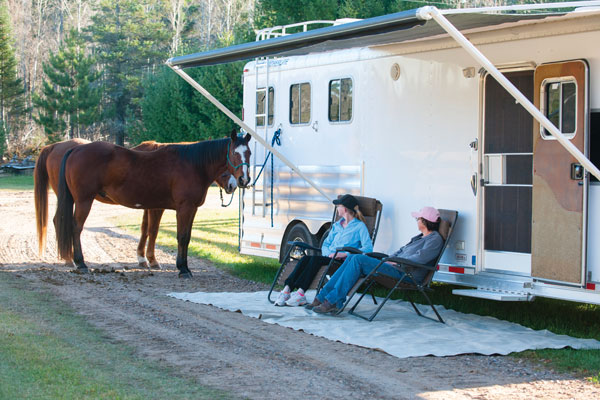
Camping with a Horse
If you’re going to be getting away from it all, consider how you will communicate if your cell phone has zero bars. Photo by Daniel Johnson

AM/FM Radios

Even when you’re out of cell range for a signal when horseback riding, regular old AM/FM radio can function well in remote locations. Obviously, it’s a one-way form of communication, so you can’t use it for sending messages. But AM/FM is still very useful for receiving information like local weather reports and news—not to mention keeping you supplied with music! And in case of severe weather or some other unanticipated event, AM/FM broadcasting can be a reliable source of information.

AM/FM radios are quite inexpensive and small enough to carry easily, so it makes sense to pack one on a ride. FM radio has a shorter range (only about 100 miles or less) but is less susceptible to static, although the signals can be blocked by terrain. AM radio tends to travel much further, especially at night, and will reach into even the most remote locations. It’s a lot more susceptible to static, however.

Satellite Phones

If you’re a serious trail rider who regularly spends time in areas without cell service, a satellite phone might be a worthwhile investment for safety and convenience. Unlike a traditional cell phone, satellite phones communicate through space—not cell towers—and therefore should function no matter where you are, as long as there is a line-of-sight view of the sky. No more searching for cell signals!

Satellite phones can help give you confidence that if an emergency or other problem occurs, you’ll be able to reliably call for help. The downside is that satellite calls can be quite a bit more expensive per minute than traditional phones, so you won’t want to use these phones to shoot the breeze.

Man on horse on the trail in field - no cell signal
If you’re outside of communication range, share your itinerary with someone back home and stick to your plan. Photo by Jamierpc/Shutterstock

Satellite Messengers

If you’re looking for something less expensive to purchase and operate, you might try a satellite messenger. Like a cell phone sending a text message, satellite messengers can do the same thing, except that the signal goes through space, so they work almost anywhere there is a clear view of the sky.

These devices permit you to convey at least basic information (“We made it to camp.”), at a considerably lower cost than using a satellite phone. Satellite messengers are popular with backpackers and other outdoor enthusiasts.

Personal Locator Beacon (PLB)

Another safety option is a PLB, which is essentially a simple satellite device with one button. That button, when pressed, will transmit your location and a generic SOS message to rescue crews, who will move into your location ASAP.
Be careful not to press the button by mistake, as once you’ve sent the message, there’s no calling it back. These devices are intended to be used only in serious emergency situations, but they’re easy to pack and provide peace of mind.

Global Positioning System (GPS)

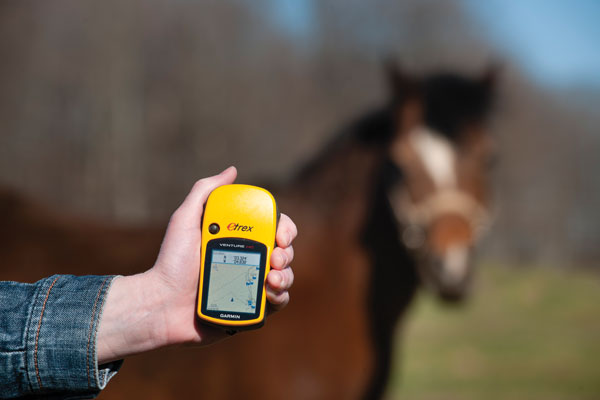
Hey—your cell phone has a GPS app, right? But will it function without a cell signal? Actually, yes. GPS uses satellite signals—not cell towers—to get a fix on your location, so your smartphone can help you find your way even when you’re at zero bars. But be sure to download your app’s maps before you leave home. Alternatively, you could pack a dedicated handheld GPS and achieve the same results.

Either way, play it smart and also carry a good map of your area and a regular old compass. Electronics are wonderful until they don’t work, so maps are a smart backup.

Handheld GPS
A handheld GPS provides a map of your location anywhere you have a clear view of the sky for satellite signals. Photo by Daniel Johnson

Take it Easy

Finally—share your plans. Determine an itinerary (your planned route and timeline) and leave it with someone back in “civilization.” And stick with your plan—no one back home will know about deviations (“let’s check out that lake down there”), unless, of course, you’re able to communicate with them using one of the methods already mentioned.

Also, it’s important to keep any device on your person and not in a saddle bag or somehow attached to your horse, in case you and your horse are separated and he heads for home. So when trail riding, ride with a friend, take it easy, and have fun. Over and out!

This article about horseback riding with no cell signal appeared in the August 2020 issue of Horse Illustrated magazine. Click here to subscribe!
 

0FansLike
0SubscribersSubscribe
We use cookies to help personalize content, tailor and measure ads, and provide a safer experience. By navigating the site, you agree to the use of cookies to collect information. Read our Cookie Policy.
OK