0 ITEMS
  • My Account
  • Holiday Gift Guide
  • Podcast
  • Webinar
Subscribe Combo
Enable cache13
Home Blog Page 112

Shine on the Flat in the Under Saddle Hunter Flat Class

0
Hunter Under Saddle Flat Class Tips
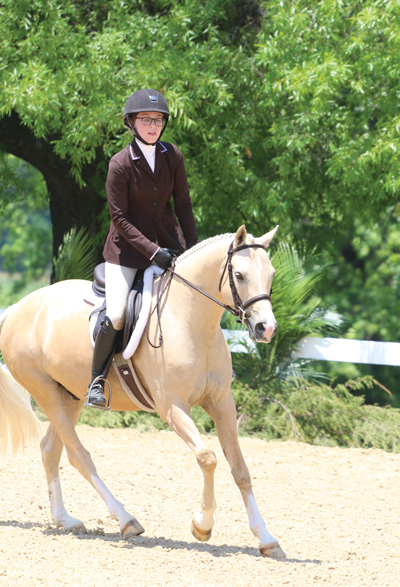
Photo by Elizabeth Moyer

Horse shows are filled with excitement. You eagerly await a weekend show day or an even more exciting overnight horse show with your pony. You agonize over your jumping rounds—breaking down every takeoff, landing, and turn. However, there’s still one more very important class, the under saddle flat class, that makes up a division at a hunter horse show that you will want tips on how to master. At a hunter horse show, the under saddle class and the jumping classes make up a division. The scores from all of these classes combined decide who takes home the division championship ribbon that day.

Sometimes, in the scrutiny over the jumping trips, the under saddle class gets overlooked. However, this class could be the tie-breaker for champion or help you bring home your first ribbon of the day. With these tips on how to stand out, you will be able to show off in the under saddle, as well as your jumping trips.

1. Spend time on your turn out.

The under saddle class is a time to really make sure you and your pony shine. The judge is focusing on you, and you want to make sure that you put your best foot forward.

Young Rider Magazine LogoIf your horse or pony is a gray or has white markings, you want to make sure there are no traces of dirt or manure. His coat should shine from a good grooming. Your tack should be spotless and fit you and your mount properly. In addition, your outfit should be clean and well-fitting, and without distractions.

Finally, always make sure that your back number is on correctly and securely before entering the ring. The under saddle class is the time for the judge to really study you and your horse, and every little detail counts.

2. Make your own path.

No matter how beautiful your horse’s trot or canter is, if it’s hidden in a clump of other competitors or stuck behind everyone else on the rail, the judge simply won’t see it.

Show yourself and your horse off by being smart about your path in the ring. Take advantage of trotting up the quarter line or making a big circle through the center of the ring, and think ahead in traffic.
Hunter Under Saddle Flat Class Tips
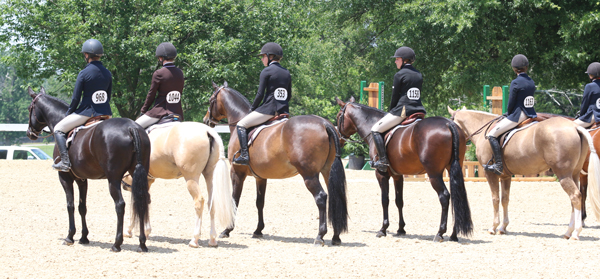
Win or lose, head into the lineup knowing you used all five tips to do your best! Photo by Elizabeth Moyer

Think just as carefully about your path in the under saddle as you do in your jumping trips, and you’ll be sure to catch the judge’s eye.

3. Be respectful of the other riders.

Horse shows are first and foremost about having fun and sharing a special time with your horse or pony. Remember, everyone is at the show to enjoy the sport, and you want to be mindful of that.

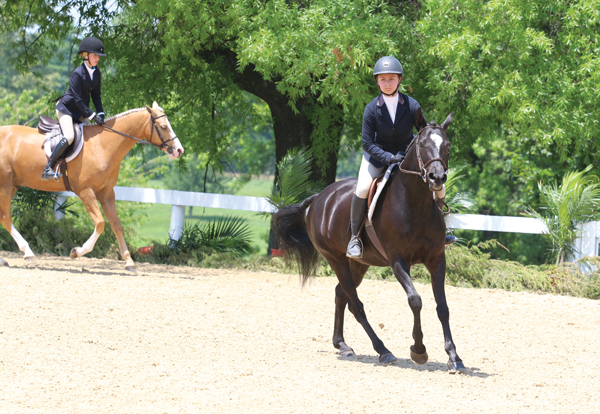
Don’t cut off other competitors in your under saddle class. Circling too close to them or cutting right in front of them can throw off their trot or canter step, and could upset their horse. It’s also not safe.

If a horse or pony has a red ribbon tied in his tail, or you notice a horse excessively pinning his ears or swishing his tail, be aware and give him the space he needs. This is one of those tips that applies to other divisions as well as the hunter under saddle flat class.

When lining up at the end of the under saddle, make sure you leave a safe and respectful distance between yourself and the next horse. Good sportsmanship goes a long way in the eyes of the judge, but more importantly, it helps make sure horse shows stay fun and safe for everyone.
Hunter Seat
Show off your horse’s gaits by maintaining good spacing from other competitors. Photo by Elizabeth Moyer

4. Listen carefully.

Horse shows are busy and can be loud. In a flat class, you want to make sure you always have an ear on the announcer. You don’t want to lose an opportunity to win a ribbon because you weren’t listening to the announcer’s instructions and you were late in your canter transition. Stay alert and listen up so you don’t miss anything.

5. Don’t crowd the judge.

Making sure the judge notices you and your horse in the under saddle is key to being successful. However, you want to make sure that you don’t make the judge uncomfortable.

Don’t circle around or in front of her like a shark circling its prey. The judge will get dizzy watching you, and tight circles won’t show off your horse’s beautiful gaits. Ride a well-thought-out path, but give the judge some breathing room.

The under saddle class isn’t always the most exciting portion of your horse show experience, but it is important. It’s a great time to show off your horse’s beautiful movement and your thoughtfulness as a young rider. With these tips, you are sure to shine in the under saddle class and be the best competitor you can be.

This article with tips on how to show in the hunter under saddle flat class appeared in the Summer 2020 issue of Young Rider magazine. Click here to subscribe!
My Right Horse Adoptable Horse of the Week: Pistachio — November 1, 2021

0
My Right Horse Adoptable Horse of the Week - Pistachio
Photo Courtesy Humane Society of North Texas

Welcome to Horse Illustrated’s weekly installment of the My Right Horse Adoptable Horse of the Week, offered in partnership with The Right Horse. Pistachio is this week’s adoptable horse. Check back weekly for a new featured horse so you can find your #righthorse.

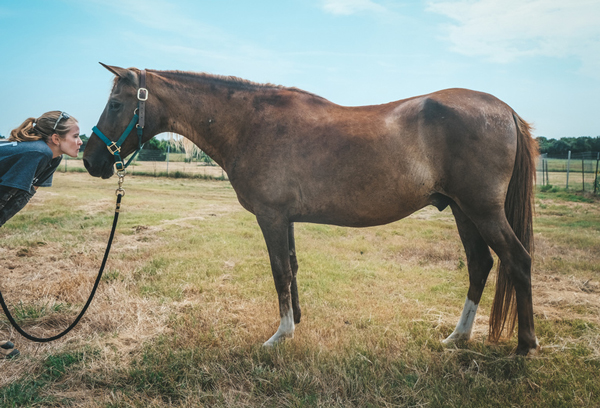
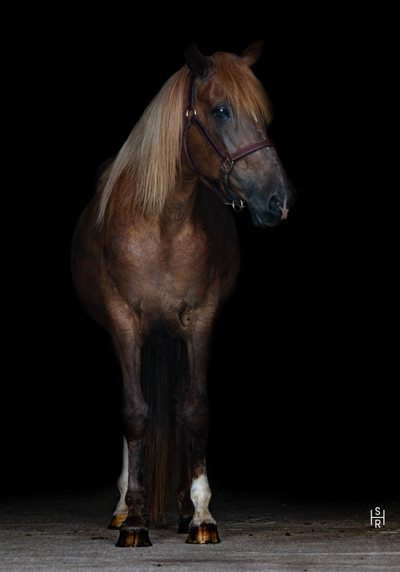
Horse: Pistachio, a 14-hand 17-year-old chestnut Peruvian Horse gelding in Fort Worth, Texas
Organization: Humane Society of North Texas

My Right Horse Adoptable Horse of the Week - Pistachio
Photo by SRH Equine Photography; Courtesy Humane Society of North Texas

This fancy southern gentleman came to the Humane Society of North Texas with the odds stacked against him. He was emaciated to the point of near death, just trying to survive. With TLC and lots of careful refeeding, his recovery was successful. He is a sweet and sassy guy who needs a calm person to assure him he is going to be okay. It’s assumed that in his past he was required to have very prompt responses with military-like precision, so he can overreact to small things by simply trying to move away quickly. A handler just needs to let him know where they are and what they are doing, and he is fine! He is halter trained (very responsive to pressure), leads well, and is good with other horses and livestock. He will stand for hours to be groomed. He just wants to eat and be scratched and needs a safe place to enjoy his days. One of his favorite things in the world is a pile of fresh shavings. Shavings plus food plus scratches = Pistachio bliss. Although he is not a riding prospect, the love this horse can give as a companion will leave your heart feeling full. Everyone who has met him smiles and has fallen in love with this little guy. Height and age are estimates. If you are interested in adopting or learning more, please fill out an Interest in Adoption form.

Click here for questions about Pistachio, the My Right Horse Adoptable Horse of the Week

My Right HorseMy Right Horse is the online adoption platform of The Right Horse Initiative, a collection of equine industry and welfare professionals and advocates working together to improve the lives of horses in transition. A program of the ASPCA, their goal is to massively increase horse adoption in the United States. To find more adoptable horses and foster horses, visit www.myrighthorse.org. To learn more about The Right Horse, a program of the ASPCA, visit www.therighthorse.org.

Nominations Open for the ASPCA’s Right Horse Initiative’s Good People for Good Horses Awards

0

Good People for Good Horses Awards - The Right Horse - ASPCA

The ASPCA’s Right Horse Initiative strongly believes that great work deserves to be celebrated. From the veterinarians, farriers, volunteers, and trainers to the incredible storytellers who help spread the word about equine adoption, it takes a network of support to help each horse find a wonderful home. The ASPCA’s third annual Good People for Good Horses Awards will recognize these hardworking members of the equine community who dedicate their time and talents to helping horses in transition. Nominations for the Good People for Good Horses Awards are currently being accepted.

“The ASPCA Good People for Good Horses Awards is a welcome opportunity to acknowledge those working tirelessly to care for at-risk horses and help them find loving homes,” said Dr. Emily Weiss, vice president of ASPCA Equine Welfare. “We look forward to honoring the unwavering dedication of these individuals across the country who continue to step up for horses in transition.”

The American Society for the Prevention of Cruelty to Animals’ (ASPCA) Right Horse Initiative invites all equine-welfare advocates and members of the horse community to nominate one or more U.S.-based individuals or organizations in the following six categories for a Good People for Good Horses Award:

◆ Veterinarian or Veterinary Technician (a total of three awards will be given in the Veterinarian/Veterinary Technician category based on geographical location in Western, Central and Eastern regions of the United States.)
◆ Trainer
◆ Volunteer
◆ Farrier
◆ Community Partner (such as a riding club, event center, boarding barn, etc.)
◆ Wild Card (anyone else—such as a member of the media, photographer, advocate, social media influencer, fundraiser, or staff member)

Awards will be given based upon the nominee’s contributions to equine adoption efforts and the success and impact of the organization they serve. A committee of reviewers from the ASPCA’s Right Horse Initiative will review submissions and recommend winners based on subjective criteria. The ASPCA’s Right Horse Initiative will be awarding the honor and a custom belt buckle to eight individuals across the six categories. Nominations are due no later than November 8, 2021, at 11:59 p.m. E.T with winners announced the week of December 13, 2021. Learn more and submit your nominations for the Good People for Good Horses Awards at www.therighthorse.org/gpfgh.

About The Right Horse Initiative

The Right Horse Initiative, a program of the ASPCA, is a collective of industry professionals and equine welfare advocates working together to improve the lives of horses in transition through a dialogue of kindness and respect. Through collaboration with over 100 industry and adoption partners, The Right Horse is able to innovate new and better adoption standards and practices. Together, the goal is to shatter the stigma and reframe the conversation around equine adoption in order to massively increase horse adoption in the United States.

About the ASPCA

Founded in 1866, the ASPCA was the first animal welfare organization to be established in North America and today serves as the nation’s leading voice for vulnerable and victimized animals. As a 501(c)(3) not-for-profit corporation with more than two million supporters nationwide, the ASPCA is committed to preventing cruelty to dogs, cats, equines, and farm animals throughout the United States. The ASPCA assists animals in need through on-the-ground disaster and cruelty interventions, behavioral rehabilitation, animal placement, legal and legislative advocacy, and the advancement of the sheltering and veterinary community through research, training, and resources. For more information, visit www.ASPCA.org.

Further Reading

Winners of The Right Horse Initiative’s Good People for Good Horses Awards Announced

My Right Horse Adoptable Horse of the Week: Mia — October 25, 2021

0
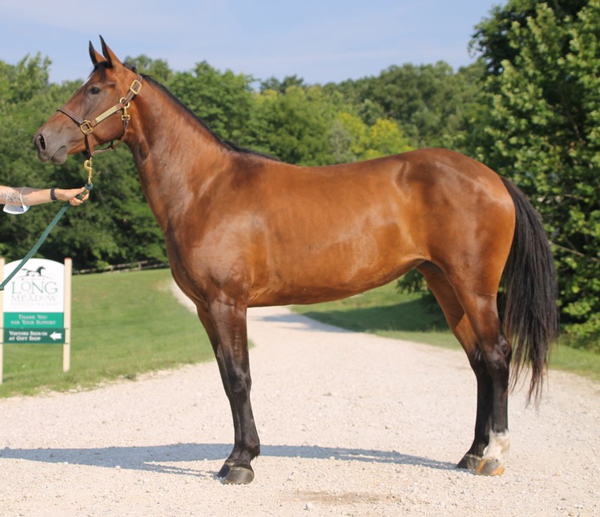
My Right Horse Adoptable Horse of the Week - Mia
Photo Courtesy Longmeadow Rescue Ranch

Welcome to Horse Illustrated’s weekly installment of the My Right Horse Adoptable Horse of the Week, offered in partnership with The Right Horse. Mia is this week’s adoptable horse. Check back weekly for a new featured horse so you can find your #righthorse.

Horse: Mia, a 5-year-old 14.2-hand bay American Quarter Horse mare in Union, Mo.
Organization: Longmeadow Rescue Ranch

Little Miss Mia is one of the surviving 15 horses rescued from a semitrailer wreck on October 18, 2020. Staff at Longmeadow Rescue Ranch were later told by the owner of the horses that he was transporting them for slaughter. In a fateful twist of events, Mia and many other lives were spared. Thankfully, Mia managed to walk away from the accident with very minor scrapes and bruises. She did however have overgrown hooves that were extremely out of balance. With only a few trims, her hooves are looking better than ever! Once she had physically recovered from the wreck, Longmeadow’s trainer evaluated Mia to judge her knowledge under saddle. It does not appear that Mia has training under saddle. Although the trainer has commented that she is a smart mare who soaks everything up like a sponge, she will require a professional trainer to start her under saddle training. We do believe she will excel in many different disciplines. Mia is a playful young mare who enjoys pestering her pasture mates to play but does tend to land in the middle of the pecking order. Carrying weight is 175 pounds (including tack and rider).

Click here for questions about Mia, the My Right Horse Adoptable Horse of the Week

My Right HorseMy Right Horse is the online adoption platform of The Right Horse Initiative, a collection of equine industry and welfare professionals and advocates working together to improve the lives of horses in transition. A program of the ASPCA, their goal is to massively increase horse adoption in the United States. To find more adoptable horses and foster horses, visit www.myrighthorse.org. To learn more about The Right Horse, a program of the ASPCA, visit www.therighthorse.org.

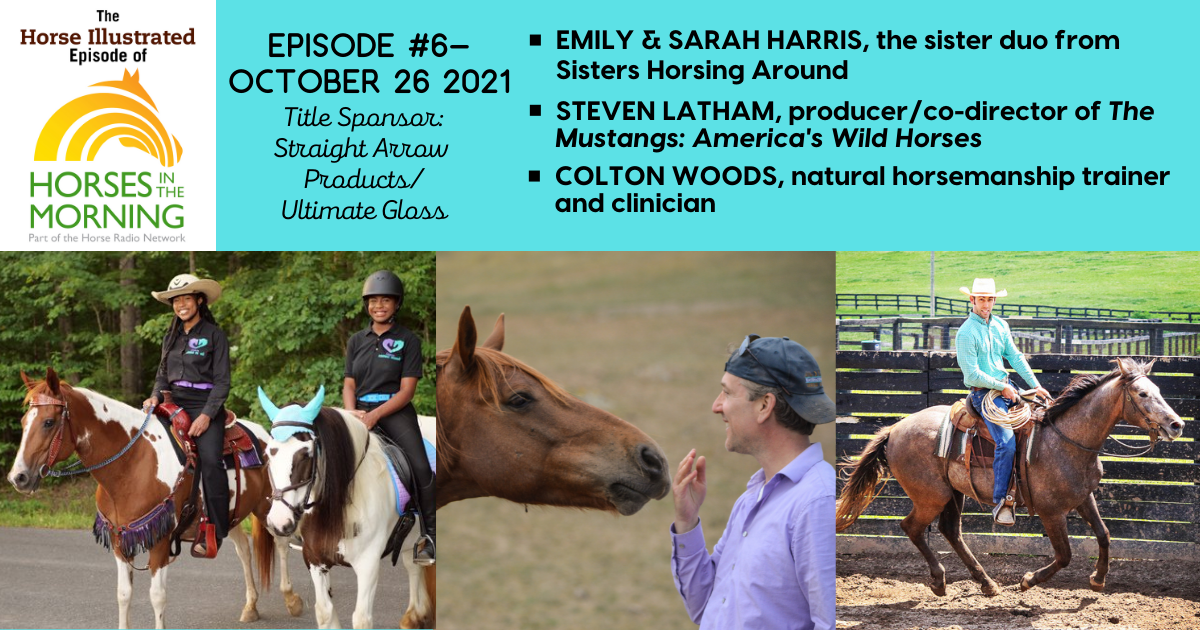
Podcast Episode #6: Sisters Horsing Around, Colton Woods, and The Mustangs film for October 26, 2021 from Title Sponsor Straight Arrow Products

0

Horse Illustrated Podcast - Episode 6 - Sisters Horsing Around - The Mustangs film - Colton WoodsIn the sixth episode of The Horse Illustrated Episode of Horses in the Morning, sponsored by Title Sponsor Straight Arrow Products, hosts Glenn the Geek and Sarah Evers Conrad talk to Emily and Sarah Harris of Sisters Horsing Around; Steven Latham, producer and co-director of The Mustangs: America’s Wild Horses film; and Colton Woods about the sustainability of the horse industry and his training philosophies.

Hosts: Sarah Conrad, Digital Content Editor of Horse Illustrated & Young Rider and Glenn the Geek, host of Horses in the Morning

Title Sponsor: Straight Arrow Family of Brands

There’s an App for that!  Check out the new Horse Radio Network app for iPhone and Android. Follow Horse Radio Network on Twitter or follow Horses In The Morning on Facebook.


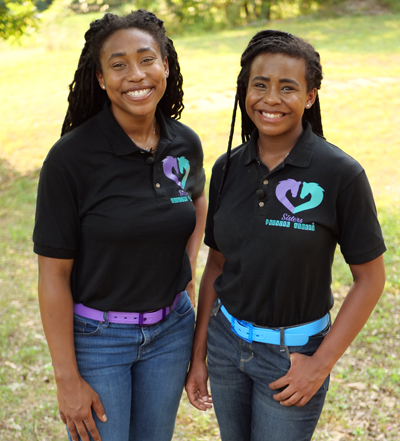
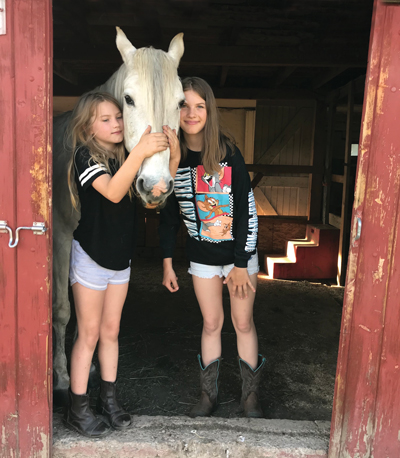
Emily and Sarah Harris of Sisters Horsing Around
Photo Courtesy Sisters Horsing Around

Emily and Sarah Harris of Sisters Horsing Around

Emily and Sarah Harris of Sisters Horsing Around
Photo Courtesy Sisters Horsing Around

Emily and Sarah Harris are the sister duo of “Sisters Horsing Around,” which includes their YouTube channel, website, and social media accounts (see below). Sisters Horsing Around is a fun, engaging, informative and educational resource for horse information. As multi-discipline riders, Emily and Sarah have had a variety of experiences, and they are passionate about sharing the joys of horses. They call themselves the “Equestrian Guides” and want to help non-equestrians explore the amazing world of horses. For those that are equestrians, they want to help broaden their interests in different disciplines. They do this by creating content that can be enjoyed and understood by anyone. They also endeavor to bridge the gap between those outside the horse world and those in the horse world and bring equestrian sports into the limelight in an interesting and understandable way.

Additional Links for Sisters Horsing Around:

www.instagram.com/SistersHorsingAround
www.facebook.com/SistersHorsingAround
www.twitter.com/SistersHorsing
www.pinterest.com/SistersHorsingAround

For the article about our Equitana coverageclick hereFacebook Lives from Equitana feature:

Susan Friedland of Saddle Seeks Horse
Heather Wallace of The Timid Rider
Certified Horsemanship Association CEO Christy Landwehr
◆ The Social Responsibility of Equestrian Influencers Panel Part 1 and Part 2 (featuring Sisters Horsing Around, interviewed in the podcast)
Positive reinforcement trainer Shawna Karrasch
◆ The demo from Shawna Karrasch (mentioned in the podcast)
Carriage Association of America’s Publication Manager Kathleen Haak
A demo from Colton Woods (interviewed in the podcast).


Steven Latham with The Mustangs Film

Steven Latham, The Mustangs producer and codirector
Photo Courtesy Steven Latham

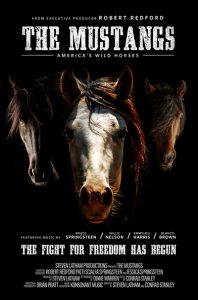
Steven Latham is the producer and co-director of The Mustangs: America’s Wild Horses, which takes audiences on an odyssey throughout America to places few people have seen or even know about. There are more than 80,000 wild horses on our public lands and more than 50,000 in government corrals. This feature documentary is executive produced by Robert Redford, Patti Scialfa Springsteen and Jessica Springsteen. The film features songs by Bruce Springsteen, Emmylou Harris and Willie Nelson and an original song written by Diane Warren and performed by Blanco Brown.

Steven also created and produces the award-winning series, Shelter Me, which tells stories that celebrate the human-animal bond. The episodes have been hosted by John Legend, Jane Goodall, Kristen Bell, Jon Hamm, Hilary Swank, Allison Janney, Edie Falco, Jane Lynch, Wendie Malick, Daymond John and Katherine Heigl.

The Mustangs Movie Poster
Photo Courtesy Steven Latham

Steven began his production company with a film series he created with Barbra Streisand called, The Living Century, which focused on people who were at least 100 years old. He also produced and directed for the science series, NOVA, and made the only film about the TED Conference. Prior to launching his company, he worked at Ketchum, Grey, Paramount Pictures, PolyGram Television, and Universal Worldwide Television.

Additional Links about The Mustangs Film

The Official Trailer
The Mustangs Film website
www.facebook.com/TheMustangsFilm


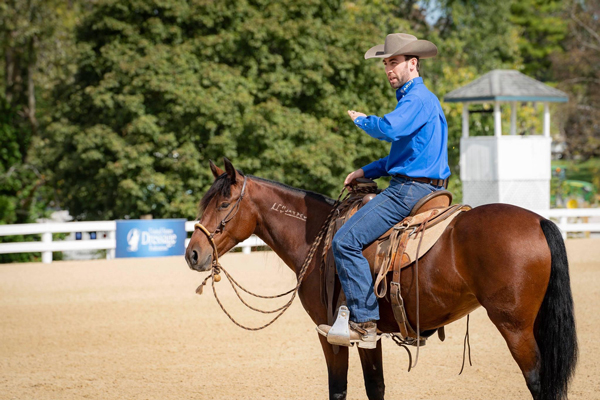
Colton Woods
Photo Courtesy Colton Woods

Colton Woods of Colton Woods Horsemanship

Colton Woods
Photo Courtesy Colton Woods

Colton Woods is a husband, horseman and entrepreneur dedicated to helping others develop themselves, their horses and businesses to be the best they can be. Horsemanship to him is not just a way to train a horse—it is everything we do with our horses and in our own lives. He grew up in a family of international business, and even lived in China for two years, and brings a whole new perspective and way of building horse training businesses to the horse world. Through his Professional Horseman’s School, his Business Mentorship for Horse Trainers, podcast The Heart of Horsemanship, teaching clinics and at expos as well as training select horses for clients, Colton is truly changing lives in the horse industry. He knows it is time we have the tough conversations, we challenge industry traditions and he lives it out. One of his favorite quotes is, “To avoid criticism, say nothing, do nothing, be nothing” by Elbert Hubbard.

Additional Links about Colton Woods

Colton Woods Horsemanship website
FREE BOOK: “Be A Leader Worth Following by Colton Woods” with a SPECIAL OFFER for Horses in the Morning Listeners
The Professional Horseman’s School
www.facebook.com/coltonwoodshorsemanship
www.instagram.com/coltonwoodshorsemanship
www.youtube.com/coltonwoodshorsemanship
TikTok.com/@coltonwoodshorsemanship


Title Sponsor

Straight Arrow Mane n' TailWe want to thank our Title Sponsor, the Straight Arrow Family of Brands, makers of Mane ‘n Tail, Cowboy Magic & Exhibitor’s, with over 100 years of grooming excellence. For more information about your favorite products, please visit www.straightarrowinc.com and find Straight Arrow Products at a tack shop near you!

The “Magic” in Cowboy Magic comes from the bond between you and your horse. Cowboy Magic celebrates every moment with you, from quiet chats in the pasture to the adrenaline rush of competition. We want to invite you to embrace your “Magic Moment” with your horse by sharing your favorite photos with Cowboy Magic on social media using #CowboyMagicMoment.

Vet Adventures: Taking in Olaf

0
Vet Adventures Olaf
Photo Courtesy Courtney Diehl, DVM

Dr. Diehl describes in her Vet Adventures column what happens next in life to a gray horse with a serious lameness diagnosis. Does he have hope for a good home?

After several hours of diagnostics on Olaf, a 13-year-old gray draft-cross gelding, it was clear that he had multiple lameness issues. I went through all of the treatment options with Emily, the wrangler, but prolonged rest was probably going to do him the most good.

Sadly, it seemed likely that Olaf would end up at an auction, and for a lame horse, this was an almost guaranteed trip to a Mexican slaughter plant. I promised to make some calls to see if I could find him a foster home, and Emily would try to buy him some time with the ranch owners.

Emily slowly led the large gelding away, and I watched his long tail swish gracefully, the sunlight gleaming off his coat. My heart was heavy as I packed up my equipment. I called everyone that I knew, put the word out on social media, and contacted local rescues, but no one wanted him.

Olaf’s New Home

The auction was approaching fast, and I hadn’t been able to come up with another option for Olaf. There was a glum silence as I told Emily the news. I still don’t know what got into me that day, but I surprised both of us by suddenly declaring that I would take him on and see what I could do for him. Emily was delighted and made me promise that I’d keep her posted on his progress.

Olaf arrived in good time and hopped out of the ranch trailer happily, his ears flicking in all directions. He called loudly to the horses out in the pasture who all came thundering in. Curious heads reached over the fence from all directions, but Olaf arched his shining neck proudly and strutted along the fence like the belle of the ball working a receiving line.

We got him settled into a small pen and I injected several of his joints, called the farrier out, and started a course of expensive medications. Maybe if I could get him rideable again, he could work out for my older daughter, who was in Pony Club and had outgrown her pony. Or maybe I’d just be the proud owner of a chronically lame, expensive and very large horse.

New Partners

Olaf had the entire winter off and enjoyed nonstop attention from both of my daughters. In early spring, I jogged him out and he trotted off grandly, his luxurious mane hanging almost to his shoulder and his forelock down to his nose. He was completely sound.

After a rehabilitation period under saddle, I decided to let Sunny try him out. She climbed bravely aboard the big horse, and he sniffed curiously at her leg.
Olaf moved carefully, aware of his small and precious cargo, and he was a perfect gentleman, trotting in 20-meter circles and stepping carefully over ground poles. It was an instant match, and Sunny was thrilled. She renamed him Atlas.

Atlas went to his first Pony Club lesson and was well-behaved and gentle. He and Sunny jogged jauntily around the arena, Atlas’ tail held proudly in the air and one ear always cocked towards his young rider. The instructor remarked on how honest he was, and Sunny beamed with pride. They had a wonderful season together.

Two Daughters, Two Ratings

A year later, Sunny took her D2 rating test on Atlas, and they passed with flying colors. Sunny wanted to start working towards the D3 rating, but it was apparent that Atlas was not going to be able to continue with her. The jumps were getting higher and more frequent, and he just wasn’t built for it.

My 8-year-old daughter, Morgan, had been riding our other horse and had just passed her D1 test. She was small but feisty for her age. I was hesitant to put her on Atlas, but she was ready to move up to a more spirited mount. We let her try him out in a lesson and it went perfectly.

Atlas was clearly entertained by his wee new mistress, lowering his head to her so she could hug him after the ride. He followed her closely as she bustled around the arena picking up manure piles.

Two years later, Morgan tested for her D2 rating with Atlas, who was now 17, and the big horse sailed through the riding portion effortlessly, earning a “Wow!” in a written comment from the examiner.

They had a delightful summer of trail riding, light jumping, and even riding double with friends. When Morgan was tired or cold, she’d drape herself over Atlas’ neck, and he’d stand peacefully, waiting until she was ready to ride some more.

A Diagnosis

I diagnosed Atlas with Cushing’s disease at the end of this last winter and started him on a drug called pergolide. His long coat wasn’t shedding out, and when the spring grass started to come in, I restricted his pasture access. But one day, he seemed uncomfortable. Despite the precautions, Atlas was in the early stages of laminitis.

He was moved to a dry paddock, and I treated the disease as aggressively as I dared. I had to tell Morgan that I didn’t think Atlas would be rideable for the summer. She took the news quietly, but I later found her crying in the tack room at the barn.

I was on a phone call a few days ago when something flashed past me in the indoor arena. I looked up to see Morgan and Atlas cantering bareback in circles, Atlas looking perfectly sound again.

I didn’t have the heart to scold Morgan. But after watching them for almost 20 minutes, I had a realization, and called Morgan’s instructor to let her know that Atlas had decided that he was coming back to lessons for another season.

It’s my 20th year in vet practice, and it’s just now beginning to dawn on me that the horses know more than I do.

This Vet Adventure column about taking in Olaf appeared in the August 2020 issue of Horse Illustrated magazine. Click here to subscribe!

Multiple Martins Win in Eventing Competitions at Inaugural Maryland CCI5*-L at Fair Hill

0
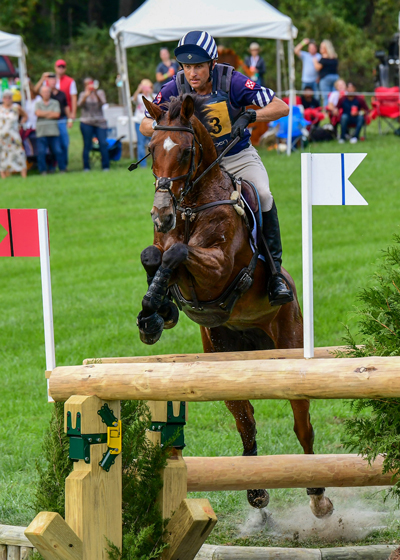
Boyd Martin and On Cue at Fair Hill CCI5*
Boyd Martin and On Cue. Photo by Allen & Kim MacMillan/MacMillan Photography

It was a really good week to have the last name Martin at the first-ever Maryland CCI5* at Fair Hill, with multiple eventing championships awarded October 13-18 in Cecil County, Md. The inaugural event hosted both CCI3*-L and CCI5*-L eventing divisions, the United States Equestrian Federation CCI3*-L Eventing National Championship, and the United States Eventing Association Young Event Horse East Coast Championships for four- and five-year-olds.

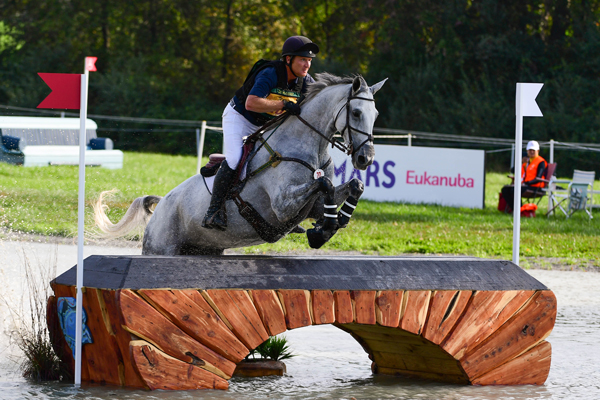
U.S. Olympian Boyd Martin, of Cochranville, Pa., won his first CCI5*-L riding On Cue to take home $100,000, while Kurt Agardy Martin, of Marshall, Va., captured first in the CCI3*-L division along with the USEF Championship aboard D.A. Lifetime to garner his share of the $25,000 pot. D.A. Lifetime is a 9-year-old Holsteiner mare owned by Debbie Adams.

In addition, Caroline Martin, won the four-year-old division aboard HSH Best Kept Secret and placed second in the five-year-old Young Event Horse competition with Galwaybay Redfield HSH Connor. Chris Talley, of Jeffersonton, Va., won the Young Event Horse Five-Year-Old division with the Hanoverian mare Gina. Gina is owned by Corwin Sport Horse LLC.

Boyd Martin’s Win

Eventing star Martin had come close to winning a 5* before Fair Hill when he and Tsetserleg took second at the 2019 Land Rover Kentucky Three-Day Event, but this was his first time to stand atop the podium. Martin’s mount, On Cue, is a 15-year-old Selle Francais mare bred in England by Alyse Clancey and owned by Martin and Christine, Thomas and Tommie Turner, of San Antonio, Texas.

The pair finished on their dressage score of 25 for the win. But, to get there, they had to duke it out with Oliver Townend from Great Britain riding the 2019 Land Rover Kentucky 5* winner Cooley Master Class, who led going into show jumping, and Tim Price from New Zealand and Xavier Faer (second-placed finishers from Kentucky in the spring) who were in second going into the show-jumping phase. When Martin and On Cue jumped clear third from last in the order, and then both Price and Townend uncharacteristically dropped a rail each in their turns around the course, the 5* top prize was finally Martin’s, who led by only 0.1 points in the final standing.

Martin celebrated with Christine and Tommie Turner, and his sons Nox and Leo joined him on the podium before the victory gallop. Leading up to Maryland, the pair had a good year, finishing fourth at the Land Rover Kentucky CCI5*-L in the spring, then winning the Advanced division at the American Eventing Championships in August, as well as On Cue being named a reserve horse for Martin for the Tokyo Olympics.

Martin was elated with On Cue’s performance in Maryland on the final day.
“Lady Luck was on our side,” he said. “We bumped and thumped a few poles; I never heard one come down. I couldn’t believe it when I got a clear round. Today was On Cue’s day, and it’s great to win it. She’s everything you dream of in a horse. She’s got movement, gallop, [she’s a] full trier. She’s elegant. Coming into this thing, I thought I had a chance just because she’s been so good this year.”

Kurt Martin’s Win

Kurt Martin’s winning CCI3*-L mount, D.A. Lifetime, a.k.a. “Clarence,” was bred in Germany by Carsten Strehle and is owned by Debbie Adams, of Medford, NJ. Martin and Clarence, who is nicknamed after the famous E Street Band saxophonist Clarence Clemons Jr., led from day one and finished on their dressage score of 23.5 to take the win and the USEF Championship.

Kurt Martin and D.A. Lifetime at Fair Hill CCI3*
Kurt Martin and D.A. Lifetime. Photo by Allen & Kim MacMillan/MacMillan Photography

“The cross-country was a great course,” said Martin. “I think that Clarence has gained a lot of experience, and I think the jumps didn’t hold her yesterday, so maybe there are bigger things to come. She’s very kind and laid back. She’s definitely a blood horse, and once she’s up, that’s what you have to ride. We work together; I don’t force this horse to do anything.”

Second in the CCI3*-L was Hannah Sue Burnett riding Carsonstown, a nine-year-old Irish Sport Horse gelding owned by Christa B. Schmidt. Third went to Meg Pellegrini riding her RF Eloquence, a 16-year-old Holsteiner gelding.

Caroline Martin’s Triumphs at Fair Hill in Various Eventing Divisions

Caroline Martin, of Riegelsville, Pa., may well have been the busiest rider of the week since she competed in all four divisions. She ended the weekend with a win in the Four-Year-Old Young Event Horse (YEH) division, placing sixth with HSH Vamonos, and finishing 24th with Redfield Dexter in the CCI3*-L. She also competed Islandwood Captain Jack in the CCI5*. She rode four horses in the Four-Year-Old YEH, taking first with the Irish gelding HSH Best Kept Secret and taking third, fourth and 18th with the others. In the Five-Year-Old YEH, she was second with the Irish gelding Galwaybay Redfield HSH Connor and placed eighth, ninth, 16th and 21st with four others.

The 5,633-acre Fair Hill Natural Resources Management Area is owned by the State of Maryland. Although Fair Hill has hosted eventing competition since 1989 under the auspices of the Fair Hill Founders Committee, this year the new Maryland 5* at Fair Hill was organized by the Maryland Sports Authority. The competition was moved across the street from the old event, and a new cross-country track designed by British Olympian Ian Stark was created thanks to approximately $16 million contributed by the State and to additional funds from the Fair Hill Foundation.

Approximately 20,900 ticket holders attended the event over the five days. Other activities at the Maryland 5* included a trade fair, a children’s educational area, a variety of equestrian demos, a Maryland Fresh Food Fest, and the Mars VIPet Experience.

Full Results

Your Horse Life: Daisy the Wonder Mule

0
Daisy the Wonder Mule
Photo by Lynn Kohl

In this story from writer Stacey McKenna, she describes the life lessons she learns from Daisy the Wonder Mule.

In the book Outliers, Malcolm Gladwell argues that it takes 10,000 hours of focused practice to master a skill. Most equestrians would likely challenge that idea; even the most adept among us still encounter horses that teach us something new.

From the first time I sat on a pony at about 2 years old, I was driven to become an expert, or as close as I could get.

At first, my goals were simple ones. I wanted to perfect my posting trot, pick up the correct lead, hold a steady pace. As I got older, my goals became more elaborate: I wanted to ride junior jumpers, compete at the Pennsylvania National Horse Show, and to be a grand prix show jumper.

I had an agenda for myself and often for my mounts. We had to meet certain milestones before we became too old, too scared, or too distracted.

This mentality stayed with me into adulthood as I pulled Thoroughbreds off the track in search of my next 4-foot jumper. When I traded the arena for the trail, I shifted my ambitions, but not the way I approached them.

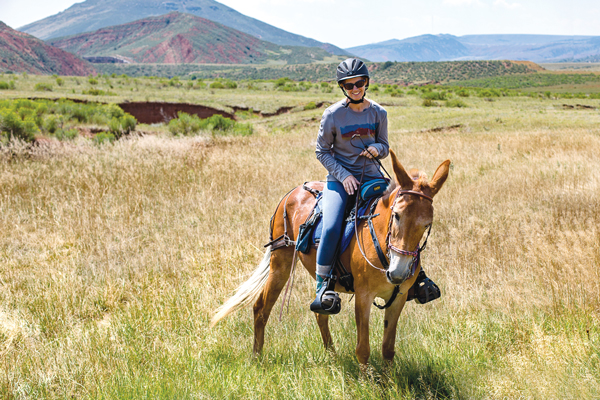
In the spring of 2018, everything started coming together when I met Daisy, or as I sometimes call her, Daisy Donut the Wonder Mule. She’s a strawberry blonde molly mule—athletic, curious and as snuggly as they come. Within a year, she had changed everything about the way I approach my equestrian life.

Getting Out of the Saddle

Daisy arrived in early June, and I had big plans to start hitting the trails as soon as possible. She was well-trained and had far more backcountry experience than I, so I figured by the end of summer we would have put miles behind us. But there was a catch. I didn’t have a saddle that fit her.

Before getting Daisy, I knew I would need time to find the right tack. Fitting a mule can be tricky, and I was transitioning from a jumping saddle to something more suited to hours on the trails, but I hadn’t expected it to take as long as it did. I eventually ordered a semi-custom endurance saddle, but it wouldn’t arrive until September.

My plans derailed, Daisy and I had months to get to know one another. Mules and donkeys have a reputation for being stubborn, but many devotees will tell you that there’s something else going on. Long-eared equines have a strong sense of self-preservation and expect to be consulted on decisions that could affect their well-being or survival. Consequently, that first summer of earning trust without rushing paid off.

Abandoning the Timeline

Some days we did groundwork in a round pen, and occasionally I hopped on bareback. But Daisy and I passed the majority of our time just walking through the rabbit brush, matching our steps, and pausing occasionally for ear scratches or snatches of grass. When my golden-maned mule heard a potential predator (actually barn cats) rustling through the reeds, she froze. I stopped, too, standing a few feet in front of her until she agreed it was safe to proceed. She always did, though some days it took longer than others.

In the months that followed, it became apparent that I simply couldn’t hold my adventure goals to a strict timeline. Our slow path to friendship was paying off: The more I gave Daisy a say, the more she looked to me for direction.

Forced to postpone my agenda of getting out into the wilderness as quickly and consistently as possible, I embarked on what would ultimately be a much longer journey: Daisy and I were becoming partners on a different level than I had ever known, and the barn had become the one place where I could show up without a plan. This freed me up to meet Daisy where she was on any given day, whether that meant taking a stroll, practicing our fledgling rock-hopping skills, or galloping in an open pasture.

I don’t know when Daisy and I will make it into the backcountry on our own, or what that will even look like when we do. Relieved of the pressure of an external deadline, I’m making the most of our time together. And the more I do it, the more it feels like that’s the point.

This article on Daisy the Wonder Mule appeared in the August 2020 issue of Horse Illustrated magazine. Click here to subscribe!

How to Bathe a Horse

0
Bathing a Horse in a field
Photo by Elizabeth Moyer

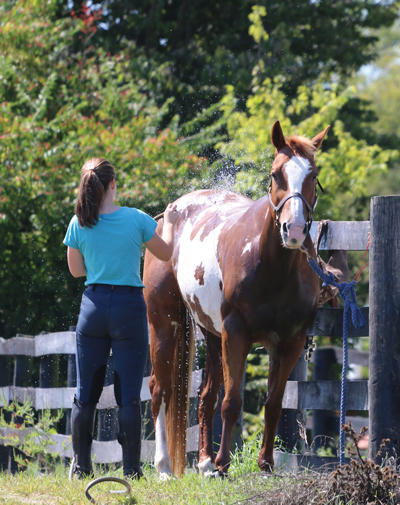
Giving your horse a bath might seem like a simple task, but there is definitely an art and a science to doing a good job. Read on to learn how to bathe a horse AND find out the tips and tricks that pro grooms use. When I was a professional groom, I learned a ton by readying four horses for shows every weekend. (Hint: the gray horse took at least twice as much effort as the bays and chestnuts!)

STEP 1: Gather all of your bathing materials together. You will need: a bucket, sponge, rag, grooming gloves or bath mitt, shampoo, conditioner, sweat scraper, comb and a towel. If your horse is gray or has lots of white markings, invest in a separate whitening shampoo.

STEP 2: Heated water will make all the difference in your horse’s cleanliness and comfort, if available. Spray him from neck to hooves with warm water to thoroughly wet him down. Dunk your sponge into a large bucket of warm water, lightly wring it out, put about a tablespoon of shampoo on it, and get the suds going. Rub the sponge all over your horse, adding more shampoo and water as necessary.

Young Rider Magazine LogoSTEP 3: Use your grooming glove or bath mitt to scrub the shampoo down to the skin; switch to whitening shampoo on the white markings and areas (and let those sit a little longer).

STEP 4: Rub some shampoo between your hands and work it into the crest of the mane and the tailbone.

STEP 5: The rinse is the most important step. Using warm water on the highest pressure stream your horse will comfortably tolerate, start at the top of his neck and go with the hair direction down his back and legs. Make sure to use your fingers on his mane and tailbone to get all the residue out. Repeat your rinse to get all the way down to the skin until no suds remain.

STEP 6: Run your sweat scraper from head to toe to squeeze the water out of the hair.

Washing the tail
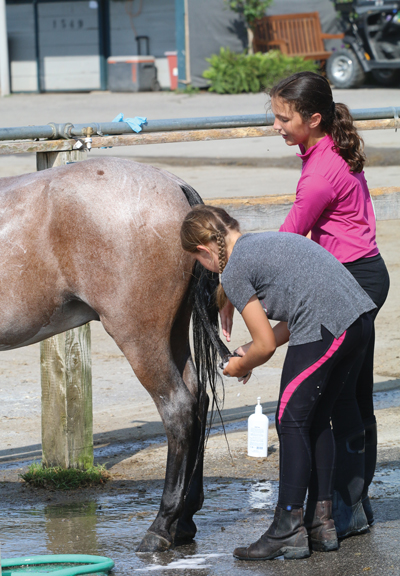
Work conditioner into the mane and tail and leave in for several minutes before rinsing. Photo by Elizabeth Moyer

STEP 7: Massage conditioner into the mane and tail; re-suds the white areas and markings and let the soap sit for a few minutes if they still look yellow- or green-stained.

STEP 8: Use a sponge or rag to wet down your horse’s face. Don’t spray it with the hose! Suds up your sponge and gently massage his face, paying extra attention to white markings. Avoid the eye area.

STEP 9: Dunk a clean sponge or rag into water, wring a little water out, and wipe down the face a few times until no soap remains.

STEP 10: Rinse conditioner and remaining whitening shampoo off; follow up with the sweat scraper. Rub with a dry towel to get more water off if it’s cold or your horse has long winter hair. Carefully comb out his mane and tail.

That’s it! You’ve learned how to bathe a horse. Now graze your horse in the sun until he’s dry so he doesn’t immediately roll and undo all of your work. Put a sheet on him if he lives in a stall, especially if you want him to stay extra-clean for an upcoming show.

This article about how to bathe a horse appeared in the Summer 2020 issue of Young Rider magazine. Click here to subscribe!
My Right Horse Adoptable Horse of the Week: Blue — October 18, 2021

0
Adoptable Horse of the Week - Blue
Photo Courtesy the Santana Center

Welcome to Horse Illustrated’s weekly installment of the My Right Horse Adoptable Horse of the Week, offered in partnership with The Right Horse. Blue is this week’s adoptable horse. Check back weekly for a new featured horse so you can find your #righthorse.

Adoptable Horse of the Week - Blue
Photo Courtesy the Santana Center

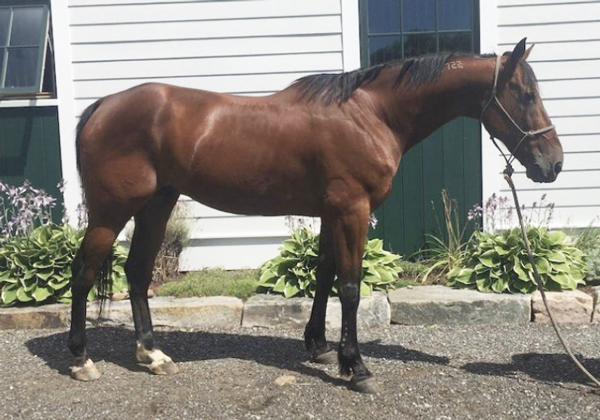
Horse: Blue, a 13-year-old 16.1-hand bay Standardbred gelding in Saunderstown, R.I.
Organization: The Santana Center

Blue is a drop-dead gorgeous Standardbred gelding who is joining the Santana Center all the way from California! He is a retired racehorse who is ready for his next career in dressage, eventing, or whatever direction you would like to take him in! He has lovely ground manners, but lots of energy, so he is for an experienced adopter only. Blue is currently in training with Horses with Hope in Maine. To learn more about Blue, you can find him on their website at www.horseswithhopeme.org/blue-standardbred-gelding.

Click here for questions about Blue, the My Right Horse Adoptable Horse of the Week

My Right HorseMy Right Horse is the online adoption platform of The Right Horse Initiative, a collection of equine industry and welfare professionals and advocates working together to improve the lives of horses in transition. A program of the ASPCA, their goal is to massively increase horse adoption in the United States. To find more adoptable horses and foster horses, visit www.myrighthorse.org. To learn more about The Right Horse, a program of the ASPCA, visit www.therighthorse.org.

0FansLike
0SubscribersSubscribe
We use cookies to help personalize content, tailor and measure ads, and provide a safer experience. By navigating the site, you agree to the use of cookies to collect information. Read our Cookie Policy.
OK