0 ITEMS
  • My Account
  • Holiday Gift Guide
  • Podcast
  • Webinar
Subscribe Combo
Enable cache13
Home Blog Page 115

Dive Into Driving: How to Get Started Driving Horses

0
Getting Started with Driving Horses
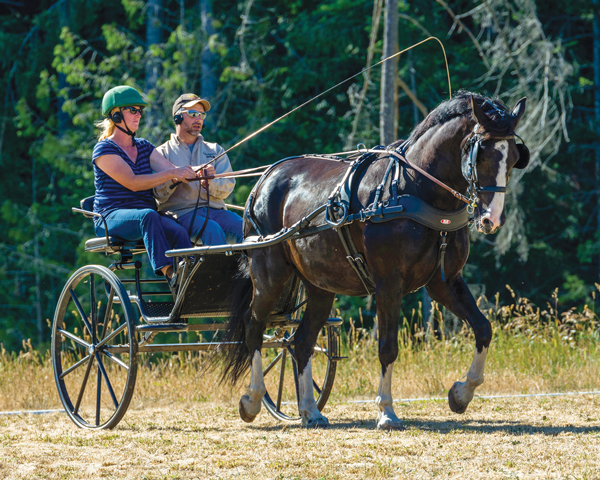
Photo by Catherine Royle/Yellow Rose Photography, Courtesy Coachman’s Delight, Inc.

Learn from the experts what it takes to get started in the sport of driving horses.

The sight of a horse-drawn carriage conjures up thoughts of power and elegance. It’s a nod to history for equestrians and non-equestrians alike. While the prospect of learning to drive may seem intimidating to some, it shouldn’t be, according to driving instructor and judge Andy Marcoux of Coachman’s Delight, Inc. in Massachusetts.

Marcoux teaches students, trains horses, and competes in combined driving through Advanced level and pleasure drives with singles, pairs and four-in-hands.

“It’s really kind of interesting in carriage driving—there are many who come from riding to driving certainly, but there are also a lot of people who are new to horses,” says Marcoux.

Martha Custis Merry of Lebanon, Ohio, an amateur adult dressage rider who now also drives her 8-year-old Percheron/Friesian/Dutch Harness gelding, Lancer, shares that the sport is something that can be enjoyed as a pleasure driver or competitive driver. She likes the team aspect of working with her husband, Dave, who serves as her navigator in combined driving. Together the Merrys successfully completed their first combined driving event (CDE) at Training Level last fall, and they look forward to doing more.

Where to Start

Both Marcoux and Merry advise finding a local driving club as a very important first step, as well as reviewing the resources available through the American Driving Society (ADS), the Carriage Association of America (CAA), and the United States Equestrian Federation (USEF). There are carriage driving clubs in just about every region in the country; lists of clubs can be found on the ADS and CAA websites.
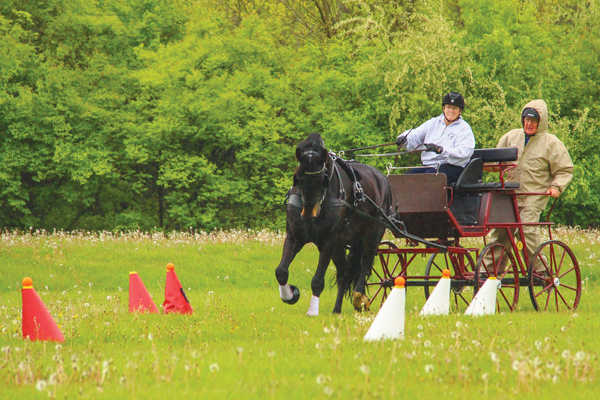
Combined Driving
Martha Merry and her Percheron-Friesian-Dutch Harness gelding practice cones with her husband Dave serving as navigator on the back of the carriage. Photo by Eri Burton-Journey Sports Photography, Courtesy Martha Merry

These are good resources to find local instructors, learn safe practices, get advice on selecting equipment, get help with training or purchasing a horse, and to enlist experienced drivers to lend a hand to newbies.

Those interested in driving will find a very welcoming group, according to Merry.

“The driving community is loaded with wonderfully generous folks. Most driving clubs embrace knowledge-sharing and invite potential drivers to join for a free trial period and to ride along in their carriages.”
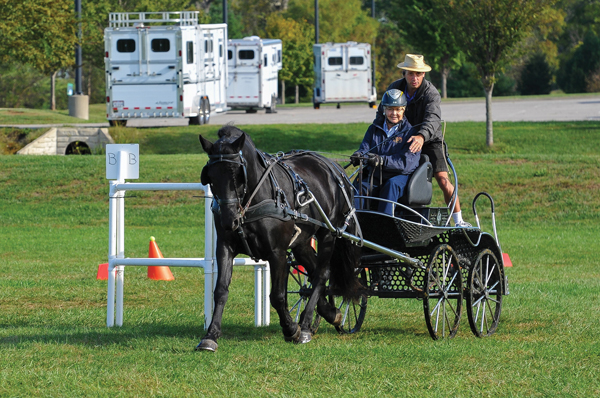
Getting Started with Driving Horses
Andy Marcoux teaches student Marcia Bozeman during the 2015 National Drive at the Kentucky Horse Park. Photo by Picsofyou.com

Marcoux offers this logical progression in learning to drive:

■ Gain experience and confidence by riding along with a driving instructor and
other experienced drivers, with the goal of eventually taking over the reins while still having them at your side for guidance as a co-pilot. After doing this for a time, they will let you know when it’s time to solo.
■ Use an experienced horse while learning to drive. After learning with a seasoned horse, then the person can work on training their own horse for driving with the help of experts.
■ Learn the parts of the harness and vehicle (cart, carriage, wagon, sleigh, et cetera). Marcoux says that the harness can often look like a “bucket of squids” to beginners, but it really is no different than learning the parts of a saddle.
■ Learn how to safely harness a horse and hitch them to a vehicle.
■ Learn ground driving and long lining.
■ Learn by volunteering and watching, help at shows and meetings, and shadow experienced drivers.

Merry adds these tips:
■ Do your homework by reading and watching videos. Study the rulebooks. Ask questions.
■ Spend plenty of time doing groundwork with a horse to develop a rapport and communication before climbing into the carriage.
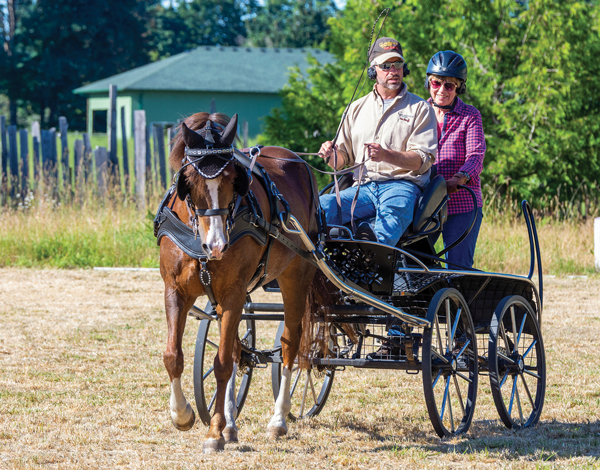
Getting Started with Driving Horses
Andy Marcoux teaching at a club clinic on Vancouver Island in British Columbia, Canada. Photo by Catherine Royle/Yellow Rose Photography, Courtesy Coachman’s Delight, Inc.

Riding Versus Driving

The view between the ears of a riding horse is much the same in driving, but from a slightly different angle and with communication through a few new aids.

“I was accustomed to feeling and influencing my horse with legs, seat, hands and balance,” says Merry. “Driving takes that communication to a whole new level. I still needed to accomplish the same type of tasks, but now using voice, reins, whip and brakes when applicable [not all horse-drawn vehicles have brakes].”

Your riding horse could also make a great driving horse, even if he needs to be retired from riding in some cases.

“Driving can be a fabulous second career for a horse because it’s very low-impact compared to riding,” says Marcoux. “When you get horses that have conditions such as kissing spine or navicular—conditions that make them not appropriate for ridden work—they may still be fantastic horses for driving if they have a decent head on their shoulders.”

Try Driving Now

Marcoux encourages those interested not to wait to try driving.
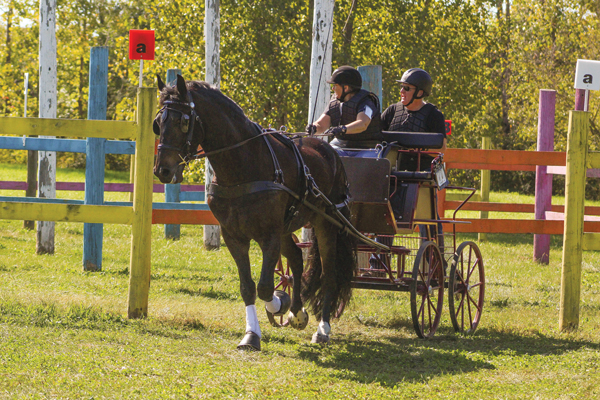
Combined Driving
Martha Merry driving Lancer with her husband Dave serving as navigator. This was their first full combined driving event, where they competed at Training Level. Photo by Patti Custis, Courtesy Martha Merry

“The biggest thing I see is that most often people have a tendency to wait too long before trying the sport,” he says. “They think it looks like fun and maybe they’ll do that when they get older and can’t ride anymore. Then you know what happens? They feel like they have cheated themselves once they start driving. They say, ‘Wow, I absolutely should not have waited!’”

This article about how to get started with driving horses appeared in the July 2020 issue of Horse Illustrated magazine. Click here to subscribe!

Driving Activities

The options for having fun and doing work with driving horses are many. In
addition to combined driving and pleasure driving competition, drivers can
participate in antique coaching, roadster classes, draft horse hitch shows
and plow days, parades and exhibitions, road and trail driving, and historical re-enactments, as well as driving classes in breed-specific shows.

The ADS and CAA both offer lists of trails that can accommodate driving horses. The National Drive is a non-competitive annual event that brings drivers from across North America together and offers both social and educational activities.


Driving Resources

American Driving Society (ADS)
The Carriage Association of America (CAA)
◆ United States Equestrian Federation (USEF) has pleasure and combined driving videos in their Learning Center at www.usef.org
◆ Andy Marcoux offers educational videos and an e-newsletter for those interested in driving on his website at www.coachmansdelight.com

Further Reading

The Right Stuff: How to Choose a Driving Horse
Scurry Driving: Your New Favorite Equestrian Sport
Driving Mini Horses
Driving Lessons from the Show Ring
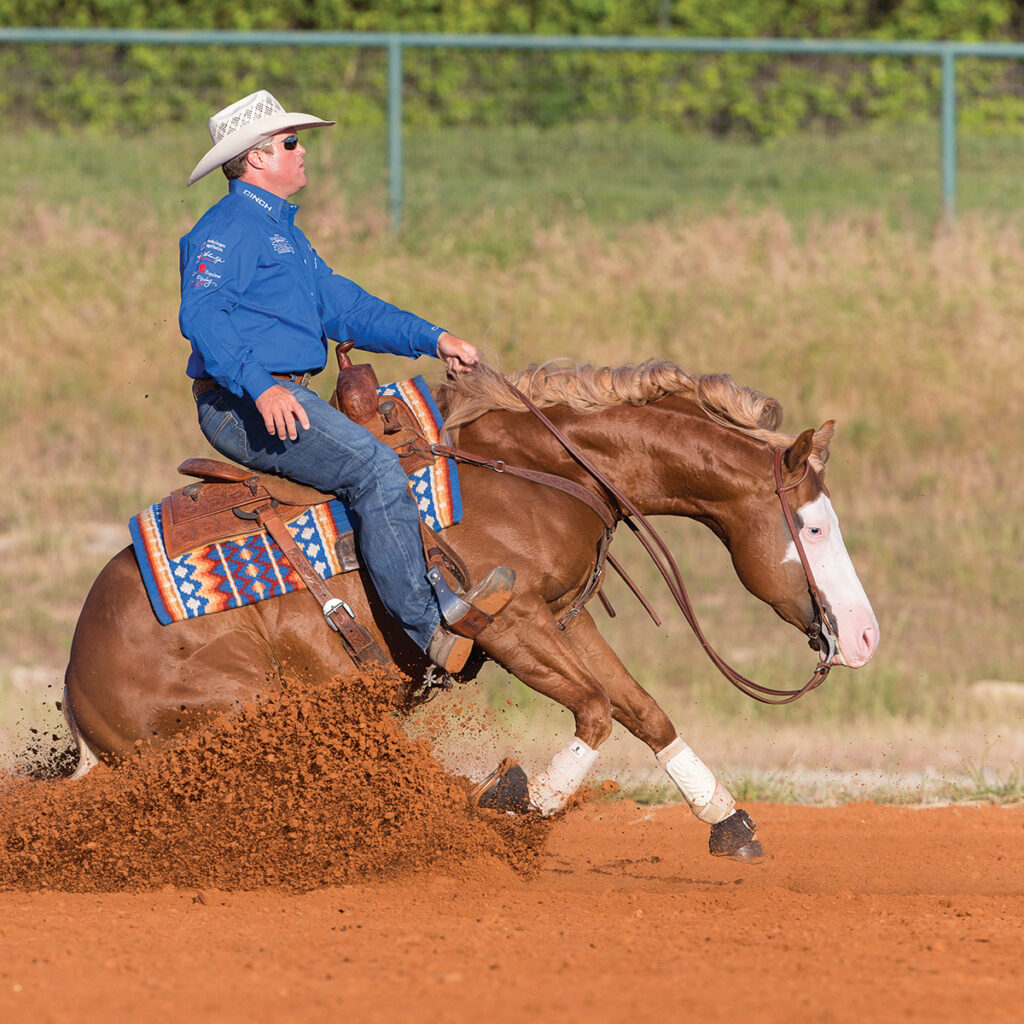
Master Sliding Stops in Reining

0

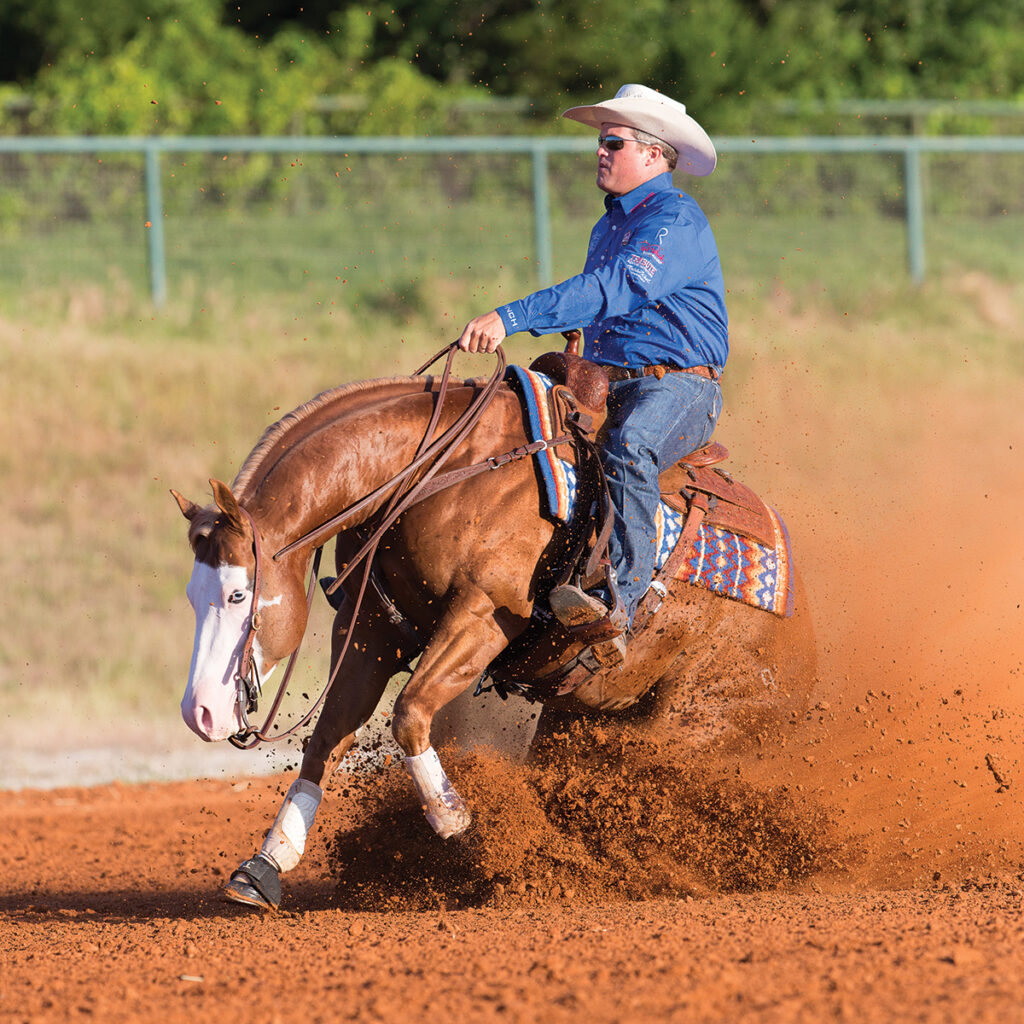
The sliding stop is reining’s signature maneuver. The horse runs at top speed down the length of the arena, and then on a loose rein, lowers his hindquarters to the dirt as his front feet pedal for another 10 to 20 feet until he completely stops, sending dirt spraying in his wake like a jet-skier.

Casey Deary - Sliding Stop
During an ideal sliding stop, your horse will lower his hindquarters and continue to move forward, all on a loose rein. Photo by Abigail Boatwright

This move wows crowds, gains points from the judges, and most of all, it’s fun to ride. But before you ask your horse for a big sliding stop, check out these tips from expert trainer Casey Deary on how to correctly cue for and ride this move.

Deary is a reining trainer from Weatherford, Texas, with multiple world championships, National Reining Horse Association Futurity titles, National Reining Breeders Classic titles and multiple other major reining championships.

Sliding Stop Goals

Instead of thinking about stopping your horse on a dime, Deary says you want your horse to drop his hocks and continue to go forward, while you appear to sit quietly.

“In a perfect world, your horse should accelerate all the way to the stop, and you should theoretically only have to say ‘whoa’ to get him there,” says Deary.

Necessary Tools

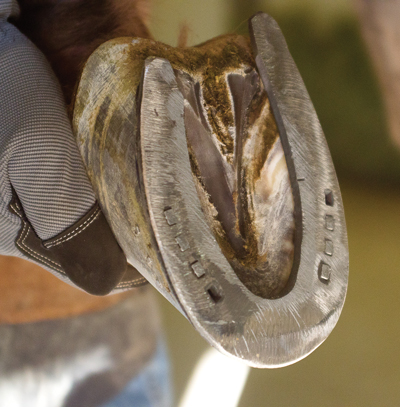
Slider Shoe
Most horses will need a slider-type shoe to achieve a good sliding stop. Consult your farrier to find the right shoe for your horse. Photo by Abigail Boatwright

To do this, your horse needs to be able to stop forward motion in response to your rein and voice cues. A horse that continues forward without responding to you will not be able to give you a good stop.

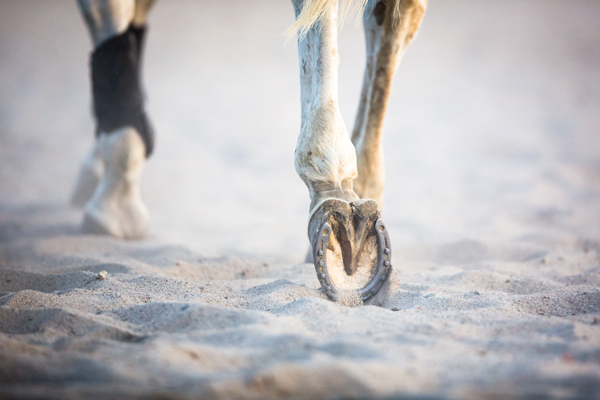
While you might not need extra-long slider plates (horseshoes) to get a stop, Deary says most horses are going to need some kind of sliding shoe for their hind feet. You’ll want to discuss shoes with your farrier before you begin this move.

The Step-by-Step Stop

Deary says when you lope off at the beginning of a rundown, make your intentions clear.

“If I lope off, sit back and cluck, I want the horse to start running, and I want him to continue running ahead of me without me having to kick him forward,” he says. “I need to make sure he’s accelerating every single stride. You don’t want your horse to lope slowly to the middle of the pen and then start running, or speed up and slow down going down the line.”

Aim for as little of your own body movement as possible before your horse begins the stop.

“Sit back, keep your eyes up and your shoulders back,” says Deary. “Think about sitting back in a recliner. I want my hips to be rotated back into the saddle. Pointing my belt buckle up, I want my shoulders to be behind my hips and my feet to be in front of my hips.”

Reining Sliding Stops
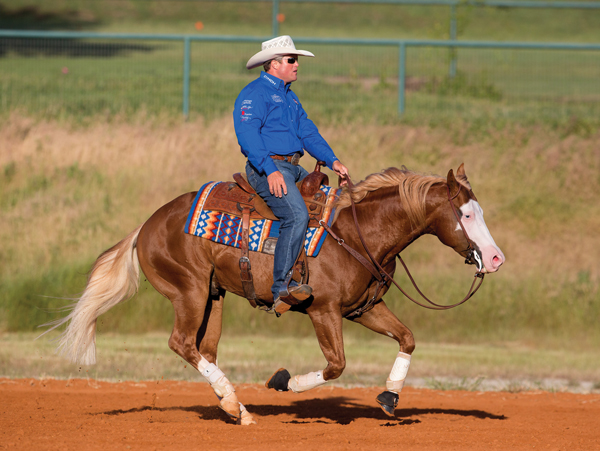
STEP 1: Clearly cue your horse for a rundown, not a slow lope. Photo by Abigail Boatwright

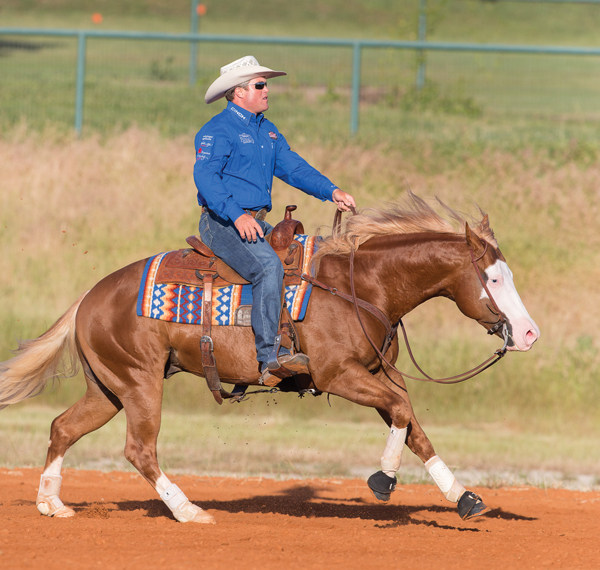
Your horse should increase speed with every stride, allowing him to drive his hocks deeper and lift his withers higher, which makes it easier for him to bend his back and slide.

If he slows down to stop, his front end will drop, making it very hard to slide. Visualize a speed boat in the water, says Deary.

The key to engaging the stop is your voice command. Ask for greater speed, sit back so that your horse’s movement is in front of you, and then say “whoa,” allowing his hindquarters to drop into the ground as you continue moving forward.

Troubleshooting

Deary recommends avoiding “scuba diving,” meaning you don’t want to kick your feet forward and throw yourself backward right before you ask for the stop.

“At that point, you’ve changed how the horse has to balance your weight,” he says.

Avoid slowing down before you stop. Look ahead to outside the end of the arena to avoid unconsciously taking your foot off the gas.

With this method of stopping, your stop cue isn’t dependent on timing to the horse’s stride, but you do need patience.

Reining Sliding Stops
STEP 2: Your horse should accelerate and elevate his front end. Photo by Abigail Boatwright

“My horses run till I say ‘whoa’ or until I pull—then my timing doesn’t have to be perfect,” says Deary. “On the flip side, [once I give the cue] I have to allow the horse to finish that stride before he gets into the ground. It may take a stride or two before he actually stops. Just hold your body quiet and still until he completes the stop.”

If your horse is resistant to stopping for any reason, make sure he is sound, without issues in his teeth or joints, and make sure his equipment is comfortable.

Plus Moves

Once you’ve mastered the stop, aim for precise completion. Each reining pattern has a designated area for stopping, and to “plus” your maneuver (increase your score), you want to nail that spot.

Make sure to accelerate smoothly throughout the move.

Casey Deary - Sliding Stop
STEP 3: Ask your horse for a stop by sitting back in the saddle and saying “whoa” as his hindquarters drop into the ground while you slide. Photo by Abigail Boatwright

Each part of the maneuver earns points: the approach, the stop and the rollback or the back up. You want to make sure you have a willing, smooth stop with a clean rollback or backup.

Improving Your Performance

If you’re struggling with the stop, consider taking a lesson or working with a trainer by sending a video of your ride to get advice.

“A lesson with an expert will make it drastically easier—it’s money well spent,” says Deary. “And many trainers will be willing to help you if you send them a video and ask for feedback.”

This article about how to improve your reining sliding stops appeared in the July 2020 issue of Horse Illustrated magazine. Click here to subscribe!

Hay Accessories for Horses: Make Feeding Your Horses Easier

0

Forage is the main component of a healthy equine diet. Here are hay accessories for horses to make feeding it a little easier.

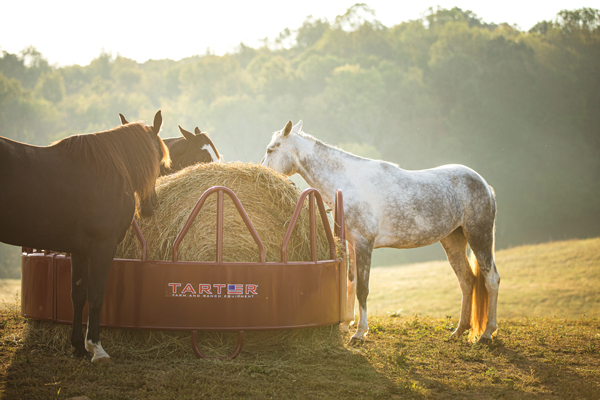
Tarter Round Bale Feeder - Hay Accessories for HorsesTarter Round Bale Feeder

Prioritizing safety, the spacing prevents horses from getting a hoof stuck in the feeder, while the smooth, rounded top loops discourage excessive mane rubbing. The loop legs are designed to not sink into soft surfaces. This feeder also prevents waste through the hay-saver panel and is designed to withstand even the harshest of outdoor environments. $349.99; www.ruralking.com


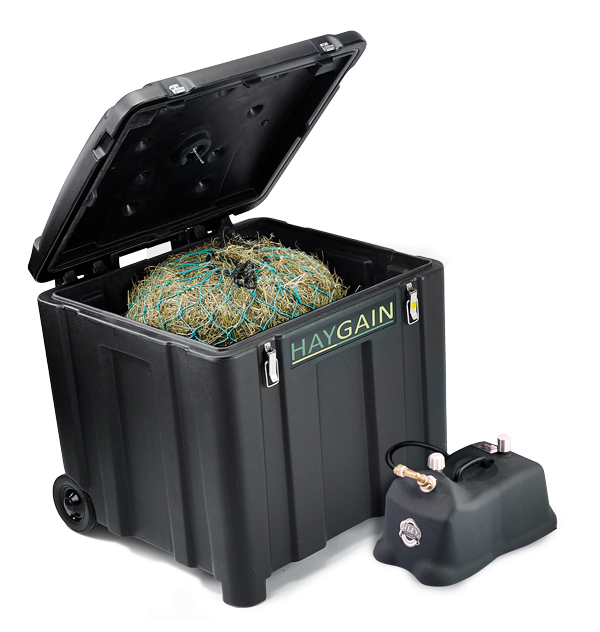
Haygain HG600Haygain HG600

Haygain steamers are designed to kill mold, fungal spores, yeast, and bacteria often found in hay, creating a palatable meal that enhances digestibility and nutrition. The Haygain HG600 steamer also triples the water content of the hay for added hydration. Steaming reduces airborne dust by nearly 98%, reducing a horse’s susceptibility to inflammatory airway disease by 65%. $1,749.00; www.haygain.us


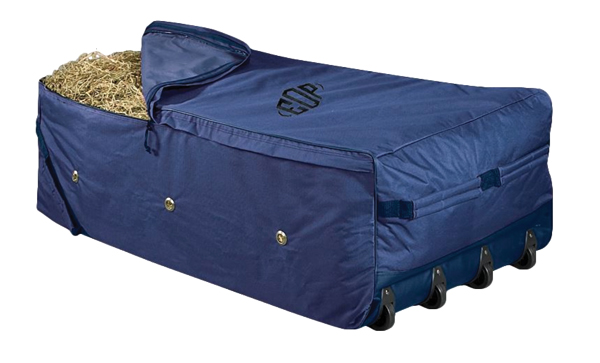
Rolling Bale Bag - Hay Accessories for HorsesRolling Bale Bag

This nylon rolling bale bag will allow you to easily transport and store your hay, protecting it from debris like dust and dirt. This bag is water-resistant and provides ventilation and breathability for your hay. Four wheels and sturdy handles make moving even large bales easy. Monogramming available. $69.95 (monogram $8.95 extra); www.doversaddlery.com


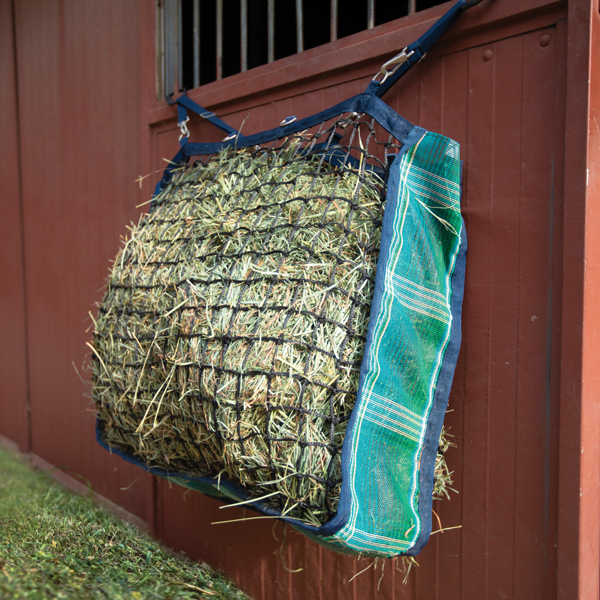
Kensington Slow-Feed Hay Bag - Hay Accessories for HorsesKensington Slow-Feed Hay Bag

Made exclusively for SmartPak, this hay bag features 1.5-inch netting to slow consumption and is padded by Textilene on the sides and bottom to prevent unnecessary hay waste. Has adjustable/detachable straps and closeable lid. $69.99-$79.99 depending on size; www.smartpakequine.com


Nylon Hay and Grain Portable Feeder - Hay Accessories for HorsesNylon Hay and Grain Portable Feeder

This on-the-road portable feeder is made of 600-denier nylon, adjustable closer straps, and large lid opening for easy-to-manage filling. Even if you choose not to use a bottom tray for grain, this bag is effective in preventing your horse’s hay from being trampled on the ground. $28.49; www.statelinetack.com


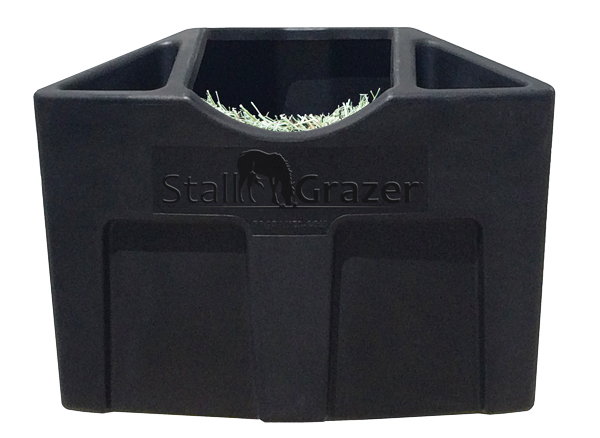
Corner FeederCorner Feeder

This three-in-one stall corner feeder offers three sections: one large center cavity for hay, and two smaller side cavities for salt and grain. This feeder is designed to reside on the ground so that your horse can eat naturally with his head down in a comfortable grazing position. $575.95-$1,159.95 depending on size; www.smartpakequine.com


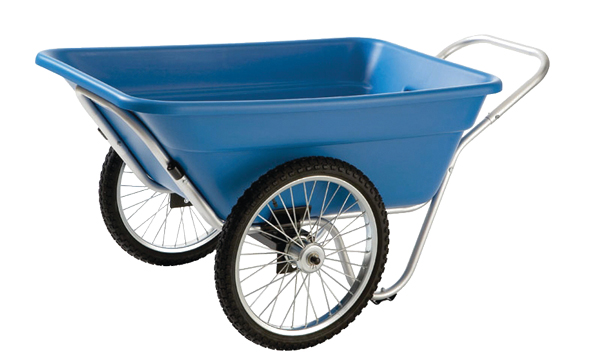
Smart CartSmart Cart

Designed to stand up to heavy use in a barn or boarding facility, the polyethylene pan, powder-coated metals, and aluminum alloy frame fight barn acids in harsh environments. This Smart Cart is easy to maneuver, with a well-balanced design and wheels. $439.95-$539.95 depending on size; www.smartpakequine.com

This article about hay accessories for horses appeared in the July 2020 issue of Horse Illustrated magazine. Click here to subscribe!

Happy Feet: Helping Your Horse Have Healthy Hooves

0
Healthy Horse Hooves
Photo by Lightpoet/Shutterstock

We’ve all experienced the disappointment of preparing for a ride or a show only to find out that your horse has lost a shoe or is lame. While the horse’s hoof may seem small, it’s a very complex structure. Healthy hooves are critical to the horse’s well-being and soundness. If the hoof and associated structures aren’t healthy, you and your horse won’t be going anywhere! Some horses simply have poor conformation and structure in their feet.

Young Rider Magazine LogoAny farrier will tell you that although many hoof diseases can be helped, it’s difficult to try to fix feet that have been badly damaged over time, either by poor hoof care, improper use or poor breeding. The best way to help a horse have healthy hooves is to prevent problems before they start. Also, avoid purchasing or breeding a horse with bad feet.
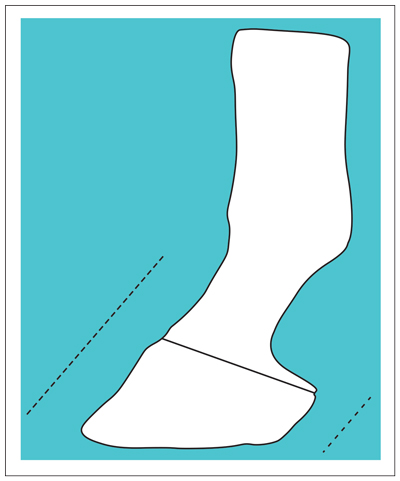
Parts of the Hoof

What should a healthy foot look like? Ideally, it will have a strong hoof wall, a hoof and heel angle that are roughly parallel to each other (see diagram), and the foot should be balanced.

Hoof diagram
Ideally, the front and heel angles of the hoof wall are roughly parallel to each other.

The outer part of the horse’s foot is made up of the hoof wall, coronet band, sole, heels and frog. All of these work together in a healthy foot. Your farrier can help educate you on how to look at a foot and tell the difference between a good foot and a bad one.

Good Management

You should pick out and examine your horse’s feet and check his shoes (if he wears them) every day. Horses can pick up rocks and other sharp objects that can injure their feet, and shoes can come off or get bent.

Horses should be on a regular trimming (or shoeing) schedule, typically every four to eight weeks. As your farrier gets to know your horse, he will recommend how often the feet should be maintained, as some hooves grow more quickly than others.

Hooves that are regularly allowed to become overgrown will distort painfully over time; the hoof wall can split down to sensitive tissues. Overly aggressive trimming can also make the horse sore and weaken the hoof.

Common Hoof Problems

Wet and dirty stall bedding or pasture footing can cause conditions like thrush, an infection that can cause lameness if untreated. Thrush has a bad smell and looks like black goo in the grooves of the horse’s sole. There are a number of medications that treat thrush, but it’s better to prevent it in the first place by keeping your horse in a clean, dry environment and picking his feet out daily.

Hoof abscesses can cause sudden and dramatic lameness. This will scare the wits out of you as you fear that your horse may be badly injured. If I’m called to see a horse that is acutely lame, the first thing I’ll look for is an abscess, although there are other causes, too.

Abscesses are common and generally straightforward to manage. They’re caused by dirt and moisture working their way into the hoof through small cracks or punctures. This can create a very painful infection in the sensitive tissues inside the hoof.

I see hoof abscesses most often when the environment has been dry for a while, then suddenly turns wet and muddy—or when the snow begins to melt.

Occasionally the horse’s leg will swell up, and you can usually feel an area of heat in the hoof. Your veterinarian should always come out if your horse is lame for any reason. I like to have the farrier there too so we can work together to solve the lameness problem.

By having some general knowledge of hoof anatomy, being aware of common problems, and offering a clean environment and good hoof management, you can keep your horse’s feet as happy and healthy as possible.

Hoof Stats

◆ The hooves of young horses grow up to 2 millimeters per day. Older horses’ hooves grow 6 to 9 millimeters per month.
◆ The complex attachments of the hoof to the coffin bone (laminae) would cover approximately 14 square feet of surface area if stretched out flat.
◆ The frog helps with shock absorption and returning blood to the heart. It also helps the horse know where his foot is in space and protects the foot.
◆ A horse’s hoof wall is approximately 25 percent water; the sole 33 percent and the frog is 50 percent.
◆ It takes about one year for a horse to replace the entire hoof wall from the
coronet band to the ground.

This article about how helping your horse have healthy hooves appeared in the Spring 2020 issue of Young Rider magazine. Click here to subscribe!

My Right Horse Adoptable Horse of the Week: Chrome — September 20, 2021

0
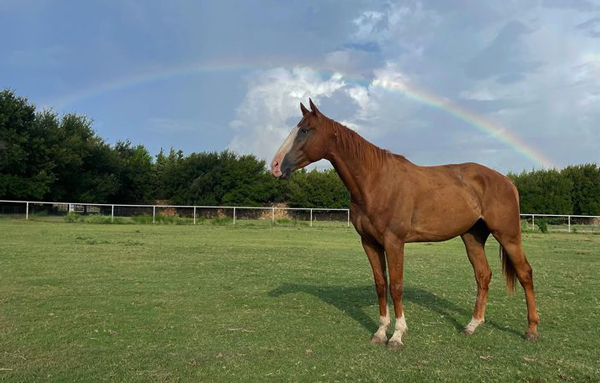
My Right Horse Adoptable Horse of the Week - Chrome
Photo Courtesy SPCA of Texas

Welcome to Horse Illustrated’s weekly installment of the My Right Horse Adoptable Horse of the Week, offered in partnership with The Right Horse. Chrome is this week’s adoptable horse. Check back weekly for a new featured horse so you can find your #righthorse.

Horse: Chrome, a 5-year-old chestnut 16.3-hand Thoroughbred gelding in McKinney, Texas
Organization: SPCA of Texas

Chrome is the epitome of a buddy horse. He is constantly wanting attention and love, and will follow you around the field. He has gotten along well with the older horses he is turned out with over the younger ones, as his demeanor is very laid back. He is riding capable on a low level, and would do best with an intermediate rider. Could he be your #righthorse?

Click here for questions about Chrome, the My Right Horse Adoptable Horse of the Week

My Right HorseMy Right Horse is the online adoption platform of The Right Horse Initiative, a collection of equine industry and welfare professionals and advocates working together to improve the lives of horses in transition. A program of the ASPCA, their goal is to massively increase horse adoption in the United States. To find more adoptable horses and foster horses, visit www.myrighthorse.org. To learn more about The Right Horse, a program of the ASPCA, visit www.therighthorse.org.

On Top of the World on Clydesdales at the Covell Ranch

0
Covell Clydesdales
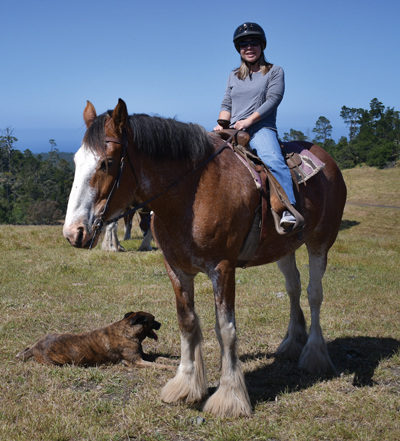
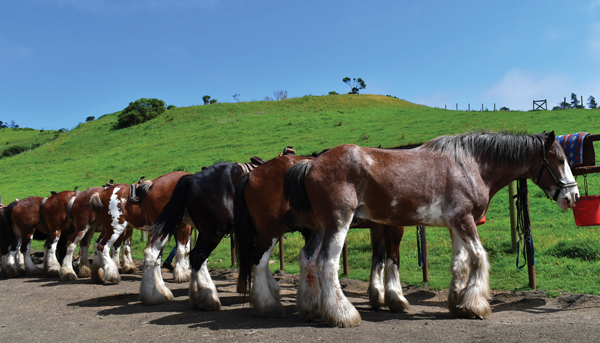
Sixteen of the ranch’s 60 horses are a part of the trail string. Photo Courtesy Covell Clydesdales

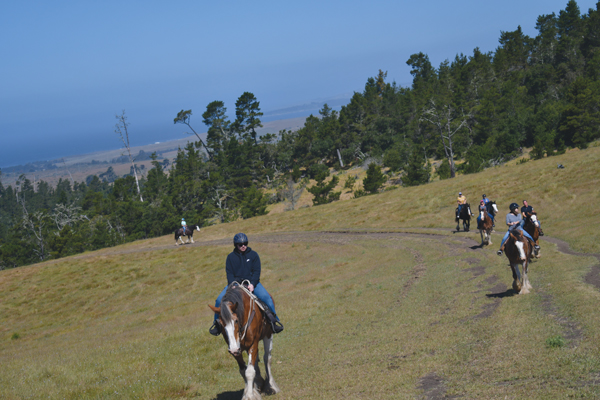
The deliberate footfalls from your 1,800-pound mount punctuate the rhythmic squeak of your saddle. You wind your way up the path that leads through grassy meadows with free-range Black Angus cattle peeking through the endangered Monterey Pines. And then you arrive. From your hilltop vantage point on the Covell Ranch, and the added elevation of the 17.3-hand Clydesdale underneath you, you take in the view of the Pacific Ocean just a few miles away. You’re on top of the world.

Covell Clydesdales
Located along California’s Central Coast, Cambria is full of great views, especially on horseback. Photo by Kara Stewart

California Dreaming at the Covell Ranch in Cambria

It feels like a dream riding a massive yet gentle draft horse on a trail that weaves through wide-open spaces on a private 2,000-acre ranch. But you’re riding a Clydesdale at Covell Ranch in Cambria, Calif.

Tara Covell and her small team of friends and family run the rides. Of the 50 or so horses on the ranch, Tara currently has 16 in the trail-riding string.

Tara and her father, Ralph Covell, who’s been breeding Clydesdales for 40 years, honor their special horses, their wellbeing, and the opportunity to share their world with you.

Meet the Clydesdale

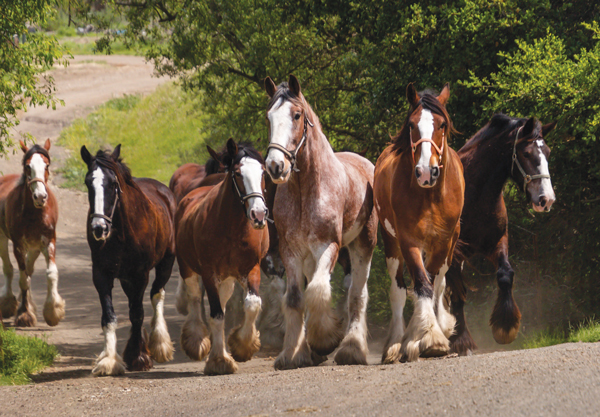
This draft horse breed originated from Clydesdale, Scotland. Typically bay with white legs, they range in size from 17 to 19 hands and 1,800 to 2,200 lbs. Their gentle and generous spirit, as well as a barrel that’s not as broad as some draft breeds, make them wonderful riding horses.

Riding Lessons at the Covell Clydesdale Ranch

Before each ride, Tara starts with a brief instruction session. “All of our riding horses are first taught to drive,” says Tara. “We ask you to ride them the same way we do.”

Instead of direct reining, which pulls back more than sideways, she wants riders to guide with more of an outside pull. After demonstrating, Tara and her team start helping riders mount up using a 4-foot stepladder tucked between each patient horse.

Family Focus

Ralph started with one team of Clydesdales at the family’s first ranch near Los Angeles. The program grew, and Covell Clydesdales became one of the most successful hitch and halter horse competitors in shows across the U.S. and Canada.

In 1998, he bought the 2,000-acre ranch in Cambria, and they started the trail riding program in 2015. Covell Clydesdales is one of just a few places in the U.S. that offer this experience. In addition to trail rides, they offer vehicle tours of the ranch for those who can’t ride but want to see the horses in their natural state and enjoy the beauty of the ranch.

Riding in California
Enjoy wide-open spaces on a thundering giant for a change of pace. Photo by Kara Stewart

Global Appeal

People of all ages and from around the world come to ride a Covell Clydesdale. While most riders are beginners (for many, it’s their first time on a horse), experienced riders enjoy the ride because it’s not a typical nose-to-tail trail ride. Certain places on the trail even allow for trotting or cantering if riders choose.

Plus, it’s truly a family friendly experience.

“Our minimum rider age is 7,” says Tara.

“We’ve had riders in their 80s, as well as riders with prosthetic arms and legs.”

Taking in the View on a Clydesdale

The trail crests the top of the hill and the view extends in all directions. This just might be what heaven is like, at least for a horse lover.

As the horses take a break and humans take in the landscape, Tara and her team take photos of everyone who wants one.

For a few more minutes, the group can take in the 360-degree view. On this warm spring day, the meadow is as green as Scotland—the original birthplace of these majestic horses.

Clydesdales in California
The Covell Clydesdales are particularly gentle with riders of all experience levels. Photo by Kara Stewart

Sharing the Dream

“People talk about their dream life,” says Tara. “I’m blessed to live mine every day and share it with so many people.”

If you want to experience being on top of the world, there’s no better place than from the back of a gentle Clydesdale at the Covell Ranch. To book your ride, visit www.covellsclydesdaleranch.com.

This article about riding Clydesdales in California at the Covell Ranch appeared in the July 2020 issue of Horse Illustrated magazine. Click here to subscribe!

Meet the Clydesdale

This draft horse breed originated from Clydesdale, Scotland. Typically bay with white legs, they range in size from 17 to 19 hands and 1,800 to 2,200 lbs. Their gentle and generous spirit, as well as a barrel that’s not as broad as some draft breeds, make them wonderful riding horses.


Getting to the Covell Clydesdale Ranch

Covell Ranch is located in Cambria on California’s Central Coast, about halfway between Los Angeles and San Francisco. The closest airport is San Luis Obispo County
Regional Airport.


Making It a Day

The little artist community of Cambria is one of the gems of the Central Coast. In fact, its closest beach is named Moonstone Beach. Strewn through its pebbly sand are bits of sea glass and polished rocks, making the beach a favorite place to wander slowly.

Come early for breakfast or stop for lunch or dinner after your ride. The Sea Chest Oyster Bar and Restaurant, Linn’s Fruit Bin, Robin’s Restaurant, and Cambria Café are some local favorites.

If you’re driving south after your ride, stop in the tiny town of Harmony,
and be sure to check out the Harmony Glassworks glassblowing shop.


Fostering a Horse

0
Fostering a Horse
Photo by AU_CR/Shutterstock

Nexus Equine Rescue, a rehoming partner of the American Society for the Prevention of Cruelty to Animals (ASPCA) Regional Support Center and an adoption partner of the ASPCA’s The Right Horse Initiative (TRH), seeks to place horses in loving homes through adoption or temporarily foster them in order to create additional capacity at the facility for those horses in need.

“I think it’s really good for kids to be able to take an animal in to rehab or work with and get it to the point for someone else to enjoy,” says Carrie Hunt, who recently took part in Nexus Equine Rescue’s foster program, along with her 15-year-old daughter, McKayla. Hunt sees it as an opportunity to spread joy that also happens to include great learning experiences.

Fostering a Horse
Photo by Phovoir/Shutterstock

Hunt and her daughter fostered Ace, a 20-year-old Quarter Horse that was surrendered to the ASPCA Regional Support Center in Oklahoma City, Okla., last November. Ace had been ridden as a 7- or 8-year-old but, in recent history, had only been under saddle a handful of times before he came to stay with the Hunts.

“He was definitely very sweet,” says McKayla. “But it took him a little bit to get the hang of things after being out for so many years.”

To look for your #righthorse to adopt, or even foster, visit HorseIllustrated.com each week to see our My Right Horse Adoptable Horse of the Week.

Ace’s Story

Nexus Equine Rescue became familiar with McKayla’s talents last year when she was named the winner of the 4-H Equine Makeover, which was held at the facility. The program, funded by TRH, pairs 4-H youth with horses of different breeds, training levels, and health scores, and then challenges the 4-Hers to use their skills to improve the lives of their equine partners over a 90-day period. This led them to reach out to McKayla for assistance with Ace.

Carrie and McKayla Hunt with Ace, their foster horse
Carrie and McKayla Hunt fostered Ace, a 20-year-old Quarter Horse gelding, and McKayla trained him to be a safe trail horse for his new home. Photo by Courtesy Carrie Hunter

Prior to Ace’s arrival, the rescue made certain that he was up to date on his health and farrier care. Then, during his stay with the Hunts, they provided his feed and hay. The amount of assistance provided by the adoption organization varies.

“In general, they will cover veterinary care and most of the farrier care,” says Emily Weiss, PhD, vice president of ASPCA Equine Welfare. “Some of them do reimburse for hay and feed or provide a stipend for it.”

While under the Hunts’ care, McKayla started him on a desensitization process and got him going under saddle again. Ace needed help calming his anxieties and improving some basic manners under saddle. Her goal was to help create a safe trail riding horse, which is exactly what she did.

In the meantime, the rescue continued to market Ace for adoption. About a month later, potential adopters came to visit. Although the potential adopters, a father/daughter pair, had previous horse experience, McKayla walked them through catching, grooming, and riding Ace to make certain that they were a good match. By the end of their session, the visitors were ready to adopt, and Ace now has the opportunity to bring a youth back into riding.

Fostering Explained

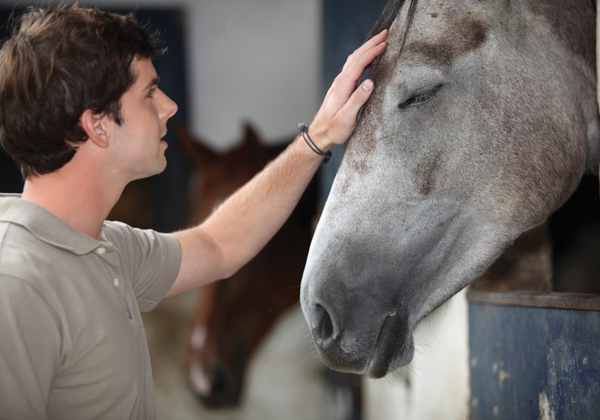
Man petting horse
Fostering a horse will help give him a smoother transition into a loving home. Photo by Phovoir/Shutterstock

Amid the recent coronavirus pandemic and its accompanying economic impact, TRH
recognized their adoption partners may be likely to see an uptick in intake. While it is relatively common to encounter foster programs for cats and dogs, TRH is committed to creating the same options for equines.

“People may need some support to keep their horses or they may need to re-home their horses,” says Weiss. “We know there are a lot of people out there who, even during this very difficult time, have the resources and ability to foster or even adopt another horse.”

The overarching goal of the fostering and adoption campaign is to engage these individuals to find their #righthorse to foster or adopt. This helps reduce the number of horses at the facilities around the country so that these facilities can better absorb horses impacted by the pandemic. “People are stepping up to say they have room in their barns and pastures,” says Weiss.

“We’re incredibly excited about where this is going to go.”

Fostering typically isn’t a long-term commitment. “Ideally, these horses are still going to marketed for adoption, and that foster [home] will be helping to find a [permanent] home for that horse,” adds Weiss.

How It Works

The foster process begins with an application and a site visit, which can be completed virtually. The application aids in making sure matches are skill-level compatible, that facilities meet certain standards with respect to shelter, fencing, and ability to feed and monitor a horse, and that veterinary, farrier, and other services are in place or can be put into place.

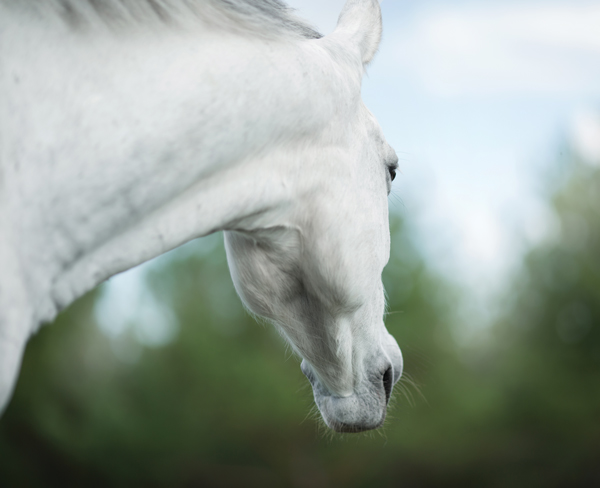
Horse head
Photo by Olesyanickolaeva/Shutterstock

On average, foster homes can expect to keep a horse for two months. Foster mentoring is available for those new to horse care. “Fostering can make a difference not just for that horse, but for other horses that can take advantage of that facility,” says Weiss. “People can save several lives by simply opening up their barn doors.”

Hunt agrees. “Just because they are fostered or adopted doesn’t mean they don’t have a purpose,” she says. “Ace is going to make an awesome horse to give this girl confidence, to enjoy, and maybe get her to the next level.”

This article about fostering a horse appeared in the July 2020 issue of Horse Illustrated magazine. Click here to subscribe!

What Does Your Horse’s Ear Position Tell You?

2
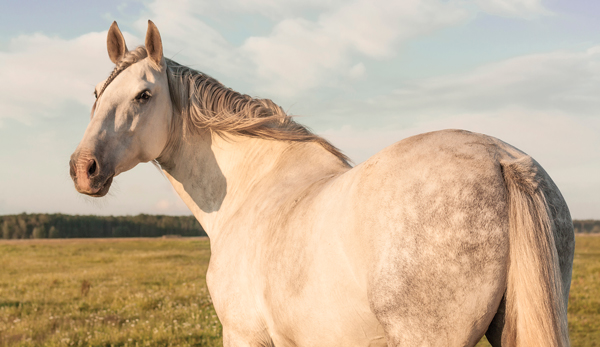
Gray Arabian Horse - Horse Ears
Photo by Olga_I/Shutterstock

Horses coexist as herd animals with complex social relationships that depend on visual and auditory cues to tell friend from foe in their environment. Their complicated system of visual cues are a type of body language that keeps them in constant communication with the ever-changing moods of the members of the herd. Subtle cues, such as those of different horse ear positions, are a fundamental form of communication that contributes to maintaining a class system within the herd without having to escalate to a fight for dominance.

When a new horse is added to the herd, the dominant horse will establish his status in the field by asserting his right to eat or drink first. There might be some kicking, biting, charging, neck snaking and circling of the new horse followed by nose-to-nose contact, striking and squeals. The following day, a raised hoof and bared teeth might be enough to serve as a directed warning to keep the newcomer in his place. The new horse will quickly figure out where his place is in the herd with a signal as subtle as pinned ears.

Most horses are very in tune with the body language of the alpha and their herd mates. The subtlety of specific ear positions sends a very clear message to other horses that can easily be interpreted by their humans, as well. Learning the subtleties of equine body language provides you with an important key to successful interaction with horses. You have only to become a keen observer to these visual cues to become aware of the message that they send.

A single flick of an ear can transmit several different messages in unison when taken with other body language cues. A horse cannot communicate without using his ears to convey part of the message. Horses communicate directly through posture, gesture and expressions. Learning to interpret ear positions, and physical postures in general, is not a mystical skill, but an education in observation.

Ears Forward

When a horse’s ears are pricked forward, it conveys that he is alert, paying attention, or interested in what is in front of him. He might be saying:
◆ I am focused on something in front of me.
◆ I am happy to see you.
◆ I am interested and curious.
◆ I am on alert.


One Horse Ear Cocked Back
Photo by Trebor Eckscher/Shutterstock

One Ear Cocked Back

This is often indicative of a horse that is listening to something in another direction than out front or paying attention to what is being asked of him while maintaining alertness in the direction of travel. He might be saying:
◆ I am listening to my rider.
◆ I am paying attention to something behind me.
◆ There is something that has my interest to the side of me.
◆ I am aware of things in both directions.


Horse Ears Pinned Back Position
Photo by Makrova Viktoria/Shutterstock

Ears Pinned Flat To the Head

This is a well-known sign of dominance or aggression that is usually accompanied by neck snaking, head shaking, drawn lips and bared teeth. Your horse might be
trying to say:
◆ I am going to bite or kick you! Get out of here!
◆ That is my food, go away.
◆ I don’t feel well; leave me alone.


Horse Ears Positioned in a Turned Back Position
Photo by Oryphotography/Shutterstock

Ears Turned Back

If the horse’s ears are pointed backward but not pinned, it means he is listening to something behind him. If you are riding and his neck is tense, he may be unsure of what you are asking him to do. He may be deciding how to react to the stimuli and whether to run away or turn around and check out a sound or movement. When combined with a swishing tail or other signs of tension in the body, turned-back ears may be a precursor to pinned ears. Your horse might be saying:
◆ How do I react? What is that behind me?
◆ I am unsure what you are asking, or I am confused.
◆ I am nervous.


Relaxed, Sleepy Horse
Photo by Sari Oneal/Shutterstock

Ears Relaxed To the Side

The horse is asleep, relaxed or feeling lazy. If you are riding your horse, then he may be showing complete trust and relaxation. Your horse could be saying:
◆ I am content or sleepy.
◆ I am just relaxing right now.
◆ I am concentrating or daydreaming.
◆ I trust you.


Listening back and forth
Photo by Andamanec/Shutterstock

Ears Flicking Back and Forth

The horse is in a heightened state of alertness or anxiety. He may be trying to
find the source of an unusual sound or smell or may feel overwhelmed, upset or
anxious. He might be trying to say:
◆ I don’t know what to make out of that strange sound.
◆ I am worried! What is that? How should I react?
◆ Fight or flight? How can I get away quickly?
◆ I may be on the verge of panic.

This article about horse ear position appeared in the July 2020 issue of Horse Illustrated magazine. Click here to subscribe!

Shades of the Southwest with Turquoise Jewelry

1

Turquoise jewelryWhen it comes to turquoise, it’s not all created equal. Prices for this valuable
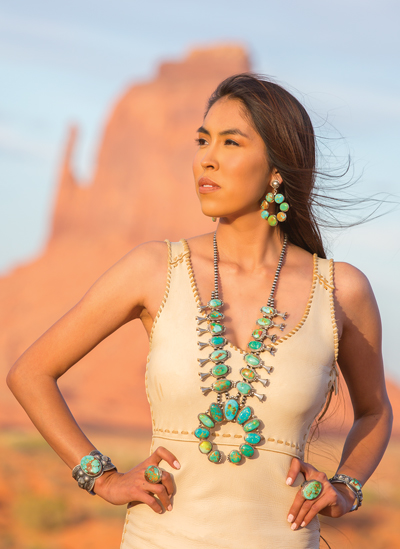
stone vary due to the demand, mining process and hours the artist puts into each piece. Whether you want to splurge or save, you can find just the right turquoise jewelry accessory to fit your style.

Royston Squash Blossom Necklace

This statement necklace is an investment piece guaranteed to get compliments every time you take it out. Beautiful Royston turquoise is often sought after for its stunning, deep shades of green and blue. The mining process to retrieve this turquoise is very dangerous, making it rare and expensive. The natural hardness of the rock makes it ideal for jewelry artists. $2,498.00–$5,498.00; www.britwest.net


Turquoise jewelrySquash Blossom Stretch Bracelet

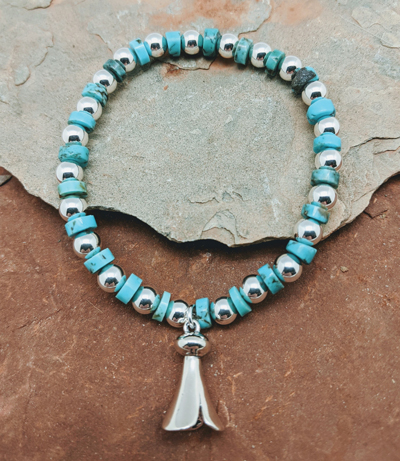
This beautiful sterling silver and turquoise stretch bracelet can be a staple accessory. It’s perfect for wearing solo or layering to create the perfect arm party. Jewelry designer Laura Ingalls uses a stretch bracelet to help keep the piece more affordable. $99.00; www.lauraingallsdesigns.com


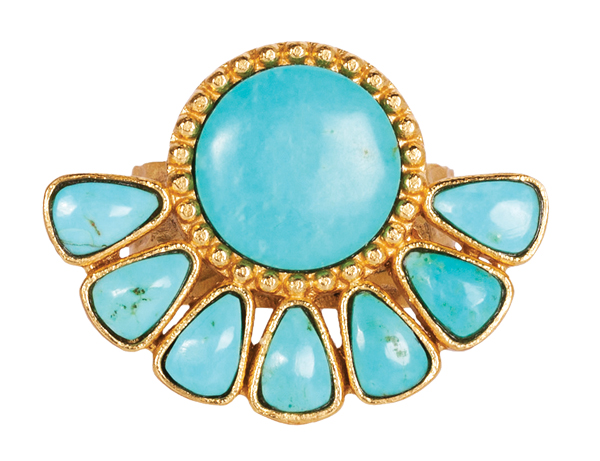
Horse JewelryFree Bird Ring

The winged accents of the Free Bird ring along the center stone can be turned in toward the hand or pointed outward. Matching earrings also available. $158.00;
www.christina-greene.com


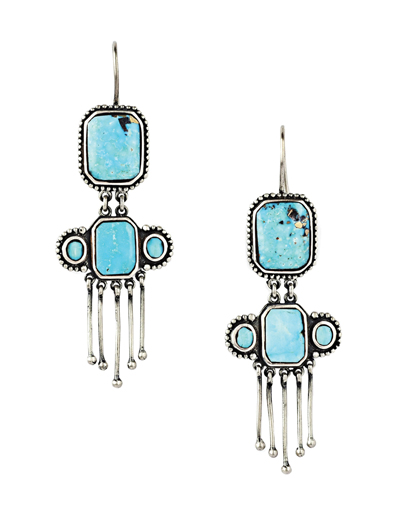
Turquoise jewelryChandelier Dance Earrings

A stunning pair of dangling earrings crafted by Peyote Bird Designs are made from sterling silver and turquoise. These intricate earrings have detailed silversmith work throughout. The natural turquoise veins make each earring its own work of art. $350.00; www.doubledranch.com


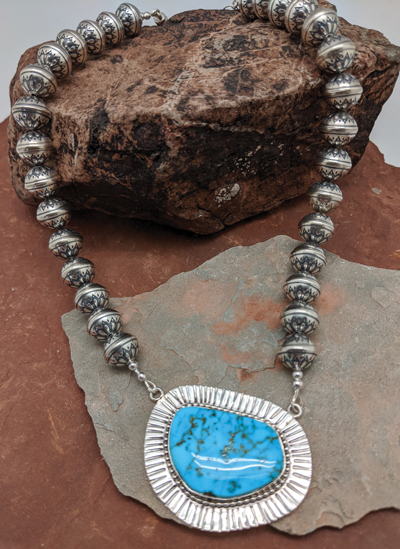
Turquoise jewelryArizona Hills Necklace

This stunning necklace features a 38.5 ct. stone set in sterling silver. The
additional materials paired with a piece of turquoise affect the cost. Sterling
silver prices fluctuate daily and are priced by the ounce. Sellers must consider this when putting a final price on a piece. $620.00; www.lauraingallsdesigns.com


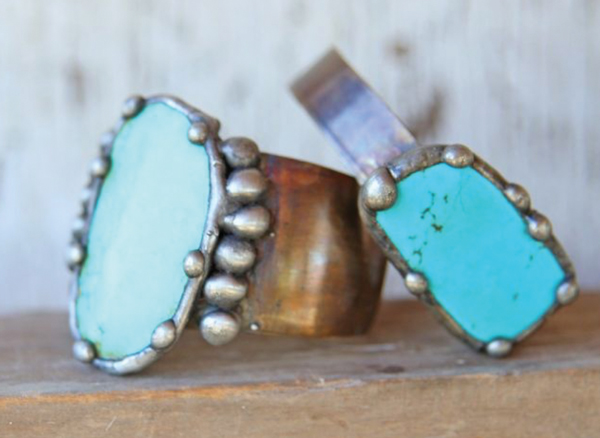
Southwestern jewelryWork Bench Artisan Cuff

A large piece of turquoise is hand-soldered and set into a beaded setting on a brass cuff, creating the perfect touch of rustic, bohemian style. Priced at under $100, this cuff won’t break the bank. $96.00; www.gypsyville.com


Horse JewelryHorse Beads

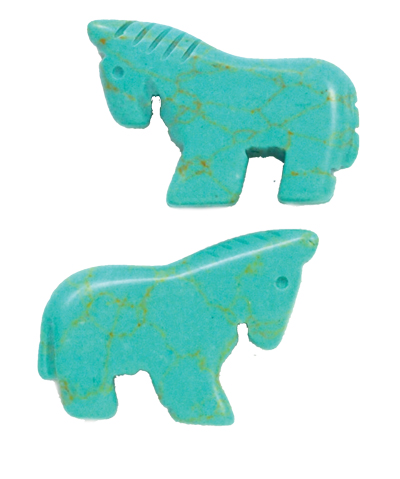
These beads are perfect for someone who wants to make their own jewelry: they have been reconstituted, which is an economical way to own real turquoise. Reconstituted turquoise is composed of groundup turquoise bits and mixed with resin and other materials, then cut up into shapes. Starting at $6.75;
www.etsy.com/shop/creatingunkamen

This article about turquoise jewelry appeared in the July 2020 issue of Horse Illustrated magazine. Click here to subscribe!

Horse Career: Daily Life as a Barn Manager

0
Career as a Barn Manager
Photo Courtesy Hannah Houston

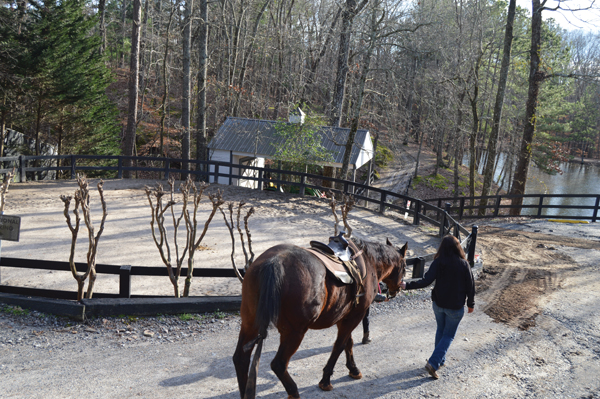
Have you wondered if riding will have to take a back seat to your career once you’ve graduated from college? After all the years of lessons and shows, for many young people, going to college and on to a career means leaving riding behind, but it doesn’t have to, as Hannah Houston, a barn manager at a riding academy, has discovered.

Young Rider Magazine LogoFrom the age of 9, Hannah spent most of her free time at the Equestrian Reserve in Alpharetta, Ga., where she took English and western lessons. By the time she was 13, she was working there, cleaning stalls and feeding horses on the weekends. In high school she became an assistant instructor, and she continued that role in college when she was home for summer breaks.

That’s where she thought her work with horses would end. She didn’t own a horse, and college graduation meant starting her career in public relations and moving out on her own. It didn’t look like her schedule or her budget would leave much room for riding.

Corporate Life Blues

At first, working at a public relations firm was a lot of fun. Her main clients were restaurants and hotels around Atlanta, which meant she had access to a lot of delicious food! However, the job required 50 or more hours a week, mostly behind a desk. Occasionally, Hannah would get a call from Donna Romeu, the owner of the Equestrian Reserve.

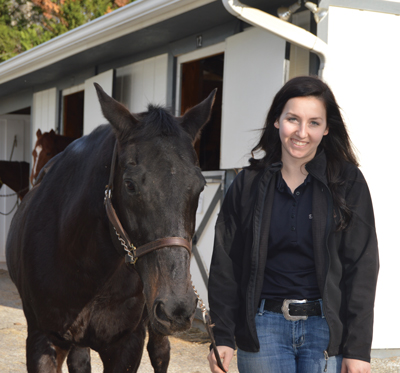
Hannah Houston
Hannah Houston made the switch from a career in PR to one with horses! Photo Courtesy Hannah Houston

“She would need me to help run a show on a weekend,” says Hannah. “It was fun to be back in the arena with the younger riders and around the horses I’d known all my life.”

After two years in PR, Hannah became discouraged with both the job and the sedentary life it required. Just as she was thinking about making a change, Donna called and asked Hannah to drop by the barn.

“She asked me how the job was going, and I admitted it wasn’t great,” Hannah says. “Donna knew the long hours behind a desk were wearing on me.”

A Better Career

It was then that Donna told her she would like to reduce her own hours at the barn and offered her the position as manager at the Equestrian Reserve, overseeing the riding academy.

“She told me she could really use me full-time and that I could have housing as part of my salary package if I wanted it,” says Hannah. “Taking her offer was the best decision I could have made.”

The Equestrian Reserve has 170 students in a highly structured lesson program, plus a competition team. Students work through five skill levels as part of the curriculum Donna developed while using her background as a school principal as a guide. Often, there are three lessons going on at once, taught by one of the 20 part-time instructors. For anyone to step in as manager of this program would require that they have exceptional organizational skills.

“Hannah thinks on her feet and knows how to prioritize tasks, and she knows what it takes for this business to be successful,” says Donna. “She has leadership skills, is great with both kids and adults, and is always looking for ways she can improve.”

No Two Days Alike as a Barn Manager

Her job is a perfect pairing of her passion for riding and teaching with her ability to make a large organization run smoothly.

“There are lots of forms required to enter the show team into a competition,” Hannah says of her office work. “I also talk to prospective students about our program and manage the social media accounts for the barn, both of which are similar to what I did in my PR position.”

One high school junior and instructor at the Equestrian Reserve says Hannah has inspired her to become an intern there to learn more about the business.
“Hannah has a lot on her plate,” says Olivia Halphen. “I admire how she handles it.”

In addition to teaching lessons herself, Hannah assists the veterinarian when she makes rounds, matches students to appropriate horses, and helps to develop the teaching skills of the younger instructors.

“Every day is different, and that’s what I love about it,” says Hannah.

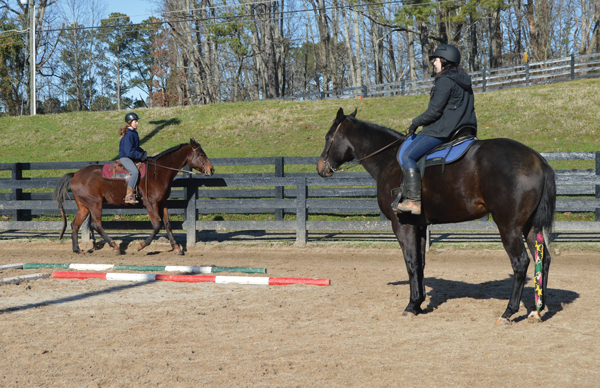
Career as a Barn Manager Teaching a Riding Student
With so many programs going on at the Equestrian Reserve, a manager with good organizational skills was needed. Photo Courtesy Hannah Houston

Best of Both Worlds

Hannah knows how unusual it is to have a job like this in a big metropolitan area.

“My friends are excited for me, but it’s hard to explain to strangers exactly what I do,” she says with a laugh.
Donna thinks that’s because she wears so many hats at the Equestrian Reserve.

“There are a million details she has to consider, whether it’s the different cultures of our students or what feedback to give the instructors,” says Donna.
While she uses some of the same skills she did at her old job, there are big differences.

“A lot of my work is at the computer, but it’s broken up by lessons,” Hannah says of her job. “Plus, I get to ride a good bit, whether it’s a horse that needs some extra work or a greener horse we just acquired.”

Looking at Conner, the horse she has just saddled, she smiles.

“I don’t think I could go back to corporate America after this.”

This article about a career as a barn manager appeared in the Spring 2020 issue of Young Rider magazine. Click here to subscribe!

Job Requirements for a Career as a Barn Manager

If managing a riding academy appeals to you, here’s what you need, according to Donna Romeu, longtime owner of The Equestrian Reserve riding academy:

◆ A college degree in education, psychology or business;
◆ Strong interpersonal skills working with children, their parents and other instructors;
◆ High-level organizational skills to prioritize tasks and get it all done;
◆ Experience on a high school or college equestrian show team;
◆ A love of horses, riding and a passion for sharing it with others.

0FansLike
0SubscribersSubscribe
We use cookies to help personalize content, tailor and measure ads, and provide a safer experience. By navigating the site, you agree to the use of cookies to collect information. Read our Cookie Policy.
OK