0 ITEMS
  • My Account
  • Holiday Gift Guide
  • Podcast
  • Webinar
Subscribe Combo
Enable cache13
Home Blog Page 12

Bringing Back Korean Horseback Archery

0

In a search for their roots, South Korean equestrians are reviving the 230-year-old sport of horseback archery.

Park Sung Min clicks her tongue and motivates her horse to run even faster. He breaks into a fast gallop, and Park Sung Min rises in the saddle, raises her bow, and sends an arrow hurtling toward the shooting target a few meters ahead of her.

She misses the target, but it doesn’t stop the young woman. Park Sung Min barely sits in the saddle before she rises again. A few meters further on, the next target awaits. Park aims, and this time she hits it.

South Korean horseback archery.
In a search for their roots, South Korean equestrians are reviving the 230-year-old sport of mounted archery. Photo by Malene Jensen

Background of Horseback Archery

Although it may seem like it, I’m not observing the filming of a Western, and Park Sung Min is neither an actor nor an American.

Instead, I am standing in South Korea, in the small town Hwaseong in Gyeonggi Province south of Seoul, where I watch the last traditional equestrian martial arts competition of the season.

It has only been 35 years since the restoration of South Korea’s traditional equestrian martial arts began. Although the sport is more than 230 years old, it disappeared at the beginning of the 20th century.

Today, the equestrians on the farm in Hwaseong are fighting to revive and reinvent the sport. That means live performances, help from Gyeonggi Province’s capital city Suwon, and a lot of hard work.

How do you revive a sport if you only have one book from 1790 as your guide? And why have a couple of equestrians and martial artists spent most of their lives rediscovering and promoting South Korea’s cultural heritage?

I went to Hwaseong to find out.

Traditional Attire

The farm is small and consists of a stable, a paddock, and two riding arenas. The horses look at me just as curiously as the competition’s riders and spectators, who normally don’t see foreigners in this part of the country.

The day starts at 12 o’clock with a competition in South Korea’s traditional martial arts kisa—horseback archery.

Some of the participants are dressed in traditional Korean clothing which, unlike breeches, are loose, white trousers with wide legs. Park Min Song is also wearing a hanbok top, similar to South Korea’s traditional clothing. The hanbok shirt is sky blue and tied together over the chest with a small, red ribbon.
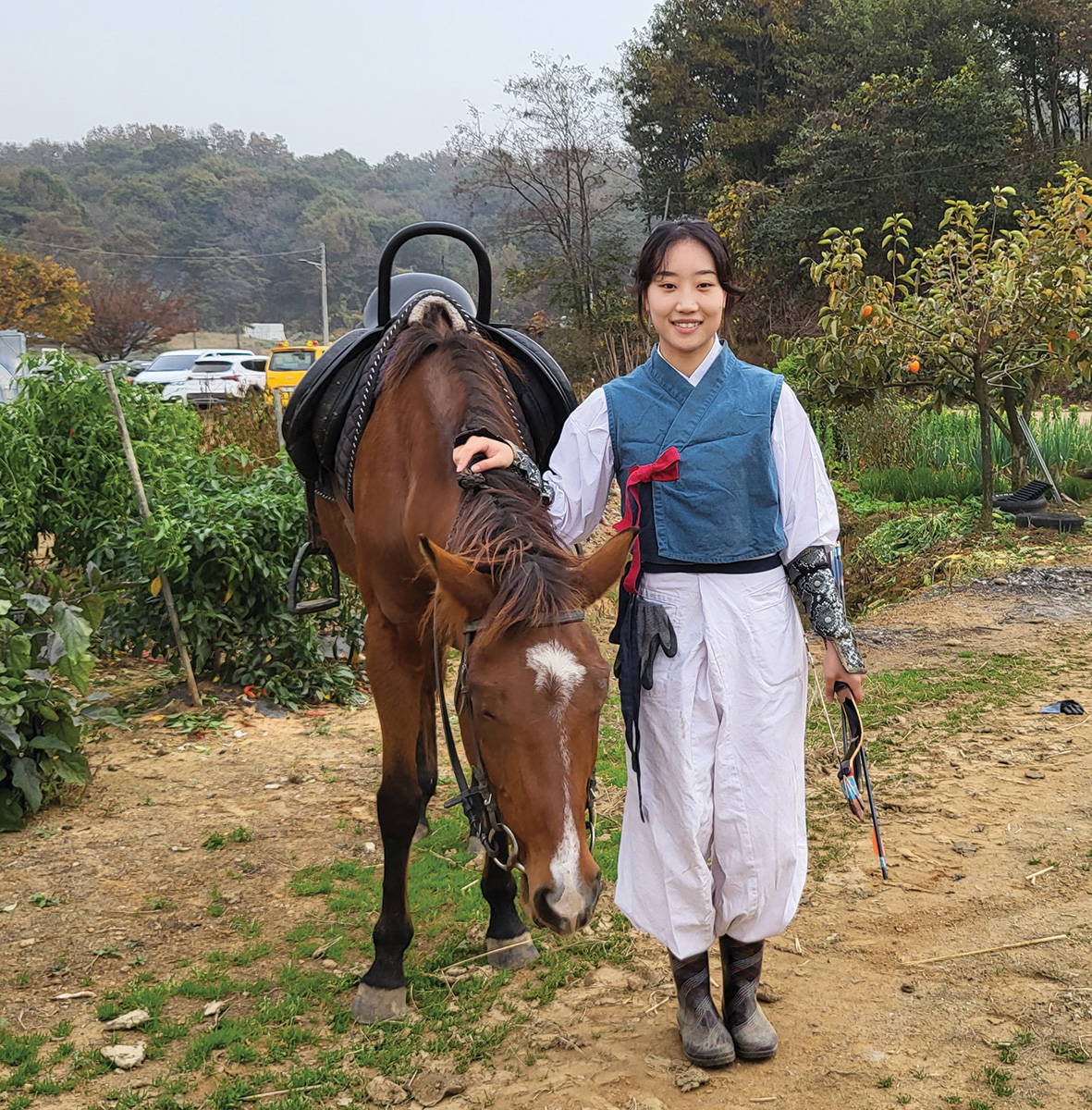
Park Min Song shows off the traditional attire of loose white pants and hanbok top, tied with a red ribbon.
Park Min Song shows off the traditional mounted attire of loose white pants and hanbok top, tied with a red ribbon. Photo by Malene Jensen

Just before getting on the horse, Park Min Song ties on a pair of silver bracers to protect her forearms from whiplash from the bowstring.

How Horseback Archery Works

The competition is simple: Gallop your mount and fire a few arrows at some shooting targets. The points are awarded according to how quickly and accurately the equestrian shoots.

The equestrians use different strategies. For some, it’s about making the horse run as fast as possible. For others, like Park Min Song, it’s the precision of the shots that matter.

After just over an hour, Park Min Song wins the competition.

The young woman has been riding for nine years, and for seven of those, she has been training in Korean equestrian martial arts. Today, she is part of a performance group established by Suwon city that demonstrates equestrian martial arts during Korean national holidays and events.

“I always liked working with my body, and I did martial arts before finding out about this horse sport,” says Park Min Song. “It’s really interesting, because it’s a mix of learning about the history of my home country and exercising.”

A Family Activity

It’s primarily families who have turned up for today’s competition. Many of those I speak to say that they are fascinated by the sport, mainly because it’s fun and challenging for children and adults alike. They also enjoy the connection it has to their history and culture.

After the horseback competition comes the highlight of the day, which is an archery competition for elementary school children.

The spectators move from the riding arenas to a shooting range, where a number of children are already lined up and ready to compete in 15-meter archery. The winner is 12-year-old Han Tae Hyung, who has been practicing archery and horseback archery on the farm for two years.
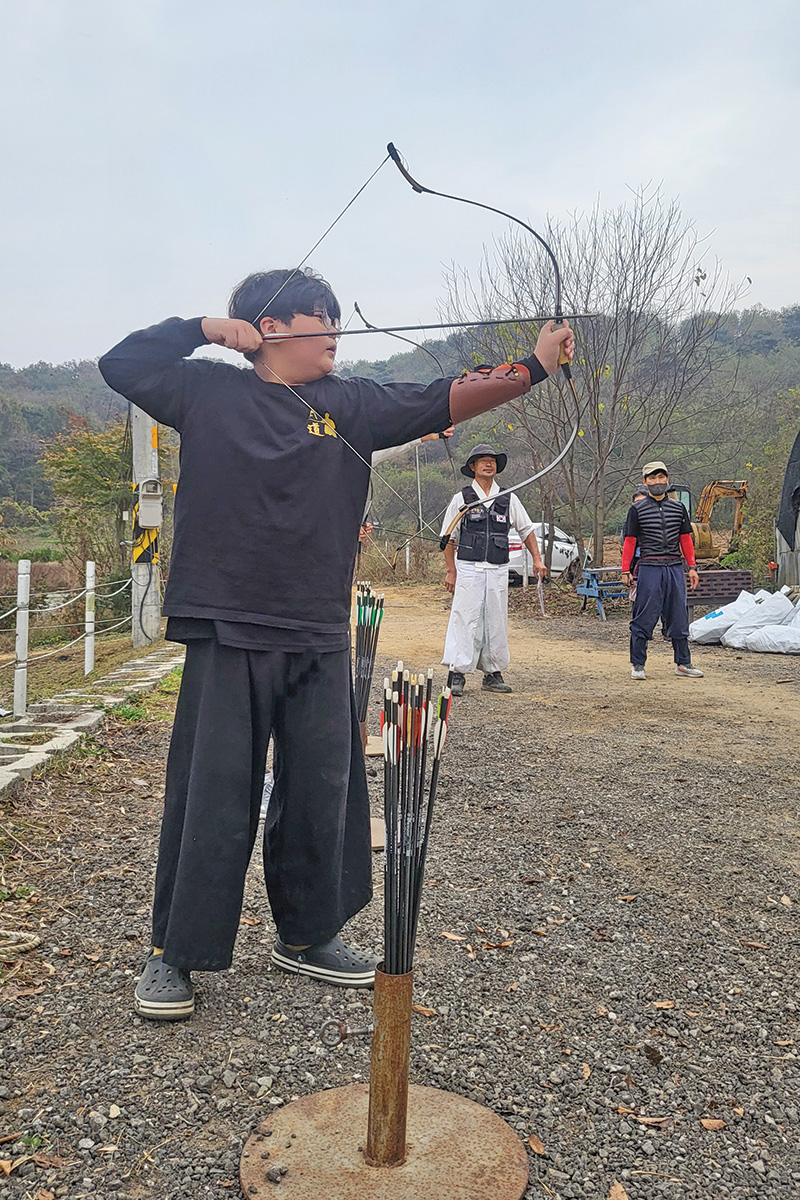
Children participating in competition.
After the mounted events, children participate in a 15-meter archery competition. Photo by Malene Jensen

His mother learned about the sport through some friends, and since Han Tae Hyung is fond of horses, he decided to start practicing.

“I love to ride, and all the horses have become my friends,” he says.

For the traditional equestrian martial arts academy, which is organizing today’s competition, it’s essential to get young people interested in Korean cultural heritage, says Kim Kwang Sik.

Equestrian martial arts remain relatively unknown in South Korea, and Kim is struggling to raise awareness about the sport. Because for Kim Kwang Sik, this is much more than a sport.
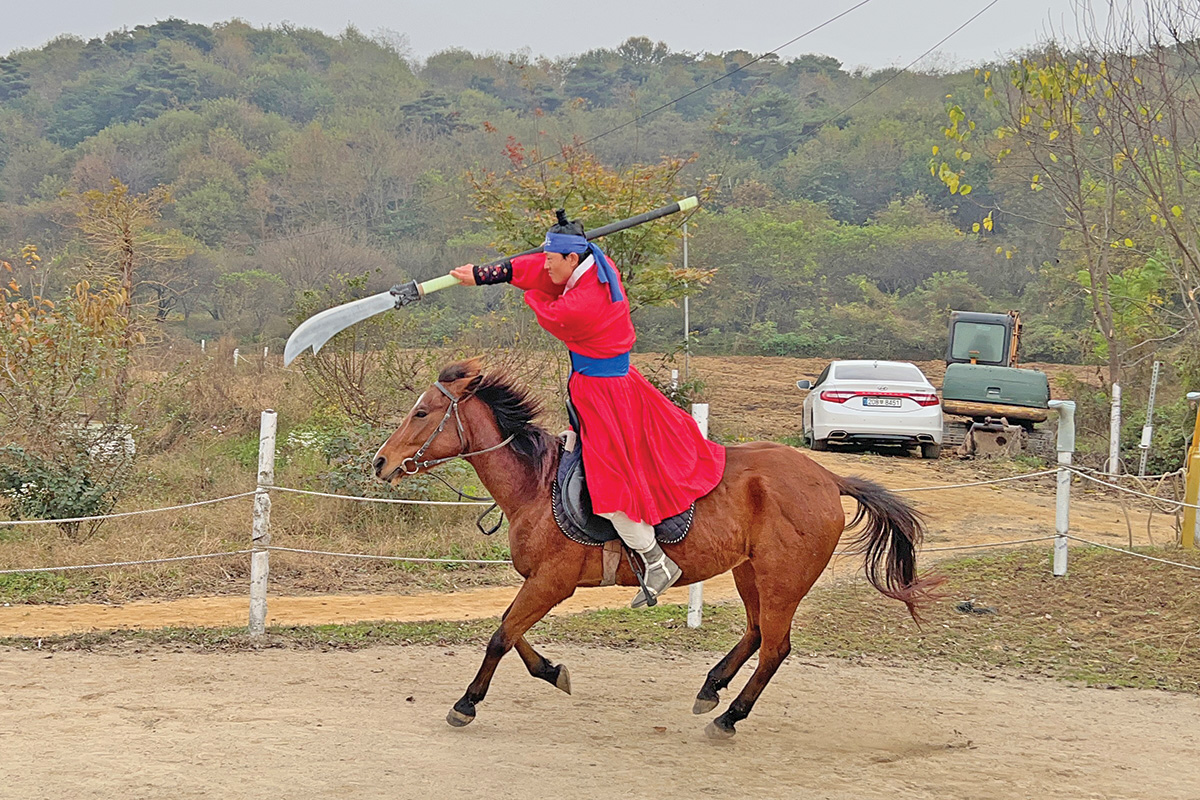
Korean horseback archery.
Kim Kwang Sik has always been interested in Korean culture and heritage, and he has spent three decades reviving traditional mounted martial arts. Photo by Malene Jensen

The Only Book Left

Kim Kwang Sik has always been interested in Korean culture and heritage, but it was when he got his hands on a book from 1790 that he found his life’s calling. The book is called Muyedobotongji, and was written by a military officer, philosopher and martial artist by order of King Jeongjo, Korea’s 6th king.

The book is a basic guidebook for Korean soldiers, and consists of 24 martial arts techniques, six of which are performed on horseback. The book is essential for Korean equestrian martial artists, as all other writings about Korea’s traditional horse martial arts were lost during Japan’s occupation of the Korean peninsula from 1910-1945, when a lot of traditional Korean culture was forcibly destroyed.
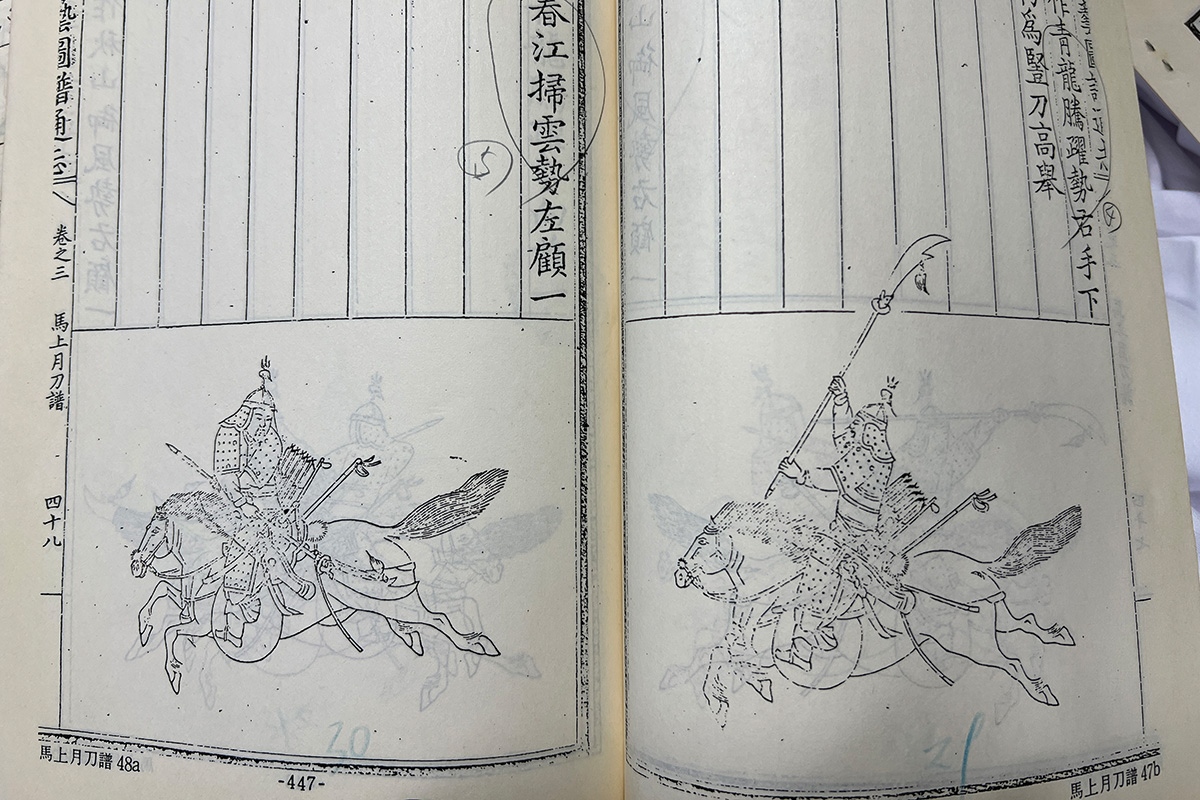
Pages of Muyedobotongji.
Muyedobotongji was written in 1790 and contains 24 martial arts techniques, six of which are performed on horseback. Photo by Malene Jensen

Only Muyedobotongji remains, and it’s the only thing Kim Kwang Sik has used to learn and eventually revive the old sport.

“I had a sense of duty to preserve Korean culture,” he says. “I’ve been doing it for more than 30 years, and now people who are interested in Korean history and traditions come here to learn about it.”

Bringing the Sport to Life

When he decided to work on bringing back the old sport, Kim Kwang Sik was largely on his own. He had to figure out for himself how to train the horses to be calm around swinging swords and bows and arrows. The martial arts book (whose copy can be found in a small office next to the stable) left a lot to the imagination when it came to the execution of several of the techniques.
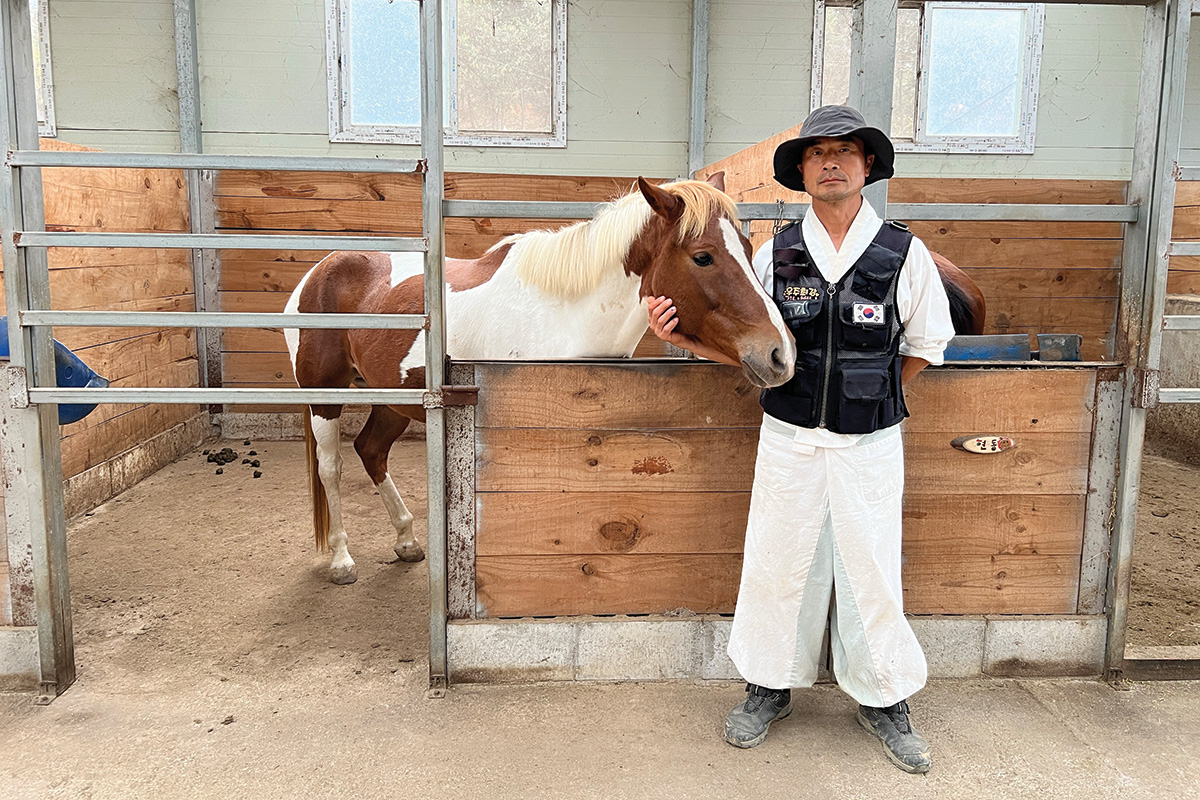
Kim Kwang Sik with a horse.
Kim Kwang Sik was largely on his own when it came to figuring out how to train the horses to be calm around swinging swords and bows and arrows. Photo by Malene Jensen

“One of the things that makes this sport fun is that it’s a way of half reading a book and half figuring it out yourself,” laughs rider Bae Kuk Jin, who has practiced traditional equestrian martial arts since 2008, and who also participates in today’s competition.

But Kim Kwang Sik’s hardest task has not been training horses nor interpreting writings and illustrations from 1790. It has been getting funding and support from the Korean government.

“There is no national support to revive the equestrian martial arts,” says Kim Kwang Sik. Only Suwon city has supported the sport and created an equestrian martial arts team.

“Suwon city is the first city that is trying to preserve this,” he continues. “They have asked the government to help because it’s important to preserve.”
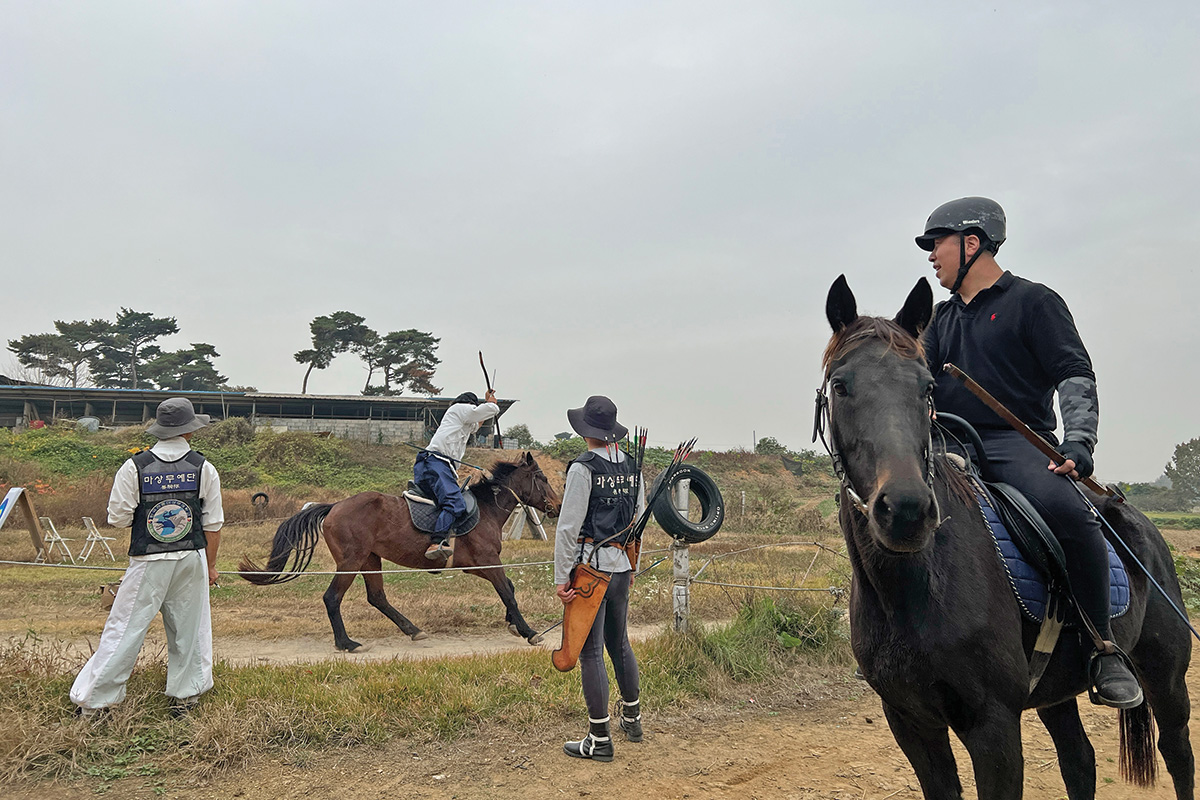
Korean horseback archery.
Suwon city has supported the sport and created an equestrian martial arts team. Photo by Malene Jensen

However, support might be on its way. In 2017, Kim Kwang Sik managed to get the martial arts book on UNESCO’s World Cultural Heritage list, and that’s a start.

When I ask Kim Kwang Sik why it means so much to him to preserve and revive traditional equestrian martial arts, he has only one answer.

“I’m not sure if I believe in Buddhism or not, but I think in my previous life, I was a soldier,” he says with a smile.

This article about Korean horseback archery appeared in the June 2024 issue of Horse Illustrated magazine. Click here to subscribe!

How Hot is Too Hot to Ride?

0

For many riders, summer brings the most time to spend in the saddle. Days are longer and horse activities abound. This season is also typically when heat-related risks are highest. With intense exercise in hot weather, the horse’s internal temperature can briefly climb as high as 108° Fahrenheit. To recover, the horse is not just battling the ambient temperature, but also his body’s ability to cool itself. So how hot is too hot to ride?

When you’re training toward a goal, consistency is important, but be mindful when you ride to avoid overheating—or worse. For practical advice on summer riding, we turned to veterinarians in two hot—but very different—regions, the Southeast and Southwest.

A rider riding her horse safely when it's hot.
Photo by ccestep8/Adobe Stock

Hot and Dry

Summer temps in the desert Southwest can easily climb to 120° Fahrenheit, so riding between mid-morning and late afternoon is strongly discouraged.

“Ride early and be done by 10 a.m. or break it into two sessions,” advises Christine Staten, DVM, a large animal veterinarian and owner of Adobe Veterinary Center in Tucson, Ariz. “[You can] ride early in the morning and late in the day, instead of one long session.”

Sorrels grazing in the desert.
Photo by By adogslifephoto/Adobe Stock

In addition to shorter rides, don’t hesitate to head for the shade for quick breaks.

“In dry environments, just getting under shade can reduce the temperature by 20 degrees,” she notes.

“This advice is as much for riders as it is for horses,” says Staten. “We see more heatstroke in riders in the middle of a hot day than in horses. Every year in Tucson, we have people die from heatstroke on the trail.”

Hot and Humid

Heat and humidity alone can be challenging for horses. Add exercise to the equation and health risks increase.

“The coastal humidity in Florida multiplies the heat index substantially because it reduces the body’s ability to dissipate heat through evaporation or sweating,” explains Caitlyn Henderson, DVM, of Peterson Smith Equine Hospital in Ocala, one of Florida’s largest equine clinics. “It’s akin to trying to breathe and cool yourself from under a hot, wet blanket.”

In addition to not riding during midday, Henderson always advises having a shaded area where horse and rider can take short breaks. Keep buckets of cool water available so the horse can drink. When humidity climbs, it helps to add a misting fan if the area has access to electricity.

Watch the Heat Index

In hot, humid regions, calculating the heat index can help you decide if it’s not safe to ride. As a general rule, caution must be used when the heat index is over 90. The higher the heat index climbs over 100, the greater the horse’s risk of overheating—or even heatstroke—when exercising.

You can use this online calculator to calculate heat index.

Quick Math

For a simple assessment on riding safety, add the air temperature to the humidity percentage.

When the combined total is under 130, a healthy horse can effectively cool himself. When the combined total is between 130 to 150, the horse’s ability to cool himself is decreased.

If the combined total is over 150, this ability is greatly reduced. Once the combined total is over 180, conditions can be life threatening for any horse under physical stress.

A good rule of thumb is to avoid riding if the air temperature and humidity combined total over 150.

Horses at Risk of Overheating

Certain horses are more vulnerable to overheating. These include:

“If your horse shows any signs of heat stress, have your veterinarian evaluate him to determine if there are underlying issues,” says Staten. “If this is happening, there’s probably something going on that needs to be addressed so we can come up with a plan to remedy it.”

A horse sweating heavily after a riding session during which it was too hot.
Heavily muscled body types are more susceptible to overheating. Photo by Terri Cage/Adobe Stock

Acclimation

Whether you live in a hot, arid region or where it’s hot and humid, it’s critical that your horse be acclimated to those conditions before strenuous exercise.

After 25 years of equine practice in Tucson, Staten has never seen a healthy, acclimated horse have heatstroke. The problems she sees are in horses that have recently moved to the area or have an endocrine disease, like PPID, or have anhidrosis.

Staten finds the best season to move a horse to the desert Southwest is fall or winter, as this gives the most time to acclimate. If you move in spring, expect acclimation to take at least a couple of months.

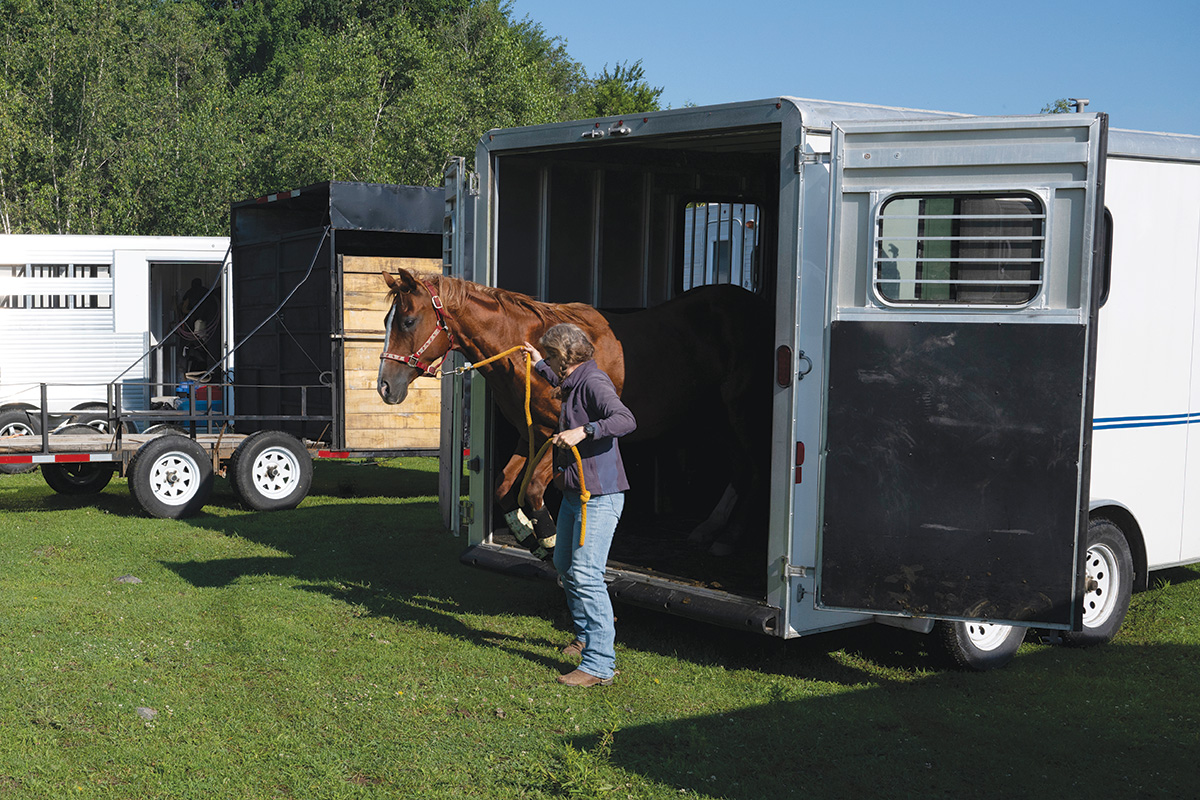
Unloading a gelding from a trailer.
Horses coming to hot climates adjust best if moved in fall or winter and allowed several months to acclimate. Photo by Richard Nantais/Adobe Stock

“Dark-colored horses struggle more when trying to acclimate to our weather. If a horse is still shedding a winter coat in spring, that can make it rough on them,” she cautions.

“It’s recommended that human athletes take six weeks, minimum, to acclimate to a new climate, and no less than that should be afforded to our equine athletes,” says Henderson.

She finds it easier for horses to gradually acclimate to heat and humidity if they’re introduced to it in early spring, at latest.

Proceed with caution if you’ve just moved to an area where it’s significantly hotter and more humid than where your horse lived previously.

“I see a lot of riders who come here from New York and New Jersey and just want to ride, but to do this in the summer months is going to be more of a challenge,” says Henderson.

She recommends giving the horse a full week to recover from travel. Then return to light work under saddle, exercising at the coolest time of the day for at least six weeks as the horse acclimates.

She encourages riders to take it day by day, because some horses need more time than others to adjust.

Know the Difference in Heat-Related Symptoms

Heat Stress

Rectal temperature above 103° F

Increased heart rate (50 to 60 beats per minute)

Increased respiration rate (30 to 40 breaths per minute)

Gum color dark pink

Muscle tremors

Profuse sweating

Dark urine

Tired, dull

Slow capillary refill

Dehydration

Heat Exhaustion

High rectal temperature (103° F to 105° F)

Increased heart rate (60 to 80 beats per minute)

Increased respiration rate (40 to 50 breaths per minute)

Gum color dark red

Profuse sweating

Dark urine

Dull expression

Slow capillary refill

Heatstroke

Rectal temperature of 106° F or higher

Increased heart rate (more than 60 beats per minute)

Rapid respiration (more than 40 breaths per minute)

Hot, dry skin; may stop sweating entirely

Gum color maroon to purplish

Distressed, depressed, listless

Incoordination/weakness

Staggering/collapse

Keep Horses Drinking When It’s Hot

Hydration is critical for horses in hot weather.

Electrolyte loss due to exercise or simply sweating can lead to metabolic stress and decrease the horse’s thirst response, which can result in dehydration and overheating.

In addition to access to salt (plain or trace mineral), horses may need electrolyte supplementation to replenish the sodium, potassium, calcium, and chloride lost through sweating and urination.

Henderson tells riders to prepare for summer temps by introducing electrolytes to the horse’s diet earlier in the year. The goal is to encourage water intake year-round, so horses are always well hydrated before exercising.

“If you’re at a show, offer water between classes,” says Staten. “If you’re on the trail and there’s a place to drink, let them. A horse should always be allowed to drink, even when he’s hot.”

Cool Down

Many people think the best way to cool a hot horse after exercise is just to walk him in the shade. However, research shows that the most efficient method is to continuously shower a stationary horse with cool (79° Fahrenheit) tap water. In a recent study, this method decreased the horse’s core temperature in an average of just two minutes.

“Focus water on the jugular vein and the large veins inside the legs,” says Staten, noting that this helps cool the horse’s core temperature.

Hosing off a hot horse.
Research shows that the most efficient cooling method is to continuously shower a stationary horse with cool tap water. In a recent study, this method decreased the horse’s core temperature in an average of just two minutes. Photo by Daniel/Adobe Stock

Finish cooling out by slowly walking the horse until his respiratory rate and body temperature are normal. Movement helps remove lactic acid from the system and keeps muscles from tightening up.

Always allow the horse to drink during recovery. Research shows that horses voluntarily drink more within the first hour after exercise when water is about 68° Fahrenheit.

Offer half a gallon of water at a time throughout the cool-down process until the horse doesn’t want to drink any more. Make sure there is plenty of water in his stall/corral to drink after he’s totally cooled out.

Summer Travel

Any time you trailer during the summer, pick the coolest part of the day to travel. Increase air flow by opening all vents and windows, but for safety’s sake, do not let horses put their heads outside the trailer.

“Hot metal is like an oven, so get them out of the trailer as soon as you get where you’re going,” says Staten.

Common Sense

So, is it ever too hot to ride?

“If you think you are going to struggle to get through a ride due to the heat, so will your horse,” says Henderson. “If there’s ever a time you think it might just be too hot to ride, you’re probably right. Go with your gut feeling and take your horse’s health into consideration. It’s never wrong to delay a ride for a cooler time of day for the safety of your horse.”

This article about when it may be too hot to ride a horse appeared in the July 2024 issue of Horse Illustrated magazine. Click here to subscribe!

The Evolution of Horse Trailers

0

For thousands of years, horses have carried mankind on their backs. They were the main source of transportation, primarily used to move goods, carry personal belongings, transport farm crops, or move troops during wars. If horses were not being ridden, they pulled chariots, carts, carriages, wagons, and even sleighs. How did we go from horses transporting us to modern-day trailers designed to transport horses in the greatest comfort possible? 

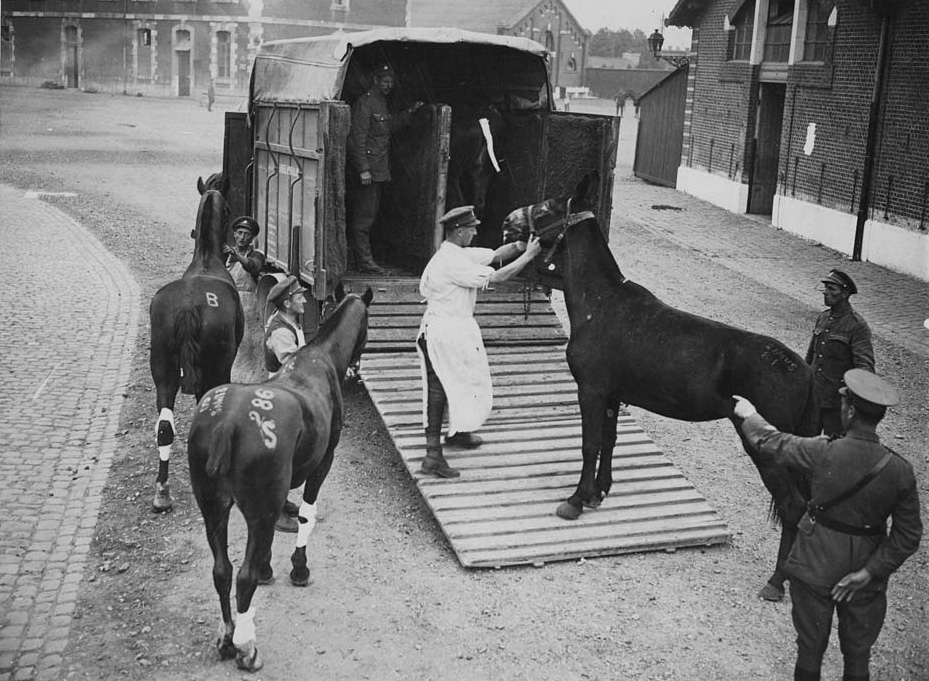
Horses load into one of the earliest vehicle-drawn horse trailers in Scotland during World War I, circa 1916-1918.
Horses load into one of the earliest vehicle-drawn horse trailers in Scotland during World War I, circa 1916-1918. Photo from National Library of Scotland

Early Days of Horsepower

The first records of horses traveling any way other than on their own four feet dates to the late 18th and early 19th centuries in England, beginning with two racehorses. Pulled in an adapted wagon by one or two other horses, the Thoroughbreds were respectively transported for breeding purposes and to arrive well-rested at racetracks.

Most horses were not this lucky. However, as trains and the railway system developed, some horses experienced train travel for exceptionally long distances.

Horses continued to transport each other for decades. Some city fire departments had horse-drawn ambulances, used to haul injured horses to firehouses for veterinary care.

During World War I, more equine ambulances were created to transfer infantry horses from the battlegrounds to base hospitals with veterinarians. There were some vans with stalls in the back to haul war horses as well, helping to pave the way for motorized equine transport after the war. These early versions of trailers were made from wood and steel.

Many years passed with no major need for a horse trailer that closely resembles what we have today. Throughout the American Southwest, horses were still mainly considered livestock, and were necessary for ranch work.

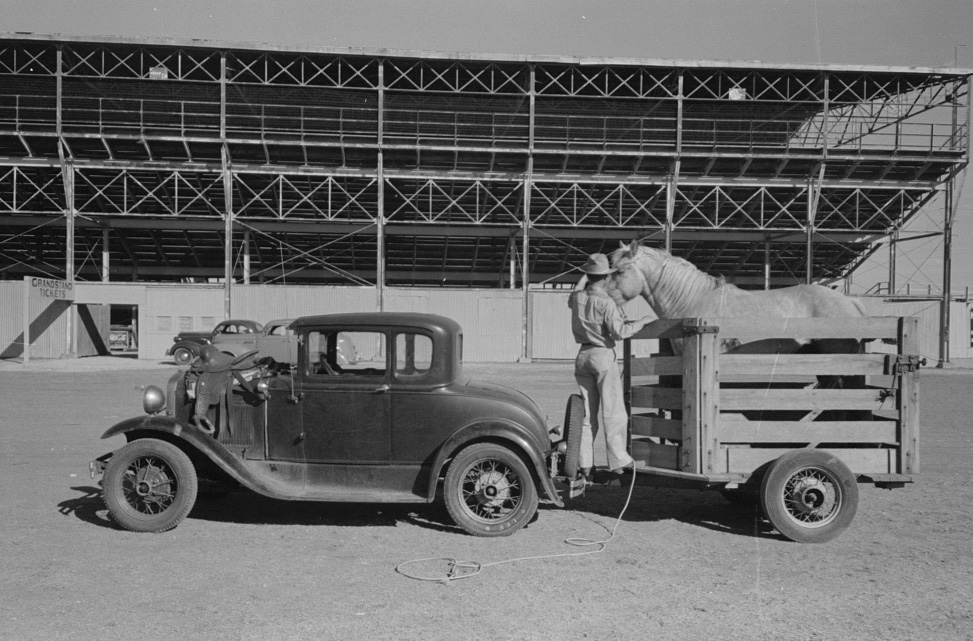
If ranchers or cowboys needed to travel longer distances than their horses could comfortably ride, they loaded up their mounts in the back of pickup trucks. Horses were often tied to cattle racks, which were wooden or steel removable pickup truck inserts that kept livestock contained while driving.

A 1940 rodeo performer arrives with an early style of vehicle-drawn animal transportation.
A 1940 rodeo performer arrives with an early style of vehicle-drawn stock trailer. Photo from Library of Congress

Changing Times 

As the 20th century progressed, stock trailers entered the scene, replacing many cattle racks. Vehicles slowly became more capable of towing trailers as people experienced a greater need to transport goods and other livestock, like cattle and swine, over long distances.

The first stock trailers were primarily made from wood, but quickly switched to steel, since it held up better.

The Interstate Highways

When the Federal-Aid Highway Act of 1956 was passed under Eisenhower, 41,000 miles of an efficient Interstate Highway System was constructed over a period of 10 years. Automotive transportation vastly improved, allowing safer and longer transport for people and animals.

At the same time, livestock travel via rail decreased, so increasingly powerful trucks were needed. Now horses could travel with greater ease, even if it was in a basic steel stock trailer.

An old-school version built with wood and steel.
As the interstate highway system grew, dedicated horse trailers came onto the scene. They were small bumper-pulls that held one or two horses on a steel frame. Photo by OceanProd/Adobe Stock

From there, horses were ridden more for leisure than work, so equestrians everywhere started attending competitions or traveling to recreational trails. This change among the equine industry quickly led to a need for dedicated horse trailers that could haul to horse shows.

Some of the first trailer companies manufacturing specifically for horses were Stidham and Miley, which both started in the 1950s. Back then, trailers were manufactured out of steel and only had room for one to two horses in little bumper pulls. However, it was still very common to haul with stock trailers not necessarily designed for horses. 

New Materials

While steel dominated the trailer industry for generations, customers soon discovered how quickly this material rusts and deteriorates, ultimately putting horse safety at risk.

A rig in the 1990s.
A rodeo rig used in the 1990s looks vastly different from what is seen today. This estimated 1995 trailer was towed with a 1989 Dodge pickup. Photo courtesy Matt Deskovic

To solve this issue, 4-Star Trailers, Featherlite, and Exiss were some of the first companies to build aluminum horse trailers. Later other companies followed suit, such as Bloomer Trailers in 1998 and Cimarron Trailers in 2000.

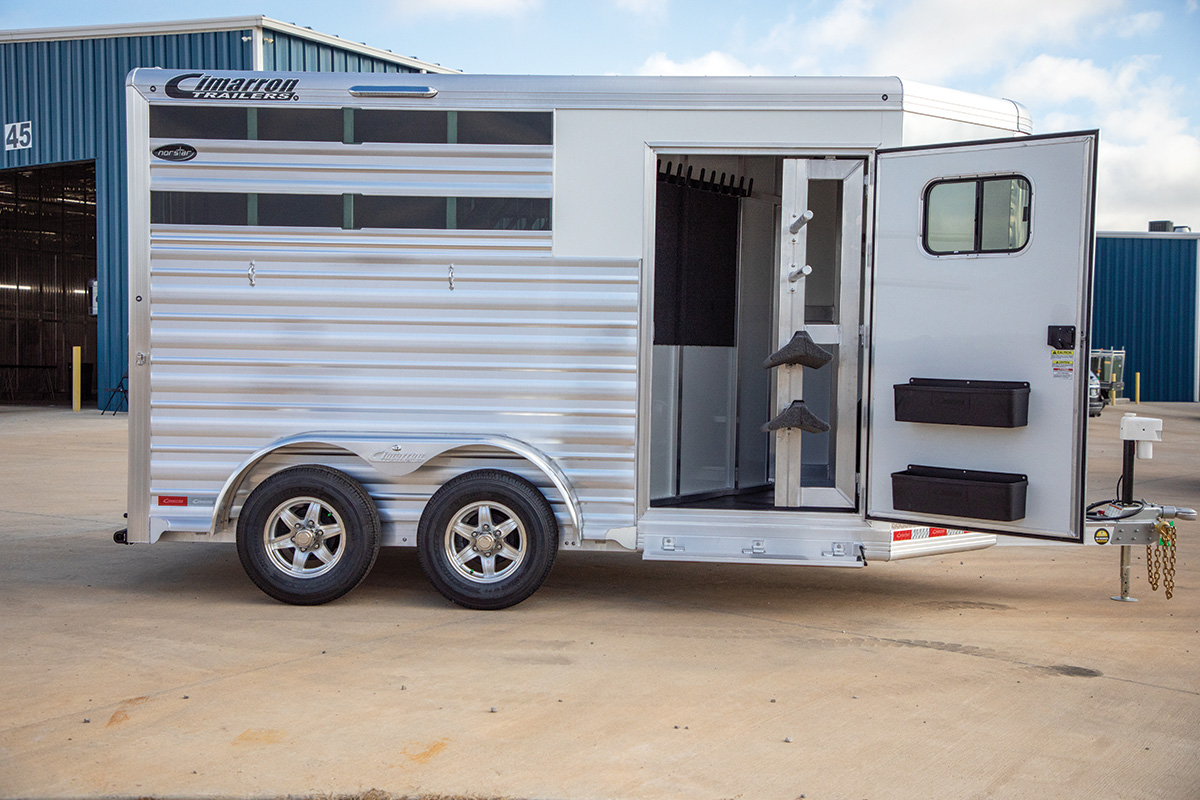
An aluminum horse trailer from Cimarron Trailers.
Aluminum trailers are the norm now, but it took a while for them to gain acceptance over the heavy steel trailers from the early days. Photo courtesy Cimarron Trailers

According to Forrest Shifflet, President of 4-Star Trailers, starting from the company’s foundation in 1984, they found that aluminum weighs significantly less than steel, is virtually corrosion-free, and thus holds its value better.

Since this material is much lighter and does not experience rapid deterioration, trailers could grow in length and height as trucks also improved in towing capacity, which was particularly important with the rise of gooseneck trailers and slant-loads that granted more interior space.

Aluminum may seem like it would be an easy choice for customers when trailer shopping, but it took some time for the material to be fully accepted after steel was used for so many years. Some customers feared aluminum would rip or tear under stress.

“People were scared of aluminum at first,” says Anthony Gelvin, director of sales at Cimarron Trailers. “They weren’t sure it would hold up.”

Fortunately, improved structural engineering, manufacturing processes, aluminum alloys, and fiberglass combinations were soon used, further enhancing the quality of trailer shells.

Bigger and Better

According to Gelvin, steel gooseneck stock trailers were still around in the late 1980s, but the market’s comfort level with aluminum had improved. Companies could then place more focus on trailers specifically designed for horses, rather than fashioning horse trailers from stock trailers, like Shifflet says 4-Star did at first.

Perhaps the biggest change in horse trailers has been the addition of living quarters (LQ). Even though recreational vehicles (RVs) had existed for decades, it took until the mid to late 1990s for LQ trailers to become more widely available.

Previously, equestrians had little need to stay overnight at shows because competitions were usually one day long. If riders needed to sleep overnight, the back of their pickup with a cover over the bed was often sufficient. Also, since pickup trucks were very limited for a long time in how much they could tow, small trailers were the only options.

By the 1990s, more and more riders attended shows, including families. Gelvin believes that customers sought a better family experience, considering the costs of hotel rooms and the convenience of staying on the showgrounds.

Due to this need, the horse trailer industry had to catch up to RVs. Consumers were willing to pay higher trailer prices to account for complex electrical, plumbing, insulation, and structural work if it meant they would be comfortable and could save money in the long run.

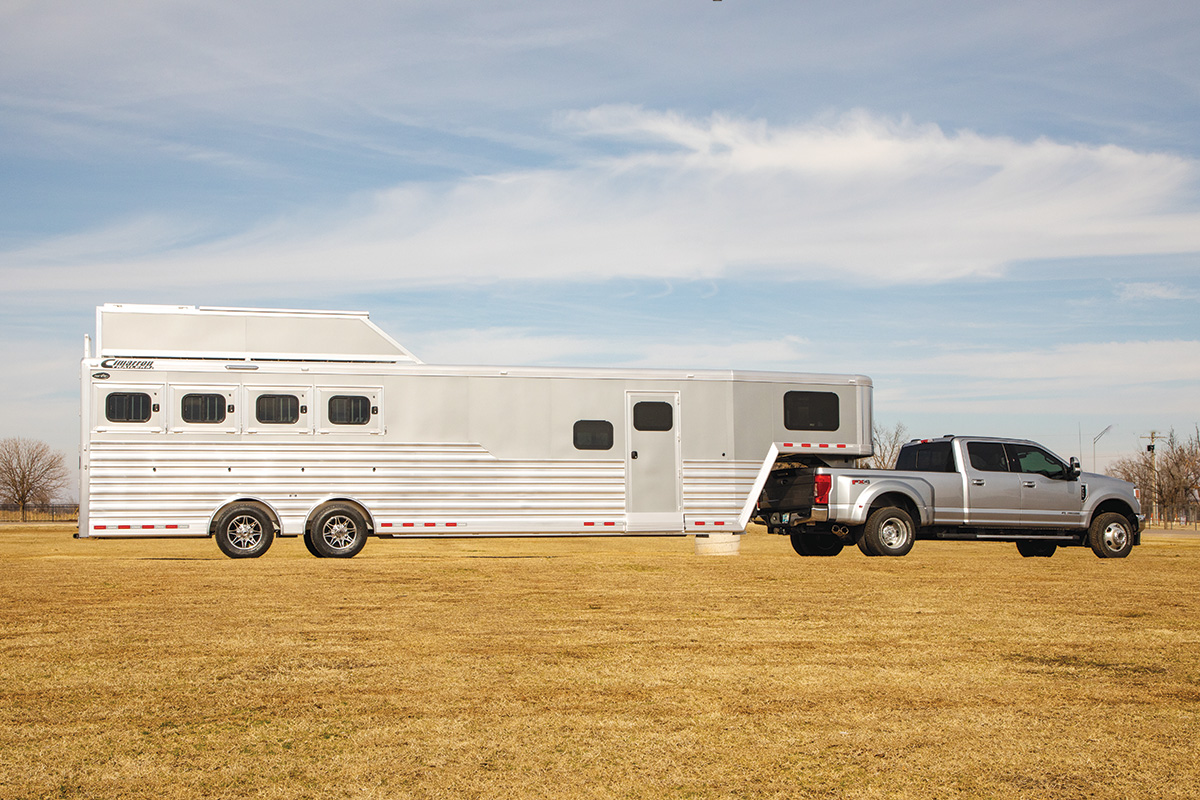
A horse trailer from Cimarron Trailers.
As the need for living quarters in the front of horse trailers grew, so did the size of trailers, with a LQ ranging from 40-53 feet long. Photo courtesy Cimarron Trailers

Now that a higher number of people could travel farther and stay longer, weekend and week-long shows grew, calling for bigger and better trailers. Shifflet says that trailers used to measure 7 feet tall, and goosenecks were about 30 feet long.

Today, with LQs being the norm in many disciplines, the average gooseneck measures about 8 feet tall and 40 feet long. Some trailers max out at 53 feet long and offer lofts to further accommodate comfortable living space—all the more reason for trucks to continue boosting their towing capacity.

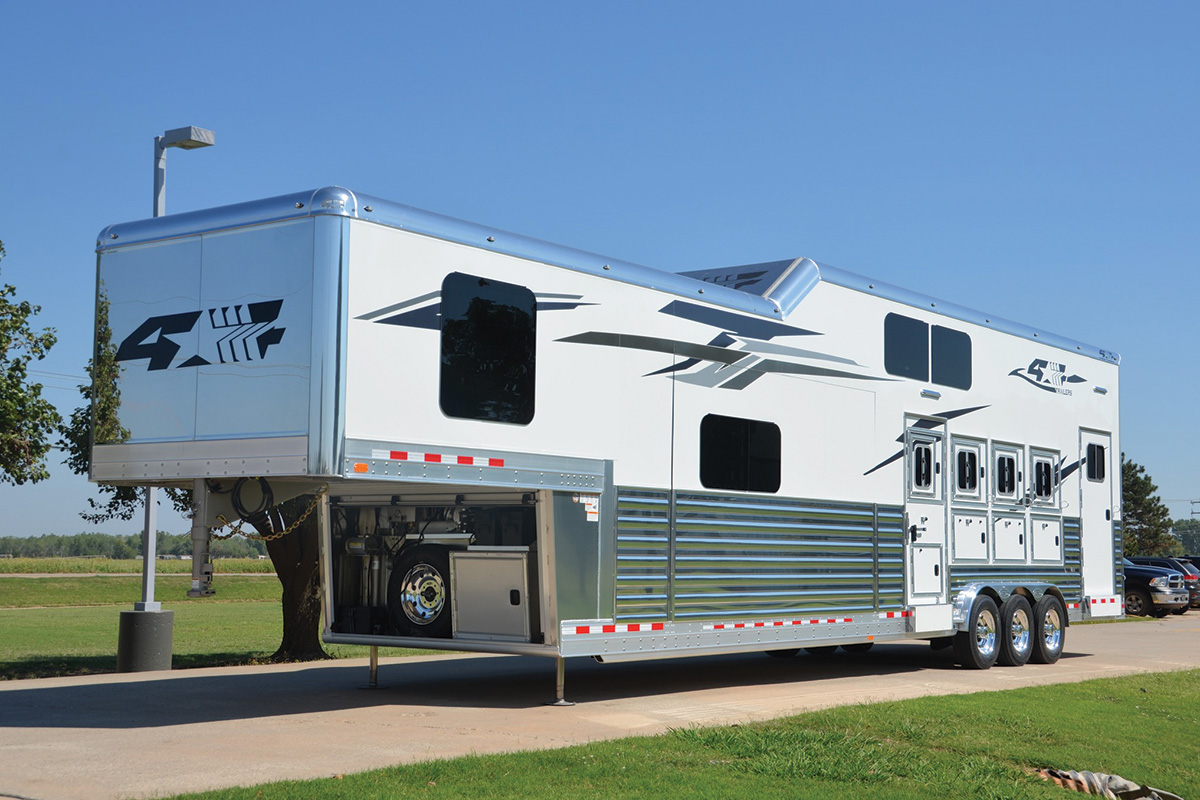
A horse trailer from 4-Star Trailers.
Lofts have been added to the newer LQ styles to accommodate even more living space above the horse compartment. Photo courtesy 4-Star Trailers

Safer Travels

Aluminum is not the only major safety change for horses among bumper pulls, goosenecks, and even commercial haulers. Just about all the mechanical systems have also been upgraded, such as axles, brakes, running gear, couplers, hitches, and more. Horses have better ventilation, too, with screened windows on both sides of the trailer.

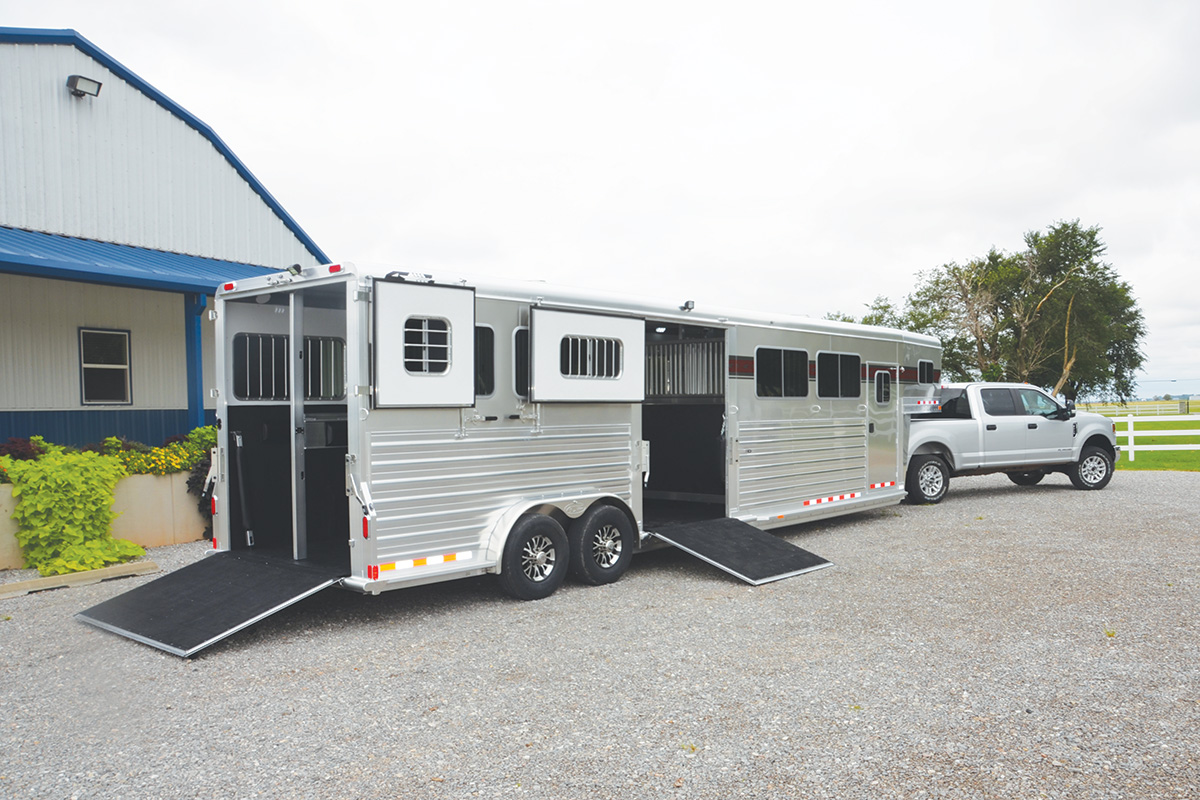
A horse trailer from 4-Star Trailers.
Today’s modern trailers have many safety upgrades to axels, brakes and more, as shown in this four-horse head to head. Photo courtesy 4-Star Trailers

Moreover, features such as rubber mats and ramps are common nowadays, offering cushion and safer traction. 4-Star even incorporates patented “Quiet Ride” technology, since research, conveyed by Shifflet, demonstrates that “horses are less stressed when the trailer rattles less.” Old steel trailers were almost deafening for horses, which could not have made for the happiest of travelers.

Many modern-day horse trailers are also equipped with an air-ride suspension system. Unlike the first models with spring suspension, horse trailers with air ride better compensate for uneven surfaces in the road, such as potholes or speed bumps, increasing equine comfort.

Key Takeaway

Updates and improvements throughout the horse trailer industry aren’t done by a long shot. Gelvin says that the way customers’ needs change is key. Today, many consumers want their horse trailers to be multi-purpose, ultimately saving money, so they can have the option to haul horses one weekend and small off-road vehicles the next.

One thing is certain: horse transportation has experienced drastic, yet positive changes in terms of safety and comfort. Now, if only we could explain to our horses how far we’ve come!

This article about the evolution of horse trailers appeared in the June 2024 issue of Horse Illustrated magazine. Click here to subscribe!
Heat Stress in Horses

0

Warmer summer days can provide the ideal weather for leisurely rides on your favorite mount, but heat can take a toll on horses, just like people. When exercising or working your horse in temperatures in the 90s and 100s, overheating and heat stress can endanger your horse—and even turn deadly. Watching for heat stress signals is vital to your horse’s health.

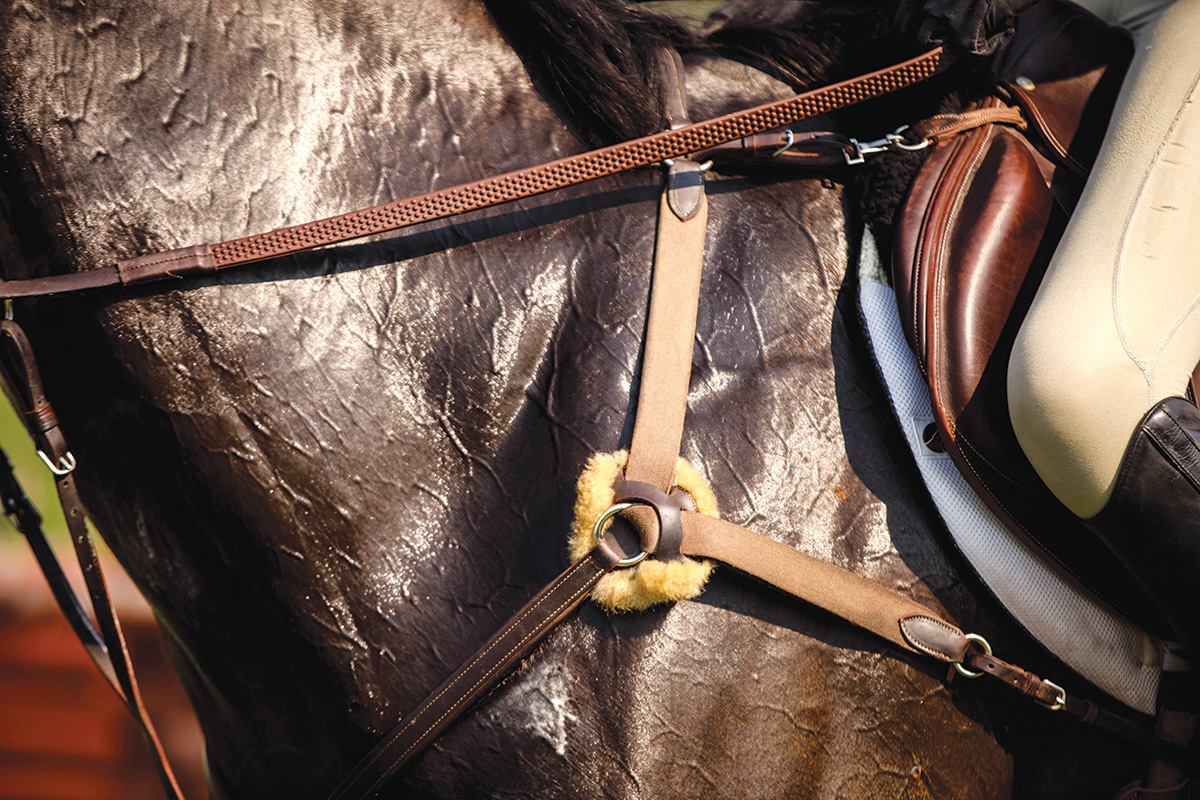
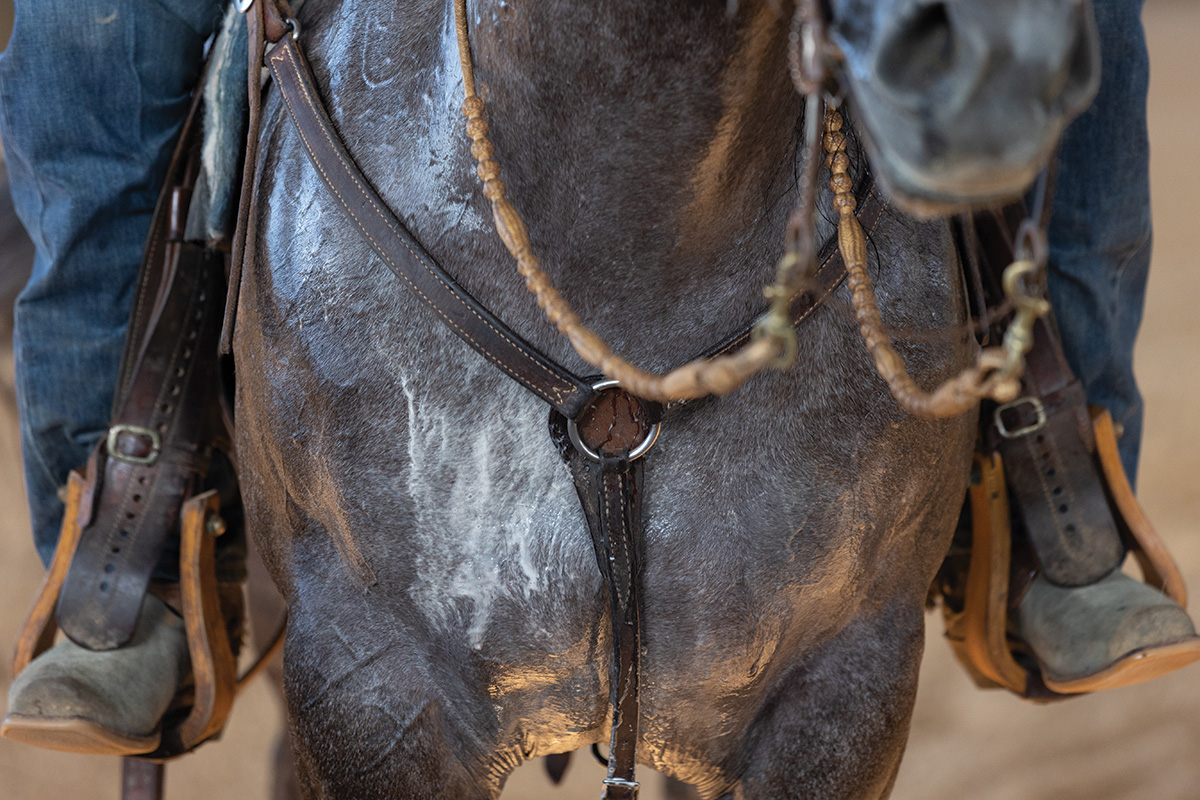
The skin of a horse suffering from heat stress.
With intense exercise in hot weather, the horse can become completely covered in sweat and need help cooling down. Photo by Shelley Paulson

Below, we’ll examine what heat stress looks like, the warning signs, what to do if your horse overheats, and how to prevent dehydration from heat stress.

What Causes Heat Stress in Horses?

Horses primarily create heat while digesting their feed and during any activity that requires their muscles to work. Even light activity in extremely hot, humid weather could cause your horse to overheat.

You may notice that your horse’s blood vessels appear larger and distended when it’s hot outside. This reaction is normal, as it shunts the blood to the skin to rid the body of excess heat; however, this doesn’t provide adequate cooling if the air temperature is warmer than the horse’s body temperature.

Other than humans, horses are the only mammals that sweat. During hotter conditions, they primarily use this mechanism to wet the body and allow cooling via evaporation. The problem occurs when the sweat doesn’t evaporate to allow adequate cooling, potentially leading to heat stress.

“Horses are pretty efficient at dissipating heat compared to species that don’t sweat,” says Kris Hiney, Ph.D., associate professor and Equine Extension Specialist at Oklahoma State University. “But they can still get heat stress [during] prolonged periods of high temperatures or working in high temperatures. Very young or infirm horses are more likely to suffer from heat stress.”

Detecting Heat Stress

Hot skin and profuse sweating or less sweating than expected for the activity could be warning signs of heat stress. Hiney advises looking for high body temperature, an elevated heart rate, and a respiration rate beyond what’s expected for the workload.

“Working in hot temperatures may not be completely avoidable,” she says. “[But] it’s important to recognize the signs that your horse may be overheating.”

Hiney recommends practicing the following techniques ahead of time so both you and your horse will be familiar with them when needed.

Use a rectal thermometer (keep one with you if you’re far from a barn) to monitor heat load. Body temperature will normally increase with exercise, and body temperatures of 104 degrees to 106 degrees Fahrenheit are common for some events.

However, horses with these body temperatures need to be cooled carefully. If a horse’s temperature is over 106 degrees, take immediate action to cool the horse. Temperatures reaching 107 degrees may require veterinary assistance.

Check your horse’s heart rate, either with a stethoscope or manually. When the horse is allowed to rest, his heart rate should noticeably begin to drop. It should return to 40 to 50 beats per minute within 15 minutes. Failure of the heart rate to drop quickly indicates heat stress.

“Flared nostrils and heaving flanks while breathing are not only from work, but also from the increased heat load,” Hiney explains. “Allow the horse to rest and watch carefully for a reduction in breathing rate and intensity.”

Assess the amount and location of sweat. Normal sweating patterns include along the neck, flanks and between the hind legs. With intense exercise or extreme temperatures, the horse may be completely covered in sweat and will need help being cooled.

A horse that has ceased sweating is most likely suffering from heat exhaustion and is in critical need of care.

How to Treat Heat Stress

If you suspect your horse is overheating, it’s vital to stop exercising and move him to a cooler setting right away. You will likely need to help him cool down to prevent heat stress from turning into heat stroke, which can have dire consequences.

“Evaporation through sweat is the major way horses dissipate heat, but high humidity levels will limit the effectiveness of sweating,” says Hiney. “Increase airflow to the skin by removing all tack and equipment and use a sweat scraper to remove excess sweat.

Cool running water can greatly aid in cooling,” she continues. “Apply water or even ice along major blood vessels like the neck, chest and inside of the legs. Blood will cool as it passes through these areas and then return to the trunk of the body to help dissipate the heat load. Continual application of cool, running water will prevent the warming of the water on the horse’s skin. Otherwise, use a scraper to remove the warm water and increase the rate of cooling. Water left on the skin will warm rapidly and trap heat against the horse’s body.”

Applying cold water to cool down a horse suffering from heat stress.
Remove tack and apply continuous running water to help cool the blood and lower a horse’s temperature if you suspect heat stress. Photo by Phil Cardamone/Adobe Stock

Hiney says that you can still help your horse cool down even when you don’t have access to running water by using a sponge to wet the major blood vessels. Again, you should concentrate on the neck and chest. She also suggests adding rubbing alcohol to the water to increase evaporation and aid in cooling.

If you need to cool your horse while riding if you’re not near running water, Hiney suggests using a squirt bottle to apply cool water along the major exposed blood vessels in the neck and chest. You can refill your water bottle from streams, lakes or stock tanks.

“Air movement is another major way that animals lose heat,” she says. “Supplying fans or keeping the horse in a breezy area is ideal. Fans with higher velocities provide more effective cooling. If you have access to electricity, put a fan near the arena to aid in cooling during rest periods. This fan can greatly assist with continuing normal training during the summer. Even so, be sure that the horse’s heart rate and respiration rate have dropped before returning to work.

“Simple strategies like keeping the horse in the shade or riding in shaded areas prevent heat gain directly from the sun,” Hiney adds. “Standing under trees is even more useful, as the horse will radiate heat up to the leaves, which are continually cooled by their own evaporation.”

A rider and his mount rest in the shade.
Taking a break in the shade is important during a hot ride. Standing under a tree helps even more as leaves provide evaporative cooling. Photo by CPDPrints/Adobe Stock

She warns that heat stress can quickly turn to heat stroke. If you feel this is happening, cease work, strip tack off the horse, and get him into the shade immediately. When facing heat stroke, veterinary care with IV fluids may be necessary.

Heat Index

Through appropriate management, heat stress can be prevented. Start by paying attention to the heat index in your area to understand when it’s dangerous to work your horse. Although different horses may tolerate heat differently, follow general guidelines to ensure you’re not putting your horse in danger.

“Pay attention to heat and humidity,” Hiney advises. “A good rule of thumb is to add the values of the temperature [in degrees Fahrenheit] and humidity [relative percentage] to get the horse’s comfort index. Horses cool themselves normally—unless dehydrated or fatigued—if the combined values are below 130.

“If the combined temperature and humidity is over 150 (such as 90 degrees Fahrenheit with 60 percent humidity), horses will need assistance in cooling,” she continues. “If temperatures and humidity are expected to reach 170, it may be best to plan early morning riding or skip intense work. Even riding in the evening may not see a large drop in temperature until the sun has been down for several hours.”

Dangerous Dehydration

High heat or excessive sweating can cause dehydration in horses. If your horse doesn’t replace the fluid lost during sweating by drinking adequate water, he can become dehydrated, which can be life-threatening.

“Horses can become dehydrated in as little as two to three hours under the right conditions,” says Hiney. “Horses need to be well-hydrated before beginning to work, for example, horses that have come off of a long trailer ride.”

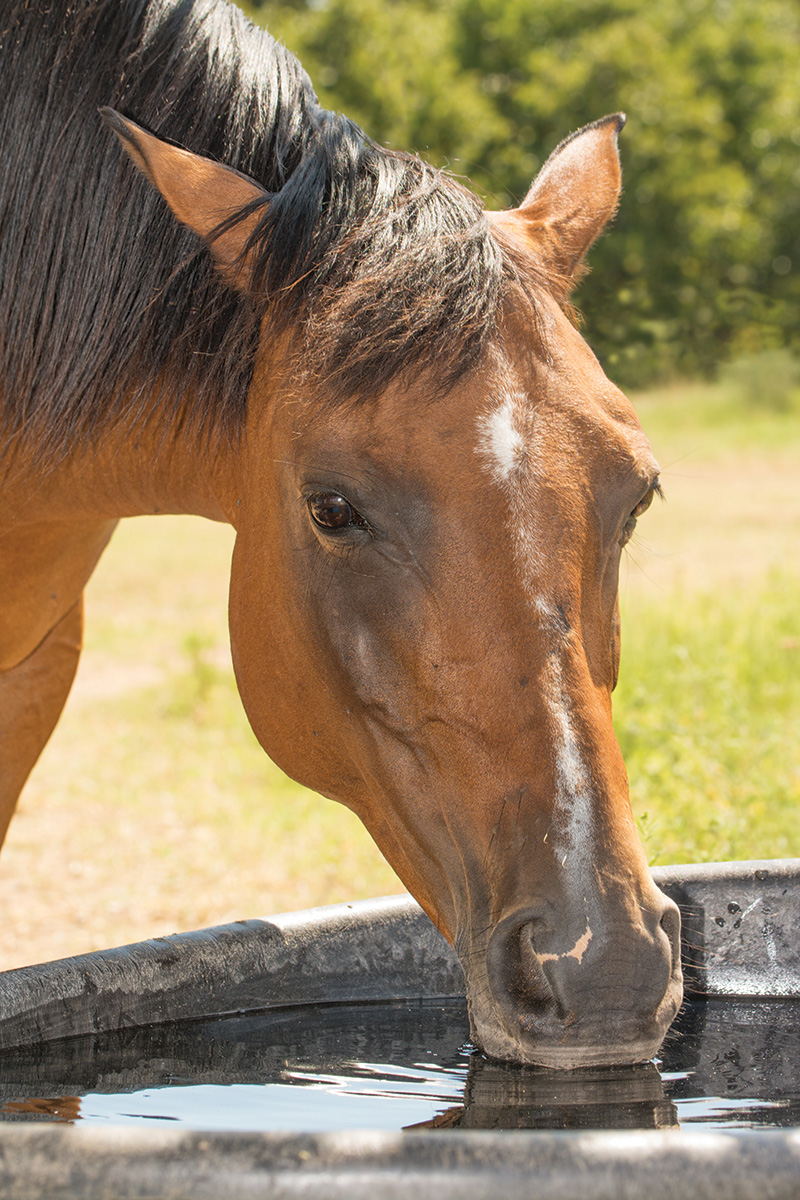
A mare drinking from a water trough.
In hot weather, horses can become dehydrated in as little as two to three hours. Make sure your horse begins work as well-hydrated as possible. Photo by Pimmimemom/Adobe Stock

She explains that some warning signs of dehydration include prolonged capillary refill time (checked by pressing your finger into the horse’s gums) and tenting when skin is pulled from the neck or over the eye. The horse may also have a gaunt or tucked-up appearance.

Colic and overheating are possible, but if the horse gets an electrolyte imbalance due to dehydration, tying up and even death could occur.

“The primary mechanism horses use to dissipate heat is through sweating,” says Hiney. “Sweating leads to dehydration if the horse isn’t allowed to replenish, and the rate of sweating can outstrip the ability to keep up.

“Warm body temperatures encourage horses to drink, so allow access to water in the cool-down period,” she continues. “Allow frequent sips of cool water. Saline can also help replenish water and electrolytes, but be sure to have plain water available, too.”

Key Takeaway

Luckily, horses usually bounce back after a bout of heat stress or dehydration without any lasting effects. However, both can become very serious conditions in a relatively short span and, if left untreated, can lead to death.

It’s best for your horse’s health to not allow either to begin with by ensuring he always has access to clean, fresh water and avoiding exercise in extremely hot weather.

Ride in the morning when it’s coolest, and reduce ride time and intensity when it’s hot and humid, or refrain altogether if the temperature and humidity are above safe levels.

This article about heat stress appeared in the July 2023 issue of Horse Illustrated magazine. Click here to subscribe!
Preserving Przewalski’s Horse

0

Although poaching and habitat loss led to the extinction of Przewalski’s Horses in the wild in the 1960s, the last truly wild horse species has made a comeback thanks to diligent conservation work.

The Lascaux cave paintings in France reveal the most abundant and astonishing Paleolithic art ever discovered. Prehistoric artists painted all kinds of animals on the cave walls 20,000 years ago, including bison, antelope and even a rhinoceros.

But the animal that appears most in this breathtaking wall of creatures is the horse. Herd of horses gallop across the cave walls, with the most iconic equines showing a dun coat, a dark mane that stands up, and a light tan belly.

The famous Lascaux cave paintings in France.
The famous Lascaux cave paintings in France date to approximately 17,000 years ago, and clearly show horses nearly unchanged from today’s remaining Przewalski’s. Photo Thierry/Adobe Stock

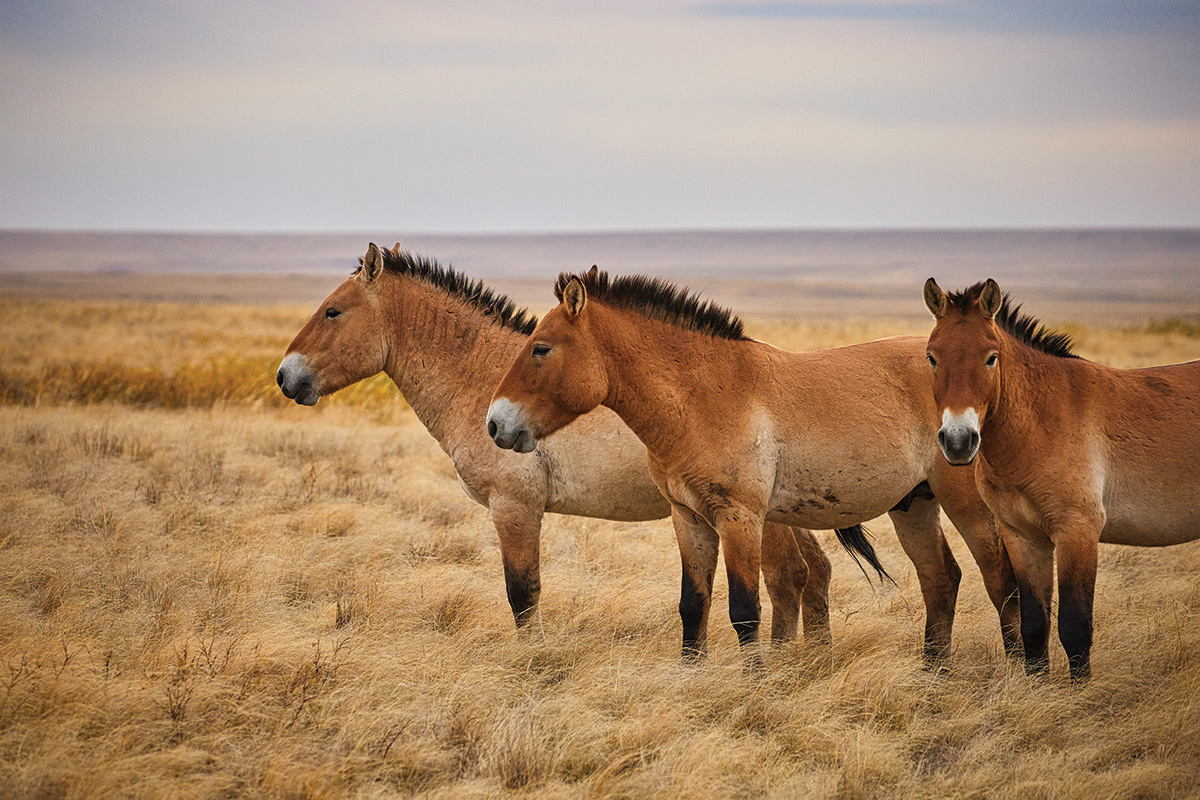
In short, many of the horses of the Lascaux cave paintings look just like Przewalski’s Horse, the only remaining wild horse on the planet. This equine vestige of the Ice Age nearly died out in the 20th century, only to make an amazing comeback over the last few decades.

Spirit Horse

Although we refer to the horses living free on the American range as “wild,” in reality, they are feral. This means they are the species Equus ferus caballus—domestic horses that were tamed by humans 5,000 years ago and bred in captivity for millennia.

Przewalski’s Horse, on the other hand, is a truly wild horse. Believed by many scientists to be the last wild species of horse to have survived from prehistoric times, Equus ferus przewalskii is assumed to be a distant cousin to today’s domestic horses.

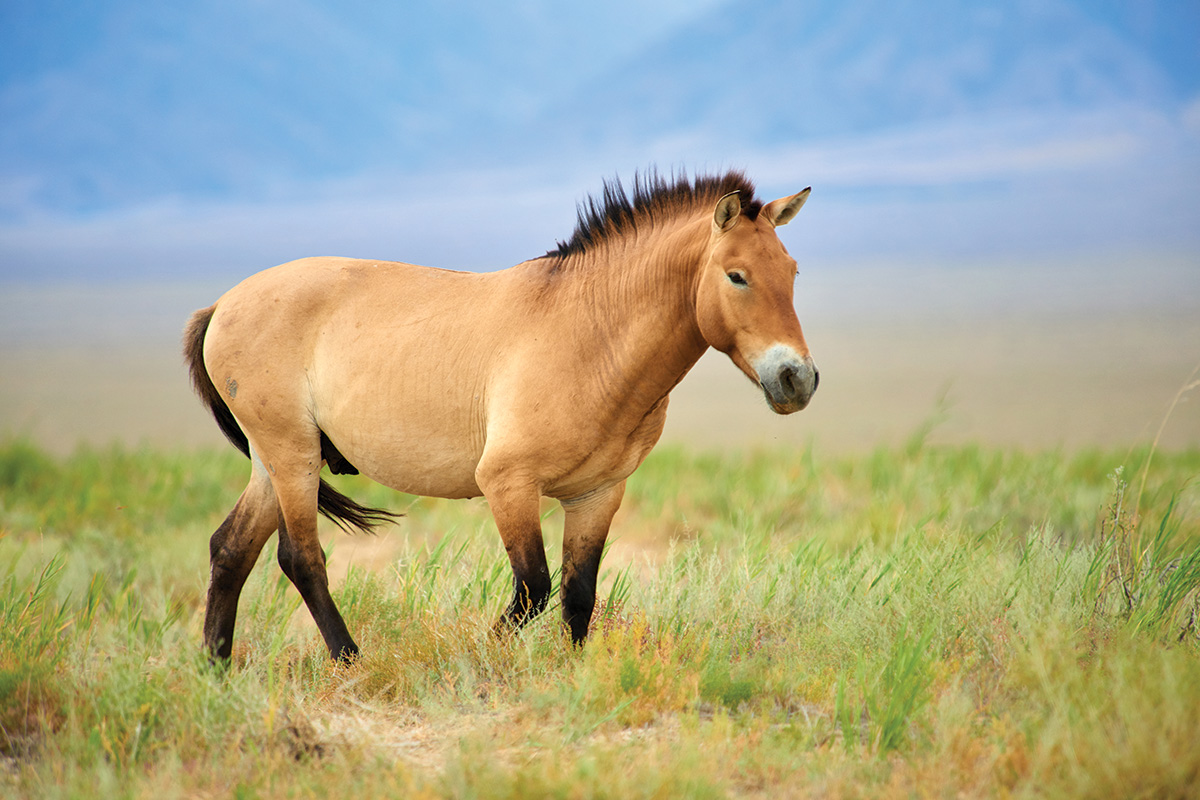
A Przewalski’s Horse.
Photo by Yerbolat/Adobe Stock

Research into their mitochondrial DNA suggests Przewalski’s Horse and the domestic horse diverged from a common ancestor 500,000 years ago.

Przewalski’s Horse evolved on the steppes of Asia, where wide open plains and abundant grasses provided the perfect environment for horses. The people of Mongolia were witness to Prezwalski’s Horse as long as humans lived on the Asian steppes, with references to these horses appearing from the time of Ghengis Khan. The Mongolian people refer to Przewalski’s Horse as Takhi, which means “spirit,” and consider it to be the fastest and most untamable horse of all.

In the late 1800s, a Polish explorer and naturalist named Nikołaj Przewalski observed these horses in the wilds of northwestern China, leading to the species’ official scientific classification of Equus ferus przewalskii. By the early 1900s, a number of Przewalski’s Horses had been captured and were being kept in zoos throughout Europe.

Although thousands of Przewalski’s Horses are believed to have lived in Mongolia and parts of Asia for centuries alongside human habitations, by the 1960s, they had gone completely extinct in the wild, despite government efforts to protect them. Poachers and loss of habitat meant the only Przewalski’s Horses left on earth were the 14 individuals living in zoos.

Wild Again

Getting Przewalski’s Horse back to the steppes of Asia has been the goal of conservationists for decades. Working together with zoos around the world, this dream was accomplished in 1992 when the first herd of Przewalski’s Horses were released in Hustai National Park in Mongolia.

Since then, other groups of horses have also been released in the Great Gobi “B” Strictly Protected Area and Khomyn tal, both in Mongolia, where they are protected by order of the Mongolian government.

“The ultimate goal for Przewalski’s Horses is [to have] enough with good genetic diversity reintroduced to the wild so we no longer have to keep them in zoos,” says Simon Jeffery, animal director at Port Lympne Hotel & Reserve in Hythe, United Kingdom, a zoological park that was instrumental in the return of the Przewalski’s Horse to the wild. The preserve still maintains a breeding herd.

Planned Breeding of Przewalski’s Horses

It’s estimated that around 1,500 Przewalski’s Horses are now living in the wild, with foals being born each spring. But the quest to save this very special horse continues. Lack of genetic diversity, harsh weather, predators and cross-breeding with domestic horses all contribute to the challenge Przewalski’s Horses face in the wild; this is why zoos and preserves around the world maintain breeding bands of these special horses.

A herd of Przewalski’s Horses.
An estimated 1,500 Przewalski’s Horses are now living in the wild, all in Mongolia, since the first horses were re-released in 1992. Photo by Adobe Stock/Алексей Курочкин

In the U.S., the Denver Zoo is among the organizations contributing to the conservation of the last wild horse. They are currently home to four Przewalski’s Horses.

“In our 17 years working with Przewalski’s Horses, Denver Zoo has served as both a holding and breeding institution,” says Reese Pfalzer, assistant Curator of Hoofstock at the Denver Zoo. “Przewalski’s Horses are a managed program within the Association of Zoos and Aquariums, and one of Denver Zoo’s hoofstock animal care specialists is the Association of Zoos and Aquariums Species Survival Plan studbook holder for Przewalski’s Horses. This means that she helps the Species Survival Plan program thrive by using genetic analysis to best pair breeding groups of Przewalski’s Horses throughout North America.”

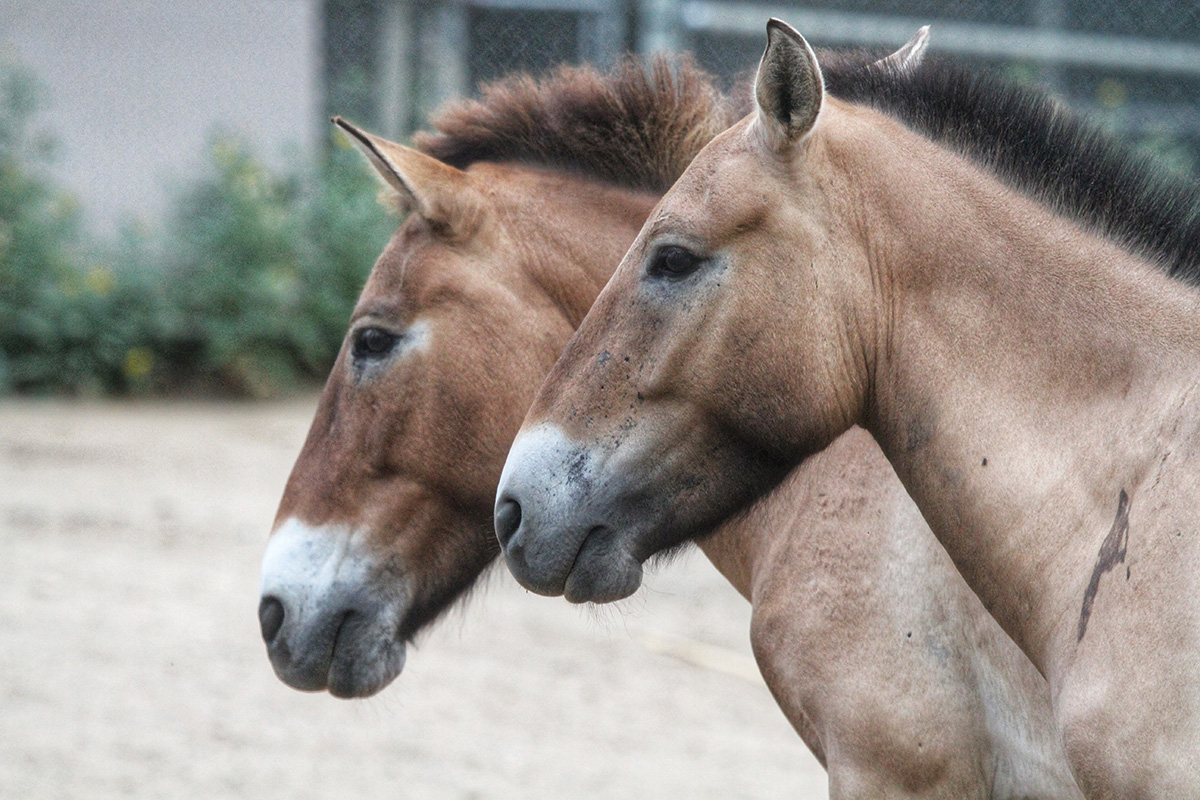
Two members of the historic species.
A Denver Zoo hoofstock animal care specialist is the studbook holder for the Association of Zoos and Aquariums Species Survival Plan for Przewalski’s Horses. Photo courtesy Denver Zoological Foundation

In the Association of Zoos and Aquariums managed species program, there are 119 Przewalski’s Horses in 26 different facilities throughout North America.

Training Przewalski’s Horses

Because they are wild animals, Przewalski’s Horses can be a challenge to manage in captivity. In addition to being a part of the international effort to conserve the species, the Denver Zoo is a leader in the training of Przewalski’s Horses.

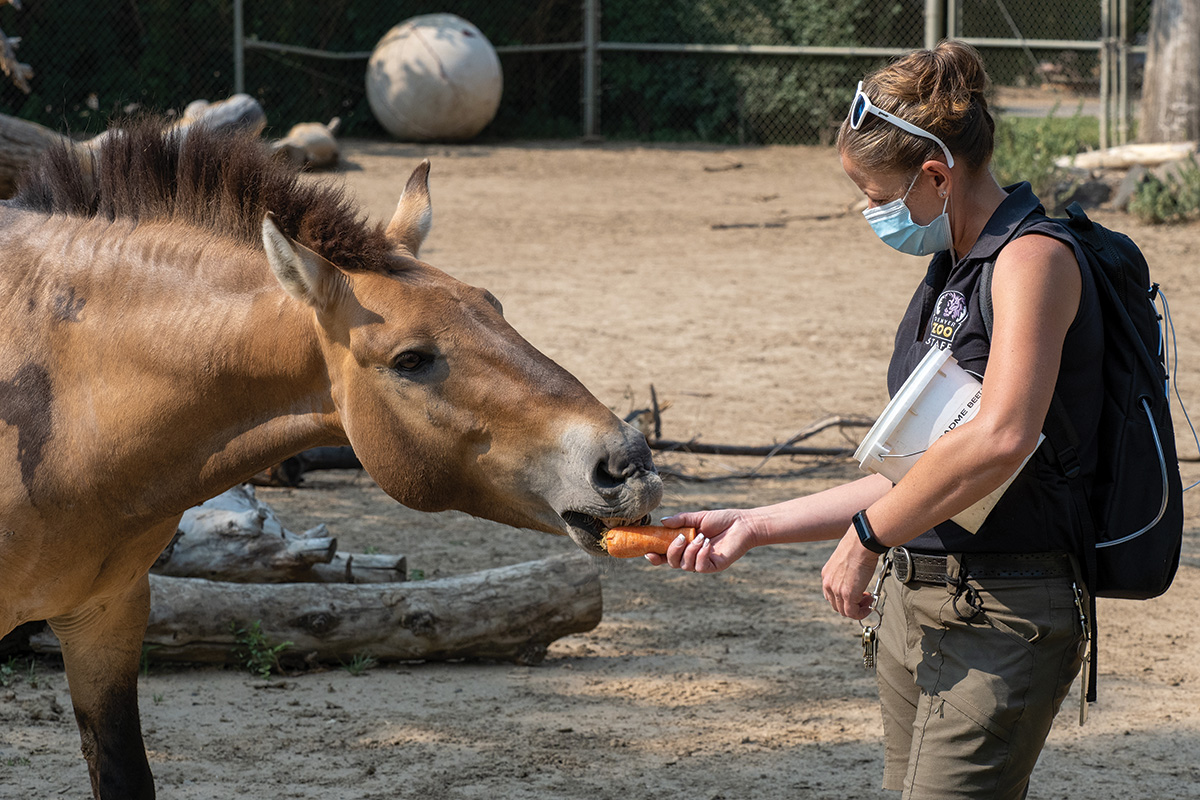
A Przewalski's Horse accepting a carrot at the Denver Zoo.
The Denver Zoo has a leading training program for the Przewalski’s Horses that reside there, including voluntary blood draws and hoof trims. Photo courtesy Denver Zoological Foundation

“We have a strong training program for our horses that reside at the zoo, including voluntary blood draws and hoof trims,” says Pfalzer. “For many years, Przewalski’s Horses were thought of as untrainable. Our animal care specialists have done an excellent job proving that untrue by building strong relationships with the animals that enable successfully trained voluntary behaviors so that we may provide the best care for them.”

Just Like Horses

Although Przewalski’s Horse has been wild for thousands of years, the behaviors the species shows will sound very familiar to owners of domestic horses.

“Przewalski’s Horses have a hierarchy in the pecking order, with dominant and subordinate animals,” says Dolores Reed, supervisory biologist at the Smithsonian’s National Zoo and Conservation Biology Institute, who manages the zoo’s Przewalski’s Horse population. “They communicate with whinnies and neighs in various pitches like domestic horses and use body language to communicate. They put their ears back and head down to threaten, and they are quite food motivated. Interestingly, like domestic horses, they have been known to chew wood.”

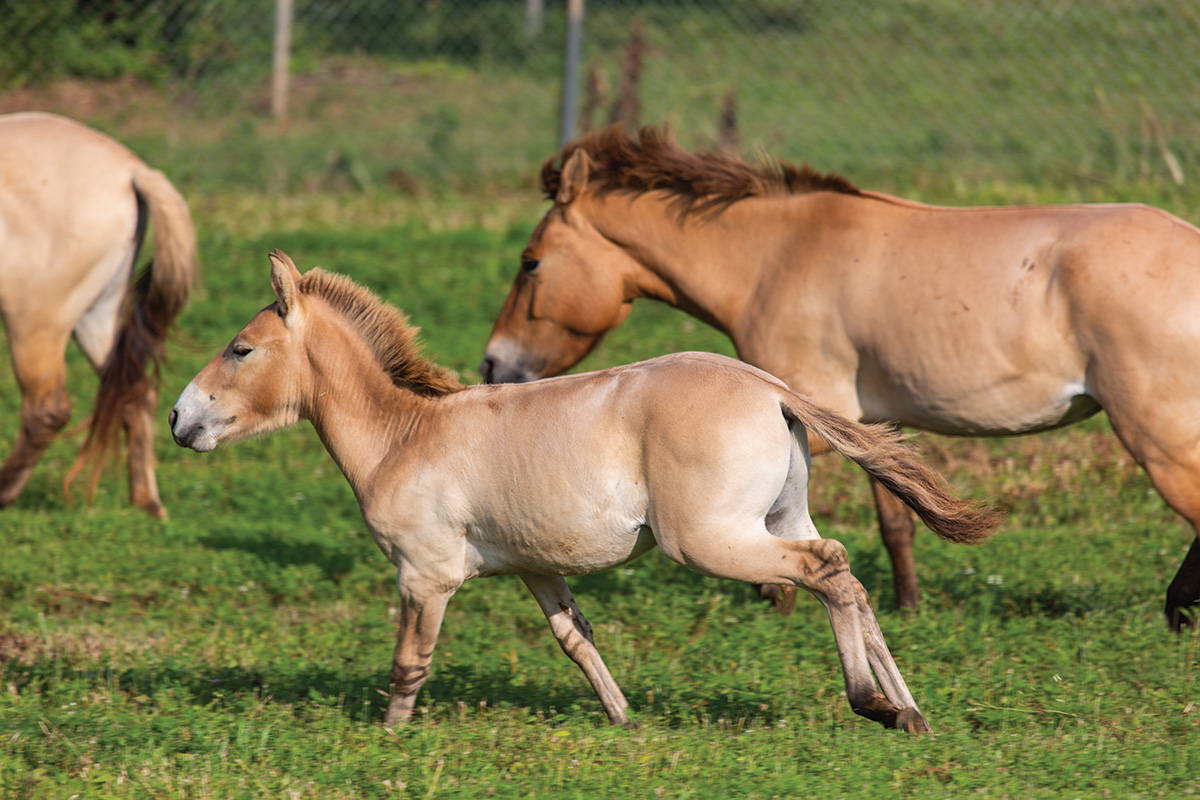
A mare and yearling run in a field.
Photo by Roshan Patel, Smithsonian’s National Zoo and Conservation Biology Institute

Reed also notes they tend to have the same health issues as domestic horses, particularly when it comes to over-conditioning—something owners of easy keepers know all too well.

“They are prone to becoming over-conditioned,” says Reed. “They are very efficient and require very little supplementation if they have green pasture access.”

Just like domestic horses, Przewalski’s Horses prefer the company of their herd mates, and can become upset when separated.

“Przewalski’s Horses tend to be intensely herd-oriented and prefer wide open spaces,” says Reed. And when confined, they can be prone to pacing, rearing and climbing.

“They also do not usually give warning kicks,” she says. “When they kick, it is usually with full force.”

According to Reed, after receiving one of these kicks, the hardy Przewalski’s Horse who received the blow barely acknowledges the kick.

“In contrast, a domestic horse would likely become lame or have a welt at the point of contact,” she says.

Key Takeaway

According to Pfalzer, much work still needs to be done to ensure a sustainable population of wild Przewalski’s Horses in their native range.

“Thus far, collaboration among institutions shows for a promising future for Przewalski’s Horses, both in the wild and in human care,” she says.

This article appeared in the May 2024 issue of Horse Illustrated magazine. Click here to subscribe!

Squamous Cell Carcinoma in Horses

0

Squamous cell carcinoma (SCC) is one of the most frequently diagnosed cancers in horses and the most common cancer of the equine eye. Although it is typically slow to metastasize, it can be locally invasive in areas where complete surgical removal is challenging.

Here’s what to watch for to catch this cancer early and what to do if your horse has it.

What is Squamous Cell Carcinoma?

The name itself—squamous cell carcinoma—can sound confusing and even intimidating, so let’s start with the basics.

What is a squamous cell, anyway? These are normal cells in the body. They are primarily found in the skin, particularly at mucocutaneous borders. These borders are where dry skin intersects with a mucous membrane, such as the line between skin and the lips, nostrils, anus, genitals, and eyelids.

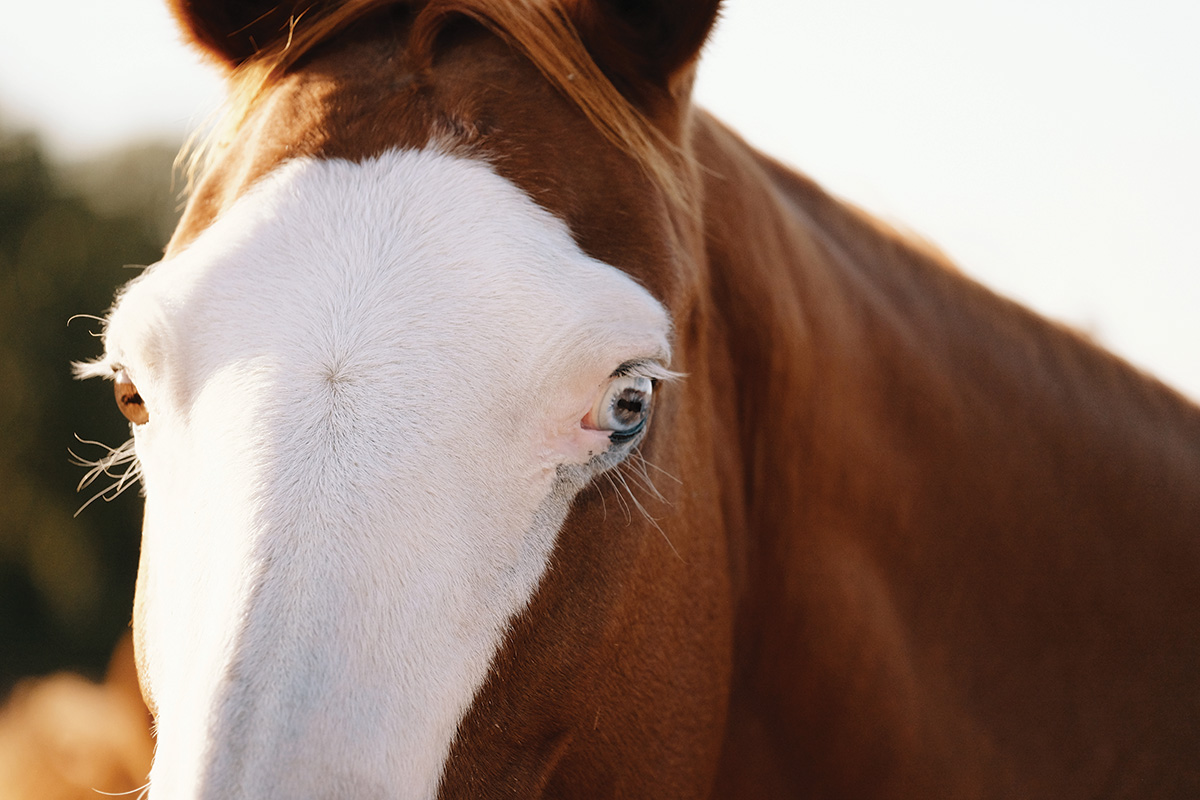
A close-up of the eye of a horse with a bald face.
Squamous cells are found at mucocutaneous borders (where dry skin intersects a mucous membrane), such as along the eyelids. Photo by ccestep8/Adobe Stock

Understanding the normal location of this cell type then provides context for where SCC is commonly found: in or around the eye, the genitalia and anus, and lips/nose.

The term “carcinoma” refers to a type of cancer that starts within skin cells or the lining of internal organs. In addition to SCC, there are a few other types of carcinomas, such as basal cell carcinoma, which is rare in horses but common in humans.

SCC development is related to sun and subsequent UV exposure. It’s no surprise, then, that SCC is common in horses who can spend most of their life outside, accumulating UV skin damage.

However, horses with lots of non-pigmented (pink) skin on their faces, such as horses with wide blazes or bald faces where eyes and muzzles have pink skin, have a higher rate of SCC.

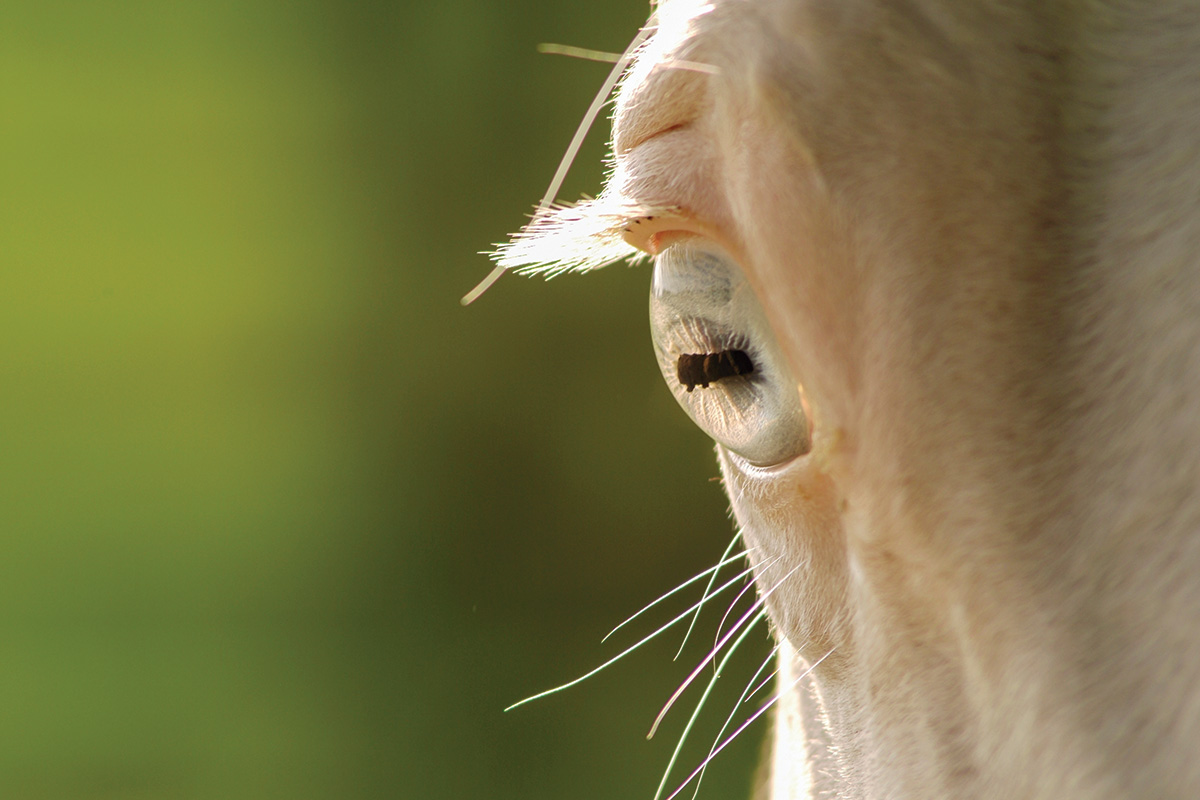
Breeds that tend to have extended white on their faces such as Clydesdales, Belgians, Appaloosas, and some Paints have a higher risk of developing SCC than other breeds. Lighter-colored horses, such as palominos and cremellos, are also at higher risk for SCC.

A close-up of a cremello's eye. Horses with lots of non-pigmented skin on their faces, such as cremellos, are at higher risk for squamous cell carcinoma.
Horses with lots of non-pigmented skin on their faces, such as cremellos, are at higher risk for squamous cell carcinoma (SCC). Photo by Mark J. Barrett/Adobe Stock

What To Look For

So what does SCC look like in a horse? Typically, this tumor initially appears as a small, raised lump or nodule under the skin. SCC within the eye may give the cornea a flat or roughened opaque appearance.

Early SCC can be easily missed due to its small size and sometimes hidden location. As the tumor grows, it can erupt, become ulcerated, and start to impinge on neighboring tissues. SCC of the eyelid can be particularly problematic. As the tumor enlarges, it may start to pull at the lid. This can either rub the cornea or pull outward, resulting in the inability of the horse to fully close his eye.

Because it is easier to remove when it is small, the best course of action with SCC is early detection. When you groom your horse, keep an eye out for odd bumps or lesions. Owners of white-faced horses should be especially observant of their horse’s facial features on a regular basis, including a close look at the eye itself.

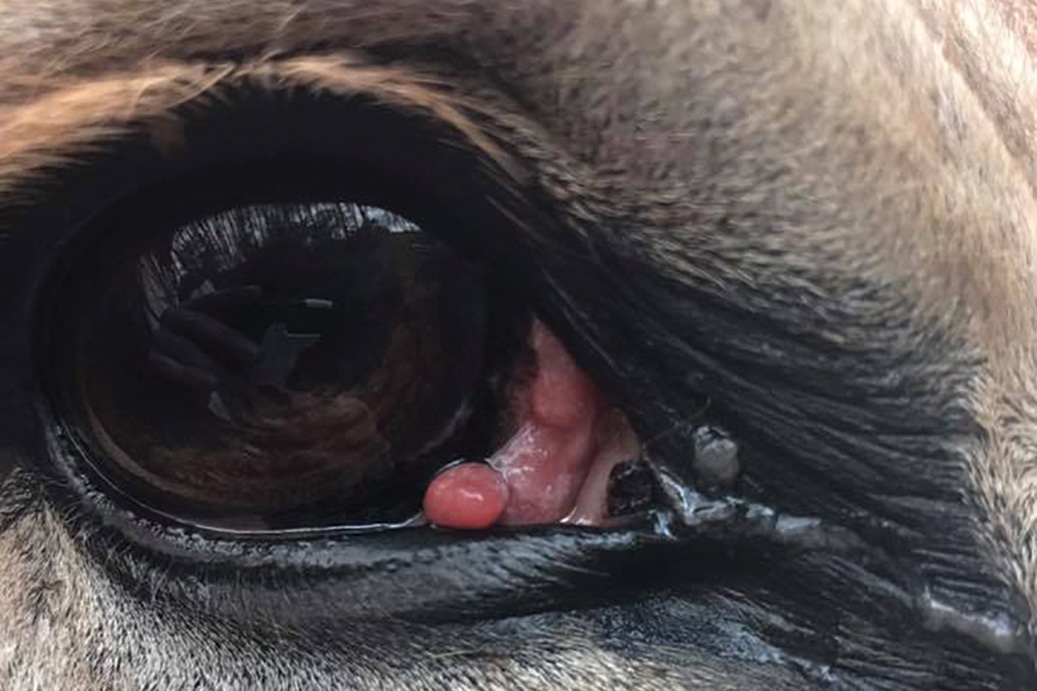
SCC on the eyelid typically starts off looking like a small scab, while SCC at the corner of the eye or within the third eyelid is typically a raised, pink mass. Horses with ocular SCC may also have eye discharge.

An example of squamous cell carcinoma in the eye of a horse.
Early detection is extremely important, as treatment before the tumor grows will help the eventual outcome. Photo courtesy Midvale Veterinary Clinic

Regular checks should also include the genitals and underneath your horse’s tail. For male horses, make the most of sheath cleaning: this is the perfect time for an inspection.

SCC Treatment Options for Horses

What should you do if you find something suspicious on your horse? The first step is to have your vet out. Although you may have a very high suspicion of SCC based on the lump’s location or your horse’s history or pigment pattern, you can’t diagnose SCC based on visual examination alone.

Sometimes SCC can be confused with scar tissue, other types of tumors (such as papillomas or sarcoids), or even a skin allergy. A biopsy, or tissue sample, is the best way to definitively diagnose this tumor.

Once your vet confirms the diagnosis, it’s time to talk treatment options. As with most tumors, its location, size, and involvement of neighboring tissues heavily influence treatment options and prognosis.

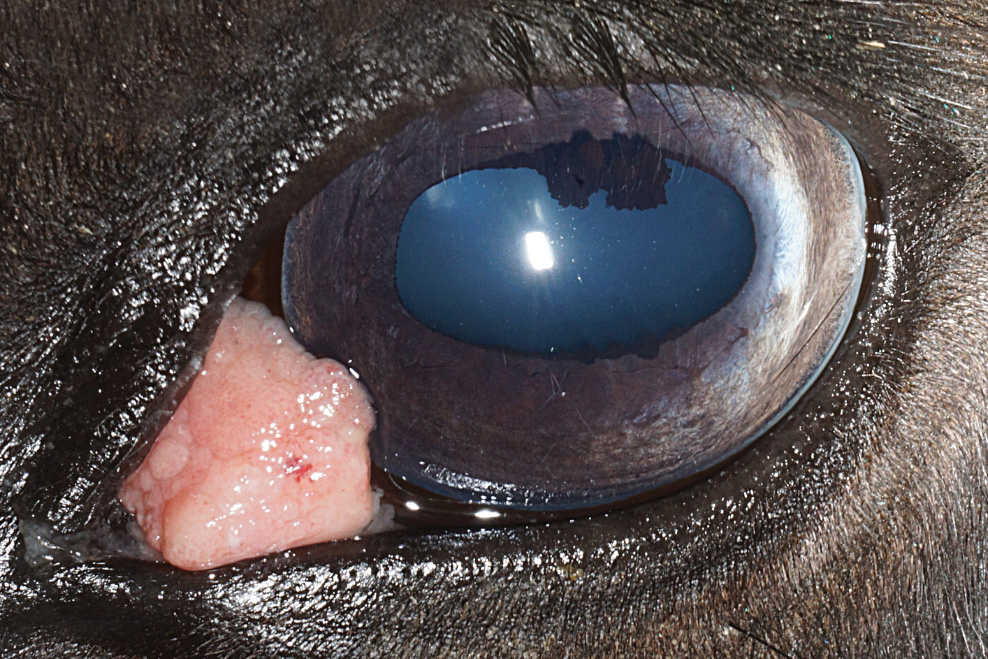
Surgical removal is a common choice, but location of the tumor dictates treatment success rate. For example, SCC at the corner of the eyelid can be very challenging to reconstruct after removal of the diseased tissue. Other times, SCC may grow into deeper structures around the eye. In these circumstances, total enucleation may be the best option for the horse’s future.

An example of squamous cell carcinoma in the eye of a horse.
Due to the difficulty of removing SCC at the corner of the eye, sometimes complete enucleation is recommended. Photo courtesy Dr. D.J. Haeussler

Adjunct treatments along with surgical removal are the most common choices of treatment and management of SCC. These adjunct therapies occur at the time of surgery and may need to be repeated.

Cryotherapy (freezing) is a common adjunct therapy that can be done on site at your barn. Your vet will apply liquid nitrogen, which is -320° Fahrenheit, to the edges where the tumor was removed. This helps destroy any leftover cancer cells.

Some radiation and chemotherapy options are also available. Depending on the regimen, they may require a visit or two to a referral hospital for application.

Photodynamic dye therapy (PDT) is a relatively newer option for SCC treatment. This therapy involves injecting a dye containing photosensitive compounds into the affected area.

This dye is taken up selectively by the cancer cells. Next, a focused beam of light using a specific wavelength is directed at the diseased tissue. The light reacts with the dye, creating a skin reaction that kills the tissue.

Because only the cancer cells take up the dye, other nearby healthy tissue is relatively unaffected, providing a much more focused treatment compared to radiation and chemotherapy.

Prognosis after surgery and adjunct therapy for SCC depends heavily on the size and location of the tumor and how locally invasive it is. Horse owners should note, too, that once a horse has had SCC, he is at higher risk of developing it again.

Prevention Tips

Along with regular close monitoring of your horse’s skin, reducing your horse’s exposure to UV radiation is another tool for SCC prevention. Regularly applying sunblock to your horse’s non-pigmented facial features can help, as can putting a fly mask on your horse in the summer months to shade his eyes.

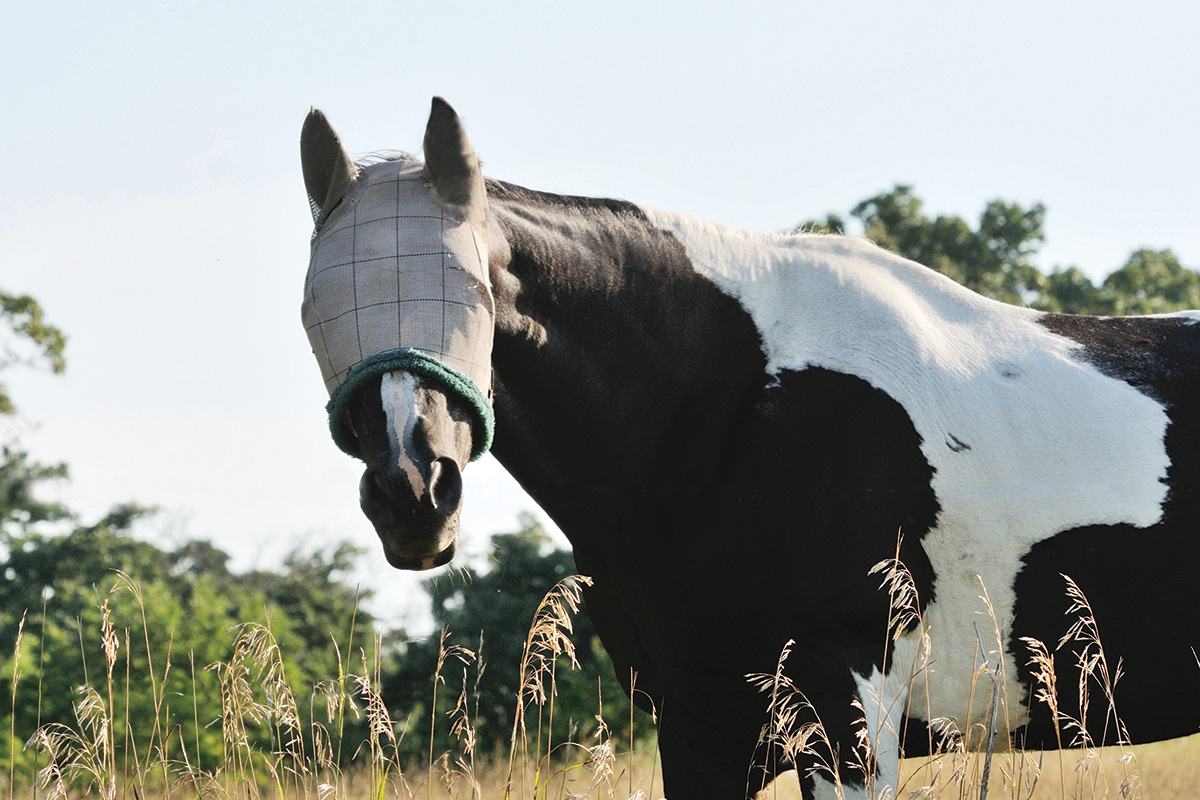
A fly mask on a pinto gelding.
Regularly applying sunblock to your horse’s non-pigmented facial features can help, as can putting a fly mask on your horse in the summer months to shade his eyes. Photo by StevertS/Adobe Stock

Interestingly, researchers at the University of California-Davis School of Veterinary Medicine have identified an equine gene variant that is a risk factor for ocular SCC in certain breeds, including Haflingers, Belgians, Rocky Mountain Horses, Connemaras, Holsteiners, and Belgian Warmbloods.

Horse owners can send plucked hairs from the mane that include the roots to the UC Davis Veterinary Genetics Laboratory to identify whether their horses are at higher genetic risk of developing ocular SCC.

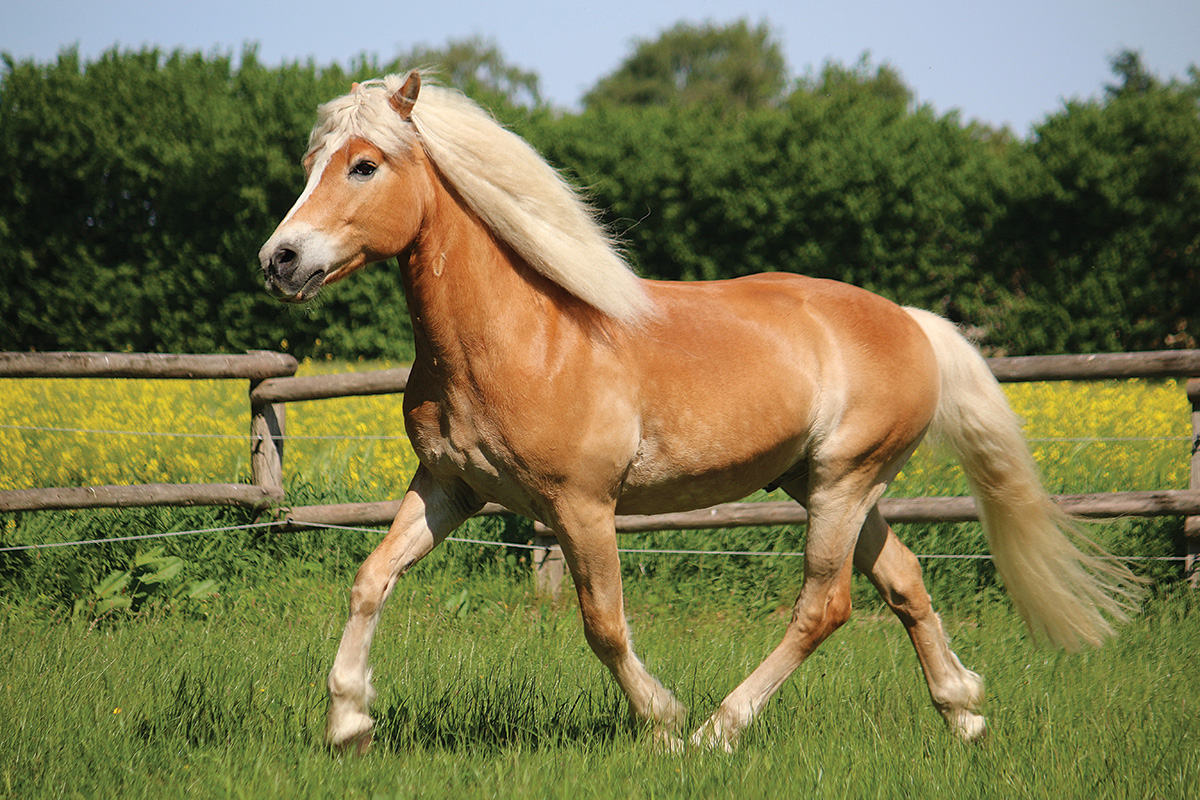
A Haflinger trotting in a field.
UC Davis has identified an equine gene variant that is a risk factor for ocular SCC in certain breeds, including Haflingers. Photo by Bianca/Adobe Stock

Treatment options continue to develop for this equine cancer, and horse owners have more options than they did just a decade ago. While this is encouraging, the best course of action is still vigilance to catch this tumor early for a full recovery.

Key Takeaway

As with any cancer, squamous cell carcinoma is intimidating. But remember—prevention and early detection are your best weapons.

This article about squamous cell carcinoma in horses appeared in the June 2024 issue of Horse Illustrated magazine. Click here to subscribe!
ASPCA Right Horse Adoptable Horse of the Week: Dawson City

0

Welcome to Horse Illustrated’s weekly installment of the Right Horse Adoptable Horse of the Week, offered in partnership with the ASPCA’s Right Horse program. This week’s adoptable horse is Dawson City! Check back weekly for a new featured horse so you can find your Right Horse.

Adoptable horse Dawson.
Photo courtesy Horse and Hound Rescue Foundation

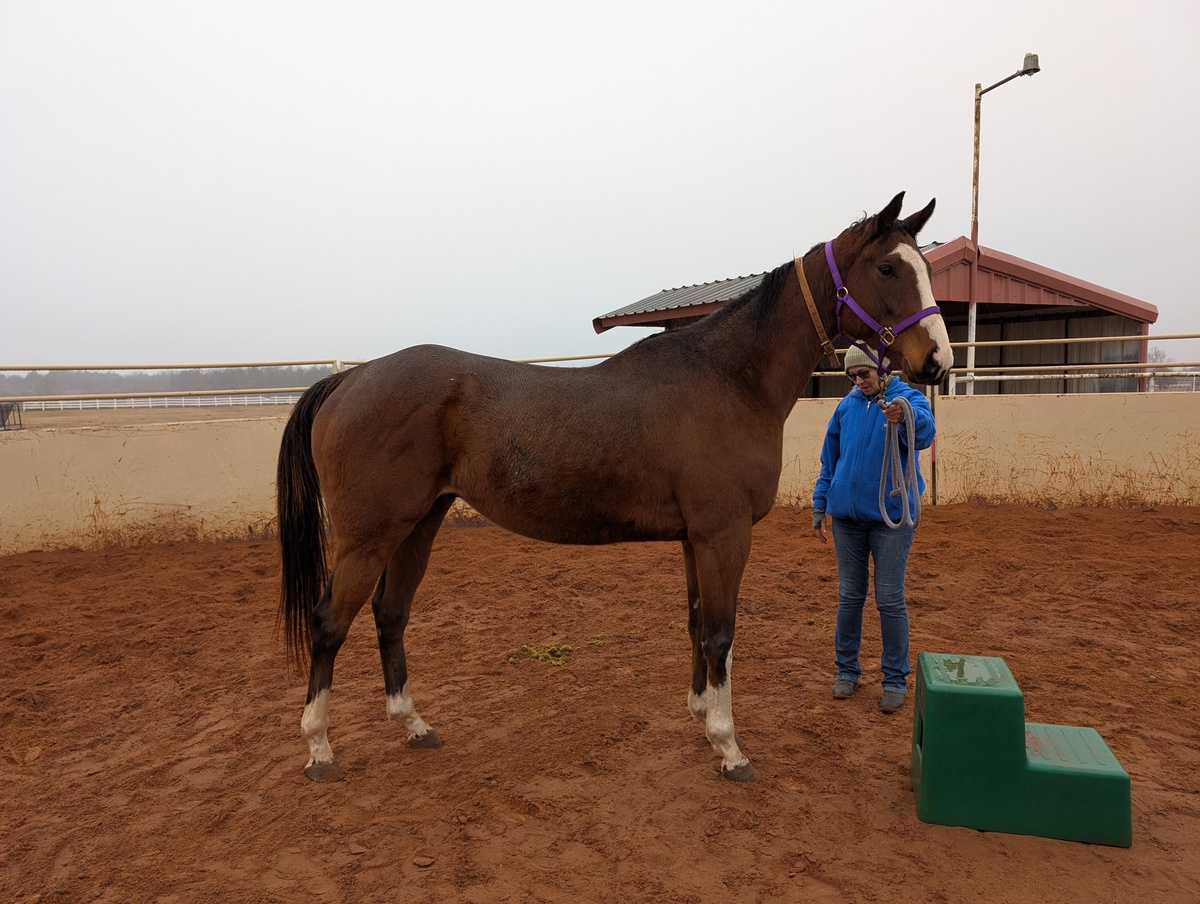
Adoptable Horse: Dawson City, a 5-year-old, 16.3hh Thoroughbred gelding
Organization: Horse and Hound Rescue Foundation, Guthrie, Okla.

Get to Know Adoptable Horse Dawson City

Dawson City is a tall, handsome gelding who knows how to turn heads. With four white feet and a bold, thick blaze, he’s sure to catch everyone’s eye with his striking good looks. Responsibly retired from racing and sound, Dawson is ready for his next chapter.

In the pasture, he’s friendly and easy to catch, but don’t be fooled—Dawson knows he’s hot stuff and holds the top spot in the pecking order. He’s confident and charismatic, making him a standout both in looks and personality.

After some well-deserved downtime, Dawson will be evaluated to see what direction he’s best suited for. If you’re interested in adopting this gorgeous guy, please reach out and fill out an application. He’s waiting to meet his next admirer!

Contact Horse and Hound Rescue Foundation today about ASPCA Right Horse Adoptable Horse of the Week, Dawson City!

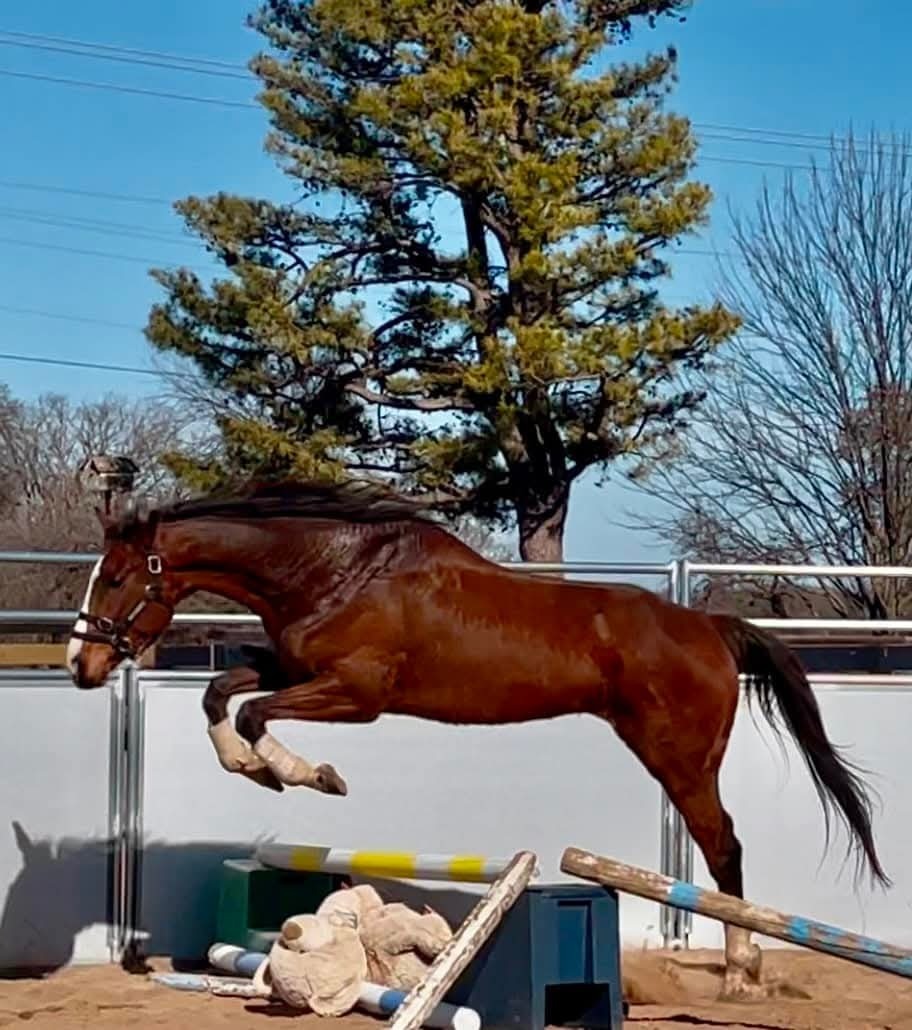
A bay Thoroughbred free jumping.
Photo courtesy Horse and Hound Rescue Foundation

ASPCA Right Horse

My Right HorseASPCA Right Horse is the online adoption platform of The Right Horse Initiative, a collection of equine industry and welfare professionals and advocates working together to improve the lives of horses in transition. A program of the ASPCA, their goal is to massively increase horse adoption in the United States. To find more adoptable horses and foster horses, visit www.myrighthorse.org. To learn more about The Right Horse, a program of the ASPCA, visit www.aspcarighthorse.org.

Showing Horses in Hand

0

Training a horse to show in hand can be time well spent. The most obvious reason is that it helps the horse show at his best in breed classes or inspections. But beyond that, it helps the horse and handler to develop a solid working relationship, which may translate later into a smoother start under saddle and a horse that is an all-around good citizen.

While this article is specifically about showing sport horses in hand, many of the basic concepts and potential benefits also translate to showing hunter horses on the line, in western halter classes, or presenting a horse for ground jury inspection in eventing.

In-hand work also provides the basic framework for later at-liberty training and will certainly make it easier if a horse needs to be shown to a veterinarian for a pre-purchase or lameness exam.

“For me, the basis of in-hand work starts with groundwork; this leads to desensitizing, the concept of boundaries, and responsiveness to pressure or aids—all things that translate to a more well-adjusted horse and are hugely beneficial to any horse once starting under saddle work,” says Quinnten Alston. Alston is a professional rider and handler who runs his own breeding program at Quantico Sporthorses in Southeastern Pennsylvania, which has produced an impressive string of breeding class champions at prestigious shows, such as Dressage at Devon. He is also an in-house rider and sales manager for Iron Spring Farm, a successful sport horse breeding facility in Coatesville, Pa.

Showing a sport horse in hand.
Running alongside a homebred mare Frida Kahlo QC, a Champion at Dressage at Devon, Quinnten Alston keeps her tracking straight and moving forward to show her lovely, big trot. Note the slack in the reins so she isn’t restricted and that Alston keeps his eye on her as they move. Photo by Purple Horse Designs

Purpose & Process of Showing in Hand

The United States Equestrian Federation (USEF) rules for Dressage Sport Horse Breeding lists the purpose “To encourage the breeding of horses suitable for dressage and to provide an opportunity to demonstrate the effectiveness of breeding programs.”

Horses are judged on their conformation and movement and are given a “general impression” score (which may be influenced by the behavior of the horse, turnout, and other factors). The handler’s job is to present the horse in a way that can show his best qualities.

An important consideration is that the handler must be able to keep up with the horse in order to show him well in competition, so be honest in evaluating your capabilities. If in doubt, ask someone to video you working with your horse to see if you are negatively restricting his forward motion. If you aren’t physically able, it may be better to hire someone else to show your horse.

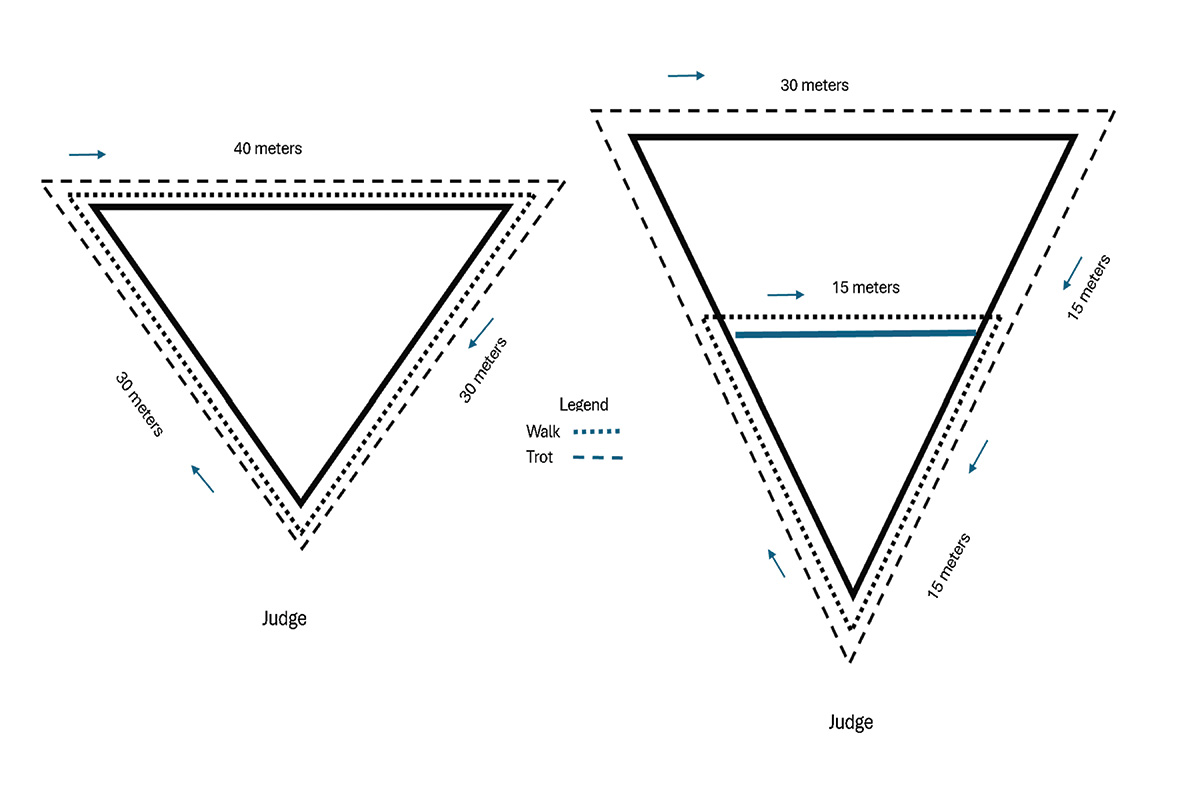
Each animal is presented one at a time in the ring (except for group breeding classes, such as “Produce of Dam” or “Get of Sire,” where related horses are shown together). The handler walks the horse into the ring for examination by a judge. The horse is first stood up for conformation evaluation; the judge walks around the horse looking at him from both sides as well as from the front and back. Next, the horse is walked around a triangle pattern, followed by trotting the triangle. Finally, the horse is set up again for evaluation before exiting the ring.

The United States Equestrian Federation-approved patterns.
The United States Equestrian Federation-approved patterns for showing a horse in hand, taken from the dressage sport horse breeding section of the US Equestrian rule book. Photo courtesy US Equestrian

The judge stands at the apex of the triangle. He or she observes how “true” the horse travels, looking first from the back as he goes away down the first short side and then from the front as he returns on the other short side. The judge evaluates the horse’s more extended gaits as he travels on the long side of the triangle.

Showing a sport horse in hand.
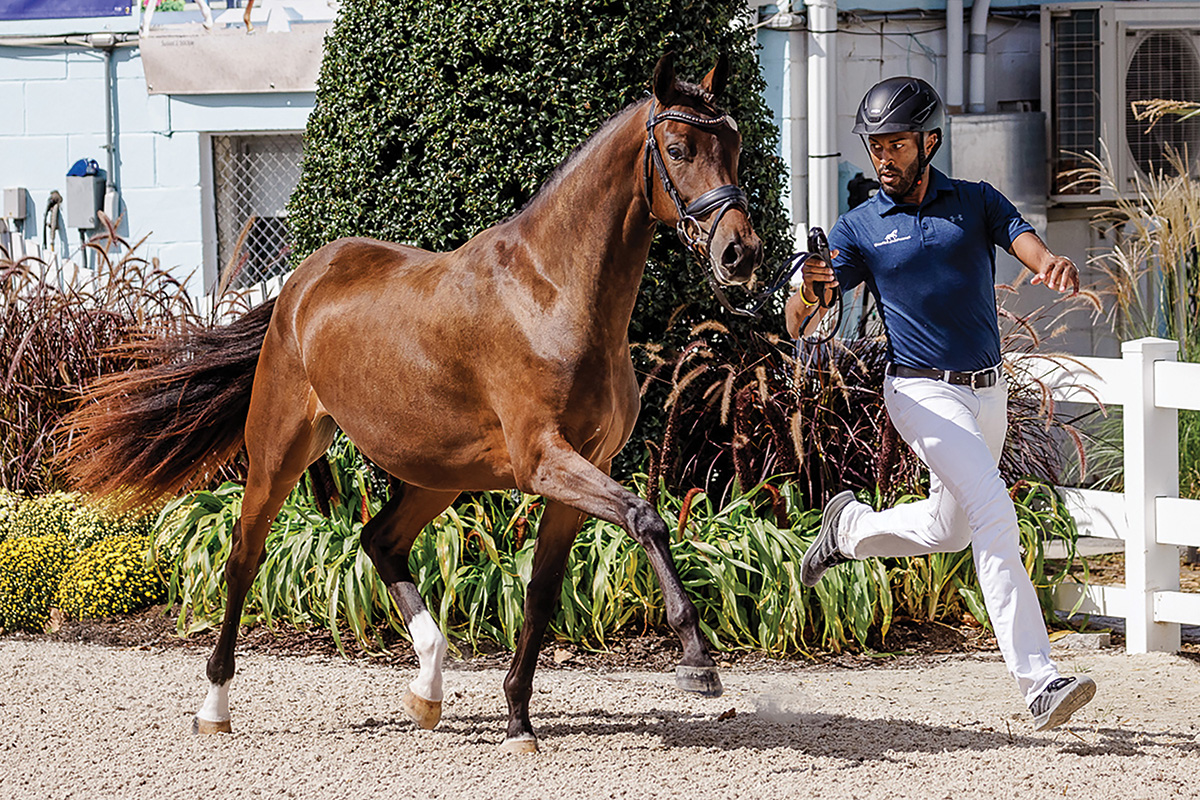
This mare is being shown at the trot on the long side of the triangle show pattern. The long side is for showing more extended gaits and brilliance. Photo by Allen MacMillan/MacMillan Photography

Getting the horse to move in a straight line is very important.

“The judge is analyzing the correctness of the gaits, which is harder to do if the horse is not moving on a straight line to or from the judge,” says Alston.

Getting Started with Showing a Horse in Hand

The aids a handler may use to communicate with the horse in hand include the handler’s body language, gentle touch-pressure applied to the body of the horse, guidance from the reins or lead, voice commands, and encouragement or direction (not punishment) using a whip.

Alston says he starts teaching a horse groundwork as early as he can, many when they are foals, after they are familiar with leading.

“Small introductions to moving away from pressure is the foundation,” he says.

The lessons start with responding to pressure applied to the front and hind end. Then, once the horse progresses on to walking and trotting in hand, he asks the horse to do both gaits on zig-zag lines. This helps the horse learn to change direction and teaches him to be more in tune with Alston’s body movement.

He also uses “square” drills: walking in a straight line, turning a 90-degree angle, continuing on a straight line again, and repeating until a square has been created. This teaches the horse to be respectful and to take into consideration where his handler is and will be going.

Alston advises that it’s easiest to have help from a whip person walking behind the horse the first couple of times so that the horse can figure out confidently walking and trotting in hand. He explains that some young horses may not understand the first time you ask them to trot in hand, but once they have a clear understanding of that, it’s as simple as asking them to be adjustable within the gaits.

“I use the terms ‘big walk/big trot’ and ‘small walk/small trot,’ but you are essentially asking the horse to cover more or less ground based on stride length,” says Alston. “I will also change my own stride length to match the horse. To accompany a bigger walk by the horse, I make my stride bigger, not faster. I always want to have the feeling that the horse is marching within his gait if I am asking for more ground cover. The movement has purpose and energy.”

Teaching your horse to stand in an open stance, then to stand square with front and back legs, and finally to go back to an open stance on the other side, is important so he understands the concept, according to Alston. However, since most of the horses he shows are young, and shows can be busy environments, he doesn’t get too focused on whether the horse is always standing perfectly in front of the judges.

A good example of the desired “open stance” pose.
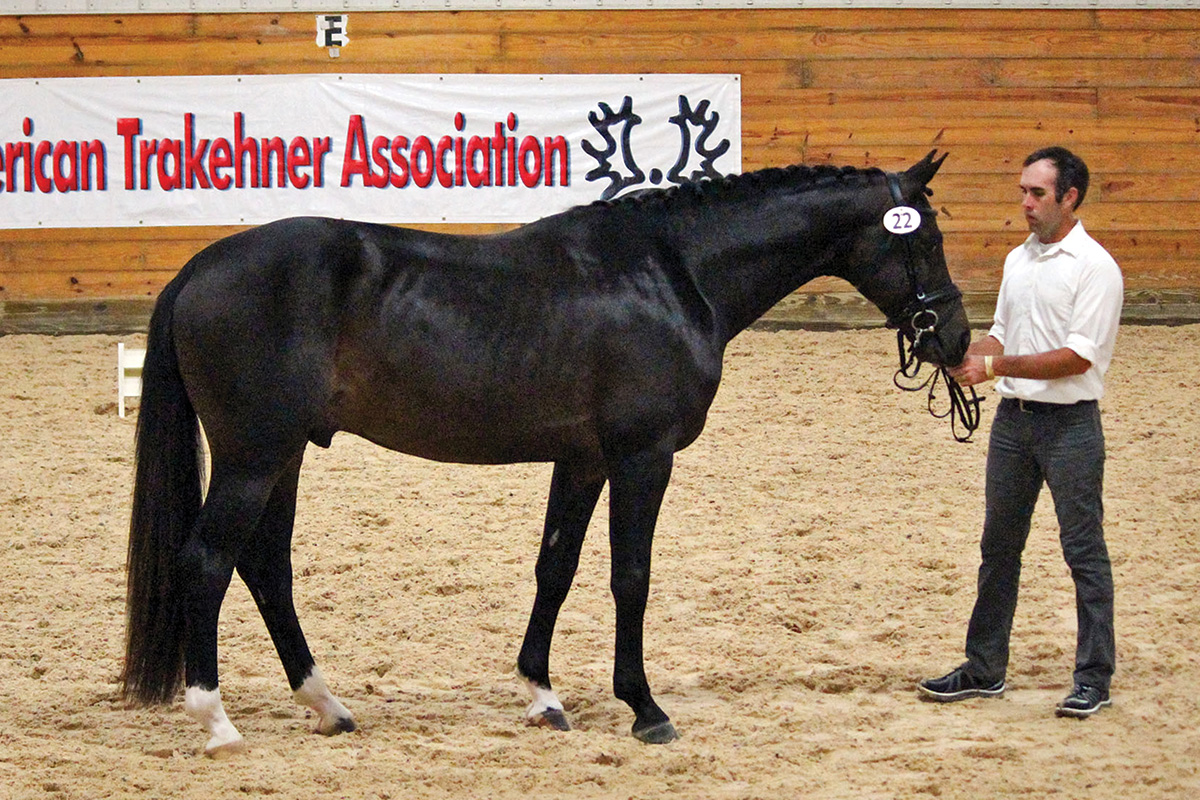
A good example of the desired “open stance” pose of the horse, demonstrated by Andrew Palmer and the young Trakehner stallion Hart Throb, which makes all four of the horse’s feet visible to the judge. Photo by Shelley Higgins/MacMillan Photography

He advises keeping training sessions short, 15 minutes or less, especially with younger horses, and to always end on a good note.

Equipment & Attire

USEF rules state that foals, weanlings, and yearlings may wear a leather halter with lead, but starting at age 2, horses must wear a bridle. Alston says he knows some handlers who use a bridle for yearlings, but he doesn’t until the horse turns 2. Regardless, he stresses that the halter or bridle should be well fitted to the individual horse.

“If in a bridle, the bit should be appropriate in size for the horse,” he says. “Every part of the bridle should be fit to the horse: noseband, flash, throatlatch, browband. The bridle should be practiced in prior to the show. Nothing is worse than a horse’s first introduction to a bridle being at the show.”

According to USEF rules, handlers and/or assistant handlers are allowed to carry either a dressage whip or longe whip to help direct the horse. Although Alston chooses not to carry one when he is showing, he does use a trusted assistant handler moving behind the horse with a longe whip at shows and inspections.

“I don’t always need a whip person at home, but you want to practice having that second person before you go to a show,” he explains. “If you have a horse that isn’t confident or is less forward, having a whip person while practicing can definitely be advantageous.”

The USEF rule book directs “conservative sports attire and a helmet” for handlers. Beyond that, Alston advises that the helmet be well-fitted and to wear comfortable running shoes. He doesn’t wear gloves, but knows some handlers prefer to.

For more tips from Alston and a list of USDF learning resources, visit our Introduction to Showing Sport Horses in Hand.

How to Bridle a Horse That Evades the Bridle

0

If you’ve been around horses long enough, you’ve likely come across at least one who actively tries to evade being bridled. Perhaps this horse tries backing away, raising his head far out of reach to avoid the bridle, or clamps his mouth closed, refusing to take the bit.

Regardless of the evasion, horses who are difficult to bridle can make the process of tacking up an exercise in frustration. Brittany Malinoski of Brittany Lee Performance Horses in Lebanon, Tenn., offers this advice on how to correct these issues.

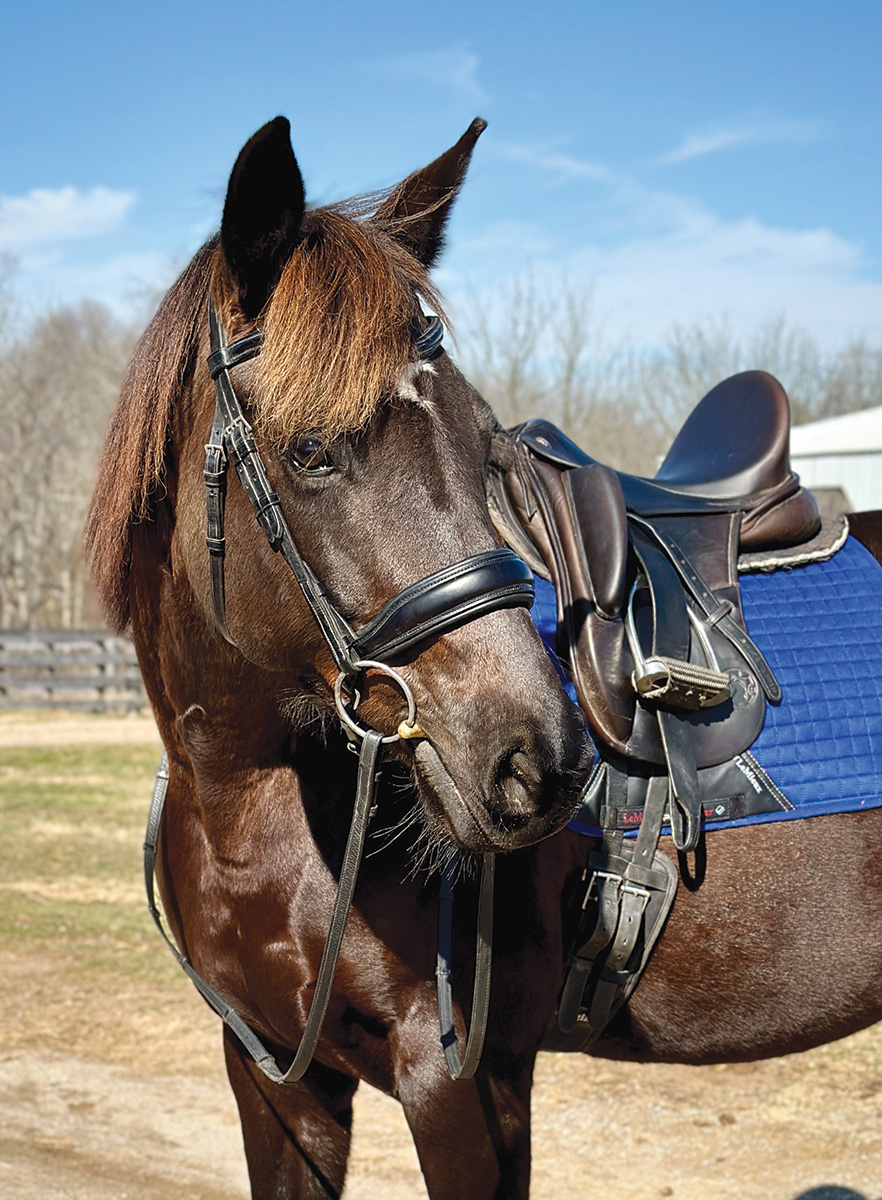
Headshot of a brown mare.
Photo by Shoshana Rudski

How Horses Become Evasive of the Bridle

Horses can develop these evasive tactics for any number of reasons.

“It could be that they never truly learned how to bridle correctly,” says Malinoski. “Or, it could be that they have had previous dental problems that caused them to lose trust in the bit or the hands of the rider. Finally, it could be the process of how the bridle is removed.”

Malinoski says that lesson horses, due to inexperienced handlers, are often prone to having their bridles removed too quickly.

“The students don’t slowly drop the bit down out of the horse’s mouth,” she says. “Instead, they may pull the bridle over the horse’s head and the bit gets caught on his teeth. The horse can panic or get scared, losing trust when the bridle is lowered.”

To help prevent issues with bridling from developing, Malinoski advises correctly training the process from the beginning, promptly addressing any dental troubles, and taking the time to make sure that the process of putting on and taking off the bridle is done slowly and correctly to avoid banging the horse in the mouth.

But prevention aside, what can you do if the problem with bridling is already well established?

Selecting a Location

Before beginning, Malinoski advises choosing an environment where you are setting up the training session for success. But the perfect location can vary, depending upon the method the horse uses to evade the bridle.

For example, she says that an arena can be ideal for a horse who actively backs away, while other issues, such as a horse who raises his head too high or one that refuses to accept the bit, may be better addressed in a more enclosed area, such as a grooming stall. As for equipment, Malinoski says that a simple rope halter and your horse’s bridle are all you need.

A horse raising its head to avoid the bridle.
Horses that raise their head, clamp their teeth or back away during bridling most likely had previous negative experiences during bridling or removing the bridle. Photo by Shoshana Rudski

Steps to Lower the Head

For milder cases where the horse may simply be raising his head out of reach or refusing to take the bit, Malinoski begins the retraining process in a grooming stall with the horse wearing nothing more than a rope halter. She then introduces the idea to the horse to lower his head on command.

“This is accomplished by placing your hand on the horse’s head and applying pressure to his poll,” she says. She describes the process of holding the lead rope in your left hand and standing near and to the left of the horse’s head, then placing your right hand on the horse’s poll.

“When the horse lowers his head, you release the pressure,” says Malinoski. She elaborates that after getting the horse comfortable with his face and ears being touched, this process can also be useful when working with horses who are head or ear-shy. Malinoski does not introduce the bridle until the horse has become confirmed in this skill. Depending upon your horse, this may be in the first or later sessions.

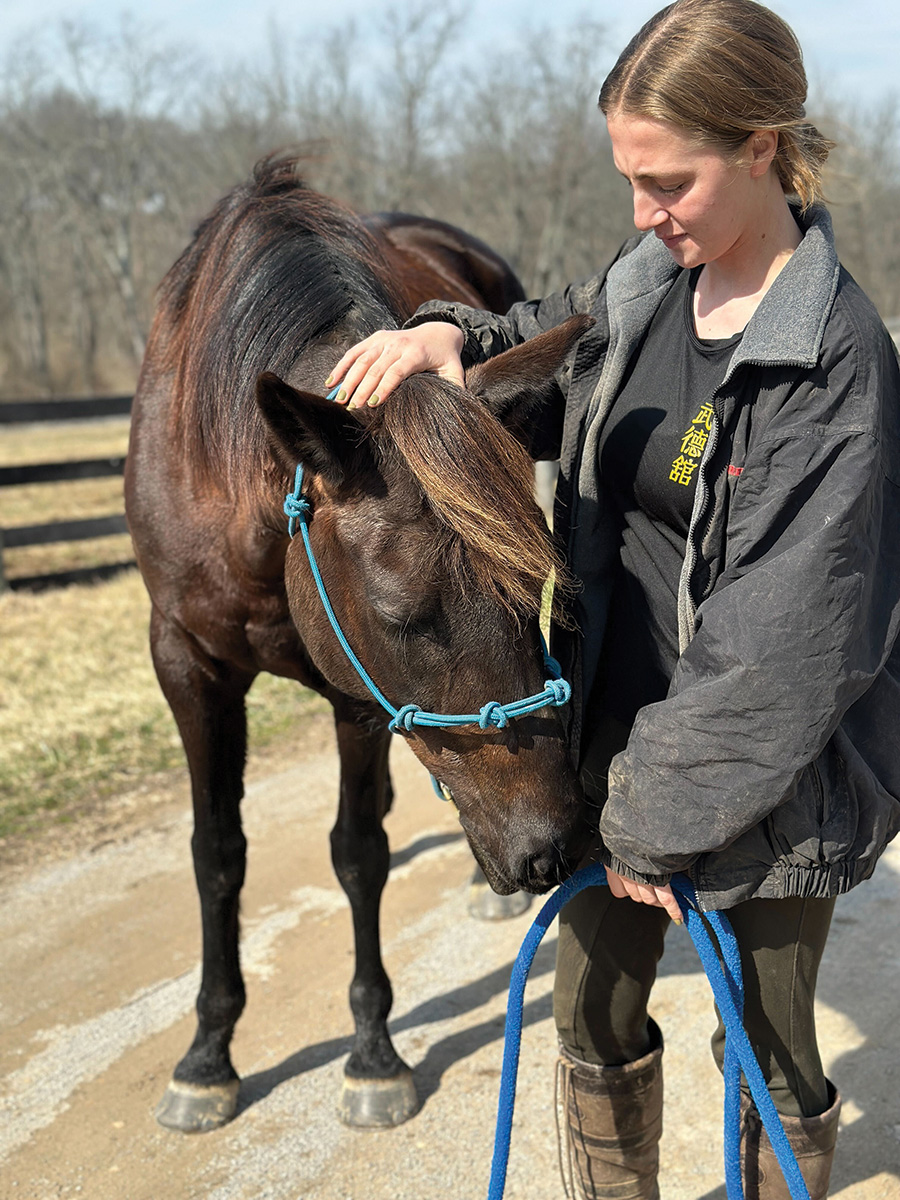
A girl lowers the mare's poll by applying pressure with her hand.
For milder cases, teach the horse to lower his head using a rope halter and light pressure on the poll from your right hand. Photo by Shoshana Rudski

Moving on to the Bridle

When the horse is ready, Malinoski explains that she repeats the process, this time using the bridle.

TIP: She says that while it is not necessary to have a certain bit for the retraining process, she advises having a bit that fits the horse properly. However, she says that practicing with a smaller bit, like a snaffle, can help regain trust.

After giving the command for the horse to lower his head from the direction of the poll, use your right hand to gently guide the bridle up into position while using your left hand to position the bit into place.

While she generally waits for the horse to open his mouth for the bit, if necessary, this can be encouraged by placing your thumb and middle finger on the bars on each side of the horse’s mouth and softly applying pressure.

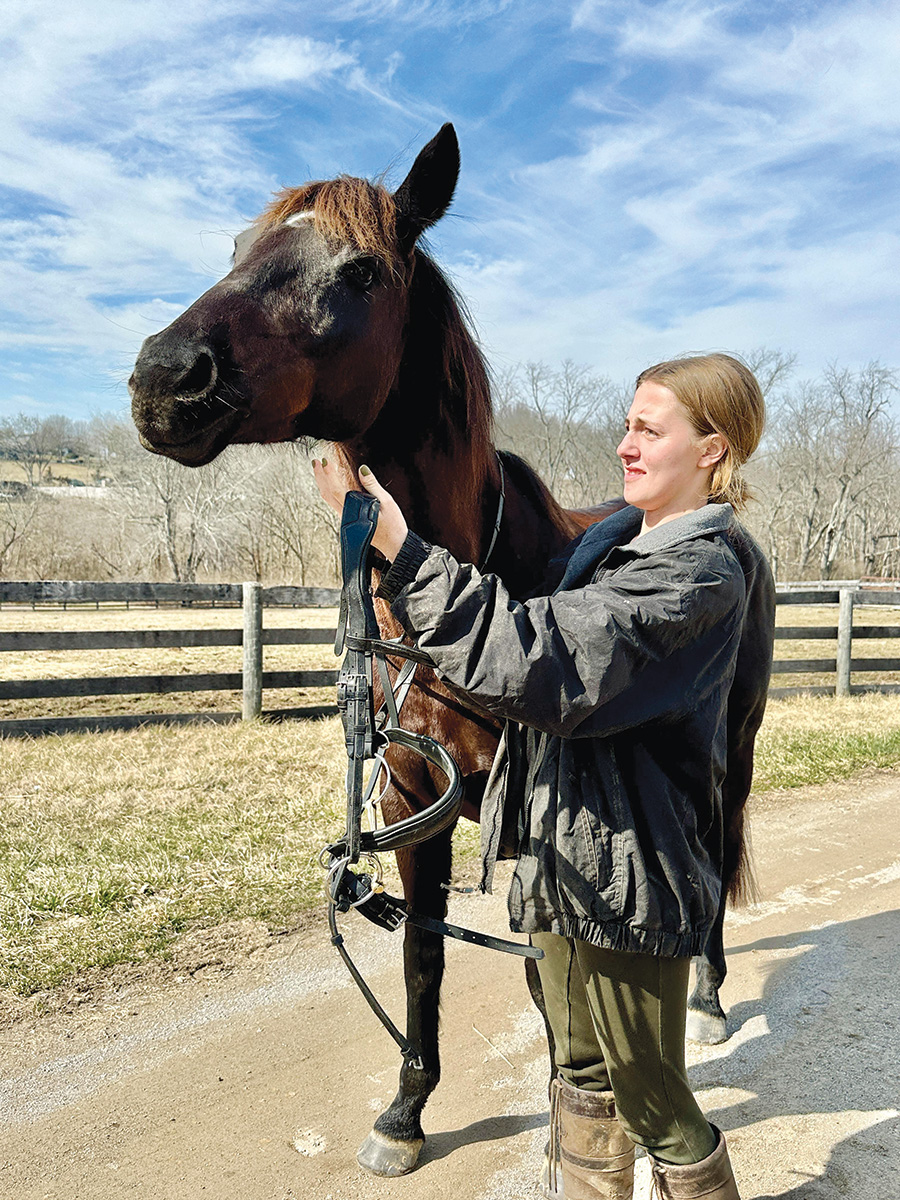
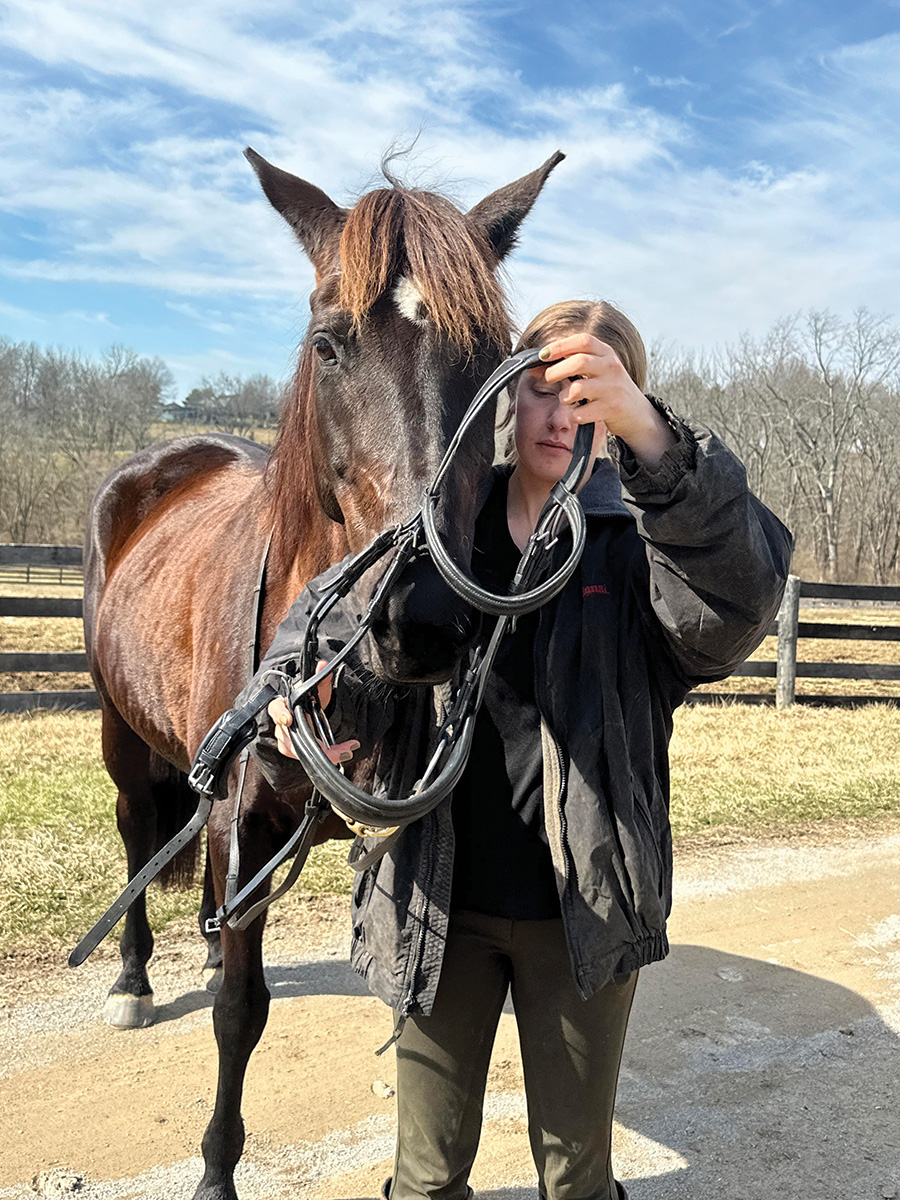
An equestrian bridles a horse.
While it’s best to wait for the horse to open his mouth on his own, sometimes it may be necessary to apply light pressure to the bars of the mouth as you guide the bit in. Photo by Shoshana Rudski

TIP: Malinoski acknowledges that while some trainers use gimmicks such as applying products to the bit to make it taste good or holding a treat for the horse in the same hand as the bit, she is not a fan of these methods. This is mainly because these items may not be accessible when you are at a show or on a trail ride, and you can easily get into trouble if your horse won’t bridle without them.

With the bit in, the bridle can then be softly pulled up and into place. Once on, she lowers it back off, taking care not to bang the horse’s teeth with the bit in the process. She tries to do this a few times before ending the session.

An equestrian bridles a horse.
After bridling successfully during the training process, remove the bridle right away, gently lowering the bit out of the horse’s mouth. Photo by Shoshana Rudski

Due to the extra space, Malinoski prefers the arena for working with horses who back away from the bridle. While she will still start the retraining process by teaching the command to lower the head when it comes time to put on the bridle, she then moves to the arena.

If the horse attempts to back away, she simply walks back with him until he stops and lowers his head.

“When that happens, I release the pressure,” she says.

Length of Retraining

Malinoski says that while the retraining process can take time, with patience and understanding, progress can happen in a relatively short span.

“If you work steadily at it, you should be able to make progress in about a week,” she says.

Headshot of a brown mare.
In about a week of steady training, you should end up with a horse that happily accepts the bridle instead of waging a war each time you tack up. Photo by Shoshana Rudski

When the bridle goes on smoothly, release the pressure, and the horse has the reward of you taking it off. Malinoski explains that session lengths will vary by horse.

This article about bridling a horse that evades the bridle appeared in the May 2024 issue of Horse Illustrated magazine. Click here to subscribe!
Enteroliths in Horses

0

Oysters and mollusks form pearls as a protective reaction to irritants, like a parasite or grain of sand invading their shells. A similar concept is at work with enterolith formation in the horse, but instead of a valuable pearl, the end result may lead to colic or surgery.

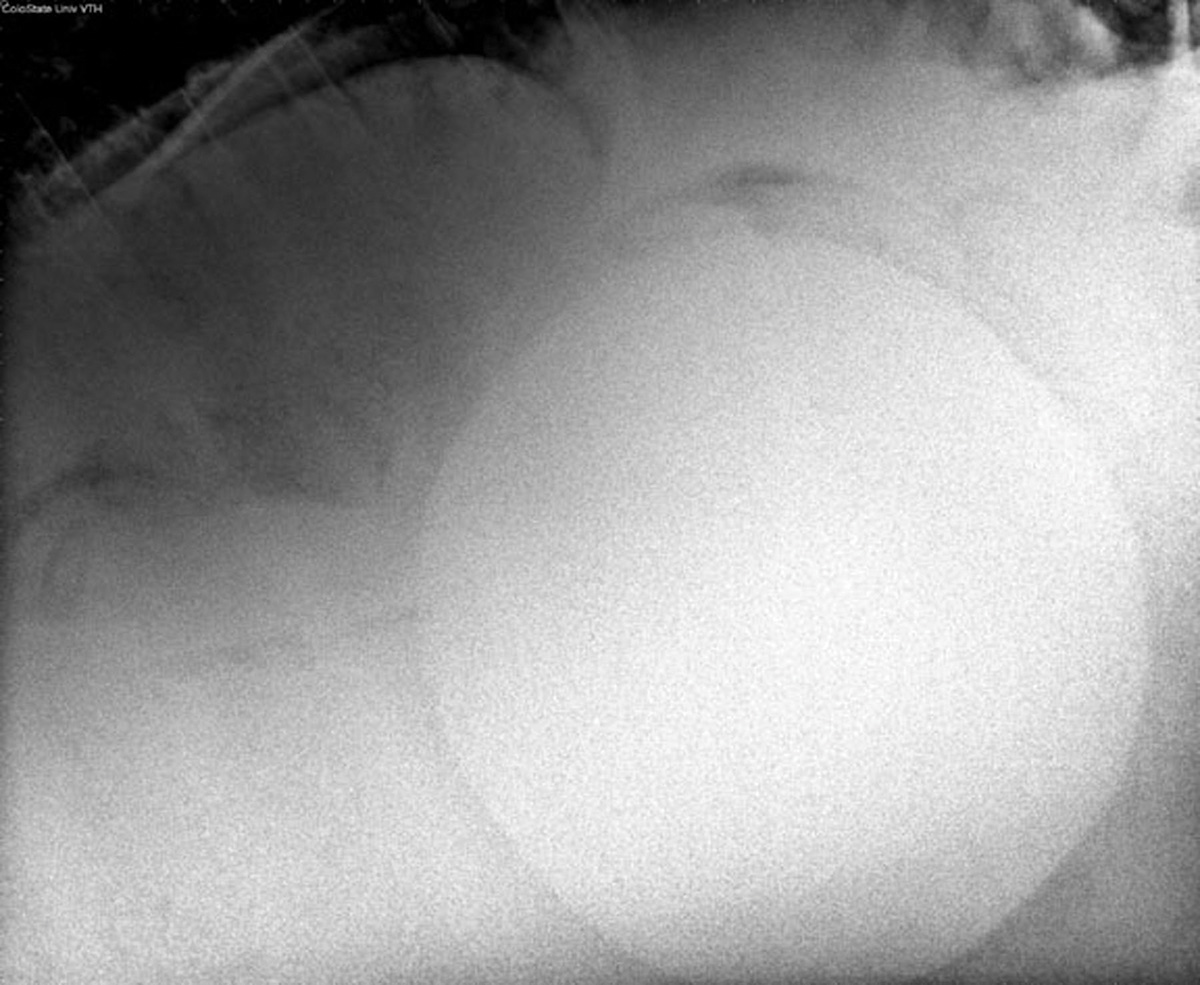
Enteroliths are mineralized intestinal stones that sometimes form within the horse’s colon. The condition can become serious if a stone gets too large to pass through the digestive tract. When an enterolith causes obstruction, surgical removal is the only solution to avoid a fatal gastrointestinal rupture.

It takes at least a year—but more likely several years—for an enterolith to become large enough to form an obstruction.

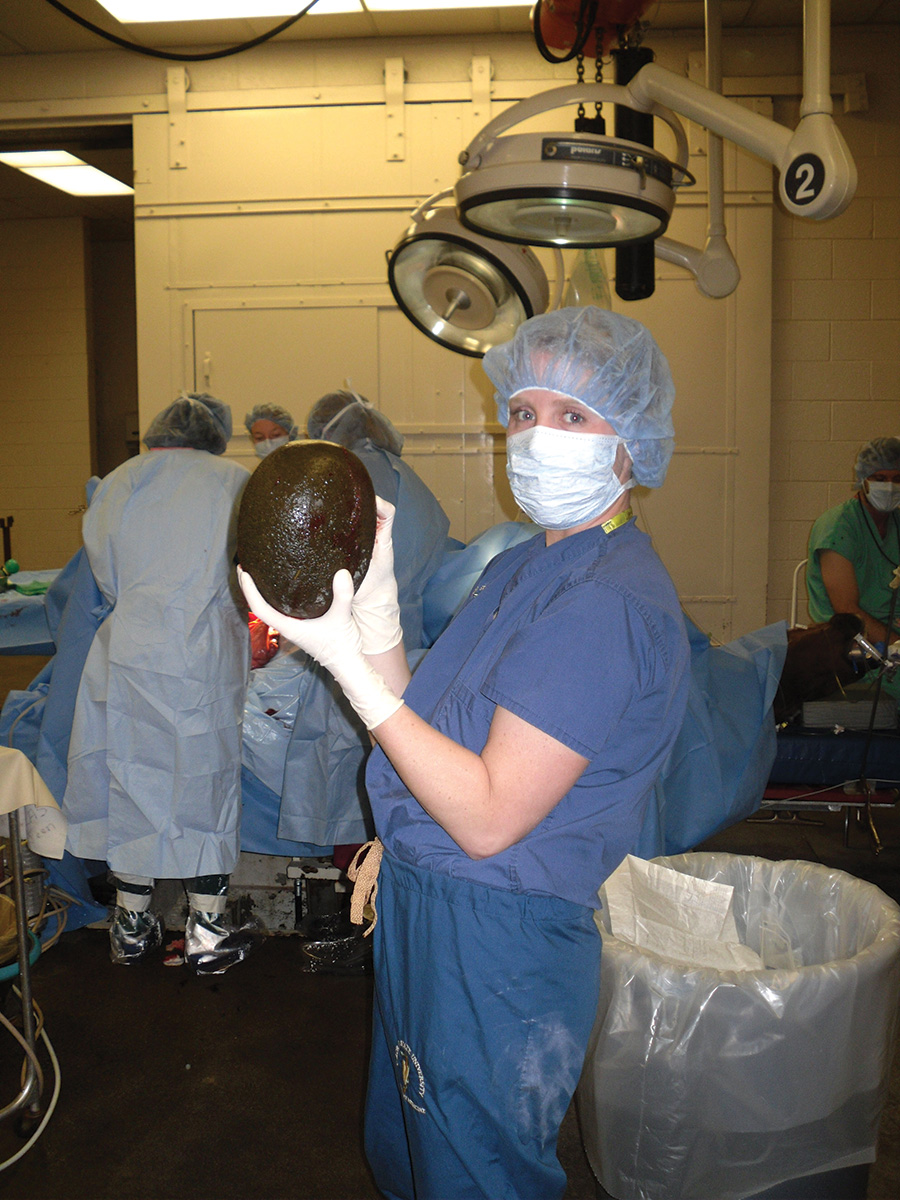
A large enterolith removed during surgery after a blockage was discovered.
A large enterolith removed during surgery after a blockage was discovered. Photo by Diana Hassel, DVM

The process under which enteroliths gradually form is known as enterolithiasis.

What’s Causes Enteroliths in Horses?

Like a pearl, an enterolith starts by forming around something. This small, indigestible object could be a pebble, coin, piece of rubber or wire, or even a piece of baling twine, rope, or fabric the horse has swallowed.

Mineral salts in the horse’s intestine or colon sometimes form around the object. These struvite crystals are comprised mainly of magnesium, ammonium and phosphate.

To support this struvite mineralization, there must be the correct environment within the colon, which includes a higher pH/more alkaline colonic contents, combined with a rich combination of minerals.

Diets high in alfalfa hay are most likely to create this optimal environment for mineralization.

“Alfalfa is a forage with a relatively high buffering capacity compared with other forages, thus it contributes to the more alkaline colonic environment needed for enterolith formation,” says Diana M. Hassel, DVM, Ph.D., Dipl ACVS, a colic surgeon at Colorado State University Veterinary Teaching Hospital and professor in the Department of Clinical Services. “The other big contributing factor is likely the mineral content in alfalfa. Magnesium has been implicated, and it is particularly high in alfalfa grown in certain areas versus others.”

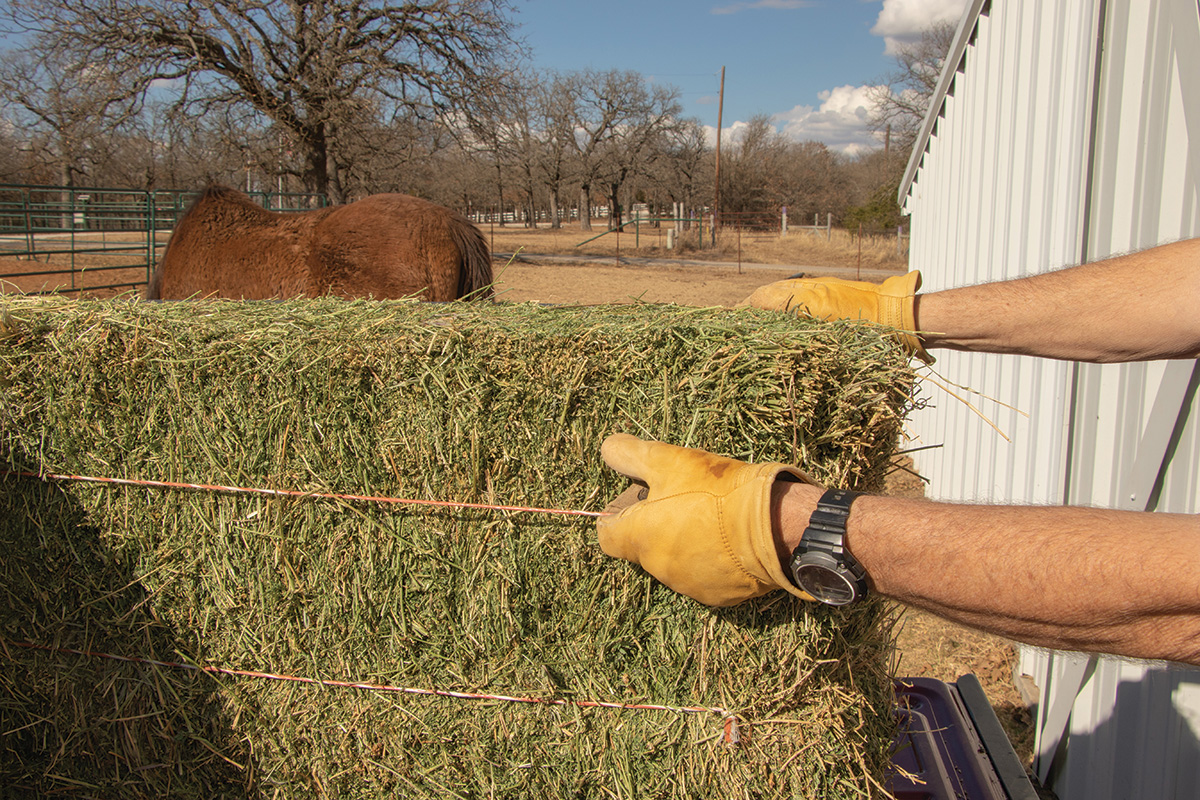
Alfalfa hay being unloaded.
Diets high in alfalfa hay are most likely to cause enterolith formation. Photo by Debra Lawrence/Adobe Stock

Some studies have recognized higher magnesium and other minerals in the water in regions of the country where enterolithiasis is more common.

The enterolith that forms around a hard object like a pebble, coin, or wire can be round, spherical, triangular, or flat in shape. Enteroliths can vary in size from as small as a walnut to larger than a grapefruit. Among the most dangerous are those that are baseball-sized.

When the horse swallows a soft foreign body like baling twine, it can become mineralized, resulting in the formation of hundreds of tiny enteroliths along the piece of twine.

Risk Factors

Risk factors for enterolith formation include:

  • Geographical region
  • Diet high in alfalfa
  • Stall confinement
  • Sibling that developed the condition

California, Texas, Florida and Arizona are the primary areas for enterolithiasis in the U.S. This may be related to minerals in the soil, and/or the fact that many horses in these states eat a high or all-alfalfa diet.

“It’s not known whether it’s the water, the soil, the alfalfa itself, or simply the amount of alfalfa owners feed in these regions that makes these areas at higher risk,” notes Hassel. “Within the state of California, there are areas with very few enterolith cases, even when alfalfa is fed frequently, and other areas where [cases are] commonly found.”

Hassel points out that stall confinement and diets high in alfalfa are the only repeatably documented risk factors for enterolithiasis, with high alfalfa diets being the most impactful.

“Alfalfa is higher in protein than most other forages, and this may provide a source of nitrogen for the ammonium content in enteroliths—and contribute to the higher pH in the colon,” says Hassel.

She notes that the roles of phosphorus and other minerals, such as calcium and zinc, are not well established.

Studies have shown that Arabians and Morgans are most commonly affected, but Hassel notes that no breeds are “immune” to developing enteroliths. Any breed may be affected when rich alfalfa hay is fed.

Interestingly, the condition is found in mares more often than in male horses.

Watch for Signs of Enteroliths in Your Horse

Clinical signs of enterolithiasis can include:

  • Recurrent bouts of colic/abdominal pain
  • Depression/lethargy
  • Loose stool
  • Change in behavior/“crankiness”
  • Weight loss
  • Resentment when girth is tightened
  • Reduced performance
  • Reluctance to go downhill or jump

On occasion, a horse will pass small enteroliths in manure. If you see this happen, it’s a red flag that should not be ignored. This is an indication there may also be a larger stone that can’t pass.

Pay attention when cleaning the stall; a small enterolith passed in the manure will be hard as a rock.

Any time a horse passes a small enterolith, Hassel strongly recommends making an appointment at a veterinary referral facility to have abdominal radiographs performed.

“If there are no large enteroliths present (all are smaller), it may be possible to manage these cases long-term without surgery,” says Hassel. “If larger enteroliths are present, surgical management on an elective basis is a lot less risky and less expensive than an emergency colic surgery.”

An abdominal radiograph showing the presence of a large enterolith.
An abdominal radiograph showing the presence of a large enterolith. Photo by Diana Hassel, DVM

Surgical Resolution

When abdominal radiographs reveal the presence of an enterolith too large to pass through the GI tract, surgery is the only solution.

This is not a “wait and see” situation. Without surgery to remove the obstructing enterolith, the horse’s intestine can rupture, causing a painful death.

Fortunately, when the horse is in good condition and without other issues, surgery for enterolith removal has a high success rate.

Reducing Risk of Enteroliths

Horse owners can be proactive and lower their horse’s risk of forming enteroliths.

“The most critical advice is to reduce the quantity of alfalfa fed to 50 percent or less of the diet,” says Hassel. “If the horse is at high risk (for example, already had an enterolith removed), I would recommend taking that horse off alfalfa entirely.

“Keep in mind that if your horse has an enterolith and you change his diet to a different hay, that may contribute to movement of the stone downstream in the gastrointestinal tract, resulting in obstructive colic,” she adds.

Hassel encourages any owner who suspects their horse has an enterolith to first have abdominal radiographs done before making diet changes.

Other preventative management techniques include:

  • Daily access to pasture/turnout
  • Keeping hay and feed free of foreign objects
  • Feeding small amounts of grain twice daily with a half-cup of apple cider vinegar (ACV) to attempt to decrease pH level in the gut

Although ACV has a small but reliable impact on decreasing pH in the gut, it can’t dissolve an enterolith that has already formed.

Hassel finds that horses who regularly graze on pasture are at lower risk for developing obstructive enteroliths.

A palomino grazing in a field.
Grazing is a good preventative measure if your horse has risk factors for enterolith formation. Photo by FastHorsePhotography/Adobe Stock

If grazing is not an option, it’s beneficial to keep hay available throughout the day using a slow feeder so the horse doesn’t go for many hours with an empty gut.

Encourage water consumption by ensuring clean, cool water is available 24/7. Electrolytes can help promote drinking when horses consume less water during cool weather.

Because enteroliths form around small objects the horse has swallowed, keep feed areas free of debris. If you use rubber mats, sweep them daily. Make it a routine to clean hay bunks and feed bins frequently.

Careful management, taking proactive measures, and being observant can protect most horses from enterolithiasis.

This article about enteroliths in horses appeared in the May 2024 issue of Horse Illustrated magazine. Click here to subscribe!

0FansLike
0SubscribersSubscribe
We use cookies to help personalize content, tailor and measure ads, and provide a safer experience. By navigating the site, you agree to the use of cookies to collect information. Read our Cookie Policy.
OK