0 ITEMS
  • My Account
  • Holiday Gift Guide
  • Podcast
  • Webinar
Subscribe Combo
Enable cache13
Home Blog Page 13

Boss Mares, Inc.: Empowering Women in the Western World

0

Spend time watching any herd of horses, and you’ll notice there’s always one that stands out: the boss mare. Her leadership role is unmistakable, a symbol of determination and resilience.

The boss mare’s independence and leadership are what inspired a team of four powerhouse women in the equine industry to develop the nonprofit organization known as Boss Mares, Inc. The organization assists female entrepreneurs by giving them a leg-up in their careers and businesses.

The four women who founded the organization are Anna Morrison, Ph.D., co-founder and president; Kate Bradley Byars, co-founder and secretary; Patti Colbert, co-founder and treasurer; and Ellen Bell, member of board of directors. Each of these women present extensive resumes in the horse industry and connections that run deep. They came together with the same mission and goal of connecting women in agriculture.

Boss Mares, Inc. co-founder and secretary Kate Bradley Byars, co-founder and president Anna Morrison, and co-founder and treasurer Patti Colbert (from left to right).
Boss Mares, Inc. co-founder and secretary Kate Bradley Byars, co-founder and president Anna Morrison, and co-founder and treasurer Patti Colbert (from left to right). Photo by Abigail Boatwright

The official kick-off of Boss Mares, Inc. took place December 1, 2023, in Weatherford, Texas.

Meet Anna Morrison

Founder Anna Morrison’s passion for horses developed during her childhood in Wisconsin. Anna pursued an education focused on horses first at Colorado State University (CSU) and later at Texas A&M University (TAMU), earning a Bachelor of Science in equine science and agricultural business, a Master of Arts in extension education, and a Ph.D. in higher education administration.

Her career path began in academics, teaching and developing curricula at CSU and TAMU. Later, Morrison served industry member organizations for the American Quarter Horse Association and the National Reined Cow Horse Association. Along the way, she received support and guidance from mentors and industry experts, which furthered her appreciation for just how important it can be to have a leg up.

“When I was going through a transition in my career, I had this feeling that there was a way we could work together to pay our experience forward to other women in the industry,” says Morrison. “Every single one of us who has been involved in the industry has had the help of other women, whether through mentorship, encouragement, or investment, and I thought there was a way we could work together to get those same opportunities to other women.”

Morrison knew who to call when the time came to present a proposal for Boss Mares, Inc. Ellen and Larry Bell have always been a part of charitable organizations, and they have started numerous businesses as well. In South Africa, they are involved with a project that empowers women to live life and provide for their families. Morrison recalls getting through just a few slides in her presentation, and the Bells were ready to kick off the organization.
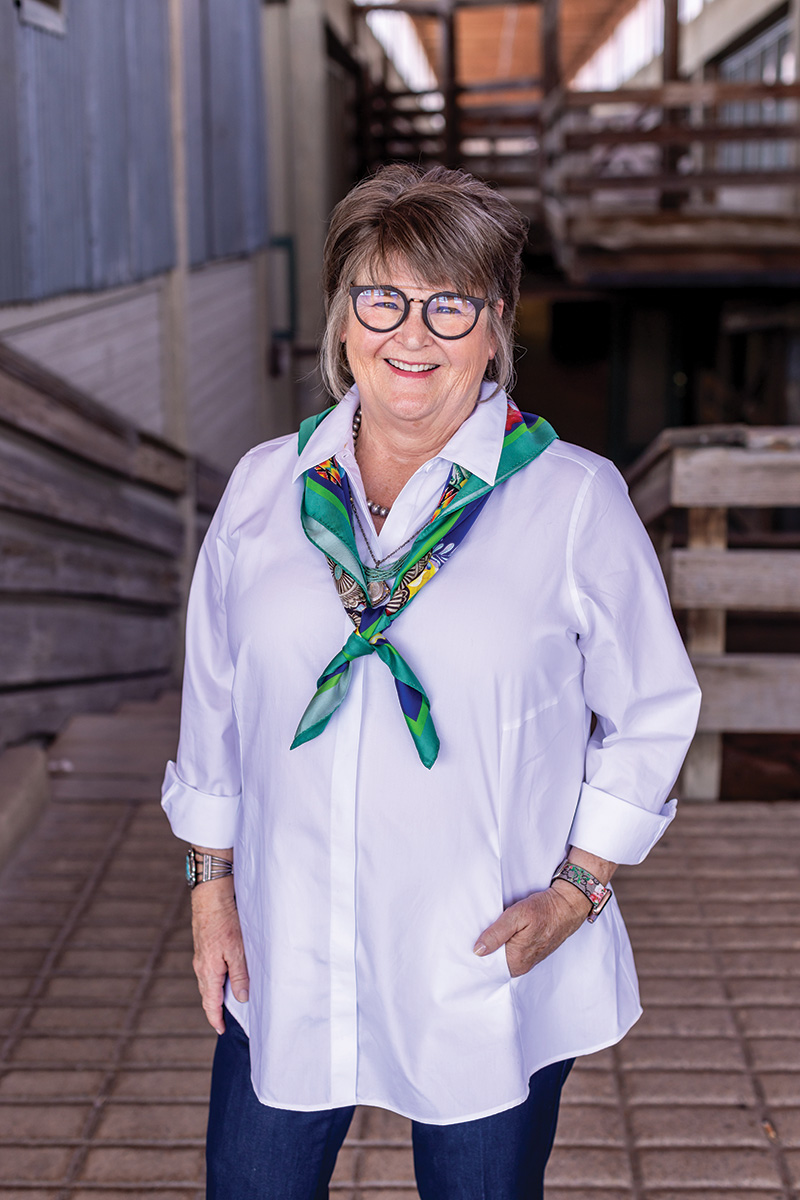
A portrait of Ellen Bell.
Ellen Bell and her husband, Larry, were excited to help form Boss Mares, Inc., just a few slides into the presentation. The pair have extensive experience with nonprofits and charities. Photo by Abigail Boatwright

“The goal is to help young women everywhere,” says Ellen. “We were involved in extreme situations in Africa, but to watch women have the opportunity to better themselves and their businesses and careers, and to learn how to do it properly, we were all in immediately.”

With the Bells’ experience with nonprofits and charitable organizations, they provided Morrison with the connections to begin forming Boss Mares, Inc.

Bringing on Kate Bradley Byars

As Morrison began thinking about who would make up the co-founders and board of directors, a few people came to mind. When Morrison asked Byars and Colbert if they would be interested in helping, they jumped at the opportunity.

Byars has a passion for telling people’s stories and making connections. Writing always came easily to her, and in college at TAMU, Byars pursued a degree in agricultural journalism. She rode through college, competing on the Texas A&M Equestrian Team and on the Quarter Horse circuit. After graduating with a Master of Science in agricultural leadership, education and communications with a focus on photography, Byars joined the Western Horseman magazine staff.

Since 2010, she’s worked extensively in the western performance horse industry as a writer and photographer. Working for western equine and lifestyle publications is Byars’ specialty, and she especially enjoys connecting with people in the industry.

“Boss Mares, Inc. is a passion project, and the mission and focus is something we all can easily get behind [to] help female business owners in the western industry,” says Byars.

Patti Colbert’s Extensive Experience

Patti Colbert’s resume in the horse industry and connection to the western lifestyle began through watching television. After moving to Texas in the mid-1970s, Colbert worked at horse barns and volunteered as a 4-H leader. She fell in love with the production of equine events.

Colbert began at the Texas Quarter Horse Association, managing the Quarter Horse racing and show industry. Her next move was to the AQHA, where she was responsible for raising millions of dollars for the American Quarter Horse Foundation’s scholarship, equine research, and preservation programs.

She then opened her own firm and worked with clients like the American Angus Association, the American Paint Horse Association, TAMU and more. She and her team took on the management of the Mustang Heritage Foundation, and in 2007 created the Extreme Mustang Makeover events, placing thousands of previously wild Bureau of Land Management Mustangs into private care.

Colbert received the 2014 American Horse Publications Innovator of the Year Award, the National Cowgirl Hall of Fame Fern Sawyer Award, and was inducted into the Texas Cowboy Hall of Fame. Currently, she is on the National Cowgirl Hall of Fame board of directors and serves as advisory board chair for the Ride on Center for Kids.

“I know that women are the decision makers in the majority of this industry,” says Colbert. “I think more than 76 percent of the members of the AQHA are female. The reality of it is that women are the backbone of the industry in the agriculture and western lifestyles, and we need to help one another to continue to grow and be relevant and current.”

Lead the Herd Workshops

Boss Mares, Inc. focuses on five pillars: accounting and finance support, continuing education, leadership and career coaching, legal counsel, and marketing expertise. The organization will host Lead the Herd workshops to meet western women where they are already gathering. At these workshops, the keynote speakers are experts in the fields of each pillar.

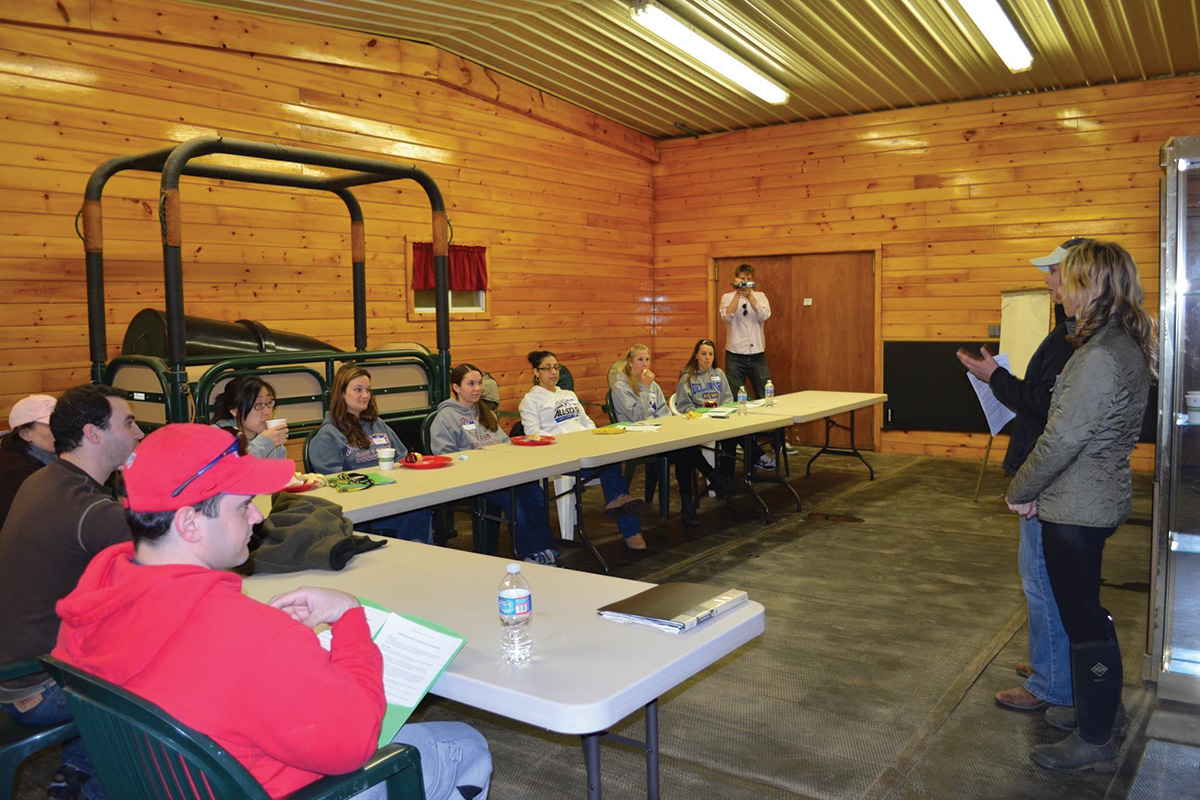
A Boss Mares, Inc. workshop with speakers at a learning lunch.
Keynnote speaker Mackenzie Kimbro (left) with Patti Colbert at a learning lunch. Photo by Abigail Boatwright

The purpose of each workshop is to bring powerful expertise from both inside and outside the western industry in a setting that supports high-impact learning and open dialogue between presenters and attendees.

“We are here to provide a leg up to cowgirl entrepreneurs in the professional and agriculture industry,” says Morrison. “We do that by providing access to business resources at our workshops and by providing grants through our grant application process that help women invest in and advance their small businesses or invest in themselves and their career through continuing education.”

A Lead the Herd workshop.
Lead the Herd workshops meet western women where they are already gathering. Keynote speakers present in the fields of five pillars: accounting and finance support, continuing education, leadership and career coaching, legal counsel, and marketing expertise. Photo by Abigail Boatwright

The first workshop was held at the Art of the Cowgirl in Arizona from January 19-20, 2024. With more workshops in the future of Boss Mares, Inc., the organization offered grants through an application on their website through March 31, 2024, for people in the agriculture industry.

“I hope that the women who have seen it now and have heard the speakers will want to be a part of it by giving financial aid or by participating in grants, whatever fits with their lifestyle,” says Ellen. “I hope they will be encouraged and say, ‘You know what, I can do this, this is something I’ve wanted to do, and I’m not going to let something get in my way because it is available to me.’ That is what’s exciting and what I hope to see in the future for us.”

This article about Boss Mares, Inc. appeared in the May 2024 issue of Horse Illustrated magazine. Click here to subscribe!
ASPCA Right Horse Adoptable Horse of the Week: Eema’s Escape

0

Welcome to Horse Illustrated’s weekly installment of the Right Horse Adoptable Horse of the Week, offered in partnership with the ASPCA’s Right Horse program. This week’s adoptable horse is Eema’s Escape! Check back weekly for a new featured horse so you can find your Right Horse.

Adoptable horse Junebug.
Photo courtesy Days End Farm Horse Rescue

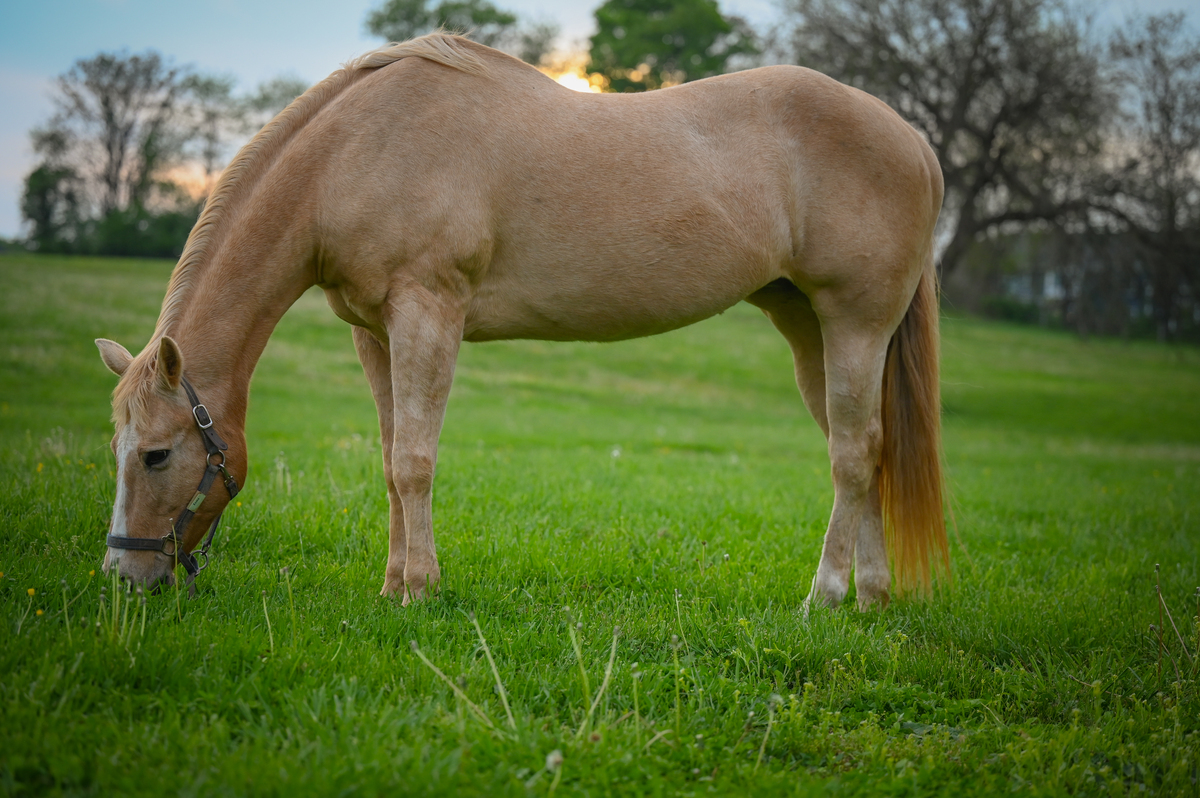
Adoptable Horse: Eema’s Escape, a 30-year-old, 15.1hh American Quarter Horse mare
Organization: Days End Farm Horse Rescue, Woodbine, Md.

Get to Know Adoptable Horse Eema’s Escape

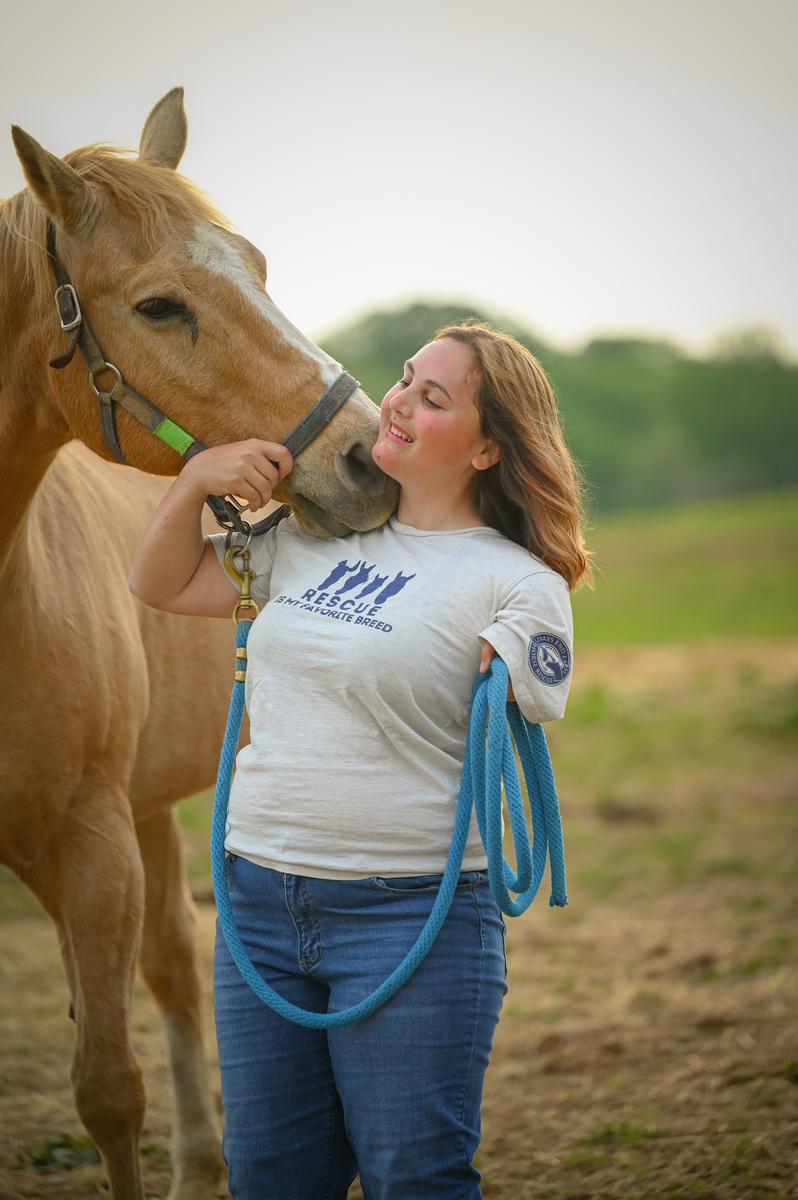
Eema’s Escape is a gentle 30-year-old palomino mare with a heart of gold and a story to match. She earned her name after being found abandoned in a state park, but her journey has led her to safety, care, and now—hopefully—to a loving retirement home.

Eema is part of DEFHR’s Guardian Program, which means all expenses related to her care are tax-deductible. While her riding days are behind her, she still has so much to offer as a sweet and steady companion.

This super senior is the definition of calm and kind. She’s perfect for beginner handlers and absolutely wonderful with kids. Eema enjoys slow walks, quiet moments, and affectionate attention. She would thrive in a peaceful pasture setting where she can be spoiled and loved the way she deserves.

Give this golden girl the soft landing she’s been waiting for—Eema is ready to escape into your heart.

Contact Days End Farm Horse Rescue today about ASPCA Right Horse Adoptable Horse of the Week, Eema’s Escape!

A sweet palomino mare interacting with her handler.
Photo courtesy Days End Farm Horse Rescue

ASPCA Right Horse

My Right HorseASPCA Right Horse is the online adoption platform of The Right Horse Initiative, a collection of equine industry and welfare professionals and advocates working together to improve the lives of horses in transition. A program of the ASPCA, their goal is to massively increase horse adoption in the United States. To find more adoptable horses and foster horses, visit www.myrighthorse.org. To learn more about The Right Horse, a program of the ASPCA, visit www.aspcarighthorse.org.

Riding Your Horse on the Beach

0

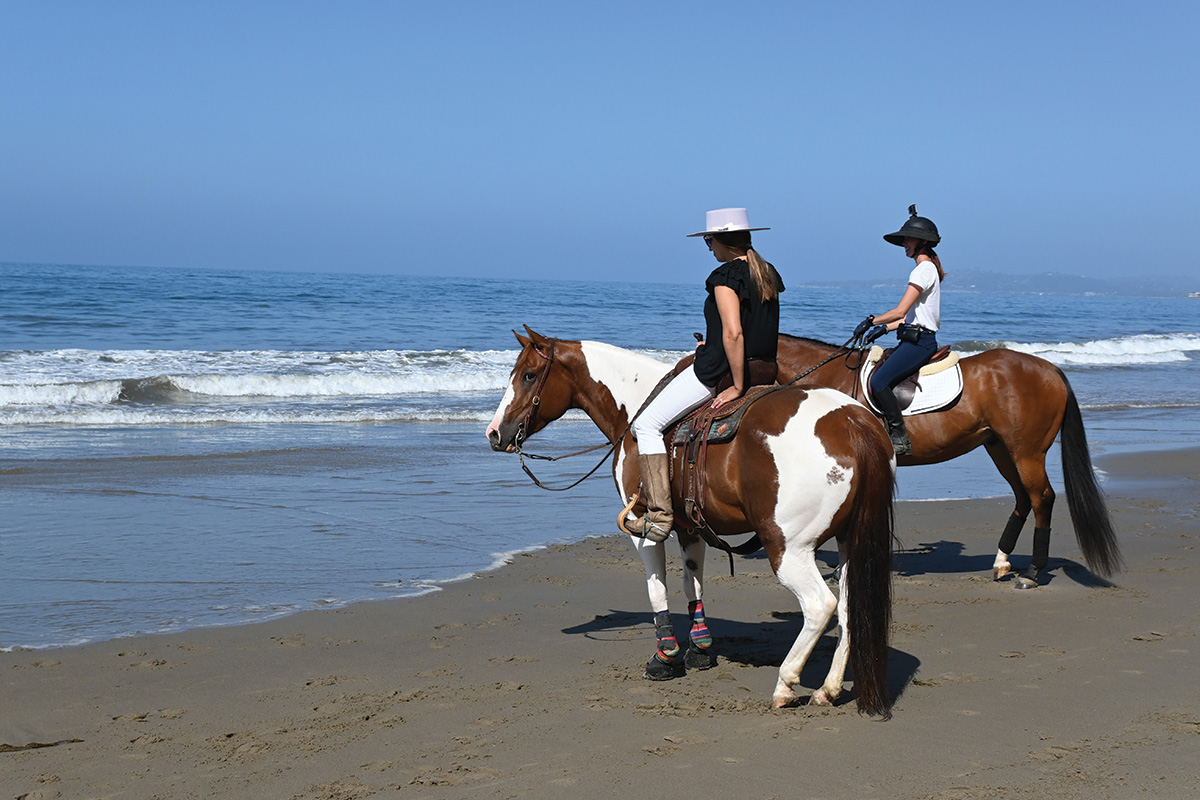
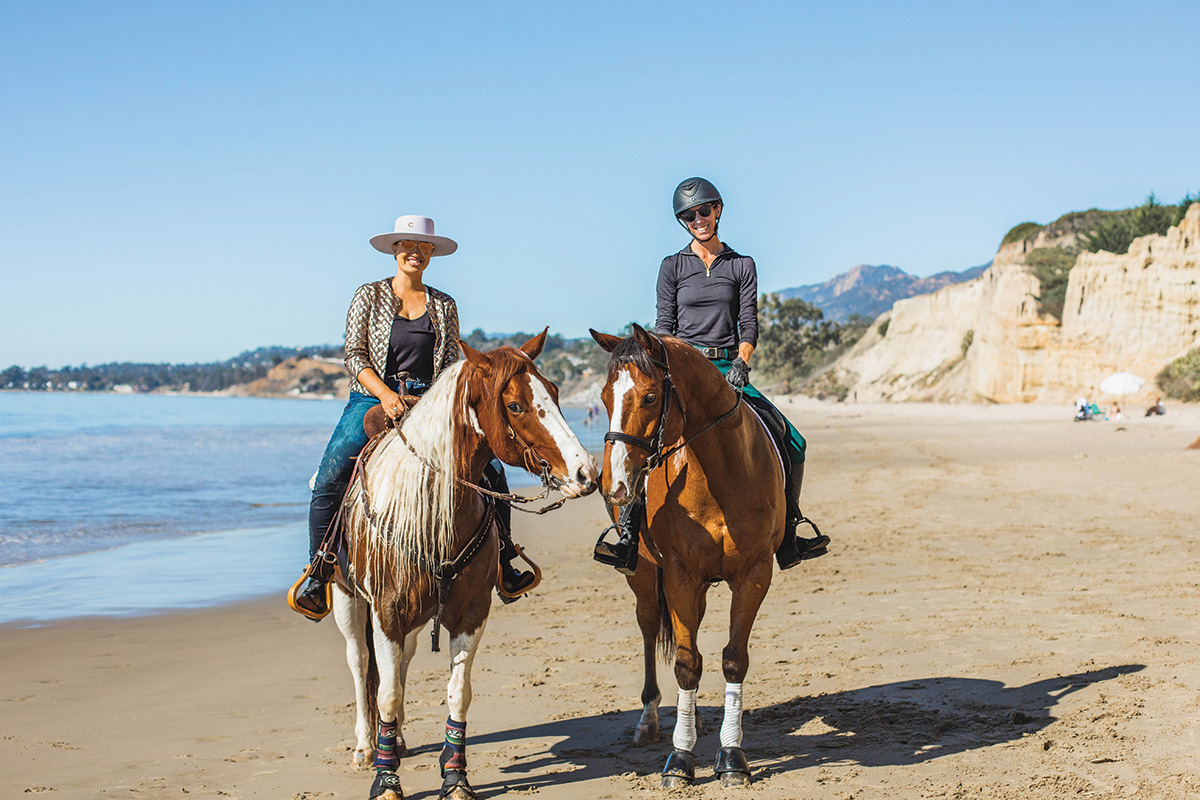
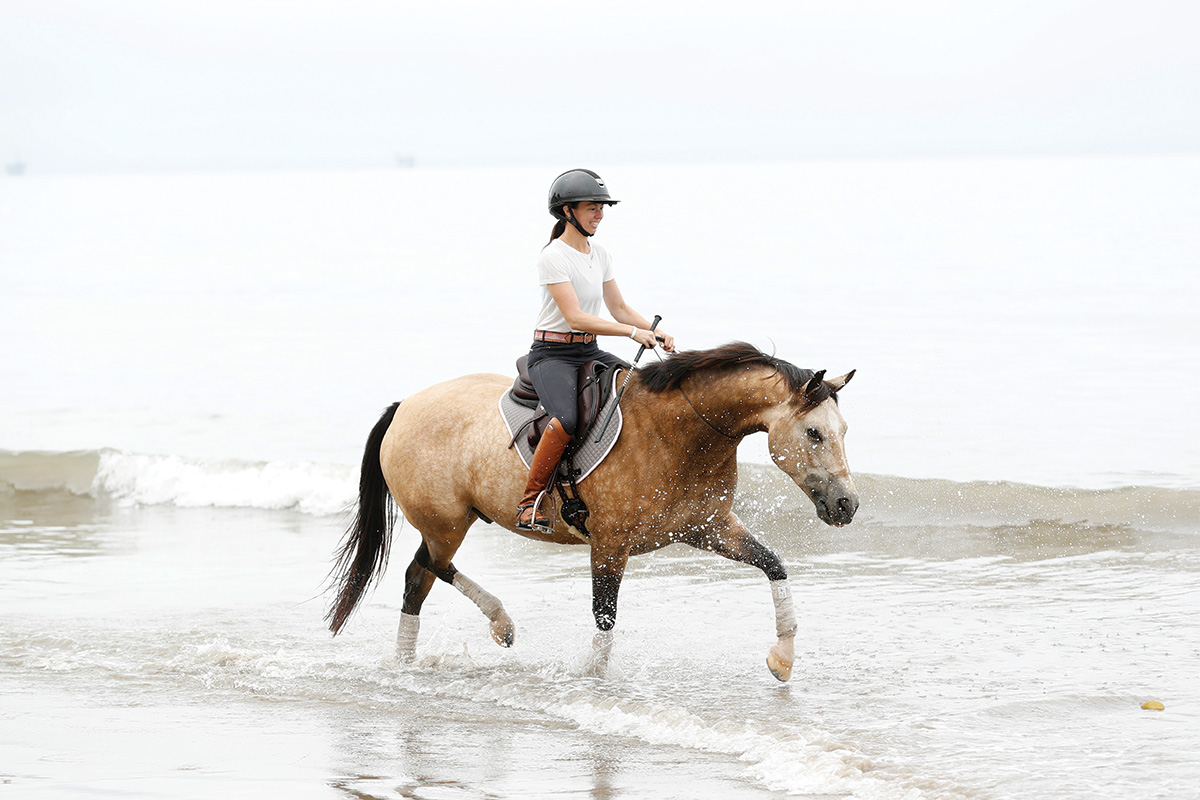
Galloping along a sandy shore with the sound of hoofbeats and foamy waves crashing on the surf is a dream for most equestrians. While there are many opportunities to ride rental horses at tropical vacation destinations, riding your own horse on the beach is a memory you’ll always cherish.

Author Raquel Lynn and her Paint Horse mare Fira riding at the beach.
Raquel Lynn and her Paint mare Fira both love the beach. Photo by Elena Gaeta

Planning a Beach Trip with Your Horse

Before you load up your horse and head to the nearest beach, do your research. Not all beaches allow horses, and some have limited or seasonal hours.

Ashley Hall of Winter Park, Fla., has access to several beautiful equestrian friendly beaches within trailering distance. Her list includes Amelia Island, St. Augustine, Fort Pierce and Canaveral National Seashore. Hurricane season can impact accessibility and close beaches due to storm damage, however.

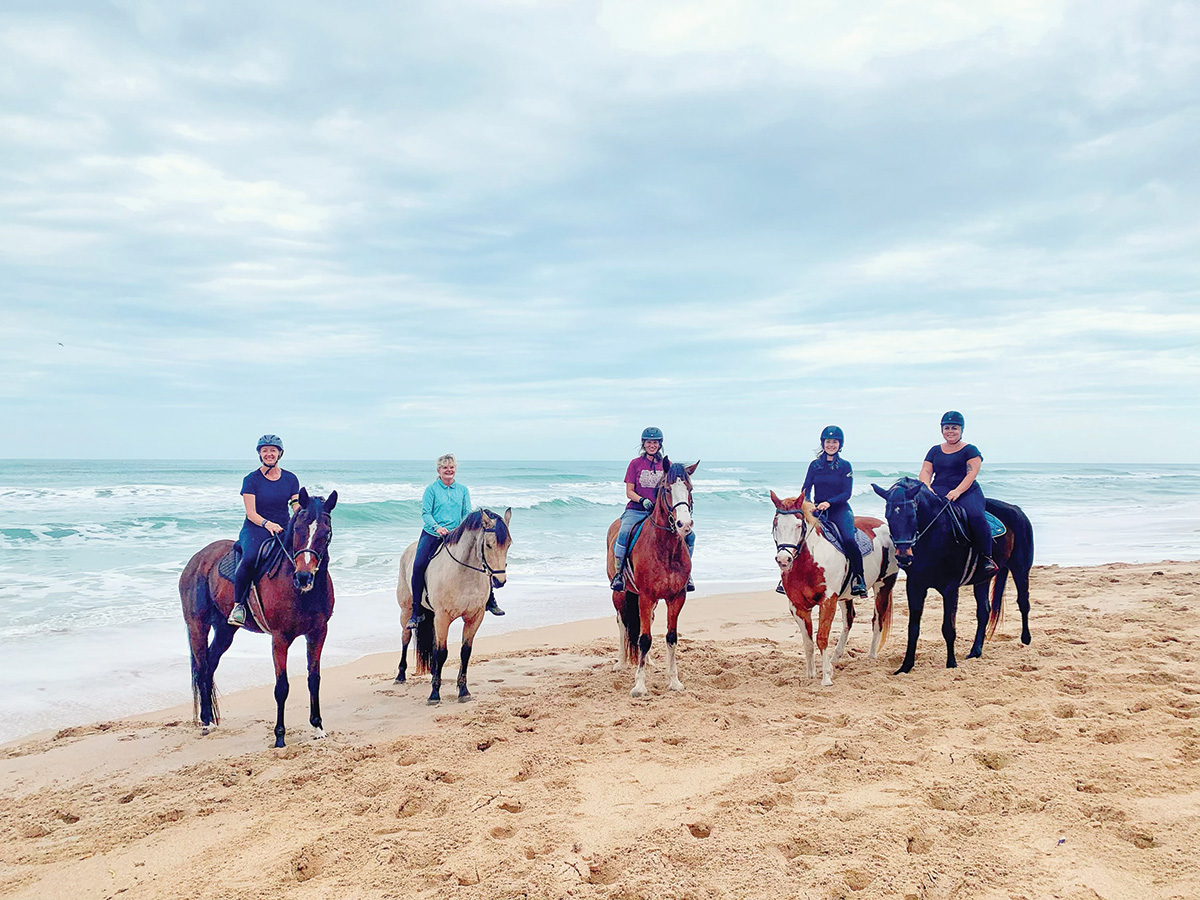
A group of equestrians riding their horses on the beach.
Ashley Hall and her friends ride on the beach in Florida, where they are close to several horse-friendly beaches. Photo courtesy Ashley Hall

Once weather is considered, look up your local beach’s hours and rules for bringing horses. Hall has ridden at Canaveral National Seashore, which keeps a strict set of rules for equestrians. Horses aren’t allowed to visit from April 15th to October 31st due to turtle nesting season, and you must make reservations beforehand. They only allow six horses at a time on the sand. A permit costs $75 and grants you a four-hour time slot in the morning or afternoon.

Skip the beach during popular holidays to avoid crowds, and always consider your parking situation beforehand. Haul with friends or bring a smaller horse trailer (if possible) when the parking lot is tight.

I reside in Los Angeles, Calif., with two riding beaches nearby. Both are primarily enjoyed by families in highly populated city areas, making winter or spring a better time to visit. At Loon Point Beach in Carpinteria, horse trailer parking is parallel to the street in one direction. I saddle up on a sidewalk to avoid the road with active traffic. This busy situation works for my easygoing mare, but not all horses are familiar with an urban environment.

The second beach at Rincon Point has a spacious parking lot, but I always pull in and immediately turn around and face outward to avoid potentially being blocked in by cars. These simple details facilitate a smooth and stress-free arrival and departure.

The First Visit

Trailering your own horse is a much different experience than riding a seasoned rental horse that rides down the beach daily. When horses see and hear the ocean for the first time, it can be overwhelming to even the most levelheaded horse.

Britt Sabbah of Agoura Hills, Calif., enjoys frequent beach trips with her three horses, including one 4-year-old. She understands a first trip to the water can be intimidating.

“I think the sound of the tide coming in and out and the waves crashing can be a little bit spooky for them,” says Sabbah. “They don’t really know what to do with that and it probably feels like the whole earth is going to just drop out beneath them.”

An equestrian going bridleless aboard a buckskin gelding in the ocean.
Britt Sabbah has an experienced beach horse, who will ride bridleless in the waves. Photo by Kristin Lee Photography

If you’re worried about your horse being jumpy or want to take away some stimuli, bring earplugs to help dull the roaring sound of waves.

“I think for some horses, earplugs or a soundproof bonnet helps because then they’re not listening to the sound of the waves crashing and getting spooked by the noise,” says Sabbah.

Horses are flight animals. It’s a natural reaction to try and flee when they see a large wave approaching them. The time of year, weather, and low or high tide can impact the size of the waves. For this reason, Sabbah likes to always check local tide charts before planning her trip. She advises first-time beach riders to consider this when planning a visit.

“I think it’s much easier on them for the first time (at the beach) to go at low tide,” says Sabbah. “There’s a lot more beach, and the waves aren’t crashing as much and coming as close to them.”

A rider jumping her horse at the beach.
Britt Sabbah now has an experienced beach horse and can enjoy taking some jumps out to the sand! Photo by Kristin Lee Photography

Riding at high tide also means you’ll be going through deeper sand. Your horse will be more susceptible to pulling a tendon or getting sore for a few days if he’s out of shape.

Splashing through the waves can be an enjoyable experience for horse and rider once you get acclimated. On my first beach trip with my mare, Fira, she wasn’t confident enough to go in the water on her own.

Raquel and Fira with her friend Isabelle at the ocean.
Raquel and her friend Isabelle let their horses get used to the sights and sounds of the waves in California. Photo by Susan Friedland

I dismounted, soaking my old boots and leading her into the waves. Once she realized it was safe, she began happily splashing. I’ve trailered to the beach five times, and each trip, we walk into the water with more confidence.

Sabbah’s first experience with her pony, Louie, was a fun experience, but she didn’t put pressure on him, making the trip a positive outing for both of them.

“I couldn’t get him in the water the first time, but he had a lot of fun trotting along the beach,” she says. “I didn’t have any idea what to expect that first time, and didn’t push him in any way [to get in the water].”

Hall’s trusty mount, Cowboy, handles his beach trips like a pro, but the first view of the ocean takes a lot of horses by surprise.

“You never know when you’re taking a horse for the first time how they’re going to be,” says Hall. “When they see the ocean, their head goes straight up in the air and they’re a little freaked out.”

If you have a set of older tack, consider bringing it, because you might just get soaked. I like to bring a dry pair of tennis shoes to drive home in because my jeans and boots usually get soaked.

Britt Sabbah taking her buckskin gelding to the waves.
Britt Sabbah’s horse is a seasoned beach-goer. Photo by Kristin Lee Photography

Keep It Fun & Safe

It can be tempting to toss a bareback pad in the trailer and consider yourself packed. After all, bareback on the beach is the ultimate dream, right? Hall thought about bringing her bareback pad for her first trip with Cowboy, but opted to ride in her English saddle. She felt much safer and secure with a set of stirrups underneath her.

Horseback riding is always better with friends, and it’s great to bring along some dependable, calm equine role models. Hall’s trusty mount, Cowboy, handles his beach trips like a pro. For Hall’s first ride with Cowboy, her group had a mix of horses who had been before and first-timers.

Friends riding their horses on the beach.
Raquel and Fira love meeting friends for a beach ride, choosing off times and seasons to visit Southern California beaches. Photo by Elena Gaeta

“I think it definitely helps to go with a buddy who has a horse that is good about the water, because they really like to follow each other,” says Hall. “If they’re able to follow another horse that’s really confident into the water, that really helps them.”

Hall’s group of friends and horses spent their day taking photos, cantering alongside each other on the beach, and capturing those special horse-girl memories while everyone checked off an epic bucket list ride.

This article about riding your horse on the beach appeared in the July 2023 issue of Horse Illustrated magazine. Click here to subscribe!
Barn Banter – Episode 32

0

Barn Banter Episode 30 banner

Welcome to Barn Banter, the official podcast of Horse Illustrated. In Barn Banter episode 32, hosts Susan Friedland and Horse Illustrated Editor In Chief Holly Caccamise chat with David O’Connor, Olympic gold medalist and US Equestrian Chief of Sport.

To end the episode, Susan and Holly chat with HAPI Trails Horse Rescue about Rawhide, this month’s ASPCA Right Horse adoptable horse.

Click here to listen on mobile.

David O’Connor, Olympic Gold Medalist & US Equestrian Chief of Sport

Barn Banter episode 32 guest David O'Connor.
Barn Banter episode 32 guest David O’Connor.

David O’Connor represented the USA for 20 years as an athlete, earning individual gold and team bronze medals in eventing at the 2000 Sydney Summer Olympics and a team silver medal at the 1996 Atlanta Summer Olympics. O’Connor joined the US Equestrian Federation team in his current role as Chief of Sport in October 2022.

With US Equestrian, O’Connor is responsible for working with the executive team on the overall international and national sport support of the Strategic Plan initiatives including sport integrity, education, and equine and human safety and welfare. Additionally, he provides oversight of the international and national sport operations, ensuring that the sport department’s short-term and long-term strategic plans align with US Equestrian’s priorities. He also focuses on strengthening relationships with stakeholder groups, such as the USOPC, FEI, and USEF’s Recognized Affiliates.

Adoptable Horse of the Month, Rawhide

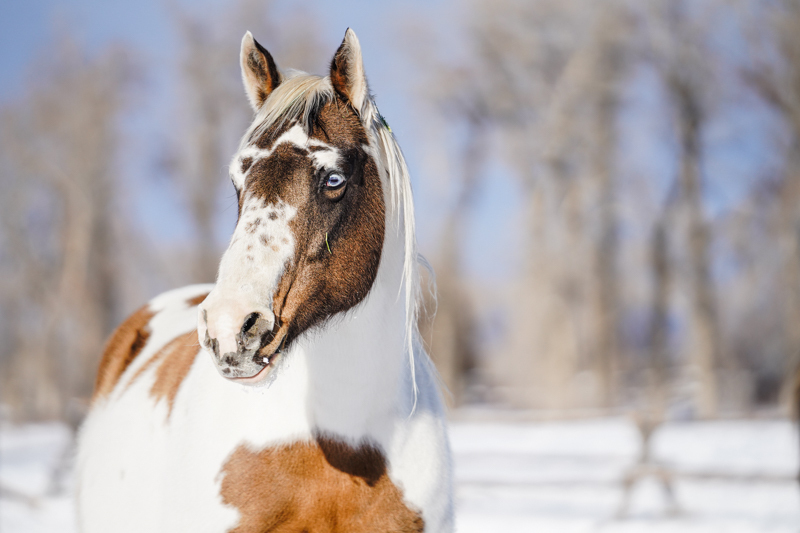
Adoptable horse Rawhide.
Photo courtesy HAPI Trails Horse Rescue

Meet this stunning Paint Horse mare (registered with the American Paint Horse Association) from HAPI Trails Horse Rescue in Driggs, Idaho. Rawhide is as unique as they come! With one striking blue eye, one brown, and a gorgeous “cat track” chestnut-and-white Paint coat, she’s nothing short of magical.

Though arthritis in her knee makes her a companion horse, Rawhide is a companion like no other. Imagine being greeted by her every day—talk about a mood booster!

Rawhide’s history might be a mystery, but HAPI Trails knows this girl is a delight to be around. Once caught she leads well, and genuinely enjoys your company when you’re in her space.

If you’re looking for a breathtaking pasture buddy with a personality to match, this dragon of a mare is ready to bring a little enchantment to your life!

Learn more about Rawhide here.

In addition to Barn Banter episode 32, you can check out all previous episodes of Horse Illustrated’s podcasts here.

ASPCA Right Horse Adoptable Horse of the Week: Junebug

0

Welcome to Horse Illustrated’s weekly installment of the Right Horse Adoptable Horse of the Week, offered in partnership with the ASPCA’s Right Horse program. This week’s adoptable horse is Junebug! Check back weekly for a new featured horse so you can find your Right Horse.

Adoptable horse Junebug.
Photo courtesy Easy R Equine Rescue

Adoptable Horse: Junebug, an 18-year-old, 15.1hh Tennessee Walking Horse mare
Organization: Easy R Equine Rescue, Lubbock, Texas

Get to Know Adoptable Horse Junebug

Junebug was seized by the Lubbock County Sheriff’s Department from an owner who wasn’t providing her proper nutrition and care. Easy R doesn’t have her papers but she is a registered Tennessee Walking Horse.

Shortly after coming to Easy R, Junebug started showing neurological symptoms and was diagnosed with equine protozoal myeloencephalitis (EPM). She was treated with two different medications over the course of a year. She still shows signs of residual neurological damage from the disease, but she has not had an acute flareup in a few years.

Junebug is at a wonderful foster home grazing on several acres with her good friend, Gabe (another Easy R rescue horse). She is a beautiful horse without a mean bone in her body. She can be a little difficult to catch when she is out on a large pasture, but once she is haltered, she is well-behaved. She is a bit anxious about new things and environments, and gets nervous when separated from her friend Gabe. Easy R calls her “quirky”, but in a good way. Because of the EPM, it would not be safe for her to be ridden. But she would make a great companion horse. Because of her strong bond with Gabe (Easy R calls them the “odd couple”), they are really hoping they can adopt them out together to a home where they can be beautiful pasture ornaments.

Contact Easy R Equine Rescue today about ASPCA Right Horse Adoptable Horse of the Week, Junebug!

A Tennessee Walker mare in a field.
Photo courtesy Easy R Equine Rescue

ASPCA Right Horse

My Right HorseASPCA Right Horse is the online adoption platform of The Right Horse Initiative, a collection of equine industry and welfare professionals and advocates working together to improve the lives of horses in transition. A program of the ASPCA, their goal is to massively increase horse adoption in the United States. To find more adoptable horses and foster horses, visit www.myrighthorse.org. To learn more about The Right Horse, a program of the ASPCA, visit www.aspcarighthorse.org.

Vet Adventures: A Night of Terror

0
A horse in the night, part of the story in this edition of Vet Adventures.
Photo by NaletovaAdobe Stock

I had just flopped onto my couch, remote in hand. Sunny, one of my teenage daughters, breezed through the front door, phone against her ear, and gave the door a careless slam. The windows rattled, and I raised my head.

“I think one of my teenagers must have just walked in,” I said to my daughter’s back as she disappeared down the hall. The door to her room slammed shut.

“Hi, Sunny!” I said to no one, then started my movie.

I was happily munching my popcorn when my daughter reappeared and flopped onto the couch next to me. She was now wearing her favorite huge pajamas and hoodie, and she snatched a handful of my popcorn.

“Whatcha watching, Mom?”

Interrupted

I started to answer, but my phone rang. It was one of my good friends, but I wanted to watch my movie, and debated letting it go to voicemail. My daughter snatched the phone from my hand and gave me an evil smile.

“Hey, Annie. Yes, she’s right here—hold on!”

I sighed and took the phone, but the panic in my friend’s voice got me off the couch, fast. I was half dressed before she’d finished telling me what was going on, and my daughter watched me run back and forth, grabbing my muck boots, coat, hat, headlamp, and vet bag.

“Mom, what’s going on?”

“Annie’s watching Libby’s horses, and one is down. I’ve got to go help her.” Libby was also a good friend, and she’d given my daughters riding lessons since they were small.

To my surprise, Sunny leaped off the couch and pulled on her muck boots and Carhartt coat. “I’m going with you!”

This was nice. Sunny didn’t come on calls with me very often, and I pointed at her pajamas, bagging over the tops of her boots.

“You might want your coveralls, kiddo.” Sunny shrugged, and followed me out to the truck, and we roared out of the driveway, headlights slicing into the dark night.

Down for the Count

We scanned the field as we pulled up to Libby’s place, and a dark figure waved a flashlight at us frantically. I parked as close as I could, and we ducked through the wire fence and hurried over to a small group of people huddled around a dark shape on the ground.

It was Libby’s favorite mare, Annabelle, and her head moved weakly as I approached. Her eyes were wide as she struggled desperately for a minute, then lay still.

I rapidly checked her vitals and gum color and listened to her belly, but everything seemed normal. I noticed some bloody tissue under her tail when I took her temperature, and the muddy ground was torn up around her.

We were on a gently sloping hill, and Annabelle’s body lay slightly downhill from her legs. I suspected that she was cast (unable to get to her feet). When a horse is in the same position for too long, the weight of their body can injure muscles and they can become paralyzed in one or more limbs.

There was no way to know how long the mare had been stuck like this, but the blood under her tail told me that the magpies had been pecking at her, so it had probably been quite a while. Would we even be able to get her back up?

Annie and the others had brought several long ropes, and I tied slip knots around both of the mare’s down legs. Sunny was darting around us, anxious to help, and she held the light for me as I secured the ropes.

“Now Sunny, I want you to stay far away from Annabelle when we flip her over!” I said sternly. “She may thrash and struggle, and I don’t want you getting hurt.”

Sunny nodded and I chuckled at her billowing pajamas and tall boots.

“You look like a pirate,” I told her. She grinned at me and saluted, then ducked out of the way as I called to the others holding the ropes.

We stood in a line just downhill of Annabelle. “One! Two! And THREE!”

A Big Scare

We all heaved as hard as we could. Annabelle slowly rocked onto her back, then rolled completely over. We scrambled back as she lunged to her feet, staggered, began to fall, and briefly caught herself, shaking the ropes free.

Annabelle rocked violently in place, then tumbled forward, lurching rapidly down a steeper section of the hill. To my dismay, Sunny was directly below her, running for dear life in her flapping pajamas and coat, knees almost to her chest as the mare plunged and scrambled and staggered barely 3 inches behind her.

The scene seemed to go on forever. Annie and I watched helplessly as the figures careened wildly down the hill.

Sunny finally had the presence of mind to duck behind a thick bush, and mercifully Annabelle came to a stop above her. The mare wobbled in place but stayed on her feet. I made sure Sunny was OK, then haltered the mare and coaxed her up the hill. Annie coaxed a shaken Sunny along behind us.

Annabelle and Sunny both recovered quickly, and the mare took some hay from my daughter’s hands after drinking half a bucket of water. Sunny helped rub Annabelle down with a thick, soft towel.

Sweet Relief

On the drive home, I kept picturing Sunny fleeing through the dark in her huge pajamas with the horse right behind her, and I laughed until my sides cramped.

“Nice, Mom,” Sunny said indignantly. “I almost die, and you’re laughing about it?”

I gave her a one-armed hug. “I’m very glad you’re OK, sweetie. Maybe next time, run across the hill, not down it?”

She glared at me.

“Maybe next time, tell me that before the horse gets up!”

This edition of Vet Adventures appeared in the March 2024 issue of Horse Illustrated magazine. Click here to subscribe!
Horses Helping in the Training of Medical Students

0

Learn about a unique training program helping medical students learn bedside manner using horses as the ultimate teachers.

“Remember, a horse doesn’t speak English.” 

The professor at Rutgers Robert Wood Johnson Medical School (RWJMS) was instructing students. The class is designed to teach how horses’ non-verbal communication can improve the doctor-patient relationship. Both horse and patient respond similarly to a quiet, focused, peaceful approach.

Studying how a horse responds to the manner, tone, touch, and eye contact of a human helps future doctors become sensitized to what contributes to rapport. The approach to the patient can improve their willingness to provide information, confidence in the doctor, patient satisfaction, and even their health outcome. 

All of those factors are important for patient-centered care.

Barnyard to Bedside

The course connecting the medical student to the horse for non-verbal skills was originally called “From Barnyard to Bedside Manner,” and began with Allan Hamilton, M.D., at the University of Arizona in 2000.

Medical students learning how horses can teach them bedside manner.
The unique courses incorporating equine training to help medical students learn better bedside manner have expanded across the country. Photo courtesy Rutgers University

The inspiration struck during a medical round. Hamilton, a horse trainer, neurosurgeon, and professor at the University of Arizona had medical residents following him at the hospital when they rushed into a patient’s room following a series of stressful emergency conditions that had put them behind schedule.

The patient bolted out of her chair and shrieked. The atmosphere calmed with a smile from students and a handshake.

“But what if this had been a horse in a stall and we had stormed in without warning, like we had just done with this poor woman?” says Hamilton. “That horse would probably have kicked someone.”

Adaptations of this training have also been used at Stanford University and other healthcare colleges in the United States.

Hamilton considered what a horse needs when you’re approaching him to gain confidence and reduce fear; this is similar to what the patient needs. A human may be polite, but a horse will show you exactly how you affect his environmental sphere.

A medical student working with a horse.
A horse needs to gain confidence and reduce fear when you’re approaching him; this is similar to what a patient needs. Photo courtesy Rutgers University

Beverley Kane, M.D., program director for Stanford University, expanded the Barnyard course foundation into training called “Medicine and Horsemanship,” an equine-assisted course for doctor-patient relationship. Its dual purpose is teaching a physician how to approach and communicate with a patient while also preserving the medical student’s well-being, since the stress of medical education with its long hours, urgent demands, and time pressures can affect patient care and the physician-patient relationship.

Part of the training is to set aside concerns and distractions before approaching the patient, the same state of mind needed to work with a horse.

Hands-On Horses

Maria Katsamanis, Psy.D., is a horse trainer, psychologist, scientist, and Clinical Assistant Professor of Psychiatry at RWJMS. She suggested a program similar to Hamilton’s to the department.

Rutgers formed a credit elective version of the Barnyard course in 2011, called “Horses for Healers: Improving Bedside Manners.” A new dimension was added, integrating psychiatry so medical students could hone their non-verbal skills, including gestures, touch, empathy, tone, attitude, and eye contact.

A young woman checking on a chestnut gelding.
Psychiatry principles and horses help med students hone their non-verbal skills, including gestures, touch, empathy, tone, attitude, and eye contact. Photo courtesy Rutgers University

The two-week experiential course takes place at Spring Reins of Hope & Growth, an equine-assisted therapy program in Three Bridges, N.J. The lecture (didactic) section was eventually removed from the two-week course and more in-person equine education was added, a change based on student course evaluations requesting more hands-on time with the horses. 

Katsamanis collected data to measure non-verbal skill for medical education both before and after instructive exercise in the course.

On the value of non-verbal communication, she says, “Without it, understanding is like an iceberg floating on water. You only see the surface of it; you are only getting 10 percent of the information.”

Taking a Pause

A course exercise called “Meet Your Patient” is based on meeting your patient where they are.

At a session, a third-year medical surgery student approached a horse with what is called “false confidence”: braced, not breathing naturally, and with an assertive energy. The horse walked away.

A psychiatry student, who was already well versed in clinical experience, went up to the horse, and the horse started following him. The third-year student observed others having success.

He asked the psychiatry student, “How did you do that?” He learned that he should try it a different way. Horses sense pressure and give feedback, and they can pull back and resist.

Students are encouraged to be introspective, to ask: “Did I really get there faster by pulling or pushing the horse?” They learn how to gently encourage the horse forward.

An equine clinic in a covered arena.
Students learn how to gently encourage a horse, taking a pause if needed to use a softer approach. Photo courtesy Rutgers University

Part of the method is learning to “take a pause,” a concept Hamilton promoted as a horse trainer. The third-year student mentioned above took two or three minutes with the horse, in a softer approach, explaining to him, “Here’s what we’ll do. I’m going to be with you.” The method was the opposite of “We need to get here and do this.”

Not An Intellectual Exercise

The state of mind for gaining trust in the course applies to horse training as well. There is discussion about not approaching the horse—the patient—as an intellectual exercise.

Katsamanis explains that doctors are taught a mindset of “I am supposed to know everything.” Psychological self-disclosure is encouraged in the way doctors are trained.

Witnessing students’ successful solutions to working with horses and asking fellow students, “How did that work?” if they don’t know, is an important teaching tool in both the barnyard and the hospital environment.

Trustworthy Communication

The stress isn’t going to go away, Katsamanis says. But the students learn how to practice methods of reducing pressure. One way is called “adaptive breathing behavior.” Katsamanis instructs students to “breathe like a horse.” She asks them to whuffle, much like a horse when relaxed. 

“Breath is a very important non-verbal biomarker because it’s the one that animals recognize,” says Katsamanis. “The breath, like heart rate (another biomarker), signals to animals about danger or any shifts within the herd. Interestingly, patients at bedside act similarly to prey animals. They are less likely to believe your words. Breath will convey what emotion is truly occurring. Breathing also influences heart rate. Breath is the one variable that all mammals share as a common denominator when it comes to non-verbal communication. We teach students how to be aware of the influence of [breath] and other biomarkers so that what they say truly lines up with their body language. Doing so will help align their communication.” 

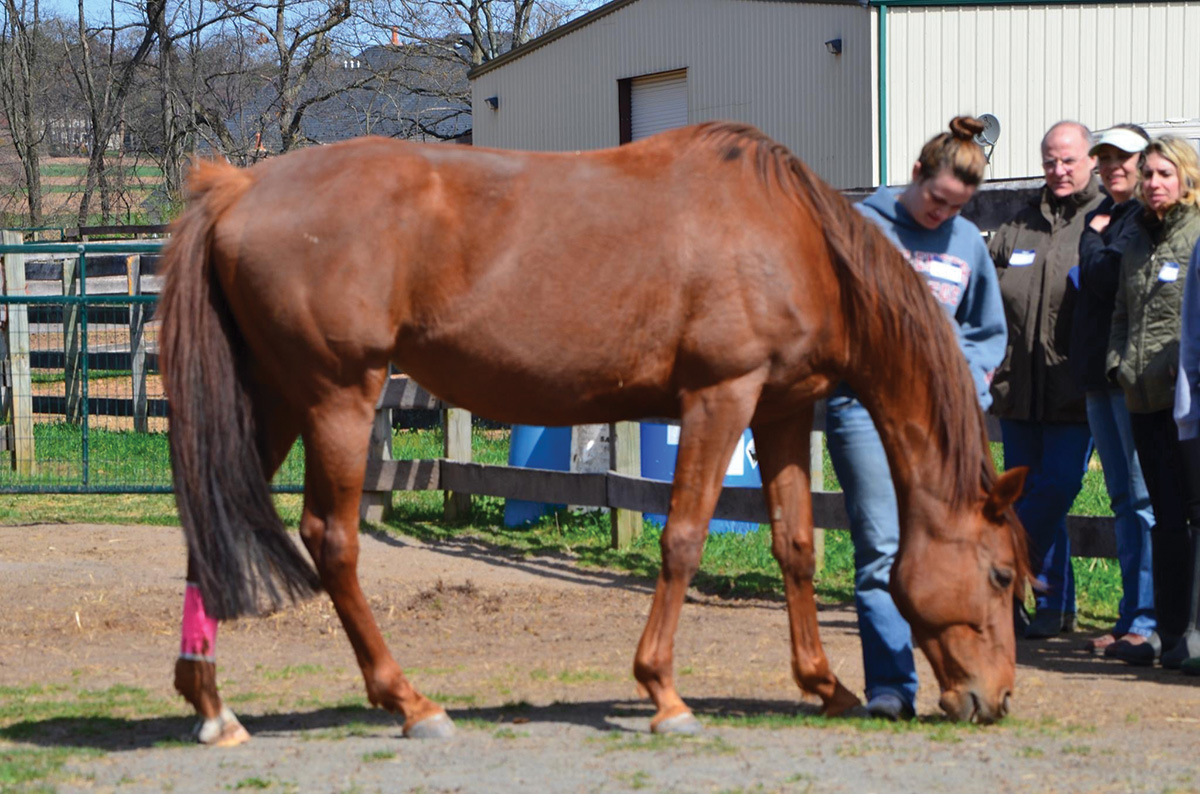
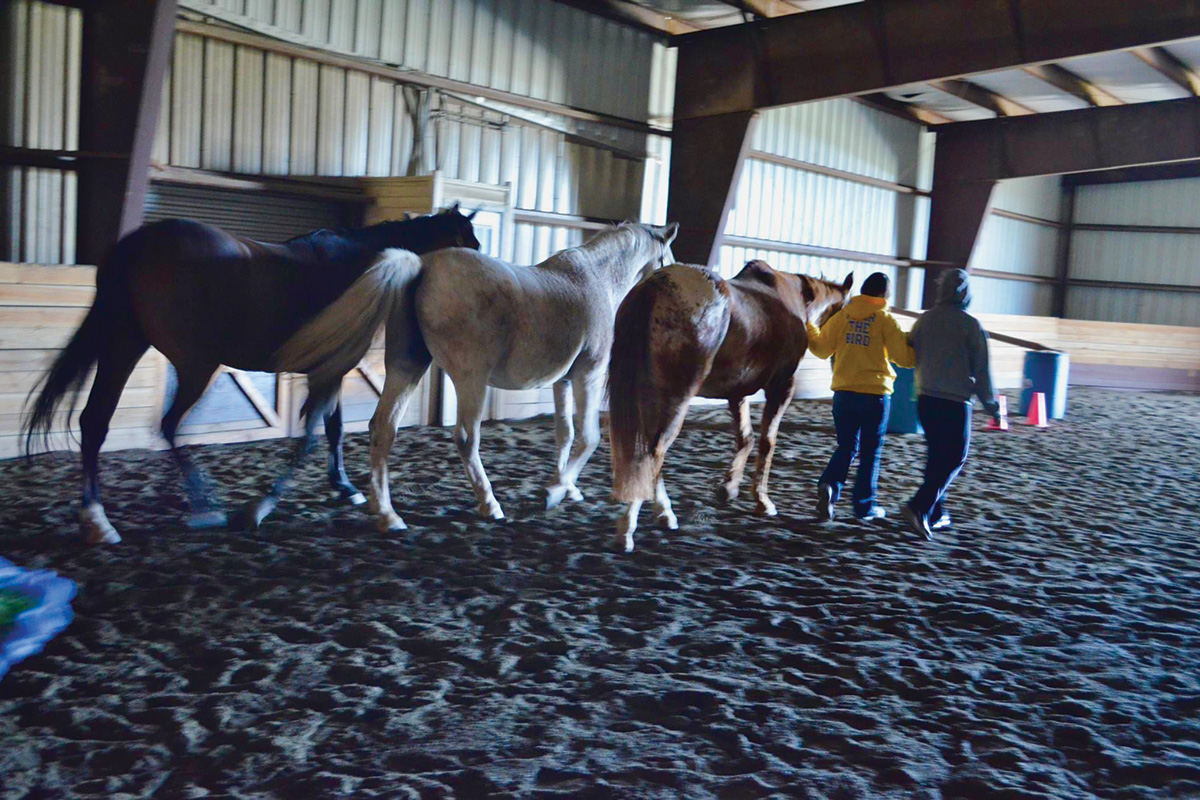
In an exercise called “billiards,” a horse enters the arena from his stall, moving freely. The student in the center goes to connect with the horse, approaching slowly, with a gentle voice, as they would need to do for a human patient.

Medical student working with horses.
During “billiards,” a group of students guide horses into makeshift chutes. Photo courtesy Rutgers University

Then he or she guides the horse towards the “pocket,” set up with a pole on the fence on one side and cones on the other side of the makeshift chute. There are groups of students that coordinate for this exercise, illustrating the team effect in a hospital setting. For example, if the receptionist, a nurse, or part of medical staff isn’t helpful, the patient experience and satisfaction with their doctor is further affected.

The exercise is analogous to contending with hospital-patient challenges. If something doesn’t work with a horse (patient) or a horse is nervous, the doctor can try different or less pressuring methods next time.

The Horses

The horses used for the medical program include a Lipizzan, an Appaloosa, a former reining champion Quarter Horse, a Thoroughbred ex-racehorse, and a gray mule. The equines all live in a herd and are only used for emotional therapy work, not riding.

Insights into personal relationships are drawn; for instance, the Quarter Horse may try to resist the direction of the student. The teacher says, “Where else in your life do you get pushed around?” and “You need to set boundaries.” 

Authentic Response

In order to set up this kind of academic training, a college must have a person who is knowledgeable about horses and medical education. A psychology background is also important, and the school needs to have access to a horse herd for therapeutic education.

Experiential training with the horse can provide sensitivity to an animal who is direct in his response and not filtering through a polite manner. Since medical students practice with patients who are actors, they may not get to realize the breadth of necessary non-verbal skills. Future physicians learning from an authentic response discover how to respond both to humans and to the horse. 

This article about horses helping in the training of medical students appeared in the June 2024 issue of Horse Illustrated magazine. Click here to subscribe!

Breed Portrait: The Half-Arabian

0

While the purebred Arabian has been around for thousands of years, specific breeding of Half-Arabians eligible for recording in studbooks is much more recent. According to the Arabian Horse Association (AHA), in 1951, the International Arabian Horse Association (IAHA) acquired the official studbooks for the Half-Arabian and Anglo-Arabian horses from the American Remount Association.

A palomino Half-Arabian horse galloping.
Photo by Bob Langrish

The Half-Arabian and Anglo-Arabian Horse Registry were subsequently established by IAHA for the purpose of registering, transferring, and maintaining the official registration records concerning Half-Arabian and Anglo-Arabian horses. The Half- and Anglo-Arabians are treated as different breeds within the registry.

The Anglo-Arabian is a cross between a purebred AHA or Canadian Arabian Horse Registry (CAHR) Arabian and a Thoroughbred registered with the Jockey Club or other approved foreign source, or two registered Anglo-Arabians. They cannot be more than 75 percent Arabian blood or less than 25 percent. Those over 75 percent can be registered as a Half-Arabian.

A Half-Arabian horse jumping.
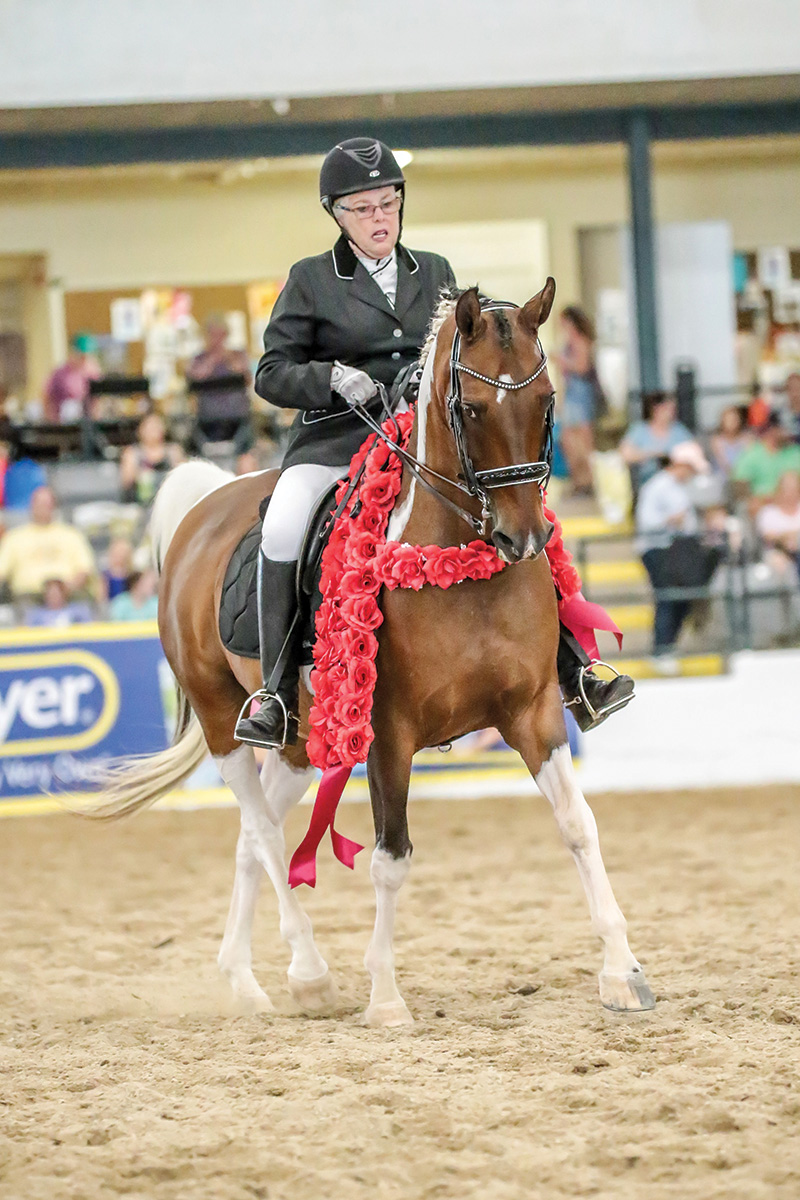
JAG Royal Knight, a half-Arabian/half-Welsh Pony. Knight is a half-sibling to JAG Kalico Kid (below), and he helped greet hundreds of families each day at BreyerFest. Photo by Jessica Ann Designs

A Half-Arabian is a cross between an AHA- or CAHR-registered Arabian and another breed of horse. The number before the A in the registration number indicates the percentage of Arabian blood in the horse.

The AHA says the two most popular Half-Arabian crosses are American Quarters Horses (for western and working western disciplines) and American Saddlebreds (for English, country English, park and saddle seat equitation).

A Half-Arabian horse performing in a Breyerfest demo.
JAG Kalico Kid, a half-Arabian/half-Saddlebred, ridden by Kathy Gilker at a demo at BreyerFest in Lexington, Ky. According to the AHA, on of the most popular Half-Arabian crosses is with the American Saddlebred. Photo by Photography by KRae

Current registration numbers as of 2023 are 357,119 Half-Arabians and 10,096 Anglo-Arabians.

All-Around Half-Arabians

Amy Pike had always ridden purebred Arabians and says she didn’t make the switch to Half-Arabians consciously. A trainer offered her a Half-Arabian gelding (75 percent Arabian and 25 percent Saddlebred), Megas Four Onthefloor+++/ (aka “Four”), after the tragic loss of a young purebred Arabian she owned.

“I’d ridden some wonderful Half-Arabians previous to Four and had great experiences,” she shares. “I had ridden and shown a National Show Horse (Saddlebred cross) named Rohara Marc Twain for a few years in the mid-2000s and loved him. After Marc, I was open to a nice horse to ride and show, whether purebred or half. These days, though, I find I really love my Half-Arabians, and they’re very special.”

Pike also owns a 3-year-old 50-50 Arabian/Quarter Horse Half-Arabian named Johnny Paycheck+ (aka “Whalen”), and is part owner of Uncle Buck Dunit, a 16-year-old 50-50 Arabian/Quarter Horse Half-Arabian.

With her Half-Arabians, Pike has done a bit of everything, including showing in reining, dressage, western dressage, hunter, western, ranch horse, cow sorting, trail, backwoods trail riding, and camping.

“I even packed out an elk from a hunting trip with Four,” she says. Four has several national titles in dressage and sport horse in hand.

A chestnut Half-Arabian horse.
Amy Pike and Four, who is 75% Arabian and 25% Saddlebred. While she competes him in several disciplines, he once packed an elk out during a hunting trip, showcasing incredible versatility. Photo by Ella Chedster

“But I think the most special thing about him is his love of people,” Pike adds. “He went to the Oregon State Fair and carried a young lady to several placings in her State FFA Horse competitions this last summer. She lost her horse just weeks prior to fair, and Four was able to step in and carry her. They practiced three times before hitting the show arena.”

Drill Team

Marlene Manuel was looking for a purebred Arabian that would be a smooth ride for her bad back when she saw Joe Fabulous G, a 50-50 Arabian/Quarter Horse Half-Arabian, at a drill clinic.

“I fell in love with his way of moving,” she says. “Although he was big and had a Quarter Horse build, he moved like a graceful Arabian.”

Marlene Manuel riding Joe Fabulous G for drill team.
Marlene Manuel acquired Joe Fabulous G, a 50-50 Arabian/Quarter Horse Half-Arabian, for her drill team riding. She loves his combination of quick acceleration, stamina, and hardiness. Photo by Spirit of a Cowboy Images

Being a drill team member herself, Manuel needed a horse with a lot of athleticism and stamina.

“His athleticism allows him to easily accelerate, decelerate, and quickly change direction, all very smoothly,” she says. “This has not changed over the years, and you would never know he is 18. He’s got that hardy Arabian blood, yet is sturdy and strong, like a Quarter Horse.”

Reining In Wins

Melissa Shaver, DVM, grew up showing purebred Arabians, but now she competes in reining with her Half-Arabians. Why did she make the switch?

“Having always been drawn to the working western events, especially reining, the Half-Arabian and Quarter Horse cross is perfect,” she says. “They are pretty, strong, and athletic, and we can show in the open reining shows as well as the rated Arabian shows and be competitive in both.”

A reining sliding stop.
Melissa Shaver, DVM, loves the Arabian/Quarter Horse cross, and has shown her mares Bee My Bucks (pictured) and Megas Dunnit in Gold to National Reserve Champions in reining and multiple regional titles. Photo by Howard Schatzberg

Her mares, Bee My Bucks+/ and Megas Dunnit in Gold, have both been shown to National Reserve Champions in reining and multiple regional titles.

This article about appeared in the June 2024 issue of Horse Illustrated magazine. Click here to subscribe!
Fly Spray 101

0

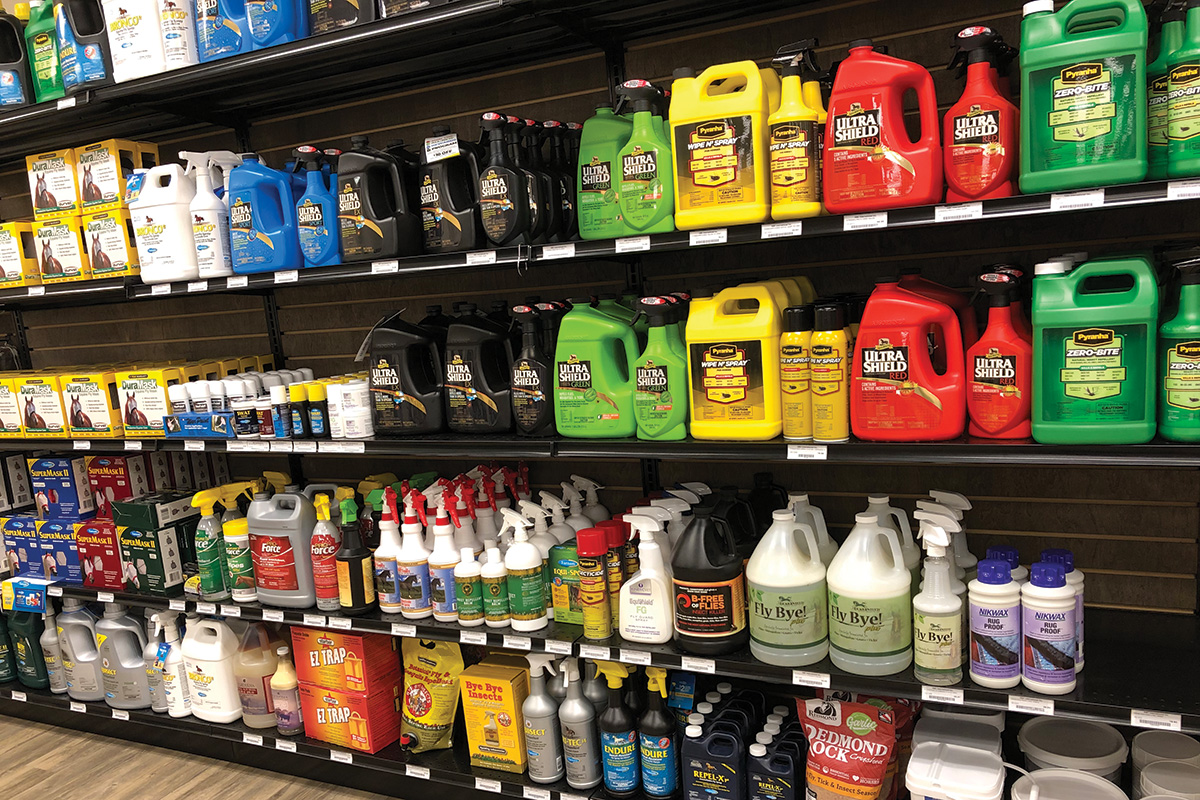
Tack and feed store displays are overflowing with fly spray bottles. There are numerous options available with different active ingredients, formulations and brand names. As you reach for the shelf, here are some tips to help you choose and use these products wisely so your horse doesn’t get bugged this summer.

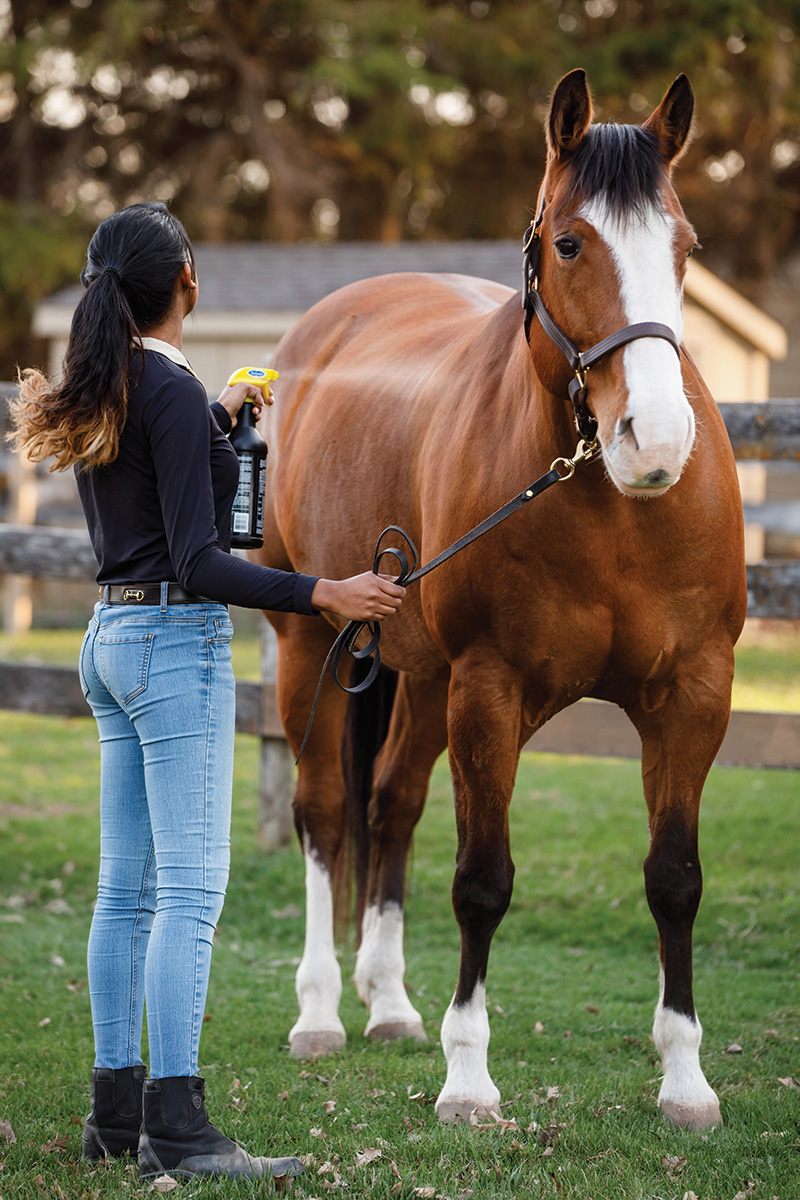
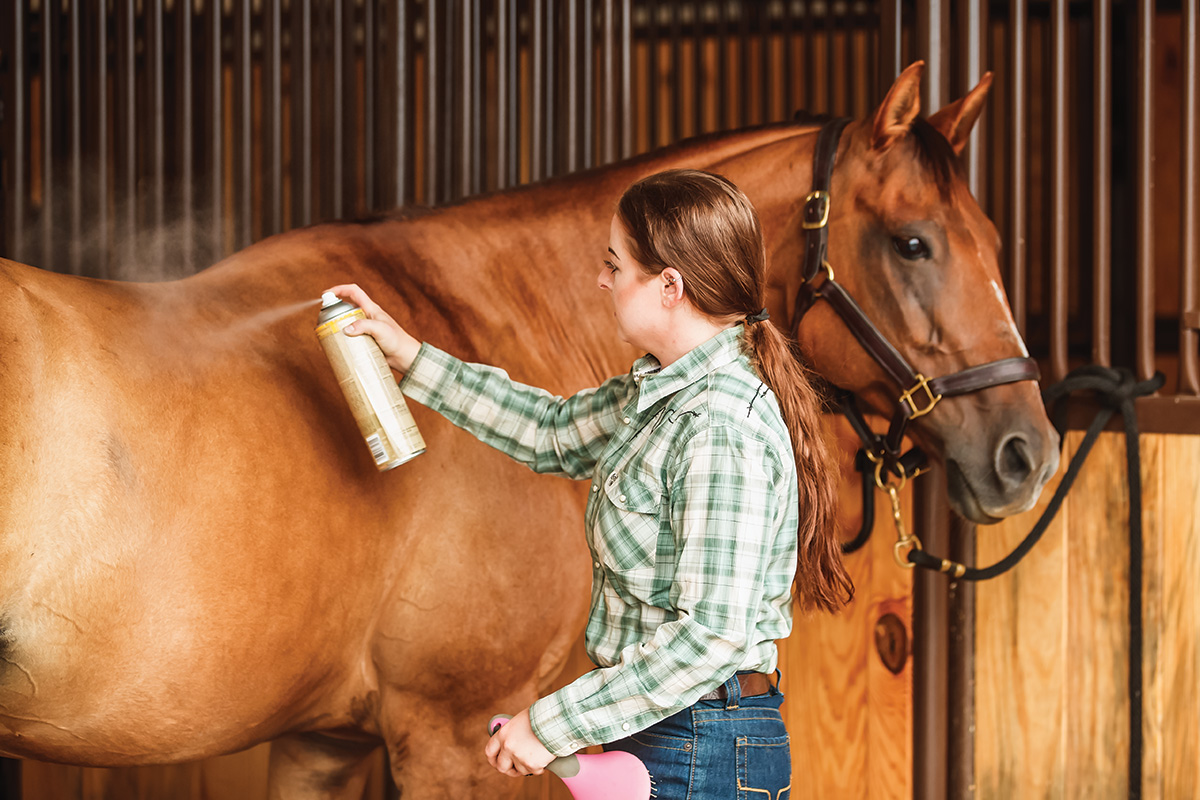
An equestrian applying fly spray to a horse.
Photo by Shelley Paulson

How Fly Spray Works

Although fly spray is a familiar product to horse owners, you may not have given much thought to how it works or what’s in the bottle.

“Fly repellents work by either repelling flies or killing them upon contact,” says Erika T. Machtinger, Ph.D., assistant professor of entomology at Pennsylvania State University in State College, Penn. “Repellents contain active ingredients that emit an odor or taste that flies find unpleasant and will try to avoid. Some fly repellents work by combining both repelling and killing properties. These repellents contain a combination of active ingredients that repel flies and contain insecticides that kill them upon contact.”

Why Fly Control Matters

Flies are not just a pesky annoyance to horse owners and their animals—they can also pose significant health risks, says Machtinger.

Depending on the species of fly, they can transmit pathogens that can cause serious diseases and conditions in horses. Biting flies have also been linked to adverse reactions, including hypersensitivity and itching.

In addition, Machtinger points out that flies can also impact a horse in other ways.

“High fly pressure can lead to pain, irritation, and changes in grazing behavior, such as reduced grazing time and lower forage intake,” she says. “This can result in reduced energy for growth, reproduction, and body condition maintenance. The negative impact of flies on horse behavior can lead to serious consequences, including injury or loss of condition.”

Active Ingredients

Most companies will list features and benefits on the front of the label, says Casey White, an entomologist and senior director of technical services and innovation for Central Life Sciences, Farnam’s research and development division.

“If it’s something that kills and repels, it’ll say ‘kills and repels’ or ‘insecticide and repellent.’ Often, it’ll call out major species of insects or arthropods, such as ticks, that the product is effective against.”

A variety of fly sprays on the shelf at the store.
A wide array of fly sprays are available, with varying synthetic and natural ingredients, depending on your horse’s needs. Photo by Elizabeth Moyer

The small print is where you should pay attention to the listed ingredients, including the number and type of active ingredients and their percent concentration. The active ingredients are what give the product its killing and repelling power.

Active ingredients can be either natural or synthetic. Pyrethrins are a natural insecticide derived from the chrysanthemum flower. These offer knockdown benefits but break down quickly when exposed to sunlight. Pyrethroids are synthetic versions designed to have longer-lasting action; these include permethrin, cypermethrin, tetramethrin, and others.

Essential oils such as citronella, geraniol, eucalyptus, thyme, cedar oil, lemongrass, rosemary oil, and clove oil are natural options to repel insects. Fatty acids are another type of natural repellent, including octonoic, nonanoic, and decanoic acid.

Other ingredients include synergists, which work to amplify the active ingredients to provide greater killing power and/or longer-lasting protection. One of the most common is piperonyl butoxide (PBO). Others include butoxypolypropylene glycol and n-octyl bicycloheptene dicarboximide (MGK 264).

Comparing Products

Looking at the list of active ingredients and their percentages is one way to compare products and select the one that you think will work best for your needs.

“Formulas that use newer technology and a higher level of active ingredients cost more to make,” says Amy Cairy, vice president of marketing for W.F. Young, makers of Absorbine. For these reasons, you can expect many of the best-selling fly sprays to come with a higher price tag, she notes.

Along with comparing the levels of active ingredients, it’s also important to look at the recommended application rate, says White. A product may look like it’s half the concentration of a comparative product, but if you have to apply twice as much of it, he points out that you’re essentially applying the same amount of active ingredient—just in a more dilute form.

Fly Spray Formulation

In addition to the active ingredients, a product’s formulation is another difference to consider. Most fly sprays can be categorized as oil- or water-based, and there are pros and cons to each type.

Oil-based sprays have staying power, but can attract dirt and dust and may be irritating to horses with sensitive skin. If you see “contains petroleum distillate” on the list of ingredients, that’s the tipoff that it’s an oil-based spray.

Water-based sprays are non-irritating and less of a magnet for dust, but will likely need to be reapplied more frequently.

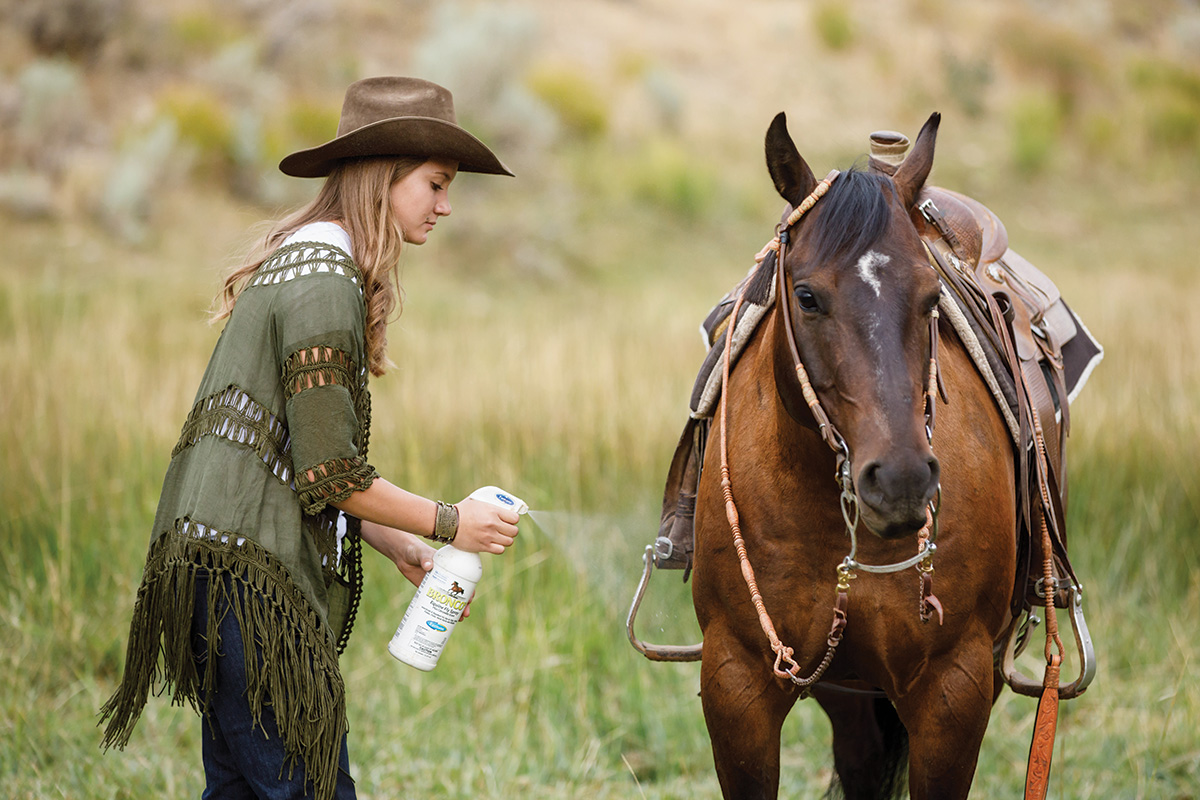
An equestrian applying fly spray to a horse.
Water and oil-based formulas have their pros and cons, depending on a horse’s sensitivity and need for longer-lasting application. Photo by Shelley Paulson

Many horse owners prefer all-natural formulas using essential oils and plant extracts as an alternative to chemical sprays.

Long-lasting sweat and water-resistant formulas contain ingredients that help the product stick to the hair shaft. These are designed to hold up well to rain and sweat under normal turnout and working conditions, says Cairy.

However, she notes that if you rinse your horse with a hose, sponge him off, or bathe him with shampoo, you are removing the product from the horse’s hair and should reapply the fly spray afterward.

Coat conditioners and sunscreen are other bonus ingredients you might find in a fly spray.

Choosing the Right Fly Spray

The right fly spray can depend on several factors.

“First, consider the type of flies that are prevalent in your area and choose a spray that targets those specific types of flies,” says Machtinger. “Next, consider your horse’s individual needs, such as any skin sensitivities or allergies. It’s also important to consider the spray’s effectiveness and how long it will last, and finally the ease of application and whether it requires dilution or not.”

An equestrian applying fly spray to a horse.
The type of spray you use right before a ride may be different than the one you use before turning your horse out in the field. Photo by Shelley Paulson

The local climate and weather conditions, such as heat and humidity, as well as what you are doing with your horse also influence your choice of fly spray. You may want to have a few different kinds in your kit with different features and formulations. The fly spray you use right before you go in the show ring might be different than the one you’d use to turn your horse out in the field.

“For example, if you have a horse that is easily bothered by a wide variety of flies or is reactive to insect bites, you’ll want to find a long-lasting, broad-spectrum fly spray that both kills and repels insects,” says Cairy. “Or if you live where it’s hot and humid or have a horse that is prone to heavy sweating, you’ll want to reach for a fly spray that binds to the horse’s hair shaft and won’t sweat off.”

DIY Fly Spray

Homemade fly spray recipes abound on the internet. If you’ve been tempted to whip up your own batch of fly spray to save a buck, here are a few things to consider before you do it yourself.

“The cost for a manufacturer to develop a formula and obtain a registration from the Environmental Protection Agency (EPA) can easily exceed $250,000 and take upwards of two years to complete, given the extensive testing required to prove safety and efficacy,” says Cairy.

She advises caution to anyone considering making fly spray at home.

“Horses have very sensitive skin and can have severe reactions to certain ingredients, especially essential oils,” she says. “In addition, mixing certain ingredients together can cause adverse reactions on the skin, including chemical burns, especially when the horse is turned out in the sun or when other products like shampoos or coat sprays are applied.”

This may put your mind at ease after wondering if spending the money is worth it.

“Fly sprays from trusted companies have a long track record of safety and efficacy, and while they may be more expensive to purchase, they generally provide the best protection and overall value for you and your horse,” says Cairy.

Not Enough

One of the biggest fly spray mistakes is simply user error. Either not applying enough, not using the product according to the directions, or selecting the wrong type of product for the insect species you are dealing with.

How do you know if you’re applying the recommended amount of fly spray? Cairy suggests counting sprays and measuring how many it takes to reach the recommended amount, then using that for future reference. (About 45 sprays is what she has found it takes to reach a typical 2-ounce application.)

The Right Way to Apply

Reading the product label and applying according to the manufacturer’s instructions is essential for any fly spray to work correctly. Even if you have been using the same fly spray for years, it’s always a good idea to refamiliarize yourself with the information on the label, says Casey White, an entomologist and senior director of technical services and innovation for Central Life Sciences, Farnam’s research and development division.

Apply to a clean horse. The product needs to adhere to the hair shaft to provide effective protection, and a layer of dirt gets in the way of that.

“If you apply fly spray to a horse that is covered in dirt and loose hair, the fly spray won’t easily get to the hair shaft and will likely fall off when the dirt and loose hair falls off your horse,” says Cairy.

Cover the entire body, including head, legs and face. Missed spots can become a target for flies. (Avoid spraying the face; always use a cloth to apply around the eyes and nostrils.)

Using a towel, applicator mitt, or brush is the most effective way to ensure coverage across the entire animal, says Erika T. Machtinger, Ph.D., assistant professor of entomology at Pennsylvania State University in State College, Penn. She recommends using disposable gloves to protect your skin from contact with the product and following all label precautions.

Be sure you are using enough product. It is crucial to follow the label application rates for the fly spray to deliver optimum performance.

Test new products. It’s a good idea to spot-test new products, especially if you know your horse is sensitive. Apply to a small area, such as on the shoulder, and monitor for any reaction before you make a full application. It’s not common, but it can happen, says White.

Pest Resistance

If you find that your go-to fly spray doesn’t seem to be as effective, there may be a reason for that.

“In addition to the method of application, the effectiveness of these products can depend on the toxicity of the active ingredient to flies, and local pest resistance,” says Machtinger. “Flies can quickly develop a resistance to the active ingredients in many fly sprays (or already are resistant to them), reducing or in some cases eliminating their effectiveness.”

Pesky house flies are among the most affected by insecticide resistance. Fortunately, Machtinger reports, newer fly spray formulations using natural ingredients such as fatty acids and plant extracts have proven to be effective and longer-lasting in laboratory tests. The 2019 published study she led also suggests that formulation differences among pyrethroid products can significantly affect their efficacy.

“We do see some resistance to fly sprays, particularly permethrin,” says Cairy. “When horse owners start thinking, ‘My fly spray isn’t working the way it used to,’ we recommend that they rotate to one with a different formulation.”

When rotating products, look for something with an active ingredient that works differently than what you have been using, such as a different chemical class, advises White.

“Many of the on-animal sprays have the same mode of action, which makes incorporating other fly management tools even more important.”

Other Fly Management

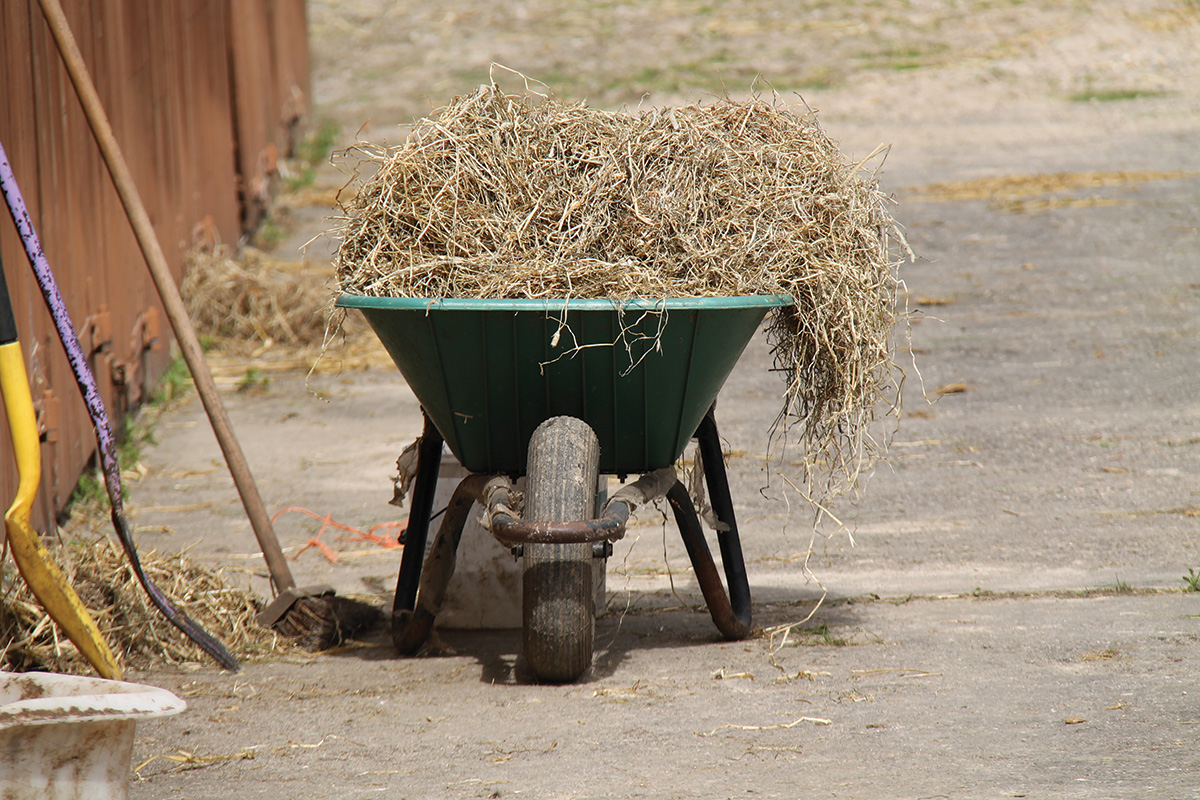
There are many other things horse owners can do to help keep fly populations down, including good sanitation and manure management, and taking steps to eliminate fly breeding habitats and disrupt their life cycle.

“Scatterbaits, fly traps, feed-through larvicidal products and larvicides applied directly to fly development areas are other options that should be incorporated into a good integrated pest management (IPM) program,” says White.

A wheelbarrow full of manure.
Proper manure management is a good way to eliminate fly breeding areas and disrupt their life cycle. Photo by Daseaford/Adobe Stock

It might seem like a fly is just a fly, but it’s important to try to identify what fly species you are dealing with, because they aren’t all created equal when it comes to fly control.

“To prevent flies on horses, it’s important to first understand which species of fly is the pest,” says Machtinger. “Each species will have different methods of control that are effective.”

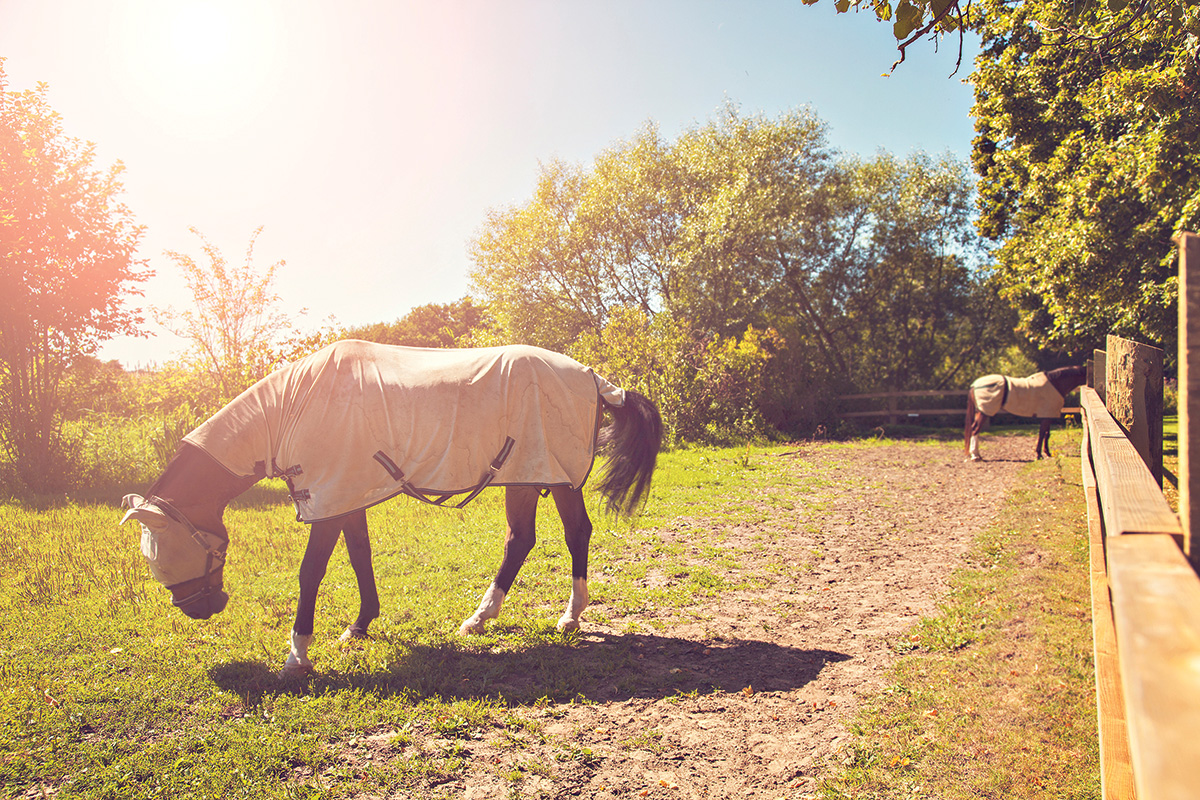
Horses in masks and sheets that repel flies.
A variety of tools, including fly masks and sheets, will help repel flies on all fronts. Photo by Feferoni/Adobe Stock

She emphasizes the need to use a variety of tools in combination, such as good stable management and hygiene, fly masks and sheets, and species-specific fly traps.

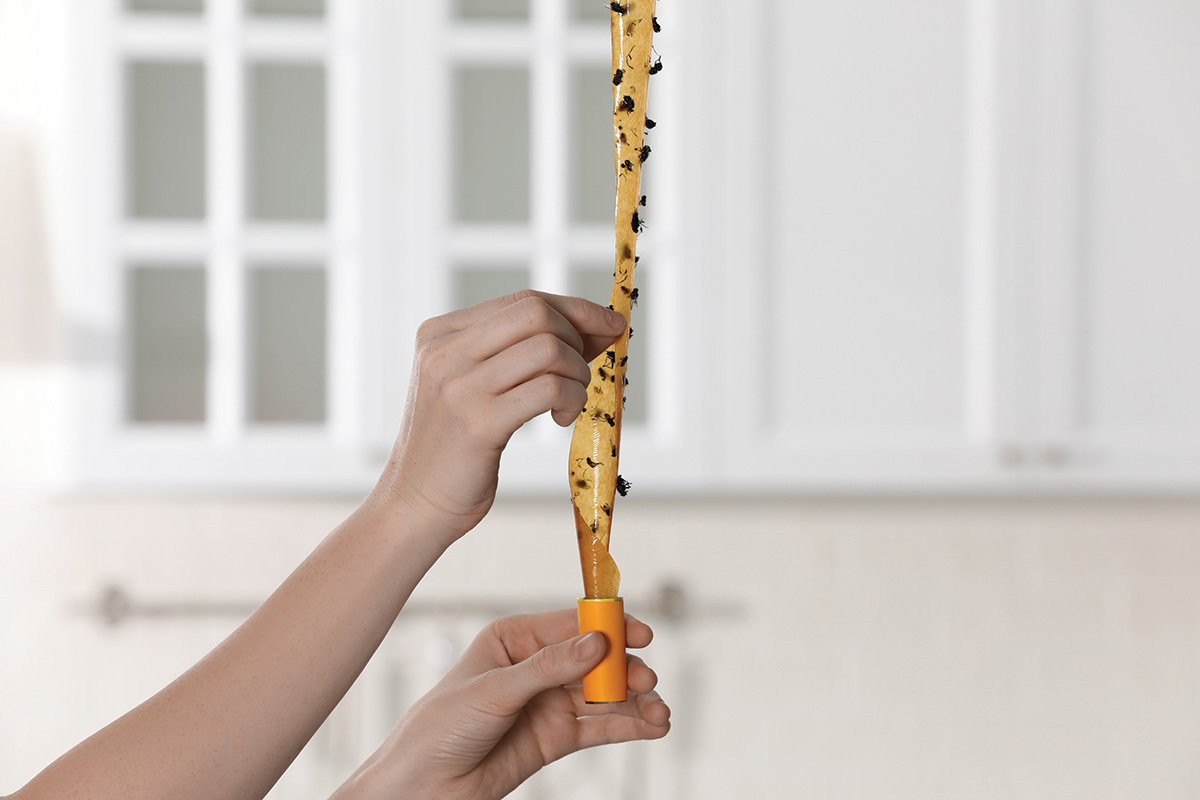
An insect trap.
Fly traps can be a convenient way to keep numbers down in fly attracting areas. Photo by New Africa/Adobe Stock

Flies are a nuisance, but armed with the right knowledge and tools, it’s possible to fight back.

Further Reading
Hoof Problems Caused by Fly Stomping
Flies, Worms and Yucky Things
Using Parasitoids for Fly Control
Understanding Fly Spray Labels

This article about fly spray appeared in the July 2023 issue of Horse Illustrated magazine. Click here to subscribe!
Solutions for Cribbing

0

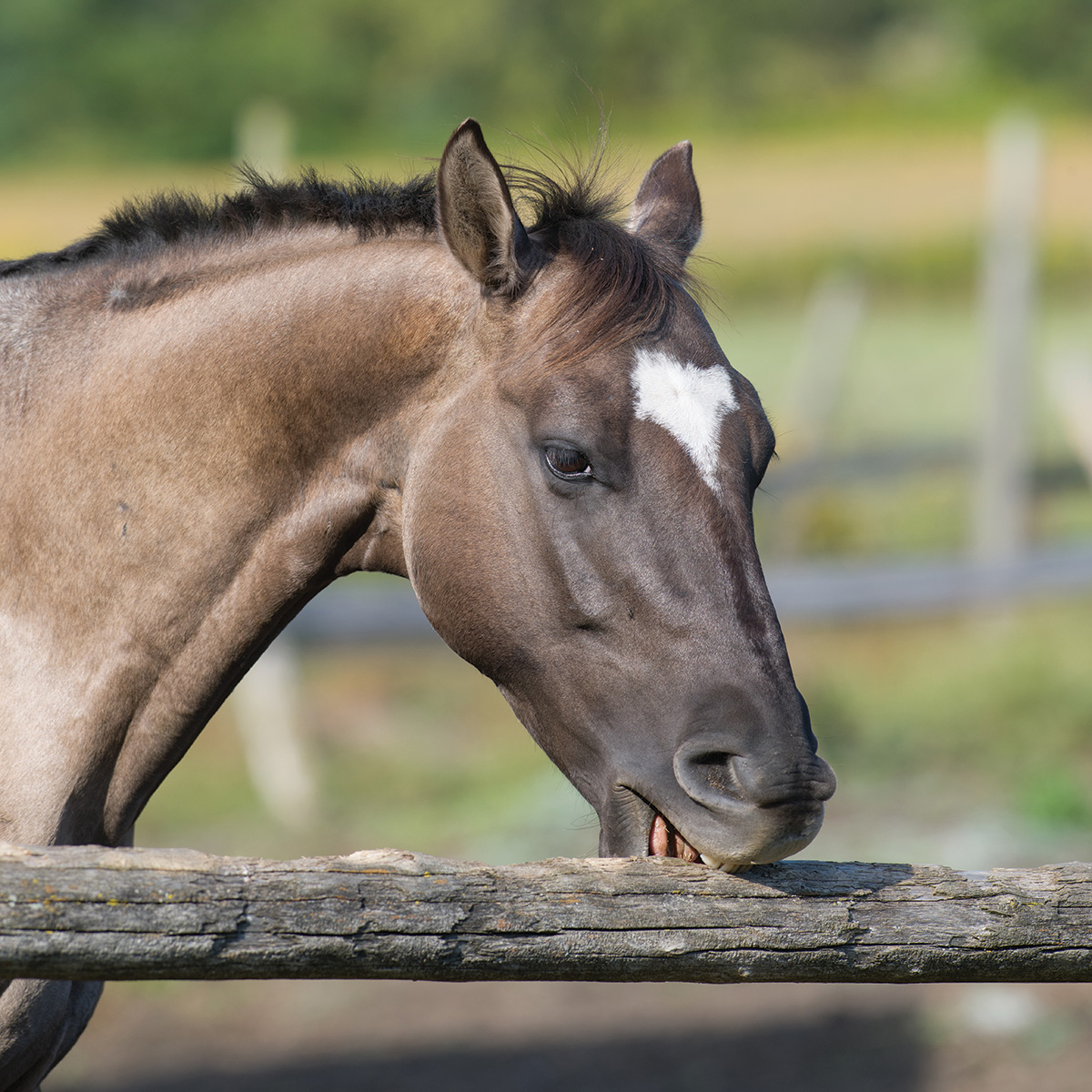
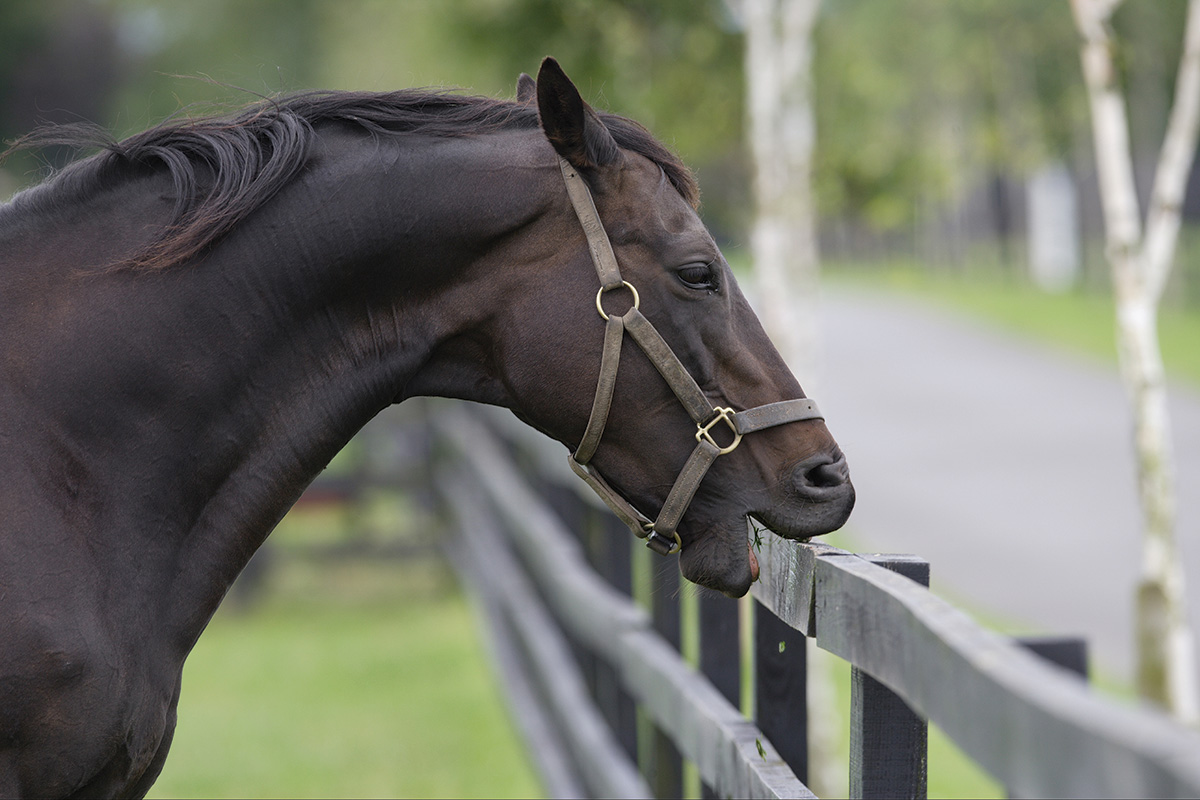
Cribbing is a self-soothing behavior that involves a horse grasping a solid object, such as a fence rail, with his incisor teeth, arching his neck, and contracting his lower neck muscles while sucking in air with a grunt.

A horse cribbing on a fence.
Photo by CLIX/Shawn Hamilton

Cribbing is considered a vice, as it can be destructive to property, wear down the horse’s incisors, develop undesirable under-neck muscles, and reduce the value of your horse.

Cribbing is often mitigated by collars, sprays, electric fence wires, and sometimes by reducing stomach acid. Collars may need to be so tight to work that they potentially cause damage to the skin, nerves and airflow.

Boarders in a stable.
Many owners use cribbing collars to curb their horse’s habit, but find they have to keep tightening them to the point of rubbing off hair and causing damage. Photo by Carolina09/Adobe Stock

Reducing stomach acid may temporarily decrease cribbing, but it may also be contrary to the needs of some horses.

Common causes of cribbing are understood to be boredom, stress, anxiety, diet and habit. Below we’ll bring to light another cause, and a remedy for it.

Three Cribbers, Two Solutions

Over a couple of decades, I have had three cribbers—all off-track Thoroughbreds (OTTBs). The first two horses completely stopped cribbing with diet and lifestyle changes that effectively removed the physical, mental, and emotional discomforts that caused their anxiety and addressed boredom. (Those specific changes are highlighted later in this article.)

A third cribber presented a greater challenge. The diet and lifestyle changes that worked for the others were not quite enough to address his issues of discomfort. I noticed that certain foods and treats caused immediate cribbing, so I eliminated some of the triggers. Basically, any treats (apples, carrots, cookies, et cetera), complete feeds, and ration balancers all caused immediate cribbing.

Wrong Answers

I begrudgingly put a collar on him. The collar worked initially—until it didn’t. I tightened it. It worked a little longer and then it didn’t. I tightened it once more with the same result.

When swelling under the horse’s jaw began, I removed the collar and let him crib at will. Electric fence was used in places to avoid him self-soothing in those locations.

It was clear this horse was cribbing to seek comfort. The question was, why?

I tried reducing his stomach acid by using Omeprazole, a proton pump inhibitor (PPI). It reduced the cribbing to some degree, but is not a good long-term solution for physiological and financial reasons.

Light Bulb Moment

One day, my sister was talking about her heartburn and how her throat was on fire and that sucking air in helped cool it, if only for a moment.

I immediately thought, “My horse has GERD (gastroesophageal reflux disease) and is trying to alleviate a burning in his throat.”

A horse cribbing.
There may be a link between GERD (acid reflux) and cribbing for some horses that exhibit the behavior. Photo by Christiane Slawik

Heartburn, or GERD, is the result of stomach acid ascending into the esophagus, resulting in pain or a burning feeling. Heartburn usually occurs after eating. If your horse always cribs during and/or after eating, this may be his problem, too.

Stomach acid gets up into the esophagus because the lower esophageal sphincter (LES) does not close properly. The common cause of this malfunction is low stomach acid. Therefore PPIs like Omeprazole or antacids like Tums and even baking soda being given to lower stomach acid may contribute to cribbing or windsucking. Long-term use of stomach acid suppressors may make it more challenging to recover proper function of the LES.

While some publications found online will indicate PPIs as appropriate for the treatment of GERD, other online articles and videos implicate low stomach acid in reflux. The latter anecdotally proved true in my barn.

The Solution

My horse’s cribbing has been reduced by well over 90 percent by addressing the discomfort he was experiencing with GERD, along with the diet and lifestyle changes that resulted in stopping the other two other horses’ cribbing.

The GERD discomfort was mitigated by adding three dietary ingredients mixed into his feed to coat his throat and esophagus. Those ingredients (listed below) were all organic; however, non-organic might work as well. Initially, this was done twice per day, and eventually added to just one feeding per day.

NOTE: Competitive riders should check with their sport’s governing bodies to ensure all things ingested by their horse are permitted, or if a period of withdrawal is needed for any single ingredient.

These are the dietary and lifestyle changes that helped conquer cribbing in my barn.

Dietary Changes for Cribbing

First, I provided three kinds of quality hay, as horses eat more with variety. Each horse always has access to hay and/or grass. Hay kept on hand usually consists of one first cutting and two second-cutting grass hays.

Next, I cut sugars and other unwanted ingredients proven to trigger cribbing from the horses’ diets. Thus far, I have only found one feed (Cavalor Strucomix Senior) that doesn’t induce cribbing, and unfortunately it’s cost prohibitive. So, I am still mixing my own feed daily. Of course, trial and error of individual ingredients for cribbing reactions followed by formulating and mixing feeds to ensure a diet complete in all nutrients is time consuming and not feasible for most people.

Finally, I began adding 1 teaspoon each of licorice root powder, marshmallow root powder, and slippery elm bark powder mixed into feed. (This step is likely only effective for some horses that crib during and/or directly after feeding.)

Lifestyle Changes for Cribbing

As mentioned before, lifestyle changes alone were enough to stop cribbing in two of the three horses. Here are the changes I made to their management:

1. Ensure as much freedom and movement as possible. All are afforded freedom to walk out of their stalls at any time and into paddocks as weather permits. The only time they choose to stay inside is during bug season.

2. Maximize turnout with at least one well-suited pasture mate. Having horses across the fence during turnout will not suffice for some horses.

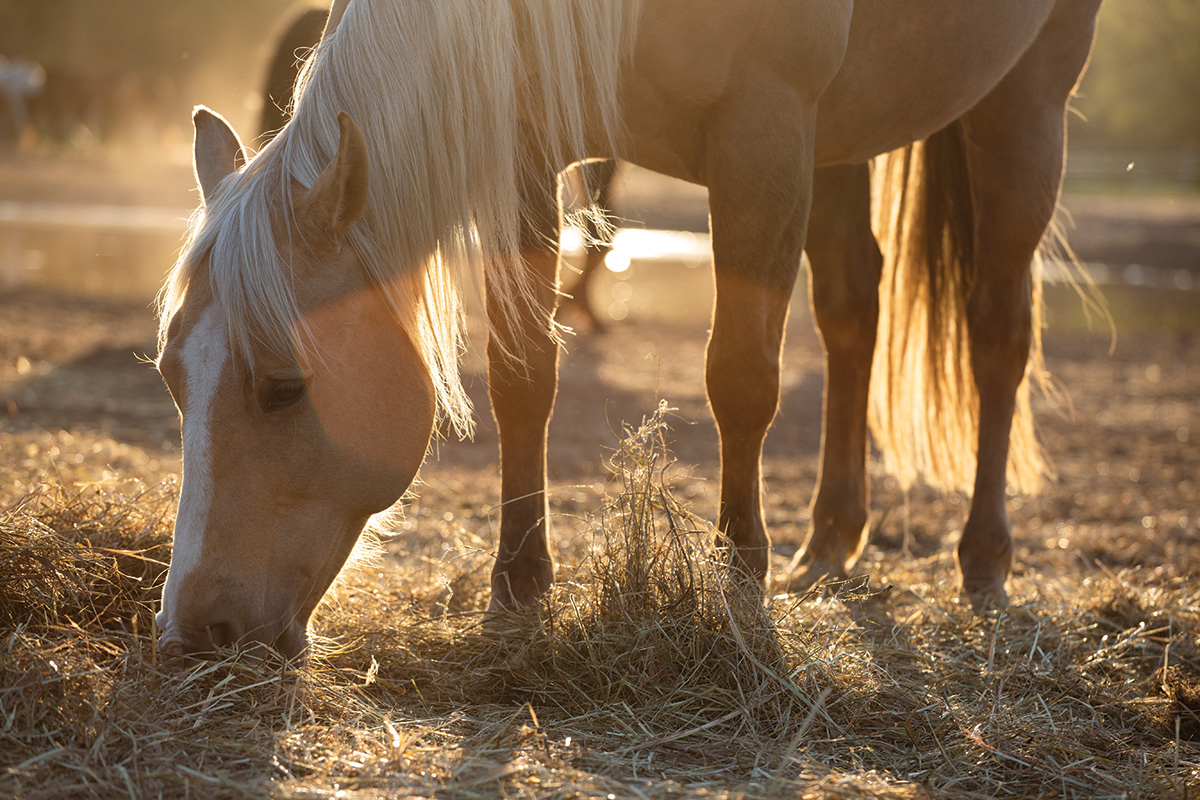
A palomino eating hay during golden hour.
Turnout, a variety of different types of hay, and freedom of movement all seem to help some horses who crib. Photo by Ella/Adobe Stock

Not every horse owner will be able to implement all the changes outlined here due to their facilities or other constraints. Not every horse will need them all. And still others may have an unknown discomfort that needs to be addressed.

If your cribber is most active during and/or after eating, that may be a clue of discomfort caused by GERD. Addressing physical, mental, and emotional discomfort and boredom may eliminate cribbing or at least greatly reduce it.

This article about cribbing appeared in the June 2024 issue of Horse Illustrated magazine. Click here to subscribe!

0FansLike
0SubscribersSubscribe
We use cookies to help personalize content, tailor and measure ads, and provide a safer experience. By navigating the site, you agree to the use of cookies to collect information. Read our Cookie Policy.
OK