Horse Illustrated magazine has much to be proud of after receiving six American Horse Publications (AHP) Equine Media Awards during the 2024 AHP “Cowboy Up Lone Star Seminar” Conference on Saturday, May 17, 2025, in Dallas, Texas. Awards included a first place in the General Excellence category.
“Horse Illustrated is deeply honored to receive these awards, especially first place in the General Excellence category,” said Editor in Chief Holly Caccamise. “Every year we work hard to bring our readers engaging content, and our wonderful stable of freelance writers and photographers are the ones who make this possible. I want to give them a special thanks and recognize all of their hard work over the past year. In addition, getting to learn from the panels that AHP puts together for the conference and share ideas with our peers is always a special annual high point that gives us inspiration to make even better media over the year until the next conference.”
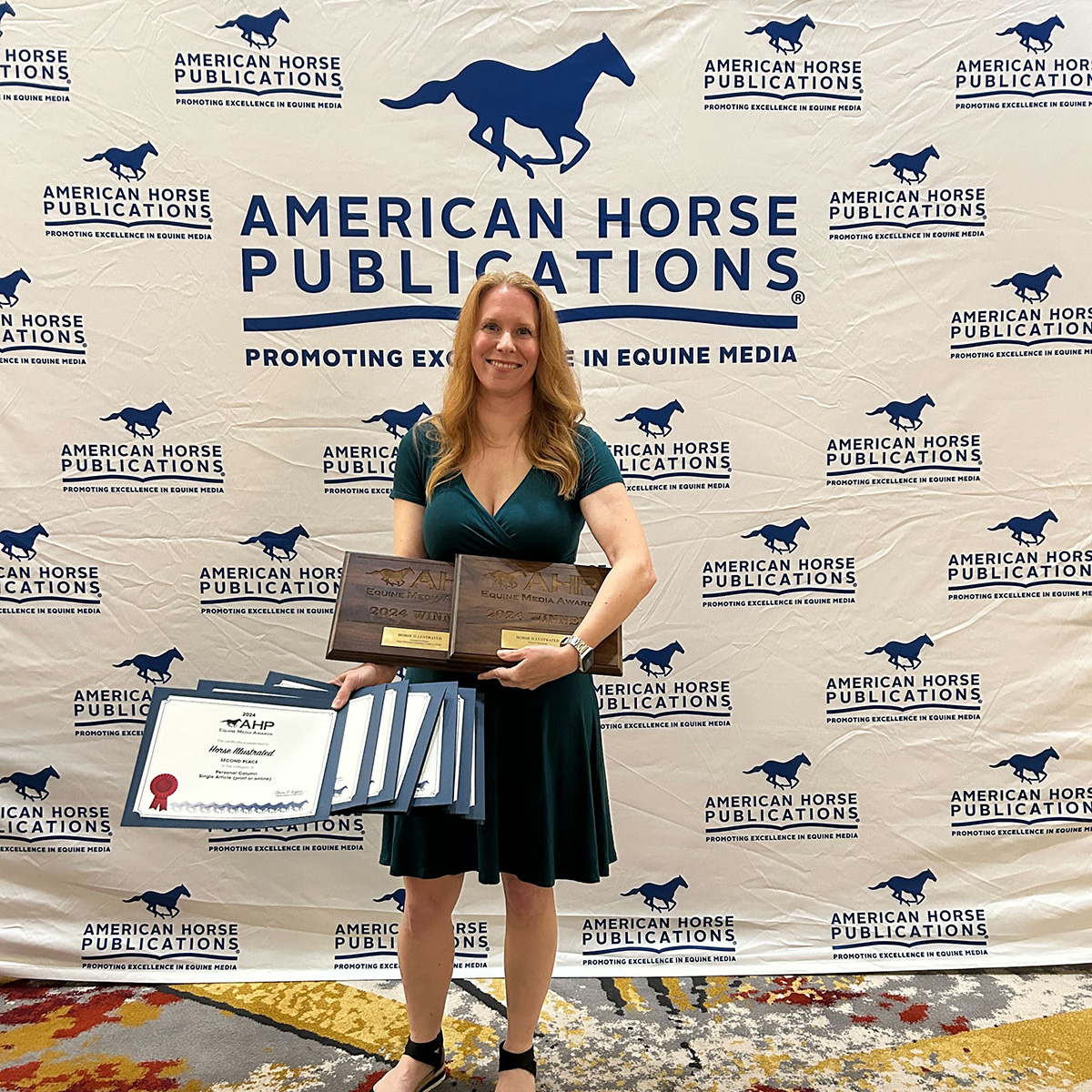
Horse Illustrated Editor in Chief Holly Caccamise with Horse Illustrated’s 2025 AHP Equine Media Awards haul.
Horse Illustrated captured the following awards out of entries that were submitted by the publication:
◆ 1st place in General Excellence Print Publication circulation 10,000 to 20,000, Editor in Chief Holly Caccamise
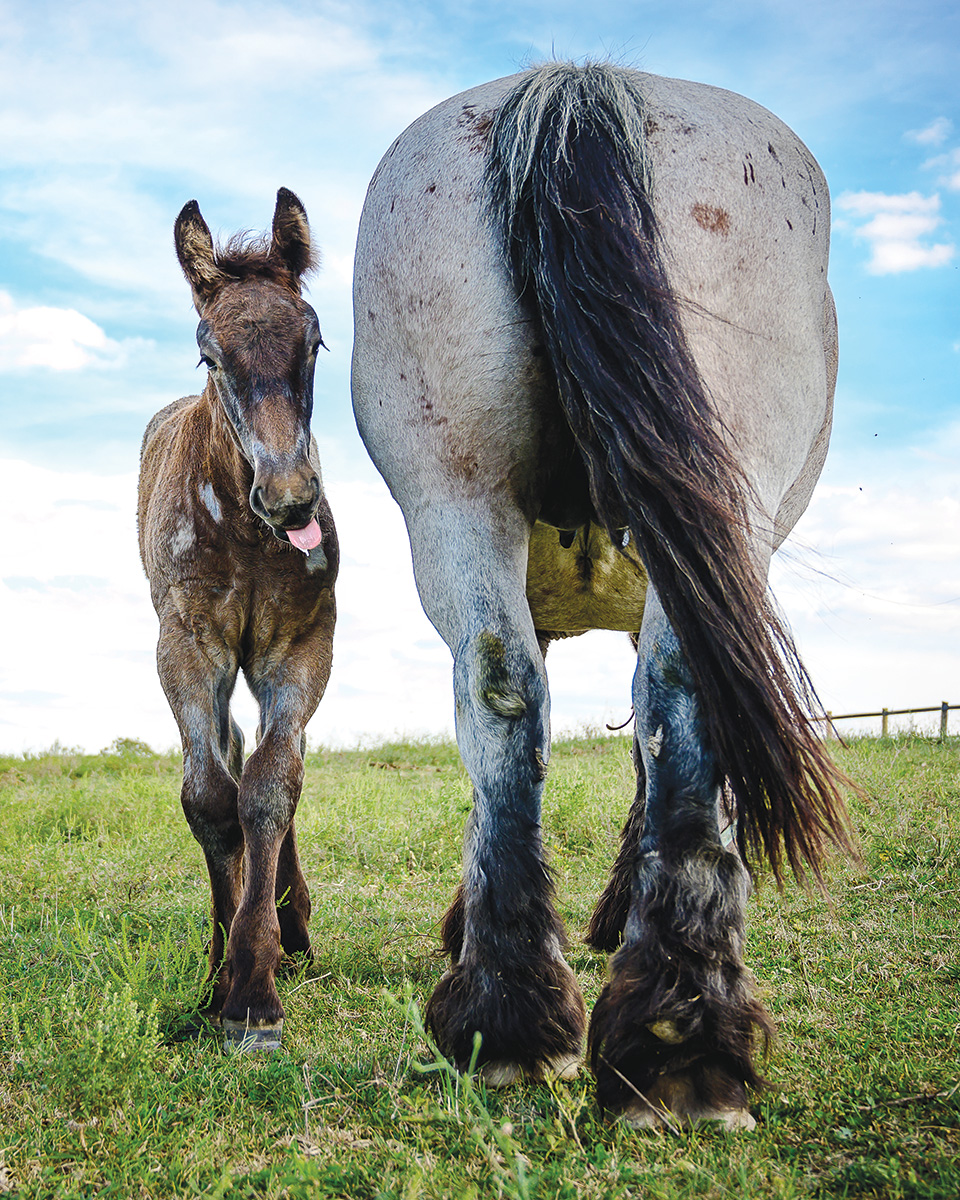
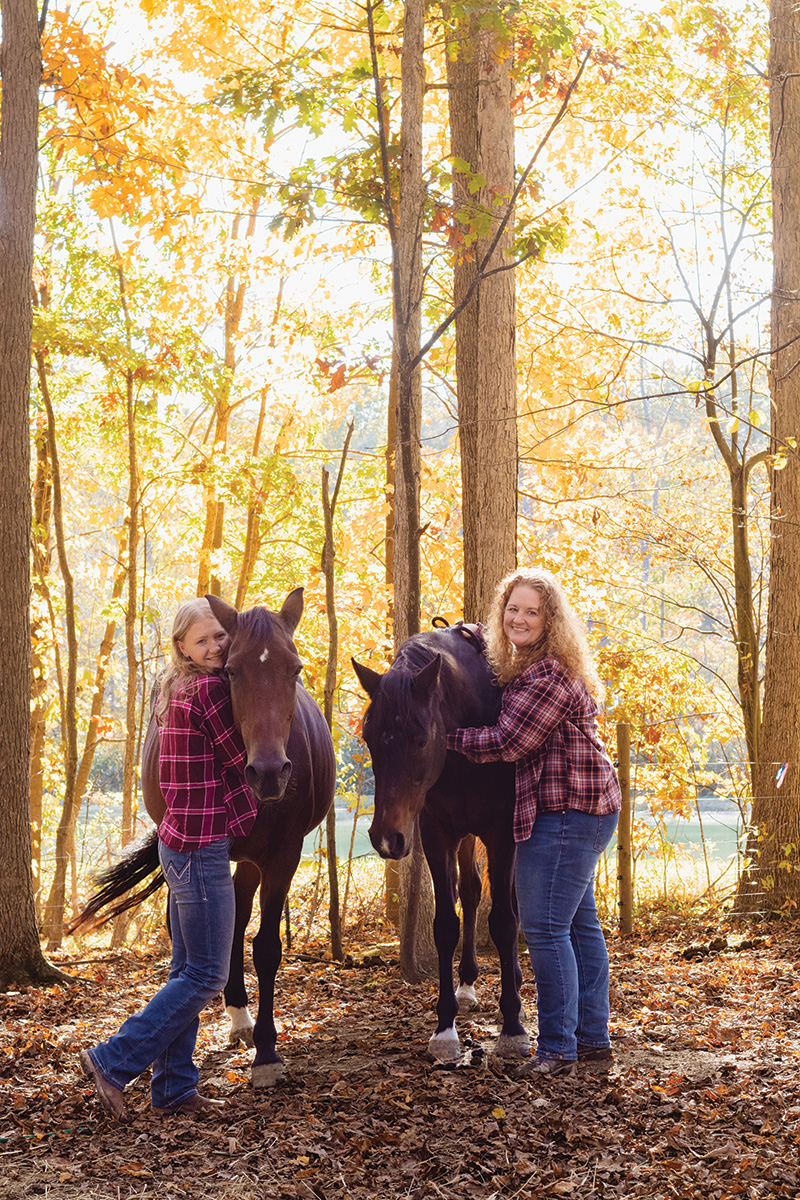
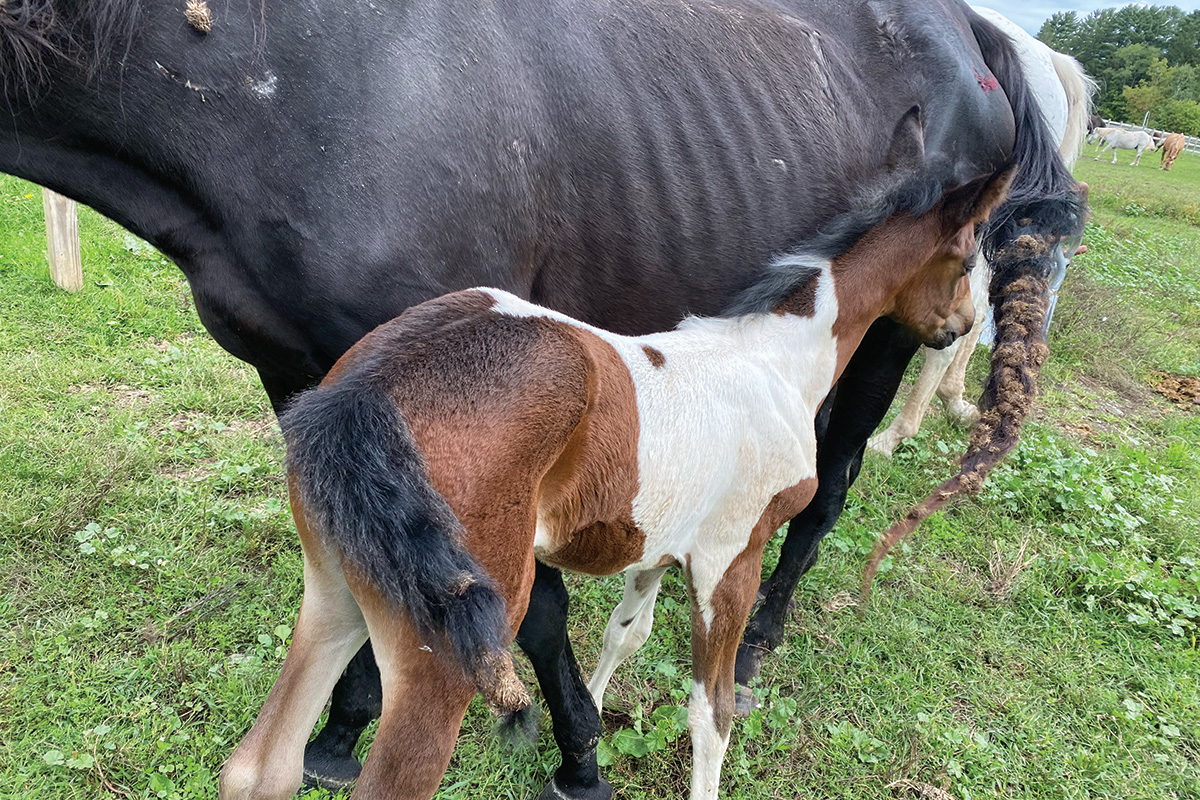
◆ 1st place in Editorial Photograph for “Mom’s Milk” by Stacy Pearsall in the April 2024 issue of Horse Illustrated magazine
◆ 2nd place in Self-Supported Publication Equine Media Service to the Consumer Single Article for “High-Tech Distractions” by Laura Boynton Jobson in the May 2024 issue of Horse Illustrated magazine
◆ 2nd place in Self-Supported Publication Equine Feature Single Article for “Bringing Back Korean Mounted Archery” by Malene Jensen in the June 2024 issue of Horse Illustrated magazine
◆ 2nd place in Personal Column Single Article for “Night of Terror” by Courtney Diehl, DVM in the March 2024 issue of Horse Illustrated magazine
◆ 2nd place in Service to the Horse Industry Single Article for “New Outlook for Orphan Foals” by Cynthia McFarland in the March 2024 issue of Horse Illustrated magazine
◆ 3rd place in Self-Supported Publication Equine Media Horse Care Single Article for “Treating Tendon Injuries” by Audrey Pavia in the April 2024 issue of Horse Illustrated magazine
◆ 3rd place in Self-Supported Publication Equine Feature Single Article for “Preserving Przewalski’s Horse” by Audrey Pavia in the May 2024 issue of Horse Illustrated magazine
◆ Honorable Mention in Self-Supported Publication Equine Feature Single Article for “Veterinarians in the Military” by Sarah Coleman in the May 2024 issue of Horse Illustrated magazine
Freelance contributors can also join AHP as members and submit their own work. This year, two Horse Illustrated contributors received the following honors:
◆ 1st place in Self-Supported Publication Equine Media Service to the Consumer Single Article for “Good Hair Days Start Here” by Elizabeth Moyer in the May 2024 issue of Horse Illustrated magazine
◆ 2nd place in Association/Organization Publication Equine Media Horse Care Single Article for “Brain Games for Riders” by Kara L. Stewart in the March 2024 issue of Horse Illustrated magazine
◆ 2nd place in Freelance Writer Personality Profile Single Article for “The Beautiful One” by Kara L. Stewart in the September 2024 issue of Horse Illustrated magazine
◆ 3rd place in Freelance Writer Equine Journalism Article for “Training With Positive Reinforcement” by Elizabeth Moyer in the July 2024 issue of Horse Illustrated magazine
Another EG Media title, Western Life Today, and its editor, Abigail Boatwright, took home the following award:
◆ 2nd place in Equine Media Single Issue or Multi-Issue Electronic Publication for the Summer 2024 and Winter 2024 issues of Western Life Today magazine
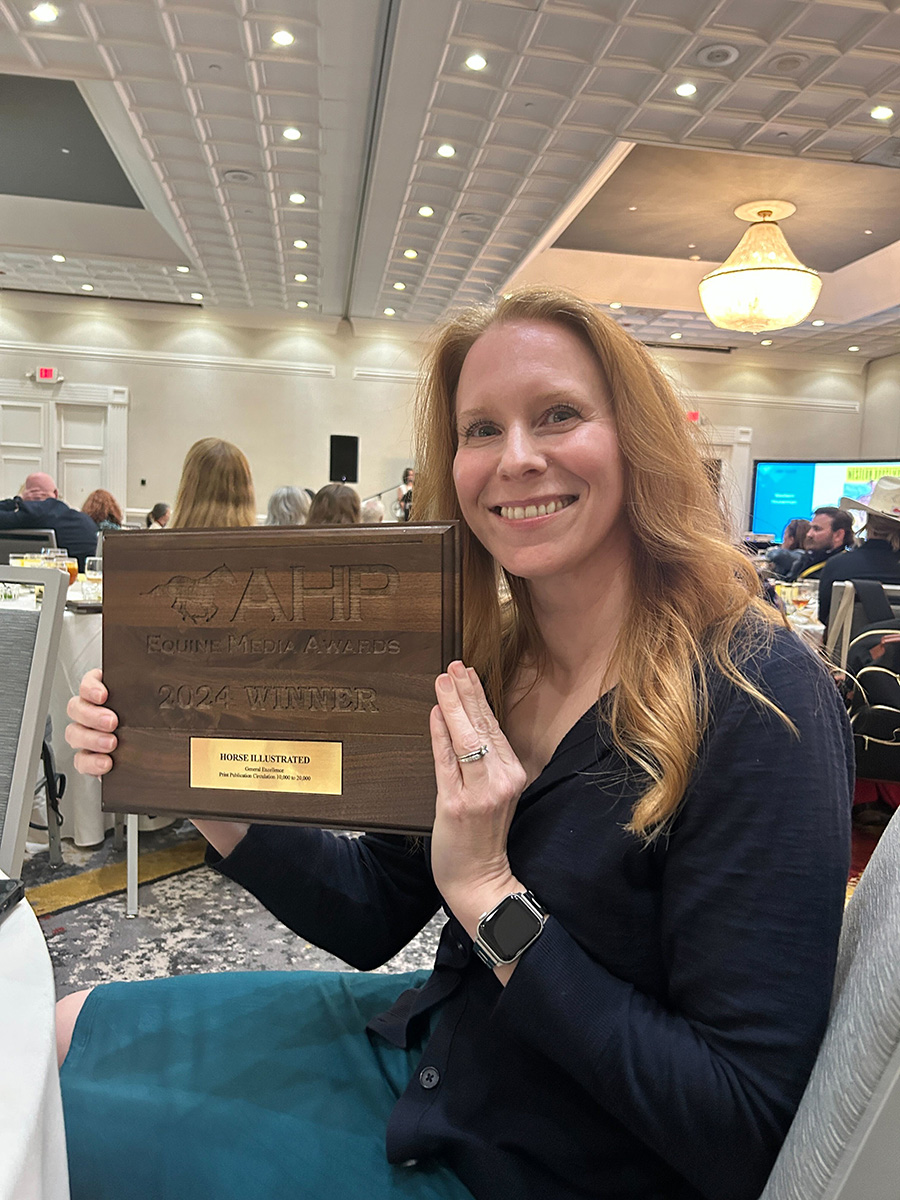
Caccamise with Illustrated’s 2025 AHP Equine Media Award for General Excellence.
About EG Media Investments LLC
The EG Media stable of equestrian titles includes Horse Illustrated, Young Rider, and Western Life Today magazines. Other EG Media periodicals include Hobby Farms, Chickens, Cottages & Bungalows, Atomic Ranch, American Farmhouse Style, COINage, and Rock & Gem magazines.
When most of us think of “military might,” we think of fighter jets and submarines, but we would be remiss to forget the four-legged animals that have helped locate bombs, transport messages or carry soldiers through nearly every military conflict. These military “tools,” like machines, need upkeep and maintenance—except it must be administered by veterinarians instead of mechanics.
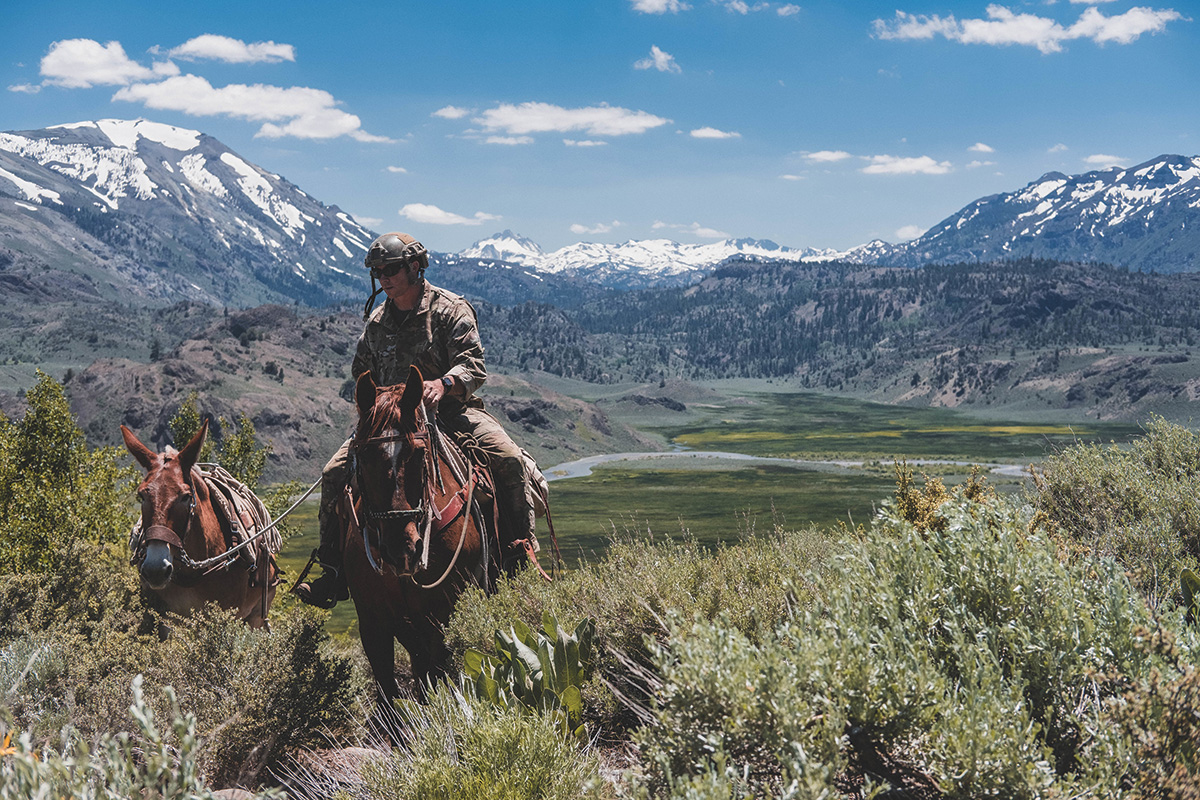
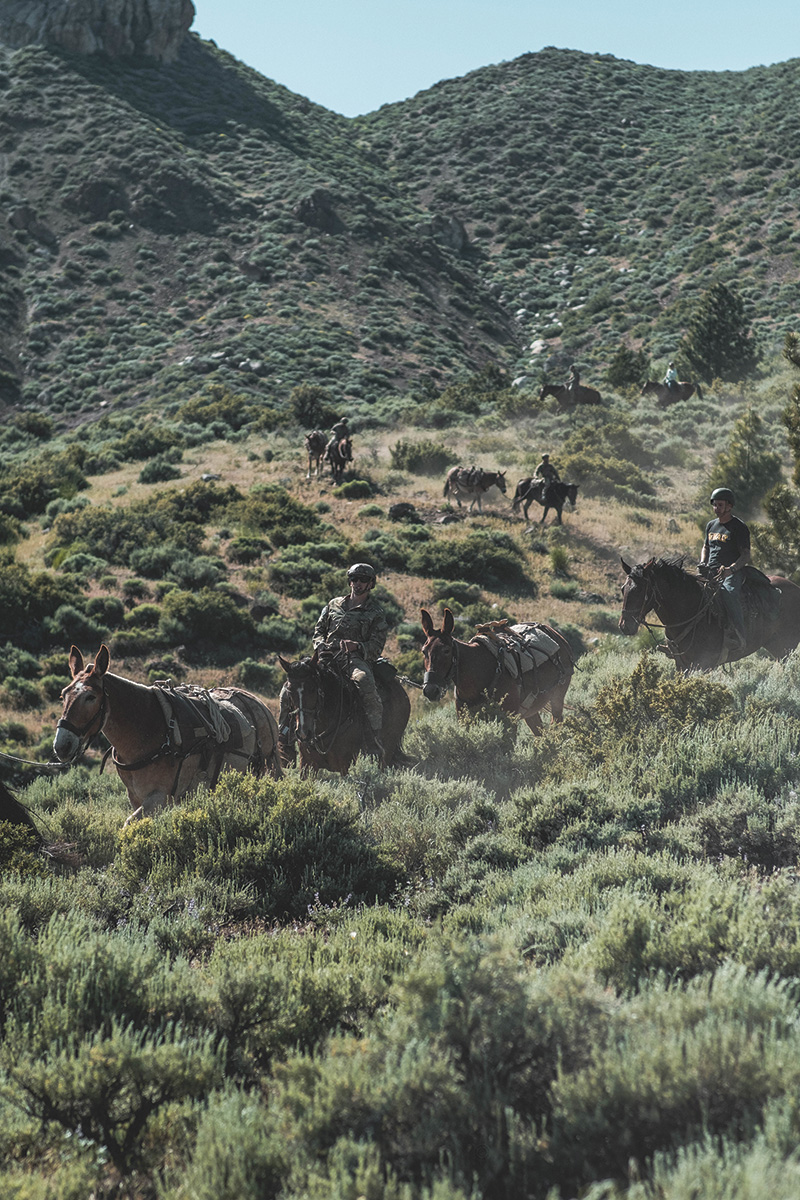
A U.S. Army Special Operations soldier rides while leading a mule through Humboldt-Toiyabe National Forest as part of a horsemanship course held at the Marine Corps Mountain Warfare Training Center near Bridgeport, Calif. Photo by Lance Cpl. William Chockey*
Like more mainstream veterinary medicine, there are a plethora of options for specializing in vet med within the military. Army veterinarians can choose to focus on animal medicine, research and development, or veterinary public health. Each of these is vitally important to the protection of troops and the public.
Veterinarians working as animal care specialists get to treat everything from military working dogs to ceremonial horses stateside, and they assist with all sorts of Military Working Animals if deployed.
In addition, Army veterinarians participate in a variety of humanitarian missions to assist local communities with animal care.
From Amarillo to the Army
Born in Japan as the youngest child of a Naval officer father, Cris Young, DVM, MPH, Dipl. ACVPM, moved to Alvaton, Ky., when his father returned to his hometown upon his retirement. Young grew up with a focus on cattle; he didn’t get his first horse until he was 18. But from there, his passion for horses was off and running.
Having been raised in a military family and always showing an interest in the armed forces, Young’s parents had high hopes that he would become a military surgeon. However, his heart belonged to veterinary medicine.
He received his Doctor of Veterinary Medicine from the Auburn University College of Veterinary Medicine, and upon graduation, moved to Amarillo, Texas, where he focused on cattle and “a little bit of horses,” he says.
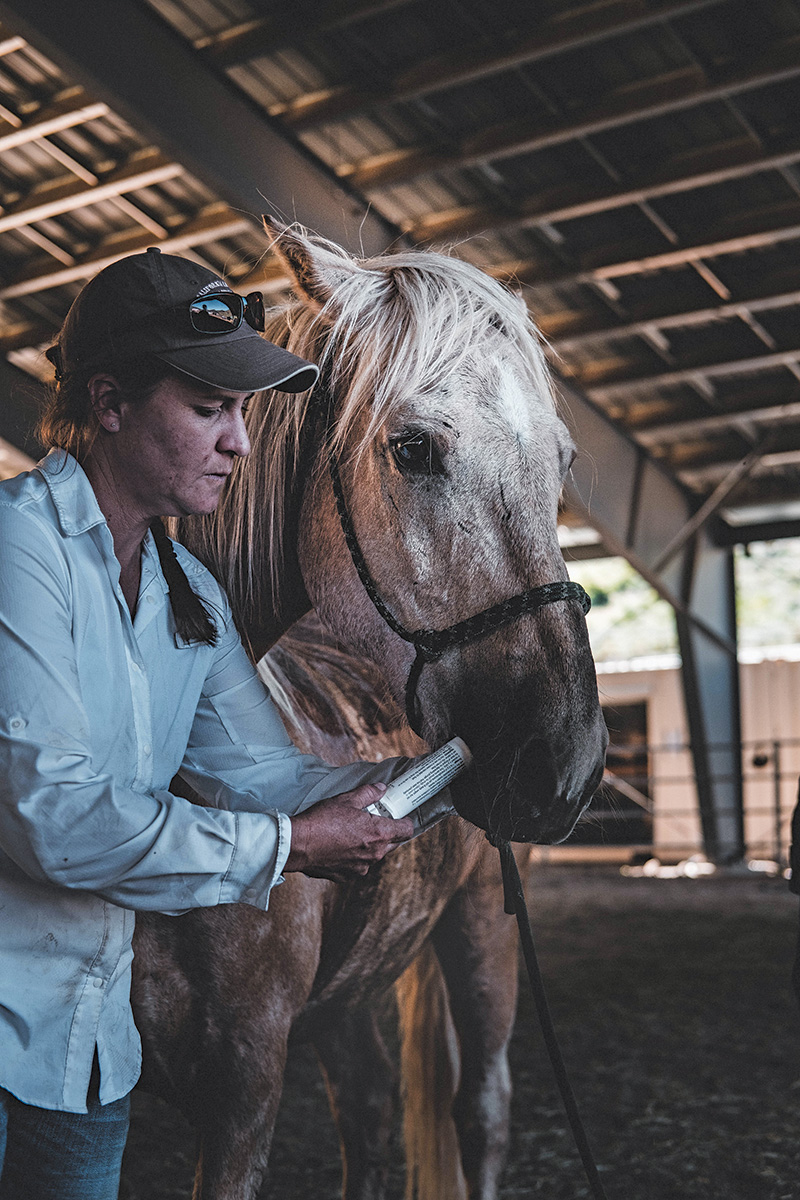
A U.S. Army Special Operations Veterinarian administers medication to a horse during the SOF Horsemanship Course at Marine Corps Mountain Warfare Training Center. Photo by Lance Cpl. William Chockey*
Young had been out of school for five years when he began to consider a military career.
“I did it backward of how many people do it,” he says. Young was commissioned into the United States Army as a 29-year-old veterinarian in 1998. He was the only veterinarian commissioned that year as military manpower was being downsized under the Clinton administration.
The Role of an Army Veterinarian
Animals have been part of military operations since 1775; the U.S. Army Veterinary Corps was established to care for them in 1916. The Army is the only branch of military service that has veterinarians; it provides veterinarians to all other branches of service as needed.
In addition to caring for military animals, Army veterinarians are in charge of the inspection of food before it’s delivered to troops. The role of “veterinarian” has now expanded to include sanitary food inspectors and animal health specialists.
Army veterinarians can be direct commission officers (DCOs), meaning they’re civilians who have a professional degree and skills needed for a specific role in the military—in this case, veterinarians. The civilian then gets “hired” by the military to fill open positions that are integral to the military’s functioning.
A DCO doesn’t need to go through boot camp, but he or she will complete a Direct Commission Officer Basic Course, which covers things like military leadership, customs, military law, and Army values. Young notes that about 90 percent of military veterinarians had their DVM and then went into the Army Reserve, rather than going to veterinary school after being an enlisted soldier—though either is possible.
There are currently more than 700 veterinarians in the U.S. Army Veterinary Service in both Active duty and Reserve capacities. These veterinarians are tasked with providing care at the 19 duty locations in the United States to a significant number of horses, Young says.
These locations encompass places like United States Military Academy West Point; Arlington National Cemetery; Fort Rucker, Ala.; Fort Huachuca, Ariz.; Fort Hood, Texas; Fort Riley, Kan.; and Fort Irwin, Calif.
While veterinarians care for the horses there, they also care for myriad other animals, owned both by civilians and the military, Young explains.
“They’re not equine specialists—they’re Army veterinarians,” he says.
Requirements for a Military Veterinarian
Think a role in the U.S. Army as a veterinarian may be the path for you? A military veterinarian must be:
◆ Be licensed to practice veterinary medicine in at least one state
◆ Medically and physically fit
◆ Eligible for Secret Security Clearance
If a candidate checks all these boxes, they enter the U.S. Army as a Second Lieutenant Active Duty or the Army Reserves. Active Duty veterinarians can receive up to $40,000 for up to three years to apply toward their student loans.
Veterinarians in the Army Reserves can receive up to $20,000 annually, with a maximum of $60,000 for loan repayment. Full, three-year scholarships are available for Active Duty soldiers enrolled in a veterinary college at an AVMA-accredited school.
Marine Corps Crossover
Interestingly, the Marines have the largest contingent of military equids stateside, according to Young. The Marine Corps Mountain Warfare Training Center near Bridgeport, Calif., teaches Special Operations Forces soldiers how to ride horses, load pack animals, and maintain animals for military work in remote and dangerous environments. The course is designed to teach Marines how to use pack and riding animals to transport people and supplies when air or ground support isn’t feasible.
The Marine Corps Mountain Warfare Training Center teaches Special Operations Forces soldiers how to ride horses, load pack animals, and maintain animals for military work in remote and dangerous environments. Photo by Lance Cpl. William Chockey*
Army veterinarians assigned to the U.S. Marine Corps Forces Special Operations Command teach soldiers about animal anatomy and care, and animal first aid. The soldiers also learn animal packing techniques, horsemanship, capability of different animals, and other relevant trainings.
The course is taught on horses and mules, but the principles taught can be applied to any pack animal, including the nine species the Marines use: camel, dog, donkey, elephant, horse, llama, mules, ox and even reindeer.
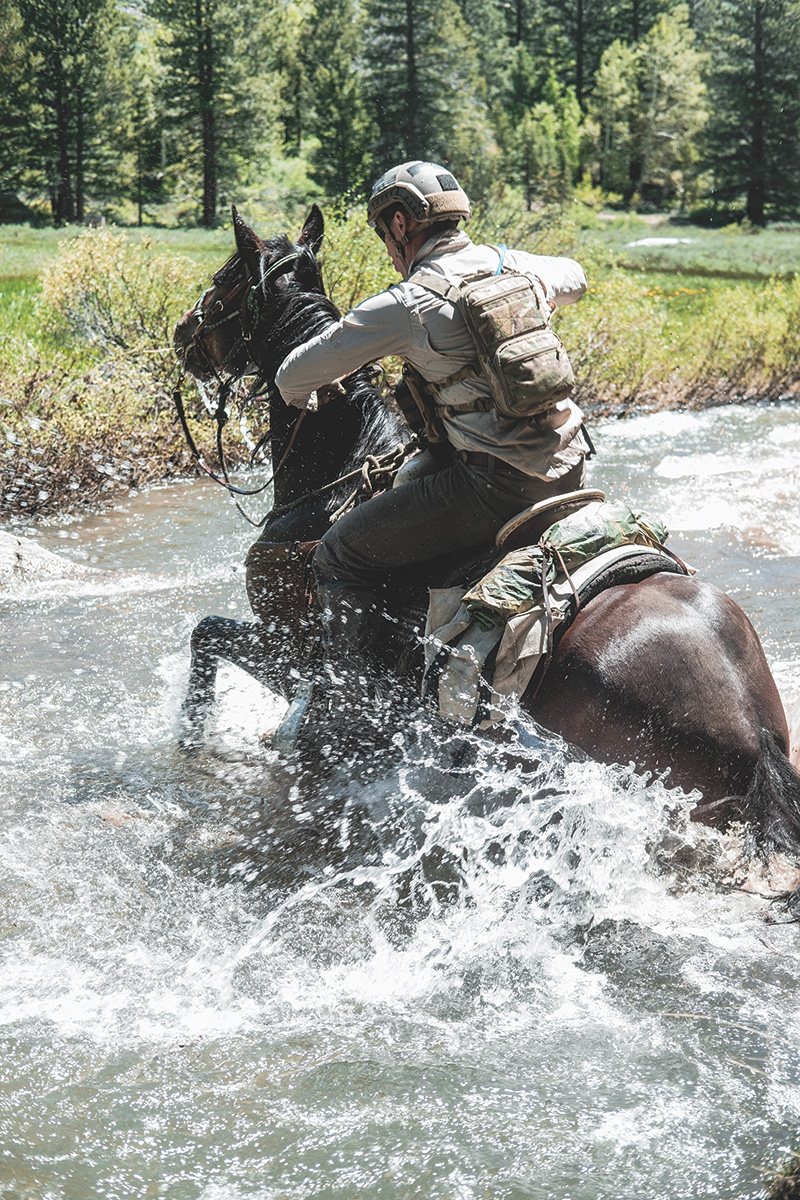
The Marine Special Operations School is designed to teach Marines how to use pack and riding animals to transport people and supplies when air or ground support isn’t feasible. Photo by Lance Cpl. William Chockey*
World Traveler
Now in his 26th year of service, Young has had some incredible experiences, both stateside and abroad.
“When I was a Captain stationed with Marines out in the Middle East, I took care of the Australian Special Forces pack animals that they bought there,” he says. “We worked on procuring the pack animals locally because of disease pressure and the risk of disease introduction into the local environment.”
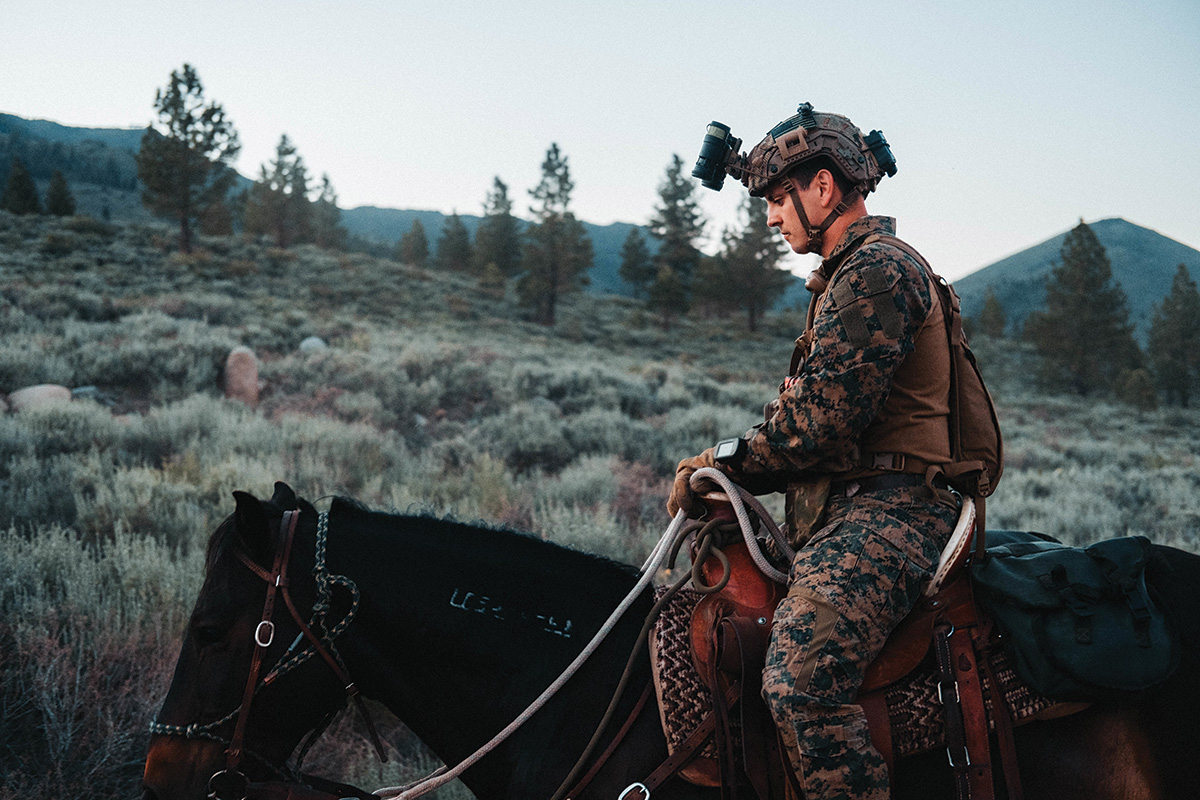
Soldiers at the Marine Corps Mountain Warfare Training Center learn animal packing techniques, horsemanship, capability of different animals, and other relevant trainings. Photo by Lance Cpl. William Chockey*
Young has done a variety of tours; his favorite was the 15 months he spent working with a Special Operations command in South America helping small communities with their beef and dairy cooperatives.
“A lot of people don’t know we do humanitarian assistance and civil affairs,” he says. “I’m not a Special Ops soldier, but I got to work with Special Ops folks for those missions.”
Young has been to Afghanistan, Ecuador, Egypt, Ethiopia, Djibouti, Kenya, Kuwait, Oman, Tanzania and Uganda—and more.
“I never had any idea when I went to vet school that this is where I would end up,” he says. “I’ve done trade missions to China and Mexico, I’ve walked across the Nile River at its source. I’ve done all sorts of crazy things.”
Financial Benefits
In addition to the amazing places he’s traveled, Young’s military career has helped support him financially, he says. He received money to help defray his student loan debt from veterinary school, in addition to drawing a salary. He also received good life insurance and health insurance.
“For a young practitioner who’s just getting started, the perks [of going into military service] are incredible,” Young says. “I was in my third year in the Army when I paid off my [vet school] loans. And we were getting paid $25,000 a year just for showing up. In the higher years of your service, it’s a part-time job that compensates you well—and you can work anywhere you want [with your full-time job].”
Just Say Yes
Now a Professor of Practice at Auburn University with an appointment to the College of Veterinary Medicine and an Adjunct Pathology Professor at the University of Georgia College of Veterinary Medicine (among many other roles), Young is surrounded by vet med students.
“When I talk to my students, I tell them to say ‘yes’ a few times,” he says. “If they think, ‘I couldn’t do that job for a year,’ I remind them that you can do ANY job for a year. And if it takes sweat and dirt and lays the foundation for you to get to the next job, it’s worth it. The time goes by really quickly. Whatever it is you want to do, your debt and your attitude are what control your future.”
Now a Colonel in the U.S. Army Veterinary Reserves, Young credits the military with his ability to pay back his student loans in a hurry—and the opportunity to have incredible adventures in a life he never expected.
* The appearance of U.S. Department of Defense (DoD) visual information does not imply or constitute DoD endorsement.
Adopting a horse, regardless of when or how it occurs, is always a special occasion and a reason to celebrate. But since 2021, the entire month of May has been dedicated to placing special emphasis on promoting adoptable horses and, very likely, placing them in a perfectly matched new home. Will 2025 be the year that you take part in Adopt a Horse Month?
Cheyenne & Whisper
Alexa Atchison of West Farmington, Ohio, had always dreamed of owning a horse.
“When I was told that I was going to get one, I couldn’t keep my eyes off myrighthorse.org,” Atchison says.
While much needed to be done before she and her family were able to bring a new horse home, when she saw Cheyenne and her dam advertised, they immediately planned a visit for the following day to ASPCA Right Horse Partner Happy Trails Farm Animal Sanctuary in nearby Raveena, Ohio. During the visit, while Atchison was busy meeting the horses, her father noticed the cute-faced Whisper in the stall across the aisle.
“Her fee happened to be waived for Adopt a Horse Month,” Atchison says. The family was smitten with her and signed the papers that evening. “I fell in love with Cheyenne, and Whisper was the perfect companion to help her leave her mother. I was thrilled, because not only did my dream come true with bringing Cheyenne home, but because of Adopt a Horse Month, we were able to bring Whisper home, too.”
Alexa Atchison adopted Cheyenne in May, and decided to take home Whisper as well, whose fee was waived for Adopt a Horse Month. Photo courtesy Alexa Atchison
Pony Hero
In 2024, Alina Bartlett of Springdale, Ark., adopted Hero. Bartlett had previously adopted other horses from the ASPCA Equine Transition and Adoption Center (ETAC) in El Reno, Okla., but unlike her other adoptions, Hero was not supposed to stay.
In the process of being relinquished by owners that could no longer care for him, Hero stayed with Bartlett overnight before she was to return him to the ETAC.
“He was coming to my house for only one night,” Bartlett recalls. She says that while she didn’t know Hero’s entire story, she did know that at some point he was mistreated. “In his younger years as he was growing, his halter had grown into his soft tissue and had to be surgically removed.”
Hero was also exhibiting some behavioral challenges while at Bartlett’s home. He was very nervous and untrusting around people. As such, Bartlett placed Hero in a stall and advised her boyfriend, David, to be watchful. Wanting to ease David’s mind, she also told him not to worry because the pony would be going back to the ASPCA in the morning.
A bit later, as Bartlett was feeding her other horses, she found David sitting in a lawn chair in the stall with Hero. Soon enough, Hero had taken to David and was allowing him to give pets and scratches, much to everyone’s surprise.
David spent hours bonding with the timid pony, who ended up staying as a permanent resident at Alina Bartlett’s farm. Photo courtesy Alina Bartlett
“I had no need for a pony, nor did I want this one,” Bartlett says. “I was taking this pony back and adopting another horse.” David, however, had another idea. He spent hours in the stall forming a bond with the timid little pony.
“David fell in love with this pony,” she says. The next morning, as she went to hook up her trailer and head out, David told her to call whoever she needed to and find out how to keep the pony.
Now, she says, on top of the many horses they already have, they also have a pony that is just around for David to love on.
“Hero is very spoiled and really only likes David,” Bartlett says. “He was meant to be here with David. They needed each other.”
Ella’s Story
“Adopt a Horse Month is such a great opportunity to promote our available equines,” says Allison Hungerford, director of communications for the Susquehanna SPCA in Cooperstown, N.Y., an ASPCA Right Horse Partner.
In 2024, the organization received a stipend from the ASPCA Right Horse program to spend on paid advertising for their horses, something that allowed them to expand their audience.
“The opportunity was one that I was grateful for because so many of our adoptable horses at the time were going to be happiest living out their days as companions only, which is something that can be an adoption hurdle,” she says. With the stipend, Hungerford was able to target groups looking for horses similar to the ones at the facility.
“While these promotions increased inquiries for all of our adoptable equines, there was one horse in particular that found her match through the campaign,” Hungerford says.
Ella had come to the Susquehanna SPCA through a suspected animal cruelty case.
“She was extremely emaciated upon arrival and had a foal at her side that she was caring for,” Hungerford recalls. “After the case was closed, Ella became ours. Ella’s foal was quickly adopted, and she was healthy and searching for a pasture where she could spend her days relaxing while munching on grass, maybe participating in some light riding now and then.”
BEFORE: Ella came in from a suspected animal cruelty case with a foal at her side. Though the youngster was quickly adopted, Ella took more time to find a home. Photo courtesy Allison Hungerford
Hungerford says that sadly, Ella kept getting overlooked and had been waiting for her person to come along for quite some time.
“With the help of paid and targeted advertising, I was able to reach folks who lived in areas we weren’t necessarily accessing with our regular organic outreach,” she says. “This did the trick for sweet Ella, and she found her match!”
AFTER: Ella found her forever home after some Adopt a Horse Month funds helped expand advertising to reach new horse lovers. Photo courtesy Allison Hungerford
Facilitating Adoption
When the Adopt a Horse Month initiative officially started, everyone involved dreamed about how it would evolve and what it would one day become.
“Adopt a Horse Month plays a critical role in raising awareness and excitement around equine adoption,” says Cailin Caldwell, director of the ASPCA Right Horse Program. “In 2024, thousands of horse lovers explored equine adoption for the first time by visiting myrighthorse.org and met adoptable horses online.”
Caldwell says that as a result, more than 200 horses, donkeys, and mules found homes during the month through ASPCA Right Horse Partners.
“We’re hoping to make this year’s Adopt a Horse Month even more impactful and encourage everyone to get involved,” she says. “If you know someone looking for a horse, encourage them to consider adoption by visiting myrighthorse.org or their local adoption group. Or share on your social media channels to raise awareness and interest in these amazing horses. Whether you’re looking to adopt or not, there are countless ways to get involved and support these amazing equines.”
Be part of something big during Adopt a Horse Month 2025. Join The Rescue Effort to see how one adoption creates space for more horses to be helped. Learn more at aspca.org.
When training your horse, one of the ultimate goals is softness in his responses. But this softness should be not only in his face and head, but through the horse’s whole body. In this article, trainer Ben Baldus shares his tips for understanding and incorporating softness into your horse.
The Goal of Softness
Softness starts with your horse’s mouth and chin, through his neck, rib cage, and hindquarters—his whole body. Some riders confuse softness with achieving a “headset,” where the horse holds its head in the desired position.
When asking a horse to be soft, it is more than a headset—it starts with their mouth and chin, through their neck, ribcage and hindquarters. Photo by Abigail Boatwright
“It’s beyond headset—it’s more a willing behavior to do the task you’re asking for,” says Baldus. “Some horses naturally have a neck that comes out a little bit lower, [and] they’re comfortable being lower-headed due to their style or their pedigree. Other horses with a different pedigree or style might carry their head a little bit higher and have a higher-headed look. That doesn’t mean that the horse is stiffer, it just means that he has conformation that puts his head higher.”
A horse with higher-headed conformation can still be soft with his head and neck, according to Baldus. This type of horse can still be flexed at the poll, willingly guided and soft—just with his head coming out of his neck a bit higher.
If a horse is high-headed and tense, he might be anxious or protecting himself from reins that are pulled on too firmly.
“When a horse has his head way up and his neck tight, his shoulders are heavy and he’s hitting the ground hard while he moves,” says Baldus. “His whole body is stiff, rigid and tight.”
In contrast, a soft horse has a lightness of step and movement regardless of gait or maneuver.
“He’s going to have a soft and light step, and that’s going to help the horse move better,” he says. “And that’s true whether working a cow, on the trail, just riding down the road, or riding for pleasure around your ranch. A horse that is lighter and moves with more fluidity is going to be smoother and softer to ride.”
Preparation
The bit you choose to use while working on softness with your horse is important. Baldus says that when he’s first starting to train a horse—usually in the first 30 days of riding—he’ll use a loping hackamore to work on lateral softness. He will next put the horse in some variation of a snaffle bit.
“As I transition to a snaffle, some horses are very light and soft and go in a smooth O-ring,” he says. “Others need a bit more, maybe a little twist to the mouthpiece, or even a short shank bridle to help him understand how to soften to the bridle.”
No matter what bit you use, your hands are the most important piece of the puzzle.
Move Slow and Soft
Baldus says the way you ask your horse to move is key.
“Every day when I get on, every ride, I remind myself to slow my hands down and ask [for a response] as slow and soft as possible,” he says.
This starts with asking the horse to tip his nose to the right, for example. You’ll do this every time you ride after your horse has warmed up.
“I ask myself how slowly and how smoothly I can pick this rein up and ask this horse to tip his nose to the right,” says Baldus. “If I ask slowly and methodically, in a sequence of half a pound of pressure, 1 pound of pressure, 2 pounds, 3 pounds, and so on over a 10-second time period, that horse has a chance to respond to a soft, light pressure before I increase to more pressure. By building the habit of keeping your hand slow, the horse will start to respond to 1 or 2 pounds.”
Build this habit into everything you do with your hands and legs while riding—whether you have on a loping hackamore or a spade bit on a finished bridle horse. Focus on keeping your hands as slow and consistent as possible.
The Release of Pressure
You’ll also want to focus on the release of pressure.
“Your horse is going to learn the most from the release of pressure,” says Baldus. “The moment he starts to soften in the direction I want with his head, neck or shoulders, I start to release the pressure.”
Look for a place to reward your horse, even just for trying, then pick up and ask again. He will probably get softer faster, according to Baldus.
The Sequence of Achieving Softness
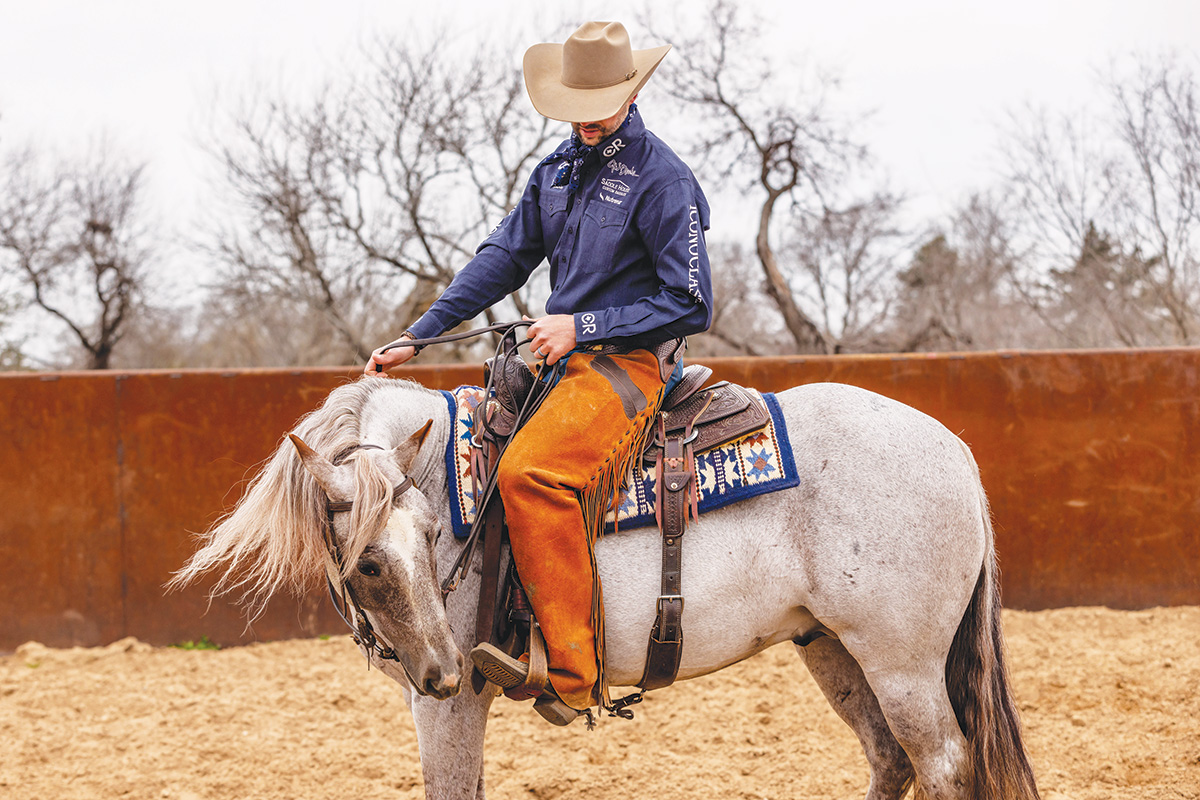
Working from the front to the back of the horse, Baldus asks for softness.
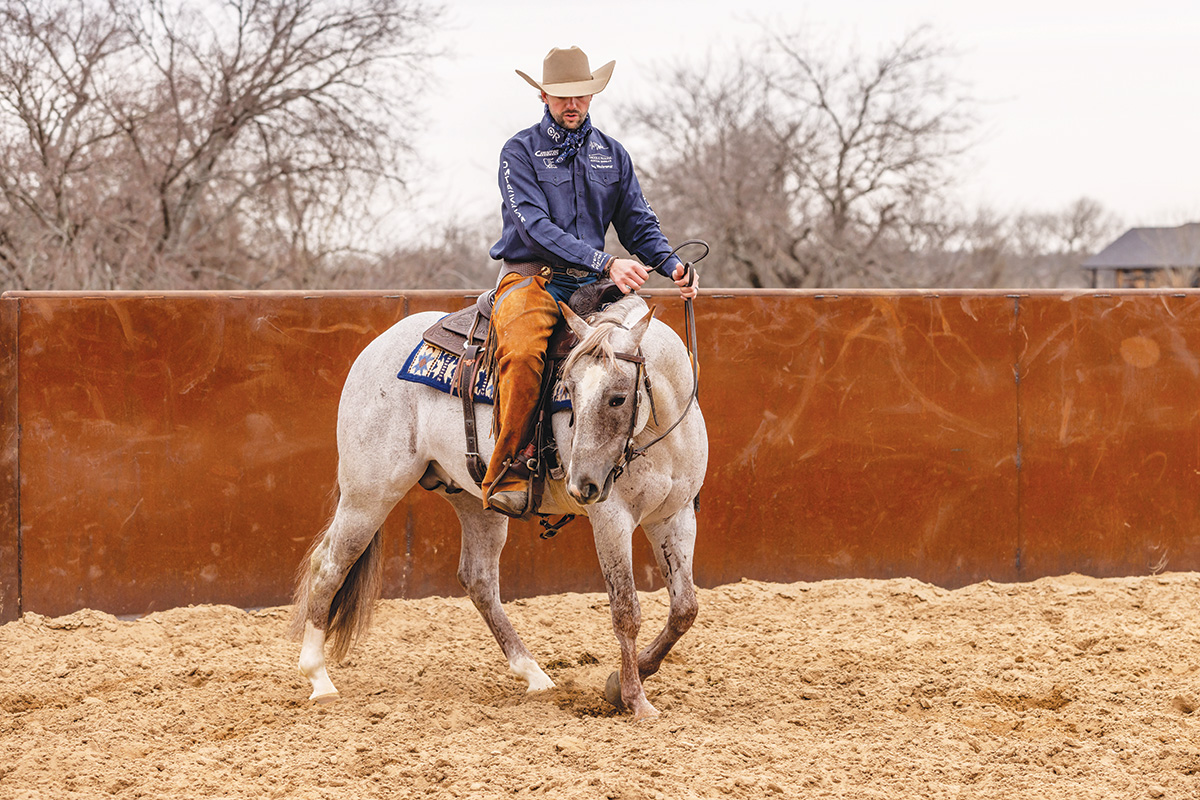
“I start with his nose, and I’m just bending his nose laterally, let’s say with my left hand,” he says. “I’m tipping my left hand toward my left pocket and asking the horse to give his nose to the left.”
Ben Baldus starts to ask for softness by bending the horse’s nose laterally by pulling one rein toward his hip pocket. Photo by Abigail Boatwright
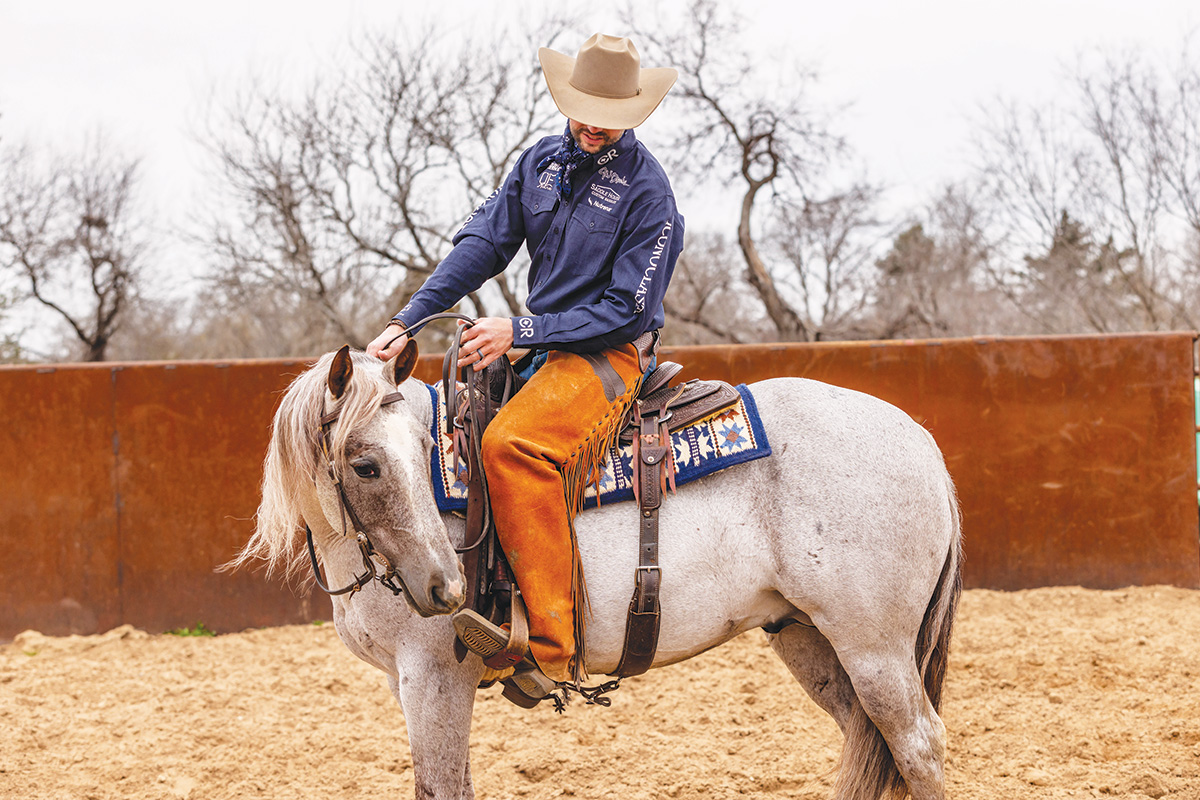
Baldus notes that he’s not clucking or using his legs for this step—he’s asking the horse to stand still and stay relaxed, flexing his nose toward the rein cue.
“Once he stands still and gives his nose to the left, then I release that pressure,” he says. “Then I will pick up the rein and ask again in another 10 seconds.”
Once the horse is stationary and flexing his nose toward the rein cue, Baldus releases the pressure, and then asks again in 10 seconds. Photo by Abigail Boatwright
Your horse is not going to respond perfectly right away—you’re looking for small steps, building habits that will stay with the horse. Baldus says it may take a horse two weeks to understand if he’s never done it before.
Vertical Flexion
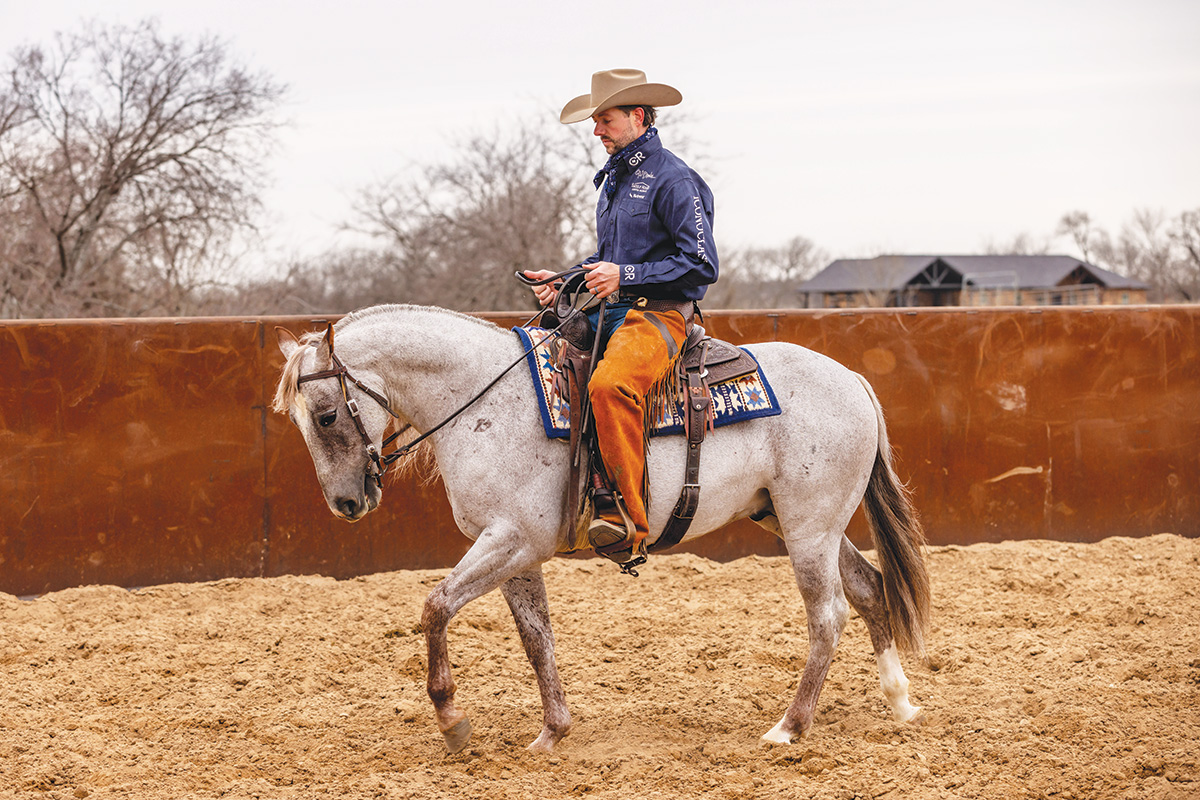
The drills Baldus uses most often are asking for lateral bend and flexion, asking the horse to soften to the left and right, and then adding forward motion as he asks for a slight vertical flexion. At this point, he’s using his legs as an additional cue.
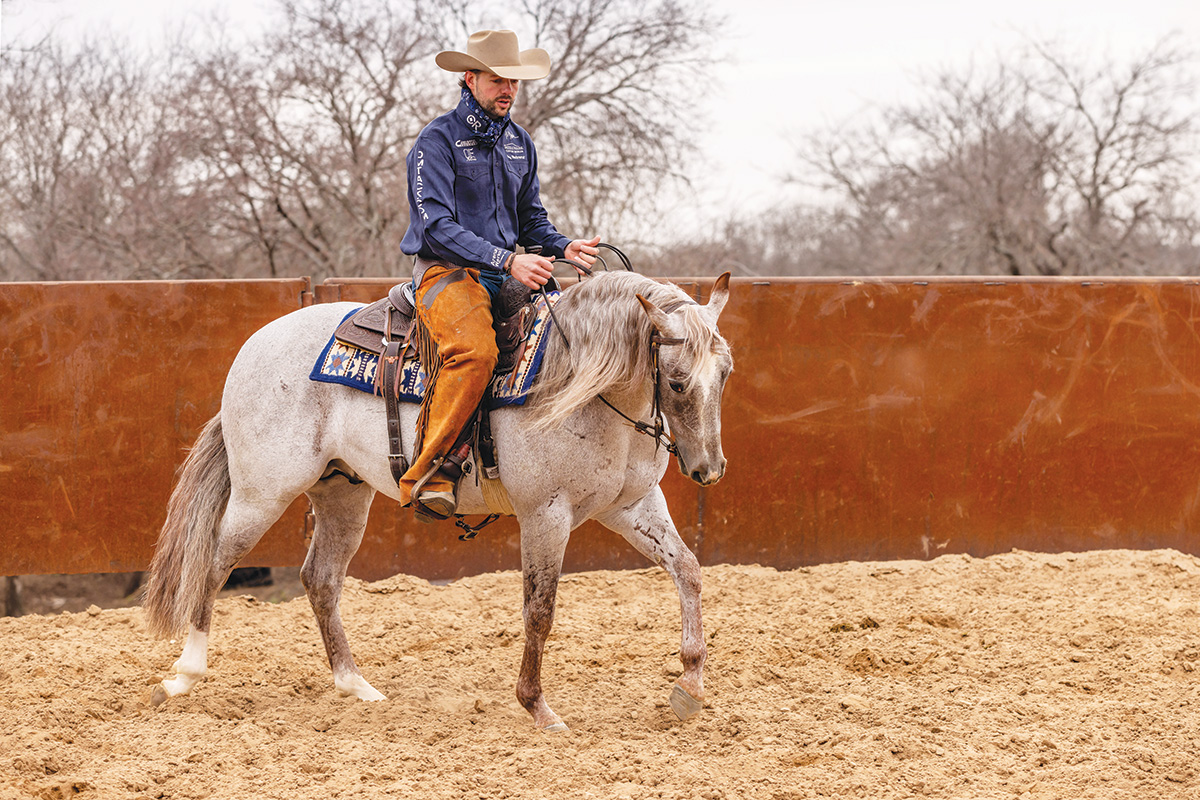
“When I’ve got the horse going at a walk, I just tip his nose to the left and to the right as we’re progressing into vertical flexion,” he says. “I’m asking the nose to move toward his chest and soften at the poll; I’m using my legs to squeeze and tell him to keep going forward. That’s the difference between your reins being a ‘whoa and stop’ cue and your reins being a ‘soften and flex at the poll’ cue.”
Walking forward, Baldus will ask the horse to move his nose toward his chest and soften at the poll, squeezing with his legs. Photo by Abigail Boatwright
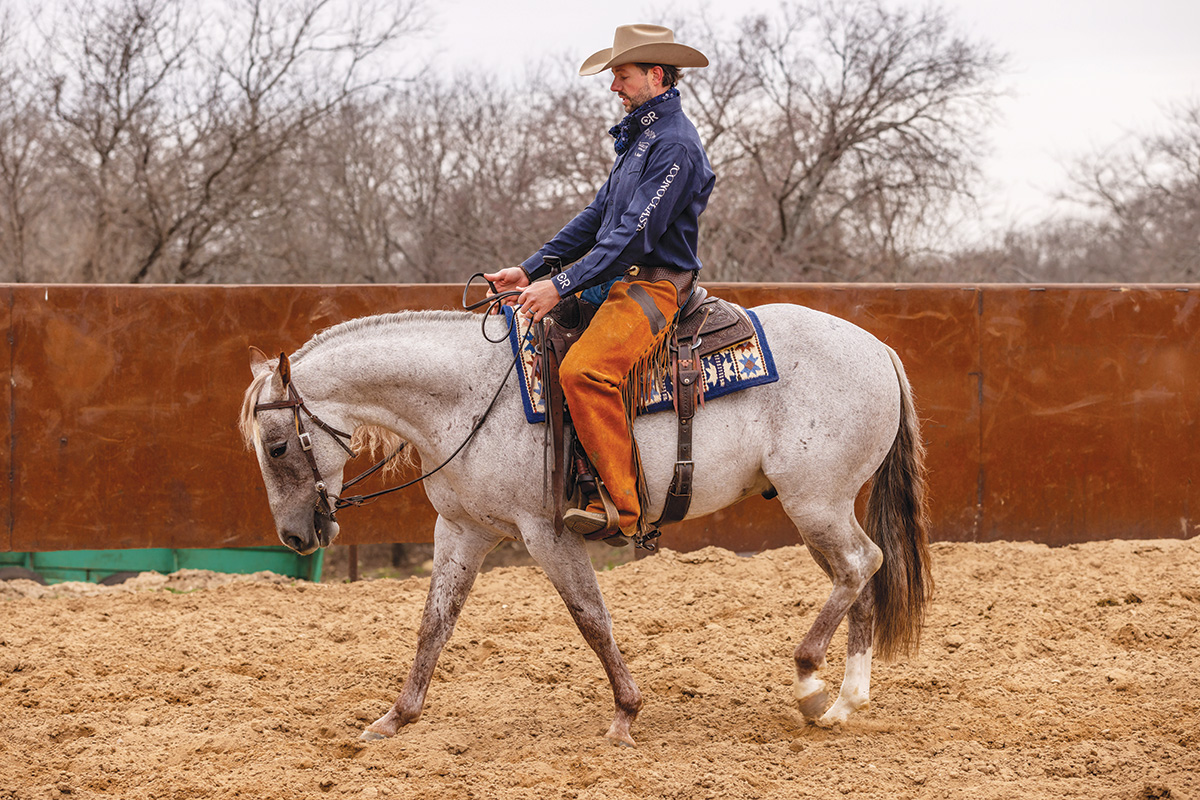
The moment you feel flexion or softening in the horse’s poll, release your reins—Baldus says this is a “micro release” of half an inch as a reward. Your horse may push his nose back out, and that’s OK.
The moment he feels flexion or softening at the horse’s poll, he’ll release the reins slightly. If your horse pushes his nose out again, you can ask for softness again. Photo by Abigail Boatwright
“You’re just going to pick him up again and say, ‘Hey, let’s not root our nose out; when I pick my hands up, flex at the poll and soften your chin toward your chest,’” Baldus explains. “When [the horse complies], I start to release my hands again. I’m teaching him to look for the release of pressure, and he’ll find it by flexing at the poll and lowering his neck a little bit.”
Baldus works on these moves at a walk, and once the horse is solid, he’ll move to a trot, and eventually a lope and gallop on a finished horse.
Body Softness
Baldus teaches the horse to shoulder-yield next while walking in a circle. Traveling to the left, he’ll close his left leg from his calf to his heel right behind the front cinch to teach the horse to move away from pressure.
For a shoulder-yield, walk in a circle and ask your horse to move outward from your inside leg at the cinch. Photo by Abigail Boatwright
“His head and neck stay the same, and his body stays on the same arc of the 10-foot-circle, but now I’m teaching him to cross his left front leg over his right front leg as he makes the shoulder move,” says Baldus. “This helps when a horse drops his shoulder to the inside. The more control you’re going to have over the circle, the more you can control your horse’s feet and softness, and the better his patterns are going to be.”
Baldus will also ask the horse to step his hindquarters to the outside of a circle, almost like a forehand pivot, where the hind end is moving around the front end.
For a hindquarters yield, you’ll walk a circle. Using your inside leg further back, ask your horse to move his hips around, almost in a forehand pivot. Photo by Abigail Boatwright
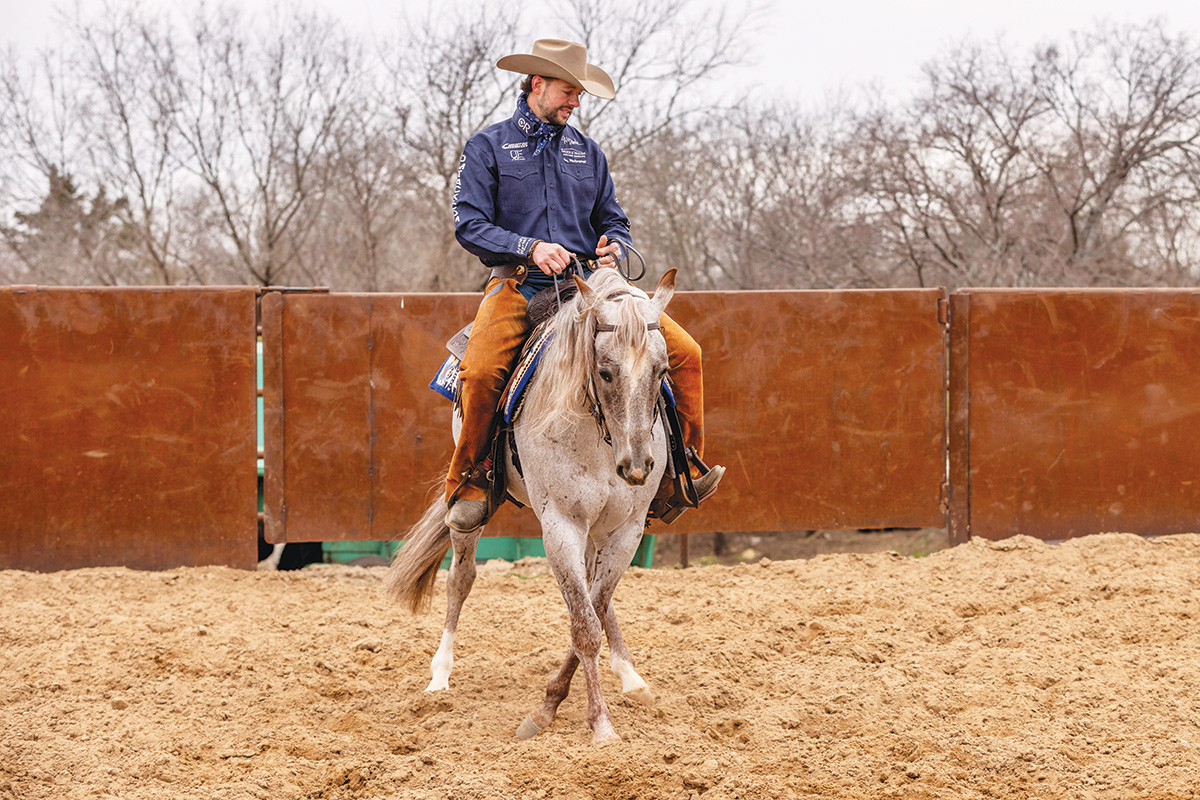
Once the front end and back end can be moved in response to your cues, you’ll move on to the sidepass, where you ask the horse to move his front and hind end laterally at the same time.
Sidepass your horse to practice moving his hips and shoulders sideways simultaneously. Photo by Abigail Boatwright
“Think about that softness in your horse’s head, neck and shoulders, all the way through his body to his hindquarters,” Baldus explains.
These skills translate to maneuvers such as opening and closing a gate, or sidepassing to pick up a slicker off of a fence in a trail class.
“The sidepass is another way to gain body control and softness through your horse’s body with a single maneuver to focus on,” says Baldus.
Key Takeaway
Remember, if your horse is stiff and heavy on his feet, he did not get there overnight. It may take six months for a horse to become softer and lighter, and that’s OK.
“You’re always going to ask as softly as possible and release the pressure the first chance you get,” says Baldus. “Those habits are going to build, and your horse is going to learn to carry himself in a way that’s flexed at the poll and willing and soft through his body. Then you’re going to be more comfortable on a trail ride. You’re going to have more fun, whether it’s in the show pen, working a cow, or on the barrels, because your horse is a softer, more willing partner.”
Meet the Trainer
Photo by Abigail Boatwright
Ben Baldus has been training and showing horses since he was 12 years old. He trains horses for reining, reined cow horse, and ranch versatility, and has earned championship titles at major events with the National Reining Horse Association, National Reined Cow Horse Association, Ranch Horse Association of America, and American Quarter Horse Association. He and his wife, Cameron, operate Baldus Horsemanship in Gainesville, Texas.
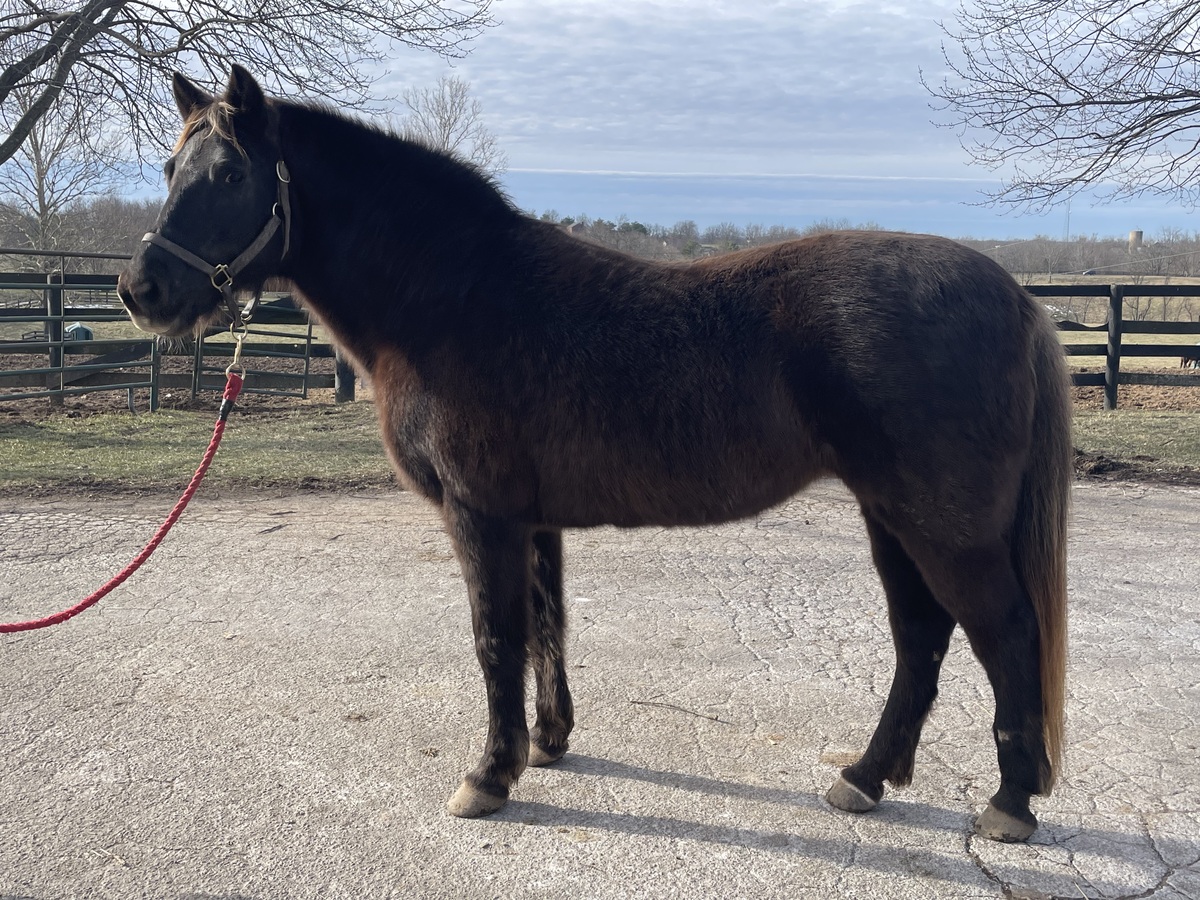
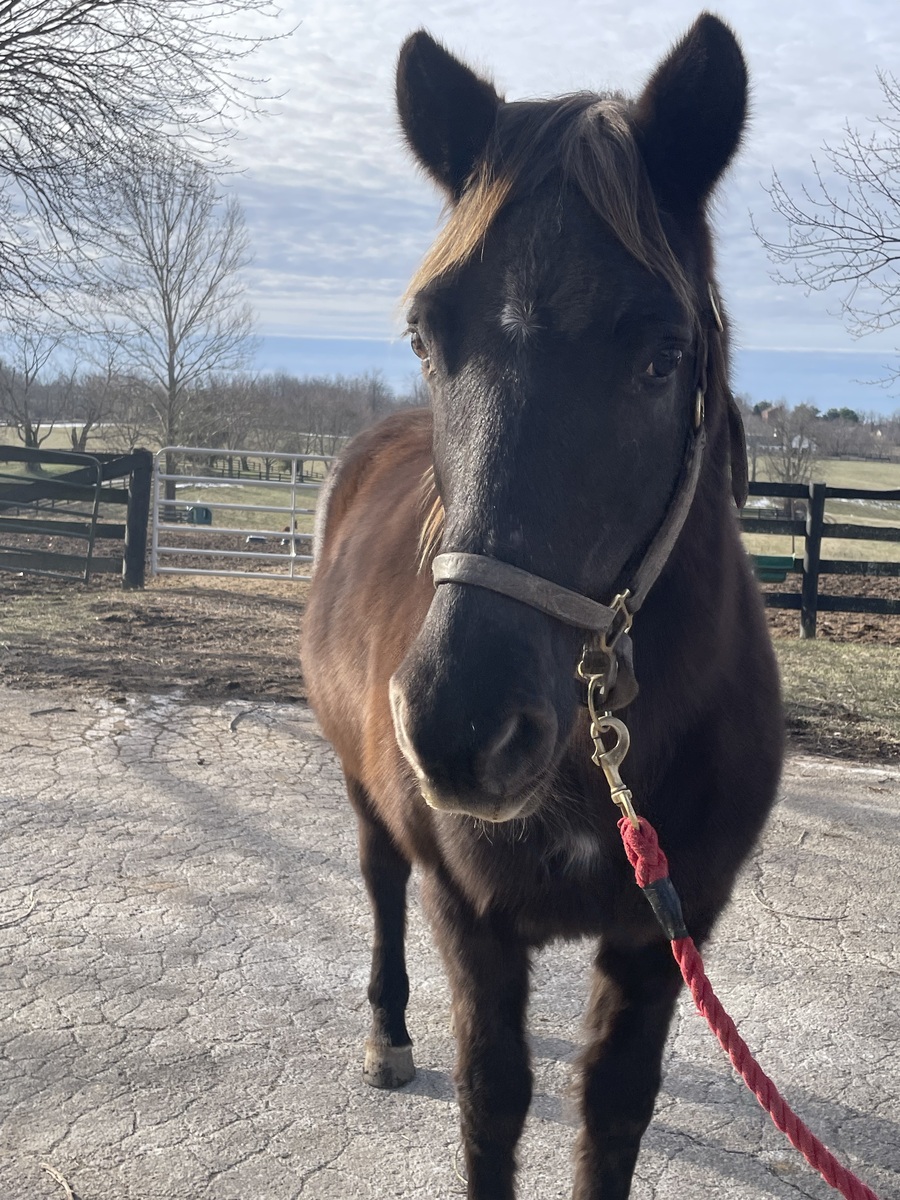
Miss Grace is a sweet mare with a highly food-motivated personality and a curious nature. While she likes to test boundaries, she is working on improving her ground manners and thrives with a consistent routine.
She can be easily overwhelmed, so she would do best in a quiet environment with a patient and knowledgeable handler who can guide her at her own pace. Miss Grace quickly bonds with other horses, making her a great companion in a herd.
Miss Grace is looking for a non-riding home with someone willing to give her the time, space, and guidance she needs to build confidence. If you’re looking for a mare with potential and a heart full of curiosity, Miss Grace could be the horse for you!
ASPCA Right Horse is the online adoption platform of The Right Horse Initiative, a collection of equine industry and welfare professionals and advocates working together to improve the lives of horses in transition. A program of the ASPCA, their goal is to massively increase horse adoption in the United States. To find more adoptable horses and foster horses, visit www.myrighthorse.org. To learn more about The Right Horse, a program of the ASPCA, visit www.aspcarighthorse.org.
Behind every shiny horse is not only good nutrition, regular routine care, and hours of currying, but also most likely, a plethora of potions and products devoted to clean, polish and otherwise primp your ride. To help you optimize your grooming routine, we went directly to industry experts from well-known brands to tap into their tips and insights from decades of developing effective equine grooming products.
Here are their tips to choose the right grooming products for the job and make the most of every spritz and sudsing.
Product Prerequisites
The overall health of the horse’s skin and coat is paramount to equine beauty, according to Sally Stith-Burdette, marketing director for Shapley’s Superior Equine Grooming Products.
“Healthy skin is going to produce good, healthy hair,” she says.
Photo by anjajuli/Adobe Stock
There are many products to choose from, and you should first consider that the products you’re grooming with are gentle, pH balanced, and made with quality ingredients, says Devon Katzev, president and product developer at Straight Arrow, makers of the Original Mane ’n Tail product line, as well as the Cowboy Magic and Exhibitor’s brands.
The way you use the products also makes a difference, but ultimately, he notes that you’ll have to judge for yourself based on what works best for your horse.
To get the most bang for your buck, it pays to take a moment to read directions on the bottle. It’s easy to overlook this step with familiar products like shampoo, but the manufacturer’s instructions are intended to maximize performance.
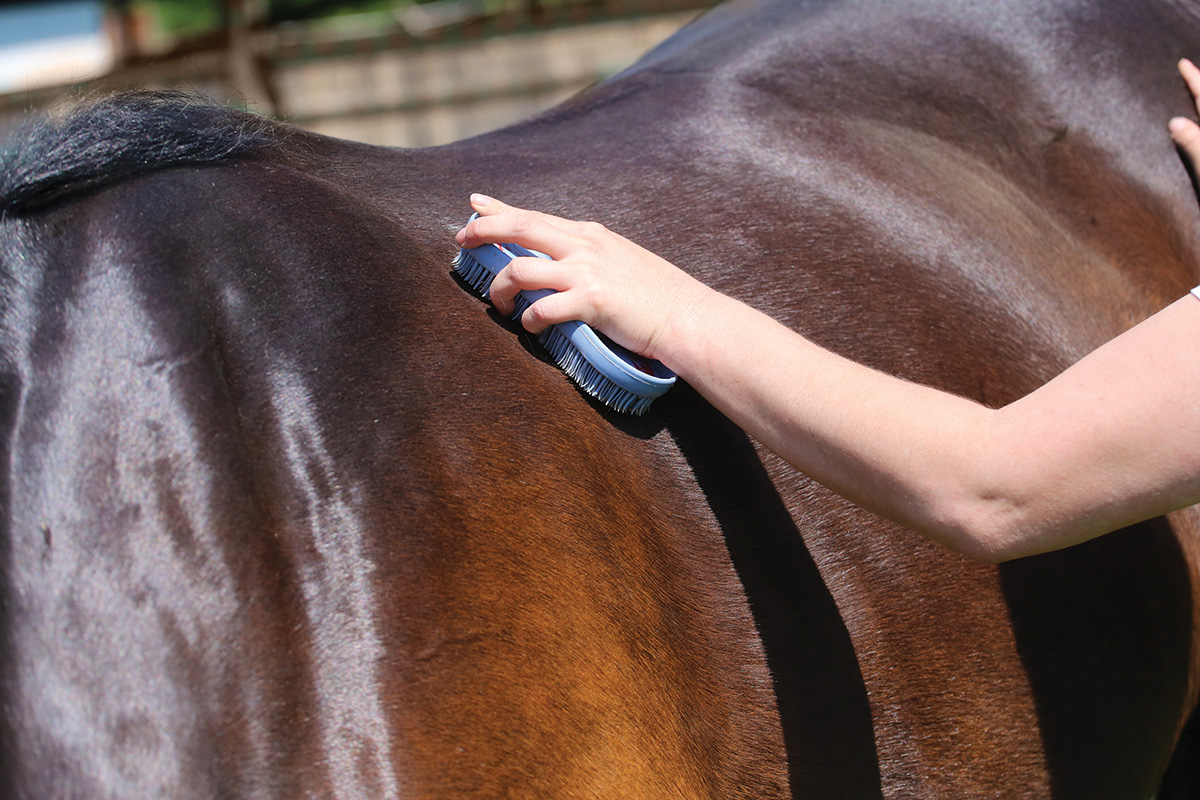
And spoiler alert: There’s no free pass from regular grooming. Even with the best products, good old-fashioned currying and “elbow grease” is still a big part of grooming success.
Choosing a Shampoo
Before you head to the wash rack, our experts explain why it’s important to make sure you have a shampoo that’s made specifically for horses and pH balanced for equine skin.
“A dog’s pH is different from a horse’s, which is different from people’s pH,” explains Stith-Burdette. “Horses actually have the most sensitive skin of all of them. When you use something that’s not made just for the horse, you run the risk of it being drying [to the skin and coat].”
While human shampoo is usually gentle enough to be safe for horses, it’s not really designed to effectively cleanse the dirt that horses get into, or their coarser hair and sensitive skin.
“Horses love to roll and get dirty, and equine shampoos in general are designed to clean and compensate for the extra dirt,” says Katzev. “Plus, conditioning for their extra-thick manes and tails is essential to keep them long and flowing.” For general cleaning, he says you’ll want a gentle pH-balanced formula and ingredients that clean and nourish.
One thing you want to avoid is harsh detergents, such as household cleaning items. Products made for laundry or dishes are going to be extremely drying to the horse’s skin, strip the natural oils from the coat, and leave the hair dull and brittle.
“If you wouldn’t use it on your own head, don’t use it on your horse,” says Stith-Burdette, warning that these household cleaning products can cause itching and create cracks in the skin, inviting bacteria and infection.
The Right Product for the Job
When selecting a shampoo for your horse, you’ll also want to choose the right one for the job. Equine shampoos may be formulated for routine cleaning and frequent use; contain medicated treatment for skin; or be made to enhance color or shine.
With skin problems, Katzev recommends consulting with your vet and doing your research to better understand what you are looking to treat, such as rain rot, girth itch, scratches, et cetera.
Getting the most out of the product depends on the type of shampoo you’re using, says Stith-Burdette. For best results, read the product directions—some shampoos are designed to be diluted, while others work best applied full-strength directly to the coat.
“Color enhancing shampoo [is used] full strength,” she says. “You can use a medicated shampoo, if you’re [treating] a problem like rain rot, at full strength and let it sit; if you’re just trying to prevent [a skin issue], then dilute it in a bucket of water. Same with everyday shampoo; you just add a little bit to the water.”
Many equine shampoos are formulated to be diluted into a bucket of water before applying. Photo by Shelley Paulson
Spot Treatment
Spot removers, or waterless “no-rinse” shampoos, are handy for quick clean-up or any time you can’t bathe a horse, whether it’s too cold or you just have a few stains that need to be addressed.
“You can spray directly if it’s a really tough stain,” says Stith-Burdette. “Let it sit for a few minutes, and then rub it with a towel.”
Staying on top of stains, especially with white or light-colored horses, means you can potentially bathe less, helping preserve those precious natural oils in the coat.
Waterless shampoos can also be used for hot toweling in the winter. Just add a few glugs to a bucket of hot water. Using a washcloth or small towel, wring it out well, and begin toweling the horse. This pulls the stains and dirt to the surface where you can wipe them off without getting the horse fully wet, explains Stith-Burdette.
Bathing Technique
Technique for bathing your horse matters, too. This includes a good sponge for thorough application and currying while the shampoo is on the horse, cleaning down to the skin and bringing all the dirt to the surface where it can be washed away. You’ll also want to rinse the shampoo thoroughly from your horse’s coat, as leftover suds may cause dry, itchy skin, dandruff or dullness.
When it comes to cleaning with any shampoo, having good water pressure always helps to get deep down into the coat to clean, according to Katzev. He also recommends good basic tools in your bath kit, such as a sponge and sweat scraper. Grooming gloves or a currycomb will also help with that deep clean.
After bathing your horse, Katzev suggests taking the time to inspect the results, noting that your horse may not be fully clean. Often, he says, dander and fine dirt under the coat are the culprits for a less than stellar shine. In addition to causing a dull appearance, that dirt and dander underneath the coat can irritate the skin if rubbed by a saddle, girth, or other tack, making cleanliness of more than superficial importance.
To check that your horse is truly clean, Katzev advises running your hand backwards against the coat randomly in different areas on the horse to see if dander still exists underneath the hair.
“If you still see dirt or dander, you didn’t wash [the horse] thoroughly,” he says. “In that case, you may need more of the shampoo applied directly to get better concentration of the product to clean instead of diluting it in a bucket. Plus, some good water pressure also helps for rinsing.”
If you groom and wash your horse regularly, Katzev notes that you will not need to use as much shampoo. However, he says the important thing is to try to keep your horse comfortable, because dirty skin can get itchy and dry.
Again, he says it may take some trial and error to see what works best for you and your horse, but the results should speak for themselves.
“If your true desire is shine for the coat, then [it] will obviously show on the final finish,” says Katzev.
Color-Enhancing Shampoos
Color-enhancing shampoos are made for bringing out the best of your horse’s coat color. They whiten or brighten and are designed to complement your horse’s hue.
“You will see the difference using the right formula; a good color-enhancing formula will optically brighten and enhance coat appearance, altering the way the light interacts with each hair shaft,” says Devon Katzev, president of Straight Arrow, makers of the Original Mane ’n Tail product line, as well as Cowboy Magic and Exhibitor’s brand, which is known for its line of color-intensifying shampoos: Quic Silver, Quic Black and Quic Color.
Whitening shampoos lift stains from the hair gently, without bleach or chemicals, and have a purple cast to counteract green stains or yellowing in the hair coat.
Whitening shampoos have a purple tone that combats green and yellow stains. Photo by Shelley Paulson
Black and dark coat enhancing shampoos reduce unwanted red tones, while chestnut shampoo adds coppery highlights, and palomino brightens golden tones.
Color-enhancing shampoos can be used regularly if you want to keep bumping the color up, or just used whenever the color needs a boost, according to Stith-Burdette.
Be sure to follow the directions on the label. In general, color-enhancing shampoos are intended to be used full-strength and not diluted. They typically need to sit on the coat for several minutes to work their magic. Take care not to leave whitening shampoo on longer than recommended, or it may leave a purple tint behind.
Conditioning
Conditioners add essential moisture to soothe and nourish skin, strengthen hair, and add smoothness and shine. You can use a rinse-out product while bathing your horse, and there are also leave-in products to provide additional conditioning, including sprays and grooming oil.
If you’re not familiar with grooming oil, choose a product made for horses. After bathing, add a dollop to a bucket of rinse water, sponge it all over, then body scrape the horse. Or just pour some on a rag and run it over the horse after your everyday grooming routine, says Stith-Burdette.
It might feel like an extra step to add a conditioner, but when you consider the damaging environment that a horse’s hair and coat endure, from the sun and harsh weather to dirt, sand and sweat—plus frequent bathing that can strip the oils from the skin and coat—the extra moisture is beneficial.
“Conditioners are very important for hair care because they help strengthen and nourish hair with proteins and essential oils, allowing for healthier hair growth,” says Katzev. “If your goal is fuller, thicker, longer manes and tails, then conditioning is a must.”
Detangling Manes and Tails
Detanglers work by creating a friction-free slip that helps reduce tangles and knots. They also add conditioners to strengthen hair, prevent damage and make manes and tails more manageable. In the quest for a long, flowing mane and tail, a good detangling product is a go-to.
When it comes to spray detanglers versus serum detanglers, which should you use?
“Both types of products approach the same problem in a different way,” says Katzev. “Spray detanglers are usually water-based emulsions designed to spread out quickly over hair without necessarily having to use your hands. For quick touch-ups and daily maintenance, this application will speed up [your grooming], plus it lasts for days and will be more economical.”
Spray detanglers are great for everyday usage, while serums tackle more heavy-duty knots. Photo by Nomad_Soul/Adobe Stock
Stith-Burdette notes that it’s important to give the product time to work before you start brushing or combing the hair.
“If you’re using it to detangle a tail, just spray the tail really well,” she says. “Let it sit for a few minutes, then start brushing from the bottom of the tail up. Give it a minute to start unraveling a little bit so you’re not ripping out a lot of hair.”
Serum or gel detanglers are more concentrated and are applied by hand to the mane and tail.
“Serums can be helpful in heavily knotted hair when your concern is to work it out by hand and detangle carefully to prevent any excess tearing of the hair,” says Katzev. “They also have a thickening and smoothing effect, plus [make] a great overall appearance and shine.”
To apply, Katzev recommends pouring the serum into your hands first and working through the hair.
Time to Shine
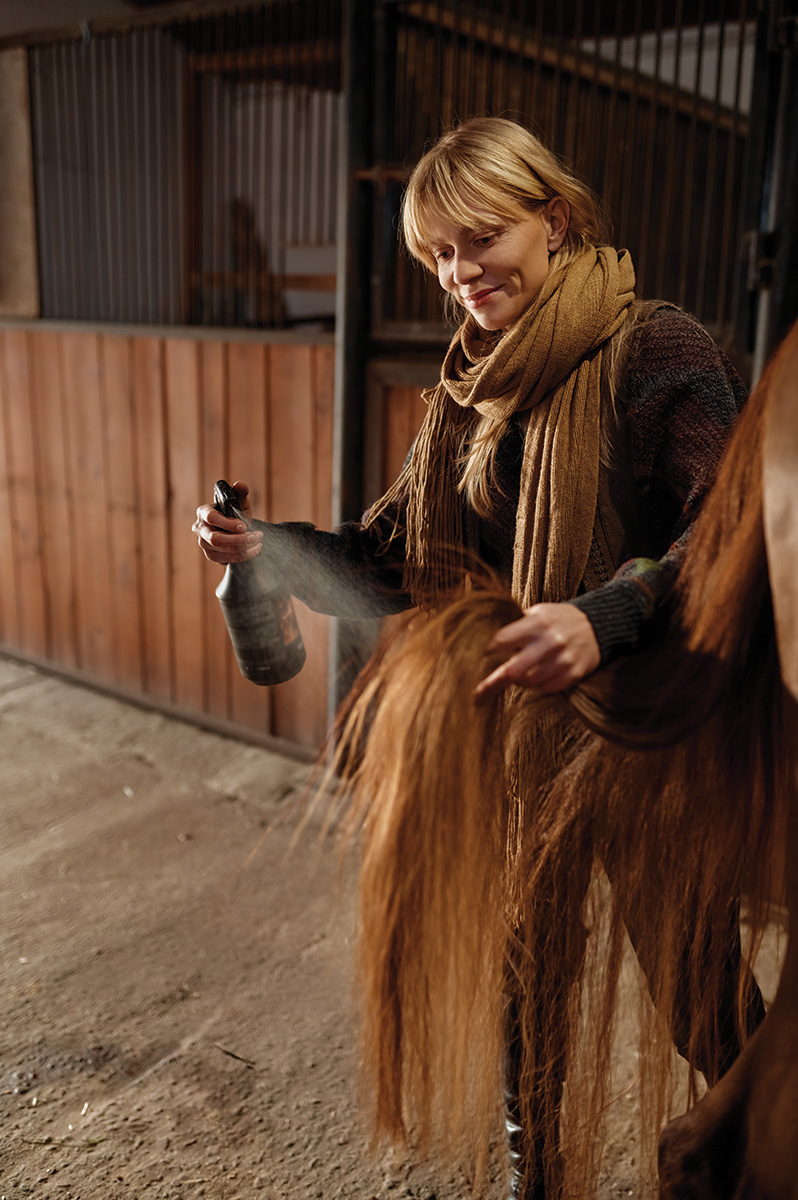
Silicone-based coat polish and shine sprays will give your horse an extra glow and help repel dust and dirt to cut down your grooming time. The silicone coats the hair shaft, making it more difficult for stains to set and preventing mud from clinging to the coat.
“These products can be used daily, but their effectiveness also relies on clean hair, so washing is important,” says Katzev.
These sprays do double duty to detangle manes and tails, and as an added bonus, are also good at preventing blanket rubs, allowing the blanket to slide over the coat without friction.
Coat polish spray can be applied after bathing while the horse is wet (after removing excess water). To apply to a dry coat, groom your horse thoroughly first to remove dust and dirt. Spray evenly, let it dry for a few minutes, and then buff to a shine with a towel or brush.
These products are slick, so be careful to avoid the saddle and girth area. You’ll also want to skip manes or tails that will be braided soon, since the hair needs to be a little grippy.
Oil-based finishing sprays offer a highly reflective shine for the show ring, but they aren’t designed for everyday use. The oil attracts dust, so these products are best reserved for right before going into the ring.
Key Takeaway
While elbow grease is the tried-and-true path to a shiny coat, busy equestrians often fall short on time to devote to currying and brushing.
There is no substitute for elbow grease when it comes to a megawatt shine. Photo by Geza Farkas/Adobe Stock
“We’re all in a hurry, it seems,” says Stith-Burdette. “We try to give you tools to use, and make sure that they will not hurt the horse over time by drying out their skin or damaging their hair.”
Ultimately, Katzev believes the way we perceive grooming is important—to value the process and not see it as a chore. Instead, he says, think of grooming as quality time to spend with your horse, and enjoy it.
“Take the time if you can with your equine friend and enjoy—that’s why you are both together,” he says.
Lompoc, Calif. — Return to Freedom’s American Wild Horse Sanctuary recently celebrated the 30th birthday of Spirit, the Kiger mustang stallion that served as muse and model for the beloved Oscar-nominated DreamWorks Animation film Spirit: Stallion of the Cimarron.
Photo by Marla Dell
Return to Freedom (RTF) celebrated Spirit’s birthday on Saturday, May 10, as part of the Opening Day of its 2025 program season (Spirit’s birthday is May 8).
“Spirit” co-director Lorna Cook and one of the film’s animators, Peter Paul (“Moana,” “How to Train Your Dragon”) spoke at the event, which attracted more than 300 fans from across the United States and from Brazil, Canada, Australia, Poland and England and raised funds for the more than 460 rescued wild horses and burros in RTF’s care.
“I was weeping listening to some of their stories,” said Neda DeMayo, founder of RTF, a national nonprofit wild horse and burro advocacy organization. “This movie and this horse have meant so much and been so transformative in so many lives! At one point, as staff led Spirit back up to his pasture, people from all over the world sang ‘Happy Birthday’ to this very special horse who carries their dreams of a free and kind world.”
DreamWorks Animation chose RTF’s sanctuary, headquartered in Santa Barbara County, California, as Spirit’s home following his time as the animators’ model for the 2002 film.
The “Spirit” filmmakers searched for a horse that embodied the characteristics of the iconic wild mustang. They selected Spirit, then called Donner, a young colt born to a stallion and mare captured by the Bureau of Land Management on the Kiger Herd Management Area in Oregon.
The filmmakers chose Spirit because of his beautiful conformation, wide-set eyes, and his thick, wavy and multi-colored mane and tail — a perfect example of genetically and historically rare 15th-century Spanish Barb horses. Animators observed him closely to create a horse character with realistic movements who could communicate without speaking.
In April 2002, after completion of the film, DreamWorks selected as a home for Spirit Return to Freedom’s American Wild Horse Sanctuary in Lompoc, Calif. Fans continue to travel from all over the country and all over the world to meet the stallion.
Like the animated film, Spirit continues to inspire many to learn about — and advocate for — the wild horses and burros whose survival on our public lands remains in jeopardy.
For his role as an ambassador for mustangs, the EQUUS Foundation and the United States Equestrian Federation inducted Spirit into the Horse Stars Hall of Fame in 2018. RTF opened its American Wild Horse Sanctuary in 1998 on 300 acres among the rolling hills of the Central Coast. There, visitors can experience the diverse herds that represent the American Mustang, including descendants of Padre Kino’sSpanish Mission horses, the Iberian Sorraia-type Sulphur Springs herd, and descendants of the Choctaw Indian ponies that carried the infirm on the Trail of Tears.
RTF offers a variety of other scheduled programs at its Lompoc headquarters as well as a 2,000-acre San Luis Obispo, Calif., satellite location. Programs include tours, photo safaris, Family Day events, as well as special workshops. More information is at returntofreedom.org/visit.
About the Film
DreamWorks Animation’s film Spirit: Stallion of The Cimarron is a tale of adventure and friendship about a wild horse (voiced by Matt Damon as a narrator) that cannot be broken. It features a combination of hand-drawn and computer animation. The screenplay was written by a longtime figure in the wild horse community, John Fusco, and directed by Kelly Asbury and Lorna Cook.
“Spirit” was nominated for the Academy Award for Best Animated Feature. A song from the soundtrack, “Here I Am,” sung by Bryan Adams, was nominated for a Golden Globe. A Netflix spin-off series for children, Spirit: Riding Free ran for eight seasons and earned a Daytime Emmy Award. A feature film based on the series, “Spirit Untamed,” was released in 2021.
About Wild Horses and Burros
At a time when herds of wild horses and burros were fast disappearing on federally managed public lands, an outpouring of support led Congress to unanimously pass the 1971 Wild and Free-Roaming Horses and Burros Act. It provided a measure of protection but failed to set up a real management plan for the future of wild herds. Congress assigned the task of managing wild horses and burros primarily to the Bureau of Land Management (BLM).
The BLM has attempted to control population numbers almost entirely through capture and removal with helicopters — despite the availability of proven, safe and humane fertility control, which could slow herd growth and allow for more humane, on-range management.
In March 2025, the BLM estimated that there were 73,312 wild horses and burros on public lands it manages. Its goal is to reach a BLM-set “Appropriate Management Level” of no more than 25,556 total wild horses and burros across 177 Herd Management Areas in 10 Western states.
A total of 62,534 wild horses and burros now live not on the range but instead warehoused in government facilities at a cost to taxpayers of more than $101 million annually.
About Return to Freedom Wild Horse Conservation
RTF is a pioneering wild horse advocacy organization that has worked to preserve wild horses and burros through sanctuary, education, conservation and advocacy since 1997. RTF operates the American Wild Horse Sanctuary at two California locations. Since 1999, RTF has modeled the use of fertility control and other solutions there that can be implemented on the range.
Swim with adopted horses, the Jamaican way, at Montego Bay’s Half Moon Resort.
Photo courtesy Half Moon Bay Resort
Errol stood squarely between us and the undulating turquoise sea.
“I need you to listen to me,” he said. “People who know how to ride never listen to this part, and they always mess it up.” His sternness was softened by a twinkle in his eyes.
My friend Beth and I looked at one another and grinned before returning our full attention to our guide, who explained how we would ride our horses into the water and get ourselves into position for an “only in Jamaica” experience: floating behind our mounts’ powerful hind ends while they swam, towing us with their tails.
Even for a pair of lifelong equestrians with a penchant for travel, this adventure was a first.
Half Moon Resort’s Commitment to Rescue
Beth and I met more than a decade ago in Colorado as volunteers for a racehorse rehoming organization. In the years since, life took us to opposite ends of the country, making in-person visits hard to come by. It made sense that our first reunion after years of separation, the stresses of Covid, and our own personal stories of grief would center around horses.
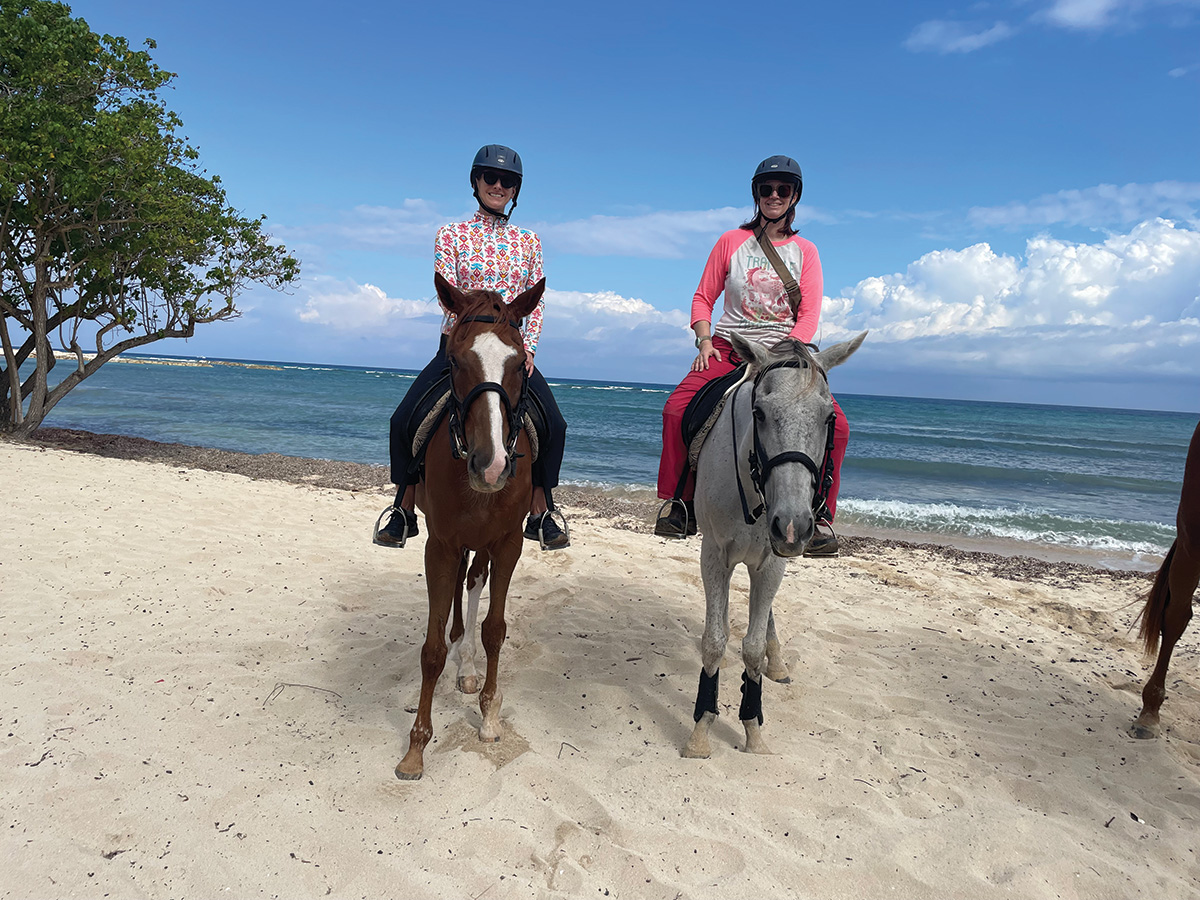
Stacey and her friend Beth arrive on the beach.
It was a perfect surprise to arrive at Half Moon Resort’s elegant stables to find that 13 of the program’s 23 mounts are adopted horses in different stages of rehabilitation.
There’s Timmy, the failed polo pony with trust issues. Precious, a sweet off-track Thoroughbred. Ebony, a 25-year-old pony who was near death when Half Moon’s Equestrian Director Trina Delisser rescued her from a roadside pony-ride operation eight years ago.
“She wasn’t supposed to live six months, but here she is,” says Delisser.
Delisser has been running Half Moon’s equestrian program for 37 years. Raised in Kingston, Jamaica, she grew up riding whenever she could as the daughter of an international polo player.
She came to Montego Bay’s Half Moon Resort when it became clear that continuing her passion would require turning it into a career. And while she has competed in polo and showjumping, she clearly loves giving horses a second chance.
Under Delisser, life at Half Moon’s Equestrian Centre is flexible for the horses. She has the skills and commitment needed to give a horse like Timmy the attention and mental rehab he needs.
Older horses like Ebony and those that are intermittently sore benefit from the opportunity to swim (with or without guests, depending on their needs). And those in good mental and physical health get a fun job.
Swimming with Horses
After touring the airy white barns and greeting the dogs, donkeys, and Gene the goat, our group of three guests and two guides mounted up and began the walk to the beach. I rode Zayne, a lanky gray rescue who sauntered happily along behind our guide Errol and his mount Coltrane.
Minutes later, we traded tree-lined pavement for sugary white sand, where we dismounted and readied ourselves for the main event: the swim!
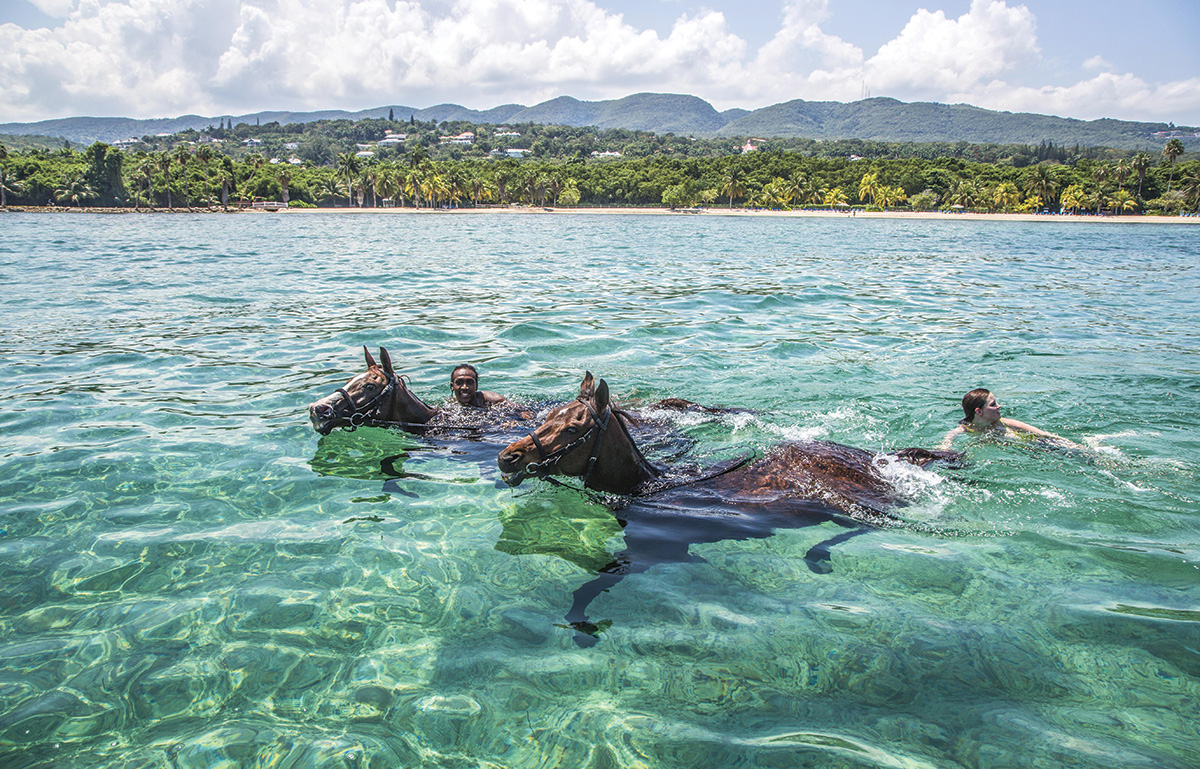
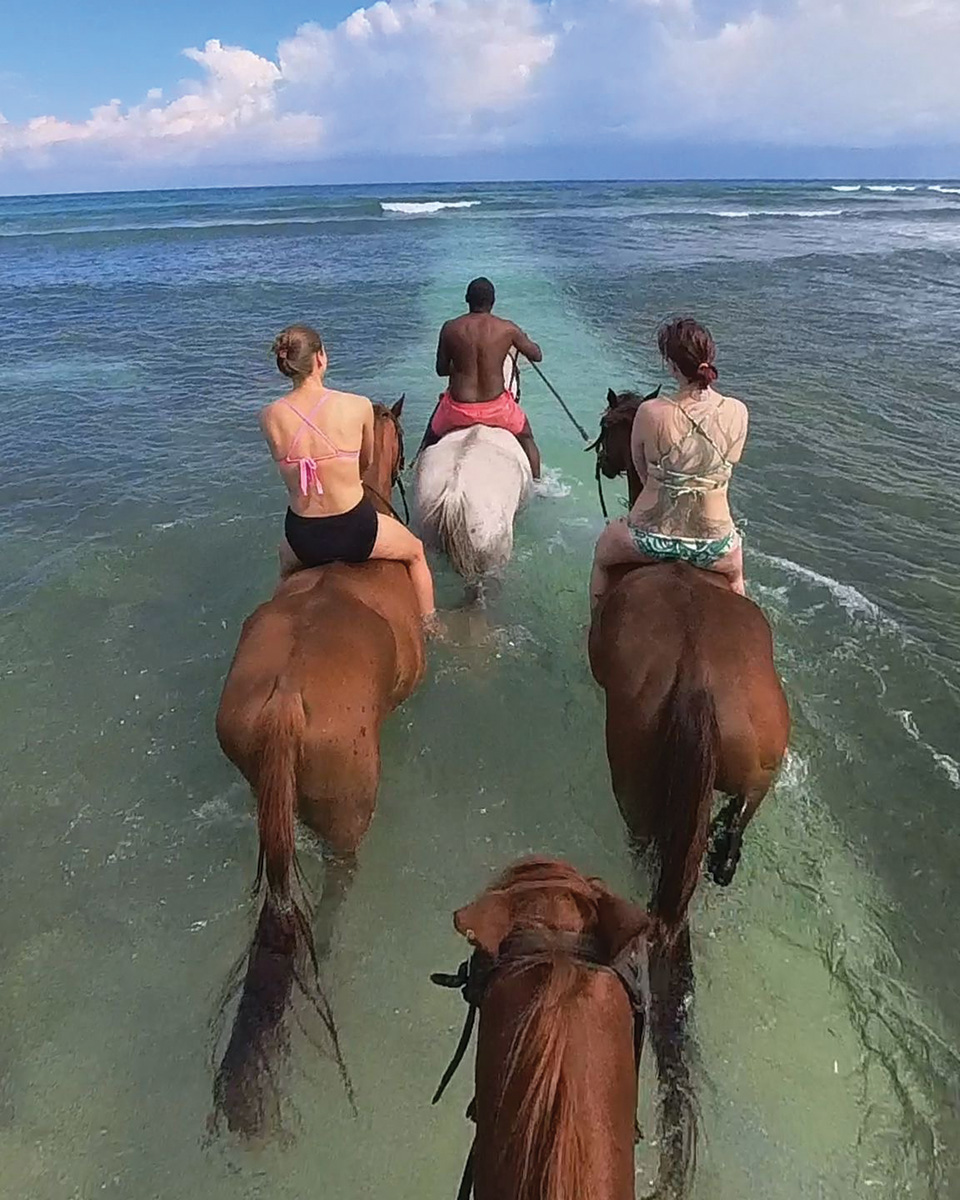
Once the horses were untacked and the humans stripped down to swimwear, we climbed on bareback. I now rode Coltrane while Errol rode Zayne (since the gray became a natural leader in the water) and marched into the sea.
As Errol led us toward swimming depths, he belted out Bob Marley’s “Three Little Birds.” The crystal clear water grew deeper, and the horses began the distinctive rumble that indicates they were starting to swim.
“Drop your reins!” Errol shouted over the noise, and suddenly, we were weightless. I tangled my fingers in Coltrane’s mane and leaned forward, letting my legs floating behind me as we swam into the rolling waves.
Errol leads the group into the sea.
Suddenly, I heard Errol’s voice again. “To the tail!” he shouted, and I gently pushed myself toward Coltrane’s chestnut tail.
As we swam in sweeping circles, I held onto Coltrane for guidance, but the sea kept me afloat, and somehow, there was minimal resistance. I turned on my side and found Beth. We were both laughing the way we probably did the first time we cantered. I kept rotating onto my back, to look at the cotton-ball clouds. Then I spun onto my stomach to take in the strange vision of horse ears held just above ocean.
As we turned toward the shore one last time, we let the waves push us onto our horses’ backs. My heart sank. The ride was over. But as I squinted at the palm-lined beach, the postcard water, my dear friend, and the shine of a wet equine neck, I took a deep breath of gratitude.
For at least a moment, it felt like Errol (and Bob Marley) were right. Everything would be alright.
Opportunities for Different Levels of Experience
Beyond the Jamaican magic of swimming with horses, Half Moon Equestrian Centre offers a range of experiences suitable for riders and non-riders:
◆ Private dressage, jumping, or polo lessons are available for beginner to advanced riders over 10 years old.
◆ Inexperienced and rusty riders 6 and older may opt for a leisurely horseback “Sand Stroll” to the beach with a bit of a dip in water (but no swimming) or a mini lesson in the arena followed by a ride around the property.
◆ Kids 6 and under can spend their time learning to interact with the array of animals that call the Equestrian Centre home, including donkeys, goats, and of course, ponies!
◆ Adults looking for some quality horse time out of the saddle can sign up for a “Positive Empowerment” groundwork session.
Beautiful clear blue waters and swimming horses make a bucket-list combination.
If you’re ready to get away and relax while admiring turquoise waters around horses, this could be your perfect destination.
Have you ever found yourself looking forward to going to the barn, but not wanting to ride? Or maybe you convince yourself to get on, but the first time your horse flinches or sidesteps, you feel like you want to dismount as soon as possible and get safely back on the ground. While you’re on the horse, tension takes over your body from head to toe and you just don’t feel the joy you used to feel while riding. If any (or all) of this sounds familiar, keep reading to discover tactics to overcome fear and bring confidence and relaxation back to your riding.
The Origins of Fear
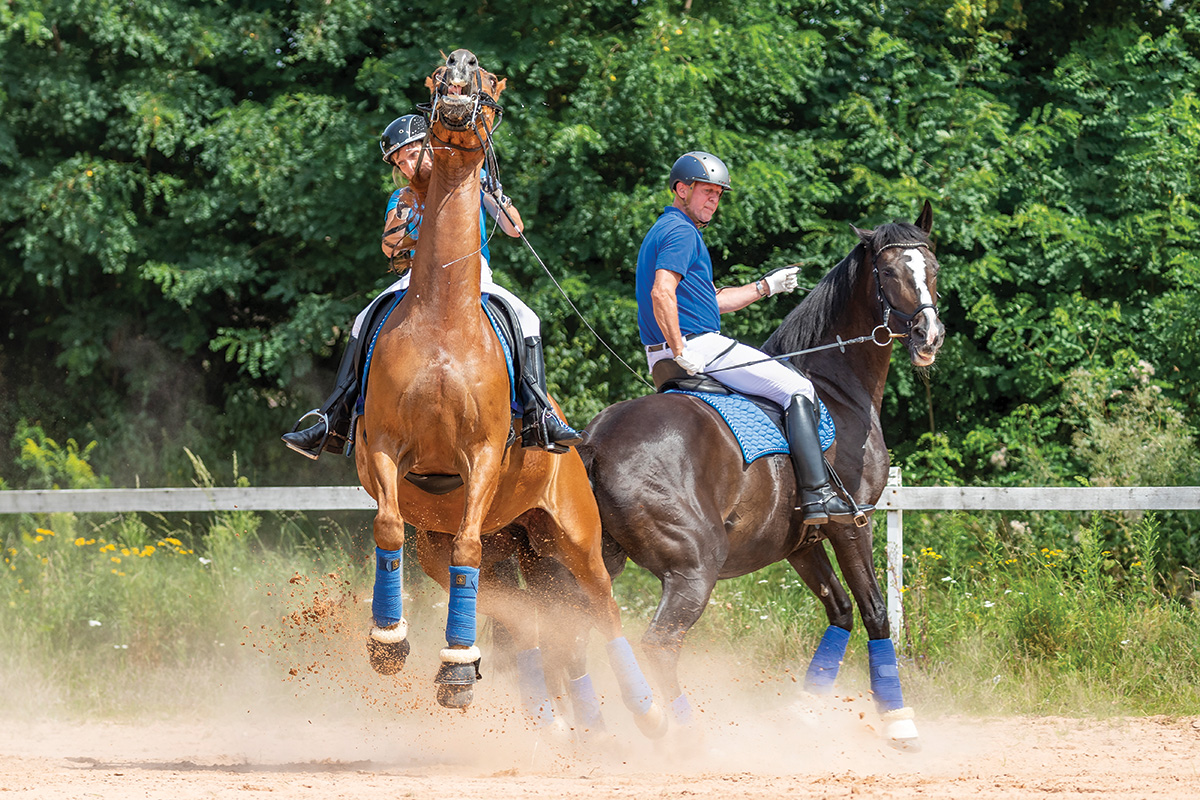
The first thing to consider is where the fear is coming from. Has there been a pattern of negative behavior over time from your horse, such as spooking, bucking, rearing, or refusing jumps that caused the fear to build slowly? Or was there a specific event, such as a fall, that can be marked as the clear start of the problem?
A single event or a pattern of negative behavior, such as spooking, bucking, or rearing, can cause fear to take over your rides. Photo by Christiane Slawik
No matter the answer, it’s important that you identify the root cause of your fear beyond just saying “I’m nervous” or “I’m afraid.” The best way to overcome fear is through logic and understanding so that you’re able to take control of your emotions and redirect your thoughts.
Physical Effects of Fear
Another aspect of your fear to consider is how it manifests itself in your body. Some people can continue riding but with a very tense body—gripping thighs, lifted shoulders, or hands pulling on the reins—all without realizing it.
Others experience a brain fog where they are unable to focus, or in more intense cases, have a panic attack and find themselves with shortness of breath and unable to make their body move, frozen on top of their horse, when they perceive a threat to their safety.
Riders will often attempt to ignore their fear, hoping it will go away. I have never seen this work in the long term. Whether there is mental or physical tension, there is a notable effect on your horse. He is looking for guidance and leadership from you, his other herd member.
Due to his natural instincts, he will translate your tension and hypervigilance into thinking a predator or other threat is nearby. By not confronting your riding fear head on, you allow your horse to continue to be affected, which is sure to take a toll on your rides overall.
Calming Your Nervous System
Usually fear causes either a repetitive thought or a fractured thought process. Examples might be “he’s going to spin”; “she’s going to stop”; or just a general inability to take deep breaths and have a complete and focused thought structure.
The solution is to replace the hamster wheel of panicked thought with one or two positive, actionable mantras such as “close your leg”; “push your hands forward”; or “melt in.” This, paired with controlled deep breaths, allows you to begin to calm your nervous system and improve your riding in a way that directly targets the changes needing to be made.
Replacing negative thoughts with one or two positive mantras helps calm your nervous system and improve your riding. Photo by Christiane Slawik
Soothing your nervous system before you mount is extremely important as well. This may begin as early as during the car ride on the way to the barn. Listening to music or podcasts you enjoy is a good idea, separating you from the stress of whatever may be going on in your life outside the barn.
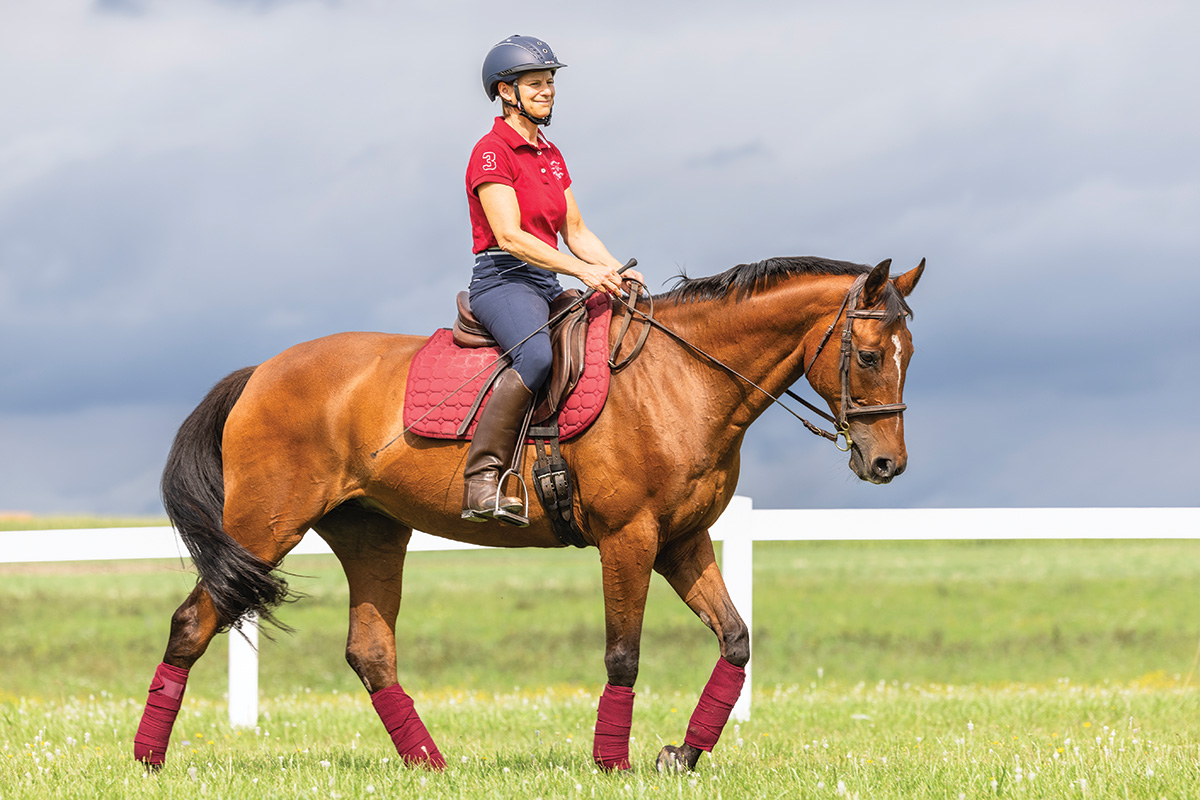
Breathe and enjoy five to 10 minutes of walking before the main part of your ride begins. Photo by Christiane Slawik
Try to allow ample time to tack your horse before a lesson so that you aren’t rushed. Leave time for stretching for both you and your horse, a light longe if your horse needs it, and five to 10 minutes of walking before the main part of your ride begins.
If your horse can be reactive, start with groundwork or a light longe before getting on. Photo by Christiane Slawik
Grounding Exercise
If at any time you find your mind wandering and worrying about the upcoming ride (or something else entirely), begin to practice the 5-4-3-2-1 Grounding Technique to keep you in the present moment.
To complete this exercise, you notice and acknowledge five things you can see, four things you can touch, three things you can hear, two things you can smell, and one thing you can taste, all from where you are currently located.
This works great both on and off the horse, and it may be useful to share it with your instructor if they aren’t familiar so they can guide you through it if fear or anxiety show up during a lesson.
Key Takeaway
Soothing your nervous system before you get on helps set the stage. Take your time grooming and tacking instead of being in a rush. Photo by Christiane Slawik
As you begin your journey back to confidence and overcoming riding fear, be kind to yourself. At no point should you judge yourself or be embarrassed for being afraid while riding. Everyone, at all levels of equestrian sport, has had a similar experience. Remember, bravery isn’t about being fearless, it’s about being afraid and doing it anyway.
Galloping is one of the most therapeutic exercises a horse can do, releasing tension and stiffness in the back and hindquarters.
Photo by FastHorsePhotography/Adobe Stock
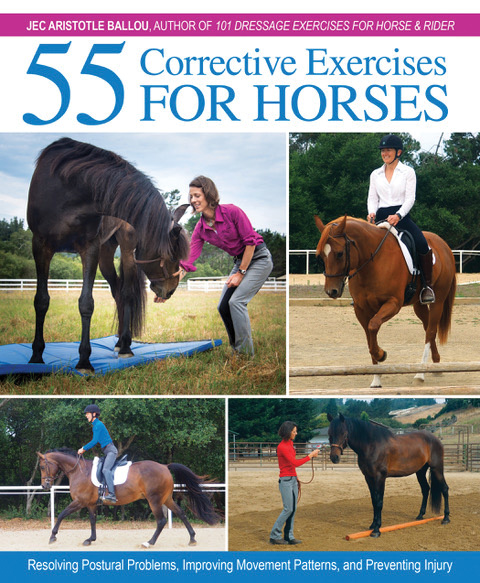
Skilled riding is often all it takes to improve a horse’s athleticism, performance, and overall well-being. But just as often, even good dressage-based training programs fail to fully root out the habits and patterns that prevent many horses from reaching optimal movement and correctness of their gaits.
Anything from a poorly fitting saddle to inconsistent exercise, an injury, or past postural imbalances can create compromises. These quickly become deeper impediments to a horse’s movement mechanics that persist even with good, regular riding schedules.
The body’s way of taking care of itself during physical imbalances is to put up defenses. These defenses take the form of muscular spasms, adhesions, restricted joint motion, and signals to and from the central nervous system to move differently.
Curing these defenses is not as simple as giving the horse a period of rest, though that can seem like a sensible solution. Putting a horse out in the field for a few months with the hope that everything will clear up rarely fixes the underlying problems.
Therapies like chiropractic care and massage are generally successful in releasing areas of immobility so the horse is able to move optimally. However, they only set the stage; they do not by themselves create healthy movement.
For that, the horse must be taken through exercises that habituate correct new patterns. This is where corrective exercises come in.
Let’s Go Galloping!
Galloping offers one of the most generally therapeutic exercises for a riding horse. It can release tension and stiffness in the horse’s back and hindquarters—sometimes more effectively than bodywork and stretches combined.
The classical masters of dressage often advised riders to take their horses for a brisk canter across the fields regularly because it’s one of the simplest tools to keep a horse tuned up with full, free range of motion.
Misunderstood nowadays as something that only applies to racehorses and eventing horses, galloping often fails to exist within the domain of most arena and recreational riders. And yet it helps cure rhythm irregularity in the gaits, a hollow back, and one-sidedness.
Galloping can help cure rhythm irregularity in the gaits, a hollow back, and one-sidedness. Photo by Donna Stidolph
Galloping does not need to be an all-out, white-knuckled affair as some wary riders fear. It just needs to be a brisk version of cantering without holding the horse tightly with the reins.
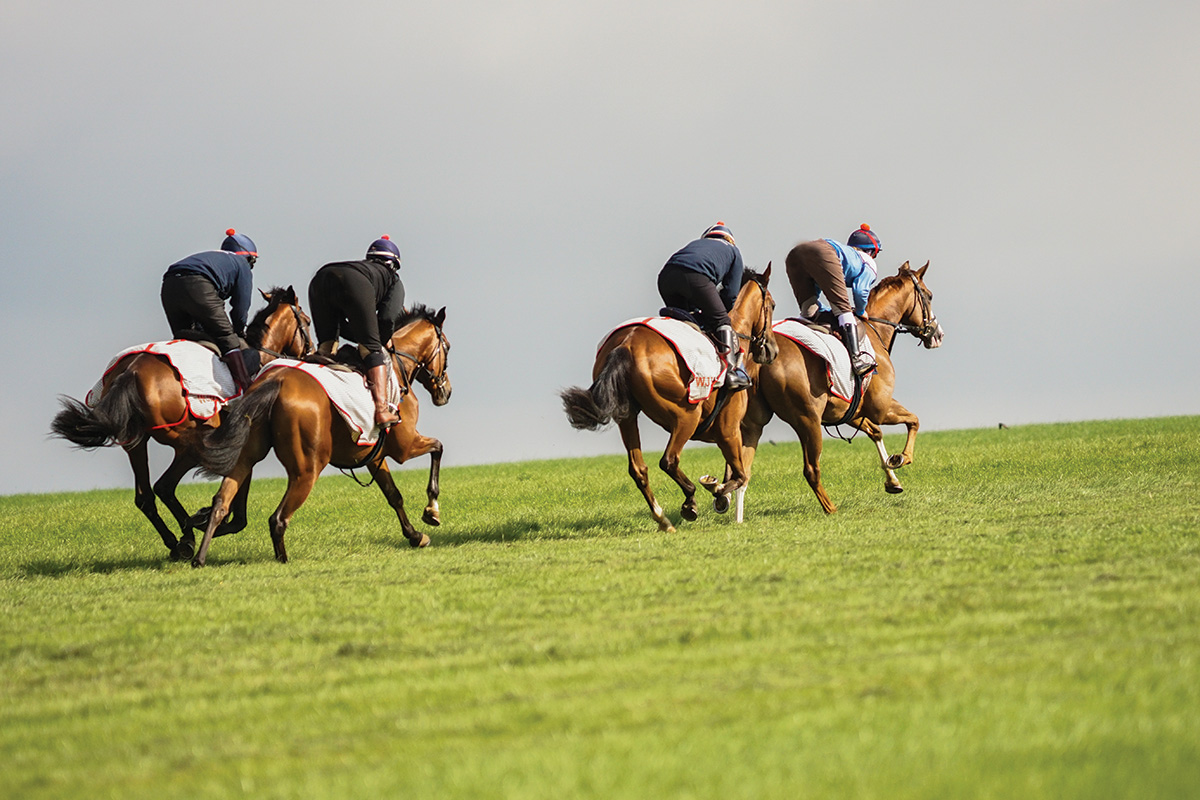
Compared to other gaits, the galloping horse pushes himself forward with more powerful contractions of his back muscles. These forceful contractions are followed quickly by relaxation of the muscle fibers. The contraction/relaxation cycles prevent tension or stiffening of the horse’s long back muscles, which is often created by other work.
Racehorses in England training at Newmarket, where the gallops are on open land. The powerful back muscles contract and relax in the gallop, preventing tension and stiffness. Photo by maywhiston/Adobe Stock
Horses that are able to canter briskly for a period each week, whether out in the field or around an arena, maintain better symmetry in the activation of their hind legs and more freedom through their back.
Start in the Arena
For those who are wary of their horse’s behavior when encouraged to canter quickly, or have other concerns such as the horse tripping, getting fatigued, or not steering very well, I recommend the following exercise.
While your horse will not be receiving the same benefits of a prolonged canter bout, you will lay a good foundation to get there soon. It is intended for the comfy confines of an arena or large enclosed area.
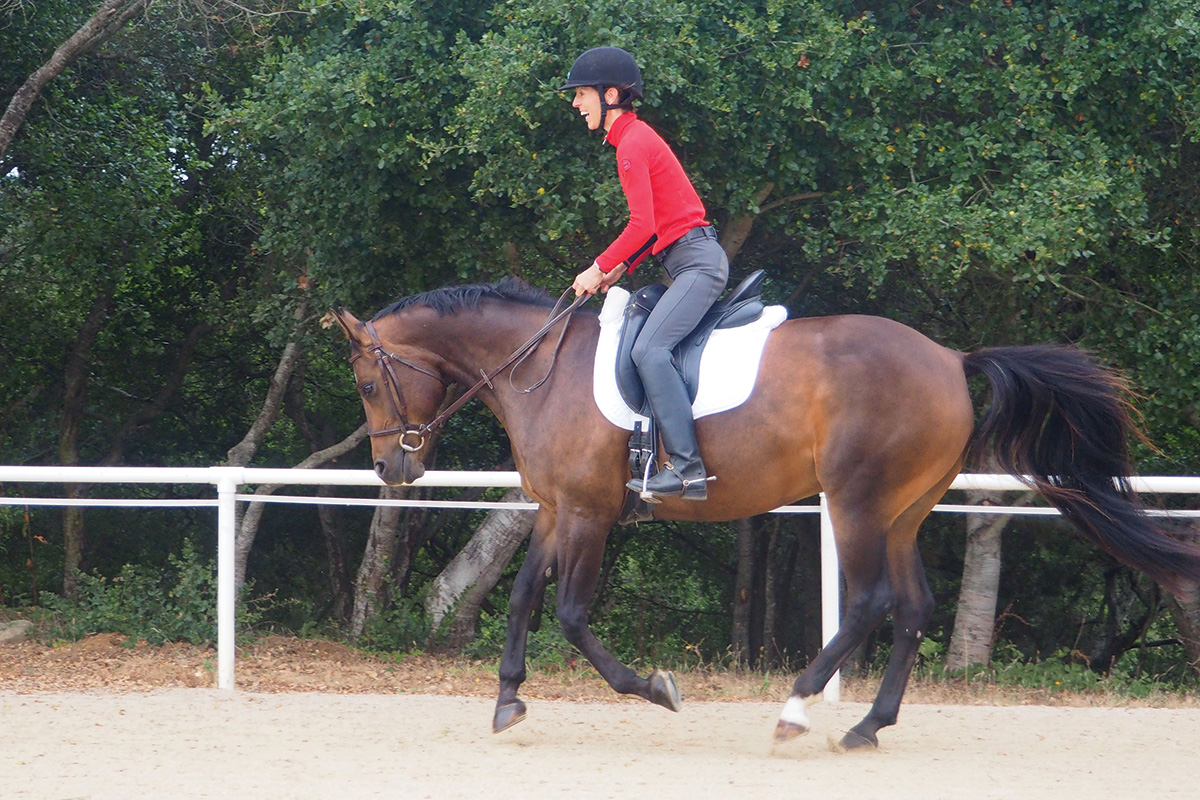
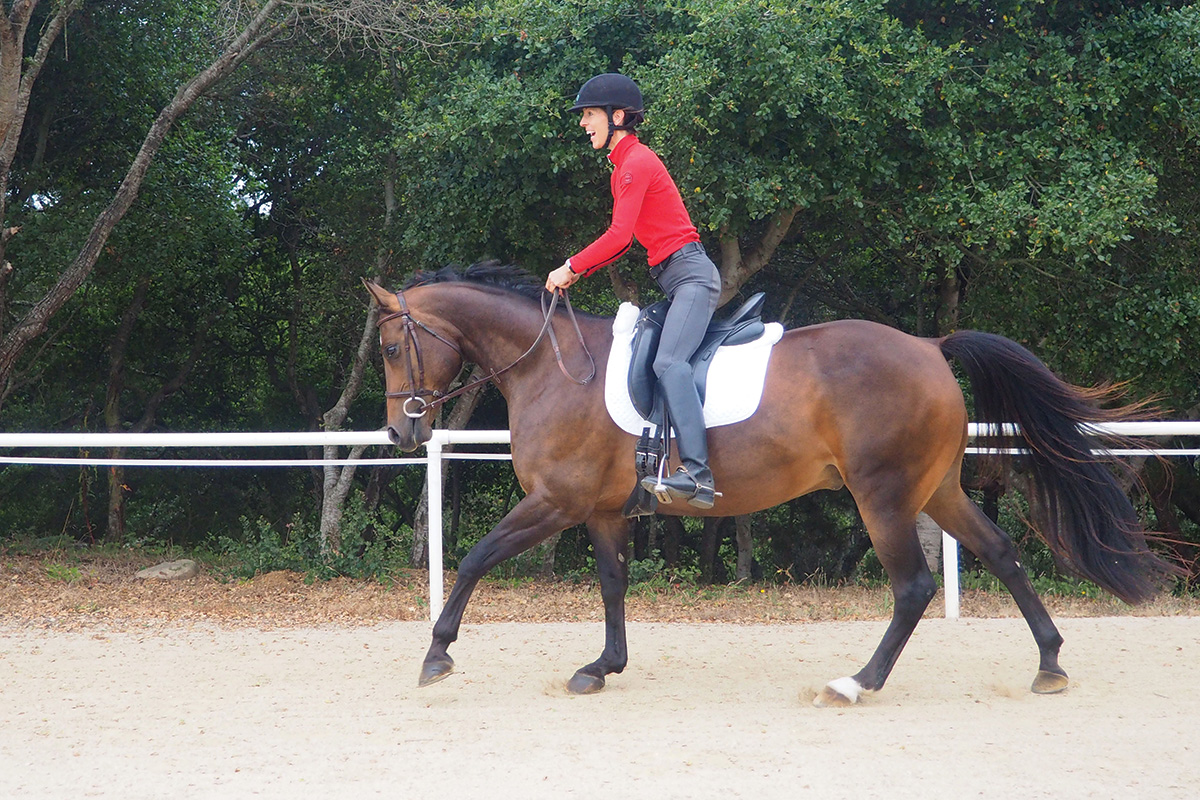
1. Shorten your stirrups by one or two holes. This helps you ride in a lighter seat up off the horse’s back.
Shorten your stirrups by one or two holes. This helps you ride in a lighter seat up off the horse’s back. Photo by Donna Stidolph and Kelsey Doyle
2. After a normal warm-up, strike off in a canter.
3. Now come up in a half-seat, lighten the reins, and encourage your horse to move a little faster.
Now come up in a half-seat, lighten the reins, and encourage your horse to move a little faster. Photo by Donna Stidolph and Kelsey Doyle
4. Try to travel around 10 miles per hour, not faster or slower. This is not an out-of-control speed, just a brisk effort.
5. Continue around the perimeter of the arena or on a very large circle (no smaller than 40 meters) for 30 seconds.
6. Take a short break by jogging around for 30 seconds.
7. Repeat this four times.
Once horses learn that galloping involves a fair amount of sustained work, it ceases to be thrilling. Horses that are initially excited or reactive about the freedom of galloping learn that it’s just another part of their work week, but you must help them get over that initial hurdle.
Use a watch for this exercise. Many riders don’t know what 30 seconds of galloping feels like, and they are prone to quit after a much shorter time.
Be sure to go at least 30 seconds—or longer—with each canter. This is the time you’ll need for your horse to settle into his strides for the right physiological response.
We use cookies to help personalize content, tailor and measure ads, and provide a safer experience. By navigating the site, you agree to the use of cookies to collect information. Read our Cookie Policy.