Get to Know Adoptable Horse Breath of Royalty AKA Rook
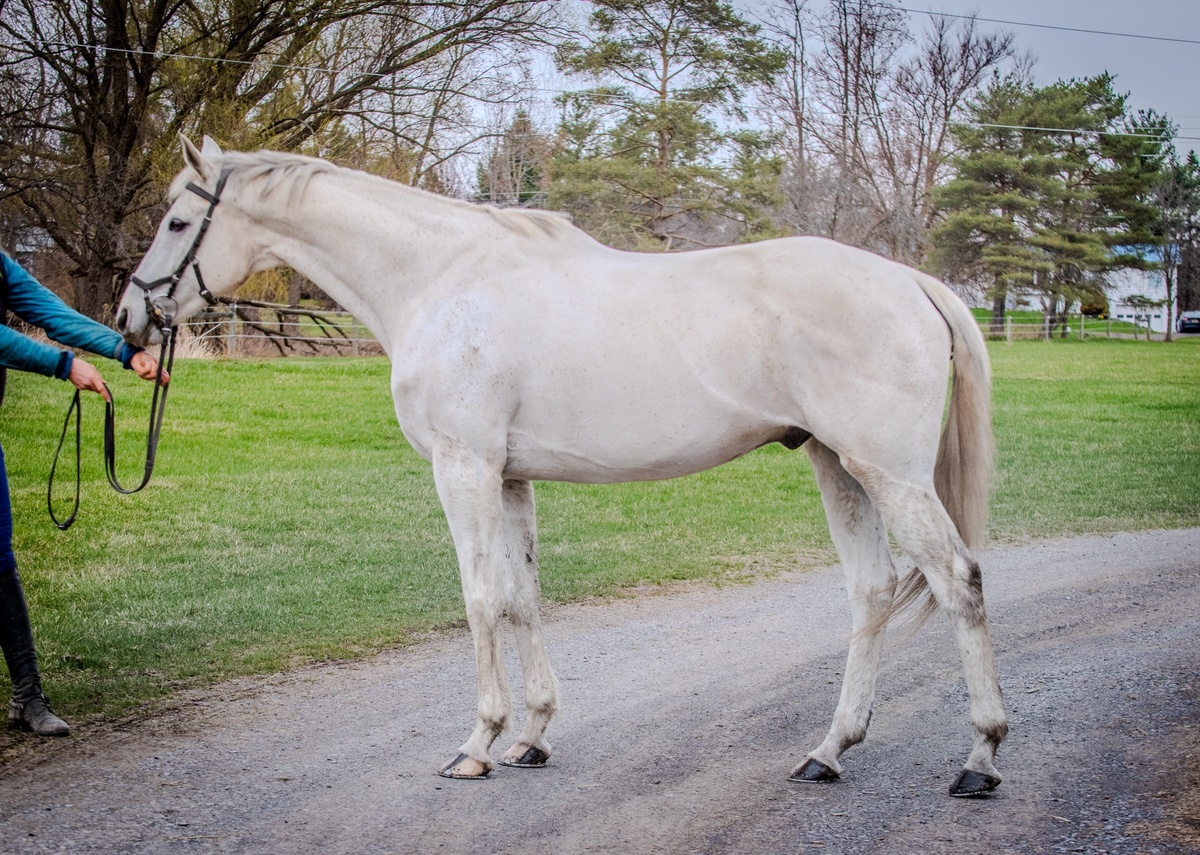
“Rook” is a sporty dude who is currently in training to get restarted and going. He is a project horse at this point, but coming along quickly under saddle.
In the time he has been in training, he has settled in, gained a ton of confidence and decided that trusting the process is worth it. He now walks, trot, and canters quietly, is happy to be caught in the field and settles right into his stall when he comes in. With shoes on and slowly building up his sport horse muscle, he stronger and ever more willing.
Rook is lovely, kind, and wants to be your best friend. However, he is a slow burn horse. He’s in your pocket once he trusts you. And he will let you ride and ride well, once he knows you won’t scare him. Basically, he needs to find a kind, talented rider who wants to go slow, build the relationship and show this kid the ropes of riding-based, off-track life on a timetable that makes sense for Rook. If you rush, it just won’t work. Rook’s carrots are very flexible to the very right home.
So, who does Rook need? Someone who wants to put in the time and isn’t hurried by show goals. Second Chance would prefer someone with a trainer and ample OTTB experience as well as someone with an arena. They think he’ll do great on trails eventually, but that’s a big ask right now. In an effort to set him up to succeed, Second Chance is hoping to find him a sport horse home with no deadlines and very flexible, accommodating training schedules. The program is certain that Rook will make all the “go slow” worthwhile.
At this point, Rook is available to a good rider with a trainer who understands Thoroughbreds. He could go in any direction; he’s certainly catty enough for eventing and jumpers, but he may also enjoy trails and a more easy going way of being. That said, despite looking like a kids pony, he is firmly not a beginner’s horse.
ASPCA Right Horse is the online adoption platform of The Right Horse Initiative, a collection of equine industry and welfare professionals and advocates working together to improve the lives of horses in transition. A program of the ASPCA, their goal is to massively increase horse adoption in the United States. To find more adoptable horses and foster horses, visit www.myrighthorse.org. To learn more about The Right Horse, a program of the ASPCA, visit www.aspcarighthorse.org.
A basket of snacks, a personalized welcome note, and a bottle of red wine greeted me as I opened my cabin door at The Hideout Lodge & Guest Ranch, nestled in the Shell Valley at the foot of the Big Horn Mountains, an hour east of Cody, Wyo.
Photo by Shawn Hamilton
After a swim in the pool and a soak in the hot tub, I joined guests in the main lodge for their final social gathering and outdoor barbecue. The stories of their week’s riding adventures were abundant, and everyone seemed eager to return, one on her sixth visit. I spent the next few days learning the secret to The Hideout’s success.
The Hideout Lodge & Guest Ranch History
In 1995, David Flitner and Paula De Cabooter-Flitner started construction of the guest ranch, building the main lodge, cabins, arena, and barn on a prime riverfront location of the property, offering unobstructed views of the Big Horn Mountains.
Photo by Shawn Hamilton
Initially named after a local historical ranch, Trapper Creek Guest Ranch, it was rebranded as Hideout Adventures, Inc. Peter De Cabooter, Paula’s nephew, arrived from Belgium in 2006 to help, and a year later was joined by his wife Marijn and their twin boys.
The reins were eventually handed over to Peter, and The Hideout Lodge & Guest Ranch began its growth.
Year-Round Focus
Taking over full ownership in 2017, Peter began the transition from a seasonal three or four months per year operation into a more sustainable year-round business. His corporate experience is key to The Hideout’s success today.
“In order to keep a reliable crew and create a culture, we needed to offer more year-round jobs for our staff,” he says.
Photo by Shawn Hamilton
Peter follows the “3 C Culture” of character, conduct and competence.
“One can train for competence, but not for character and conduct,” he explains. “And this is even harder in a seasonal environment.”
Having the right crew focusing on the principles of their authentic hospitality—taking care of its people, guests, and horses—is of the utmost importance, as is their branded Authentic Horsemanship.
Authentic Horsemanship
When Marijn first arrived at the ranch, she was far from a cowgirl. Mileage in the saddle and exposure to many horse trainers, including Yvet Blokesch of Featherlite Academy in the Netherlands and Parelli trainers Farrah Green and Amy Bowers, Marijn gained well-rounded horsemanship skills.
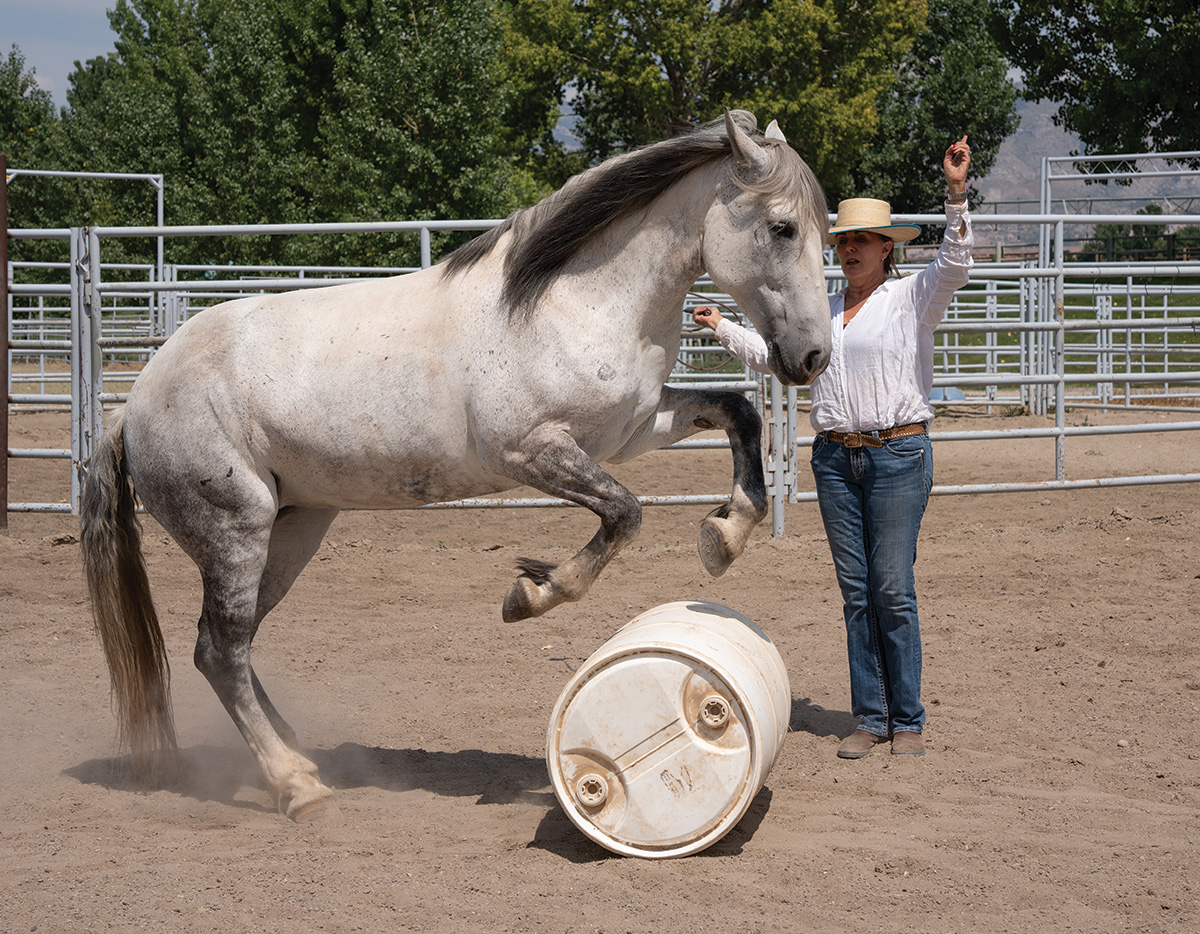
Marijn was introduced to liberty work by Kirsten Brein, trainee of Lorenzo the Flying Frenchman, and now shares her knowledge with interested guests. From various training methods, The Hideout shaped their own branded Authentic Horsemanship based on a trusting relationship through communication, respect and understanding.
Marijn was introduced to liberty work by Kirsten Brein, trainee of Lorenzo the Flying Frenchman, and now shares her knowledge with interested guests. Photo by Shawn Hamilton
Peter describes it as “An ethical, respectful, safe, enjoyable and professional approach, getting the best out of both horse and rider.”
The Horses and Trails
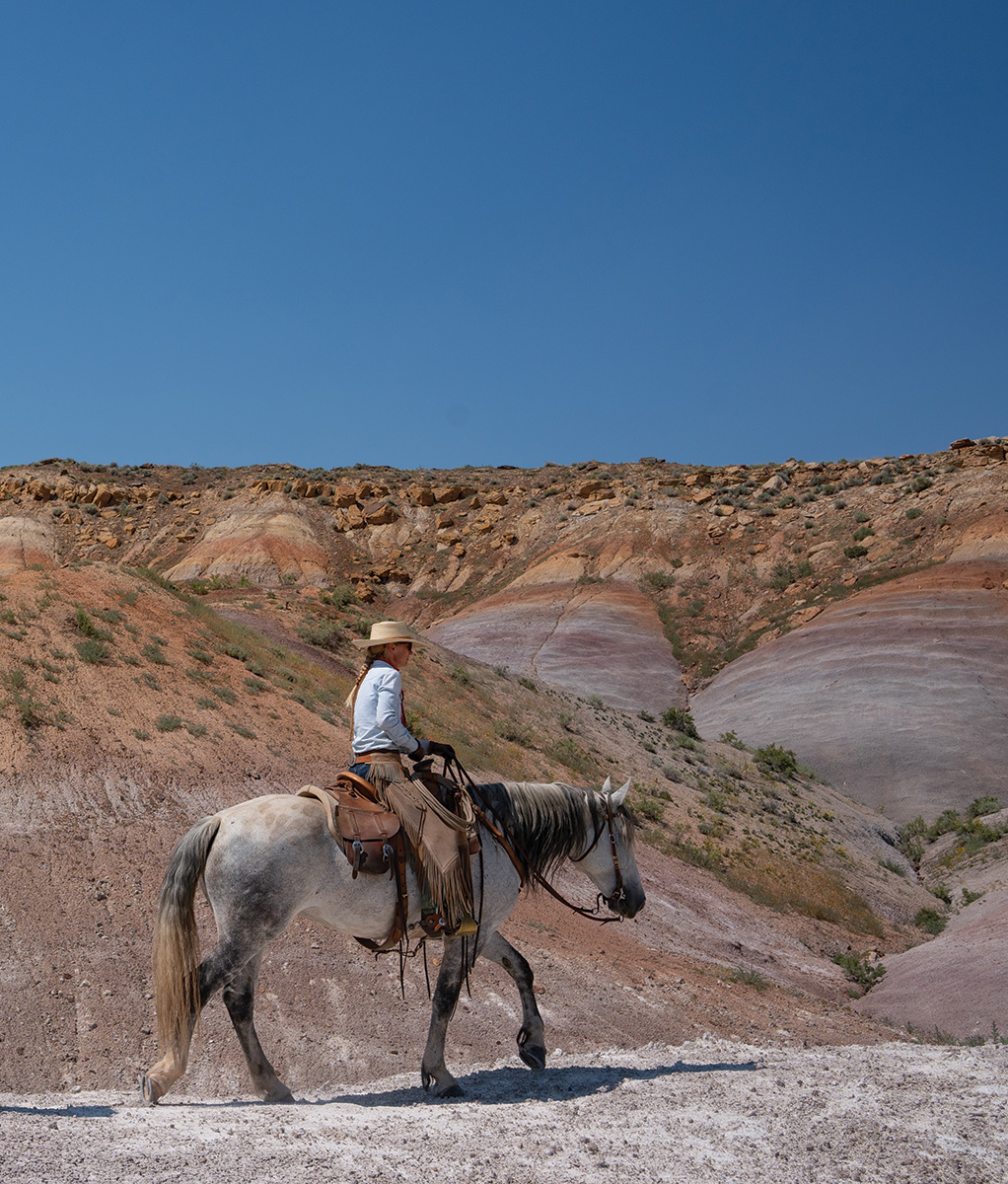
I could sense the Authentic Horsemanship methodology from the saddle while on one of their many horses. With over 650,000 acres to explore and elevations ranging from 4,200 to 13,100 feet, there are a broad range of climates and plenty of biodiversity within riding distance of the ranch.
Photo by Shawn Hamilton
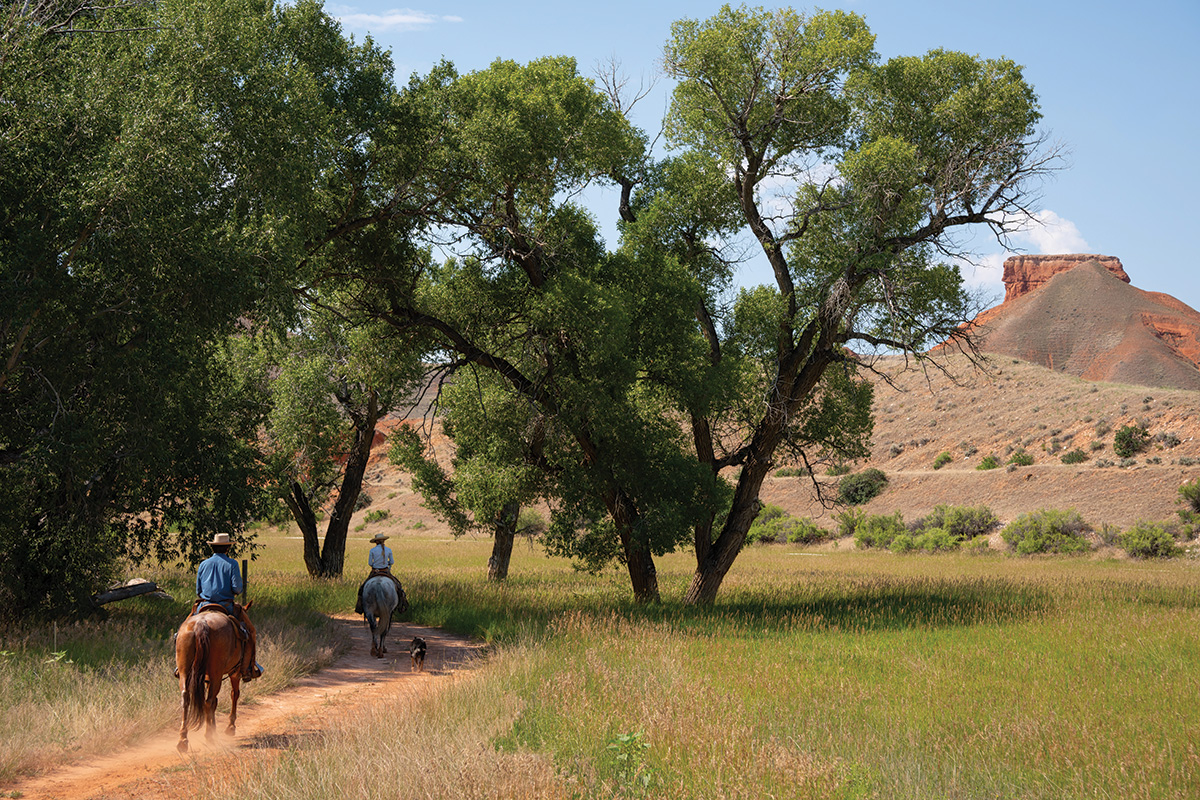
We chose the cooler canyon ride to escape the August heat. I would be riding with Peter and Marijn’s son Victor, as well as Nina Reuter, a German woman who was originally a Hideout guest, but who left a corporate life in New York to join the Hideout crew.
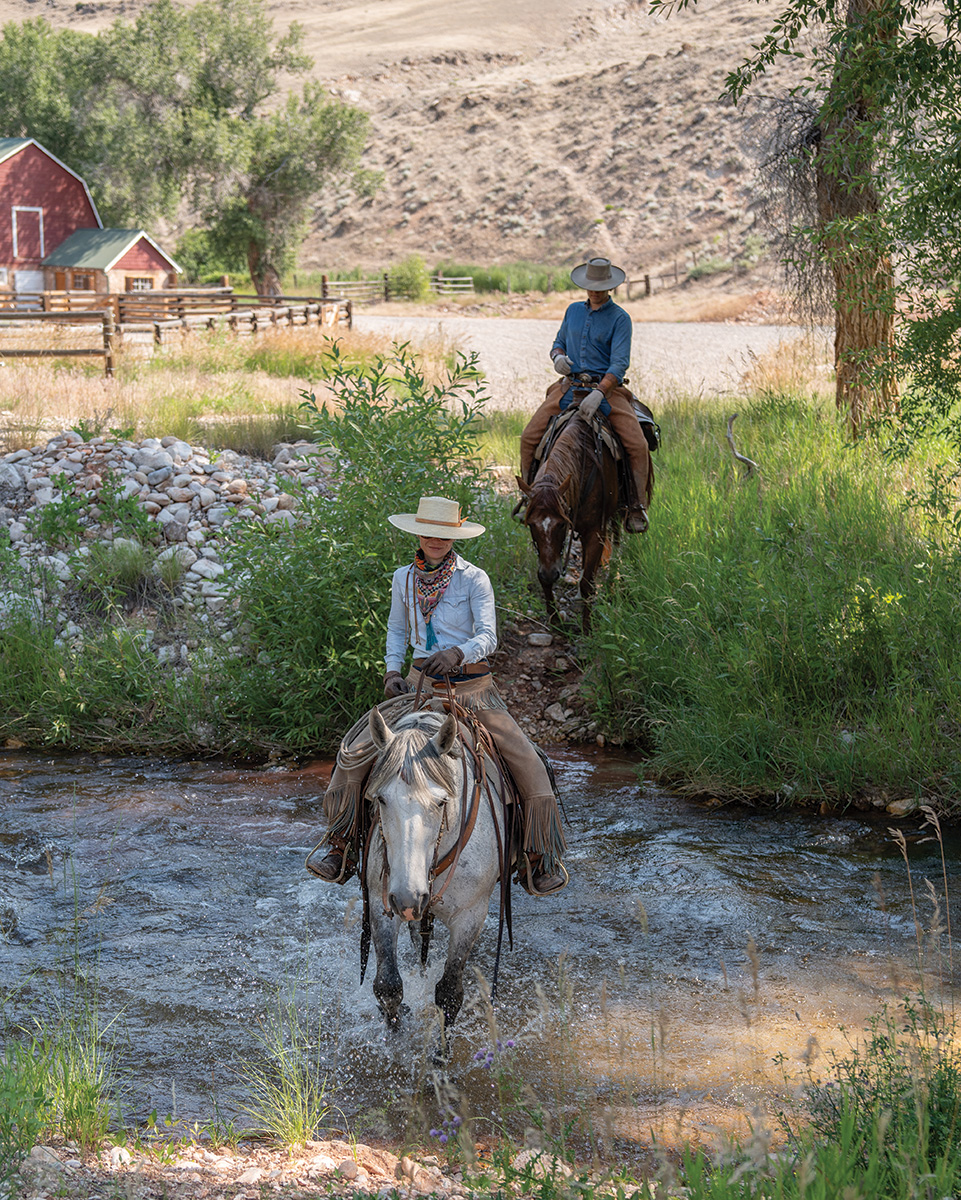
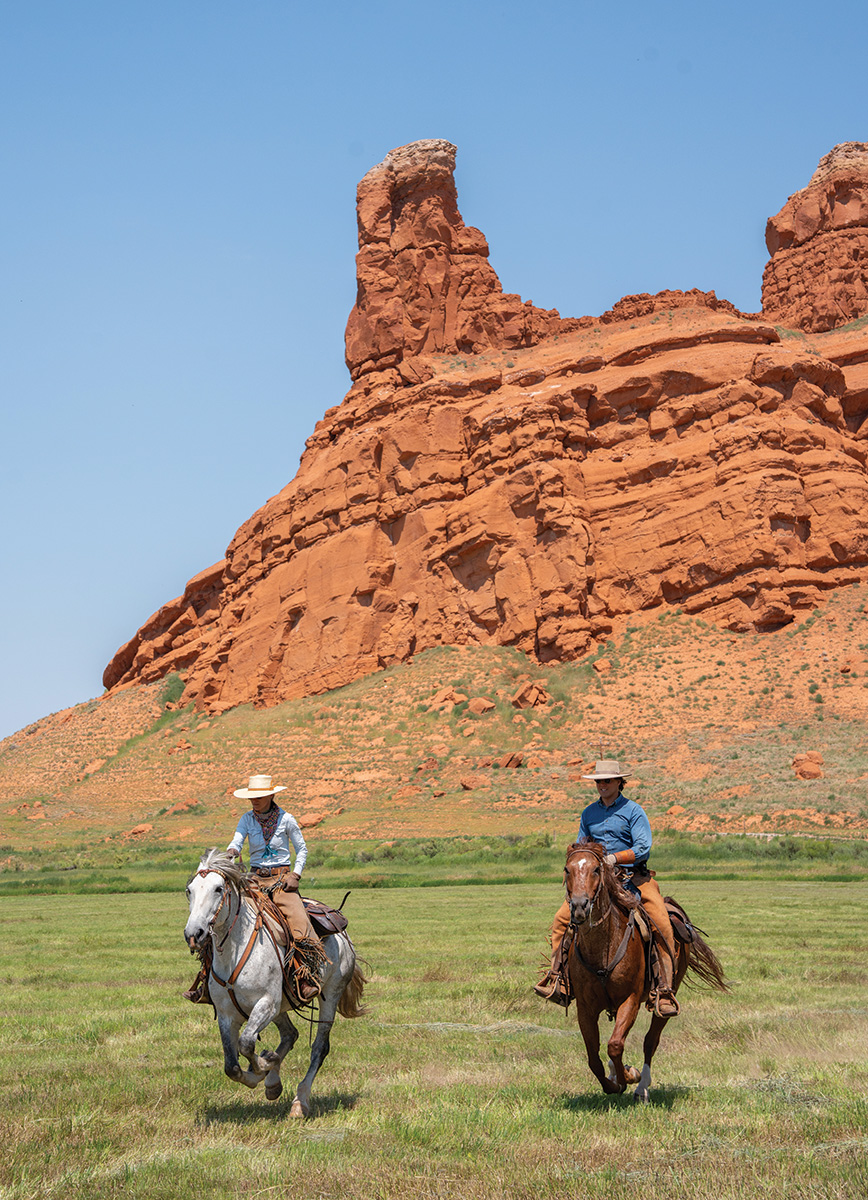
We crossed rushing rivers surrounded by lush greenery in the red rock canyons, cantered on sandy footing, and galloped past the red Needle Rock towering above us. A short trailer ride brought us to the nearby bentonite clay-painted hills.
Photo by Shawn Hamilton
My mount, a palomino Quarter Horse named Sheridan, was a true gem. Being well tuned in neck reining, there was minimal rein contact needed, and gaits changed simply from my seat.
“What a wonderful treat for a trail horse,” I said to Nina.
“Yes,” she replied. “The key is to train the guests how to ride our horses.”
Orientation and Safety Talk
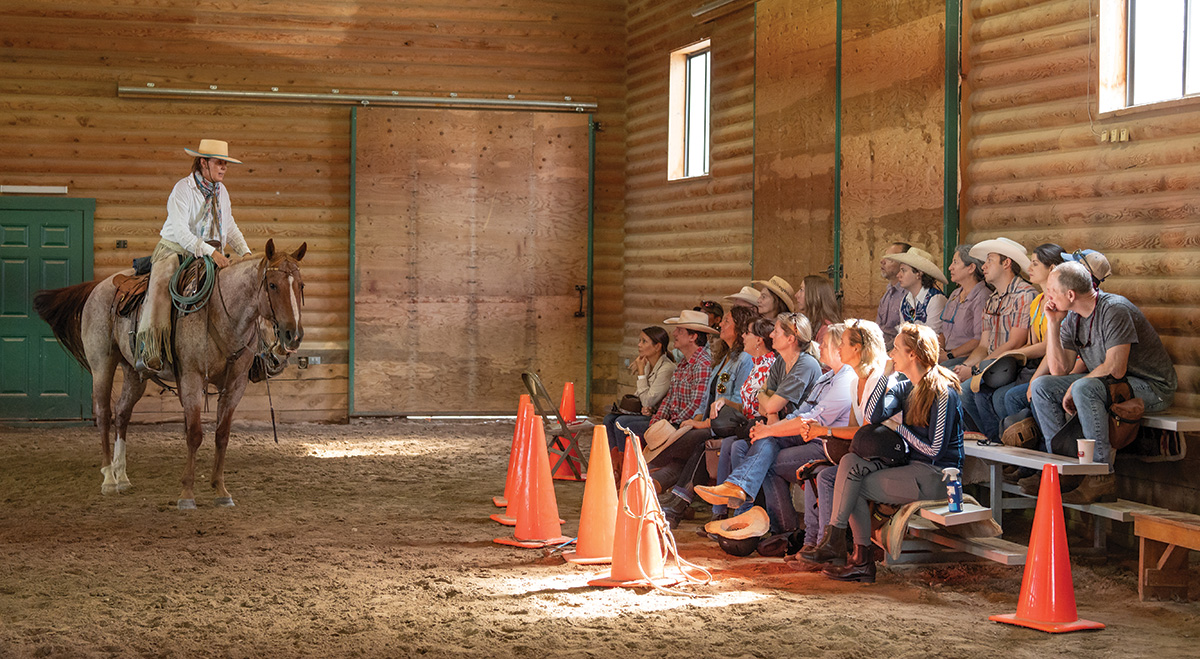
All guests, from beginner to advanced riders, participate in an extensive safety orientation at the start of the week, then mount up for an ability assessment.
Guests of all riding abilities participate in an extensive safety orientation at the start of the week. Photo by Shawn Hamilton
I watched guests ranging in ages from 11 to 75 walk in a circle and stop, trot along the rail, and depending on their self-proclaimed ability, perform a few canter strides. Instructed to use only their seat for balance, some experienced difficulties, but Marijn reassured improvement by week’s end. It was a safe yet revealing way to split into groups before hitting the trails.
Returning later with big grins, everyone had fun and felt comfortable. Catering rides to their guests’ preference on length, pace, and terrain, the wranglers could now make informed decisions on who was capable of what.
The Whole Package
In my short visit, I concluded that what brings guests back repeatedly to The Hideout is their attention to detail, consistency, and authenticity. Their hospitality and horsemanship benefits everyone, especially the horses, creating a perfect balance.
The Hideout Lodge & Guest Ranch in Shell, Wyo., ticks all the boxes necessary for a comfortable adventure on safe horses in spectacularly diverse scenery. I applaud them!
Learn more about a visit to The Hideout Lodge & Guest Ranch at thehideout.com.
If you’ve ever owned a horse, you are no stranger to unplanned expenses cropping up. Most horse owners budget for care costs without factoring in health emergencies and the frequent vet calls, medications, diagnostics, and treatments that are likely to pop up.
During a break at the recent Defender Kentucky Three-Day Event in April, I sat down with Jennifer Brocker, Vice President of Client Marketing, Veterinary/Pet Care, CareCredit, and Kate Hayes, Vice President Equine Expansion, CareCredit. The company recently surveyed horse owners on the expected versus actual costs of horse care, and the results were pretty surprising.
2025 Defender Kentucky Three-Day Event winners Michael Jung & FischerChipmunk FRH maneuver the CareCredit obstacle on the cross-country course. Photo by Cindy Lee/MacMillan Photogrpahy
The study revealed that while 83 percent of horse owners believe they’re financially prepared, actual costs can be three to four times higher than expected—especially when unexpected veterinary needs arise, such as colic or orthopedic injuries that can cost up to $10,000.
Horse Illustrated: Can you tell us what the new Equine Lifetime of Care Study means for equine vets and horse owners, and why many underestimate the long-term financial commitment of owning a horse?
Jennifer Brocker: We originally did our Lifetime of Care Study for companion animals (dogs and cats). And then we decided we needed the same kind of information for equine veterinarians and horse owners, so they have a better understanding of how much money they spend over the lifetime of a horse. The way we saw it was, you’re helping prepare them for what’s to come. And since cost of care is one of the biggest barriers for horse ownership or pet ownership, we felt it was important knowing in advance and being educated on the ways that you can be prepared financially over the lifetime of your animal. We also thought it was important that veterinarians have a view into that as well.
Kate Hayes: It’s such a great tool to educate and empower clinics and practices and veterinarians, but then also on the flip side, like Jen said, to educate horse owners. Because whether people rescue a horse or get into riding for the first time, they know what a riding lesson costs, but they don’t know what the full expense of owning a horse costs. This [study] is a great tool to empower and to educate practices and clinics because this gives them information to pass on to their clients.
HI: What are some strategies equine vets are using to navigate rising costs, including tools to reduce financial friction with clients, while maintaining high-quality care?
Brocker: The strategy a lot of equine veterinarians use is, “If you can’t pay me today, I provide the care, and you can pay me later,” which leaves the veterinarian chasing the money. So we can train the veterinarians to say, “I want to take care of your horse, but that requires financial responsibility. Here are the solutions that we have in our practice to help you be ready.” The horse owner needs to understand that the veterinarian must be paid just like their board bill or hay bill is paid.
Hayes: We’re a partner with them and their business to help that shift. Regardless of what type of veterinarian you are, it’s cost that’s the biggest point of friction between you and your clients. If you talk about it from the beginning, that moment of friction is reduced, so the unexpected medical moment doesn’t also come with an unexpected financial crisis.
Photo by Terri Cage/Adobe Stock
HI: How is CareCredit partnering with equine clinics nationwide to improve access to care while supporting sustainable practice growth?
Brocker: We’re partnering up with [equine vet practices/clinics] on various levels. First, helping educate their team. How do you have a comfortable financial conversation with a horse owner? If you don’t talk about it and you’re not comfortable talking about it, that in and of itself is a barrier. So we have a lot of training and education to help the veterinary team not be afraid to bring it up, helping them with proactive confidence in that financial moment where everybody’s really emotional.
The other thing [CareCredit is doing to help equine vet clinics] is we’ve created an all-digital financial experience, so regardless of whether you’re in the clinic or you’re out at the barn, you can apply for CareCredit, get approved, and pay—all from your phone. We’ve always been available in equine practices, but when we first went into it, our payment experience didn’t fit their model. Now they can get paid anywhere, anytime.
Hayes: If you look at our partnerships on a bigger scale with the AAEP (American Association of Equine Practitioners), being an educational partner for them allows us a platform. Education is the key word here. It supports the sustainability of the profession by providing resources that are specific to their workflows, because the ultimate goal is what’s best for the horse and what’s best for the horse owner. If we can help remove some of the barriers that are between a horse owner getting the treatment for their horse, then that’s what we’re here for.
We also partner with universities. The future veterinarian is also very important to us, so by the time that they’re in practice, that financial conversation isn’t as quite as challenging. It’s tough being a veterinary student—there’s a lot of information thrown at you, so of course the business side isn’t always top of mind. By supporting the universities and organizations that support the future veterinarian, it allows us a platform to be able to educate and help them before they’re actually in practice.
HI: What is CareCredit?
Hayes:CareCredit is a health and wellness credit card that horse owners can use for all types of veterinary services, treatments, and diagnostics.* It’s a great fit for the equine profession because instead of invoicing after service has been completed, this gives you the opportunity to pay upfront—the veterinarian is able to capture payment in full up front, but the horse owner has 6, 12, 18 months of interest-free [time to make the payments].
*Subject to credit approval
Brocker: I think one of the best things about CareCredit is once you have the credit card, you are financially ready for whatever happens, whether it’s wellness or unexpected or surgery. And you can use it for whatever animal you have at the veterinarian. It is truly your family credit card for life’s unexpected expenses.
View the entire Equine Lifetime of Care Study here.
Adoptable Horse: Eclipse, a 10-year-old, 15.3hh Tennessee Walking Horse mare Organization: Colorado Horse Rescue, Longmont, Colo.
Get to Know Adoptable Horse Eclipse
Flashy, sweet and gaited! Eclipse is an energetic Tennessee Walker with a good riding foundation. Her best match is someone with advanced-level horsemanship skills who understands or is familiar with gaited horses. A skilled, patient and relaxed rider would be the best match for Eclipse. With lots of trail riding experience in her background, Eclipse just needs to keep to easy surfaces, and shorter rides. She requires some maintenance and a proficient farrier to keep her at her best.
Contact Colorado Horse Rescue today about ASPCA Right Horse Adoptable Horse of the Week, Eclipse!
Photo courtesy Colorado Horse Rescue
ASPCA Right Horse
ASPCA Right Horse is the online adoption platform of The Right Horse Initiative, a collection of equine industry and welfare professionals and advocates working together to improve the lives of horses in transition. A program of the ASPCA, their goal is to massively increase horse adoption in the United States. To find more adoptable horses and foster horses, visit www.myrighthorse.org. To learn more about The Right Horse, a program of the ASPCA, visit www.aspcarighthorse.org.
A few weeks ago, my friend called me out of the blue. I thought it was odd since she usually texts. When I picked up, I knew instantly something was wrong. Her daughter’s horse had lain down to roll, but when she got up, she didn’t shake. That was the first red flag. And when she tried to lay down again to roll, she realized that the horse was colicking.Photo by everydoghasastory/Adobe Stock
My friend is still relatively new to horse ownership, so she wasn’t sure what to do. Being a few hours away, I couldn’t be there to help, but I told her to keep the horse up and walking, and call the veterinarian. Thankfully, her horse came out of it, and they got some pretty funny videos of her after the vet administered some medication that made her woozy. She fell asleep standing up and snored with her tongue hanging out!
That ordeal made me realize that my own horse first aid kit needed to be upgraded. We had some basics, but it wasn’t complete. I started researching the most essential items, but also found some things I would have never thought of that could come in handy during an emergency.
Below, find a list of items to keep in your horse first aid kit, broken down by different needs and circumstances.
Horse First Aid Kit: Emergency & General Care
Horses are hardy animals, but more often than not, they manage to get themselves into some kind of scrape. While many injuries and illnesses can be treated at home, having the right tools on hand is essential. Here’s a list of emergency and general first aid items to keep stocked in both your barn and trailer.
Items Needed:
Stethoscope: To check heart rate and gut sounds
Gloves (disposable latex or nitrile): For clean handling of wounds and medications
Twitch or sedation alternative: If handling an injured horse
Headlamp or flashlight: For emergencies in low light
Thermometer: To check temperature
Syringes: To administer meds
Needles: For injections
Electrolyte paste or powder: To help with dehydration recovery
Activated charcoal or Bio-Sponge: For toxin ingestion concerns
Notebook or first aid log: To track treatments and vital signs
Vet & emergency contact list: In case of urgent care needs
Horse First Aid Kit: Pain & Inflammation Management
According to the United States Department of Agriculture (USDA), colic is the most common cause of death in horses that are 1 to 20 years of age and the second most common cause of death for horses older than 20 years of age (USDA APHIS NAHMS 2015). Flunixin meglumine, often known under the name brand name “Banamine,” is a common NSAID used for equine inflammation and pain associated with injuries, but it’s also used to alleviate pain from colic. However, it is highly encouraged to only administer Banamine with a vet’s permission—or, better yet, by the vet themselves.
Phenylbutazone (more commonly known as “bute”) and dimethyl sulfoxide (DMSO) are also common NSAIDs, mainly for joint swelling and injuries, but they’re not great for colic. In fact, if DMSO is administered incorrectly, it can actually cause signs of colic in some horses.
Dormosedan Gel (frequently nicknamed “Dorm gel”) is another good addition. This is an oral sedative for calming a panicked or uncooperative horse in stressful situations.
Be sure to talk with your vet about directions for use and follow all medication guidelines.
Items Needed:
Bute: Pain relief, anti-inflammatory
DMSO: Anti-inflammatory
Dorm gel: Oral sedative
Topical cooling gel or liniment: For muscle soreness
Horse First Aid Kit: Wound Care & Bandaging
If you are treating a wound, it’s important to inspect the wound for depth and infection. If the wound is too deep, it can lead to an abscess and it will require a call to the vet. Wounds on the eye also warrant an immediate call to the vet.
When cleaning a wound, remove debris and wash with soap and water if possible. Avoid hydrogen peroxide or alcohol on open wounds as they can delay healing. Instead, use wound spray or antibiotic ointment.
Items Needed:
Non-stick gauze: For wrapping wounds
Cling gauze: Secures dressings without adhesive
Gauze pads: Absorbs wound fluids
Vet wrap: Self-adhesive bandage
Elastikon: Strong adhesive tape
Bandage scissors: For careful cutting of bandaging items
Hydrogen peroxide (3%): For cleaning tools, but not recommended for wounds
Betadine (povidone-iodine solution or scrub): Antiseptic for cleaning wounds
Cold packs or instant ice packs: For swelling and injuries
Horse First Aid Kit: Hoof Care
If your horse suddenly starts limping, chances are it’s a hoof abscess. Check for heat, swelling, tenderness, or drainage from the hoof. Treating an abscess often involves soaking the hoof in warm Epsom salt water or applying a poultice to draw out the infection. Wrapping the hoof or using a boot helps keep it clean and protected.
Items Needed:
Bandaging items: See above
Duct tape: Secures hoof wraps
Soaking boot: Easy way to soak a hoof and keep out debris
Hoof pick: To check for lodged objects and clean the hoof
Diapers or sanitary pads: Great for hoof abscess wraps
Soft-Ride Boots or hoof boots: If dealing with a hoof injury
Talk With Your Vet
Be sure to talk with your veterinarian about your first aid kit. They can recommend additional items tailored to your horse’s specific needs, explain best practices for administering medications and treating injuries, and may even offer pre-made first aid kits.
Emergencies and injuries are inevitable, but having a well-stocked equine first aid kit can make all the difference. Acting quickly gives your horse the best chance at a full recovery. While some situations will still require a vet, being prepared allows you to stabilize your horse until help arrives. When the unexpected happens, you’ll be glad you took the time to get ready.
Welcome to Barn Banter, the official podcast of Horse Illustrated. In Barn Banter episode 31, hosts Susan Friedland and Horse Illustrated Editor In Chief Holly Caccamise chat with horseman Tik Maynard, fresh off his repeat win of Road to the Horse. To end the episode, Susan and Holly chat with Serenity Oaks Equine Sanctuary about Nash, this month’s ASPCA Right Horse adoptable horse.
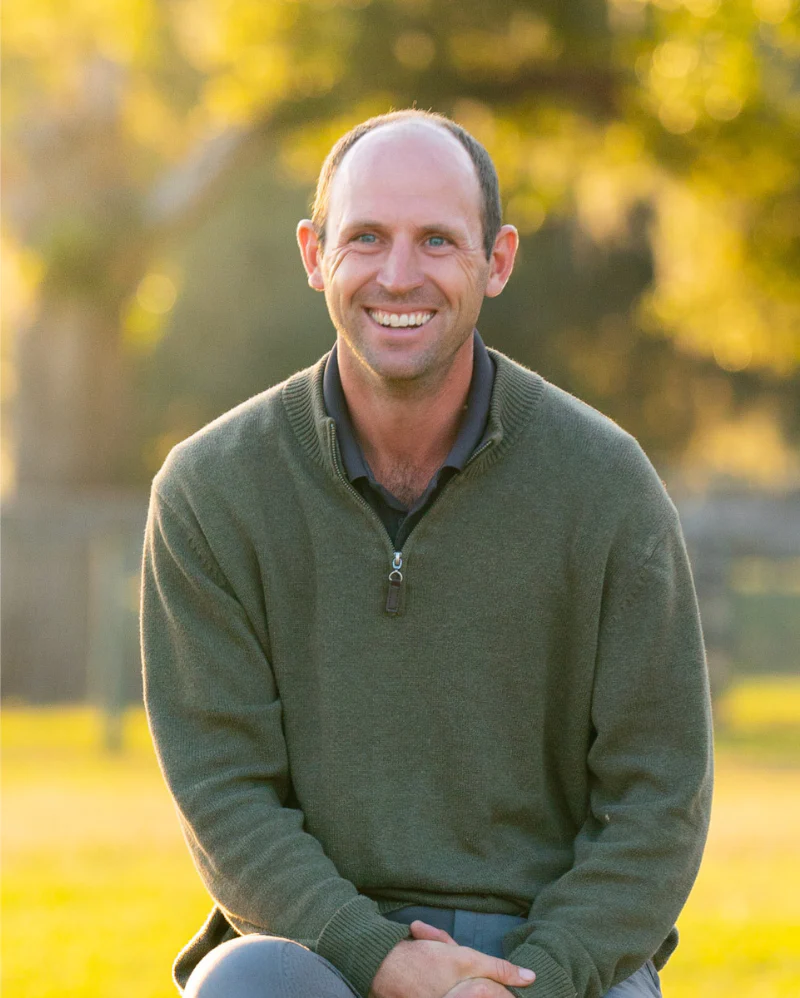
Tik Maynard, Horseman & 2025 Road to the Horse Champion
Barn Banter episode 31 guest Tik Maynard.
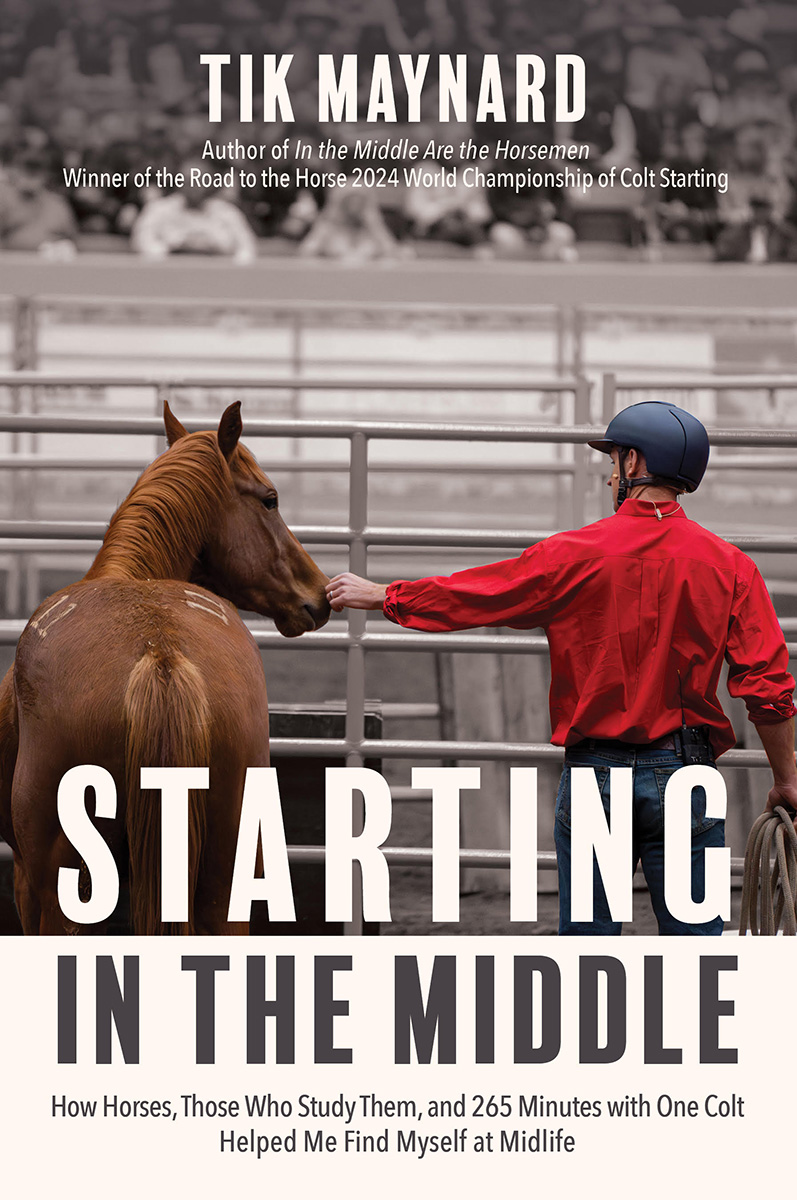
Tik Maynard spent much of his twenties competing full time in the sport of Modern Pentathlon (running, swimming, shooting, fencing, show jumping). He was on the Canadian National Team and won the National Championships twice, and he competed at multiple World Cups, World Championships, and at the 2007 Pan-Am Games in Rio de Janeiro. Maynard has evented at the Advanced level and been Long-Listed and Short-Listed for the Canadian National Three-Day Event Team. He won the Freestyle twice at the Thoroughbred Makeover (2015, 2018) and judged it once (2017). Maynard won the Road to the Horse World Championship of Colt Starting in 2024 and 2025. He travels year-round, teaching clinics in the United States, Canada, England, and Scotland, and is an online instructor for The Horseman’s University and the NOËLLE FLOYD Equestrian Masterclass. He is a regular guest on podcasts and a contributor to many equestrian magazines and online news sources. He is the author of In the Middle Are the Horsemen and Starting in the Middle. Maynard lives with his wife Sinead, a top American eventer, and their two children in Citra, Fla., where they run Copperline Farm.
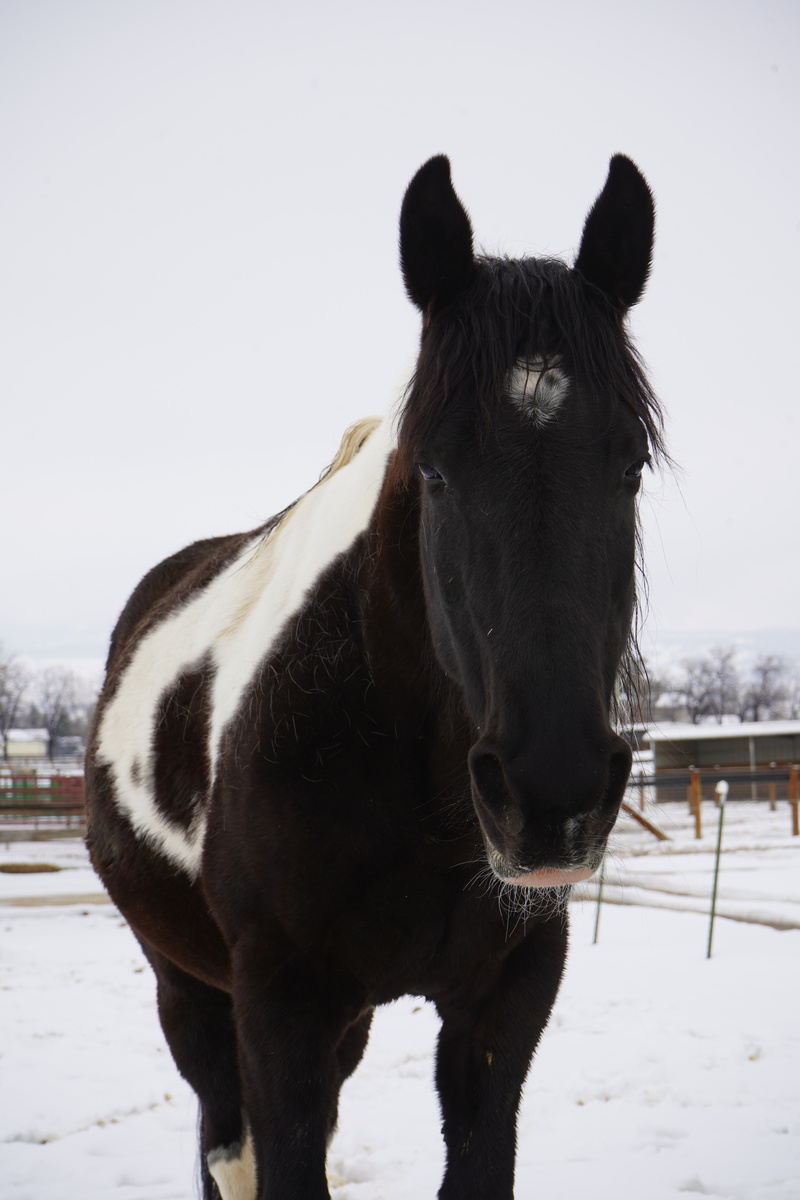
From Serenity Oaks Equine Sanctuary in Plymouth, Mich., Nash is a big, beautiful Thoroughbred gelding who makes the most perfect companion horse. He loves hanging out 24/7 in the pasture with his buddies, where he is lower in the herd and always respectful to his friends. Due to an old injury, he is companion only. Nash is not spooky and loves one-on-one attention. He has a huge personality and is an easy keeper.
Nash is up to date with vetting, dental and farrier.
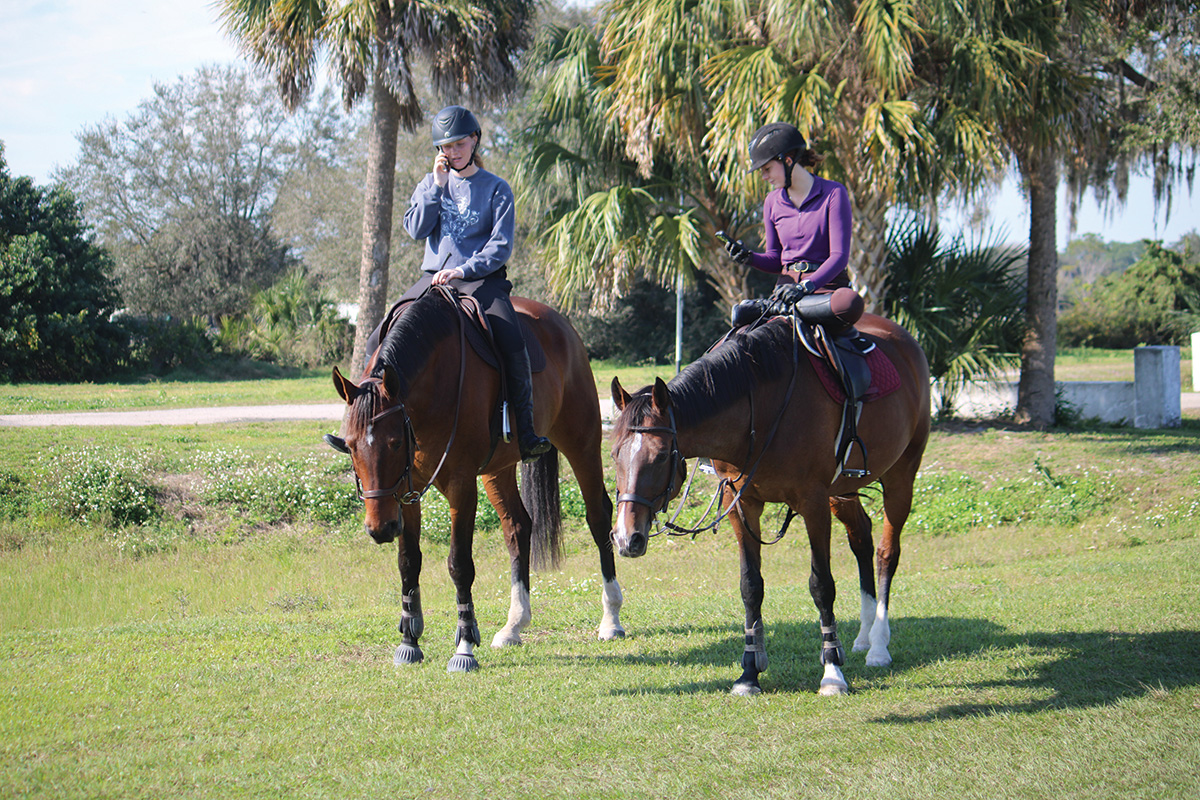
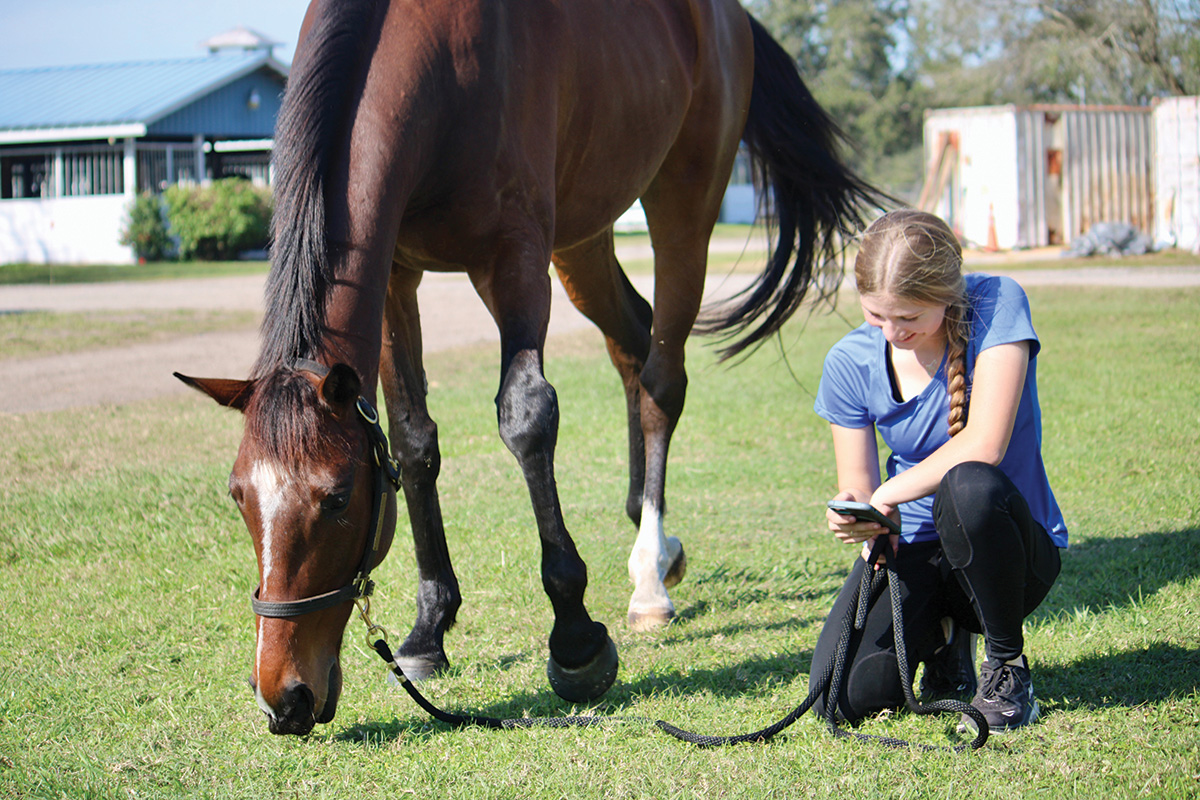
The uneasiness of being disconnected from a constantly online existence can ruin your barn time, urging you to reach for cell phones and other electronic devices instead of staying present. Not only does this make for some unsafe practices, but it takes away attention solely reserved for your horse. Here, a psychologist and two trainers will share insight on how to deal with the distraction of technology at the barn.
Photo by Laura Boynton Jobson
Do Not Disturb
Janet Edgette, Psy.D., explains that tuning out distractions in your life so you can spend a few hours at the barn in relative peace largely has to do with your ability to set and keep boundaries—for both yourself and others.
Janet Edgette, Psy.D., likes to be unreachable during her barn time, leaving her phone behind. Photo courtesy Janet Edgette
“If you have young children, are a single parent, have a relative who’s ill, or an urgent work matter taking place, then you may not be able to do that for any significant length of time, emotionally or practically speaking,” she says.
Barring those things, Edgette will tell herself, “I’m riding” in her head when she is out in the arena with her horse as fair warning to anyone who would try to get in touch or expect to hear back from her. She stresses that this serves as a great reminder to stay in the moment and not feel guilty for taking time to work with your horse.
“This is a way for me to set boundaries without having to depend on others to conform to them,” she says. “I don’t even bring my cell phone into the barn, which strikes some people as weird, but I like it that way. It’s what allows me to be at the barn undisturbed riding, grooming, and training, knowing that where I am and what I’m doing at any given moment is the place where my attention needs to be.”
Personally, Edgette loves feeling as if she is unreachable when she is at the barn.
“I have also gone through different periods in my life where I needed to stay close to my cell phone,” she says. “These days, however, I give myself permission to not check any business emails or texts or take those calls while I’m at the barn.”
Safe Mode
Trainer Jenny Jordan Frid is the co-founder and owner of Robin Frid Show Horses in Pilot Point, Texas, with husband Robin. She works as a coach and clinician to top-level national and international equestrian athletes, and is herself a multiple Champion, Reserve Champion and High-Point exhibitor with the American Quarter Horse Association.
Jenny Jordan Frid and husband Robin Frid have a “no phones while handling or riding” rule at their training barn. Photo by Mallory Beinborn
“If I feel clients can’t stay focused because of their phones, I will say something out of responsibility,” shares Frid. “The thing we have to remember is that the majority of our riders are middle-class, hard-working individuals that have to work in order to afford a life with horses. I understand that 100 percent, since I have to work my career of real estate while coaching and training. My working clients understand, so I have to be understanding, too.”
But there’s a difference between urgent matters and pure distraction.
“That is totally different than going through social media while preparing to ride,” says Frid. “We’ve asked riders to leave their phones out of the arena or say no phone while handling or riding. In today’s world where we all think we can’t be away from our phones, we have to enforce these barn rules.”
Checking your phone and scrolling social media while handling a horse, even if you’re not in the saddle, not only takes you out of the moment, but can be unsafe. Photo by Laura Boynton Jobson
The most unsafe situations that Frid has witnessed have been when people are longeing horses, not paying attention, and reading their phone. In her opinion, not being on your phone while doing groundwork is just good common sense for horses and humans.
High Resolution
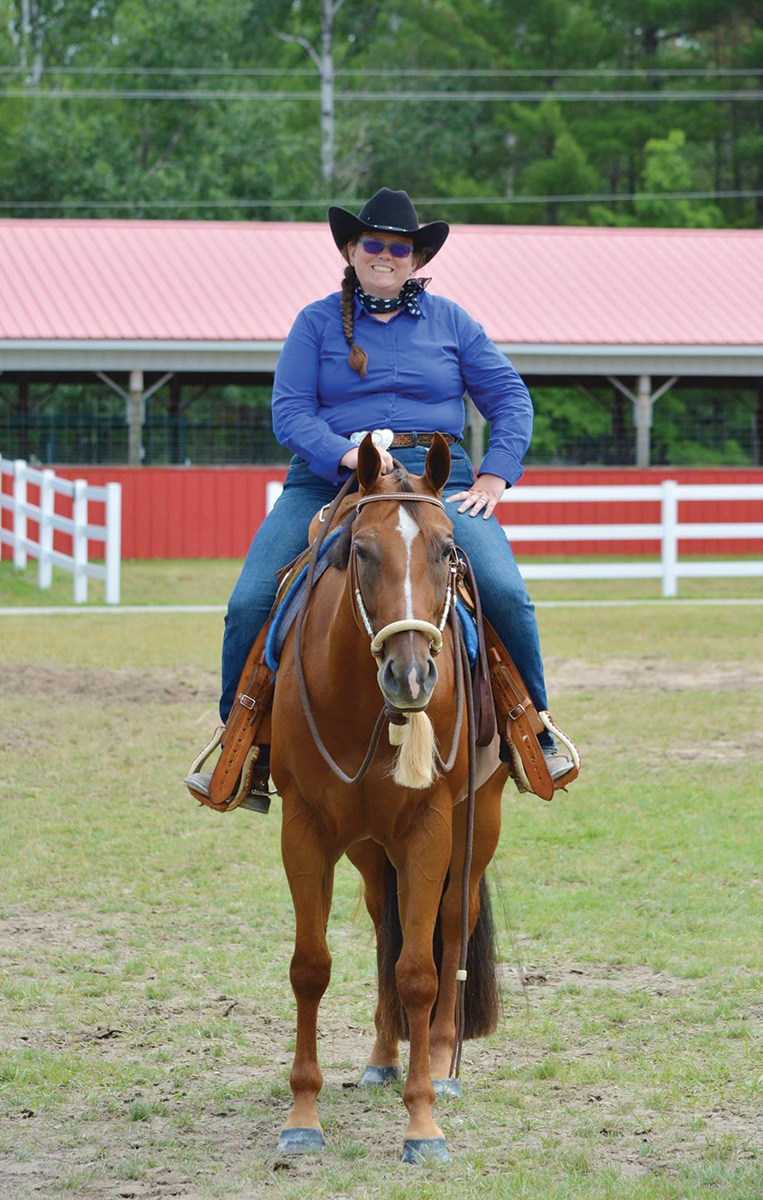
Trainer and exhibitor Alisa Forton owns and operates Excalibur Stables in Traverse City, Mich., and offers boarding, leasing, lessons and all-around training where she works with all levels of riders. Forton shows 4-H, Open, and breed shows with the American Quarter Horse Association and American Paint Horse Association.
Alisa Forton. Photo by Deb Wilcoxen
She explains that it’s almost an unspoken rule at her farm that when you come to ride, phones are put away and the horse gets 100 percent of the attention.
“I’ve seen people that are on their phones while riding and almost caused collisions by not paying attention to the arena traffic,” says Forton. “I’ve also seen people walking into the arena with their heads [down on] their phones and almost get run over since they aren’t looking where they’re going.”
Music in headphones can be beneficial when working on consistency and focus, although that has a caveat as well.
“It should be soft enough that you can still hear your surroundings,” says Forton. “Horses can react in a split second, and being able to hear what’s going on around you can make the difference of being more in tune with your horse and knowing why he reacts to sounds in the ways he does.”
When it comes to getting her riders to leave the temptation of what’s going on with their phones, she has found it helpful to involve them in planning their lessons or helping them set riding or showing goals.
“The more interested and invested they are in the subject, the easier it is for them to leave the stress of work or school behind,” says Forton. “I think it’s also important to remember that horses are living beings who enjoy our undivided full attention.”
By placing boundaries on how you spend your time at the barn like Edgette, finding a safe balance of work and riding time like Frid, or focusing on being dedicated to your horse like Forton, you’ll find a way to stay connected with a full battery to life and to your horse.
For many in the horse world, the first Saturday in May is considered a holiday. For those in horse racing, it can only mean one thing: Kentucky Derby Day. It’s the race that every person in the racing industry dreams of winning, and for horse people, it’s probably the race that everyday people in your life reach out to ask which horse is your pick. And if you don’t have a Derby horse yet, don’t worry—we’re taking a look at every horse in the 2025 Kentucky Derby so you can have your pick by the time you’ve finished reading.
The 2025 Kentucky Derby Field
The exciting part about the Kentucky Derby—or any horse race, for that matter—is that any horse that leaves the starting gate can win. The favorite may seem like the obvious pick, but the post-time favorite has not won the Run for the Roses since eventual Triple Crown winner Justify in 2018. In fact, the odds of the official Kentucky Derby winner in the six runnings since 2018 has averaged 35.85-to-1.
Let’s take a look at each horse in the 2025 Kentucky Derby, organized by post position and listed with their morning line odds. With rain in the forecast for Saturday, there are also notes about each horse’s sloppy track aptitude.
1. Citizen Bull (20-1) Trainer: Bob Baffert Jockey: Martin Garcia Race Record: 6 starts: 4 wins, 0 seconds, 1 third Career Earnings: $1,451,000
Last year’s Champion Two-Year-Old Male after winning the Breeders’ Cup Juvenile (G1), Citizen Bull has not quite replicated his two-year-old form. Though he started the year with a romp in the Robert B. Lewis Stakes (G3), he finished fourth of five last out in the Santa Anita Derby (G1) in a race won by morning line favorite Journalism. The rail position is not doing him any favors, either. He seems like a horse that wants the lead to himself, but such a position is not so easy to obtain in the Derby. When he’s at his best, he’s one of the most talented in the field, but he does not seem to have matured on the same level as others in this field.
Sloppy Track Potential: Citizen Bull has only raced on a fast track, but he is a son of leading sire Into Mischief, who has had many offspring succeed on a wet track.
2. Neoequos (30-1) Trainer: Saffie Joseph, Jr. Jockey: Luis Saez Race Record: 7 starts: 2 wins, 2 seconds, 2 thirds Career Earnings: $291,050
Likely to go off at high odds on Saturday, Neoequos has twice been defeated by fellow contender Sovereignty. He’s a horse that appears to want a shorter distance, having been caught in both of his lifetime races over one mile. The 1 ¼-mile distance of the Derby does not seem to be one where he will thrive.
Sloppy Track Potential: Neoequos won his first start of the year on a sloppy track, so track conditions shouldn’t be an issue for him.
3. Final Gambit (30-1) Trainer: Brad Cox Jockey: Luan Machado Race Record: 4 starts: 2 wins, 1 second, 1 third Career Earnings: $520,639
A last out winner of the Jeff Ruby Steaks (G3), which is contested on a synthetic surface, Final Gambit has never made a start on traditional dirt. He’s also faced lesser company than most competitors here, and though he stepped it up in the Jeff Ruby, this is still a big jump in class for him.
Sloppy Track Potential: Having only run on synthetic and turf surfaces, dirt will be an entirely new racing experience for Final Gambit—let alone a sloppy track. However, his sire, Not This Time, achieved the biggest win of his career on a muddy track—at Churchill Downs no less.
4. Rodriguez: SCRATCHED
5. American Promise (30-1) Trainer: D. Wayne Lukas Jockey: Nik Juarez Race Record: 9 starts: 2 wins, 1 second, 1 third Career Earnings: $444,874
It took American Promise six tries to break his maiden and though he was a runaway winner of the black-type Virginia Derby last out, he was off the board in his two starts against graded stakes company. Long shots have thrived in recent runnings of the Kentucky Derby, but this one would be a surprise.
Sloppy Track Potential: American Promise broke his maiden on a muddy track, but earlier in his career, one of his worst-ever efforts came over a sloppy track.
One of two Japanese-based runners, Admire Daytona narrowly won the UAE Derby (G2) in his last start after leading throughout. He’s yet another that will be fighting for the lead, so he will need to be able to handle the pace pressure. Admire Daytona has proven to have some fight in him, though, and he’ll need to use that weapon in the Derby.
Sloppy Track Potential: Admire Daytona’s racing debut was contested on a muddy track, in which he finished fourth. It seems as though the slop will neither help nor harm his chances.
A son of Triple Crown winner American Pharoah, Luxor Cafe is the strongest of the two Japanese contenders. Winner of his last four starts, including a runaway win in the Fukuryu Stakes, Luxor Cafe has posted some of the most impressive speed figures of this field. This is the toughest competition he’ll have faced, but he certainly has talent.
Sloppy Track Potential: In his second-ever start, Luxor Cafe was only a neck away from winning on a muddy track.
8. Journalism (3-1) Trainer: Mike McCarthy Jockey: Umberto Rispoli Race Record: 5 starts: 4 wins, 0 seconds, 1 third Career Earnings: $638,880
Meet Journalism, the morning line favorite for the 2025 Kentucky Derby. He has won four straight races, including the Santa Anita Derby (G1) last out, and has some of the best speed figures in the group. It’s tough to find a knock against him, though an obvious point is that he has been facing small fields—which certainly won’t be the case in the Derby. But on ability alone, Journalism is a formidable favorite.
Sloppy Track Potential: Journalism has only raced on a fast track, which could be a concern for the Derby favorite on a sloppy track. However, his sire Curlin won the Breeders’ Cup Classic (G1) on a very sloppy track in one of his best lifetime performances.
9. Burnham Square (12-1) Trainer: Ian Wilkes Jockey: Brian Hernandez, Jr. Race Record: 6 starts: 3 wins, 1 second, 1 third Career Earnings: $977,755
Burnham Square was the game winner of the Blue Grass Stakes (G1) in his final Kentucky Derby prep, in which he overcame a poor trip. This bodes well for the traffic troubles most horses face in the Derby. From a speed figure perspective, he’ll need to step it up a bit, but he could be worth a look.
Sloppy Track Potential: Another horse that has only ever experienced fast tracks, Burnham Square’s pedigree does not provide much insight into how he may fare in the mud.
Flying Mohawk was most recently second in the Jeff Ruby Steaks behind Final Gambit and, like that rival, Flying Mohawk has never raced on traditional dirt. He also has only faced company weaker than most of this field, and his speed figures don’t match up. This colt is likely to go off at very high odds.
Sloppy Track Potential: This will be Flying Mohawk’s first dirt start, let alone his first contest on a sloppy track. And with a primarily turf pedigree, it’s difficult to assume his wet track aptitude based on bloodlines.
12. East Avenue (20-1) Trainer: Brendan Walsh Jockey: Manuel Franco Race Record: 5 starts: 2 wins, 1 second, 0 thirds Career Earnings: $654,395
As a two-year-old, East Avenue looked like a top prospect until a lackluster performance in the Breeders’ Cup Juvenile. He’s never quite returned to his original form, the closest being his narrow second-place finish last out in the Blue Grass Stakes. It would require a huge jump in effort from East Avenue to cross the wire first.
Sloppy Track Potential: East Avenue has only ever raced on fast tracks, but offspring of Medaglia d’Oro typically don’t mind the mud.
13. Publisher (30-1) Trainer: Steve Asmussen Jockey: Irad Ortiz, Jr. Race Record: 7 starts: 0 wins, 2 seconds, 3 thirds Career Earnings: $407,756
Yes, it’s true—Publisher has never even won a race. Second behind Sandman in the Arkansas Derby (G1) last time, that was one of only two times the son of American Pharoah finished better than third. He’s training well, but this is a huge ask.
Sloppy Track Potential: Again, Publisher has never won a race, but he did finish a decent third on a sloppy track as a two-year-old.
14. Tiztastic (20-1) Trainer: Steve Asmussen Jockey: Joel Rosario Race Record: 8 starts: 3 wins, 1 second, 2 thirds Career Earnings: $1,549,800
The more accomplished trainee of Hall of Fame trainer Steve Asmussen, Tiztastic is entering the Kentucky Derby off a win in the Louisiana Derby (G2). However, he has not been the most consistent horse, with his last win prior to that coming as far back as the Kentucky Downs Juvenile Mile Stakes last September. In the losses between those victories, he’s finished behind many rivals here, including Sovereignty, Sandman, and Coal Battle. He does seem to thrive with distance, though, and his off-the-pace running style may best fit the makeup of this field.
Sloppy Track Potential: Tiztastic has no sloppy track experience, and his pedigree provides little insight as to how he may like it.
Though trained by last year’s winning conditioner in Kenny McPeek, Render Judgment has not won a race since breaking his maiden in October 2024. That race did come over the Churchill Downs surface, but he has faltered against several rivals here and has never hit the board in graded stakes company. He will likely go into the starting gate with some of the highest odds in the field.
Sloppy Track Potential: Since Render Judgment is another horse that has only experienced fast tracks, if you want to look to his pedigree, offspring of his sire Blame generally don’t mind sloppy tracks.
16. Coal Battle (30-1) Trainer: Lonnie Briley Jockey: Juan Vargas Race Record: 8 starts: 5 wins, 0 seconds, 1 third Career Earnings: $1,188,875
If you love an underdog, Coal Battle will be easy to root for. His trainer, Lonnie Briley, is 72 years old and had never even run a horse in a graded stakes until Coal Battle won the Rebel Stakes (G2). Next out, Coal Battle was a distant third in the Arkansas Derby behind Sandman and Publisher. For the most part, he has not faced the level of competition he’ll be running against here, either. But if you’re looking for a good story, look no further.
Sloppy Track Potential: Coal Battle has two wins over wet tracks, so rain could be to his advantage.
17. Sandman (6-1) Trainer: Mark Casse Jockey: Jose Ortiz Race Record: 8 starts: 3 wins, 1 second, 2 thirds Career Earnings: $1,254,595
A last out winner of the Arkansas Derby, Sandman’s closing style may fit this pace-heavy race. Though it is worrisome that he has lost all three of his starts over the Churchill Downs oval, Sandman seems like he may be piecing things together.
Sloppy Track Potential: Sandman has only raced on fast tracks, so a sloppy track would be a toss-up for him. However, being by Tapit and out of a Distorted Humor mare won’t hurt him.
Most recently second in the Florida Derby (G1), Sovereignty seems like a horse that may appreciate the added distance of the Kentucky Derby. He did romp in a graded stakes at Churchill as a two-year-old, so he clearly likes the surface. He does have the second lowest odds on the morning line despite not being overly accomplished, but he could be worth a play.
Sloppy Track Potential: Yet another horse that hasn’t faced a wet track, Sovereignty is, however, a son of Into Mischief—which should help his sloppy track chances.
19. Chunk of Gold (30-1) Trainer: Ethan West Jockey: Jareth Loveberry Race Record: 4 starts: 1 win, 3 seconds, 0 thirds Career Earnings: $348,818
Although Chunk of Gold has never finished worse than second, he has also only won a maiden special weight. Though second in both the Risen Star Stakes (G2) and Louisiana Derby, he was not a threat to the winner in either race. He’s certainly another underdog if that’s your angle.
Sloppy Track Potential: Like most, Chunk of Gold would be making his wet track debut. However, his full sister, Band of Gold, is a stakes winner over a sloppy track.
20. Owen Almighty (30-1) Trainer: Brian Lynch Jockey: Javier Castellano Race Record: 7 starts: 3 wins, 2 seconds, 0 thirds Career Earnings: $499,935
Owen Almighty faded to sixth behind Burnham Square and East Avenue in the Blue Grass Stakes last out, which is not an encouraging entry into the Kentucky Derby. He does have success at Churchill Downs, but it would take a lifetime best effort to win here.
Sloppy Track Potential: Since Owen Almighty has never raced on a sloppy track, the only hints you can get are from his pedigree. Both of his parents were winners on muddy or sloppy tracks.
Despite requiring a scratch to draw into the field (which the scratch of Rodriguez has allowed him to do), Baeza has lower morning line odds than most of the others. After all, he was a game second behind morning line favorite Journalism in the Santa Anita Derby. This a wide draw to overcome, but he is of course a half-brother to 2023 Kentucky Derby winner Mage and 2024 Belmont Stakes winner Dornoch.
Sloppy Track Potential: Based in Southern California, Baeza has not faced a sloppy track before. But Belmont Stakes-winning brother Dornoch won the Remsen Stakes (G2) on a muddy track and stakes-placed sister Gunning won two races on muddy or sloppy surfaces.
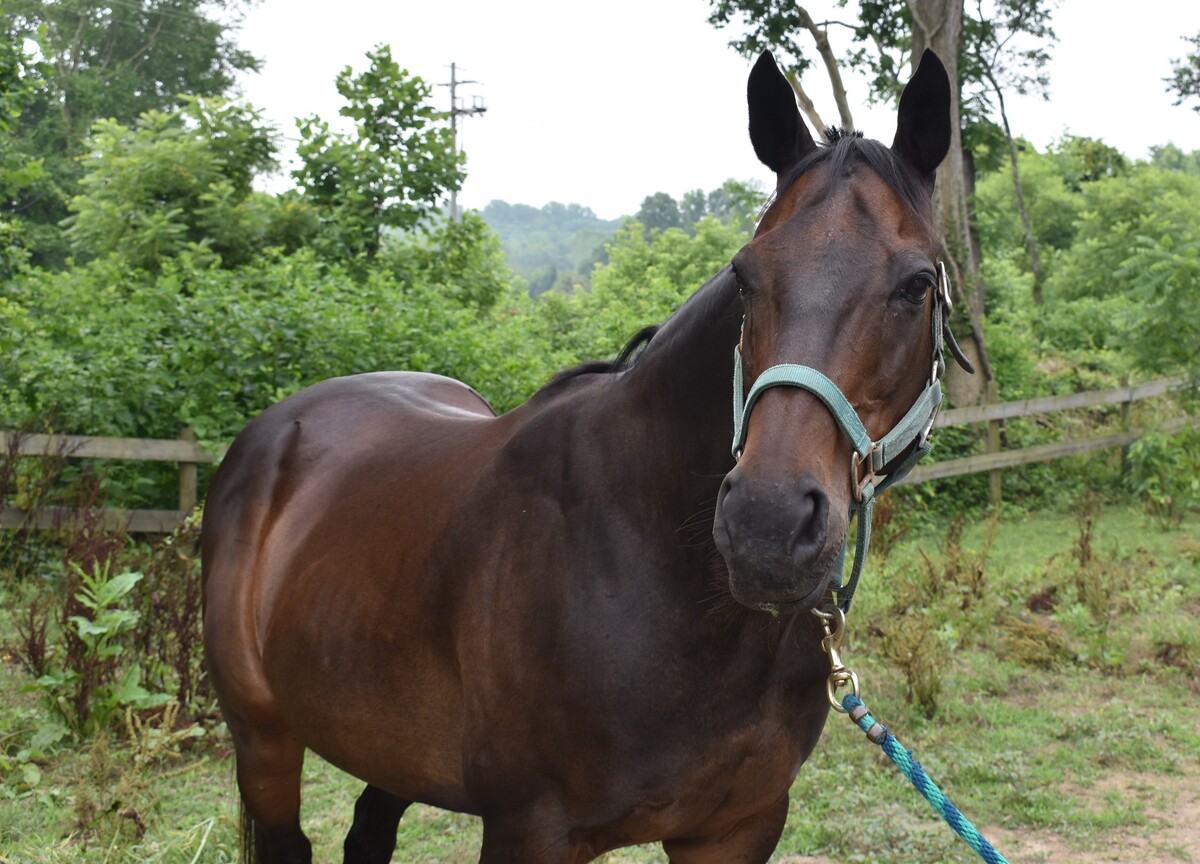
Get to Know Adoptable Horse Deforestation AKA Wheels
*Please note this horse’s owner wants this horse placed in Maryland or states immediately surrounding.*
Deforestation, AKA “Wheels,” is a 25-year-old registered off-the-track Thoroughbred gelding seeking a home as a companion or training project for an experienced rider. Wheels was retired from racing in 2003 after 27 starts and career earnings of $14,505. When his owner took him on in his teens, he was used primarily for shows and lessons with more experienced riders.
Wheels hasn’t been ridden in about five years. Given the span of time, as well as his age and the fact that he can be a challenge to ride, his owner feels he’d be best as a companion horse in his new home. However, his owner would be open to considering an advanced rider looking for a training project to bring him back into work.
Wheels is an easy keeper, but does need his feed increased just slightly in the winter. He is currently barefoot, but his feet do chip and he can be ouchy on rocky ground, so he’d need front shoes if put back into work. Wheels sustained an injury to the inside of his right front cannon in spring 2023 that had to heel as an open wound. It has long since healed, but there is a good scar that remains. Other than that, he has been healthy in the years that his owner has had him.
This pretty boy ground-ties for grooming and picks up all four hooves with ease. He trots in-hand without an issue as well. Wheels is good for the vet, farrier, baths, spraying and loading. He prefers not to be stalled without buddies and is fine living outside 24/7. He gets blanketed in the winter. Wheels will be updated on everything prior to him going to his new home. He will also go with all of his supplies.
Contact Owner 2 Owner Program today about ASPCA Right Horse Adoptable Horse of the Week, Deforestation AKA Wheels!
ASPCA Right Horse
ASPCA Right Horse is the online adoption platform of The Right Horse Initiative, a collection of equine industry and welfare professionals and advocates working together to improve the lives of horses in transition. A program of the ASPCA, their goal is to massively increase horse adoption in the United States. To find more adoptable horses and foster horses, visit www.myrighthorse.org. To learn more about The Right Horse, a program of the ASPCA, visit www.aspcarighthorse.org.
The most basic assumption about riding a horse is to go, to move. But there is more to it: The horse needs to learn to move from a cue, and remain moving in a steady fashion of his own volition, in the gait and tempo we dictate, like a car in cruise control, until we tell him otherwise.
To initially set a horse in motion, or move from the halt to the walk, most horses will spontaneously “go” as a result of a slight squeezing of both legs. Leg aids work because they touch and activate the horse’s abdominal muscles, which pull the hind legs forward and lift the back.
You want to teach your horse to respond to subtle aids from the outset—quiet signals from the seat, weight, legs, hands, and voice. These are the “natural” aids that communicate with the horse. Whips and spurs are “artificial” aids that should only supplement or refine natural aids.
Illustration by Taylor Sterry
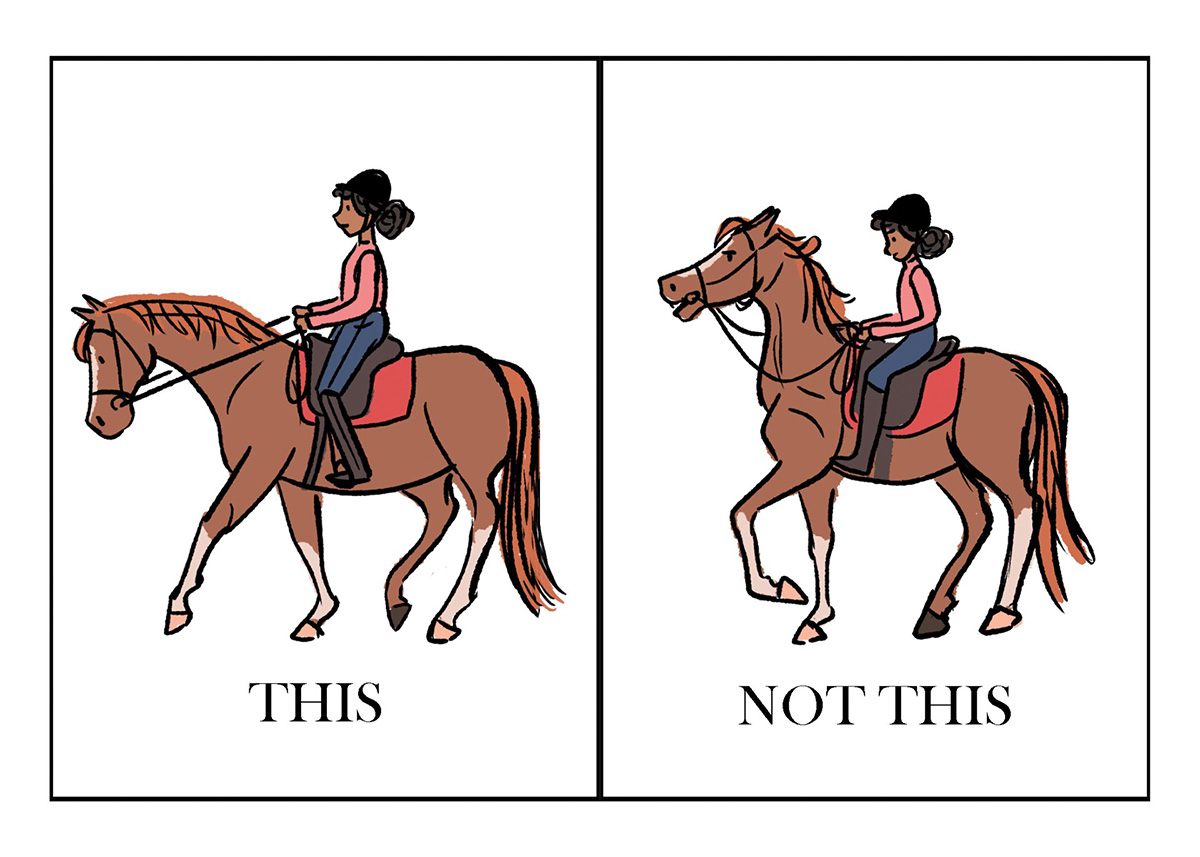
It isn’t necessary to use sharp kicks as are so commonly employed. You don’t want to teach your horse that harsh or repeated aids, like pumping your seat or kicking, are the cue to go, or you will become tired and frustrated from doing that the rest of your riding life. Indeed, you will likely end up escalating your kicking or pumping as time goes by because your horse may wait to see whether you are finished, or when you finally give that last “hard enough” kick or push. In fact, pumping with your seat actually produces the opposite effect of what you want: the pressure causes the horse’s back to sink, his head to rise, his croup to rise, his front legs move out in front of him and his hind legs move out behind him, so that he becomes shaped like a trapezoid. His lowered back and belly actually prevent his hind legs from moving forward.
Aids Inform the Horse—They Are Not the Moving Force
Consider riding aids to be a form of sign language in which gestures convey meaning; a specific bodily movement means “go.” Such a signal informs the horse to go; the application of the aid itself does not physically compel the body to move. When a horse understands, he will go.
Because your horse only knows what you teach him, be judicious and show him what he is meant to do when you communicate with him through the use of an aid. Use specific and consistent aids for each response you seek. Apply a gentle aid and see whether you get the desired response. If not, be more aggressive for one try then return to the slight aid. Often, horses offer several simultaneous responses when given an aid, so eliminate everything but the response you want. Eventually, your horse will understand that that request is the one and only aid for one action—“one response for one aid.”
As riding instructor Sharon Vander Ziel remarks, “People always say that a horse can feel a fly landing on him, but did you ever notice that horses ignore flies? They’ll ignore you, too!” This shrewd observation reminds us that everything doesn’t work perfectly or instantly with horses, so be patient, keep trying, and expect results in small increments. Ask gently. If you don’t get a response, ask bigger until you do, then return to the slight aid.
Be Consistent
Many people don’t realize they routinely use random aids. For example, many who want to trot urge their horse forward, pumping and kicking, without thinking it through. When I ask students to tell me what they systematically did to ask their horse to trot, they often just stare at me, perplexed. Such inconsistency creates confusion in the horse and puts him in the position of having to guess what you are asking for. When he guesses wrong, he may be blamed for being disobedient.
Be methodical and patient with giving only the cue that you want to use until you get the response that you seek. Remember that alphabet that dressage trainer Jane Savoie taught us: Think of giving aids like spelling a word—if you want your horse to trot, make sure you spell “t-r-o-t” the same way every time; don’t spell “k-i-w-i” one time, then spell “c-l-o-w-n” yet another. Giving aids in different combinations, or “spelling different words,” compels your horse to guess what you want, and aids should not be unanswerable multiple choice situations.
Illustration by Taylor Sterry
The minute you turn the corner and decide to be 100 percent clear, precise, and consistent with your horse on everything, you’ll find your horse will better respond to your requests. It can help to think of the kata in martial arts: a kata refers to a prescribed, detailed pattern of specific, choreographed movements that are repeated under the eye of a master until the movements being executed are perfected. Experts say the purpose of kata is to train the muscles. By consistently doing the same motions, your brain will become more comfortable with lacing together combinations and turning and moving a certain way. Eventually, you will be able to habitually duplicate particular movements without conscious effort; it becomes “first nature”—something you “are” rather than something you “do.” If you bring the kata mentality to using your aids, your horse will never be confused about what you are telling him. It will be kata for him, too. The more deliberate you are, the happier you will be in the long run because you will have effectively installed the cue that you want to use.
We use cookies to help personalize content, tailor and measure ads, and provide a safer experience. By navigating the site, you agree to the use of cookies to collect information. Read our Cookie Policy.




 ASPCA Right Horse is the online adoption platform of The Right Horse Initiative, a collection of equine industry and welfare professionals and advocates working together to improve the lives of horses in transition. A program of the ASPCA, their goal is to massively increase horse adoption in the United States. To find more adoptable horses and foster horses, visit www.myrighthorse.org. To learn more about The Right Horse, a program of the ASPCA, visit www.aspcarighthorse.org.