Enter our 12 Days of Christmas Giveaways here!
0 ITEMS
  • My Account
  • Holiday Gift Guide
  • Podcast
  • Webinar
Subscribe Combo
Enable cache13
Home Blog Page 24

Whispery Pines Percherons: A Family Affair

0

As the proud owners of Whispery Pines Percherons in Kingsville, Ohio, Sam and Kellie Rettinger have opened their hearts wide to take on the joys and challenges of caring for their nine majestic black Percheron geldings. They offer carriage and sleigh rides, specialize in horse logging, and travel the United States presenting clinics and exhibiting their Percherons in halter, hitching, and obstacle classes.
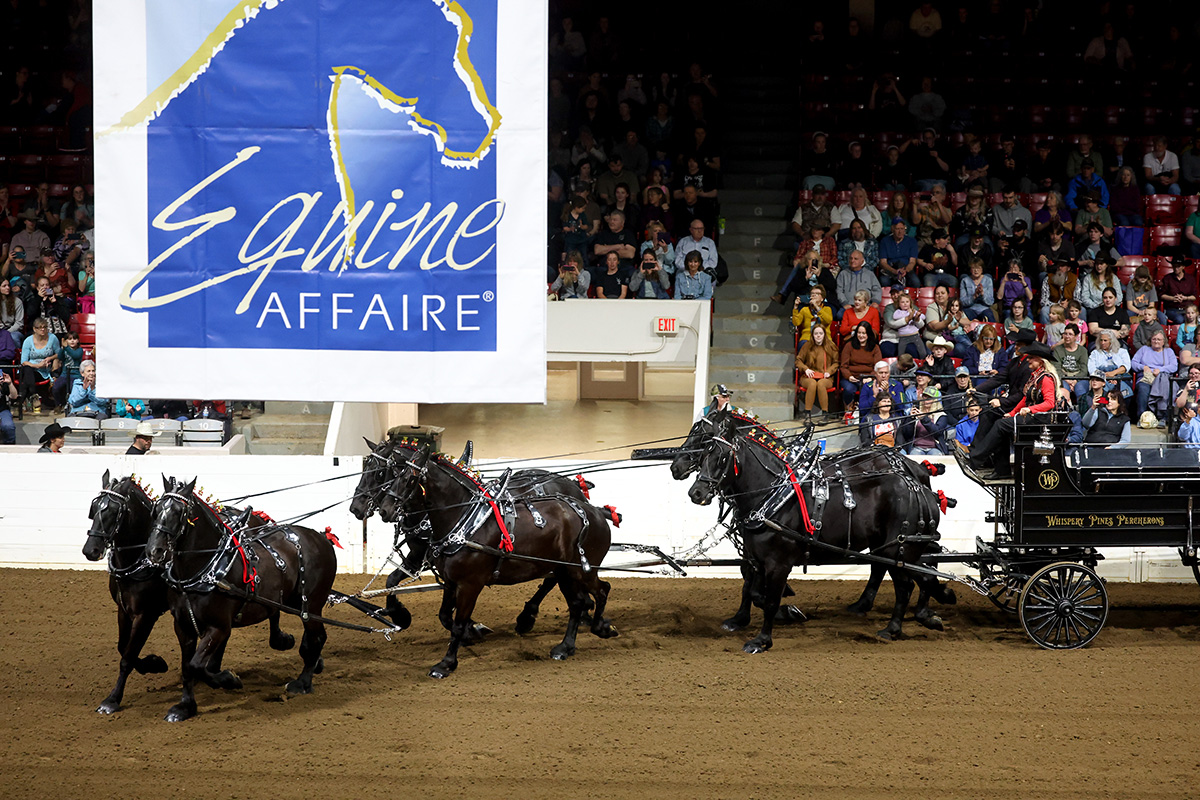
A demonstration at Equine Affaire.
The Whispery Pines Percherons at Equine Affaire. Photo by Winslow Photography

Sam and Kellie have a singular purpose: to introduce and promote the Percheron, demonstrating up close the versatility, grace, and beauty of the gentle giants. Their six-horse hitch and wagon performances have made them fan favorites at Equine Affaire and Road to the Horse. Of course, it’s a monumental task to bring the Whispery Pines Percherons to a four-day event like Equine Affaire, but Sam and Kellie live for these moments.

“We want to share our horses with the world and show people how amazing they are,” Kellie says.

Growing Up With Percherons

Percherons have always been a part of Sam’s family. “My grandfather grew up on a dairy farm with draft horses,” Sam says. “And in 1976, my grandparents, Dick and Dottie Stasiak, established Whispery Pines Percherons. My grandmother came up with the name.”

Sam loved being with his grandfather—plowing and logging with the Percherons. “Grandpa made me his little sidekick,” Sam says. “And my grandmother always knew this would be my life; [she] told me I’ve got something special with these horses.”
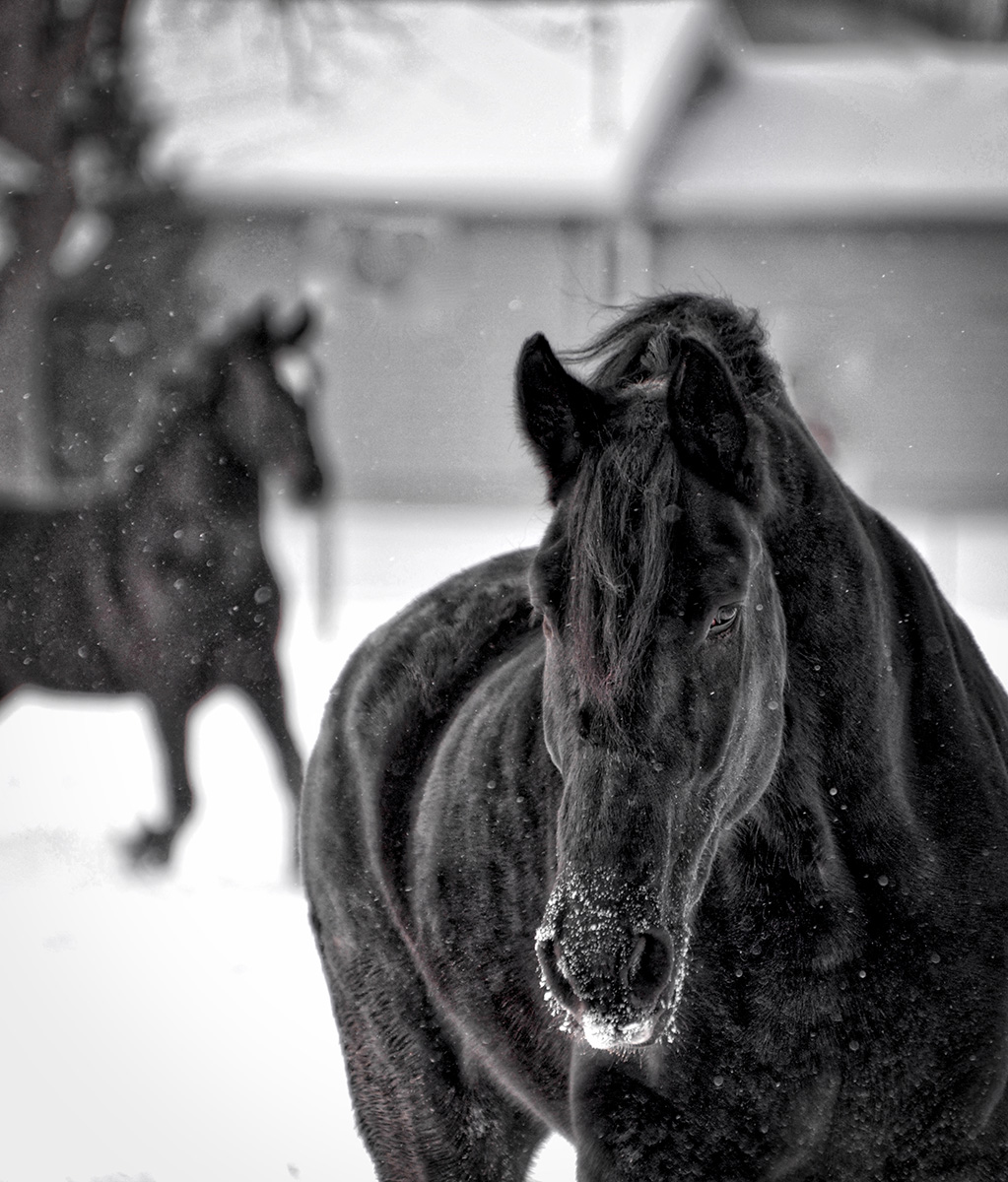
Whispery Pines Percherons in the snow.
Photo by Lori Spellman

At age nine, Sam wanted to play with the Percherons but couldn’t harness them without his grandfather’s help. Undeterred, Sam installed a pulley in the barn rafters, hoisted the harness up and tied it off, walked the horse underneath, and gently lowered it down onto the horse. Sam’s fascination with Percherons has never wavered.

At Whispery Pines, It’s a Family Affair

Kellie grew up riding Quarter Horses, watched Sam and his grandfather show the Percherons at local fairs, and attended the same high school as Sam.

“I’ve always loved draft horses. I was drawn to them, and loved Sam and his grandfather since I was little,” Kellie says.

When Sam was about 16, he was with his grandfather at a show when he realized a Percheron was missing. “I asked Grandpa where Rex was,” Sam recalls. “And he said some young blonde took him. I found Kellie running barrels on my horse, and realized this might just work out.”
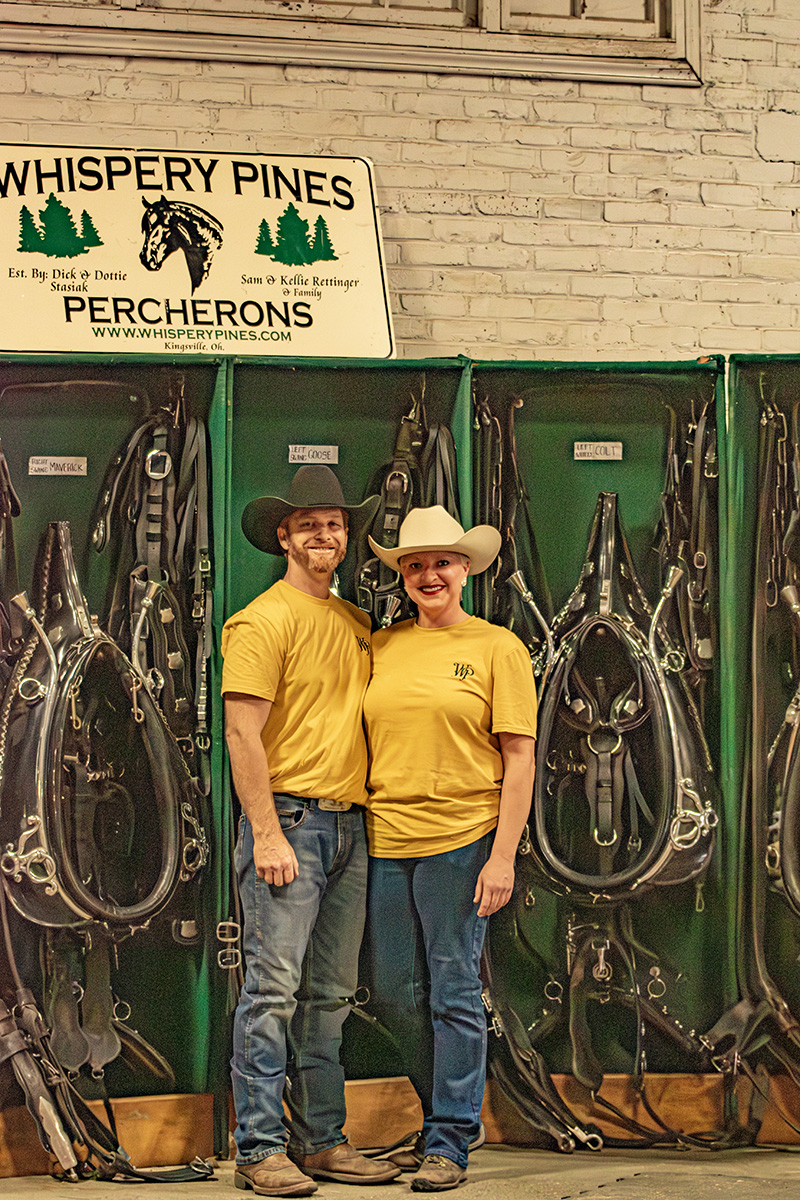
Sam and Kellie Rettinger.
Sam and Kellie Rettinger. Photo by Xenophon Photography

Twenty years later, Sam and Kellie are going strong—happily married and running a multifaceted business. “My biggest passion is Kellie and the horses,” Sam says.

Kellie adds, “I get to be with Sam, doing what we love every single day. The biggest challenge is the huge workload. There’s a lot of moving pieces.”

Whispery Pines Percherons offers carriage rides throughout the year for special occasions, including weddings and funerals. “A horse-drawn hearse—it’s an honor to be able to do that,” Kellie says.

In the winter, Whispery Pines also hosts sleigh rides through the woods to a little log cabin. Kellie also does photoshoots with the Percherons—complete with unique costumes she creates. “This business has taken me in all different directions—ways I never would have imagined—but all to involve the horse,” Kellie says.

Logging With Percherons

For over 22 years, Whispery Pines Percherons has specialized in horse logging and harvesting hardwood timber for private landowners in an eco-friendly manner. Sam explains, “Logging with horses is the lowest impact you can do to remove timber. It’s more of a selective process to regenerate the forest… We lay the tree down in the forest, with as minimal damage as possible, and then cut it into 10- or 12-foot pieces. We remove those logs using a two-horse team and only need a 6-foot-wide 4-wheeler trail.”

Although it’s possible to pull a log with a single horse, draft horses work best as a team. “They have a partner,” Sam says. “And they can handle their body weight times two. A pair of horses is about 2 tons—or 4,000 pounds—so they can handle about 8,000 pounds.”

Harnessing a draft horse requires strength. The collar alone weighs 30 to 40 pounds; the bigger the horse, the bigger the collar. Sam and Kellie can get a pair of horses tacked up and ready to go in about fifteen minutes if the harnessing tack is already fitted to the horse.

Gentle Giants

Percherons are undeniably impressive due to their massive size. Flash, one of the Whispery Pines Percherons, towers at 19.2 hands. Despite their size, Percherons are agile, have high energy, and possess great endurance. Their personality is steady, calm, and easygoing. And their charm is matched by their stunning beauty.

“We call them the classiest of the draft horses,” Sam says. “When we bring them to an event and shine them up, they are the coolest looking horse.”
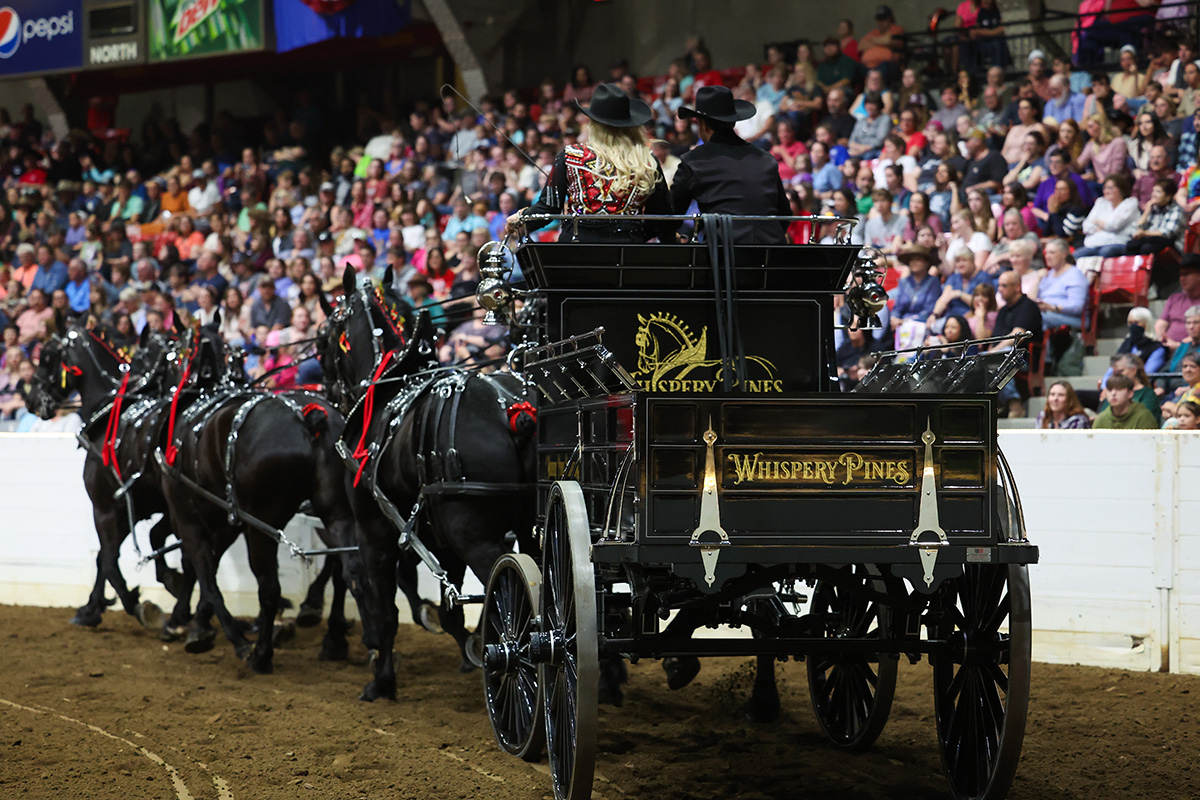
The Whispery Pines Percherons performing.
Photo by Winslow Photography

But Percherons are more than just eye candy to horse lovers. “The love they have for us and what we do is just outstanding. They have the biggest hearts,” Kellie says.

“I love their passion back to us,” Sam says. “The respect you put into them you get back from them… They are ready for the job before we even ask, whether to plow, spread manure, or travel off-site. They are stepping on our toes saying, ‘Let’s go.'”

The gentle personality of these horses attracts attention wherever they go. “They just love people so much,” Kellie says.

Percherons excel at learning. “Usually, if you teach the horse one time, let them think it through, you don’t ever have to go back to it,” Sam says.

Kellie adds, “They are so smart. Sometimes, I swear they know what we’re going to do before we even ask.”

Carrying On the Whispery Pines Legacy

Sam and Kellie’s love of horses and respect for one another is the glue to their relationship, as they joyfully carry on the legacy of Sam’s grandparents.

“It’s really hard work. There’s not a lot of us around that still do this type of family business,” Kellie says.

“These horses are our kids,” Sam says.

The rewards of bringing the Percherons to the public make all the sacrifices worthwhile. “People are just drawn to these horses,” Kellie says. “When we’re performing, I look at the crowd and see that one little girl or boy and watch their face light up.”

Sam adds, “When I was a kid, draft horses were a lot more common. They were in every farm or neighborhood, but not anymore. So the fairs and shows we go to allow kids to meet the breed.”

Whatever your age, it’s hard not to fall head over heels in love with a Percheron!

To learn more about Whispery Pines Percherons, visit whisperypines.com and follow them on Facebook. Then, discover how the Percheron Horse Association of America Education and Charitable Fund supports Percheron clinics and education.

This article about Whispery Pines Percherons is a web exclusive for Horse Illustrated magazine. Click here to subscribe!
How Horses Changed the Life of Bryanna Tanase

0

Bryanna Tanase knows the power of horses can change lives.

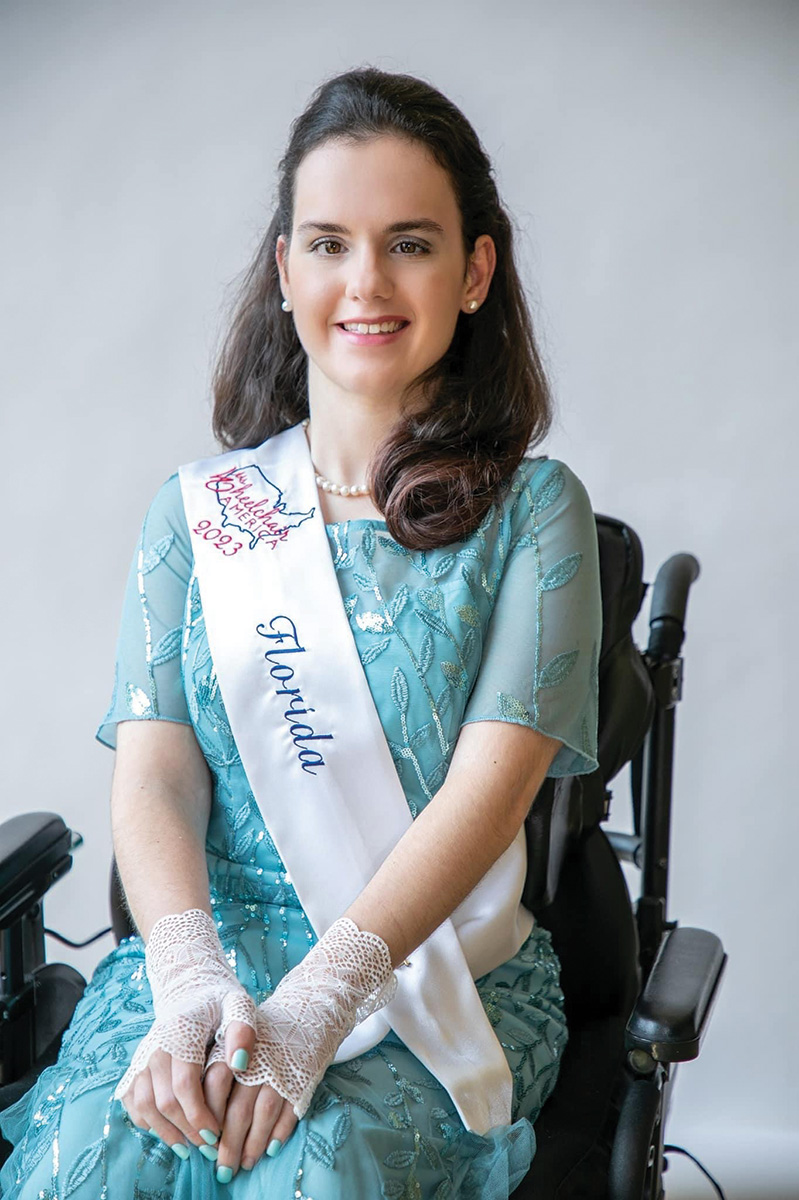
When the native Floridian competed for the title of Ms. Wheelchair Florida, her platform was her passion: “Equine therapy and how it helps people with disabilities.”

A portrait of Bryanna Tanase.
Bryanna Tanase was named Ms. Wheelchair Florida, where being the best advocate for her disability community is the goal. Photo by Melissa Roman Photography

Although the competition sports some of the traditional sash-and-tiara pageant trappings, “It’s not your standard beauty competition,” says Tanase, 26, of Palm Harbor, Fla. “It’s all about who is going to be the best advocate [and being] the best representative you can for the disability community in your own way.”

Finding a Passion for Horses

Tanase, who was born with cerebral palsy, was crowned Ms. Wheelchair Florida 2022, advancing to that year’s Ms. Wheelchair America competition last August. She didn’t win, but as the only equine enthusiast in the field, relished the opportunity to share her message with a national audience.

Her platform speech hit home for at least one person.

“The competitor from Georgia actually messaged me a couple of days ago and showed me a picture of her riding,” says Tanase. “She told me that she wanted to do it ever since she heard me talk about it. I was like, this is the whole reason I talk about it. So many people don’t even know about equine therapy.”

Tanase learned about horses from the ground up. The second-born of triplets, Tanase didn’t grow up in a horsey family.

Her first exposure to horses came during a preschool field trip to a farm, where she was “fascinated” by a palomino pony. She began learning all she could about horses, but in-person encounters were limited mostly to seeing horses and taking pony rides during occasional family outings to a zoo in nearby Tampa.

Bitten hard by the horse bug, Tanase continued to research and read, which is how she discovered therapeutic riding. When she was a high school senior, her parents gave her four lessons at Quantum Leap Farm, a therapeutic riding center in Odessa, Fla.

“That was how I started formally learning how to ride,” says Tanase. “I soaked it up as much as I could, and I still ride there now.”

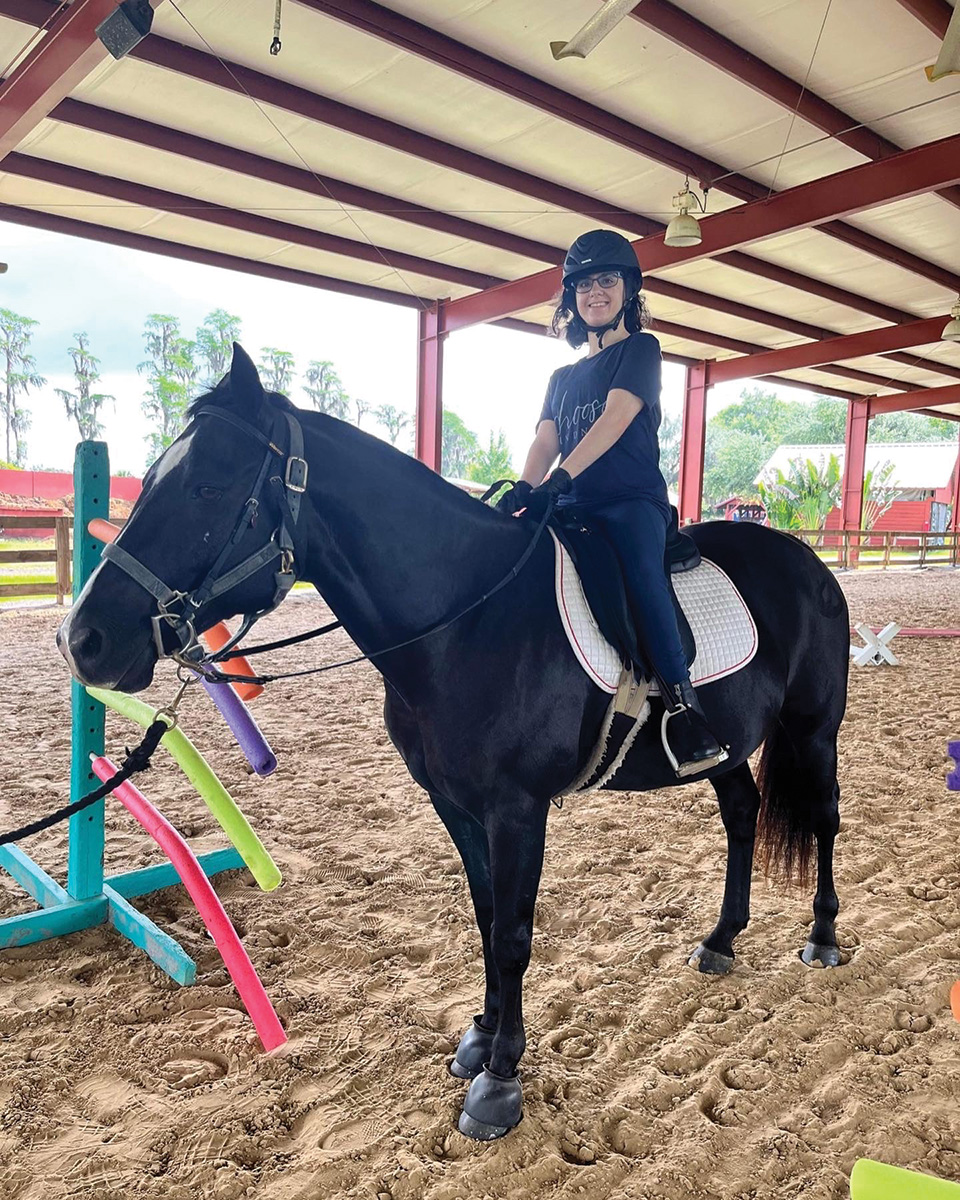
Riding a horse in a covered arena.
Tanase (on Griffin) was bitten by the horse bug and learned to ride at a therapeutic riding facility, but her goals grew much bigger when she discovered competitive para dresssage. Photo courtesy Bryanna Tanase

Para Dressage Dreams

Long before Tanase took her first riding lesson, a competitive streak led her to wonder whether equestrians with disabilities ever attained success in the show ring. Her internet sleuthing turned up videos of well-known para dressage riders like current U.S. star Roxanne Trunnell.

“I watched and was like, yup, I wanna do this,” she says.

Realizing that entering the para dressage ranks required more skill than she possessed, Tanase bided her time.

“[In 2019] I let the staff [at Quantum Leap] know that I was interested in doing more than just recreational riding,” she recalls. That spring, she sat in a dressage saddle for the first time.

Tanase had learned that para dressage athletes must be “classified”—evaluated by trained experts who determine riders’ eligibility to compete—and at which level, or “grade.” The grades and the para dressage tests are based on degree of impairment, from I (most impaired) to V (least impaired).

“I wasn’t sure how to get started,” says Tanase. “[But] I kept trying to reach out to people who could help me.”

One of her emails landed in the inbox of the United States Equestrian Federation’s (USEF) para dressage discipline manager, who informed Tanase that a classification event would be held in Wellington, Fla., in early 2020. Shortly before the coronavirus pandemic took hold, Tanase got classified as a Grade I para dressage athlete.

“I’ve been trying to climb the ladder since then,” she says.

Obstacles Along the Way

It hasn’t been a smooth climb. For starters, a para dressage rider needs a horse, and Tanase doesn’t own one. They also need to compete, and that’s hard to do without sufficient resources.

During the pandemic’s horse show shutdowns, she took advantage of virtual para dressage shows offered by the USEF as an alternative, and submitted video of herself riding a Grade I test. Her score didn’t quite meet the USEF benchmark, and then unfortunately her regular mount, Shane, had to be retired and later passed away.

Finding training opportunities has been another challenge. Quantum Leap’s therapeutic riding instructors have taken crash courses in dressage and do what they can to help Tanase, but the discipline is not their strong suit.

Area dressage trainers are supportive, but obstacles frequently arise, from barns that aren’t wheelchair accessible to horses that aren’t safe enough for a para equestrian. For the moment, Tanase is riding Quantum Leap’s Morgan gelding Courtscroft Diamond Blaze (aka “Khan”), and regrouping to try again.

She hopes to get video of a test with Khan before the end of 2023, and to earn a score that will move her one step closer to making USEF’s list of “emerging” para dressage athletes, which, in addition to opening up training opportunities, would make her eligible for a borrowed-horse program.

Education and Career

Like the majority of adult amateur equestrians, Tanase juggles career obligations with horses. In 2021, she earned a master’s degree in health care administration, and after a couple of years working part-time, she started her first full-time job this fall as an Rx data entry clerk for health insurance companies. She aims to work her way up to a supervisory or management role in health care administration.

Besides the Ms. Wheelchair campaigns and the online pavement-pounding, Tanase has written articles about her para dressage quest and snagged some local TV news coverage. Some of it’s for personal gain, of course—her ultimate equestrian goal is to make the U.S. Paralympic team—but it’s also to continue spreading the message of her pageant platform.

“Being able to ride gives me the opportunity to do things that I wouldn’t [otherwise] be able to do,” she says. “If it weren’t for riding, I wouldn’t have been able to talk to you today or to educate others in the equestrian community about what it’s like being a rider with a disability.”

Physically, emotionally, and psychologically, Tanase believes horses are the best therapy. That’s a platform we can all get behind.

Follow Tanase on Instagram @bt.paradressage.

This article about Bryanna Tanase appeared in the January/February 2024 issue of Horse Illustrated magazine. Click here to subscribe!
How Colorado State University’s Equine Program is Helping Adoptable Horses

0

While students in many higher education equine science centers across the country enjoy hands-on experience with horses, Colorado State University’s program possesses an aspect that truly sets it apart: helping adoptable horses.

Humble Beginnings of The Adoptable Horse Program

The program, first launched as a pilot at the start of the fall semester during the 2017-2018 school year, was the result of a $508,000 grant funded by the Watershed Animal Fund, a division of the Arnall Family Foundation.

Foundation representatives, then overseers of The Right Horse Initiative before it moved to the purview of the American Society for the Prevention of Cruelty to Animals (ASPCA), were just getting started with the Initiative when they approached Adam Daurio, director of the Temple Grandin Equine Center.

“They said ‘We love everything that the Temple Grandin Equine Center is doing,’” says Daurio. “They asked if I thought there was a partnership.”

A Colorado State University works with a horse as part of the adoptable horse program.
The original overseers of The Right Horse Initiative loved everything that the Temple Grandin Equine Center was doing, and saw an opportunity for a partnership. Photo courtesy Colorado State University

He recognized the opportunity at hand.

“I said we’d love to help rehab some of the horses and then integrate them into Equine Assisted Services.”

With the grant secured, funding allowed for facility upgrades and the establishment of a Regional Training Facility for The Right Horse Initiative that initially served just eight horses. Although the number of horses served during the program’s pilot year was relatively small, the impact was nothing of the sort, as it proved without a doubt that the program’s big goals were right on track.

As a direct result of the grant, students enrolled in the university’s equine science program now receive training in the evaluation, handling, care, and training of horses in transition. While this was beneficial, what truly sets the program apart is its commitment, where possible, to placing available adoptable horses into the equine assisted services (EAS) and Certified Horsemanship Association (CHA) homes, thereby filling a previously unmet need for these organizations.

A Colorado State University works with a horse as part of the adoptable horse program.
CSU students work with adoptable horses on skills that can help them succeed in Equine Assisted Services or Certified Horsemanship Association programs. Photo courtesy Colorado State University

The strength of the pilot program has allowed it to expand.

“We had success both of these semesters,” says Daurio. “Then we launched it full time, and it was incorporated into our equine sciences curriculum.”

The program has grown to now serve 15 horses per semester or 30 per year. At first, horses enrolled in the program came from nearby Dumb Friends League Harmony Equine Center in Franktown, Colo. Today, they come from several local ASPCA industry partner rescues.

Heartbeat of the Program

It’s the horses who are the heartbeat of the program, Daurio explains.

“What has made this program unique is that we are providing experiences [for the students] training these horses,” he says. While master instructors teach the courses, it’s the horses who are partnered with the students that play a tremendous role as the students learn about their evaluation, care, and rehabilitation.

A Colorado State University works with a horse as part of the adoptable horse program.
Students enrolled in CSU’s equine science program now receive training in the evaluation, handling, care, and training of horses in transition. Photo by Adam Daurio

Daurio explains that in a traditional class, one instructor works with a small group of students who go into the pens and get the horse assigned to them. Typically, the instructor will use one of the horses as a demonstration horse. Afterward, the students work with their horses on the techniques demonstrated by the instructor.

From the beginning, the main goal of the training was to create horses suitable for placement in EAS. But as other needs became evident, the horses were also trained to become suitable riding lesson partners for the CHA.

As can be expected, not every horse who goes through the program is suitable as a therapy or lesson horse. Horses who, for whatever reason, did not meet the criteria for either program are still trained to become solid citizens for the right adoptable home.

A student works on desensitizing a Mustang gelding.
Horses who don’t meet the criteria for EAS or CHA programs are still trained to become solid citizens for the right adoptable home. Photo by Adam Daurio

Program Selection

Horses for the program are selected by Cayla Stone, instructor for the program, along with several students. Stone and her students visit rescue facilities and evaluate 30 to 40 horses in a day, selecting only the top 15 for inclusion in the program.

“My whole goal for the program is getting the students experience with a variety of horses,” says Stone.

This variety of horses includes young and old horses; untrained or started; non-riding and riding horses. Regardless of whether the horse will be ridden, Stone guides students in selecting horses that can withstand—even if some maintenance is required—the workload of a semester.

A student works outside with a palomino.
A grant from The Right Horse Initative in 2017 helped the Temple Grandin Equine Center upgrade its facilities. Photo courtesy Colorado State University

She attributes part of her success with the horses, students, and program to the involvement of local trainers, clinicians, saddle fitters, massage therapists, veterinarians, farriers, and more who contribute to expanding the knowledge base of her students each semester.

“The business model mandates that each horse come for a minimum of a semester,” says Daurio. “If the horse has succeeded, we then assist the rescue partner, who owns the horse, in offering it for adoption.”

However, if everyone involved agrees that the horse would benefit from more time in the program, a request is made that the owning facility or rescue allow the horse to stay at CSU for a second semester.

Daurio further explains that the program is not just a riding program where the students simply sign up and ride these horses.

“It is a very science-based program,” he says. “The first thing we do with all the horses is a very thorough evaluation. They are weighed, photographed, and veterinarians come in and perform certain health examinations.”

This is done so that the animals coming into the program are appropriately handled, both mentally and physically. Students are taught to accept each horse as an individual, and an early expectation is that the horse they’re assigned may not be rideable, but will instead be trained to be a companion animal.

“We want the students to be scientists and to have animal welfare at the heart of everything they do,” says Daurio.

CSU students help the rescues to market the horses once they graduate from the program. Often this is accomplished via social media blasts using photos and videos of the horses created by the students.

Adoption Success Stories

Daurio is particularly proud that the Temple Grandin Equine Center has adopted five of the horses who graduated from the program to take part in the EAS that the facility offers. Stone has several success stories of her own to share. Some of her students, for example, have adopted their program horses, while two Thoroughbreds took part in the 2024 Retired Racehorse Project Thoroughbred Makeover.

Going forward, the program hopes to capitalize on the growth it has experienced each year and continue to increase the number of horses served by getting them into adoptable homes where they enjoy lives where they are the best version of themselves.

If you are interested in donating to this worthwhile program, visit here.

This article about Colorado State University’s adoptable horse program appeared in the January/February 2024 issue of Horse Illustrated magazine. Click here to subscribe!
Harness Your Monkey Mind: Be More Mindfully Present Around Horses

0

Does time spent with your horse feel more distracted and scattered, rather than present and meaningful? If so, you’re not alone. This is just part of being human and having a mind! And sometimes that mind simply becomes the “monkey mind.”

Our sometimes overactive and easily distracted minds can rob us of precious moments and quality time. The good news is that there are tools and techniques to help pump the brakes on that runaway freight train of thoughts and improve the quality of presence with your horse and in your daily life.

An equestrian harnesses her monkey mind by being present with her horse.
Dropping mental distractions allows us to simply share space and be present. Photo by Cathy Woods

What is the Monkey Mind?

In mindfulness practice, we’ve affectionately labeled the busy mind as the “monkey mind.” Though monkeys are quite cute, they tend to be full of constant, exuberant energy, jumping from one thing to the next. When your mind leaps around like a monkey, you can end up feeling unfocused and exhausted.

When dealing with horses, not only can the monkey mind be annoying, but it can also be quite an energy drain as we overthink and overuse it. Sadly, in our ever-faster-moving world with the constant need to multi-task, we’ve trained our minds to dart around from one thing to the next without pause, which fragments our energy. Dwelling on the past or projecting into the future causes us to miss the present moment, which is where life is happening.

When the mind is all over the place, it can be hard to complete a task, whether at your desk or with horses. In addition to this leading to fatigue, a restless mental state can lead to poor decision-making and could even cause safety issues. It’s in your and your horse’s best interest to make prudent, clear decisions.

Being Present

There’s a lot of talk in horsemanship about collecting your horse, but what about collecting yourself and your thoughts? Since we transmit energy and horses read energy, they often mirror us; when you’re not “present,” neither is your horse. It’s not uncommon for him to become scattered and distracted if you are.

Here’s how this might look on a trail ride: you’re riding your horse and an unrelated, random thought pops into your mind. For example, “What am I going to cook for dinner?”

This takes you completely out of the moment.  Your horse senses this and takes advantage of the opportunity by grabbing a bite of grass, stumbling on a rock, or pinning his ears at the horse next to him.

When you collect your mind, your horse becomes more present as well, and you help him focus his mind and energy too, ultimately making you a better team.

How to Improve Mental Focus

Training the mental muscle is no different than developing other muscles; it takes practice and commitment.

Here are a few practical and easy-to-apply exercises:

1. Become an observer of the mind: Collect your mind, at least somewhat, before meeting up with your horse. You can do this by simply focusing on your breathing for five minutes before going to the barn. This calms your mind. Each time your mind wanders from the breath (and it does!), notice that, and gently direct your mind back to your breath.

2. The count: This simple but beneficial exercise can train your mind to focus on one-pointedness for longer and longer periods.

Close your eyes and slowly count to 10, solely focusing on the number in your mind’s eye (nothing else but that number). Notice—without judgment—how far you get before your mind wanders from the number or a random thought trickles in.

With practice, you’ll be able to get further along before your mind drifts, increasing your ability to focus longer.

3. Use breath and bodily sensations: When you notice yourself coming out of the moment while working with your horse or while riding, tune in to your breathing and your bodily sensations. This helps ground you in the present.

I often say, “Thank the mind for its (many) opinions and come back to the breath and the body!” The breath and the bodily sensations are tools that you always have right in your back pocket that you can use any time you feel scattered.

4. Widen your gaze: We’re often so task-oriented or running on autopilot that we miss what’s happening within us and around us. Simply stand still, look around, and detect all that you can. Notice the details, see the sights, hear the sounds, smell the smells. Getting present is a way to slow down the mental chatter and come into the now.

A woman works with a chestnut mare on the ground.
When the mind chatter slows, there’s just breath, bodily sensation, and the present moment. Then you can partner with your horse in a better way, stepping into his non-verbal world to connect. Photo by Cathy Woods

5. Breathe with your horse: Before jumping right into training or riding, take a moment to breathe with your horse. This gives you both a moment to slow down and set a focused tone.

Place your hand near your horse’s nostrils, on his side, or on his chest, and see if you can sync up your breaths to a slow, steady rhythm. This is calming for both horse and human.

6. Take a mini-meditation: We don’t always have the time or the headspace for a languid meditation session, but a mini-meditation can be just as effective.

Before mounting up or before training, take a moment to be still, come into the present, and deliberately gather your mind and your energy. You and your horse will notice the positive difference this pause makes.

A rider takes a mini-meditation with his horse, an effective strategy for battling the monkey mind.
Horse and rider stop for a pause and a mini-meditation before entering the arena. Photo by Cathy Woods

Note: Some of the above exercises can be done again once you’ve mounted up and as you see fit.

Other Suggestions for Harnessing Your Monkey Mind

If the above exercises are helping but you feel you could use even more support, consider the following ideas.

1. Practice when the waters are calm. The more time you hone the skill of mindfulness on the meditation cushion or yoga mat, the more likely your success will be when trying to slow the monkey mind in daily life, which then becomes second nature when you are around or working with horses.

2. Consider working with a coach. We work with coaches to achieve other fitness, training, and life goals, so why not for our mental goals as well? A meditation leader can be a good resource when wanting to learn the skill of gathering or collecting the mind.

A group of riders at a retreat, focused on harnessing their monkey mind before a ride with their horses.
A group of riders meet up on retreat at Flathead Lake Lodge in Montana with Body, Mind, Equine leader Cathy Woods, taking a few moments to collect their minds before a trail ride. Photo by Cathy Woods

3. Use a program specifically designed for equestrians’ mental needs. For this exact reason, I produced a course with HorseClass called “In the Moment.” This series of short, concise visualizations and exercises can easily be downloaded to your device and can help level up your mental game at the barn, in the show ring, or on the trail.

Key Takeaway

Don’t be too hard on yourself. Our mental focus varies on different days and for different reasons, depending on how much rest we’ve had, what we’ve eaten, what else is going on in our lives, et cetera. In many cases, we’ve conditioned the mind to be busy and overloaded.

A rider feeds her gelding a treat.
Breathing with horses at a Cathy Woods Yoga retreat is one of the Body, Mind, Equine activities used to calm and connect horse and rider. Photo by Cathy Woods

Remember, unlearning an unfavorable behavior can take longer than learning one, so be gentle with your mind. Not only will you feel better and more focused, but your equine partner will also appreciate you learning to harness that monkey mind!

This article about harnessing your monkey mind and being more mindfully present with your horse appeared in the January/February 2024 issue of Horse Illustrated magazine. Click here to subscribe!
ASPCA Right Horse Adoptable Horse of the Week: Frey

0

Welcome to Horse Illustrated’s weekly installment of the Right Horse Adoptable Horse of the Week, offered in partnership with the ASPCA’s Right Horse program. This week’s adoptable horse is Frey! Check back weekly for a new featured horse so you can find your Right Horse.

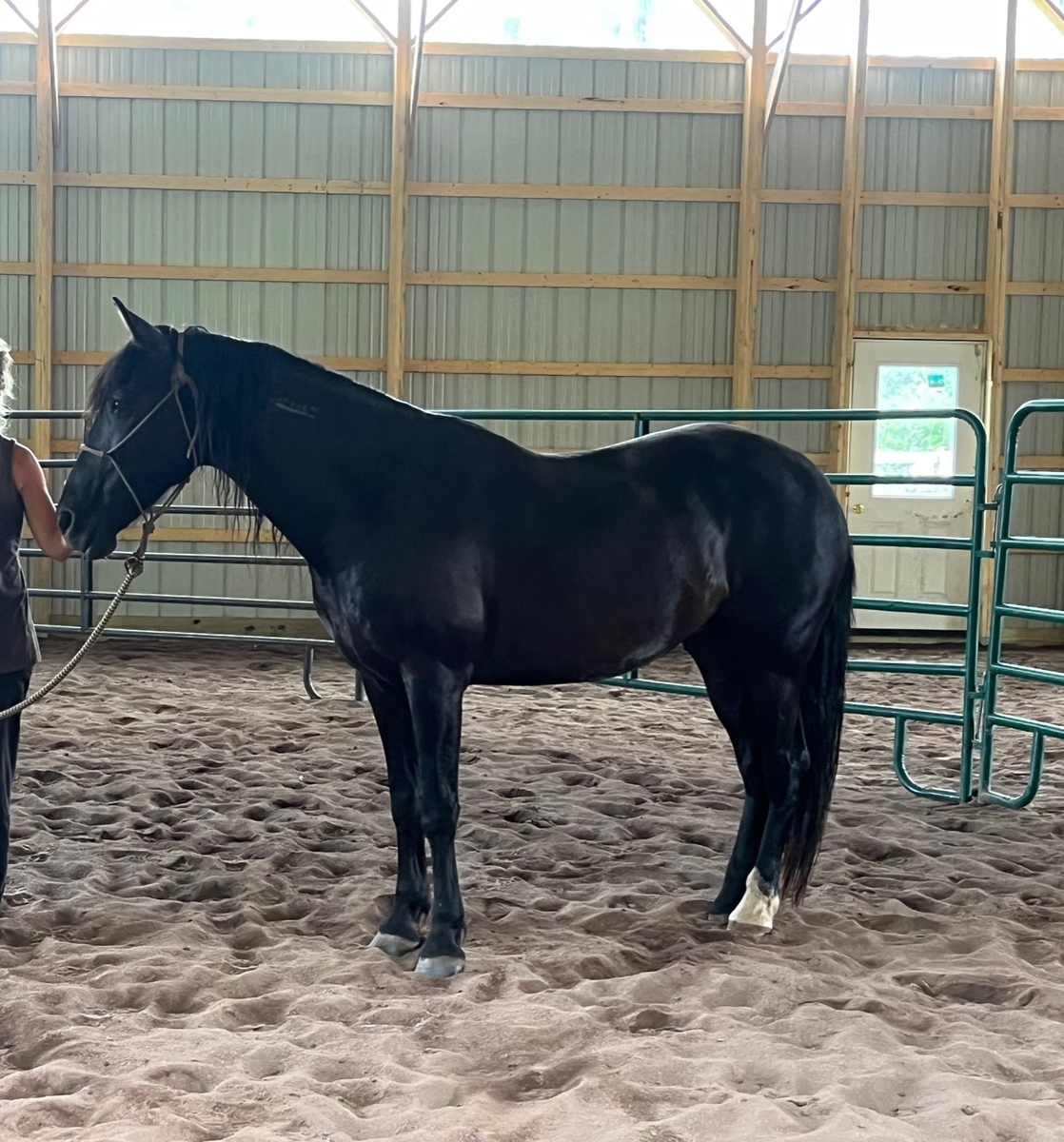
Adoptable horse Frey.
Photo courtesy Mustang Valley Sanctuary

Adoptable Horse: Frey, a 15-year-old, 15.0hh Mustang gelding
Organization: Mustang Valley Sanctuary, West Fulton, N.Y.

Get to Know Adoptable Horse Frey

Frey, a Maverick Medicine Mustang, is a gentle being. He is a willing gelding with an innate dignity. Frey has definite potential as a liberty horse and as a riding horse. He is already comfortable with feet, halter, lead, and is getting acquainted with the saddle. He is a gentleman but likes to snort at new things; Mustang Valley expects Frey to continue to be a quick learner.

He would be an excellent partner to an experienced horse person—particularly someone willing to spend time with this affectionate boy. Frey is a volunteer favorite!

A black Mustang gelding.
Photo courtesy Mustang Valley Sanctuary

Contact Mustang Valley Sanctuary today about ASPCA Right Horse Adoptable Horse of the Week, Frey!

ASPCA Right Horse

My Right HorseASPCA Right Horse is the online adoption platform of The Right Horse Initiative, a collection of equine industry and welfare professionals and advocates working together to improve the lives of horses in transition. A program of the ASPCA, their goal is to massively increase horse adoption in the United States. To find more adoptable horses and foster horses, visit www.myrighthorse.org. To learn more about The Right Horse, a program of the ASPCA, visit www.aspcarighthorse.org.

An Overview of Strangles in Horses

0

Strangles. The name of the disease itself can allude to a terrible demise, but most horses that contract strangles recover with minimal lasting effects. If you’re lucky enough to have never had an outbreak at your barn, unfortunately chances are good you will be faced with one at some point.

A horse with its jaw shaved after being treated for strangles.
Photo by AK Dragoo Photography

Discover the transmission, progression, treatment and possible complications of one of the oldest equine diseases in the world.

An Age-Old Disease

“Strangles was one of the first equine diseases to be described in 1251,” says Katie Flynn, BVMS, Senior Staff Veterinarian-Equine Health & Biosecurity for the United States Equestrian Federation and former Kentucky State Veterinarian.

Though nearly 775 years have passed, it still affects equines globally and remains one of the most diagnosed equine diseases in the world.

“In the United States, strangles is considered endemic, meaning it’s detected regularly in the horse population,” says Flynn.

If you’ve ever had strep throat, you can commiserate with a horse that has strangles; both infections cause enlarged lymph nodes in the head and neck. Strangles can affect horses of any breed or age, but older horses typically show more mild signs.

How Strangles Is Transmitted Among Horses

The Streptococcus equi bacteria that cause strangles are primarily transmitted through nose-to-nose contact with another horse, but the bacteria can also be transferred through feed, water, buckets, stall walls, veterinary instruments, clothes, grooming and barn tools, tack, and trailers.

Nearly any surface can harbor S. equi for a time, which is why strict biosecurity protocols for ill horses are imperative.

“Whatever you touch has the potential to be contaminated, and if not cleaned and disinfected, can transfer the bacteria to a new horse directly or via someone else’s hand to a new horse,” says Flynn.

Before panic ensues, it’s important to understand that S. equi can stay active in water buckets and moist areas for four to six weeks, but the bacteria can only survive for about one to three days in drier areas such as on fencing or in soil, says Flynn.

“Because the organism typically dies quickly in a sunny, dry environment, the usual source of infection is an infected horse,” she explains.

Similar to tracing the transmission of Covid-19, determining when exactly a horse got sick—and from whom—can be nearly impossible. The time between a horse’s exposure to the bacteria and the onset of clinical signs can be anywhere from three to 14 days, says Flynn.

Progression of Strangles in Horses

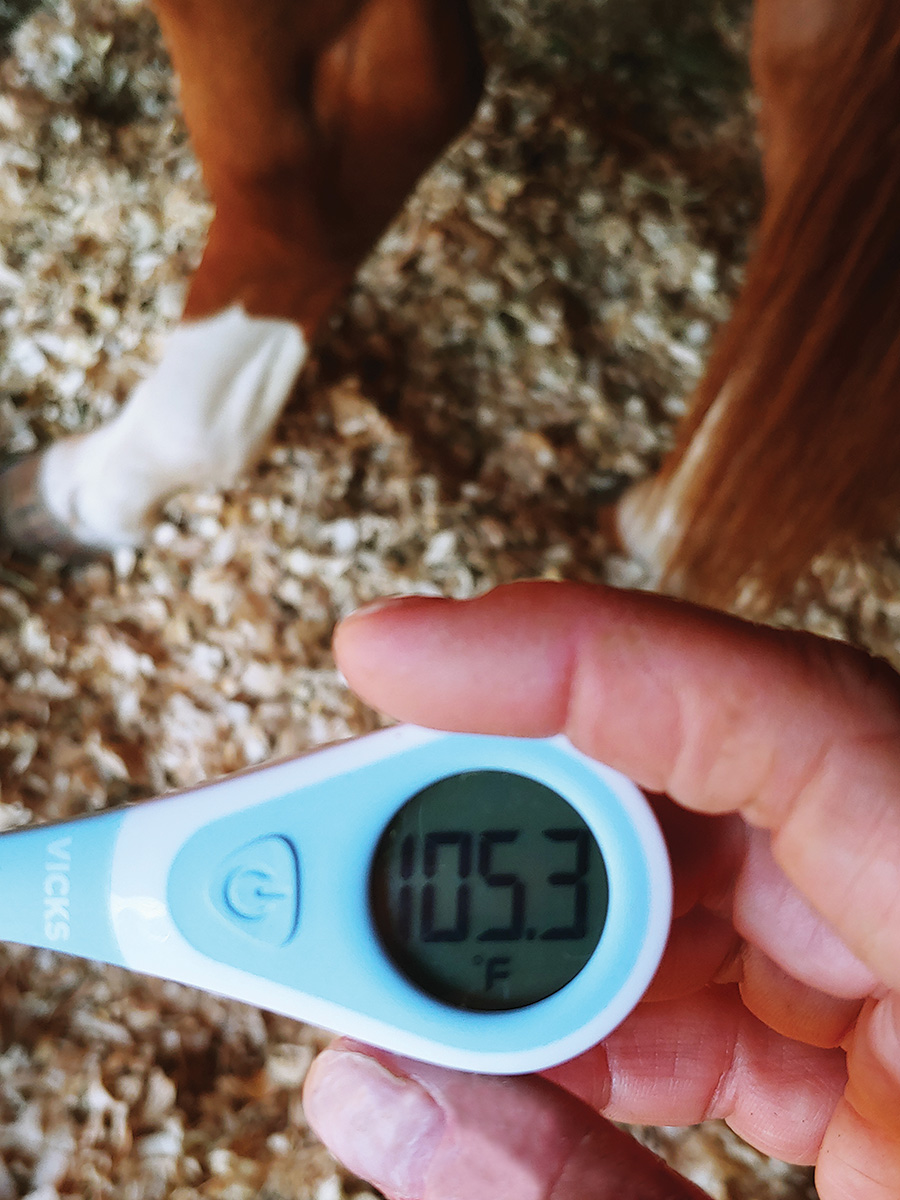
Though most horse owners associate a snotty nose as the first indication that a horse may have strangles (or another bacterial or viral disease), the first sign that something is amiss can actually occur 24 to 48 hours before in the form of a raised temperature.

If the fever is caught before a horse develops a snotty nose, a strangles outbreak can be minimized if that horse is immediately isolated from all other horses. It’s important to remember that an elevated temperature is when it goes up from that particular horse’s baseline, and not solely when the temp rises above the standard 101 degrees Fahrenheit.

A thermometer reflecting a high temperature of 105.3.
An elevated temperature (above 101 degrees Fahrenheit) can be the first clinical sign of a strangles infection. Photo by Sarah Coleman

“If there’s a jump, even if it’s still within the ‘normal’ range, the horse should be moved to an isolation area,” says Ashley Boyle, DVM, DACVIM, associate professor at the University of Pennsylvania’s School of Veterinary Medicine New Bolton Center.

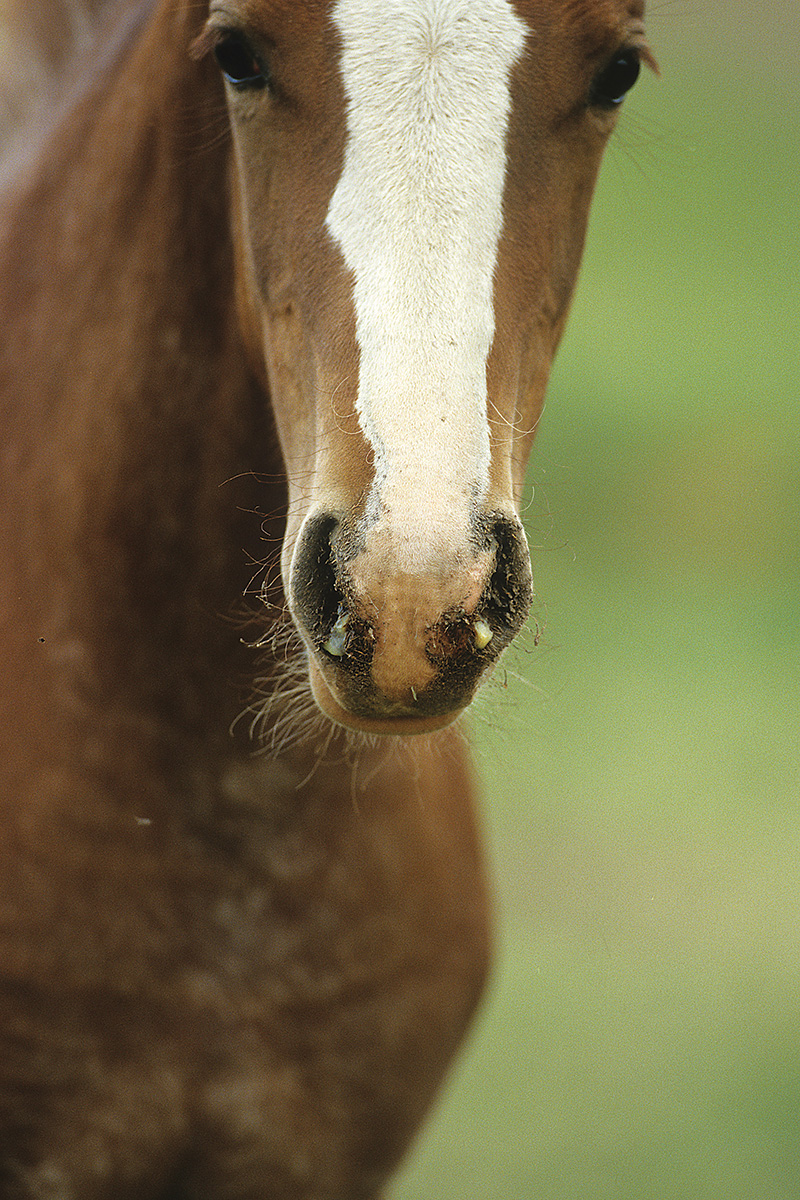
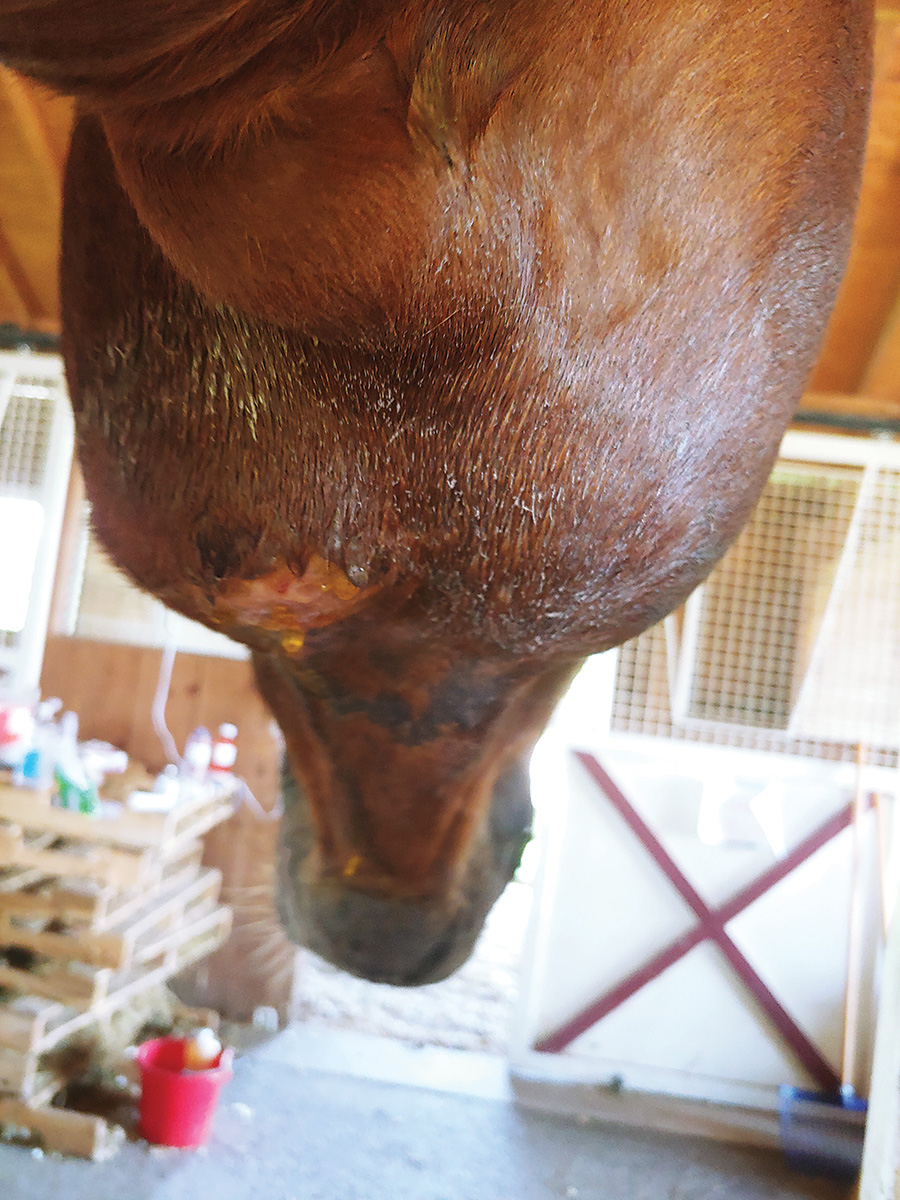
As the disease progresses, so too will the horse’s clinical signs; his temperature will rise, often alarmingly. Thick, yellow nasal discharge is often seen, and the horse may have swollen lymph nodes under his jaw and around his throat latch.

Mucous coming from a foal's nostrils.
Thick, yellow nasal discharge is often a precursor to abscesses appearing in the throat latch area when a horse contracts an S. equi infection. Photo by Bob Langrish

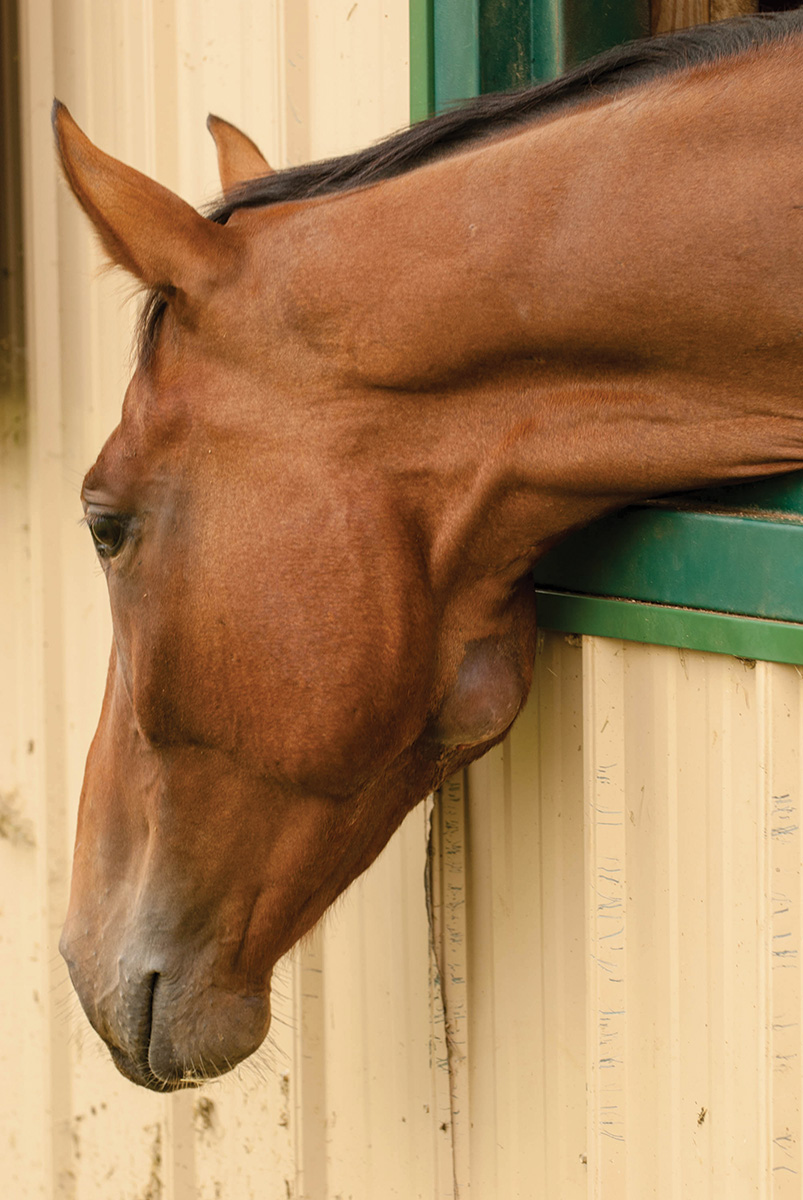
“When the infection involves lymph nodes above the airway, horses adopt an extended neck posture and may cough,” says Flynn. Other signs of illness can include poor appetite, foul-smelling breath, lethargy and loss of condition.

A vet caring for a horse that is suspected of having strangles will perform a nasopharyngeal swab or a nasopharyngeal wash on the horse. The nasopharyngeal swab is extremely similar to a Covid test: A piece of cotton is passed up the nose, rubbed around the nasal passages, and sent for testing. A nasal wash is like a neti pot for horses; the vet will run a thin tube up the horse’s nose, flush sterile saline into the tube and catch what runs out the other nostril. This fluid is then tested. 

A polymerase chain reaction (PCR) test is the test most used to detect strangles; it detects S. equi bacterial DNA. Culturing the secretions is also a possibility, though this is not as rapid or as sensitive a form of testing.

Some vets will perform a blood test to measure serum antibody levels, but this test is not useful in detecting current infection.

“However, paired serum samples taken two weeks apart can be useful in recognizing recent exposure,” says Flynn.

Treatment of Strangles

There is not much that can be done for a horse with strangles except supportive care while the infection runs its course.

This may involve administering anti-inflammatories to lower body temperature or feeding the horse wet feed or hay from the ground. Feeding in this manner will make the food easier for the horse to swallow, as well as encourage abscesses to drain. A hot compress placed on abscesses can encourage them to burst.

Abscesses under a horse's jaw from strangles.
Hot compresses can help drain abscesses in the lymph nodes above the horse’s airway, but the disease generally must run its course. Photo by Sarah Coleman

Some vets administer antibiotics to strangles-exposed horses as soon as they have an elevated temperature to prevent abscess formation. This practice is controversial, as the antibiotics may allow the horse to be re-infected with strangles the next time he is exposed.

Strangles bacteria can hide in a horse’s guttural pouches, which are sacs of air located on either side of the horse’s head. These pouches are designed to cool the brain, ensuring that the blood near the brain is below the horse’s core body temperature, especially during exercise.

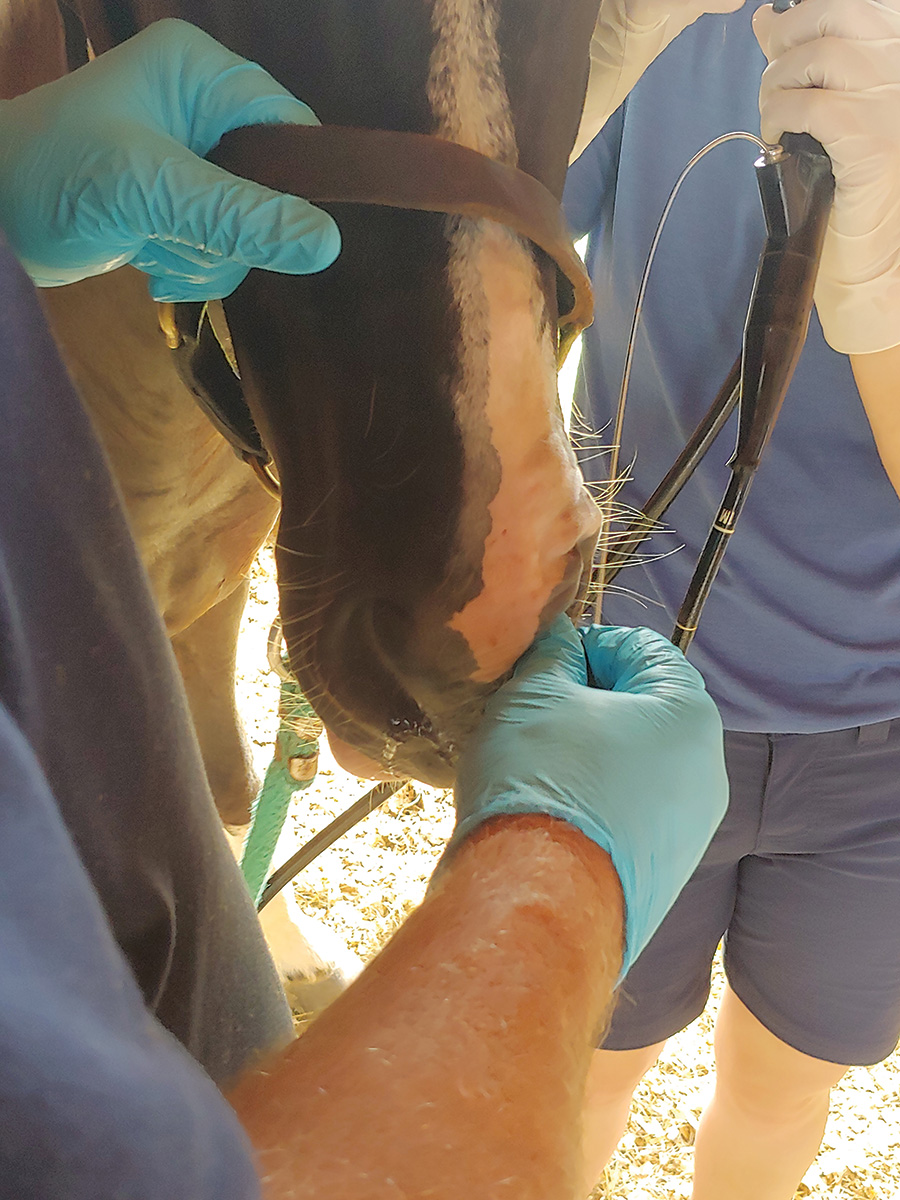
A horse with strangles will need to have his guttural pouches scoped before he is considered free from the disease. Scoping involves threading a long, flexible rod with a camera up through the horse’s nose and examining the pouches. This flexible rod can also be used to administer antibiotics into the pouches if strangles bacteria is discovered.

A horse being scoped before he can be considered “cleared” of strangles.
A horse must be scoped before he can be considered “cleared” of strangles; if S. equi is discovered, antibiotics can be delivered into the guttural pouches during the scope. Photo by Sarah Coleman

A small basket can also be placed on the end of the rod to remove chondroids (dried pus) that may be found in the guttural pouches. A horse must be free of bacteria and chondroids, as well as have multiple negative nasal washes or nasal swabs, to be considered “clear” from the disease.

Strangles Vaccine

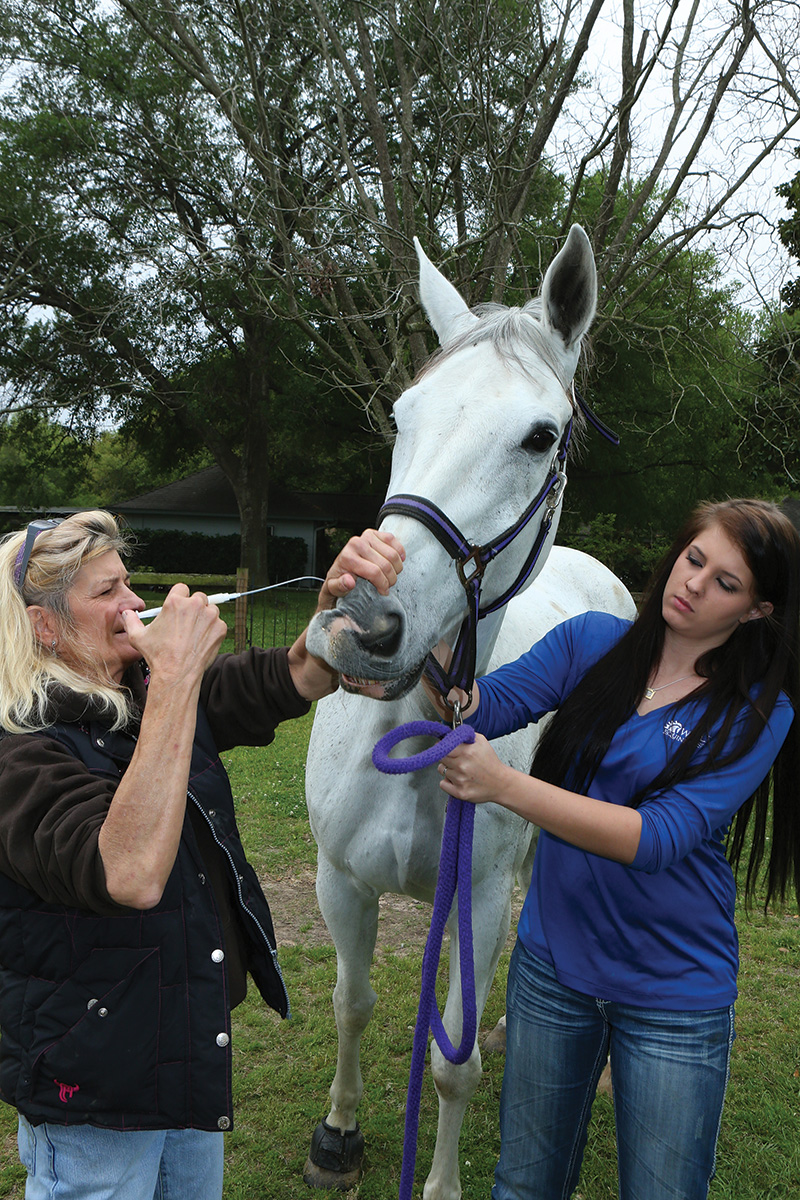
There are two types of strangles vaccines available: intramuscular (IM) injection, which is given like a traditional vaccine, and intranasal, which is misted up the nasal passage and provides mucosal protection, as well. It’s important to remember that vaccine administration does not mean the horse will not get sick; it simply means that the horse will have less-severe disease presentation.

“I do not recommend that every horse get the strangles vaccine,” said Boyle. The vaccine is really only needed by competition or trail horses that are regularly exposed to unfamiliar horses or for horses that live with horses that regularly travel, she notes.

A horse receiving the intranasal strangles vaccine.
An intranasal vaccine is available for strangles, although vets do not recommend it for every horse. Photo by Bob Langrish

Horses that have been exposed to a strangles outbreak should wait at least one year before they’re vaccinated with either the intranasal or intramuscular vaccine. Some horse’s immune systems can be overstimulated by the vaccine and the animal might develop purpura, says Boyle.

Purpura hemorrhagica is swelling of the blood vessels in the head, neck and abdomen. Most cases are mild and are treated with antibiotics and corticosteroids.

It’s important that horse owners understand that vaccination alone is not effective, says Katie Flynn, BVMS, Senior Staff Veterinarian-Equine Health & Biosecurity for the U.S. Equestrian Federation. “Vaccination may be an effective method of disease control in individual [horses] and herds when used in conjunction with a biosecurity plan.”


Complications

“Equine strangles is a disease with a high morbidity rate, meaning many horses on a premises may become ill with the disease,” explains Flynn. “But approximately 98 percent of horses recover after several weeks in the acute phase of disease. Death due to strangles is not common.

“Inflammation associated with lymph node abscess formation and rupture may cause obstruction of the upper respiratory tract, hence the name strangles,” she adds. Damage to the nerves near the abscess may result in the horse having difficulty breathing; further damage can make it difficult for the horse to eat.

One of the scariest complications of strangles is its bastardization, where abscesses may occur in multiple sites, including the brain, abdomen and mammary glands. Additionally, cases of S. equi pneumonia have been known to occur.

Should Anyone Be Notified If Your Horse Has Strangles?

Strangles is considered a “reportable” disease in most states, meaning that the state veterinarian must be made aware of a positive test result (this is the responsibility of the testing laboratory or the veterinarian, not the horse owner).

From there, the disease is classified as either “reportable actionable” or “reportable monitored,” according to Flynn.

“In the majority of states, strangles is ‘reportable monitored,’ meaning no regulatory action is taken by state officials, but they do monitor the detections to determine if there is an increase or decrease in prevalence or a change in geographic distribution,” she says. “Very few states take regulatory action such as quarantine, testing and required biosecurity measures.”

There are multiple reasons why strangles may not be “reportable actionable” in a state. This can range from lack of state regulatory resources to do things like implement quarantine, the challenges associated with releasing a quarantine (and the testing that must take place to do so) or the state’s equine industry may not have requested or does not support enforceable action for the disease, says Flynn.

The fact that the disease is not deemed “actionable” in many states should not in any way indicate that the disease is not serious, says Flynn.

“Strangles can pose significant risk to the individual equine, the herd, and the national equine population if proper biosecurity protocols are not followed.”

Containing an Outbreak

There are three keys to containing a strangles outbreak, says Boyle. These are taking temperatures, isolating and separating.

A gelding in an isolated stall.
Any horse with strangles must be isolated. Avoid cross-contamination from hoses, buckets, manure forks and other equipment to avoid spread of disease. Photo by EdNurgAdobe Stock

The ability to detect a sick horse by any deviation from his “normal” temperature will give farm owners 24- to 48-hour advance notice that the horse may have strangles. Once the horse is identified, if he’s immediately moved (isolated) and separated from not only his neighbors, but also from staff who may interact with multiple horses, the likelihood of minimal farm impact increases.

The isolation area need not be fancy, Boyle stresses—it just needs to be effective.

“Even if it’s a shed that’s got a gate to separate them, it’s better than nothing,” she says. “Even better would be to have a paddock as a barrier in between affected and unaffected horses.

“I deal with farms all the time that say, ‘Well, everyone is exposed because I had one horse test positive,’” says Boyle. “This truly isn’t the case. Every horse may be minimally exposed, but I have successfully minimized outbreaks by immediately isolating the horse. The ‘everyone is exposed’ mentality is not the way to go—you’ll deal with a much longer outbreak and have more horses with complications that may also turn into potential carriers afterward. What you do up front [to isolate and separate] can really limit the outbreak.”

In addition to being proactive about isolating horses that are sick or that may become sick, all other traditional biosecurity measures should be in place: not sharing buckets, tack or equipment; handling the ill horse last (and preferably by just one staff member), and paying scrupulous attention to details like ensuring hose ends aren’t dipped from bucket to bucket.

Key Takeaway

Though not often deadly, strangles presents a unique set of issues related to the ease with which it’s transmitted and the delay in symptom onset. Keen attention should be paid to all horses that travel off the farm and daily temperature-taking should be incorporated into every horse’s daily health check.

This article about strangles appeared in the November/December 2023 issue of Horse Illustrated magazine. Click here to subscribe!
Colorado Horse Rescue Launches HorseAlert in California to Facilitate Equine Evacuations

0

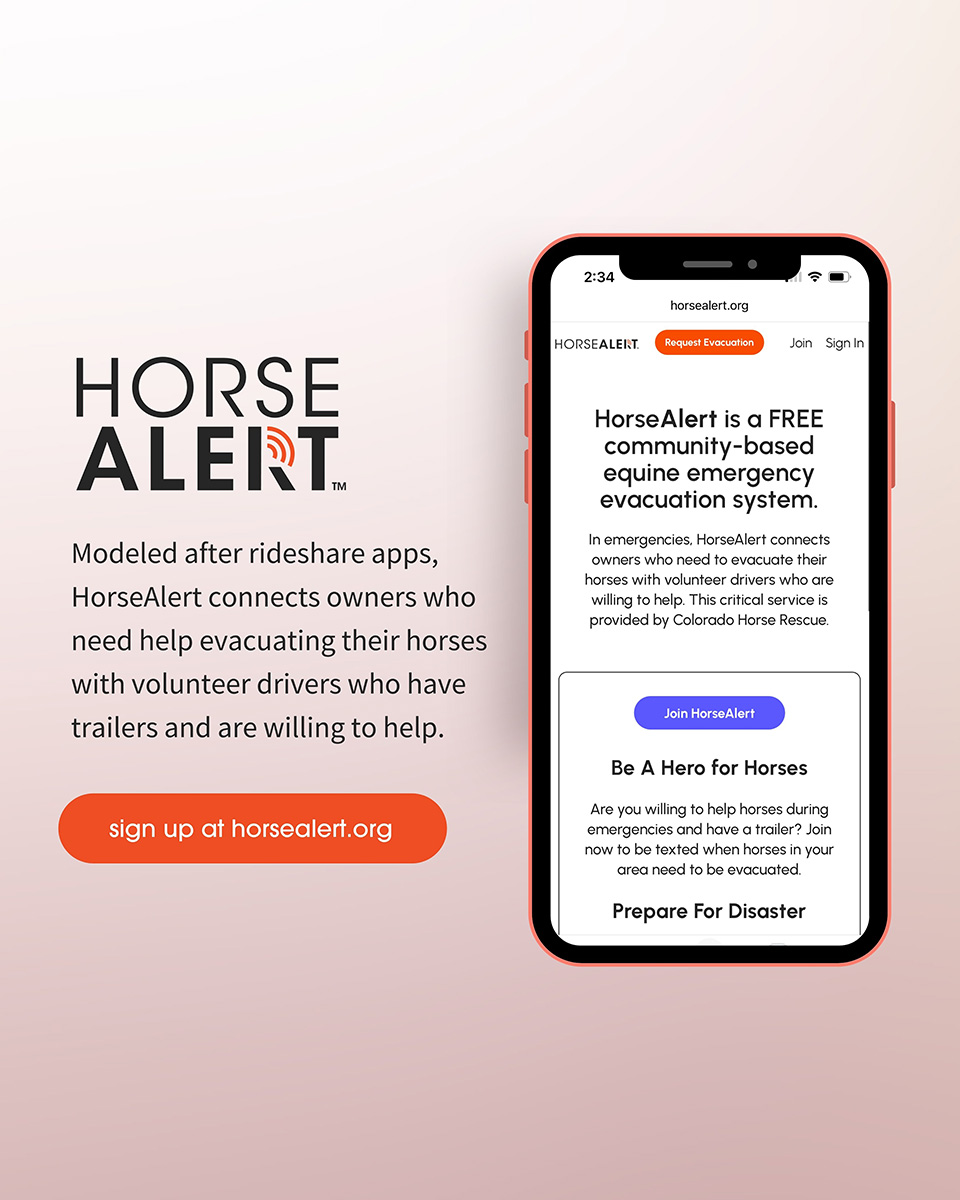
Colorado Horse Rescue (CHR) expands its lifesaving HorseAlert system to California to help horse owners evacuate safely during natural disasters. This free, community-powered platform connects horse owners in need with volunteer trailer drivers.

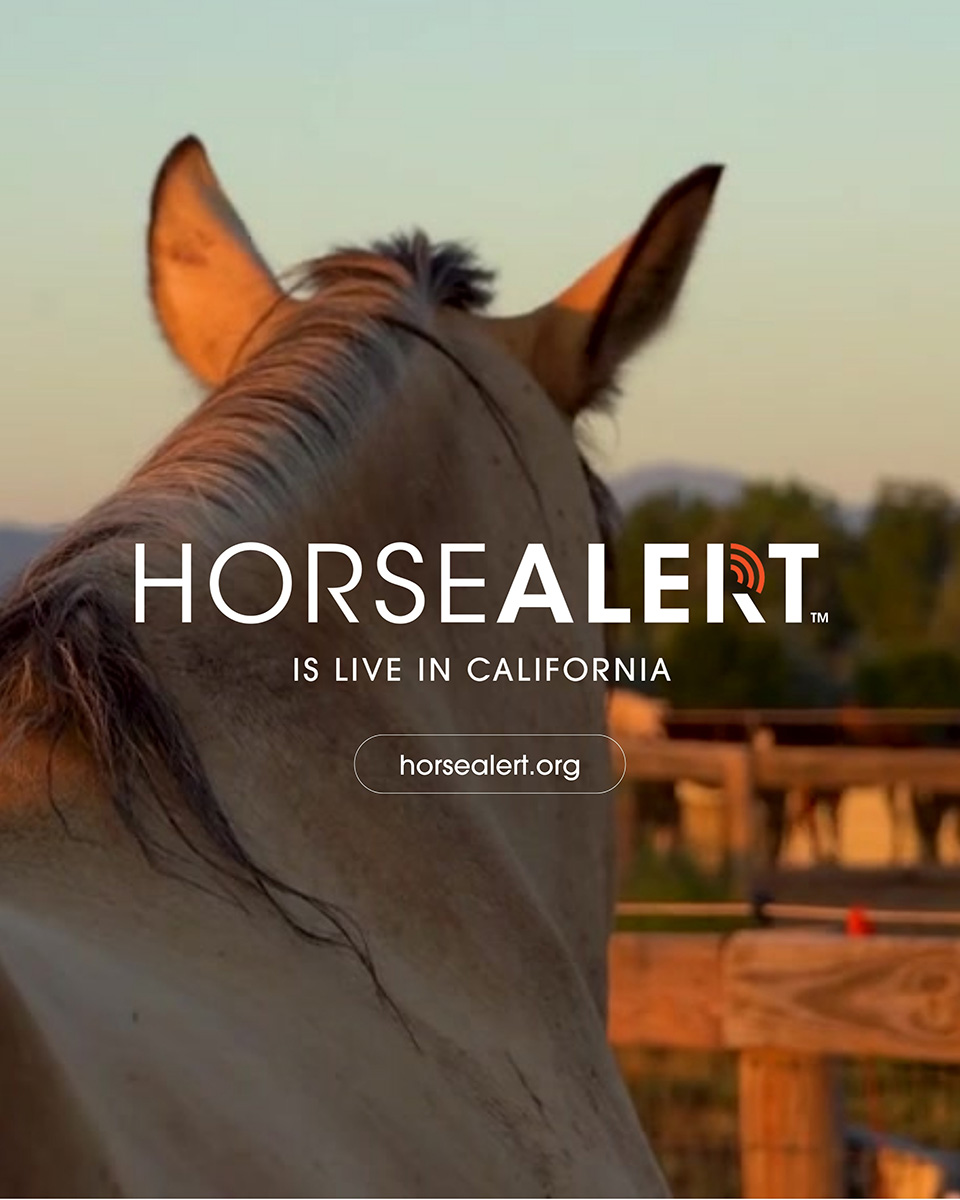
HorseAlert California graphic.

How HorseAlert Works:

  • Horse owners and drivers can sign up for free at horsealert.org.
  • Modeled after widely used rideshare apps, HorseAlert connects those in need of evacuation with local drivers who are prepared to assist.

Why It Matters

When disaster strikes, horse owners are often left scrambling to find evacuation assistance through social media posts, which can lead to chaos on the roads. While the equine community’s generosity is unwavering, these disorganized responses result in unnecessary traffic, which delays evacuations, wastes valuable time, and endangers both human and animal lives. HorseAlert creates an organized, efficient way to evacuate horses, reducing traffic and chaos.

We Need Your Help

  • Trailer drivers: Join now to be texted when horses in your area need to be evacuated.
  • Horse owners: Register now to be ready when disaster strikes.

Tips for Horse Owners:

  • Evacuate early to avoid delays.
  • Practice loading your horse into a trailer.
  • Have emergency supplies ready.

HorseAlert California graphic.

About Colorado Horse Rescue

Founded in 1986, Colorado Horse Rescue is a 501(c)(3) nonprofit that works continuously to reimagine what’s possible and create a reality where safe solutions exist for every horse.
Learn more at www.chr.org.

— Edited Press Release

Vet Adventures: Big Angus, Part Two

0

In last week’s column, Dr. Diehl had just finished drawing blood to help determine the cause of Angus’s stubborn weight gain that no diet seemed to help. Angus, a Quarter Horse, is the beloved childhood horse of Lily, whose mom, Greta, is now caring for him—although Lily still drops by from college to check in on him now and then.

Dr. Diehl suspected Cushing’s disease or equine metabolic disease could be at play. After the blood draw, however, Angus wouldn’t stop bleeding from the jugular vein long after the needle was removed. His gums were covered in purple splotches, called petechia, a sign of leaky blood vessels.

Find out what happens to Big Angus in this edition of Vet Adventures.
Photo by Rory/Adobe Stock

“What would cause that?” Greta asked anxiously.

“There are a few possibilities,” I said. “Liver disease, blood parasite, even cancer. There could be an infectious disease causing it, but we usually don’t see it in this region of the country. There are a few genetic diseases that could explain it, but those usually manifest much earlier in life. The bloodwork will hopefully answer a lot of questions.”

No Easy Answers

The bloodwork answered a few questions, but all the tests for infection, liver problems, infectious diseases and parasites of concern were negative. Angus had a very low platelet count, and he also had high insulin levels and Cushing’s disease, neither of which explained the low platelets or the bleeding.

I consulted with the specialists at the University, and their suspicion was cancer.

I ultrasounded Angus’s belly and chest but didn’t see anything abnormal, tapped his belly and found normal abdominal fluid, and even performed a rectal exam, which was also normal.

I ran a fecal on normal manure, and tested normal urine. I was stumped.

Angus continued to decline, and when I returned the next day, I could see a line of edema (swelling caused by trapped fluid) forming on his lower abdomen. He was weaker, but still wanted his food and was still passing manure normally.

I carefully gave him several injections of steroids, vitamin K, and a medication to help the blood start to clot. I had no idea what I was trying to treat, but I had to try something.

The First Clue

The next day was even worse, and I was starting to fear that we were going to lose Angus to this mystery killer. I was listening to his chest and wincing at the new crackles and rattles in his lungs when Greta handed me the phone.

“It’s Lily. She wants to talk to you.”

I slowly took the phone. Lily had trusted me with the care of her best friend for her entire life, and I was about to completely let her and Angus down.

Lily was crying into the phone. “It’s bad, isn’t it?”

“I’m afraid it is, Lily.” I said gently. “I’ve tested him for everything we can think of but he’s getting worse, and I don’t know what’s causing this.”

I was only half-listening as Lily described everything that Angus had done and everything that she had done just 10 days before when she was home.

Then I heard her say, “I really thought the supplement was helping him,” and I suddenly remembered that her roommate’s father was a horse trainer.

An Answer, at Last

“Lily, what supplement? Did you put him on something?”

“It’s supposed to help with weight loss. My roommate’s dad suggested she give it to me.”

Greta retrieved the small plastic tub. I sniffed the odorless white powder, shook some out on the table and finally stuck my finger into it and tasted it. It was horribly bitter, but suddenly I knew exactly what was wrong with Angus.

“Greta, I’m no pharmacologist, but I’d know aspirin powder anywhere. When did he last get this?”

Greta was shamefaced. “This morning,” she whispered. “We thought it was just herbs.”

It was a rare reaction, but a well-documented one. The aspirin was destroying Angus’s platelets, and we had to get him off it immediately.

The lab confirmed that the powder was aspirin, and I put Angus on some oral medicine to help his stomach recover. For almost a week, there wasn’t much change. But then he slowly started to get better.

I started the Cushing’s medicine as soon as I dared, and kept a gimlet eye on his platelets, but they were steadily rising.

There for Each Other

One day I was pulling my stethoscope away from Angus’s chest when a tall blur with wild black hair leaped at me, crushing me in a bear hug.

“I almost killed him,” Lily sobbed. “He’s really going to be OK?”

“He’s really going to be OK. And no more powders from horse trainers, understand?”

Lily was now haltering Angus.

“I promise, Dr. Diehl. And I’m staying home to take care of him.”

I watched them walk slowly down the driveway, their heads together as though they were sharing secrets. Angus’s ears were pricked forward in delight and his neck was arched.

He still had his girl to raise. And, despite his ordeal, I knew without a doubt that he was going to be OK.

This conclusion to Angus’s story appeared in the January/February 2024 issue of Horse Illustrated magazine. Click here to subscribe!
Equine Sedation 101

0

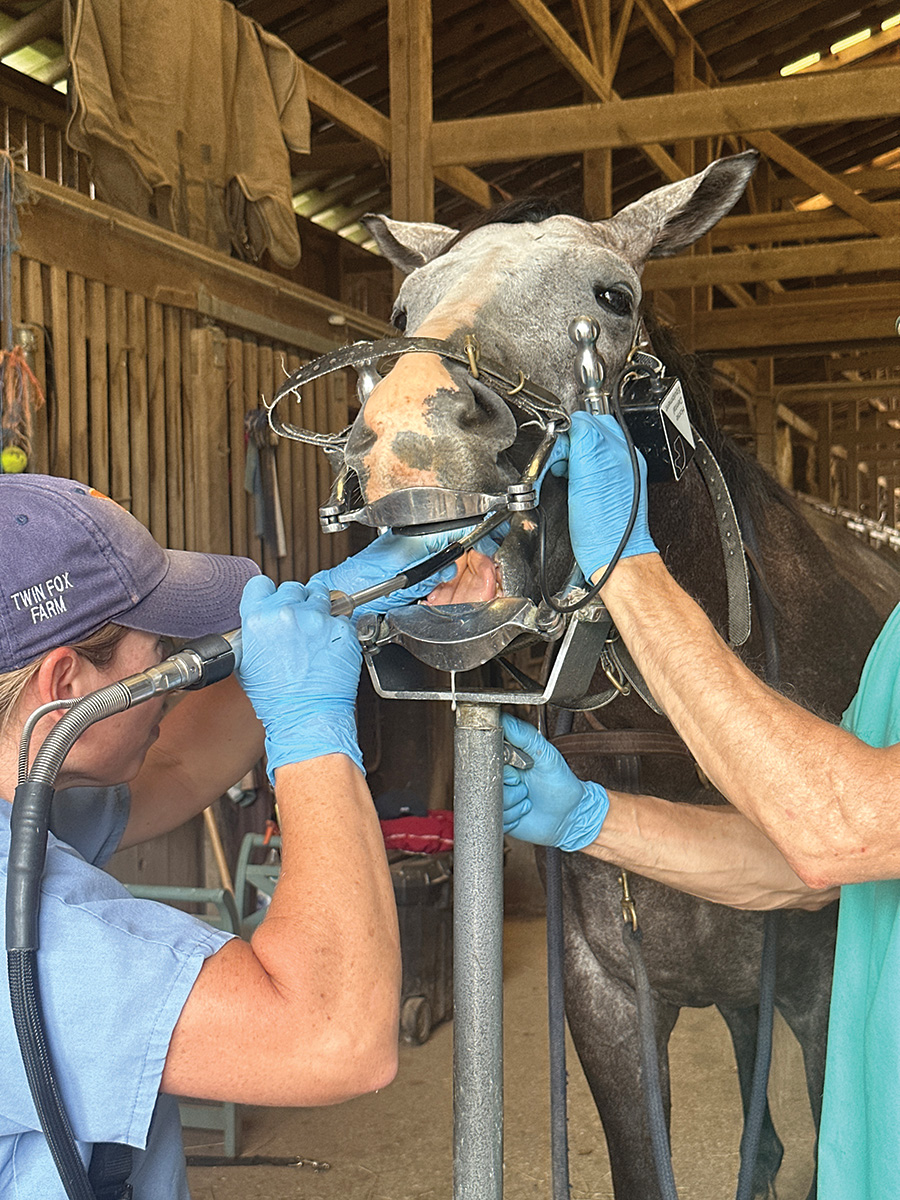
It’s likely that at some point during a horse’s life, he will need to be sedated, either for a routine procedure like a dental float or sheath cleaning, or possibly for a serious health issue that requires the horse to remain still to receive veterinary care. Equine sedation works along the same pathways sedation does in humans: by disrupting communication in the nervous system and slowing down brain activity. The administration of sedatives alters the horse’s level of consciousness and his ability to perceive what is happening to him and around him. A sedated horse will be quiet and should react minimally to stimuli, which is critical for keeping him, the veterinarian and others around him safe.

Standing sedation is the type most often used on the farm for calming a horse while keeping him upright.

“Basically, we’re taking the edge off,” says Magdalena Niedermeyer, DVM, of Burnt Fork Veterinary Clinic in Stevensville, Mont. “The horse is still standing, but he seems drunk. Sedation is not anesthesia, so if a horse really doesn’t like something, he can still tell you while sedated.”

A gelding receiving dental care.
Standing sedation is frequently used for both routine and emergency equine veterinary procedures to keep the horse and everyone around him safe. Photo by Shoshana Rudski

Horses are often given a mixture of drugs instead of just one to ensure they are not a threat to themselves or those around them during the procedure. The type and amount of each drug used will depend on the horse’s size, state of mind at time of sedation, and how long the horse will need to remain sedated. Horses that are more anxious at the time of delivery may require more drugs than a horse that is calm.

How Equine Sedation is Administered

There are multiple ways to sedate a horse, but the bottom line is that the more quickly the drug gets into the horse’s bloodstream, the more rapidly he will become sedated.

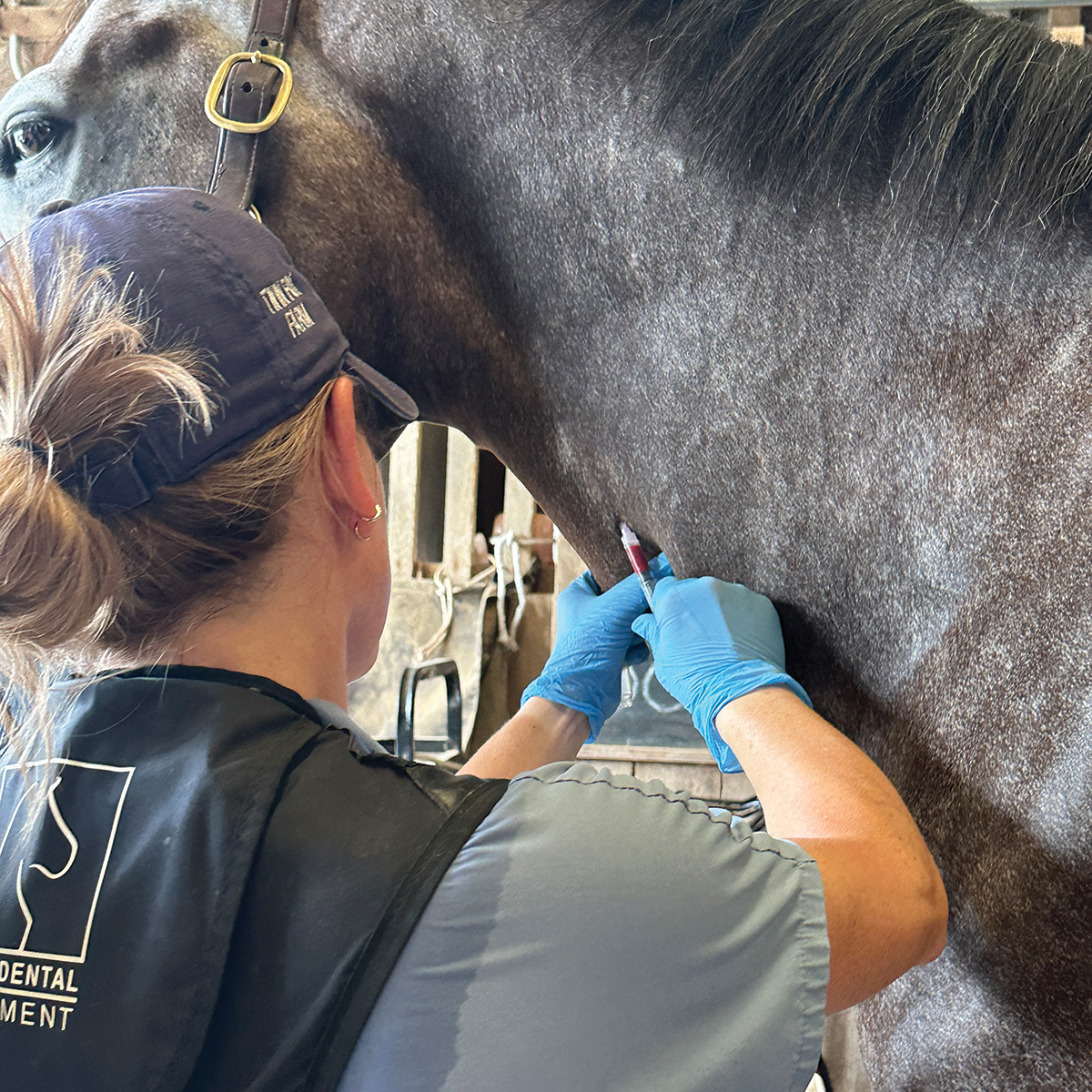
Often the drug and administration route are chosen by a veterinarian; vets will often discourage horse owners from administering injectable sedation on their own. While this is because a good portion of horse owners don’t know how to administer drugs properly, it’s also related to the type of drugs being used.

Equine sedation being administered to a horse.
Vets will often discourage horse owners from giving IV sedatives because these medications require exact delivery for the health and safety of your horse. Photo by Shoshana Rudski

Be aware that many drugs that sedate horses are powerful, and if inadvertently given outside of the vein or into an artery, they could have harmful effects. Additionally, if human contact occurs, some drugs could impose serious health risks, including death.

Sedation can be administered in the following ways, from most rapid to least rapid.

Intravenously (IV)

  • Effects within minutes.

“IV sedation is the quickest sedation used by veterinarians for procedures such as joint injections, dental examinations, minor surgeries, and other standing procedures, in addition to emergency situations or colic,” says Holly Helbig, DVM, Equine Technical Services Veterinarian with Zoetis.

Intramuscularly (IM)

  • Effects within 5 to 15 minutes.

IM sedation goes directly into the muscle and does not require the administrator to locate and administer through a vein.

Sublingual (under the tongue)

  • Effects within 40 minutes.

“Sublingual administration requires the medication be placed under the tongue so it can be absorbed through the oral mucous membranes, directly into the bloodstream,” explains Helbig. “It is very effective because it bypasses the digestive system.”

Oral

  • Effects within 40 minutes.

“When medication is labeled to be given orally, it’s designed to be placed in the back of the mouth and swallowed, like a deworming paste,” says Helbig. “It is then absorbed through the gastrointestinal tract and into the bloodstream.”

Dormosedan Gel

Dormosedan® is a safe and effective sedative for horse owners that is delivered sublingually (under the tongue). As this gel requires no injection, many horse owners and handlers are comfortable administering it. However, owners should expect to have their horse examined by a veterinarian prior to dispensing Dorm gel (or administering injectable drugs); the vet wants to be able to rule out signs of illness like fever or cardiac issues that could cause side effects, says Magdalena Niedermeyer, DVM, of Burnt Fork Veterinary Clinic in Stevensville, Mont.   

Available in single-dose syringes, owners need not be concerned about having too much product on hand that might expire. This sedative takes a minimum of 40 minutes to work, and results last from 90 to 190 minutes. Disposable gloves should be worn during administration, as it can absorb through human skin. Hands should be washed immediately following administration, especially if any gel is seen on the skin. 

IMPORTANT SAFETY INFORMATION: Do not use DORMOSEDAN® GEL in horses with pre-existing atrioventricular (AV) or sinoatrial (SA) block, with severe coronary insufficiency, cerebrovascular disease, respiratory disease, or chronic renal failure. Do not use in anesthetized or sedated horses, or in conditions of shock, severe debilitation or stress due to extreme heat, cold, fatigue or high altitude. Do not use in horses intended for human consumption. Handle gel-dosing syringes with caution to avoid direct exposure to skin, eyes or mouth. See full prescribing information at DormGel.com/PI.


It’s important care still be taken when handling a sedated horse, no matter how the drugs were administered. A sedated horse is conscious, meaning he can still react to sound and movement.

It’s critical that everyone around the horse pay close attention and not be lulled into a false sense of security that he will ignore most things going on around him. Loud noises, like the banging of feed bins or clanging of stall doors, could elicit a forceful reaction, and possibly endanger those around the horse.

How Do Horses Act Under Sedation?

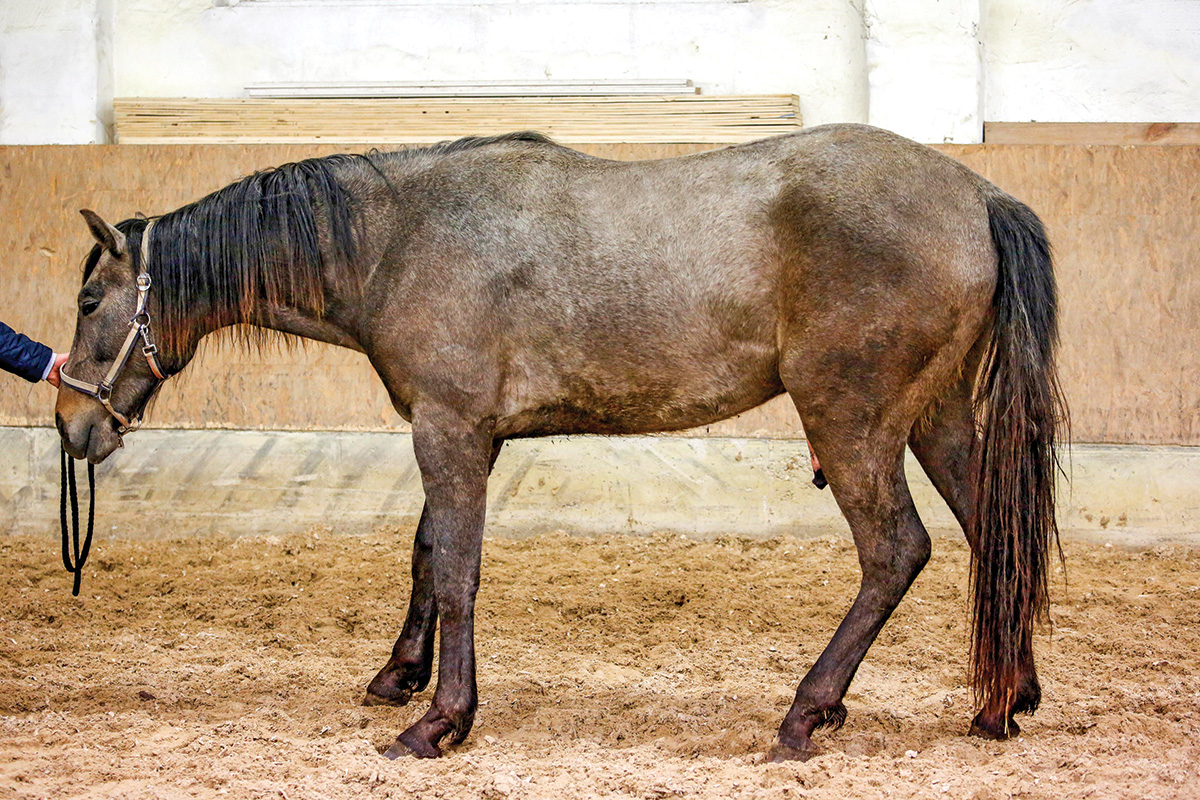
A sedated horse is easy to spot: He will often stand with his legs splayed out, looking like he’s trying to catch his balance. His head will droop, sometimes to the floor.

“Typically, when the poll [drops] below the level of the withers is when the horse is in the correct plane of sedation for work to be performed,” says Helbig. “While the horse is settling into sedation, he may abruptly ‘catch’ himself with a leg, or buckle or cross his legs (ataxia and incoordination). This is normal—don’t try to hold up the horse or wake him by patting his head or neck.”  This will delay the onset of action and prevent the horse from achieving the maximum plane of sedation. 

A drowsy horse under sedation.
Sedated horses will drop their head; their legs may even buckle, but they’re usually able to catch themselves. Photo by Arnd Bronkhorst/www.arnd.nl

“Depending on the environment [including heat, humidity, sun or shade], the horse may also sweat over his neck, shoulder, flanks or around the ears. This is also normal and transient,” says Helbig.

Though it’s not entirely clear why a horse may sweat from sedation, it’s not a cause for concern, she says.

“It is believed that the sedation stimulates the sympathetic nervous system, causing an inability to thermoregulate. Vasoconstriction caused by these drugs also increases body temperature, [and] that triggers sweating.”

If asked to walk, the horse often looks like he’s drunk, moving his legs in an uncoordinated manner, unable to walk in a straight line. Though this can be disconcerting to see, a horse rarely falls, even while holding still.

“Even if they are unsteady, they can usually reposition and correct their balance themselves,” says Niedermeyer.

Helbig agrees.

“The same passive-stay apparatus that allows horses to sleep standing up allows us to sedate horses and keep them on their feet,” she says. “The apparatus has three main components: Patellar locking, the reciprocal mechanism, and the check apparatus, which are an arrangement of muscles, tendons and ligaments that, when activated, allow the horse to lock their limbs standing with virtually no muscular effort.”

How Long Does Equine Sedation Last?

“The duration of effect [of sedation] varies by the type of sedation and route of administration,” explains Helbig. “It can range from 20 minutes to a couple of hours. Some types of sedation are fast-acting and metabolized quickly, while sedation given IM or orally will have a much slower onset than medications given IV. A higher dose of sedation will likely result in a deeper level of sedation and a longer time the horse will be sedated. Your veterinarian will be able to give you an approximate amount of time for this to occur based on the type of sedation used and the dose.”

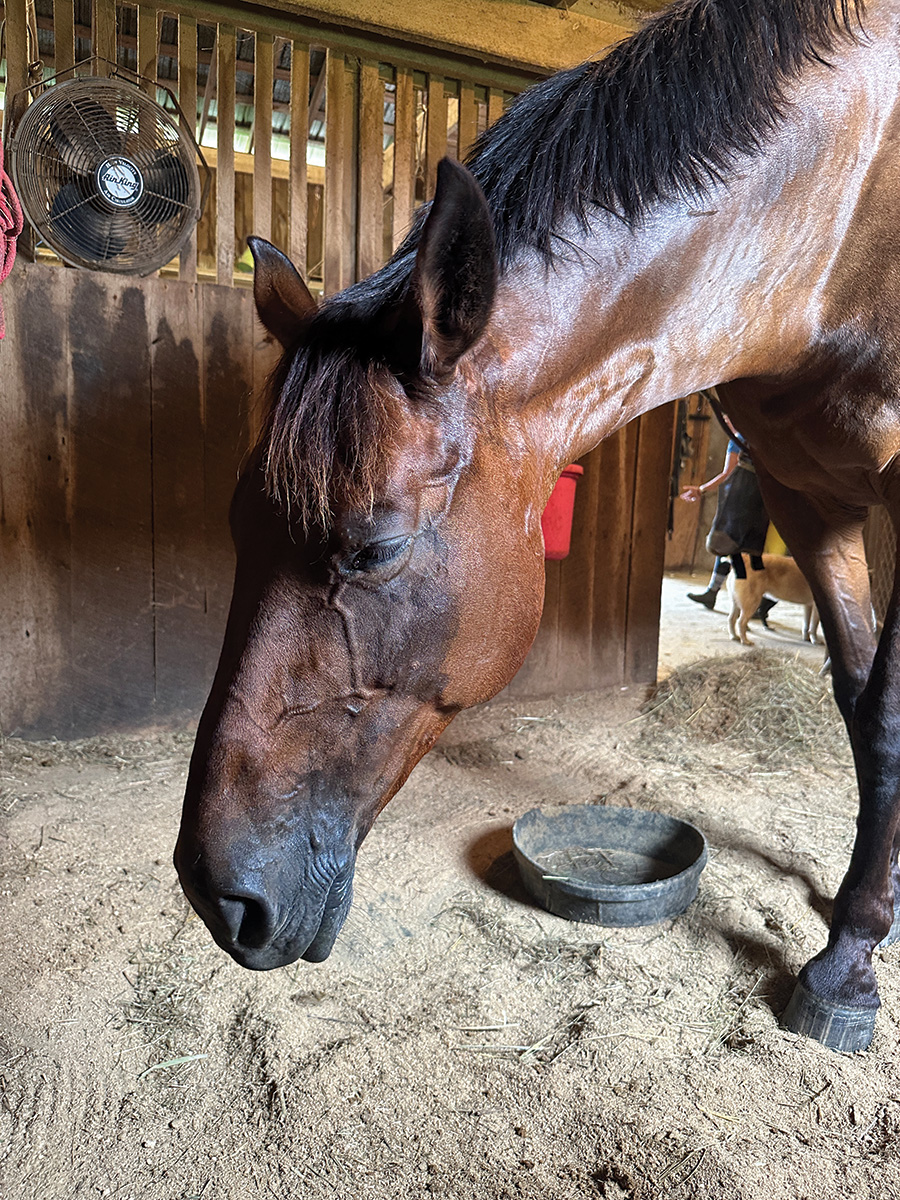
Sedated horses can be unstable. Typically after a procedure, two people (one at the head and one at the tail as an anchor) help safely guide the horse back to a clean, quiet stall to wake up, says Helbig. If a stall is not available, being alone in a ring or flat paddock is also acceptable.

The horse should not be offered hay, grain or water as he recovers; his muscles are still relaxed from the sedative, putting him at risk of aspiration or choke.

A drowsy bay gelding.
Horses should be allowed to wake in a safe, quiet area with feed and water removed. Photo by Shoshana Rudski

A horse coming out of sedation will begin moving his ears, chewing and licking his lips, and begin looking for food as the sedation begins to wear off, says Helbig. He will often urinate as well.

“There isn’t much owners can do for the horse [coming out of sedation] besides allow time for the medication to be metabolized, so it’s best to leave him alone until you see him starting to look around and interacting with his environment,” she says.

Keeping a Sedated Horse Safe

Do:

  • Keep the area around the sedated horse free of obstacles like cleaning tools, grooming kits, fans and buckets.
  • Try to keep the sedated horse in one location, though he can be moved once he is able to raise his head.
  • Leave the horse in a quiet, calm location until he’s fully awake.
  • Remain quiet and slow around a sedated horse, and ask others to do the same.

Don’t:

  • Feed a sedated horse grain or hay.
  • Leave a sedated horse in cross-ties or tied in any fashion.
  • Ride immediately after sedation.
  • Load the horse in a trailer until all sedation effects have worn off.
  • Turn out a sedated horse, especially if he is lower in the pecking order of his field; he may be chased or bullied and unable to get away.
  • Use expired drugs, as they may not work as expected.


Key Takeaway

Equine sedation is crucial to various forms of veterinary care. Multiple methods of sedation are available to horses, and the type of administration—as well as the amount of medication used—varies based on procedure and the horse itself. The sedation process for horses is quite similar to the process in humans, though of course, we are dealing with a much larger animal which requires careful administration and precautions.

This article about equine sedation appeared in the October 2023 issue of Horse Illustrated magazine. Click here to subscribe!
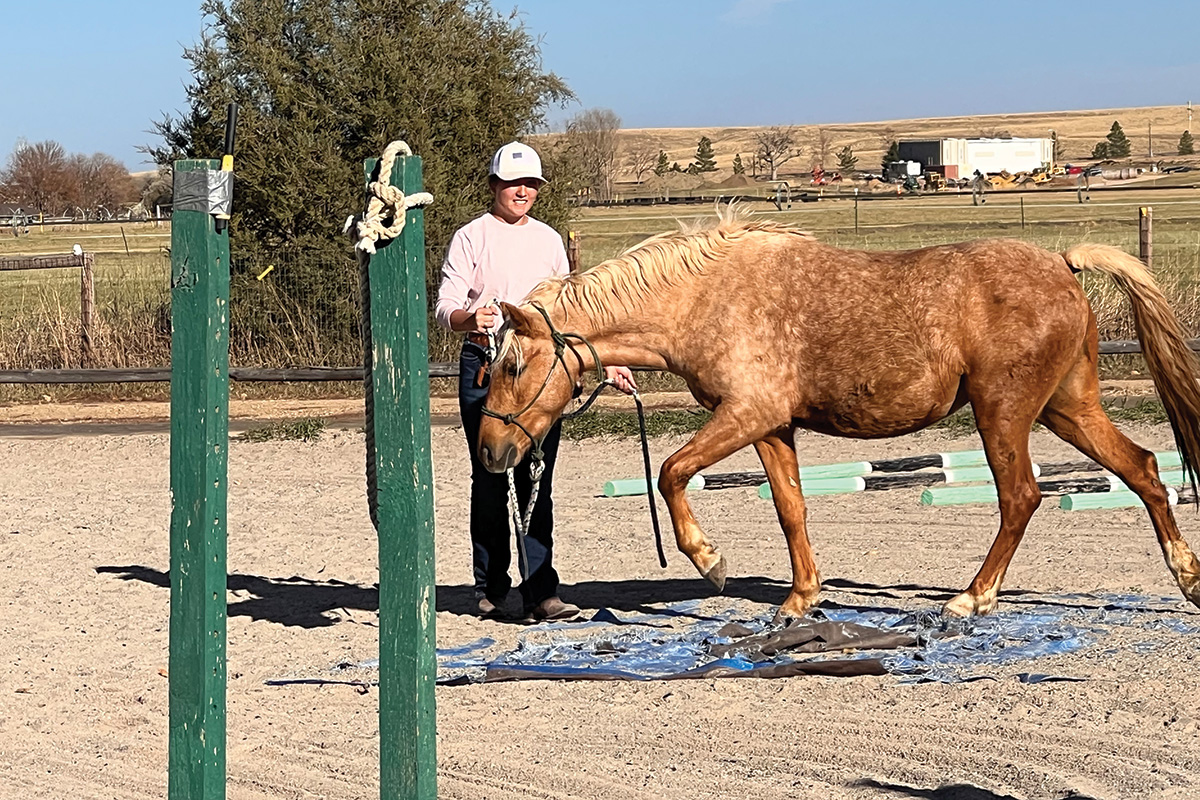
Tips for Getting the Most Out of Horse Clinics

0

Learn how you and your horse can get the most out of your clinic time with these tips from trainer and clinician Mike Brashear.

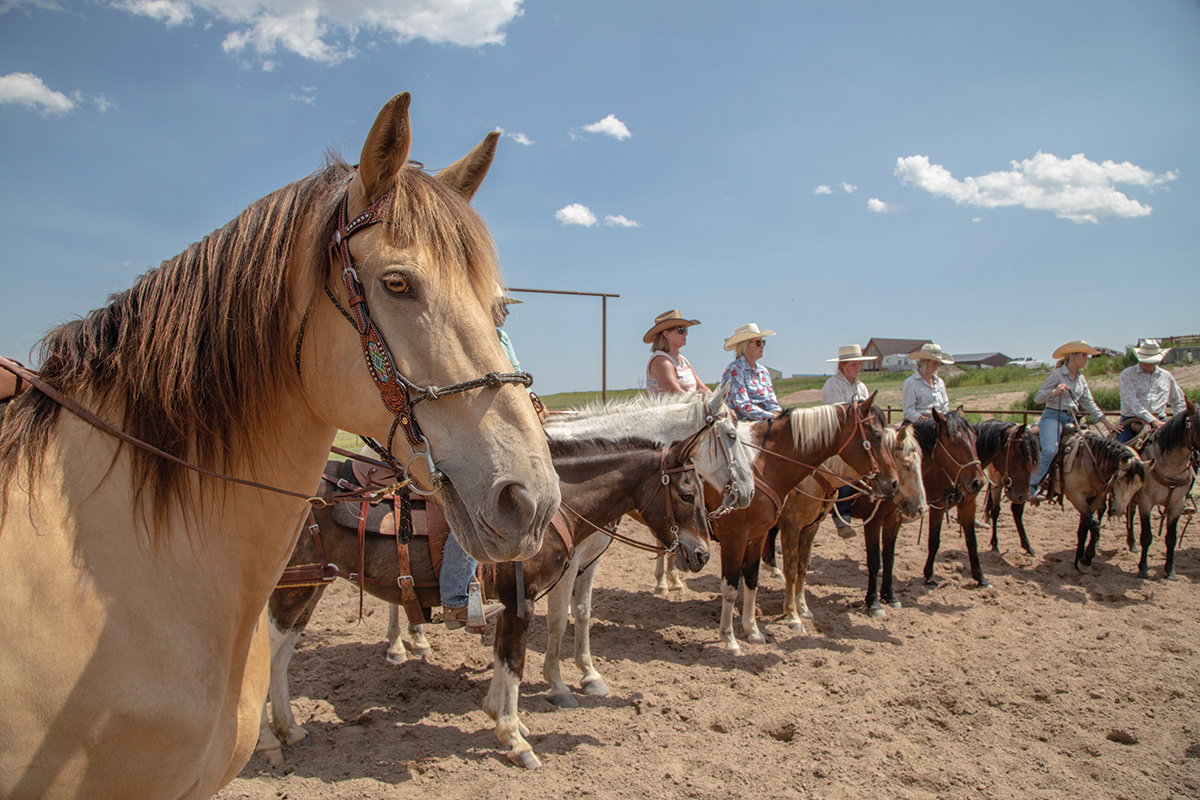
A lineup of horses at a clinic.
Photo by Heidi Nyland Melocco

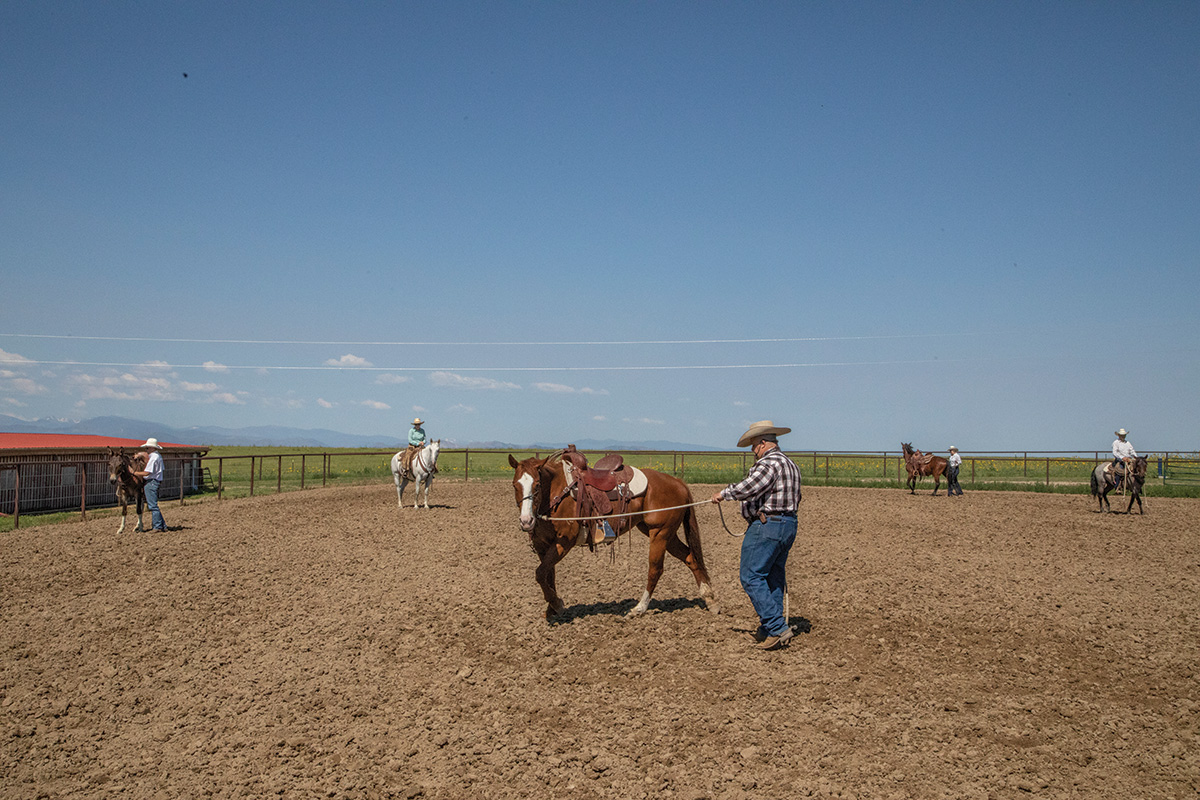
At the start of Mike Brashear’s clinic in Nunn, Colo., he invited—or nearly commanded—students to ask questions and speak up if they didn’t understand or needed extra help.

“You’re paying good money to get help,” he said. “Make sure you’re getting what you need while you’re here.”

Brashear’s mission is to help horses and riders get the help they need to keep working together. After hosting many clinics, he says he can often tell if the horse and rider pair will keep progressing on an upward trend after the clinic: It’s all in how the student approaches the clinic, prepares to learn, and asks questions to make sure they can keep working at home.

Here, Brashear helps you learn how to learn. He provides tips to find and attend a horse training clinic and get the most help possible so that you can constantly improve your horsemanship.

Make Sure the Clinic is the Right Fit for You and Your Horse

“You’re never going to know all of it when it comes to horses,” he says. “Let go of that pressure on yourself to have to know all of it already. But if you never go get extra help, you’re not going to get any better.”

Brashear recommends searching online, getting input from reviews, and asking friends about clinicians who will be near you. He says you need to find a teacher who you can work with—and who has your best interest at heart. If you ask about the clinician’s approach and style, you’ll find someone who feels approachable.

“There are horsemen who are great with horses but may not teach humans the way you personally want to learn,” Brashear says. “You need to find a personality match. Ask someone who’s been to a clinic with the person you want to learn from. What is their teaching style? What are you going to learn? How is the clinic set up?

“A clinic needs to be fun. It’s not a horse show. It should be informative. When you leave there, you shouldn’t feel worse about yourself than when you showed up.”

Consider Training Styles

Brashear says that he finds that most of his clinic students board their horses at a location without a trainer or keep their horses at home. However, sometimes riders who have trainers for specific disciplines reach out for horse behavior help or to get a different perspective.

“I think that if you have a trainer, it’s good to find out if the clinician that you want to work with shares the same horsemanship philosophy,” says Brashear. “You have to be careful with that because you can get confused. If you like that your trainer at home uses natural horsemanship, look for someone who trains in that style. If you learn natural horsemanship in one setting, and at the clinic it’s all about positive reinforcement, that can be confusing.”

Mike Brashear works with a sorrel in an arena.
Look for a clinician who uses a similar style to your current trainer. For example, if they both use natural horsemanship, the tips you learn will be more helpful. Photo by Heidi Nyland Melocco

However, he says there are times when it’s good to question how your usual trainer works.

“If you’re starting to question your trainer, maybe you go to a clinician because you’re looking for a different way,” he says. “You’re looking for what’s right for you and to learn about the new style. Don’t dismiss something because it’s new.”

Once you’ve found a teacher with the right approach and style, think about what you want to learn. Brashear says many clinics now can help you with trail obstacles or to hone your skills for ranch riding or a specific event. Even if you have a trainer you work with regularly, seeking help for a specific event or to expose your horse to a new event can be a good way to keep learning.

“Sometimes there might be a trainer who says, ‘This clinician is coming to town and this is who I learned from/want to learn from.’ Good trainers know that they need to keep learning and getting different perspectives, too.”

Prep Your Gear for the Clinic

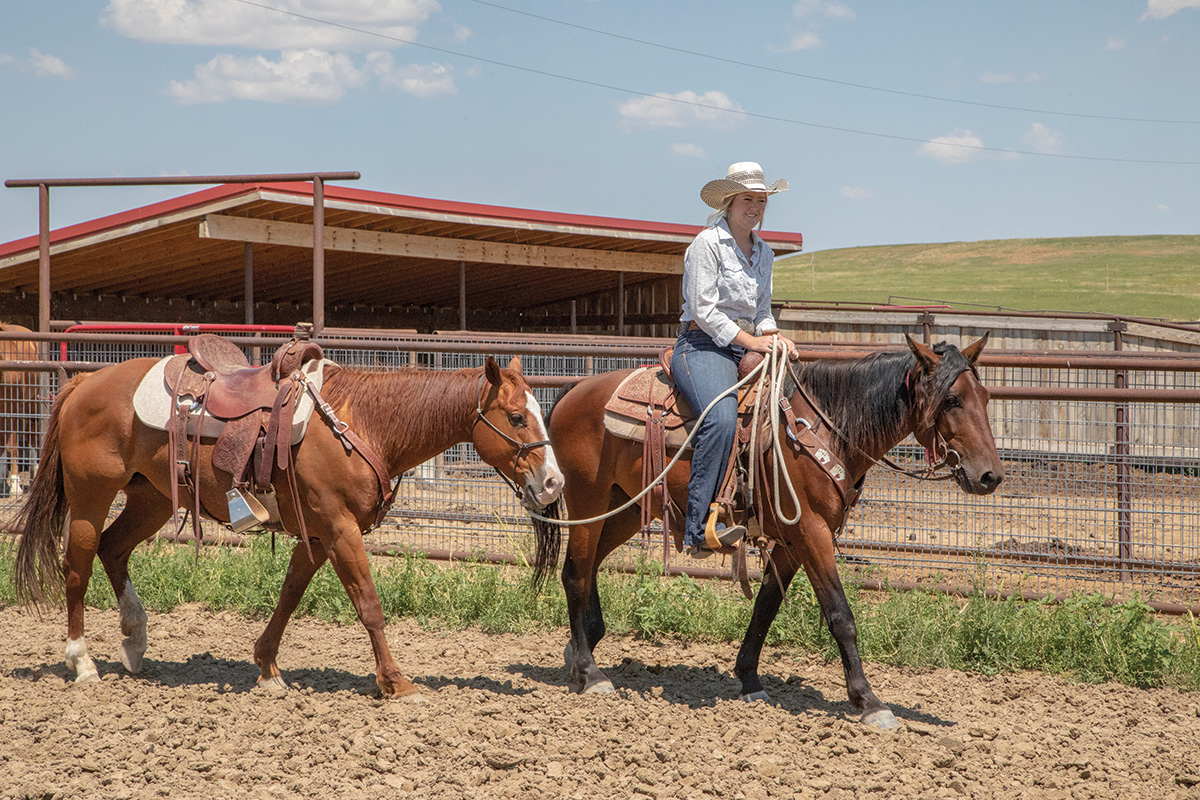
Once you’ve selected the clinician you’ll ride with, find out what they like riders to have ready at the clinic. Brashear says he likes students to have a rope halter and a long training lead (at least 12 feet).

A cowgirl ponying on a ranch.
Find out what your clinician likes riders to have ready at the clinic. Brashear likes students to have a rope halter and a long training lead (at least 12 feet). Photo by Heidi Nyland Melocco

Some clinicians may have a kit to help you prepare and have their tools before you arrive. However, Brashear says if you take some good-quality gear from home, you should be able to work your horse well in what you have.

“Don’t go out and buy all new tack because you’re going to a clinic,” he says. “You don’t want to confuse your horse by changing everything to match what you think the clinician will want. Find out if what you have works or if there may be a good reason for changing up your gear—if it applies to what you need help with. There’s going to be somebody there that’ll let you borrow something if you need it, and we always come with lots of training gear, too.”

Have the Right Mindset at the Clinic

Brashear’s first tip for attending a clinic with your horse? Choose a growth mindset.

“Have an open mind and an open heart,” he says. “You might get a different perspective than you expected about your horse or the problem you’re asking about. That’s why you’re there—to get different info. If you go to get help, but then you’re closed off and say, ‘I don’t do it that way,’ or ‘I’m not doing what you say,’ you’re not going to learn a thing. I think that all clinicians at the core want to help people and horses, or they wouldn’t do this.”

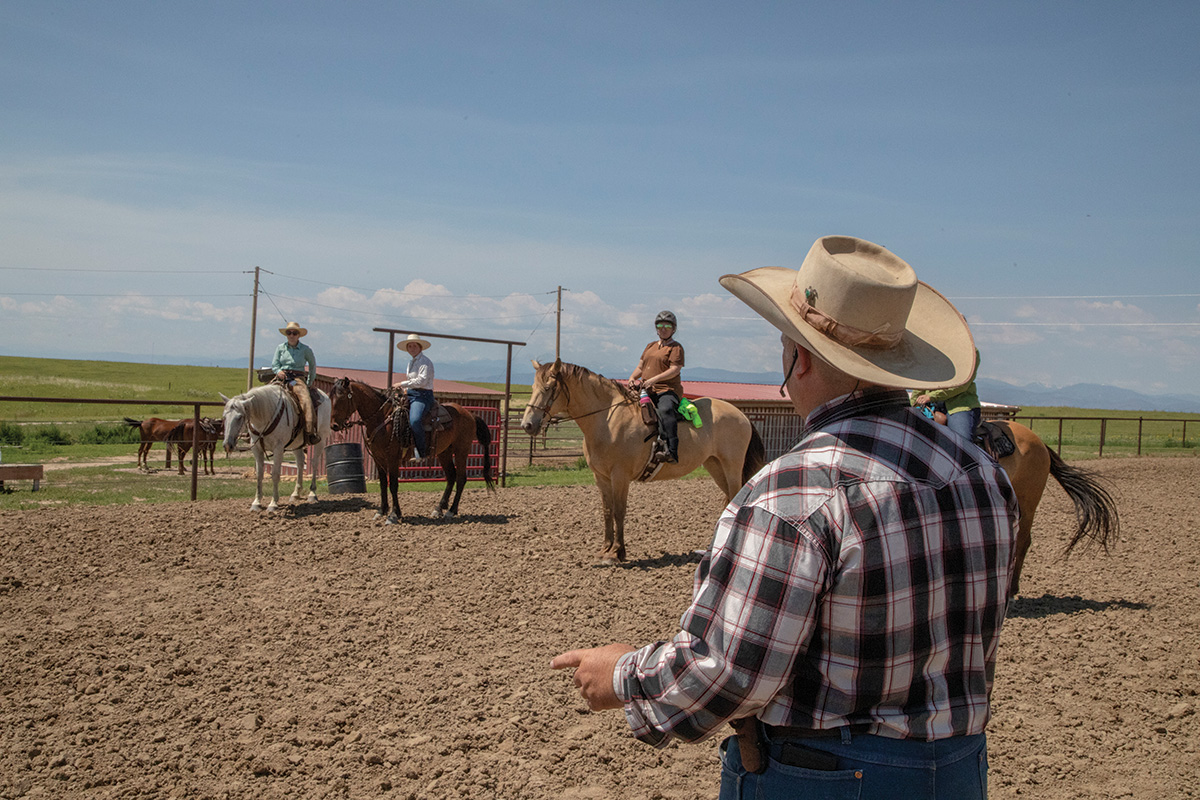
Mike Brashear teaching horses and riders at a clinic.
Have an open mind at the clinic. While it’s great to have fun with friends, be sure to listen to all of the info you can learn. Photo by Heidi Nyland Melocco

Brashear also advises watching and listening when the clinician works with other riders. If all riders pay attention, he says he can often get into deeper topics because he doesn’t teach the same lesson over and over.

“Clinics are meant to be a fun time and a time with friends—just don’t get so involved in your own conversations that you don’t watch and learn what others are working on,” Brashear says. “You may not need that specific lesson now, but there’s something you can learn from everyone in the clinic. Think: How does what’s being taught affect me? How does this coincide with what I do with my horse?”

Create a Healthy Balance for You and Your Horse During the Clinic

Brashear says that many times horses and riders need some “soaking time” to relax and watch and learn from another clinic attendee. He says some riders have told him they want to be moving and learning all the time. That can be a lot for the horse and human—especially if the horse isn’t used to being ridden all day for a few days in a row.

Riders and horses relaxing at a clinic,
Take some “soaking time” to relax and learn from other riders at the clinic. Photo by Heidi Nyland Melocco

“I tell people to be careful of when they go to a clinic,” Brashear says. “They can’t be so excited to learn everything that they miss what they really needed. If you wear your horse out early, you might be done by the time the clinician teaches what you really wanted to learn.”

Brashear suggests checking in with your horse and remembering that only you and your horse matter.

“When you get there, try not to be thinking so much about everything else that’s going on,” he says. “Just be there with your horse. That’s how you’re going to create that partnership that I’m working toward all the time—it’s by being there and being present with your horse.”

Brashear says that when he takes a clinic, he plans ahead to build in some downtime for himself and his horse.

“I’m going to work with my horse for a bit, then I might sit out for a little bit and take some notes,” he says. “I’ve got notes from [clinics] 25 years ago. When you take notes, it gives you something that you can refer back to.”

Brashear warns that if you want to record or video the clinic, make sure the clinician allows that before you begin.

Meet the Trainer

Mike Brashear trains horses of all levels with natural and traditional horsemanship techniques. He focuses on creating relationships between horses and riders at clinics and during private training sessions. He and his wife, Laura, live near Fort Lupton, Colo.


Brashear’s Final Tip for Horse Clinics

As for Brashear’s final tip for you and your horse, he advises that when you’re at the clinic, remember that you’re the customer. Trust your gut. You’ll know what’s best for you and your horse to continue learning safely.

This article about horse clinic tips appeared in the November/December 2023 issue of Horse Illustrated magazine. Click here to subscribe!
0FansLike
0SubscribersSubscribe
We use cookies to help personalize content, tailor and measure ads, and provide a safer experience. By navigating the site, you agree to the use of cookies to collect information. Read our Cookie Policy.
OK