Lexington, Ky. – Brooke USA Foundation is committed to helping equines in need during times of disaster and to this end, the organization is launching the Fire Horses Emergency Campaign to support these animals which have been abandoned, lost, displaced or separated from their owners during the California wildfires.
Brooke USA is supporting Fleet of Angels, a nonprofit that helps horses in crisis and, which at present, is working on the ground to provide most of the feed and supplies for these animals. To donate to Brooke USA in support of Fleet of Angels’ efforts, please visit www.BrookeUSA.org/california-blazes.
In partnership with the EQUUS Foundation, Brooke USA has also established a grant program to provide disaster relief funding to equine charities in Southern California. Eligible organizations can learn more and apply at www.equusfoundation.org/emergency.
Although it is understood that immediate aid is paramount, the process of recovery is as important and often begins while emergency response activities are still in progress. The disaster recovery process focuses on restoring normalcy to those impacted by a disaster and without a doubt, it helps horses and other equines who require temporary shelter, feed and hay.
Drawing from their 2018 disaster response in Paradise, Calif. — where Fleet of Angels sustained two hay banks for nearly a year — the organization is dedicated to delivering meaningful, lasting support after the fires by expanding its services to include a horse hay and supply bank with satellite locations throughout the fire-affected area. These hay banks will be open to individual owners and small rescues to provide critical supplies for the equine survivors of the fires for multiple months.
“At Brooke USA, we know from our previous disaster response efforts, that achieving regular activities and lifestyles will take time so, we are determined to do what we can to help equines and their owners impacted by the fires in Southern California. During recovery efforts, the goal is to ensure equine re-unification with their owners or a peaceful rehoming transition,” stated Brooke USA CEO Emily Dulin.
“We commend those nonprofits working on the ground and those raising money to support the devastation brought on by the California Blazes which have become some of the most deadly and destructive fires in California history. It is our hope that our friends and supporters will come to the rescue of these horses and their owners,” noted Dr. Jim Hamilton, Brooke USA’s Chairman of the Board. Brooke USA will direct 100% of the funds raised to Fleet of Angels.
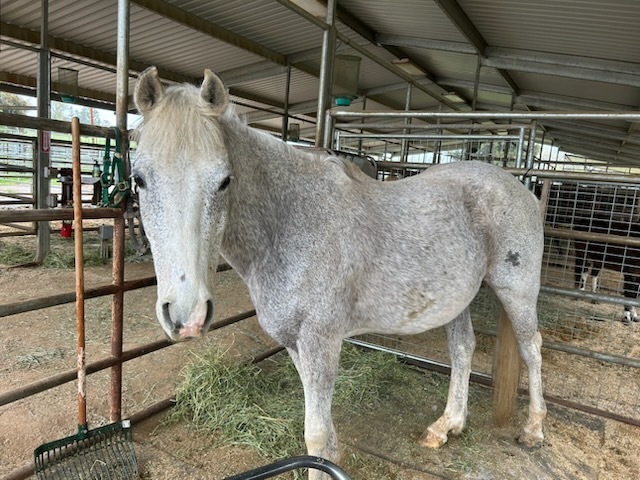
Help the Humane Society of Ventura County find long-term resident Tundra his forever home! This 17-year-old gray Arabian gelding arrived at the HSVC on December 23, 2022, after being rescued by their Humane Officers in a case of abuse and neglect. Despite his past and medical issues of metabolic and thyroid problems, Tundra has a sweet personality and doesn’t let his setbacks stop him from trotting around. He would need time to acclimate to new horses, but Tundra would love to be someone’s pasture buddy.
Tundra is also looking for an owner who will be mindful of his gut health and can supply his metabolic supplements and thyroid medications for the rest of his life.
Please note: HSVC is offering help for those who need evacuation/transport assistance to those affected by the ongoing wildfires. You may contact them at 805-646-6505. They have limited space for temporary housing of domestic or large animals. Please also consider donating to Pasadena Humane, LA Animal Services, Los Angeles Fire Department Foundation, or Los Angeles Fire Department to help the animals and humans affected by these devastating fires.
ASPCA Right Horse is the online adoption platform of The Right Horse Initiative, a collection of equine industry and welfare professionals and advocates working together to improve the lives of horses in transition. A program of the ASPCA, their goal is to massively increase horse adoption in the United States. To find more adoptable horses and foster horses, visit www.myrighthorse.org. To learn more about The Right Horse, a program of the ASPCA, visit www.aspcarighthorse.org.
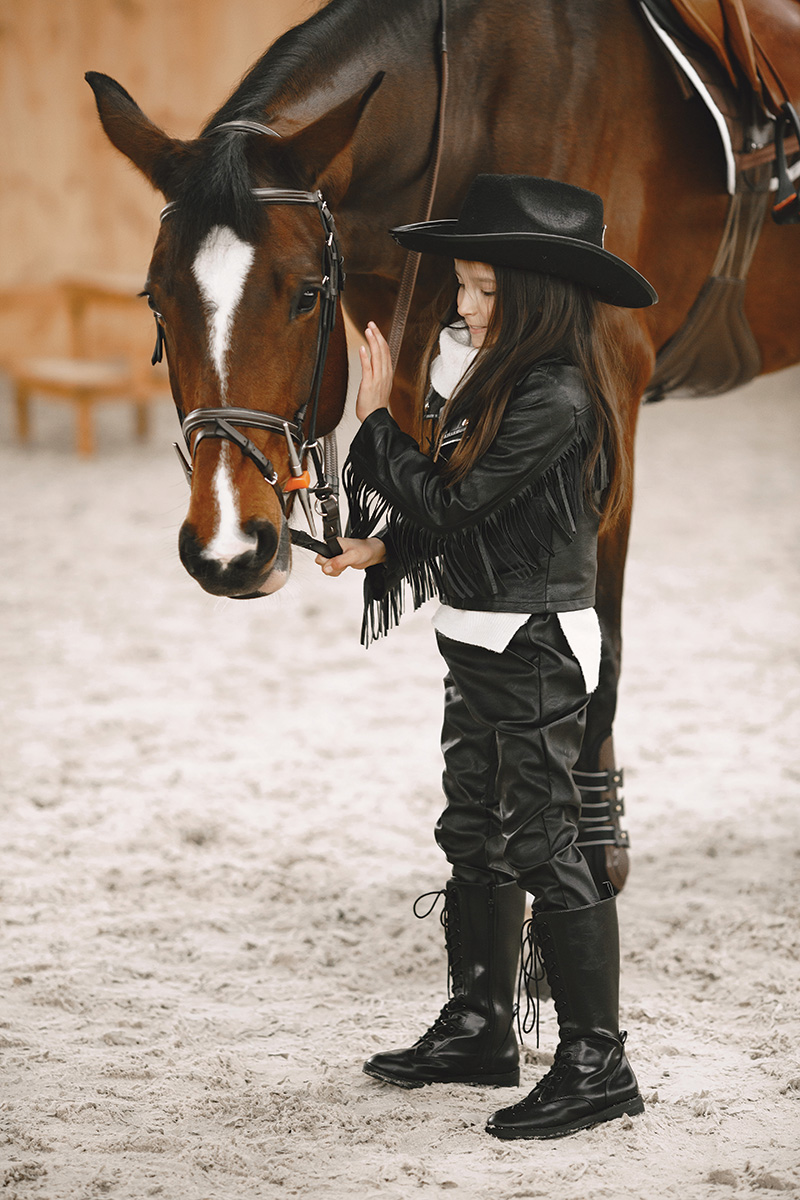
Lily was a solemn little girl with wild black braids, and I used to love watching her with her beloved horse, Angus, a bay Quarter Horse. Lily adored history classes at school, and her favorite activity was acting out her recent lessons.
Photo by prostooleh/Adobe Stock
Angus would obediently jog in a slow circle while Lily pretended that they were the Pony Express delivering mail in hostile territories. Sometimes Lily and Angus were a mounted army general riding along battle lines to boost the morale of weary troops, or a doctor and his trusty steed delivering medicine to fight dysentery in the camps.
Whatever the script, Angus always fell right into character, and it was hard to say who had more fun, Lily or her big, gentle horse.
Growing Up Together
Angus had been my patient since Lily was a toddler. Angus was a 2-year-old then, and was one of the calmest and most well-behaved youngsters I’d ever been around.
I was cleaning up my gear on that first visit when Lily’s mom Greta walked Angus by, a tiny bright-eyed little girl with a mop of black hair sitting on his back. Normally, the sight of a toddler on a young horse would stop my heart, but even then, Angus knew that Lily was his little girl, and he was going to take care of her.
As Lily grew, it wasn’t uncommon for her parents to find her down in the barn, climbing Angus like a tree, standing on his back, and pretending they were circus performers, or on one memorable occasion, falling fast asleep against his side as he slumbered.
Lily would do her homework in his stall or paddock, host tea parties for Angus—always the guest of honor (though he preferred oats to tea)—and there was a framed photo of Angus and Lily on the bedside table in her room.
Time for a Diet
As children and horses will, Lily grew older, and so did Angus. When Lily started middle school, soccer practice and friends took up more and more of her time. While she still spent as much time as she could with her beloved horse, it just wasn’t the same. Angus was gaining a little weight, and Greta and I put him on a diet.
By the time Lily started high school, her schedule was so full that she had little time to ride. Angus was often just a dot in the field, far away with his herdmates, munching tasty grass and dozing in the sun, which isn’t a bad way for a horse to live—except Angus was supposed to be on a diet.
Greta did her best, but since the horses all went out during the day, she didn’t want to leave Angus in by himself, and hiking out at midday to catch a horse who didn’t want to be caught was out of the question for two school teachers and a high school senior.
The family switched the turnout schedule, letting the herd out at night and keeping them in during the day. They mowed the fields down as far as they could, and even tried a grazing muzzle, but Angus was an expert at getting it off and losing it.
Lily hired a friend to exercise Angus several days a week, and he now had a beautiful dry lot pen with a roomy loafing shed and a 30-year-old mare to share it with. Lily still spent as much time with her horse as she could, and while Angus didn’t lose any weight, he was bright-eyed and content. Lily took their picture from her bedside table with her when she left for college.
Something Amiss
I was out to vaccinate the herd one spring day and was alarmed by Angus’s appearance. I hadn’t seen Angus since the fall, and the difference in him was startling.
His neck had developed a thick crest, his eyes seemed to be bulging and watering. There were fat pads on his sides and tailhead. His coat was also looking unusually shaggy for spring, plus he had a horrible haircut, which didn’t help.
Greta was somber when she led him over to my truck.
“Dr. Diehl, I know he looks awful. We’ve done everything that you recommended, but I just can’t get the weight off! We took him off pasture completely and he only gets soaked grass hay, but nothing helps. Lately he’s had so little energy, we haven’t had the heart to exercise him too much. I don’t know what to do!”
I pointed to a line of jagged hair and clipper marks along the horse’s side and raised an eyebrow at Greta who laughed.
“That’s Lily’s handiwork from when she was home last week. I told her not to quit her day job, but she wouldn’t stop fussing over him. Her roommate’s dad is a horse trainer, and I think they were putting ideas into her head.”
I was half listening. “I need to draw some blood, Greta. He has all the symptoms for Cushing’s disease, as well as equine metabolic syndrome, and if I’m right, we need to get him on some medication right away.”
The horse was as patient as ever as I slid the needle into his jugular vein and dark red blood welled into the blood tubes that I switched out as each filled up. I had two red top tubes to fill, two large purple tops, a blue top and a green top tube, and Greta clutched them as I handed them over one at a time.
“What on earth, Dr. Diehl! Is he going to have any blood left?”
I laughed. “He’s got plenty left, but I still need a few more tubes filled. Hang in there, Angus.”
Angus didn’t care. I finally pulled the needle out and held some pressure against his neck for a minute. I took my hand away from his neck, and Greta and I took turns petting the big horse and talking about Angus and Lily’s adventures and laughing at a memory of Lily and Angus covered in mud and chasing each other in the rain.
Mysterious Bleeding
A drop of blood splatted wetly on the top of my boot, and I looked automatically for the source. I was alarmed to see a large swelling over Angus’s jugular vein where I’d drawn the blood. Another large drop was forming, and I pulled some gauze out of my nearby kit and held a wad firmly against the horse’s neck.
“He’s got a hematoma over the jugular vein, Greta.” I said apologetically. “It can happen sometimes. I guess I didn’t hold the pressure on long enough.”
I kept the pressure firmly against his shaggy neck, but when I released it after several minutes, the bleeding continued, and the swelling was even larger.
This was not normal at all. I left Greta holding pressure on the neck while I ran for some abdominal packs and Elastikon tape. I rolled up the thick cotton pack and pressed it over Angus’s jugular and bandaged it in place as snugly as I dared.
I checked his vitals. He had an elevated heart rate and respiratory rate, but his temperature was normal.
I lifted his lip to check his gums and was dismayed to see a line of purple splotches across the tissues of his mouth, and his gums had a faint yellowish hue.
“Those splotches are called petechia,” I said to Greta. “They’re caused by leaky blood vessels. Something is causing his blood not to clot, and he also looks jaundiced to me.”
“What would cause that?” Greta asked anxiously.
“There are a few possibilities,” I said. “Liver disease, blood parasite, even cancer. There could be an infectious disease causing it, but we usually don’t see it in this region of the country. There are a few genetic diseases that could explain it, but those usually manifest much earlier in life. The bloodwork will hopefully answer a lot of questions.”
Stay tuned for the conclusion to Angus’s story, coming to HorseIllustrated.com next week.
Senior horses gradually require additional care as they age. Whether it’s handling heat and humidity, flies, or changes in diet requirements and exercise, you’ll want to adjust your management to fit your old buddy.
In general, the bigger your horse, the sooner he’ll reach senior status, according to Julie Wilson, DVM, of Turner Wilson Equine Consulting in Minnesota and past president of the Equitarian Initiative, which provides philanthropic veterinary care for the working horses of the developing world. A horse can live to be in their 30s, but they’re considered senior at around age 20.
“Ponies don’t seem to become senior until they’re in their early 20s,” says Wilson. “Whereas some of the bigger horses I think are in that senior category as they get into their late teens.”
A horse’s riding career can also determine how quickly they age. A horse who had a strenuous job with many hours of riding can show musculoskeletal signs of age sooner than a horse ridden more moderately.
Deanna Chamberlin co-founded Shadowcreek Equine Retirement Ranch in Sanger, Texas, in 2011 along with her husband. The 73-acre facility only takes horses over age 20, providing end-of-life care for around 11 horses that are no longer being ridden.
“When a horse has reached 25 or 26, you’re not really trying to get them to perform at what they’ve enjoyed doing in their life—you’re starting to move into the mindset of just allowing them to be what they are, and making sure they’re comfortable,” says Chamberlin. “You’re medicating them for conditions that need intervention for stability or comfort, but you’re no longer trying to build them up.”
Age-Related Concerns
Much like humans as we age, horses experience a gradual deterioration of their bodily systems, according to Wilson.
The main issues that contribute to the eventual end-of-life decisions are related to your horse’s musculoskeletal system. Arthritis is often the sign that appears soonest.
“Arthritis, in particular, can reach the point where it’s hard to manage to make the horse comfortable,” says Wilson. “Joint injections or phenylbutazone [bute] get to where they aren’t worthwhile anymore.” Although other medications and supplements are available, this is the time when many horse owners may want to begin considering end-of-life decisions.
Endocrine issues, such as Cushing’s disease and equine metabolic syndrome, can necessitate retirement from riding or even euthanasia if you’re no longer able to effectively manage the symptoms.
Your horse’s immune system can become less capable, especially if your horse also has a disease like Cushing’s, says Wilson. This can lead to your horse contracting infectious diseases and viruses more easily, such as strangles, herpes or encephalitis—even if he’s vaccinated.
Dental issues can contribute to less efficient consumption of nutrients, injuries, and other problems. Luckily, good dental care and an appropriate senior diet can reduce these complications. Your senior horse may also pass more whole grains into his manure, so switching to a senior feed can help him maintain his weight by providing more readily available nutrients.
Dental issues can lead to less efficient digestion, so regular dental exams are important, and possibly a change in diet. Photo courtesy Deanna Chamberlin
Digestive issues like fecal water syndrome can dehydrate your senior horse and cause other problems, according to Wilson.
“Sometimes these senior horses start to have a lot of water passed along with their manure, which may or may not start to soften, and it makes a mess of their hindquarters because it drips down the back of their legs,” she says. “This creates a management issue trying to keep them clean.”
Colic is a concern in older horses, especially when it’s a result of fatty tumors, such as lipomas.
“If an old horse presents with colic, fatty tumors would be higher on the list of causes than if they were younger,” says Wilson.
A loss of muscle tone and body structure also occurs. This can mean changes in the way your saddle fits, and Chamberlin says this change in appearance can be disconcerting to owners.
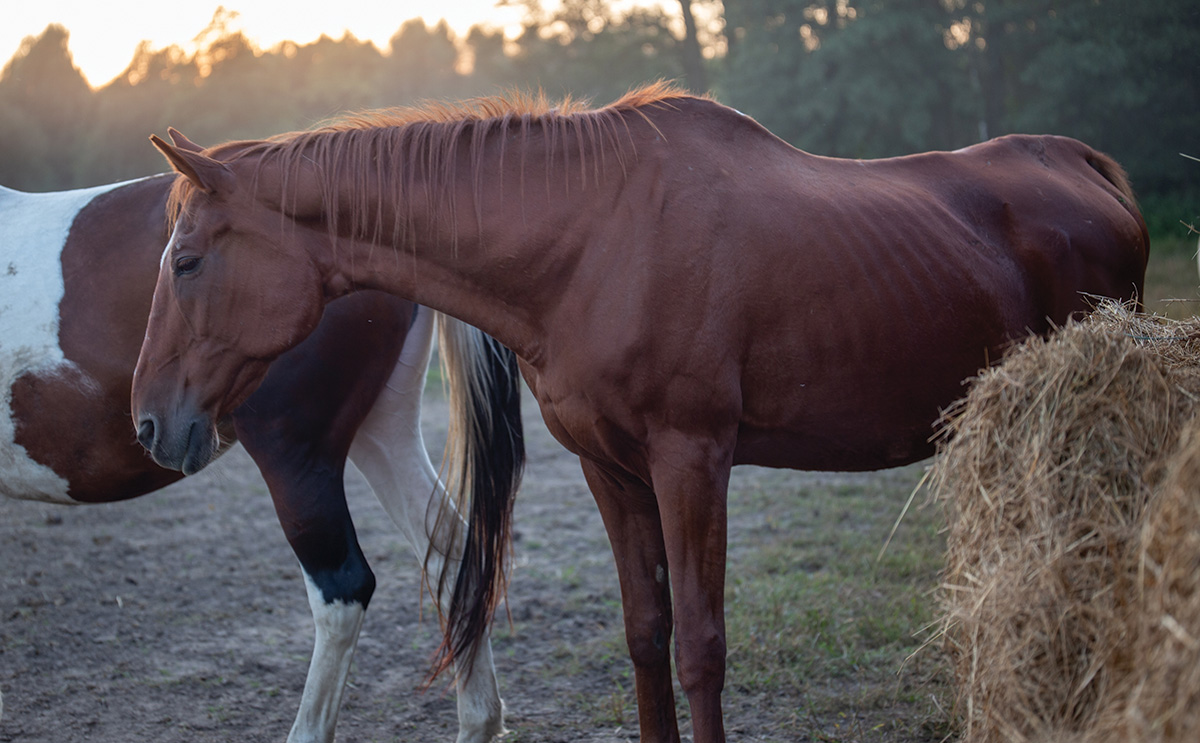
“Part of the natural decline in a body is that it tends to not be as muscular, showing more ribs,” she says. “You’re not going to see the same body structure as you would on a 10-year-old. You want to make sure your horse has everything but let him evolve as his body needs to.”
A loss of muscle tone and structure frequently accompanies the aging process, making the topline and ribs more prominent. Photo by Mani/Adobe Stock
Care and Management of the Senior Horse
A senior horse needs conscientious care to enjoy his best retirement years, according to Wilson. Here are some ways to best care for your elderly partner.
Routine Medical Care for the Senior Horse
Don’t simply turn your horse out to pasture and forget about him, she says.
“Yearly exams are still really important, and you need to have an increased awareness that these issues are likely to crop up,” says Wilson. “[Senior horses] still need to be vaccinated and dewormed.”
Consider your horse’s lifestyle. Will he be around horses going to shows, or ever-rotating boarded horses? That may mean he needs to receive the full slate of recommended vaccines. But if he’s in a pasture where he doesn’t contact horses who travel, he may not.
“We may want to review [a senior horse’s] vaccination schedule and drop some of the ones for diseases he’s unlikely to get exposed to,” she says.
Deworming is still very important, even if your horse lives a relatively isolated lifestyle, according to Wilson.
“Particularly as their immune systems wane, deworming still needs to happen,” she says. “The usual advice of monitoring fecal egg counts and pasture management for parasites are all important.”
Your horse’s teeth need to be checked at least annually, and sometimes twice a year, says Wilson.
“They will begin to lose teeth and have uneven wear,” she says. “One of the more common issues in this age group is equine odontoclastic tooth resorption and hypercementosis [EOTRH], a disease that primarily affects the incisors, and some pretty drastic care may be needed.”
Check Saddle Fit
If your horse is still being ridden, you need to pay careful attention to the way the saddle fits.
“Some [senior horses] will get swaybacked, and then they really need some attention to saddle fit,” Wilson says.
Pay Attention to Herd Dynamics
When a horse is elderly, you don’t want him to have to fight for hierarchy in the herd out in the pasture, according to Chamberlin.
“You don’t want him to be with 10- and 12-year-old horses that are trying to prove themselves or move the herd around,” she says. “You want him to be with other horses similar in age, who fit well together temperament-wise.”
Matching up horses so herd dynamics don’t result in bullying or injuries becomes especially important the older a horse gets. Photo courtesy Deanna Chamberlin
Adjust Your Senior Horse’s Diet
When your horse stops working due to retirement, you’ll want to adjust his diet, since his caloric needs will go down.
“That may mean dialing back on the amount of grain or concentrate he’s getting,” says Wilson. “Most of the time, he’ll still need that hay or grazing to maintain his body weight.”
Caloric needs of senior horses go down when their riding days end, but healthy forage and a balanced diet are as important as ever. Photo by JackF/Adobe Stock
If you do reduce or eliminate concentrate, consider adding a ration balancer to make sure your equine senior is getting enough protein, vitamins and minerals. Wilson says not making these adjustments can contribute to the horse becoming overweight and possible metabolic syndrome.
However, keeping weight on an older horse is often the bigger challenge. You don’t automatically need to switch to a senior diet, but it can be helpful in some situations.
“Watch [your senior’s] weight carefully, and depending on how well he’s eating, you can decide if you need to add an equine senior concentrate and still want to feed hay,” Julie says. “If he’s really not handling hay well anymore due to dental problems or bad absorption in the gut, you might consider putting him completely on senior feed [one containing fiber and meant to be fed as a complete diet] or a forage that is easier to eat, such as soaked hay cubes.”
Watch for Health Concerns
If your horse starts showing signs of Cushing’s disease, such as late shedding and a shaggy hair coat, of course you’ll have your vet test for the disease. But Wilson says that your horse’s veterinarian may recommend testing senior horses more routinely to get a jump on it.
Watch for signs of Cushing’s disease, such as a coat that doesn’t shed out in spring. Your veterinarian should test your older horse at the earliest signs to allow for treatment. Photo courtesy Deanna Chamberlin
“It is manageable with treatment,” she says.
You’ll also want to visually check your horse’s body regularly for issues such as melanomas and tumors, particularly on gray horses. Horses with white markings on their face and/or sheath may develop scabby areas that progress to squamous cell carcinoma, which warrants treatment as soon as possible.
Back to Nature
Your horse may enjoy going barefoot, although he should still get regular trims. Most will acclimate to being outdoors with appropriate shelter in all but the most extreme weather, according to Chamberlin. This allows for movement, which helps circulation, stiff joints and muscles.
“We want [our senior horses] to be out as much as possible—[preferably] 24/7, unless it’s really inclement weather,” Chamberlin says. “We bring in horses when there’s ice on the ground because we don’t want them slipping and falling. But for most of the year, they’re out a lot.”
Pasture shelters should be provided, and blanketing during turnout may be essential in northern states with freezing weather.
When the Time Comes
Ultimately, all horses will reach the end of their lives—often sooner than we’d like. Chamberlin recommends looking for a place to keep your horse where he won’t need to be moved much as he ages.
“By the time a horse is in his mid to late 20s, trailering around a lot and moving him can be a concern,” she says. “It’s hard on a horse. You need to find a place where you’ll be OK with him staying until the end.”
Before your horse’s final day is upon you, Wilson recommends planning with your vet ahead of time for euthanasia and/or disposal of your horse’s body. Laws in your area may prevent burial on your property, so you need to research what options are available.
Chamberlin says having a support person can help you figure out when you need to make the final decision about your horse’s care.
“You don’t ever want him to suffer, but you want him to live a life as full as possible,” she says. “For some people, that end is a little easier to see than others. I always encourage people to have another person that can look at your horse and say, ‘I think it may be time.’ Don’t be afraid of that, because modern veterinary care at the end of life really does provide a merciful way to say goodbye. It can be scary, but at the same time, it’s such a gift that we can make things comfortable for an animal so it’s not a traumatic end.”
Key Takeaway
After everything they’ve given us, older horses deserve some extra TLC in their golden days. While senior horses may require extra care and attention to detail, it is well worth watching them continue to thrive.
For most of us, “trauma-informed horsemanship” likely brings to mind the plethora of equine-assisted therapy and learning programs in which horses help humans heal. But these days, we are witnessing a rise in approaches that apply the term to ask not what horses can do for us, but how we might better serve them in our relationships.
These emerging approaches—also sometimes called “emotional horsemanship”—seek to prioritize horses’ emotional worlds in our relationships with them and make space for plenty of equine agency. And the people who engage in and share them range from dressage trainers and saddle fitters to equine-assisted learning facilitators and bodyworkers.
If that sounds broad, it’s because it is. Through the lens of what I will refer to as trauma-informed horsemanship, horses and humans process emotions similarly, and this includes manifestations of stress in the body.
In turn, all of this emotional and physical baggage affects health and behaviors of both horses and humans in our relationships. By opening new channels of communication and seeking to truly listen to ourselves and our horses, these approaches have the potential to give equestrians new insights into why their horse might be uncomfortable or acting out.
A horse “acting out” in response may trigger fear and more tension in the rider. Photo by RD-Fotografie/Adobe Stock
The Feedback Circle
Colorado-based dressage trainer Nahshon Cook describes the human-horse emotional relationship as a feedback circle or an energy loop.
People often carry unresolved emotions as tension or even injury in their own bodies. This, in turn, affects how they move on the ground or in the saddle. Perhaps your hips are tight and your horse is unable to move his back freely. Over time, this can lead to both emotional stress and mechanical injury for the horse.
Colorado-based dressage trainer Nahshon Cook explains that horses balance their behaviors on stuck emotions in our bodies. Photo by Rescued Hearts Film
A horse “acting out” in response may trigger fear and more tension in the rider.
“Horses balance their behaviors—often unwanted behaviors—on stuck emotions in our bodies,” says Cook. “They are protecting themselves from trauma in the life of that person.”
Similarly, equines often carry their own history of emotional and physical trauma. And because horses are flight animals, they tend to internalize any resulting distress, regardless of the source.
Cook sees the human-horse emotional relationship as a feedback circle or an energy loop. Photo by Rescued Hearts Film
Distress Due to Trauma
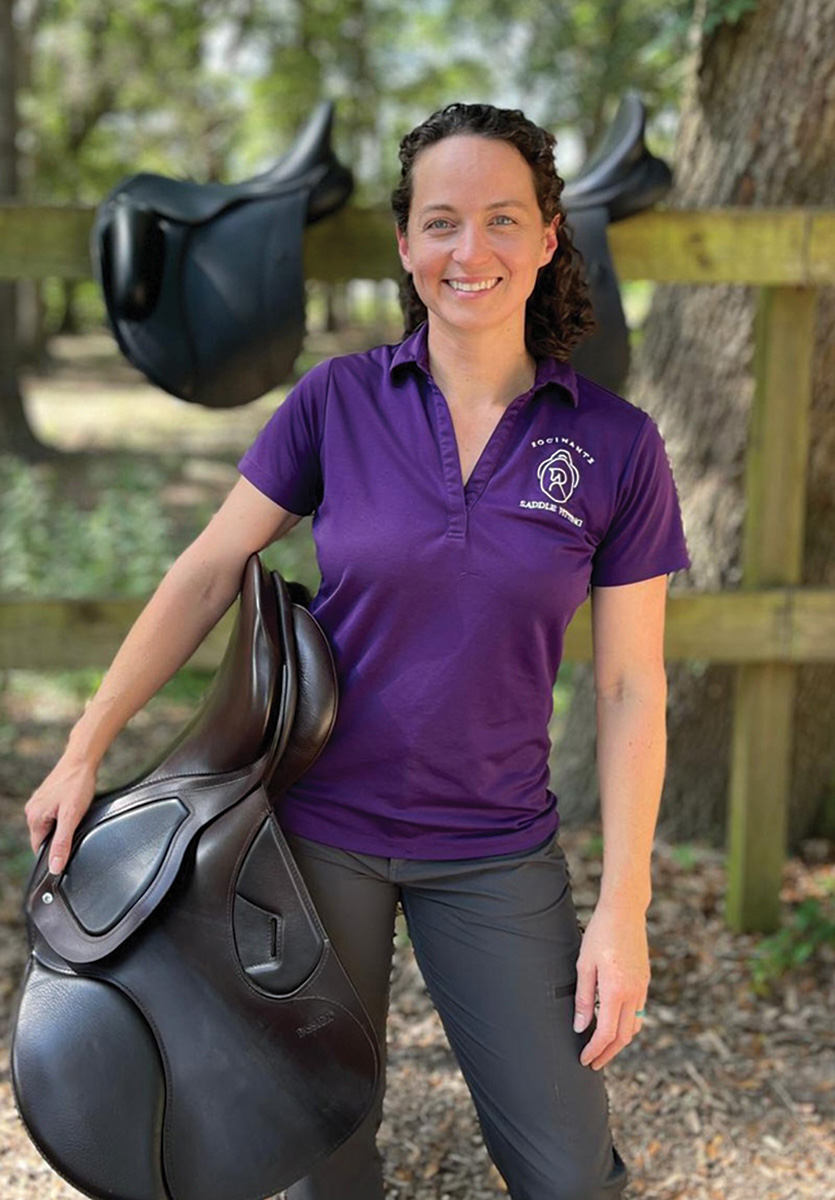
Claire Aitken, a South Carolina-based saddle fitter and equine massage therapist, sees this every day in her work, and must adjust accordingly for truly beneficial results.
“From a therapeutic perspective [before working on a horse], it’s important to take all of their history into account because these traumas that so many of them have, they hold in their body,” says Aitken.
Claire Aitken, a South Carolina-based saddle fitter and equine massage therapist, sees emotional and physical trauma every day in her work, and must adjust accordingly for truly beneficial results. Photo by Emmy Manning
This stoicism, combined with horses’ general tendency toward generosity with and forgiveness of the humans in their lives, makes it easy to miss early signs of discomfort. When we fail (even unintentionally) to respect their subtle attempts to communicate distress, such as opting out of work, for example, you may be driving your equine partner to escalate to behavioral issues that will be heard.
To interrupt this cycle and rebuild it as one with space for recovery, we must learn to listen better to what the horse wants and needs.
Acting with Aggression
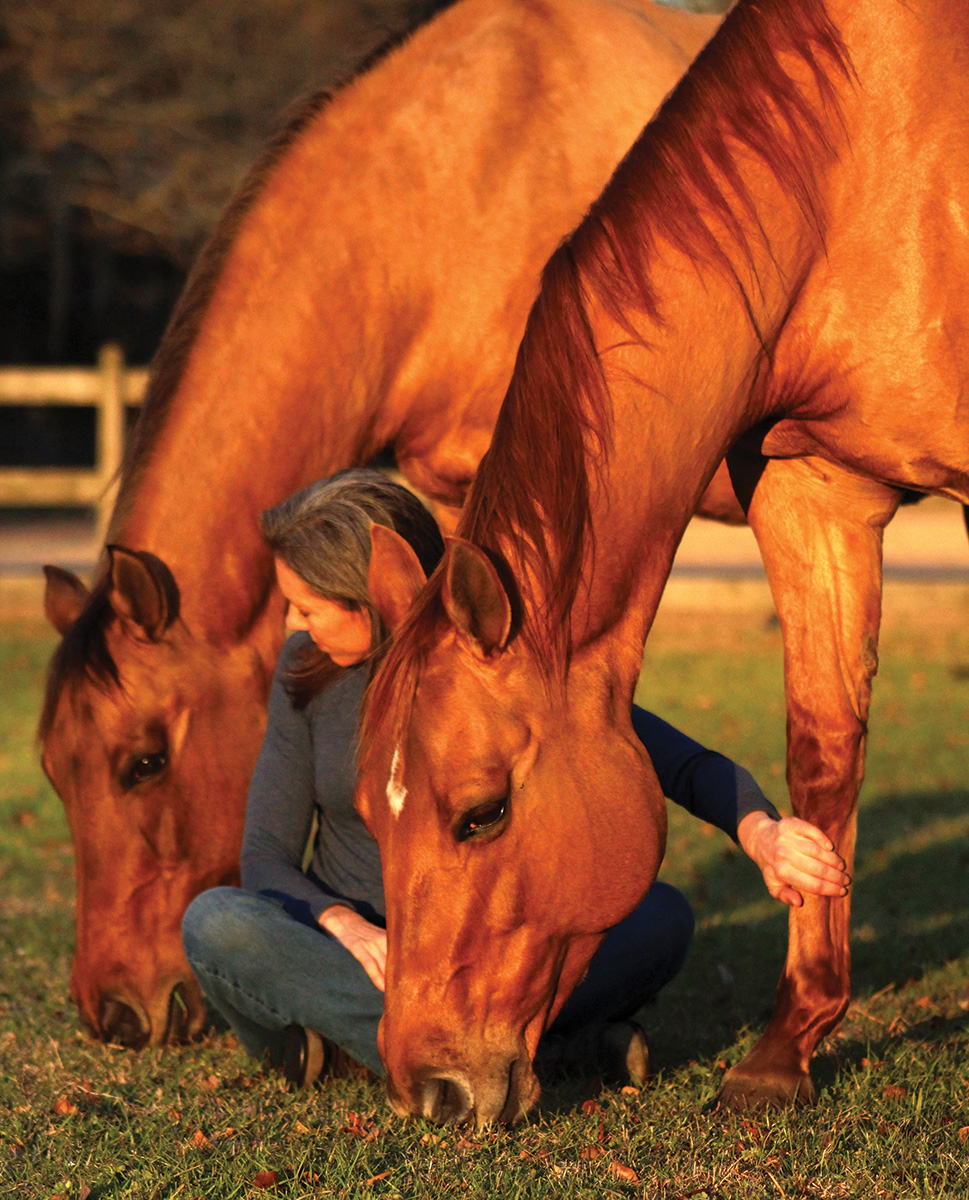
When Kim Hallin, the founder of equine facilitated learning company Unbridled, LLC brought her horse Tempo into the world, it was with the intention of having a sport partner.
Kim Hallin sits with Puck and Tempo while they graze. Photo by Sadie Serio
But the spunky filly was about to challenge everything she thought she knew. From birth, Tempo was not interested in passively following someone else’s path for her. And after a major injury early in life, the stress of recovery led her to develop severe aggression toward humans.
“Horses are flight animals, and [Tempo’s] flight was taken away,” says Hallin.
Aggression toward humans can result from trauma rooted in unmet emotional and instinctual needs. Photo by Nadine Haase/Adobe Stock
She explains that Tempo’s injury required frequent, often invasive, treatments and drastic reductions in her physical freedom. It didn’t take long for the young mare to connect humans with a loss of autonomy.
And although Hallin was trying to help Tempo heal, “[I was] the one opening that stall door every day but [not] letting her out. She came to associate humans with a loss of control over her body.”
Even after Tempo regained access to turnout with the herd, she retained her aggression toward humans, charging the fence whenever someone approached. And despite Hallin’s natural horsemanship skills, the situation did not improve. They made progress during training sessions, but interactions outside of those controlled environments triggered her aggression.
When Hallin recognized Tempo’s behavior as resulting from trauma rooted in unmet emotional and instinctual needs, she was able to ask the horse what she needed and take steps to give her more choices. That is when she started to see real change.
From Shutting Down to Autonomy
Indeed, the fundamental take-home lesson for all of us, regardless of discipline, is probably the importance of autonomy, or providing the opportunity for our equines to consent.
Cook has earned a reputation as someone who works wonders with a horse whose body has shut down—a horse that may not have many options left. The first time he met the 21-year-old horse we’ll refer to as Zeus, the horse reared and struck at him as soon as he stepped into the arena.
When the horse stopped fighting and stood still for a moment, Cook was struck by his physical condition. Zeus’ medical history includes polysaccharide storage myopathy (PSSM) and completely degenerated suspensory ligaments, among other problems. His pasterns were parallel to the ground, and he was unable to flex to the left due to a large knot at the base of his neck.
Despite this, Zeus had likely spent a long time stoically performing dressage movements for his human before his will and his body finally sent up a vehement protest.
“That was his expectation of what a trainer in the arena was,” says Cook. “He had to protect himself. He did not feel safe in his lessons, so he’d started to turn his body off.” That was what had led his humans to Cook.
It took a year before Zeus was ready for a lesson. But when he eventually opted in, he easily executed a Spanish walk, and happily offered piaffe, both movements that unlocked tension in his back.
“In that moment, he guided me to movement that felt good in his compromised body,” says Cook.
A year into work with Cook after shutting down due to physical problems, Zeus (not the actual horse pictured) was ready to opt in, offering Spanish walk and piaffe as comfortable movements. Photo by Christiane Slawik
Trauma-Informed Horsemanship Requires Listening for Consent
Trauma-informed horsemanship teaches us that consent is essential, even if we aren’t asking horses for such active engagement or performance.
Hallin sees a need for better consent practices in the world of equine therapy. It is too easy for a horse to shut down in those settings, and that will have negative consequences for horse and human alike.
“Are we re-traumatizing people when we’re having them participate in or observe nonconsensual therapy sessions with the horses?” she ponders.
Hallin sees a need for better consent practices in the world of equine therapy. It is too easy for a horse to shut down in those settings, and that will have negative consequences for horse and human alike. Photo by Jordi Mora/Adobe Stock
Aitken is also careful to begin every therapeutic or saddle-fitting assessment by focusing on connection.
“Oftentimes, if there’s a horse that hasn’t been listened to in a while, just being there and listening to what he’s saying is a huge deal,” she says.
The variety of techniques available to modern bodyworkers allows Aitken to adapt to the horse’s wants and needs, whether that is simply synchronized breathing or energy work or physical manipulation of some sort.
Key Takeaway: Finding a Path Forward
As essential as consent is, it’s often just the beginning.
Trauma-informed horsemanship doesn’t stop with just horse or human. Professionals like Cook, Aitken, and Hallin have embraced the approach more as a philosophy than a methodology, using it to shape a holistic lens that considers the whole emotion-body cycle and makes space for healing in horses and their people.
“You don’t have to do anything but honor what [the horses] tell you,” says Cook.
Riding stables are facing a staffing crisis when it comes to finding capable employees. Photo by Shelley Paulson
If you’re looking for a job working at a riding stable, you’re in luck. There are countless openings for stable help and qualified instructors across the country—it’s a job-seeker’s market right now due to working shortages affecting riding stables. The United States is not alone in its struggle to keep a full workforce; the UK’s Horse and Hound magazine reports that a number of riding schools have decreased offerings due to a shortage of workers, horses and funds. The recent headline: “Looking for Work? Canada’s Horse Industry Has Endless Opportunities” from the American Horse Publications newsgroup describes worker shortages in Canada.
But why the shortage? Can it be solved? And how will it affect the future sustainability of riding stables?
Shortage of Young Workers
Colleges with equine programs receive requests for graduates by riding stables. Marny Mansfield from SUNY Cobleskill indicates that “on the average, I receive one request a week for either barn help or a therapeutic horsemanship instructor. There is an unmet demand, since most of my students get swept up after their internship.”
In addition to the decreased supply of workers, stable employers report a decrease in the knowledge and skill level of applicants. Where do potential workers obtain the needed knowledge and skill sets?
Years ago, many kids would be a “barn rat”—someone who would spend long hours working at a stable in exchange for saddle time. That option is less available today. Robin Brueckmann, dressage professional and a former barn rat, extolls the value of that immersive experience and points to the German saying, One only learns riding by sweeping.
Kids also gain equine knowledge and skills by participating in 4-H, Pony Club, camps, et cetera. If there are fewer qualified staff available, who will train the next generation?
A few indicated that they would pursue a non-horse career to afford horses as a hobby. Teachers described equine classes that have been added to their high school curricula, along with kids participating in Interscholastic Equestrian Association (IEA) riding programs.
Creativity is the key to possible solutions. Work-to-ride programming, like the old barn rat programs, are popular.
One such program is offered by Kim Gundersen at Equine Journey in Lakeville, Mass. The average age of kids in Gundersen’s program is 7 to 12—before they tend to lose interest or take up other activities.
Interestingly, there is a resurgence of adults over the age of 35 that participate in the work-to-ride program. Participants gain knowledge and skills, and Gundersen gains assistance in caring for the horses.
“The world is different now,” she says. “I don’t know where the teenagers are, but I wish they’d come back to the barn.”
Hours, Pay, and Benefits
Stable owners need to have business management skills to help make sound decisions. Kris Young of Touchstone Farm in Lyndeborough, N.H., says that flexibility is needed to meet the needs of workers.
To increase worker supply, the horse industry must promote why a position at a riding stable is a sound career choice. Kitty Stalsburg, executive director and instructor at High Hopes therapeutic riding center in Old Lyme, Conn., indicates that the horse industry tends to be myopic and needs to look outside of the box for solutions.
The pay scale also needs to be competitive. Stable owners must not overwork their staff. If four staff are required to run the stable, but only two are hired, the temptation to overwork and burn out the two is high.
Stable managers need to support their staff and provide additional incentives, such as benefits, time off, education, and other perks. Stable owners should be ready to step in and continue training employees to fill the knowledge gaps. Home-grown instructors can provide solutions.
Focusing on the benefits of the horse and human connection can be a powerful selling point. Following the work of organizations, such as Horses and Humans Research Foundation, which supports research and provides webinars about why horse connections are powerful, can provide sound, useful data.
Key Takeaway
With high overhead, lots of hard work, and a decreasing work force, there is a concern for the future of stables and horseback riding as we know it. So why work in this industry?
“I love the connection with the horses and how I feel around them, and I love sharing it with others,” says Gundersen.
A youngster puts it in more current terms: “A horse connection is chill!”
The working shortages across our riding stables are a troubling phenomenon, so put on your thinking cap to help our industry find creative solutions.
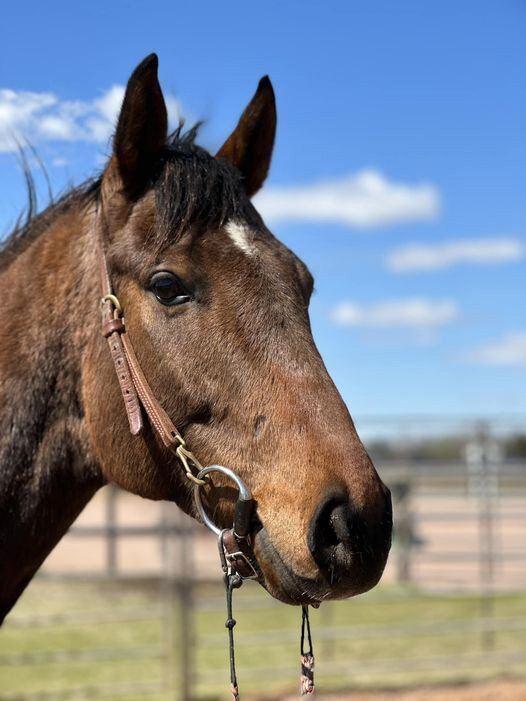
Delvin To It was responsibly retired from racing and is now eagerly searching for his next career path. With his elegant movement and graceful presence, he shows promise as a versatile prospect capable of excelling in various riding disciplines. Delvin To It is a sensitive and intelligent gelding who requires a patient, understanding handler. He is slow to trust and may initially display hesitation or uncertainty. However, with time and patience, he is gradually building confidence and forming stronger bonds with those around him. While he may not be suited for a beginner rider due to his sensitivity and greenness, in the hands of the right person, he has the potential to excel in any sport.
Delvin To It is a work in progress, with a focus on building trust and confidence in his interactions with humans. His sensitivity requires a gentle approach, and progress is being made through consistent, patient work. Each day brings improvements, and he is showing promising signs of development as he becomes more comfortable.
If you’re an experienced rider looking for a rewarding project horse and are willing to invest the time and effort into Delvin To It’s continued training and development, we encourage you to consider him for adoption. His sensitive nature and potential for greatness make him a special candidate for the right individual or family.
ASPCA Right Horse is the online adoption platform of The Right Horse Initiative, a collection of equine industry and welfare professionals and advocates working together to improve the lives of horses in transition. A program of the ASPCA, their goal is to massively increase horse adoption in the United States. To find more adoptable horses and foster horses, visit www.myrighthorse.org. To learn more about The Right Horse, a program of the ASPCA, visit www.aspcarighthorse.org.
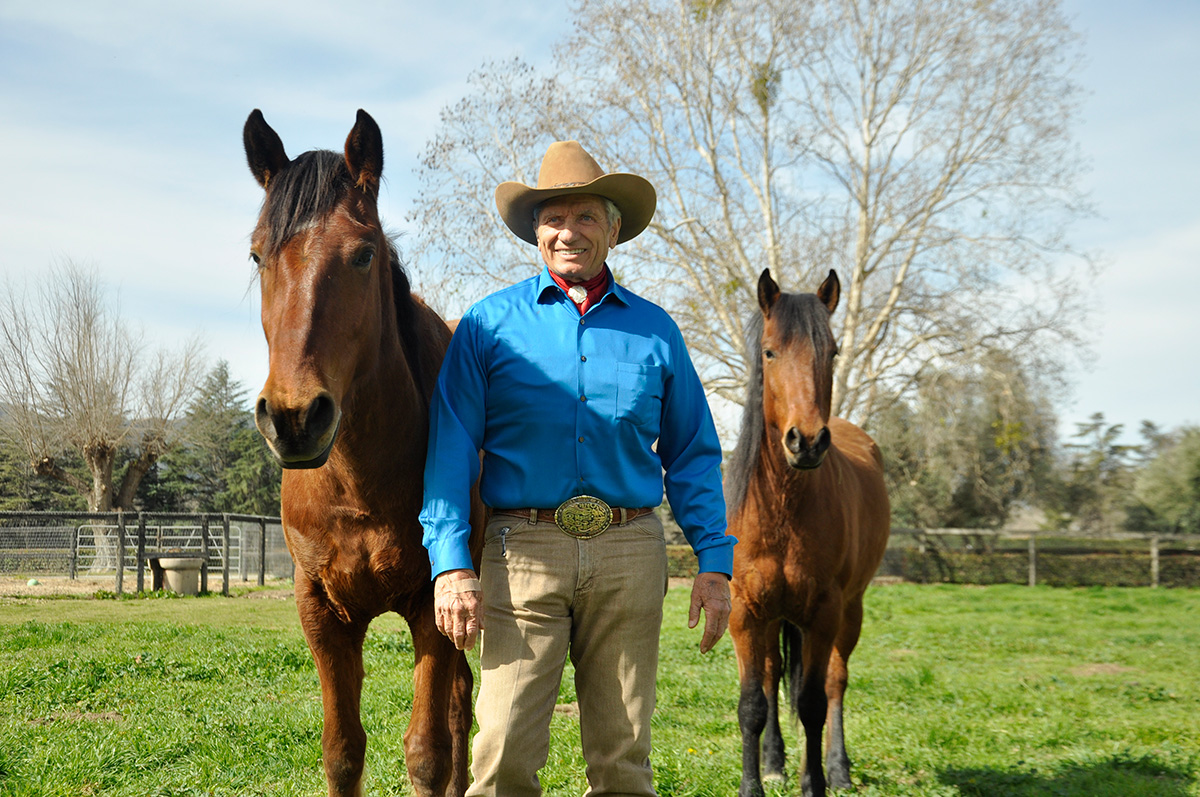
Welcome to Barn Banter, the official podcast of Horse Illustrated. In Barn Banter episode 27, hosts Susan Friedland and Horse Illustrated Editor In Chief Holly Caccamise chat with respected horse trainer Monty Roberts, known for his natural horsemanship methods. To end the episode, they chat with Leslie Stewart, Executive Director at Wild at Heart Horse Rescue in Lancaster, Calif., about Graycie, this month’s ASPCA Right Horse adoptable horse.
American horse trainer Monty Roberts is known for his techniques of natural horsemanship, specifically Join-Up—the core concept of his training method. Roberts believes that horses use a non-verbal language, which he terms “Equus,” and that humans can use this language to communicate with horses. In order to share his knowledge of horsemanship, Roberts has authored a number of books including an original best-seller, The Man Who Listens to Horses, and regularly tours with live demonstrations worldwide. Roberts also founded the Monty Roberts International Learning Center to teach his methods in Solvang, California, and an “online university” to promote his ideas. Learn more about him at montyroberts.com.
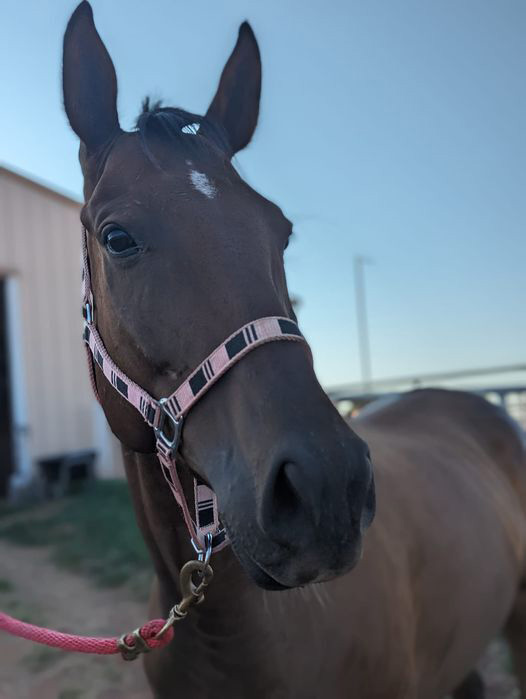
Graycie is a stunning 15-year-old Arabian mare who truly does it all. Whether you’re looking for a partner in the arena, a confident trail companion, or a talented jumper, Graycie has you covered. Her versatility and calm demeanor make her the perfect match for a rider seeking excellence in all areas. Ready to take your riding to the next level? Graycie is eager to be your next best partner!
Since 1992, Laura Connaway of Connaway and Associates Equine Insurance Services, Inc. has been working with her team to bring a personalized touch to the horse insurance market, offering competitive coverage for horses, horse farms, and equine liability. As an insurance agent, the most important part of the role is to inform and educate clients so they understand the coverages that are available to suit their individual needs. Laura addresses several of the most commonly asked questions below.
When do I need to notify my insurance company of changes in my horse’s condition?
Your insurance carrier requires notification of any changes in the condition of your horse. It is a part of your insurance contract to notify the insurance carrier of any accidents, illnesses, injuries, diseases, lameness, or any time your horse receives non-routine care. Late reporting may impact your coverage under the policy and may affect your ability to make a successful claim. If you do not plan to file a claim, an incident-only report can be provided to fulfill your requirement to notify the insurance company of the change in condition.
Should I call my vet or my insurer first in case of a medical emergency?
In the event of a medical emergency, contact your veterinarian immediately and proceed with life-saving care. Next, contact your insurance carrier using the emergency phone number in your policy or listed on the ID cards provided by your agency. The carriers we work with all have 24/7 emergency numbers. Our agency also monitors the phone for emergencies and will assist our clients in the event of an after-hours emergency. It is important to provide insurance emergency contact information to your horse’s caregivers so they know who to contact in the event of an emergency.
I would like to change my horse’s insured value. How would I go about it?
In a horse mortality policy, Full Mortality is the base coverage; it reimburses you up to the insured value of the horse for death, theft, and authorized humane destruction. If you think the Full Mortality Value/Insured Value of your horse has changed during your policy period, contact your agent. If you would like to request an increase in the insured value due to show results or professional training, your agent will provide this information to the insurance underwriter for a value review. If the insurance underwriter agrees with your requested value, a policy endorsement will be issued to increase the Full Mortality limit in your policy. If you would like to request a decreased value, this can be done at any time. Value changes can be requested at any time during the policy period; contact your agent to discuss the process. The available medical options may change if the full mortality value is changed.
My horse has changed careers. Do I need to let my insurer know?
The “use” of your horse refers to the job or jobs your horse performs, such as show hunter, show jumper, dressage, eventing, barrel racing, trail riding, roping, driving, or breeding, to name a few. If you decide to switch disciplines or add additional disciplines to your horse’s résumé, then that means the “use” of your horse has changed. For example, if you start jumping your dressage horse, start eventing your show jumper, move your event horse up a level, or decide to breed your horse, the “use” of your horse has changed. The insurance carrier requires notification of a change or addition to your horse’s use. The available coverages and insurance carrier ratings vary by use. If a change in use is not reported to the insurance company, your coverage may be impacted in the event of a claim.
I’m buying a new horse — how does that affect its insurance coverage?
In order to insure a horse, you must have an insurable interest. If you purchase a new horse in full and you are the only owner, you are the only party with a financial interest/insurable interest in the horse, and you need to take out an insurance policy in your name (or the name of the entity that owns the horse). The seller (if paid in full) no longer has an insurable interest in the horse, and any insurance on the horse carried by the seller ceases when the horse is sold. All parties with a financial interest in the horse must be disclosed in the insurance application (for example, owner, co-owner, lessee, loss payee, etc.). If the ownership interest in a horse changes at any time during the policy period, you need to notify your agent.
A few examples of changes in ownership include adding a co-owner, changing the ownership from an individual’s name to an LLC, or leasing your horse. The insurance carrier requires notification of any ownership changes at the time of the change or lease.
What happens if my horse is stolen or needs to be put down?
In the event of your horse’s theft or death, report the loss immediately to your insurance carrier. In cases of theft or vehicular involvement, such as a car accident, contact the police. Do not have your horse euthanized without authorization from your insurance carrier. If your horse is found deceased, report the death immediately. A necropsy will likely be required if the horse is euthanized or is found deceased. It is important to advise your horse’s caretaker of these loss notification procedures.
Working in-hand with Bailey, a Dutch Warmblood from the Netherlands, Chris Irwin demonstrates how to help a nervous horse relax with well-balanced movement. Photo courtesy Chris Irwin
Chris Irwin really gets horses.
Watch him at work—communicating with a horse—and you can see why Ireland’s Equestrian magazine boldly stated, “Chris Irwin is more horse than human.” As a world-renowned horseman, professional trainer, riding coach, and author of the international best-selling books Horses Don’t Lie and Dancing With Your Dark Horse, Chris Irwin artfully unravels the complex relationship between horses and humans. And attendees at his U.S. or European clinics leave with a renewed desire to build a more meaningful connection with their own horses.
Finding a Real Home Through Horses
Irwin didn’t grow up enveloped by the love of family and horses.
“I dropped out of school and left home at 16,” says Irwin. “It was an extremely violent, dysfunctional family and I ran away to survive.”
He played guitar and hitchhiked from Canada to North America, eventually landing in Seattle, Wash. Around the age of 20, he was homeless and living off tips tossed in his guitar case. He heard the racetrack was hiring and decided to check it out.
“As soon as I walked around to the barns, smelled the horses, heard the horses, I literally froze and every cell in my body was tingling,” Irwin recalls. “I knew for the first time in my life that I was home.”
At the end of his first day, the trainer told him he was a natural, gave him a full-time job and a place to stay—a cot in a stall—and Irwin worked his way up from mucking stalls to grooming horses.
Later, he worked at dude ranches and enjoyed success in training wild Mustangs. After ten years, Irwin needed a change.
“I was struggling to earn a living, so I took a six-month break and went back to Canada to ski and do some soul-searching,” says Irwin. “And at the end of winter, I so missed being with the horses. The horses were my medicine, and I needed to get back to work with them.”
He took his passion for horses to the next level, transitioning to trainer-for-hire. After moving to Nevada, he had a long waiting list within six months—”starting young horses, problem-solving with difficult horses.” Veterinarians and farriers were amazed at how much gentler the horses were that Irwin worked with.
At 37, Irwin moved back to Canada—now as a family with his wife and child—and got right to work, reinventing himself as an author, becoming an in-demand clinician, and making videos.
“I wrote Horses Don’t Lie with a good friend,” says Irwin. “By 2000, Horses Don’t Lie was being published in multiple languages and I was getting called to Europe and North America. I was very surprised with how well the book resonated with people because nobody really said anything like that at the time. I wrote a book talking about how I’m finding my psycho-spiritual healing through working with horses. It didn’t have any practical training tips. It was one of the first books that started leading North American horse culture in the direction of working with horses for personal development. I thought there was a good chance I would become a laughingstock.”
He was wrong; people appreciated his authentic voice deciphering natural horsemanship and our connection to horses.
Helping Horses to Rebuild Confidence
Irwin travels to clinics worldwide, helping horses regain courage and confidence, profoundly impacting their overall well-being—and each horse has a story.
“There’s a horse I work with now in the Netherlands who was rescued as a bull-fighting horse from Spain,” says Irwin. “He had brutal training, had been gored by a bull in a fight, and was full of PTSD. I’d been looking at him, knew trauma was in him, and I knew how to help him get it out, how to release it. I started working with him last year. And what a breakthrough! He is very near and dear to my heart—he shows a depth of appreciation for the healing that he has gone through.
Horses often bring me to tears… I’ve wept in public because of what’s coming out of the horse… There’s much more depth in learning what it takes to help horses who have already decided that human beings are evil and don’t want anything to do with us. That’s where my focus is.”
Chris Irwin as the Empathetic Shepherd
Irwin wants horses to see us as empathetic shepherds and thus want to be in our presence.
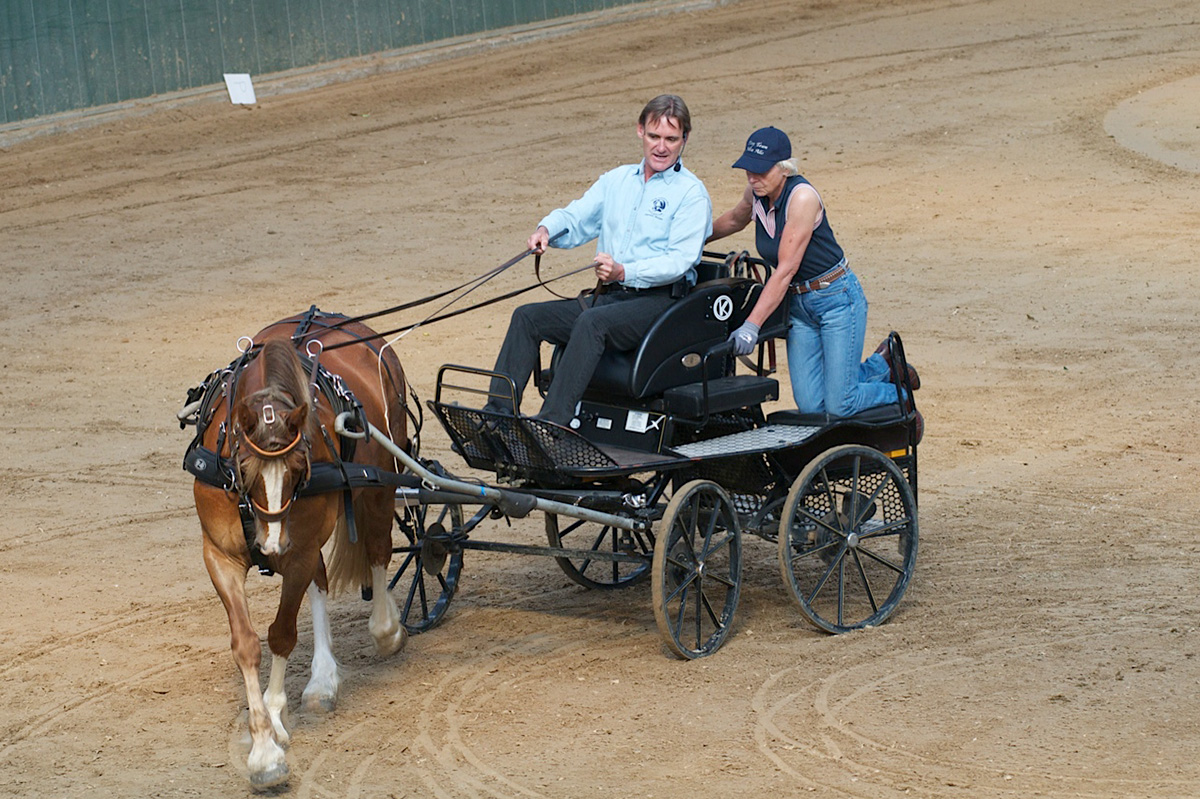
Chris demonstrates how to redefine contact when driving to help a gelding relax at an expo in Brussels, Belgium. Photo courtesy Chris Irwin
“The premise of everything in my work with horses is that the frame of their body affects the frame of mind. It’s physiology,” says Irwin. “Their body goes into different shapes, different frames… A hollow-backed horse with his back collapsed and his neck up high is producing adrenaline. And enough adrenaline on a consistent basis leaves the body full of cortisol.”
Irwin explains, “The goal is to use groundwork and riding where you use your body to shape a horse’s body so that its internal chemistry produces oxytocin and endorphins, not adrenaline. That’s why it’s feasible for a horse to walk away from the feed and other horses and meet you at the gate, because he knows this is going to feel good. When I ride a horse, it’s like giving them a day at the spa. My seat is a chiropractor. My legs are massage therapists. My contact is like osteopathy. Horses love it when they feel better with you than without you. That’s how they know you’re the shepherd.”
Horses Test Your Awareness Through Body Language
Purposeful groundwork with a physical connection can be complex; some riders mistakenly underestimate its value.
“Groundwork is competing in body language with the horse—to earn respect, trust, and acceptance of your leadership,” says Irwin. “When you walk in to meet a horse you’ve never met before, it doesn’t automatically respect you. Even the nicest horses in the world— if you are a stranger—will test you very subtly with body language.”
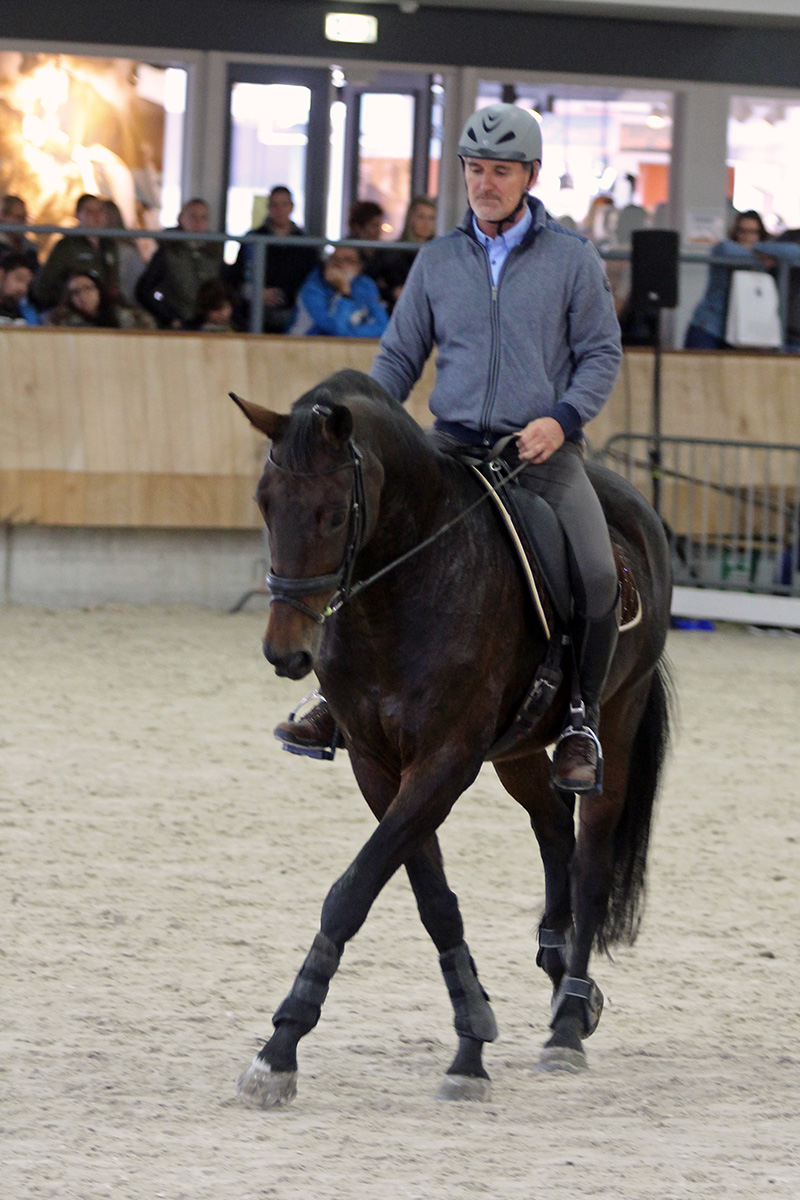
At a horse expo in the Netherlands, Chris rides a mare he had never met before, helping her transform from high-stress into beautifully relaxed and soft. Photo courtesy Chris Irwin
Your body language can cause a horse to feel safe with you, allowing them to relax and view you as the shepherd.
“The horse knows if you have profound situational awareness,” Irwin explains. “He’s tested you. And your response when challenged makes them feel good.”
Tapping Into Chris Irwin’s Insights
Irwin explains his riding approach as “physio from the saddle—helping the horse to relax in his body. The softer and more supple we can get the horse in their bodies, the more relaxed they will become in their minds.”
“The courses are a combination of evolved equestrian insights, cutting-edge production quality, and use of graphics and illustrations as learning aids,” says Irwin. “And I have a completely different approach—due to the depth of minutia of awareness.”
Citing an example, Irwin says, “The single greatest, unspoken dysfunction in the horse world is defining inside and outside as direction instead of flexion. And when you ride a horse according to flexion instead of direction, it melts. It gets so soft. And whether it’s five or fifteen minutes later, now you are riding straight down the long side and you are getting true bends in the corners because you warmed up working with the horse and not against it.”
Spoken like a true shepherd.
To learn more about Chris Irwin, horsemanship, and clinics visit chrisirwin.com and Ray of Light Farm, a nonprofit animal rescue center and riding school in East Haddam, Conn., where he serves as a clinic director.
We use cookies to help personalize content, tailor and measure ads, and provide a safer experience. By navigating the site, you agree to the use of cookies to collect information. Read our Cookie Policy.