Click the graphic above at 6pm EDT on June 6 to listen to the radiothon.
The Horse Radio Network (HRN) has announced the creation of Horse World Gives Back; a charitable initiative aimed at uniting the horse world in a fund raising drive that will benefit horses and horse owners affected by the recent flooding and tornadoes across the United States.
HRN will host a 3 hour LIVE broadcast on June 6, 2011, 6-9 pm Eastern as a fund raising effort called the Horse World Gives Back Radiothon followed by a Horse World Gives Back Retail Day on June 7, 2011. Participating retailers will give back 5% of the day’s sales to the charities that will direct the funds towards helping horse owners across the country whose horses have been affected by the devastating weather damage.
This relief aid is being channeled through the Kentucky Horse Council’s Equine Disaster Relief Fund and the Red Cross. HRN and its media partners are reaching out to equestrian and equine related organizations to become involved and unite the horse world in this nationwide effort.
HRN Hosts, Glenn, Jamie and Chris will be hosting the Live Broadcast on June 6th from the Red Cross Headquarters in Lexington, Kentucky which can be heard on the Horse World Gives Back website at www.horseworldgivesback.com and its many affiliate partners listed on the website. Guests will include horse people affected by the devastating weather that has displaced so many horses and their owners, Red Cross representatives, prominent riders and members of the horse community.
How you can get involved:
Website Owners and Associations: Help us promote the Radiothon and Retail Day through your email lists and social media. Plus, you can post the Radiothon Player on your website so people can listen to the show on your site. It is a simple embed code – get the embed code now.
Retailers: Please consider giving back and being part of this national fund raising event. Sign up to be a participating retailer for Horse World Gives Back Retail Day on June 7, 2011.
Wholesalers, Manufacturers and Horse Businesses: Please call the Radiothon and pledge your support. There will be a page on the Horse World Gives Back website to list corporate pledges.
Horse Owners and Riders: Tune into the Radiothon and donate what you can to help those in dire need. Plus, if you were planning on buying anything horsey in the next month, please make the purchase on June 7 at one of the participating retailers.
Boyd Martin shown here with Neville Bardos at the 2010 Rolex Kentucky Three-Day Event. Neville Bardos is one of the horses that was rescued from the barn fire. Photo: Leslie Potter
A midnight fire destroyed a barn at Phillip Dutton’s True Prospect Farm in Pennsylvania. The barn was rented by fellow U.S. Eventing Team member Boyd Martin and housed 11 horses in training with Martin. Six of the horses perished in the fire.
According to a report on the blog Eventing Nation, Martin’s groom Lillian Heard smelled smoke in the middle of the night and sounded the alarm. Members of Martin and Dutton’s teams worked to rescue the horses as quickly as possible and managed to save five of them including Neville Bardos, Martin’s mount from the 2010 Alltech FEI World Equestrian Games. The grooms who went into the burning barn were treated at a local hospital and released.
The cause of the fire is unknown, but early reports suggest it was an electrical fire.
The following statement was posted on Martin’s blog on Tuesday morning.
As many of you have already heard thanks to excellent reporting from John Thier at EventingNation.com and the folks at PRO, last night there was a barn fire at True Prospect Farm.
Six horses were lost in the fire: Call Me Ollie, Charla, Ariel, Phantom Pursuit, Cagney Herself, and Summer Breeze.
Currently undergoing treatment at New Bolton Center are Neville Bardos, Otis Barbotiere, Catch a Star and Ambassador’s Rose.
Lillian, Caitlin and Ryan were treated and released from Jennersville Hospital.
Obviously this is a difficult time, and our deepest condolences go out to everyone connected with these horses. We are grateful for your thoughts and prayers and all of the messages and well wishes that we have been receiving from the eventing community. We will keep you updated as we receive more information.
I can’t seem to live a life with horses without also somehow living a life with dogs. Whether they’re barn dogs or house dogs wishing to be barn dogs, I always have a story or two to share. Today is no exception.
First off, there’s my little Schnauzer, Betsy. Though she weighs all of fourteen pounds and consists primarily of whiskers and a stubby tail, she imagines herself to be a Doberman. Lacking any herding ability or the canine commonsense to stay clear of hooves, she’s confined to the house and patio. Once in a while, however, she’s permitted to patrol the barn area, a duty she assumes with the self-importance of a German Shepherd.
About a week ago, during a skirmish with a lizard she was determined to keep from invading the stack of hay bales, she cut her paw. That led to some obsessive licking, which then brought forth an infection, requiring several trips to the vet clinic. Betsy was prescribed a course of antibiotics and twice-daily foot soaks with an antiseptic solution. What she found even more distasteful, if not downright humiliating, was that she was also required to wear a rigid collar strapped around her neck to prevent her from licking her paw. Yes, she was forced to wear The Cone of Shame. Immediately her demeanor changed. She seemed to think that every other dog was looking at her. And laughing.
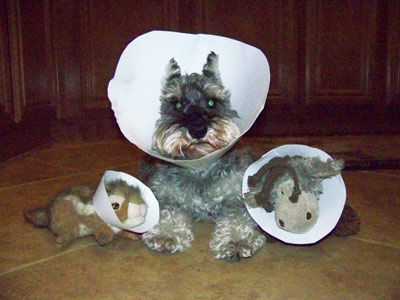
To help lift her spirits I rummaged through my craft supplies, found some construction paper, and made her a modified Cone of Shame. It wasn’t quite as cumbersome yet it still did the job. Then, to make her feel even better, I rounded up a few of her favorite toys and made cones for them, too. I know. Either I’m becoming one of those nutty people who worry about their dog’s psychological well-being or I have too much free time. Maybe both.
Then I got a call from my parents. Perhaps you’ll remember that their ranch dog—I can’t help but roll my eyes while I’m typing that description—is a big ol’ dopey Labradoodle named Skippy. During his puppyhood, which curiously lasted about four years, he displayed a propensity for chewing up stuff. It went far beyond leather tack, curry combs, sweat scrapers and spray bottles of Show Sheen. Skippy also ate through the seat covers and seat belts on the ranch truck. Twice. He was just as destructive inside my parents’ house. Remote controls for the TV and countless pairs of reading glasses met their demise in the jaws of Skippy.
What had he done this time? My mom had left $35 on the kitchen counter, payment for a local guy who tractors the riding arena. I guess there’s nothing quite like the taste of paper money, because Skippy stood up on his hind legs, grabbed the stack of bills and began chomping away. In a few moments he’d reduced the $35 to a pile of green and gray confetti.
My parents sounded a little too nonchalant as they recounted this tale. Me? I was astounded. To my estimation, that brought the grand total of Labradoodle destruction to around $1,000. Well, $1,035.
“Oh, but he didn’t eat the money,” my dad said in defense of his dog.
My mom chimed in, “He only took it and chewed on it. It was just his way to try and get our attention.”
Well then, that makes such behavior so much less… felonious.
Fortunately, my mom was able to piece the tidbits together, taping them to a piece of paper like a jigsaw puzzle. Then she took her little arts ‘n crafts project to the bank where, amazingly enough, she was able to swap it for fresh, non-slobbered money. Maybe my mom has too much free time, too.
Read the above materials, then take this quiz on deworming and earn extra credit point towards you Club Horse account! Take the quiz now >>
Instructor:Karla Rugh, D.V.M., Ph.D., of Rocheport, Missouri, has been a veterinarian for more than 35 years. She has experience in equine/food animal practice, companion animal practice, academia and research. She has written three books and more than 50 articles about pet care. Dr. Rugh owns five horses, who reside at Sycamore Hollow, her family’s farm.
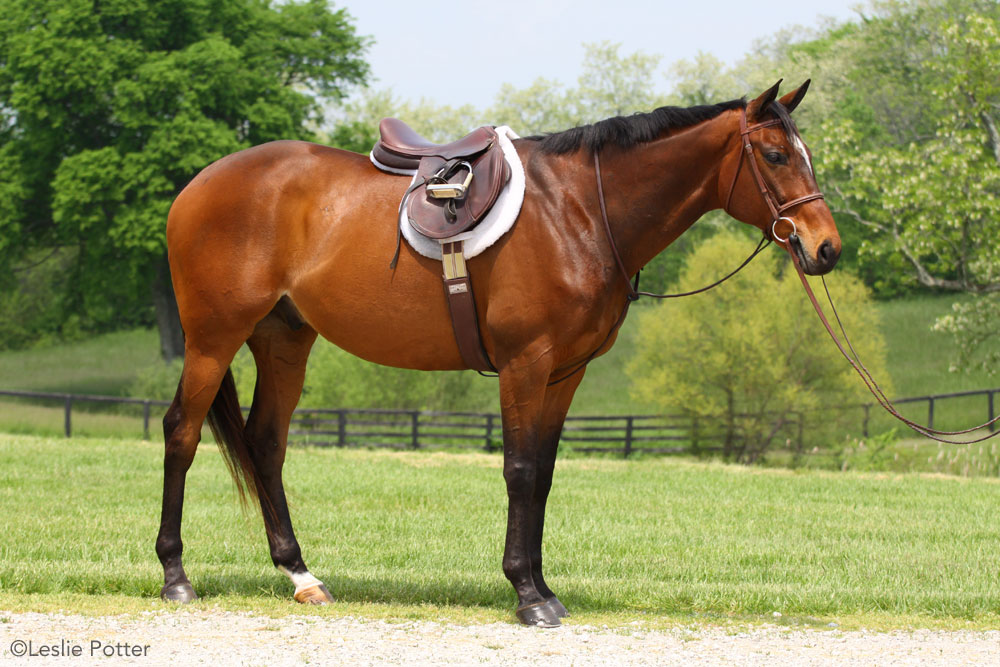
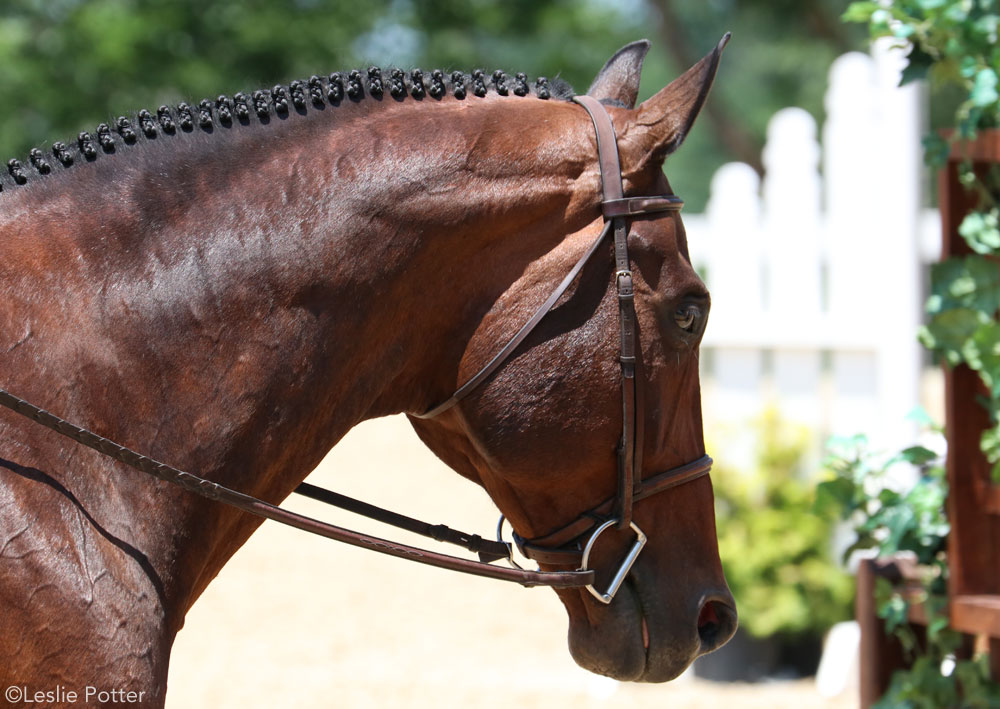
Reading Assignment: Learn basic English show grooming techniques to prepare your horse for the hunter ring.
Video: Watch a demonstration on how to groom your horse for a hunter show. Video Part 1 | Video Part 2
Quiz: Test your knowledge about English show grooming basics.
Instructor:Cindy Hale enjoyed a lengthy competitive career in hunters and hunt-seat equitation. She’s a popular judge at local and county-rated English horse shows
The Western States Horse Expo is proud to announce that its thirteenth presentation of the event will be the best ever. In light of the recent concern about Equine Herpesvirus, the event management has taken extraordinary measures to protect the horses that will appear at Cal Expo, Sacramento, June 10-12, 2011.
“We have been in constant contact with the California Department of Food and Agriculture during this time,” comments Miki Cohen, founder and president of WSHE. “We even arranged for Dr. Kent Fowler of the CDFA to appear on television news to explain this disease and report on the number of horses it has impacted. It’s important to note that the CDFA has not recommended that any equine-related event be canceled. We have also monitored how other organizations are dealing with this concern, and have taken note that the National Reining Horse Association and the National Reined Cow Horse Association — two groups who put on a number of competitions like our Magnificent 7 — are not recommending that any event be canceled.”
The permanent barns at Cal Expo are being disinfected according to the guidelines put forth by CDFA, and the temporary stalls that are brought in for the event have not had any horses in them for over six months. However, those stalls will also be disinfected.
“We will have a veterinarian on-site the entire time,” continues Cohen. “And each horse will be looked at by a veterinarian on a regular schedule each day. The veterinarians will also use a temperature chart on the front of each stall as recommended by California Department of Food and Agriculture.”
As of May 27, there have been no new cases reported for five days, according to the CDFA, and the count in the state of California remains at 18. All 18 cases are directly related to horses who were at the National Cutting Horse Association’s Western National Championships (NCHA) held at the Golden Spike Event Center in Ogden, Utah from April 30 to May 8, 2011 and the Kern County Cutting Event in Bakersfield, California on May 13, 2011. CDFA has quarantined all 18 infected horses.
To put those numbers in perspective, according to the American Horse Council, California is home to over 700,000 horses.
Dave Hammond, who runs the Horse Sale at the Expo, reports that 115 performance horses will be at the sale, with all horses available for viewing on Friday, June 10, followed by the sale on Saturday, June 11 starting at 3:00 p.m. in the Wrangler Arena. These top-quality horses include Richard Winters’ 2007 gelding that was his colt in the “Road To The Horse” competition in 2010.
“All our clinicians are bringing their horses as planned; even Jonathan Field is bringing his top horses from Canada. The Magnificent 7 competitors are bringing their horses to compete in this world-renowned stock horse event, and the breeds will bring their finest to display,” states Cohen.
“Even if the government mandated that no horses were to be transported anywhere for a certain amount of time,” says Cohen, “the Horse Expo would proudly continue. This event brings such a variety of speakers, educational topics, a trail symposium, equine health topics, breeding information, availability of state-of-the-art equipment, trailers, trucks — the Horse Expo will always happen!”
Management of the Western States Horse Expo is taking every measure possible to insure the health and welfare of these magnificent animals as they bring the Expo audience the thrill of competition, knowledge through education, admiration through breed displays, availability of purchase, and of course, the heartfelt fun of watching a young child fingerpaint a gray horse.
For more information regarding the 13th annual Western States Horse Expo, visit www.horsexpo.com.
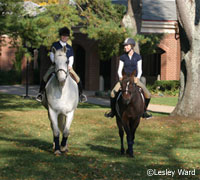
Students in a college equine science program take their equestrian education to the next level. Photo: Lesley Ward
Having a horse of your own has a lot of benefits. You develop a bond, an understanding. You learn each others’ idiosyncrasies and adapt accordingly. You know your horse’s personality so well that notice immediately when something is amiss. Your horse anticipates your cues so well that you think he might be able to read your mind.
These same benefits can also be liabilities when it comes to your progression as a rider. Instead of having to fix your bad habits as a rider or while working around horses, they persist as your horse has adapted to them. Likewise, you’ve started to ignore your horse’s quirks and forget that you shouldn’t let him get away with certain things.
Riding and working with horses is a never-ending learning process, but one that you might start to neglect when you reach a comfort zone with your own horse. What steps do you take to continue improving as a horseperson?
There are plenty of ways to make sure that your skills as a rider and horseperson don’t become stagnant. You can take lessons on your own horse or attend clinics with different trainers to get feedback on your riding and your horse’s performance. You can sign up for lessons at a different stable to get some saddle time on horses other than your own. You can have someone videotape your rides so that you can see problems that you might not catch while you’re in the saddle. Even reading books and articles or watching training videos can help you get new ideas on how to improve your riding.
Click “Submit a Comment” below and tell us what you are doing—or what you’d like to do—to improve your skills as a rider and horseperson. Some of our favorite responses may be printed in a future issue of Horse Illustrated.
One selected response may be selected by the editors to win a monthly prize! If you would like to be eligible for the prize, please include your email address in the comment form (email addresses are not publicly displayed.)
The first day of summer isn’t until June 21st, but in the United States, Memorial Day marks the unofficial beginning of the season of beaches, barbeques and long hours spent in the saddle.
While you’re enjoying the first trail rides and horse shows of the season, remember that health problems resulting from heat can sneak up on you and your horse. Take precautions to avoid heat-related health problems.
1. Know the signs of heat exhaustion. In horses, symptoms include weakness, stumbling, increased temperature (higher than 102 F) and elevated pulse or respiration. In serious cases, a horse may stop sweating (anhidrosis). To help a heat-stressed horse cool down, offer water in small amounts, hose him down with cool water, keep him out of the sun and, if possible, in front of a fan. If his symptoms persist, call your vet.
2. Heat exhaustion affects humans, too. Symptoms include feeling faint or lightheaded, nausea, skin that is cool and moist to the touch, and a rapid, weak heartbeat. If a rider in your group is experiencing these symptoms, get her out of the sun and in front of a fan or air conditioner, if possible. Remove her helmet and loosen clothing and have her drink water or a sports drink. Don’t just let someone experiencing heat exhaustion “ride it out.” Heat exhaustion is easily remedied, but if left untreated, it can advance to life-threatening heat stroke.
Ride in the shade to avoid midday heat.
3. Schedule your rides to avoid intense heat. Early morning hours tend to be the coolest, making them ideal for more serious schooling sessions. The sun and heat levels are at their most dangerous from 10:00 am to 4:00 pm. If the afternoon is your only time to ride, stick to shady areas or a well-ventilated indoor arena.
4. If you compete, you don’t have a choice about when you ride. To ease the heat, wait until you’re about to enter the ring before putting on your show coat. Find a shady area to stand with your horse before your class. Have a friend bring a bottle of water ringside. A judge may waive the requirement to wear coats for English riders when the temperature soars. If she does, take advantage of it.
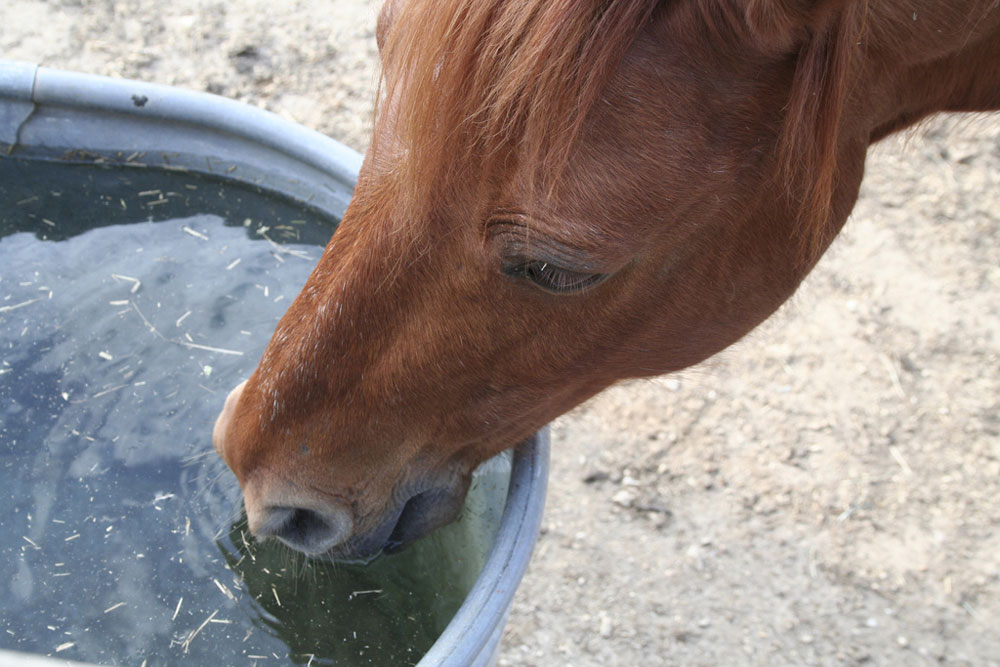
5. Cool your horse out properly. There’s a persistent myth that it is dangerous to let your horse drink when he is very hot, when in fact it can be very harmful to withhold water. If your horse is hot and breathing heavily after a workout, let him take a few sips of water, then walk him for a minute and let him have another drink and continue this way until he is cooled out.
Using ice-cold water isn’t harmful to your horse, but cool water is more comfortable for him.
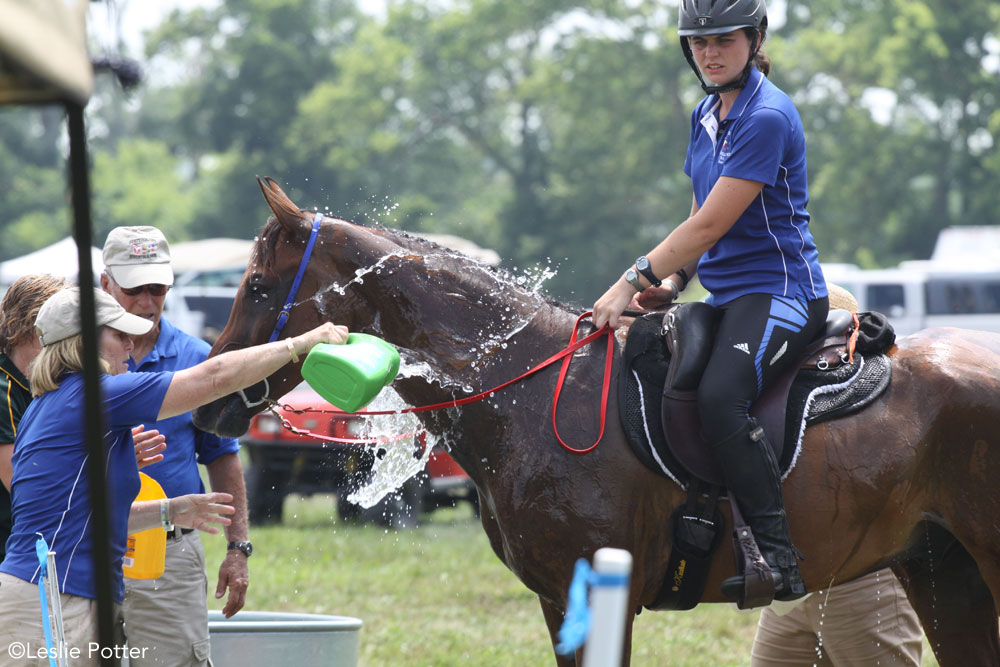
6. Another myth is that you should never spray a hot horse down with cold water. The fact is, top-level endurance riders and eventers douse their horses down with ice-cold water immediately after they finish a ride to bring the body temperature down to a safe level. However, using cool water instead of cold is generally more comfortable for your horse, so if you aren’t headed into the vet check after a 100-mile ride or an advanced cross-country course, you can use a more moderate temperature to cool him down after a workout.
7. Use sunscreen of at least SPF 15 and reapply throughout the day. Wearing a hat or helmet with a visor will help protect your scalp and face, two very sun-vulnerable areas. Horses with white on their muzzles are prone to burns as well, so make sure to use sunscreen there as well.
8. Hot weather brings out the bugs. Use plenty of insect repellant on yourself and fly spray on your horse, especially if you’re headed out into the woods. You can put a fly mask on over your horse’s bridle to protect his face from flies while riding. Just make sure to take it off if you ride after the sun goes down.
9. The days of riding in heavy jeans and sweat-soaked t-shirts are over. Hot weather riding apparel is now widely available and affordable. Manufacturers now offer lightweight riding pants, moisture-wicking shirts, ventilated helmets and even perforated half chaps that allow for better air circulation.
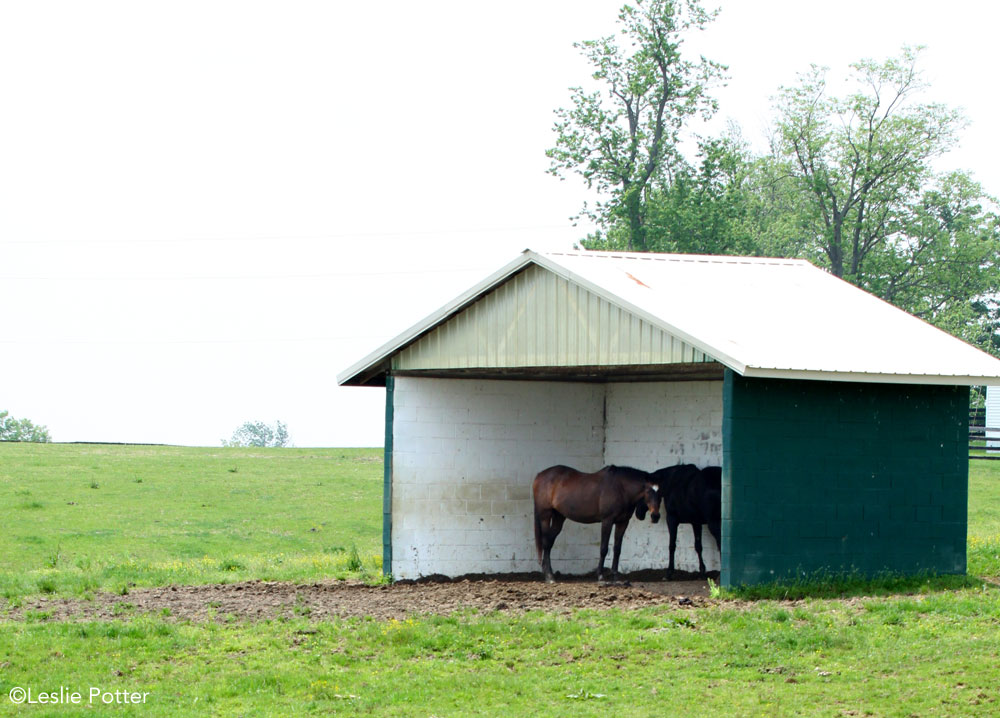
Horses need adequate shade in the pasture.
10. Your pastures need to have sufficient shade for all of the horses that live there. That can be from a shelter or from trees as long as the shade is available as the sun moves throughout the day. Check the pasture water daily to make sure it is clean and hasn’t become too hot if the trough is out in direct sunlight. If your horse is stabled during the day, keep the windows and doors open for ventilation, or mount a box fan on your horse’s stall to improve air circulation. Just make sure the wire is out of reach of all horses.
The hunter division on the open circuit requires a certain look to be successful: workmanlike yet elegant, functional but with a bit of flair. Regardless of your horse’s pedigree or conformation, you can groom him to have the proper hunter look. Here’s how.
A Shine and a Shave
A hunter should step into the show ring looking well-fed and healthy, not like it was pulled out of the pasture the day before and furiously scrubbed at the last minute. Getting a glow on your hunter begins with providing a nutritional diet all year long. To help his coat shine from the inside out, consider adding a commercial coat enhancement product or simply adding a cup of vegetable or corn oil drizzled over a small ration of pelleted feed each day. Regular grooming, and blanketing when appropriate, will also help him look like a winner.
Once you’re set on a certain show, it’s time to tidy up your hunter’s turnout. Begin with the clippers. If it’s late autumn or early winter and you’re dealing with a furry hunter, then you’ll need to do a thorough body shave, especially if you’re competing at a regionally-rated (or higher) show for medals and year-end awards. Yet there are also year-round clipping chores.
Whiskers on your horse’s chin and under his jaw should be shaved off cleanly. Clipping the inside folds of the ears isn’t necessary except for the larger rated shows. But your hunter’s ears can’t look scruffy, either. As a compromise, hold his ear closed with one hand (press lightly so he doesn’t rebel) and follow the outer contours, removing any fluffy tufts. Go slowly so the ears don’t end up with ruffled or jagged edges.
Next clip the fetlocks and any long hairs that coarsen the lines of the lower leg. Be sure to clip with the growth of these long hairs, however, or you could end up giving a two-toned look to your horse’s legs. If your horse has ringlets of hair cascading over his coronet bands, carefully trim them back to make a nice, neat edge at the rim of each hoof. When it’s time for the bridle path, use your clippers with discretion. Though some breed show circuits prefer elongated bridle paths, hunters on the open circuit are much more conservative. The bridle path should be just long enough to accommodate the crownpiece of your bridle, about 2 inches.
A well-groomed hunter show horse.
Mane and Tail Management
Braiding a show hunter’s mane used to be part of the standard turnout, but that tradition has all but disappeared from the local show circuits. In fact, most hunter shows that aren’t A- or AA-rated by the United States Equestrian Federation (USEF) request that the horses are left unbraided, so that every horse has a uniform presentation. Yet if you’re competing at a rated USEF show, a special local event (like a highly promoted charity show) or the year-end finals of your regional association, then you’ll want to braid your hunter’s mane.
Keep in mind that not everyone has the manual dexterity required to expertly braid a mane. If you don’t have time to perfect your skills at home before the show then hire a professional braider. Few things look more disheveled in the show ring than a bad braid job. Since the services of a professional braider aren’t cheap (expect to pay around $40-$50), consider zipping a stretchy lycra hood over your horse’s head and neck to preserve his braids overnight and during long stretches between classes.
Braiding is reserved for only USEF A-rated shows.
Regardless whether or not braiding is in your hunter’s future, keep his mane thinned and pulled. It should be about 4 inches long and lie flat. Hunters traditionally have their manes on the right side of the neck. If your horse has an untamed mane use little elastic bands to temporarily work his mane into a row of short “pigtails.” Repeat the job every few days, being sure to smooth out the kinks with a damp brush before braiding again. Soon your horse’s mane will cooperate.
Though the mane needs frequent attention, a hunter’s tail is mostly allowed to go au naturel. The tail is braided just for major shows and high-profile events, and only when the mane is also braided. Otherwise it’s simply left long and full, and generally the less you do with a hunter’s tail, the better. The exception is a tail that’s extremely wispy due to genetics or ragged and stubby because of a mouthy stable mate. In those instances, you might consider tying in a modest fake tail.
Though every hunter needs a sudsy shampoo before a show, gray coats and white stockings present a challenge. Luckily there are plenty of shampoos designed to remove yellowing build-up and green manure stains. For deep dirt on white stockings, apply the shampoo full strength and scrub it in with the help of a long-handled kitchen sponge or soft brush. Let it sit for a few minutes then rinse thoroughly. In fact, always make sure you rinse these shampoos extra carefully, or your horse could end up with a bluish tinge. Once your horse is dry you can preserve the white areas two ways. One is by spraying the hair with a coat polish, which helps repel dirt and dust. Just be sure not to use a slick, silicone-based product in the saddle area. The other is by using a barrier, like a blanket or daysheet. To cloak white stockings, wrap them.
Hunters of all coat colors need to look relaxed and expertly groomed before they go before the judge. So when you’re at the show, give yourself plenty of time to warm-up so your horse can get some last-minute attention before he heads through the in-gate. Try not to enter the ring with a sweaty horse. If you have time, use a damp sponge sparingly to wipe down areas wet with sweat, like the outline of your saddle pad or your horse’s flanks. Allow several minutes to dry then brush the coat smooth again. If your horse is dusty, a terry cloth towel works great as a rub rag to add some last minute polish.
The two final parts of your hunter’s presentation include his hoofs and his mouth. While black hoof paint and lacquer-like polish are frequently found at some breed shows, simple hoof oil is all that’s required in the hunter division. If your horse has white stockings, stick to a clear hoof conditioner or he’ll end up smudging his legs with dark spots. Then turn your attention to your horse’s mouth. A little drool of saliva is fine, but if your horse’s lips are foamy white or sporting orange chunks from that carrot you slipped him, then use a separate rub rag to wipe it off. The bit should be shiny and free of gunk and goo. You don’t want anything to detract the judge’s eye from your horse’s performance, especially not a slimy, dirty mouth.
Though presenting a hunter takes some practice, it can be done for any level of showing. Spend some time before the show working your grooming magic, and then pay close attention to the last minute details before you enter the ring. Then your hunter will look the part and be worthy of a blue ribbon.
Internal parasites (“worms”) cause problems for horses of all ages. These freeloaders compromise a horse’s health both directly and indirectly. They’re particularly well-adapted to survive in the horse and in the environment, so controlling them is a constant battle for horse owners.
The Major Culprits
Many different types of internal parasites attack horses, but the most important are the large strongyles, small strongyles, roundworms and tapeworms.
Large strongyles (Strongylus vulgaris, Strongylus edentatus and Strongylus equinus). Horses become infected with large strongyles by ingesting the larvae, which have hatched from eggs passed in the manure of an infected horse. Once inside the digestive tract, the larvae penetrate through the intestinal wall and migrate throughout the body. Strongylus vulgaris larvae migrate in the cranial mesenteric artery, causing inflammation and clots that can disrupt the intestinal blood supply and cause colic. After migrating, the larvae wind up in the large intestine, where they mature and produce eggs. The entire cycle takes about 6 to 11 months.
Small strongyles (cyathostomes). These pests often occur with large strongyles. Infection occurs in a similar manner. Small strongyles don’t migrate outside of the intestine, but develop within the intestinal wall. Some larvae become dormant, emerging after months to resume development in the intestine. Most adult small strongyles attach to the intestinal lining to feed. Light infections cause little damage, but heavy infections can inhibit nutrient absorption and cause digestive problems. One type of small strongyle can cause extensive ulceration of the colon.
Roundworms (Parascaris spp.). These large (up to 12 inches long) worms are mainly a problem for foals, which become infected when they ingest the eggs, which can survive for years in contaminated soil. In the digestive tract, the eggs release the larvae, which migrate through the body. They eventually reach the lungs, where they are coughed up and swallowed. After returning to the digestive tract, the larvae mature into adults. In addition to coughing, roundworm infection can cause poor condition, stunted growth, rough hair coat and a pot-bellied appearance. A heavy parasite load can lead to impaction colic, especially in foals being dewormed for the first time.
Tapeworms (Anoplocephala magna, A. perfoliata and Paranoplocephala mamillana). These large (3-10 inches long) parasites live in the small intestine, cecum, stomach and other parts of the digestive tract. Equine tapeworms require an intermediate host—the forage mite—to be infective. The mite eats the larvae, which develop within the digestive tract. The horse then ingests the mite while eating hay, grass or grain and the larvae enter the horse’s digestive tract, where they develop into adults. Light tapeworm infections may be asymptomatic, but heavy infections can cause ulceration, abscessation or perforation of the intestinal wall. A recent research study showed that tapeworms were associated with up to 22 percent of the cases of spasmodic (gas) colic and almost 80 percent of the cases of colic due to ileocecal impaction.
Click here to see a chart of the life cycle of equine parasites.
Diagnosis
Most internal parasites can’t be seen by the naked eye. The clinical signs may be equally obscure, at least until a major problem occurs. Your veterinarian can make a diagnosis by using a fecal flotation test to find the eggs in a fecal sample. Another test, called a fecal egg count (FEC), is used to quantitate the number of eggs per gram of feces, which indicates the severity of the infection. It’s also used for fecal egg count reduction testing (FCRT), a procedure that monitors treatment success.
Dewormers
Most equine dewormers belong to three classes of compounds: the macrocyclic lactones (ivermectin, moxidectin), the benzimidazoles (fenbendazole, oxibendazole) and the tetrahydropyrimidines (pyrantel). Most are effective against several different parasites. Ivermectin and moxidectin are effective against migrating and dormant larvae as well as adults. Praziquantel, another type of compound, is used to treat tapeworm infections.
Years ago, the most effective method for deworming a horse involved giving the medication via stomach tube, a procedure that had to be performed by a veterinarian. The introduction of paste dewormers, which can be administered directly into the horse’s mouth, has allowed most owners to take care of deworming by themselves. Some medications are also available as granules or liquid that can be sprinkled on the feed.
Before using any dewormer, make sure that it’s effective for your horse’s parasites and that you understand how to use it correctly (read the label). Ask your veterinarian if you have any questions.
Deworming Programs
It was once thought that regular deworming—for example, every two months—was the best approach to parasite control in horses. Some owners opted to use products that could be administered daily in the feed. Rather than controlling the parasites, these practices have had just the opposite effect: the worms have become resistant to many commonly used dewormers. For example, benzimidazoles are no longer effective against many types of small strongyles. While resistance to ivermectin and moxdectin has not yet occurred, experts fear that it will, since these compounds are so widely used.
When planning a deworming program, use the following strategies to reduce the development of resistance:
Discontinue lock-step deworming schedules.
Use an FEC to determine if your horse actually needs to be dewormed. If he only needs it once or twice a year, there’s no need to treat him more frequently.
When deworming is needed, rotate the products you use, so you’re not using the same class of compound every time.
Use FECRT two weeks after deworming to determine if the treatment was successful (90 percent reduction: successful; 80 percent reduction: marginal; less than 80 percent: unsuccessful). If the treatment failed, you’ll need to re-treat with a different class of dewormer.
We use cookies to help personalize content, tailor and measure ads, and provide a safer experience. By navigating the site, you agree to the use of cookies to collect information. Read our Cookie Policy.






 Instructor: Cindy Hale enjoyed a lengthy competitive career in hunters and hunt-seat equitation. She’s a popular judge at local and county-rated English horse shows
 The Western States Horse Expo is proud to announce that its thirteenth presentation of the event will be the best ever. In light of the recent concern about