0 ITEMS
  • My Account
  • Holiday Gift Guide
  • Podcast
  • Webinar
Subscribe Combo
Enable cache13
Home Blog Page 653

Video: Tennessee Walking Horse Running Walk

0

Watch as trainer Anita Howe explains the Tennessee Walking Horse’s running walk.

The running walk is the same basic footfall and carriage as the flatfoot walk, but tempo and speeds are extended to range from 7-10 mph. The running walk is NOT a speed gait, but an energy efficient, ground covering and smooth gliding gait. “Form should never be sacrificed for excessive speeds.” Hoof lift and placement still must remain even, with isochronal timing. Front end lightness and “float” are typically rewarded in the upper performance levels at Tennessee Walking Horse shows, though some consider it controversial as to whether this suspended action of the front end remains a technically correct running walk.

Learn more at HowTheyWalk.com

Watch a video of the flat foot walk
Watch a video of the rocking chair canter
Watch more horse videos

Horse Show Top 10

4

Horse Illustrated MagazineWant a day full of memories on horseback? Compete at a horse show! Whether your goal is to win a year-end high-point award or to simply have fun at local schooling shows, competing promises far more than a chance to win a blue ribbon. Ultimately, you’ll discover just how well you and your horse work together as a team. To get the most out of your horse show experience, here are 10 things that you should know before you fill out your next entry form:
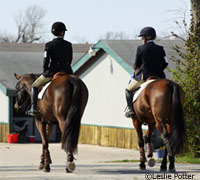
Things to know before entering a horse show1. Horse shows are expensive. Your checkbook will be tapped for more than just class fees at the entry booth. Typically there are parking fees or overnight stabling costs, as well as fees to cover an on-site EMT and any association dues. Plus, there’s a certain amount of tack and apparel required for every competitive division, and there’s only so much stuff you can borrow from sympathetic barn buddies. Therefore, even an experimental foray into showing can cost a small fortune. You may be forced to find creative ways to afford your competitive career. Bargain hunt at consignment shops, barter barn chores for lessons and trailering fees, and contract yourself out as a part-time groom. You may literally have to earn your blue ribbons.

2. Not all shows are created equal. Even if you’re desperate to show, don’t latch on to whatever flier happens to be posted on the bulletin board at your feed store. Do some research before making commitments with your time and money. This is especially important if you aren’t familiar with the showgrounds; contact the show manager or secretary and ask pertinent questions. For example, if your horse is green, you’ll probably want to know if there’s adequate space to longe him before competition begins. And since you should always be concerned about unnecessary wear and tear on your horse’s feet and legs, inquire about the footing in the warm-up and show arenas. During show season, there are plenty of opportunities to compete. Find the venue that’s right for you.

3. The rules of the game are important. Just as with any other athletic competition, horse shows operate under strict guidelines, and it’s your responsibility to know ahead of time what’s expected of you and your horse. There are no do-overs at horse shows, which means you can be eliminated without warning for infractions such as non-traditional tack or crossing start and finish markers at the wrong time. Shows that are sanctioned or rated by an association adhere to that group’s specific rulebook, and the horse show premium should include both a list of classes and an overview of those rules. When in doubt, however, refer to the American Quarter Horse Association (AQHA) or United States Equestrian Federation (USEF) rulebooks, whichever applies; both are available online. The majority of shows—and judges—generally follow the protocols outlined in these two rulebooks.
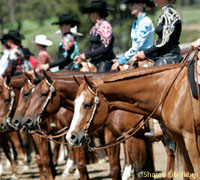
Follow these tips to do well at the next show4. Appearance and turnout matter. It’s not necessary for you and your horse to be decked out in the latest or most expensive horse show fashions. Yet you are competing in a horse show, and the word “show” deserves some emphasis. You’ve volunteered to present the skills that you and your horse have learned to both the judge and the spectators. Essentially, you are performing on a stage—albeit a dusty, oval-shaped one—so look the part. Your horse should be well-groomed, sound and in impeccable condition. Your clothing should be crisp, clean and fit well. Anything less is disrespectful to the judge and the tradition of competition. Sloppy apparel, dirty boots and a poorly groomed horse convey the impression that you aren’t really serious about competing.

5. Never underestimate the benefits of a trainer or instructor. A horse show mom (or dad) makes a great cheerleader, and a barn buddy who will buff your boots comes in handy. But rarely do either compare to the services of a professional trainer or instructor. If you ride hunters or jumpers, they’ll serve double duty as jump crew and traffic cop while you navigate through crowds to get to your practice jumps. They’ll also help put the final touches on your position and your horse’s skills before each class. Perhaps most importantly, however, a professional at ringside can critique your performance, give you insightful feedback and offer tips for improvement. That way, you won’t go into your next class and commit the same errors. It’s important to realize that even world-class riders have a coach who helps them prepare for each competition. Don’t you deserve the same support?

6. Every competitor feels a little nervous. For some riders, that queasy feeling in the stomach is related to fear of failure. After all, no one wants to be humiliated in public. For other riders, their nervousness is due to a fear of being physically injured if their horse refuses a jump or blows up in a class. The best cures for both types of nerves are competing aboard a trustworthy horse and being adequately prepared for competition. If every horse show finds you gulping Pepto Bismol or dreading the warm-up arena like dental surgery, then you need to examine why the experience is so threatening. Horse shows are definitely filled with moments of adversity, but they should also be fun.
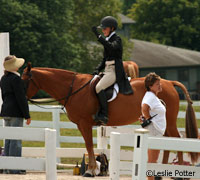
Be sure to enter what suits you and your horse7. Enter only the classes that suit you and your horse. Undertaking a new challenge in a horse show environment is rarely a good idea. For example, if you’ve only been jumping cross-rails and low verticals at home, don’t enter a 3-foot hunter class just because the jumps don’t seem too intimidating. Once you enter the arena and start on course, your opinion may change. You might be suddenly unsure of how to handle the situation or feel overfaced. That can add up to an unsuccessful performance that damages your confidence and creates training issues you’ll have to address at home. For these reasons, enter classes that showcase what you and your horse already know.

8. You need to be a good manager of time. Horse shows operate on their own schedule, based on the ebb and flow of competitors for each class. While one class might take mere minutes to complete, another one might threaten to drag on until sundown. Therefore, get in sync with the announcer and the person manning the back gate as soon as possible. Ask them for updates throughout the day so you have a good idea of when your classes will take place. Then, plan accordingly: Allow yourself enough time to get dressed, tack up and become mentally focused. Even though you may feel as if you spend half the day sitting around bored and the other half in a state of frenzy, at least you won’t miss your class because you were munching on a bag of Cheetos at the concession stand.

9. Judges deserve your respect, even if you don’t always agree with them. Horse show judges have a tough job. Each time they hand in the class placings, a few people will be thrilled and many others will be disappointed. But be assured that judges form their opinions based on years of knowledge and experience. Although they empathize with the struggles competitors face, their job is to award ribbons according to merit. So while you might feel that you rode perfectly, other competitors may have performed even better. You might also want some feedback to help you improve, but the judge is not a clinician. He or she is not there to give you a three-minute lesson. In fact, the standard rule at shows is that the judge cannot be consulted unless you first gain permission from the show manager or steward. Besides, can you imagine how long a show would last if every competitor got to interrogate the judge afterward?

10. Quite often, things don’t go as planned. Maybe the unpredictability factor is what keeps horse shows interesting. Even if you’ve practiced a dressage test or a horsemanship pattern for weeks, your mind can suddenly go blank. Perhaps your teenaged gelding steps out of the trailer, takes one look around the showgrounds and reverts back to his days on the racetrack. Or maybe your promising greenie suffers a mental meltdown and spooks at the jumps. Instead of surrendering to frustration, maintain your composure. Come up with an alternative plan, such as entering fewer or less-demanding classes. Rearrange your schedule so you have time to longe your rambunctious horse. Lower your expectations. Trot the jumps in your hunter class so your greenie remains calm and focused. Aim to have a positive experience, even if you have to settle for small moments of success rather than armfuls of blue ribbons. Console yourself with the knowledge that there’s always another show.

Further Reading
Horse Show Essentials
Horse Show Checklist and Stall Card
Rating the Competition

During her lengthy show career on the hunter/jumper circuit, Cindy Hale won more than 20 medals for hunt-seat equitation. She currently serves as a judge at local and regional open horse shows.


This article originally appeared in the June 2010 issue of Horse Illustrated. Click here to subscribe.

American Horse Council report on equestrian trail access is now available

6

Trail horseOn April 19, 2011 the American Horse Council released its 2010 Report on Equestrian Access on Federal Land. The 2010 report is intended to provide a brief overview of the responses the AHC received from equestrians to its ongoing access survey in 2010.
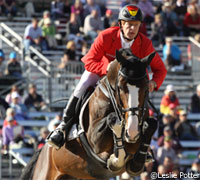
In July, 2009 the American Horse Council launched its effort to collect information regarding equestrian access issues on federal lands. The center piece of this initiative is a online form riders can use to report their personal experiences regarding trails on federal lands that have been closed to them or other access issues. Anyone wishing to participate in the study may find the online form on the AHC website at https://www.horsecouncil.org/survey.php.

This effort was prompted by a growing concern among recreational riders around the country that they were seeing a reduction in the number of trails and trail heads open to equestrians on federal land.

In March, 2010 the AHC released its first report on equestrian access, the 2009 Report
Equestrian Access on Federal Land
, which can be viewed on the AHC website.

The 2009 report has been used successfully by the AHC to inform members of Congress, federal land mangers and other recreational users of the issues some equestrians have experienced.

“The 2009 report was a great success and has been used by the AHC to inform members of Congress, federal land mangers and other recreational users of the issues some equestrians have experienced,” said AHC Legislative Director Ben Pendergrass.

Hundreds of thousands of Americans use horses and pack stock to enjoy America’s great outdoors each year. However, it is an experience that cannot be enjoyed without access to public land, trail systems, and trailheads.

“The AHC uses these reports to illustrate some of the challenges facing recreational riders,” said AHC President Jay Hickey.” “Our federal land mangers work hard and there are many great recreational opportunities on federal land. However, the equestrian community needs to be vigilant concerning any loss of access to federal land.”

The AHC plans to continue its effort to collect information regarding equestrian access. The AHC encourages all recreational riders to report their experiences to the AHC using this electronic form.

Video: Braiding Your Horse’s Mane

15

Braiding your horse’s mane is easier than you might think. Practice these steps for a neat and polished look in the show ring.


For step-by-step mane braiding instructions, click here
For step-by-step tail braiding instructions, click here

Watch more horse videos

Video: AQHA Western Pleasure Judging

17

Learn what western pleasure judges are looking for and see some of the common faults of gait that you should avoid with your western pleasure horse.


Watch more horse videos >>

For more information
Western Perception
American Quarter Horse Association


Rolex FEI World Cup Show Jumping brings the world’s best riders to Germany

4
Marcus Ehning
Marcus Ehning. Photo: Leslie Potter

With a week to go to the Rolex FEI World Cup 2010/2011 Jumping Final in Leipzig (GER), excitement is at fever pitch and speculation is rife about whether defending champion Marcus Ehning or his German compatriot Meredith Michaels-Beerbaum, can secure a historic fourth victory.

Just four riders have been three-time winners throughout the 32 seasons of this most prestigious indoor tournament, which brings together the leading competitors from 14 leagues staged all around the globe.

Two of those won’t make it to this year’s 33rd annual grand finale as Austria’s Hugo Simon, the first man to hold the coveted trophy aloft back in 1979 and winner again in 1996 and 1997, didn’t make the cut and Brazil’s Rodrigo Pessoa, who proved unbeatable between 1998 and 2000, has already said he won’t be making the trip to Leipzig.

That leaves only Ehning and Michaels-Beerbaum, members of Germany’s gold medal winning team at last year’s Alltech FEI World Equestrian Games and multiple champions in their own right, in contention for a record-breaking fourth success.

One way or another, the host nation is hotly-tipped for the honors after dominating the Rolex Western European League with six wins from 13 qualifying competitions and an awesome list of top placings.

Battle for Points
At the opening leg in Oslo (NOR) last October it was a German one-two-three when Christian Ahlmann pipped Ludger Beerbaum and Lars Nieberg in the battle for maximum points, and Ahlmann made it a double a week later in Helsinki (FIN) where team-mate Philipp Weishaupt slotted into the runner-up spot. Michaels-Beerbaum won round three at Lyon (FRA) and then in November Carsten-Otto Nagel nosed in ahead of Marcus Ehning at Stuttgart (GER).

Marcus Ehning
Meredith Michaels-Beerbaum. Photo: Leslie Potter

Ehning came out on top at Zurich (SUI) in January before Weishaupt swept to success in Bordeaux (FRA) the following month, and although Nagel did not accumulate sufficient points to make it to the Final despite his victory, the six-strong German line-up for Leipzig is a star-studded one, including 1993 champion Beerbaum and former Olympic bronze medallist and European champion Marco Kutscher. They will be tough nuts to crack, especially on home ground.

However, non-Europeans have a tremendous record in this series down the years. The USA secured seven titles between 1980 and 1987 and again fields an impressive line-up this time around that includes Rich Fellers, who was second in 2008 and McLain Ward, who was runner-up in 2009.

The honors have gone to Canada on three occasions, firstly to Mario Deslauriers in 1984 and then to the legendary partnership of Ian Millar and Big Ben in 1988 and 1989, and Canadian prospects look particularly promising again this season with Eric Lamaze and his fabulous stallion, Hickstead, champing at the bit. They are a formidable partnership, with a turn of speed that could give the reigning Olympic champion and World No 2 rider the edge on the final afternoon.

Most Attention
Challengers from the New Zealand, Japanese, South American, Mexican and Central European Leagues will also compete, but it is one of the Arab League contenders who is likely to attract most attention over the early days of the Rolex FEI World Cup™ Jumping final. Saudi Arabia’s Abdullah Al Sharbatly sprang a big surprise when taking individual silver at the Alltech FEI World Equestrian Games™ in Kentucky last year, and his many fans will be keenly following the fortunes of the effervescent 28-year-old, who brings the brilliant mare Seldana di Campalto to Leipzig.

Abdullah al-Sharbatly
Abdullah al-Sharbatly. Photo: Leslie Potter

However World No 1, Kevin Staut, will be hoping to bring the trophy home to France for only the second time, and the start-list is bursting with talent including Staut’s cohort Simon Delestre, the impressive Spaniard Sergio Alvarez Moya, Olympic silver medallist Rolf-Goran Bengtsson and his Swedish counterpart Malin Baryard-Johnsson, 2000 Olympic champion Jeroen Dubbeldam of The Netherlands and Portugal’s Luciana Diniz.

Never discount the Irish either. Billy Twomey’s fabulous run of form has boosted him to seventh in the Rolex Rankings, one place ahead of Denis Lynch, who demonstrated true grit when snatching those invaluable last-minute points at ‘s-Hertogenbosch (NED) just over two weeks ago. The Irish are hungry to clinch the title that has eluded them for so many years and to which they came so close when Jessica Kuerten was runner-up in 2006.

The winner however must be well-placed after the opening speed class which takes place on Thursday April 28 and the Table A competition with a timed jump-off the following day. The top two-thirds of competitors will then go forward to Sunday’s two-round final from which the Rolex FEI World Cup™ Jumping champion for 2010/2011 will emerge.

For the first time in the history of equestrian sport, the Rolex FEI World Cup Jumping, Reem Acra FEI World Cup Dressage, FEI World Cup Driving and the inaugural FEI World Cup Vaulting will take place under one roof in Leipzig (27 April to 1 May), bringing together four world-class disciplines for a fabulous festival of equestrian sport.

Controlling a Fast Trail Horse

16

Q: I have a gelding that I bought for trail riding. Unfortunately, his previous owner used to gallop him a lot on the trails, so he constantly wants to bolt off. His mouth is dull too, which makes matters worse. Do you have any tips on how I could possibly retrain him to go the speed I want?

Trail Ride

A: A gallop or brisk canter on the trails isn’t inherently evil. A well-schooled, attentive horse should remain under the rider’s control at any speed. Without some good fundamentals in the arena (or in a round pen or even a large, flat area in an open field), a trail horse can become stiff and dull to a rider’s aids or cues. A stronger bit is not always necessary. Instead, the solution is usually to make your horse more supple (bendable) and responsive. Rather than leaning on your hands and ignoring your requests to slow down, your horse should yield (give) to pressure from the bit and your leg, and stay attentive to you.

Here is one example of how to achieve this goal. Work in a quiet, flat area. Start at the walk, holding a rein in each hand. Increase the contact with your right rein and ask your horse to tip his nose to the right and bend his neck to follow. Press in with your right leg, against his rib cage, until you feel him shift his body slightly to the left. Your horse should create a small circle, in essence bending around your inside (right) leg. Envision a circle the diameter of a long lead rope, not a tight barrel racer turn. Once he completes his circle, relax your contact on the right rein, walk forward several steps, and repeat the process to the left, reversing your leg cue. Next you can add larger circles (the diameter of a longe line), progress to the jog, and work on transitions from one gait to the next. For instance, ask your horse to halt from the trot and back up. If you decide to canter (a slow gallop), stick to a few large circles, then ask him to walk. Remember, if you lack control and authority here, you’re liable to encounter problems on the trails.

When you do venture out on the trails again, find some opportunities to school your horse. There’s no reason why you can’t break up long stretches of flat, even ground with a medley of a slow jog, a trot, transitioning down to a walk, etc. In wide, more open areas, bend your horse in a large, gentle circle. Avoid cantering or galloping until you’re confident that your horse is listening to your requests. If you feel overwhelmed with the concept of re-schooling your horse, then seek some support from a veteran rider in your area who can put some structured rides on your horse.

–Cindy Hale

Liked this article? Here are others you’ll love:
Trail Problem Solver: Bolting
Trail Ride Manners

AQHA announces testing requirements for Equine Piroplasmosis

4

Quarter HorsesIt is a disease that lurks in a horse’s blood, with tiny protozoa attacking red blood cells. Equine piroplasmosis is common in tropical and sub-tropical regions of the world, including parts of Central and South America, the Caribbean, Africa, Europe, the Middle East and Asia, but is considered a foreign disease in the United States, and efforts are underway to keep it that way.
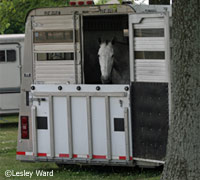
Currently racetracks in 11 states require negative piroplasmosis tests before horses are allowed onto the backside. Beginning July 1, all horses entering the grounds for any AQHA world championship show will also be required to present a negative certificate dated within six months.

“AQHA needs to be vigilant and establish testing requirements to ensure any case of equine piroplasmosis can’t be traced back to an AQHA event,” said Tom Persechino, AQHA executive director of competition and breed integrity. “We’re encouraging all exhibitors to contact their veterinarians to schedule these tests. If the tests are completed around the second week of July, that horse will be eligible to show at the youth, select and open/amateur world without requiring another test.”

Symptoms of Equine Pirpolasmosis
Equine piroplasmosis is a blood-borne protozoal infection. There are two different protozoa involved, named Babesia caballi and Theileria equi.

“The parasite attaches to the red blood cells, the body recognizes there’s something wrong with that blood cell so it takes it out of circulation,” explained New Mexico State Veterinarian Dr. Dave Fly. “This bug’s growing on the blood cells, the spleen and liver are grabbing those blood cells trying to take them out so you go into what is called a hemolytic crisis. Animals can die, or they survive the acute phase and come out the other end as a chronic carrier.”

EP is transmitted from horse to horse through blood contact.

“There are three populations of EP that we’re concerned with right now in the U.S.,” said Oklahoma State Veterinarian Dr. Becky Brewer-Walker. “They include the natural transmission via ticks and a small percentage of horses imported into the United States prior to changes in required testing protocol. However, the area of greatest concern is iatrogenic spread, or by people. We are seeing a spread of the disease to a large extent in Quarter Horse racehorses and some Thoroughbreds. These cases are almost all due to risky practices and poor biosecurity, disease spread horse to horse by the management of the people.”

Symptoms of the disease vary widely. A case can be so mild the symptoms are never even recognized, or the horse can develop a fever and appear “off.” More severe symptoms include anemia, jaundice and even death. This is why testing for the disease is so important.

If a horse is positive, the only options currently available are permanent quarantine or euthanasia. Positive horses are still allowed to be bred via artificial insemination.

Prevention of Equine Piroplasmosis
EP is easy to prevent if caution is used to prevent blood transmission between horses. Here are tips to prevent your horses from falling prey to this disease:

  • Use commercial products to spray for ticks around the barn and pastures and lessen the population. Inspect horses regularly for ticks to remove them before they bite.
  • Don’t reuse needles, syringes or administration sets.
  • Ensure that dental floats, tattoo equipment and other common equipment that might transfer blood is scrubbed and cleaned before and after each use.
  • If your horse is with a trainer, make sure he or she is following proper biosecurity protocols.
  • Test your horses. The tests are simple blood tests, similar to a Coggins test. A test needs to be done for each protozoa, for a total of two tests. For a list of approved labs, click here.
  • Know the rules before you go. Before traveling, make sure you know what the testing requirements are at your destination. Don’t just check a website – call for the most up-to-date information.

The United States is currently considered EP-free. Recent natural outbreaks have been thoroughly researched and controlled to prevent native tick populations from becoming a reservoir for the disease, but it is possible that, without proactive measures, the disease could gain a foothold. If that happened, and the United States were to lose its EP-free status, there would be many more testing regulations required, including for horses being exported for competition, sale or breeding. This would place an added burden on the horse industry as a whole.

AQHA and the American Quarter Horse industry has chosen to be proactive to keep the horse population healthier and make sure the disease remains foreign to the United States.

“I would like to see this go away, and I applaud the Quarter Horse industry for taking a stance,” said Dr. Fly. “I do believe we’re in a position where if this country takes a stand and starts looking, we can push this disease back out of this country and not let it get established. But it’s going to take some work on everybody’s part.”

Further Reading
Florida Equine Piroplasmosis Outbreak

Horse trailer catches fire; discarded cigarette to blame

15

Horse trailerSix Thoroughbred racehorses were killed Friday when the commercial trailer they were riding in caught fire. Firefighters responding on the scene found that the fire was likely caused by a lit cigarette tossed out the window of another vehicle. The cigarette ignited the hay in the trailer and the fire spread quickly.
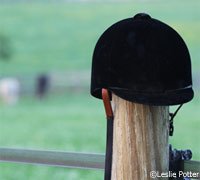
The young horses were on their way to Belmont Park in New York where they were to begin race training. The incident occurred on I-95 in North Carolina. The road was closed for about 45 minutes after the fire occurred.

The driver of the trailer pulled over when she saw smoke on the trailer’s onboard camera. She and the backup driver tried to extinguish the flames and unload the horses, but they were unsuccessful. One of the drivers sustained minor injuries during the rescue attempt. Firefighters responded to the fire, but the trailer was already engulfed in flames by the time they arrived.

Further Reading
Road Emergency
Trailering Checklist

British Dressage considers implementing mandatory helmet rule

6

Equestrian HelmetGreat Britain may follow in the footsteps of the U.S. and Canada by requiring helmets for lower-level dressage riders. British Dressage is currently seeking input from its membership on a potential rule change for 2012.
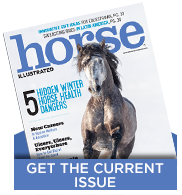
A few years ago, it seemed unlikely that helmets would ever be universally accepted by the competitive dressage world, but the general attitude changed following 2008 Olympian Courtney King-Dye’s serious accident in 2010. The United States Equestrian Federation passed rules in January requiring helmets for eventers and dressage riders competing at all but the highest levels.

Equine Canada followed suit in March with a rule mandating helmets for dressage competitors at Fourth Level and below.

So far, the rule changes and proposals have only affected competitors showing below the International Equestrian Federation (FEI) level. The FEI is the governing body for dressage at the international level, and while FEI rules do allow riders to choose to wear protective headgear, they have not yet taken steps to make helmets mandatory.

Several options have been proposed by British Dressage.

  1. Mandate safety hats at all times for everyone riding at a BD affiliated show, whether competing or not, with a permitted exception for those who compete at Advanced or higher, who may wear top hats for the competition phase only.
  2. Mandate safety hats at all times for those competing at Advanced Medium and below with Advanced+ riders permitted to wear hats of their choice for both working in and competition.
  3. Mandate safety hats only for riders competing in Young Horse classes which, by their nature, are likely to have a higher risk.
  4. Mandate safety hats for younger riders competing in classes restricted to that specific age group.
    Note. It is not possible to mandate a hat rule for a specific age group in mixed competition where younger riders compete alongside adults
  5. Continue to leave the decision as the responsibility of the rider and review when the FEI make a change to their rules.

Members are invited to offer feedback on the proposals through July 2011. A rule change would take effect on December 1, 2011.

0FansLike
0SubscribersSubscribe
We use cookies to help personalize content, tailor and measure ads, and provide a safer experience. By navigating the site, you agree to the use of cookies to collect information. Read our Cookie Policy.
OK