1 ITEMS
 
    • horse illustrated – march 2024
    • Horse Illustrated – March 2024

    • $5.99
  • My Account
  • Holiday Gift Guide
  • Podcast
  • Webinar
Subscribe Combo
Enable cache13
Home Blog Page 654

Old Friends Thoroughbred retirement farm makes fundraising push

9

The Old Friends' fundraiser is helping the program pay off loansOld Friends, a retirement home for Thoroughbred racehorses, has sent out an emergency fundraising call to its supporters after a banking error resulted in a substantial bill for the Georgetown, Kentucky facility.

In an email to supporters, Old Friends founder and president Michael Blowen wrote, “About three years ago, I went to our bank and asked them to re-write our mortgage so we would have payments due biannually. They would be due after our big fundraisers in the spring and fall. They concurred and re-wrote the loan. We continued to make payments on time through our bookkeeper.

“A couple of months ago, I was visited by two bank representatives and their attorney. They explained the bank had made a clerical error. While they had re-written the loan, they had failed to increase the payments. Consequently, the bi-annual payments we made were the same monthly payments and we were in arrears for more than $200,000.

“This is humiliating. Frankly, if I had any money left, Diane and I would do it ourselves. But, we’ve already done that. I resolved many years ago, to not expect people to do what they could do or should do or ask them for money. Today, I’m breaking all three of those resolutions. It’s frustrating because of what all these great athletes have accomplished.”

Blowen, former film critic for the Boston Globe, was inspired to build a Thoroughbred retirement facility after learning about the many racehorses being sent to slaughter. When news broke that the 1986 Kentucky Derby winner, Ferdinand, had been slaughtered after his breeding career ended in Japan, it fortified Blowen’s resolve to provide a home for horses that could no longer race or breed and had nowhere else to go.

Old Friends is one of the few rescue operations that will accept stallions, and as a result, several notable Thoroughbred stallions are enjoying their retirement there after their racing and breeding careers have ended. To see the current residents, click here.

To learn more, visit OldFriendsEquine.org or call 502-863-1775.

The Willpower of Horsepower

6

No matter how much we think we’ve trained our horses, a lot of the time they’re going to do what they want to do, one way or another. It’s like an ongoing battle to constantly outwit us. I’ll give you two personal examples. I’m sure you have plenty more.

My first example deals with the process of bathing horses. Am I the only one who owns horses that try to shorten bath time by standing on the hose? Or is this a common behavior? I realize that in an ideal world the hose should be kept free and clear of the wash rack, or at least scooted to the side, away from legs and hooves. But in reality I don’t think it much matters. Regardless of how carefully I manage the hose, at some point when I’m giving Wally or Danny a shower after a hard workout, I’ll notice that the water pressure has fizzled to a drizzle. Sure enough, it’s because there’s at least one hoof keenly placed atop the hose, compressing it to worthlessness. For a long time I thought this hose kinking behavior was the result of luck: A hoof just happened to end up atop the hose. But I think more evil processes are at work here. I believe now that over time, Wally and Danny discovered that if they shuffled their feet around just enough—not in a full-blown, maniacal River Dance but in a discreet tippy-tappy-toes manner—they’d eventually land a crushing blow to the hose. Suddenly, shower time was over!

Naturally, Wally and Danny have perfected this maneuver, so now I’m juggling shampoo bottle, sponge and lead rope at the same time I’m wrangling a hose. Honestly, I’m beginning to wonder just how badly I want a clean horse.

My second example of equine determination is something that happened last weekend. This particular incident also adds a horse’s impeccable sense of timing to the mix.

Danny, I’ve discovered, is one of those horses that prefers to pee at home. I can tell when he needs to go, especially if we’re out on a long trail ride. He’ll seize an opportunity to stop and stretch out slightly. But he won’t take the final step and just do it. I’ve tried all the common solutions I learned on the show circuit and at the race track to encourage a horse to urinate, including dismounting and loosening the saddle, whistling merrily, and even letting him smell where another horse has recently urinated. But none of them work. I think Danny has figured out where he lives and knows that he’s never really that far from home. If he holds out long enough, eventually he’ll be in the privacy of his own bathroom.

Well, last weekend I rode Danny on a long trail ride with my sister Jill, who was aboard her gelding, Topper. Jill’s horse wasn’t bashful about peeing on the trail, but even though I could tell Danny wanted to relieve himself, too, he wouldn’t. The fact that we were on our way back to my house, and back to Danny’s stall, probably encouraged him to hold out. When we reached the trail in front of my house, I dismounted and told Jill, “I’m sure Danny can’t wait much longer.”

He really couldn’t. My big black Paint horse took one step on to my property, so that his front feet were standing on the path that led to the barn, and stopped. With his eyes locked on to the view of the barn before him, he began to stretch his ample body into that familiar pose. That’s when I noticed his “equipment” was poised for action… and balanced directly over a pristine section of our front lawn, which is my husband’s pride and joy.

“No!” I yelled, and began tugging on the reins. “Please, Danny, no!”

But when a horse has to go, it has to go. Just like a jet dumping a load of fuel, Danny opened up a thunderous production of horse pee that gushed across a verdant swath of lawn. In the background, my sister was laughing. Eventually I laughed, too, but not until I had turned on the hose (there’s that hose again!) and let it run for several minutes in a faithful effort to dilute Danny’s offering.

As you can see, I’m frequently reminded just how strong-willed horses can be, even the ones that are lovely to ride and otherwise well-mannered. Sometimes horses are just going to do what they want (or need) to do.

<< Previous Entry

Back to Life with Horses

Help horses by volunteering at an equine charity

11
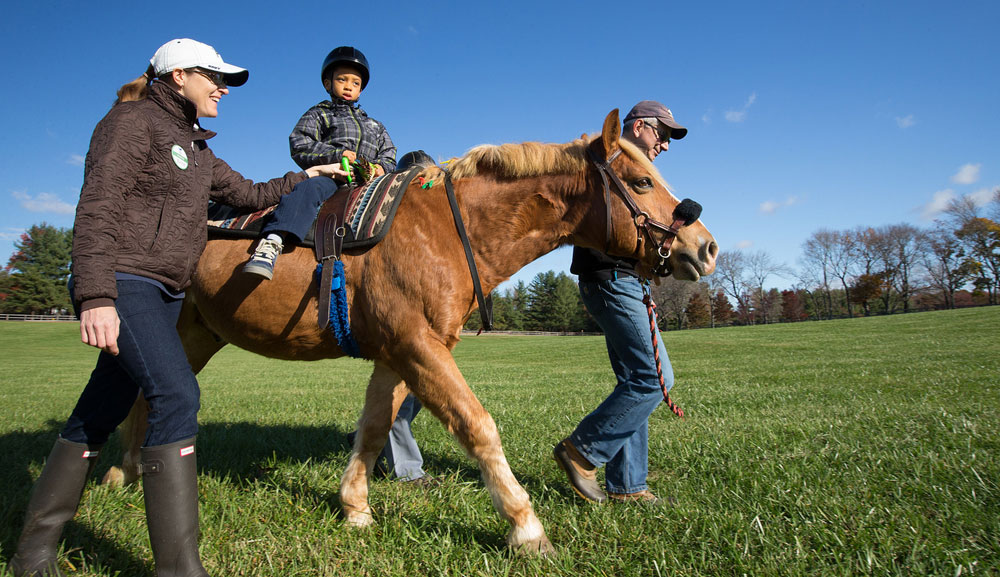
Therapeutic Riding
Therapeutic Riding by Fort George G. Meade Public Affairs Office on Flickr/CC BY 2.0

Americans are encouraged to get involved in charitable causes during National Volunteer Week in April. There are plenty of ways horse lovers can combine their passion for horses with volunteer service.

Why Volunteer?

  • A donation of time. Most average Americans don’t have the financial resources to write a big check to their favorite charities. Giving your time and talent is just as valuable and won’t take a chunk out of your bank account.
  • Local focus. Volunteering for a local charity helps the people and animals in your own neighborhood. Donating a few hours a week can help make your community a better place to live.
  • Spend time with horses. If you don’t have your own horse, volunteering at an equine organization gives you some quality barn time with lots of equines.
  • Make friends. Working with other people for a common cause allows you to network and meet people who share your interests.
  • Build your resume. Volunteering can help you build a variety of skills that can help you in the future, especially if you are a student or are looking to make a career change.
  • Do it for your health. Studies have suggested that people who volunteer are physically healthier and less likely to suffer from depression.

Volunteer Opportunities with Horses


Many equine rescues are in need of knowledgeable help to care for their residents. Volunteers are needed to assist with daily care and farm chores, and in some cases experienced volunteers may be asked to help ride or do groundwork with horses that need retraining before they can be adopted. Volunteers are often needed to help with administrative work and fundraisers as well. Click here for a list of equine rescues in North America.

Equine facilitated therapy centers use horses to help children and adults with physical or mental disabilities. These organizations depend on volunteers to help care for the horses and to assist in lessons and therapy sessions. You may be asked to lead a horse or walk alongside riders during their lessons. Find a certified center at pathintl.org

Racehorse retirement and retraining facilities need experienced help working with Thoroughbreds and Standardbreds as they transition to life after racing. If you are experienced with ex-racehorses, you may be able to help with training. If not, you may be able to gain some experience while volunteering to do stable chores or administrative work.

Other organizations that need horse-loving volunteers include educational programs and wilderness preservation groups. To find volunteer opportunities in your area, visit VolunteerMatch.org

Show Season Kicks Off

0

After one of the snowiest winters in Kentucky’s history, most horses around here are pretty rusty. It was definitely a challenge to keep horses going through December and January, and most ended up having extended vacations. Thankfully February was more cooperative. Through it all, I tried my best to keep my semi-new partner, Dexter, in baseline fitness.

We had a “practice” show the last weekend in March, and after a week of temperatures in the mid to upper 70s in mid-March, a quick plummet preceded show day just in time for a high of 37 with blustery winds all day. I had thermals under my show clothes and a big jacket and gloves on right up until it was time to go into the ring … that was a bit of a change from the summertime shows we’re used to. Luckily Dexter seemed to take it all in stride. He’s been an absolute angel at everything I’ve asked him to do, which is an incredible feeling.


Photo: Kristen Janicki


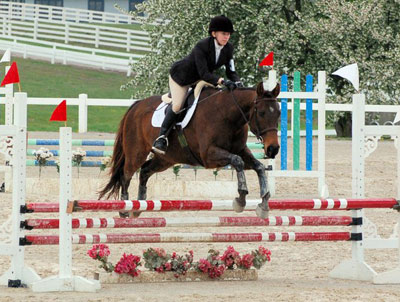
The second weekend in April (two weeks after the March show), I had my first “real” event at Spring Bay Horse Trials. The wacky weather continued, with an enormous thunderstorm that lasted for hours rolling in after my dressage test. Thankfully it stopped before I had stadium jumping, but the ring was a swampy mess, as you can see from the photo.


Photo: Kristen Janicki


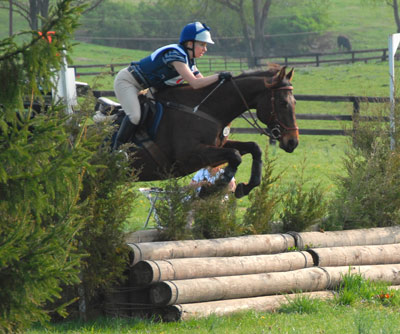
Cross-country was held that Sunday, and a heat wave rolled in to bring record highs in the mid to upper 80s! We were all sweating, but I must say it was a very welcome change, even if my furry horse seemed a bit confused by the temperatures.


Photo: Tom Werner


In any case, it was a great early-season course, with just enough challenge while still being safe for rusty horses and riders. I let Dexter cruise along a hair slower than normal since the footing was deep in places from all the rain. He was a superstar over all the jumps, and took them right in stride. It was a blast!

After so many years of struggle in this sport, all I can say is I don’t take one iota of it for granted when things go well. You can topple so fast (both physically and figuratively) that it is truly humbling. Any ribbon is a prize to be celebrated! We ended up finishing in 3rd place out of 16 in our Novice division.

It will probably be a couple of months until our next show, but that will be time well spent schooling and getting better conditioned. The ultimate goal is to move up to Training level, so we need to be as ready as possible.

Happy spring to you all, hopefully it’s warming up and turning green where you are after all this cold misery!

<< Previous Entry

Back to The Near Side

0

Back Country Horsemen of American offers programs for young riders

6

Trail ridingBack Country Horsemen of America highly values the historical tradition of traveling and enjoying this great land by horseback. They also recognize that our youth are key to perpetuating that tradition. For that reason, BCH groups from coast to coast make special efforts to get kids involved with their activities. These projects also fulfill BCHA’s mission to teach common sense use and enjoyment of horses in our back country and wilderness.

High School Students Learn to Pack in the Back Country
Recently, a group of 16 students from Flathead High School in Montana spent a day with Back Country Horsemen of Montana learning how to pack horses. Held at the H.E. Robinson Vocational-Agricultural Center in Kalispell, Montana, the class was led by Andy Breland (vice president of Back Country Horsemen of the Flathead, a chapter of Back Country Horsemen of Montana) and Chuck Allen (a member of the BCH of the Flathead board of directors), with assistance by Janet Holter, also of BCH of the Flathead.

The morning began with instruction on packing equipment and safety. Then each student learned how to wrap and tie a straw bale into a load ready to be placed onto a pack horse. The kids were quick learners and threw half hitches and tied knots very well. By lunchtime they were ready to start slinging loads onto the horses.

The afternoon activities brought out the children’s competitive side with a timed event. Each student had to prepare a load complete with three wraps of the rope and a half hitch over the last knot in the least amount of time. Ropes flew and cheers rang out as the contest progressed. The instructors were impressed as some kids could prepare a pack in less than one minute when they had never done it before that day.

This class entails various units of instruction in different areas of skill. Some members of the class are also pursuing a defensive horsemanship certification along with the study of chainsaw and crosscut safety. Future plans include a spring fishing trip at the end of the fly fishing unit. Students who own horses will ride and pack gear for the rest of the class who will hike.

Back Country Horsemen enjoy opportunities such as these to pass on their riding and packing skills to a younger generation. The instructors stated that the most rewarding part of the day was when several students asked if they could join them on a pack trip into the wilderness.

Youth Adventure Includes Leave No Trace Training and Mule Packing
After two days of Leave No Trace ethics instruction and learning how to pack gear on mules, seven Back Country Horsemen of Virginia young riders helped pack a deer camp for hunters up the White Rock Mountain trail in Smyth County. A total of eleven kids, ages 4 through 13, attended at various times throughout the three-day adventure.

The two training days took place at Lost Creek Farm/Virginia Mountain Outfitters, Inc., in Buena Vista, Virginia, in the foothills of the Blue Ridge Mountains. Deborah Sensabaugh, chairman of the Back Country Horsemen of Virginia board of directors, president of the Golden Horseshoe BCH (a chapter of BCHV), a Leave No Trace master educator, and owner of the farm, headed up the efforts. Lisa Prye, the farm’s trainer and newest packer, assisted.

After their training, the group rode around the farm to choose their campsite for minimum impact. Back at the barn, everyone worked together weighing all their gear and effectively packing it on the mules. Gear included their tents, sleeping bags and duffels, as well as kitchen, camp, and Leave No Trace items. The group laid out their campsite area, including a scrim floor for their common tarped area and a Leave No Trace campfire well away from trees.

The next morning, the kids and Prye re-packed their gear. Sensabaugh reminded them of the Leave No Trace practices they had learned, such as cleaning up every bit of trash, putting out their campfire, and replacing the earth and rocks in the fire pit. When everything was picked up and packed, the kids scattered leaves over the site. The children put their knowledge to use so well that, except for one piece of firewood that was packed out, there was no evidence they had been there.

Tomorrow’s Back Country Horsemen
Children who take part in BCHA educational opportunities such as these experience great physical, emotional, and mental benefits. They learn good basic common sense, a logical order of doing things, an awareness of their surroundings, and empathy for other living creatures and the environment. Working with other children on these projects promotes leadership skills, teamwork, independent thinking, and the satisfaction of a job well done.

These qualities stay with the children as they grow into adults, giving them a leg up in every area of life. The kids also carry with them a deep appreciation for America’s wild lands and the tradition of enjoying them from the back of a horse. When today’s generation is gone, these youngsters will continue the fight to preserve our right to ride on public lands.

About Back Country Horsemen of America
BCHA is a non-profit corporation made up of state organizations, affiliates, and at large members. Their efforts have brought about positive changes regarding the use of horses and stock in the wilderness and public lands.

If you want to know more about Back Country Horsemen of America or become a member, visit their website: www.backcountryhorse.com; call 888-893-5161; or write PO Box 1367, Graham, WA 98338-1367. The future of horse use on public lands is in our hands!

Racehorse deaths spark outrage after the Grand National steeplechase

21

SteeplechaseTwo horses died during the Grand National race last weekend and another was fatally injured at an earlier race in the three-day Grand National meeting.
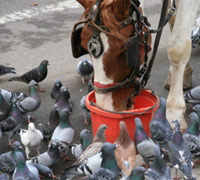
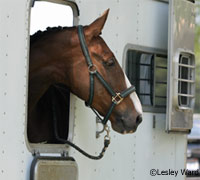
Many are outraged at the deaths and the racing community’s unwillingness to make real changes to address the problem. The deaths are par for the course in the Grand National meeting, with a total of 33 equine deaths since 2000. In that time period, 2004 was the only year in which no horses died during or as a result of injuries sustained during Grand National races.

The Grand National is the main event during the three-day meeting at Aintree Racecourse near Liverpool, England. The historic steeplechase dates back to the 1830s and remains a highly popular social event despite controversy. The race consists of 30 fences ranging from 4’6″ to 5’3″ over 4 ½ miles. Forty horses started in this year’s Grand National, but only 19 finished.

The first fatality in this year’s race was Ornais, a nine-year-old gelding. He broke his neck after falling at the fourth fence, the lowest fence on the course at 4 feet. The second was Dooney’s Gate, an Irish-bred gelding who broke his back at Becher’s Brook. Becher’s Brook is a notoriously difficult obstacle that is 4’10” from the front but has a 6’9″ drop on the other side.

In response to criticism, Aintree Racecourse has improved the on-site veterinary services over the past several years, and a few jumps have been modified to reduce the risk of pileups. The persistently high fatality rate still plagues the Grand National, and animal welfare activists continually call for its end. The high jumps, grueling pace and distance, and large number of horses jumping at the same time are cited as reasons for the high fatality rate.

Irish Jockey Peter Toole was seriously injured in a pre-Grand National race and was being kept in a medically-induced coma through Monday night. There is only one recorded rider death in the Grand National’s history.

This year’s race was won by Billabriggs with jockey Jason Maguire for owner Trevor Hemmings. Billabriggs is trained by Donald McCain.

Question of the Week: Birds in the Barn

14

Four-legged animals are more likely to present a health threat to your horse than birds

Q: I have a lot of birds living in my barn. I’ve been told that bird droppings can be harmful to horses if ingested. I scrub my horses’ feed and water buckets twice a day. Should I be worried about the bird droppings? What kind of problems can they cause?

A: In all actuality, it is wildlife of the four-legged variety that is more harmful to horses than those with wings. Opossums, the definitive host of Sarcocystic neurona, the causative agent of equine protozoal myelitis (EPM), a progressive neurodegenerative disease, are a real threat to your horse’s health. Other mammals such as skunks and raccoons (as well as opossums) can harbor rabies, an all-too scary thought for any barn. While it is true that bird droppings can and do carry some nasty pathogens, horses seem to be somewhat resistant to their effects. The most common pathogens encountered with bird droppings are fungal, and are usually found in soil containing bird feces, rather than fresh bird droppings. In an environment containing such fungal spores, they are usually stirred into the air and inhaled, causing nasal or sinus infections or a fungal pneumonia. Rarely does a university veterinary hospital come across an equine fungal pneumonia, meningitis or colitis; these are more commonly seen in dogs, owed mostly to the fact that the barn dogs are the ones running around, sticking their noses into dusty, dirty places while the horses are staying out of trouble in the pasture!

The biggest concern about excessive bird droppings is merely general sanitation. Will your horse become deathly ill if he drinks from a bucket tainted with fresh bird droppings? Probably not. But no one wants to see bird feces in her horse’s clean water bucket. Or on the saddle you just polished. General barn upkeep, such as what you’re doing by keeping buckets clean, sweeping aisle ways, and ensuring feed bunks are bird and rat-proof are all things that lead to a generally healthier environment for your horse. Having said this, some barns, due to their design or location, seem to be havens for virtual flocks of birds such as barn swallows. If this is the case, they become a nuisance. There are numerous companies that make bird nets to place in the rafters of the barn to prevent roosting. You can also place some owl decoys around the barn. Additionally, I have had clients play recordings of bird distress calls on their speaker systems which, if you don’t mind listening to the noises, do a very good job deterring our feathered friends from hanging out in the barn. A few good barn cats may not hurt either.

— Anna O’Brien, DVM

Ask your horse questions on the horseillustrated.com Forums >>

See more Expert Q&As >>

Submit your Ask the Expert question >>


Trailer safety: Carry two spare tires when traveling with your horse

5

Horse trailerThe side of the road is a dangerous place to be, especially when you have horses onboard.
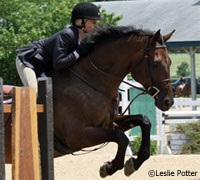
As a conscientious horse owner, you should try to minimize that time. One way to do that, according to Bill Riss, managing member of USRider, a roadside assistance plan designed with horse owners in mind, is to carry not one, but two spare tires when trailering your animals.

Statistics show that tire failure is the most common cause of roadside disablements. Riss added, “In USRider’s 10 years of providing service to our Members, we have seen a trend of a high incidence of disablements where replacement of two tires on the same side of a trailer was required, either due to encountering the same road hazard or the failure of one tire causing the failure of a second.”

With only one spare tire available, the disablement will take much longer to remedy since a second tire will have to be located and delivered to the scene or – even more time-consuming – towing will be required. A second spare could provide a simple and prompt resolution.

To minimize the length of time spent on the side of the road awaiting assistance, USRider urges horse owners to begin carry two mounted spares.

“While we are able to deliver service in these situations, it is sometimes a challenge to procure the correct tire and find a service provider with the ability to mount a tire on the side of the highway. Horse owners can greatly enhance their safety and the safety of their Horses by carrying a second mounted spare,” said Riss.

USRider recommends that only a qualified, trained mechanic change a tire. If, in an emergency, a non qualified individual changes the tire, the vehicle should be taken to a qualified mechanic as soon as possible to ensure that the tire is properly torqued.

When purchasing a new trailer, it would be advisable to purchase a second spare mount. For existing trailers, visit a reputable trailer dealer to discuss options for mounting a second spare.

Further Reading
Trailering Checklist
Safe Trailering

For additional safety tips, visit the Equine Travel Safety Area on the USRider website at
www.usrider.org.

Top intercollegiate riding teams named for Varsity Equestrian National Championships

2

Hunt seat competitionThe field is now set after the Varsity Equestrian Selection Committee chose the 2011
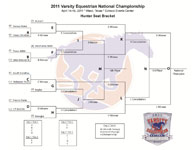
Varsity Equestrian National Championship (VENC) seeds. This year’s championship will be
held April 14-16, 2011, in Waco, TX, and is expected to provide plenty of excitement
throughout the competition as the top 12 teams in the country battle it out for the
overall national championship title.

In the hunter seat bracket, Auburn University was selected as the No. 1 seed, followed by
The University of Georgia as the No. 2 seed. Host institution, Baylor University, will be
the third seed, followed by Big 12 foe, Oklahoma State University. Texas A&M University
will be seeded fifth, followed by The University of South Carolina (6), Fresno State
University (7), Kansas State University (8), Texas Christian University (9), University of
Tennessee-Martin (10), Delaware State University (11) and New Mexico State University
(12).

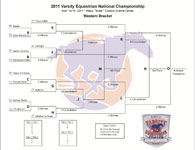
On the western side, Texas A&M University earned the No. 1 seed after an impressive 11-1
season. Oklahoma State University will be seeded in the No. 2 spot, followed by Auburn
University in the third seed. The University of Georgia rounds out the team who earned a
bye with the No. 4 seed. The University of South Carolina will start in the fifth seed,
followed by Texas Christian (6), Kansas State (7), Baylor University (8), New Mexico State
University (9), University of Tennessee-Martin (10), Fresno State University (11) and
Delaware State University (12).

For more information, visit www.varsityequestrian.com.

View the complete brackets:

Hunt Seat Bracket
Hunt Seat Bracket
Western Bracket
Western Bracket

Further Reading
College and University Equine Studies Programs
Bring Your Horse to College

0FansLike
0SubscribersSubscribe
We use cookies to help personalize content, tailor and measure ads, and provide a safer experience. By navigating the site, you agree to the use of cookies to collect information. Read our Cookie Policy.
OK