0 ITEMS
  • My Account
  • Holiday Gift Guide
  • Podcast
  • Webinar
Subscribe Combo
Enable cache13
Home Blog Page 655

Top intercollegiate riding teams named for Varsity Equestrian National Championships

2

Hunt seat competitionThe field is now set after the Varsity Equestrian Selection Committee chose the 2011
Varsity Equestrian National Championship (VENC) seeds. This year’s championship will be
held April 14-16, 2011, in Waco, TX, and is expected to provide plenty of excitement
throughout the competition as the top 12 teams in the country battle it out for the
overall national championship title.

In the hunter seat bracket, Auburn University was selected as the No. 1 seed, followed by
The University of Georgia as the No. 2 seed. Host institution, Baylor University, will be
the third seed, followed by Big 12 foe, Oklahoma State University. Texas A&M University
will be seeded fifth, followed by The University of South Carolina (6), Fresno State
University (7), Kansas State University (8), Texas Christian University (9), University of
Tennessee-Martin (10), Delaware State University (11) and New Mexico State University
(12).

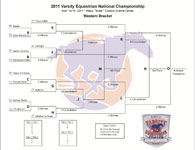
On the western side, Texas A&M University earned the No. 1 seed after an impressive 11-1
season. Oklahoma State University will be seeded in the No. 2 spot, followed by Auburn
University in the third seed. The University of Georgia rounds out the team who earned a
bye with the No. 4 seed. The University of South Carolina will start in the fifth seed,
followed by Texas Christian (6), Kansas State (7), Baylor University (8), New Mexico State
University (9), University of Tennessee-Martin (10), Fresno State University (11) and
Delaware State University (12).

For more information, visit www.varsityequestrian.com.

View the complete brackets:
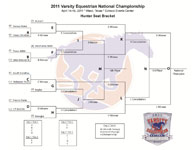
Hunt Seat Bracket
Hunt Seat Bracket
Western Bracket
Western Bracket

Further Reading
College and University Equine Studies Programs
Bring Your Horse to College
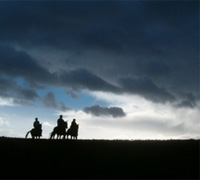
Ride for the Rescues will benefit Mustang adoption

4

Trail ridingUPDATE May 19, 2011: Due to concerns about the EHV-1 outbreak in western states, the Ride for the Rescues has been postponed from its original date of June 4 to September 10, 2011.
ORIGINAL ARTICLE: After setting a Guinness World Record for establishing the Largest Competitive Trail Ride, the American Competitive Trail Horse Association (ACTHA) has announced that its Ride for the Rescues will be an annual event.

On June 13, 2010, 1,700 horse-and-rider teams around the country participated in the inaugural benefit ride, raising around $70,000 for various horse charities and rescues. On September 10, 2011, equestrians will get back in the saddle to collect money for the Mustang Heritage Foundation (MHF), a nonprofit organization that works to facilitate adoptions of wild Mustangs and burros.

“We really support [the MHF’s] vision in assisting in the adoption of the wild horses,” says Pam Campbell, coordinator of the Ride for the Rescues. “We believe in their mission and are thrilled to do our part to help them help the Mustangs. We encourage everyone to be a part of this special event.”

Anyone can participate in the Ride for the Rescues by hosting, riding in or volunteering at an event. Riders will cover six miles of trail consisting of six obstacles, which can normally be selected by the host but on this day must be the same at each event in order to be considered for a world record. Those who don’t want to negotiate the obstacles can register as “buddy riders.”

“This is casual competition,” says Campbell. “If you trail ride, you can do this. It’s just a nice trail ride with your friends and a good time with your horse.”

To date, the ACTHA has raised more than $350,000 for equine charities and rescues in its mission to recognize the American trail horse, maintain a registry for all breeds, and promote the humane treatment of horses in need. For more information about the 2011 Ride for the Rescues, visit /redirect.php?location=www.actha.us.

The High Cost of Horse Show Clothing

11

Talk about sticker shock! Have you noticed how much it costs to get yourself outfitted for an English horse show? And did I really ever pay this much for clothing I wore a few times a month? If so, why didn’t someone stop me?

I sort of feel like someone who chomps through a gigantic-sized pepperoni pizza without realizing it, and then notices the empty cardboard box and exclaims, “Wow! Did I actually eat all that?”

I came to this moment of equestrian epiphany last night. The little girl next door started taking riding lessons and needed her first pair of English paddock boots. Being compulsively helpful when it comes to indoctrinating other unsuspecting novices into the insane world of horses, I offered to help them browse online for a used pair. I found some on ebay that would work just fine. But naturally I got sidetracked. I wandered into listings for hunt seat apparel, caught up in a swirl of wistful nostalgia, recalling my days on the show circuit. It began with, “I wonder what a good pair of riding breeches goes for these days” and ended with, “How did my husband stay married to me when I was gleefully shelling out $14.95 for a pair of paper-thin boot socks?”

It’s no wonder that the horse show circuit is financially out of reach for the average aspiring rider. It’s not just the price of a suitable horse, decent tack, entry fees, lessons and training, association dues, or food and gasoline. It’s the cost of the clothes. Clothes you pretty much can’t wear anyplace other than a horse show. Well, you could, but people would stare at you. Trust me. I know this.

I’ll put this in personal terms. I enjoy riding Danny hunt seat about once a week. But if I wanted to get back into showing, for example at the county-circuit level, I’d have to invest a small fortune in riding attire, because I sold off all of mine. Even if I stuck to bargain prices and discounted items, it still adds up. Just watch.

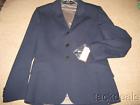
Hunt CoatFirst I’d have to buy the hunt coat, which is essentially a blazer, but one made from fabric that you would never otherwise select in your entire life. Think sixty different shades of gray or navy blue. Those are you choices. Period. Cost: $199.
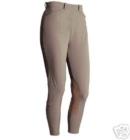
Then we have the breeches (pants). Designed by a conspiracy determined to strip every ounce of femininity from wearers above the age of 19, they hug curves, reveal lumps and compress the major blood vessels in your legs. And even though they come in several shades of beige, the fashion police dictate that you are only allowed to wear a certain shade of greenish-khaki, which makes you look all the more wan and haggard. But isn’t that the plan? Cost: $119.Breeches
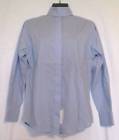
Show shirt The one item that does allow for a smidgen of color is the show shirt, which seems ironic, since when your hunt coat is on only the choker and a small “V” of material is visible. So while you might be impressed with claims about exotic cotton fibers or stitches-per-inch, just pick a complementary color that doesn’t look circus-like. After all, it’s going to end up stuck to your back with sweat by the time your flat class rolls around, anyway. Cost: $50.
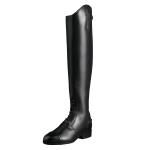
Boots you can’t scrimp on, at least not when it comes to fit. As a judge, I’m trained to look at a rider’s leg first in an equitation class, and boots that are tall enough and fit snuggly help define the rider’s position. Still, I can buy an entire cow for the cost of a pair of tall black boots. And these aren’t even custom-made! Cost: $300.

Tall boots

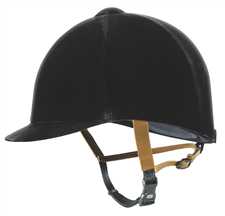
And then there’s the helmet. Rather than being viewed strictly as a safety item, helmets have become a fashion statement, displaying just how much disposable income you have to spend on a hat. Though you can spend over $400 on one, you don’t need to. Unless maybe your horse is stabled next to your private jet. Cost: $100.

The grand total? $768. And that’s not including the belt, which you can’t really see anyway, but which you must have to make your outfit complete. Plus, if you ever remove your hunt coat during the day, you need something to distract an onlooker’s eyes from the hideous outline of those breeches, right?

Of course, you can save even more money on your show apparel and still look nice. There are plenty of bargains at consignment shops, and craigslist and ebay are wellsprings of good deals. I have no disdain for slightly used hand-me-downs. But my point is that while I appreciate the pageantry of horse shows, and the fact that there’s supposed to be an emphasis on the word “show,” I nonetheless find it disheartening to see how expensive it’s become to compete. And that’s unfortunate. Horse shows should be about demonstrating your expertise in horsemanship: how you and your horse work together as a team. The arena shouldn’t be a catwalk for fashionistas.

<< Previous Entry

Back to Life with Horses

Barn fire kills 24 Arabian horses in Ohio

12

Barn fireThe owners of Oasis Farm near Cincinnati, Ohio are grieving today over the loss of approximately 24 horses killed in a barn fire on April 5. According to an Associated Press report, fire officials believe the fire started when a heating lamp used to warm a newborn foal tipped over. The entire facility was destroyed.
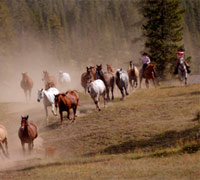
Oasis farm is an Arabian breeding and boarding operation specializing in Crabbet bloodlines. Before the fire, there were around 40 horses on the farm. The farm’s owners, Debbie Crosby, Frank Noll and their daughter, Sarah, along with firefighters and volunteers were able to rescue approximately 16 of the horses. The majority of the horses belonged to the farm.

The Arabian Horsemens’ Distress Fund (AHDF) is collecting donations to help Oasis Farm’s owners recover and care for the surviving horses. The AHDF provides financial assistance to members of the Arabian horse community in times of crisis. To learn more about the Fund or send a donation to help Oasis Farm, visit HorsemensDistressFund.com

Read on for information on how to reduce the risk of a barn fire.
Be prepared for a barn fire
Stop a barn fire before it starts
Extinguish the threat of barn fires

First Horse Checklist

0

Leather halter
Lead rope

Grooming kit
Hoofpick
Rubber curry comb
Metal curry comb
Dandy brush
Body brush
Sponges
Sweat scraper
Shampoo
Fly repellent

Concentrated feed
Hay bales
Treats

Bucket for feed
Bucket for bathing

Saddle
Saddle pad
Girth
Bridle
Bit
Leather soap and conditioner

Shipping boots or padding and bandages

Turnout blanket (if you live in a chilly area)

First aid kit

Helmet
Breeches or well-fitting jeans
Riding boots
Gloves

Current health certificate
Current Coggins test
Dewormer

Learn to Roll with the Canter

0

The canter’s rocking-horse, three-beat rhythm presents a problem for novice riders trying to master their position at this gait. In trot, the rider’s body position remains stable since the horse’s head and neck don’t move in this two-beat gait. But in canter, the horse uses his head and neck for balance. Riders must learn to follow both the swing of the horse’s body with their seats—and accommodate the horse’s head and neck movement with forgiving arms and elbows.

“For less-experienced riders, it’s tough to learn to move with some parts of your body and still maintain a stable position,” Ashley explains. “At the same time your hips move to accommodate the canter rhythm, you need to stay centered in the tack, anchored by a steady leg and low heel. And while your soft, elastic arms and elbows follow your horse’s head and neck, you need to keep your shoulders tall and square.

“This is a lot to work on if you’re having trouble maintaining canter in the first place!” explains Ashley. So don’t attempt to train your green horse’s canter until you’re confident in your own ability to ride at this gait. “It is very difficult to put a green rider on a green horse and expect the canter to get better,” she says.

The very best way to learn to follow the canter is to take some longe lessons. “Working without stirrups on the longe line will help you enormously,” she counsels. “I have riders hold onto the pommel or cantle, so they can concentrate on following the canter in their hips.”

Ashley also suggests working on canter position by taking some lessons on an experienced horse, and ride without stirrups to strengthen your seat and leg.

When Your Horse Won’t Canter
Don’t let your green horse run into canter from an ever-increasing trot, explains Ashley. “You’re not doing your horse any favors by being unclear in your aids.”

Ride a 20-meter circle in trot and ask for canter. If your horse responds by trotting faster, bring him back to a steady working trot using the half-halt and ask for canter again.

This time, use a stronger forward aid—more leg, voice, or a touch of whip or spur—to the upward transition. Your horse may leap into canter; if so, reward him. Be careful not to inadvertently punish your horse by catching him in the mouth if he canters off faster than you’d like. Reward your horse for going forward, even if right now it’s a little more forward than you’d like.

Next time, try using less of the forward correction (if you used the whip last time, for example, try leg only this time), and see if your horse gets the idea. Stay on the circle, which will make it easier to keep your horse on your aids, while you repeat these transitions until your horse moves promptly into canter.

Back to Canter Transition Troubleshooting >>

Stadium jumping phase of Rolex Kentucky Three-Day Event will be broadcast live

6
William Fox-Pitt at the 2010 Rolex
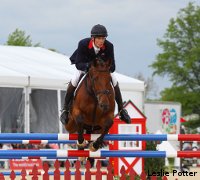
William Fox-Pitt of Great Britain and Cool Mountain won the 2010 Rolex Kentucky Three-Day Event. Photo: Leslie Potter

Mark your calendar, plan the party and get the big screen ready! For the first time in its history, the Rolex Kentucky Three-Day Event presented by Land Rover will air LIVE on NBC Sports, Sunday, May 1, from 2:00 – 3:00 p.m. EDT.

With the support of the United States Equestrian Federation (USEF) and Equestrian Events, Inc., organizer of the Rolex Kentucky Three-Day Event, presented by Bridgestone, NBC Sports will broadcast the final show jumping rounds LIVE, alongside taped highlights of the dressage and cross-country phases. One of the world’s most prestigious equestrian competitions and America’s only CCI4*, Rolex Kentucky returns to the Kentucky Horse Park in Lexington, April 28-May 1. The event attracts tens of thousands of spectators and millions of viewers on telecasts worldwide.

“Those final rounds during show jumping are full of suspense and excitement – you just never know when rails will fall,” said Lisa Ball, President of Equestrian Events, Inc. “We are thrilled that fans across the nation will be able to share in that excitement along with the thousands of fans here at the Kentucky Horse Park.”

All three phases are scheduled to be broadcast live via free online streaming at USEFNetwork.com

The 2011 Rolex Kentucky Three-Day Event will crown the 14th USEF National CCI4* Champion, and is the only North American leg of the HSBC FEI Classics Series. The world’s best horses and riders will compete for their share of $250,000 in prize money as well as a shot at the $350,000 Rolex Grand Slam of Eventing which is awarded to any rider who wins Rolex Kentucky, Mitsubishi Motors Badminton and Land Rover Burghley, consecutively. (The term “consecutively” shall not be limited to wins which occur within the same competition year or same calendar year.)

Past winners of the Rolex Kentucky Three-Day Event include United States Olympic Medalists David and Karen O’Connor, Kim Severson and Phillip Dutton, New Zealand’s Blyth Tait and Nick Larkin, Pippa Funnell and William Fox-Pitt of Great Britain and Andrew Hoy, Clayton Fredericks and Lucinda Fredericks of Australia.

To find out more about tailgating and ticketing packages available for the 2011 Rolex Kentucky Three-Day Event, presented by Bridgestone, visit www.rk3de.org. Tickets may be ordered online, or by printing the ticket order form from the website and returning it via mail or fax 859-254-5116 to Equestrian Events, Inc. Tickets may also be ordered by calling 859-254-8123. Advance ticket sales close on April 10!

National Cowgirl Museum Learning Program brings lesser-known U.S. history to life

5

CowgirlsThe Fort Worth, Texas-based National Cowgirl Museum and Hall of Fame is bringing history to life for students across the nation, and even globally, through an innovative distance learning and on-site teaching program for low income or under-performing schools.
“Teachers continually search for programs that engage their students in ways they have not experienced,” said Museum Director of Education and Exhibits, Diana Vela, PhD. “While most are exposed to the standard lessons surrounding American history, very few have been exposed to the stories and accomplishments of women, past and present, whose lives exemplify the courage, resilience, and independence that helped shape the American West, and in many ways, our nation.”

The “Discover the Wild West Scholarship,” funded by the Stephanie and Charles Roven Foundation of Los Olivos, California, specifically targets low-income and/or under-performing schools. The program provides, at no cost, 45-minute distance learning programs, along with supplementary instructional materials, to eligible schools nationwide with reciprocal equipment that do not have program funding. Furthermore, the program also provides complimentary admission for schools that otherwise would not be able to experience the Museum.

“The program has been available for several months and has already reached more than 1,300 students in Maine, New York and Pennsylvania,” said Vela. “Because the programs are supplied via video conferencing, teachers are finding it easy to incorporate into their curriculum.”

Students get an authentic taste for the lives of women who were the early change agents in American history. Among the 100 video conferences offered, students can learn about science by sorting, classifying and discovering how the basics of science play a role in the life of a rancher, or they can discover the story of the women of the American West during the late nineteenth and early twentieth century’s who displayed extraordinary courage and pioneer spirit in their trail blazing efforts. While they’re at it, students learn that “cowgirl” is a word that is broadly construed and incorporates many people who all played a role in the West – from artists to ranchers.

Schools eligible for the program are those that meet one or more of the below criteria:

  • Exceptionally Rural – population between 2,500 and 5,000 (city population that the school is in)
  • Rural – population between 5,001 and 10,000 (city population that the school is in)
  • Mid-Rural – population between 10,001 and 20,000 (city population that the school is in)
  • 50-75% of students are on the free and reduced lunch program
  • 75% or more of students are on the free and reduced lunch program

Schools in the Dallas/Fort Worth area can also take advantage of on-site Museum programs, where 1,000 students will be provided with complimentary admission for themselves and teachers, including transportation fees. Students will be provided a docent-led tour, interactive activity stations and take-home materials.

The application process is a simple one-page request form, signed by the campus principal or curriculum specialist. The form is available on-line at www.cowgirl.net or by calling 817.509.8961.

Question of the Week: Bolting Jumper

5

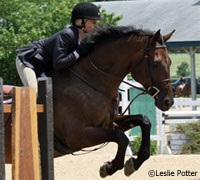
Schooling a jumperQ: I am working with a Thoroughbred hunter/jumper prospect. When we jump crossrails, he’s fine. But when we try small verticals he bolts to the jumps and then kicks his heels in the air. How can I help him stay calm and relaxed on his way down to the jumps?

A: In general, a horse that gets faster and stronger as the jumps are raised is either expressing anxiety over the complexity of the task (meaning the jumps are too high for his training and confidence) or he’s simply learned to tune out the rider. It’s much easier to just bolt off and leap over the jump like a reindeer. Fortunately, both scenarios can be helped with the same exercise.

Go back to trotting—not cantering—crossrails and ground poles until your horse sees them as just another ho-hum part of his schooling routine. Incorporate them into your flatwork, so that you’re trotting around the arena, circling and bending, and then you just happen to trot a crossrail. Then continue on around the arena. To help regulate your horse’s pace, set a placement (ground) pole about 9-10 feet out from both the take-off and landing sides of the crossrails. He should trot the pole, hop over the crossrail and then hop over the pole on the other side. If he lands cantering, that’s fine. But gently bring him back to his rhythmical trot and keep cruising around the arena.

The next step is to integrate a low, simple vertical (about 2’3”) into this set-up. Now your routine may include some ground poles, a couple of crossrails and your vertical. Use your placement poles (rolled out to about 10-feet now) on either side of the vertical. This will help slow your horse and keep him focused on jumping correctly. Eventually you can remove the placement poles and mix trotting some of your low jumps with cantering a few. If your horse still gets quick and strong over the verticals then enlist the help of a local professional in your community. He or she may spot problems in your position, equipment or flatwork fundamentals that are influencing your horse’s performance.

–Cindy Hale

Ask your horse and riding questions on the horseillustrated.com Forums >>

See more Expert Q&As >>

Submit your Ask the Expert question >>


Show Jumping Cow

20

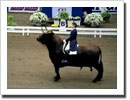
Regina Mayer, a then-15-year-old resident of Lauffen, Germany, could not have a horse. Her parents said no. This is a story all-too-familiar to many young aspiring equestrians, but Regina’s story takes a turn. Since she couldn’t have a horse, she trained one of her family’s cows, Luna, to become a show jumper. From the Associated Press:


See past Featured Videos >>

Like this video? Here are others you’ll love.


Featured Video 1

Mister Buddy’s Wipeout
This Mini Horse loves the snow, and he’s not going to let slippery conditions slow him down.

Featured Video 2

Bridleless Western Dressage
An Australian rider and her Morgan stallion give us all a lesson in western dressage—without a bridle.

Featured Video 3

Sophisticated Cowboy
This Schweppes ad from Great Britain offers a different interpretation of “western dressage.”
0FansLike
0SubscribersSubscribe
We use cookies to help personalize content, tailor and measure ads, and provide a safer experience. By navigating the site, you agree to the use of cookies to collect information. Read our Cookie Policy.
OK